Cardiac resynchronization therapy pacemakers were associated with lower mortality and hospitalization in heart failure patients
The effect of cardiac resynchronization without a defibrillator on morbidity and mortality: an individual patient data meta-analysis of COMPANION and CARE-HF
Individual patient data meta-analysisBenefit found
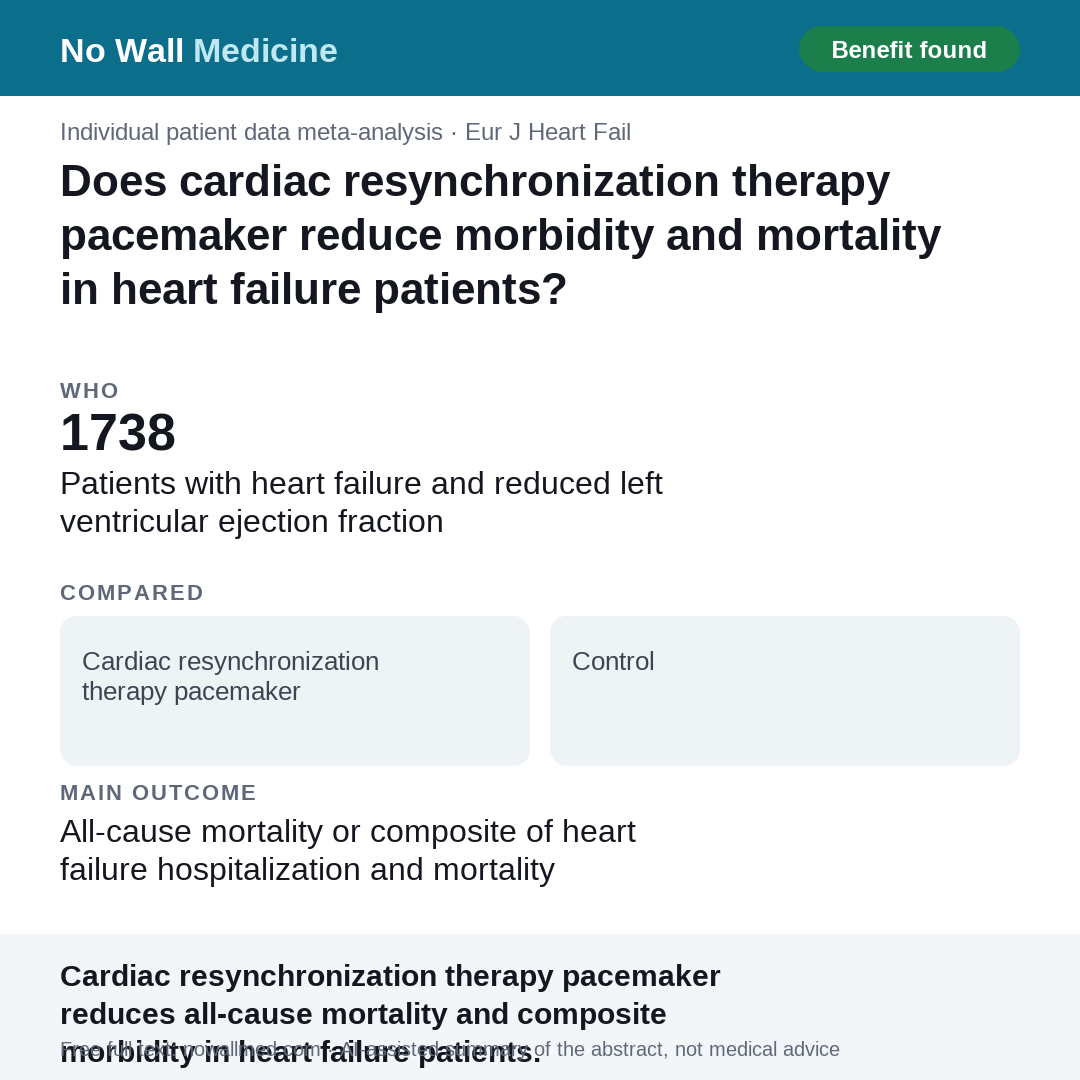
Does cardiac resynchronization therapy pacemaker reduce morbidity and mortality in heart failure patients?
Who
1738
Patients with heart failure and reduced left ventricular ejection fraction
Compared
Cardiac resynchronization therapy pacemaker
Control
Main outcome
All-cause mortality or composite of heart failure hospitalization and mortality
Result: hazard ratio 0.67 (95% CI 0.58 to 0.78)
Bottom line: Cardiac resynchronization therapy pacemaker reduces all-cause mortality and composite morbidity in heart failure patients.
Eur J Heart Fail · 2022-05-22Download image
Clinical question: Does cardiac resynchronization therapy pacemaker reduce morbidity and mortality in heart failure patients?
Why it matters: It was unknown which specific patient characteristics predict the effect of cardiac resynchronization therapy pacemakers on mortality or heart failure hospitalizations.
Key points
- Researchers analyzed 1738 patients from two clinical trials to compare cardiac resynchronization therapy pacemakers against control groups.
- Patients receiving the pacemaker had lower rates of all-cause mortality with a hazard ratio of 0.68 and lower composite outcomes with a hazard ratio of 0.67.
- The benefits of the pacemaker were greater for patients with lower body surface area and those prescribed beta-blockers.
Headline and key points written with AI from the paper’s abstract, with every number checked against it. Read the paper before relying on them.
Was this summary helpful?
Subject terms
Cite this article
Cleland JGF, Bristow MR, Freemantle N, Olshansky B, Gras D, Saxon L. The effect of cardiac resynchronization without a defibrillator on morbidity and mortality: an individual patient data meta-analysis of COMPANION and CARE-HF. Eur J Heart Fail. 2022. doi:10.1002/ejhf.2524
Spotted a mistake? Suggest a correction
Top studies every Monday
The week’s key trials and guidelines in your specialties, plus any topics you follow. By email, free.
Get the weekly digest