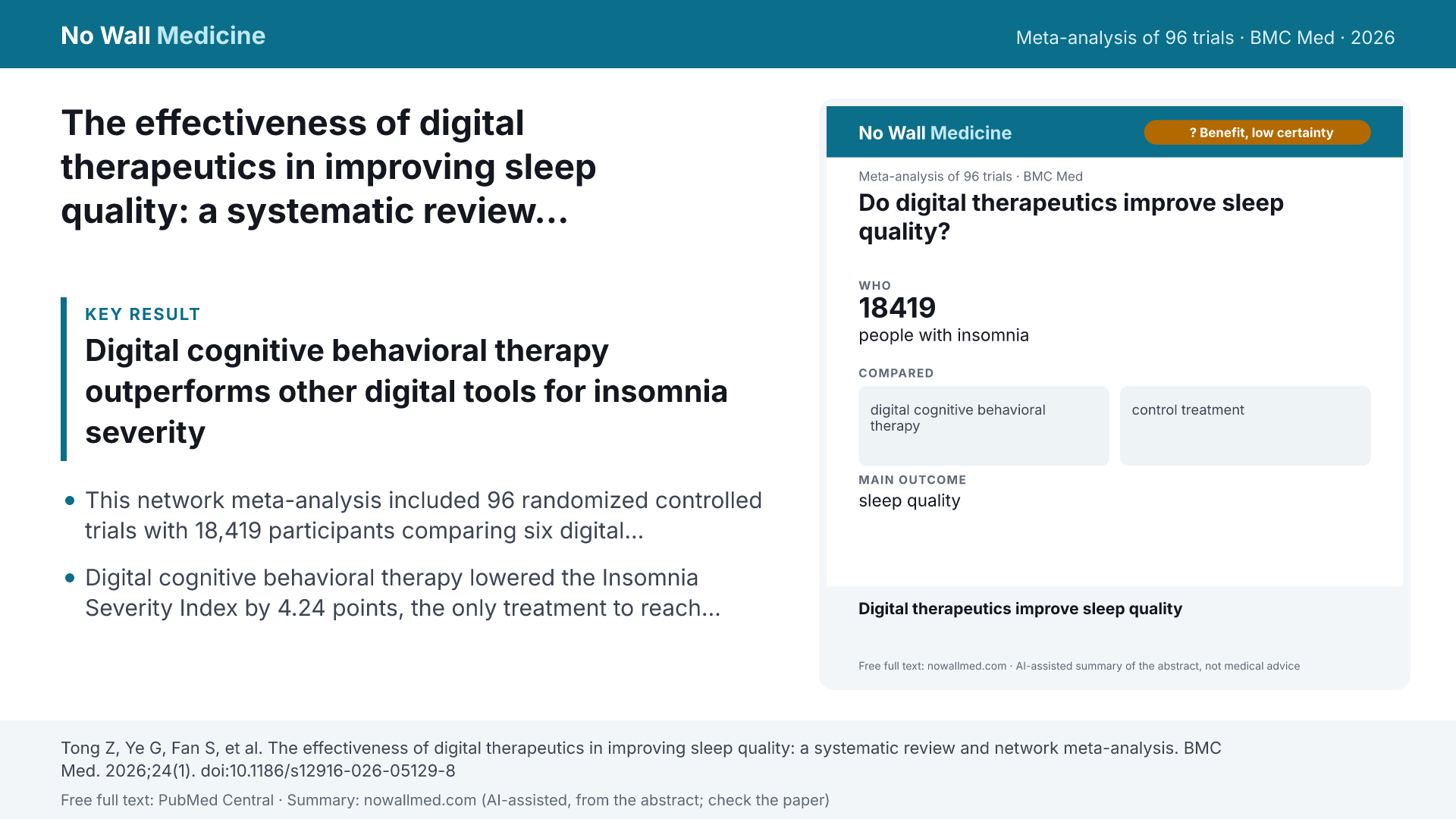
Digital cognitive behavioral therapy outperforms other digital tools for insomnia severity
The effectiveness of digital therapeutics in improving sleep quality: a systematic review and network meta-analysis
Meta-analysis of 96 trialsBenefit, low certainty
Do digital therapeutics improve sleep quality?
Who
18419
people with insomnia
Compared
digital cognitive behavioral therapy
control treatment
Main outcome
sleep quality
Bottom line: Digital therapeutics improve sleep quality
Limitation: limited sample sizes and studies
BMC Med · 2026-09-28Download image
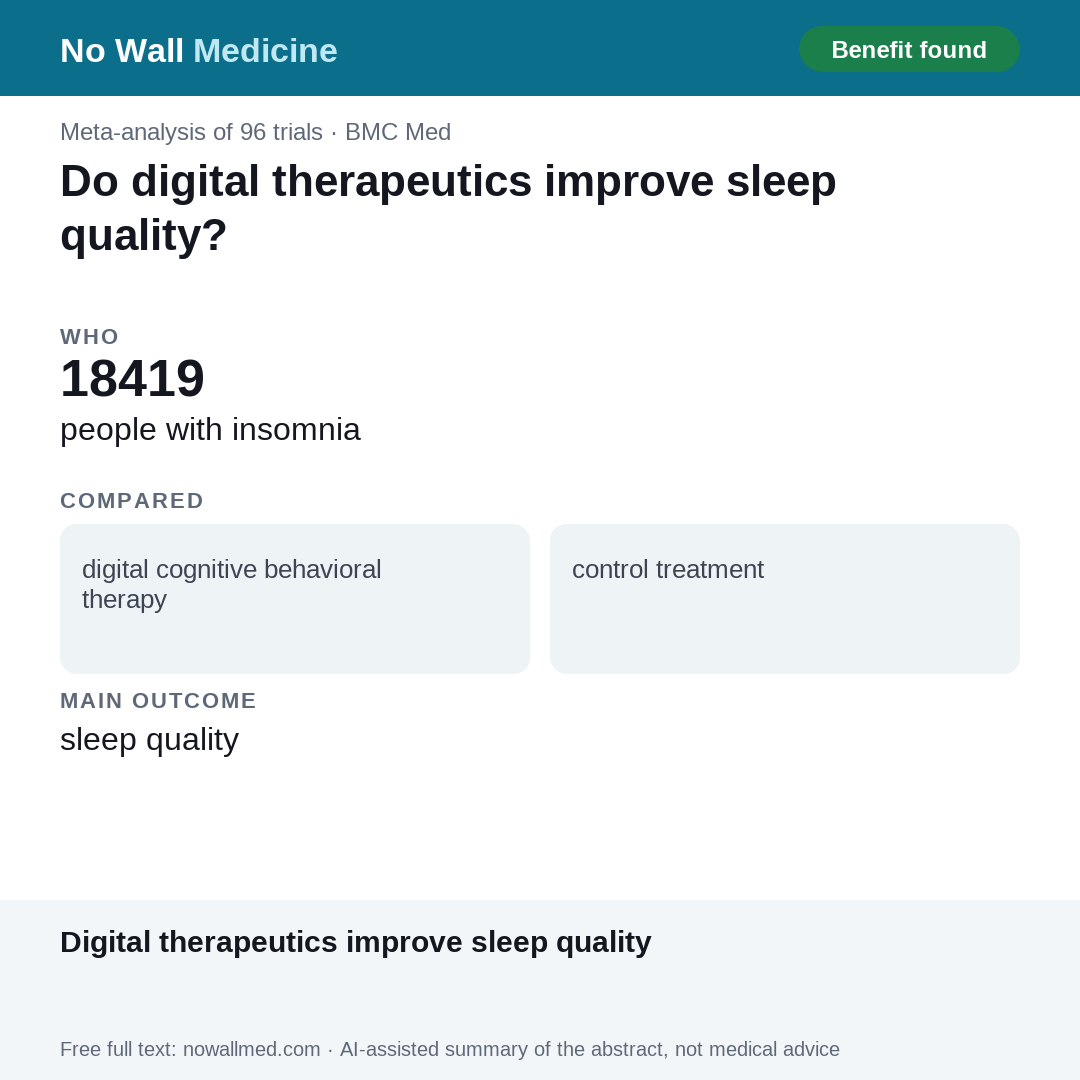
Clinical question: Do digital therapeutics improve sleep quality?
Key points
- This network meta-analysis included 96 randomized controlled trials with 18,419 participants comparing six digital sleep treatments against controls.
- Digital cognitive behavioral therapy lowered the Insomnia Severity Index by 4.24 points, the only treatment to reach the minimal clinically important difference.
- Digital mindfulness-based therapy and virtual reality showed some benefits, while neurofeedback, brief behavioral therapy, and circadian support showed no significant effects.
Limitation the authors note: The authors state that findings from objective outcomes warrant cautious interpretation due to constraints in the number of studies and sample sizes.
Headline and key points written with AI from the paper’s abstract, with every number checked against it. Read the paper before relying on them.
Was this summary helpful?
Subject terms
Cite this article
Tong Z, Ye G, Fan S, et al. The effectiveness of digital therapeutics in improving sleep quality: a systematic review and network meta-analysis. BMC Med. 2026;24(1). doi:10.1186/s12916-026-05129-8
Spotted a mistake? Suggest a correction