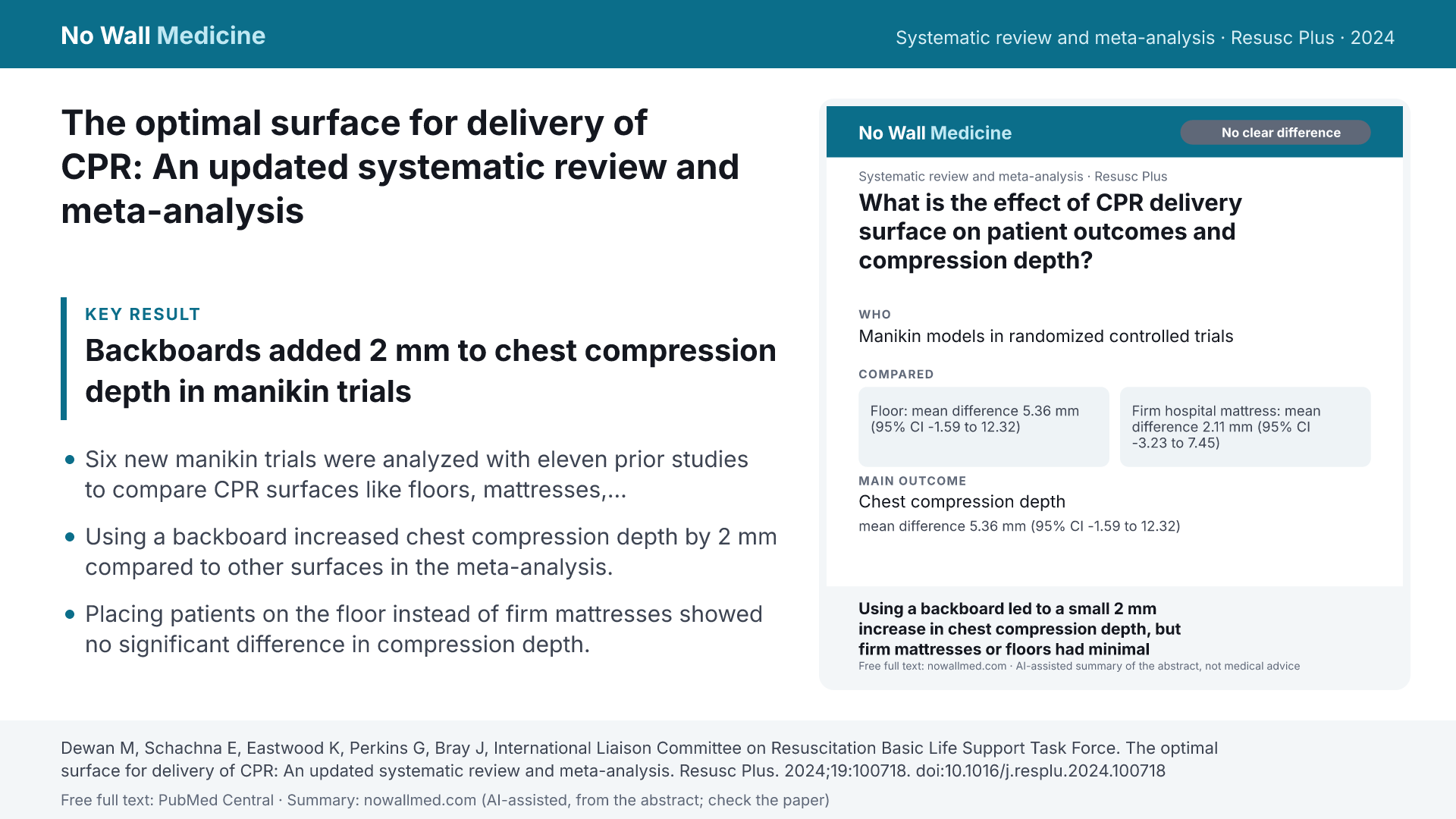
The optimal surface for delivery of CPR: An updated systematic review and meta-analysis
Emergency MedicineAdult and pediatric
Systematic review and meta-analysisNo clear difference
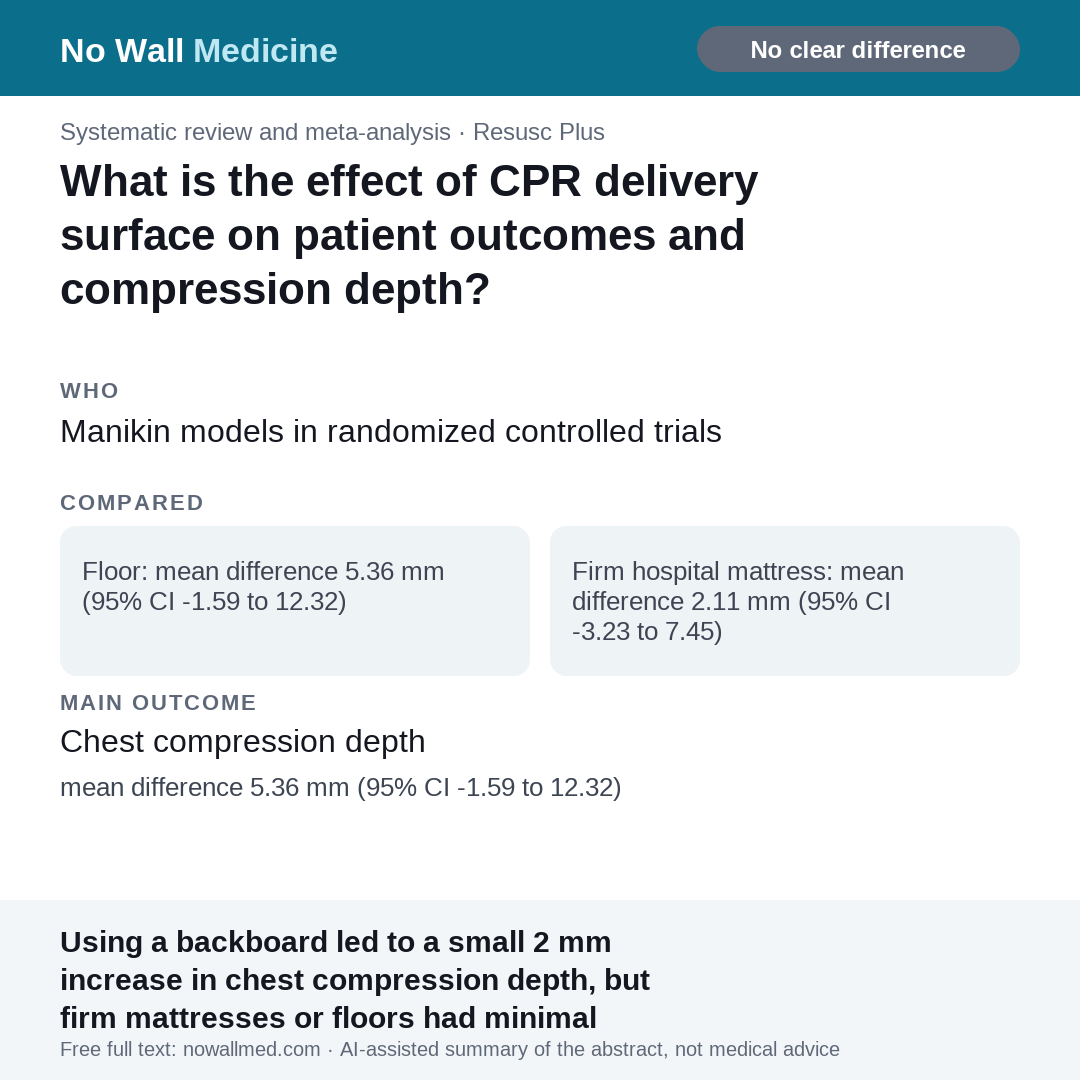
What is the effect of CPR delivery surface on patient outcomes and compression depth?
Who
Manikin models in randomized controlled trials
Compared
Floor: mean difference 5.36 mm (95% CI -1.59 to 12.32)
Firm hospital mattress: mean difference 2.11 mm (95% CI -3.23 to 7.45)
Main outcome
Chest compression depth
Result: mean difference 5.36 mm (95% CI -1.59 to 12.32)
Bottom line: Using a backboard led to a small 2 mm increase in chest compression depth, but firm mattresses or floors had minimal impact.
Limitation: Certainty of evidence was low and studies used manikins due to lack of human studies.
Resusc Plus · 2024-07-20Download image
Clinical question: What is the effect of CPR delivery surface on patient outcomes and compression depth?
Abstract
Aim
To determine the effect of CPR delivery surface (e.g. firm mattress, floor, backboard) on patient outcomes and CPR delivery. Methods
We searched MEDLINE, Embase, Web of Science and the Cochrane Central Register of Controlled Trials for studies published since 2019 that evaluated the effect of CPR delivery surface in adults and children on patient outcomes and CPR depth (PROSPERO CRD42023467583). We included manikin studies due to a lack of human studies. We identified pre-2019 studies from the 2020 ILCOR evaluation of this topic. Two reviewers independently screened titles/abstracts and full-text papers, extracted data and assessed risk of bias. Evidence certainty for each outcome was evaluated using GRADE methodology. Where appropriate, we pooled data in a meta-analysis, using a random-effects model. Results
Database searches identified 489 citations. We included six studies published since 2019. We analysed these studies together with the eleven studies included in the previous ILCOR review. All included studies were manikin randomised controlled trials. Certainty of evidence was low. Interventions including placing the patient on the floor or the use of backboard had minimal impact on achieving greater compression depth. Meta-analyses of floor versus firm hospital mattress or firm home mattress found a mean difference of 5.36 mm (95% CI -1.59 to 12.32) and 2.11 mm (95% CI -3.23 to 7.45) respectively. Conclusion
The use of a backboard led to a small 2 mm increase in chest compression depth in meta-analysis of multiple mannikin trials. Use of a firm mattress or transitioning to the floor did not affect chest compression depth.
Cite this article
Dewan M, Schachna E, Eastwood K, Perkins G, Bray J, International Liaison Committee on Resuscitation Basic Life Support Task Force. The optimal surface for delivery of CPR: An updated systematic review and meta-analysis. Resusc Plus. 2024. doi:10.1016/j.resplu.2024.100718
Spotted a mistake? Suggest a correction