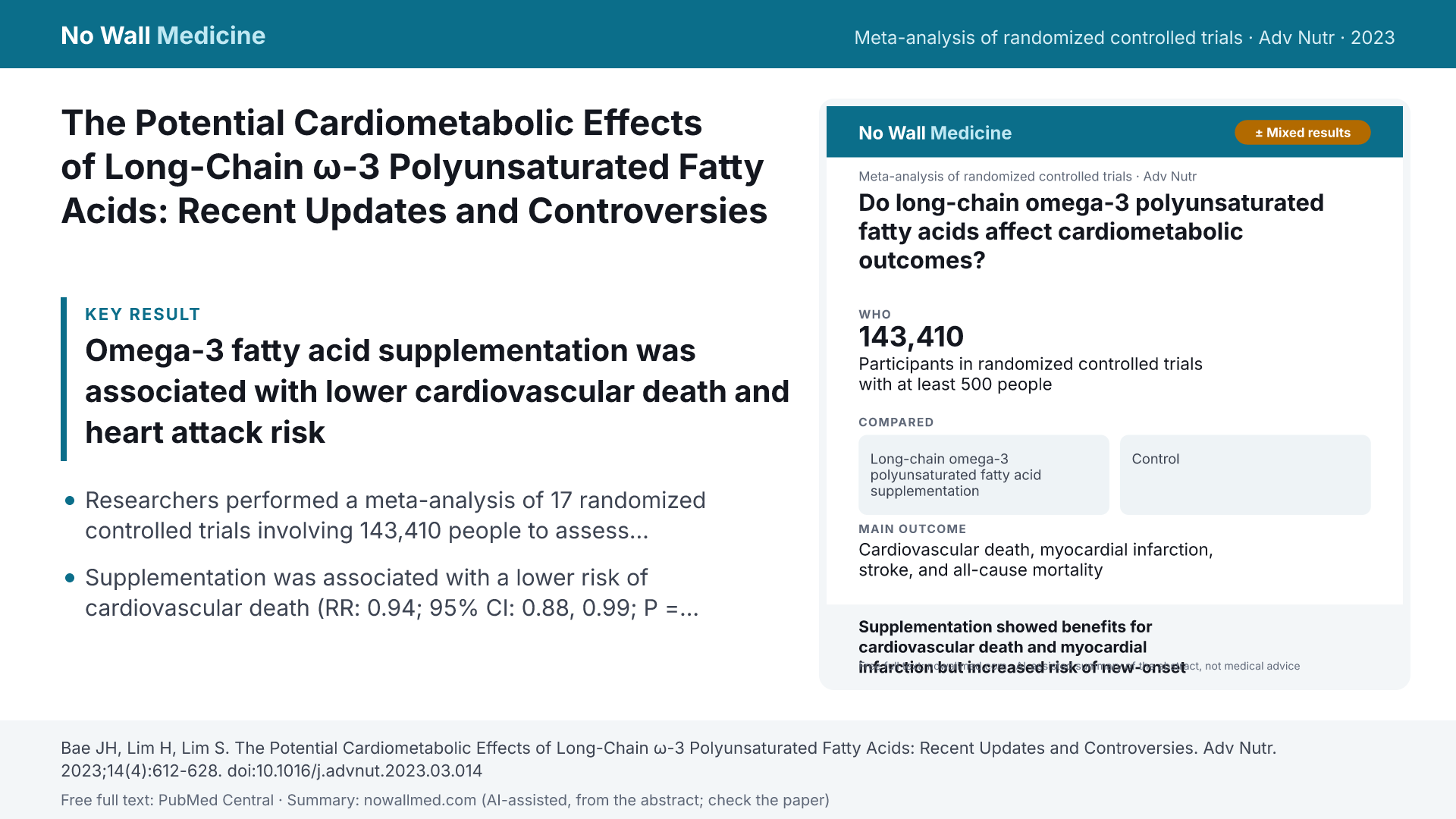
Omega-3 fatty acid supplementation was associated with lower cardiovascular death and heart attack risk
The Potential Cardiometabolic Effects of Long-Chain ω-3 Polyunsaturated Fatty Acids: Recent Updates and Controversies
Meta-analysis of randomized controlled trialsMixed results
Do long-chain omega-3 polyunsaturated fatty acids affect cardiometabolic outcomes?
Who
143,410
Participants in randomized controlled trials with at least 500 people
Compared
Long-chain omega-3 polyunsaturated fatty acid supplementation
Control
Main outcome
Cardiovascular death, myocardial infarction, stroke, and all-cause mortality
Result: RR: 0.94 (95% CI: 0.88, 0.99) for cardiovascular death
Bottom line: Supplementation showed benefits for cardiovascular death and myocardial infarction but increased risk of new-onset atrial fibrillation.
Limitation: Differences in types, doses, comparators, and study populations caused conflicting results.
Adv Nutr · 2023-04-07 · Save PNG
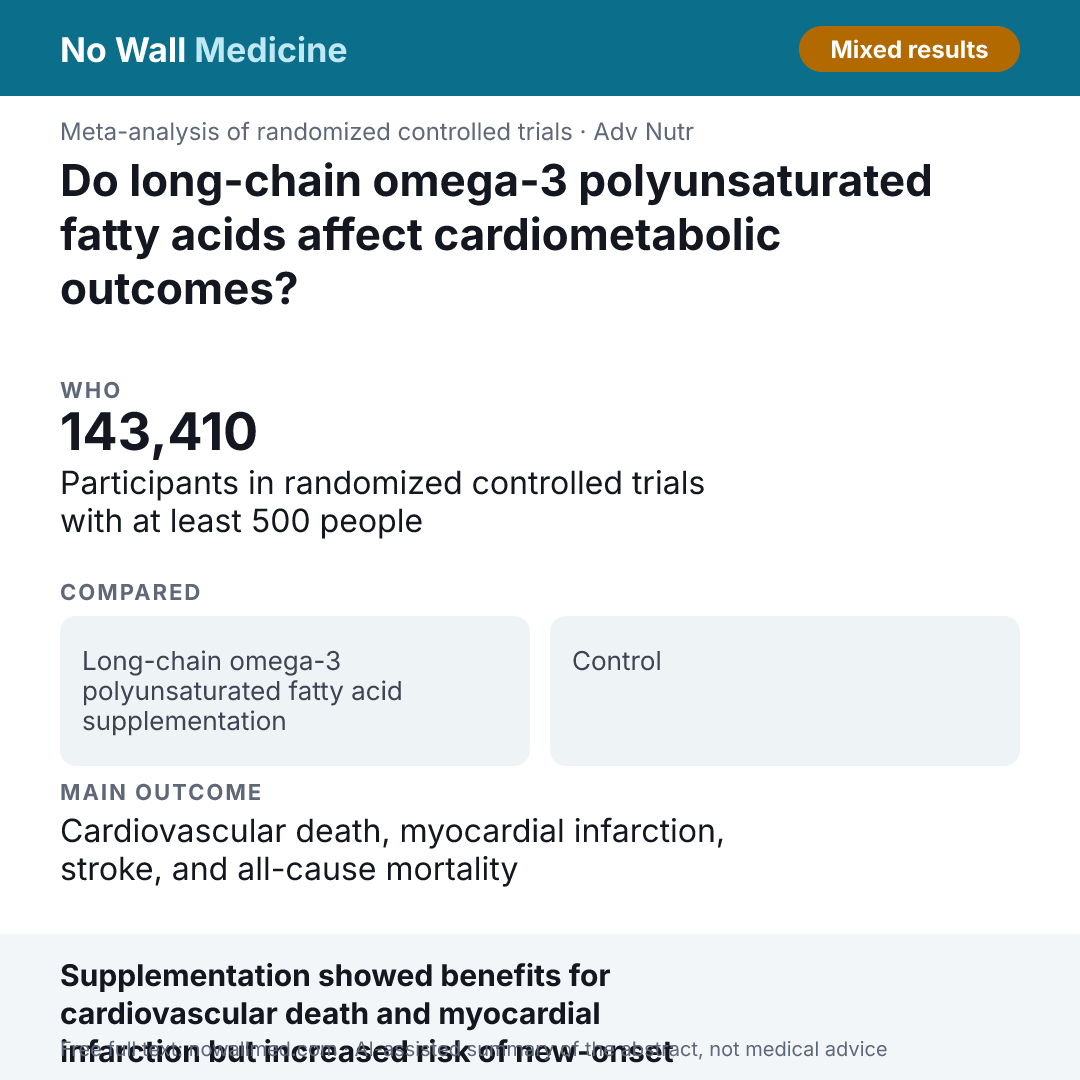
Clinical question: Do long-chain omega-3 polyunsaturated fatty acids affect cardiometabolic outcomes?
Why it matters: Previous randomized controlled trials showed conflicting results regarding whether long-chain omega-3 polyunsaturated fatty acids prevent major adverse cardiovascular events.
Key points
- Researchers performed a meta-analysis of 17 randomized controlled trials involving 143,410 people to assess the effects of long-chain omega-3 polyunsaturated fatty acids.
- Supplementation was associated with a lower risk of cardiovascular death (RR: 0.94; 95% CI: 0.88, 0.99; P = 0.029) and fatal or nonfatal myocardial infarction (RR: 0.83; 95% CI: 0.72, 0.95; P = 0.010).
- Both eicosapentaenoic acid (EPA) alone and EPA combined with docosahexaenoic acid (DHA) were associated with a significant increase in the risk of new-onset atrial fibrillation.
Headline and key points written with AI from the paper’s abstract, with every number checked against it. Read the paper before relying on them.
Was this summary helpful?
Subject terms
Headline, design, result, key points, caveat and citation as plain text.
Cite this article
Bae JH, Lim H, Lim S. The Potential Cardiometabolic Effects of Long-Chain ω-3 Polyunsaturated Fatty Acids: Recent Updates and Controversies. Adv Nutr. 2023;14(4):612-628. doi:10.1016/j.advnut.2023.03.014
Spotted a mistake? Suggest a correction