Three magnetic brain stimulation protocols combined with therapy showed similar symptom reduction in obsessive-compulsive disorder
Transcranial Magnetic Stimulation-Induced Plasticity Improving Cognitive Control in Obsessive-Compulsive Disorder, Part I: Clinical and Neuroimaging Outcomes From a Randomized Trial
Randomized trialNo clear difference
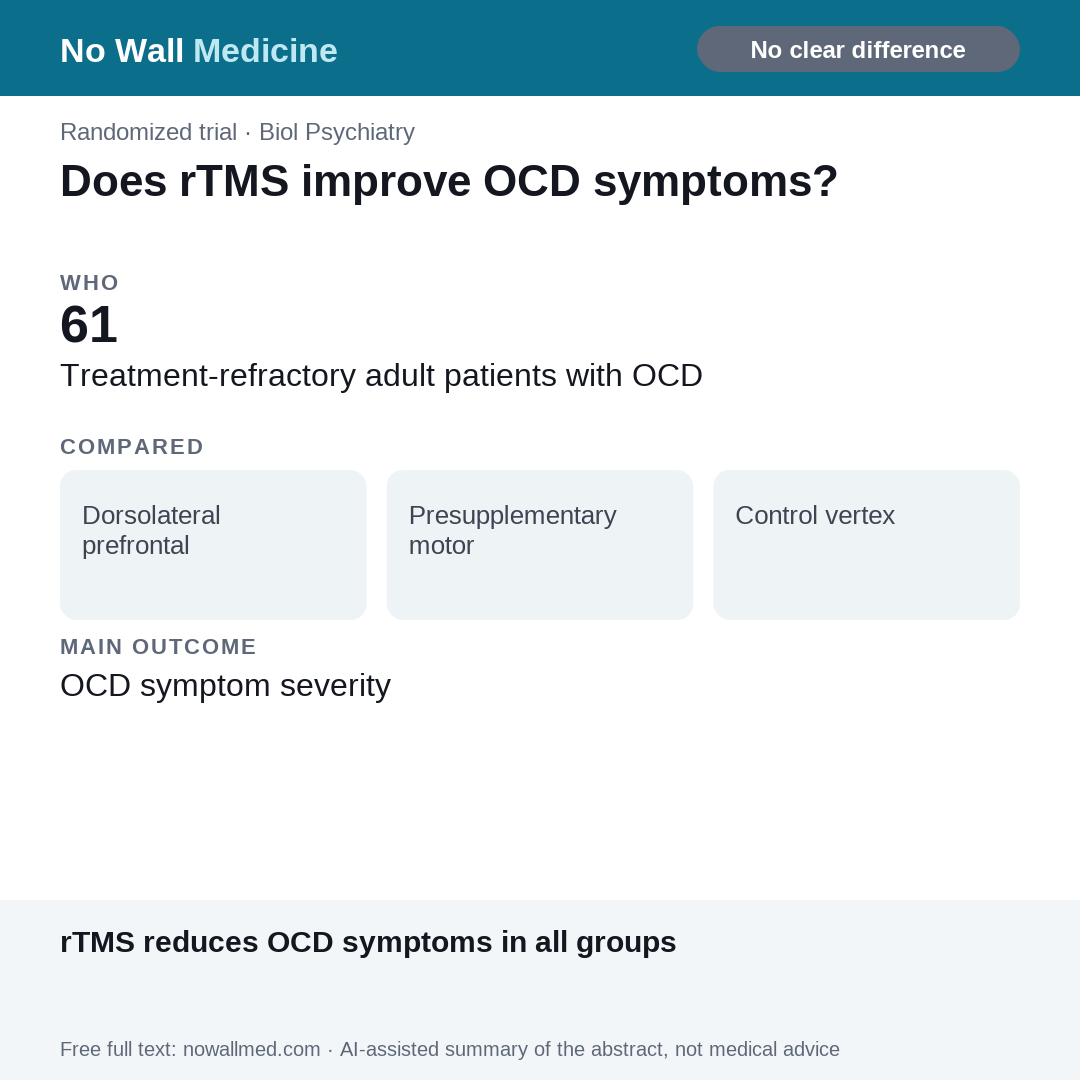
Does rTMS improve OCD symptoms?
Who
61
Treatment-refractory adult patients with OCD
Compared
Dorsolateral prefrontal
Presupplementary motor
Control vertex
Main outcome
OCD symptom severity
Bottom line: rTMS reduces OCD symptoms in all groups
Biol Psychiatry · 2024-07-30Download image
Clinical question: Does rTMS improve OCD symptoms?
Why it matters: The neurobiological mechanisms by which repetitive transcranial magnetic stimulation works for obsessive-compulsive disorder are not fully understood.
Key points
- Researchers studied 61 adults with treatment-resistant obsessive-compulsive disorder receiving 16 sessions of magnetic brain stimulation combined with exposure and response prevention therapy.
- Mean symptom severity decreased in all groups with a response rate of 57.4%, but no significant differences in symptom reduction were found between the three stimulation groups.
- Decreased planning-related brain activation was associated with greater symptom improvement in the group receiving stimulation to the left dorsolateral prefrontal cortex.
Headline and key points written with AI from the paper’s abstract, with every number checked against it. Read the paper before relying on them.
Topics
Cite this article
Fitzsimmons SMDD, Postma TS, van Campen AD, Vriend C, Batelaan NM, van Oppen P. Transcranial Magnetic Stimulation-Induced Plasticity Improving Cognitive Control in Obsessive-Compulsive Disorder, Part I: Clinical and Neuroimaging Outcomes From a Randomized Trial. Biol Psychiatry. 2024. doi:10.1016/j.biopsych.2024.06.029
Spotted a mistake? Suggest a correction
Top studies every Monday
The week’s key trials and guidelines in your specialties, by email. Free.
Get the weekly digest