Three-dimensional digital models for surgical planning linked to better outcomes in robotic prostatectomy
Trifecta Outcomes After Use of 3-Dimensional Digital Models for Planning of Robotic Prostatectomy: A Secondary Analysis of a Randomized Clinical Trial
Single-blind, randomized clinical trialBenefit found
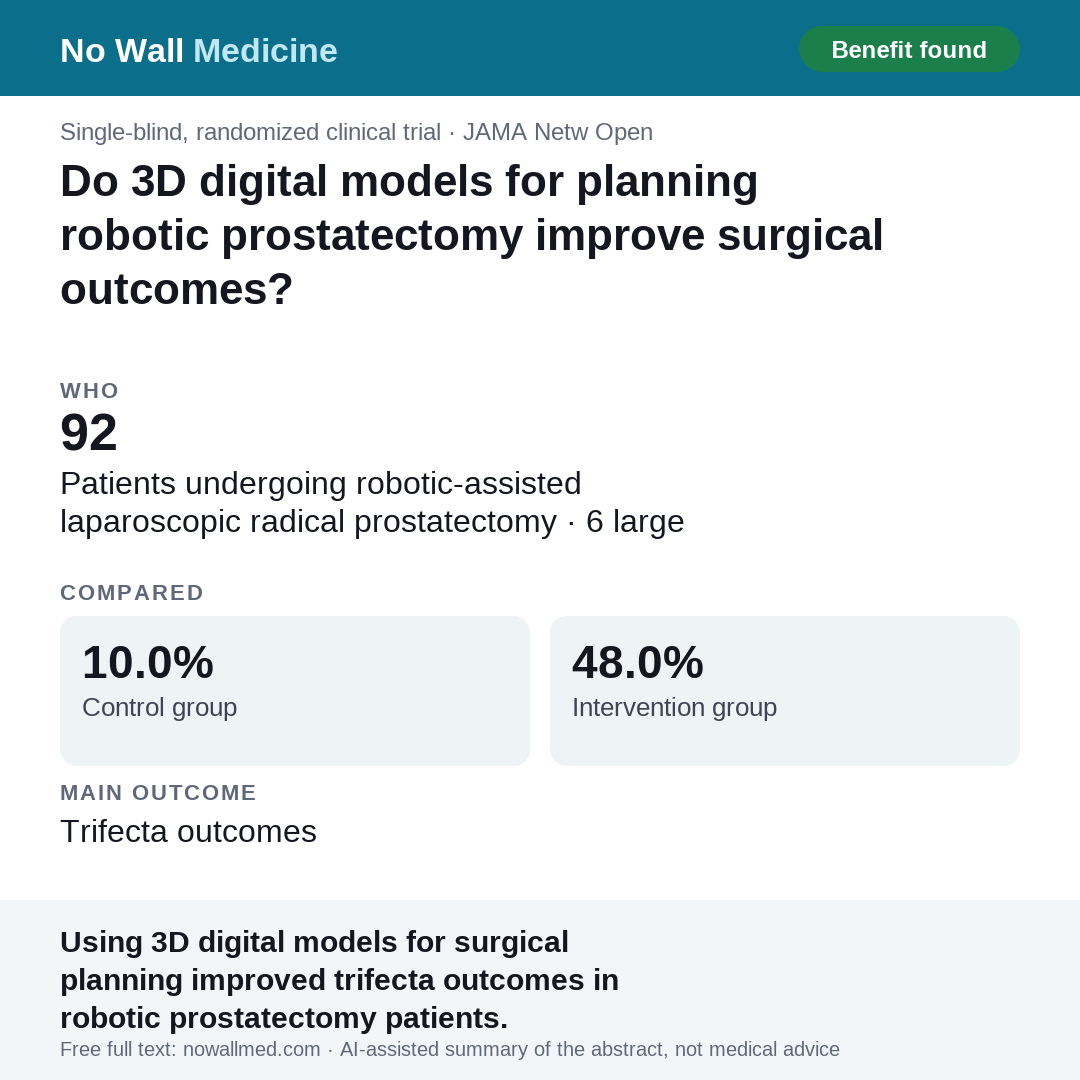
Do 3D digital models for planning robotic prostatectomy improve surgical outcomes?
Who
92
Patients undergoing robotic-assisted laparoscopic radical prostatectomy · 6 large teaching hospitals in the US
Compared
10.0%Control group
48.0%Intervention group
Main outcome
Trifecta outcomes
Result: absolute difference, 38.0% (95% CI 14.4% to 61.6%)
Bottom line: Using 3D digital models for surgical planning improved trifecta outcomes in robotic prostatectomy patients.
Limitation: Further work should assess effect in broader patients, physicians, and hospital settings.
JAMA Netw Open · 2024-09-03Download image
Clinical question: Do 3D digital models for planning robotic prostatectomy improve surgical outcomes?
Why it matters: It is unknown if using 3D digital models during preoperative planning for robotic prostatectomy improves oncologic, sexual, or urinary outcomes compared to standard 2D imaging.
Key points
- In this randomized trial of 92 patients, surgeons used 3D digital models for planning robotic-assisted laparoscopic radical prostatectomy compared to standard 2D imaging.
- The intervention group had lower rates of biochemical recurrence at 18 months (0 vs 7 [17.9%]) and were less likely to need radiation therapy (1 [3.1%] vs 12 [31.6%]).
- Trifecta outcomes, combining cancer control, sexual function, and urinary continence, were achieved by 12 (48.0%) patients in the intervention group versus 3 (10.0%) in the control group.
Headline and key points written with AI from the paper’s abstract, with every number checked against it. Read the paper before relying on them.
Was this summary helpful?
Subject terms
Cite this article
Shirk JD, Reiter RE, Wallen EM, Pak RW, Ahlering T, Badani KK. Trifecta Outcomes After Use of 3-Dimensional Digital Models for Planning of Robotic Prostatectomy: A Secondary Analysis of a Randomized Clinical Trial. JAMA Netw Open. 2024. doi:10.1001/jamanetworkopen.2024.34143
Spotted a mistake? Suggest a correction
Top studies every Monday
The week’s key trials and guidelines in your specialties, plus any topics you follow. By email, free.
Get the weekly digest