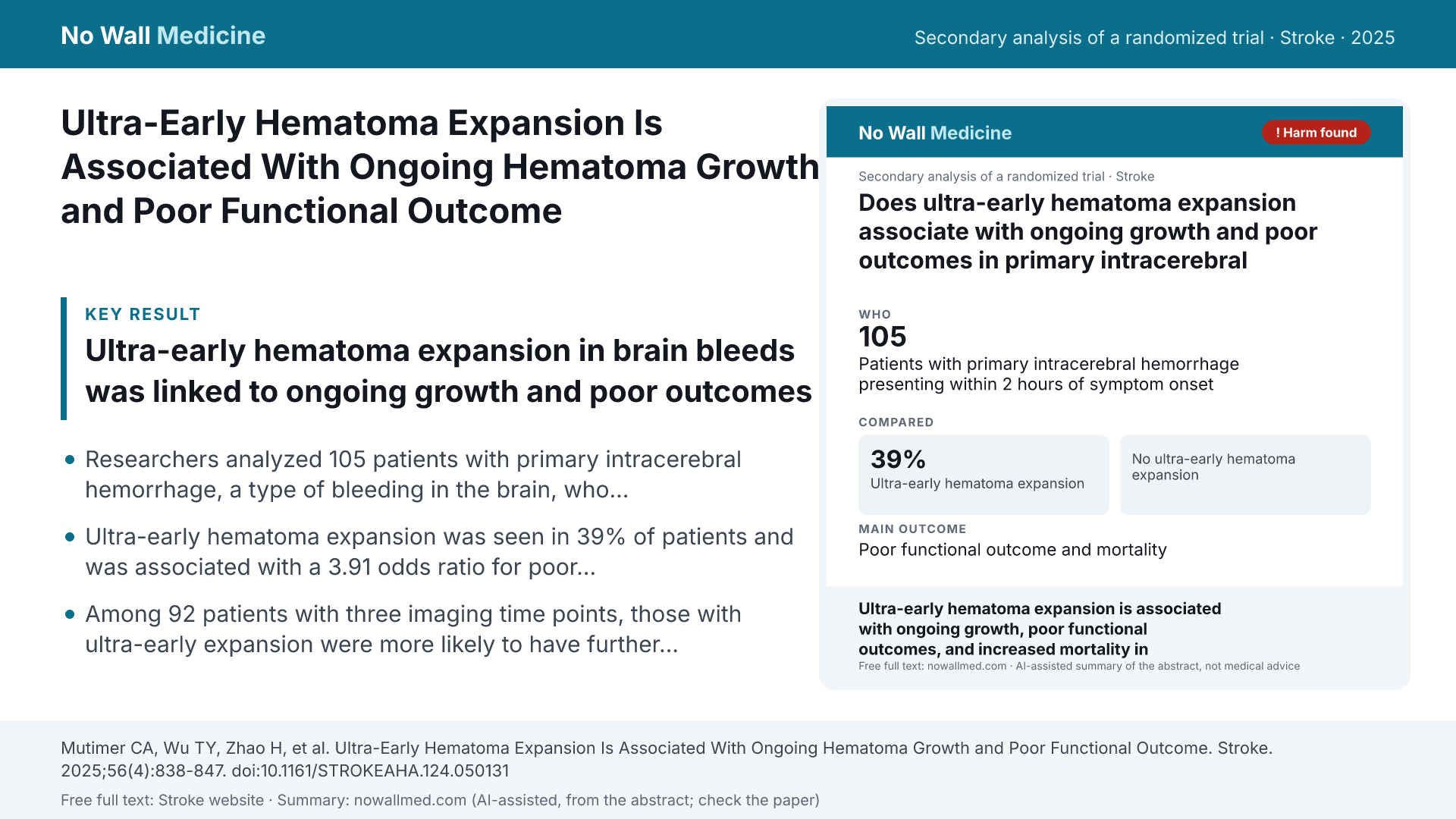
Ultra-early hematoma expansion in brain bleeds was linked to ongoing growth and poor outcomes
Ultra-Early Hematoma Expansion Is Associated With Ongoing Hematoma Growth and Poor Functional Outcome
Secondary analysis of a randomized trialHarm found
Does ultra-early hematoma expansion associate with ongoing growth and poor outcomes in primary intracerebral hemorrhage?
Who
105
Patients with primary intracerebral hemorrhage presenting within 2 hours of symptom onset
Compared
39%Ultra-early hematoma expansion
No ultra-early hematoma expansion
Main outcome
Poor functional outcome and mortality
Result: unadjusted odds ratio 3.91 [1.22-12.49] for poor functional outcome
Bottom line: Ultra-early hematoma expansion is associated with ongoing growth, poor functional outcomes, and increased mortality in intracerebral hemorrhage.
Limitation: Used unadjusted logistic regression models
Stroke · 2025-01-30Download image
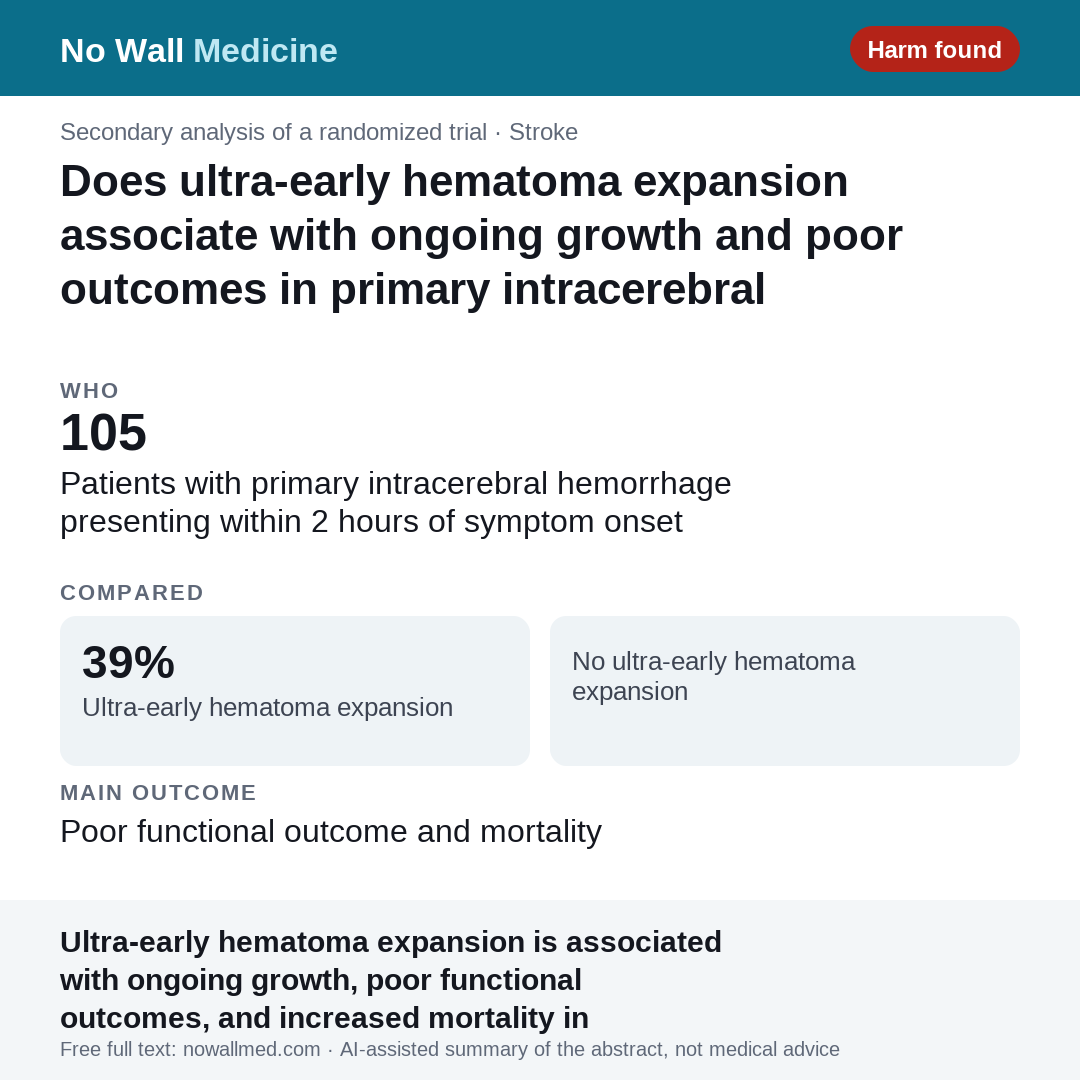
Clinical question: Does ultra-early hematoma expansion associate with ongoing growth and poor outcomes in primary intracerebral hemorrhage?
Why it matters: The clinical impact of ultra-early hematoma growth dynamics and the effectiveness of tranexamic acid on this expansion were unknown.
Key points
- Researchers analyzed 105 patients with primary intracerebral hemorrhage, a type of bleeding in the brain, who received imaging shortly after treatment began.
- Ultra-early hematoma expansion was seen in 39% of patients and was associated with a 3.91 odds ratio for poor functional outcomes and a 6.19 odds ratio for mortality.
- Among 92 patients with three imaging time points, those with ultra-early expansion were more likely to have further growth, at 29% compared to 6.6%.
Headline and key points written with AI from the paper’s abstract, with every number checked against it. Read the paper before relying on them.
Was this summary helpful?
Subject terms
Cite this article
Mutimer CA, Wu TY, Zhao H, Churilov L, Campbell BCV, Cheung A. Ultra-Early Hematoma Expansion Is Associated With Ongoing Hematoma Growth and Poor Functional Outcome. Stroke. 2025. doi:10.1161/STROKEAHA.124.050131
Spotted a mistake? Suggest a correction
Top studies every Monday
The week’s key trials and guidelines in your specialties, plus any topics you follow. By email, free.
Get the weekly digest