Technical and clinical factors influence how well tests predict fluid responsiveness in acutely ill patients
Variables influencing the prediction of fluid responsiveness: a systematic review and meta-analysis
Systematic review and meta-analysisMixed results
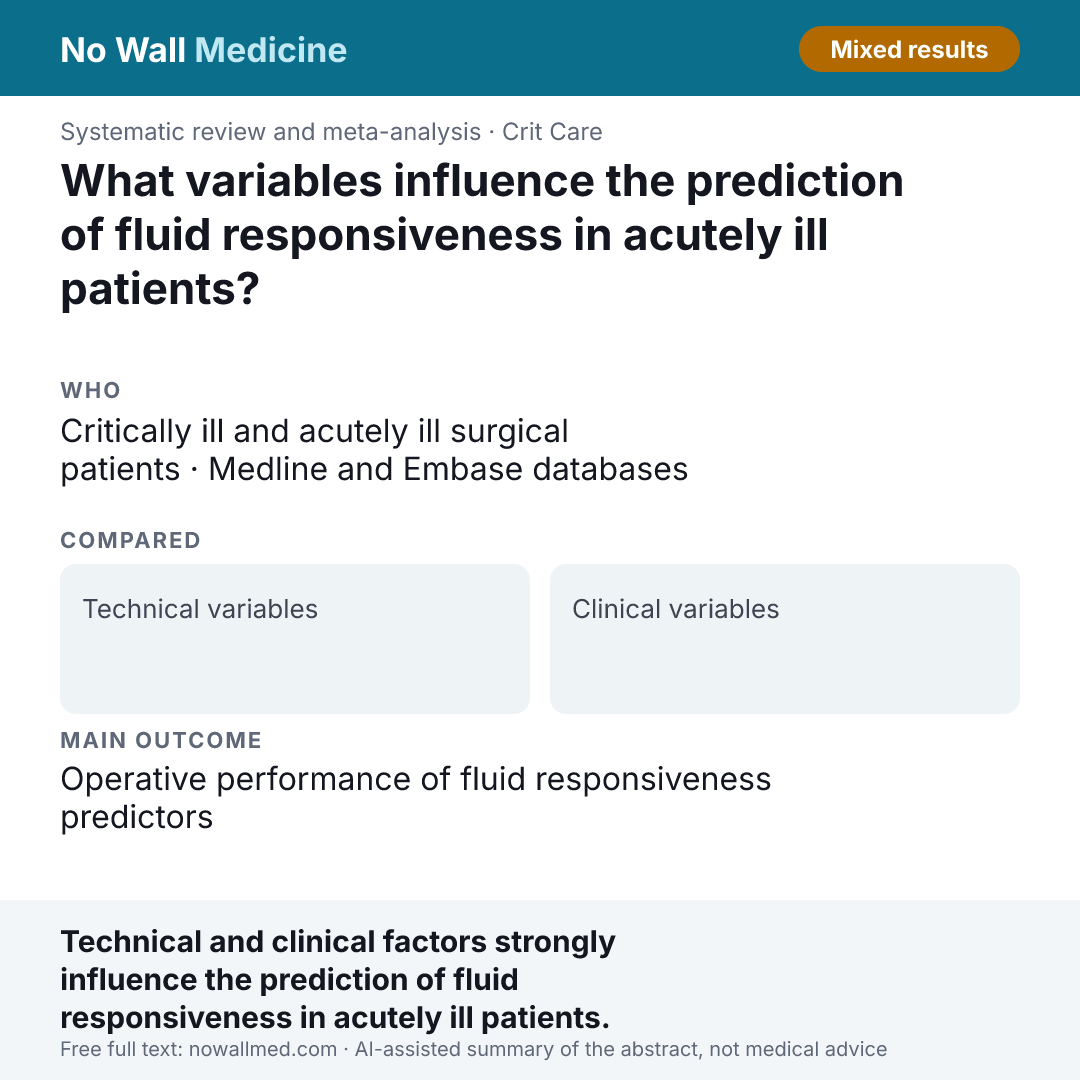
What variables influence the prediction of fluid responsiveness in acutely ill patients?
Who
Critically ill and acutely ill surgical patients · Medline and Embase databases
Compared
Technical variables
Clinical variables
Main outcome
Operative performance of fluid responsiveness predictors
Bottom line: Technical and clinical factors strongly influence the prediction of fluid responsiveness in acutely ill patients.
Crit Care · 2023-09-20 · Save PNG
Clinical question: What variables influence the prediction of fluid responsiveness in acutely ill patients?
Key points
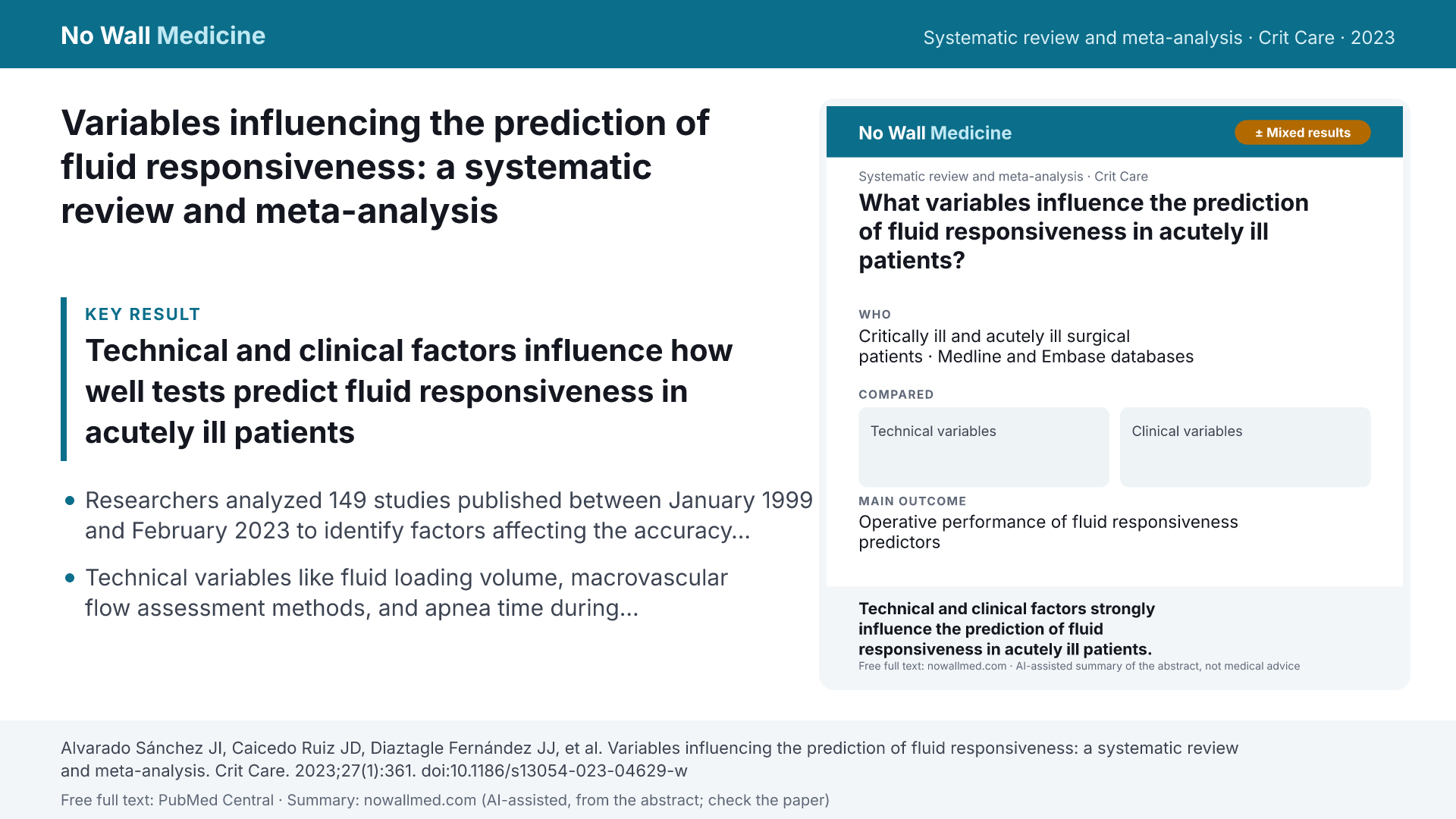
- Researchers analyzed 149 studies published between January 1999 and February 2023 to identify factors affecting the accuracy of fluid responsiveness predictors.
- Technical variables like fluid loading volume, macrovascular flow assessment methods, and apnea time during the end-expiratory occlusion test were linked to predictor performance.
- Clinical variables, including positive end-expiratory pressure and norepinephrine dosage, were also associated with the performance of these predictor tests.
Headline and key points written with AI from the paper’s abstract, with every number checked against it. Read the paper before relying on them.
Was this summary helpful?
Subject terms
Headline, design, result, key points, caveat and citation as plain text.
Cite this article
Alvarado Sánchez JI, Caicedo Ruiz JD, Diaztagle Fernández JJ, et al. Variables influencing the prediction of fluid responsiveness: a systematic review and meta-analysis. Crit Care. 2023;27(1):361. doi:10.1186/s13054-023-04629-w
Spotted a mistake? Suggest a correction