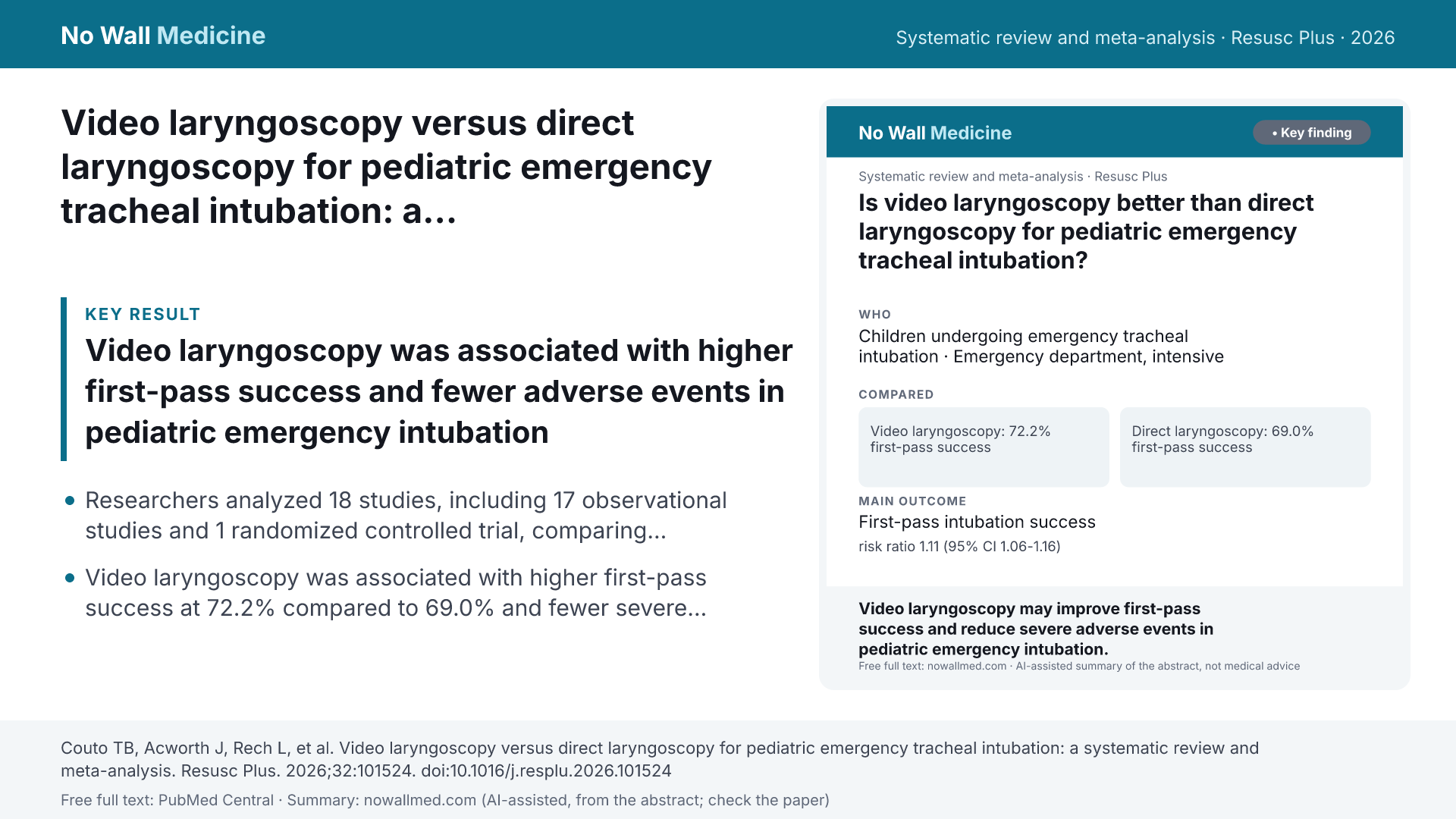
Video laryngoscopy was associated with higher first-pass success and fewer adverse events in pediatric emergency intubation
Video laryngoscopy versus direct laryngoscopy for pediatric emergency tracheal intubation: a systematic review and meta-analysis
Systematic review and meta-analysisKey finding
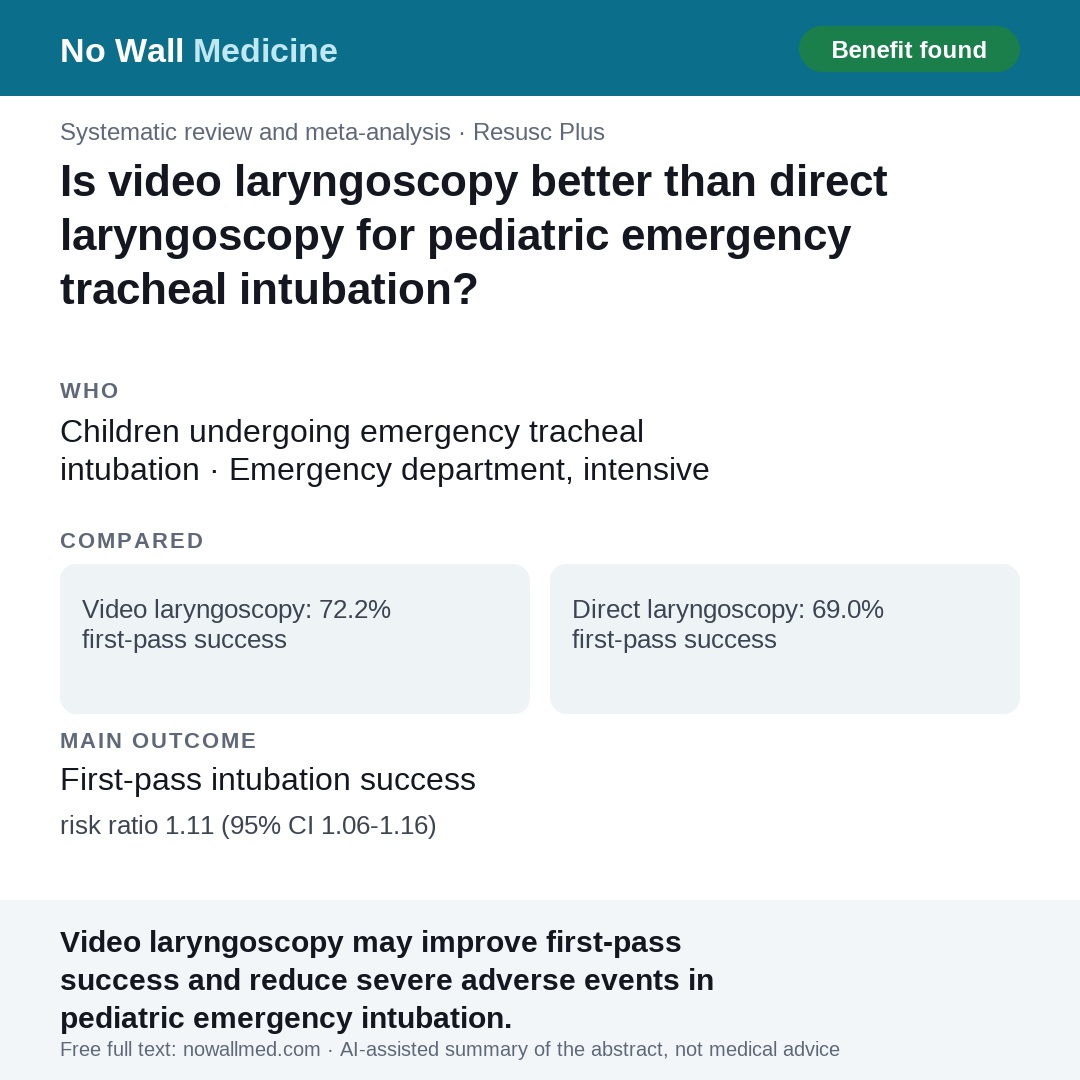
Is video laryngoscopy better than direct laryngoscopy for pediatric emergency tracheal intubation?
Who
Children undergoing emergency tracheal intubation · Emergency department, intensive care, and prehospital settings
Compared
Video laryngoscopy: 72.2% first-pass success
Direct laryngoscopy: 69.0% first-pass success
Main outcome
First-pass intubation success
Result: risk ratio 1.11 (95% CI 1.06-1.16)
Bottom line: Video laryngoscopy may improve first-pass success and reduce severe adverse events in pediatric emergency intubation.
Limitation: Certainty of evidence is very low and causal inferences are limited.
Resusc Plus · 2026-10-07Download image
Clinical question: Is video laryngoscopy better than direct laryngoscopy for pediatric emergency tracheal intubation?
Key points
- Researchers analyzed 18 studies, including 17 observational studies and 1 randomized controlled trial, comparing video laryngoscopy to direct laryngoscopy in children.
- Video laryngoscopy was associated with higher first-pass success at 72.2% compared to 69.0% and fewer severe adverse events at 7.7% compared to 11.8%.
- Overall intubation success and oxygen desaturation levels were similar between the two methods.
Limitation the authors note: The certainty of evidence for the main findings was very low and no studies reported survival outcomes or data specific to cardiac arrest.
Headline and key points written with AI from the paper’s abstract, with every number checked against it. Read the paper before relying on them.
Was this summary helpful?
Headline, design, result, key points, caveat and citation as plain text.
Cite this article
Couto TB, Acworth J, Rech L, et al. Video laryngoscopy versus direct laryngoscopy for pediatric emergency tracheal intubation: a systematic review and meta-analysis. Resusc Plus. 2026;32:101524. doi:10.1016/j.resplu.2026.101524
Spotted a mistake? Suggest a correction