Voice-activated cognitive behavioral therapy improved insomnia symptoms in breast cancer survivors
Voice-Activated Cognitive Behavioral Therapy for Insomnia: A Randomized Clinical Trial
Randomized clinical trialBenefit found
Does a voice-activated internet-delivered program improve insomnia symptoms among breast cancer survivors?
Who
76
Breast cancer survivors with insomnia · Advocacy groups, survivorship groups, and an oncology clinic
Compared
Voice-activated cognitive behavioral therapy: -8.4 (4.7) points
Educational control: -2.6 (3.5) points
Main outcome
Changes in Insomnia Severity Index scores
Result: Cohen d, 1.41 (95% CI, 0.87-1.94)
Bottom line: A voice-activated cognitive behavioral therapy program improved insomnia symptoms in breast cancer survivors.
JAMA Netw Open · 2024-09-03Download image
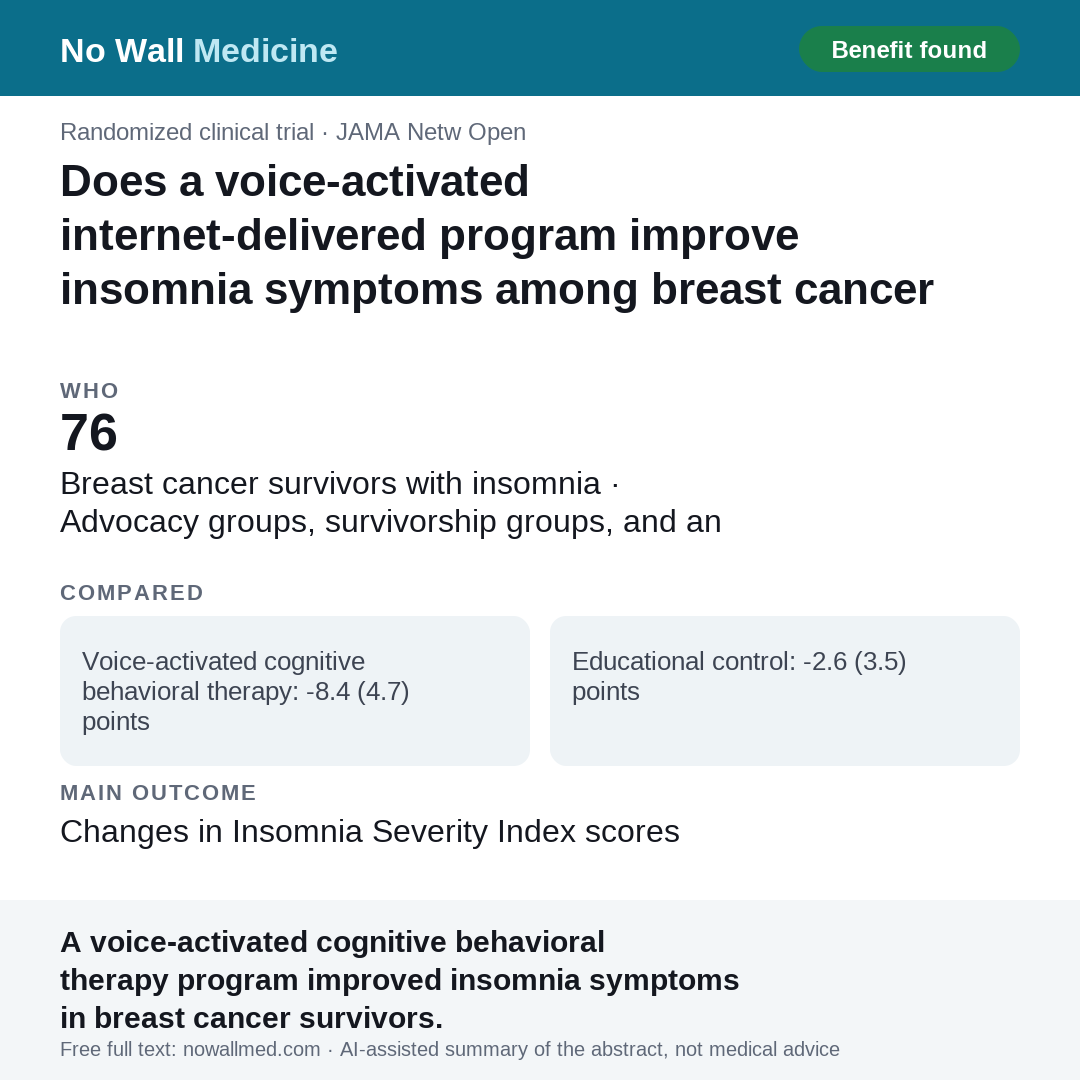
Clinical question: Does a voice-activated internet-delivered program improve insomnia symptoms among breast cancer survivors?
Why it matters: It is unknown if a voice-activated, internet-delivered version of cognitive behavioral therapy for insomnia can effectively improve sleep symptoms in breast cancer survivors.
Key points
- The study randomized 76 breast cancer survivors to either a voice-activated cognitive behavioral therapy for insomnia program via a smart speaker or an educational control group.
- The intervention group showed a mean Insomnia Severity Index score change of -8.4 (SD 4.7) compared to -2.6 (SD 3.5) in the control group.
- The voice-activated program was associated with better sleep quality, less time awake after falling asleep, shorter time to fall asleep, and higher sleep efficiency.
Headline and key points written with AI from the paper’s abstract, with every number checked against it. Read the paper before relying on them.
Topics
Cite this article
Starling CM, Greenberg D, Lewin D, Shaw C, Zhou ES, Lieberman D. Voice-Activated Cognitive Behavioral Therapy for Insomnia: A Randomized Clinical Trial. JAMA Netw Open. 2024. doi:10.1001/jamanetworkopen.2024.35011
Spotted a mistake? Suggest a correction
Top studies every Monday
The week’s key trials and guidelines in your specialties, by email. Free.
Get the weekly digest