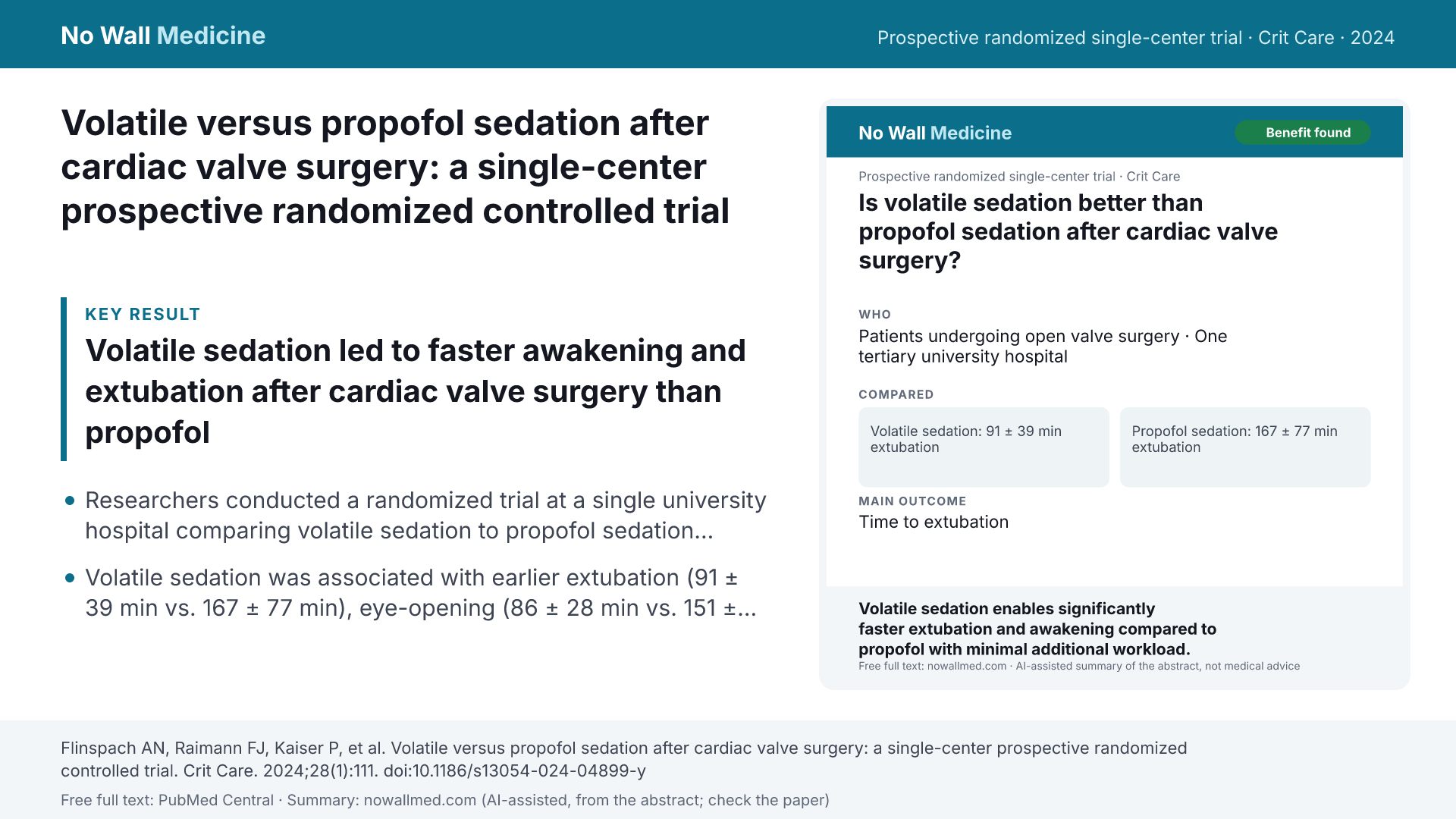
Volatile sedation led to faster awakening and extubation after cardiac valve surgery than propofol
Volatile versus propofol sedation after cardiac valve surgery: a single-center prospective randomized controlled trial
Prospective randomized single-center trialBenefit found
Is volatile sedation better than propofol sedation after cardiac valve surgery?
Who
Patients undergoing open valve surgery · One tertiary university hospital
Compared
Volatile sedation: 91 ± 39 min extubation
Propofol sedation: 167 ± 77 min extubation
Main outcome
Time to extubation
Bottom line: Volatile sedation enables significantly faster extubation and awakening compared to propofol with minimal additional workload.
Crit Care · 2024-04-05Download image
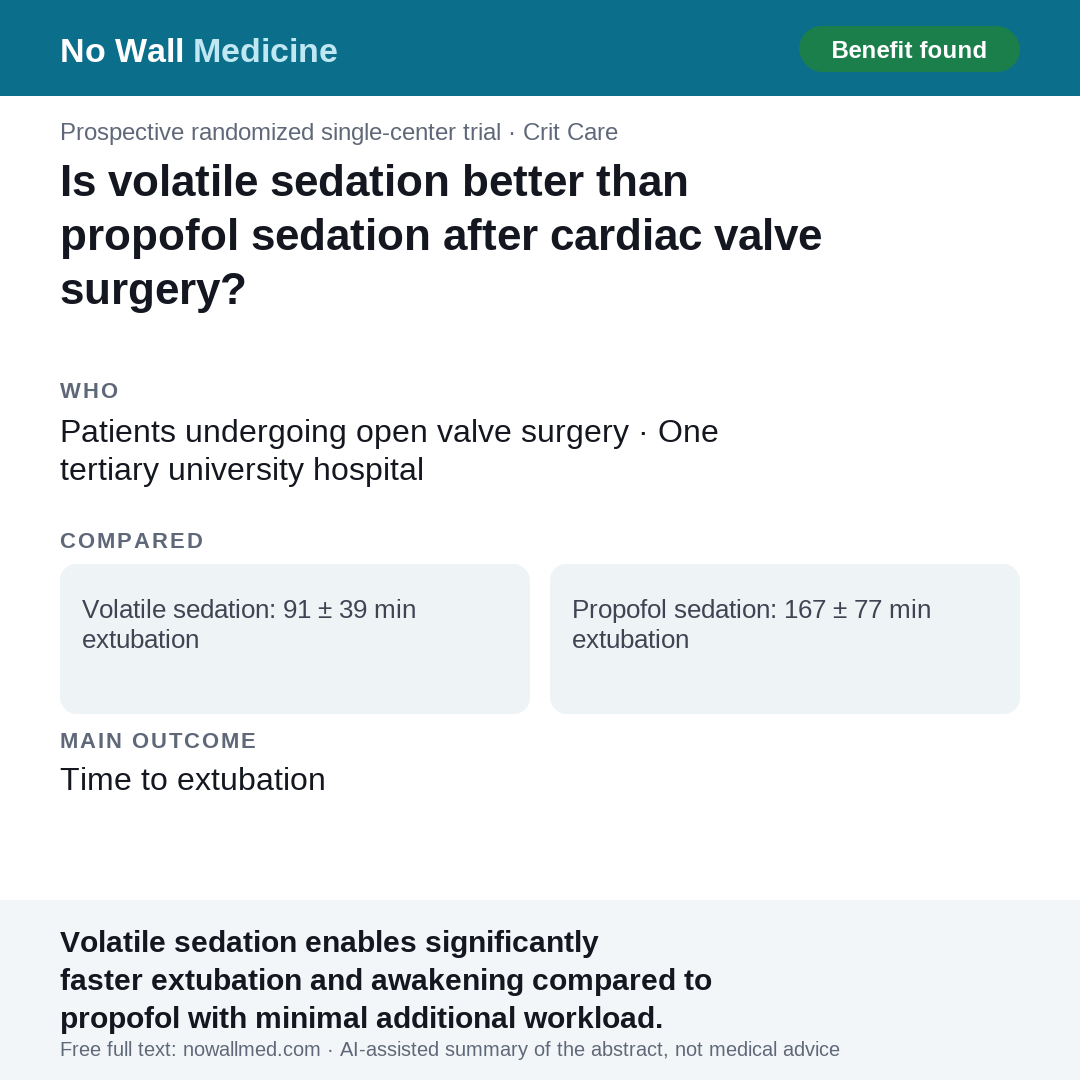
Clinical question: Is volatile sedation better than propofol sedation after cardiac valve surgery?
Why it matters: It is unclear if volatile sedation can efficiently balance the need for monitoring with the goal of timely postoperative awakening in intensive care.
Key points
- Researchers conducted a randomized trial at a single university hospital comparing volatile sedation to propofol sedation in patients after open valve surgery.
- Volatile sedation was associated with earlier extubation (91 ± 39 min vs. 167 ± 77 min), eye-opening (86 ± 28 min vs. 151 ± 71 min), and command compliance (93 ± 38 min vs. 164 ± 75 min).
- The use of volatile sedation was associated with a median set-up workload of 9:56 min (± 4:16 min) and no differences in complications or cardiopulmonary bypass time.
Headline and key points written with AI from the paper’s abstract, with every number checked against it. Read the paper before relying on them.
Was this summary helpful?
Subject terms
Cite this article
Flinspach AN, Raimann FJ, Kaiser P, Pfaff M, Zacharowski K, Neef V. Volatile versus propofol sedation after cardiac valve surgery: a single-center prospective randomized controlled trial. Crit Care. 2024. doi:10.1186/s13054-024-04899-y
Spotted a mistake? Suggest a correction