Injectable contraceptive was associated with more weight gain than copper intrauterine device or implants
Weight change among women using intramuscular depot medroxyprogesterone acetate, a copper intrauterine device, or a levonorgestrel implant for contraception: Findings from a randomised, multicentre, open-label trial
Randomized, multicentre, open-label trialMixed results
How do different contraceptive methods affect weight change among women?
Who
7014
HIV negative women aged 16-35 years desiring contraception · 12 sites in eSwatini, Kenya, South Africa and Zambia
Compared
3.5 kgintramuscular depot medroxyprogesterone acetate (SD = 6.3)
1.5 kglevonorgestrel implant (SD = 5.7)
2.4 kgcopper intrauterine device (SD = 5.9)
Main outcome
weight change from study enrolment to the final visit
Result: 2.02 kg (95% CI, 1.68, 2.36) for DMPA-IM versus copper IUD
Bottom line: Weight increased in all groups, with progestin-only methods causing more weight gain than the copper intrauterine device.
eClinicalMedicine · 2021-04-06Download image
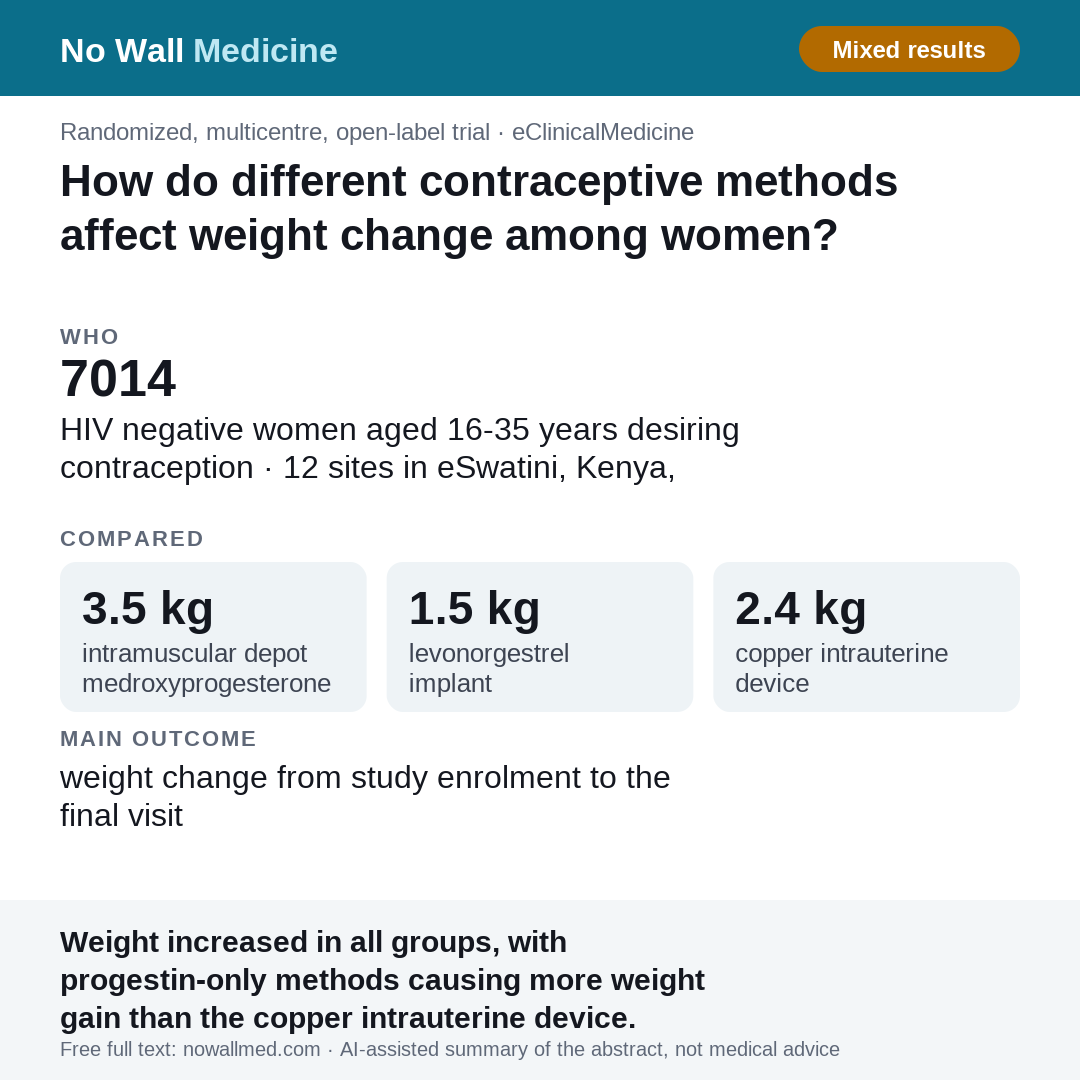
Clinical question: How do different contraceptive methods affect weight change among women?
Key points
- The study followed 7014 women randomized to receive an injectable contraceptive, a copper intrauterine device, or a hormone-releasing implant.
- Mean weight increased by 3.5 kg in the injectable group, 1.5 kg in the copper intrauterine device group, and 1.5 kg in the implant group.
- The injectable group showed a 2.02 kg greater weight increase compared to the copper intrauterine device group.
Headline and key points written with AI from the paper’s abstract, with every number checked against it. Read the paper before relying on them.
Was this summary helpful?
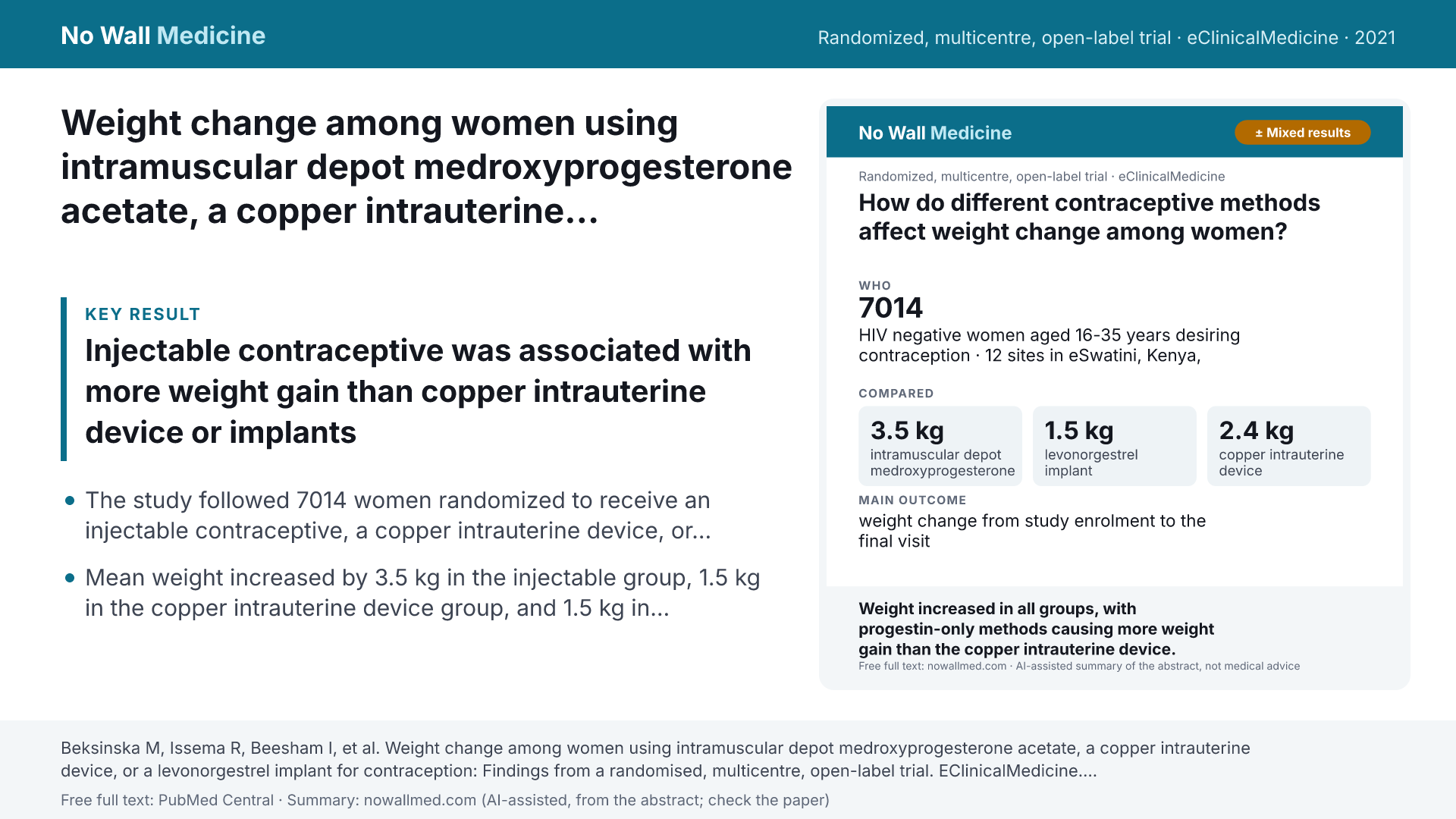
Headline, design, result, key points, caveat and citation as plain text.
Cite this article
Beksinska M, Issema R, Beesham I, et al. Weight change among women using intramuscular depot medroxyprogesterone acetate, a copper intrauterine device, or a levonorgestrel implant for contraception: Findings from a randomised, multicentre, open-label trial. eClinicalMedicine. 2021. doi:10.1016/j.eclinm.2021.100800
Spotted a mistake? Suggest a correction