Machine learning algorithms can predict the success of flow diverter treatment for brain aneurysms
What can we learn from machine learning studies on flow diverter aneurysm embolization? A systematic review
Systematic reviewBenefit found
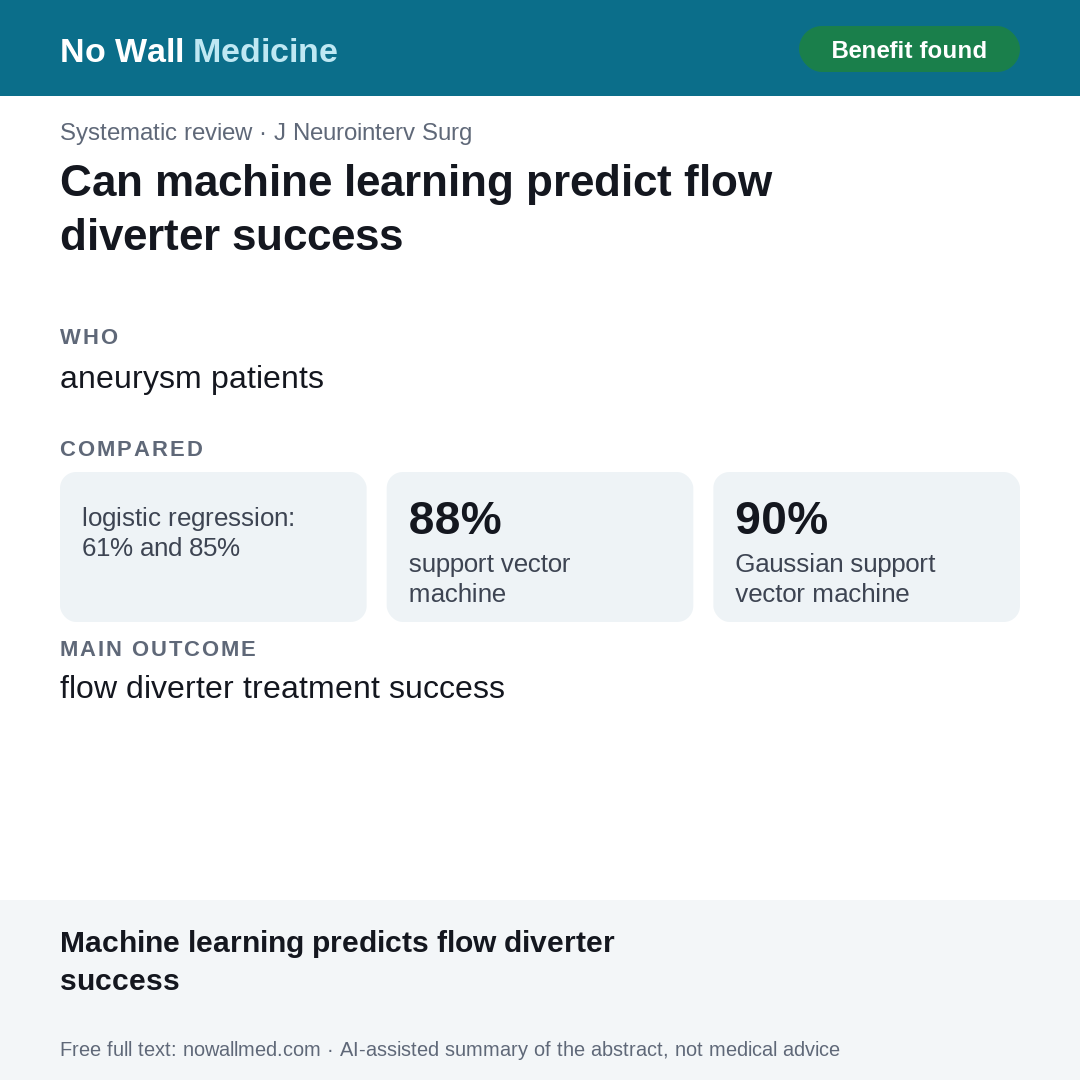
Can machine learning predict flow diverter success
Who
aneurysm patients
Compared
logistic regression: 61% and 85%
88%support vector machine
90%Gaussian support vector machine
Main outcome
flow diverter treatment success
Bottom line: Machine learning predicts flow diverter success
J Neurointerv Surg · 2025-10-16Download image
Why it matters: Predicting successful outcomes for certain brain aneurysms treated with flow diverters has become increasingly challenging for doctors.
Key points
- Researchers reviewed five studies to evaluate how different machine learning algorithms predict if flow diverters successfully close brain aneurysms.
- The accuracy rates for the algorithms ranged from 61% to 90%, with Gaussian support vector machines reaching 90%.
- Two studies found that removing insignificant features from the models was associated with a decrease in predictive accuracy.
Headline and key points written with AI from the paper’s abstract, with every number checked against it. Read the paper before relying on them.
Topics
Cite this article
Bayraktar EA, Cortese J, Jabal MS, Ghozy S, Orscelik A, Bilgin C. What can we learn from machine learning studies on flow diverter aneurysm embolization? A systematic review. J Neurointerv Surg. 2025. doi:10.1136/jnis-2024-022147
Spotted a mistake? Suggest a correction