Visual abstracts
New randomized trials and meta-analyses from leading journals at a glance: who was studied, what was compared, and what was found. Every paper is free to read in full.
All specialtiesCardiology 2979Oncology 2531Gastroenterology & Hepatology 1146Infectious Disease 1931Neurology 1189Psychiatry & Mental Health 1385Pulmonology 1235Critical Care 823Endocrinology & Diabetes 1506Pediatrics 1763Surgery 1556Orthopedics & Sports Medicine 533Neurosurgery 358Cardiothoracic & Vascular Surgery 337Plastic & Reconstructive Surgery 426Nephrology 615Rheumatology 460Hematology 654Dermatology 357Ophthalmology 332Obstetrics & Gynecology 981Public & Global Health 555Radiology & Imaging 420Anesthesiology 602Urology 494ENT (Otolaryngology) 335Emergency Medicine 328Allergy & Immunology 190Geriatrics 634Family Medicine & Primary Care 342Medical Genetics & Genomics 352Pathology & Laboratory Medicine 103Physical Medicine & Rehabilitation 475Palliative Care 254Nutrition 819Digital Health & AI 1412General Medicine 212
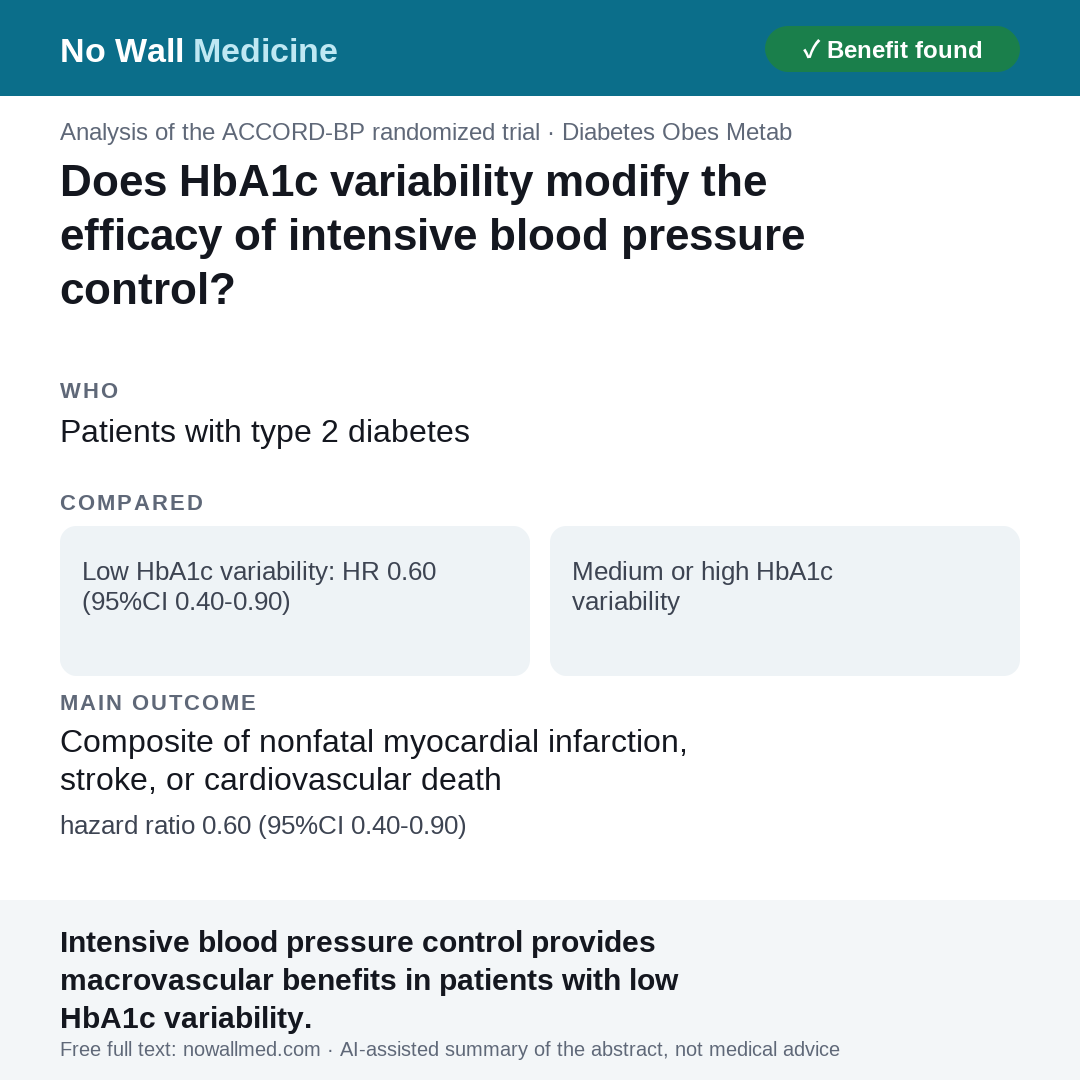
The effect of HbA1c variability on the efficacy of intensive blood pressure control in patients with type 2 diabetes
Analysis of the ACCORD-BP randomized trialBenefit found
Does HbA1c variability modify the efficacy of intensive blood pressure control?
Who
Patients with type 2 diabetes
Compared
Low HbA1c variability: HR 0.60 (95%CI 0.40-0.90)
Medium or high HbA1c variability
Main outcome
Composite of nonfatal myocardial infarction, stroke, or cardiovascular death
Result: hazard ratio 0.60 (95%CI 0.40-0.90)
Bottom line: Intensive blood pressure control provides macrovascular benefits in patients with low HbA1c variability.
Diabetes Obes Metab · 2024-12-03Download image
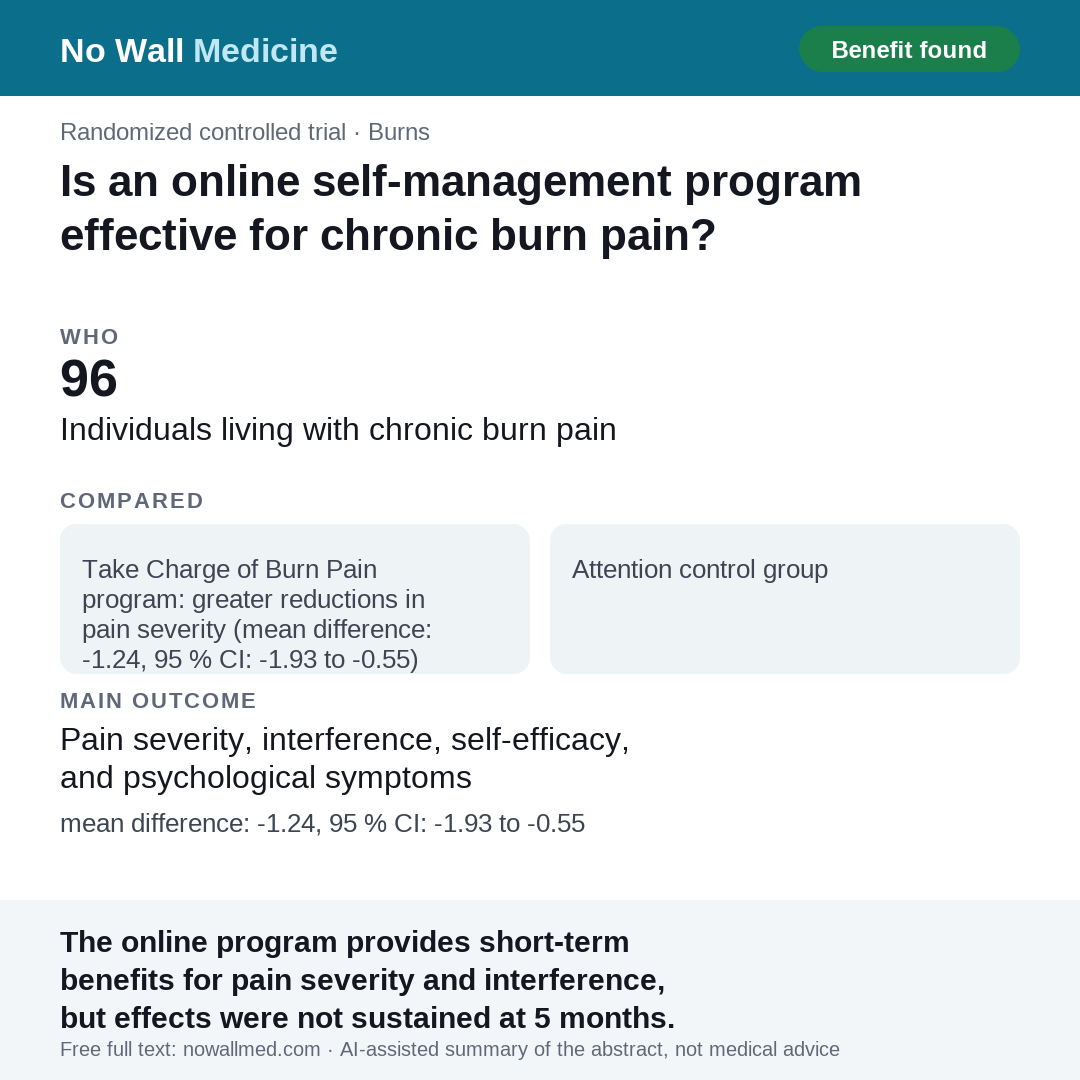
Efficacy of an online self-management program for chronic burn pain: A randomized controlled trial of the Take Charge of Burn Pain program
Randomized controlled trialBenefit found
Is an online self-management program effective for chronic burn pain?
Who
96
Individuals living with chronic burn pain
Compared
Take Charge of Burn Pain program: greater reductions in pain severity (mean difference: -1.24, 95 % CI: -1.93 to -0.55)
Attention control group
Main outcome
Pain severity, interference, self-efficacy, and psychological symptoms
Result: mean difference: -1.24, 95 % CI: -1.93 to -0.55
Bottom line: The online program provides short-term benefits for pain severity and interference, but effects were not sustained at 5 months.
Burns · 2024-12-03Download image
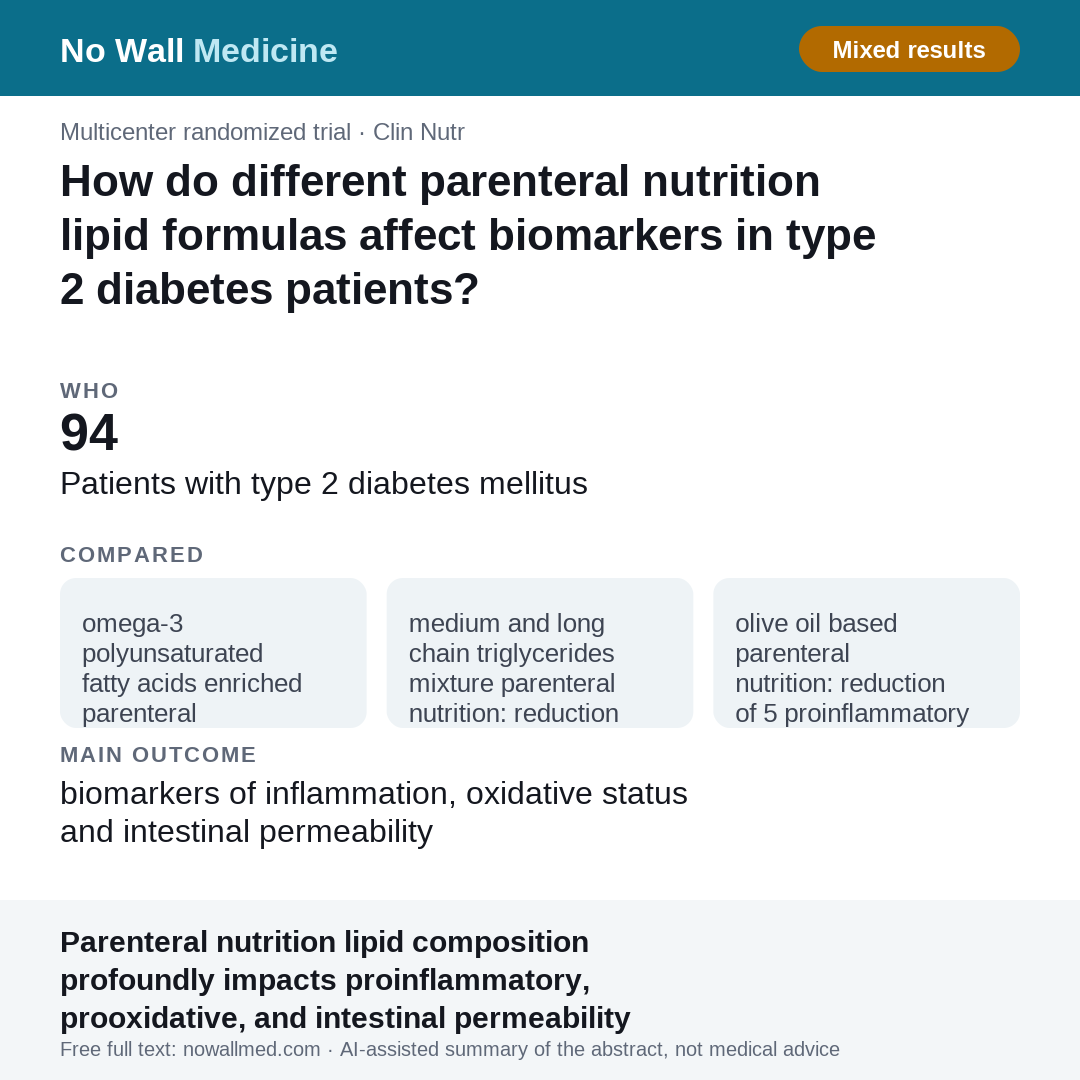
Biomarkers of oxidation, inflammation and intestinal permeability in persons with diabetes mellitus with parenteral nutrition: A multicenter randomized trial
Multicenter randomized trialMixed results
How do different parenteral nutrition lipid formulas affect biomarkers in type 2 diabetes patients?
Who
94
Patients with type 2 diabetes mellitus
Compared
omega-3 polyunsaturated fatty acids enriched parenteral nutrition: reduction of 8 proinflammatory cytokines
medium and long chain triglycerides mixture parenteral nutrition: reduction of 2 proinflammatory cytokines
olive oil based parenteral nutrition: reduction of 5 proinflammatory cytokines
Main outcome
biomarkers of inflammation, oxidative status and intestinal permeability
Bottom line: Parenteral nutrition lipid composition profoundly impacts proinflammatory, prooxidative, and intestinal permeability biomarkers in patients with type 2 diabetes.
Clin Nutr · 2024-12-03Download image
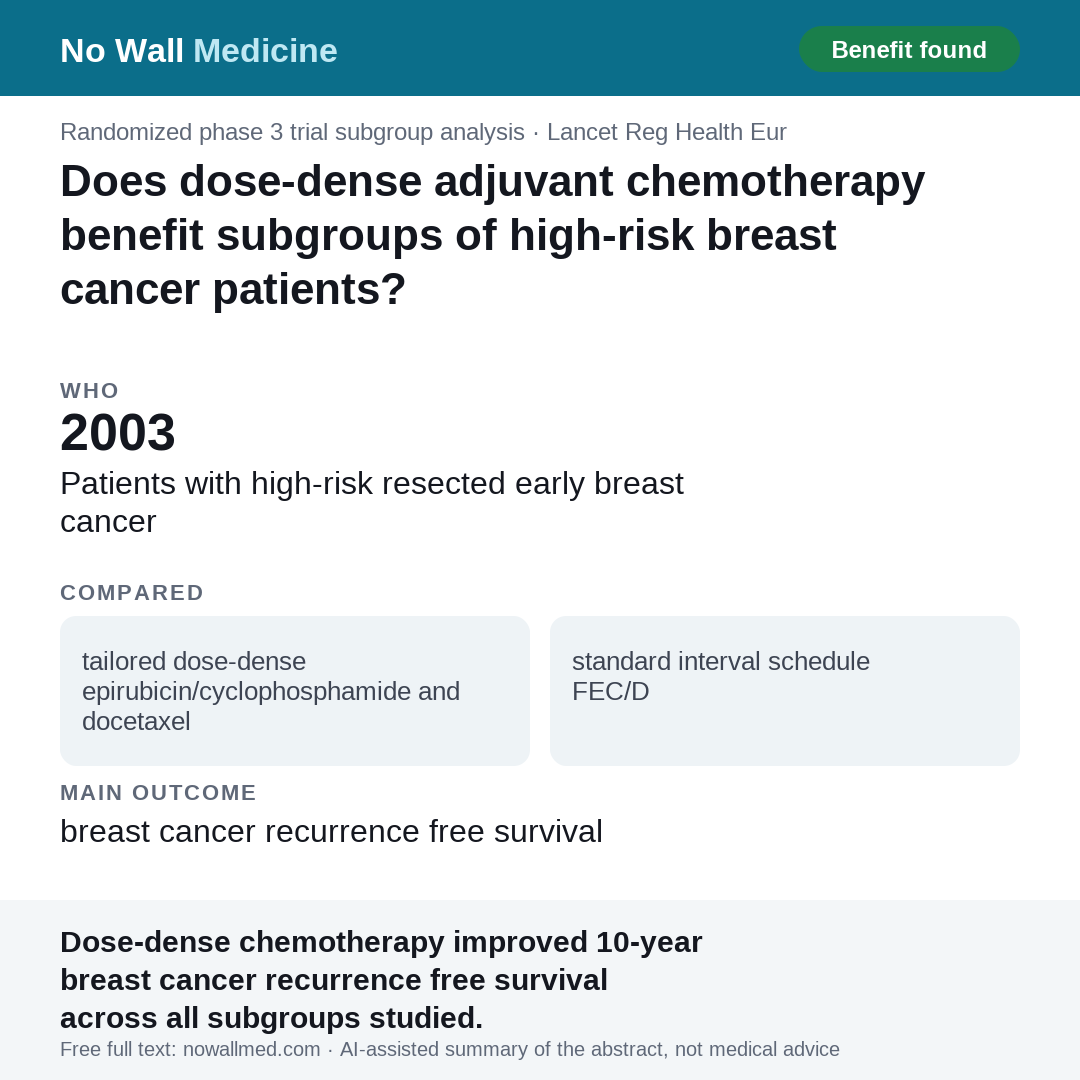
Benefit from dose-dense adjuvant chemotherapy for breast cancer: subgroup analyses from the randomised phase 3 PANTHER trial
Randomized phase 3 trial subgroup analysisBenefit found
Does dose-dense adjuvant chemotherapy benefit subgroups of high-risk breast cancer patients?
Who
2003
Patients with high-risk resected early breast cancer
Compared
tailored dose-dense epirubicin/cyclophosphamide and docetaxel
standard interval schedule FEC/D
Main outcome
breast cancer recurrence free survival
Result: Hazard Ratio 0.83 (95% CI 0.65-1.05) for luminal patients
Bottom line: Dose-dense chemotherapy improved 10-year breast cancer recurrence free survival across all subgroups studied.
Funded by: Cancerfonden, Bröstcancerförbundet, Radiumhemmets Forskningsfonder, Amgen, Roche, sanofi-aventis
Lancet Reg Health Eur · 2024-12-03Download image
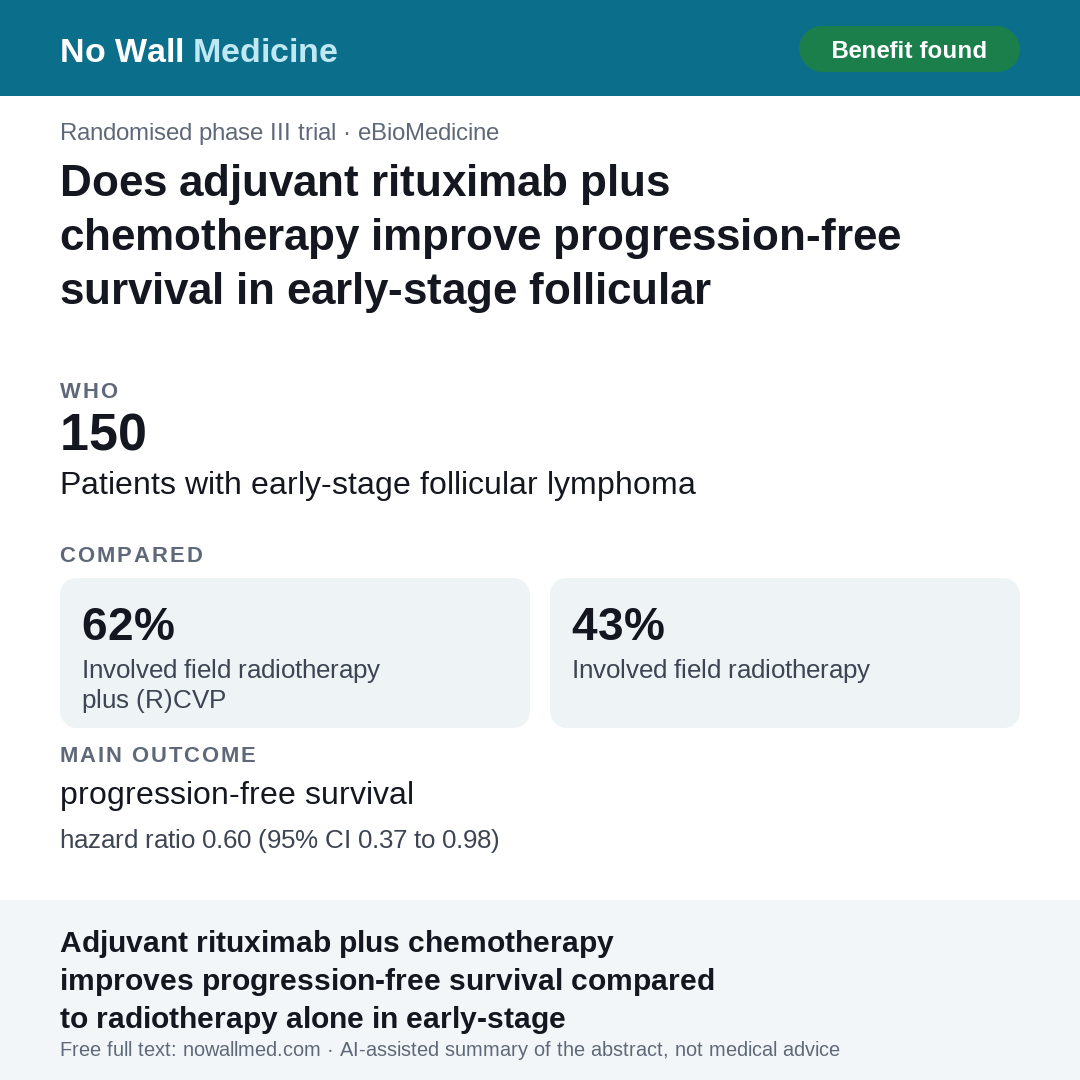
Adjuvant rituximab and elevated intratumoural CD8 expression are associated with sustained disease control after radiotherapy in a randomised trial of systemic therapy in early-stage follicular lymphoma
Randomised phase III trialBenefit found
Does adjuvant rituximab plus chemotherapy improve progression-free survival in early-stage follicular lymphoma?
Who
150
Patients with early-stage follicular lymphoma
Compared
62%Involved field radiotherapy plus (R)CVP (10-year progression-free survival)
43%Involved field radiotherapy (10-year progression-free survival)
Main outcome
progression-free survival
Result: hazard ratio 0.60 (95% CI 0.37 to 0.98)
Bottom line: Adjuvant rituximab plus chemotherapy improves progression-free survival compared to radiotherapy alone in early-stage follicular lymphoma.
Funded by: Cancer Council Victora; National Health and Medical Research Council; Leukaemia Foundation; Mater Foundation
eBioMedicine · 2024-12-03Download image
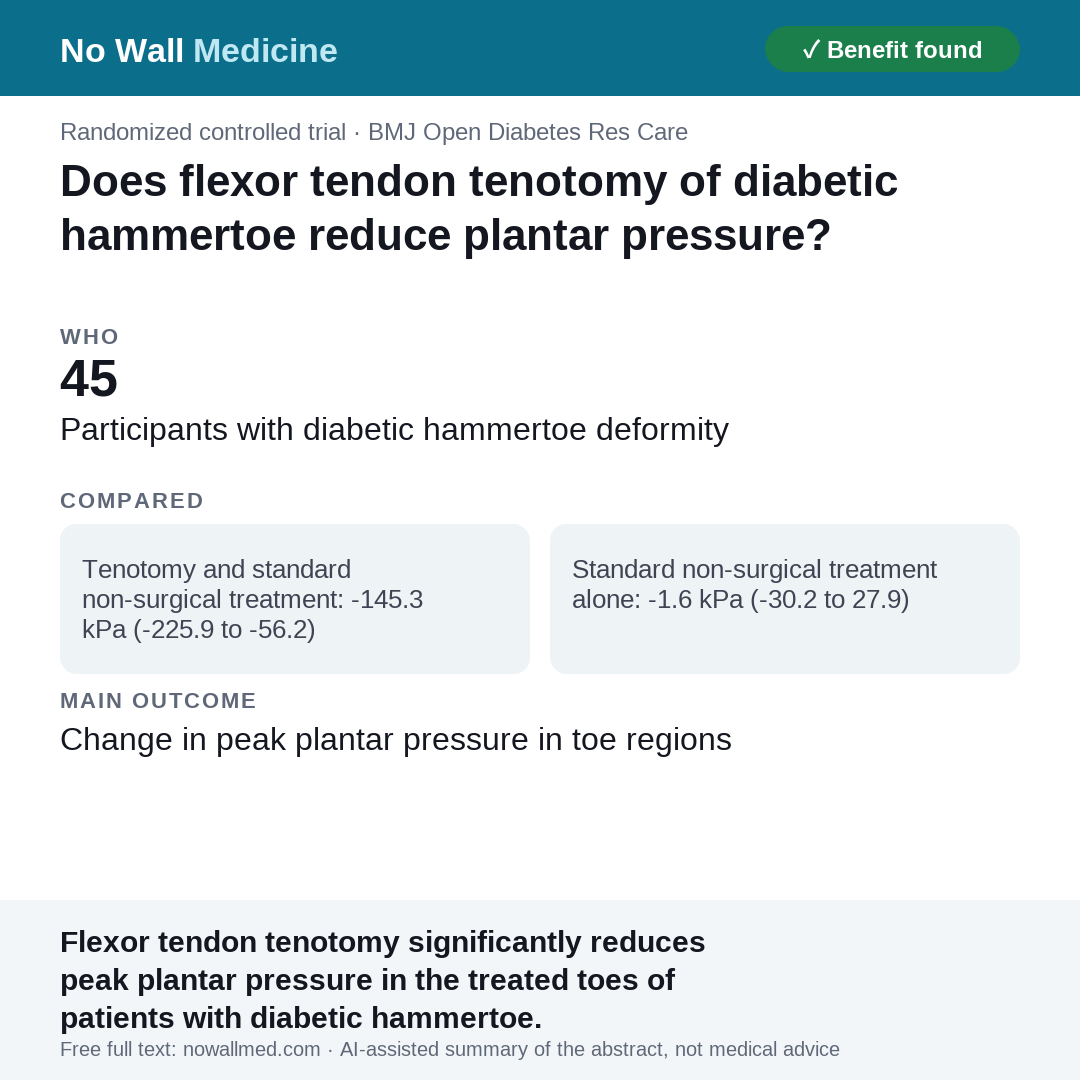
Effect of flexor tendon tenotomy of the diabetic hammertoe on plantar pressure: a randomized controlled trial
Randomized controlled trialBenefit found
Does flexor tendon tenotomy of diabetic hammertoe reduce plantar pressure?
Who
45
Participants with diabetic hammertoe deformity
Compared
Tenotomy and standard non-surgical treatment: -145.3 kPa (-225.9 to -56.2)
Standard non-surgical treatment alone: -1.6 kPa (-30.2 to 27.9)
Main outcome
Change in peak plantar pressure in toe regions
Bottom line: Flexor tendon tenotomy significantly reduces peak plantar pressure in the treated toes of patients with diabetic hammertoe.
BMJ Open Diabetes Res Care · 2024-12-03Download image
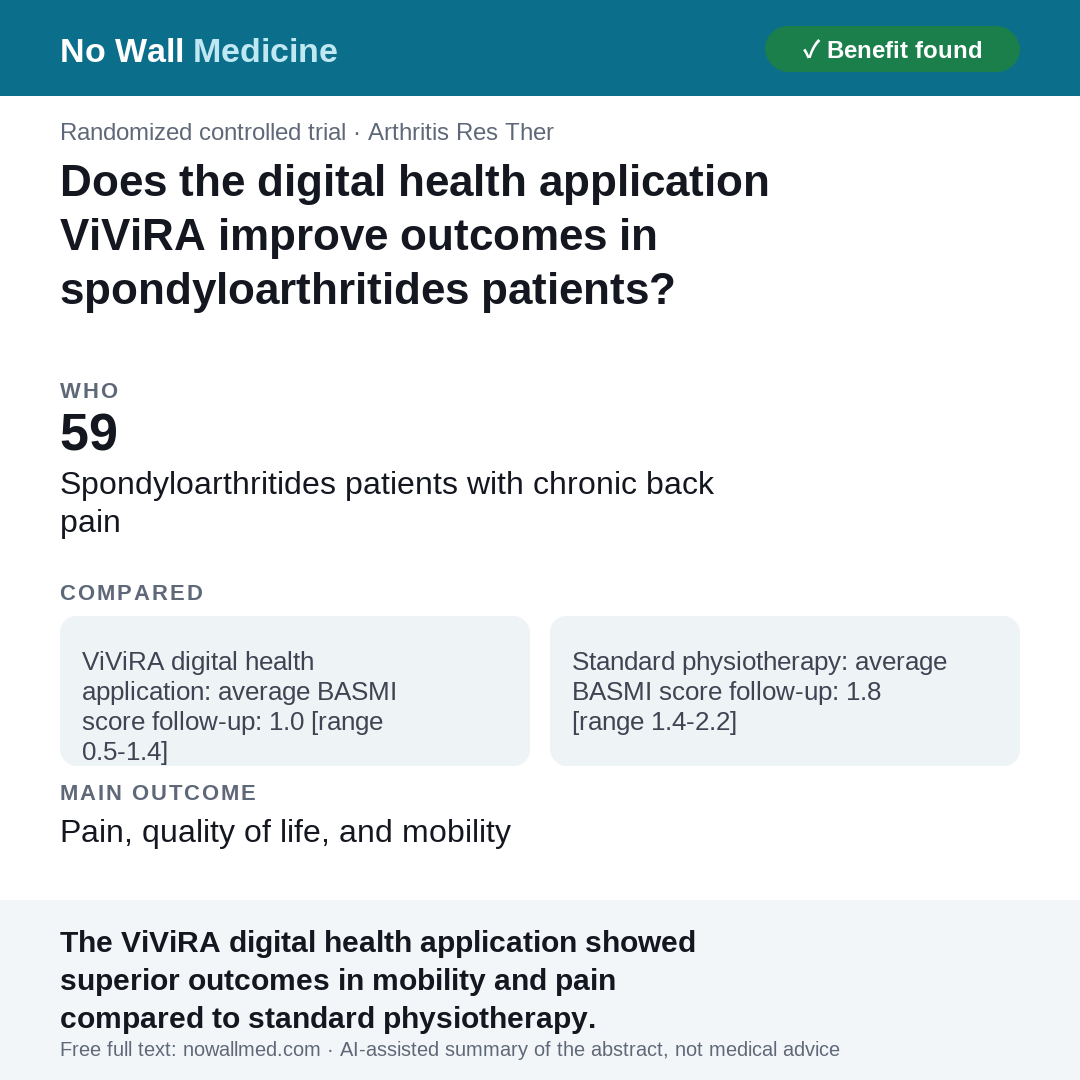
Impact of the digital health application ViViRA on spinal mobility, physical function, quality of life and pain perception in spondyloarthritides patients: a randomized controlled trial
Randomized controlled trialBenefit found
Does the digital health application ViViRA improve outcomes in spondyloarthritides patients?
Who
59
Spondyloarthritides patients with chronic back pain
Compared
ViViRA digital health application: average BASMI score follow-up: 1.0 [range 0.5-1.4]
Standard physiotherapy: average BASMI score follow-up: 1.8 [range 1.4-2.2]
Main outcome
Pain, quality of life, and mobility
Bottom line: The ViViRA digital health application showed superior outcomes in mobility and pain compared to standard physiotherapy.
Limitation: Further larger studies are needed to confirm these promising results.
Arthritis Res Ther · 2024-12-03Download image
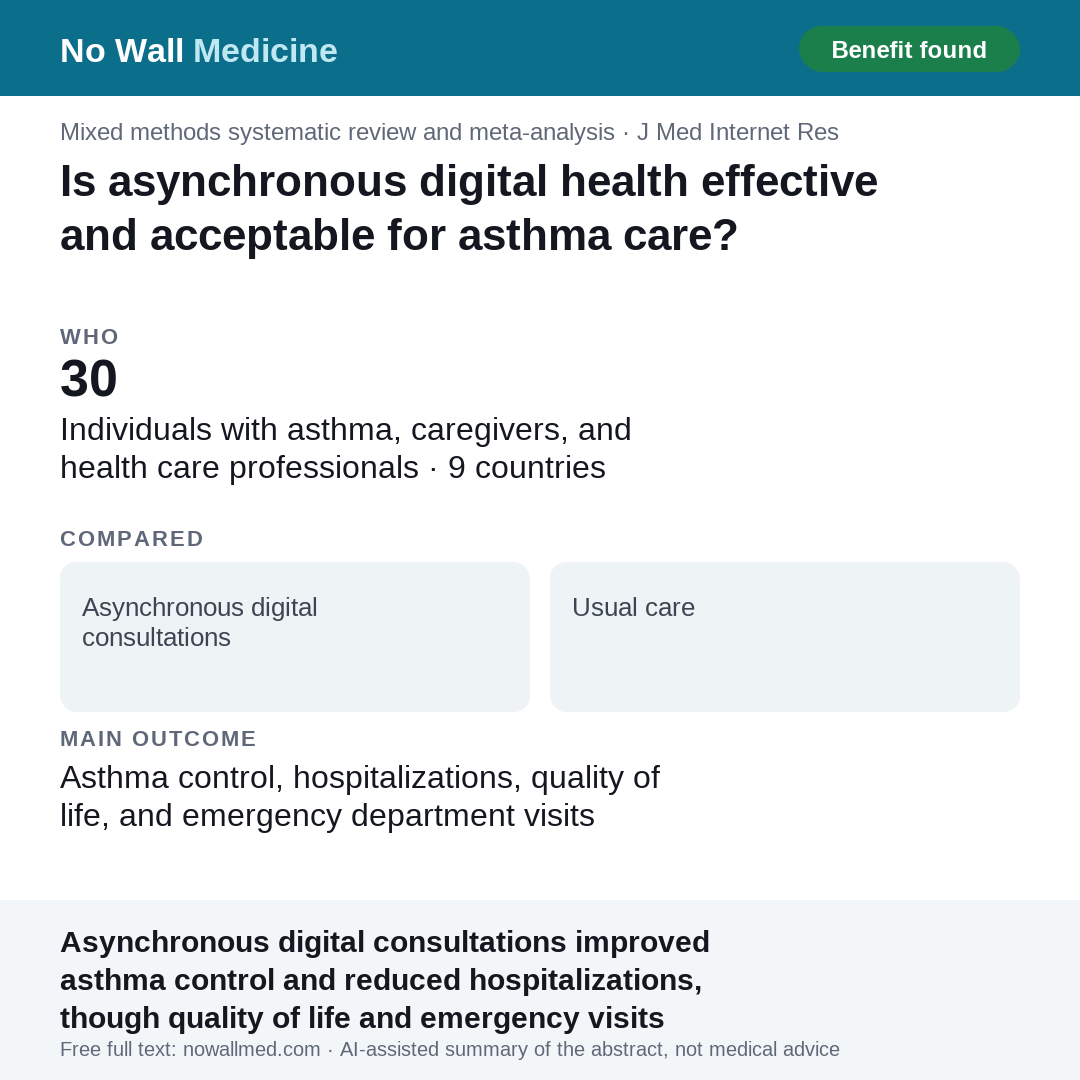
Effectiveness and Acceptability of Asynchronous Digital Health in Asthma Care: Mixed Methods Systematic Review
Mixed methods systematic review and meta-analysisBenefit found
Is asynchronous digital health effective and acceptable for asthma care?
Who
30
Individuals with asthma, caregivers, and health care professionals · 9 countries
Compared
Asynchronous digital consultations
Usual care
Main outcome
Asthma control, hospitalizations, quality of life, and emergency department visits
Result: standardized mean difference 0.32 (95% CI 0.02-0.63) for asthma control
Bottom line: Asynchronous digital consultations improved asthma control and reduced hospitalizations, though quality of life and emergency visits showed no significant difference.
Limitation: low confidence in evidence
J Med Internet Res · 2024-12-03Download image
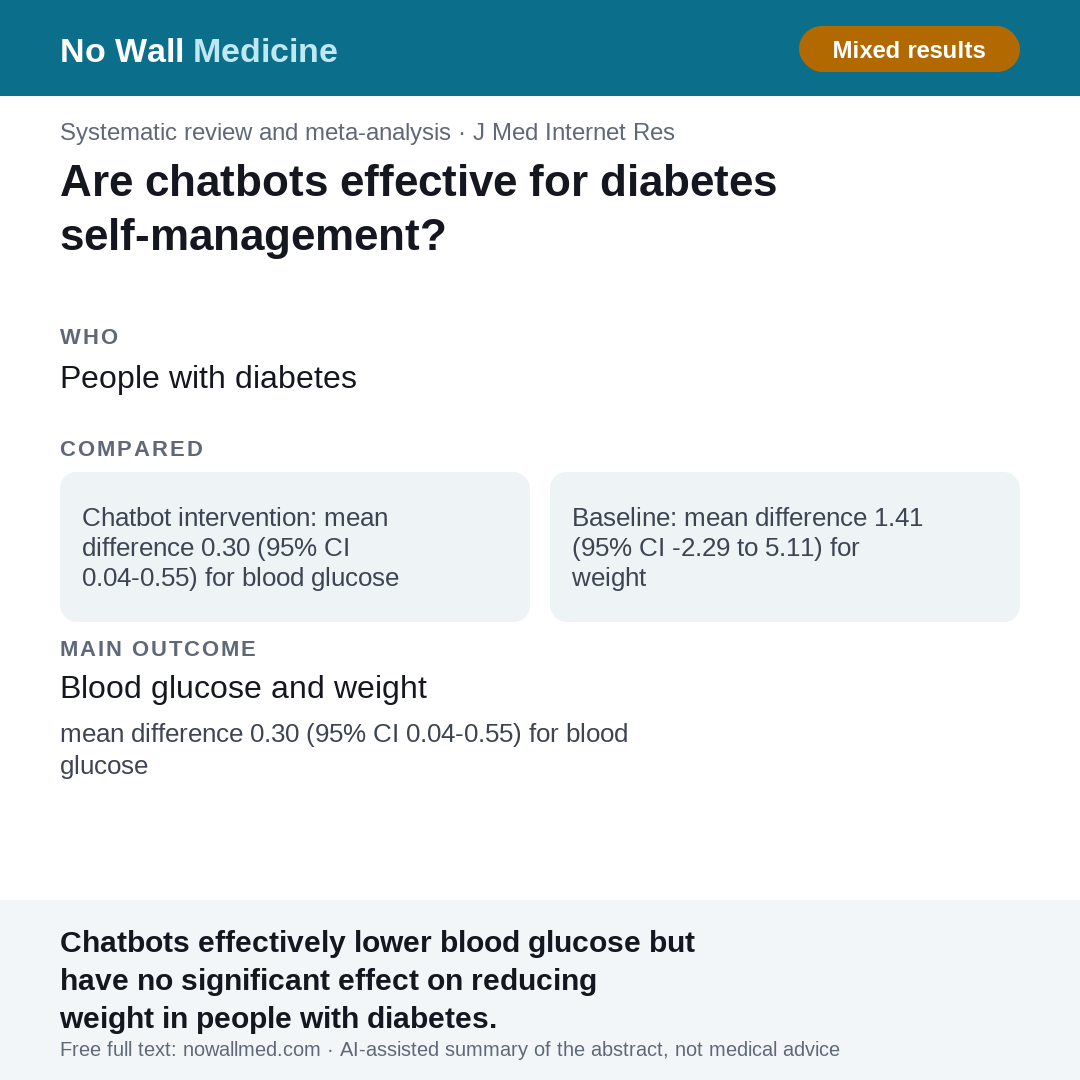
Application of Chatbots to Help Patients Self-Manage Diabetes: Systematic Review and Meta-Analysis
Systematic review and meta-analysisMixed results
Are chatbots effective for diabetes self-management?
Who
People with diabetes
Compared
Chatbot intervention: mean difference 0.30 (95% CI 0.04-0.55) for blood glucose
Baseline: mean difference 1.41 (95% CI -2.29 to 5.11) for weight
Main outcome
Blood glucose and weight
Result: mean difference 0.30 (95% CI 0.04-0.55) for blood glucose
Bottom line: Chatbots effectively lower blood glucose but have no significant effect on reducing weight in people with diabetes.
Limitation: The evidence level of current research is low, with few randomized controlled trials.
J Med Internet Res · 2024-12-03Download image
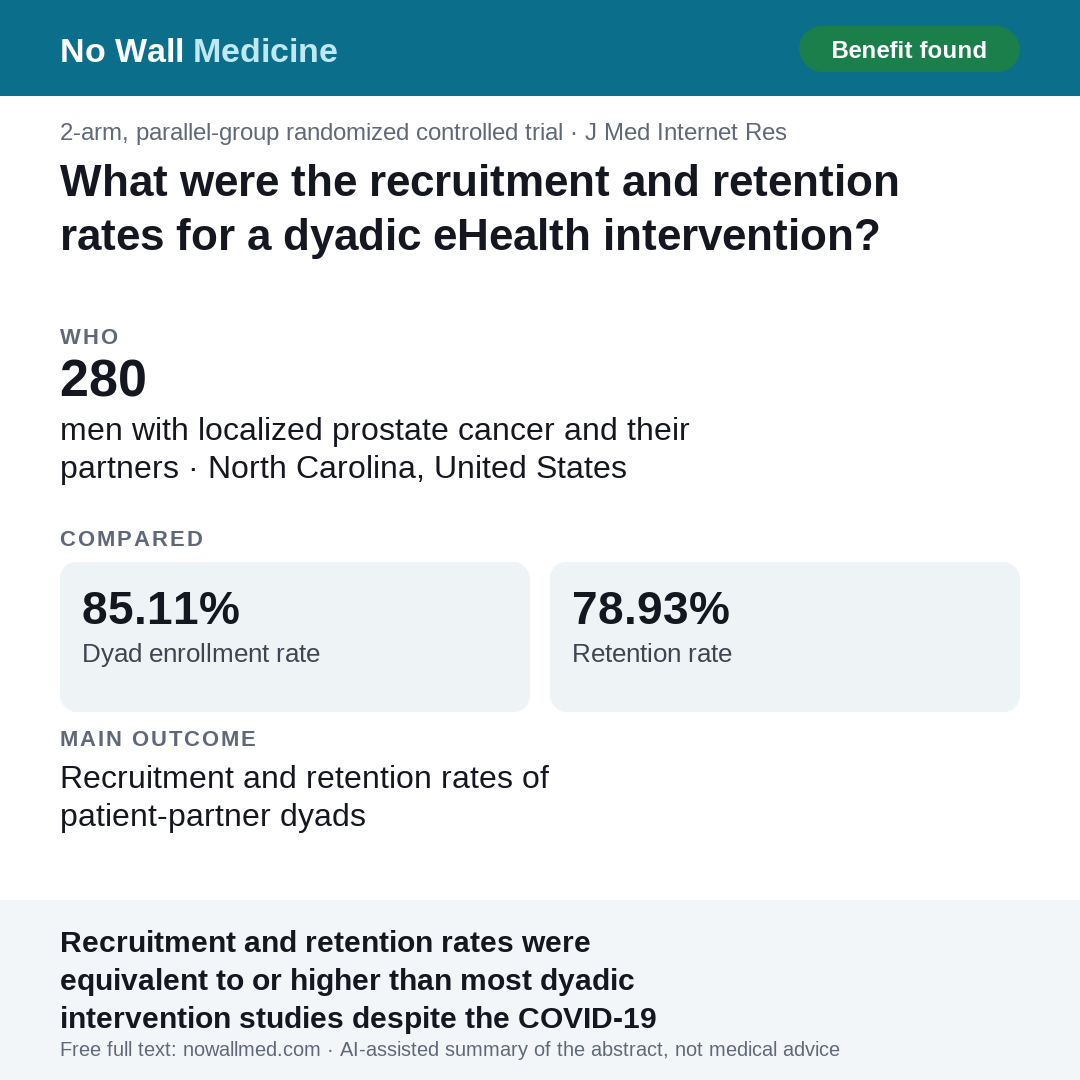
Challenges and Approaches to Recruitment for and Retention in a Dyad-Focused eHealth Intervention During COVID-19: Randomized Controlled Trial
2-arm, parallel-group randomized controlled trialBenefit found
What were the recruitment and retention rates for a dyadic eHealth intervention?
Who
280
men with localized prostate cancer and their partners · North Carolina, United States
Compared
85.11%Dyad enrollment rate (95% CI 81.3%-88.9%)
78.93%Retention rate (95% CI 74.2%-83.7%)
Main outcome
Recruitment and retention rates of patient-partner dyads
Bottom line: Recruitment and retention rates were equivalent to or higher than most dyadic intervention studies despite the COVID-19 pandemic.
J Med Internet Res · 2024-12-03Download image
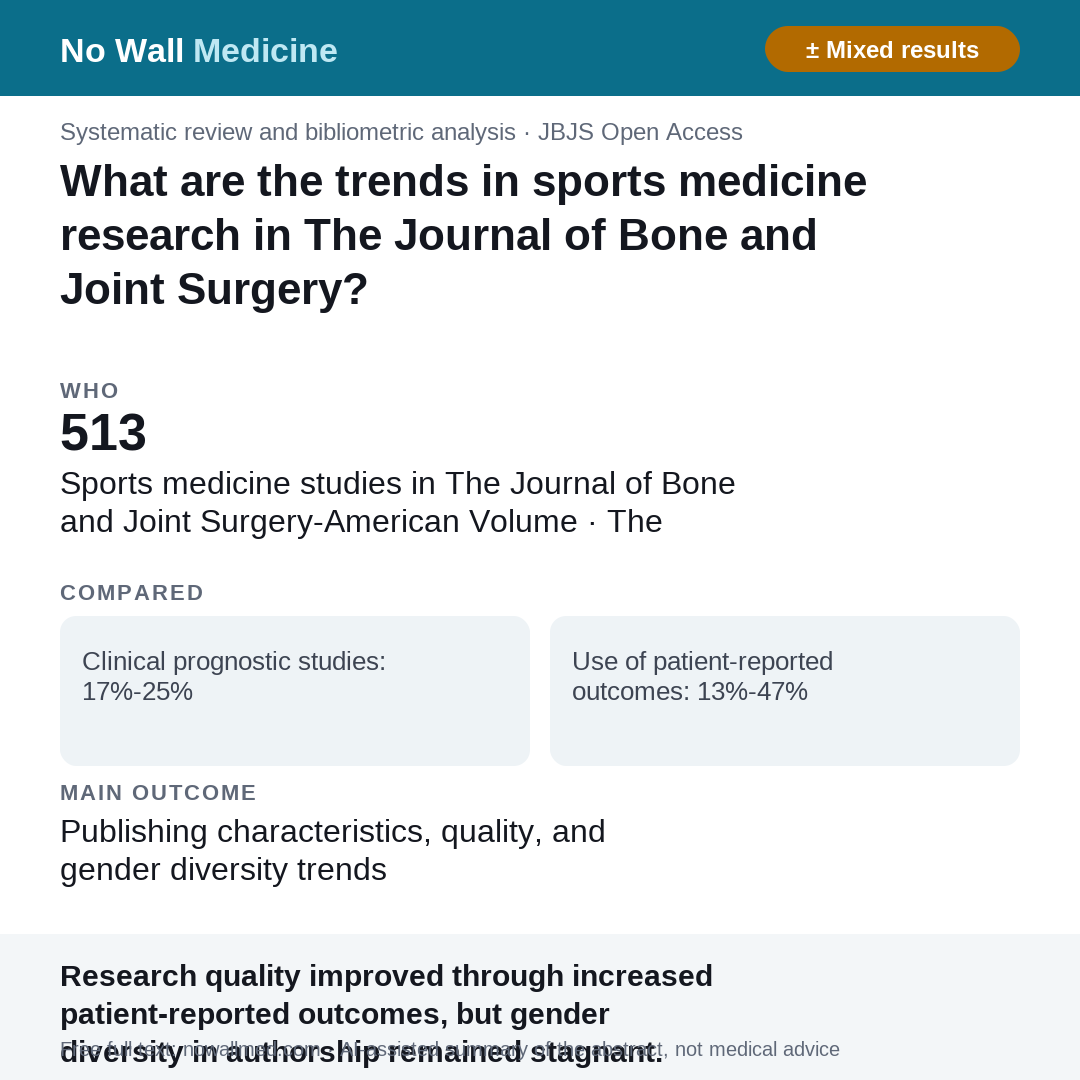
A 15-Year Bibliometric Analysis of Sports Medicine Studies in The Journal of Bone and Joint Surgery: A Systematic Review
Systematic review and bibliometric analysisMixed results
What are the trends in sports medicine research in The Journal of Bone and Joint Surgery?
Who
513
Sports medicine studies in The Journal of Bone and Joint Surgery-American Volume · The Journal of Bone and Joint Surgery-American Volume
Compared
Clinical prognostic studies: 17%-25%
Use of patient-reported outcomes: 13%-47%
Main outcome
Publishing characteristics, quality, and gender diversity trends
Bottom line: Research quality improved through increased patient-reported outcomes, but gender diversity in authorship remained stagnant.
JBJS Open Access · 2024-12-03Download image
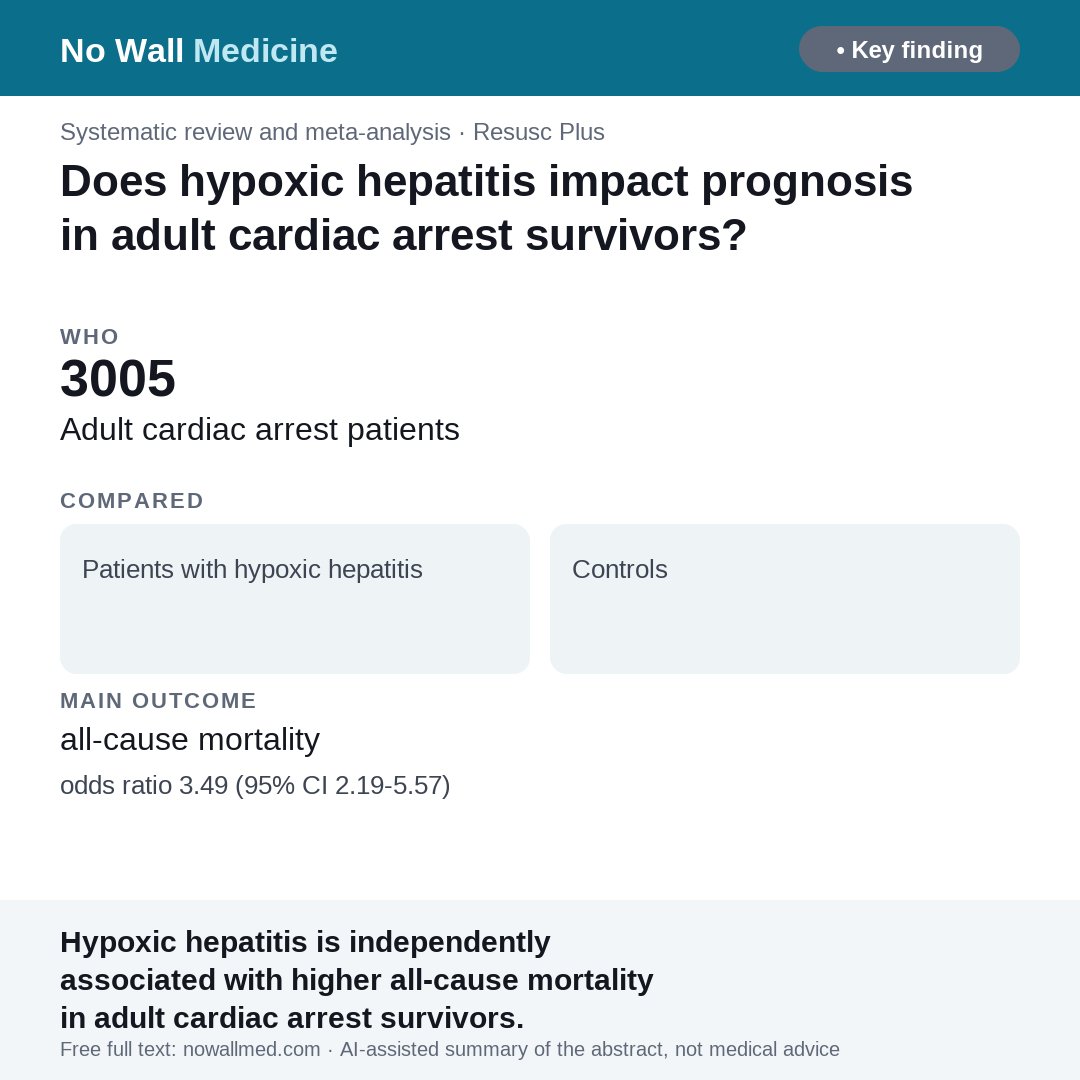
Hypoxic hepatitis in survivors of cardiac arrest: A systematic review and meta-analysis
Systematic review and meta-analysisHarm found
Does hypoxic hepatitis impact prognosis in adult cardiac arrest survivors?
Who
3005
Adult cardiac arrest patients
Compared
Patients with hypoxic hepatitis
Controls
Main outcome
all-cause mortality
Result: odds ratio 3.49 (95% CI 2.19-5.57)
Bottom line: Hypoxic hepatitis is independently associated with higher all-cause mortality in adult cardiac arrest survivors.
Limitation: Further prospective, well-designed studies are needed to validate findings.
Resusc Plus · 2024-12-03Download image
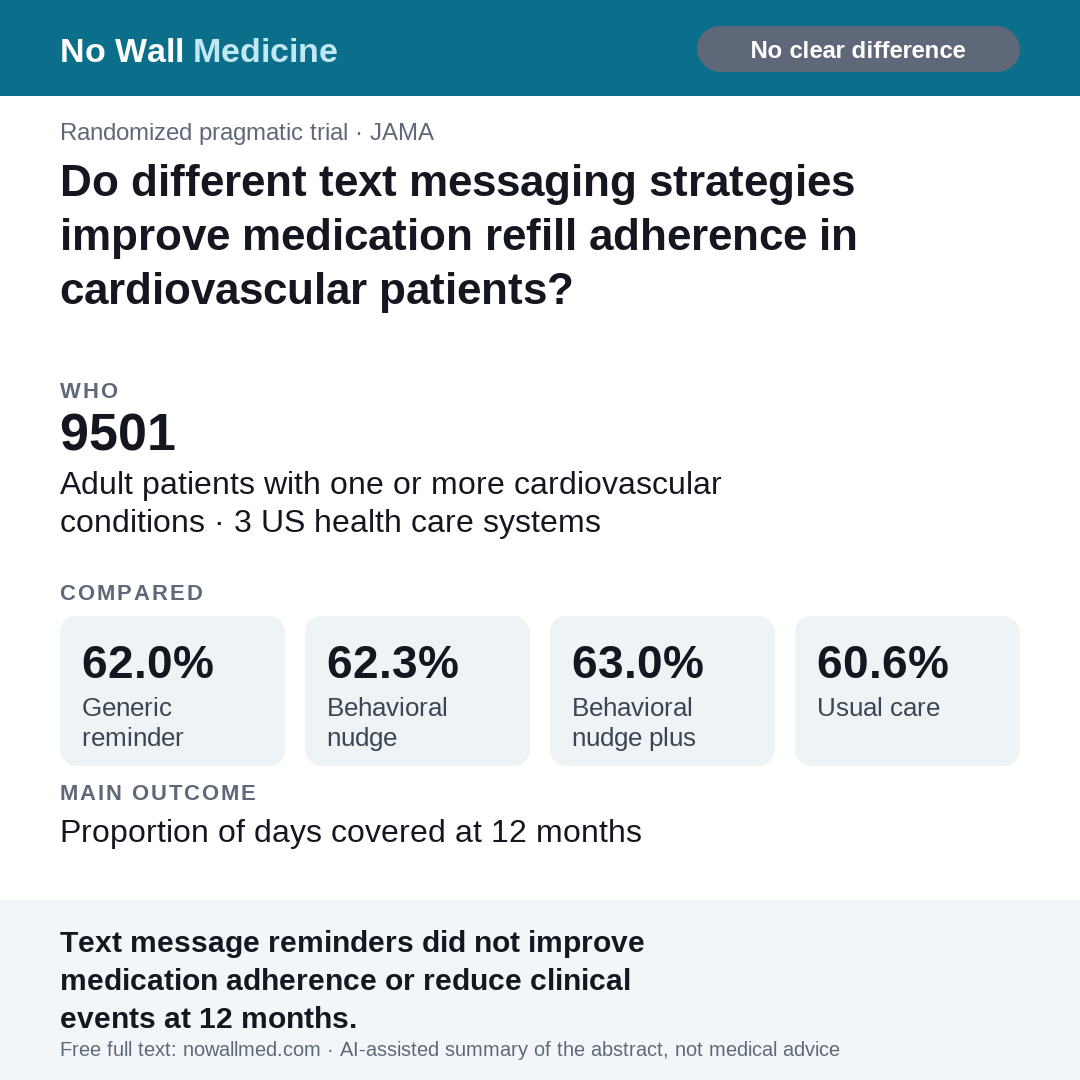
Personalized Patient Data and Behavioral Nudges to Improve Adherence to Chronic Cardiovascular Medications: A Randomized Pragmatic Trial
Randomized pragmatic trialNo clear difference
Do different text messaging strategies improve medication refill adherence in cardiovascular patients?
Who
9501
Adult patients with one or more cardiovascular conditions · 3 US health care systems
Compared
62.0%Generic reminder
62.3%Behavioral nudge
63.0%Behavioral nudge plus chatbot
60.6%Usual care
Main outcome
Proportion of days covered at 12 months
Bottom line: Text message reminders did not improve medication adherence or reduce clinical events at 12 months.
JAMA · 2024-12-02Download image
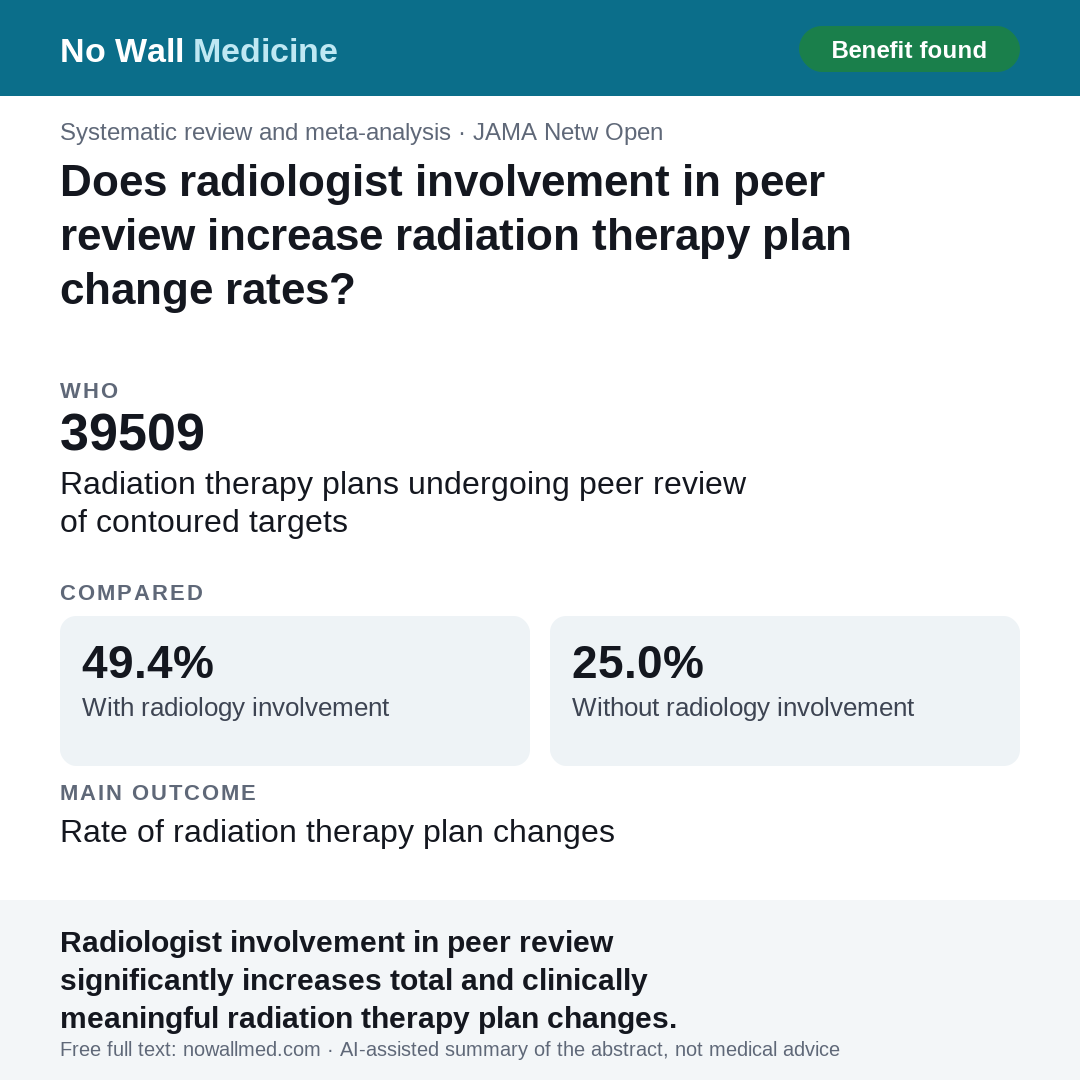
Radiologist Involvement in Radiation Oncology Peer Review: A Systematic Review and Meta-Analysis
Systematic review and meta-analysisBenefit found
Does radiologist involvement in peer review increase radiation therapy plan change rates?
Who
39509
Radiation therapy plans undergoing peer review of contoured targets
Compared
49.4%With radiology involvement (95% CI, 28.6%-70.1%)
25.0%Without radiology involvement (95% CI, 17.0%-33.1%)
Main outcome
Rate of radiation therapy plan changes
Result: 49.4% (95% CI, 28.6%-70.1%) vs 25.0% (95% CI, 17.0%-33.1%)
Bottom line: Radiologist involvement in peer review significantly increases total and clinically meaningful radiation therapy plan changes.
JAMA Netw Open · 2024-12-02Download image
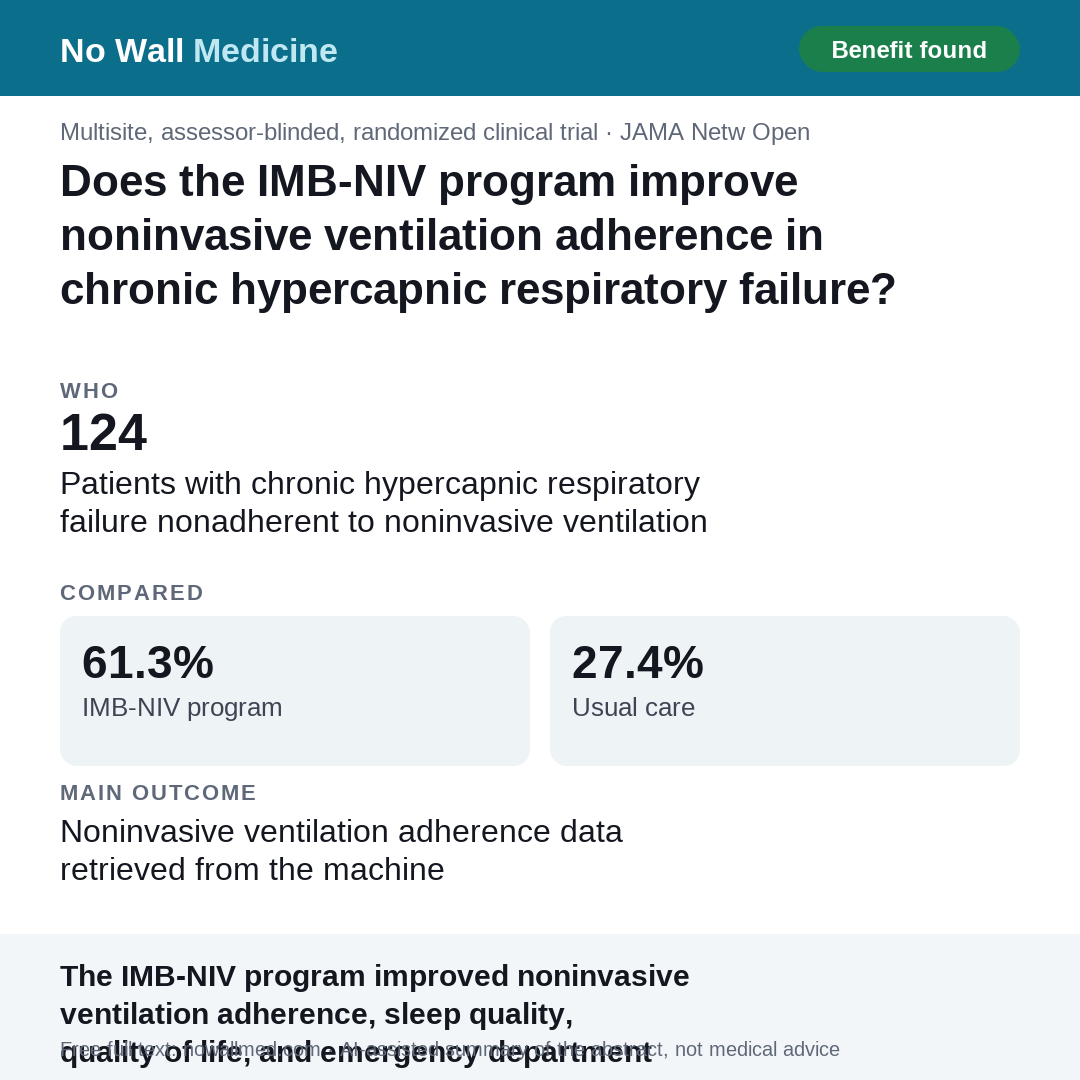
Health Communication and Adherence to Noninvasive Ventilation in Chronic Hypercapnic Respiratory Failure: A Randomized Clinical Trial
Multisite, assessor-blinded, randomized clinical trialBenefit found
Does the IMB-NIV program improve noninvasive ventilation adherence in chronic hypercapnic respiratory failure?
Who
124
Patients with chronic hypercapnic respiratory failure nonadherent to noninvasive ventilation · 2 regional hospitals in Hong Kong
Compared
61.3%IMB-NIV program
27.4%Usual care
Main outcome
Noninvasive ventilation adherence data retrieved from the machine
Result: odds ratio 2.78 (95% CI 1.69 to 4.55)
Bottom line: The IMB-NIV program improved noninvasive ventilation adherence, sleep quality, quality of life, and emergency department admissions.
JAMA Netw Open · 2024-12-02Download image
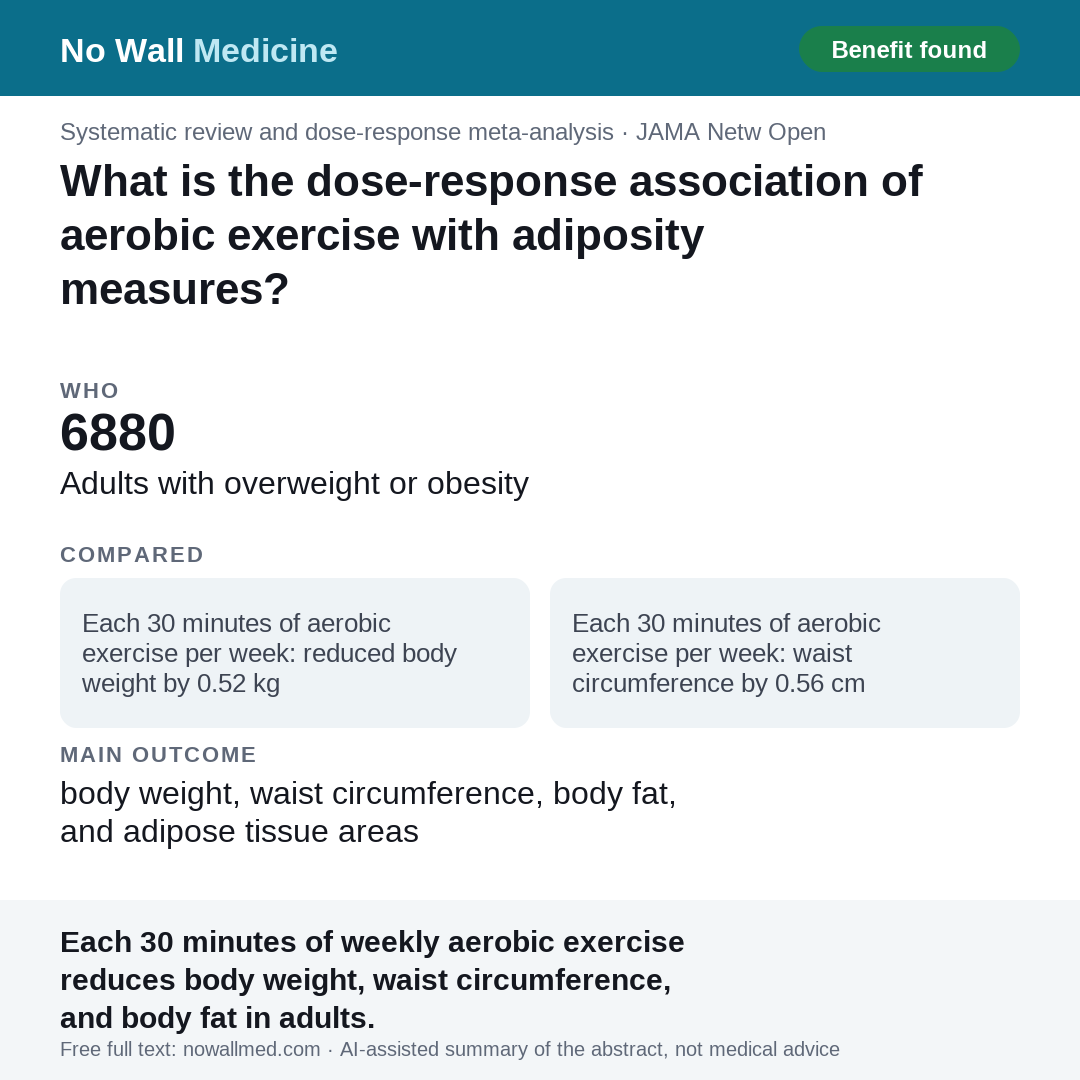
Aerobic Exercise and Weight Loss in Adults: A Systematic Review and Dose-Response Meta-Analysis
Systematic review and dose-response meta-analysisBenefit found
What is the dose-response association of aerobic exercise with adiposity measures?
Who
6880
Adults with overweight or obesity
Compared
Each 30 minutes of aerobic exercise per week: reduced body weight by 0.52 kg
Each 30 minutes of aerobic exercise per week: waist circumference by 0.56 cm
Main outcome
body weight, waist circumference, body fat, and adipose tissue areas
Result: mean difference -0.52 kg (95% CI, -0.61 to -0.44 kg) per 30 minutes
Bottom line: Each 30 minutes of weekly aerobic exercise reduces body weight, waist circumference, and body fat in adults.
JAMA Netw Open · 2024-12-02Download image
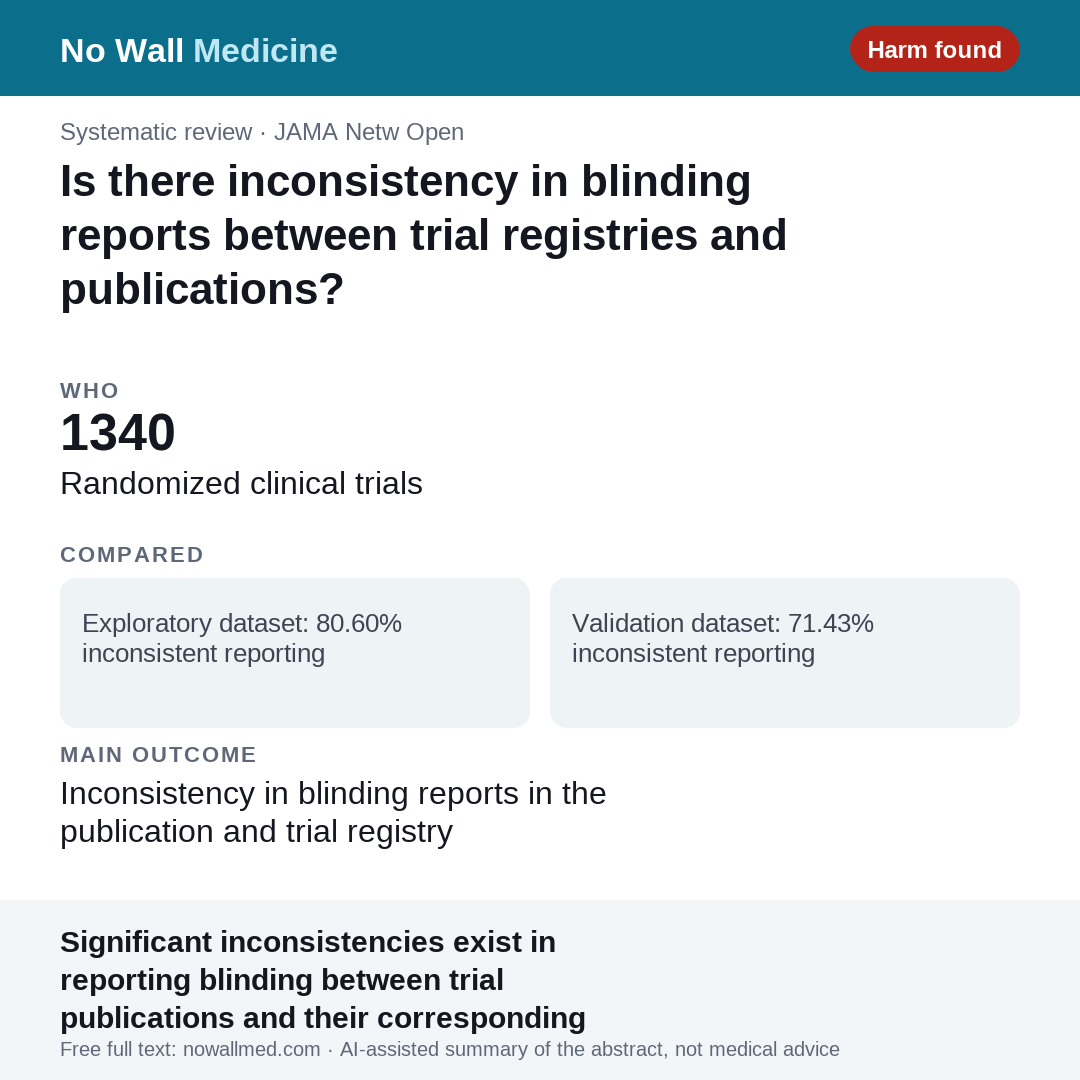
Discordant Information on Blinding in Trial Registries and Published Research: A Systematic Review
Systematic reviewHarm found
Is there inconsistency in blinding reports between trial registries and publications?
Who
1340
Randomized clinical trials
Compared
Exploratory dataset: 80.60% inconsistent reporting
Validation dataset: 71.43% inconsistent reporting
Main outcome
Inconsistency in blinding reports in the publication and trial registry
Bottom line: Significant inconsistencies exist in reporting blinding between trial publications and their corresponding registries, potentially reintroducing bias.
JAMA Netw Open · 2024-12-02Download image
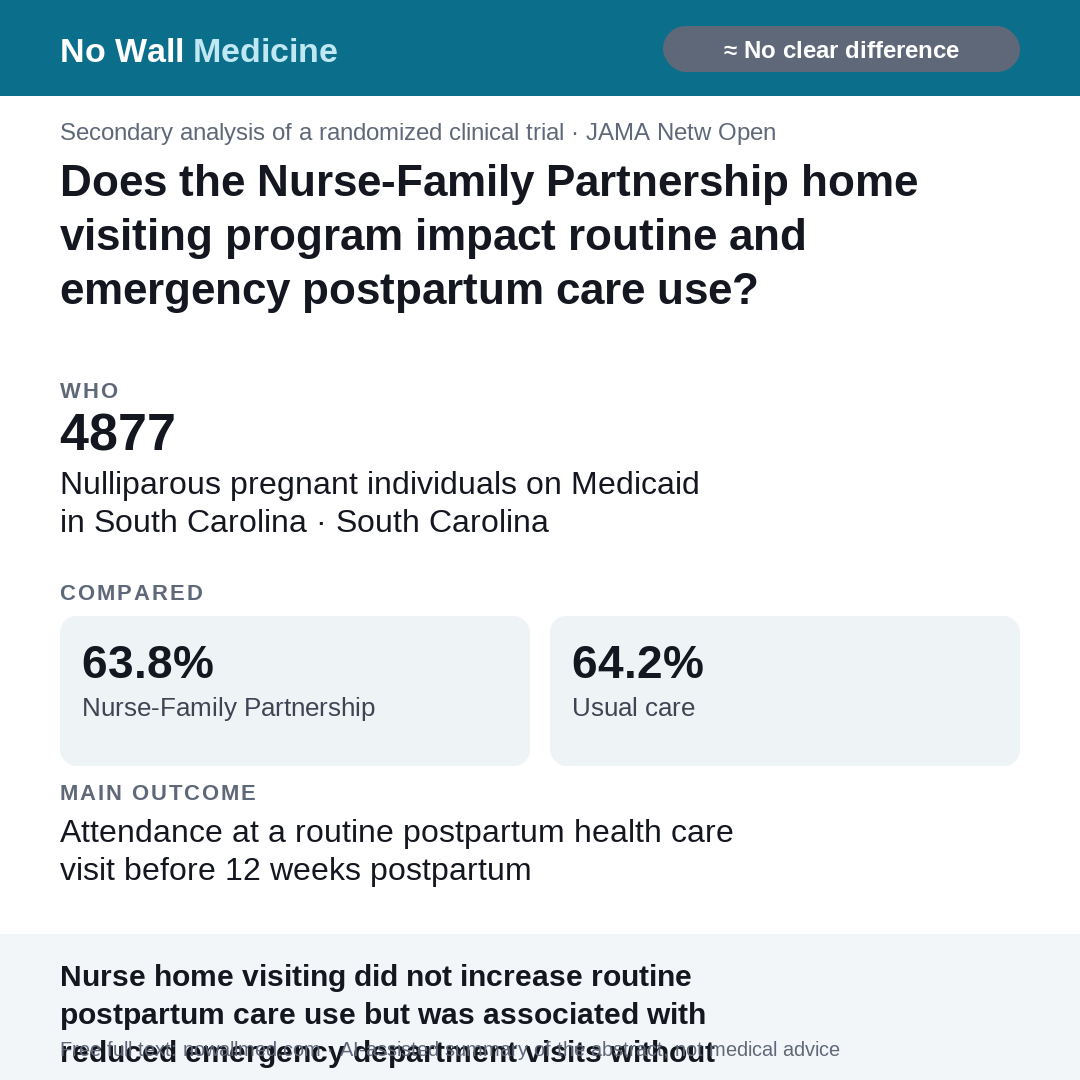
Home Visits and the Use of Routine and Emergency Postpartum Care Among Low-Income People: A Secondary Analysis of a Randomized Clinical Trial
Secondary analysis of a randomized clinical trialNo clear difference
Does the Nurse-Family Partnership home visiting program impact routine and emergency postpartum care use?
Who
4877
Nulliparous pregnant individuals on Medicaid in South Carolina · South Carolina
Compared
63.8%Nurse-Family Partnership
64.2%Usual care
Main outcome
Attendance at a routine postpartum health care visit before 12 weeks postpartum
Result: adjusted difference -0.3 (95% CI, -3.2 to 2.5) percentage points
Bottom line: Nurse home visiting did not increase routine postpartum care use but was associated with reduced emergency department visits without admission.
JAMA Netw Open · 2024-12-02Download image
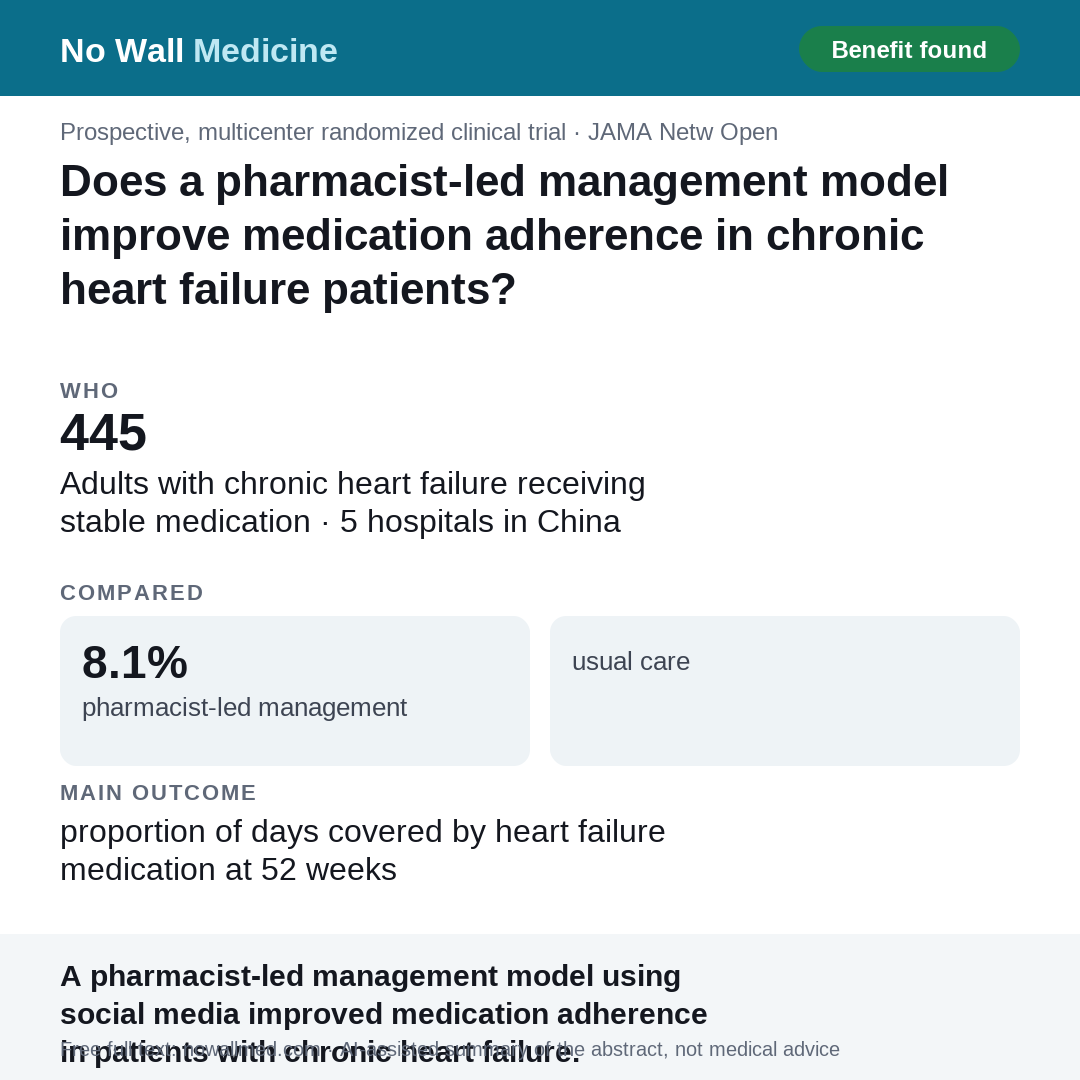
Pharmacist-Led Management Model and Medication Adherence Among Patients With Chronic Heart Failure: A Randomized Clinical Trial
Prospective, multicenter randomized clinical trialBenefit found
Does a pharmacist-led management model improve medication adherence in chronic heart failure patients?
Who
445
Adults with chronic heart failure receiving stable medication · 5 hospitals in China
Compared
8.1%pharmacist-led management (95% CI, 5.5%-10.7%)
usual care
Main outcome
proportion of days covered by heart failure medication at 52 weeks
Result: odds ratio 0.34 (95% CI 0.21-0.54)
Bottom line: A pharmacist-led management model using social media improved medication adherence in patients with chronic heart failure.
JAMA Netw Open · 2024-12-02Download image
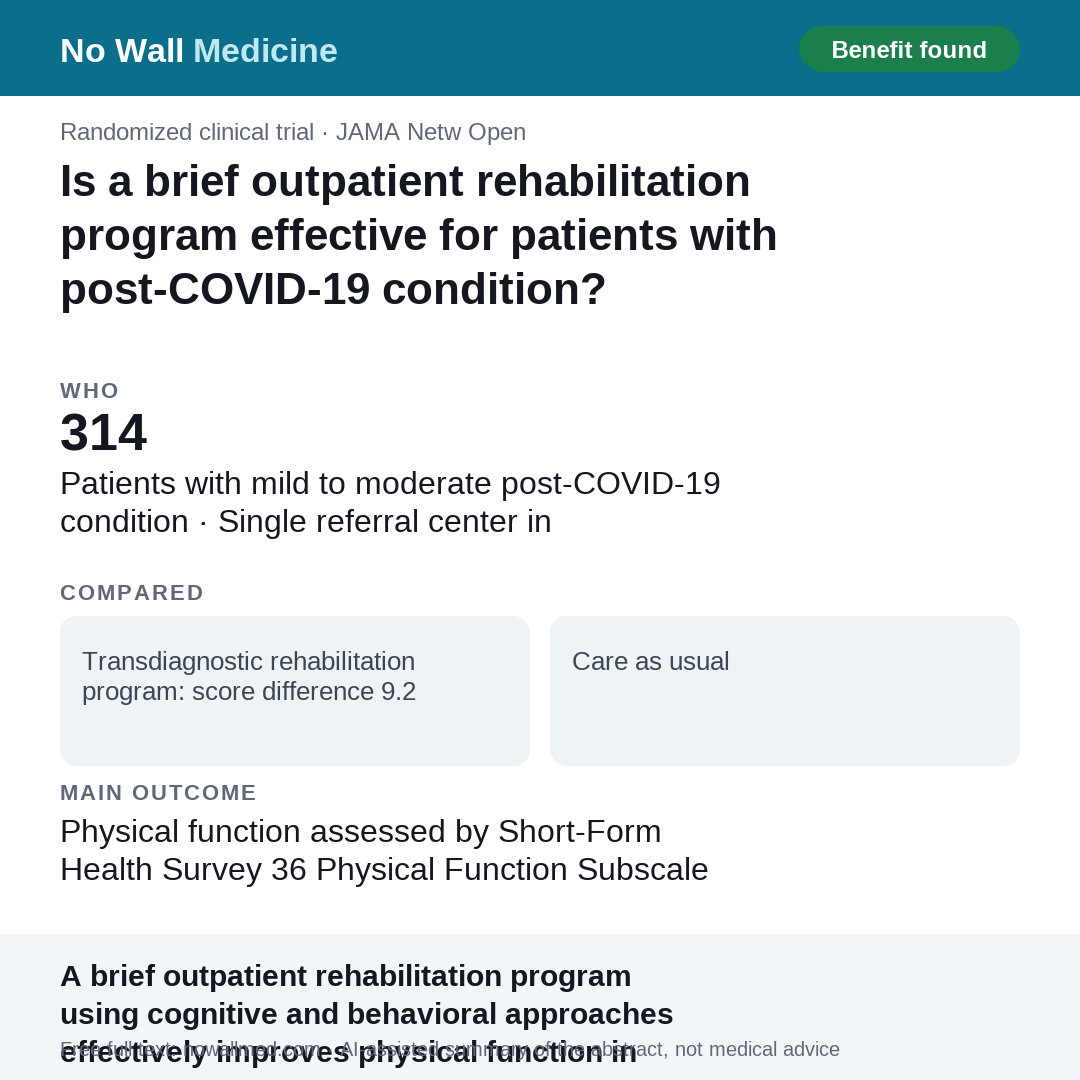
Brief Outpatient Rehabilitation Program for Post-COVID-19 Condition: A Randomized Clinical Trial
Randomized clinical trialBenefit found
Is a brief outpatient rehabilitation program effective for patients with post-COVID-19 condition?
Who
314
Patients with mild to moderate post-COVID-19 condition · Single referral center in South-Eastern Norway
Compared
Transdiagnostic rehabilitation program: score difference 9.2
Care as usual
Main outcome
Physical function assessed by Short-Form Health Survey 36 Physical Function Subscale
Result: score difference 9.2 (95% CI 4.3 to 14.2)
Bottom line: A brief outpatient rehabilitation program using cognitive and behavioral approaches effectively improves physical function in post-COVID-19 condition patients.
JAMA Netw Open · 2024-12-02Download image