Visual abstracts
New randomized trials and meta-analyses from leading journals at a glance: who was studied, what was compared, and what was found. Every paper is free to read in full.
All specialtiesCardiology 953Oncology 847Gastroenterology & Hepatology 349Infectious Disease 663Neurology 390Psychiatry & Mental Health 477Pulmonology 415Critical Care 283Endocrinology & Diabetes 527Pediatrics 595Surgery 393Orthopedics & Sports Medicine 178Neurosurgery 128Cardiothoracic & Vascular Surgery 91Plastic & Reconstructive Surgery 145Nephrology 211Rheumatology 119Hematology 205Dermatology 89Ophthalmology 113Obstetrics & Gynecology 292Public & Global Health 185Radiology & Imaging 117Anesthesiology 153Urology 183ENT (Otolaryngology) 123Emergency Medicine 105Allergy & Immunology 65Geriatrics 176Family Medicine & Primary Care 123Medical Genetics & Genomics 94Pathology & Laboratory Medicine 30Physical Medicine & Rehabilitation 151Palliative Care 84Nutrition 230Digital Health & AI 490General Medicine 105
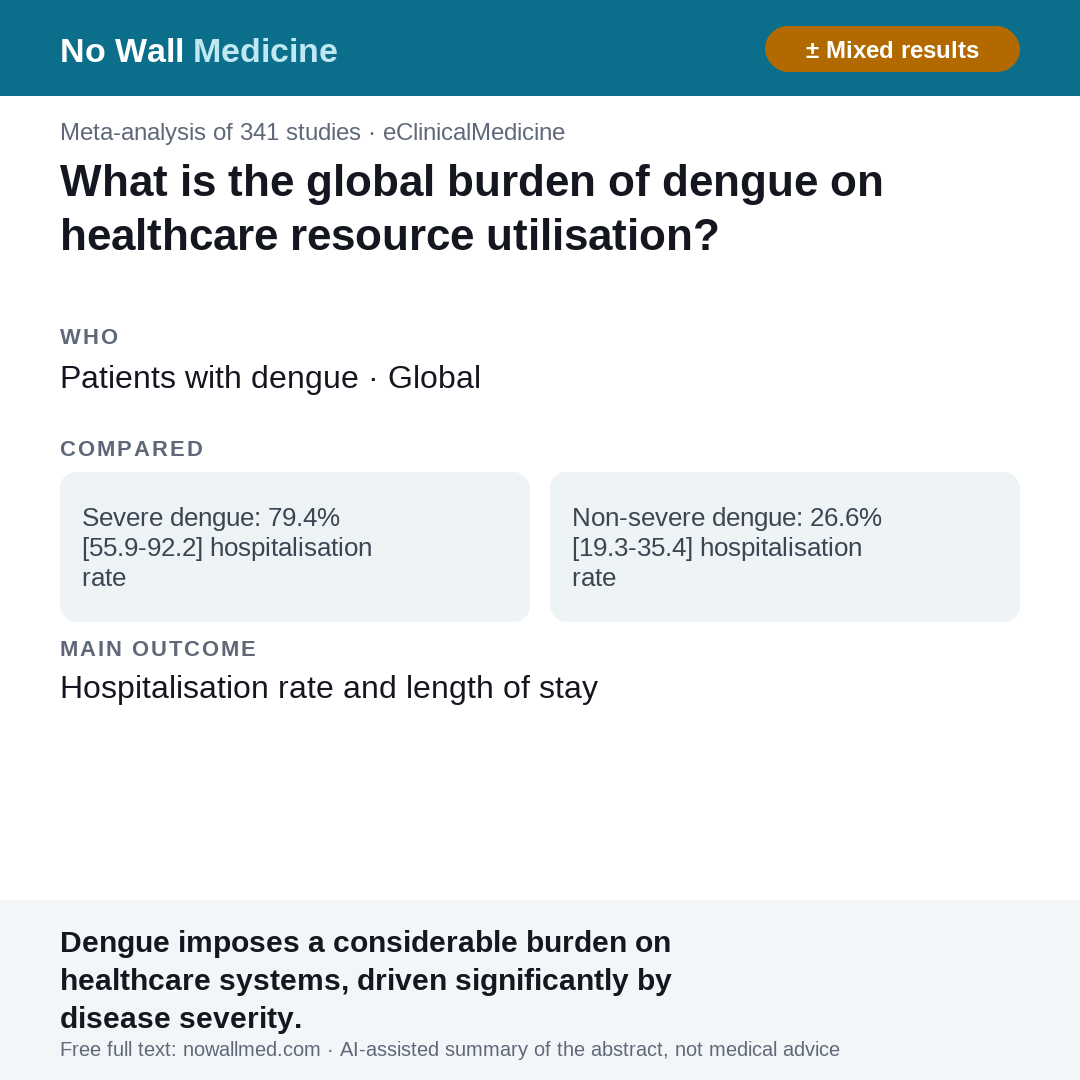
Global burden of dengue on healthcare systems: a meta-analysis of healthcare resource utilisation
Meta-analysis of 341 studiesMixed results
What is the global burden of dengue on healthcare resource utilisation?
Who
Patients with dengue · Global
Compared
Severe dengue: 79.4% [55.9-92.2] hospitalisation rate
Non-severe dengue: 26.6% [19.3-35.4] hospitalisation rate
Main outcome
Hospitalisation rate and length of stay
Bottom line: Dengue imposes a considerable burden on healthcare systems, driven significantly by disease severity.
Limitation: High heterogeneity between studies and interregional differences.
Funded by: Novartis Pharma AG
eClinicalMedicine · 2026-10-02Download image
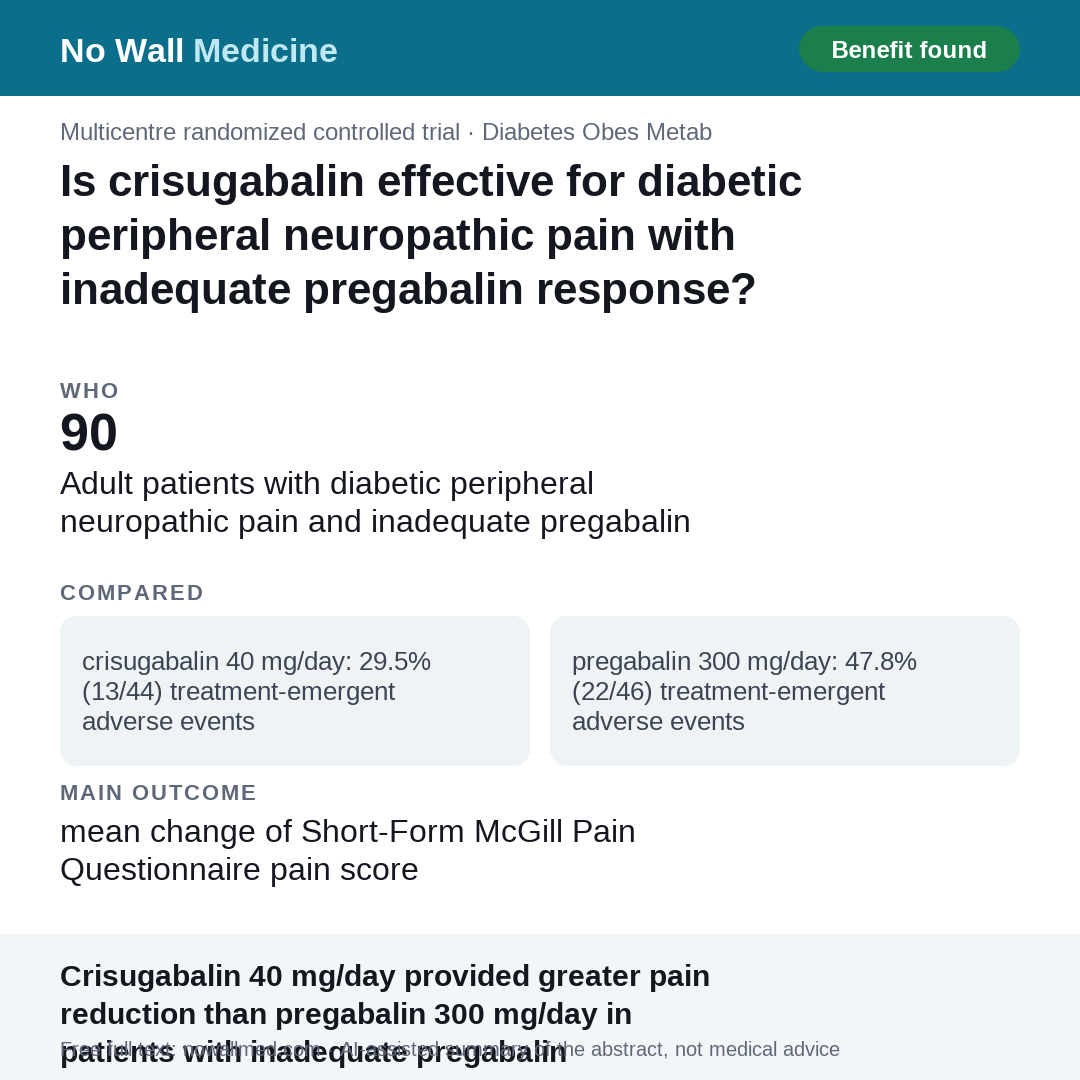
Efficacy and Safety of Crisugabalin for Inadequately Controlled Diabetic Peripheral Neuropathic Pain: A Randomized, Active-Controlled, Phase 2 Trial
Multicentre randomized controlled trialBenefit found
Is crisugabalin effective for diabetic peripheral neuropathic pain with inadequate pregabalin response?
Who
90
Adult patients with diabetic peripheral neuropathic pain and inadequate pregabalin response
Compared
crisugabalin 40 mg/day: 29.5% (13/44) treatment-emergent adverse events
pregabalin 300 mg/day: 47.8% (22/46) treatment-emergent adverse events
Main outcome
mean change of Short-Form McGill Pain Questionnaire pain score
Result: -7.2 (95% CI: -12.4, -2.0; ANCOVA p = 0.007)
Bottom line: Crisugabalin 40 mg/day provided greater pain reduction than pregabalin 300 mg/day in patients with inadequate pregabalin response.
Diabetes Obes Metab · 2026-10-02Download image
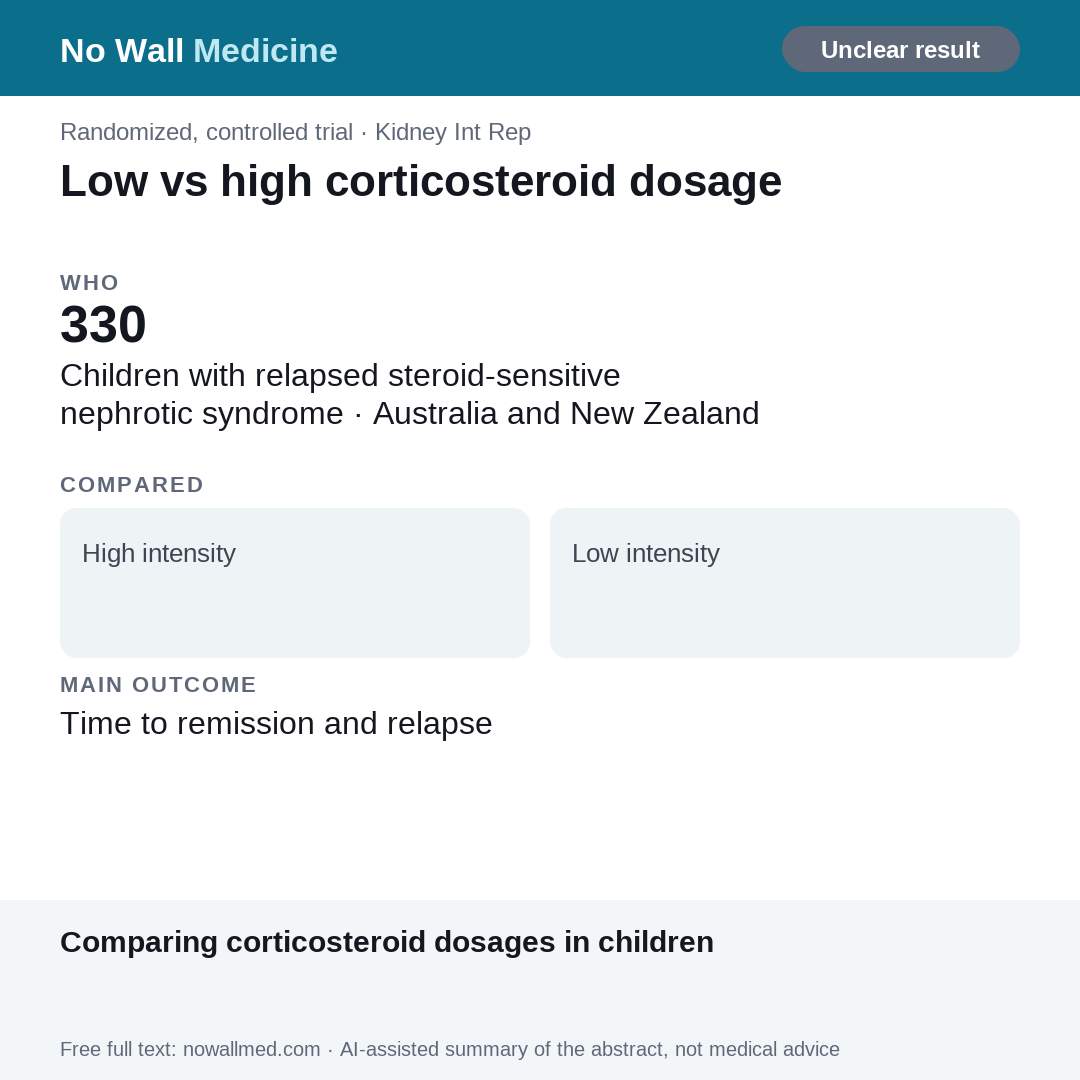
A Randomized Controlled Trial of Two Corticosteroid Dosages for Relapsed Childhood Steroid-Sensitive Nephrotic Syndrome: The OPtimising dosE in Nephrotic Syndrome (OPEN) Trial Protocol
Randomized, controlled trialUnclear result
Low vs high corticosteroid dosage
Who
330
Children with relapsed steroid-sensitive nephrotic syndrome · Australia and New Zealand
Compared
High intensity
Low intensity
Main outcome
Time to remission and relapse
Bottom line: Comparing corticosteroid dosages in children
Kidney Int Rep · 2026-10-02Download image
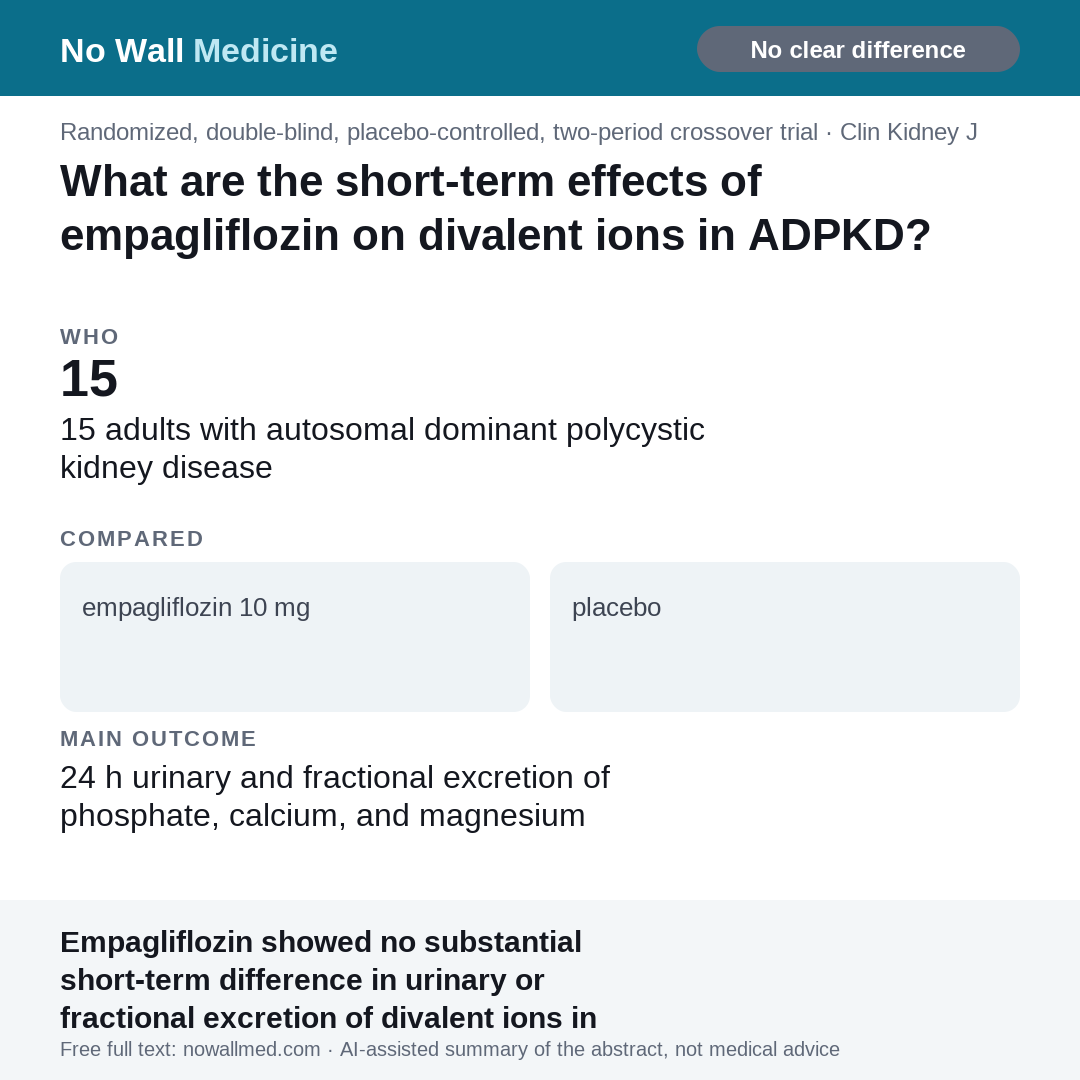
Short-term effects of an SGLT2 inhibitor on divalent ions in autosomal dominant polycystic kidney disease: a randomized crossover trial
Randomized, double-blind, placebo-controlled, two-period crossover trialNo clear difference
What are the short-term effects of empagliflozin on divalent ions in ADPKD?
Who
15
15 adults with autosomal dominant polycystic kidney disease
Compared
empagliflozin 10 mg
placebo
Main outcome
24 h urinary and fractional excretion of phosphate, calcium, and magnesium
Bottom line: Empagliflozin showed no substantial short-term difference in urinary or fractional excretion of divalent ions in ADPKD patients.
Limitation: Small sample size and exploratory nature of the analyses.
Clin Kidney J · 2026-10-02Download image
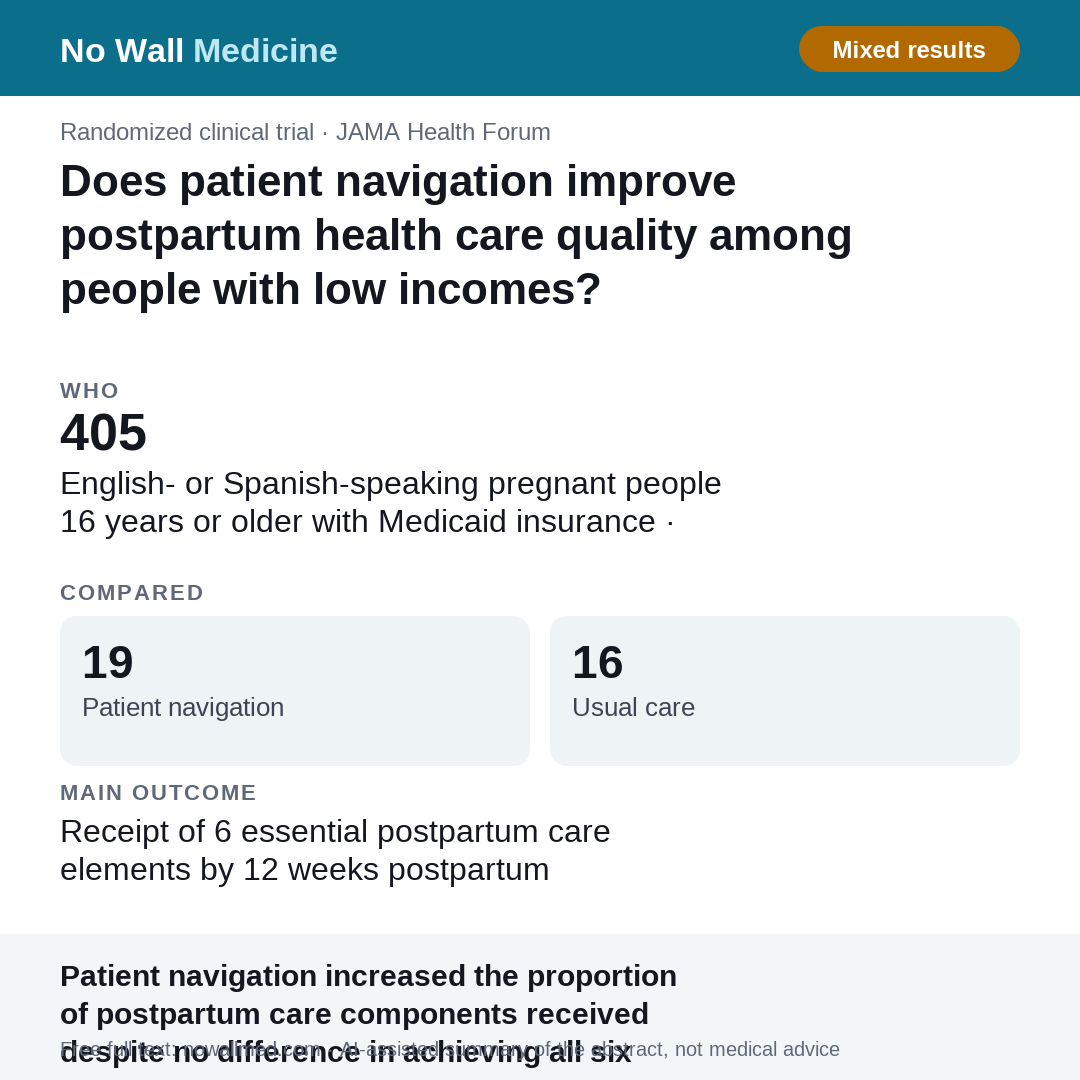
Patient Navigation and Postpartum Health Care Outcomes: A Randomized Clinical Trial
Randomized clinical trialMixed results
Does patient navigation improve postpartum health care quality among people with low incomes?
Who
405
English- or Spanish-speaking pregnant people 16 years or older with Medicaid insurance · Single urban academic medical center
Compared
19Patient navigation (9.4%)
16Usual care (7.9%)
Main outcome
Receipt of 6 essential postpartum care elements by 12 weeks postpartum
Bottom line: Patient navigation increased the proportion of postpartum care components received despite no difference in achieving all six essential elements.
JAMA Health Forum · 2026-10-02Download image
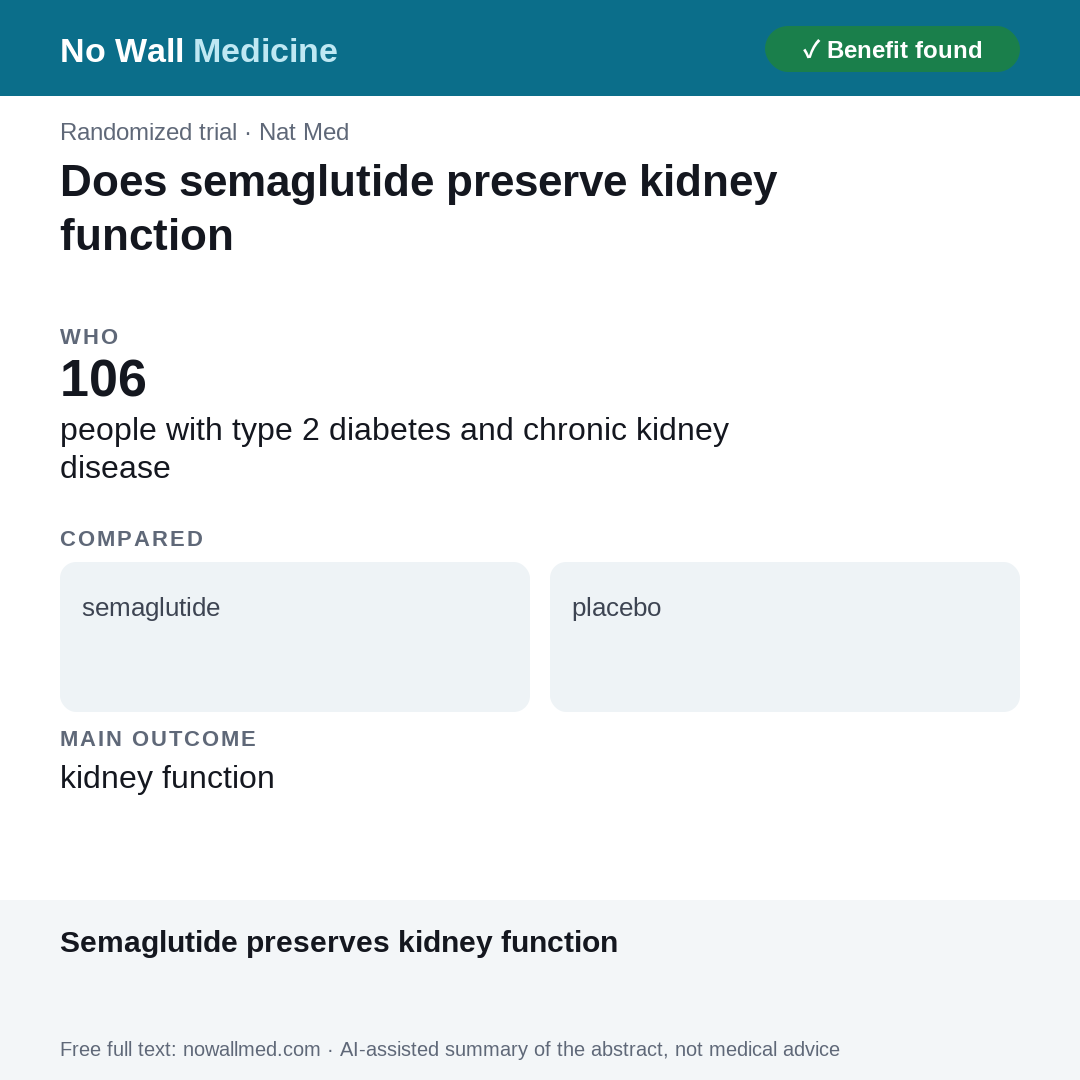
Effects of semaglutide on kidney disease in type 2 diabetes: a randomized placebo-controlled trial
Randomized trialBenefit found
Does semaglutide preserve kidney function
Who
106
people with type 2 diabetes and chronic kidney disease
Compared
semaglutide
placebo
Main outcome
kidney function
Bottom line: Semaglutide preserves kidney function
Nat Med · 2026-10-01Download image
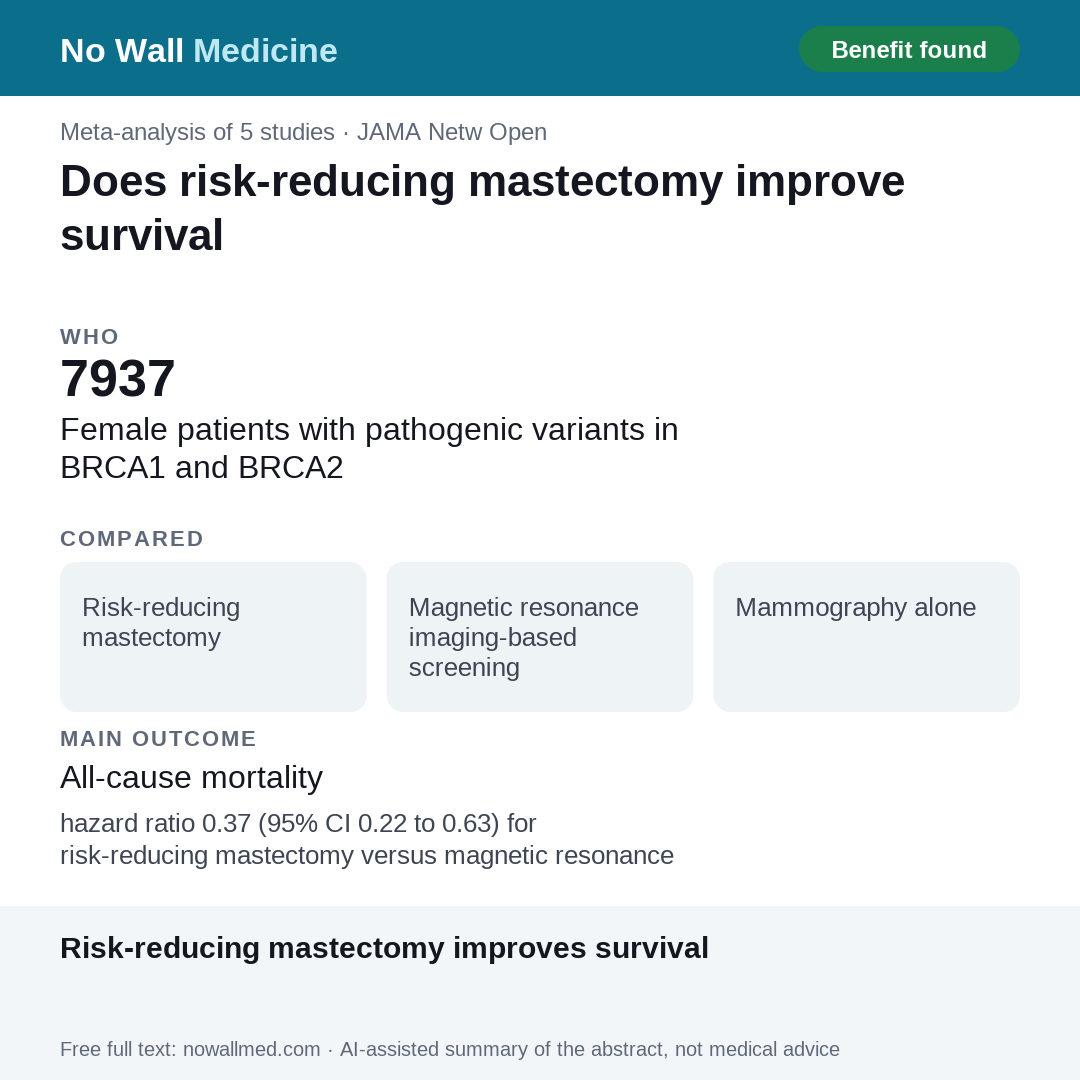
Survival After Risk-Reducing Mastectomy in Patients With Pathogenic Variants in BRCA1 and BRCA2: A Network Meta-Analysis
Meta-analysis of 5 studiesBenefit found
Does risk-reducing mastectomy improve survival
Who
7937
Female patients with pathogenic variants in BRCA1 and BRCA2
Compared
Risk-reducing mastectomy
Magnetic resonance imaging-based screening
Mammography alone
Main outcome
All-cause mortality
Result: hazard ratio 0.37 (95% CI 0.22 to 0.63) for risk-reducing mastectomy versus magnetic resonance imaging-based screening
Bottom line: Risk-reducing mastectomy improves survival
Limitation: Very low certainty of evidence
JAMA Netw Open · 2026-10-01Download image
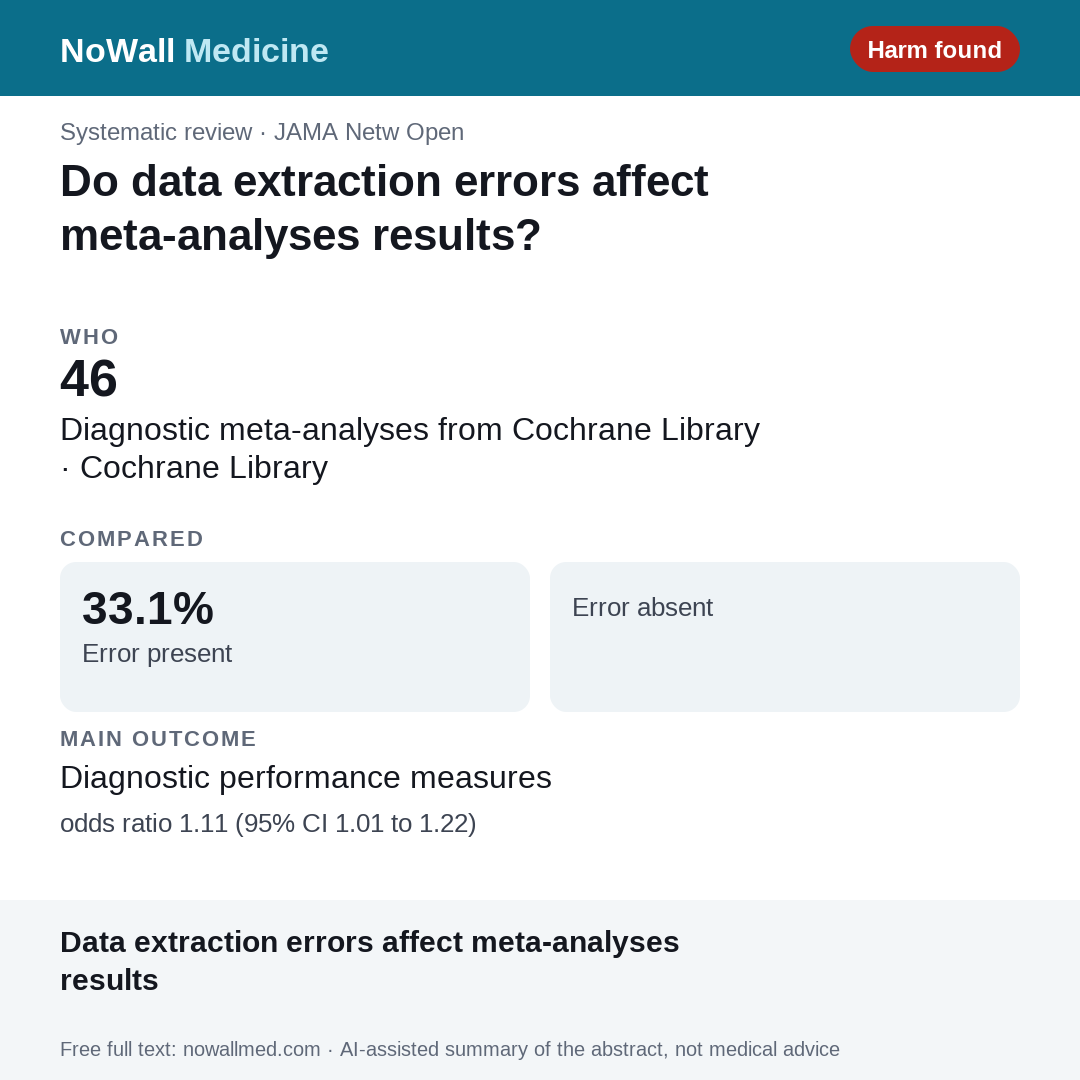
Data Extraction Errors and Diagnostic Conclusions of Meta-Analyses: A Systematic Review
Systematic reviewHarm found
Do data extraction errors affect meta-analyses results?
Who
46
Diagnostic meta-analyses from Cochrane Library · Cochrane Library
Compared
33.1%Error present
Error absent
Main outcome
Diagnostic performance measures
Result: odds ratio 1.11 (95% CI 1.01 to 1.22)
Bottom line: Data extraction errors affect meta-analyses results
JAMA Netw Open · 2026-10-01Download image
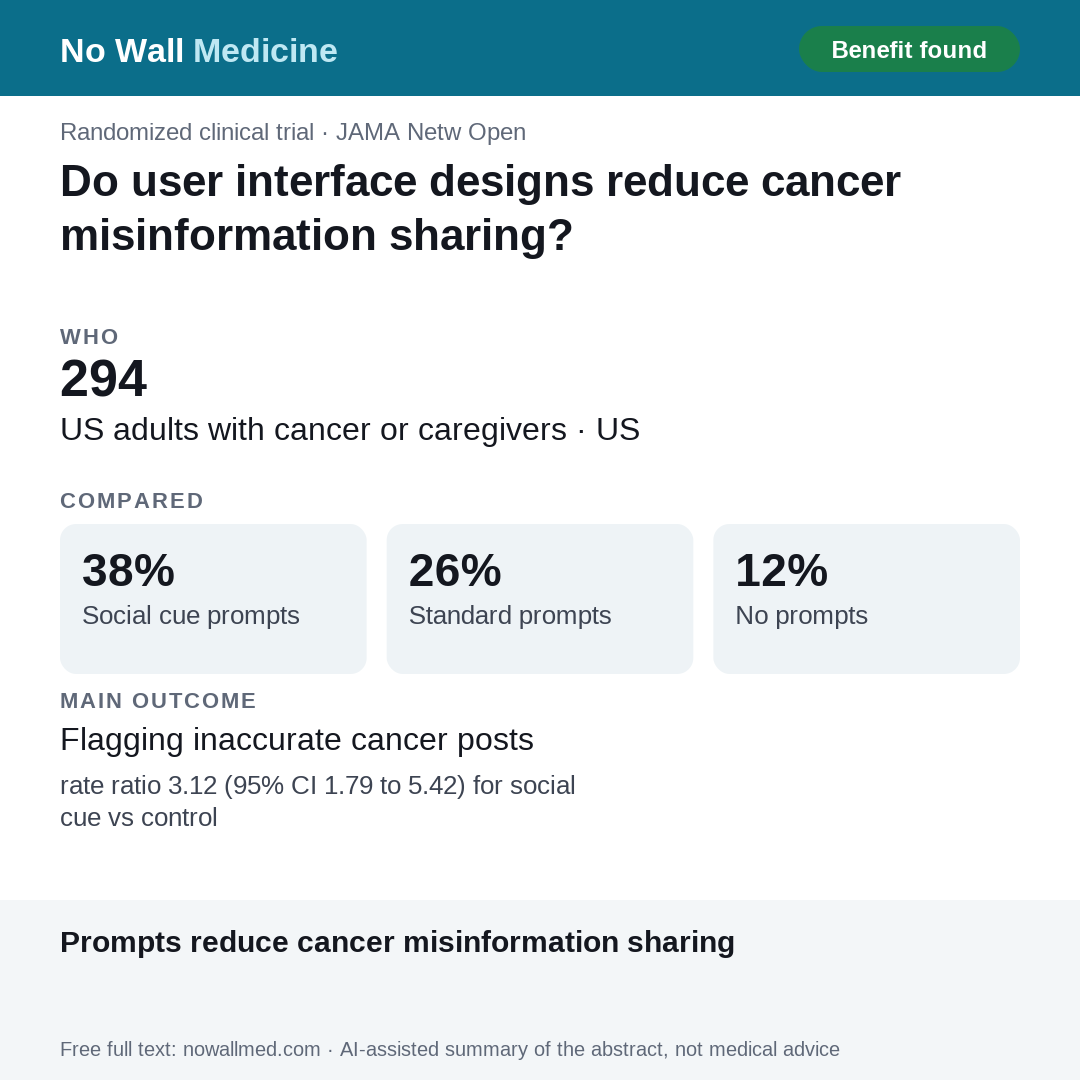
User Interface Designs to Address Cancer Misinformation: A Randomized Clinical Trial
Randomized clinical trialBenefit found
Do user interface designs reduce cancer misinformation sharing?
Who
294
US adults with cancer or caregivers · US
Compared
38%Social cue prompts (224/592)
26%Standard prompts (180/689)
12%No prompts (84/675)
Main outcome
Flagging inaccurate cancer posts
Result: rate ratio 3.12 (95% CI 1.79 to 5.42) for social cue vs control
Bottom line: Prompts reduce cancer misinformation sharing
JAMA Netw Open · 2026-10-01Download image
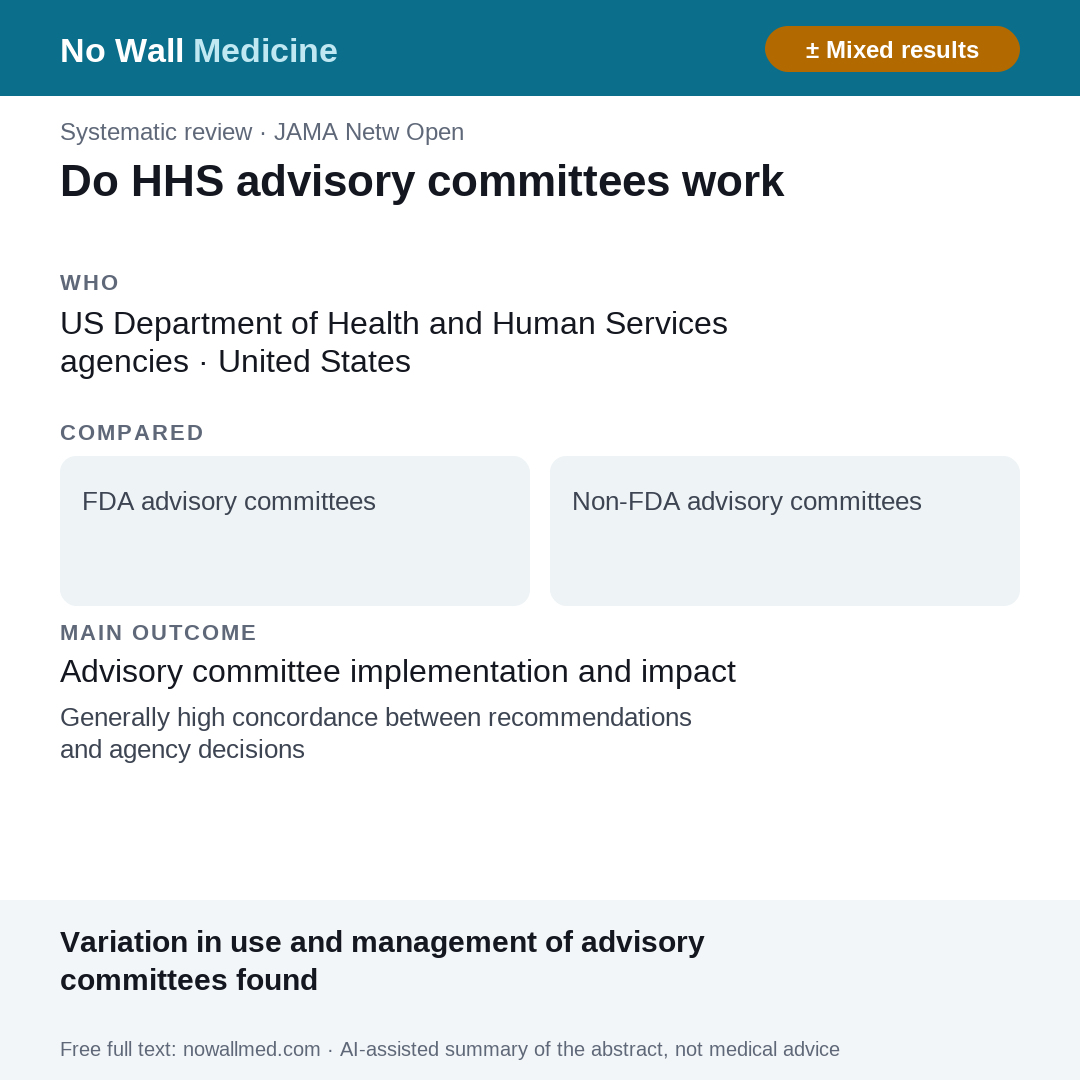
Studies of US Department of Health and Human Services Agency Advisory Committees: A Systematic Review
Systematic reviewMixed results
Do HHS advisory committees work
Who
146
US Department of Health and Human Services agencies · United States
Compared
FDA advisory committees
Non-FDA advisory committees
Main outcome
Advisory committee implementation and impact
Result: Generally high concordance between recommendations and agency decisions
Bottom line: Variation in use and management of advisory committees found
Limitation: Limited evidence on non-FDA advisory committees
JAMA Netw Open · 2026-10-01Download image
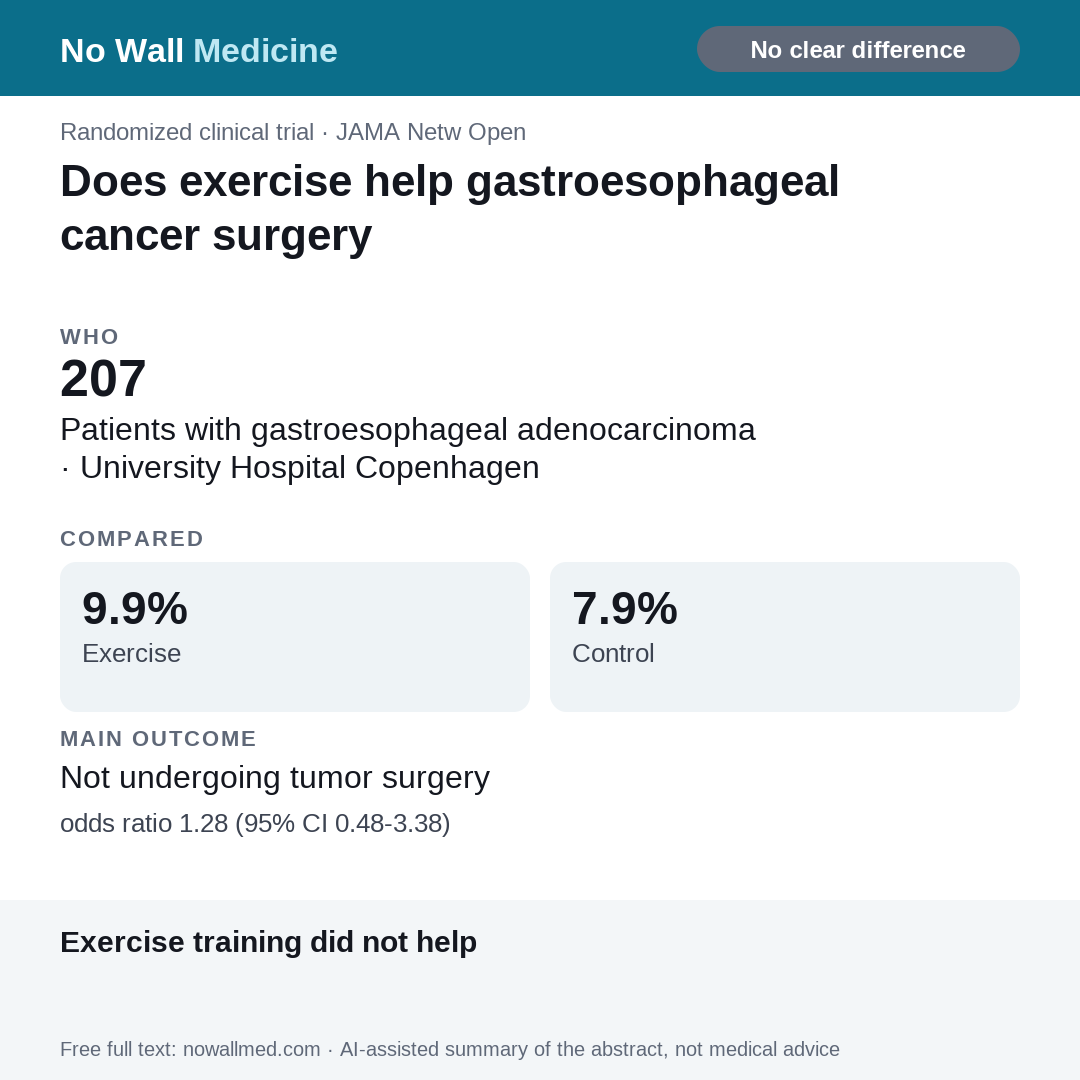
Exercise Training During Neoadjuvant Treatment for Gastroesophageal Cancer and Tumor Surgery: A Randomized Clinical Trial
Randomized clinical trialNo clear difference
Does exercise help gastroesophageal cancer surgery
Who
207
Patients with gastroesophageal adenocarcinoma · University Hospital Copenhagen
Compared
9.9%Exercise (10/101)
7.9%Control (8/101)
Main outcome
Not undergoing tumor surgery
Result: odds ratio 1.28 (95% CI 0.48-3.38)
Bottom line: Exercise training did not help
JAMA Netw Open · 2026-10-01Download image
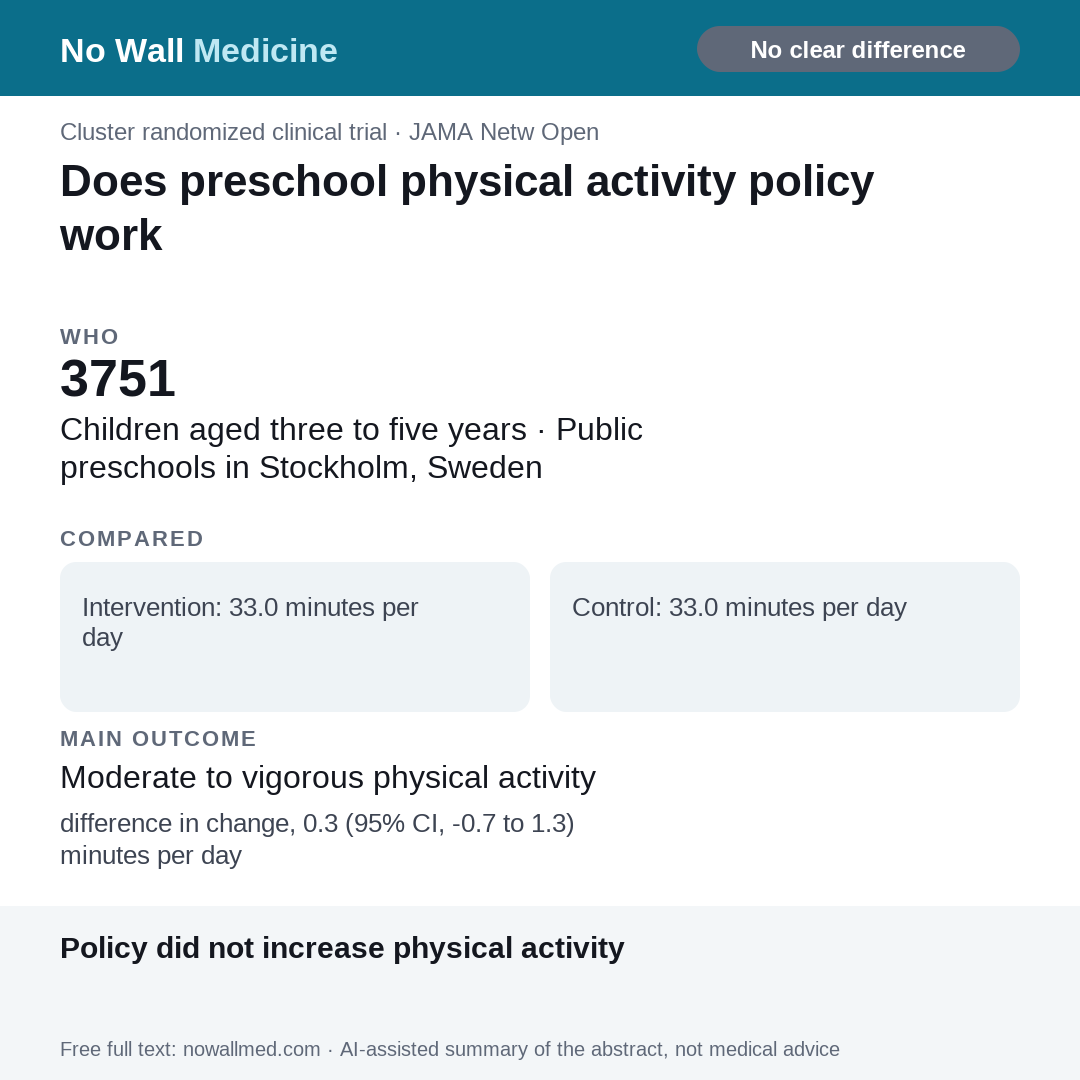
Preschool Physical Activity Policy and Children's Physical Activity: A Pragmatic Cluster Randomized Clinical Trial
Cluster randomized clinical trialNo clear difference
Does preschool physical activity policy work
Who
3751
Children aged three to five years · Public preschools in Stockholm, Sweden
Compared
Intervention: 33.0 minutes per day
Control: 33.0 minutes per day
Main outcome
Moderate to vigorous physical activity
Result: difference in change, 0.3 (95% CI, -0.7 to 1.3) minutes per day
Bottom line: Policy did not increase physical activity
Limitation: detecting change in preschool settings
JAMA Netw Open · 2026-10-01Download image
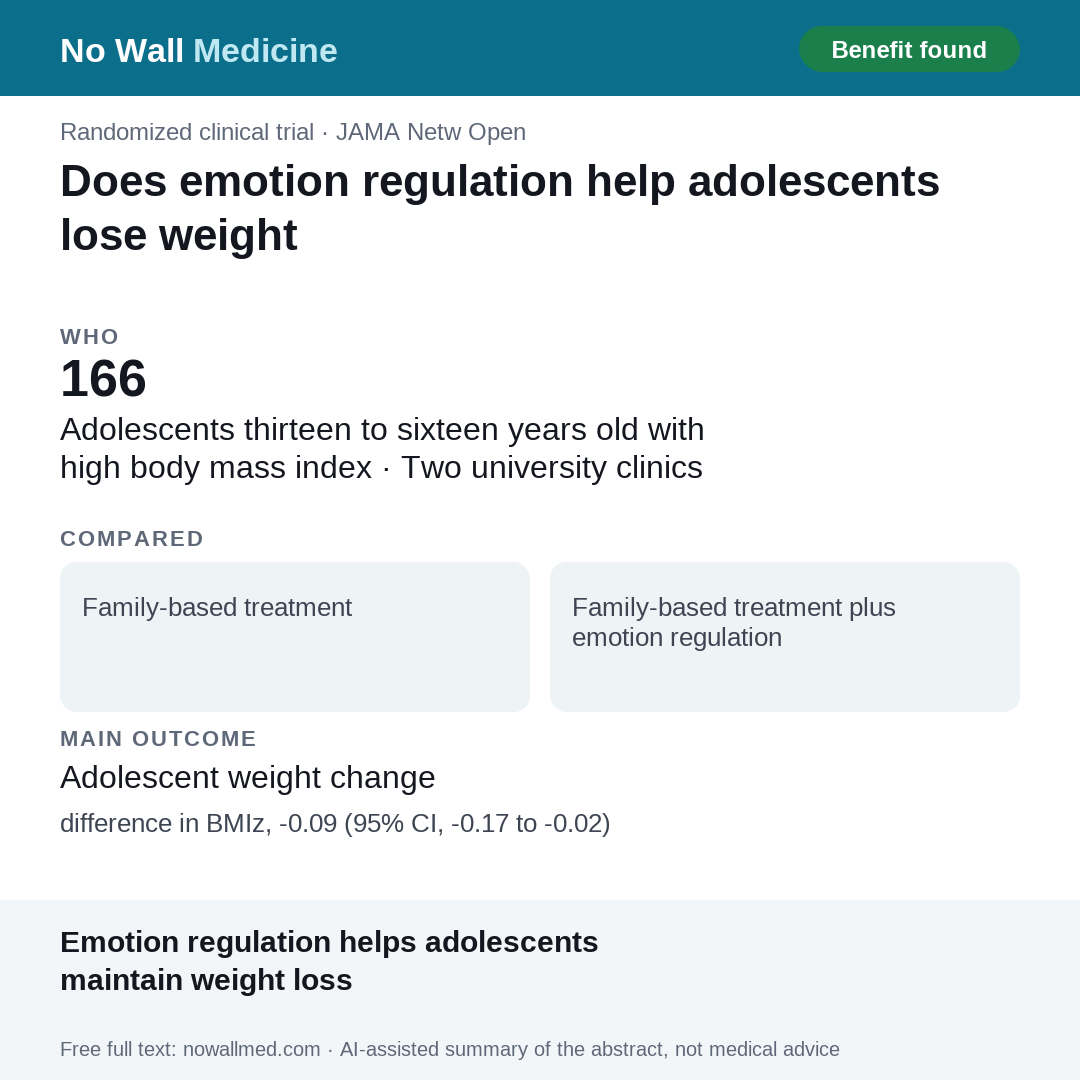
Emotion-Focused Behavioral Weight Loss Treatment for Adolescents: A Randomized Clinical Trial
Randomized clinical trialBenefit found
Does emotion regulation help adolescents lose weight
Who
166
Adolescents thirteen to sixteen years old with high body mass index · Two university clinics
Compared
Family-based treatment
Family-based treatment plus emotion regulation
Main outcome
Adolescent weight change
Result: difference in BMIz, -0.09 (95% CI, -0.17 to -0.02)
Bottom line: Emotion regulation helps adolescents maintain weight loss
JAMA Netw Open · 2026-10-01Download image
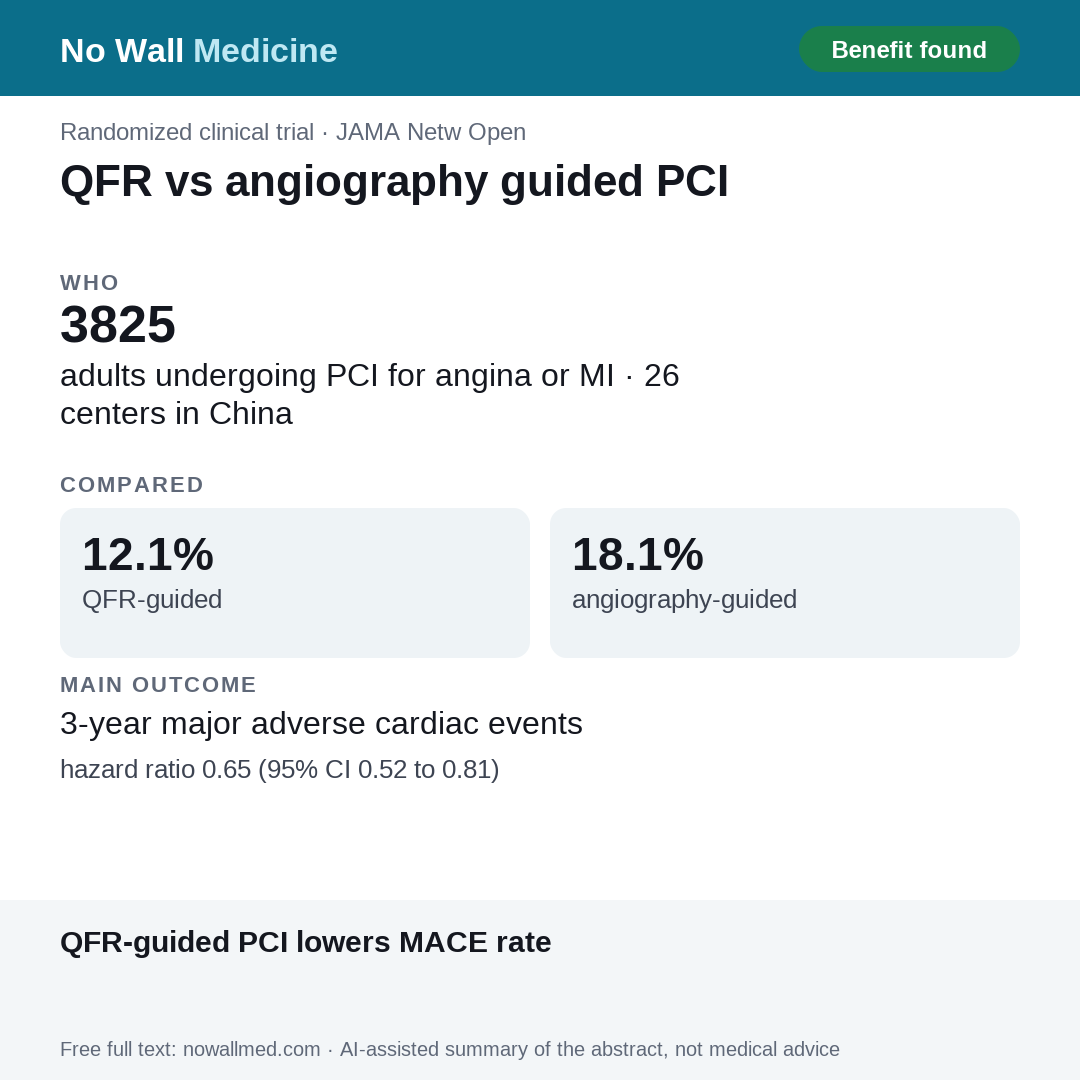
Quantitative Flow Ratio- vs Angiography-Guided Percutaneous Coronary Intervention: A Secondary Analysis of the FAVOR III China Trial
Randomized clinical trial secondary analysisBenefit found
Does QFR-guided PCI versus angiography-guided PCI affect 3-year outcomes by multivessel disease status?
Who
3825
Adults undergoing percutaneous coronary intervention for angina or myocardial infarction · 26 centers in China
Compared
12.1%QFR-guided PCI in MVD cohort
18.1%Angiography-guided PCI in MVD cohort
8.6%QFR-guided PCI in non-MVD cohort
11.0%Angiography-guided PCI in non-MVD cohort
Main outcome
3-year major adverse cardiac events
Result: hazard ratio 0.65 (95% CI 0.52-0.81) in MVD cohort
Bottom line: QFR-guided PCI was associated with lower 3-year major adverse cardiac events in patients with multivessel disease.
JAMA Netw Open · 2026-10-01Download image
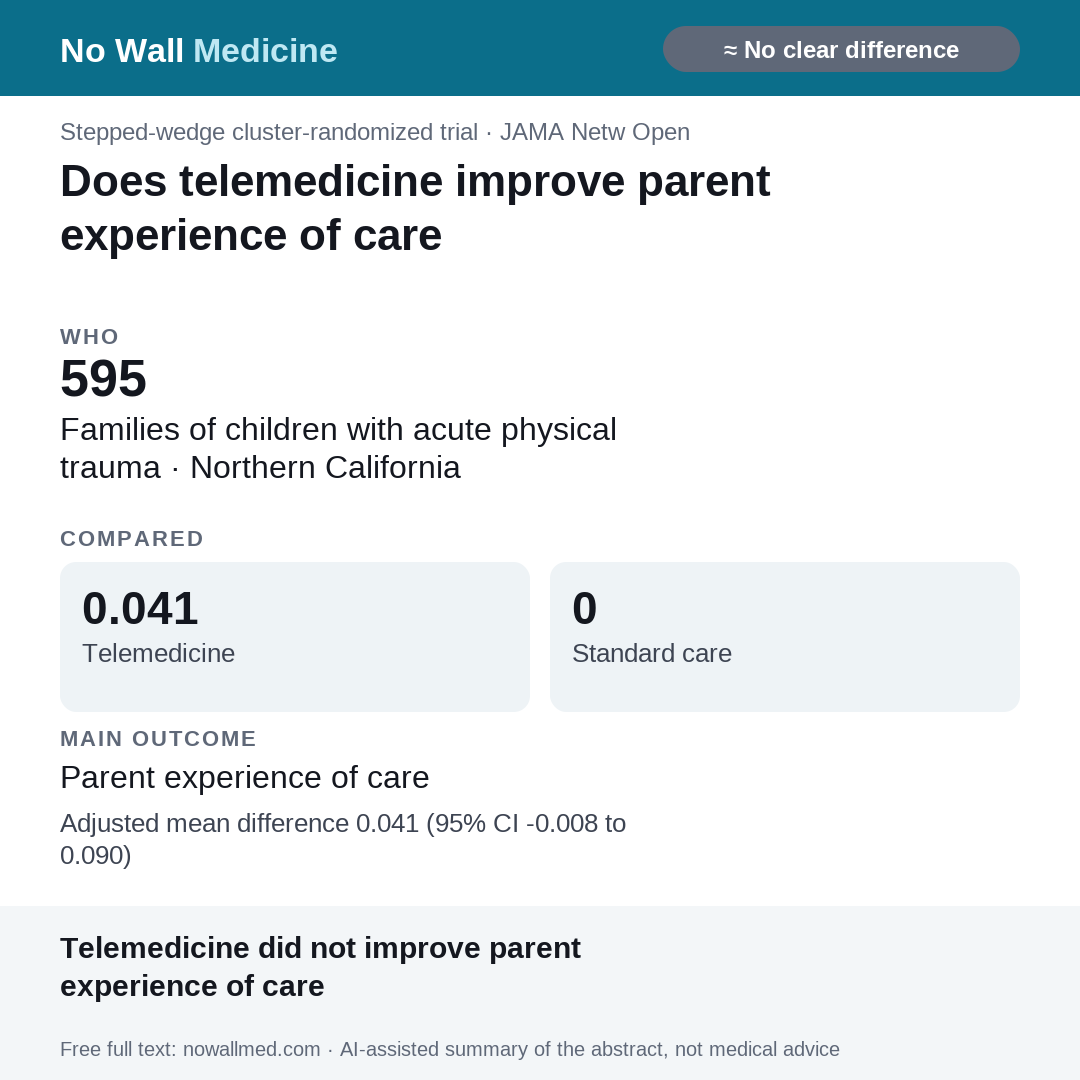
Telemedicine Consultation for Pediatric Trauma in Community ED Visits and Parent Experience of Care: A Stepped-Wedge Cluster-Randomized Clinical Trial
Stepped-wedge cluster-randomized trialNo clear difference
Does telemedicine improve parent experience of care
Who
595
Families of children with acute physical trauma · Northern California
Compared
0.041Telemedicine
0Standard care
Main outcome
Parent experience of care
Result: Adjusted mean difference 0.041 (95% CI -0.008 to 0.090)
Bottom line: Telemedicine did not improve parent experience of care
JAMA Netw Open · 2026-10-01Download image
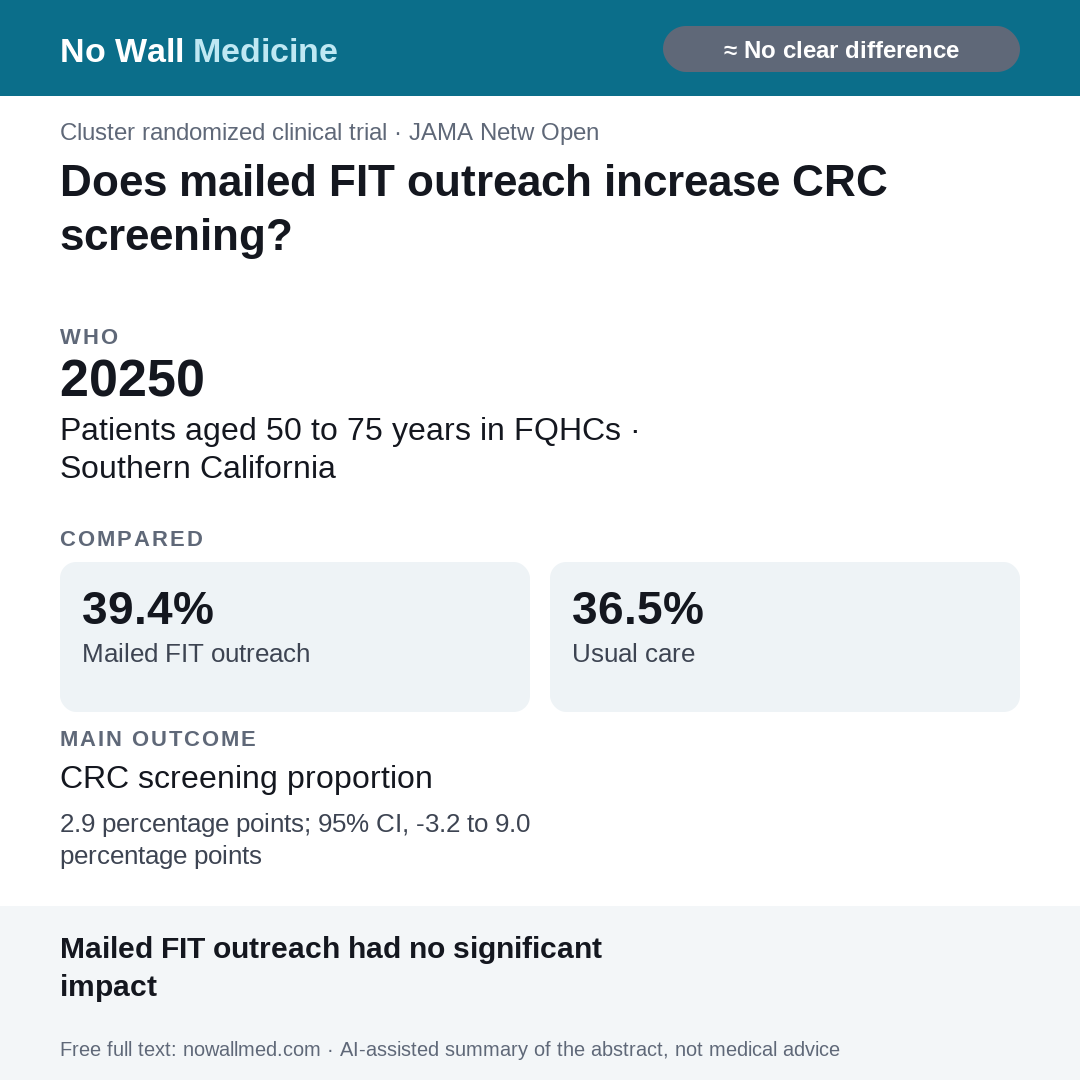
Fecal Immunochemical Test Outreach for Colorectal Cancer Screening in Community Health Centers: A Randomized Clinical Trial
Cluster randomized clinical trialNo clear difference
Does mailed FIT outreach increase CRC screening?
Who
20250
Patients aged 50 to 75 years in FQHCs · Southern California
Compared
39.4%Mailed FIT outreach (95% CI, 36.3% to 42.6%)
36.5%Usual care (95% CI, 31.2% to 42.2%)
Main outcome
CRC screening proportion
Result: 2.9 percentage points; 95% CI, -3.2 to 9.0 percentage points
Bottom line: Mailed FIT outreach had no significant impact
JAMA Netw Open · 2026-10-01Download image
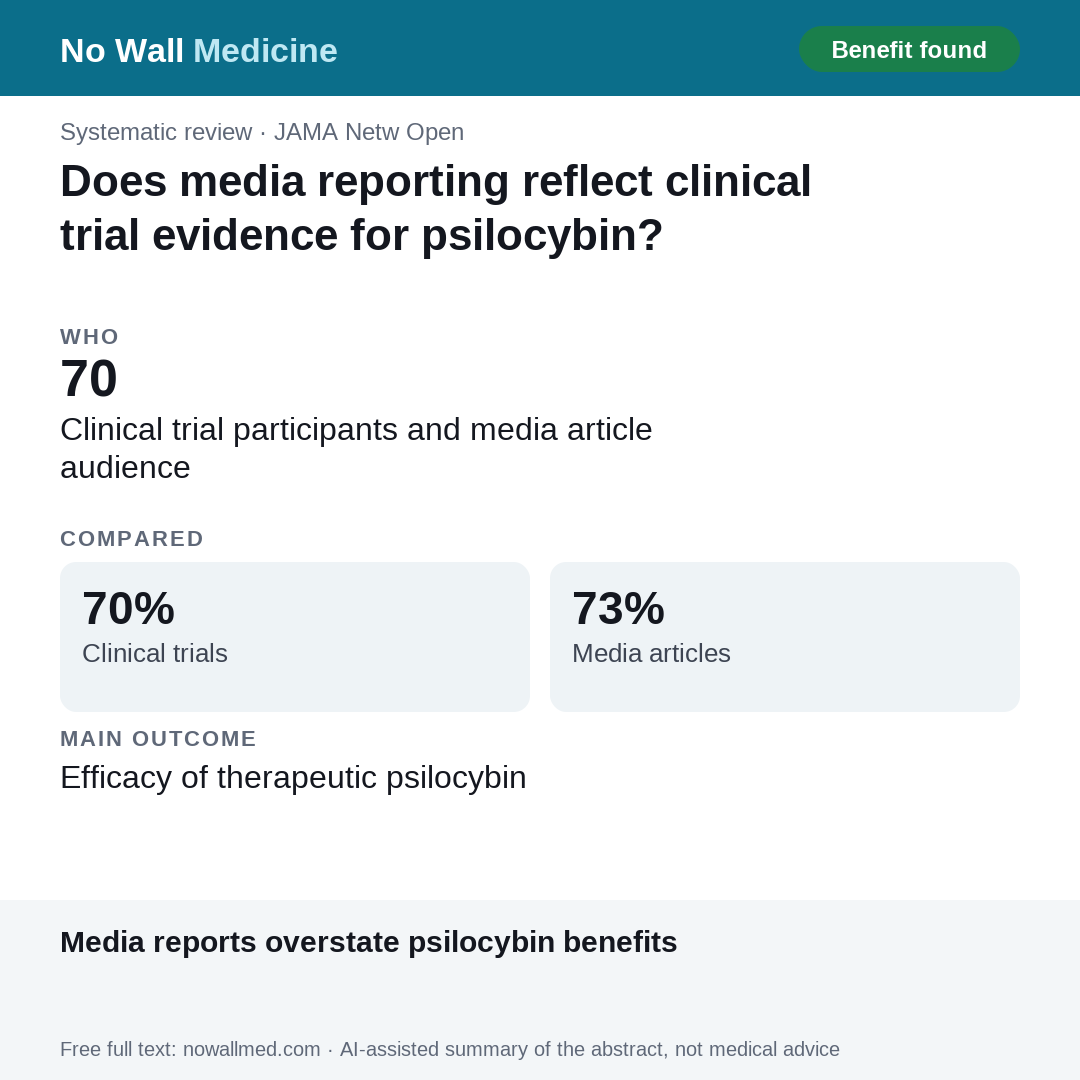
Clinical Evidence on Psilocybin and Its Representation in Media Reporting: A Systematic Review
Systematic reviewBenefit found
Does media reporting reflect clinical trial evidence for psilocybin?
Who
70
Clinical trial participants and media article audience
Compared
70%Clinical trials (49/70)
73%Media articles (125/172)
Main outcome
Efficacy of therapeutic psilocybin
Bottom line: Media reports overstate psilocybin benefits
Limitation: Small sample sizes and methodologic limitations
JAMA Netw Open · 2026-10-01Download image
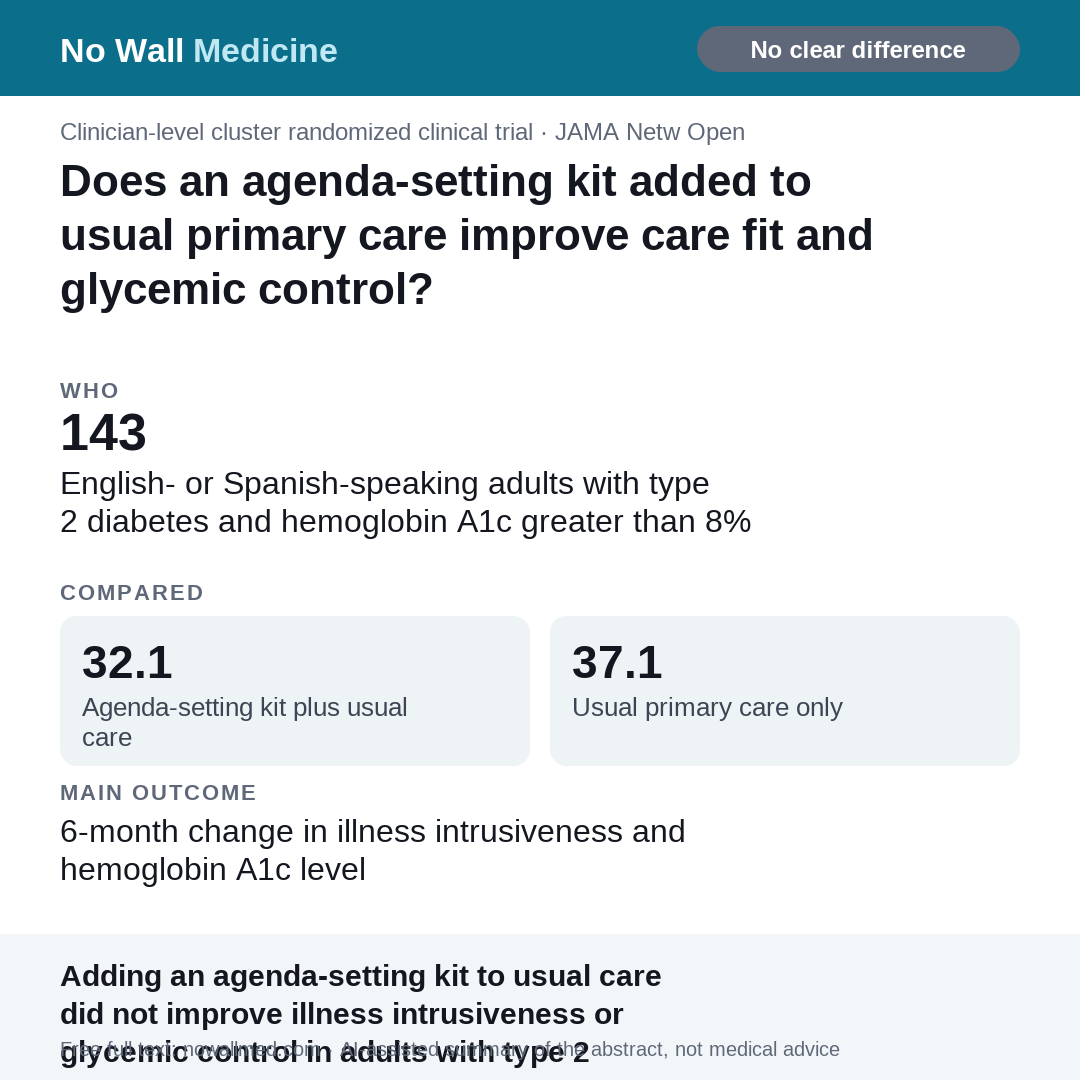
A Conversation Tool to Enhance Care for People With Type 2 Diabetes: The QBSafe Cluster Randomized Clinical Trial
Clinician-level cluster randomized clinical trialNo clear difference
Does an agenda-setting kit added to usual primary care improve care fit and glycemic control?
Who
143
English- or Spanish-speaking adults with type 2 diabetes and hemoglobin A1c greater than 8% · Federally qualified health center in New Haven, Connecticut
Compared
32.1Agenda-setting kit plus usual care (15.1)
37.1Usual primary care only (18.7)
Main outcome
6-month change in illness intrusiveness and hemoglobin A1c level
Result: adjusted mean difference, -3.9; 95% CI, -10.4 to 2.6
Bottom line: Adding an agenda-setting kit to usual care did not improve illness intrusiveness or glycemic control in adults with type 2 diabetes.
JAMA Netw Open · 2026-10-01Download image
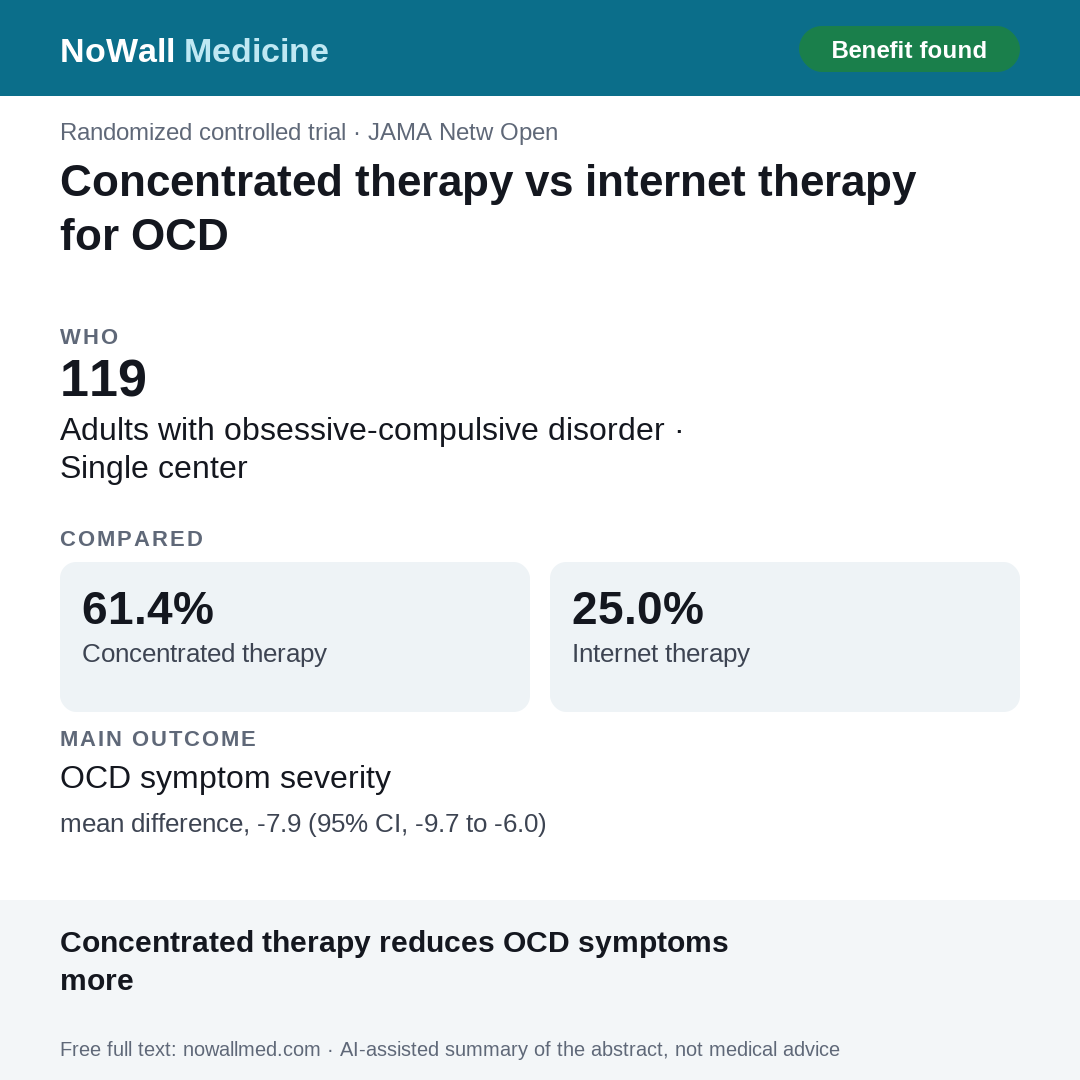
Concentrated Exposure Therapy vs Internet-Based Cognitive Behavioral Therapy for Obsessive-Compulsive Disorder: A Randomized Clinical Trial
Randomized controlled trialBenefit found
Concentrated therapy vs internet therapy for OCD
Who
119
Adults with obsessive-compulsive disorder · Single center
Compared
61.4%Concentrated therapy (35/57)
25.0%Internet therapy (11/44)
Main outcome
OCD symptom severity
Result: mean difference, -7.9 (95% CI, -9.7 to -6.0)
Bottom line: Concentrated therapy reduces OCD symptoms more
JAMA Netw Open · 2026-10-01Download image
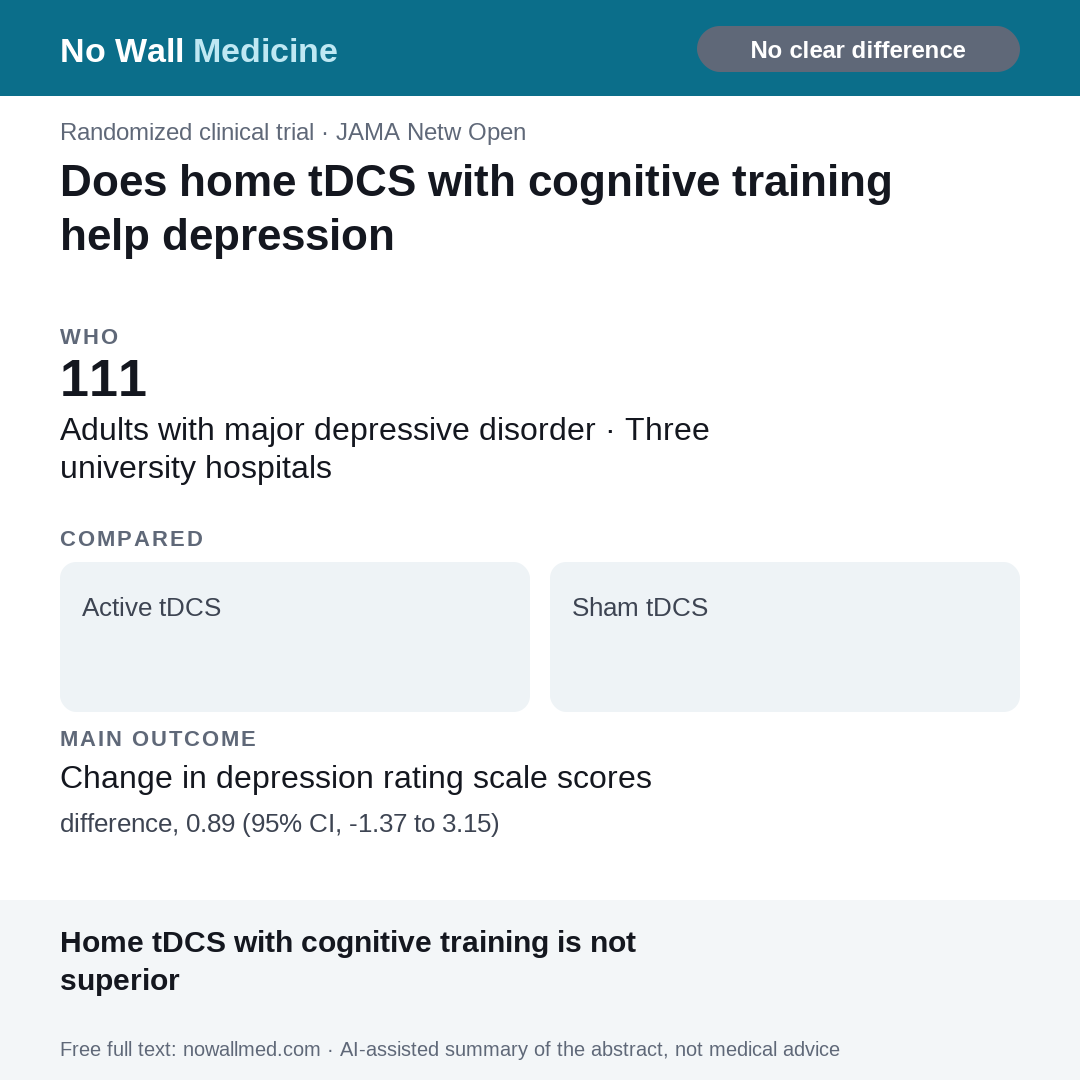
Home Transcranial Direct Current Stimulation With Gamified Cognitive Control Training for Depression: A Randomized Clinical Trial
Randomized clinical trialNo clear difference
Does home tDCS with cognitive training help depression
Who
111
Adults with major depressive disorder · Three university hospitals
Compared
Active tDCS
Sham tDCS
Main outcome
Change in depression rating scale scores
Result: difference, 0.89 (95% CI, -1.37 to 3.15)
Bottom line: Home tDCS with cognitive training is not superior
JAMA Netw Open · 2026-10-01Download image