Visual abstracts
New randomized trials and meta-analyses from leading journals at a glance: who was studied, what was compared, and what was found. Every paper is free to read in full.
All specialtiesCardiology 840Oncology 760Gastroenterology & Hepatology 306Infectious Disease 626Neurology 350Psychiatry & Mental Health 430Pulmonology 365Critical Care 243Endocrinology & Diabetes 480Pediatrics 534Surgery 319Orthopedics & Sports Medicine 161Neurosurgery 89Cardiothoracic & Vascular Surgery 87Plastic & Reconstructive Surgery 118Nephrology 197Rheumatology 108Hematology 181Dermatology 78Ophthalmology 97Obstetrics & Gynecology 261Public & Global Health 167Radiology & Imaging 96Anesthesiology 107Urology 162ENT (Otolaryngology) 86Emergency Medicine 68Allergy & Immunology 58Geriatrics 160Family Medicine & Primary Care 111Medical Genetics & Genomics 91Pathology & Laboratory Medicine 24Physical Medicine & Rehabilitation 148Palliative Care 81Nutrition 223Digital Health & AI 460General Medicine 101
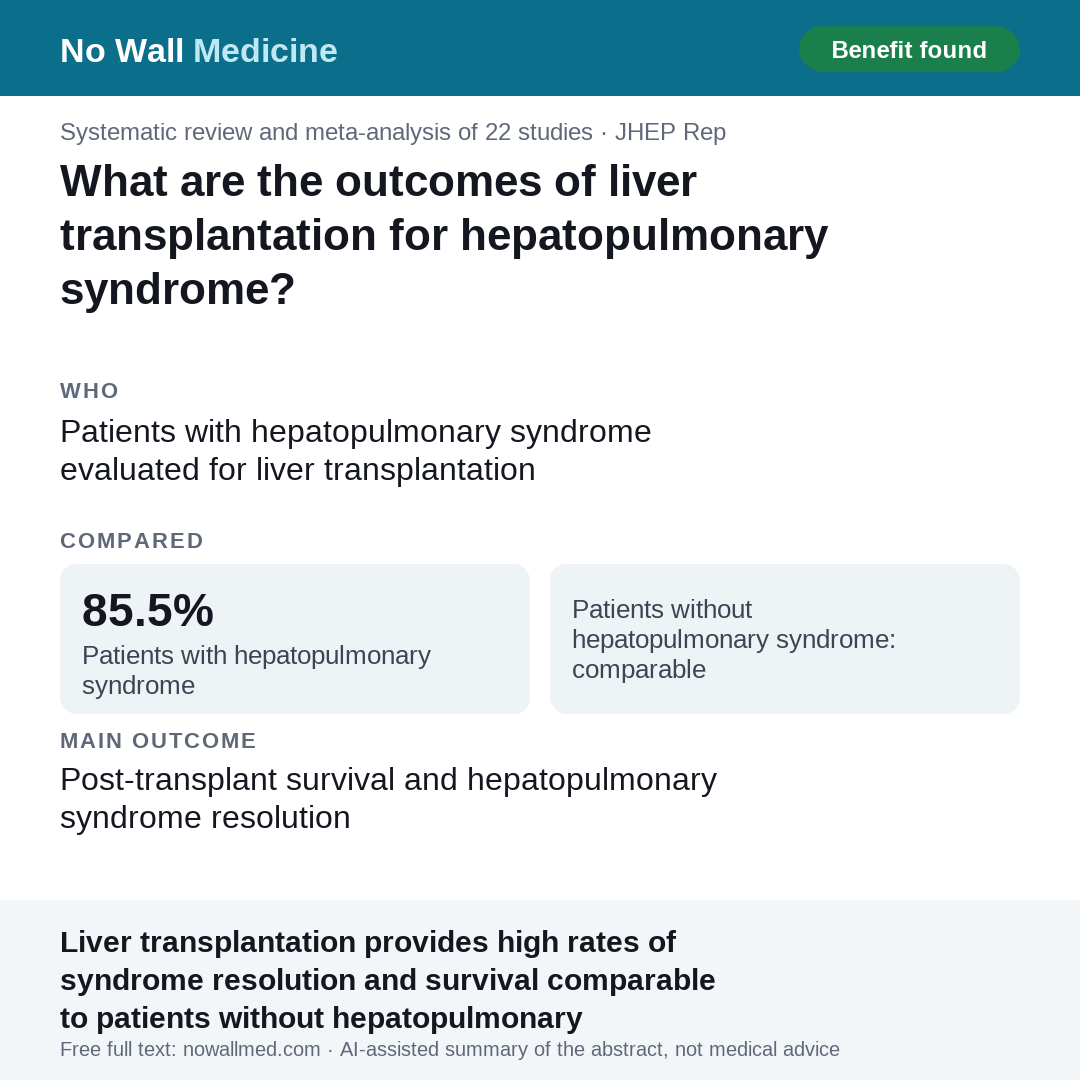
Liver transplantation for hepatopulmonary syndrome: A systematic review and meta-analysis
Systematic review and meta-analysis of 22 studiesBenefit found
What are the outcomes of liver transplantation for hepatopulmonary syndrome?
Who
Patients with hepatopulmonary syndrome evaluated for liver transplantation
Compared
85.5%Patients with hepatopulmonary syndrome (pre- and post-MELD era 1-year survival)
Patients without hepatopulmonary syndrome: comparable
Main outcome
Post-transplant survival and hepatopulmonary syndrome resolution
Bottom line: Liver transplantation provides high rates of syndrome resolution and survival comparable to patients without hepatopulmonary syndrome.
JHEP Rep · 2025-10-31Download image
Genetic susceptibility to depression and risk of cardiometabolic diseases: a systematic review and meta-analysis of 21 Mendelian randomisation studies
Systematic review and meta-analysis of 21 Mendelian randomisation studiesMixed results
Is there a bidirectional association between genetic susceptibility to depression and cardiometabolic diseases?
Who
Adults
Compared
Genetic susceptibility to depression: increased odds of coronary artery disease (odds ratio 1.12, 95% CI 1.05-1.19)
Genetic susceptibility to depression: increased odds of myocardial infarction (1.13, 1.10-1.17)
Genetic susceptibility to depression: increased odds of elevated triglycerides (1.10, 1.06-1.14)
Genetic susceptibility to depression: no association with diabetes (1.08, 0.96-1.21)
Main outcome
Cardiovascular diseases and metabolic diseases
Bottom line: Genetic susceptibility to depression is associated with increased risk of coronary artery disease, myocardial infarction, and elevated triglycerides.
Limitation: High heterogeneity warrants cautious interpretation of our findings.
eClinicalMedicine · 2025-10-29Download image

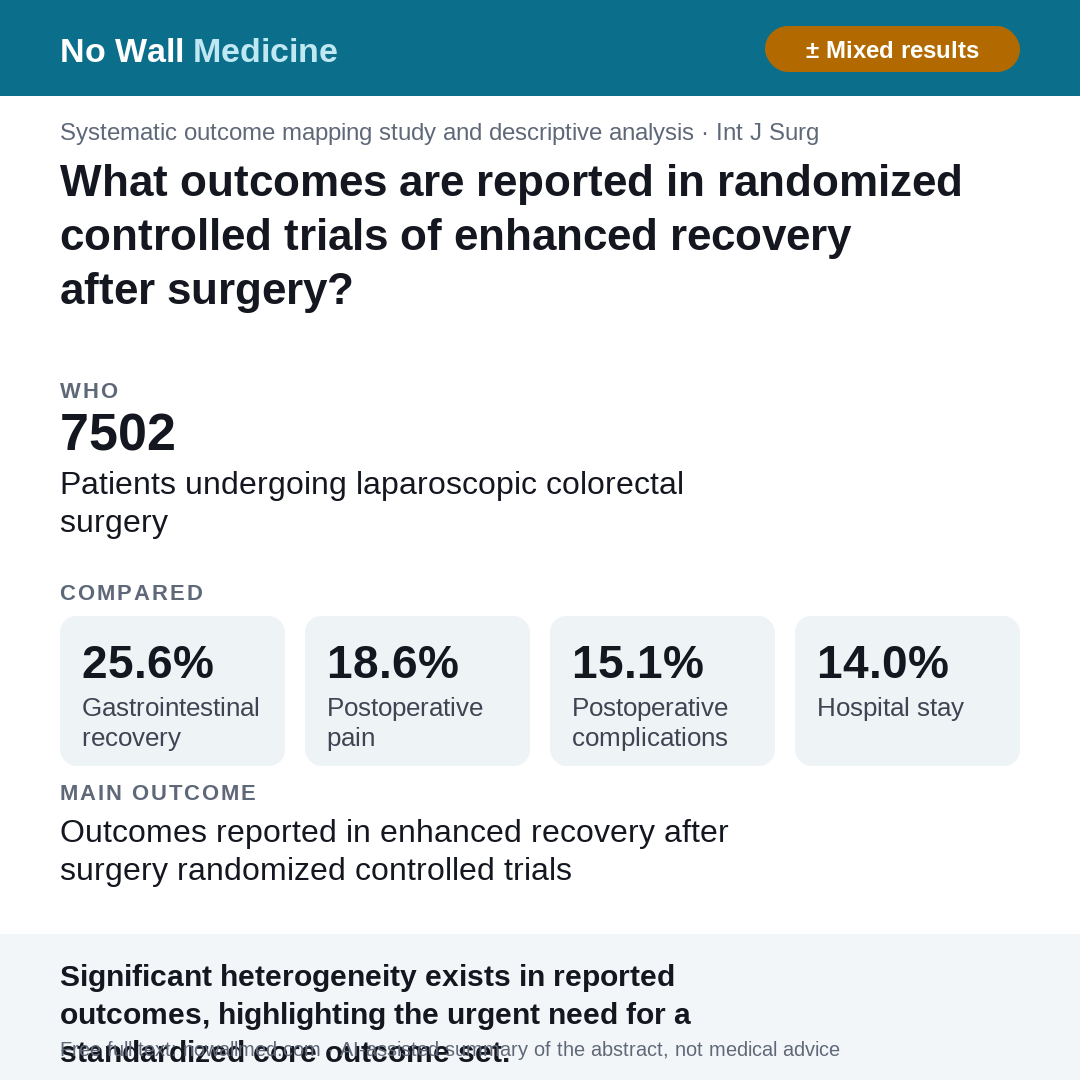
Outcomes of enhanced recovery after surgery in laparoscopic colorectal surgery: a systematic outcome mapping study and descriptive analysis to inform a core outcome set
Systematic outcome mapping study and descriptive analysisMixed results
What outcomes are reported in randomized controlled trials of enhanced recovery after surgery?
Who
7502
Patients undergoing laparoscopic colorectal surgery
Compared
25.6%Gastrointestinal recovery
18.6%Postoperative pain
15.1%Postoperative complications
14.0%Hospital stay
Main outcome
Outcomes reported in enhanced recovery after surgery randomized controlled trials
Bottom line: Significant heterogeneity exists in reported outcomes, highlighting the urgent need for a standardized core outcome set.
Limitation: Outcome definitions and measurement tools varied widely with no consistent standardization.
Int J Surg · 2025-10-28Download image
Combined subtotal resection and stereotactic radiosurgery for large vestibular schwannomas: A systematic review and meta-analysis
Systematic review and meta-analysisBenefit found
What are the outcomes of subtotal resection followed by stereotactic radiosurgery for large vestibular schwannomas?
Who
934
Patients with large vestibular schwannomas
Compared
Subtotal or near-total resection plus stereotactic radiosurgery: 80% tumor control rate
Subtotal or near-total resection plus stereotactic radiosurgery: 85% facial nerve function preserved
Subtotal or near-total resection plus stereotactic radiosurgery: 43% serviceable hearing
Main outcome
Tumor control, facial nerve preservation, and hearing preservation
Bottom line: Combined subtotal resection and stereotactic radiosurgery effectively controls tumors while enhancing nerve and hearing preservation.
Limitation: Cystic tumor morphology correlated with reduced tumor control following stereotactic radiosurgery.
Neurooncol Adv · 2025-10-25Download image

Association between hair dye use and human cancers: A systematic review
Systematic reviewMixed results
Is there an association between hair dye use and human cancer risk?
Who
Adults, children, and offspring of mothers using hair dye
Compared
Frequent hair dye users
Non-users
Main outcome
Cancer risk
Bottom line: Frequent, long-term hair dye use may increase cancer risks in specific populations.
Limitation: Elements of study design, study populations, and confounders.
JAAD Int · 2025-10-25Download image

Inequalities in all-cause mortality by ethnicity in the United Kingdom: a systematic review and meta-analysis
Systematic review and meta-analysisMixed results
What are the ethnic inequalities in all-cause mortality in the United Kingdom?
Who
UK populations of various ethnic groups · United Kingdom
Compared
Non-white ethnic groups: lower mortality than White British
White Irish and White Scottish: higher mortality than other White British
Main outcome
Age-adjusted all-cause mortality
Bottom line: Non-white ethnic groups had consistently lower all-cause mortality than White British individuals in the United Kingdom.
Limitation: Evidence on socioeconomic position was inconclusive due to methodological heterogeneity.
Funded by: Australian Research Council Centre of Excellence in Population Ageing Research
Lancet Reg Health Eur · 2025-10-21Download image

Glucagon-like peptide-1 receptor agonist treatment reduces body weight and improves glycaemic outcomes in patients with concurrent overweight/obesity and type 1 diabetes: A systematic review and meta-analysis
Systematic review and meta-analysisBenefit found
Do glucagon-like peptide-1 receptor agonists improve weight and glycaemic outcomes in type 1 diabetes?
Who
Adults with type 1 diabetes and body mass index ≥25 kg/m2
Compared
Glucagon-like peptide-1 receptor agonist
Control
Main outcome
Body weight, HbA1c, and insulin dose
Result: body weight reduction 4.31 kg (95% CI: 3.61-5.00 kg)
Bottom line: Glucagon-like peptide-1 receptor agonists reduce body weight, HbA1c, and insulin dose in type 1 diabetes.
Diabetes Obes Metab · 2025-10-20Download image

Optimal anthropometric discharge criteria from treatment of wasting: meta-analysis of individual patient data from 34 studies
Meta-analysis of individual patient dataUnclear result
Which anthropometric indices best predict reduced postdischarge relapse risk in malnourished children?
Who
21,989
Children aged 0-59 months treated for severe or moderate acute malnutrition · 16 countries
Compared
Weight-for-height Z-score: higher AUC in predicting lower SAM and MAM relapse risk
Mid-upper arm circumference: lower AUC than weight-for-height Z-score
Weight-for-age Z-score: lower AUC than weight-for-height Z-score
Main outcome
Severe or moderate acute malnutrition relapse risk
Bottom line: Weight-for-height Z-score predicted lower relapse risk better than mid-upper arm circumference or weight-for-age Z-score.
Am J Clin Nutr · 2025-10-20Download image

Comparative efficacy and safety of exercise modalities in knee osteoarthritis: systematic review and network meta-analysis
Systematic review with network meta-analysisBenefit found
Which exercise modalities are most effective for managing knee osteoarthritis?
Who
15684
Patients with knee osteoarthritis
Compared
Aerobic exercise: large improvements in pain at short term (standardised mean difference -1.10)
Control group
Main outcome
Pain, function, gait performance, and quality of life
Bottom line: Aerobic exercise is likely the most beneficial modality for improving pain, function, gait, and quality of life.
BMJ · 2025-10-15Download image

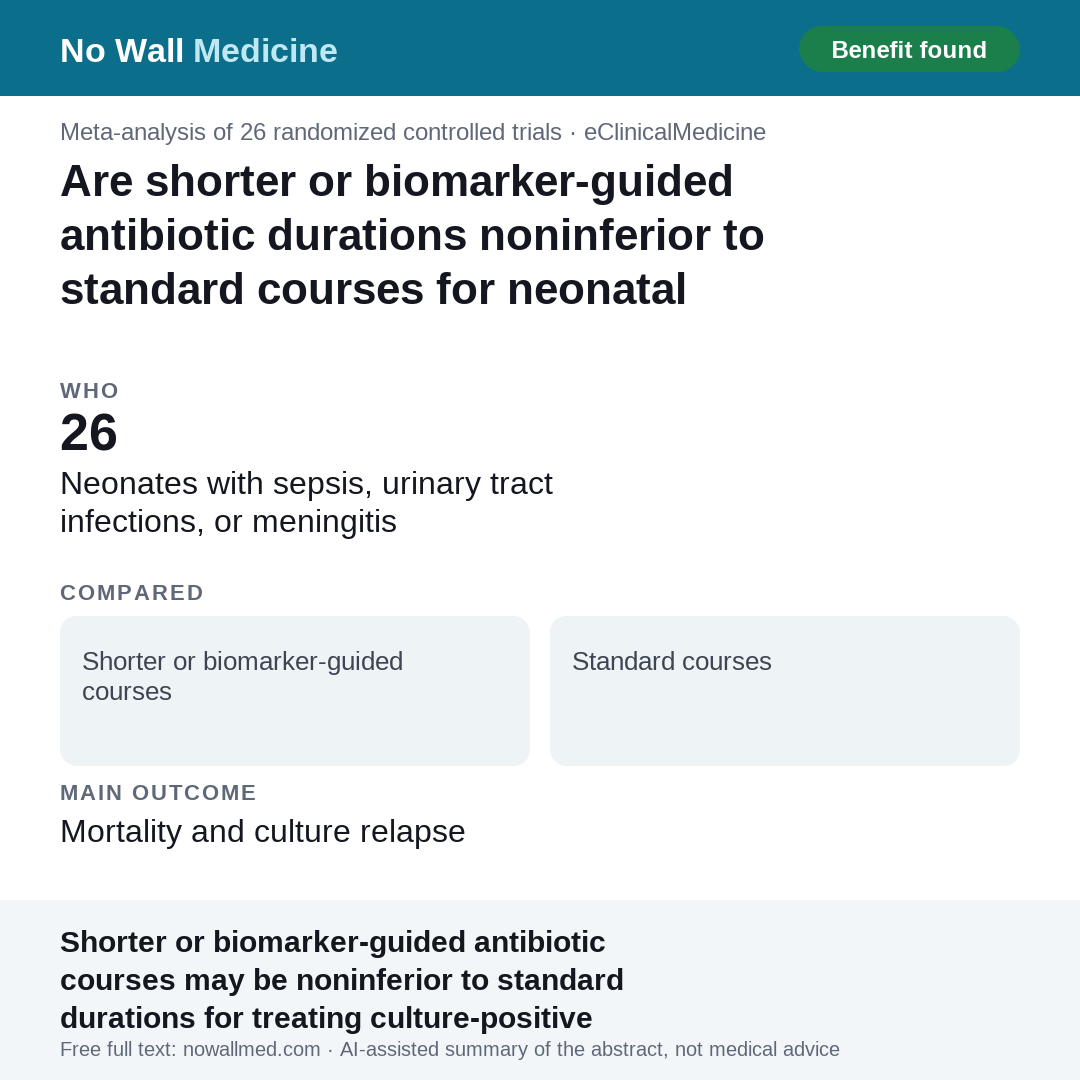
Shorter or biomarker-guided antibiotic durations for common serious neonatal infections: a collection of non-inferiority meta-analyses
Meta-analysis of 26 randomized controlled trialsBenefit found
Are shorter or biomarker-guided antibiotic durations noninferior to standard courses for neonatal infections?
Who
26
Neonates with sepsis, urinary tract infections, or meningitis
Compared
Shorter or biomarker-guided courses
Standard courses
Main outcome
Mortality and culture relapse
Bottom line: Shorter or biomarker-guided antibiotic courses may be noninferior to standard durations for treating culture-positive neonatal sepsis.
Limitation: Low to very low certainty of evidence across most outcomes.
eClinicalMedicine · 2025-10-14Download image
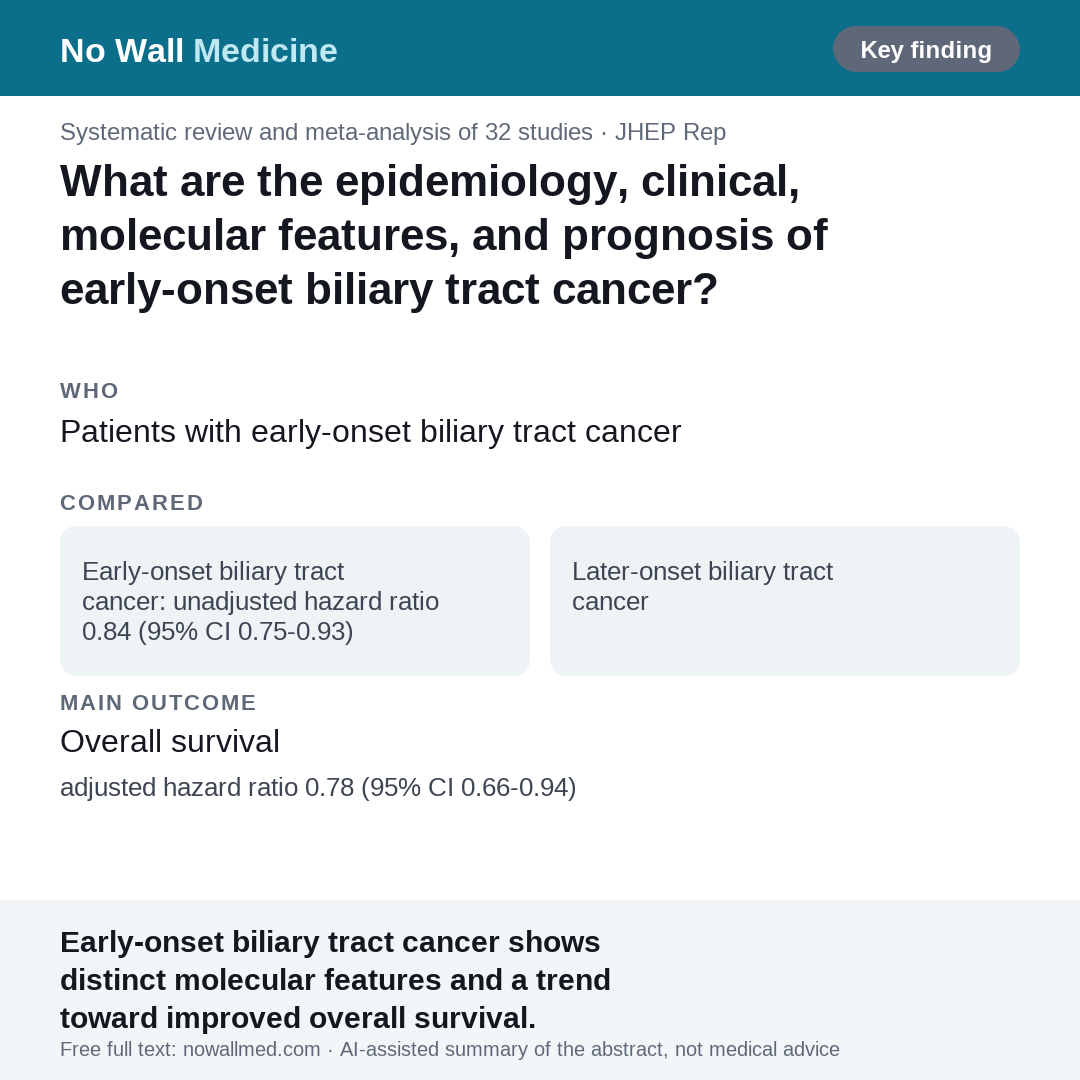
Epidemiology, clinical, molecular features, and prognosis of early-onset biliary tract cancer: A systematic review and meta-analysis
Systematic review and meta-analysis of 32 studiesBenefit found
What are the epidemiology, clinical, molecular features, and prognosis of early-onset biliary tract cancer?
Who
Patients with early-onset biliary tract cancer
Compared
Early-onset biliary tract cancer: unadjusted hazard ratio 0.84 (95% CI 0.75-0.93)
Later-onset biliary tract cancer
Main outcome
Overall survival
Result: adjusted hazard ratio 0.78 (95% CI 0.66-0.94)
Bottom line: Early-onset biliary tract cancer shows distinct molecular features and a trend toward improved overall survival.
Limitation: Prognostic data were heterogeneous.
JHEP Rep · 2025-10-09Download image
Prognostic accuracy of clinical markers of postpartum bleeding in predicting maternal mortality or severe morbidity: a WHO individual participant data meta-analysis
Individual participant data meta-analysisBenefit found
How accurate are clinical markers in predicting maternal mortality or severe morbidity from postpartum bleeding?
Who
312151
312,151 women from 12 datasets
Compared
Measured blood loss at 500 mL threshold: sensitivity 75·7% (95% CI 60·3-86·4), specificity 81·4% (95% CI 70·7-88·8)
Measured blood loss at 300 mL threshold: sensitivity 83·9% (95% CI 72·8-91·1), specificity 54·8% (95% CI 38·0-70·5)
Combined blood loss and haemodynamic signs: sensitivity 86·9% to 87·9%, specificity 66·6% to 76·1%
Main outcome
maternal mortality or severe morbidity
Bottom line: Combining blood loss thresholds with abnormal haemodynamic signs accurately predicts women at risk of postpartum bleeding complications.
Funded by: Gates Foundation and WHO Special Programme
Lancet · 2025-10-04Download image

A systematic review and meta-analysis of the efficacy and safety of pharmacological treatments for obesity in adults
Systematic review and network meta-analysisBenefit found
What is the efficacy and safety of pharmacological treatments for obesity in adults?
Who
60307
Adults with obesity
Compared
Obesity management medications: significantly greater percentage of total body weight loss versus placebo
Placebo
Main outcome
percentage of total body weight loss
Bottom line: Obesity management medications significantly increase weight loss compared to placebo, with specific benefits for semaglutide and tirzepatide.
Nat Med · 2025-10-02Download image

Risk prediction models for cancer therapy related cardiac dysfunction in patients with cancer and cancer survivors: systematic review and meta-analysis
Meta-analysis of 56 studiesNo clear difference
Do models predict cancer therapy cardiac dysfunction?
Who
patients with cancer and cancer survivors
Compared
12%low risk
15%medium risk
25%high risk
41%very high risk
Main outcome
cancer therapy related cardiac dysfunction
Result: pooled C statistic 0.60 (95% confidence interval 0.52 to 0.68)
Bottom line: Existing models need more evidence for adoption
Limitation: poor reporting and limited validation
BMJ · 2025-09-23Download image

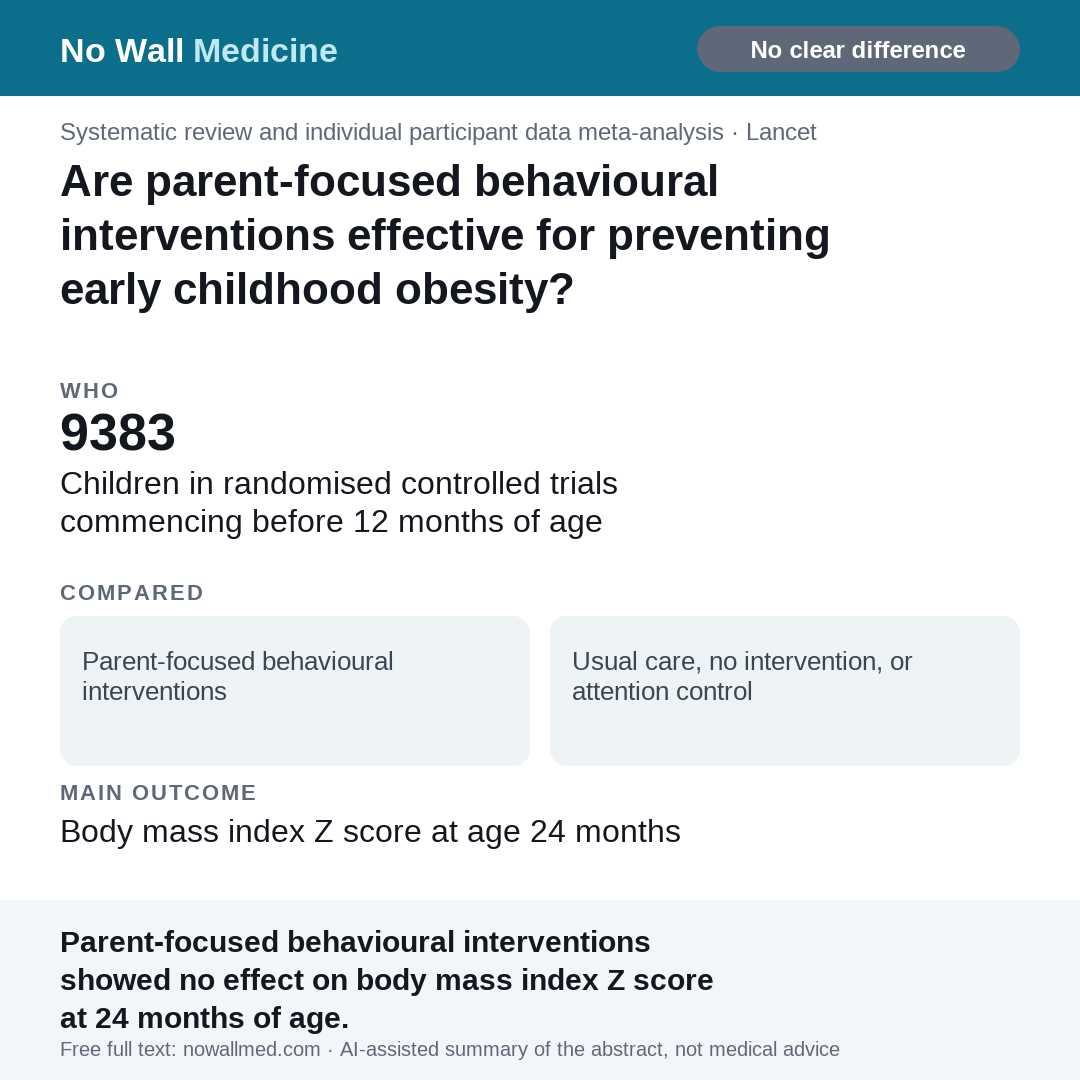
Parent-focused behavioural interventions for the prevention of early childhood obesity (TOPCHILD): a systematic review and individual participant data meta-analysis
Systematic review and individual participant data meta-analysisNo clear difference
Are parent-focused behavioural interventions effective for preventing early childhood obesity?
Who
9383
Children in randomised controlled trials commencing before 12 months of age
Compared
Parent-focused behavioural interventions
Usual care, no intervention, or attention control
Main outcome
Body mass index Z score at age 24 months
Result: mean difference -0·01 (95% CI -0·08 to 0·05)
Bottom line: Parent-focused behavioural interventions showed no effect on body mass index Z score at 24 months of age.
Limitation: 2623 participants had missing data for the primary outcome.
Funded by: Australian National Health and Medical Research Council
Lancet · 2025-09-10Download image
Cardiovascular adverse events associated with epidermal growth factor receptor tyrosine kinase inhibitors in EGFR-mutated non-small cell lung cancer: systematic review and network meta-analysis
Systematic review and network meta-analysisHarm found
What is the risk of cardiovascular adverse events with EGFR tyrosine kinase inhibitors?
Who
29813
Patients with epidermal growth factor receptor mutated non-small cell lung cancer
Compared
3.2%First generation inhibitors
9.5%Third generation inhibitors
Placebo
Main outcome
Cardiovascular adverse events
Result: odds ratio 2.18 (95% confidence interval 1.46 to 3.27)
Bottom line: First and third generation inhibitors increase cardiovascular adverse event risks, with third generation inhibitors showing higher risks than first generation.
BMJ · 2025-09-02Download image

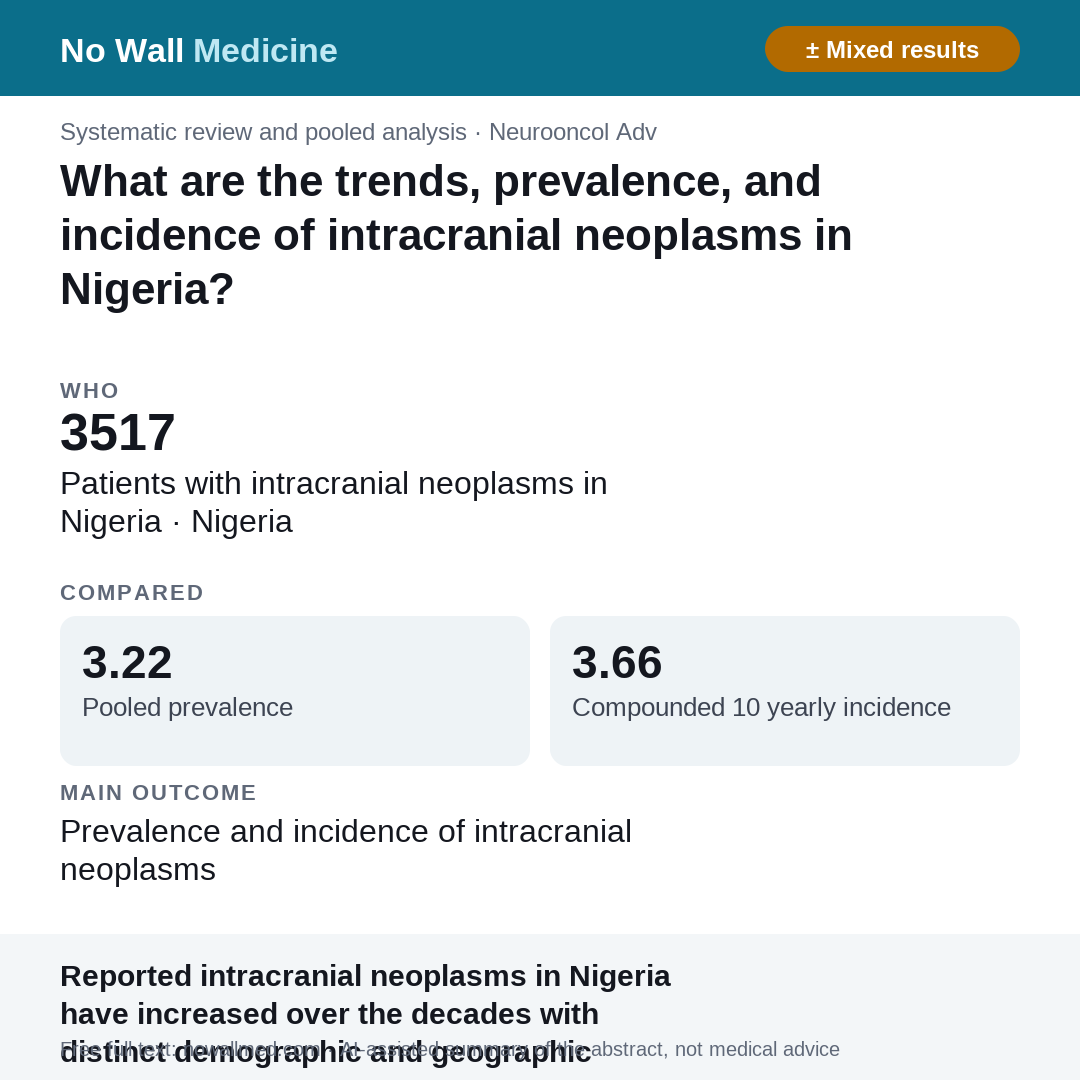
Trends of hospital-based reporting of intracranial neoplasms in Nigeria from 1960 to 2024: A systematic review and pooled analysis of literatures
Systematic review and pooled analysisMixed results
What are the trends, prevalence, and incidence of intracranial neoplasms in Nigeria?
Who
3517
Patients with intracranial neoplasms in Nigeria · Nigeria
Compared
3.22Pooled prevalence (95% CI: 1.66-5.22)
3.66Compounded 10 yearly incidence (95% CI: 1.67-6.32)
Main outcome
Prevalence and incidence of intracranial neoplasms
Bottom line: Reported intracranial neoplasms in Nigeria have increased over the decades with distinct demographic and geographic patterns.
Neurooncol Adv · 2025-09-02Download image
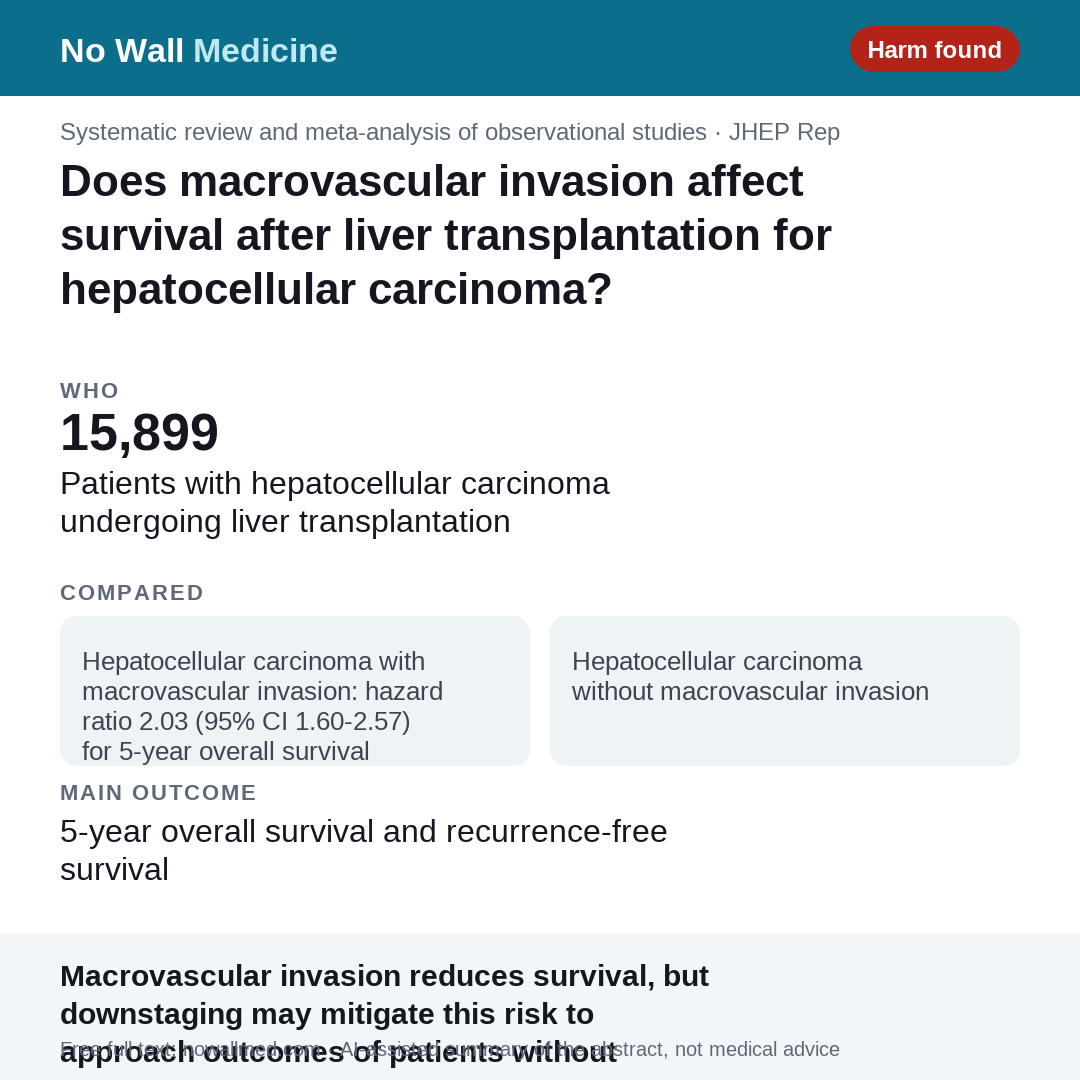
Liver transplantation for HCC with macrovascular invasion: A systematic review and meta-analysis of observational studies
Systematic review and meta-analysis of observational studiesHarm found
Does macrovascular invasion affect survival after liver transplantation for hepatocellular carcinoma?
Who
15,899
Patients with hepatocellular carcinoma undergoing liver transplantation
Compared
Hepatocellular carcinoma with macrovascular invasion: hazard ratio 2.03 (95% CI 1.60-2.57) for 5-year overall survival
Hepatocellular carcinoma without macrovascular invasion
Main outcome
5-year overall survival and recurrence-free survival
Result: hazard ratio 2.03 (95% CI 1.60-2.57) for 5-year overall survival
Bottom line: Macrovascular invasion reduces survival, but downstaging may mitigate this risk to approach outcomes of patients without invasion.
Limitation: Further studies are essential to validate findings and clarify which downstaging approaches confer benefit.
JHEP Rep · 2025-08-28Download image
The Effect of Weight Loss Before In Vitro Fertilization on Reproductive Outcomes in Women With Obesity : A Systematic Review and Meta-analysis
Systematic review and meta-analysis of randomized controlled trialsBenefit found
Does weight loss before in vitro fertilization improve reproductive outcomes in women with obesity?
Who
1921
Women with obesity undergoing planned in vitro fertilization
Compared
Weight loss intervention
Control
Main outcome
Pregnancy and live birth rates
Result: risk ratio 1.21 (95% CI, 1.02 to 1.44)
Bottom line: Weight loss interventions before in vitro fertilization increase total pregnancy rates and unassisted conception rates in women with obesity.
Limitation: Small studies, high risk of bias, and substantial unexplained clinical and methodological heterogeneity.
Funded by: National Institute for Health and Care Research
Ann Intern Med · 2025-08-12Download image

Total and specific potato intake and risk of type 2 diabetes: results from three US cohort studies and a substitution meta-analysis of prospective cohorts
Prospective cohort study and dose-response meta-analysisHarm found
Does total and specific potato intake affect type 2 diabetes risk?
Who
587081
Men and women free of diabetes, cardiovascular disease, or cancer · United States
Compared
Total potato intake: hazard ratio 1.03 (95% CI 1.02 to 1.05)
Fried potatoes: hazard ratio 1.16 (95% CI 1.09 to 1.23)
Main outcome
Incident type 2 diabetes
Result: hazard ratio 1.03 (95% CI 1.02 to 1.05)
Bottom line: Higher intake of French fries is associated with increased type 2 diabetes risk, while replacing potatoes with whole grains lowers risk.
BMJ · 2025-08-06Download image