Visual abstracts
New randomized trials and meta-analyses from leading journals at a glance: who was studied, what was compared, and what was found. Every paper is free to read in full.
All specialtiesCardiology 4877Oncology 4138Gastroenterology & Hepatology 1942Infectious Disease 3837Neurology 1905Psychiatry & Mental Health 2273Pulmonology 2143Critical Care 1365Endocrinology & Diabetes 2580Pediatrics 2980Surgery 2559Orthopedics & Sports Medicine 931Neurosurgery 537Cardiothoracic & Vascular Surgery 674Plastic & Reconstructive Surgery 591Nephrology 1133Rheumatology 823Hematology 1109Dermatology 621Ophthalmology 543Obstetrics & Gynecology 1686Public & Global Health 1058Radiology & Imaging 648Anesthesiology 986Urology 764ENT (Otolaryngology) 503Emergency Medicine 511Allergy & Immunology 313Geriatrics 981Family Medicine & Primary Care 562Medical Genetics & Genomics 676Pathology & Laboratory Medicine 159Physical Medicine & Rehabilitation 757Palliative Care 444Nutrition 1588Digital Health & AI 2201General Medicine 321
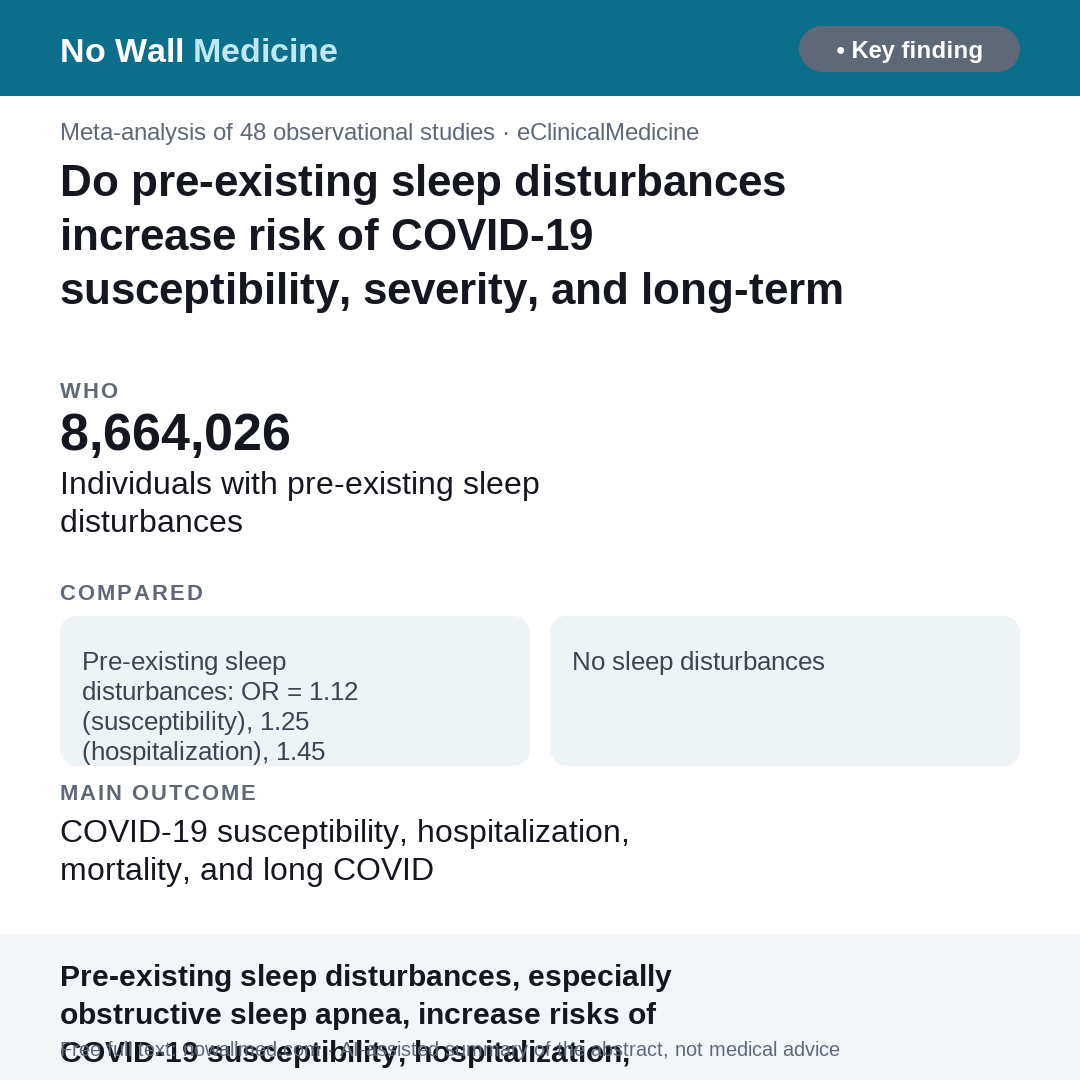
Pre-existing sleep disturbances and risk of COVID-19: a meta-analysis
Meta-analysis of 48 observational studiesHarm found
Do pre-existing sleep disturbances increase risk of COVID-19 susceptibility, severity, and long-term effects?
Who
8,664,026
Individuals with pre-existing sleep disturbances
Compared
Pre-existing sleep disturbances: OR = 1.12 (susceptibility), 1.25 (hospitalization), 1.45 (mortality), 1.36 (long COVID)
No sleep disturbances
Main outcome
COVID-19 susceptibility, hospitalization, mortality, and long COVID
Result: OR = 1.12 (95% CI 1.07-1.18) for susceptibility; OR = 1.25 (95% CI 1.15-1.36) for hospitalization; OR = 1.45 (95% CI 1.19-1.78) for mortality; OR = 1.36 (95% CI 1.17-1.57) for long COVID
Bottom line: Pre-existing sleep disturbances, especially obstructive sleep apnea, increase risks of COVID-19 susceptibility, hospitalization, mortality, and long COVID.
Funded by: National Natural Science Foundation of China
eClinicalMedicine · 2024-07-05Download image
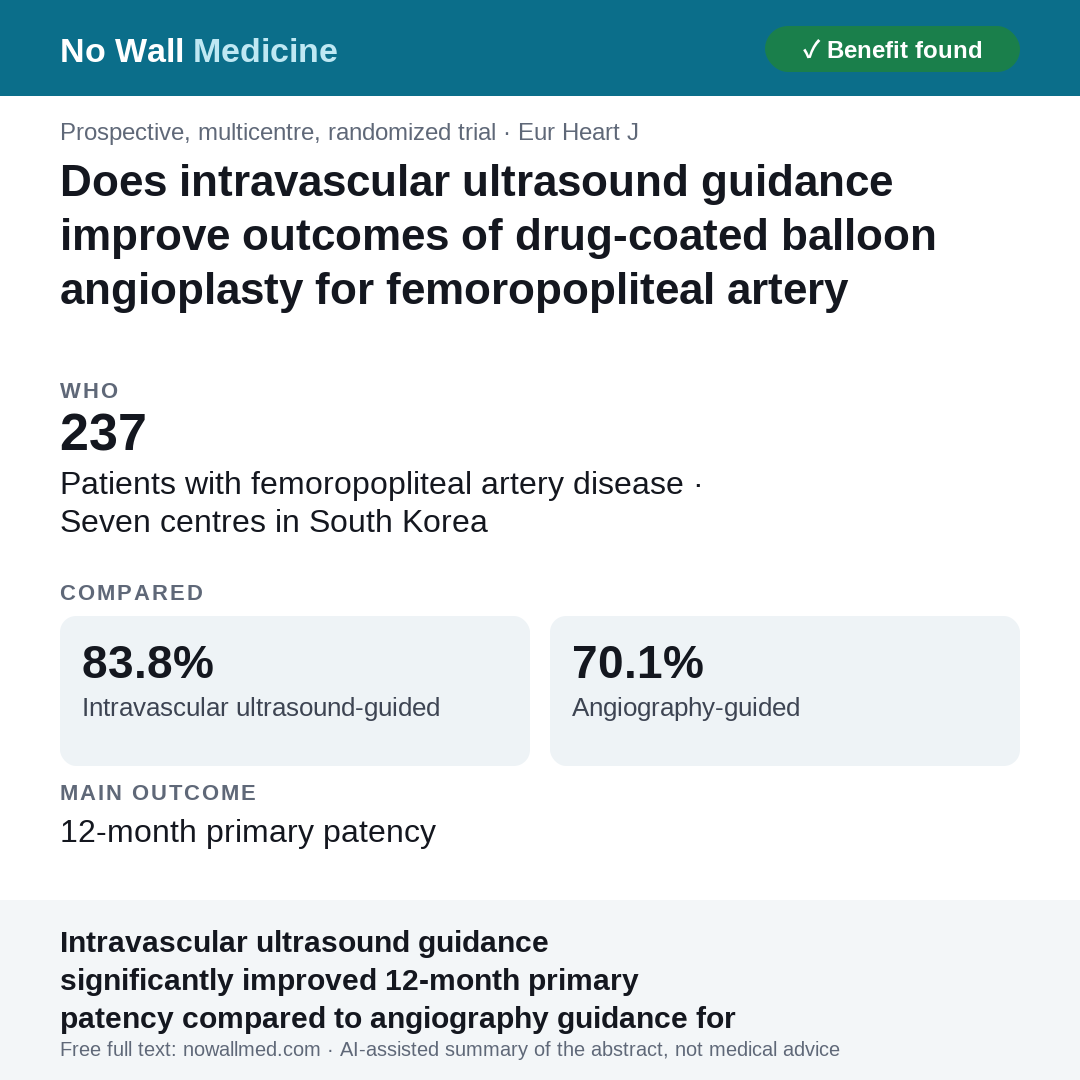
Intravascular ultrasound-guided drug-coated balloon angioplasty for femoropopliteal artery disease: a clinical trial
Prospective, multicentre, randomized trialBenefit found
Does intravascular ultrasound guidance improve outcomes of drug-coated balloon angioplasty for femoropopliteal artery disease?
Who
237
Patients with femoropopliteal artery disease · Seven centres in South Korea
Compared
83.8%Intravascular ultrasound-guided
70.1%Angiography-guided
Main outcome
12-month primary patency
Result: cumulative difference 19.6% (95% confidence interval 6.8 to 32.3)
Bottom line: Intravascular ultrasound guidance significantly improved 12-month primary patency compared to angiography guidance for femoropopliteal artery disease.
Eur Heart J · 2024-07-05Download image
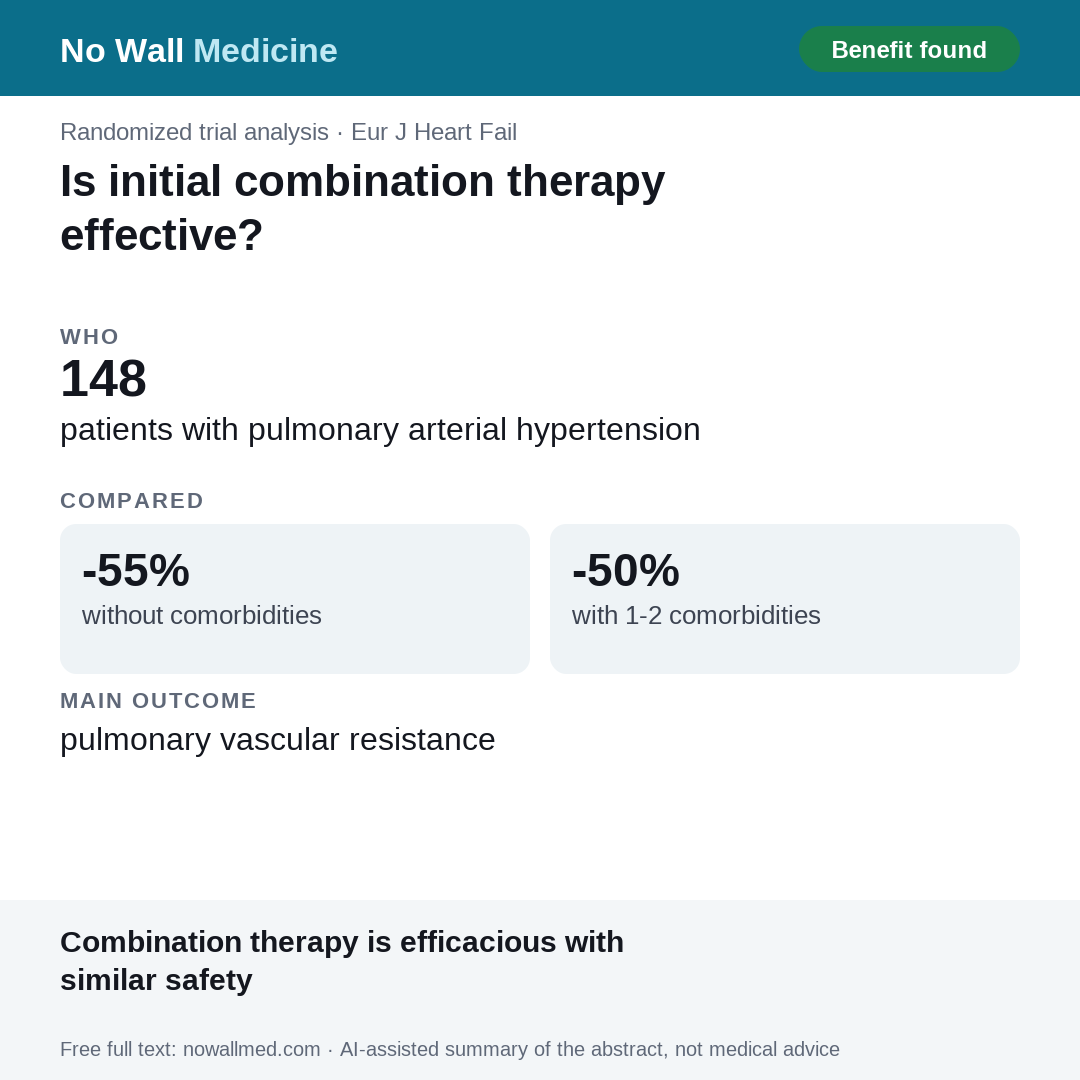
Initial combination therapy with macitentan and tadalafil in patients with pulmonary arterial hypertension, with and without cardiac comorbidities
Randomized trial analysisBenefit found
Is initial combination therapy effective?
Who
148
patients with pulmonary arterial hypertension
Compared
-55%without comorbidities
-50%with 1-2 comorbidities
Main outcome
pulmonary vascular resistance
Bottom line: Combination therapy is efficacious with similar safety
Eur J Heart Fail · 2024-07-05Download image
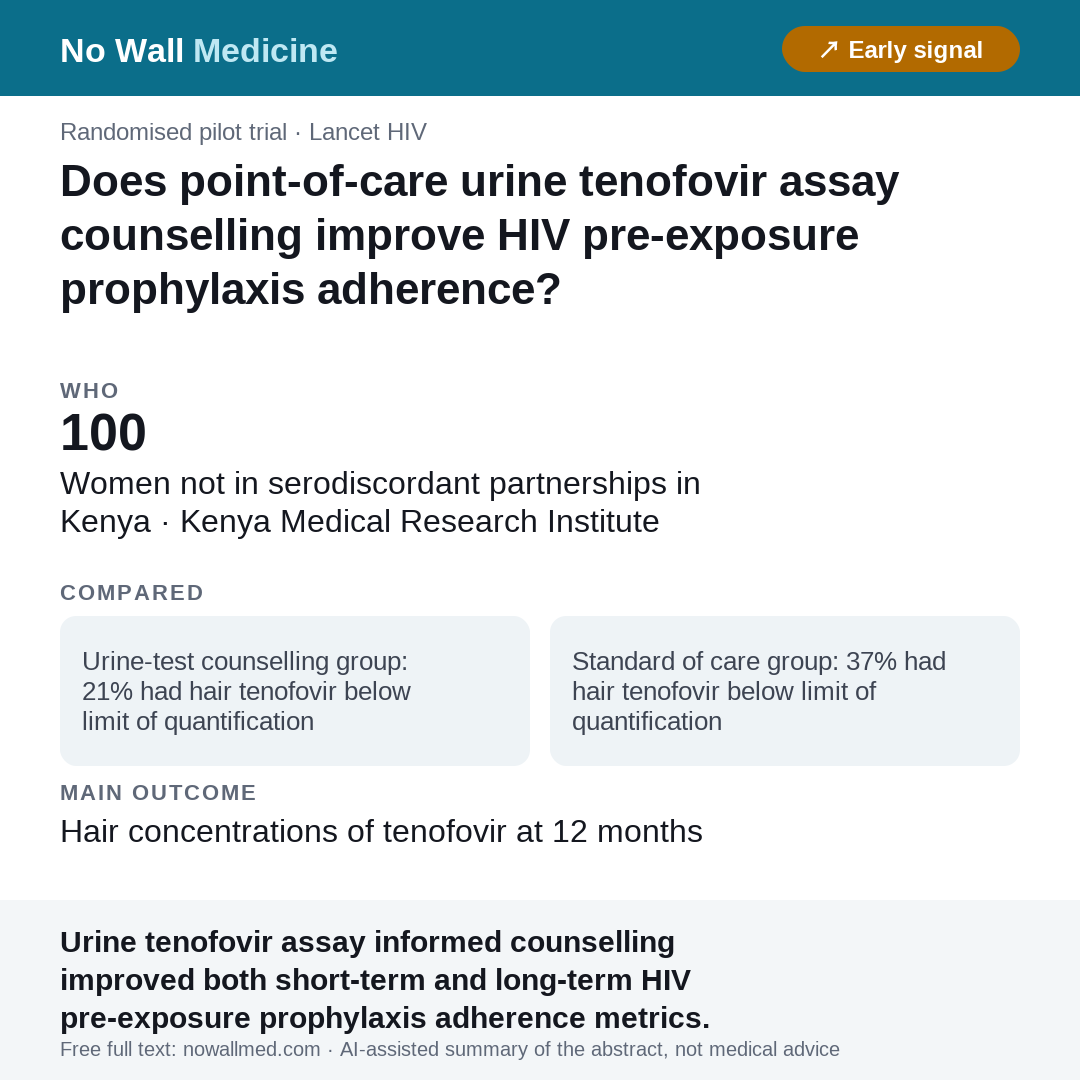
Impact of a point-of-care urine tenofovir assay on adherence to HIV pre-exposure prophylaxis among women in Kenya: a randomised pilot trial
Randomised pilot trialBenefit found
Does point-of-care urine tenofovir assay counselling improve HIV pre-exposure prophylaxis adherence?
Who
100
Women not in serodiscordant partnerships in Kenya · Kenya Medical Research Institute
Compared
Urine-test counselling group: 21% had hair tenofovir below limit of quantification
Standard of care group: 37% had hair tenofovir below limit of quantification
Main outcome
Hair concentrations of tenofovir at 12 months
Result: relative odds of long-term non-adherence 3·53 (95% CI 1·03-12·03)
Bottom line: Urine tenofovir assay informed counselling improved both short-term and long-term HIV pre-exposure prophylaxis adherence metrics.
Funded by: National Institute of Allergy and Infectious Diseases and National Institutes of Health
Lancet HIV · 2024-07-05Download image
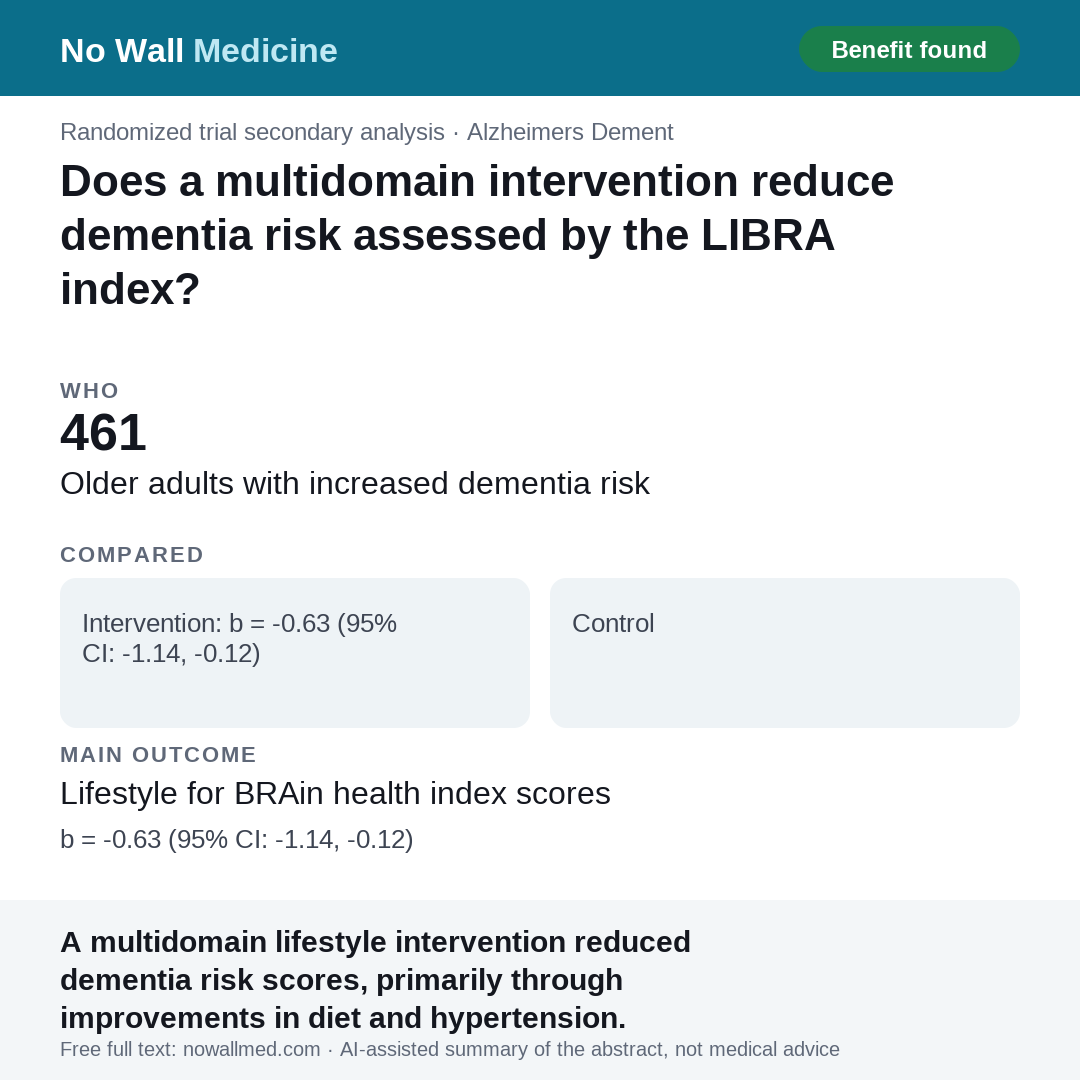
Effects of a multidomain intervention against cognitive decline on dementia risk profiles - Results from the AgeWell.de trial
Randomized trial secondary analysisBenefit found
Does a multidomain intervention reduce dementia risk assessed by the LIBRA index?
Who
461
Older adults with increased dementia risk
Compared
Intervention: b = -0.63 (95% CI: -1.14, -0.12)
Control
Main outcome
Lifestyle for BRAin health index scores
Result: b = -0.63 (95% CI: -1.14, -0.12)
Bottom line: A multidomain lifestyle intervention reduced dementia risk scores, primarily through improvements in diet and hypertension.
Limitation: Several risk factors did not improve, possibly requiring more intensive interventions.
Alzheimers Dement · 2024-07-05Download image
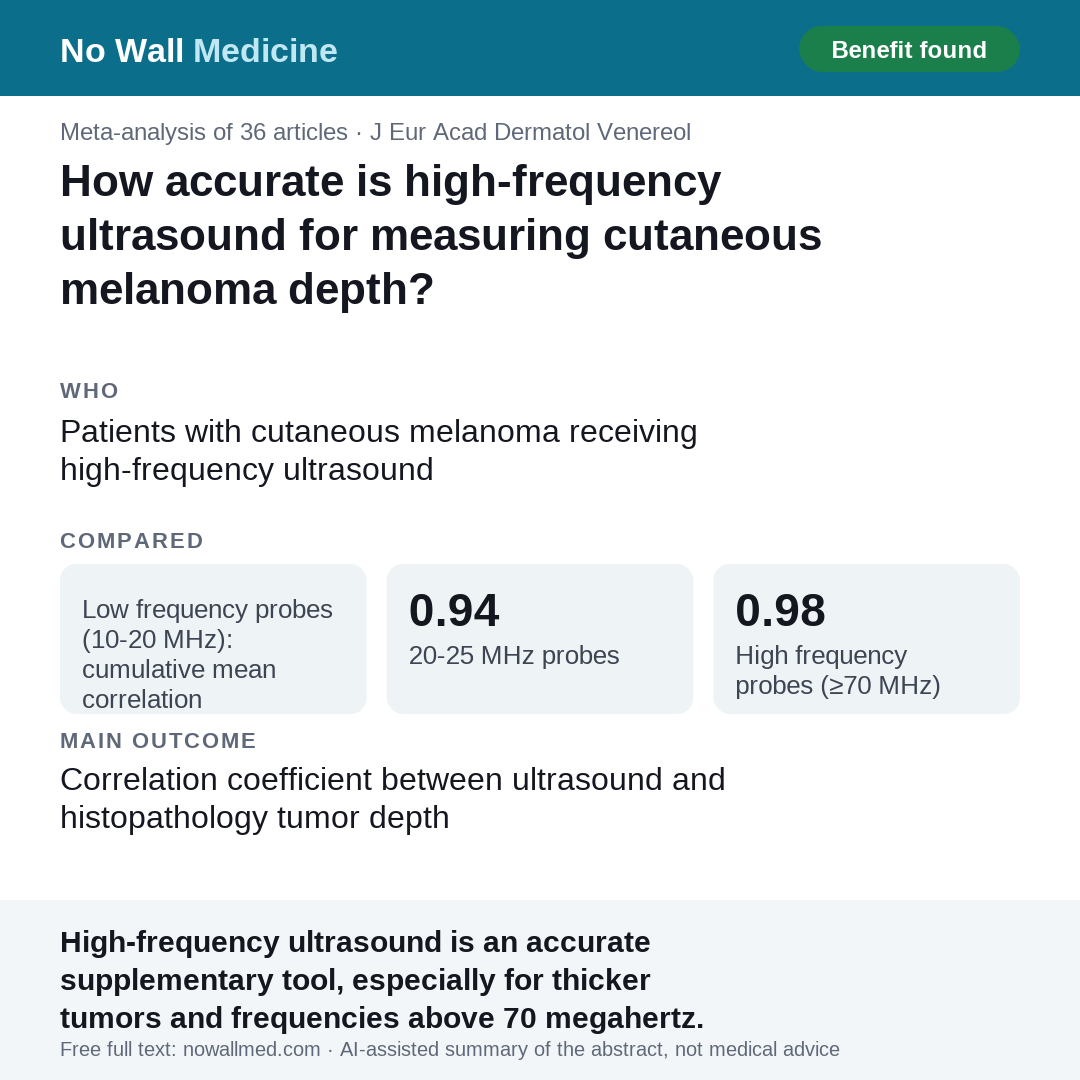
High-frequency ultrasound accuracy in preoperative cutaneous melanoma assessment: A meta-analysis
Meta-analysis of 36 articlesBenefit found
How accurate is high-frequency ultrasound for measuring cutaneous melanoma depth?
Who
Patients with cutaneous melanoma receiving high-frequency ultrasound
Compared
Low frequency probes (10-20 MHz): cumulative mean correlation coefficient of 0.87
0.9420-25 MHz probes
0.98High frequency probes (≥70 MHz)
Main outcome
Correlation coefficient between ultrasound and histopathology tumor depth
Result: median correlation coefficient 0.94, mean 0.89 (SD 0.13)
Bottom line: High-frequency ultrasound is an accurate supplementary tool, especially for thicker tumors and frequencies above 70 megahertz.
J Eur Acad Dermatol Venereol · 2024-07-05Download image
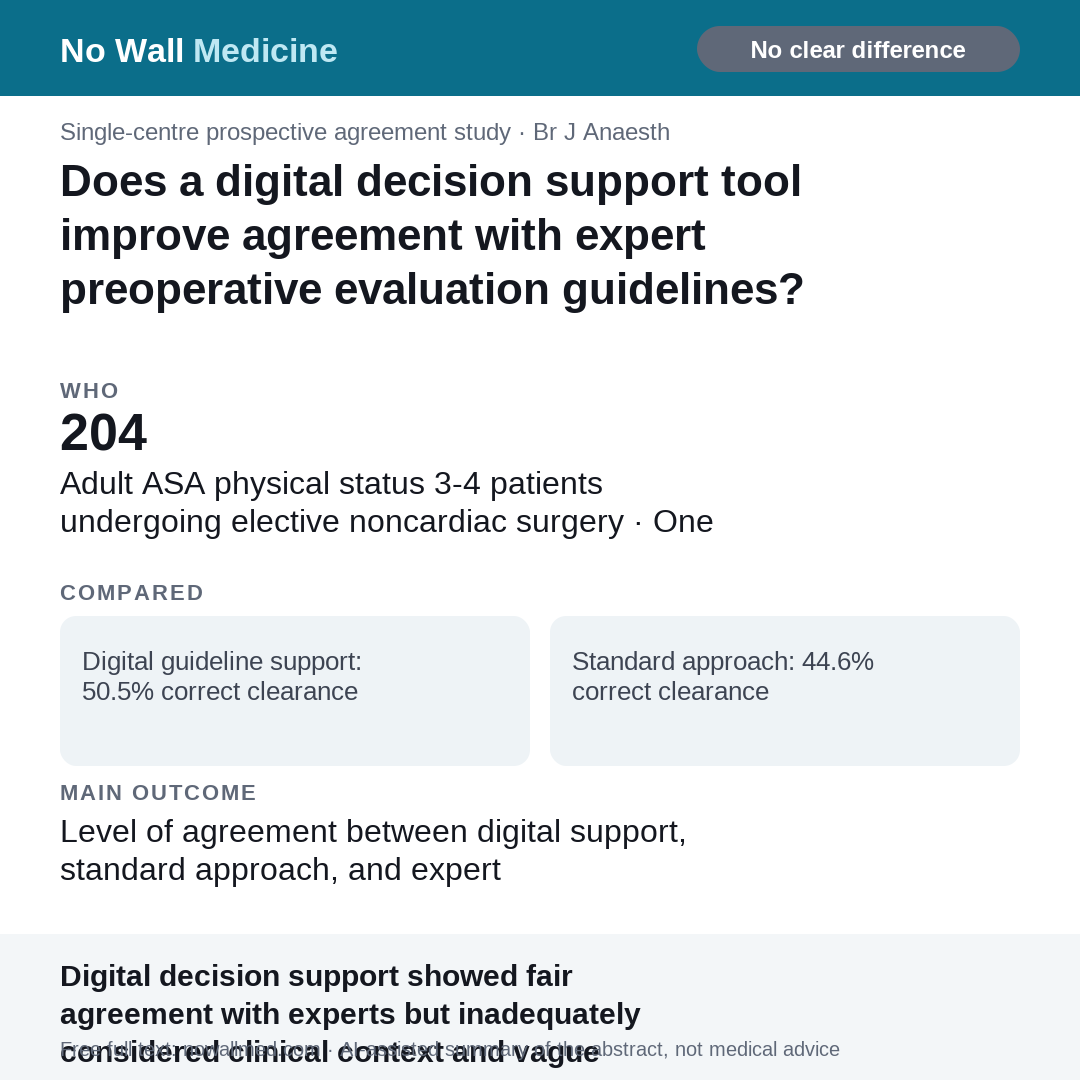
Implementation of a software-based decision support tool for guideline-appropriate preoperative evaluation: a prospective agreement study
Single-centre prospective agreement studyNo clear difference
Does a digital decision support tool improve agreement with expert preoperative evaluation guidelines?
Who
204
Adult ASA physical status 3-4 patients undergoing elective noncardiac surgery · One German university hospital
Compared
Digital guideline support: 50.5% correct clearance
Standard approach: 44.6% correct clearance
Main outcome
Level of agreement between digital support, standard approach, and expert
Result: Cohen's kappa 0.37 (interquartile range 0.26-0.48) vs 0.31 (0.21-0.42)
Bottom line: Digital decision support showed fair agreement with experts but inadequately considered clinical context and vague guideline formulations.
Limitation: Vague formulations, weak recommendations, and low-quality evidence complicate guideline translation.
Br J Anaesth · 2024-07-05Download image
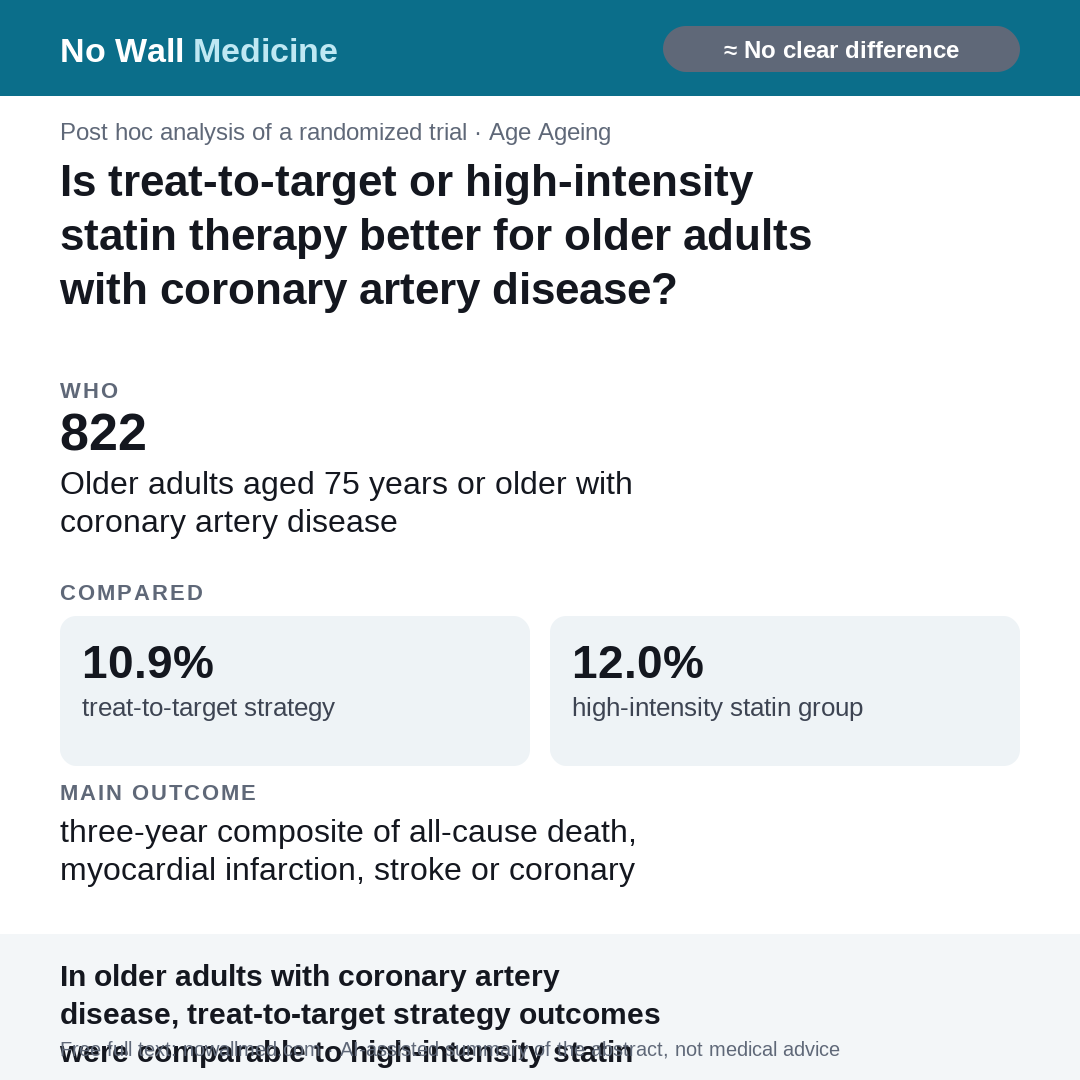
Treat-to-target or high-intensity statin treatment in older adults with coronary artery disease: a post hoc analysis of the LODESTAR trial
Post hoc analysis of a randomized trialNo clear difference
Is treat-to-target or high-intensity statin therapy better for older adults with coronary artery disease?
Who
822
Older adults aged 75 years or older with coronary artery disease
Compared
10.9%treat-to-target strategy
12.0%high-intensity statin group
Main outcome
three-year composite of all-cause death, myocardial infarction, stroke or coronary revascularisation
Result: hazard ratio 0.92, 95% confidence interval 0.61-1.38
Bottom line: In older adults with coronary artery disease, treat-to-target strategy outcomes were comparable to high-intensity statin therapy.
Age Ageing · 2024-07-05Download image
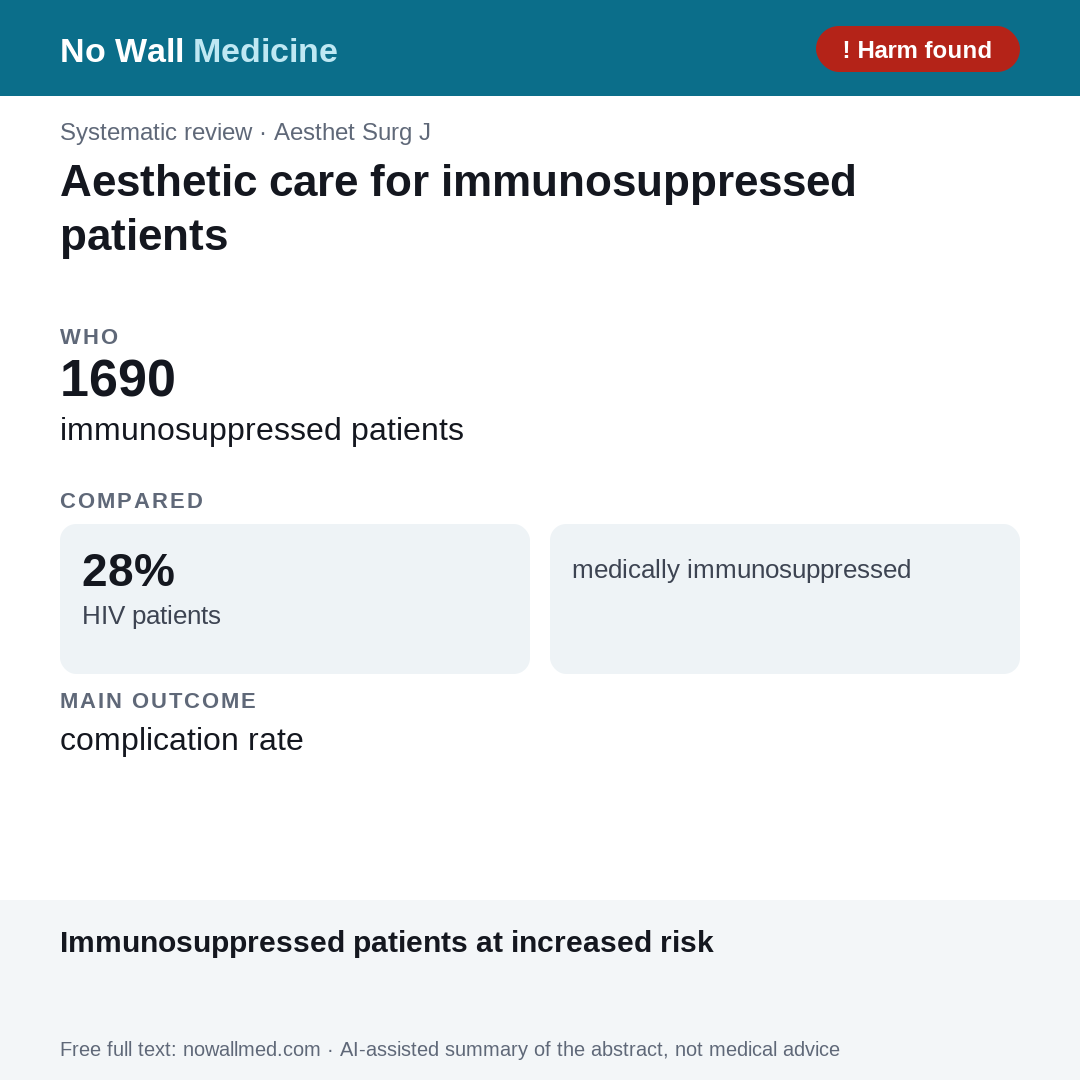
Optimal Practices in the Delivery of Aesthetic Medical Care to Patients on Immunosuppressants and Immunomodulators: A Systematic Review of the Literature
Systematic reviewHarm found
Aesthetic care for immunosuppressed patients
Who
1690
immunosuppressed patients
Compared
28%HIV patients (481/1690)
medically immunosuppressed
Main outcome
complication rate
Bottom line: Immunosuppressed patients at increased risk
Aesthet Surg J · 2024-07-05Download image
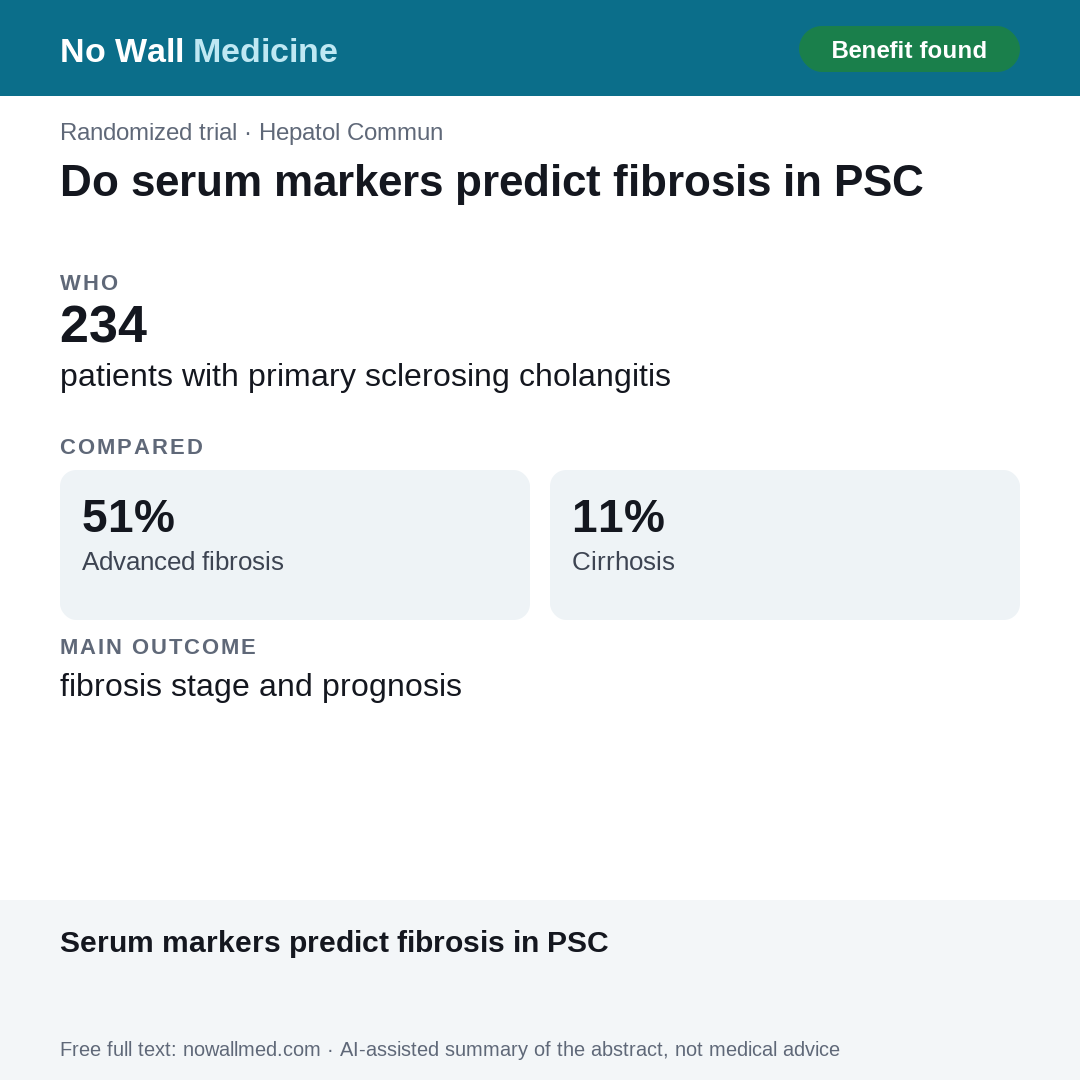
Serologic extracellular matrix remodeling markers are related to fibrosis stage and prognosis in a phase 2b trial of simtuzumab in patients with primary sclerosing cholangitis
Randomized trialBenefit found
Do serum markers predict fibrosis in PSC
Who
234
patients with primary sclerosing cholangitis
Compared
51%Advanced fibrosis
11%Cirrhosis
Main outcome
fibrosis stage and prognosis
Bottom line: Serum markers predict fibrosis in PSC
Hepatol Commun · 2024-07-05Download image
Quality, Spending, Utilization, and Outcomes Among Dual-Eligible Medicare-Medicaid Beneficiaries in Integrated Care Programs: A Systematic Review
Systematic reviewMixed results
How do integrated care programs affect spending, quality, utilization, and outcomes for dual-eligible beneficiaries?
Who
Dual-eligible Medicare-Medicaid beneficiaries · United States
Compared
Integrated care programs
Nonintegrated arrangements
Main outcome
Spending, quality, utilization, and patient outcomes
Bottom line: Integrated care programs showed variable effects on spending, utilization, and outcomes, with some reductions in nursing home stays.
Limitation: Limited ability to control for bias from unmeasured differences between enrollees.
JAMA Health Forum · 2024-07-05Download image

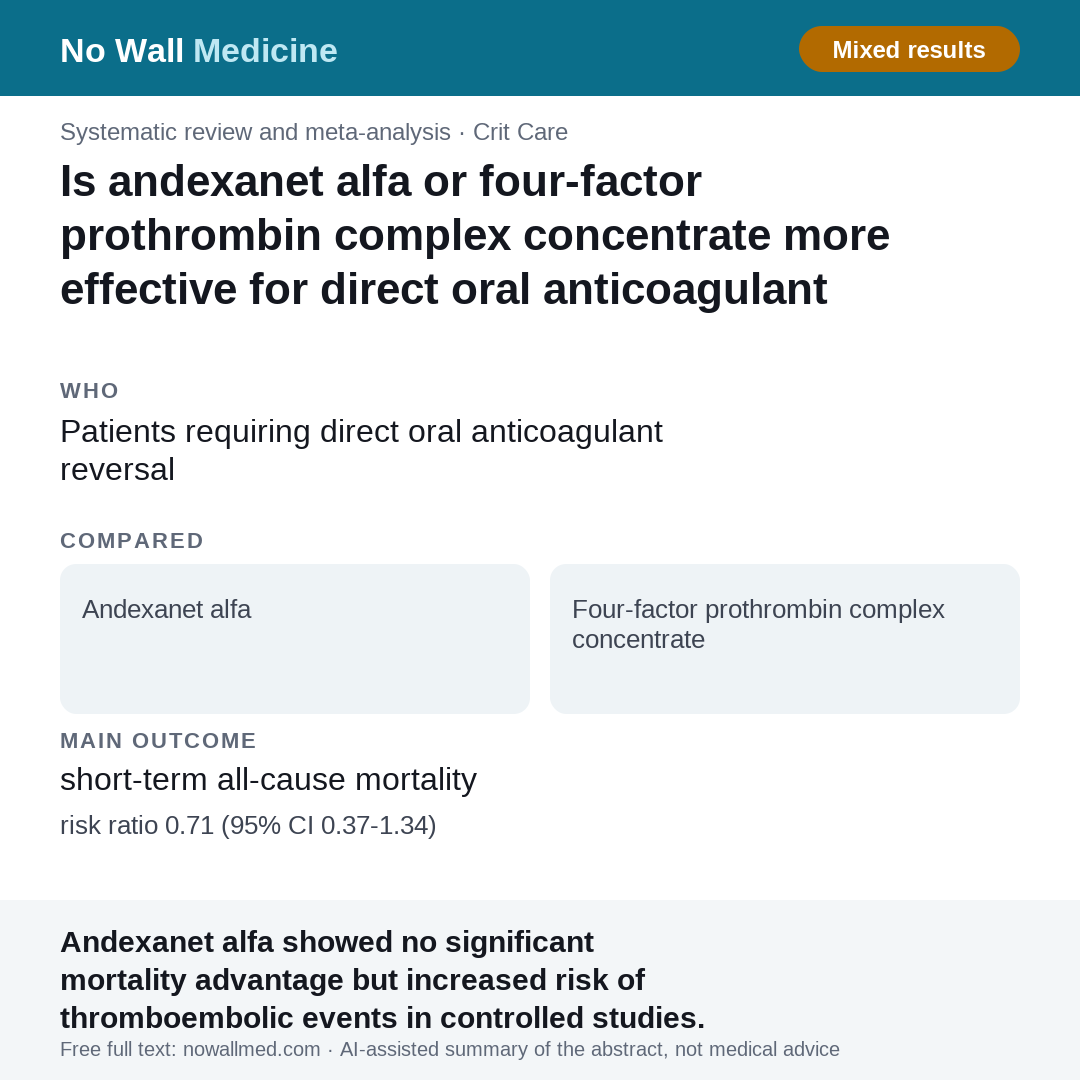
Andexanet alpha versus four-factor prothrombin complex concentrate in DOACs anticoagulation reversal: an updated systematic review and meta-analysis
Systematic review and meta-analysisMixed results
Is andexanet alfa or four-factor prothrombin complex concentrate more effective for direct oral anticoagulant reversal?
Who
Patients requiring direct oral anticoagulant reversal
Compared
Andexanet alfa
Four-factor prothrombin complex concentrate
Main outcome
short-term all-cause mortality
Result: risk ratio 0.71 (95% CI 0.37-1.34)
Bottom line: Andexanet alfa showed no significant mortality advantage but increased risk of thromboembolic events in controlled studies.
Crit Care · 2024-07-05Download image
Nilotinib vs dasatinib in achieving MR4.5 for de novo chronic myeloid leukemia: the randomized JALSG CML212 study
Prospective randomized phase 3 trialNo clear difference
Is nilotinib or dasatinib better for achieving molecular response 4.5 by 18 months?
Who
454
Patients with de novo chronic myeloid leukemia in chronic phase
Compared
32.6%300 mg nilotinib twice daily (95% confidence interval [CI], 26.5-39.1)
30.8%100 mg dasatinib daily (95% CI, 24.9-37.3)
Main outcome
Cumulative achievement of molecular response 4.5 by 18 months
Bottom line: Nilotinib and dasatinib are equally effective for achieving molecular response 4.5 in de novo chronic myeloid leukemia.
Blood Adv · 2024-07-05Download image

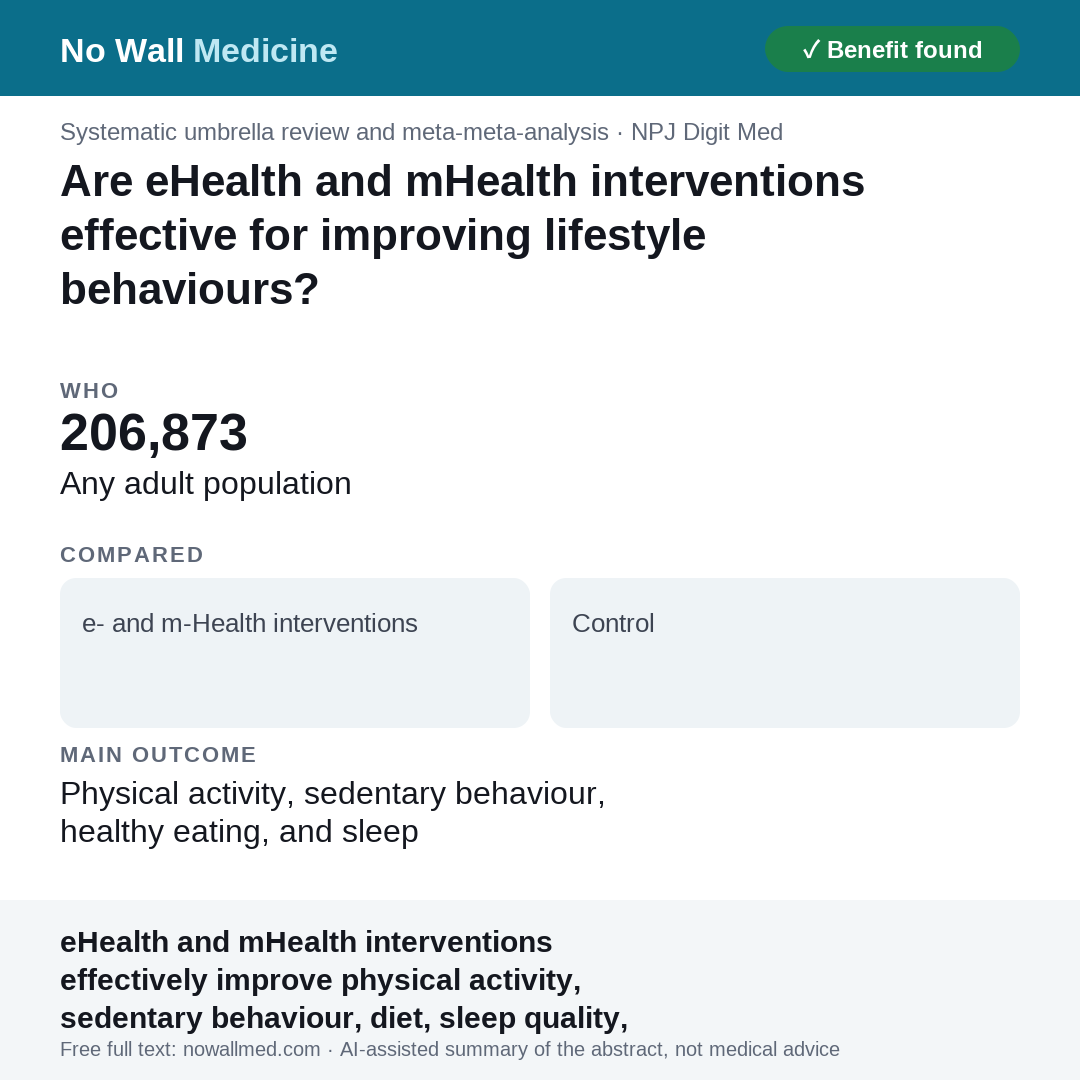
A systematic umbrella review and meta-meta-analysis of eHealth and mHealth interventions for improving lifestyle behaviours
Systematic umbrella review and meta-meta-analysisBenefit found
Are eHealth and mHealth interventions effective for improving lifestyle behaviours?
Who
206,873
Any adult population
Compared
e- and m-Health interventions
Control
Main outcome
Physical activity, sedentary behaviour, healthy eating, and sleep
Result: mean difference, MD = 1329 [95% CI = 593.9, 2065.7] steps/day
Bottom line: eHealth and mHealth interventions effectively improve physical activity, sedentary behaviour, diet, sleep quality, and bodyweight.
NPJ Digit Med · 2024-07-05Download image
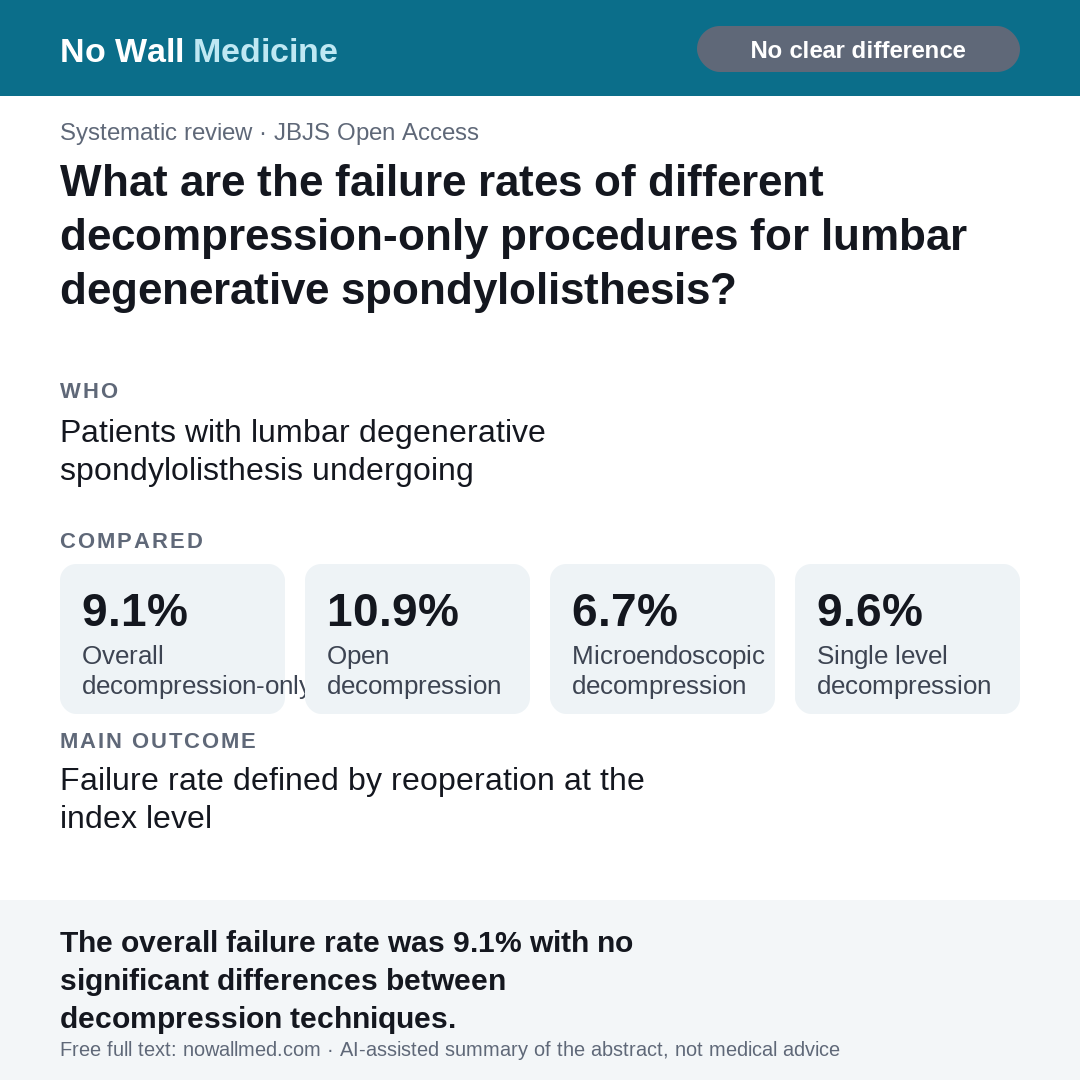
Rate of Reoperation Following Decompression-Only Procedure for Lumbar Degenerative Spondylolisthesis: A Systematic Review of Literature
Systematic reviewNo clear difference
What are the failure rates of different decompression-only procedures for lumbar degenerative spondylolisthesis?
Who
Patients with lumbar degenerative spondylolisthesis undergoing decompression-only procedures
Compared
9.1%Overall decompression-only procedure (95% CI 6.5-11.7)
10.9%Open decompression (95% CI 6.0-15.8)
6.7%Microendoscopic decompression (95% CI 2.9-10.6)
9.6%Single level decompression (95% CI 6.3-12.9)
Main outcome
Failure rate defined by reoperation at the index level
Bottom line: The overall failure rate was 9.1% with no significant differences between decompression techniques.
Limitation: High-quality evidence on the decompression-only procedure for degenerative spondylolisthesis is limited.
JBJS Open Access · 2024-07-05Download image
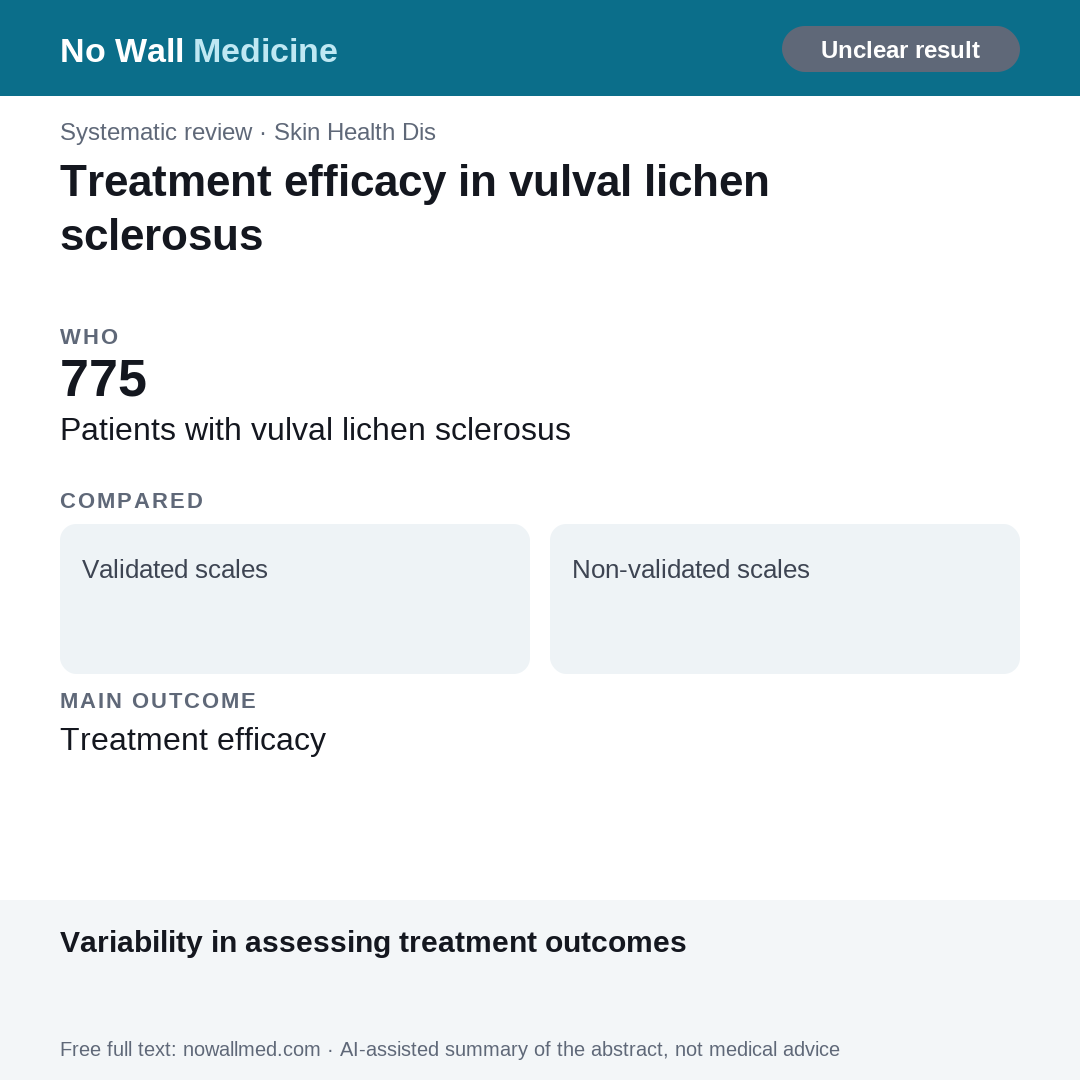
A systematic review of outcome measures evaluating treatment efficacy in vulval lichen sclerosus and evaluation of patients' priorities
Systematic reviewUnclear result
Treatment efficacy in vulval lichen sclerosus
Who
775
Patients with vulval lichen sclerosus
Compared
Validated scales
Non-validated scales
Main outcome
Treatment efficacy
Bottom line: Variability in assessing treatment outcomes
Skin Health Dis · 2024-07-05Download image
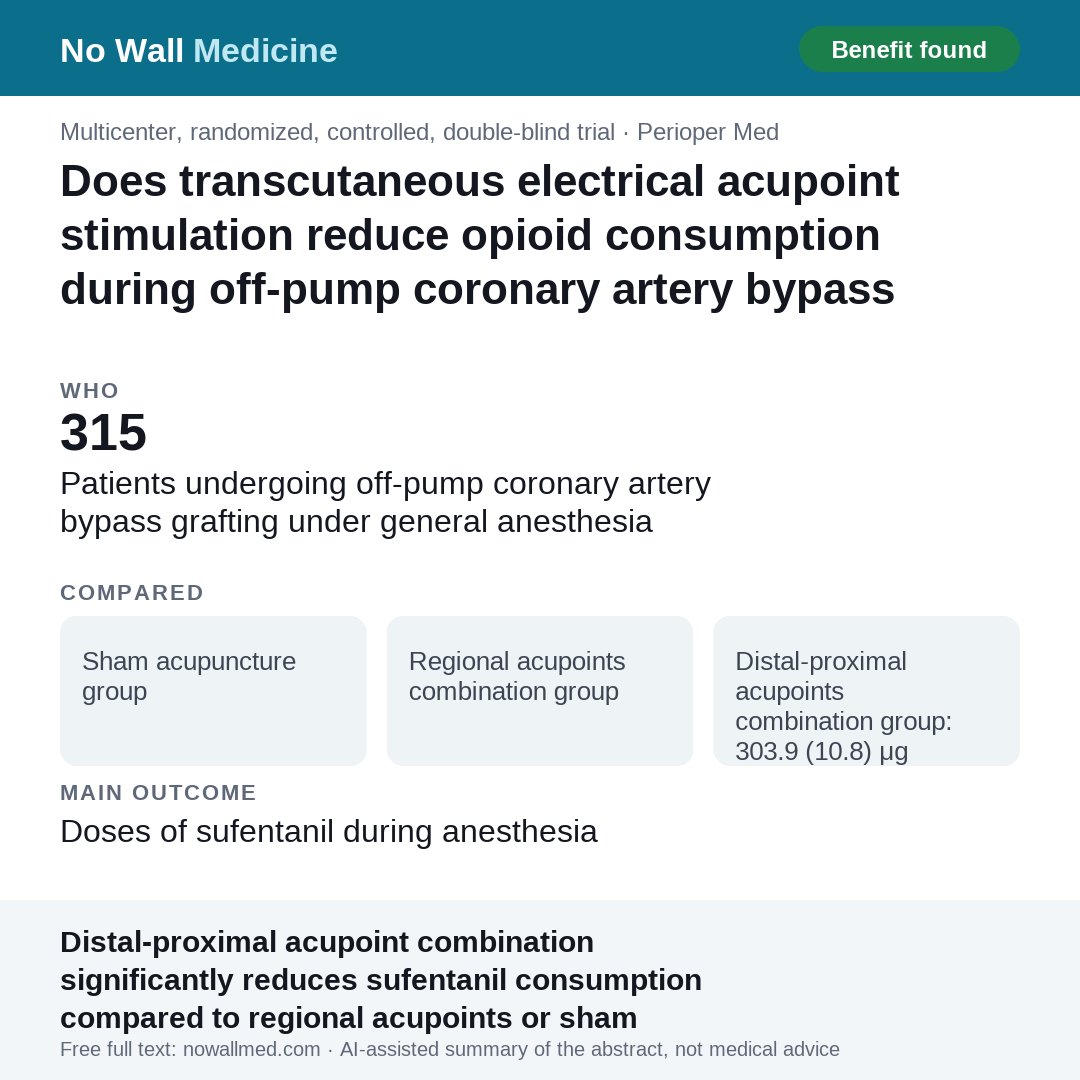
The use of transcutaneous electrical acupoint stimulation to reduce opioid consumption in patients undergoing off-pump CABG: a randomized controlled trial
Multicenter, randomized, controlled, double-blind trialBenefit found
Does transcutaneous electrical acupoint stimulation reduce opioid consumption during off-pump coronary artery bypass grafting?
Who
315
Patients undergoing off-pump coronary artery bypass grafting under general anesthesia
Compared
Sham acupuncture group
Regional acupoints combination group
Distal-proximal acupoints combination group: 303.9 (10.8) μg
Main outcome
Doses of sufentanil during anesthesia
Result: mean difference -34.9 (-64.9 to -4.9) μg
Bottom line: Distal-proximal acupoint combination significantly reduces sufentanil consumption compared to regional acupoints or sham acupuncture in off-pump bypass surgery.
Perioper Med · 2024-07-05Download image
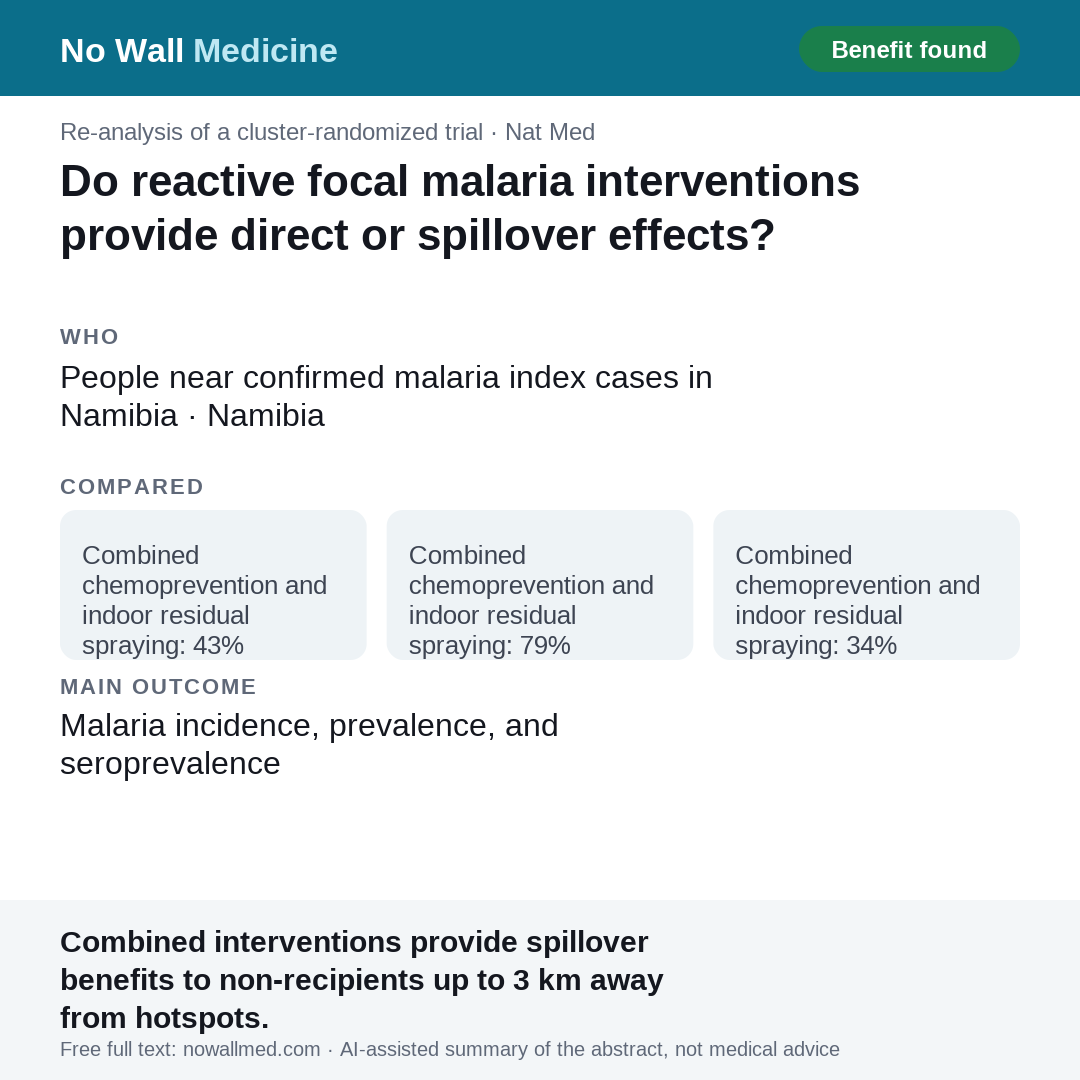
Extension of efficacy range for targeted malaria-elimination interventions due to spillover effects
Re-analysis of a cluster-randomized trialBenefit found
Do reactive focal malaria interventions provide direct or spillover effects?
Who
People near confirmed malaria index cases in Namibia · Namibia
Compared
Combined chemoprevention and indoor residual spraying: 43% reduction in incidence among non-recipients within 1 km
Combined chemoprevention and indoor residual spraying: 79% reduction in infection prevalence among non-recipients within 3 km
Combined chemoprevention and indoor residual spraying: 34% reduction in seroprevalence among non-recipients within 3 km
Main outcome
Malaria incidence, prevalence, and seroprevalence
Bottom line: Combined interventions provide spillover benefits to non-recipients up to 3 km away from hotspots.
Nat Med · 2024-07-04Download image
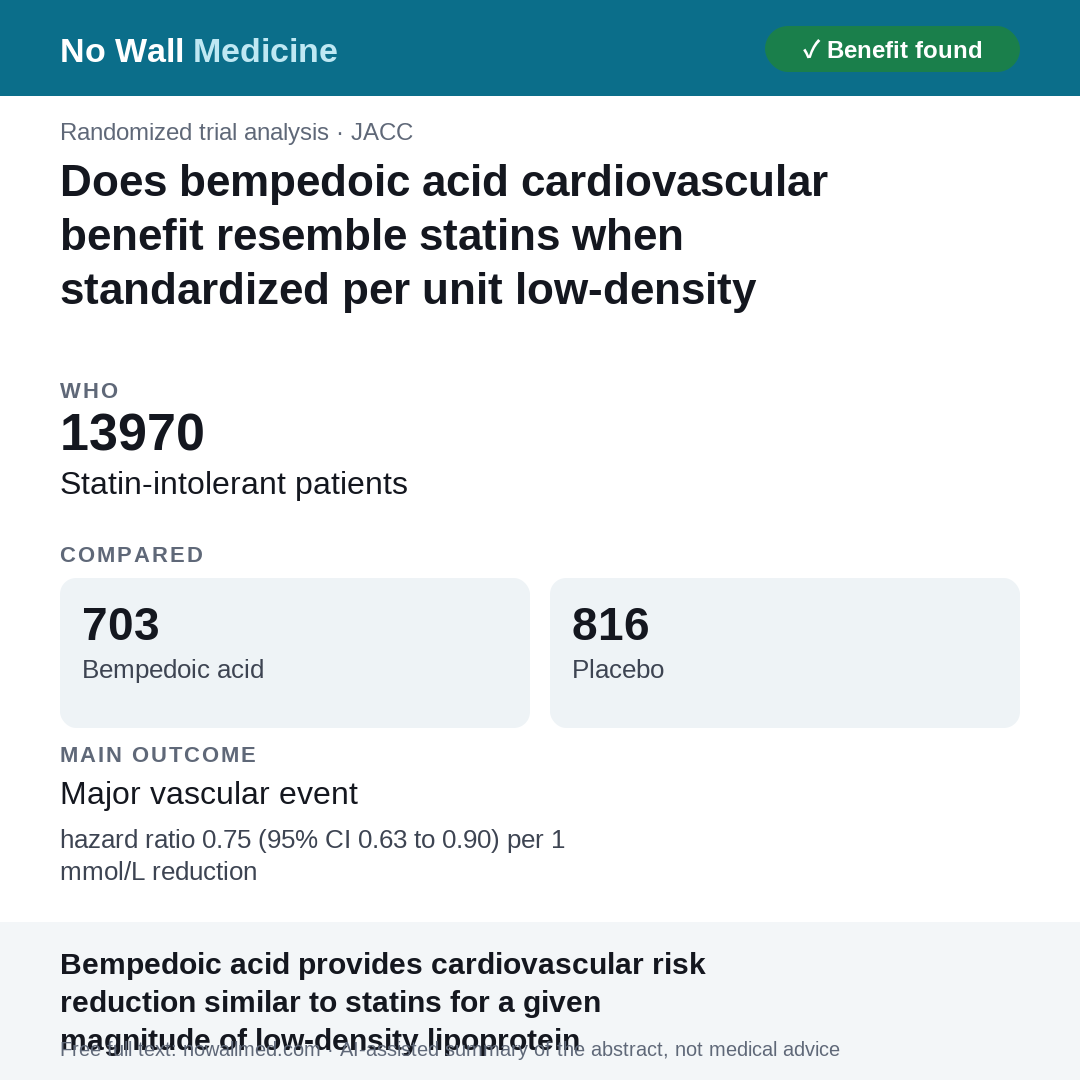
Comparative Cardiovascular Benefits of Bempedoic Acid and Statin Drugs
Randomized trial analysisBenefit found
Does bempedoic acid cardiovascular benefit resemble statins when standardized per unit low-density lipoprotein cholesterol lowering?
Who
13970
Statin-intolerant patients
Compared
703Bempedoic acid (10.1%)
816Placebo (11.7%)
Main outcome
Major vascular event
Result: hazard ratio 0.75 (95% CI 0.63 to 0.90) per 1 mmol/L reduction
Bottom line: Bempedoic acid provides cardiovascular risk reduction similar to statins for a given magnitude of low-density lipoprotein cholesterol lowering.
JACC · 2024-07-04Download image
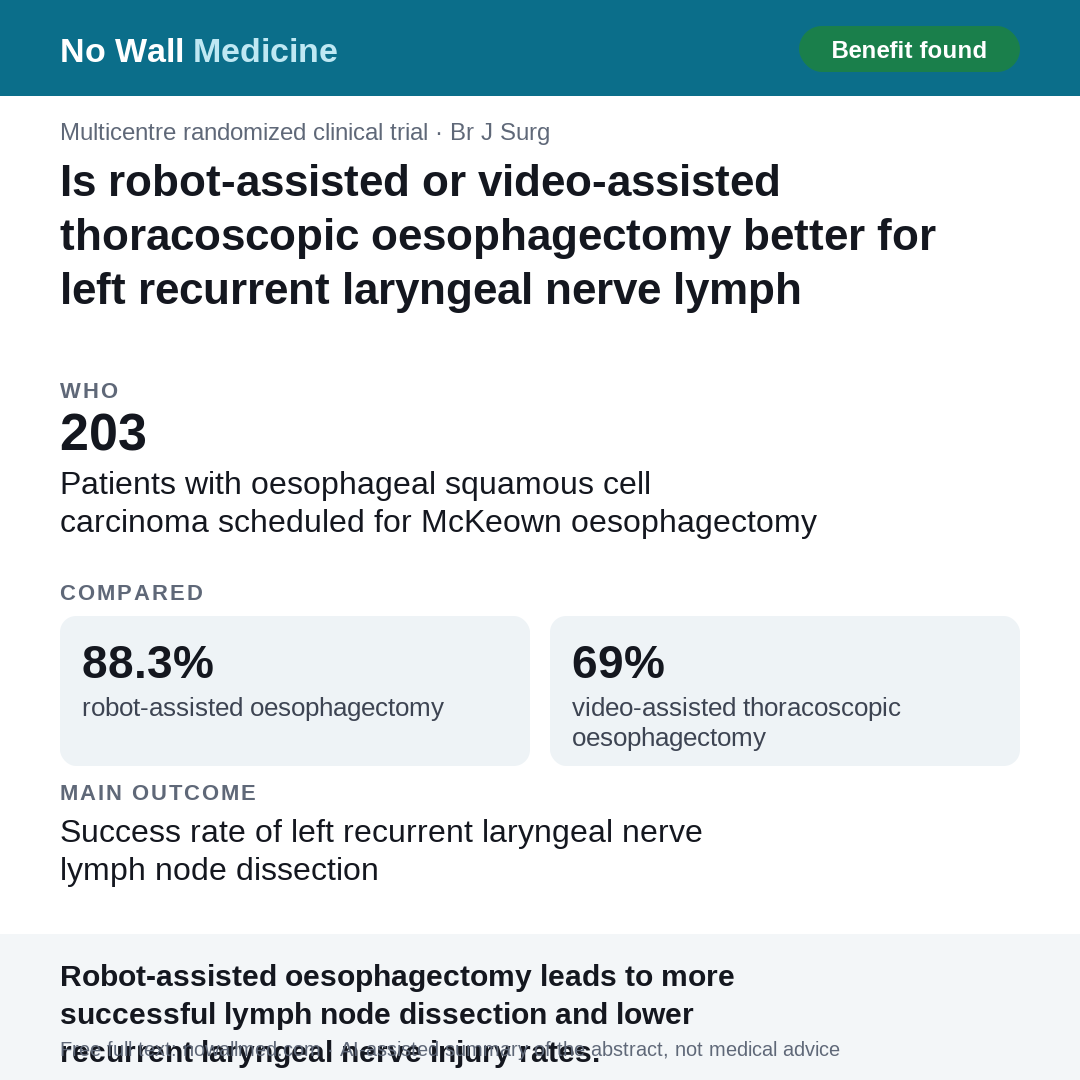
Multicentre randomized clinical trial on robot-assisted versus video-assisted thoracoscopic oesophagectomy (REVATE trial)
Multicentre randomized clinical trialBenefit found
Is robot-assisted or video-assisted thoracoscopic oesophagectomy better for left recurrent laryngeal nerve lymph node dissection?
Who
203
Patients with oesophageal squamous cell carcinoma scheduled for McKeown oesophagectomy · 3 centres in Asia
Compared
88.3%robot-assisted oesophagectomy
69%video-assisted thoracoscopic oesophagectomy
Main outcome
Success rate of left recurrent laryngeal nerve lymph node dissection
Bottom line: Robot-assisted oesophagectomy leads to more successful lymph node dissection and lower recurrent laryngeal nerve injury rates.
Br J Surg · 2024-07-04Download image