Visual abstracts
New randomized trials and meta-analyses from leading journals at a glance: who was studied, what was compared, and what was found. Every paper is free to read in full.
All specialtiesCardiology 2883Oncology 2455Gastroenterology & Hepatology 1105Infectious Disease 1868Neurology 1158Psychiatry & Mental Health 1337Pulmonology 1208Critical Care 797Endocrinology & Diabetes 1469Pediatrics 1715Surgery 1505Orthopedics & Sports Medicine 524Neurosurgery 350Cardiothoracic & Vascular Surgery 326Plastic & Reconstructive Surgery 417Nephrology 601Rheumatology 441Hematology 637Dermatology 349Ophthalmology 324Obstetrics & Gynecology 951Public & Global Health 536Radiology & Imaging 408Anesthesiology 587Urology 485ENT (Otolaryngology) 329Emergency Medicine 318Allergy & Immunology 184Geriatrics 616Family Medicine & Primary Care 334Medical Genetics & Genomics 340Pathology & Laboratory Medicine 100Physical Medicine & Rehabilitation 460Palliative Care 251Nutrition 795Digital Health & AI 1368General Medicine 210
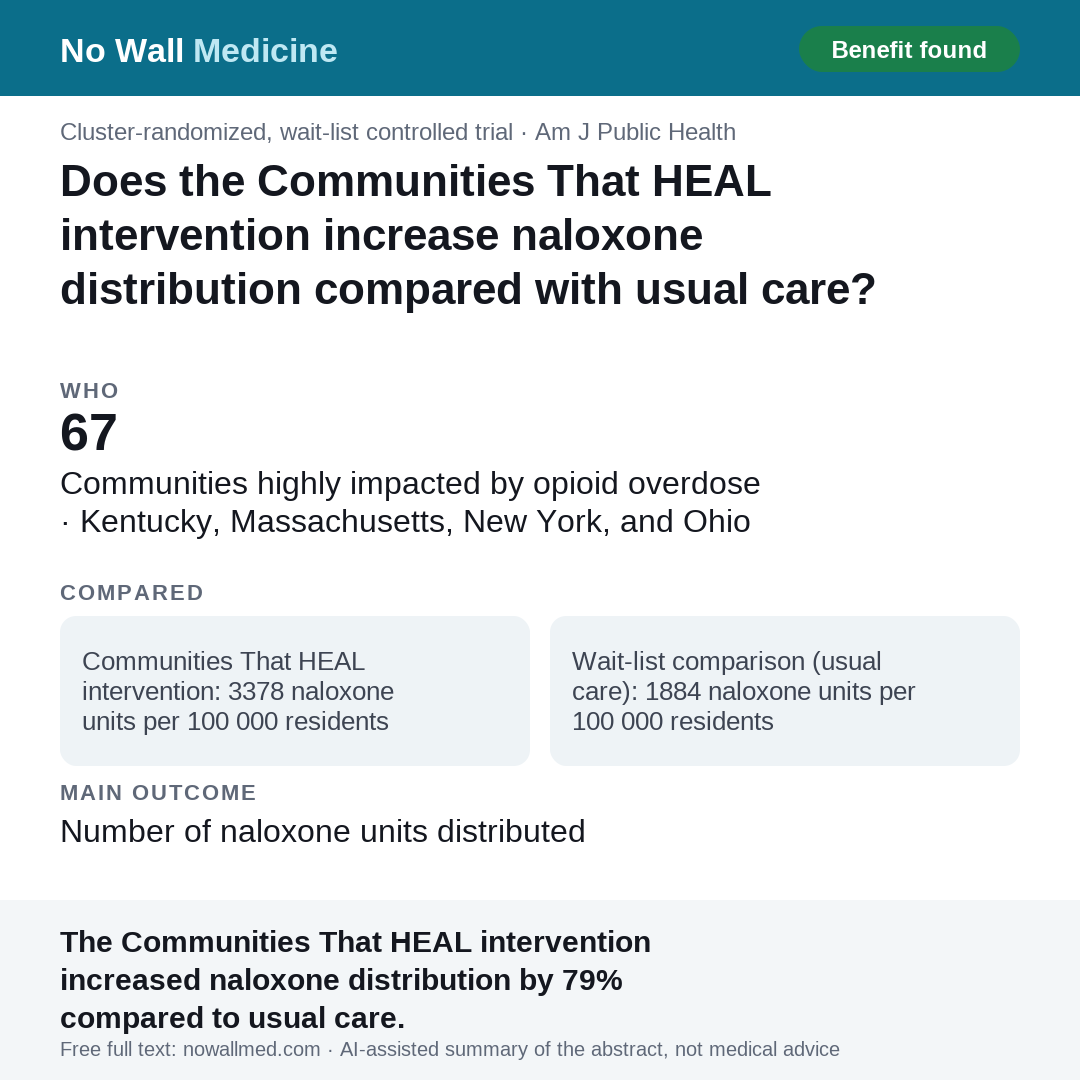
Effect of the Communities That HEAL Intervention on Overdose Education and Naloxone Distribution: A Cluster-Randomized, Wait-List Controlled Trial
Cluster-randomized, wait-list controlled trialBenefit found
Does the Communities That HEAL intervention increase naloxone distribution compared with usual care?
Who
67
Communities highly impacted by opioid overdose · Kentucky, Massachusetts, New York, and Ohio
Compared
Communities That HEAL intervention: 3378 naloxone units per 100 000 residents
Wait-list comparison (usual care): 1884 naloxone units per 100 000 residents
Main outcome
Number of naloxone units distributed
Result: adjusted relative rate 1.79 (95% confidence interval 1.28, 2.51)
Bottom line: The Communities That HEAL intervention increased naloxone distribution by 79% compared to usual care.
Am J Public Health · 2024-10-10Download image
Postoperative analgesic effectiveness of ultrasound-guided bilateral erector spinae plane block vs. rectus sheath block for midline abdominal surgery in a low- and middle-income country: a randomised controlled trial
Randomized, double-blind, parallel studyBenefit found
Is bilateral erector spinae plane block more effective than rectus sheath block for midline abdominal surgery?
Who
72
Patients aged 18-65 years undergoing midline abdominal surgery · Low- and middle-income country
Compared
Erector spinae plane block: 3.5 (8.7) morphine milligram equivalents
Rectus sheath block: 8.2 (2.8) morphine milligram equivalents
Main outcome
Total postoperative analgesia consumption
Bottom line: Erector spinae plane blocks provide lower opioid consumption and longer time to first analgesic request than rectus sheath blocks.
Anaesthesia · 2024-10-10Download image

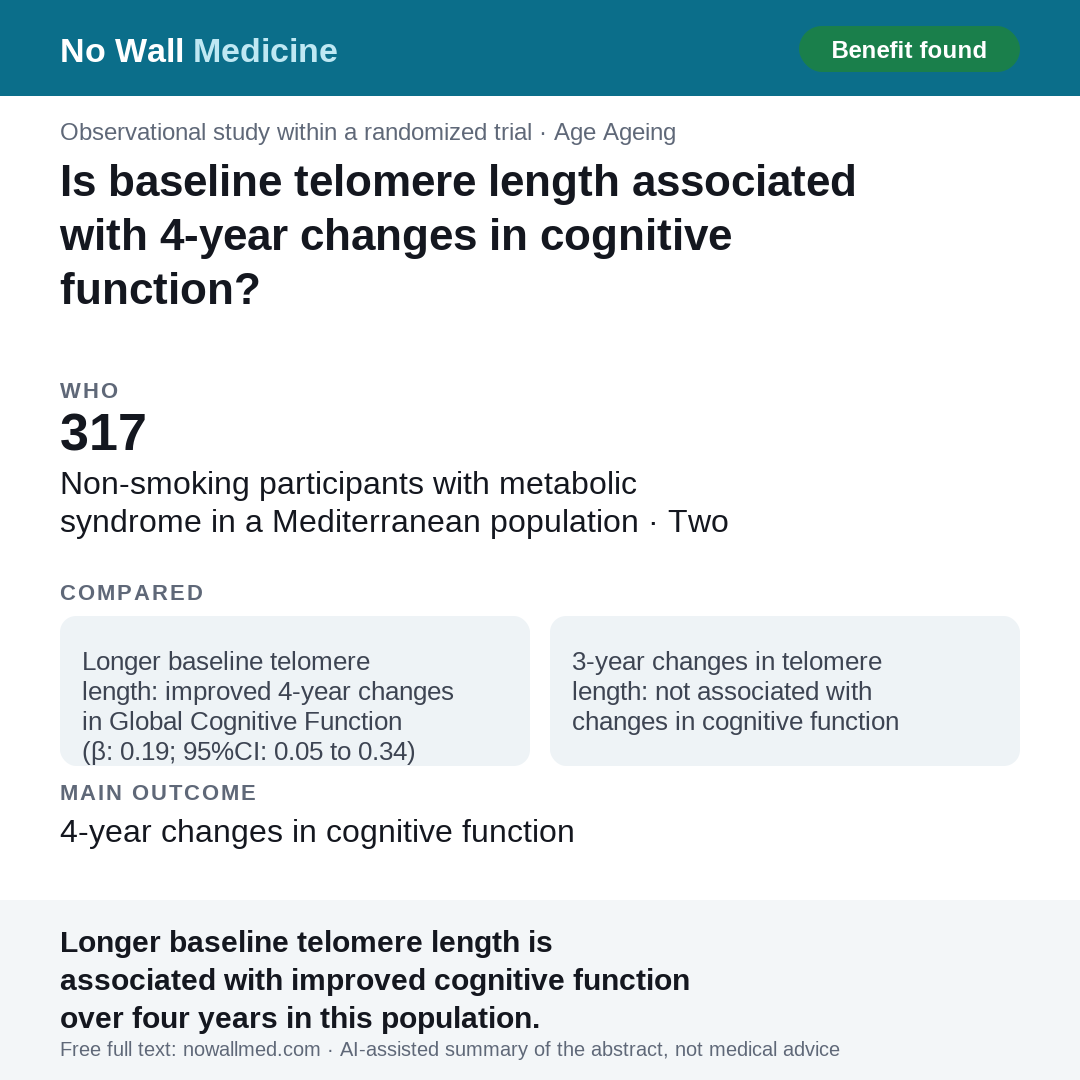
Telomere length and 4-year changes in cognitive function in an older Mediterranean population at high risk of cardiovascular disease
Observational study within a randomized trialBenefit found
Is baseline telomere length associated with 4-year changes in cognitive function?
Who
317
Non-smoking participants with metabolic syndrome in a Mediterranean population · Two trial centres
Compared
Longer baseline telomere length: improved 4-year changes in Global Cognitive Function (β: 0.19; 95%CI: 0.05 to 0.34)
3-year changes in telomere length: not associated with changes in cognitive function
Main outcome
4-year changes in cognitive function
Result: β: 0.19 (95%CI: 0.05 to 0.34) for global cognitive function
Bottom line: Longer baseline telomere length is associated with improved cognitive function over four years in this population.
Age Ageing · 2024-10-10Download image
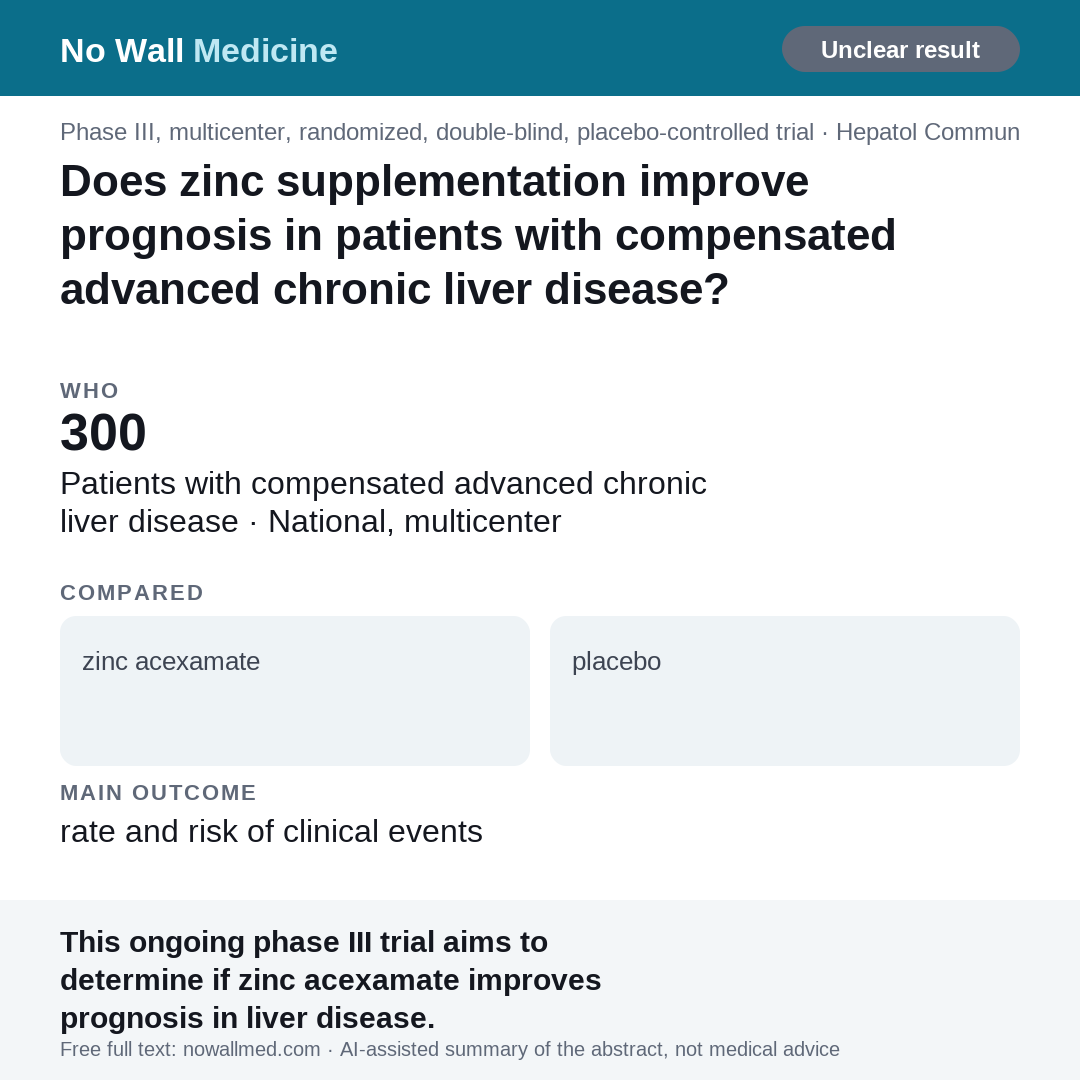
Zinc supplementation to improve prognosis in patients with compensated advanced chronic liver disease: a multicenter, randomized, double-blind, placebo-controlled clinical trial
Phase III, multicenter, randomized, double-blind, placebo-controlled trialUnclear result
Does zinc supplementation improve prognosis in patients with compensated advanced chronic liver disease?
Who
300
Patients with compensated advanced chronic liver disease · National, multicenter
Compared
zinc acexamate
placebo
Main outcome
rate and risk of clinical events
Bottom line: This ongoing phase III trial aims to determine if zinc acexamate improves prognosis in liver disease.
Hepatol Commun · 2024-10-10Download image
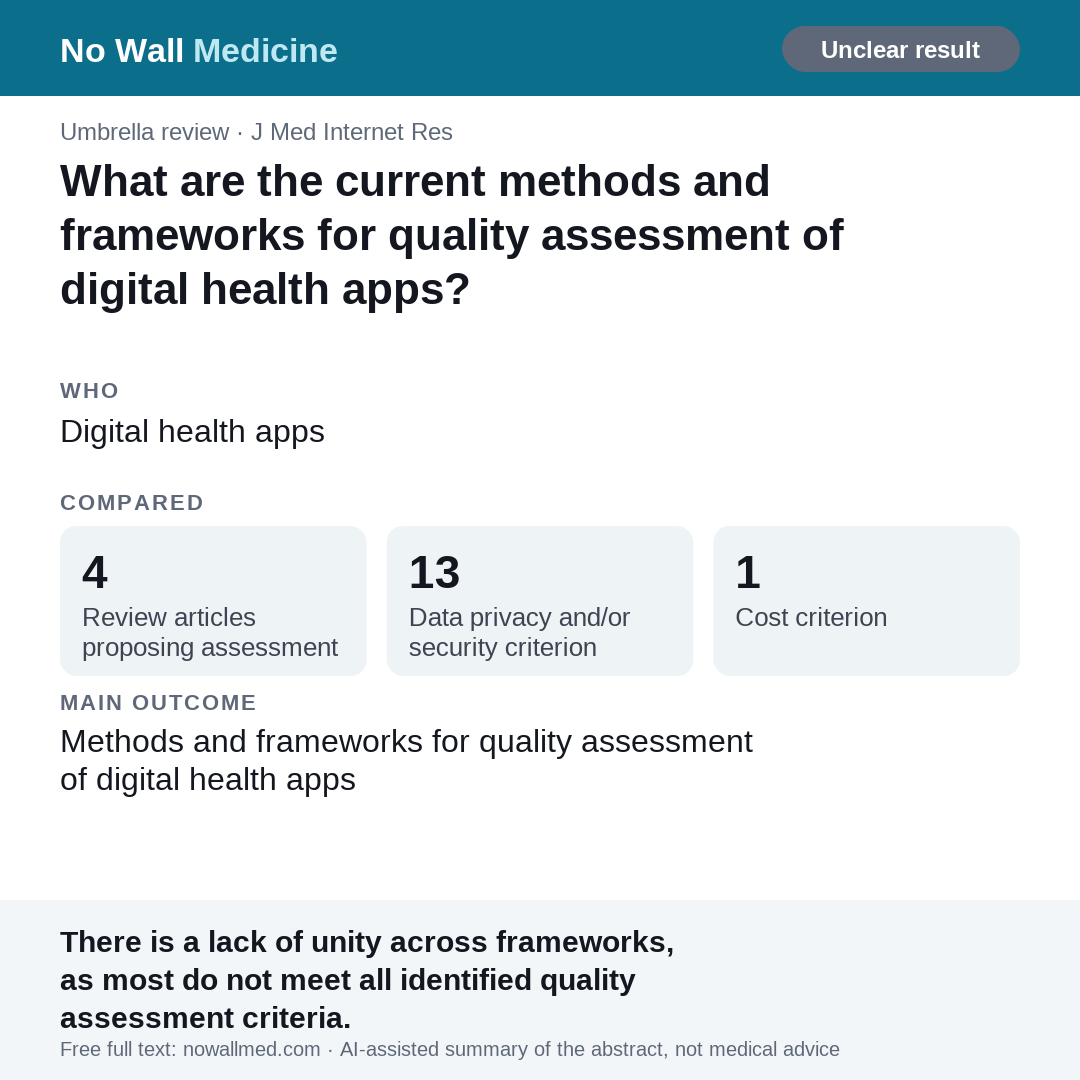
Quality Assessment of Digital Health Apps: Umbrella Review
Umbrella reviewUnclear result
What are the current methods and frameworks for quality assessment of digital health apps?
Who
15
Digital health apps
Compared
4Review articles proposing assessment criteria (27%)
13Data privacy and/or security criterion (87%)
1Cost criterion (7%)
Main outcome
Methods and frameworks for quality assessment of digital health apps
Bottom line: There is a lack of unity across frameworks, as most do not meet all identified quality assessment criteria.
J Med Internet Res · 2024-10-10Download image
Spaced Digital Education for Health Professionals: Systematic Review and Meta-Analysis
Systematic review and meta-analysisBenefit found
Is spaced digital education effective for health care professionals?
Who
pre- and postregistration health care professionals
Compared
Spaced online education
Massed online education
Main outcome
postintervention knowledge, clinical behavior change, and surgical skills
Result: standardized mean difference 0.32 (95% CI 0.13-0.51)
Bottom line: Spaced digital education improves knowledge, surgical skills, and clinical behavior change in health care professionals.
Limitation: Most studies had an unclear or a high risk of bias
J Med Internet Res · 2024-10-10Download image

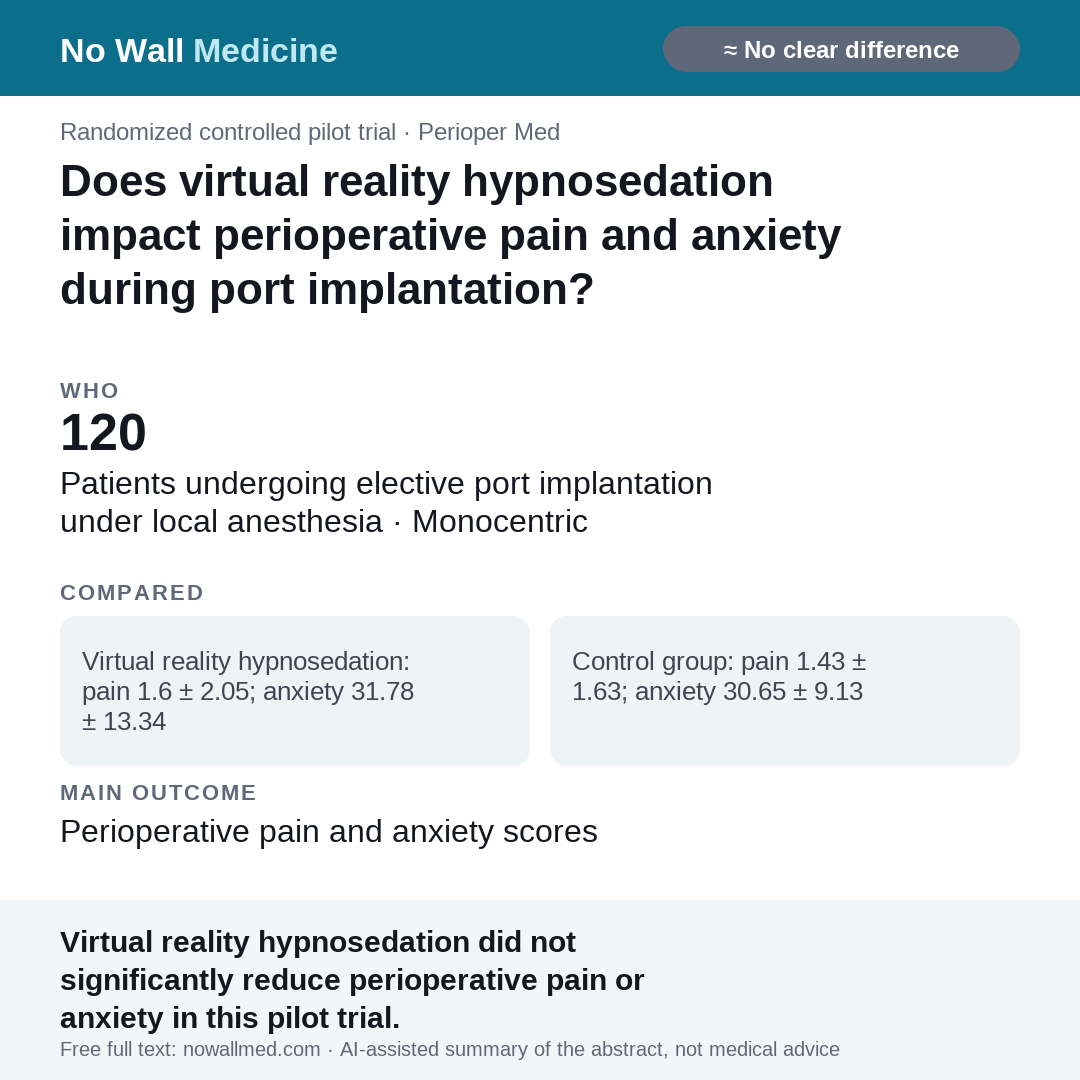
Impact of virtual reality hypnosedation on perioperative pain and anxiety in port implantation under local anesthesia: a randomized controlled pilot trial (VIP Trial)
Randomized controlled pilot trialNo clear difference
Does virtual reality hypnosedation impact perioperative pain and anxiety during port implantation?
Who
120
Patients undergoing elective port implantation under local anesthesia · Monocentric
Compared
Virtual reality hypnosedation: pain 1.6 ± 2.05; anxiety 31.78 ± 13.34
Control group: pain 1.43 ± 1.63; anxiety 30.65 ± 9.13
Main outcome
Perioperative pain and anxiety scores
Bottom line: Virtual reality hypnosedation did not significantly reduce perioperative pain or anxiety in this pilot trial.
Limitation: Blinding of patients and physicians was not feasible; study was descriptive and exploratory.
Perioper Med · 2024-10-10Download image
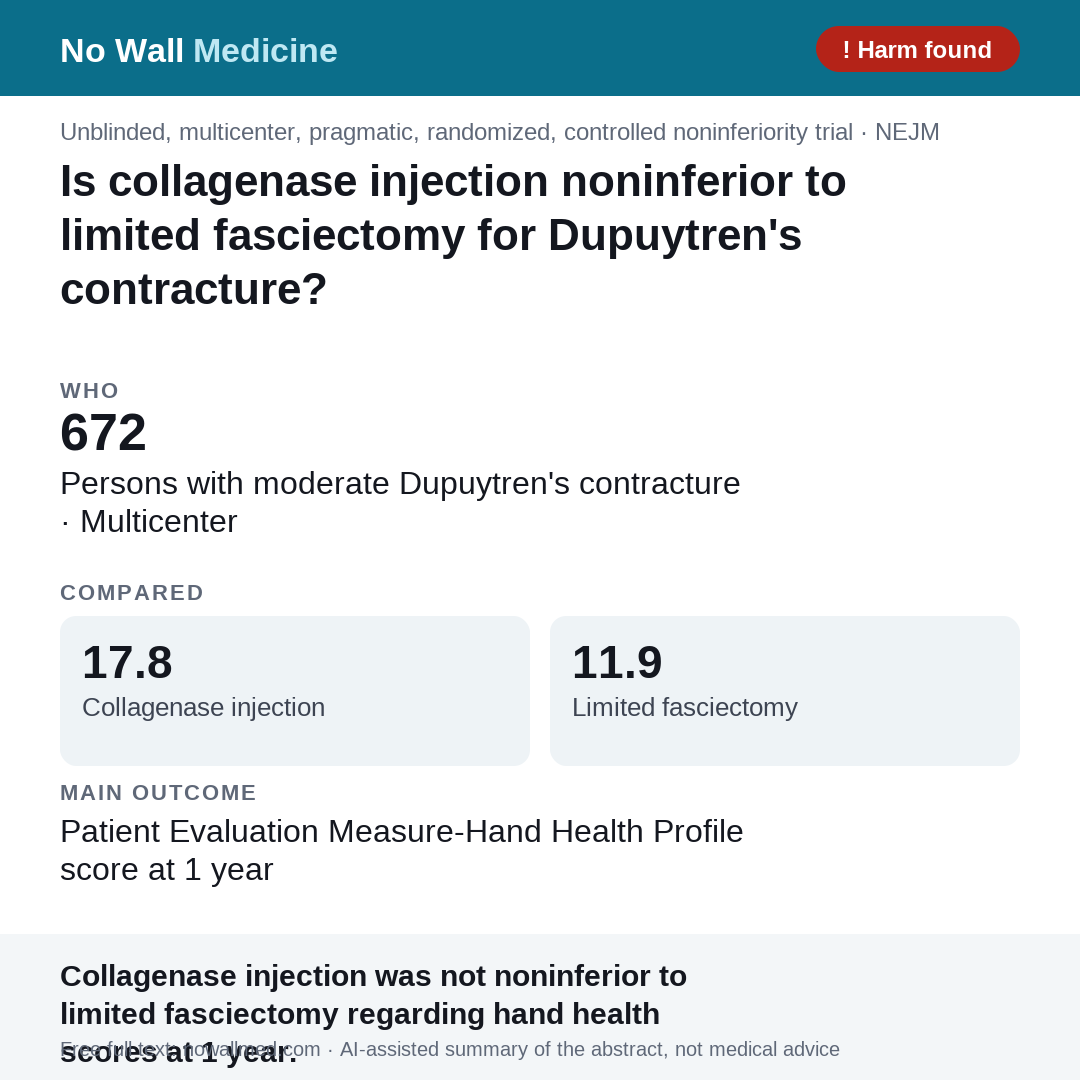
Collagenase Injection versus Limited Fasciectomy for Dupuytren's Contracture
Unblinded, multicenter, pragmatic, randomized, controlled noninferiority trialHarm found
Is collagenase injection noninferior to limited fasciectomy for Dupuytren's contracture?
Who
672
Persons with moderate Dupuytren's contracture · Multicenter
Compared
17.8Collagenase injection
11.9Limited fasciectomy
Main outcome
Patient Evaluation Measure-Hand Health Profile score at 1 year
Result: estimated difference, 5.9 points; 95% confidence interval [CI], 3.1 to 8.8
Bottom line: Collagenase injection was not noninferior to limited fasciectomy regarding hand health scores at 1 year.
Funded by: National Institute for Health and Care Research
NEJM · 2024-10-09Download image
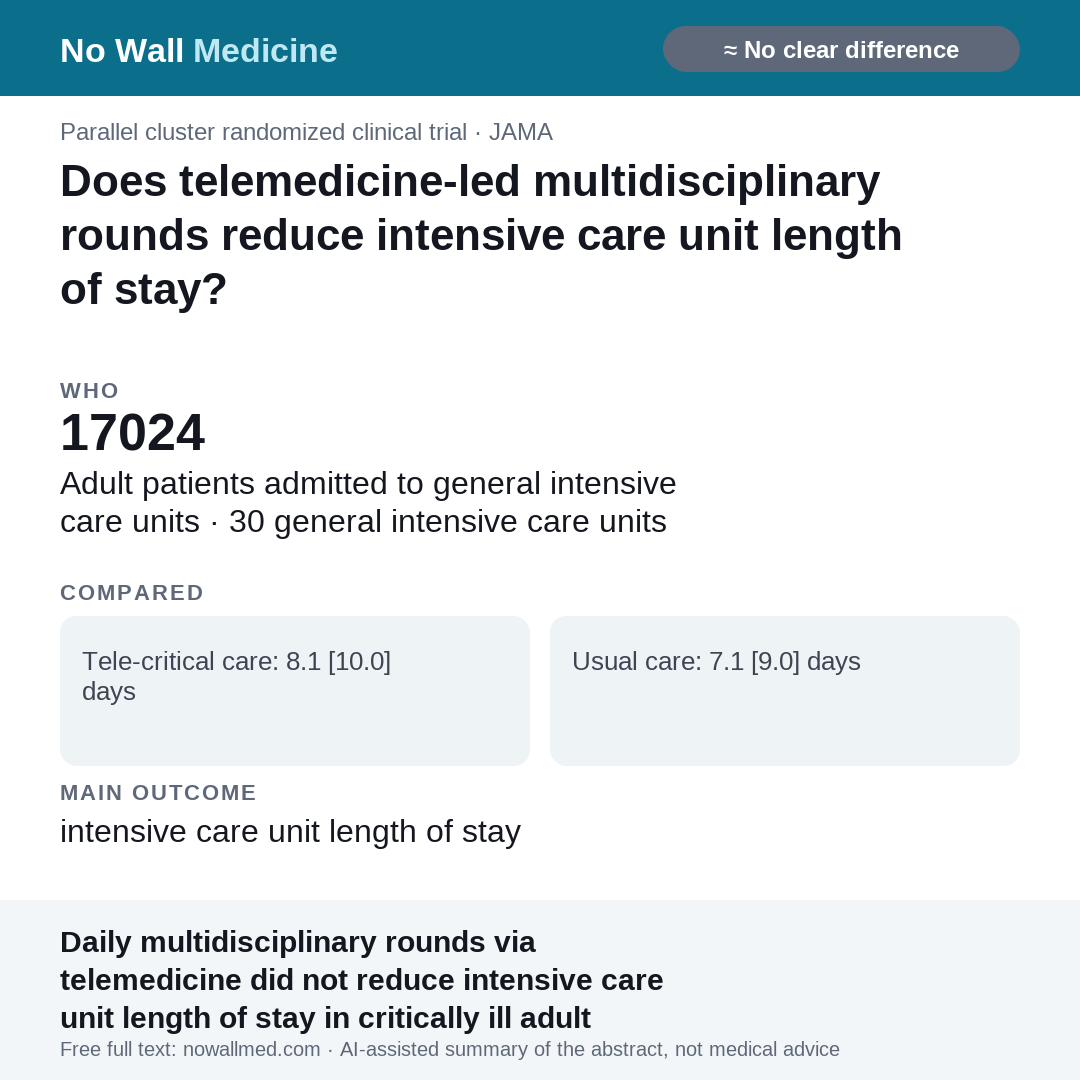
Effect of Tele-ICU on Clinical Outcomes of Critically Ill Patients: The TELESCOPE Randomized Clinical Trial
Parallel cluster randomized clinical trialNo clear difference
Does telemedicine-led multidisciplinary rounds reduce intensive care unit length of stay?
Who
17024
Adult patients admitted to general intensive care units · 30 general intensive care units in Brazil
Compared
Tele-critical care: 8.1 [10.0] days
Usual care: 7.1 [9.0] days
Main outcome
intensive care unit length of stay
Result: percentage change, 8.2% (95% CI, -5.4% to 23.8%)
Bottom line: Daily multidisciplinary rounds via telemedicine did not reduce intensive care unit length of stay in critically ill adult patients.
JAMA · 2024-10-09Download image
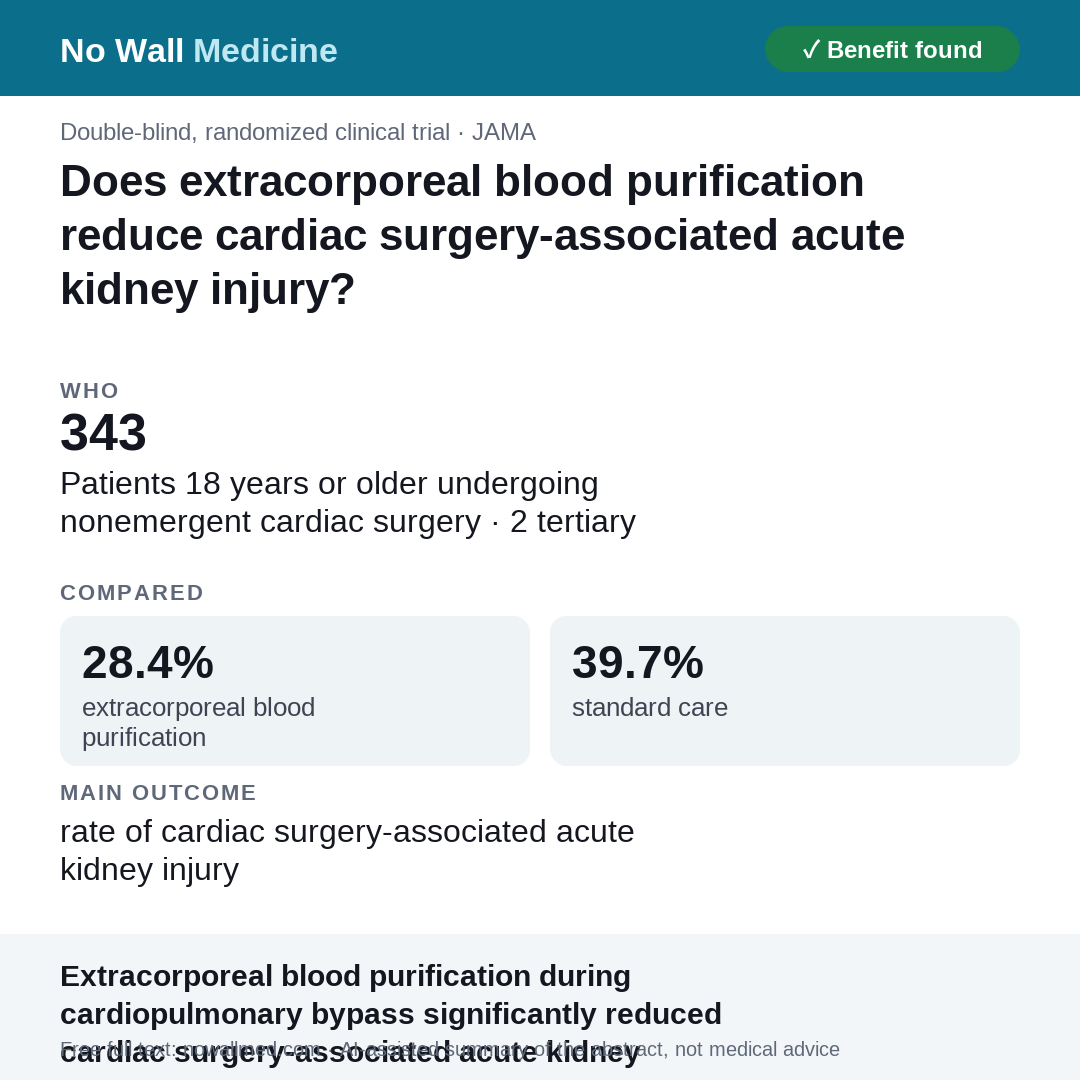
Extracorporeal Blood Purification and Acute Kidney Injury in Cardiac Surgery: The SIRAKI02 Randomized Clinical Trial
Double-blind, randomized clinical trialBenefit found
Does extracorporeal blood purification reduce cardiac surgery-associated acute kidney injury?
Who
343
Patients 18 years or older undergoing nonemergent cardiac surgery · 2 tertiary hospitals in Spain
Compared
28.4%extracorporeal blood purification (95% CI, 21.7%-35.8%)
39.7%standard care (95% CI, 32.3%-47.3%)
Main outcome
rate of cardiac surgery-associated acute kidney injury
Result: adjusted difference of 10.4% (95% CI, 2.3%-18.5%)
Bottom line: Extracorporeal blood purification during cardiopulmonary bypass significantly reduced cardiac surgery-associated acute kidney injury within 7 days.
JAMA · 2024-10-09Download image
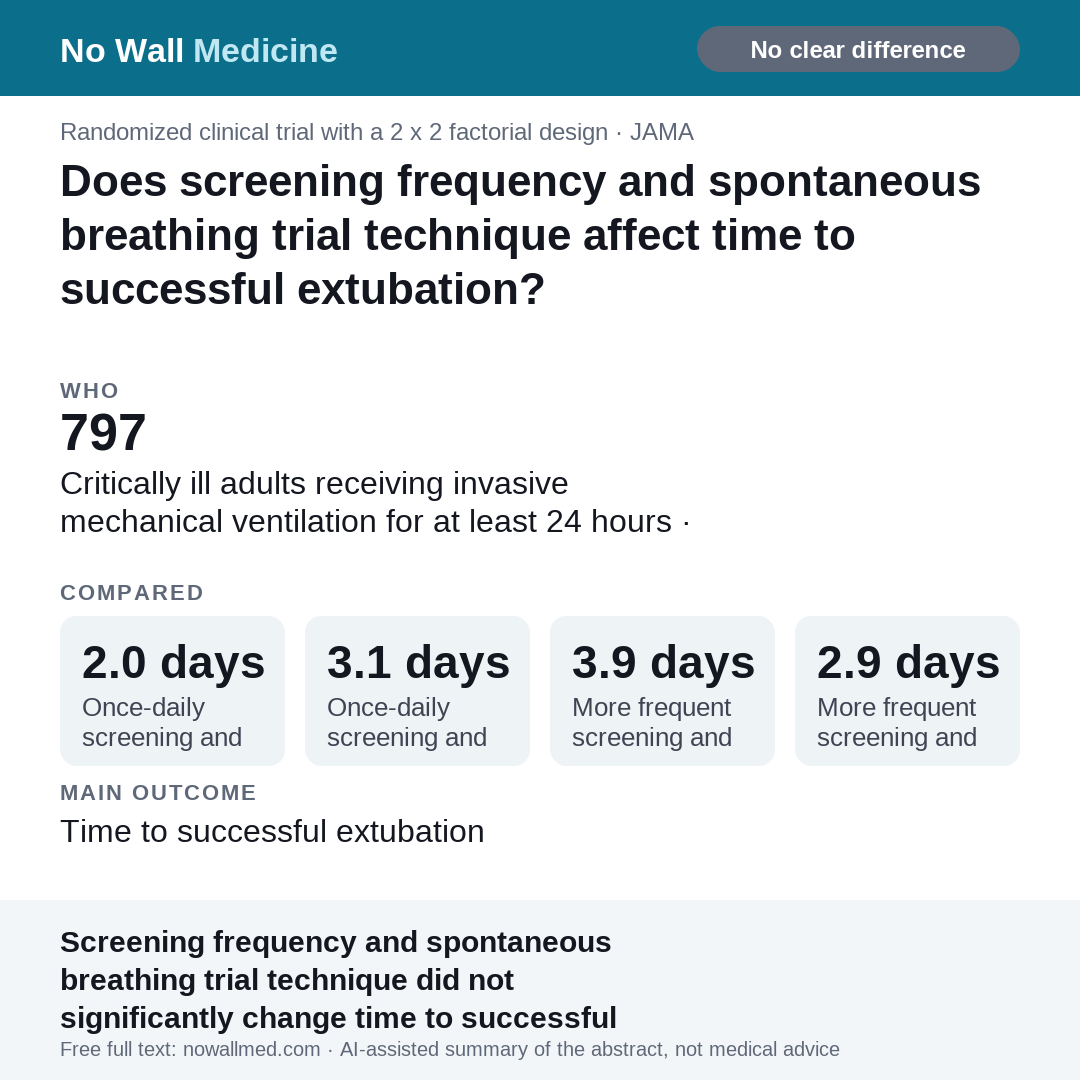
Frequency of Screening and Spontaneous Breathing Trial Techniques: A Randomized Clinical Trial
Randomized clinical trial with a 2 x 2 factorial designNo clear difference
Does screening frequency and spontaneous breathing trial technique affect time to successful extubation?
Who
797
Critically ill adults receiving invasive mechanical ventilation for at least 24 hours · 23 intensive care units in North America
Compared
2.0 daysOnce-daily screening and pressure-supported SBT (95% CI, 1.7-2.7)
3.1 daysOnce-daily screening and T-piece SBT (95% CI, 2.7-4.8)
3.9 daysMore frequent screening and pressure-supported SBT (95% CI, 2.9-4.7)
2.9 daysMore frequent screening and T-piece SBT (95% CI, 2.0-3.1)
Main outcome
Time to successful extubation
Result: hazard ratio 0.88 (95% CI, 0.76-1.03) for screening; hazard ratio 1.06 (95% CI, 0.91-1.23) for technique
Bottom line: Screening frequency and spontaneous breathing trial technique did not significantly change time to successful extubation.
JAMA · 2024-10-09Download image
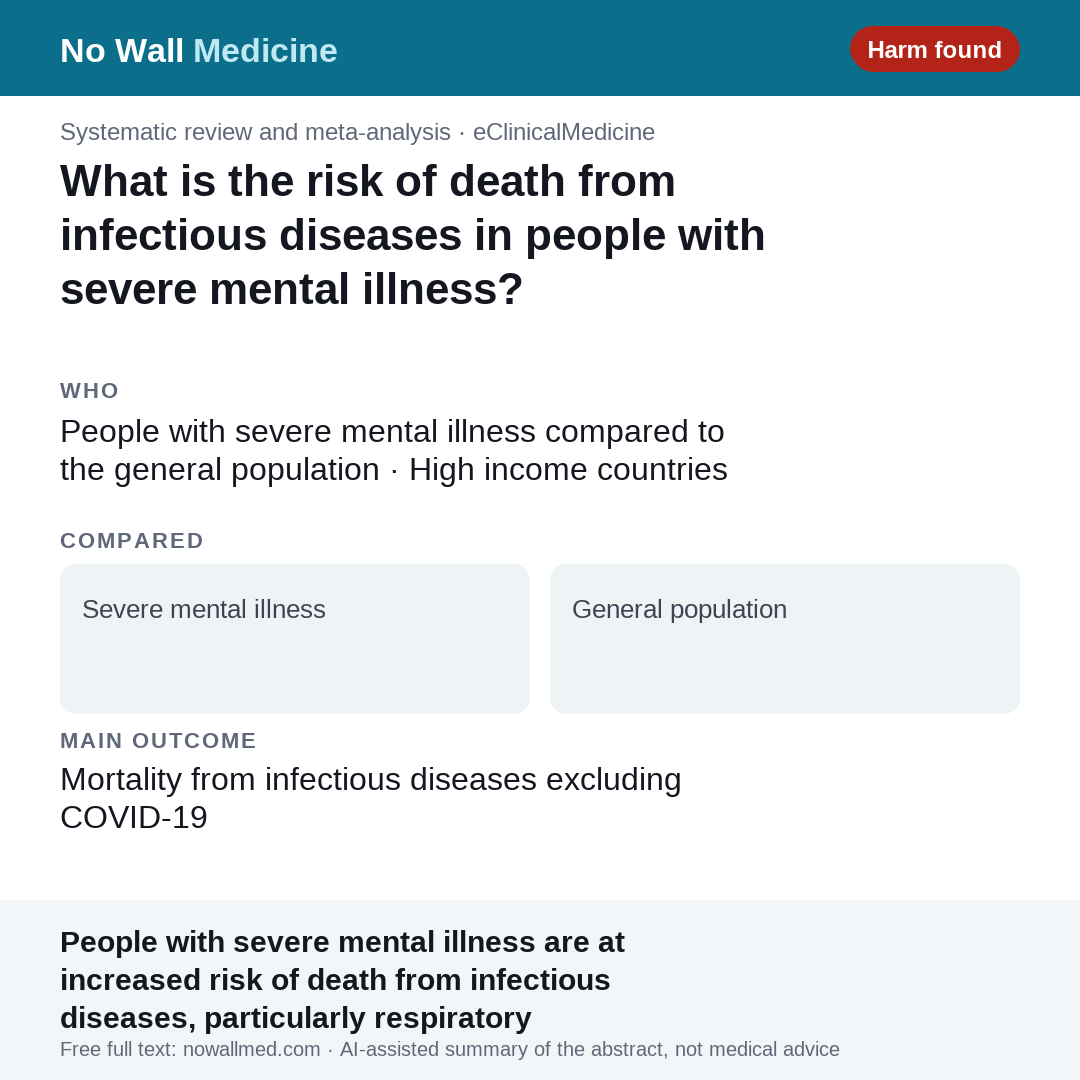
Severe mental illness and infectious disease mortality: a systematic review and meta-analysis
Systematic review and meta-analysisHarm found
What is the risk of death from infectious diseases in people with severe mental illness?
Who
People with severe mental illness compared to the general population · High income countries
Compared
Severe mental illness
General population
Main outcome
Mortality from infectious diseases excluding COVID-19
Result: relative risk 2.71 (95% CI 2.33-3.16)
Bottom line: People with severe mental illness are at increased risk of death from infectious diseases, particularly respiratory infections.
Limitation: Sources of heterogeneity included diagnosis, gender, control group type, and infection type.
Funded by: MQ Mental Health Research Fellowship
eClinicalMedicine · 2024-10-09Download image
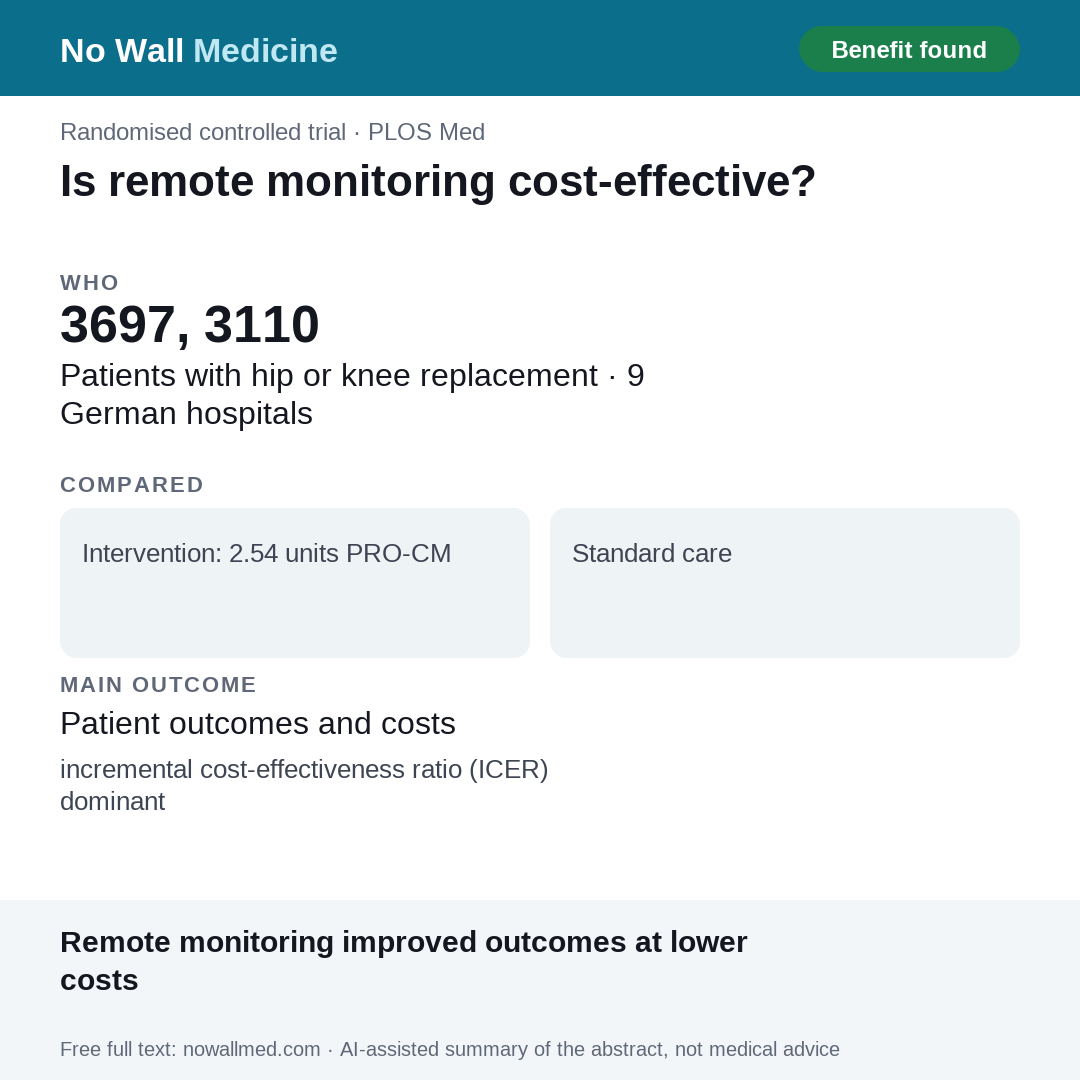
Cost-effectiveness of a patient-reported outcome-based remote monitoring and alert intervention for early detection of critical recovery after joint replacement: A randomised controlled trial
Randomised controlled trialBenefit found
Is remote monitoring cost-effective?
Who
3697, 3110
Patients with hip or knee replacement · 9 German hospitals
Compared
Intervention: 2.54 units PRO-CM
Standard care
Main outcome
Patient outcomes and costs
Result: incremental cost-effectiveness ratio (ICER) dominant
Bottom line: Remote monitoring improved outcomes at lower costs
Limitation: unclear which step contributes most to effect
PLOS Med · 2024-10-09Download image
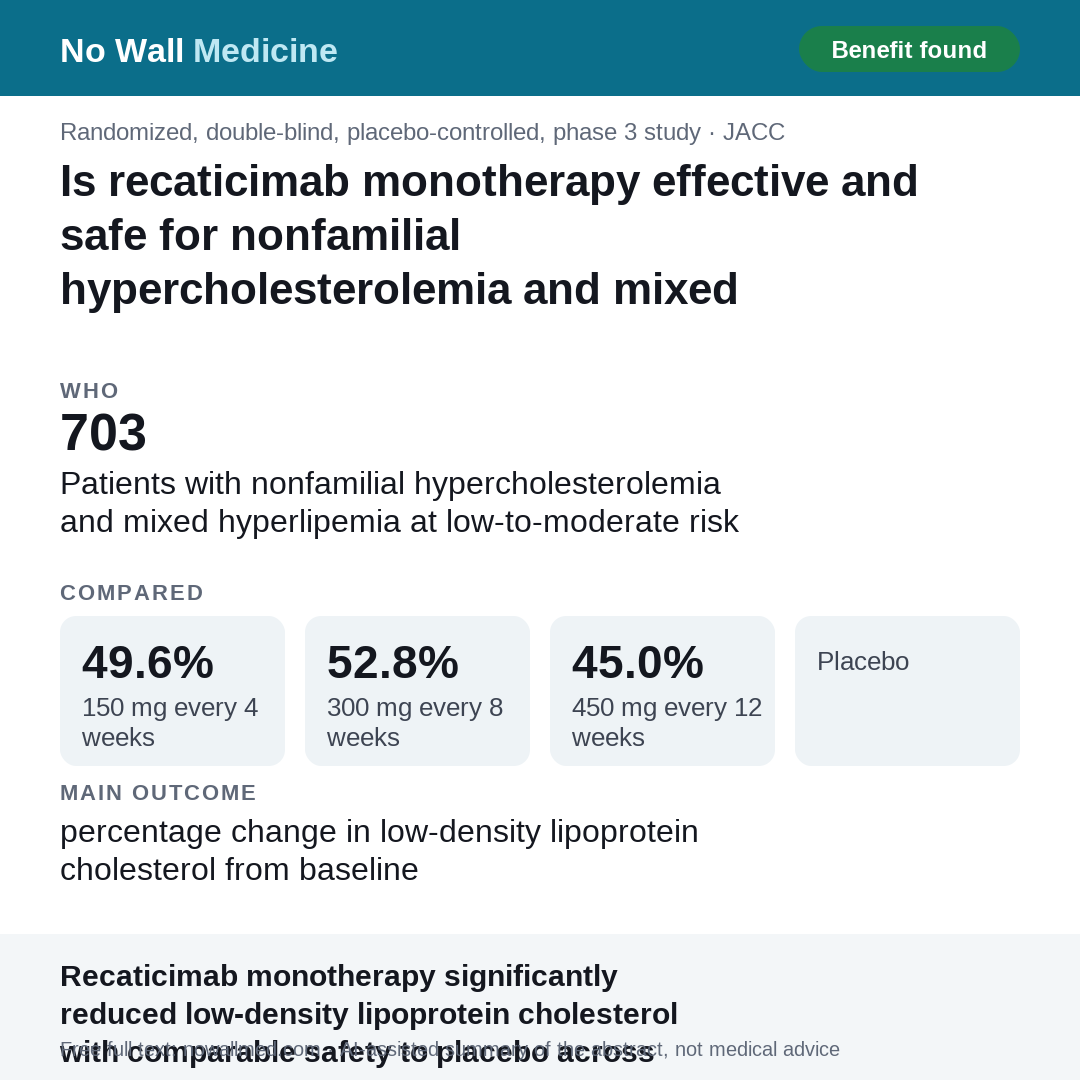
Recaticimab Monotherapy for Nonfamilial Hypercholesterolemia and Mixed Hyperlipemia: The Phase 3 REMAIN-1 Randomized Trial
Randomized, double-blind, placebo-controlled, phase 3 studyBenefit found
Is recaticimab monotherapy effective and safe for nonfamilial hypercholesterolemia and mixed hyperlipemia?
Who
703
Patients with nonfamilial hypercholesterolemia and mixed hyperlipemia at low-to-moderate risk · 59 sites in China
Compared
49.6%150 mg every 4 weeks (95% CI: 44.2%-54.9%)
52.8%300 mg every 8 weeks (95% CI: 48.3%-57.2%)
45.0%450 mg every 12 weeks (95% CI: 41.0%-49.0%)
Placebo
Main outcome
percentage change in low-density lipoprotein cholesterol from baseline
Bottom line: Recaticimab monotherapy significantly reduced low-density lipoprotein cholesterol with comparable safety to placebo across various dosing intervals.
JACC · 2024-10-09Download image
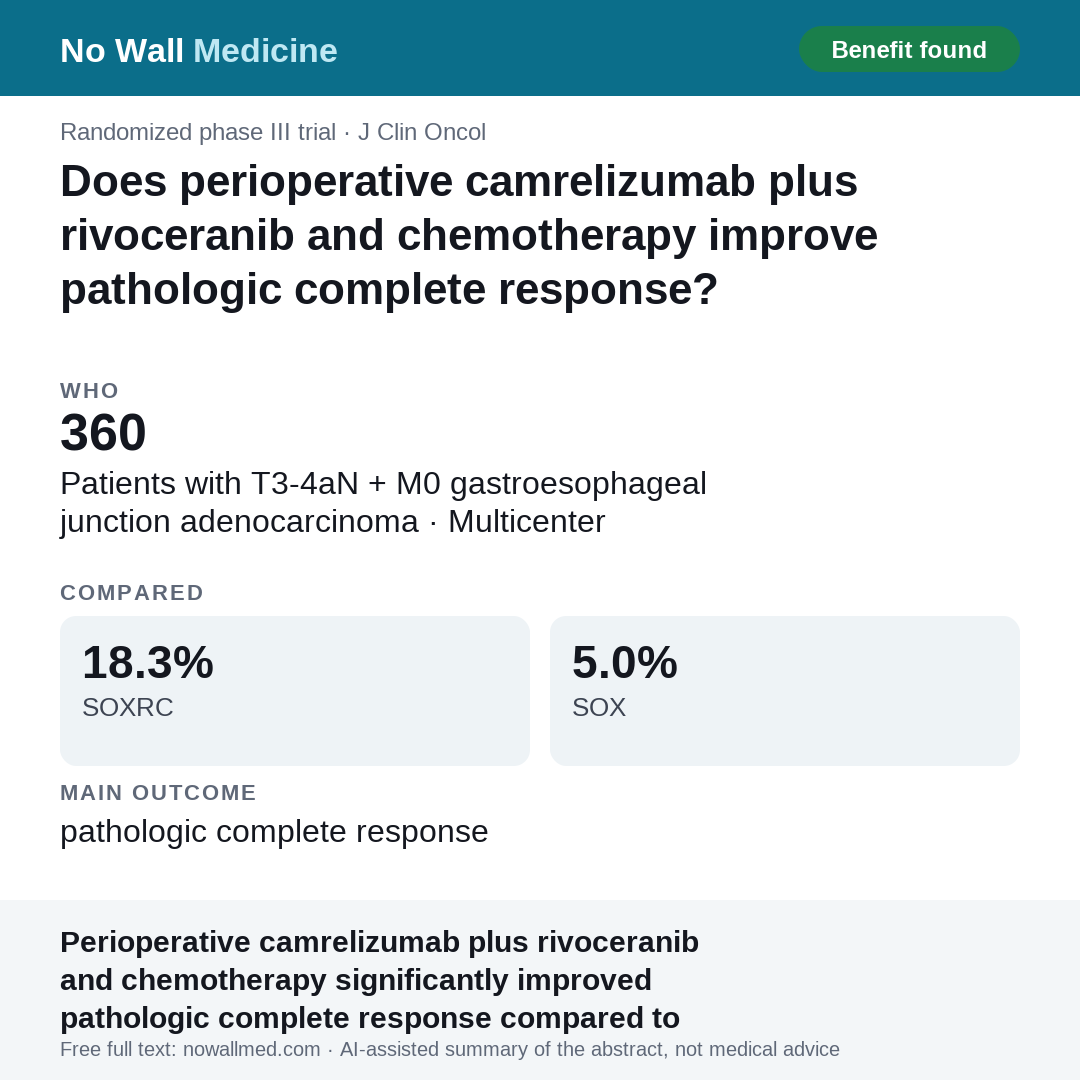
Pathologic Response of Phase III Study: Perioperative Camrelizumab Plus Rivoceranib and Chemotherapy Versus Chemotherapy for Locally Advanced Gastric Cancer (DRAGON IV/CAP 05)
Randomized phase III trialBenefit found
Does perioperative camrelizumab plus rivoceranib and chemotherapy improve pathologic complete response?
Who
360
Patients with T3-4aN + M0 gastroesophageal junction adenocarcinoma · Multicenter
Compared
18.3%SOXRC (95% CI, 13.0 to 24.8)
5.0%SOX (95% CI, 2.3 to 9.3)
Main outcome
pathologic complete response
Result: odds ratio of 4.5 (95% CI, 2.1 to 9.9)
Bottom line: Perioperative camrelizumab plus rivoceranib and chemotherapy significantly improved pathologic complete response compared to chemotherapy alone.
J Clin Oncol · 2024-10-09Download image
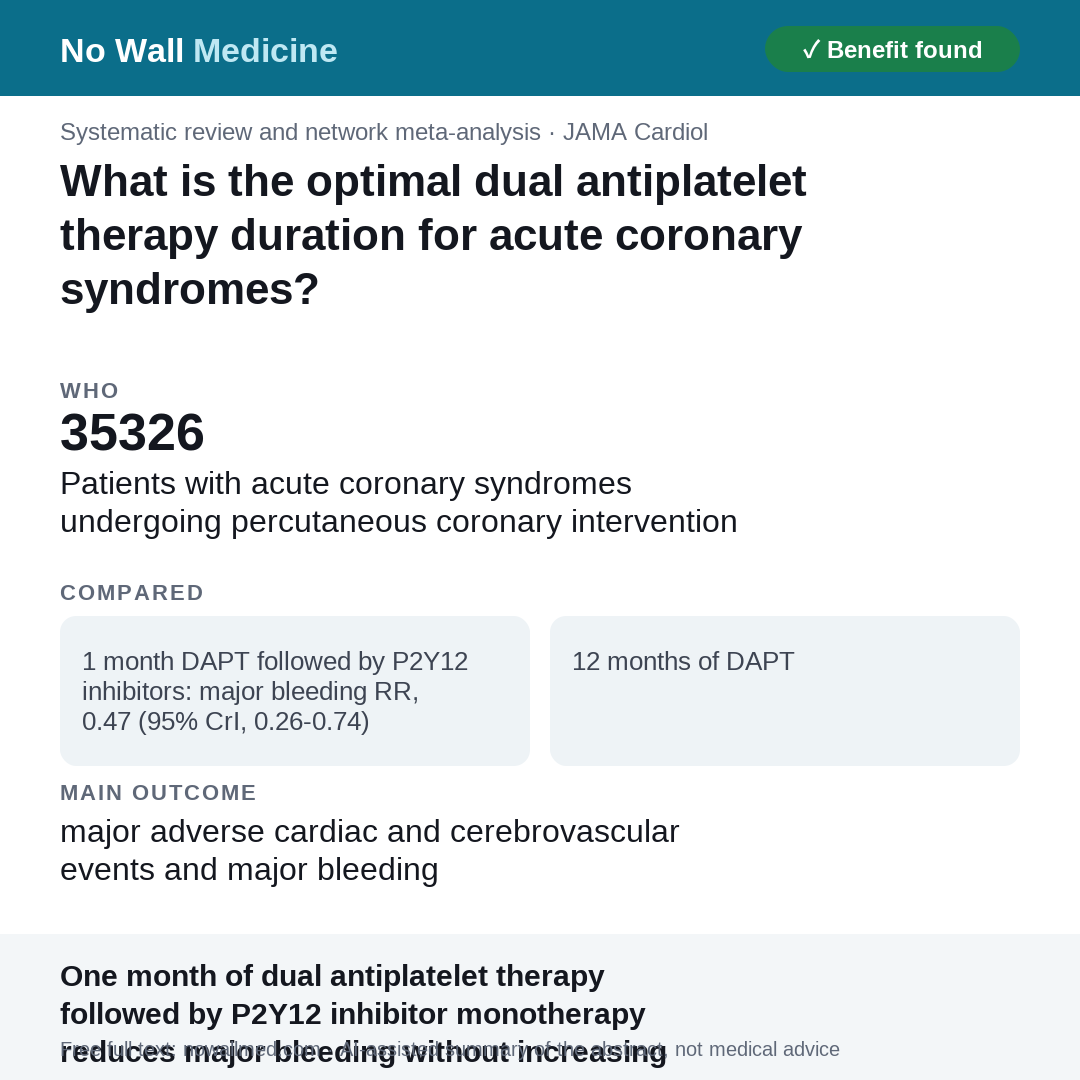
Short-Term Dual Antiplatelet Therapy After Drug-Eluting Stenting in Patients With Acute Coronary Syndromes: A Systematic Review and Network Meta-Analysis
Systematic review and network meta-analysisBenefit found
What is the optimal dual antiplatelet therapy duration for acute coronary syndromes?
Who
35326
Patients with acute coronary syndromes undergoing percutaneous coronary intervention
Compared
1 month DAPT followed by P2Y12 inhibitors: major bleeding RR, 0.47 (95% CrI, 0.26-0.74)
12 months of DAPT
Main outcome
major adverse cardiac and cerebrovascular events and major bleeding
Result: major bleeding RR, 0.47 (95% CrI, 0.26-0.74)
Bottom line: One month of dual antiplatelet therapy followed by P2Y12 inhibitor monotherapy reduces major bleeding without increasing major adverse cardiac and cerebrovascular events.
Limitation: The safety of stopping aspirin in those taking clopidogrel remains unclear.
JAMA Cardiol · 2024-10-09Download image
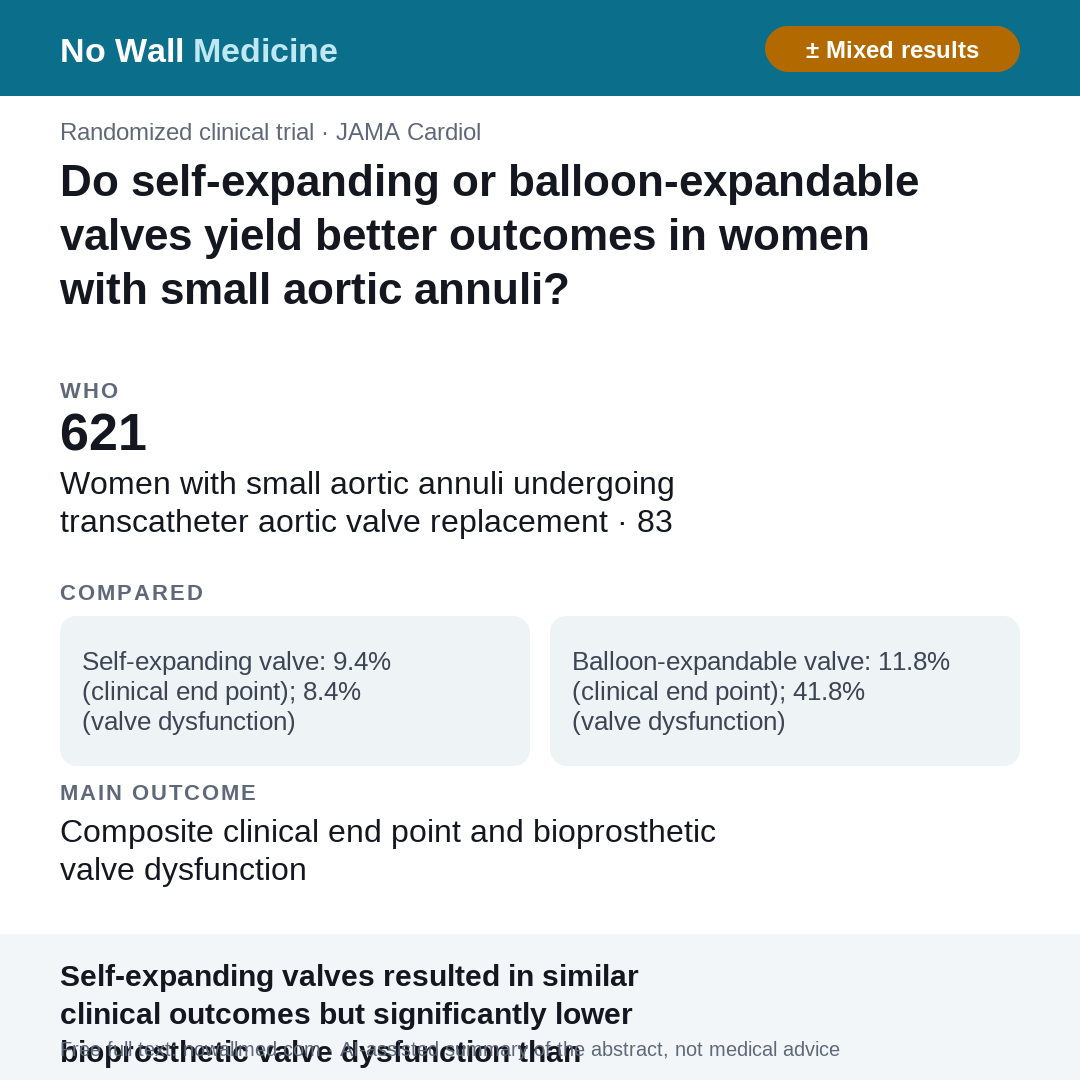
Transcatheter Aortic Valve Implantation by Valve Type in Women With Small Annuli: Results From the SMART Randomized Clinical Trial
Randomized clinical trialMixed results
Do self-expanding or balloon-expandable valves yield better outcomes in women with small aortic annuli?
Who
621
Women with small aortic annuli undergoing transcatheter aortic valve replacement · 83 centers in Canada, Europe, Israel, and the US
Compared
Self-expanding valve: 9.4% (clinical end point); 8.4% (valve dysfunction)
Balloon-expandable valve: 11.8% (clinical end point); 41.8% (valve dysfunction)
Main outcome
Composite clinical end point and bioprosthetic valve dysfunction
Result: absolute risk difference -33.4% (95% CI -40.4 to -26.4) for valve dysfunction
Bottom line: Self-expanding valves resulted in similar clinical outcomes but significantly lower bioprosthetic valve dysfunction than balloon-expandable valves in women.
JAMA Cardiol · 2024-10-09Download image
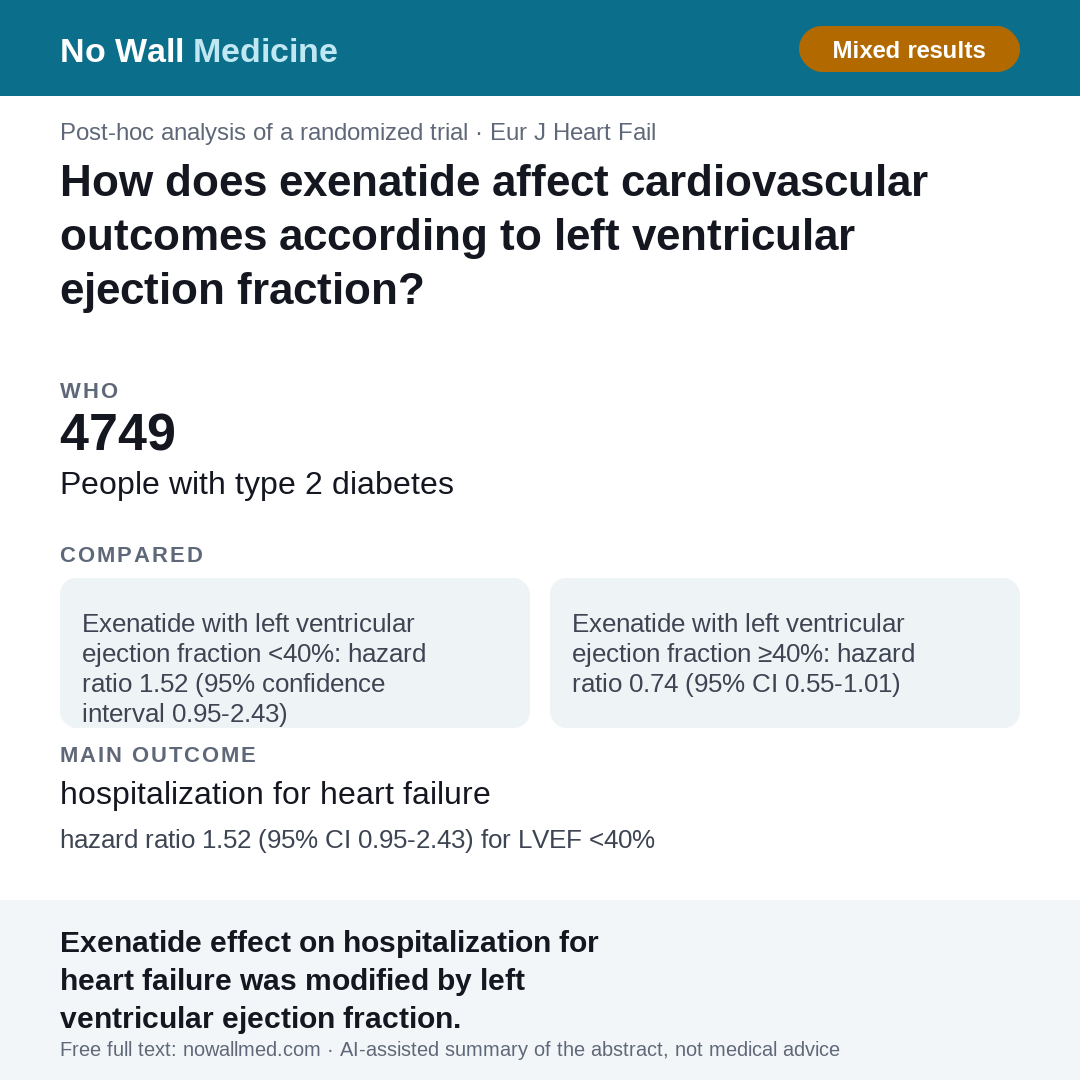
Cardiovascular outcomes with exenatide in type 2 diabetes according to ejection fraction: The EXSCEL trial
Post-hoc analysis of a randomized trialMixed results
How does exenatide affect cardiovascular outcomes according to left ventricular ejection fraction?
Who
4749
People with type 2 diabetes
Compared
Exenatide with left ventricular ejection fraction <40%: hazard ratio 1.52 (95% confidence interval 0.95-2.43)
Exenatide with left ventricular ejection fraction ≥40%: hazard ratio 0.74 (95% CI 0.55-1.01)
Main outcome
hospitalization for heart failure
Result: hazard ratio 1.52 (95% CI 0.95-2.43) for LVEF <40%
Bottom line: Exenatide effect on hospitalization for heart failure was modified by left ventricular ejection fraction.
Limitation: This was a post-hoc analysis of the EXSCEL trial.
Eur J Heart Fail · 2024-10-09Download image
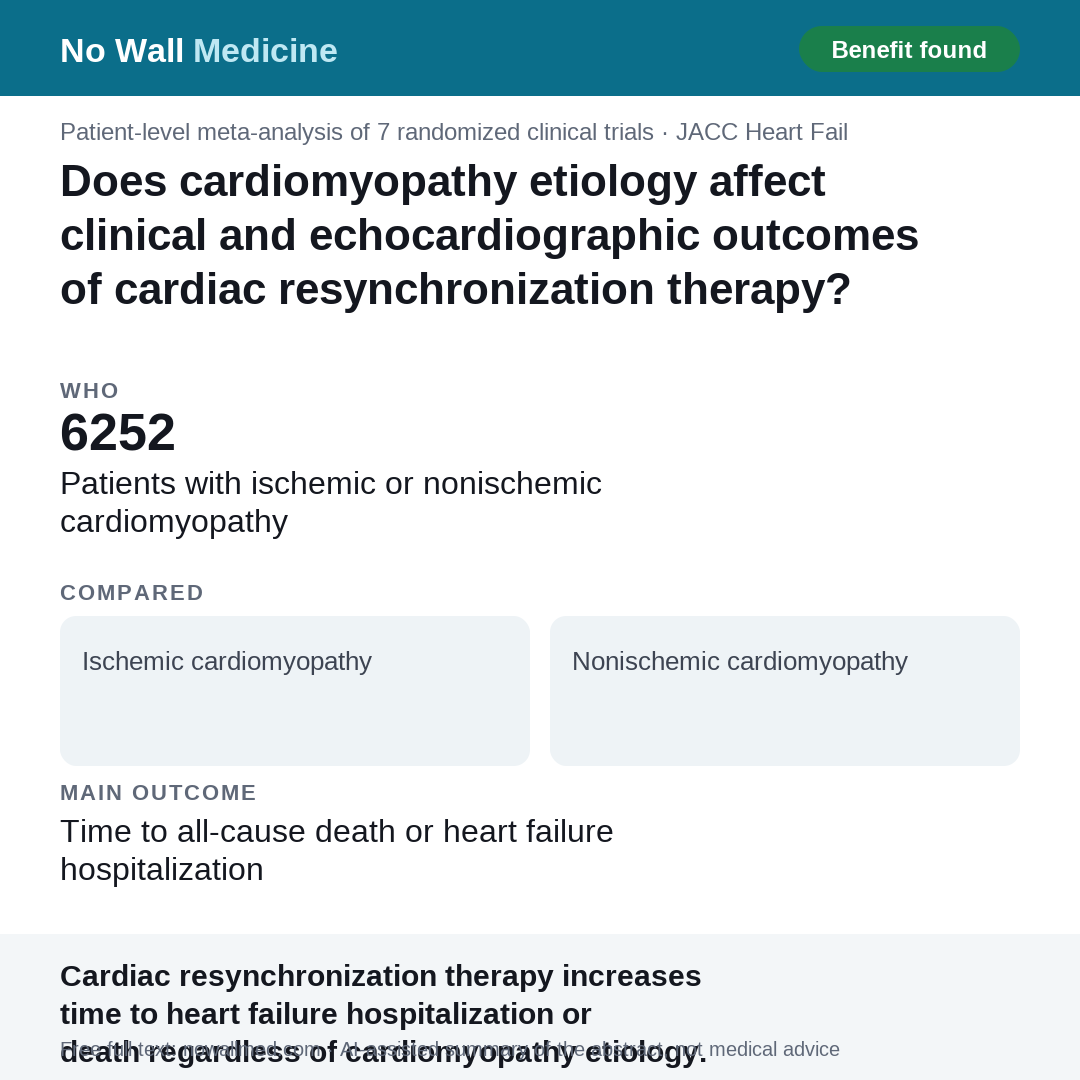
Cardiac Resynchronization Therapy in Ischemic Versus Nonischemic Cardiomyopathy: Patient-Level Meta-Analysis of 7 Randomized Clinical Trials
Patient-level meta-analysis of 7 randomized clinical trialsBenefit found
Does cardiomyopathy etiology affect clinical and echocardiographic outcomes of cardiac resynchronization therapy?
Who
6252
Patients with ischemic or nonischemic cardiomyopathy
Compared
Ischemic cardiomyopathy
Nonischemic cardiomyopathy
Main outcome
Time to all-cause death or heart failure hospitalization
Result: hazard ratio 0.67 (95% credible interval 0.56-0.82)
Bottom line: Cardiac resynchronization therapy increases time to heart failure hospitalization or death regardless of cardiomyopathy etiology.
JACC Heart Fail · 2024-10-09Download image
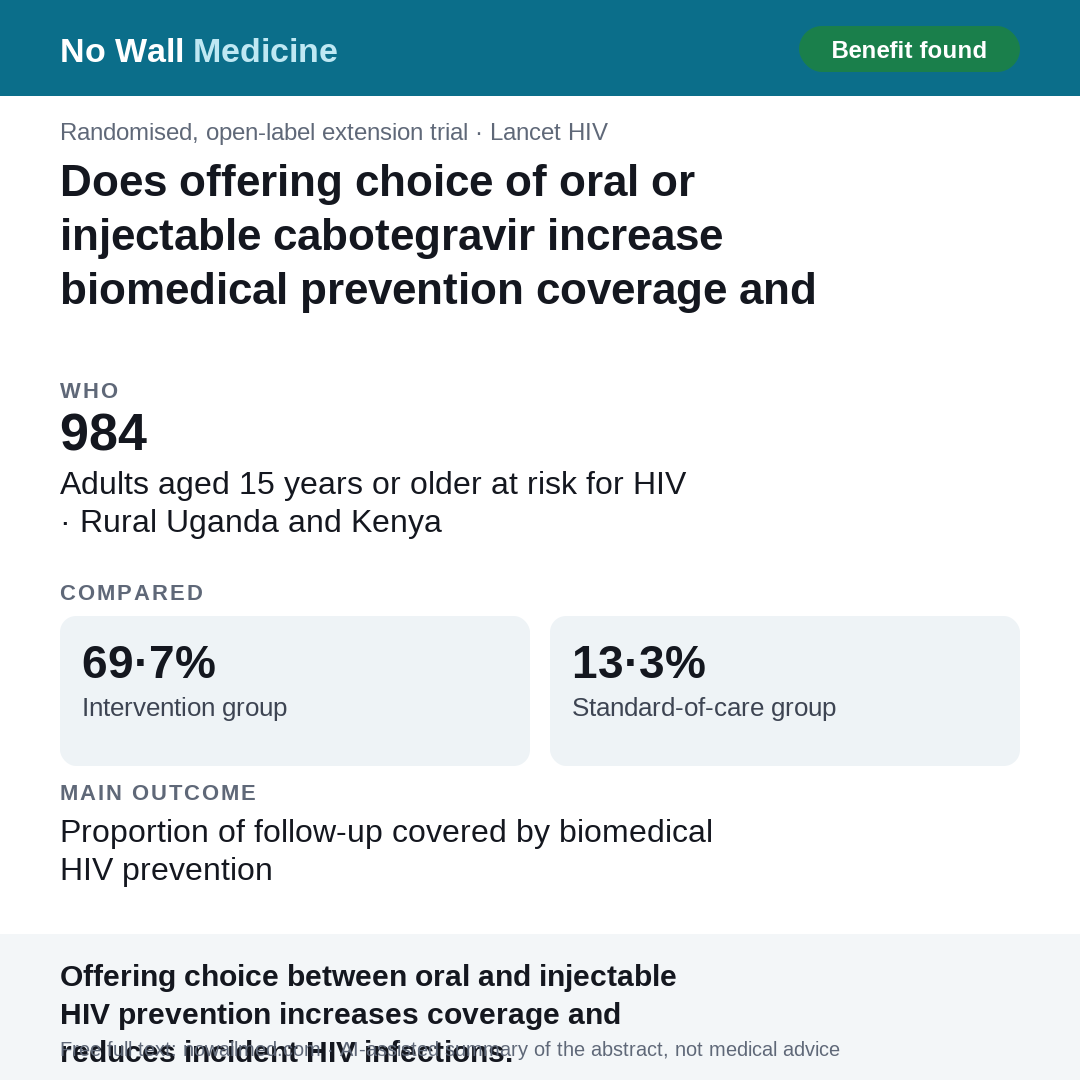
Dynamic choice HIV prevention with cabotegravir long-acting injectable in rural Uganda and Kenya: a randomised trial extension
Randomised, open-label extension trialBenefit found
Does offering choice of oral or injectable cabotegravir increase biomedical prevention coverage and reduce HIV infections?
Who
984
Adults aged 15 years or older at risk for HIV · Rural Uganda and Kenya
Compared
69·7%Intervention group (95% CI 64·9-74·5)
13·3%Standard-of-care group (10·2-16·3)
Main outcome
Proportion of follow-up covered by biomedical HIV prevention
Result: absolute difference of 56·4 percentage points (95% CI 50·8-62·1)
Bottom line: Offering choice between oral and injectable HIV prevention increases coverage and reduces incident HIV infections.
Funded by: National Institutes of Health
Lancet HIV · 2024-10-09Download image