Visual abstracts
New randomized trials and meta-analyses from leading journals at a glance: who was studied, what was compared, and what was found. Every paper is free to read in full.
All specialtiesCardiology 3535Oncology 3033Gastroenterology & Hepatology 1393Infectious Disease 2482Neurology 1425Psychiatry & Mental Health 1674Pulmonology 1515Critical Care 1013Endocrinology & Diabetes 1809Pediatrics 2147Surgery 1870Orthopedics & Sports Medicine 655Neurosurgery 417Cardiothoracic & Vascular Surgery 423Plastic & Reconstructive Surgery 492Nephrology 767Rheumatology 569Hematology 795Dermatology 439Ophthalmology 392Obstetrics & Gynecology 1215Public & Global Health 682Radiology & Imaging 495Anesthesiology 724Urology 583ENT (Otolaryngology) 388Emergency Medicine 382Allergy & Immunology 220Geriatrics 750Family Medicine & Primary Care 409Medical Genetics & Genomics 452Pathology & Laboratory Medicine 115Physical Medicine & Rehabilitation 551Palliative Care 326Nutrition 1062Digital Health & AI 1658General Medicine 253
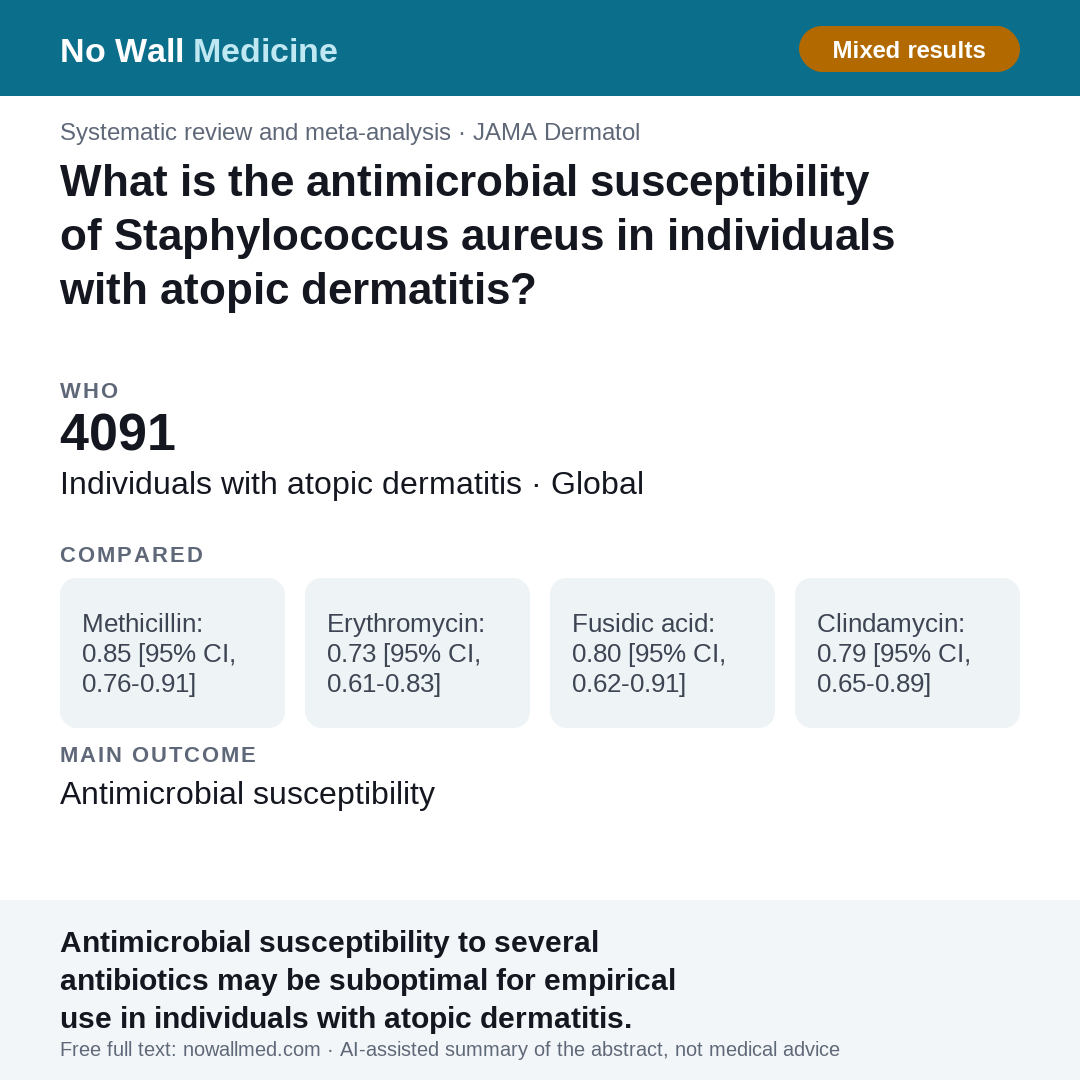
Global Antimicrobial Susceptibility Patterns of Staphylococcus aureus in Atopic Dermatitis: A Systematic Review and Meta-Analysis
Systematic review and meta-analysisMixed results
What is the antimicrobial susceptibility of Staphylococcus aureus in individuals with atopic dermatitis?
Who
4091
Individuals with atopic dermatitis · Global
Compared
Methicillin: 0.85 [95% CI, 0.76-0.91]
Erythromycin: 0.73 [95% CI, 0.61-0.83]
Fusidic acid: 0.80 [95% CI, 0.62-0.91]
Clindamycin: 0.79 [95% CI, 0.65-0.89]
Main outcome
Antimicrobial susceptibility
Bottom line: Antimicrobial susceptibility to several antibiotics may be suboptimal for empirical use in individuals with atopic dermatitis.
JAMA Dermatol · 2024-09-25Download image
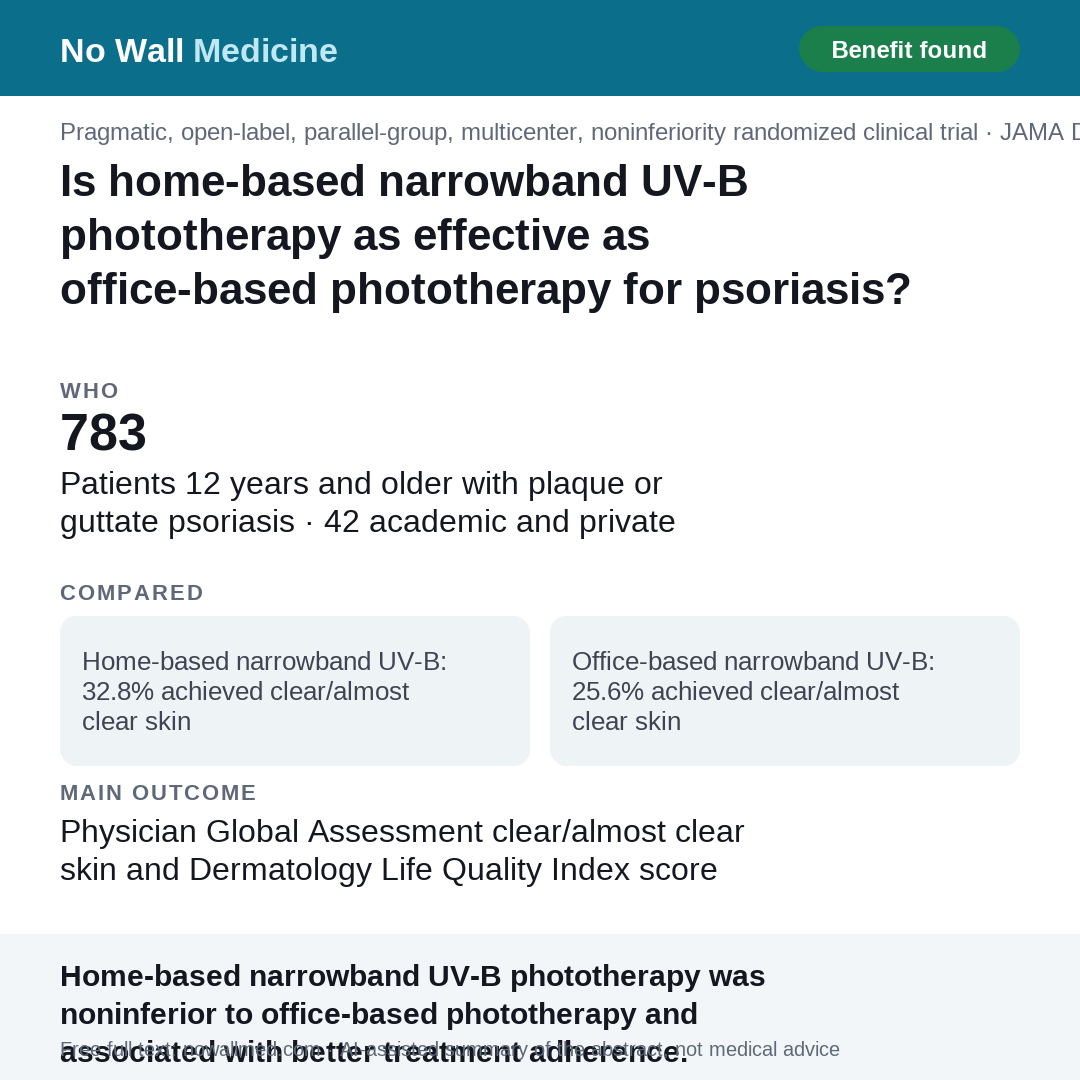
Home- vs Office-Based Narrowband UV-B Phototherapy for Patients With Psoriasis: The LITE Randomized Clinical Trial
Pragmatic, open-label, parallel-group, multicenter, noninferiority randomized clinical trialBenefit found
Is home-based narrowband UV-B phototherapy as effective as office-based phototherapy for psoriasis?
Who
783
Patients 12 years and older with plaque or guttate psoriasis · 42 academic and private clinical dermatology practices in the US
Compared
Home-based narrowband UV-B: 32.8% achieved clear/almost clear skin
Office-based narrowband UV-B: 25.6% achieved clear/almost clear skin
Main outcome
Physician Global Assessment clear/almost clear skin and Dermatology Life Quality Index score ≤5
Bottom line: Home-based narrowband UV-B phototherapy was noninferior to office-based phototherapy and associated with better treatment adherence.
JAMA Dermatol · 2024-09-25Download image
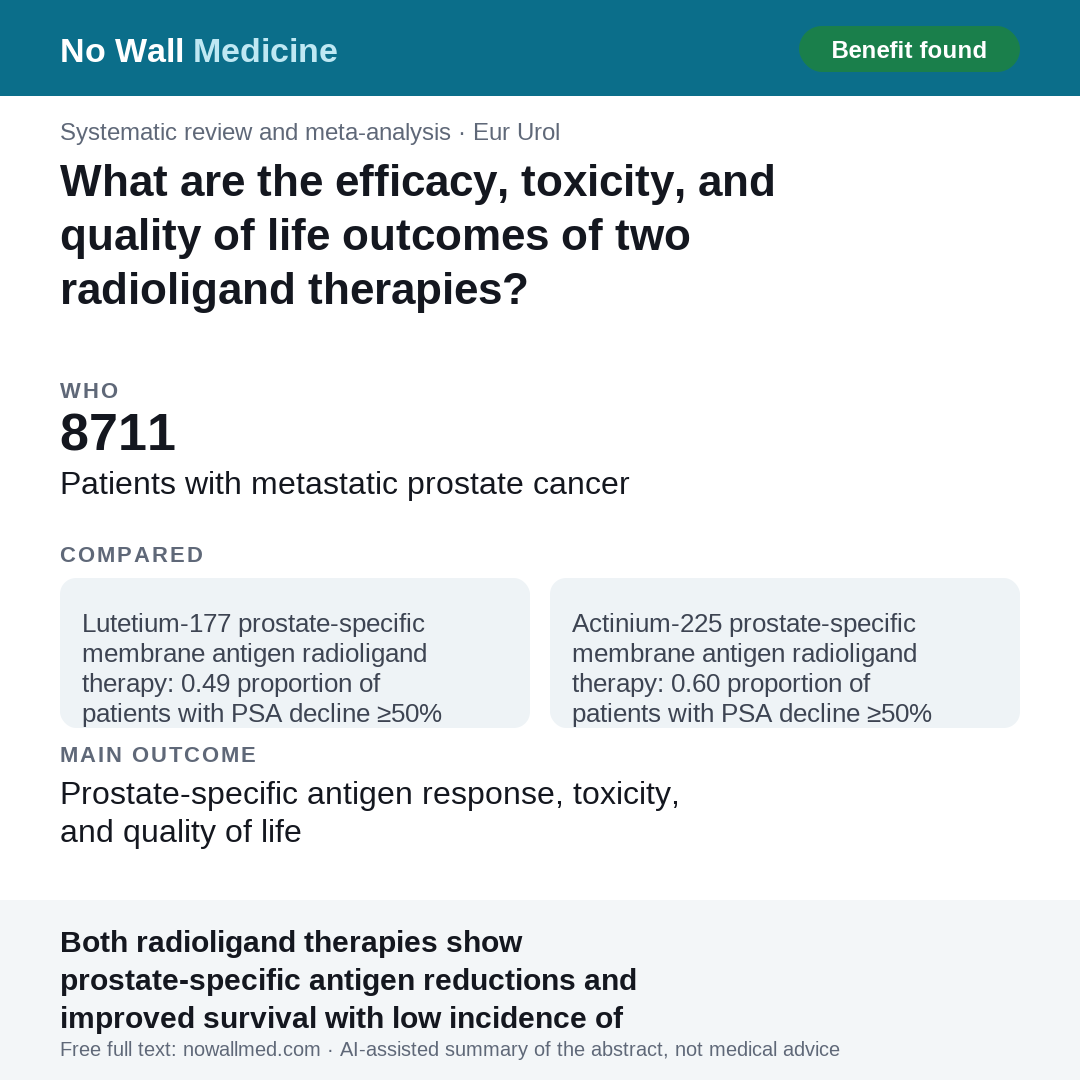
A Meta-Analysis and Meta-Regression of the Efficacy, Toxicity, and Quality of Life Outcomes Following Prostate-Specific Membrane Antigen Radioligand Therapy Utilising Lutetium-177 and Actinium-225 in Metastatic Prostate Cancer
Systematic review and meta-analysisBenefit found
What are the efficacy, toxicity, and quality of life outcomes of two radioligand therapies?
Who
8711
Patients with metastatic prostate cancer
Compared
Lutetium-177 prostate-specific membrane antigen radioligand therapy: 0.49 proportion of patients with PSA decline ≥50%
Actinium-225 prostate-specific membrane antigen radioligand therapy: 0.60 proportion of patients with PSA decline ≥50%
Main outcome
Prostate-specific antigen response, toxicity, and quality of life
Bottom line: Both radioligand therapies show prostate-specific antigen reductions and improved survival with low incidence of severe toxicity.
Limitation: Heterogeneity across studies for prostate-specific antigen responses and toxicity profiles.
Eur Urol · 2024-09-25Download image
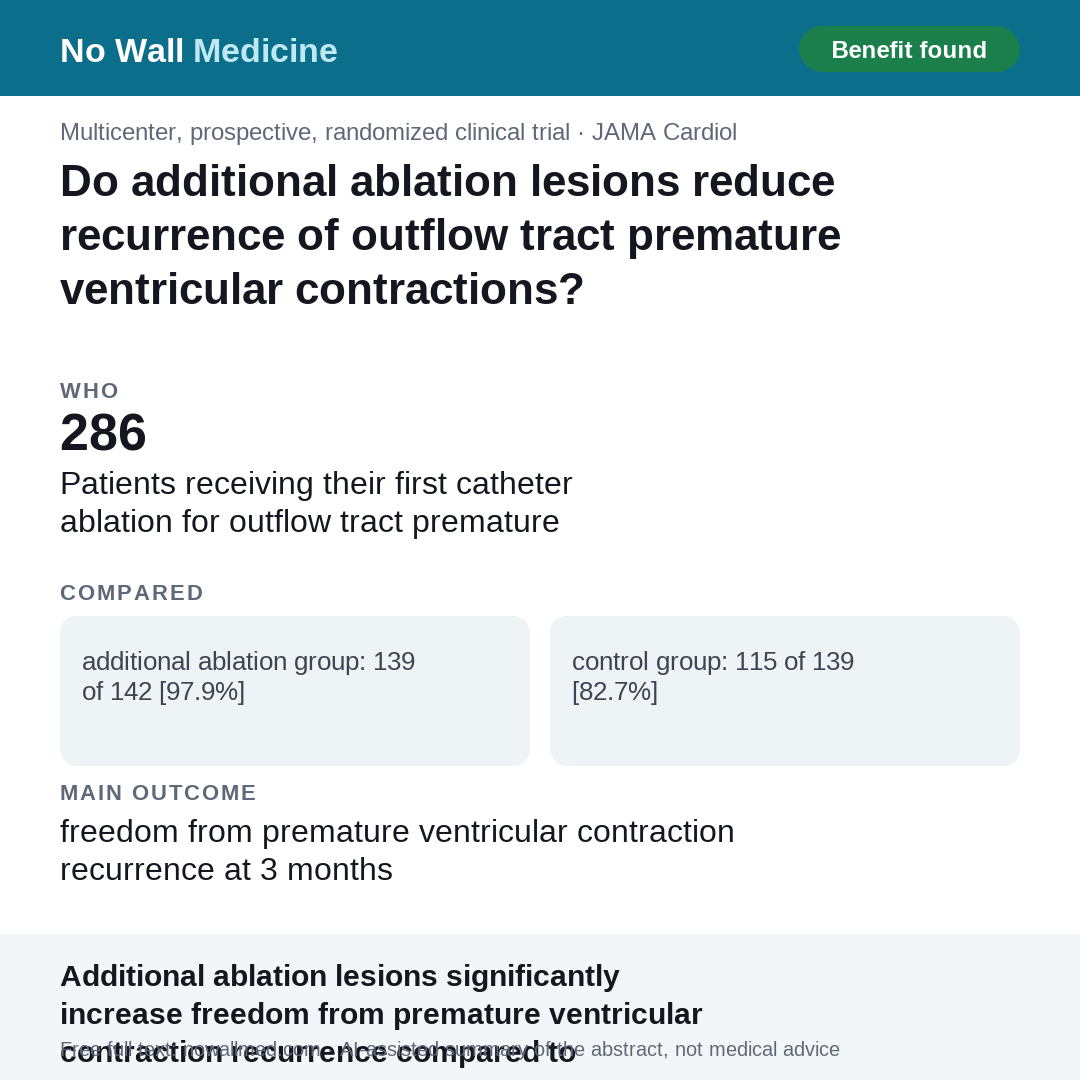
Additional Lesion Sets in Ablation of Outflow Tract Premature Ventricular Contractions: A Randomized Clinical Trial
Multicenter, prospective, randomized clinical trialBenefit found
Do additional ablation lesions reduce recurrence of outflow tract premature ventricular contractions?
Who
286
Patients receiving their first catheter ablation for outflow tract premature ventricular contractions · 18 hospitals in China
Compared
additional ablation group: 139 of 142 [97.9%]
control group: 115 of 139 [82.7%]
Main outcome
freedom from premature ventricular contraction recurrence at 3 months
Bottom line: Additional ablation lesions significantly increase freedom from premature ventricular contraction recurrence compared to single-point ablation.
JAMA Cardiol · 2024-09-25Download image
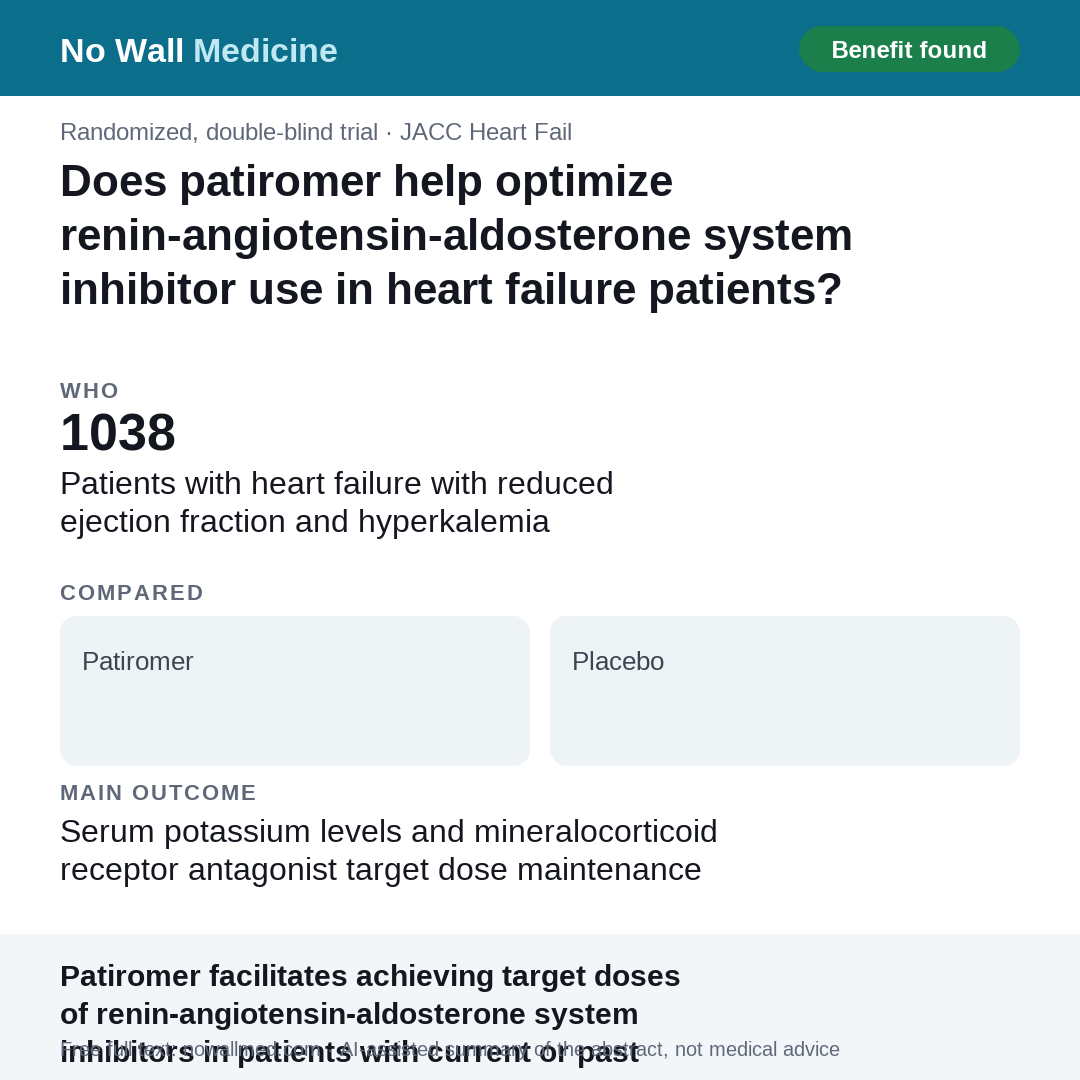
Patiromer for Heart Failure Medication Optimization in Patients With Current or Past Hyperkalemia: DIAMOND Subanalysis
Randomized, double-blind trialBenefit found
Does patiromer help optimize renin-angiotensin-aldosterone system inhibitor use in heart failure patients?
Who
1038
Patients with heart failure with reduced ejection fraction and hyperkalemia
Compared
Patiromer
Placebo
Main outcome
Serum potassium levels and mineralocorticoid receptor antagonist target dose maintenance
Result: HR: 0.45 (95% CI: 0.26-0.76) for current vs past hyperkalemia
Bottom line: Patiromer facilitates achieving target doses of renin-angiotensin-aldosterone system inhibitors in patients with current or past hyperkalemia.
JACC Heart Fail · 2024-09-25Download image
Therapeutic drug monitoring-guided piperacillin dosing in critically ill patients undergoing continuous renal replacement therapy: a systematic review
Systematic review of eleven observational studiesMixed results
Does therapeutic drug monitoring-guided piperacillin dosing improve outcomes in critically ill patients undergoing continuous renal replacement therapy?
Who
Adult patients undergoing continuous renal replacement therapy
Compared
Without therapeutic drug monitoring: up to 74% target non-attainment
With routine therapeutic drug monitoring: 80%-100% target attainment rates
Main outcome
pharmacokinetic target attainment and clinical outcomes
Bottom line: Therapeutic drug monitoring improved target attainment, but the impact on clinical outcomes remains inconclusive.
Limitation: The review included observational studies and showed inconsistent correlations between drug exposures and survival.
J Antimicrob Chemother · 2024-09-25Download image

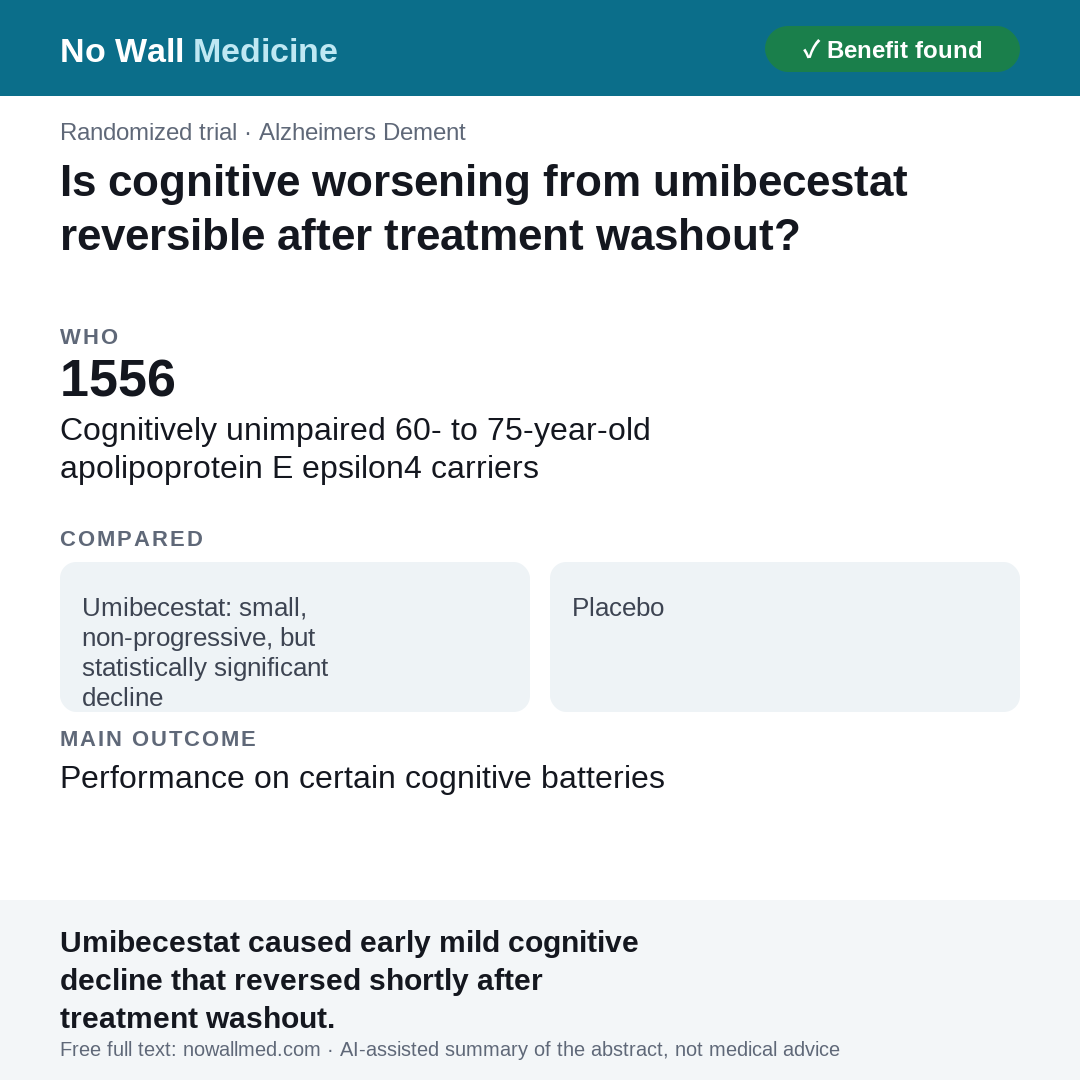
Reversibility of cognitive worsening observed with BACE inhibitor umibecestat in the Alzheimer's Prevention Initiative (API) Generation Studies
Randomized trialBenefit found
Is cognitive worsening from umibecestat reversible after treatment washout?
Who
1556
Cognitively unimpaired 60- to 75-year-old apolipoprotein E epsilon4 carriers
Compared
Umibecestat: small, non-progressive, but statistically significant decline
Placebo
Main outcome
Performance on certain cognitive batteries
Bottom line: Umibecestat caused early mild cognitive decline that reversed shortly after treatment washout.
Alzheimers Dement · 2024-09-25Download image
Psychosis risk for lesbian, gay, and bisexual individuals: systematic review and meta-analysis
Systematic review and meta-analysisBenefit found
Is there increased risk of psychotic disorders and psychotic experiences among lesbian, gay, or bisexual individuals?
Who
Lesbian, gay, or bisexual individuals
Compared
Lesbian, gay, or bisexual individuals: unadjusted pooled odds ratio 2.13 (95% confidence interval 0.72-6.34)
Control group
Main outcome
Psychotic disorders and psychotic experiences
Result: covariate-adjusted pooled odds ratio 2.24 (95% confidence interval 1.72-3.53)
Bottom line: Lesbian, gay, or bisexual individuals show increased risk for psychotic experiences and psychotic disorders.
Limitation: One study was of limited quality and its exclusion changed significance results.
Psychol Med · 2024-09-25Download image

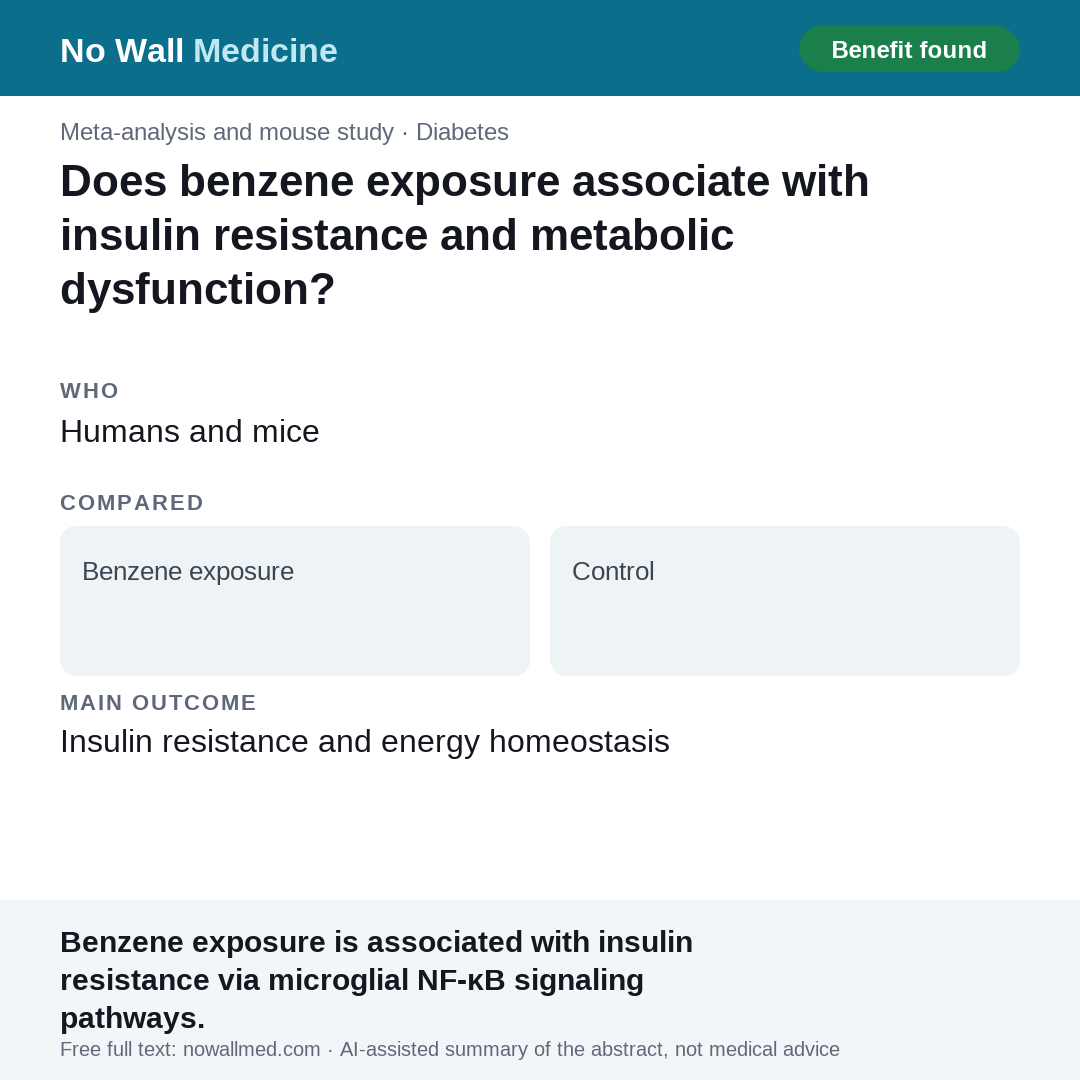
Microglia Mediate Metabolic Dysfunction From Common Air Pollutants Through NF-κB Signaling
Meta-analysis and mouse studyBenefit found
Does benzene exposure associate with insulin resistance and metabolic dysfunction?
Who
Humans and mice
Compared
Benzene exposure
Control
Main outcome
Insulin resistance and energy homeostasis
Bottom line: Benzene exposure is associated with insulin resistance via microglial NF-κB signaling pathways.
Diabetes · 2024-09-25Download image
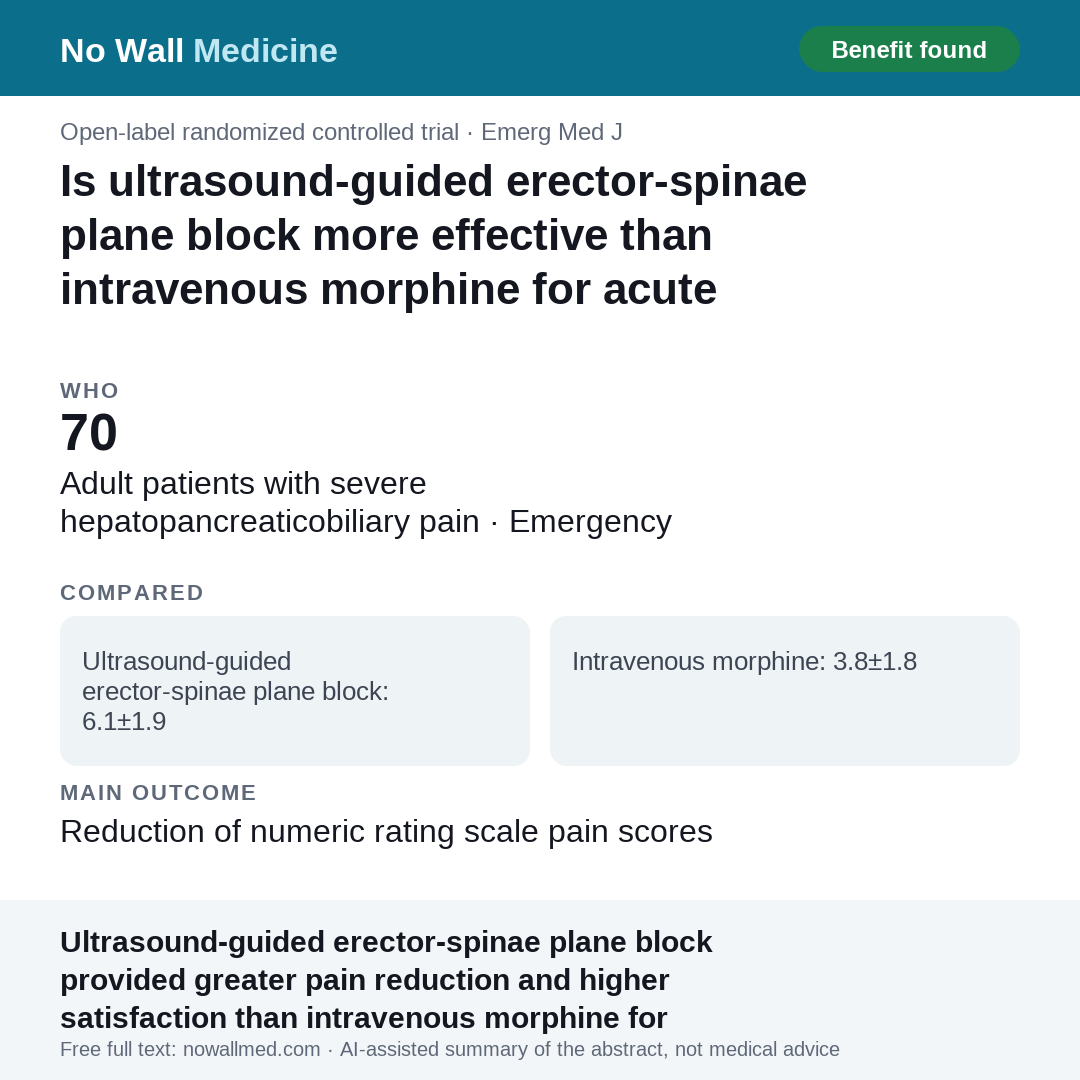
EASIER trial (Erector-spinAe analgeSia for hepatopancreaticobiliary pain In the Emergency Room): a single-centre open-label cohort-based randomised controlled trial analysing the efficacy of the ultrasound-guided erector-spinae plane block compared with intravenous morphine in the treatment of acute hepatopancreaticobiliary pain in the emergency department
Open-label randomized controlled trialBenefit found
Is ultrasound-guided erector-spinae plane block more effective than intravenous morphine for acute hepatopancreaticobiliary pain?
Who
70
Adult patients with severe hepatopancreaticobiliary pain · Emergency department of a tertiary-care hospital
Compared
Ultrasound-guided erector-spinae plane block: 6.1±1.9
Intravenous morphine: 3.8±1.8
Main outcome
Reduction of numeric rating scale pain scores
Bottom line: Ultrasound-guided erector-spinae plane block provided greater pain reduction and higher satisfaction than intravenous morphine for hepatopancreaticobiliary pain.
Emerg Med J · 2024-09-25Download image
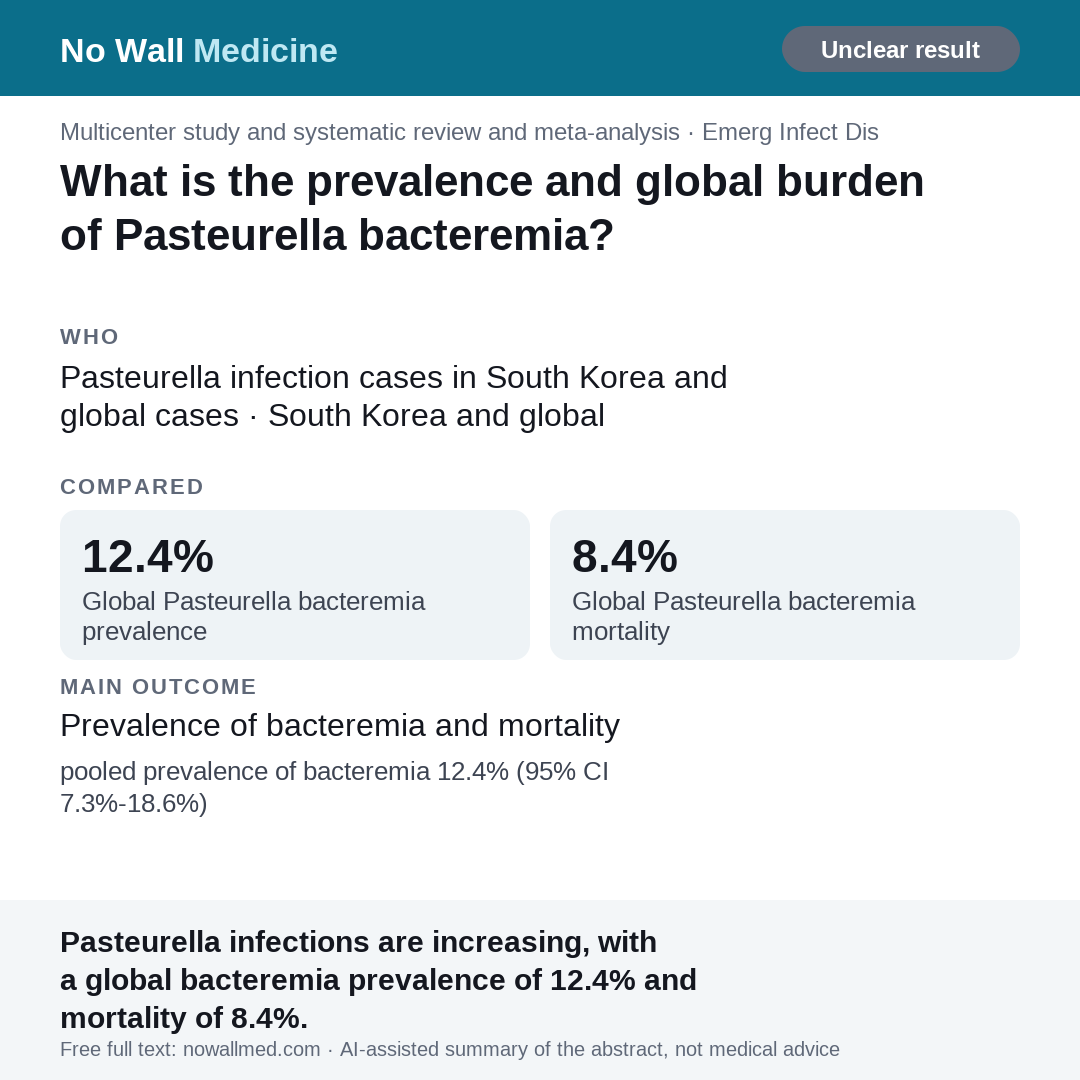
Pasteurella Infections in South Korea and Systematic Review and Meta-analysis of Pasteurella Bacteremia
Multicenter study and systematic review and meta-analysisUnclear result
What is the prevalence and global burden of Pasteurella bacteremia?
Who
2012
Pasteurella infection cases in South Korea and global cases · South Korea and global
Compared
12.4%Global Pasteurella bacteremia prevalence (95% CI 7.3%-18.6%)
8.4%Global Pasteurella bacteremia mortality (95% CI 2.7%-16.5%)
Main outcome
Prevalence of bacteremia and mortality
Result: pooled prevalence of bacteremia 12.4% (95% CI 7.3%-18.6%)
Bottom line: Pasteurella infections are increasing, with a global bacteremia prevalence of 12.4% and mortality of 8.4%.
Emerg Infect Dis · 2024-09-25Download image
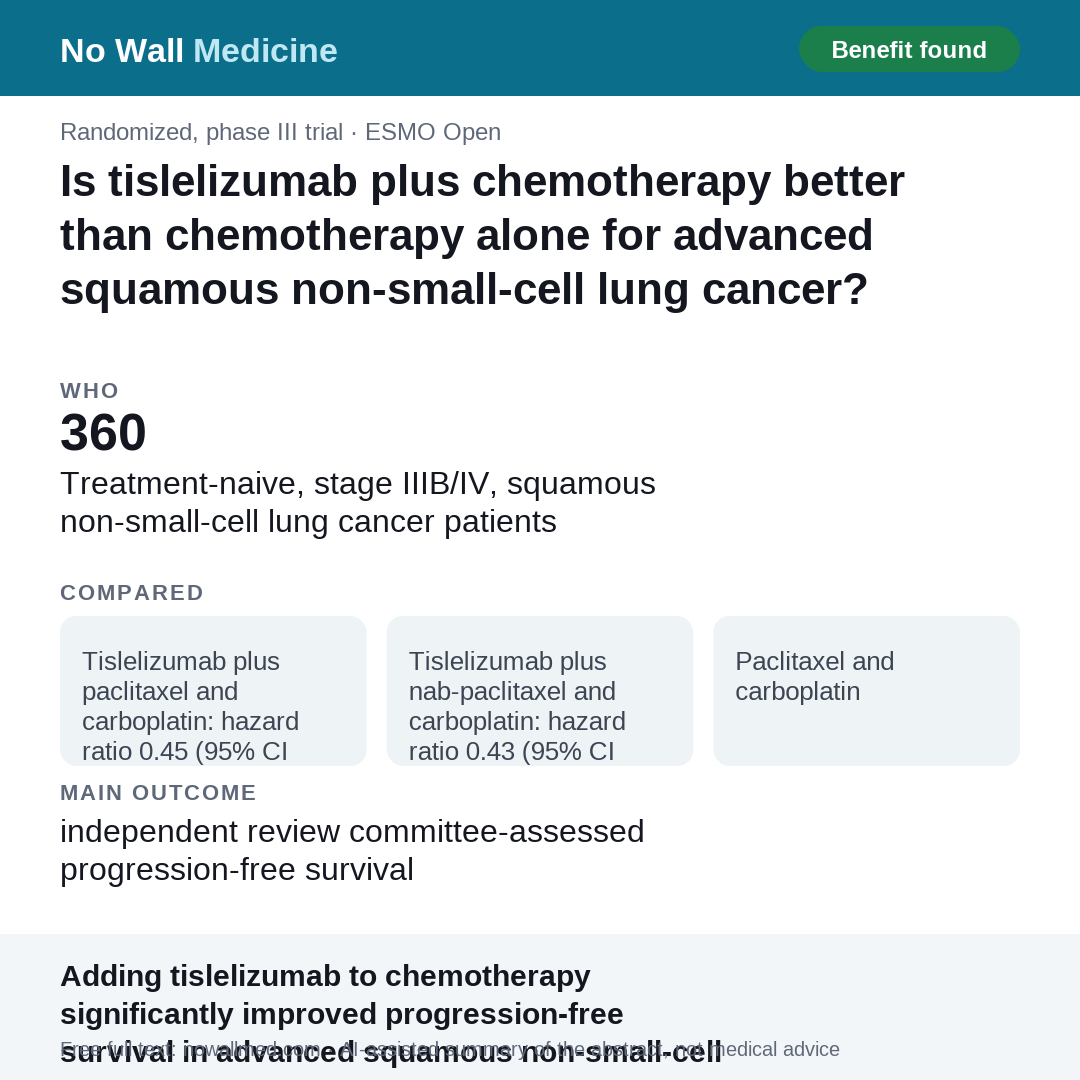
Tislelizumab plus chemotherapy versus chemotherapy alone as first-line treatment for advanced squamous non-small-cell lung cancer: final analysis of the randomized, phase III RATIONALE-307 trial
Randomized, phase III trialBenefit found
Is tislelizumab plus chemotherapy better than chemotherapy alone for advanced squamous non-small-cell lung cancer?
Who
360
Treatment-naive, stage IIIB/IV, squamous non-small-cell lung cancer patients
Compared
Tislelizumab plus paclitaxel and carboplatin: hazard ratio 0.45 (95% CI 0.33-0.62)
Tislelizumab plus nab-paclitaxel and carboplatin: hazard ratio 0.43 (95% CI 0.31-0.60)
Paclitaxel and carboplatin
Main outcome
independent review committee-assessed progression-free survival
Result: hazard ratio 0.45 (95% CI 0.33-0.62) and 0.43 (95% CI 0.31-0.60)
Bottom line: Adding tislelizumab to chemotherapy significantly improved progression-free survival in advanced squamous non-small-cell lung cancer.
ESMO Open · 2024-09-25Download image
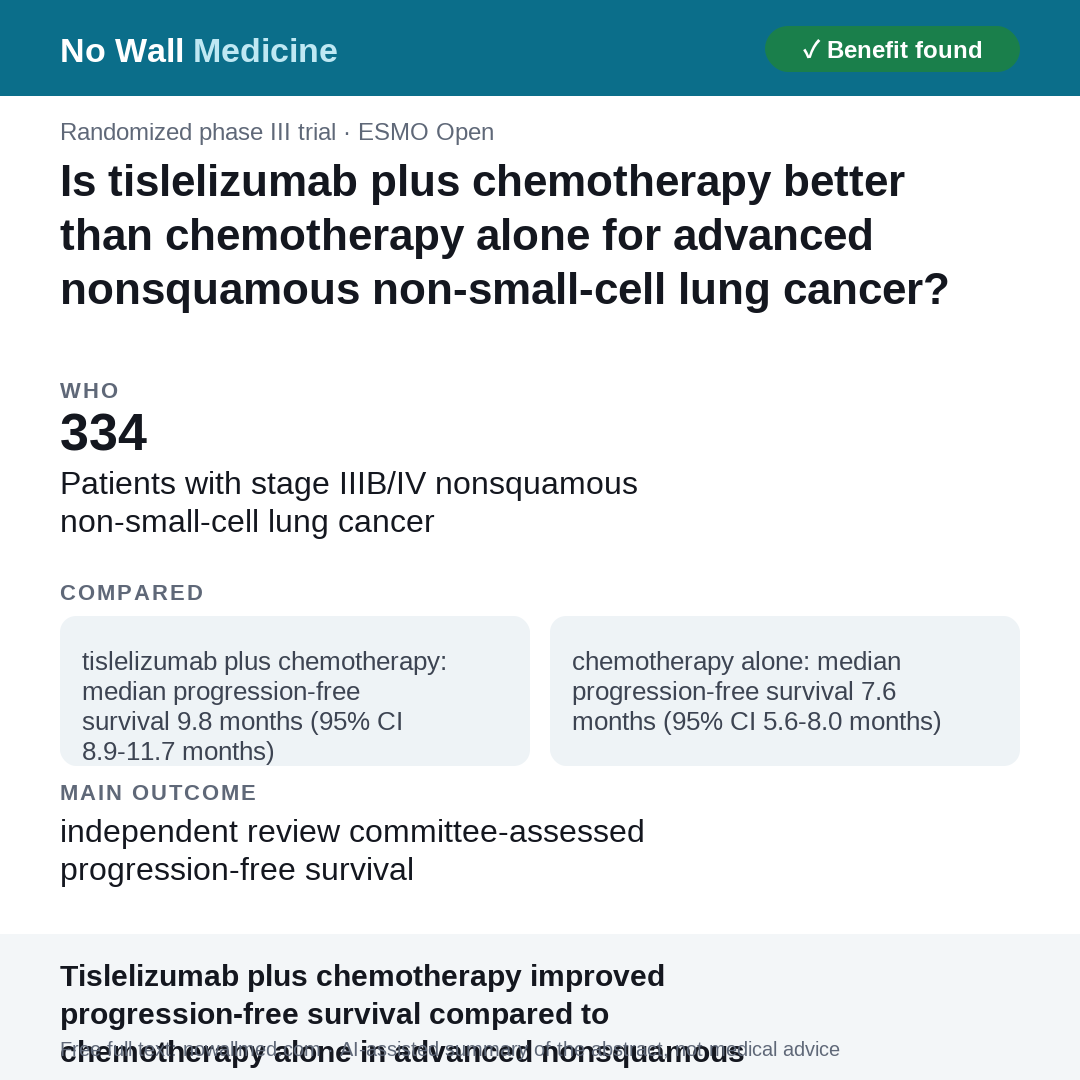
Tislelizumab plus chemotherapy as first-line treatment of locally advanced or metastatic nonsquamous non-small-cell lung cancer (final analysis of RATIONALE-304: a randomized phase III trial)
Randomized phase III trialBenefit found
Is tislelizumab plus chemotherapy better than chemotherapy alone for advanced nonsquamous non-small-cell lung cancer?
Who
334
Patients with stage IIIB/IV nonsquamous non-small-cell lung cancer
Compared
tislelizumab plus chemotherapy: median progression-free survival 9.8 months (95% CI 8.9-11.7 months)
chemotherapy alone: median progression-free survival 7.6 months (95% CI 5.6-8.0 months)
Main outcome
independent review committee-assessed progression-free survival
Result: hazard ratio 0.63 (95% CI 0.47-0.86)
Bottom line: Tislelizumab plus chemotherapy improved progression-free survival compared to chemotherapy alone in advanced nonsquamous non-small-cell lung cancer.
ESMO Open · 2024-09-25Download image
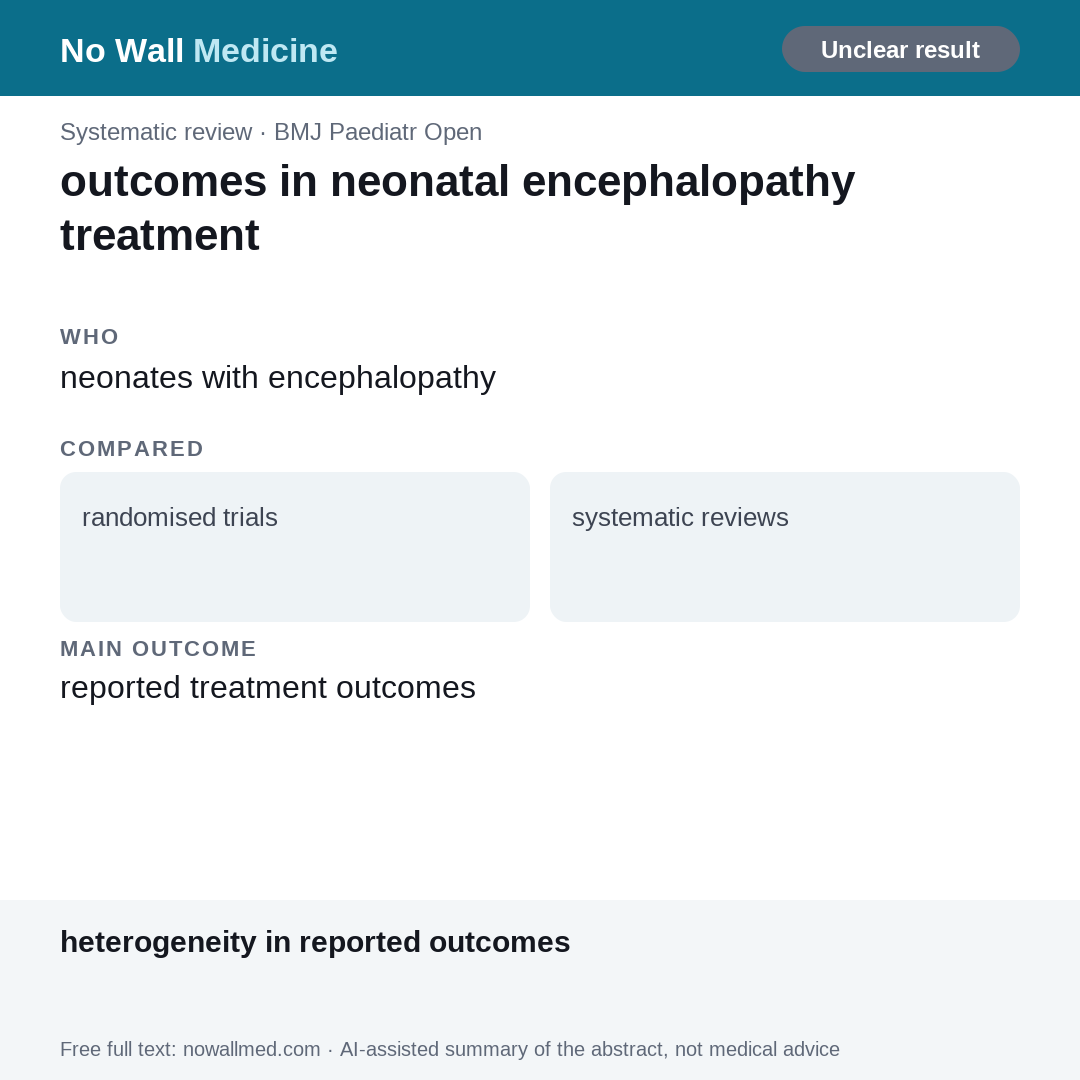
Neonatal encephalopathy: a systematic review of reported treatment outcomes
Systematic reviewUnclear result
outcomes in neonatal encephalopathy treatment
Who
neonates with encephalopathy
Compared
randomised trials
systematic reviews
Main outcome
reported treatment outcomes
Bottom line: heterogeneity in reported outcomes
Limitation: heterogeneity in outcomes
BMJ Paediatr Open · 2024-09-25Download image
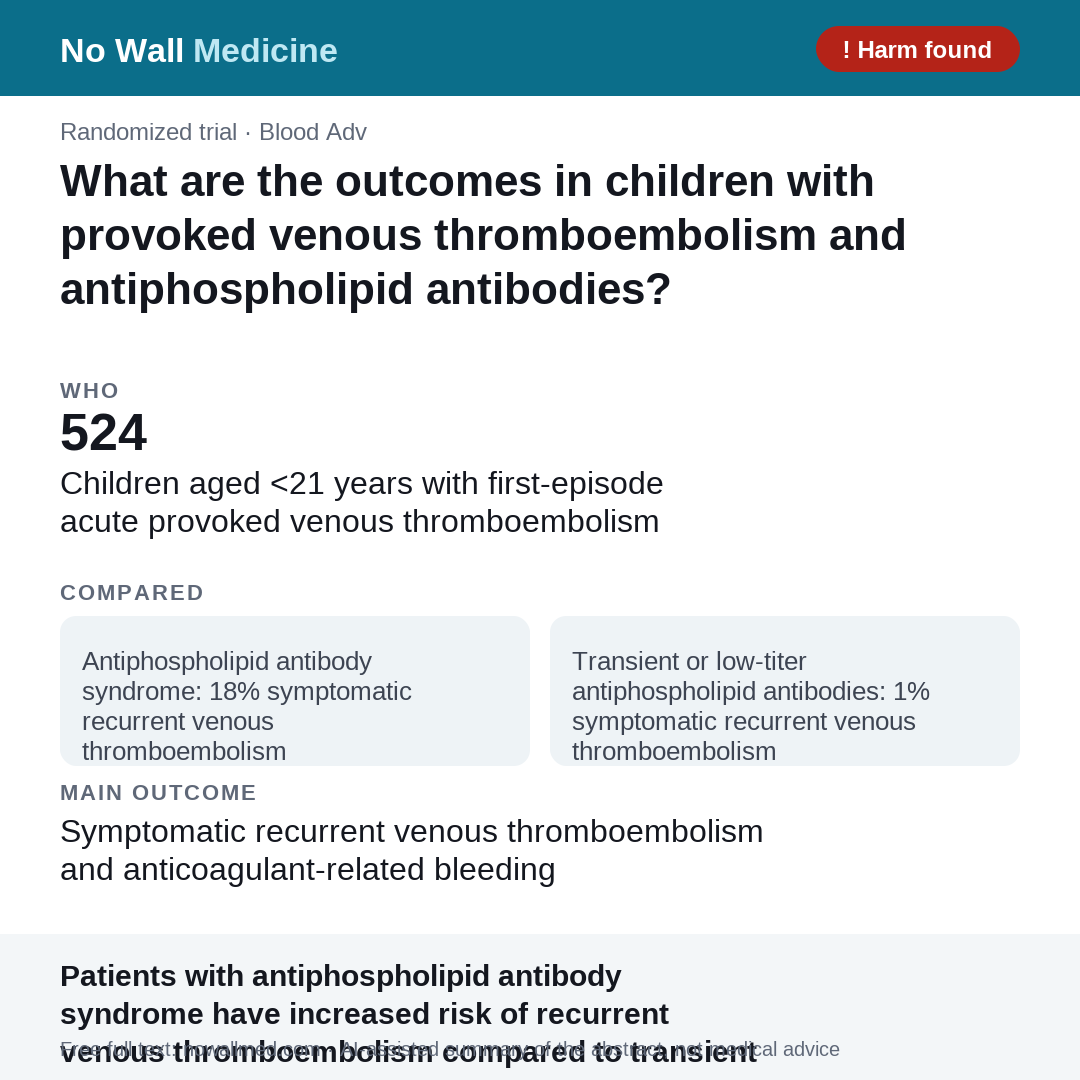
Outcomes in children with provoked venous thrombosis and antiphospholipid antibodies: findings from the Kids-DOTT trial
Randomized trialHarm found
What are the outcomes in children with provoked venous thromboembolism and antiphospholipid antibodies?
Who
524
Children aged <21 years with first-episode acute provoked venous thromboembolism
Compared
Antiphospholipid antibody syndrome: 18% symptomatic recurrent venous thromboembolism
Transient or low-titer antiphospholipid antibodies: 1% symptomatic recurrent venous thromboembolism
Main outcome
Symptomatic recurrent venous thromboembolism and anticoagulant-related bleeding
Result: odds ratio 12.2 (95% confidence interval 1.4-108)
Bottom line: Patients with antiphospholipid antibody syndrome have increased risk of recurrent venous thromboembolism compared to transient or low-titer groups.
Blood Adv · 2024-09-25Download image
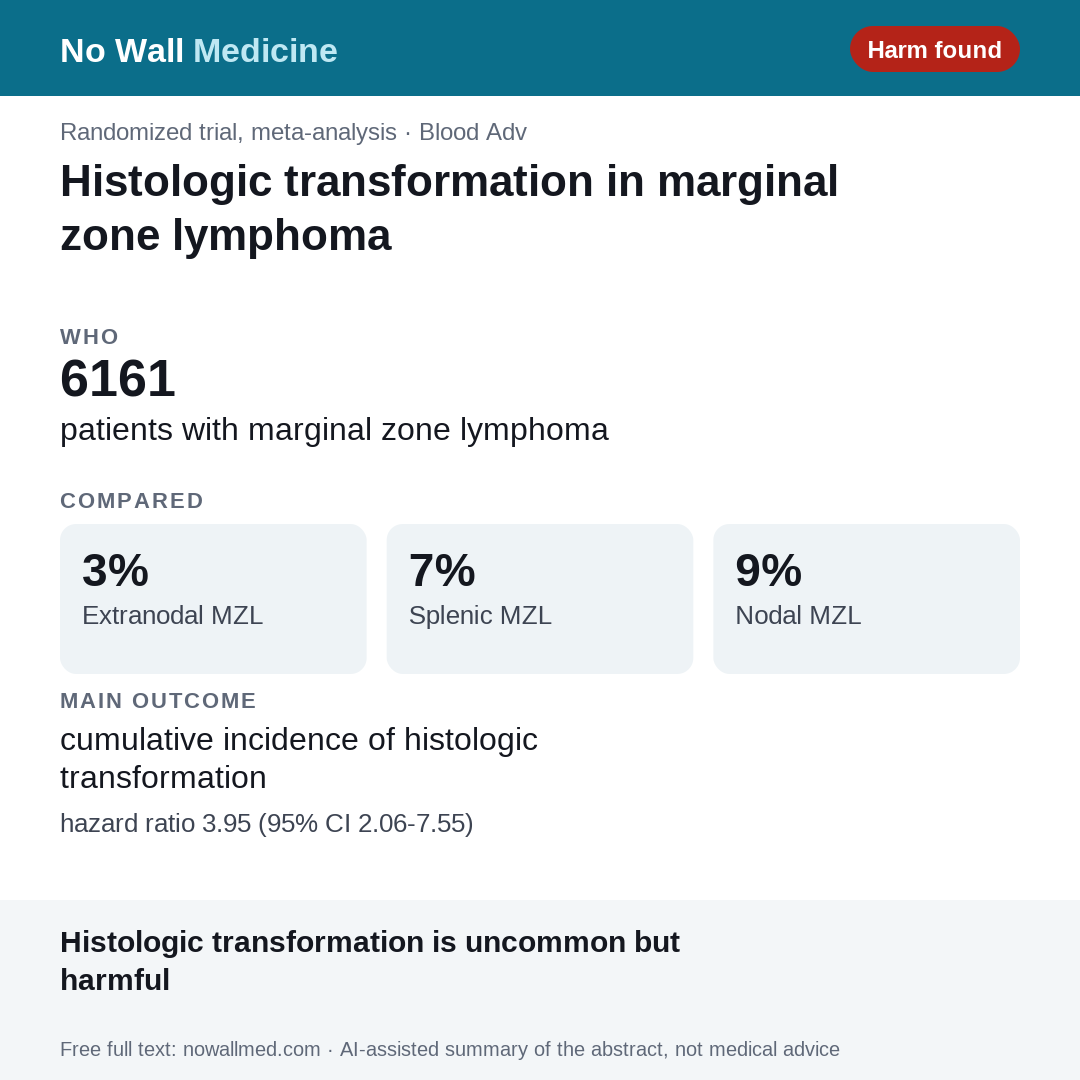
Transformation in marginal zone lymphoma: results from a prospective cohort and a meta-analysis of the literature
Randomized trial, meta-analysisHarm found
Histologic transformation in marginal zone lymphoma
Who
6161
patients with marginal zone lymphoma
Compared
3%Extranodal MZL
7%Splenic MZL
9%Nodal MZL
Main outcome
cumulative incidence of histologic transformation
Result: hazard ratio 3.95 (95% CI 2.06-7.55)
Bottom line: Histologic transformation is uncommon but harmful
Blood Adv · 2024-09-25Download image
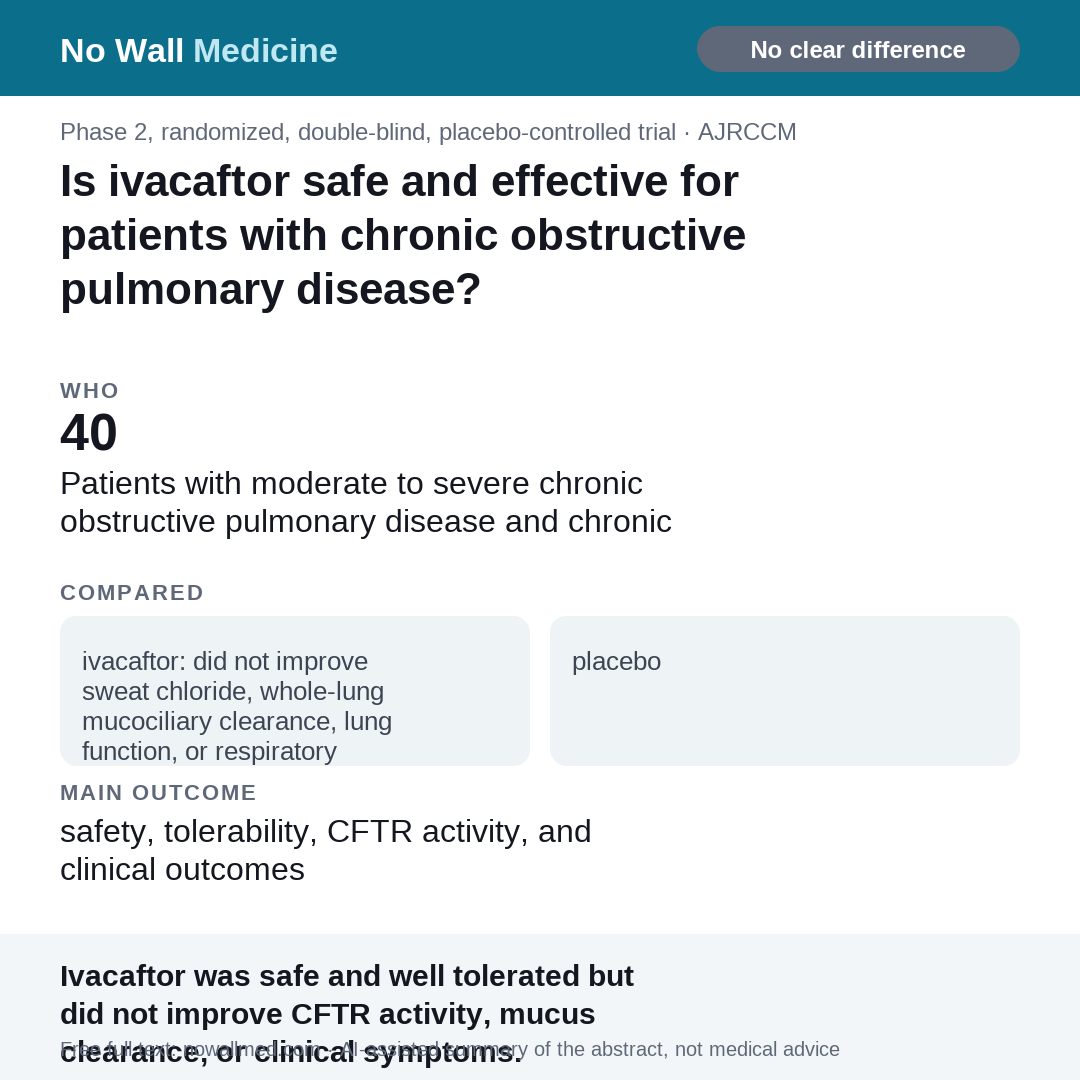
Ivacaftor for Chronic Obstructive Pulmonary Disease: Results from a Phase 2, Randomized Controlled Trial
Phase 2, randomized, double-blind, placebo-controlled trialNo clear difference
Is ivacaftor safe and effective for patients with chronic obstructive pulmonary disease?
Who
40
Patients with moderate to severe chronic obstructive pulmonary disease and chronic bronchitis
Compared
ivacaftor: did not improve sweat chloride, whole-lung mucociliary clearance, lung function, or respiratory symptoms
placebo
Main outcome
safety, tolerability, CFTR activity, and clinical outcomes
Bottom line: Ivacaftor was safe and well tolerated but did not improve CFTR activity, mucus clearance, or clinical symptoms.
AJRCCM · 2024-09-24Download image
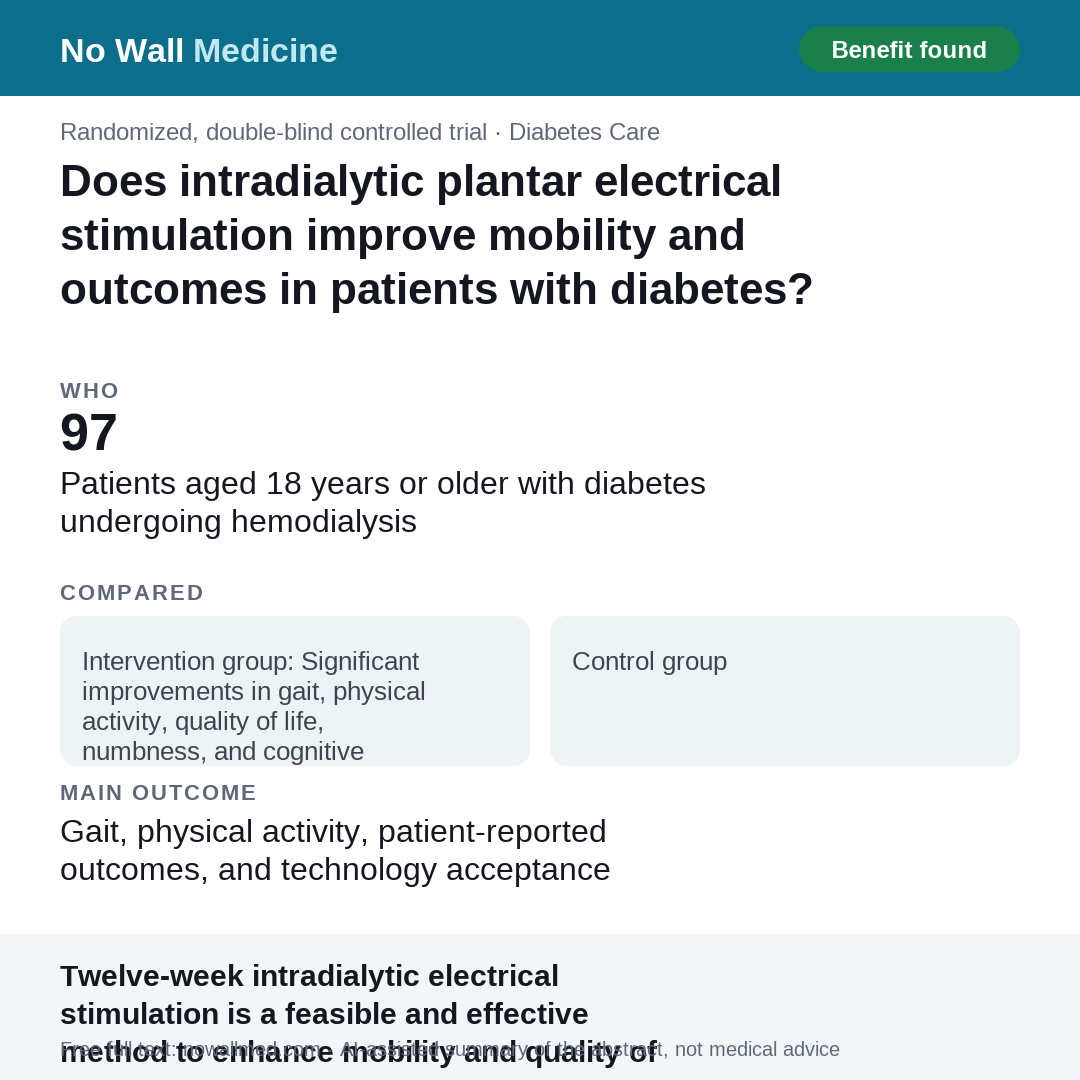
Efficacy and Feasibility of Intradialytic Plantar Electrical Stimulation in Patients With Diabetes: A Randomized Double-Blind Controlled Trial
Randomized, double-blind controlled trialBenefit found
Does intradialytic plantar electrical stimulation improve mobility and outcomes in patients with diabetes?
Who
97
Patients aged 18 years or older with diabetes undergoing hemodialysis
Compared
Intervention group: Significant improvements in gait, physical activity, quality of life, numbness, and cognitive function
Control group
Main outcome
Gait, physical activity, patient-reported outcomes, and technology acceptance
Bottom line: Twelve-week intradialytic electrical stimulation is a feasible and effective method to enhance mobility and quality of life.
Diabetes Care · 2024-09-24Download image
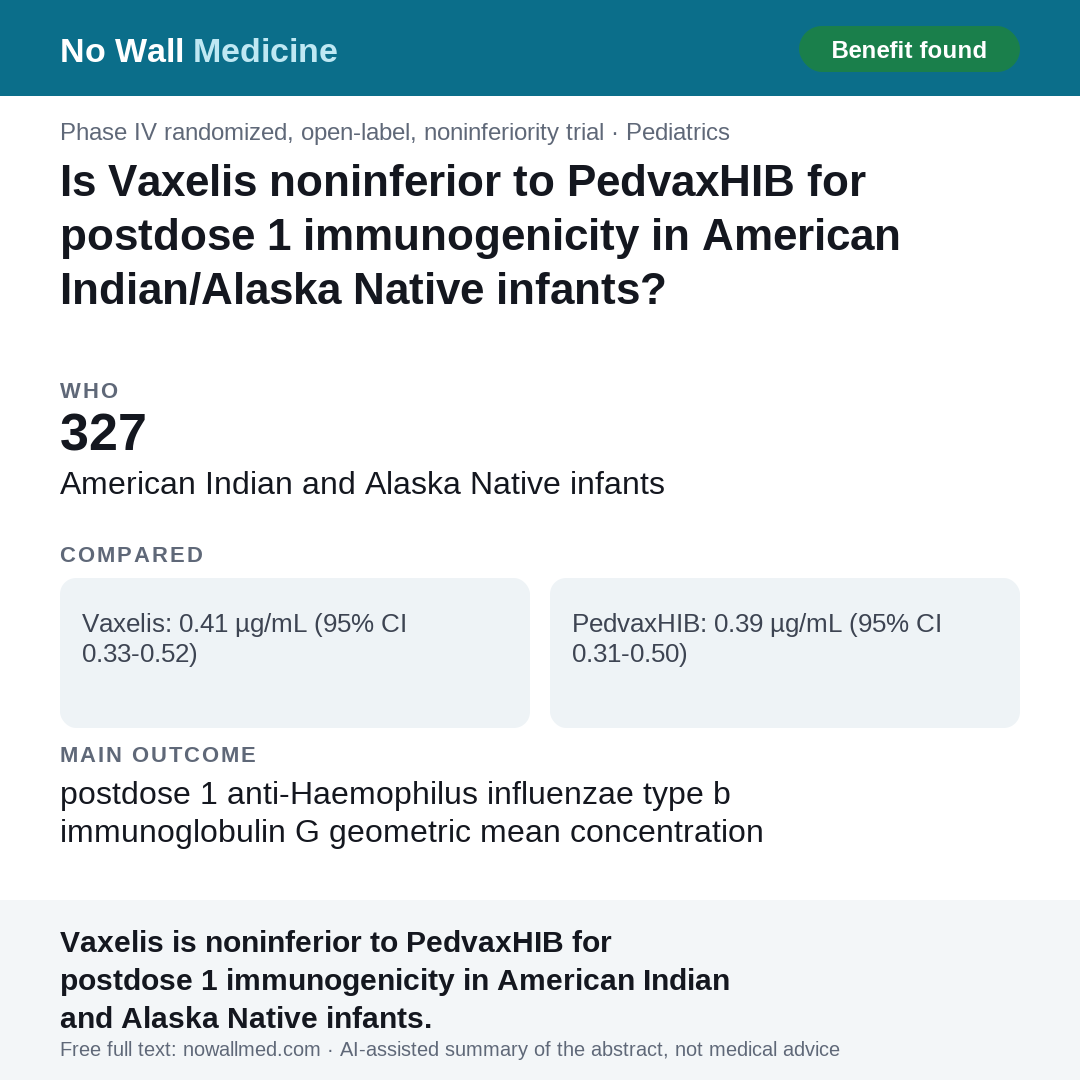
Haemophilus influenzae Type b Vaccine Immunogenicity in American Indian/Alaska Native Infants
Phase IV randomized, open-label, noninferiority trialBenefit found
Is Vaxelis noninferior to PedvaxHIB for postdose 1 immunogenicity in American Indian/Alaska Native infants?
Who
327
American Indian and Alaska Native infants
Compared
Vaxelis: 0.41 µg/mL (95% CI 0.33-0.52)
PedvaxHIB: 0.39 µg/mL (95% CI 0.31-0.50)
Main outcome
postdose 1 anti-Haemophilus influenzae type b immunoglobulin G geometric mean concentration
Result: geometric mean concentration ratio 1.03 (95% CI 0.76-1.39)
Bottom line: Vaxelis is noninferior to PedvaxHIB for postdose 1 immunogenicity in American Indian and Alaska Native infants.
Pediatrics · 2024-09-24Download image
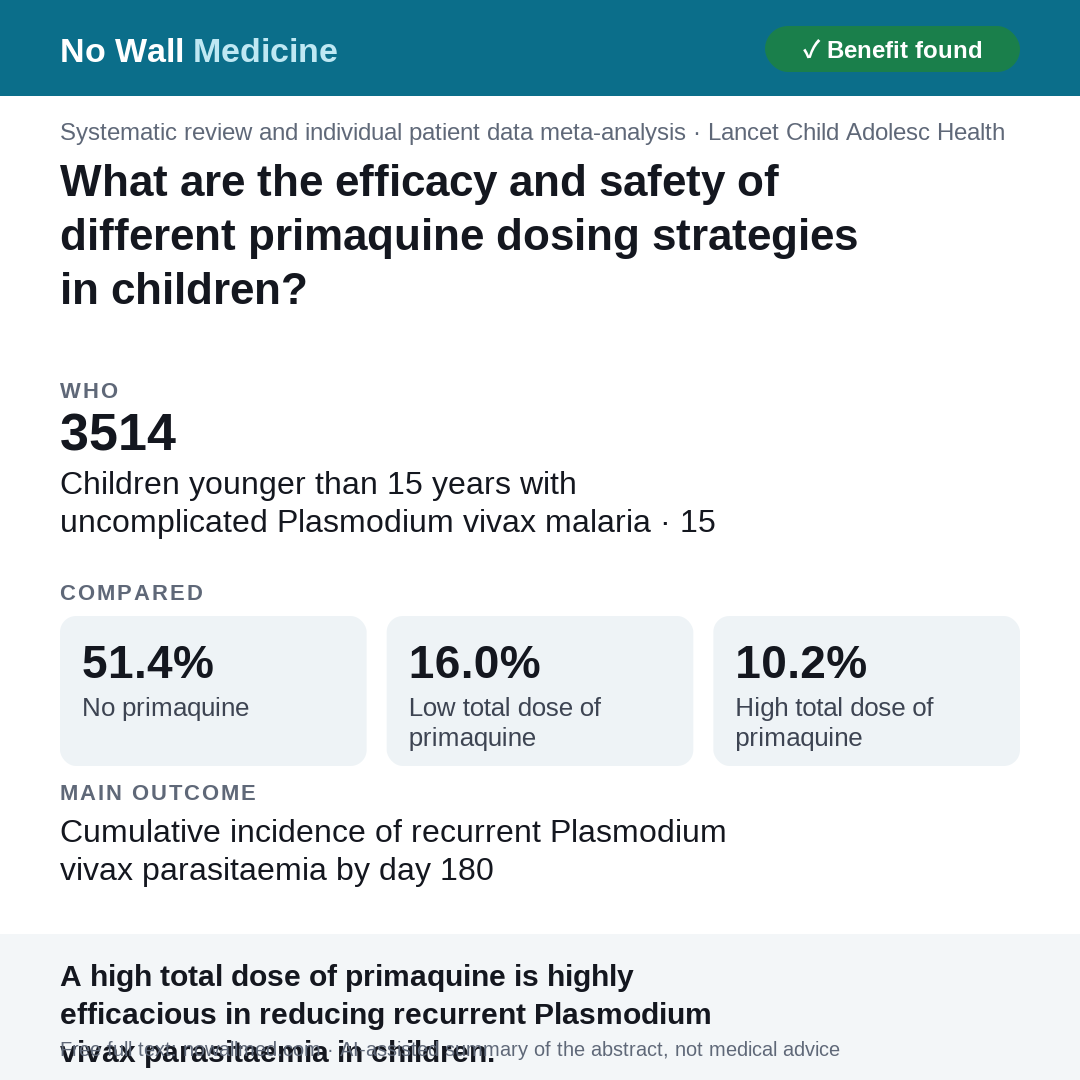
Primaquine for uncomplicated Plasmodium vivax malaria in children younger than 15 years: a systematic review and individual patient data meta-analysis
Systematic review and individual patient data meta-analysisBenefit found
What are the efficacy and safety of different primaquine dosing strategies in children?
Who
3514
Children younger than 15 years with uncomplicated Plasmodium vivax malaria · 15 countries
Compared
51.4%No primaquine (95% CI 47.0-55.9)
16.0%Low total dose of primaquine (12.4-20.3)
10.2%High total dose of primaquine (8.4-12.3)
Main outcome
Cumulative incidence of recurrent Plasmodium vivax parasitaemia by day 180
Result: adjusted hazard ratio 0.09 (95% CI 0.07-0.12) for high total dose
Bottom line: A high total dose of primaquine is highly efficacious in reducing recurrent Plasmodium vivax parasitaemia in children.
Lancet Child Adolesc Health · 2024-09-24Download image