Visual abstracts
New randomized trials and meta-analyses from leading journals at a glance: who was studied, what was compared, and what was found. Every paper is free to read in full.
All specialtiesCardiology 4763Oncology 4043Gastroenterology & Hepatology 1903Infectious Disease 3756Neurology 1872Psychiatry & Mental Health 2216Pulmonology 2044Critical Care 1319Endocrinology & Diabetes 2544Pediatrics 2889Surgery 2480Orthopedics & Sports Medicine 917Neurosurgery 525Cardiothoracic & Vascular Surgery 656Plastic & Reconstructive Surgery 574Nephrology 1107Rheumatology 810Hematology 1090Dermatology 611Ophthalmology 532Obstetrics & Gynecology 1645Public & Global Health 1037Radiology & Imaging 619Anesthesiology 958Urology 745ENT (Otolaryngology) 494Emergency Medicine 481Allergy & Immunology 309Geriatrics 972Family Medicine & Primary Care 534Medical Genetics & Genomics 659Pathology & Laboratory Medicine 156Physical Medicine & Rehabilitation 734Palliative Care 421Nutrition 1560Digital Health & AI 2137General Medicine 318
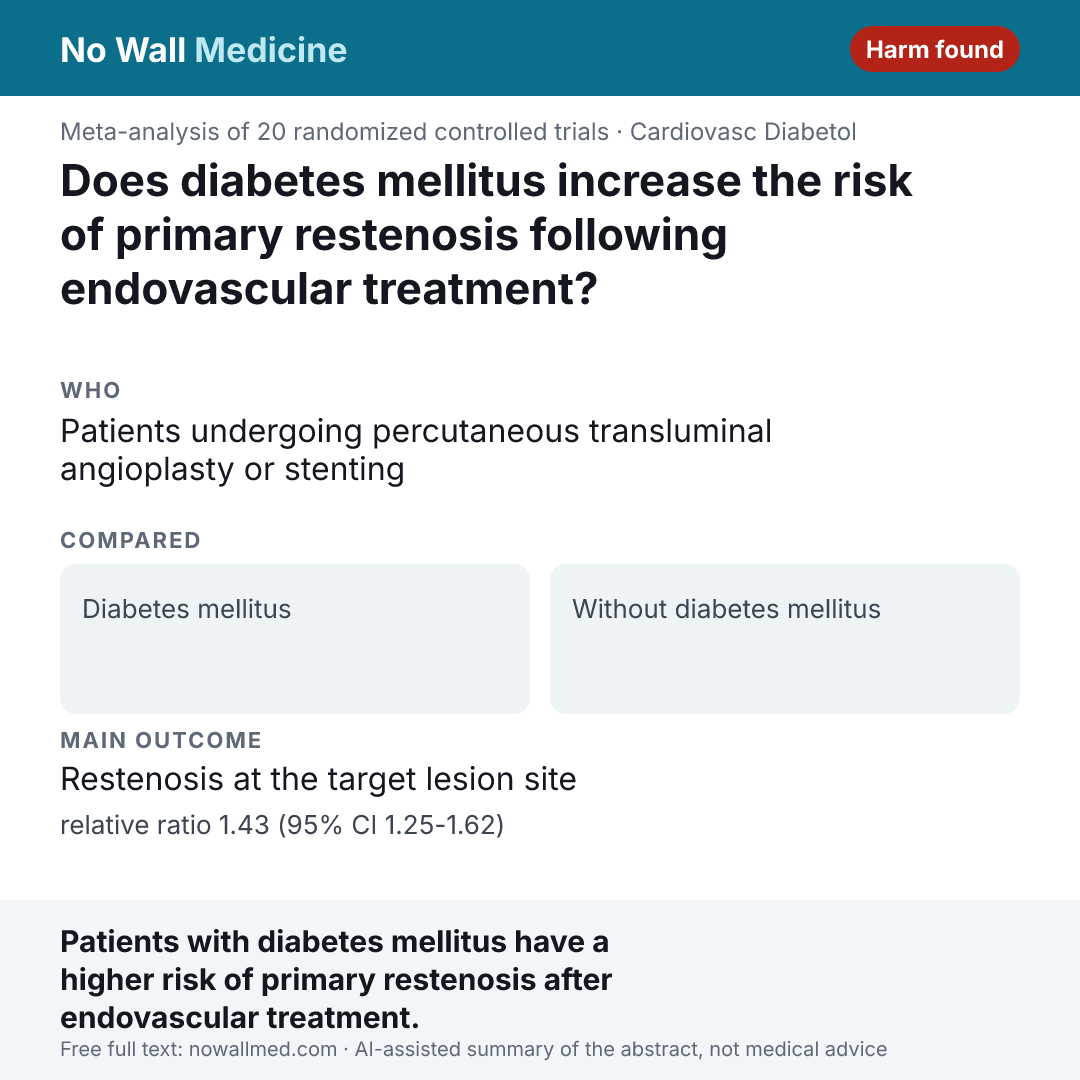
Association between diabetes mellitus and primary restenosis following endovascular treatment: a comprehensive meta-analysis of randomized controlled trials
Meta-analysis of 20 randomized controlled trialsHarm found
Does diabetes mellitus increase the risk of primary restenosis following endovascular treatment?
Who
Patients undergoing percutaneous transluminal angioplasty or stenting
Compared
Diabetes mellitus
Without diabetes mellitus
Main outcome
Restenosis at the target lesion site
Result: relative ratio 1.43 (95% CI 1.25-1.62)
Bottom line: Patients with diabetes mellitus have a higher risk of primary restenosis after endovascular treatment.
Cardiovasc Diabetol · 2024-04-22 · Save PNG
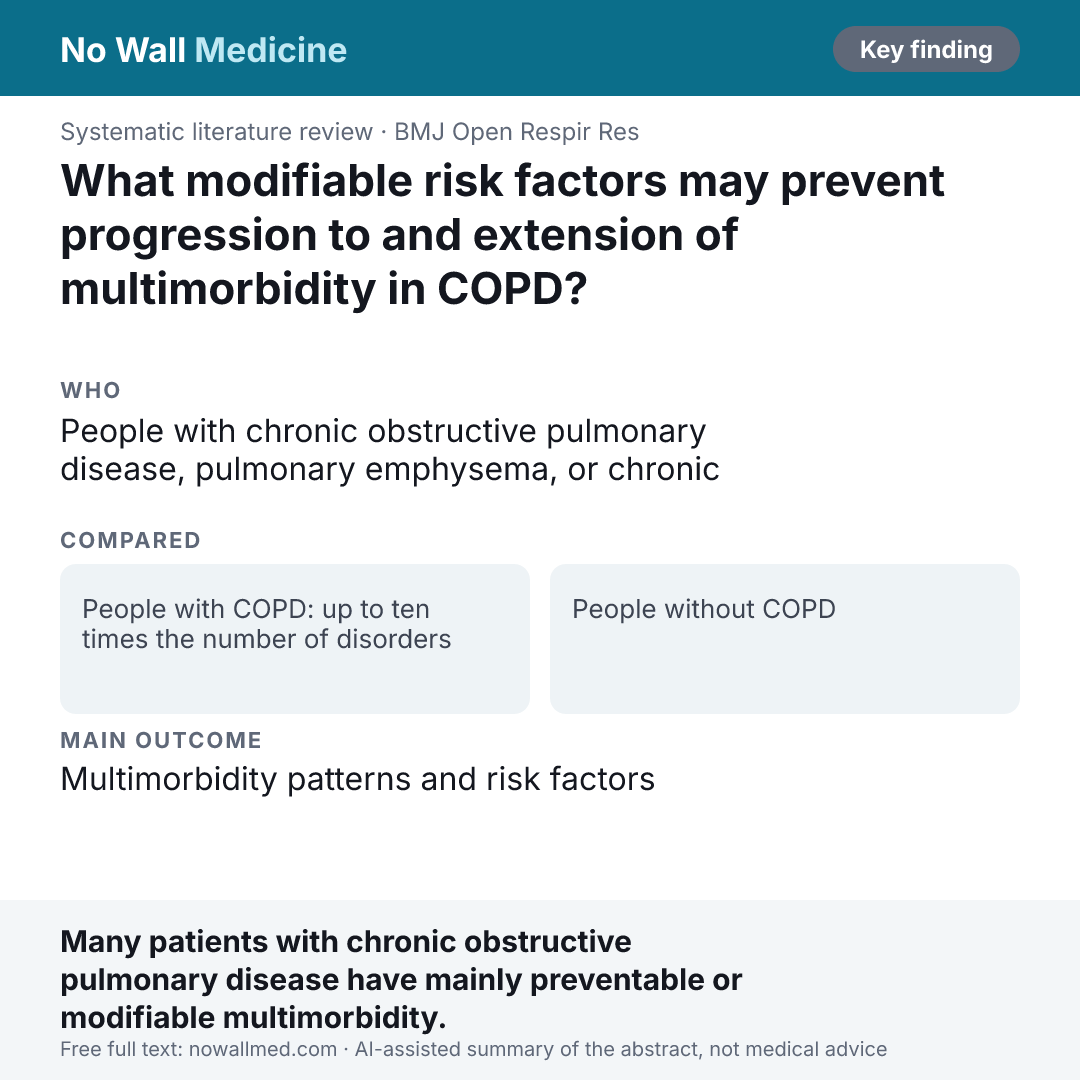
Modifiable risk factors that may be addressed in routine care to prevent progression to and extension of multimorbidity in people with COPD: a systematic literature review
Systematic literature reviewKey finding
What modifiable risk factors may prevent progression to and extension of multimorbidity in COPD?
Who
People with chronic obstructive pulmonary disease, pulmonary emphysema, or chronic bronchitis
Compared
People with COPD: up to ten times the number of disorders
People without COPD
Main outcome
Multimorbidity patterns and risk factors
Bottom line: Many patients with chronic obstructive pulmonary disease have mainly preventable or modifiable multimorbidity.
BMJ Open Respir Res · 2024-04-22 · Save PNG
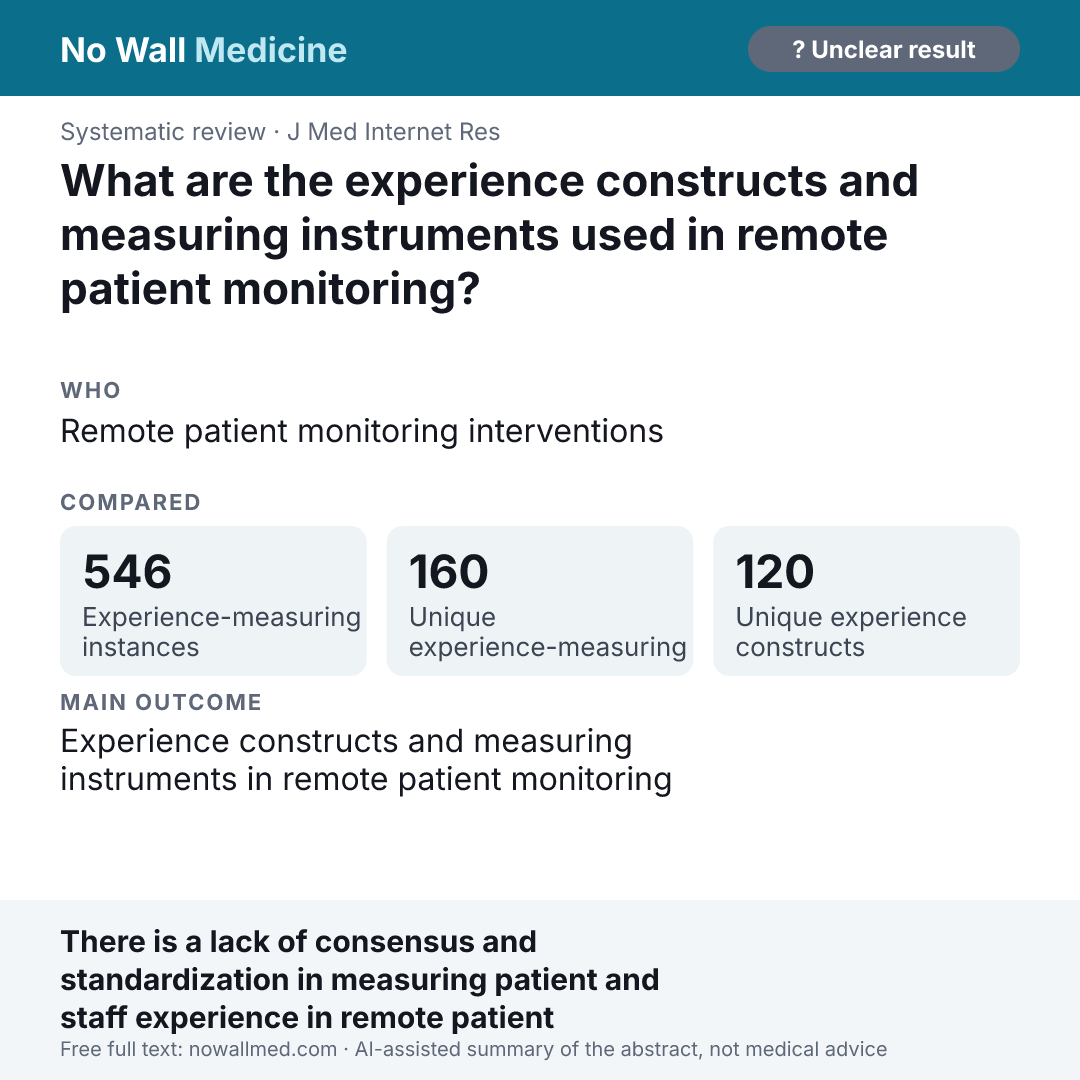
Patient and Staff Experience of Remote Patient Monitoring-What to Measure and How: Systematic Review
Systematic reviewUnclear result
What are the experience constructs and measuring instruments used in remote patient monitoring?
Who
Remote patient monitoring interventions
Compared
546Experience-measuring instances
160Unique experience-measuring instruments
120Unique experience constructs
Main outcome
Experience constructs and measuring instruments in remote patient monitoring
Bottom line: There is a lack of consensus and standardization in measuring patient and staff experience in remote patient monitoring.
J Med Internet Res · 2024-04-22 · Save PNG
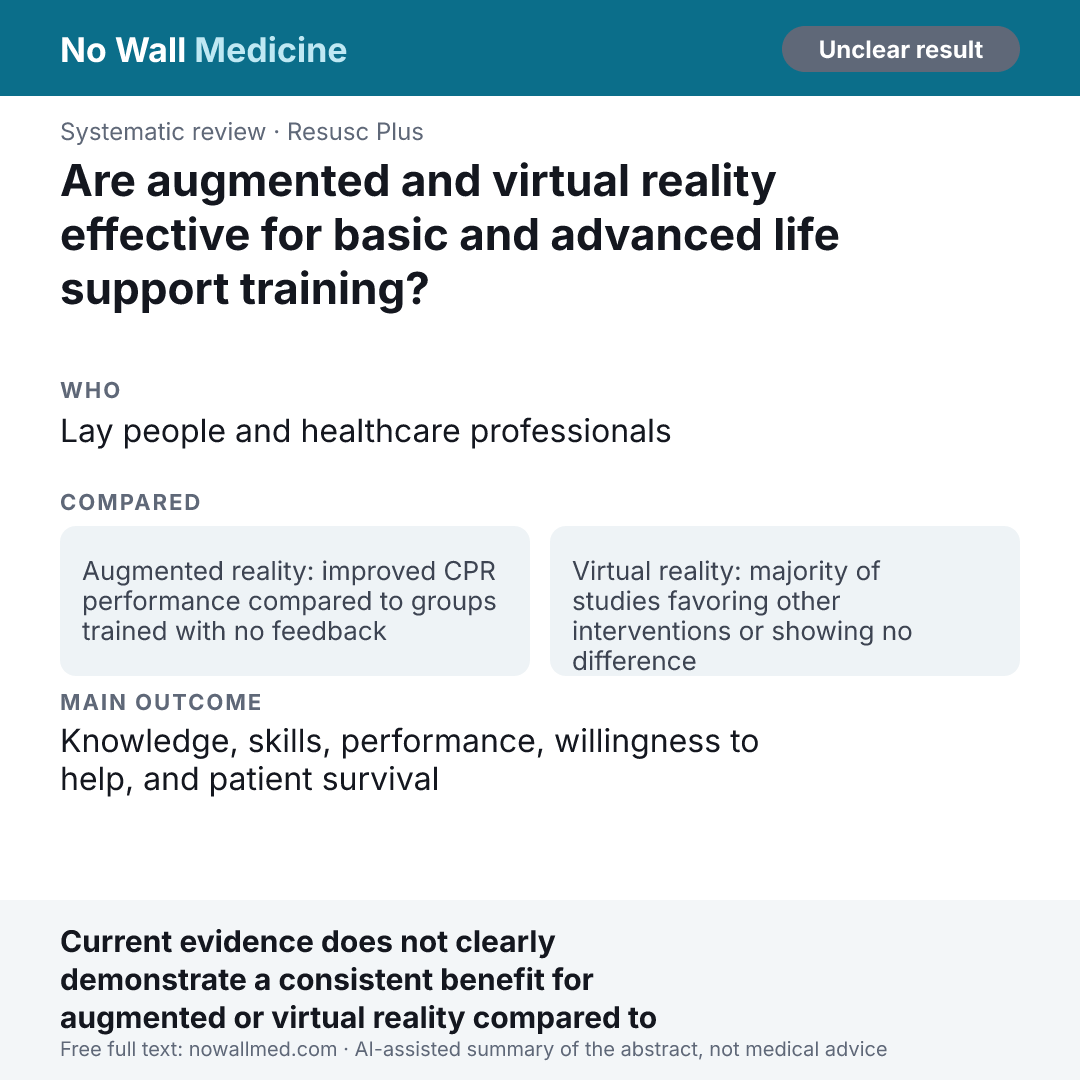
Use of augmented and virtual reality in resuscitation training: A systematic review
Systematic reviewUnclear result
Are augmented and virtual reality effective for basic and advanced life support training?
Who
Lay people and healthcare professionals
Compared
Augmented reality: improved CPR performance compared to groups trained with no feedback
Virtual reality: majority of studies favoring other interventions or showing no difference
Main outcome
Knowledge, skills, performance, willingness to help, and patient survival
Bottom line: Current evidence does not clearly demonstrate a consistent benefit for augmented or virtual reality compared to other training methods.
Resusc Plus · 2024-04-22 · Save PNG
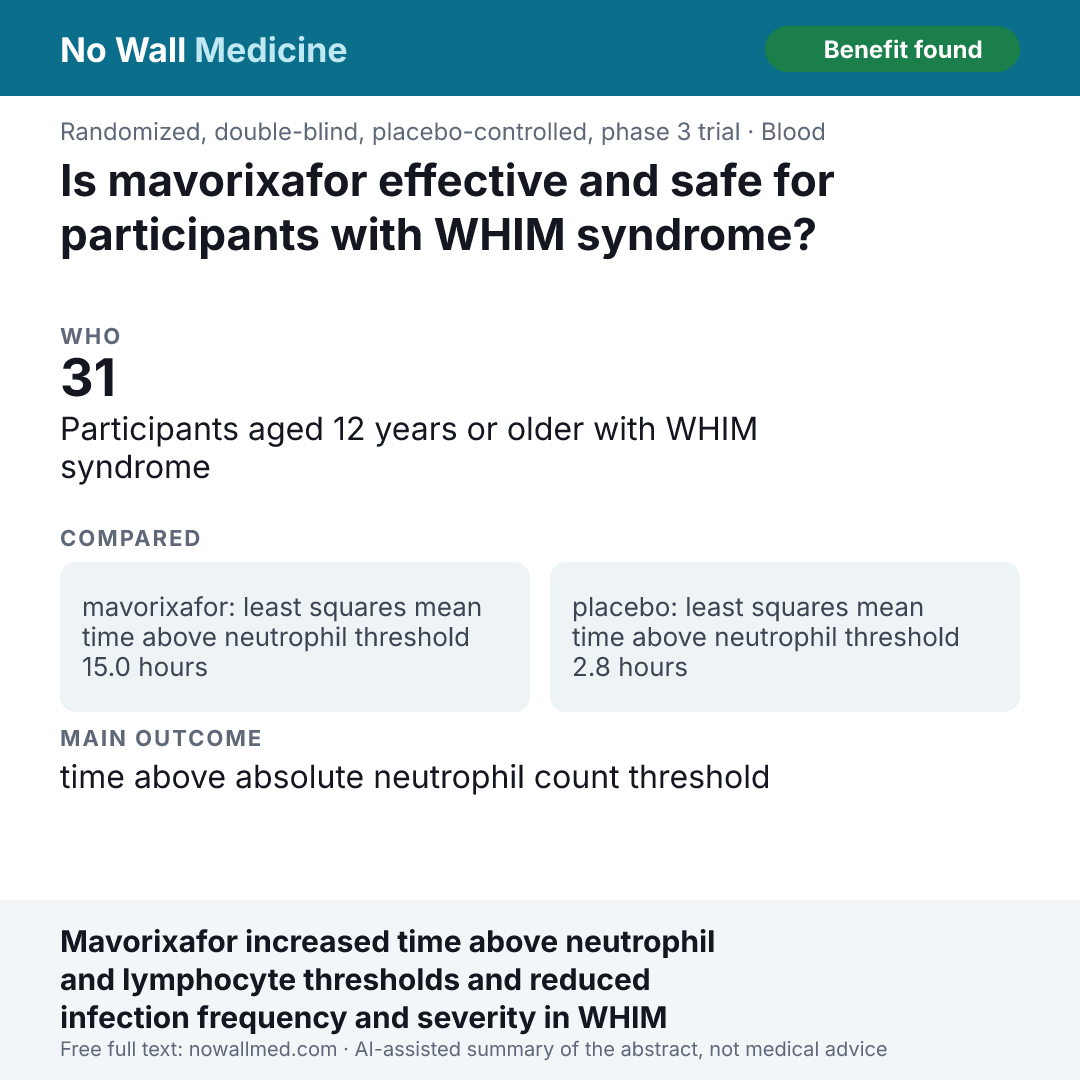
A phase 3 randomized trial of mavorixafor, a CXCR4 antagonist, for WHIM syndrome
Randomized, double-blind, placebo-controlled, phase 3 trialBenefit found
Is mavorixafor effective and safe for participants with WHIM syndrome?
Who
31
Participants aged 12 years or older with WHIM syndrome
Compared
mavorixafor: least squares mean time above neutrophil threshold 15.0 hours
placebo: least squares mean time above neutrophil threshold 2.8 hours
Main outcome
time above absolute neutrophil count threshold
Bottom line: Mavorixafor increased time above neutrophil and lymphocyte thresholds and reduced infection frequency and severity in WHIM syndrome.
Blood · 2024-04-21 · Save PNG
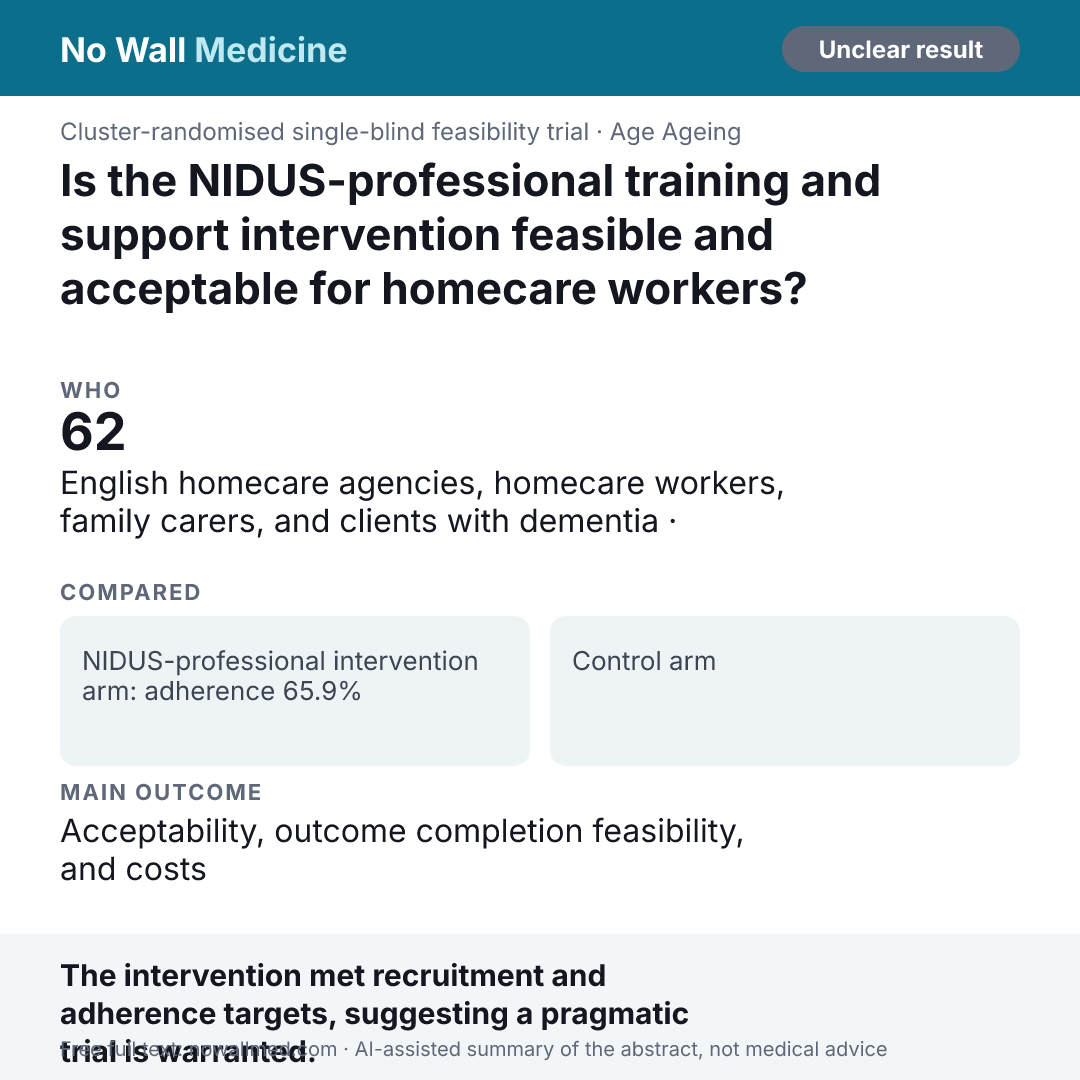
Feasibility and acceptability of NIDUS-professional, a training and support intervention for homecare workers caring for clients living with dementia: a cluster-randomised feasibility trial
Cluster-randomised single-blind feasibility trialUnclear result
Is the NIDUS-professional training and support intervention feasible and acceptable for homecare workers?
Who
62
English homecare agencies, homecare workers, family carers, and clients with dementia · English homecare agencies
Compared
NIDUS-professional intervention arm: adherence 65.9%
Control arm
Main outcome
Acceptability, outcome completion feasibility, and costs
Bottom line: The intervention met recruitment and adherence targets, suggesting a pragmatic trial is warranted.
Age Ageing · 2024-04-21 · Save PNG
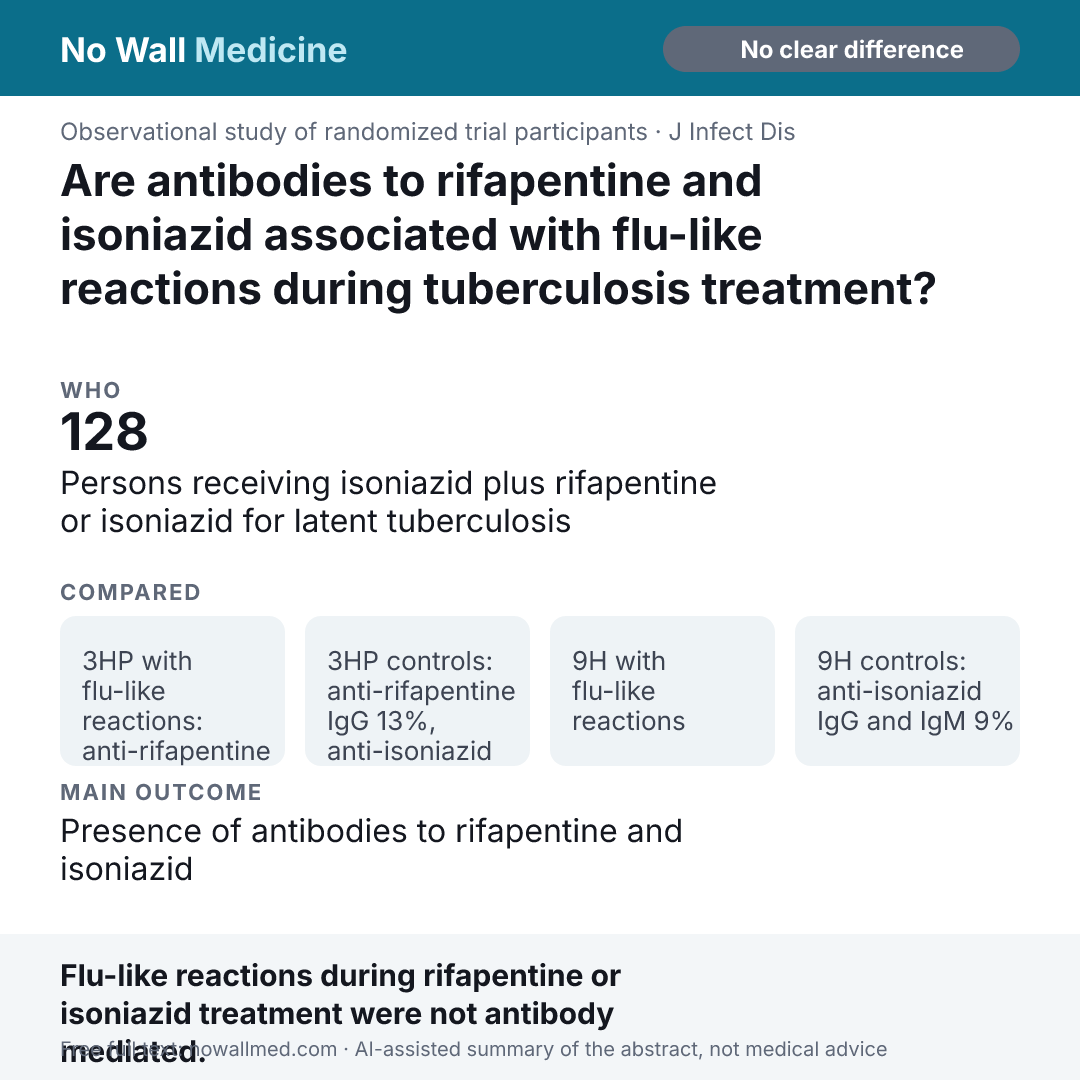
Assessment for Antibodies to Rifapentine and Isoniazid in Persons Developing Flu-Like Reactions During Treatment of Latent Tuberculosis Infection
Observational study of randomized trial participantsNo clear difference
Are antibodies to rifapentine and isoniazid associated with flu-like reactions during tuberculosis treatment?
Who
128
Persons receiving isoniazid plus rifapentine or isoniazid for latent tuberculosis
Compared
3HP with flu-like reactions: anti-rifapentine IgG 9%, anti-isoniazid IgG 9%
3HP controls: anti-rifapentine IgG 13%, anti-isoniazid IgG 9%
9H with flu-like reactions
9H controls: anti-isoniazid IgG and IgM 9%
Main outcome
Presence of antibodies to rifapentine and isoniazid
Bottom line: Flu-like reactions during rifapentine or isoniazid treatment were not antibody mediated.
J Infect Dis · 2024-04-20 · Save PNG
Efficacy and safety of withholding antimicrobial therapy in children with cancer, fever, and neutropenia, with a demonstrated viral respiratory infection: a randomized clinical trial
Prospective, multicenter, noninferiority, randomized studyKey finding
Is withholding antimicrobial therapy safe and effective in children with febrile neutropenia and viral respiratory infection?
Who
139
Children with cancer and febrile neutropenia with a demonstrated viral respiratory infection · Seven hospitals in Chile
Compared
Maintain antimicrobial therapy: 66/70 (94%)
Withdraw antimicrobial therapy: 66/69 (96%)
Main outcome
Percentage of episodes with an uneventful resolution
Result: relative risk 1.01 (95% CI 0.93 to 1.09)
Bottom line: Withholding antimicrobial therapy is noninferior to maintaining it in children with febrile neutropenia and viral respiratory infection.
Clin Microbiol Infect · 2024-04-20 · Save PNG

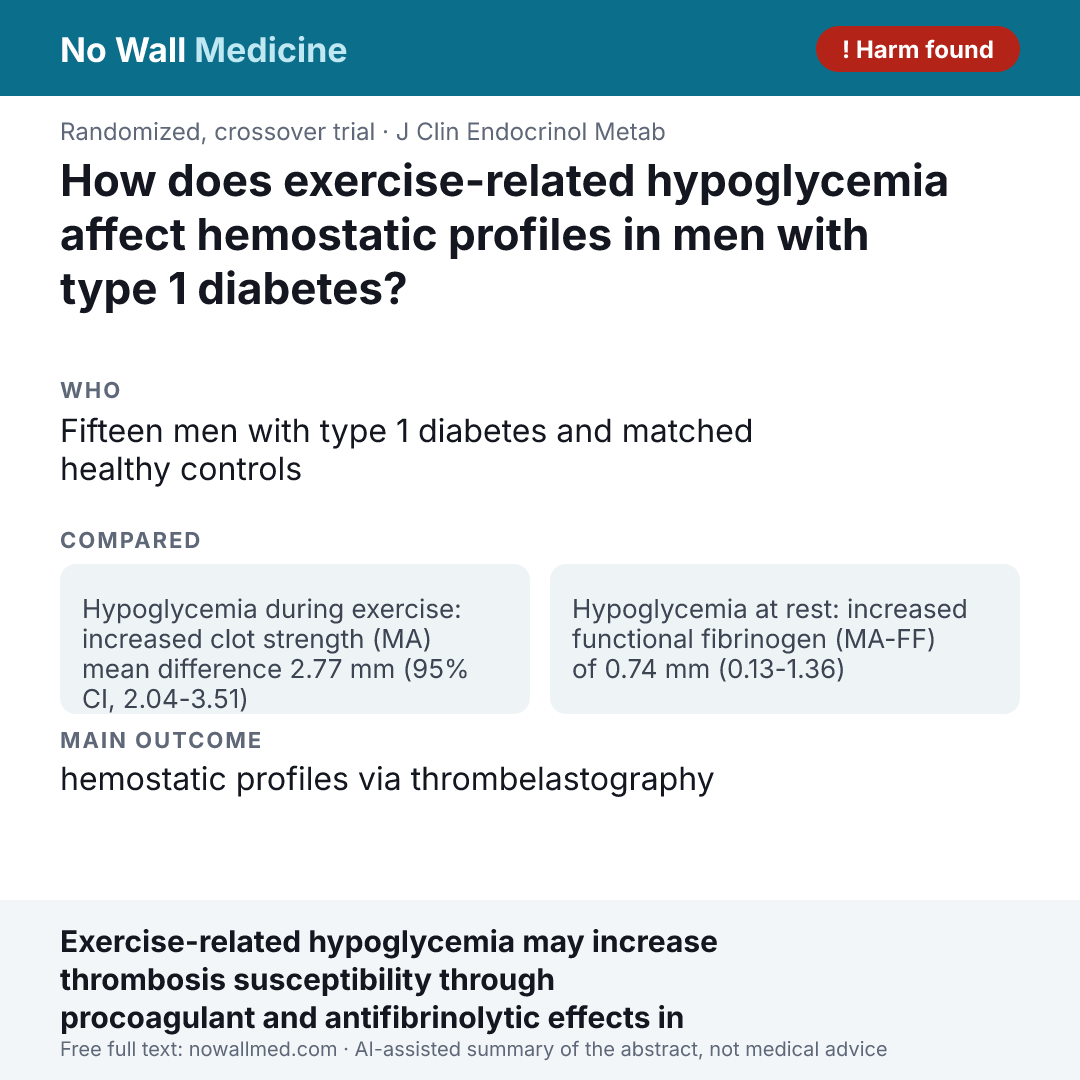
Hemostatic Effects of Exercise-related Hypoglycemia in Male Persons With Type 1 Diabetes
Randomized, crossover trialHarm found
How does exercise-related hypoglycemia affect hemostatic profiles in men with type 1 diabetes?
Who
Fifteen men with type 1 diabetes and matched healthy controls
Compared
Hypoglycemia during exercise: increased clot strength (MA) mean difference 2.77 mm (95% CI, 2.04-3.51)
Hypoglycemia at rest: increased functional fibrinogen (MA-FF) of 0.74 mm (0.13-1.36)
Main outcome
hemostatic profiles via thrombelastography
Bottom line: Exercise-related hypoglycemia may increase thrombosis susceptibility through procoagulant and antifibrinolytic effects in men with type 1 diabetes.
J Clin Endocrinol Metab · 2024-04-20 · Save PNG
Ventilatory efficiency as a prognostic factor for postoperative complications in patients undergoing elective major surgery: a systematic review
Systematic reviewMixed results
Is ventilatory efficiency a prognostic factor for postoperative complications after elective major surgery?
Who
Patients undergoing elective major surgery
Compared
Ventilatory efficiency
Postoperative complications
Main outcome
Short-term complications and mid- to long-term mortality
Bottom line: Ventilatory efficiency predicts short-term complications after thoracic and abdominal surgery, but clinical decision-making data are lacking.
Limitation: Risk of bias in study confounding and statistical analysis; data-driven covariable selection.
Br J Anaesth · 2024-04-20 · Save PNG

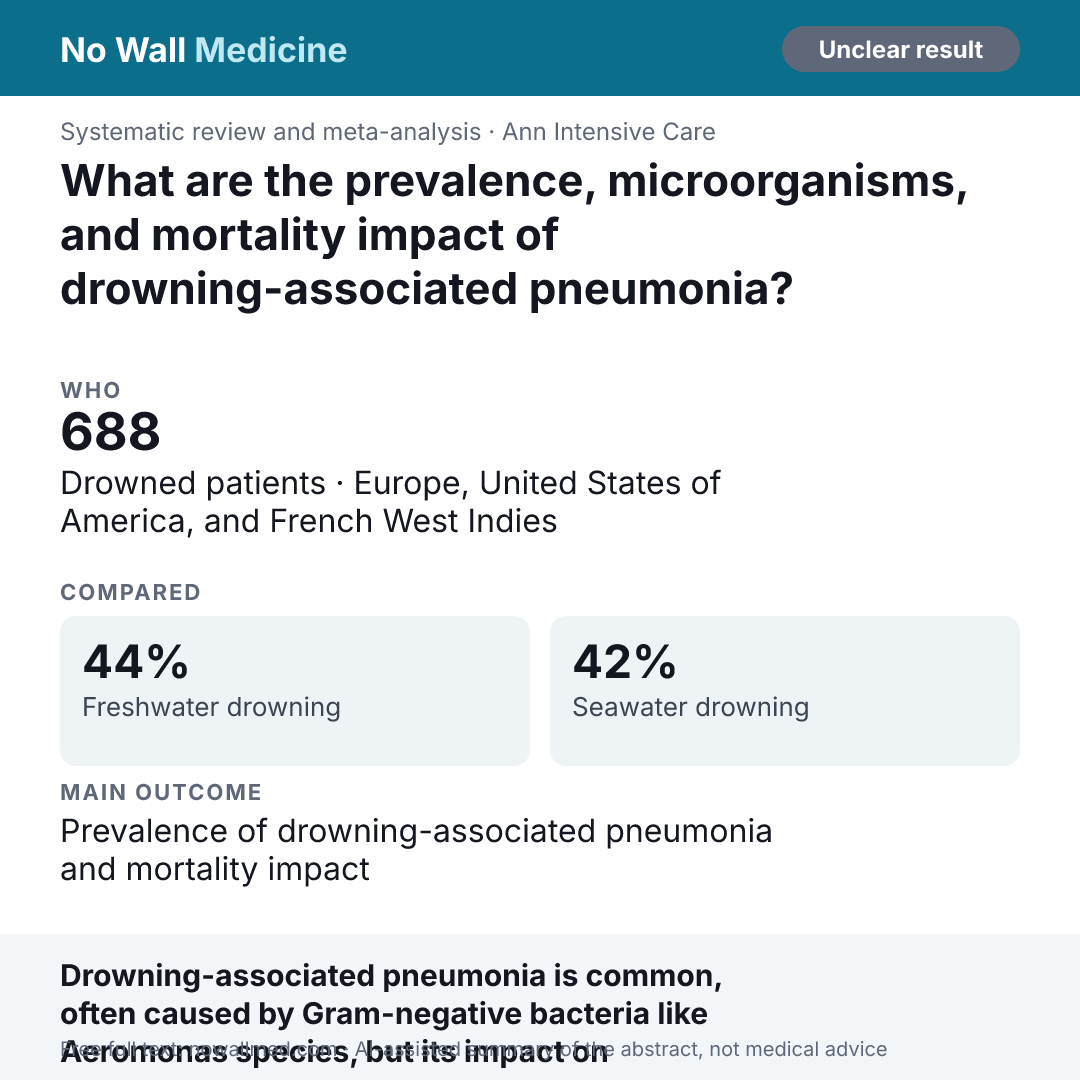
Microbiological features of drowning-associated pneumonia: a systematic review and meta-analysis
Systematic review and meta-analysisUnclear result
What are the prevalence, microorganisms, and mortality impact of drowning-associated pneumonia?
Who
688
Drowned patients · Europe, United States of America, and French West Indies
Compared
44%Freshwater drowning (95%CI 36-52)
42%Seawater drowning (95%CI 32-53)
Main outcome
Prevalence of drowning-associated pneumonia and mortality impact
Result: pooled odds ratio 1.43 (95%CI 0.56-3.67)
Bottom line: Drowning-associated pneumonia is common, often caused by Gram-negative bacteria like Aeromonas species, but its impact on mortality is unclear.
Limitation: The mortality impact estimation was based on two studies only.
Ann Intensive Care · 2024-04-20 · Save PNG
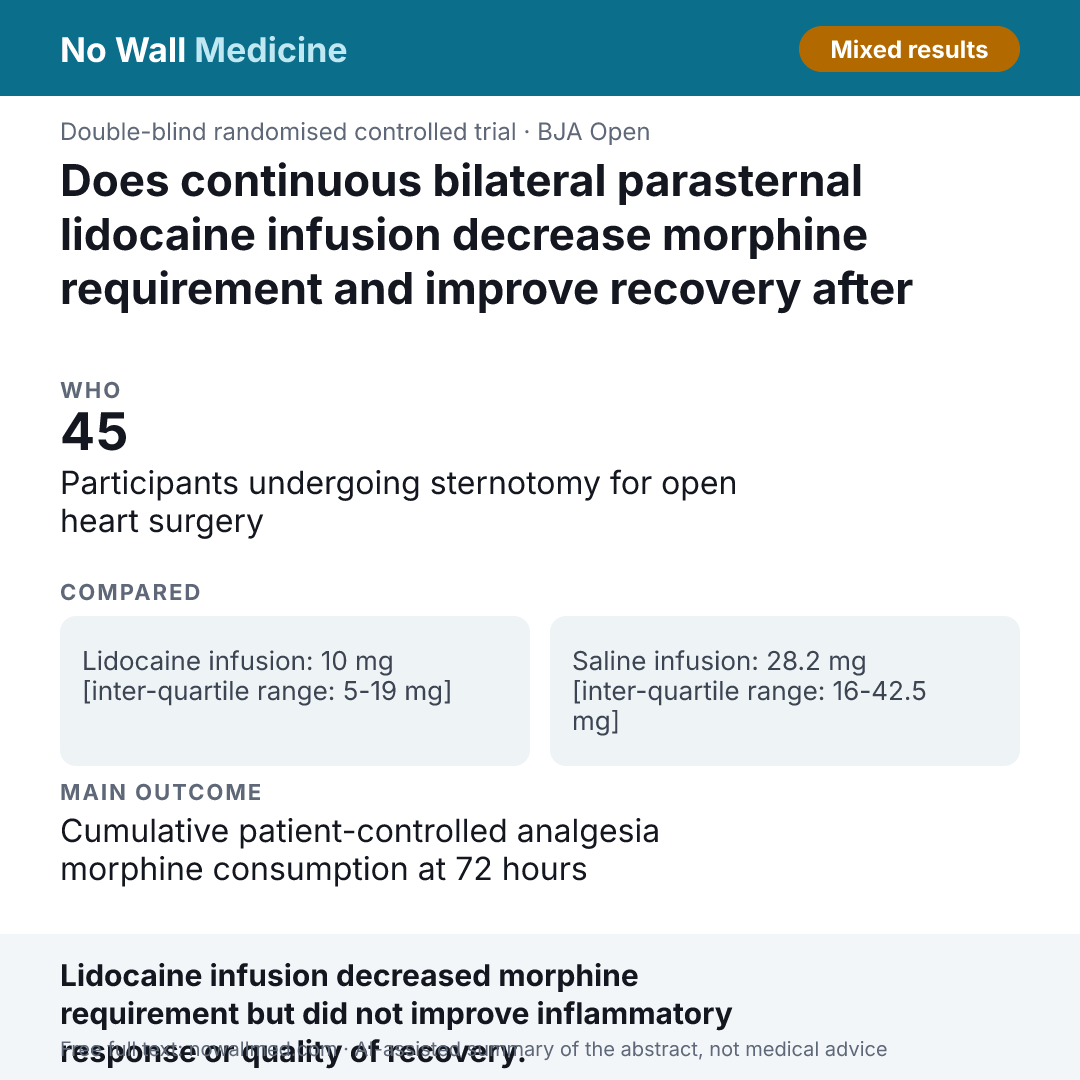
The effect of continuous bilateral parasternal block with lidocaine on patient-controlled analgesia opioid requirement and recovery after open heart surgery: a double-blind randomised controlled trial
Double-blind randomised controlled trialMixed results
Does continuous bilateral parasternal lidocaine infusion decrease morphine requirement and improve recovery after open heart surgery?
Who
45
Participants undergoing sternotomy for open heart surgery
Compared
Lidocaine infusion: 10 mg [inter-quartile range: 5-19 mg]
Saline infusion: 28.2 mg [inter-quartile range: 16-42.5 mg]
Main outcome
Cumulative patient-controlled analgesia morphine consumption at 72 hours
Bottom line: Lidocaine infusion decreased morphine requirement but did not improve inflammatory response or quality of recovery.
BJA Open · 2024-04-20 · Save PNG
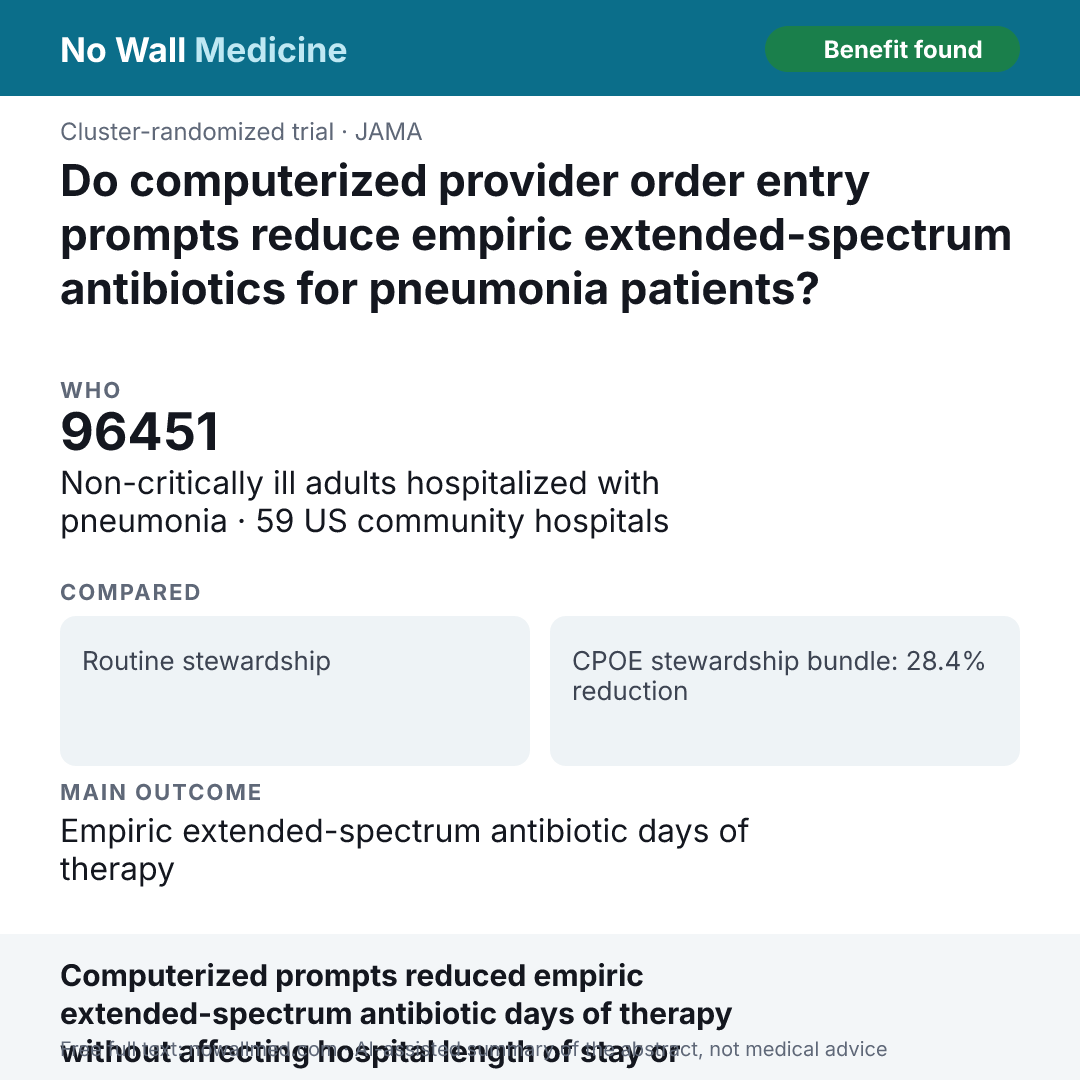
Stewardship Prompts to Improve Antibiotic Selection for Pneumonia: The INSPIRE Randomized Clinical Trial
Cluster-randomized trialBenefit found
Do computerized provider order entry prompts reduce empiric extended-spectrum antibiotics for pneumonia patients?
Who
96451
Non-critically ill adults hospitalized with pneumonia · 59 US community hospitals
Compared
Routine stewardship
CPOE stewardship bundle: 28.4% reduction
Main outcome
Empiric extended-spectrum antibiotic days of therapy
Result: rate ratio, 0.72 (95% CI, 0.66-0.78)
Bottom line: Computerized prompts reduced empiric extended-spectrum antibiotic days of therapy without affecting hospital length of stay or intensive care unit transfer.
JAMA · 2024-04-19 · Save PNG
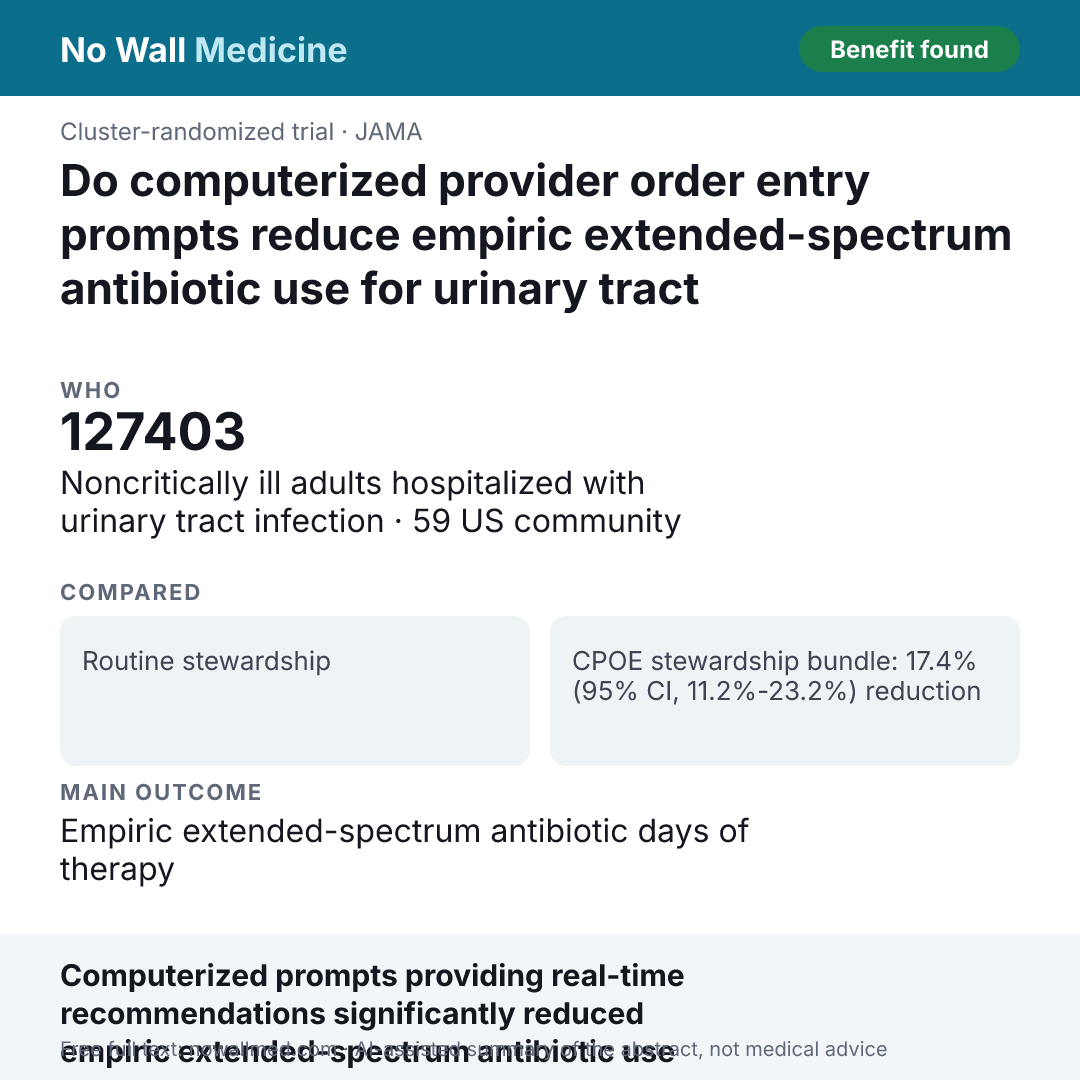
Stewardship Prompts to Improve Antibiotic Selection for Urinary Tract Infection: The INSPIRE Randomized Clinical Trial
Cluster-randomized trialBenefit found
Do computerized provider order entry prompts reduce empiric extended-spectrum antibiotic use for urinary tract infection?
Who
127403
Noncritically ill adults hospitalized with urinary tract infection · 59 US community hospitals
Compared
Routine stewardship
CPOE stewardship bundle: 17.4% (95% CI, 11.2%-23.2%) reduction
Main outcome
Empiric extended-spectrum antibiotic days of therapy
Result: rate ratio, 0.83 (95% CI, 0.77-0.89)
Bottom line: Computerized prompts providing real-time recommendations significantly reduced empiric extended-spectrum antibiotic use without affecting hospital length of stay.
JAMA · 2024-04-19 · Save PNG
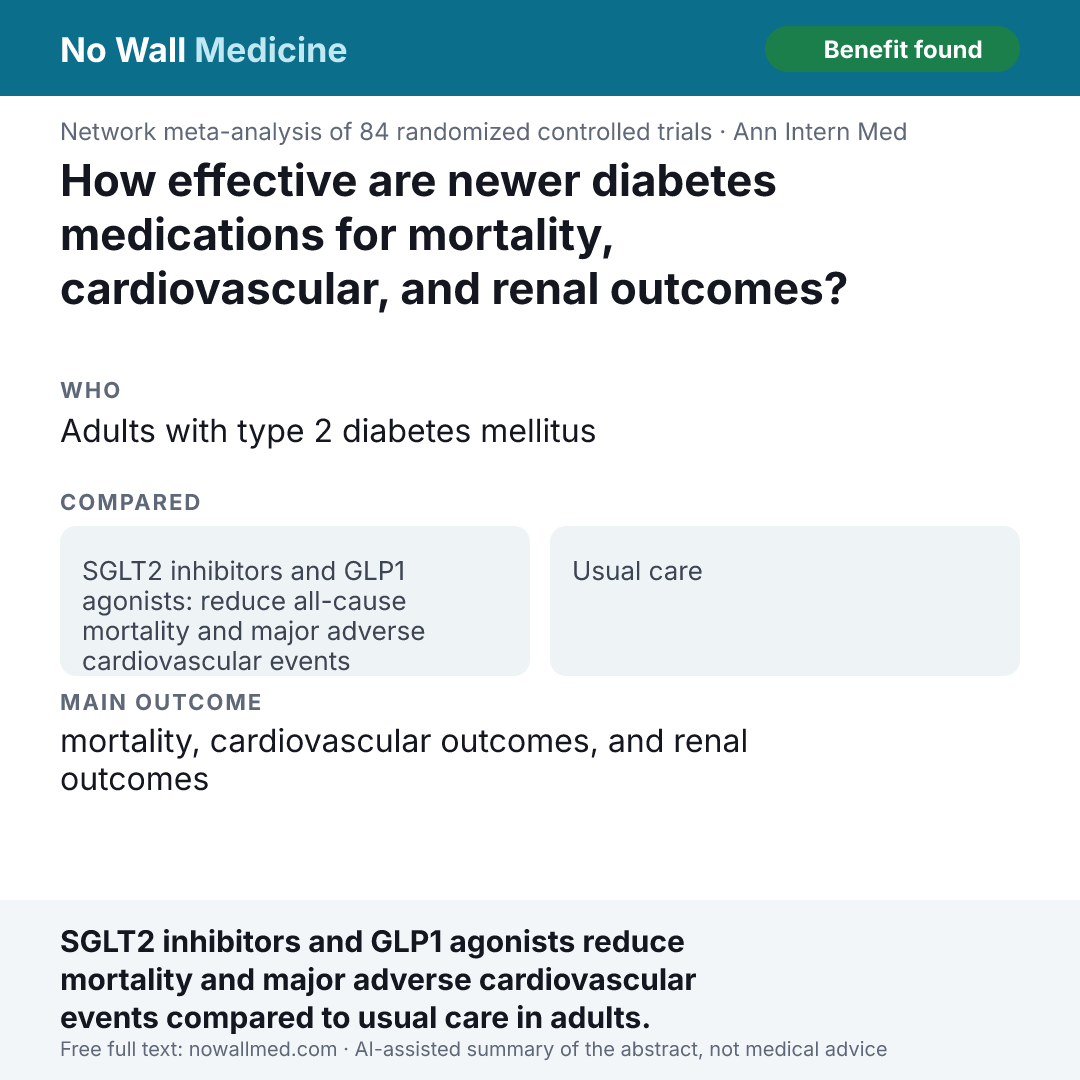
Newer Pharmacologic Treatments in Adults With Type 2 Diabetes: A Systematic Review and Network Meta-analysis for the American College of Physicians
Network meta-analysis of 84 randomized controlled trialsBenefit found
How effective are newer diabetes medications for mortality, cardiovascular, and renal outcomes?
Who
Adults with type 2 diabetes mellitus
Compared
SGLT2 inhibitors and GLP1 agonists: reduce all-cause mortality and major adverse cardiovascular events
Usual care
Main outcome
mortality, cardiovascular outcomes, and renal outcomes
Bottom line: SGLT2 inhibitors and GLP1 agonists reduce mortality and major adverse cardiovascular events compared to usual care in adults.
Limitation: Infrequent direct comparisons, sparse data, and insufficient data on predefined subgroups.
Funded by: American College of Physicians
Ann Intern Med · 2024-04-19 · Save PNG
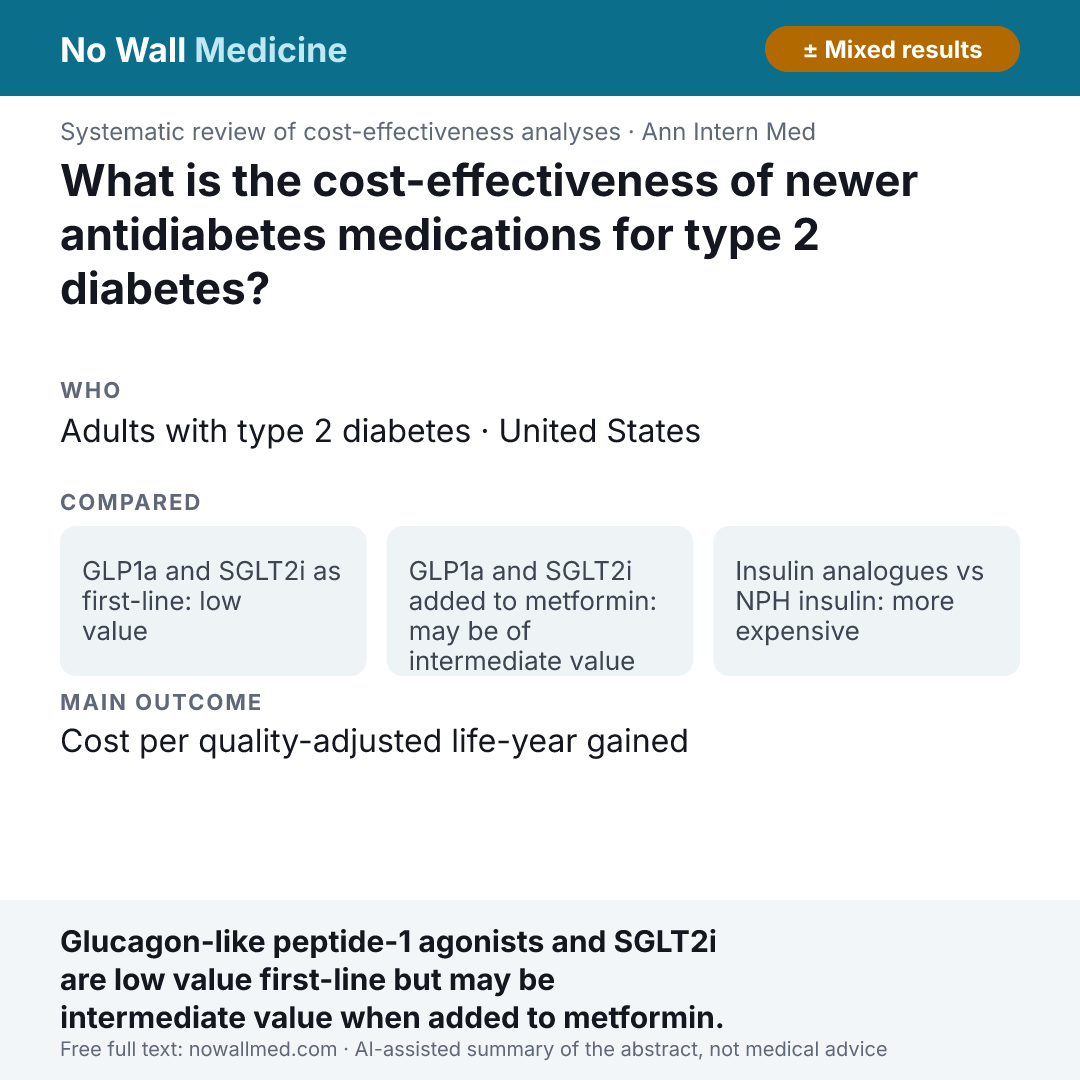
Cost-Effectiveness of Newer Pharmacologic Treatments in Adults With Type 2 Diabetes: A Systematic Review of Cost-Effectiveness Studies for the American College of Physicians
Systematic review of cost-effectiveness analysesMixed results
What is the cost-effectiveness of newer antidiabetes medications for type 2 diabetes?
Who
Adults with type 2 diabetes · United States
Compared
GLP1a and SGLT2i as first-line: low value
GLP1a and SGLT2i added to metformin: may be of intermediate value
Insulin analogues vs NPH insulin: more expensive
Main outcome
Cost per quality-adjusted life-year gained
Bottom line: Glucagon-like peptide-1 agonists and SGLT2i are low value first-line but may be intermediate value when added to metformin.
Limitation: Cost-effectiveness analyses varied in methodological approach, assumptions, and drug comparisons.
Funded by: American College of Physicians
Ann Intern Med · 2024-04-19 · Save PNG
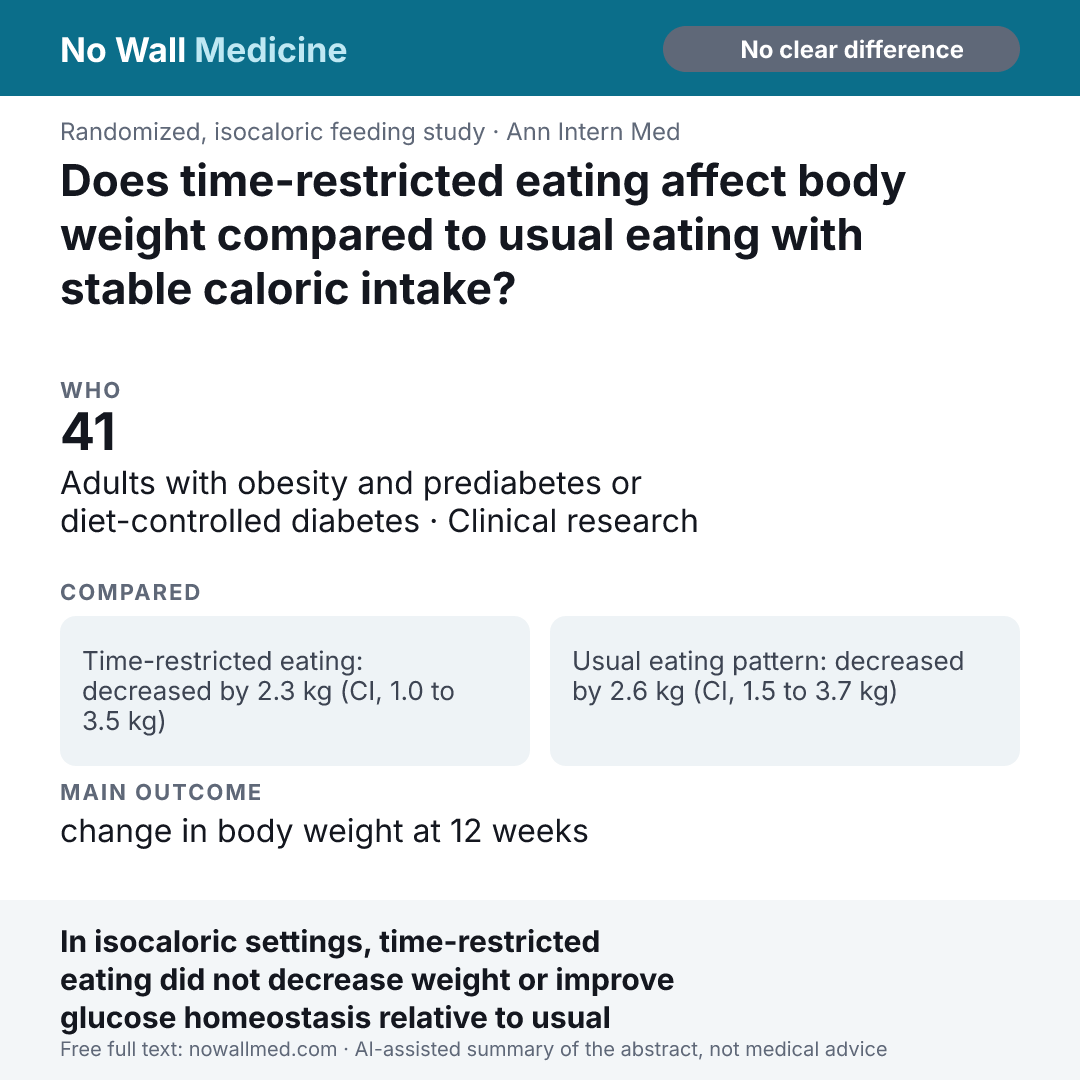
Effect of Isocaloric, Time-Restricted Eating on Body Weight in Adults With Obesity : A Randomized Controlled Trial
Randomized, isocaloric feeding studyNo clear difference
Does time-restricted eating affect body weight compared to usual eating with stable caloric intake?
Who
41
Adults with obesity and prediabetes or diet-controlled diabetes · Clinical research unit
Compared
Time-restricted eating: decreased by 2.3 kg (CI, 1.0 to 3.5 kg)
Usual eating pattern: decreased by 2.6 kg (CI, 1.5 to 3.7 kg)
Main outcome
change in body weight at 12 weeks
Result: average difference 0.3 kg (CI, -1.2 to 1.9 kg)
Bottom line: In isocaloric settings, time-restricted eating did not decrease weight or improve glucose homeostasis relative to usual eating.
Limitation: Small, single-site study; baseline differences in weight by group.
Funded by: American Heart Association
Ann Intern Med · 2024-04-19 · Save PNG
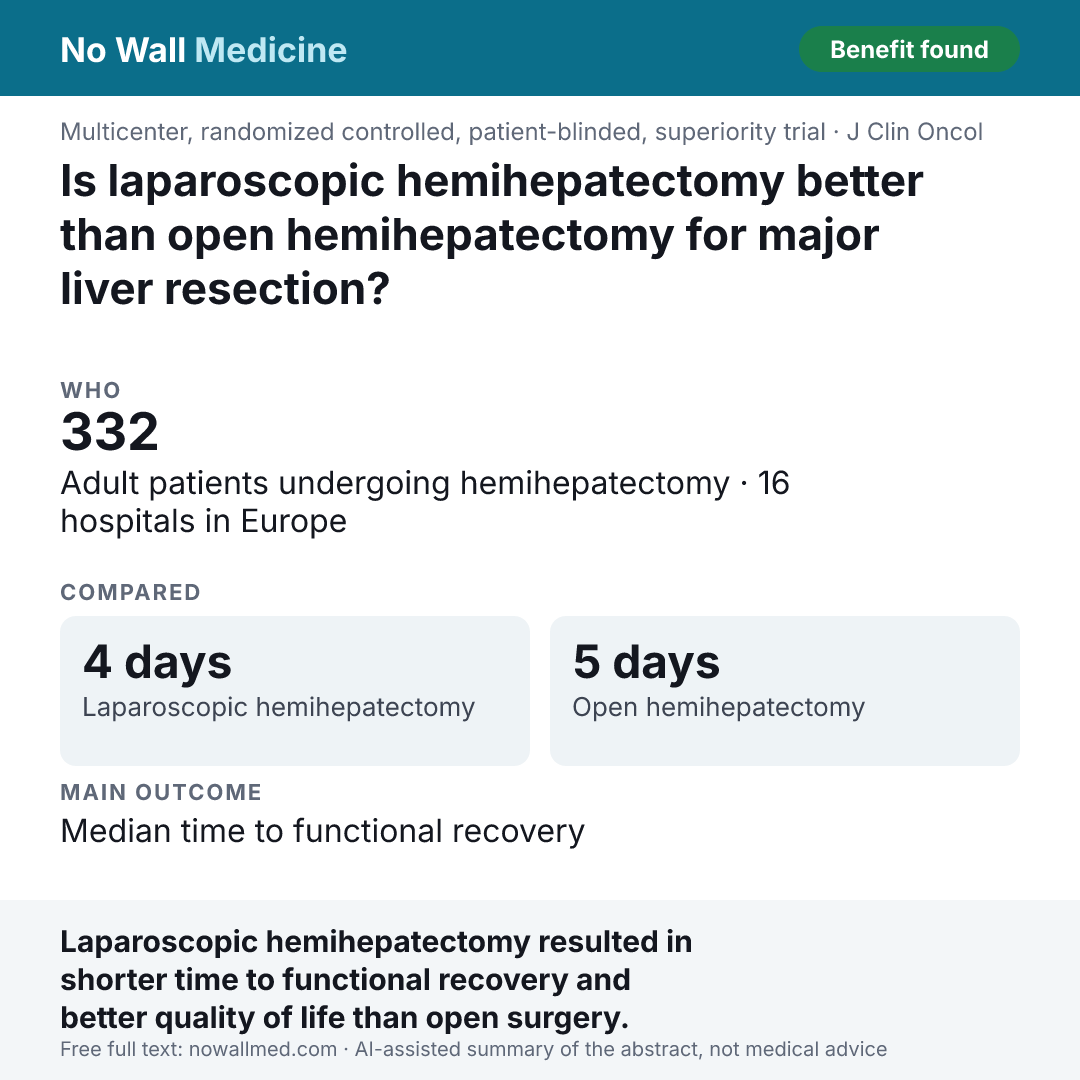
Laparoscopic Versus Open Hemihepatectomy: The ORANGE II PLUS Multicenter Randomized Controlled Trial
Multicenter, randomized controlled, patient-blinded, superiority trialBenefit found
Is laparoscopic hemihepatectomy better than open hemihepatectomy for major liver resection?
Who
332
Adult patients undergoing hemihepatectomy · 16 hospitals in Europe
Compared
4 daysLaparoscopic hemihepatectomy
5 daysOpen hemihepatectomy
Main outcome
Median time to functional recovery
Result: difference, -17.5% (96% CI, -25.6 to -8.4)
Bottom line: Laparoscopic hemihepatectomy resulted in shorter time to functional recovery and better quality of life than open surgery.
J Clin Oncol · 2024-04-19 · Save PNG
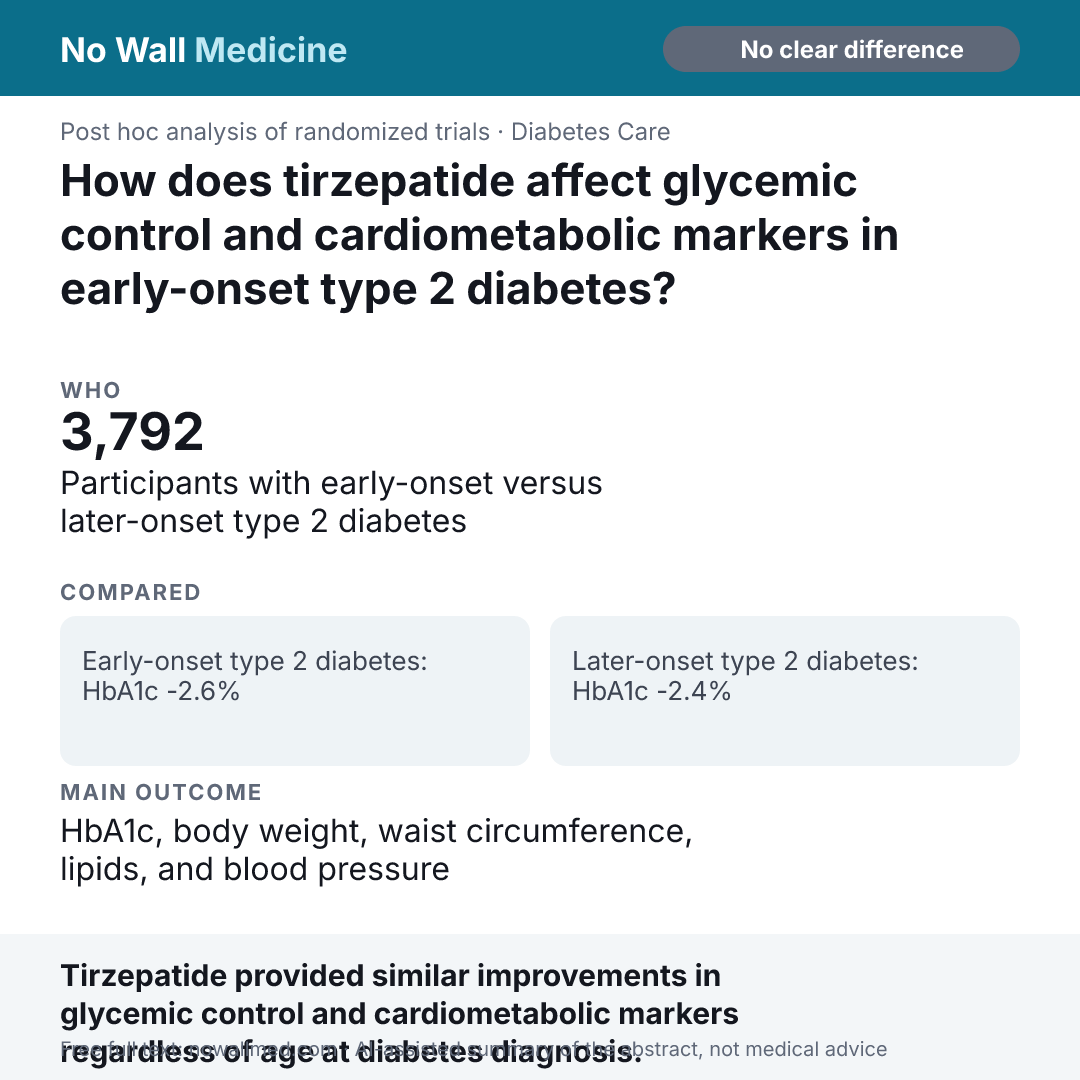
Early-Onset Type 2 Diabetes and Tirzepatide Treatment: A Post Hoc Analysis From the SURPASS Clinical Trial Program
Post hoc analysis of randomized trialsNo clear difference
How does tirzepatide affect glycemic control and cardiometabolic markers in early-onset type 2 diabetes?
Who
3,792
Participants with early-onset versus later-onset type 2 diabetes
Compared
Early-onset type 2 diabetes: HbA1c -2.6%
Later-onset type 2 diabetes: HbA1c -2.4%
Main outcome
HbA1c, body weight, waist circumference, lipids, and blood pressure
Bottom line: Tirzepatide provided similar improvements in glycemic control and cardiometabolic markers regardless of age at diabetes diagnosis.
Diabetes Care · 2024-04-19 · Save PNG
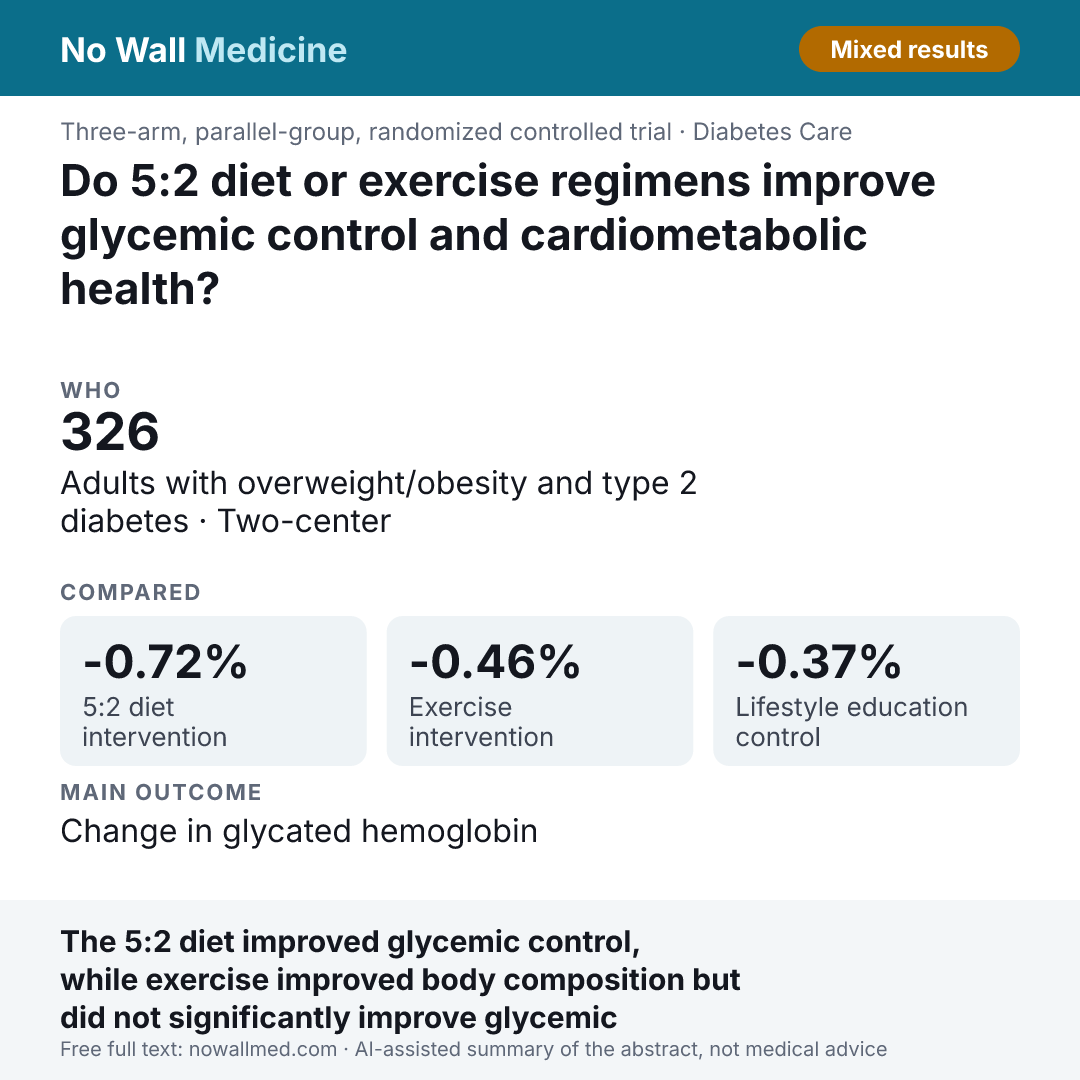
Effect of 5:2 Regimens: Energy-Restricted Diet or Low-Volume High-Intensity Interval Training Combined With Resistance Exercise on Glycemic Control and Cardiometabolic Health in Adults With Overweight/Obesity and Type 2 Diabetes: A Three-Arm Randomized Controlled Trial
Three-arm, parallel-group, randomized controlled trialMixed results
Do 5:2 diet or exercise regimens improve glycemic control and cardiometabolic health?
Who
326
Adults with overweight/obesity and type 2 diabetes · Two-center
Compared
-0.72%5:2 diet intervention (95% CI -0.95 to -0.48)
-0.46%Exercise intervention (95% CI -0.70 to -0.23)
-0.37%Lifestyle education control (95% CI -0.60 to -0.15)
Main outcome
Change in glycated hemoglobin
Result: diet vs. control -0.34 (95% CI -0.58 to -0.11)
Bottom line: The 5:2 diet improved glycemic control, while exercise improved body composition but did not significantly improve glycemic control.
Diabetes Care · 2024-04-19 · Save PNG