Visual abstracts
New randomized trials and meta-analyses from leading journals at a glance: who was studied, what was compared, and what was found. Every paper is free to read in full.
All specialtiesCardiology 835Oncology 758Gastroenterology & Hepatology 306Infectious Disease 626Neurology 349Psychiatry & Mental Health 430Pulmonology 364Critical Care 240Endocrinology & Diabetes 480Pediatrics 533Surgery 317Orthopedics & Sports Medicine 161Neurosurgery 83Cardiothoracic & Vascular Surgery 86Plastic & Reconstructive Surgery 109Nephrology 197Rheumatology 108Hematology 181Dermatology 74Ophthalmology 97Obstetrics & Gynecology 261Public & Global Health 167Radiology & Imaging 96Anesthesiology 107Urology 162ENT (Otolaryngology) 83Emergency Medicine 64Allergy & Immunology 58Geriatrics 160Family Medicine & Primary Care 111Medical Genetics & Genomics 91Pathology & Laboratory Medicine 23Physical Medicine & Rehabilitation 147Palliative Care 81Nutrition 223Digital Health & AI 460General Medicine 101
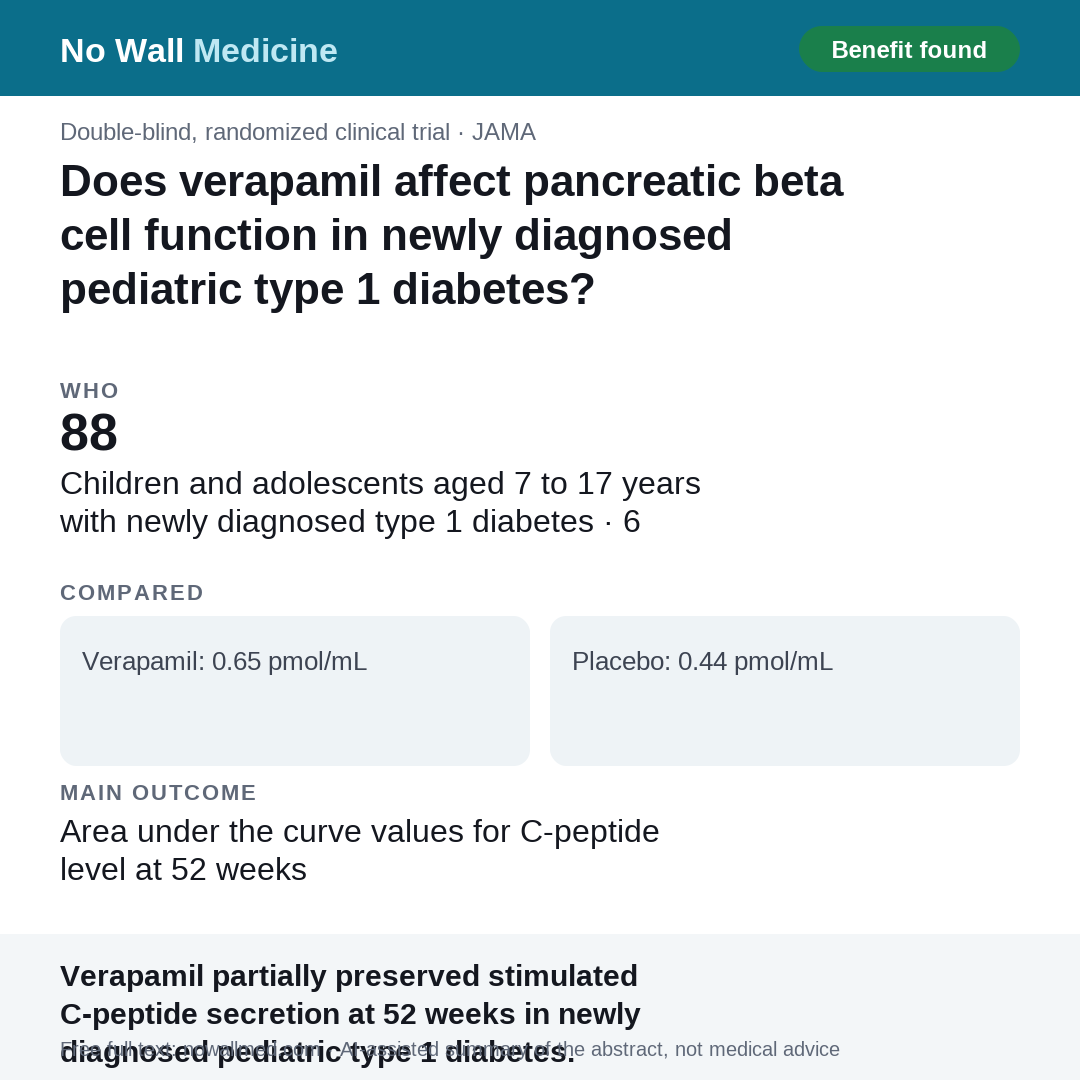
Effect of Verapamil on Pancreatic Beta Cell Function in Newly Diagnosed Pediatric Type 1 Diabetes: A Randomized Clinical Trial
Double-blind, randomized clinical trialBenefit found
Does verapamil affect pancreatic beta cell function in newly diagnosed pediatric type 1 diabetes?
Who
88
Children and adolescents aged 7 to 17 years with newly diagnosed type 1 diabetes · 6 centers in the US
Compared
Verapamil: 0.65 pmol/mL
Placebo: 0.44 pmol/mL
Main outcome
Area under the curve values for C-peptide level at 52 weeks
Result: adjusted between-group difference, 0.14 pmol/mL (95% CI, 0.01 to 0.27 pmol/mL)
Bottom line: Verapamil partially preserved stimulated C-peptide secretion at 52 weeks in newly diagnosed pediatric type 1 diabetes.
JAMA · 2023-02-25Download image
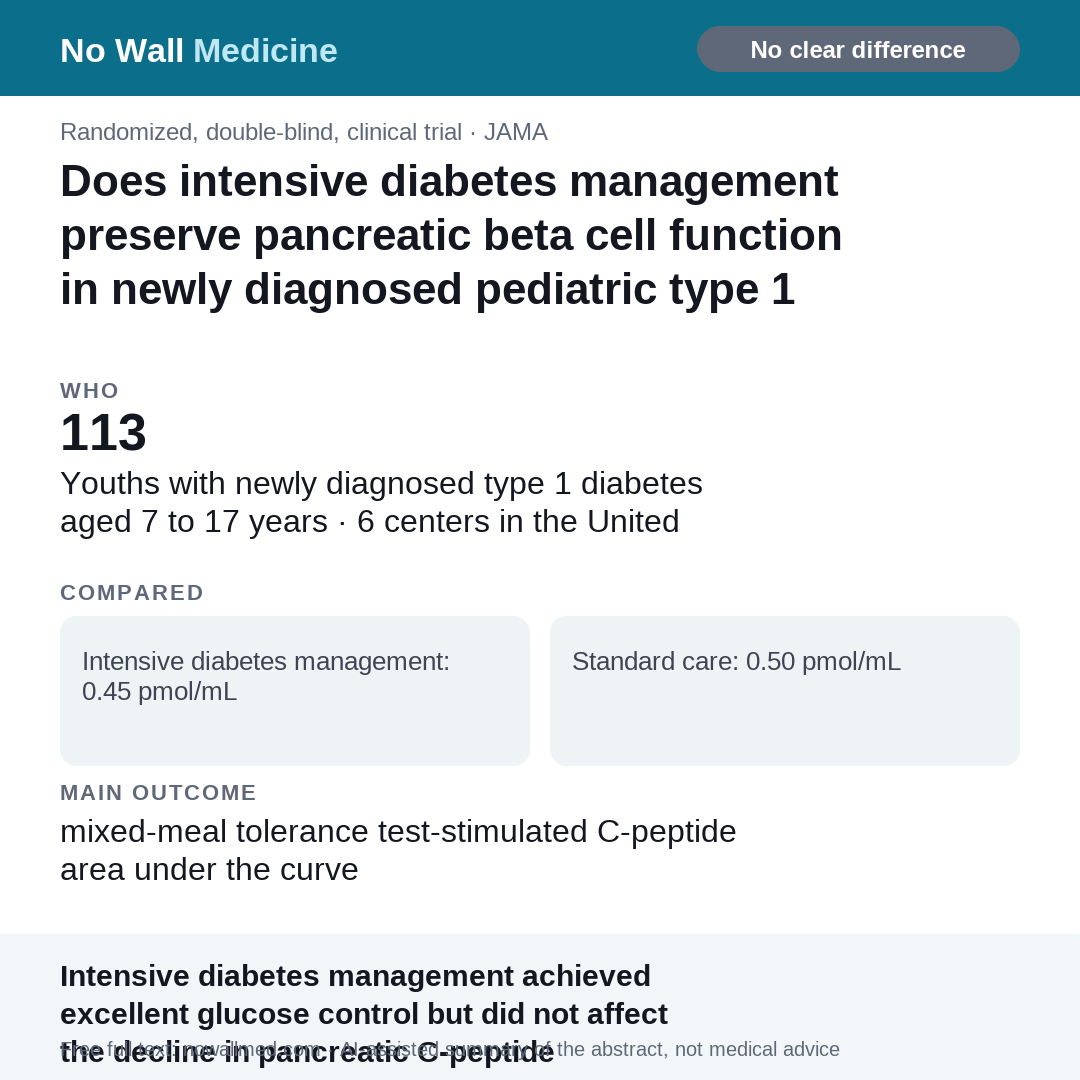
Effect of Tight Glycemic Control on Pancreatic Beta Cell Function in Newly Diagnosed Pediatric Type 1 Diabetes: A Randomized Clinical Trial
Randomized, double-blind, clinical trialNo clear difference
Does intensive diabetes management preserve pancreatic beta cell function in newly diagnosed pediatric type 1 diabetes?
Who
113
Youths with newly diagnosed type 1 diabetes aged 7 to 17 years · 6 centers in the United States
Compared
Intensive diabetes management: 0.45 pmol/mL
Standard care: 0.50 pmol/mL
Main outcome
mixed-meal tolerance test-stimulated C-peptide area under the curve
Result: -0.01 (95% CI, -0.11 to 0.10)
Bottom line: Intensive diabetes management achieved excellent glucose control but did not affect the decline in pancreatic C-peptide secretion.
JAMA · 2023-02-25Download image
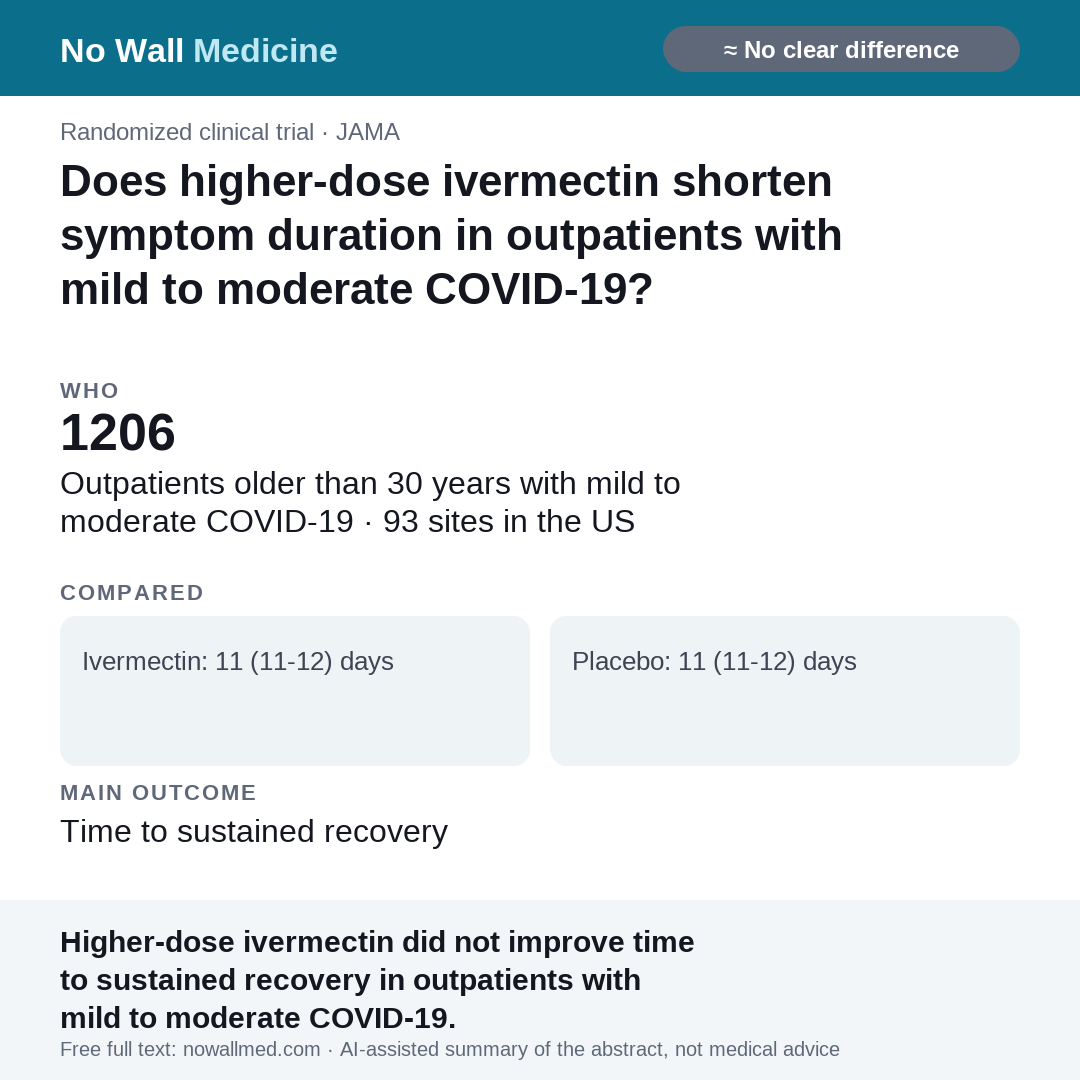
Effect of Higher-Dose Ivermectin for 6 Days vs Placebo on Time to Sustained Recovery in Outpatients With COVID-19: A Randomized Clinical Trial
Randomized clinical trialNo clear difference
Does higher-dose ivermectin shorten symptom duration in outpatients with mild to moderate COVID-19?
Who
1206
Outpatients older than 30 years with mild to moderate COVID-19 · 93 sites in the US
Compared
Ivermectin: 11 (11-12) days
Placebo: 11 (11-12) days
Main outcome
Time to sustained recovery
Result: hazard ratio 1.02 (95% credible interval, 0.92-1.13)
Bottom line: Higher-dose ivermectin did not improve time to sustained recovery in outpatients with mild to moderate COVID-19.
JAMA · 2023-02-23Download image
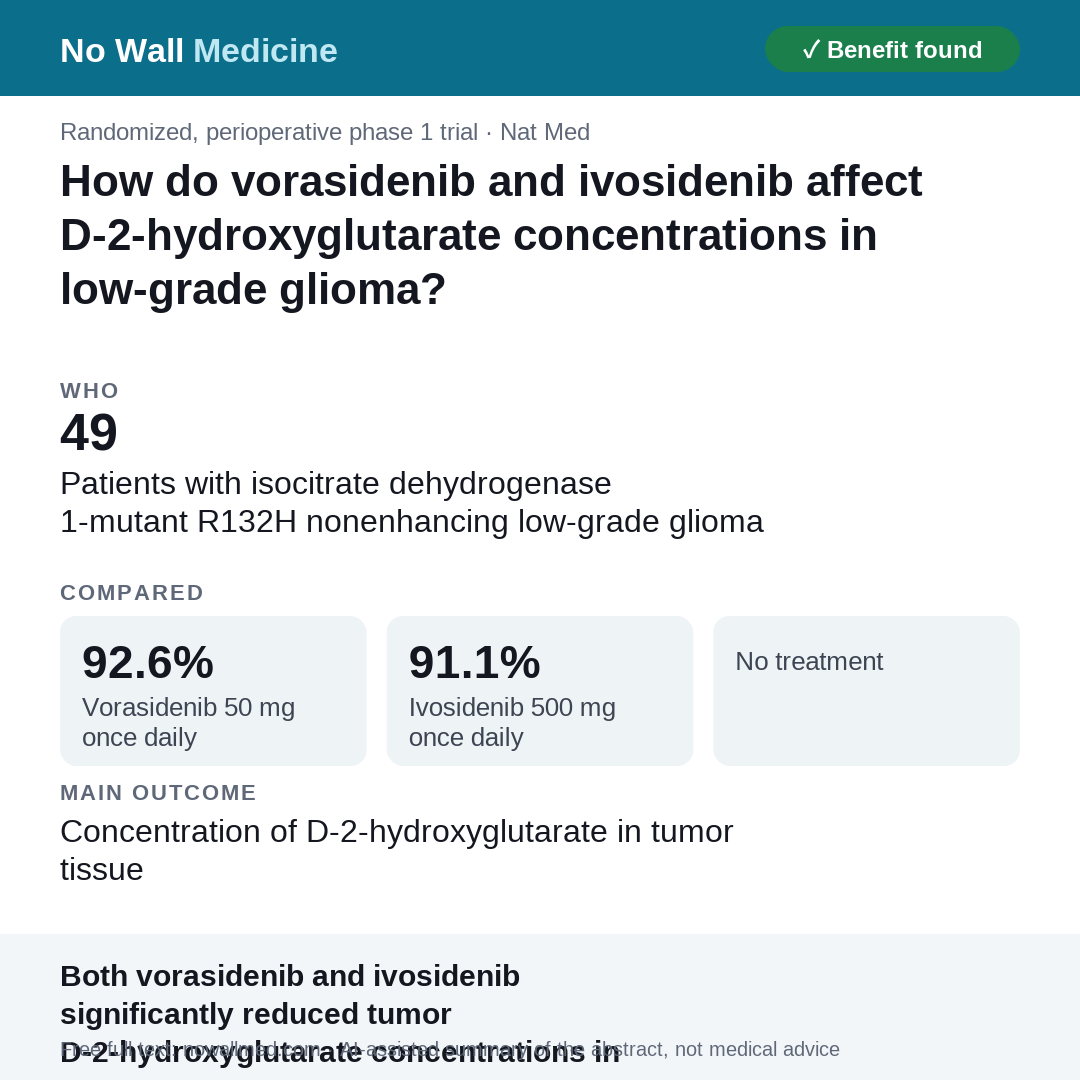
Vorasidenib and ivosidenib in IDH1-mutant low-grade glioma: a randomized, perioperative phase 1 trial
Randomized, perioperative phase 1 trialBenefit found
How do vorasidenib and ivosidenib affect D-2-hydroxyglutarate concentrations in low-grade glioma?
Who
49
Patients with isocitrate dehydrogenase 1-mutant R132H nonenhancing low-grade glioma
Compared
92.6%Vorasidenib 50 mg once daily (95% credible interval, 76.1-97.6)
91.1%Ivosidenib 500 mg once daily (95% credible interval, 72.0-97.0)
No treatment
Main outcome
Concentration of D-2-hydroxyglutarate in tumor tissue
Bottom line: Both vorasidenib and ivosidenib significantly reduced tumor D-2-hydroxyglutarate concentrations in patients with mutant low-grade glioma.
Funded by: Agios Pharmaceuticals, Inc. and Servier Pharmaceuticals LLC
Nat Med · 2023-02-23Download image
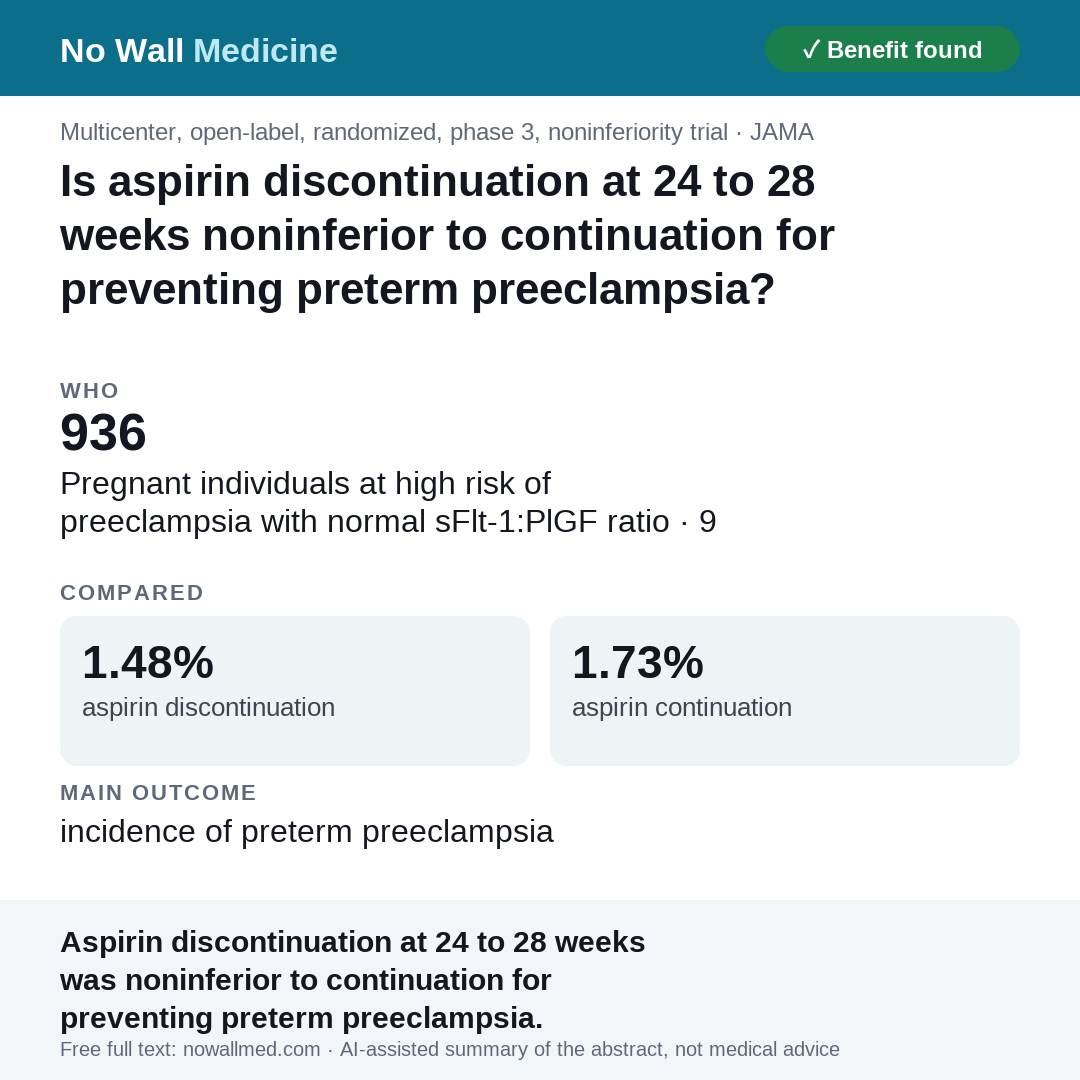
Aspirin Discontinuation at 24 to 28 Weeks' Gestation in Pregnancies at High Risk of Preterm Preeclampsia: A Randomized Clinical Trial
Multicenter, open-label, randomized, phase 3, noninferiority trialBenefit found
Is aspirin discontinuation at 24 to 28 weeks noninferior to continuation for preventing preterm preeclampsia?
Who
936
Pregnant individuals at high risk of preeclampsia with normal sFlt-1:PlGF ratio · 9 maternity hospitals across Spain
Compared
1.48%aspirin discontinuation (7/473)
1.73%aspirin continuation (8/463)
Main outcome
incidence of preterm preeclampsia
Result: absolute difference, -0.25% (95% CI, -1.86% to 1.36%)
Bottom line: Aspirin discontinuation at 24 to 28 weeks was noninferior to continuation for preventing preterm preeclampsia.
JAMA · 2023-02-22Download image
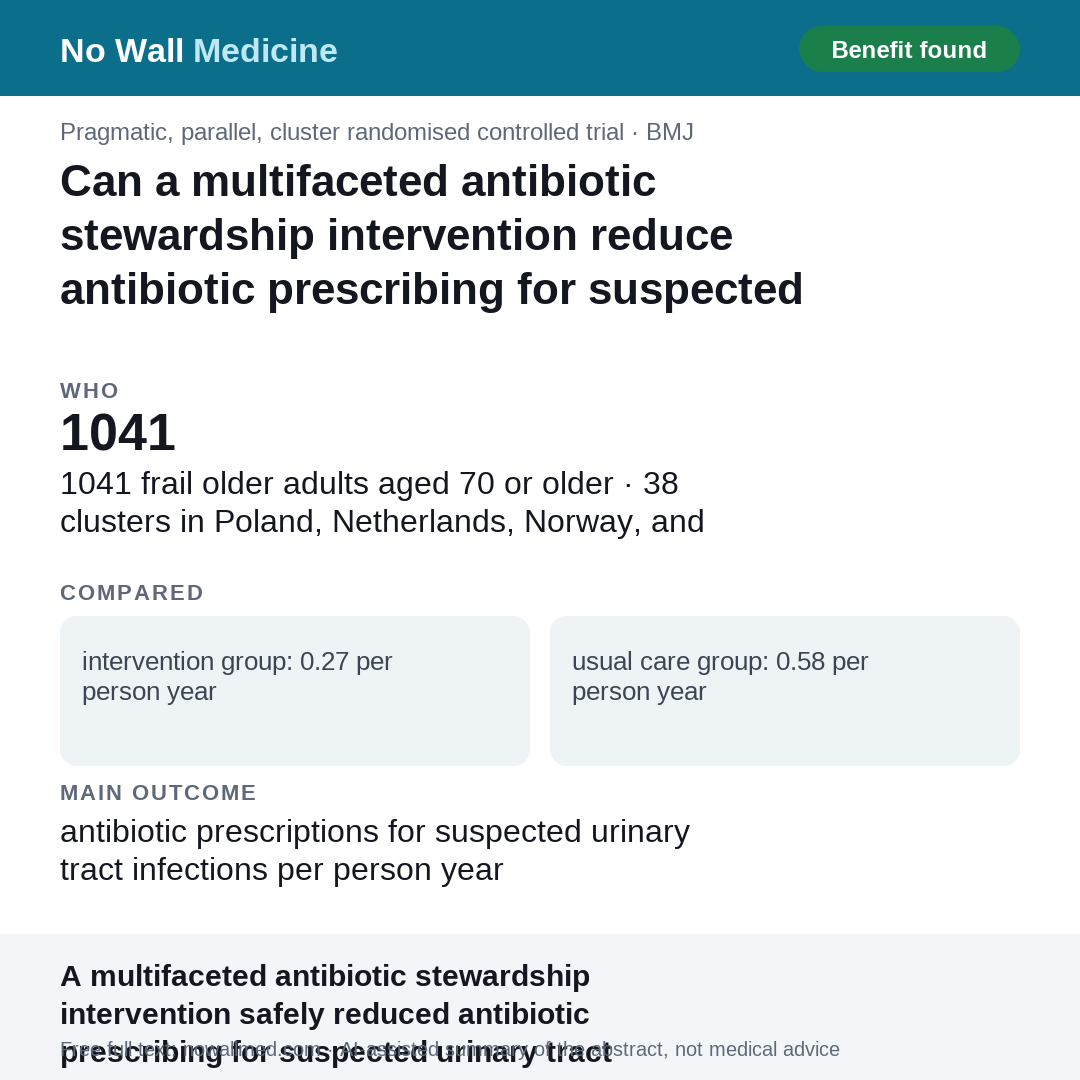
Effect of a multifaceted antibiotic stewardship intervention to improve antibiotic prescribing for suspected urinary tract infections in frail older adults (ImpresU): pragmatic cluster randomised controlled trial in four European countries
Pragmatic, parallel, cluster randomised controlled trialBenefit found
Can a multifaceted antibiotic stewardship intervention reduce antibiotic prescribing for suspected urinary tract infections?
Who
1041
1041 frail older adults aged 70 or older · 38 clusters in Poland, Netherlands, Norway, and Sweden
Compared
intervention group: 0.27 per person year
usual care group: 0.58 per person year
Main outcome
antibiotic prescriptions for suspected urinary tract infections per person year
Result: rate ratio 0.42 (95% confidence interval 0.26 to 0.68)
Bottom line: A multifaceted antibiotic stewardship intervention safely reduced antibiotic prescribing for suspected urinary tract infections in frail older adults.
BMJ · 2023-02-22Download image
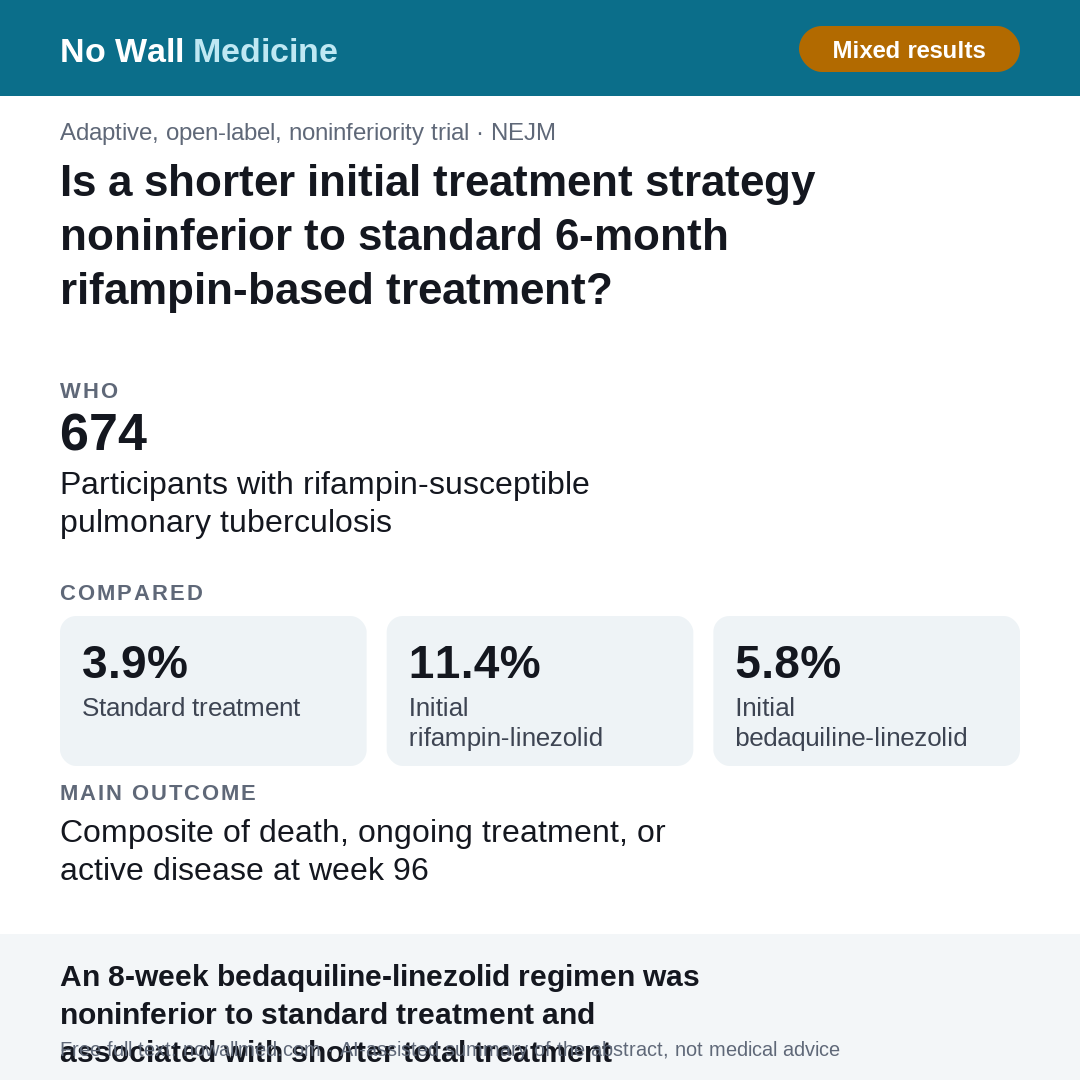
Treatment Strategy for Rifampin-Susceptible Tuberculosis
Adaptive, open-label, noninferiority trialMixed results
Is a shorter initial treatment strategy noninferior to standard 6-month rifampin-based treatment?
Who
674
Participants with rifampin-susceptible pulmonary tuberculosis
Compared
3.9%Standard treatment
11.4%Initial rifampin-linezolid strategy
5.8%Initial bedaquiline-linezolid strategy
Main outcome
Composite of death, ongoing treatment, or active disease at week 96
Result: adjusted difference 0.8 percentage points; 97.5% CI, -3.4 to 5.1
Bottom line: An 8-week bedaquiline-linezolid regimen was noninferior to standard treatment and associated with shorter total treatment duration.
Funded by: Singapore National Medical Research Council and others
NEJM · 2023-02-20Download image
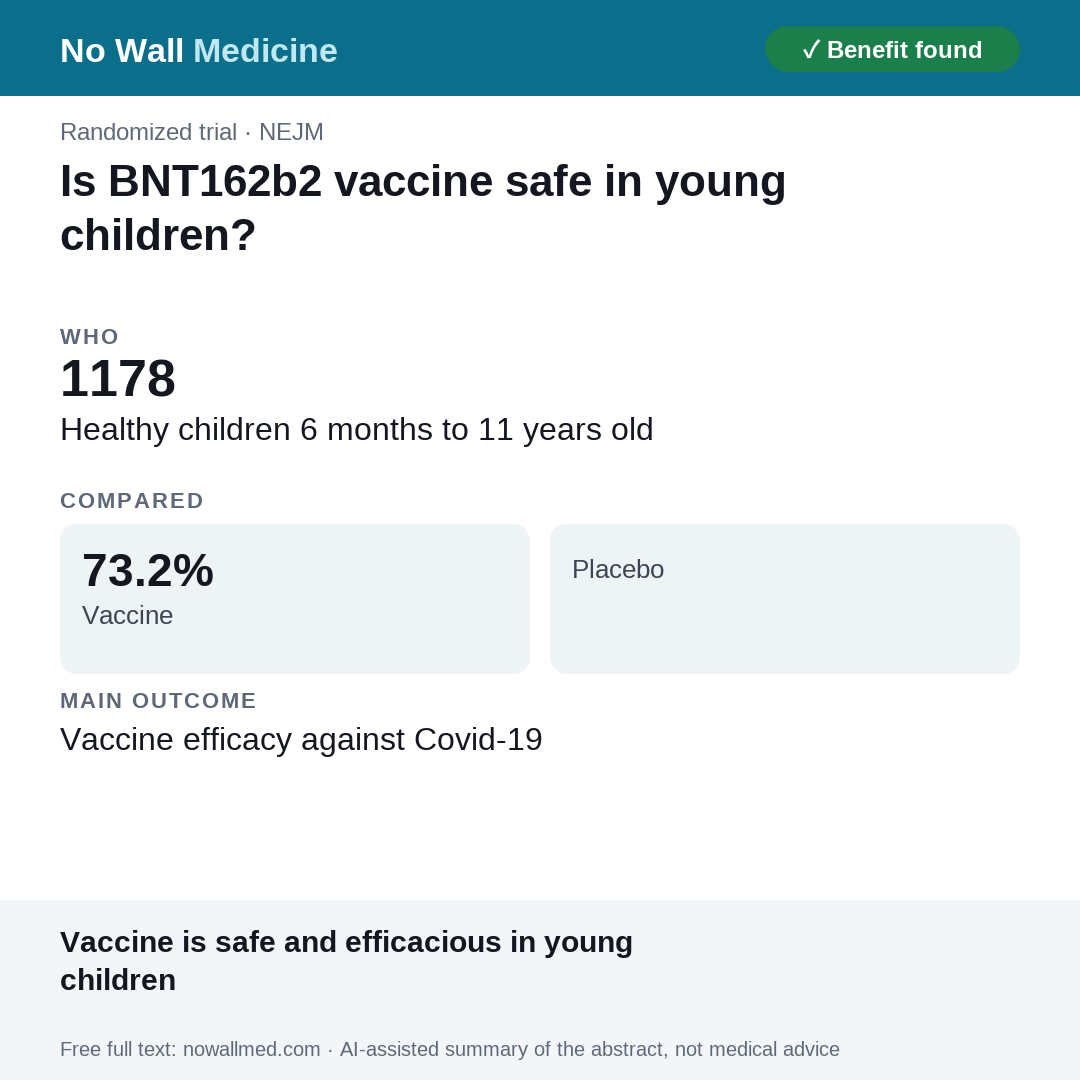
Evaluation of BNT162b2 Covid-19 Vaccine in Children Younger than 5 Years of Age
Randomized trialBenefit found
Is BNT162b2 vaccine safe in young children?
Who
1178
Healthy children 6 months to 11 years old
Compared
73.2%Vaccine (95% CI 43.8 to 87.6)
Placebo
Main outcome
Vaccine efficacy against Covid-19
Bottom line: Vaccine is safe and efficacious in young children
Funded by: BioNTech and Pfizer
NEJM · 2023-02-15Download image
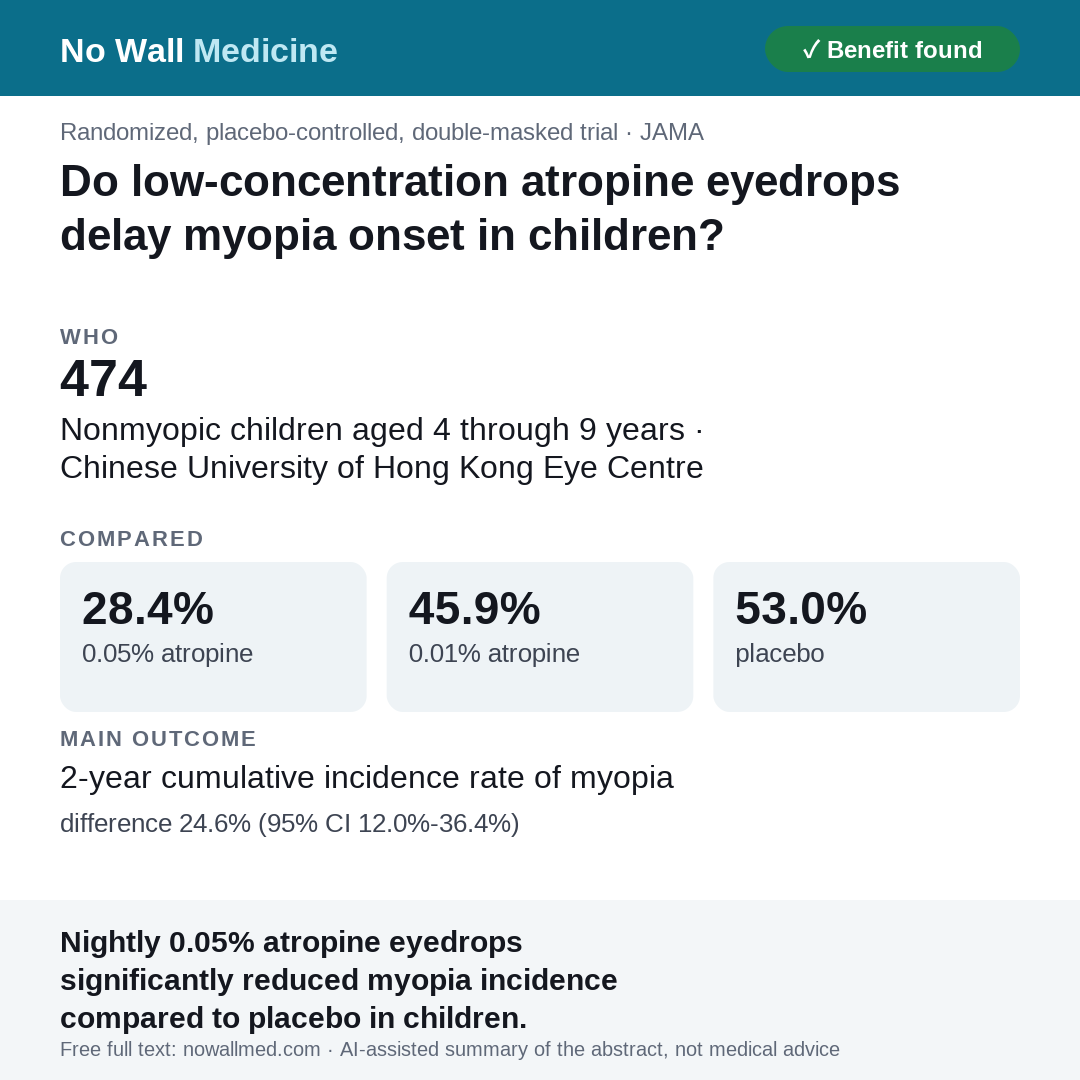
Effect of Low-Concentration Atropine Eyedrops vs Placebo on Myopia Incidence in Children: The LAMP2 Randomized Clinical Trial
Randomized, placebo-controlled, double-masked trialBenefit found
Do low-concentration atropine eyedrops delay myopia onset in children?
Who
474
Nonmyopic children aged 4 through 9 years · Chinese University of Hong Kong Eye Centre
Compared
28.4%0.05% atropine (33/116)
45.9%0.01% atropine (56/122)
53.0%placebo (61/115)
Main outcome
2-year cumulative incidence rate of myopia
Result: difference 24.6% (95% CI 12.0%-36.4%)
Bottom line: Nightly 0.05% atropine eyedrops significantly reduced myopia incidence compared to placebo in children.
JAMA · 2023-02-14Download image
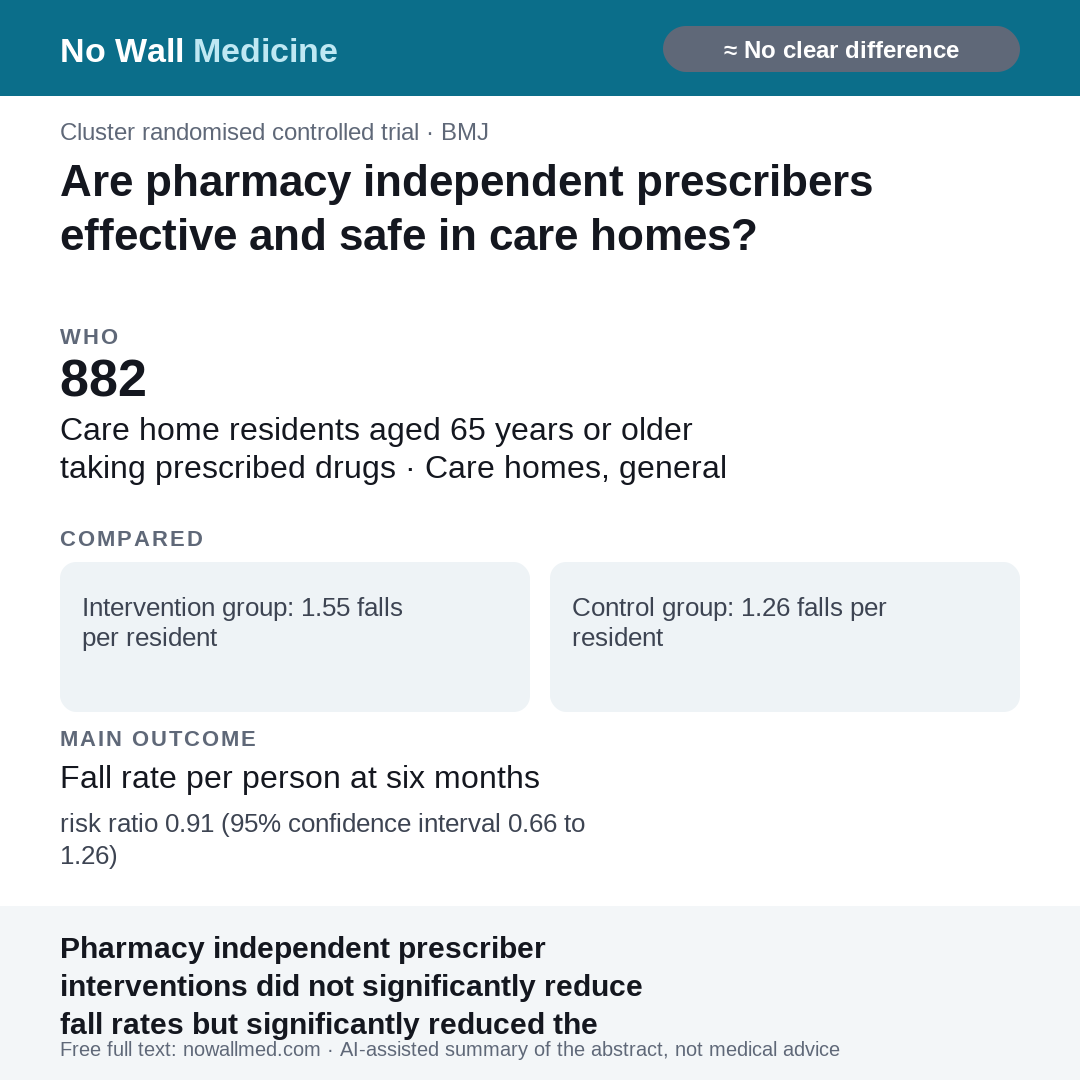
Evaluation of effectiveness and safety of pharmacist independent prescribers in care homes: cluster randomised controlled trial
Cluster randomised controlled trialNo clear difference
Are pharmacy independent prescribers effective and safe in care homes?
Who
882
Care home residents aged 65 years or older taking prescribed drugs · Care homes, general practices, and England, Scotland, and Northern Ireland
Compared
Intervention group: 1.55 falls per resident
Control group: 1.26 falls per resident
Main outcome
Fall rate per person at six months
Result: risk ratio 0.91 (95% confidence interval 0.66 to 1.26)
Bottom line: Pharmacy independent prescriber interventions did not significantly reduce fall rates but significantly reduced the Drug Burden Index.
BMJ · 2023-02-14Download image
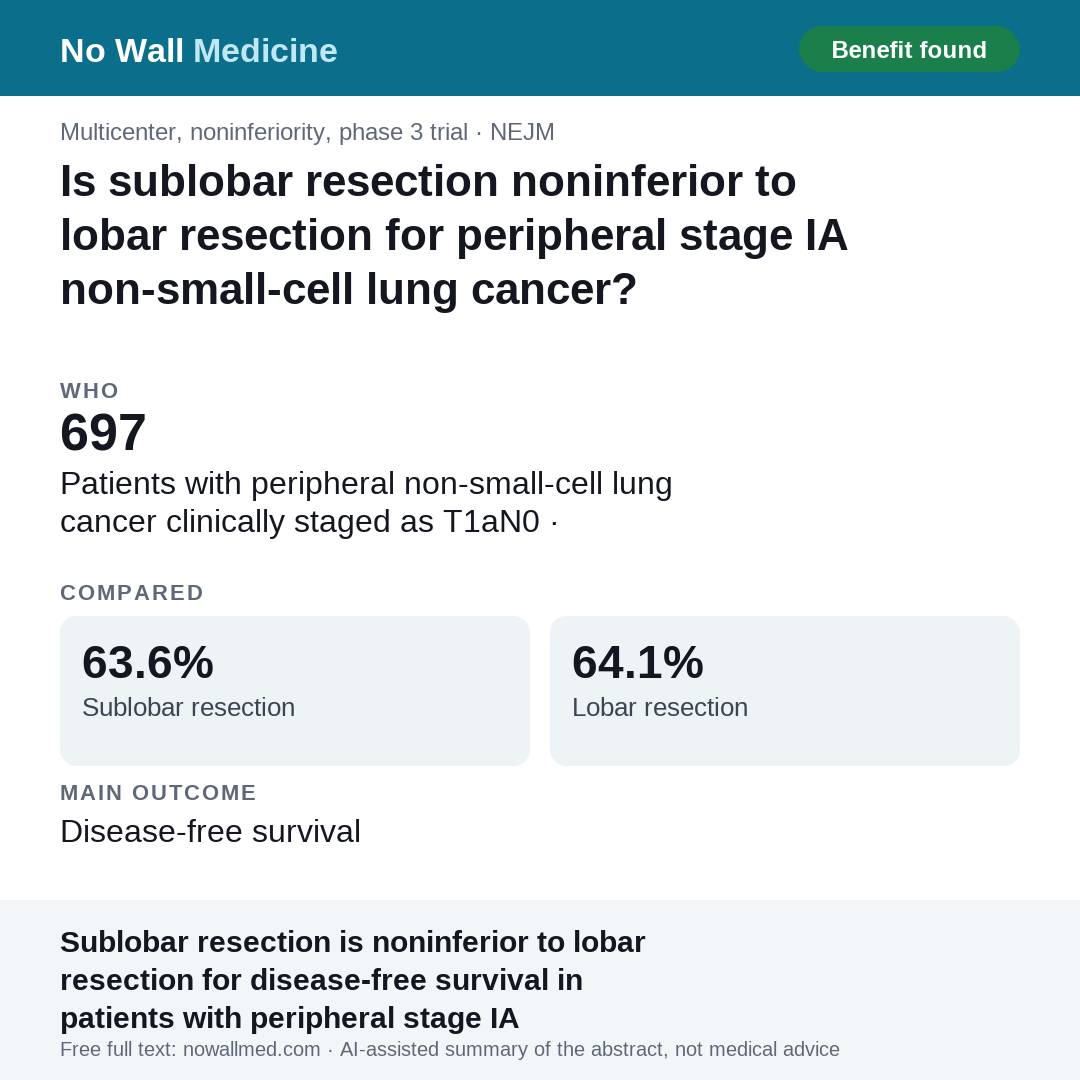
Lobar or Sublobar Resection for Peripheral Stage IA Non-Small-Cell Lung Cancer
Multicenter, noninferiority, phase 3 trialBenefit found
Is sublobar resection noninferior to lobar resection for peripheral stage IA non-small-cell lung cancer?
Who
697
Patients with peripheral non-small-cell lung cancer clinically staged as T1aN0 · Multicenter
Compared
63.6%Sublobar resection (95% CI 57.9 to 68.8)
64.1%Lobar resection (95% CI 58.5 to 69.0)
Main outcome
Disease-free survival
Result: hazard ratio 1.01 (90% CI 0.83 to 1.24)
Bottom line: Sublobar resection is noninferior to lobar resection for disease-free survival in patients with peripheral stage IA non-small-cell lung cancer.
Funded by: National Cancer Institute and others
NEJM · 2023-02-13Download image
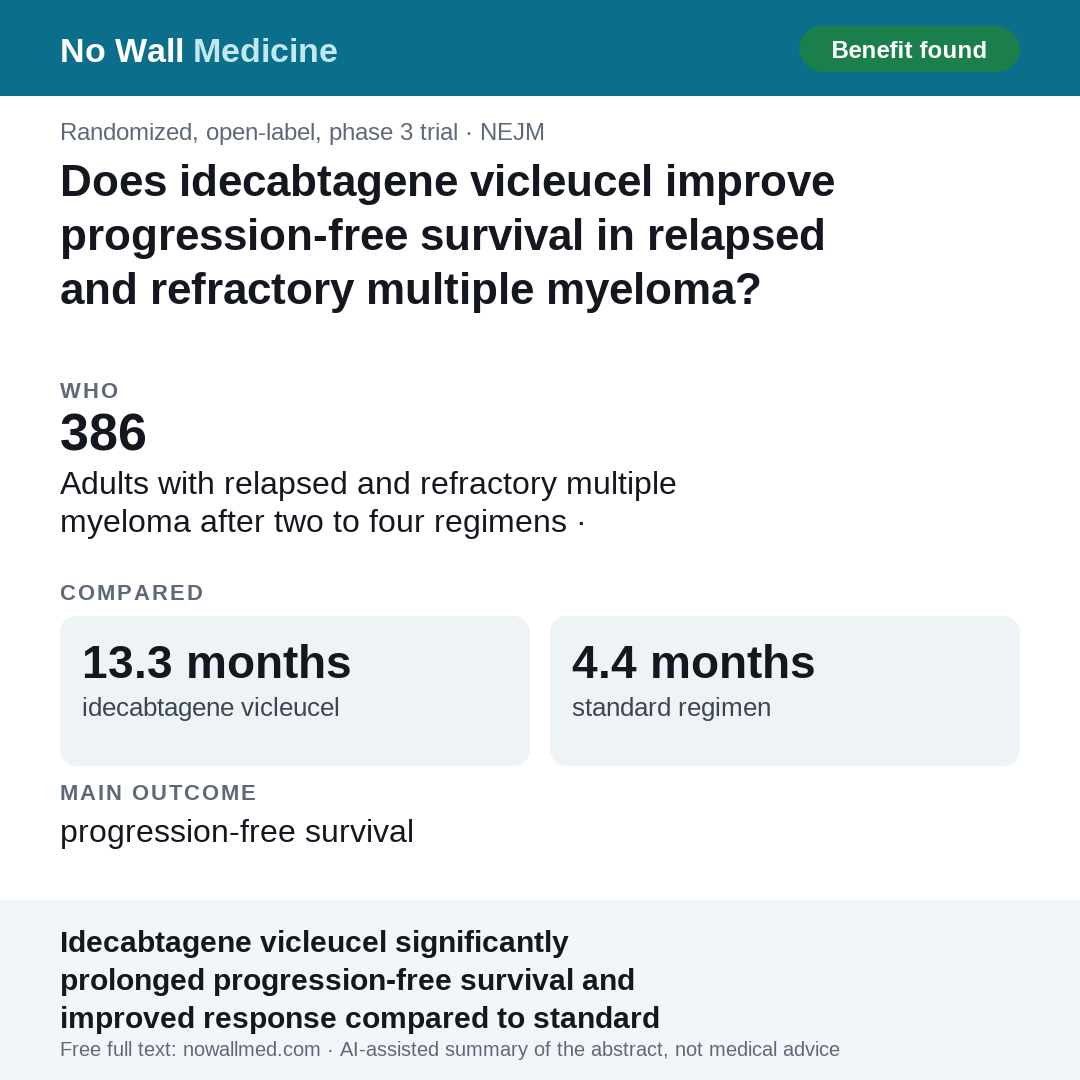
Ide-cel or Standard Regimens in Relapsed and Refractory Multiple Myeloma
Randomized, open-label, phase 3 trialBenefit found
Does idecabtagene vicleucel improve progression-free survival in relapsed and refractory multiple myeloma?
Who
386
Adults with relapsed and refractory multiple myeloma after two to four regimens · International
Compared
13.3 monthsidecabtagene vicleucel
4.4 monthsstandard regimen
Main outcome
progression-free survival
Result: hazard ratio 0.49 (95% confidence interval, 0.38 to 0.65)
Bottom line: Idecabtagene vicleucel significantly prolonged progression-free survival and improved response compared to standard regimens in relapsed and refractory multiple myeloma.
Funded by: 2seventy bio and Celgene, a Bristol-Myers Squibb company
NEJM · 2023-02-10Download image
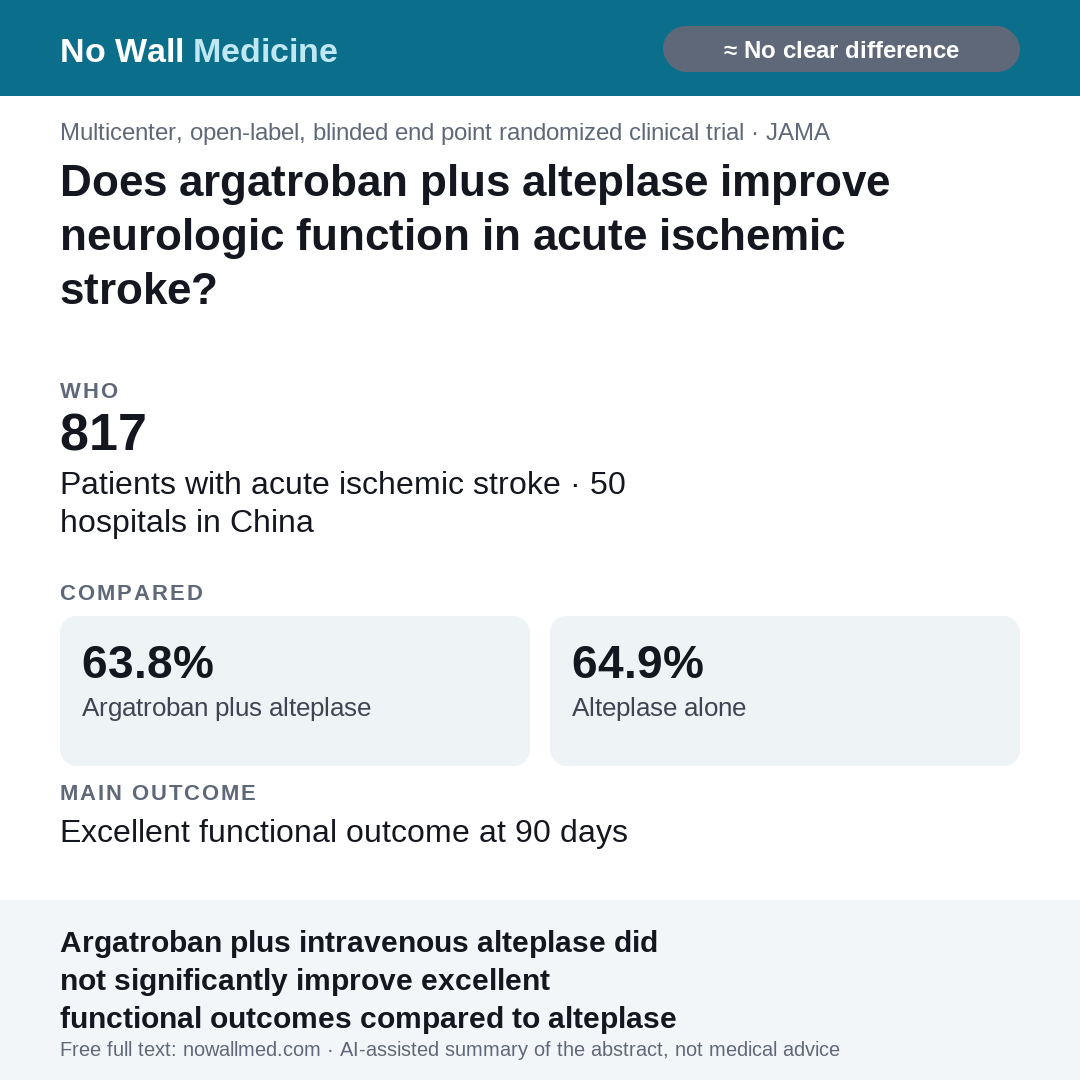
Effect of Argatroban Plus Intravenous Alteplase vs Intravenous Alteplase Alone on Neurologic Function in Patients With Acute Ischemic Stroke: The ARAIS Randomized Clinical Trial
Multicenter, open-label, blinded end point randomized clinical trialNo clear difference
Does argatroban plus alteplase improve neurologic function in acute ischemic stroke?
Who
817
Patients with acute ischemic stroke · 50 hospitals in China
Compared
63.8%Argatroban plus alteplase (210/329)
64.9%Alteplase alone (238/367)
Main outcome
Excellent functional outcome at 90 days
Result: risk ratio 0.98 (95% CI 0.88-1.10)
Bottom line: Argatroban plus intravenous alteplase did not significantly improve excellent functional outcomes compared to alteplase alone in acute ischemic stroke.
JAMA · 2023-02-10Download image
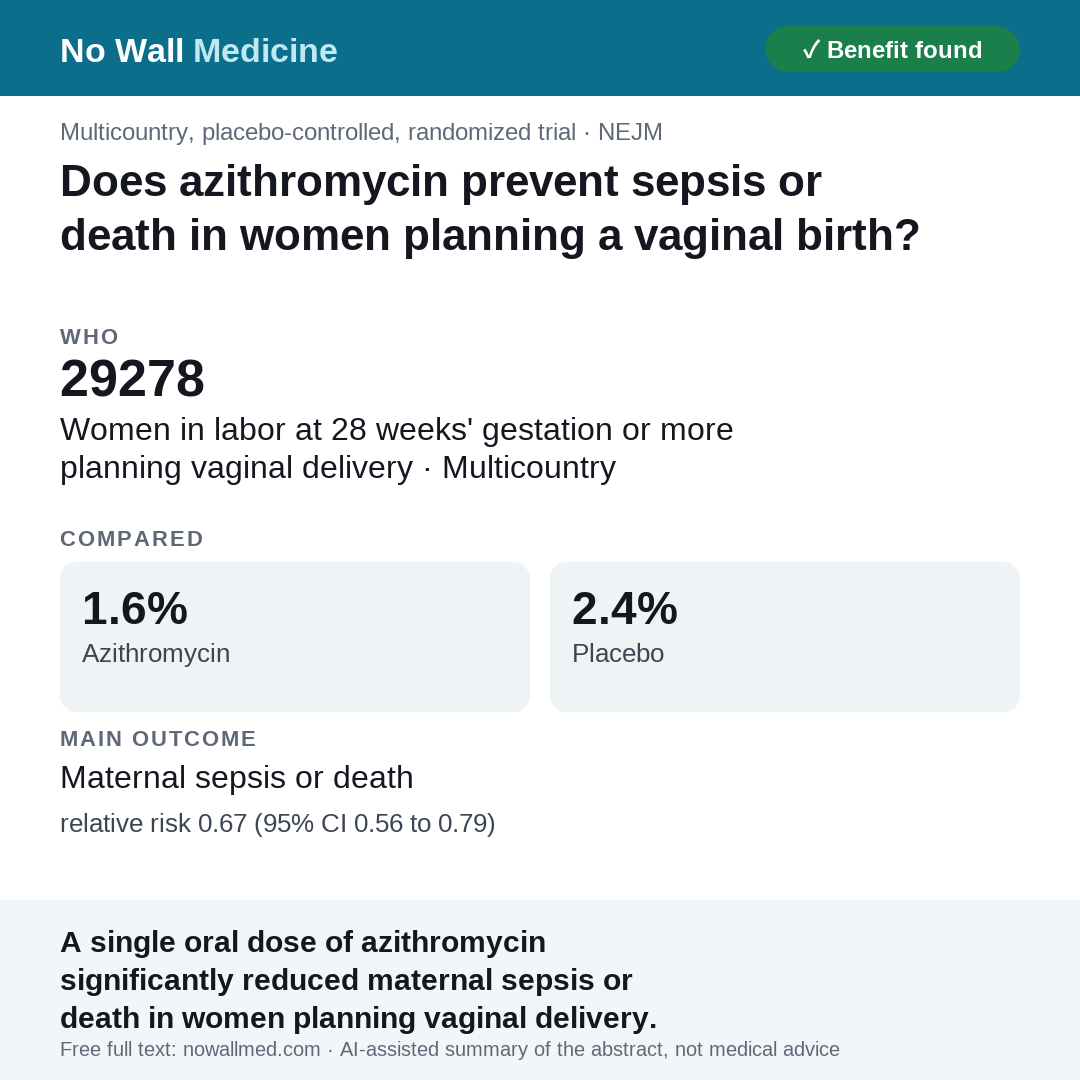
Azithromycin to Prevent Sepsis or Death in Women Planning a Vaginal Birth
Multicountry, placebo-controlled, randomized trialBenefit found
Does azithromycin prevent sepsis or death in women planning a vaginal birth?
Who
29278
Women in labor at 28 weeks' gestation or more planning vaginal delivery · Multicountry
Compared
1.6%Azithromycin
2.4%Placebo
Main outcome
Maternal sepsis or death
Result: relative risk 0.67 (95% CI 0.56 to 0.79)
Bottom line: A single oral dose of azithromycin significantly reduced maternal sepsis or death in women planning vaginal delivery.
Funded by: Eunice Kennedy Shriver National Institute of Child Health and Human Development
NEJM · 2023-02-09Download image
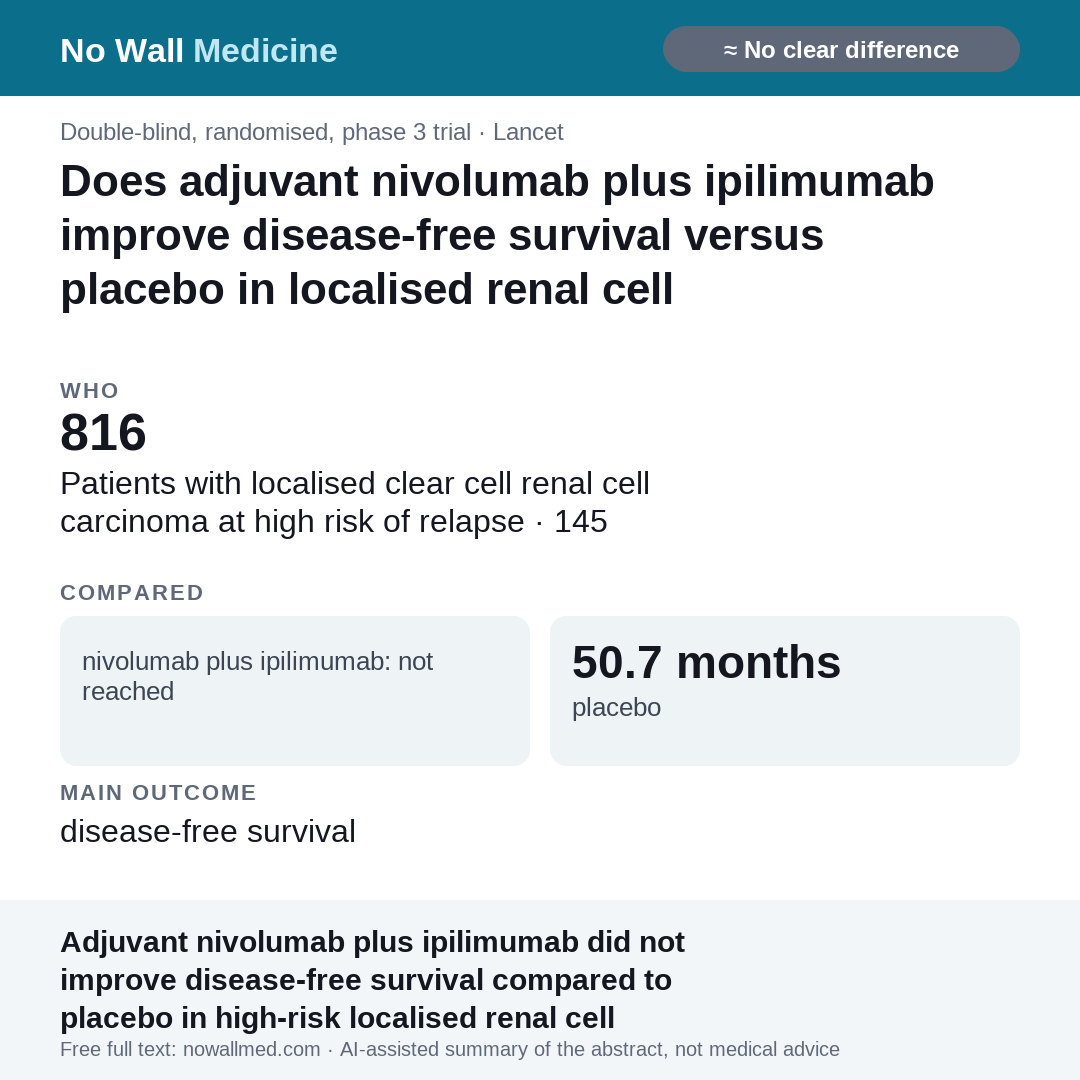
Adjuvant nivolumab plus ipilimumab versus placebo for localised renal cell carcinoma after nephrectomy (CheckMate 914): a double-blind, randomised, phase 3 trial
Double-blind, randomised, phase 3 trialNo clear difference
Does adjuvant nivolumab plus ipilimumab improve disease-free survival versus placebo in localised renal cell carcinoma?
Who
816
Patients with localised clear cell renal cell carcinoma at high risk of relapse · 145 hospitals and cancer centres across 20 countries
Compared
nivolumab plus ipilimumab: not reached
50.7 monthsplacebo (95% CI 48.1 to not estimable)
Main outcome
disease-free survival
Result: hazard ratio 0.92, 95% CI 0.71-1.19
Bottom line: Adjuvant nivolumab plus ipilimumab did not improve disease-free survival compared to placebo in high-risk localised renal cell carcinoma.
Funded by: Bristol Myers Squibb and Ono Pharmaceutical
Lancet · 2023-02-09Download image
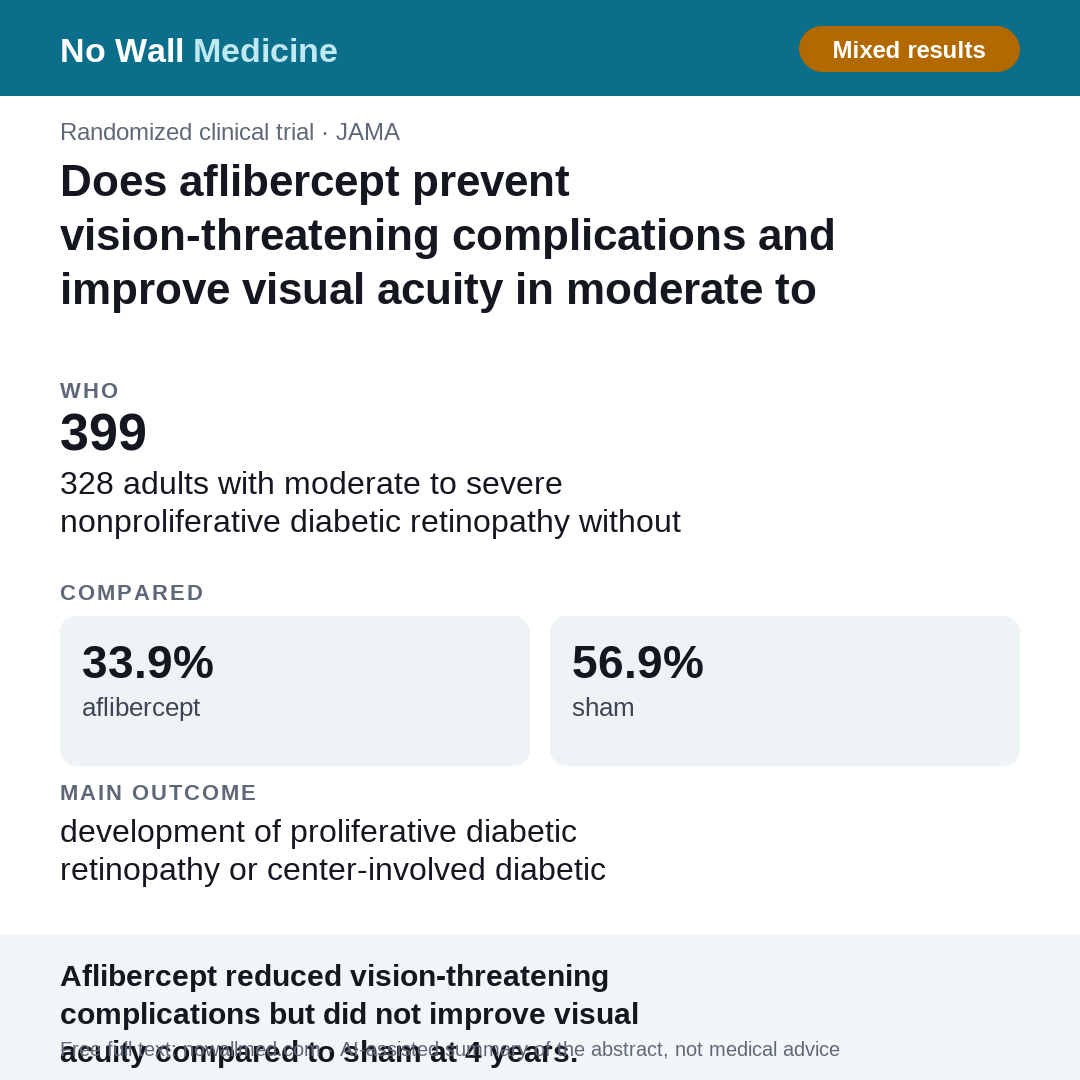
Four-Year Visual Outcomes in the Protocol W Randomized Trial of Intravitreous Aflibercept for Prevention of Vision-Threatening Complications of Diabetic Retinopathy
Randomized clinical trialMixed results
Does aflibercept prevent vision-threatening complications and improve visual acuity in moderate to severe nonproliferative diabetic retinopathy?
Who
399
328 adults with moderate to severe nonproliferative diabetic retinopathy without center-involved diabetic macular edema · 64 clinical sites in the US and Canada
Compared
33.9%aflibercept
56.9%sham
Main outcome
development of proliferative diabetic retinopathy or center-involved diabetic macular edema with vision loss
Result: adjusted hazard ratio 0.40 (97.5% CI 0.28 to 0.57)
Bottom line: Aflibercept reduced vision-threatening complications but did not improve visual acuity compared to sham at 4 years.
JAMA · 2023-02-07Download image
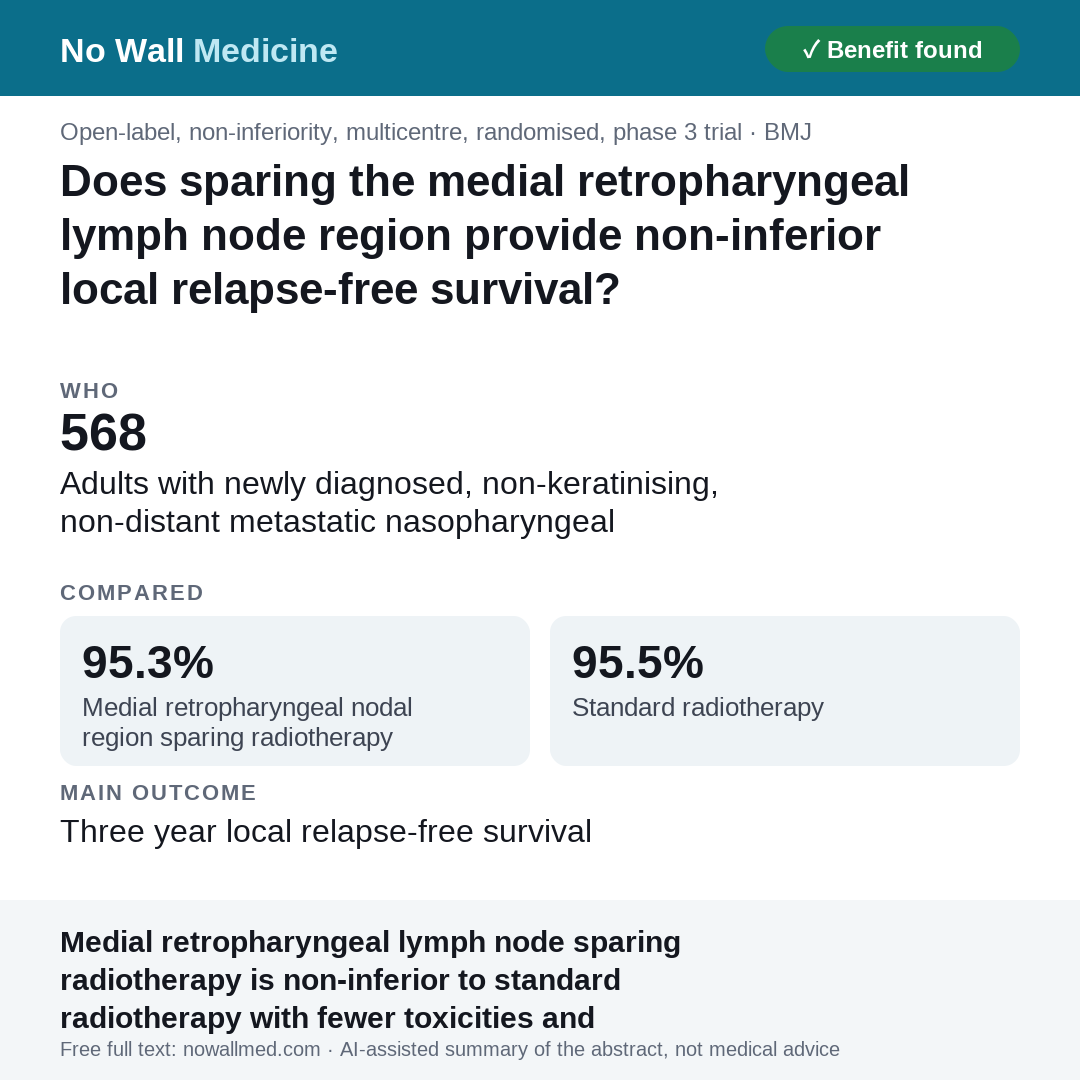
Medial retropharyngeal nodal region sparing radiotherapy versus standard radiotherapy in patients with nasopharyngeal carcinoma: open label, non-inferiority, multicentre, randomised, phase 3 trial
Open-label, non-inferiority, multicentre, randomised, phase 3 trialBenefit found
Does sparing the medial retropharyngeal lymph node region provide non-inferior local relapse-free survival?
Who
568
Adults with newly diagnosed, non-keratinising, non-distant metastatic nasopharyngeal carcinoma · Three Chinese hospitals
Compared
95.3%Medial retropharyngeal nodal region sparing radiotherapy
95.5%Standard radiotherapy
Main outcome
Three year local relapse-free survival
Result: stratified hazard ratio 1.04 (95% confidence interval 0.51 to 2.12)
Bottom line: Medial retropharyngeal lymph node sparing radiotherapy is non-inferior to standard radiotherapy with fewer toxicities and improved patient outcomes.
BMJ · 2023-02-06Download image
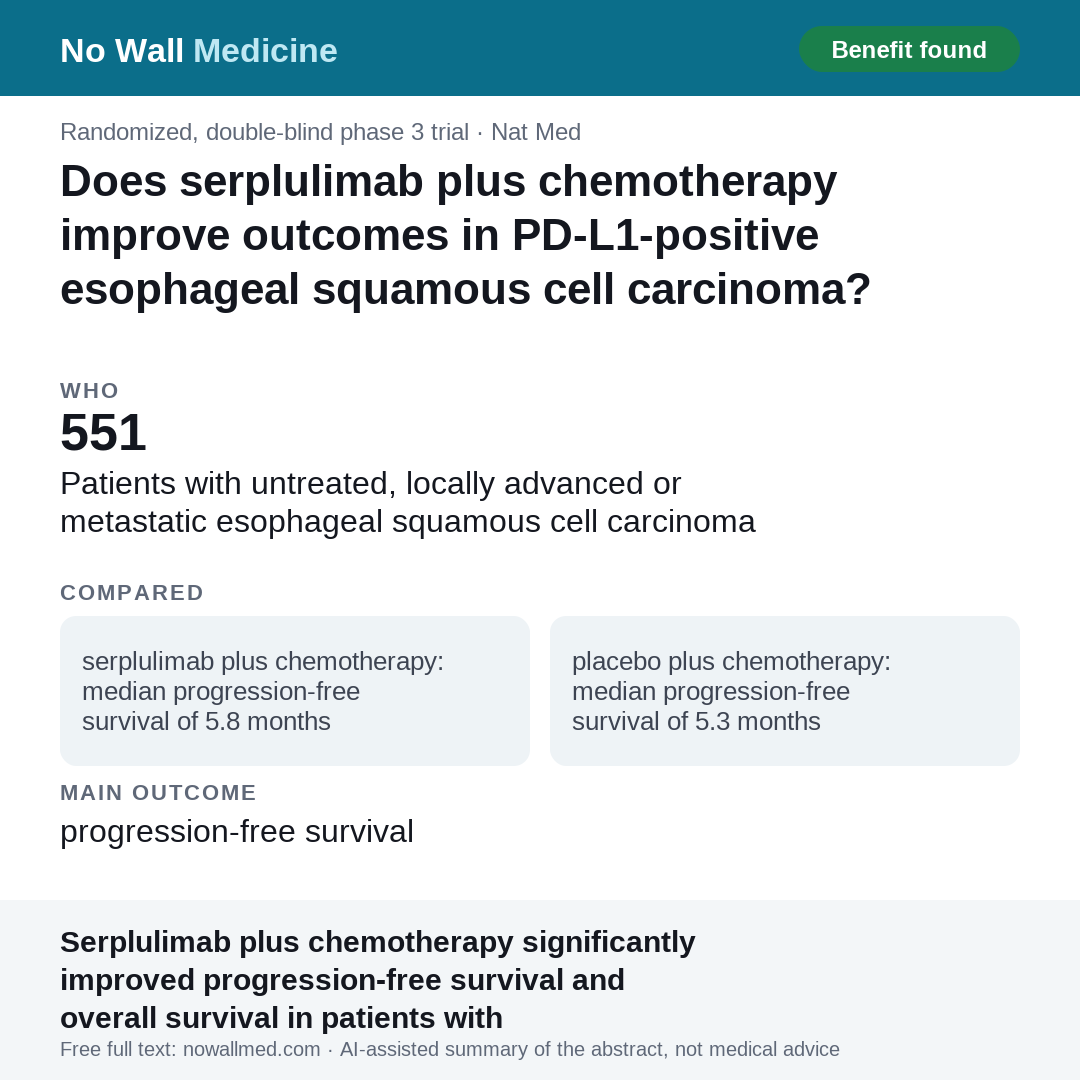
First-line serplulimab or placebo plus chemotherapy in PD-L1-positive esophageal squamous cell carcinoma: a randomized, double-blind phase 3 trial
Randomized, double-blind phase 3 trialBenefit found
Does serplulimab plus chemotherapy improve outcomes in PD-L1-positive esophageal squamous cell carcinoma?
Who
551
Patients with untreated, locally advanced or metastatic esophageal squamous cell carcinoma · Multicenter
Compared
serplulimab plus chemotherapy: median progression-free survival of 5.8 months
placebo plus chemotherapy: median progression-free survival of 5.3 months
Main outcome
progression-free survival
Result: hazard ratio 0.60 (95% confidence interval 0.48-0.75)
Bottom line: Serplulimab plus chemotherapy significantly improved progression-free survival and overall survival in patients with PD-L1-positive advanced esophageal squamous cell carcinoma.
Nat Med · 2023-02-02Download image
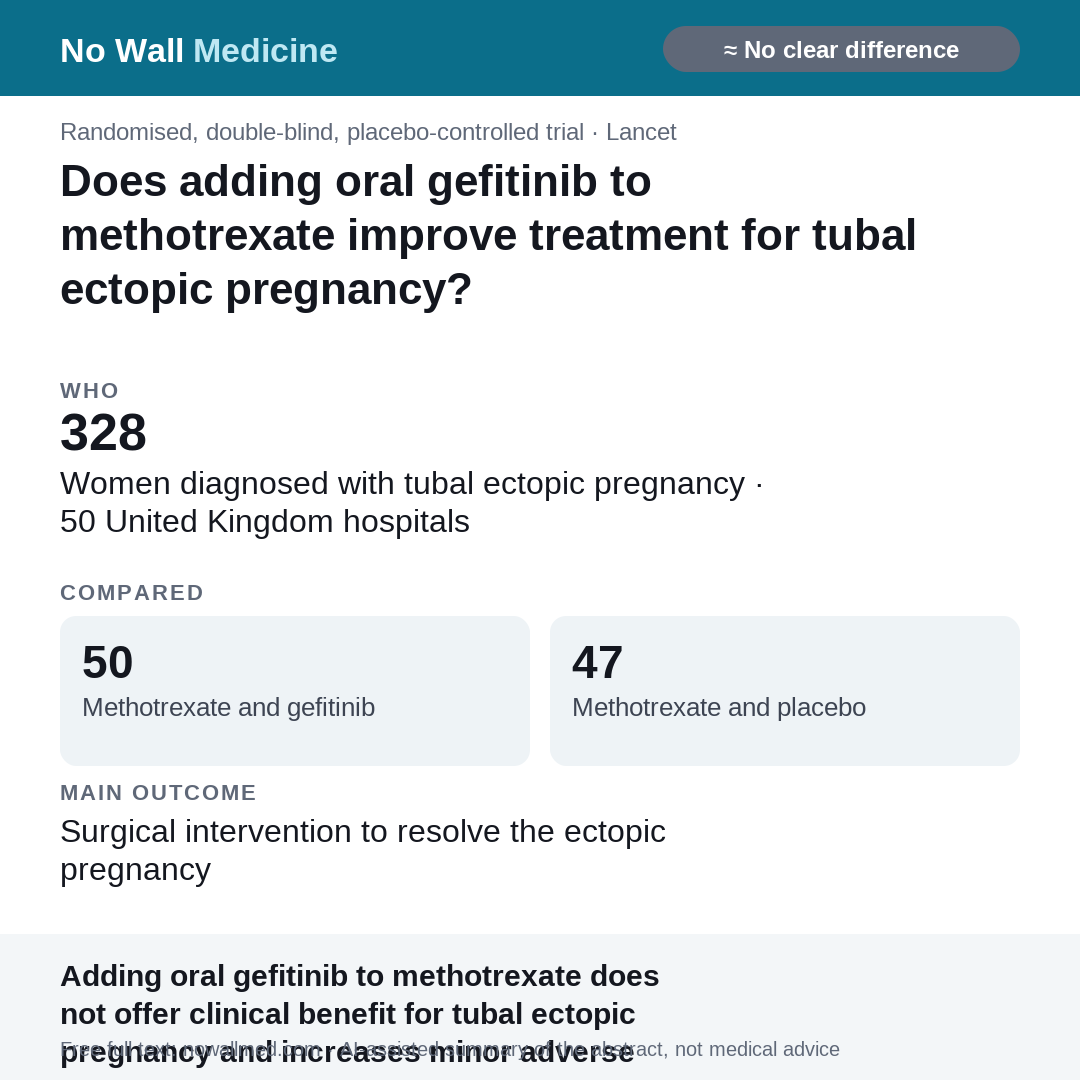
Combination of gefitinib and methotrexate to treat tubal ectopic pregnancy (GEM3): a multicentre, randomised, double-blind, placebo-controlled trial
Randomised, double-blind, placebo-controlled trialNo clear difference
Does adding oral gefitinib to methotrexate improve treatment for tubal ectopic pregnancy?
Who
328
Women diagnosed with tubal ectopic pregnancy · 50 United Kingdom hospitals
Compared
50Methotrexate and gefitinib (30%)
47Methotrexate and placebo (29%)
Main outcome
Surgical intervention to resolve the ectopic pregnancy
Result: adjusted risk ratio 1·15 (95% CI 0·85 to 1·58)
Bottom line: Adding oral gefitinib to methotrexate does not offer clinical benefit for tubal ectopic pregnancy and increases minor adverse reactions.
Funded by: National Institute of Health Research
Lancet · 2023-02-01Download image
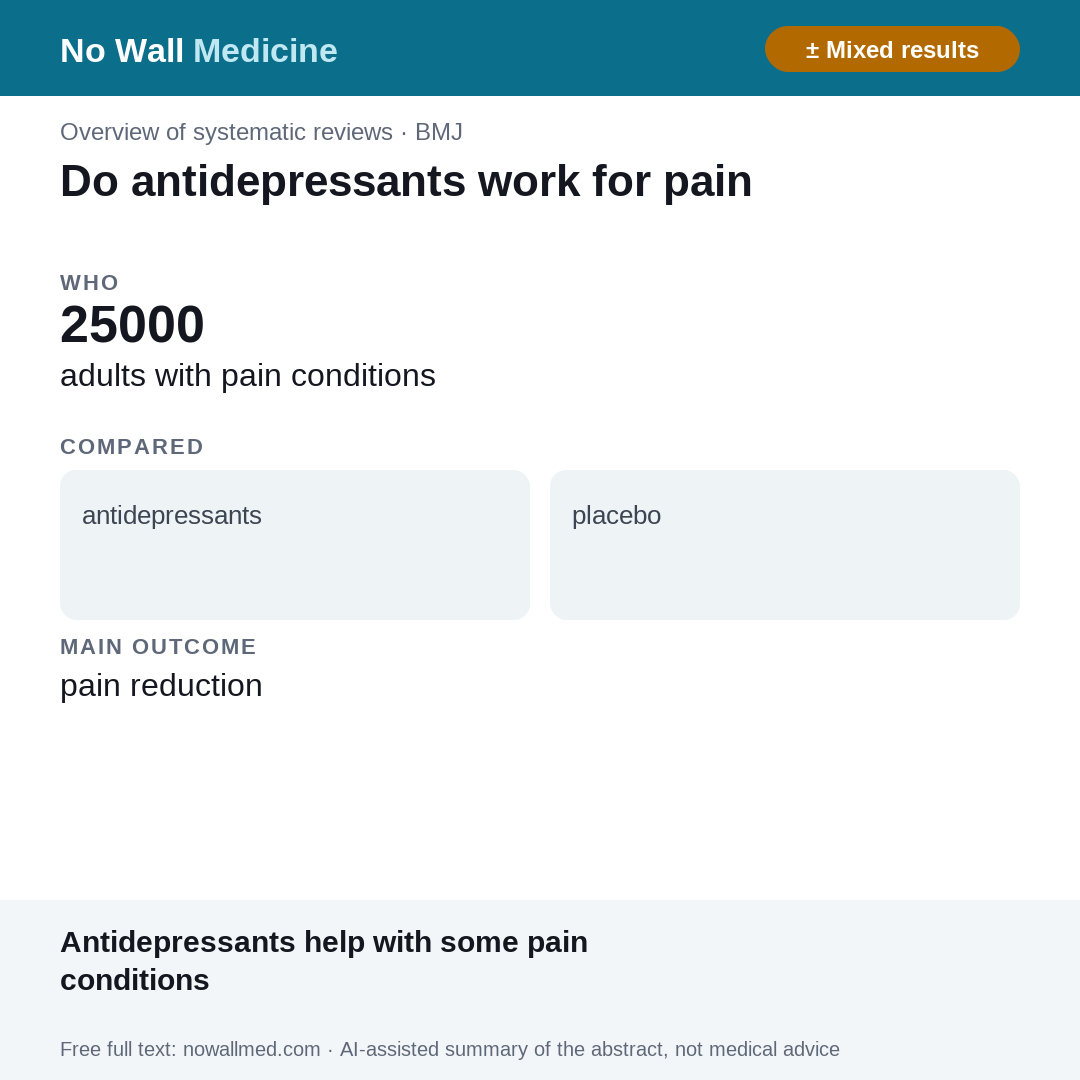
Efficacy, safety, and tolerability of antidepressants for pain in adults: overview of systematic reviews
Overview of systematic reviewsMixed results
Do antidepressants work for pain
Who
25000
adults with pain conditions
Compared
antidepressants
placebo
Main outcome
pain reduction
Bottom line: Antidepressants help with some pain conditions
BMJ · 2023-02-01Download image