Visual abstracts
New randomized trials and meta-analyses from leading journals at a glance: who was studied, what was compared, and what was found. Every paper is free to read in full.
All specialtiesCardiology 836Oncology 758Gastroenterology & Hepatology 306Infectious Disease 626Neurology 349Psychiatry & Mental Health 430Pulmonology 364Critical Care 241Endocrinology & Diabetes 480Pediatrics 533Surgery 317Orthopedics & Sports Medicine 161Neurosurgery 84Cardiothoracic & Vascular Surgery 87Plastic & Reconstructive Surgery 110Nephrology 197Rheumatology 108Hematology 181Dermatology 74Ophthalmology 97Obstetrics & Gynecology 261Public & Global Health 167Radiology & Imaging 96Anesthesiology 107Urology 162ENT (Otolaryngology) 83Emergency Medicine 65Allergy & Immunology 58Geriatrics 160Family Medicine & Primary Care 111Medical Genetics & Genomics 91Pathology & Laboratory Medicine 23Physical Medicine & Rehabilitation 148Palliative Care 81Nutrition 223Digital Health & AI 460General Medicine 101
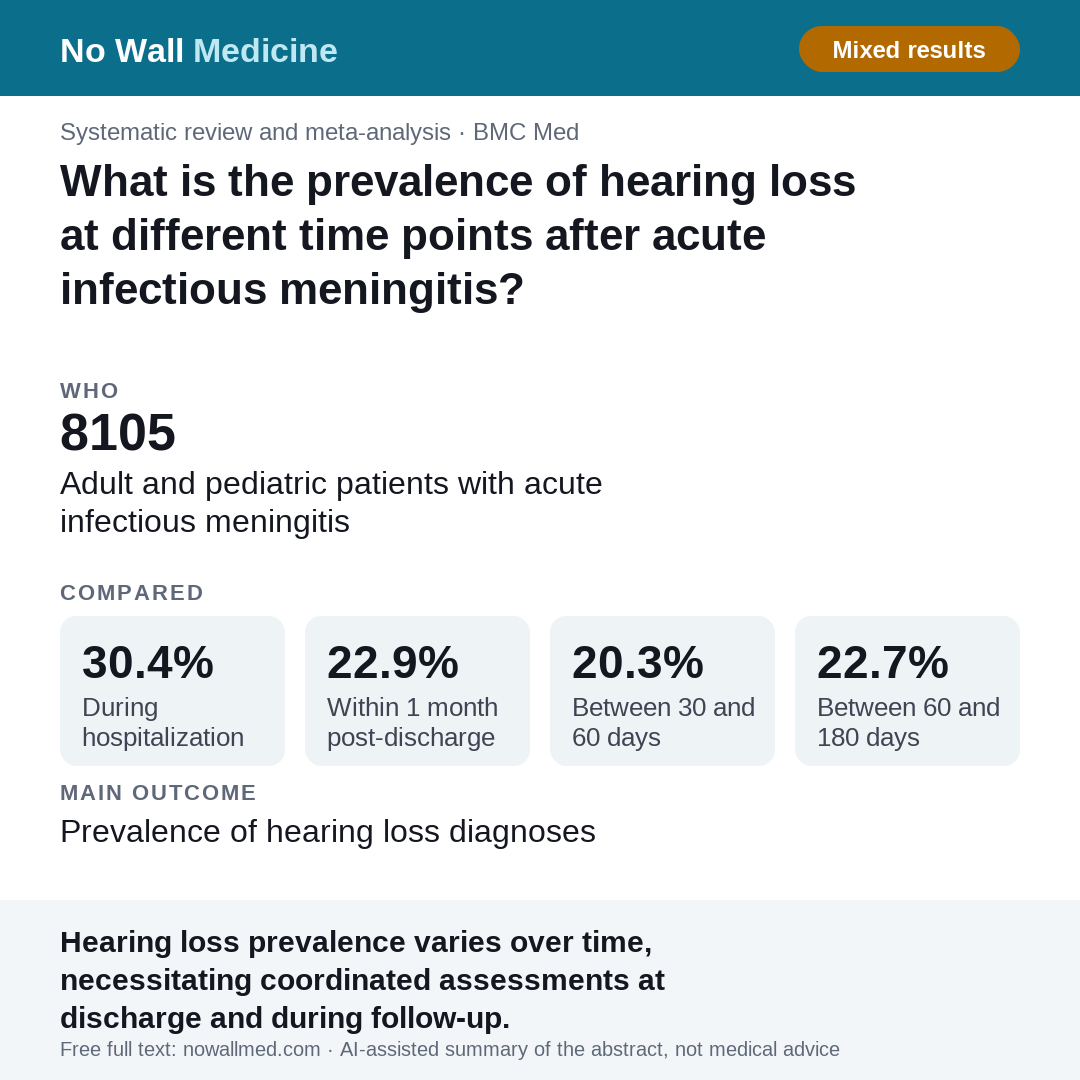
Detection of hearing loss by formal audiological testing after acute infectious meningitis: a global systematic review and meta-analysis
Systematic review and meta-analysisMixed results
What is the prevalence of hearing loss at different time points after acute infectious meningitis?
Who
8105
Adult and pediatric patients with acute infectious meningitis
Compared
30.4%During hospitalization or at discharge (95% CI 22.9-38%)
22.9%Within 1 month post-discharge (95% CI 12.6-33.1%)
20.3%Between 30 and 60 days post-discharge (95% CI 8.8-31.9%)
22.7%Between 60 and 180 days post-discharge (95% CI 12.1-33.4%)
Main outcome
Prevalence of hearing loss diagnoses
Bottom line: Hearing loss prevalence varies over time, necessitating coordinated assessments at discharge and during follow-up.
BMC Med · 2026-02-28Download image
IDSA 2025 Guideline on the Use of Vaccines for the Prevention of Seasonal Influenza Infections in Immunocompromised Patients
Expert panel systematic reviewBenefit found
Should immunocompromised individuals receive influenza vaccines for prevention?
Who
Immunocompromised adults and children aged 6 months or older
Compared
Influenza vaccination: 32% reduction in influenza-associated hospitalization
No vaccination
Main outcome
Influenza-associated hospitalization
Bottom line: The Infectious Diseases Society of America strongly recommends influenza vaccination for all immunocompromised individuals aged 6 months or older.
Limitation: Direct evidence in immunocompromised populations was limited.
Clin Infect Dis · 2026-02-28Download image

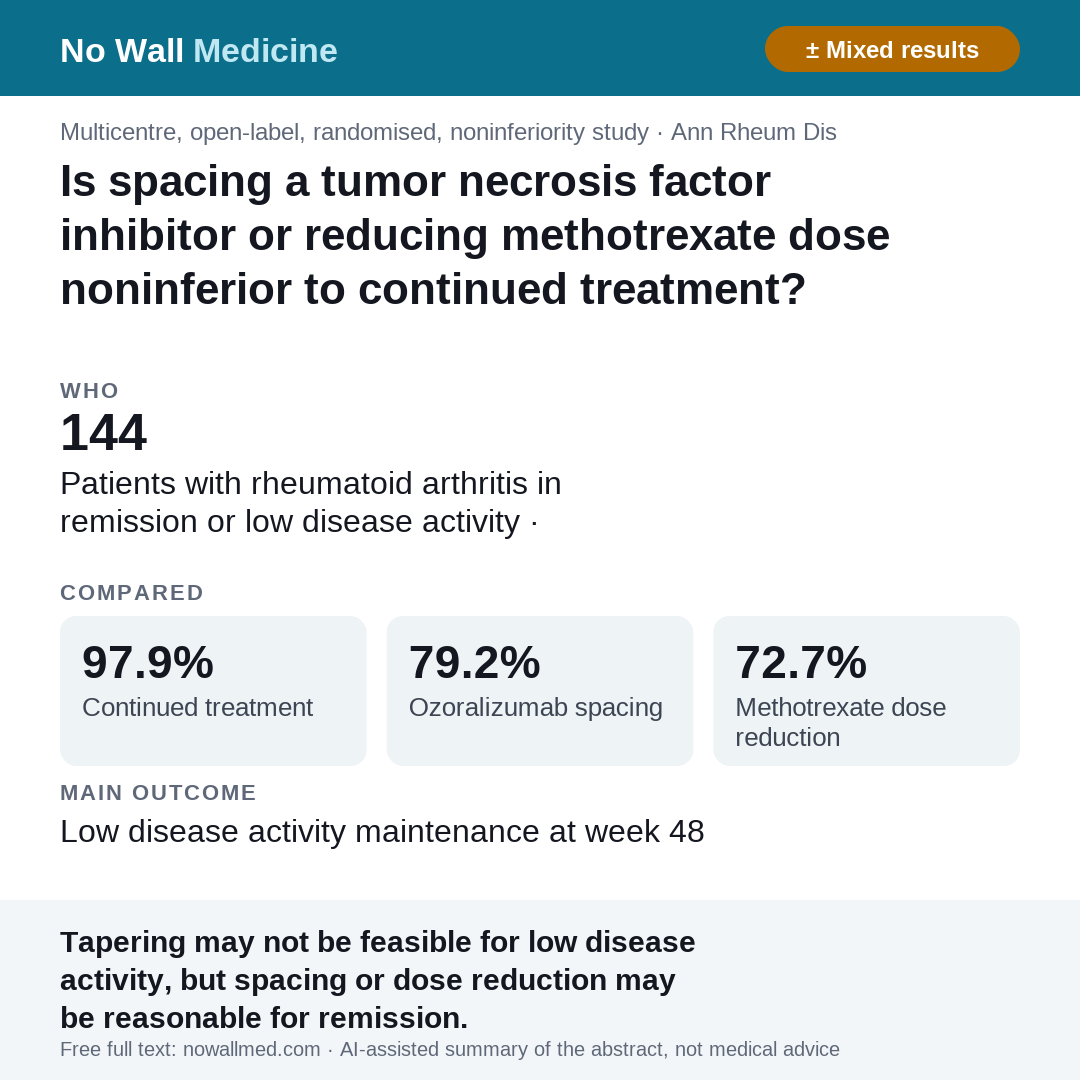
Spacing of a TNF inhibitor or dose reduction of methotrexate vs continued treatment in patients with rheumatoid arthritis in remission or low disease activity: a randomised, controlled trial (SORAIRO trial)
Multicentre, open-label, randomised, noninferiority studyMixed results
Is spacing a tumor necrosis factor inhibitor or reducing methotrexate dose noninferior to continued treatment?
Who
144
Patients with rheumatoid arthritis in remission or low disease activity · Multicentre
Compared
97.9%Continued treatment
79.2%Ozoralizumab spacing
72.7%Methotrexate dose reduction
Main outcome
Low disease activity maintenance at week 48
Bottom line: Tapering may not be feasible for low disease activity, but spacing or dose reduction may be reasonable for remission.
Ann Rheum Dis · 2026-02-28Download image
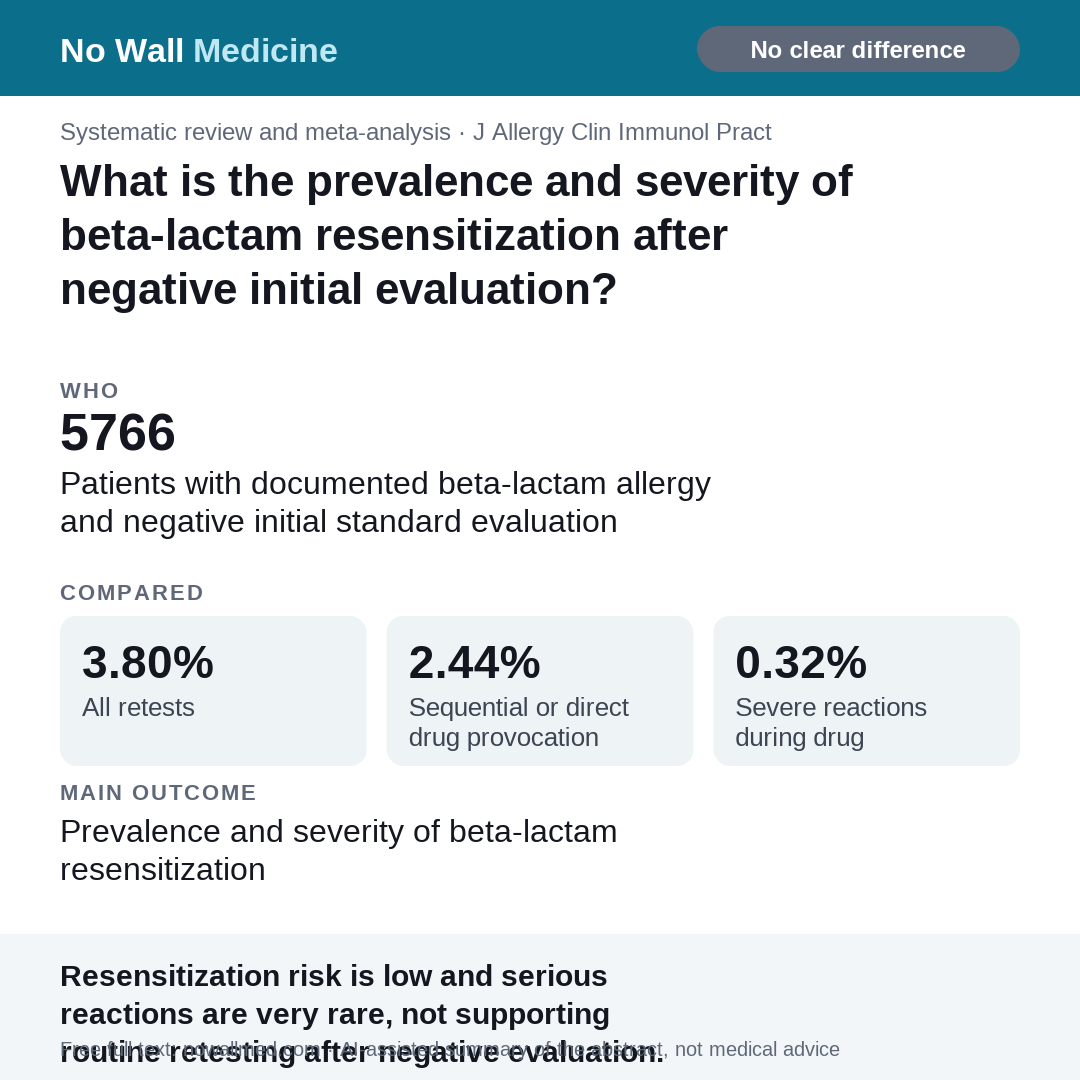
Resensitization of β-Lactams After Negative Initial Standard Evaluation: A Systematic Review and Meta-Analysis
Systematic review and meta-analysisNo clear difference
What is the prevalence and severity of beta-lactam resensitization after negative initial evaluation?
Who
5766
Patients with documented beta-lactam allergy and negative initial standard evaluation
Compared
3.80%All retests (95% CI, 2.35-5.50)
2.44%Sequential or direct drug provocation test (95% CI, 0.99-4.43)
0.32%Severe reactions during drug provocation testing (95% CI, 0.18-0.58)
Main outcome
Prevalence and severity of beta-lactam resensitization
Result: 3.80% (95% CI, 2.35-5.50)
Bottom line: Resensitization risk is low and serious reactions are very rare, not supporting routine retesting after negative evaluation.
J Allergy Clin Immunol Pract · 2026-02-28Download image
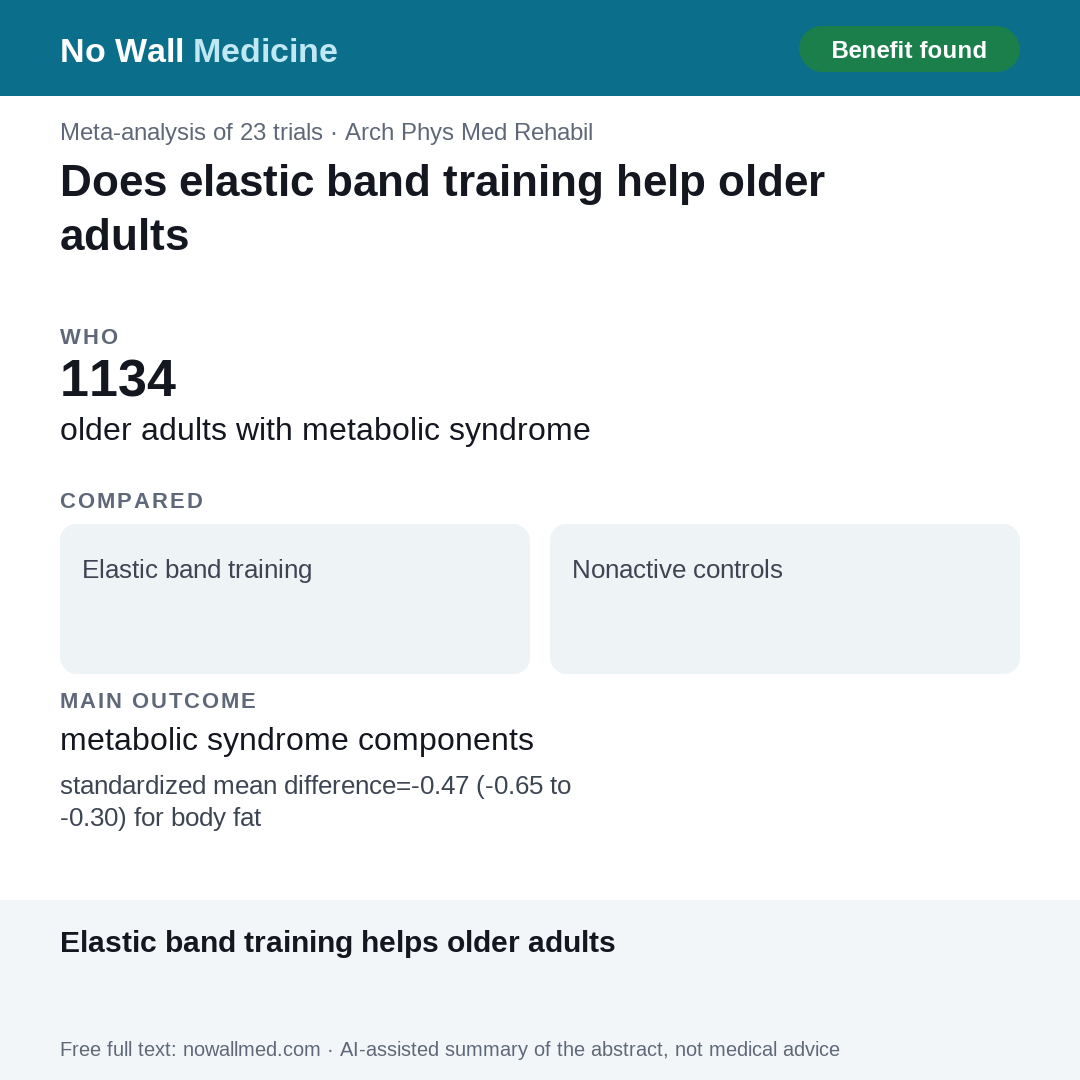
Optimizing Elastic Band Resistance Training for Metabolic Syndrome Components in Older Adults: A Systematic Review, Meta-Analysis, and Meta-Regression of Randomized Controlled Trials
Meta-analysis of 23 trialsBenefit found
Does elastic band training help older adults
Who
1134
older adults with metabolic syndrome
Compared
Elastic band training
Nonactive controls
Main outcome
metabolic syndrome components
Result: standardized mean difference=-0.47 (-0.65 to -0.30) for body fat
Bottom line: Elastic band training helps older adults
Arch Phys Med Rehabil · 2026-02-28Download image
Artificial intelligence for predicting paediatric acute kidney injury: a systematic review and meta-analysis
Systematic review and meta-analysisBenefit found
How well do artificial intelligence models predict acute kidney injury in children?
Who
33949
Paediatric patients
Compared
0.873Gradient boosting
Neural network
Logistic regression
Main outcome
Area under the curve for predicting acute kidney injury
Result: area under the curve 0.873 (95% confidence interval 0.836-0.909)
Bottom line: Artificial intelligence models show reasonable performance for predicting acute kidney injury in paediatric populations.
Limitation: Small sample size, heterogeneity, lack of validation cohorts, and inconsistent diagnostic criteria.
Clin Kidney J · 2026-02-28Download image

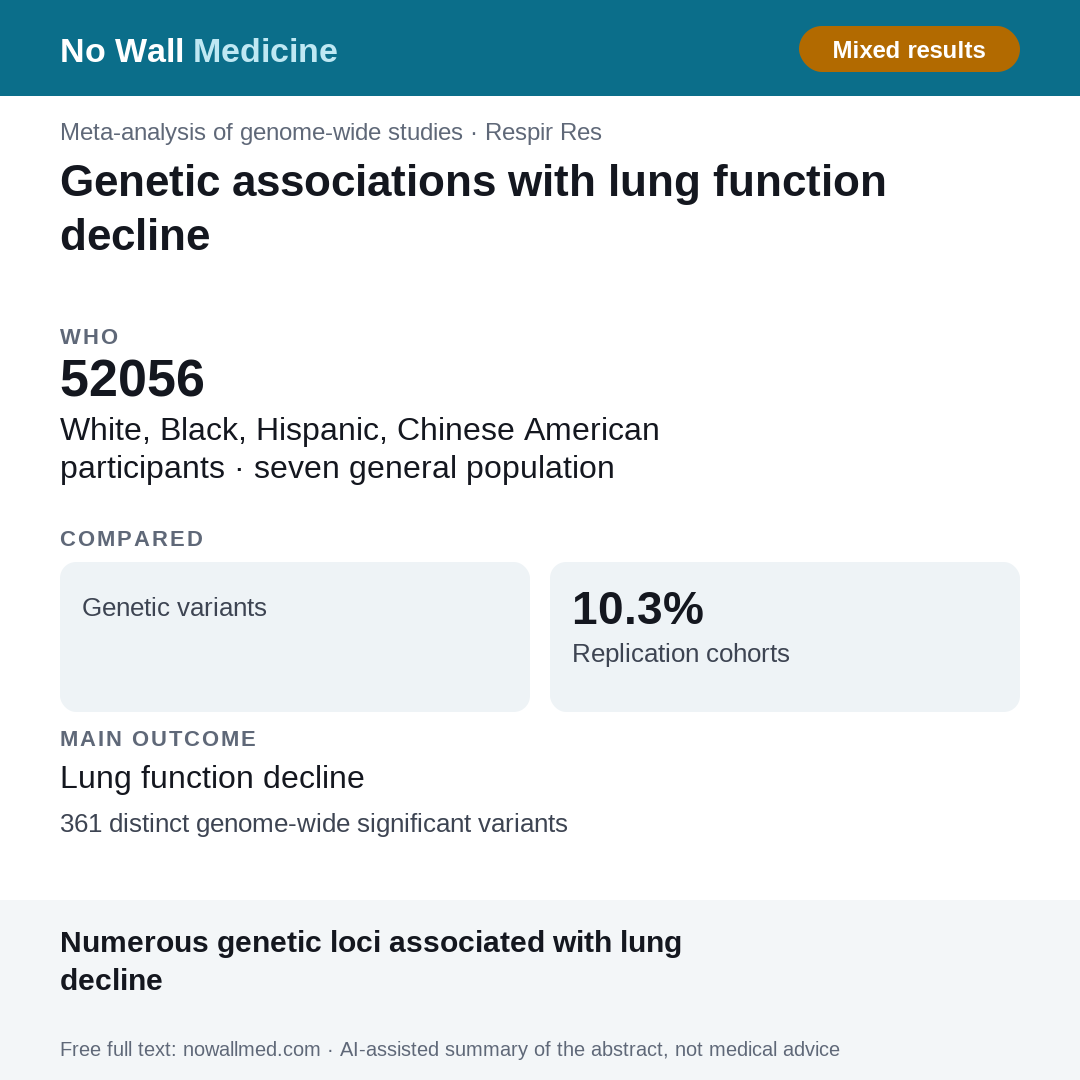
Multi-ancestry genome-wide association study and meta-analysis of lung function decline
Meta-analysis of genome-wide studiesMixed results
Genetic associations with lung function decline
Who
52056
White, Black, Hispanic, Chinese American participants · seven general population cohorts
Compared
Genetic variants
10.3%Replication cohorts
Main outcome
Lung function decline
Result: 361 distinct genome-wide significant variants
Bottom line: Numerous genetic loci associated with lung decline
Respir Res · 2026-02-28Download image
Feasibility and preliminary efficacy of an art-making program to manage fear of cancer recurrence (AM-I-FCR) in lung cancer patients: a randomized controlled pilot study
Randomized controlled pilot studyBenefit found
Does an art-making program manage fear of cancer recurrence in lung cancer patients?
Who
60
Lung cancer patients · Tertiary hospital in Fuzhou, China
Compared
Standard care
Art-making program plus standard care: significantly lower FCR severity (95% CI, 0.606 ~ 2.994, p < 0.001)
Main outcome
Fear of cancer recurrence severity, anxiety, depression, and quality of life
Bottom line: The art-making program was feasible and preliminarily reduced fear of cancer recurrence, anxiety, and depression in lung cancer patients.
BMC Med · 2026-02-27Download image

Isatuximab, bortezomib, lenalidomide, and dexamethasone for multiple myeloma: dynamics of MRD negativity in the IMROZ study
Randomized phase 3 trialBenefit found
Does Isa-VRd/Isa-Rd improve minimal residual disease negativity in transplant-ineligible multiple myeloma?
Who
Transplant-ineligible patients with newly diagnosed multiple myeloma
Compared
Isa-VRd/Isa-Rd
VRd/Rd
Main outcome
Minimal residual disease negativity and minimal residual disease-negative complete response
Bottom line: Isa-VRd/Isa-Rd led to deeper responses and higher rates of minimal residual disease negativity compared to VRd/Rd.
Blood · 2026-02-27Download image

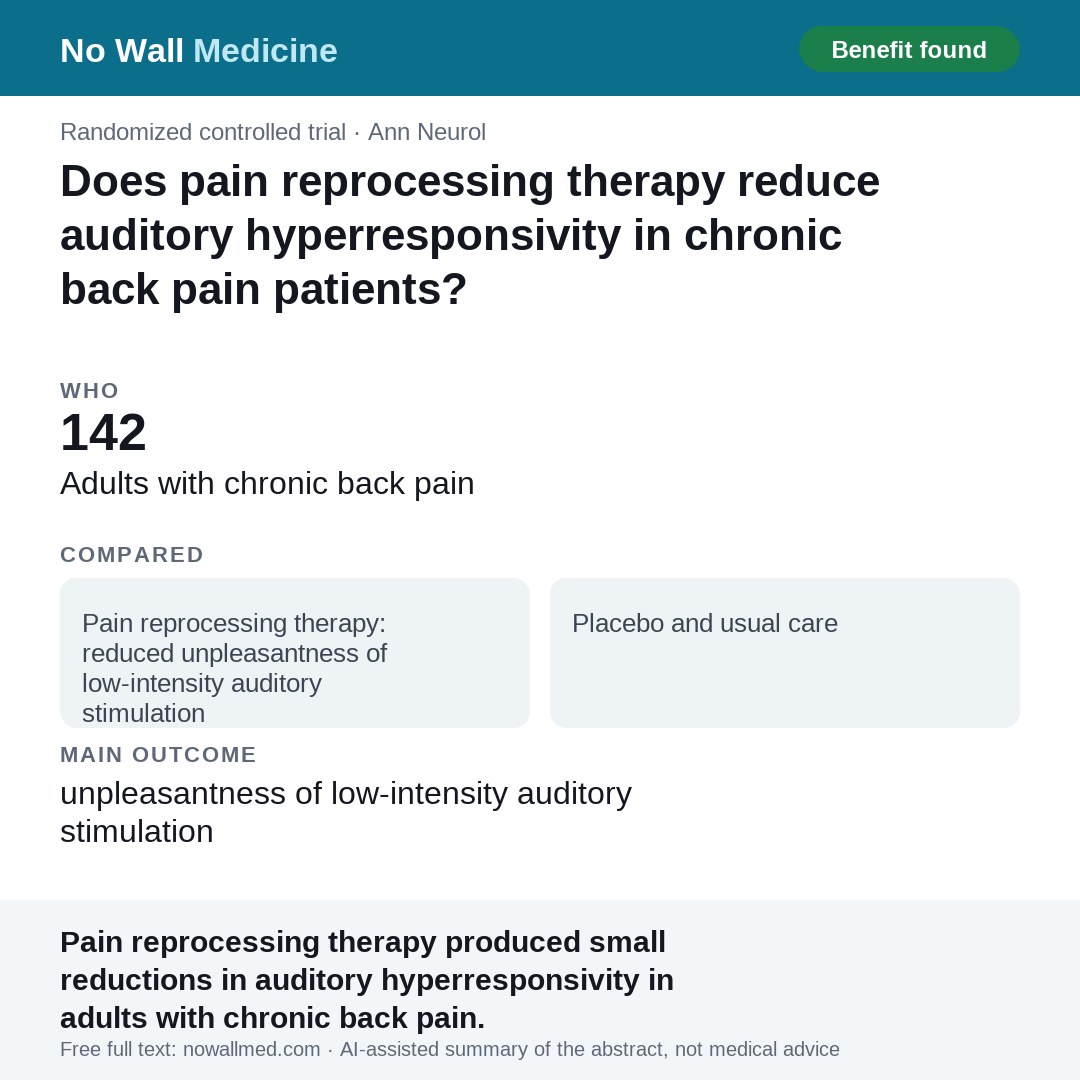
Auditory Hyperresponsivity in Chronic Back Pain: A Randomized Controlled Trial of Pain Reprocessing Therapy
Randomized controlled trialBenefit found
Does pain reprocessing therapy reduce auditory hyperresponsivity in chronic back pain patients?
Who
142
Adults with chronic back pain
Compared
Pain reprocessing therapy: reduced unpleasantness of low-intensity auditory stimulation
Placebo and usual care
Main outcome
unpleasantness of low-intensity auditory stimulation
Bottom line: Pain reprocessing therapy produced small reductions in auditory hyperresponsivity in adults with chronic back pain.
Ann Neurol · 2026-02-27Download image
Matching heterogeneous cohorts by projected principal components reveals two novel Alzheimer's disease-associated genes in the Hispanic population
Genome-wide association studies and meta-analysesBenefit found
What are the Alzheimer's disease-associated genes in the Hispanic population?
Who
Hispanic individuals from Alzheimer's Disease Sequencing Project and All of Us · Alzheimer's Disease Sequencing Project and All of Us biobanks
Compared
Alzheimer's Disease Sequencing Project: PIEZO2 p = 5.4 × 10 - 8
Meta-analysis with matched All of Us: three genome-wide significant loci
Main outcome
Alzheimer's disease-associated genetic loci
Bottom line: Matching heterogeneous cohorts revealed two novel Alzheimer's disease-associated genes in the Hispanic population.
Alzheimers Dement · 2026-02-27Download image

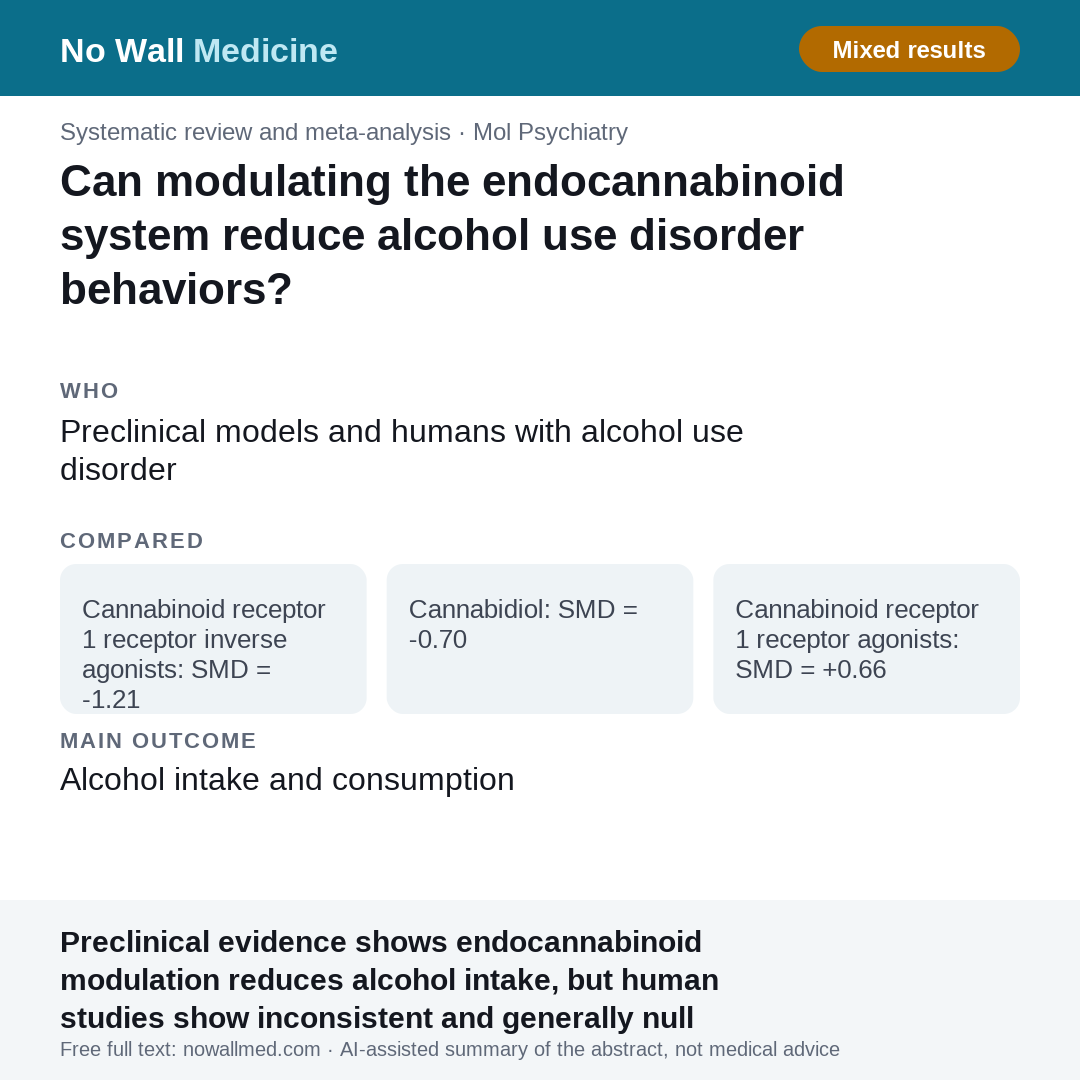
Modulating the endocannabinoid system in alcohol use disorder: A translational systematic review and meta-analysis of preclinical and human studies
Systematic review and meta-analysisMixed results
Can modulating the endocannabinoid system reduce alcohol use disorder behaviors?
Who
Preclinical models and humans with alcohol use disorder
Compared
Cannabinoid receptor 1 receptor inverse agonists: SMD = -1.21
Cannabidiol: SMD = -0.70
Cannabinoid receptor 1 receptor agonists: SMD = +0.66
Main outcome
Alcohol intake and consumption
Bottom line: Preclinical evidence shows endocannabinoid modulation reduces alcohol intake, but human studies show inconsistent and generally null effects.
Limitation: Clinical translation limited by safety concerns, methodological inconsistencies, and under-investigation of novel compounds.
Mol Psychiatry · 2026-02-27Download image
Dose-Escalation Regimens for Incretin Mimetics in Type 2 Diabetes Are Associated With Tolerance for Nausea and Vomiting
Non-linear regression analysis of Phase 1 and Phase 3 trialsBenefit found
Do dose-escalation regimens improve tolerance for nausea and vomiting with incretin mimetics?
Who
People treated with approved incretin mimetics for Type 2 diabetes
Compared
Phase 1 trials
Phase 3 trials
Main outcome
Proportion of participants reporting nausea and vomiting
Bottom line: Optimised dose-escalation regimens may increase tolerance for nausea and vomiting, allowing higher, more effective doses.
Diabetes Obes Metab · 2026-02-27Download image

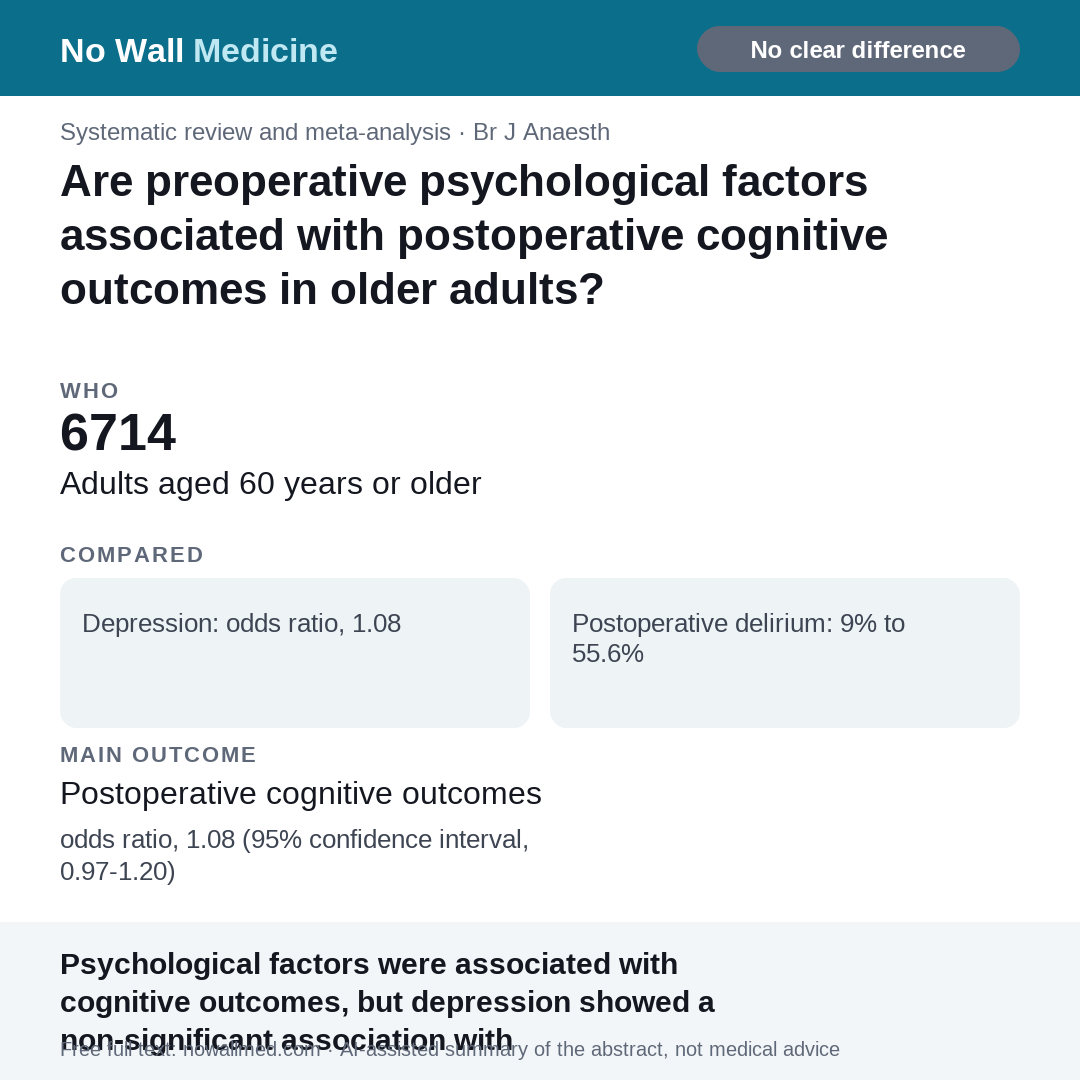
Psychological factors associated with postoperative cognitive outcomes in older adults: a systematic review and meta-analysis
Systematic review and meta-analysisNo clear difference
Are preoperative psychological factors associated with postoperative cognitive outcomes in older adults?
Who
6714
Adults aged 60 years or older
Compared
Depression: odds ratio, 1.08
Postoperative delirium: 9% to 55.6%
Main outcome
Postoperative cognitive outcomes
Result: odds ratio, 1.08 (95% confidence interval, 0.97-1.20)
Bottom line: Psychological factors were associated with cognitive outcomes, but depression showed a non-significant association with postoperative delirium.
Limitation: Evidence for anxiety, personality traits, and stress is limited.
Br J Anaesth · 2026-02-27Download image
Promoting genetic and genomic practices among allied healthcare professionals and nurses: a systematic review
Systematic reviewUnclear result
genetic practices among healthcare professionals
Who
allied health professionals and nurses
Compared
workshops
online learning
Main outcome
genetic integration into practice
Bottom line: strategies support genetic integration
Limitation: lack evaluation and focus
Eur J Hum Genet · 2026-02-27Download image

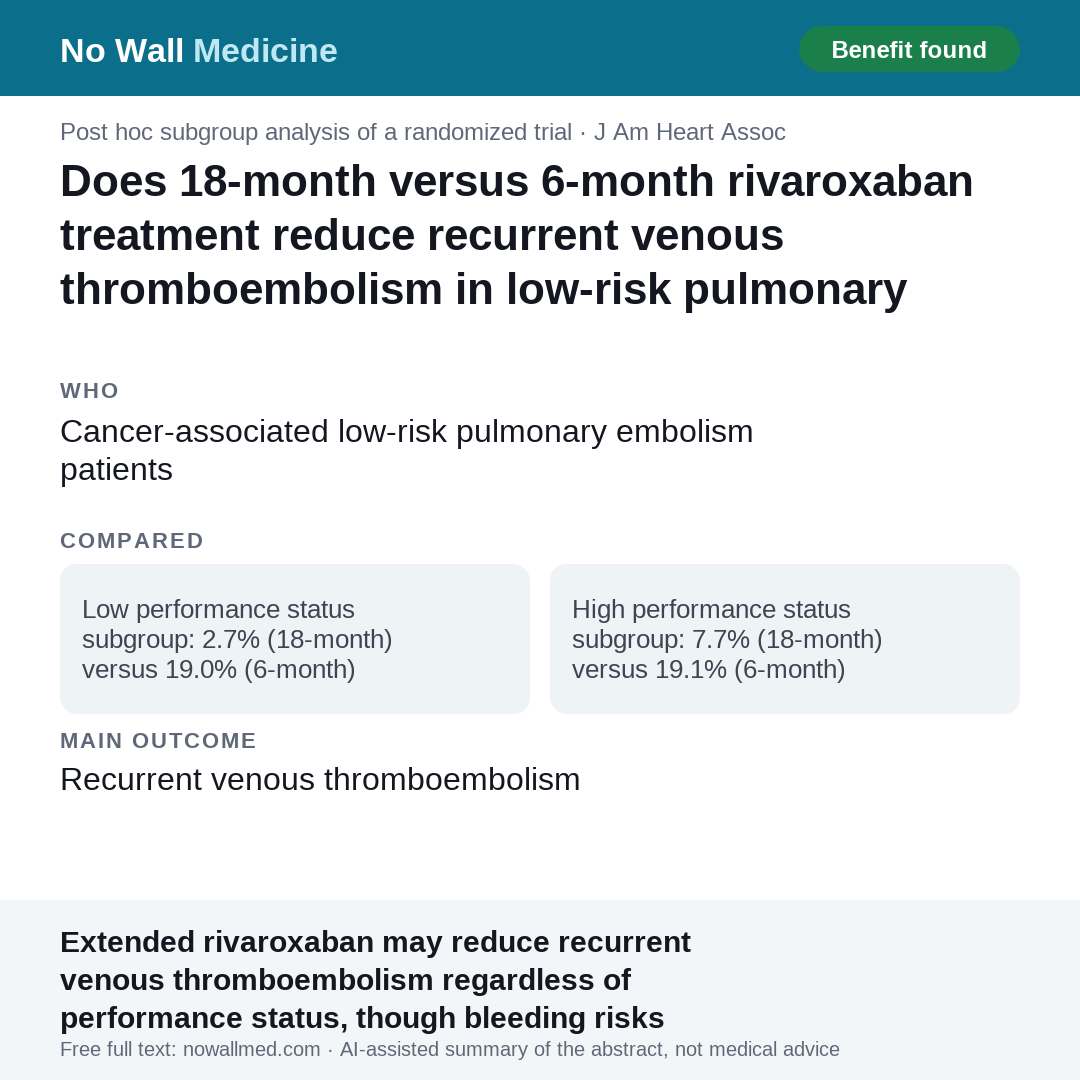
Extended Anticoagulation Therapy With Rivaroxaban for Cancer-Associated Low-Risk Pulmonary Embolism According to Different Performance Status Scores: Insights From the ONCO PE Randomized Trial
Post hoc subgroup analysis of a randomized trialBenefit found
Does 18-month versus 6-month rivaroxaban treatment reduce recurrent venous thromboembolism in low-risk pulmonary embolism?
Who
Cancer-associated low-risk pulmonary embolism patients
Compared
Low performance status subgroup: 2.7% (18-month) versus 19.0% (6-month)
High performance status subgroup: 7.7% (18-month) versus 19.1% (6-month)
Main outcome
Recurrent venous thromboembolism
Bottom line: Extended rivaroxaban may reduce recurrent venous thromboembolism regardless of performance status, though bleeding risks may increase in high performance status patients.
Limitation: This was a post hoc subgroup analysis
J Am Heart Assoc · 2026-02-27Download image
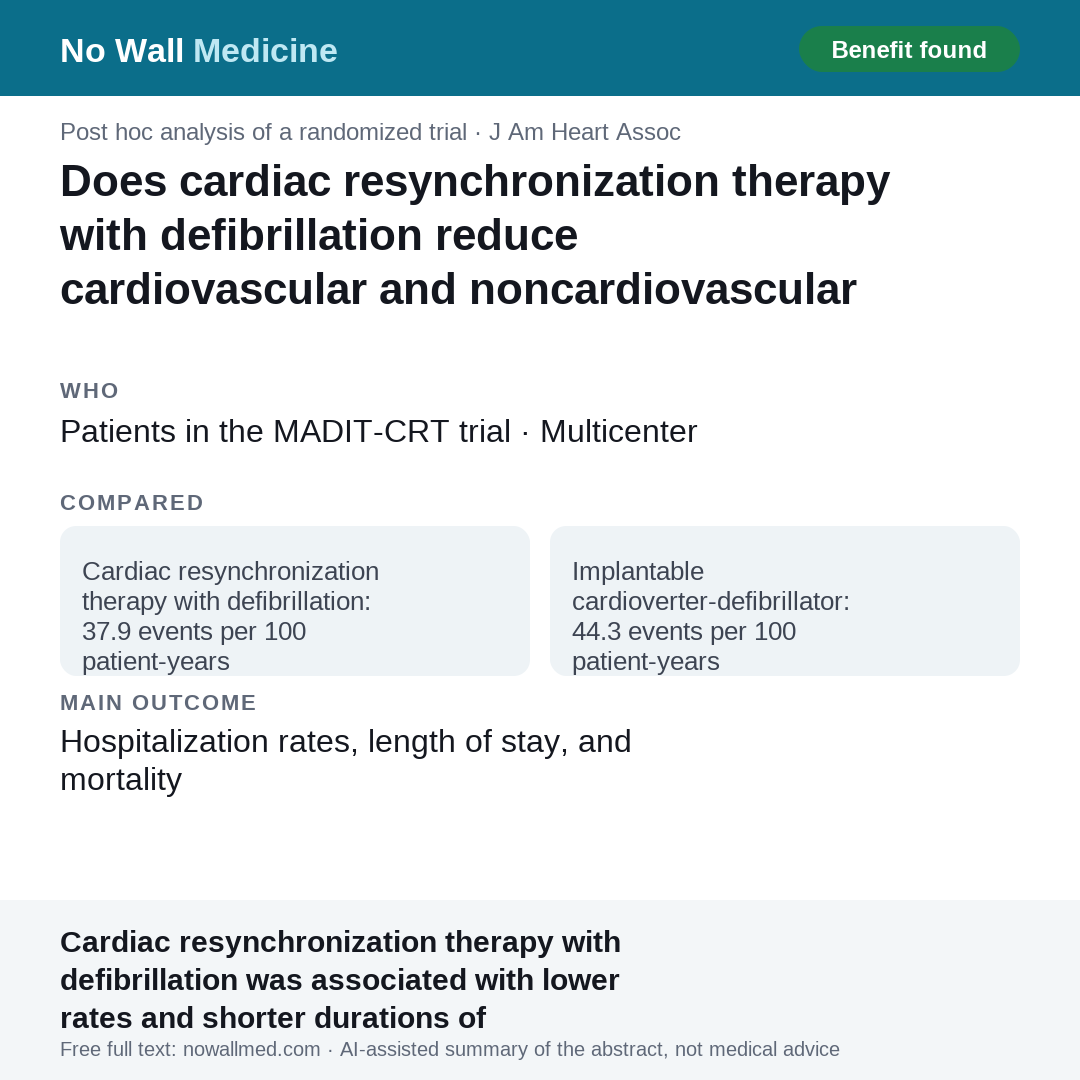
Effects of Cardiac Resynchronization Therapy on Cardiovascular and Noncardiovascular Hospitalization: A MADIT-CRT Long-Term Follow-Up
Post hoc analysis of a randomized trialBenefit found
Does cardiac resynchronization therapy with defibrillation reduce cardiovascular and noncardiovascular hospitalizations?
Who
Patients in the MADIT-CRT trial · Multicenter
Compared
Cardiac resynchronization therapy with defibrillation: 37.9 events per 100 patient-years
Implantable cardioverter-defibrillator: 44.3 events per 100 patient-years
Main outcome
Hospitalization rates, length of stay, and mortality
Bottom line: Cardiac resynchronization therapy with defibrillation was associated with lower rates and shorter durations of cardiovascular hospitalizations.
J Am Heart Assoc · 2026-02-27Download image
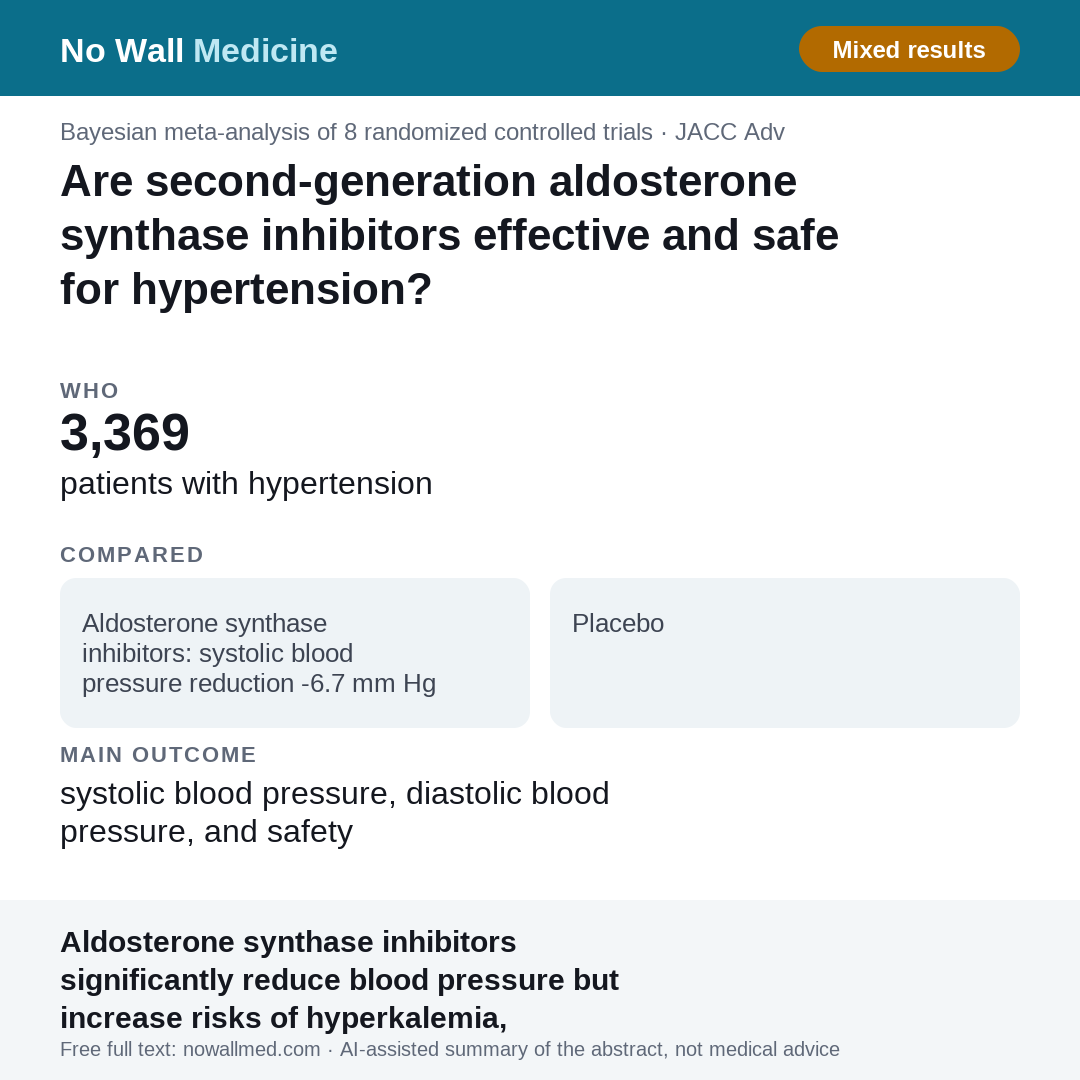
Second-Generation Aldosterone Synthase Inhibitors for Hypertension: A Bayesian Meta-Analysis of Randomized Trials
Bayesian meta-analysis of 8 randomized controlled trialsMixed results
Are second-generation aldosterone synthase inhibitors effective and safe for hypertension?
Who
3,369
patients with hypertension
Compared
Aldosterone synthase inhibitors: systolic blood pressure reduction -6.7 mm Hg
Placebo
Main outcome
systolic blood pressure, diastolic blood pressure, and safety
Result: mean difference -6.7 mm Hg (95% CrI -8.78, -4.59)
Bottom line: Aldosterone synthase inhibitors significantly reduce blood pressure but increase risks of hyperkalemia, hyponatremia, and hypotension.
JACC Adv · 2026-02-27Download image
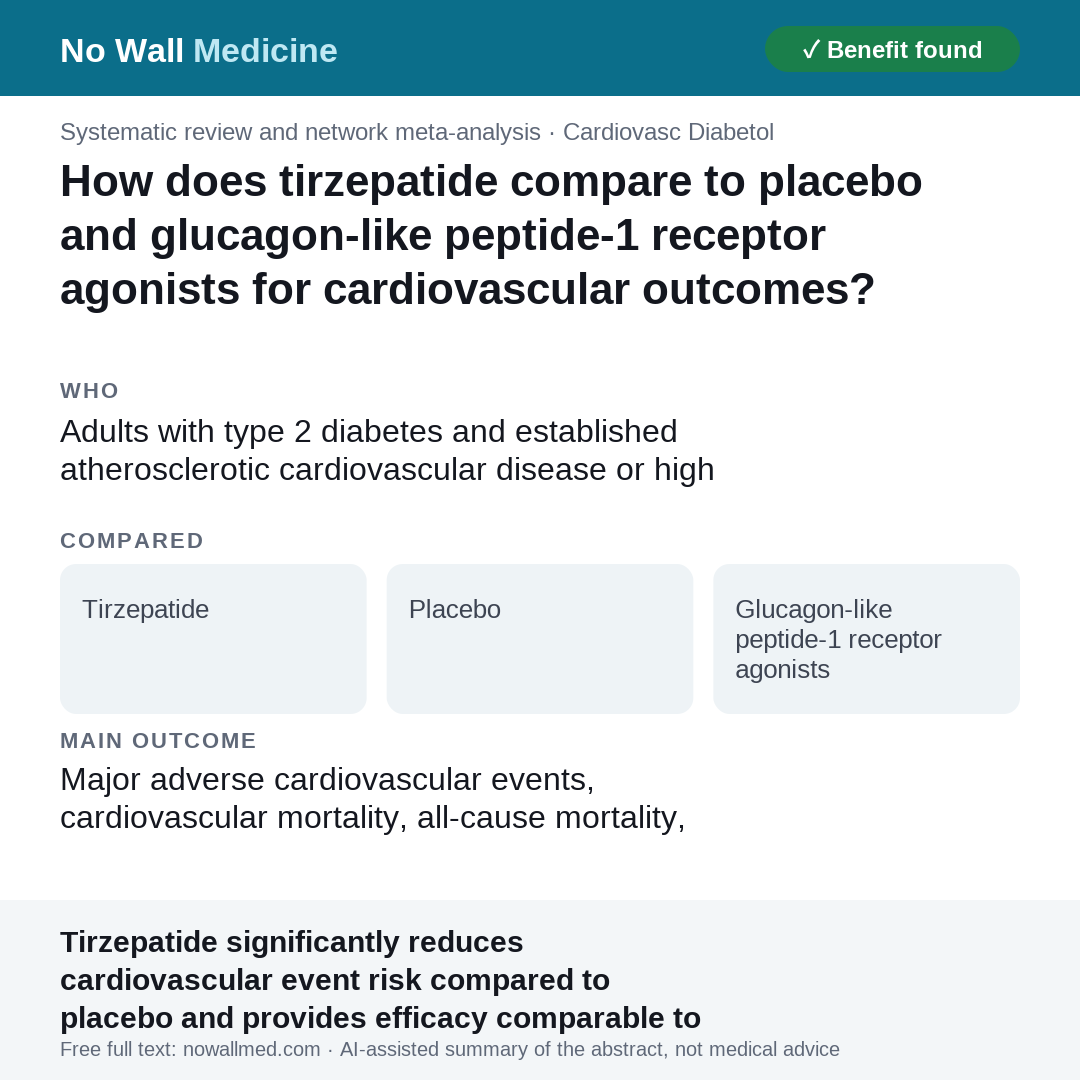
Comparative efficacy of tirzepatide and glucagon-like peptide-1 receptor agonists on cardiovascular outcomes in patients with type 2 diabetes: a systematic review and network meta-analysis
Systematic review and network meta-analysisBenefit found
How does tirzepatide compare to placebo and glucagon-like peptide-1 receptor agonists for cardiovascular outcomes?
Who
Adults with type 2 diabetes and established atherosclerotic cardiovascular disease or high cardiovascular risk
Compared
Tirzepatide
Placebo
Glucagon-like peptide-1 receptor agonists
Main outcome
Major adverse cardiovascular events, cardiovascular mortality, all-cause mortality, non-fatal myocardial infarction, or non-fatal stroke
Result: hazard ratio 0.79 (95% CI 0.69-0.91) for MACE (tirzepatide vs placebo)
Bottom line: Tirzepatide significantly reduces cardiovascular event risk compared to placebo and provides efficacy comparable to glucagon-like peptide-1 receptor agonists.
Limitation: Formal statistical comparisons between tirzepatide and the glucagon-like peptide-1 receptor agonist class could not be performed
Cardiovasc Diabetol · 2026-02-27Download image
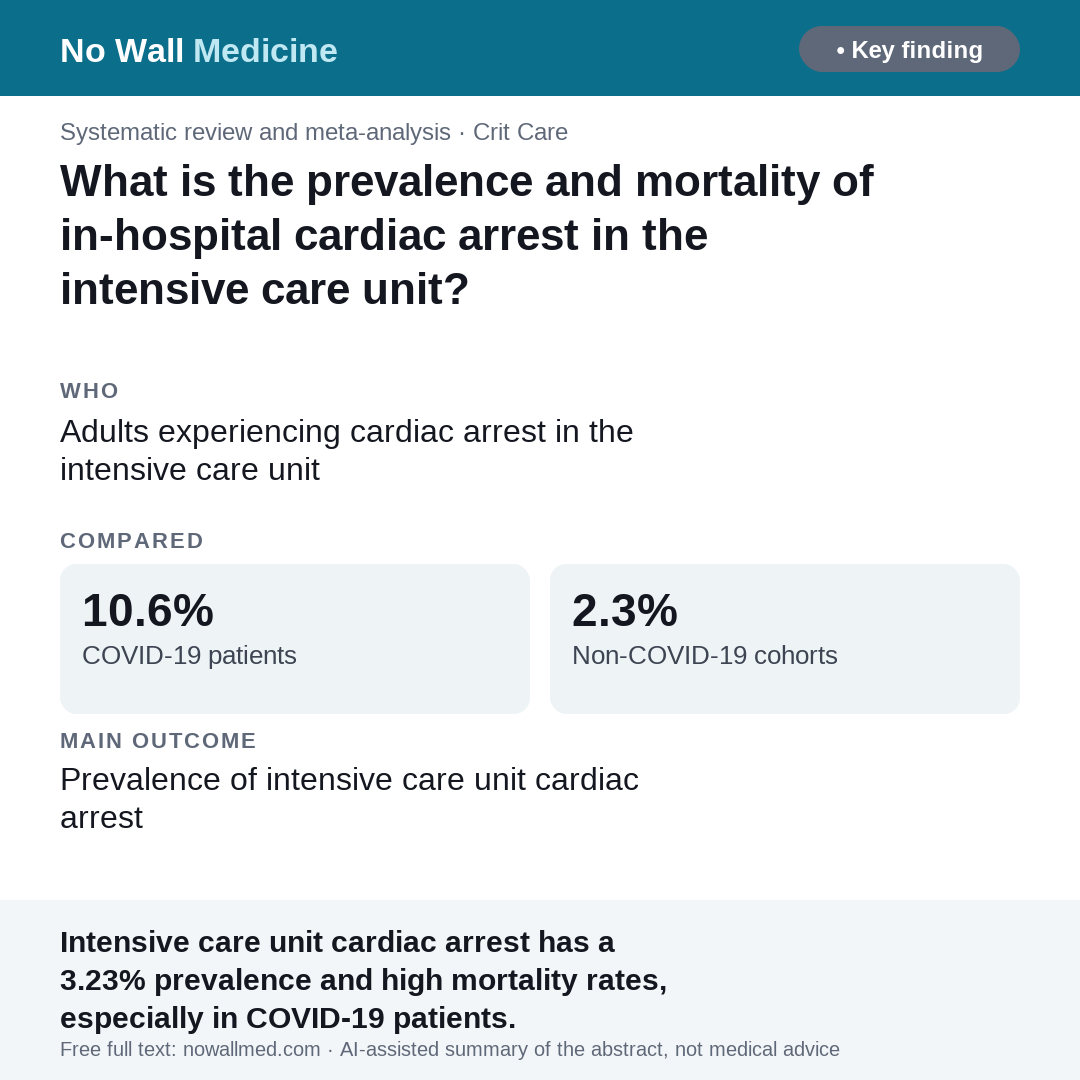
Prevalence and outcomes of in-hospital cardiac arrest in the intensive care unit: a systematic review and meta-analysis
Systematic review and meta-analysisHarm found
What is the prevalence and mortality of in-hospital cardiac arrest in the intensive care unit?
Who
Adults experiencing cardiac arrest in the intensive care unit
Compared
10.6%COVID-19 patients (95%-CI: 5.4–19.7)
2.3%Non-COVID-19 cohorts (95%-CI: 1.5–3.5)
Main outcome
Prevalence of intensive care unit cardiac arrest
Result: pooled proportion 3.23% (95% CI: 2.08–4.98)
Bottom line: Intensive care unit cardiac arrest has a 3.23% prevalence and high mortality rates, especially in COVID-19 patients.
Crit Care · 2026-02-27Download image