Visual abstracts
New randomized trials and meta-analyses from leading journals at a glance: who was studied, what was compared, and what was found. Every paper is free to read in full.
All specialtiesCardiology 4877Oncology 4138Gastroenterology & Hepatology 1942Infectious Disease 3837Neurology 1905Psychiatry & Mental Health 2273Pulmonology 2143Critical Care 1365Endocrinology & Diabetes 2580Pediatrics 2980Surgery 2559Orthopedics & Sports Medicine 931Neurosurgery 537Cardiothoracic & Vascular Surgery 674Plastic & Reconstructive Surgery 591Nephrology 1133Rheumatology 823Hematology 1109Dermatology 621Ophthalmology 543Obstetrics & Gynecology 1686Public & Global Health 1058Radiology & Imaging 648Anesthesiology 986Urology 764ENT (Otolaryngology) 503Emergency Medicine 511Allergy & Immunology 313Geriatrics 981Family Medicine & Primary Care 562Medical Genetics & Genomics 676Pathology & Laboratory Medicine 159Physical Medicine & Rehabilitation 757Palliative Care 444Nutrition 1588Digital Health & AI 2201General Medicine 321
Safety and efficacy of pegcetacoplan treatment for cold agglutinin disease and warm antibody autoimmune hemolytic anemia
Open-label phase 2 randomized trialBenefit found
Is pegcetacoplan safe and effective for cold agglutinin disease and warm antibody autoimmune hemolytic anemia?
Who
Patients with cold agglutinin disease and warm antibody autoimmune hemolytic anemia
Compared
Cold agglutinin disease cohort: median change from baseline hemoglobin 2.4 (0.90-3.00) g/dL
Warm antibody autoimmune hemolytic anemia cohort: median change from baseline hemoglobin 1.7 g/dL (-1.40 to 2.90)
Main outcome
Hemoglobin levels, hemolysis, and fatigue scale scores
Bottom line: Pegcetacoplan is generally well tolerated and effective for patients with cold agglutinin disease and warm antibody autoimmune hemolytic anemia.
Blood · 2024-11-01Download image

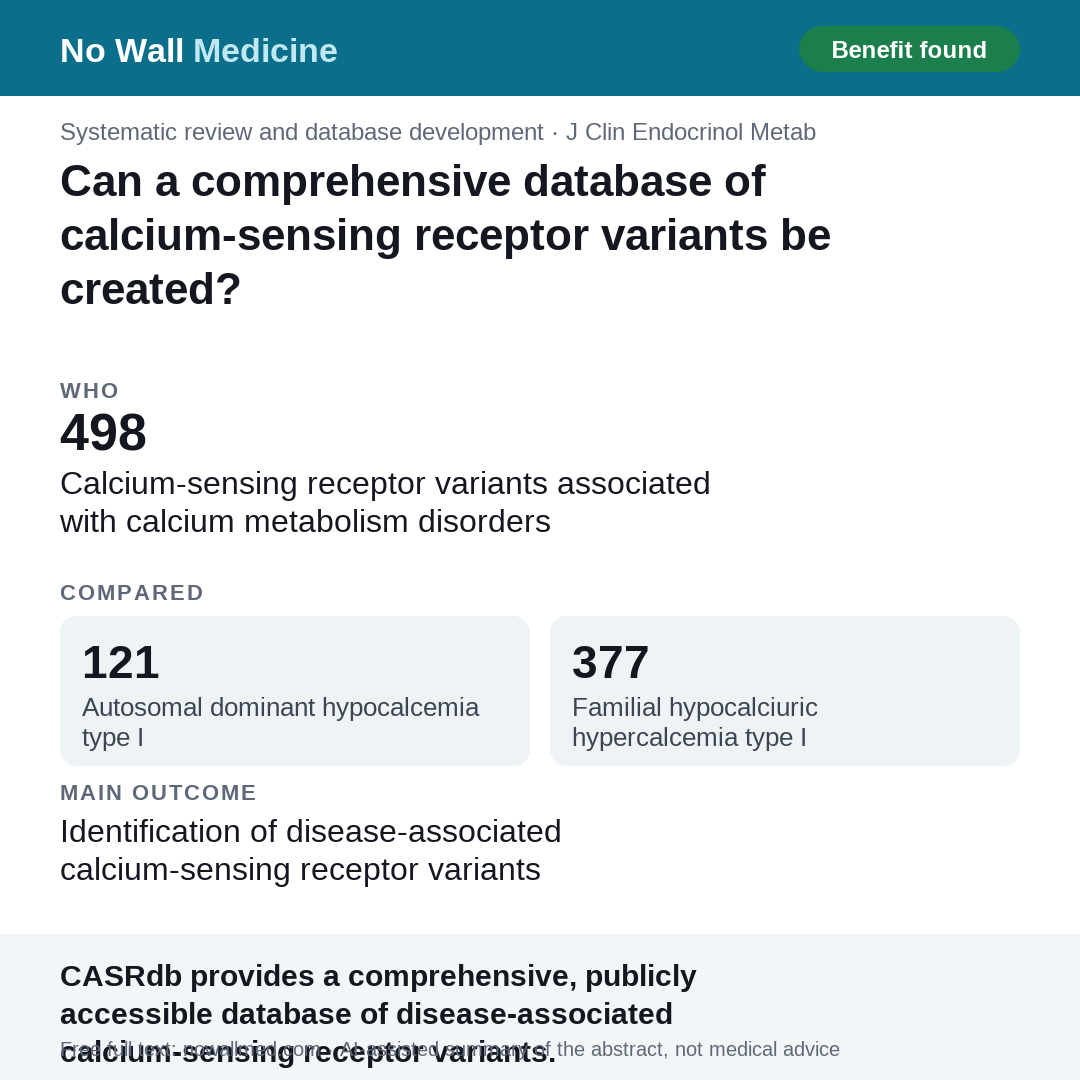
CASRdb: A Publicly Accessible Comprehensive Database for Disease-Associated Calcium-Sensing Receptor Variants
Systematic review and database developmentBenefit found
Can a comprehensive database of calcium-sensing receptor variants be created?
Who
498
Calcium-sensing receptor variants associated with calcium metabolism disorders
Compared
121Autosomal dominant hypocalcemia type I (24.3%)
377Familial hypocalciuric hypercalcemia type I (75.7%)
Main outcome
Identification of disease-associated calcium-sensing receptor variants
Bottom line: CASRdb provides a comprehensive, publicly accessible database of disease-associated calcium-sensing receptor variants.
J Clin Endocrinol Metab · 2024-11-01Download image
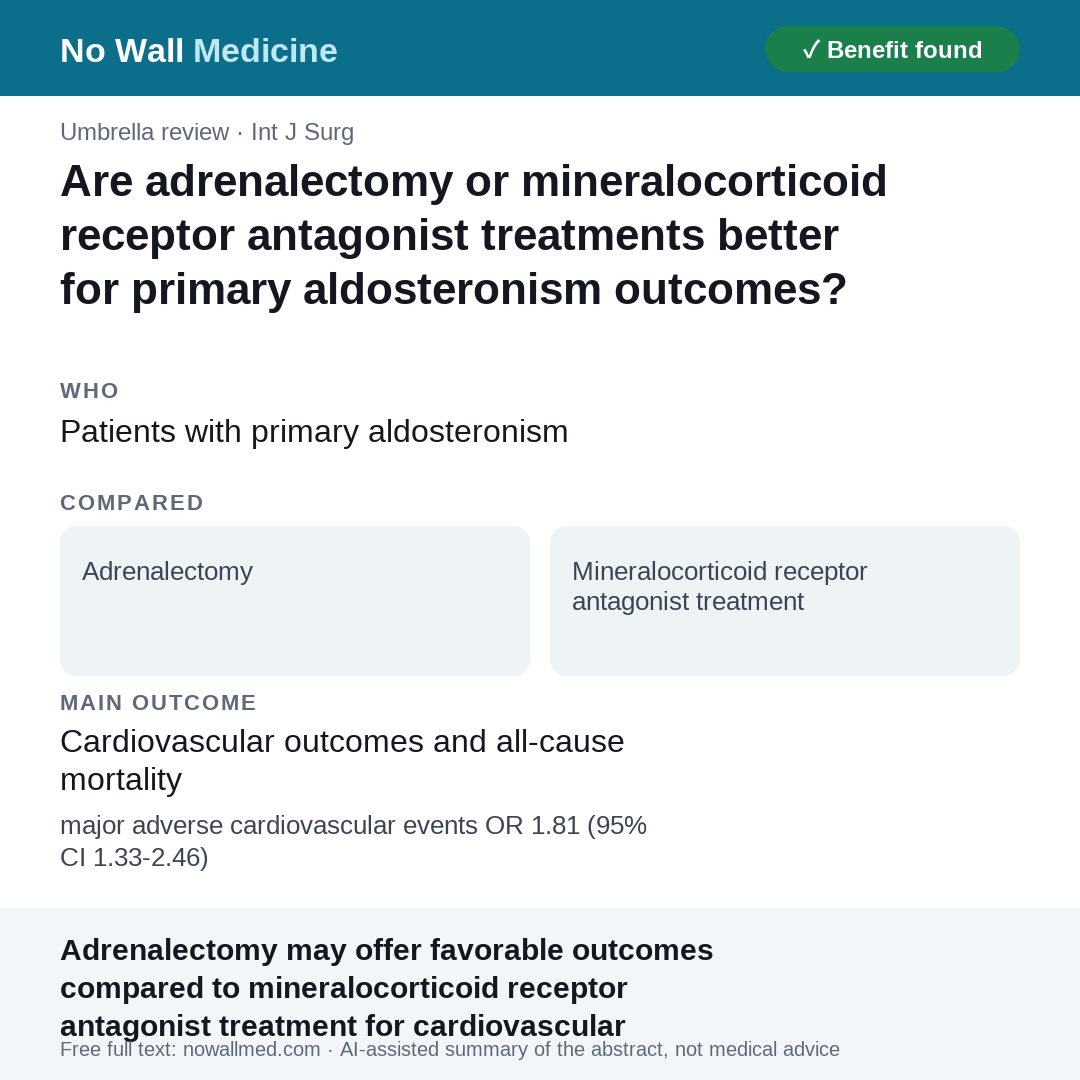
Cardiovascular and all-cause mortality outcomes of adrenalectomy versus medical treatment in primary aldosteronism: an umbrella review
Umbrella reviewBenefit found
Are adrenalectomy or mineralocorticoid receptor antagonist treatments better for primary aldosteronism outcomes?
Who
Patients with primary aldosteronism
Compared
Adrenalectomy
Mineralocorticoid receptor antagonist treatment
Main outcome
Cardiovascular outcomes and all-cause mortality
Result: major adverse cardiovascular events OR 1.81 (95% CI 1.33-2.46)
Bottom line: Adrenalectomy may offer favorable outcomes compared to mineralocorticoid receptor antagonist treatment for cardiovascular events and mortality.
Int J Surg · 2024-11-01Download image
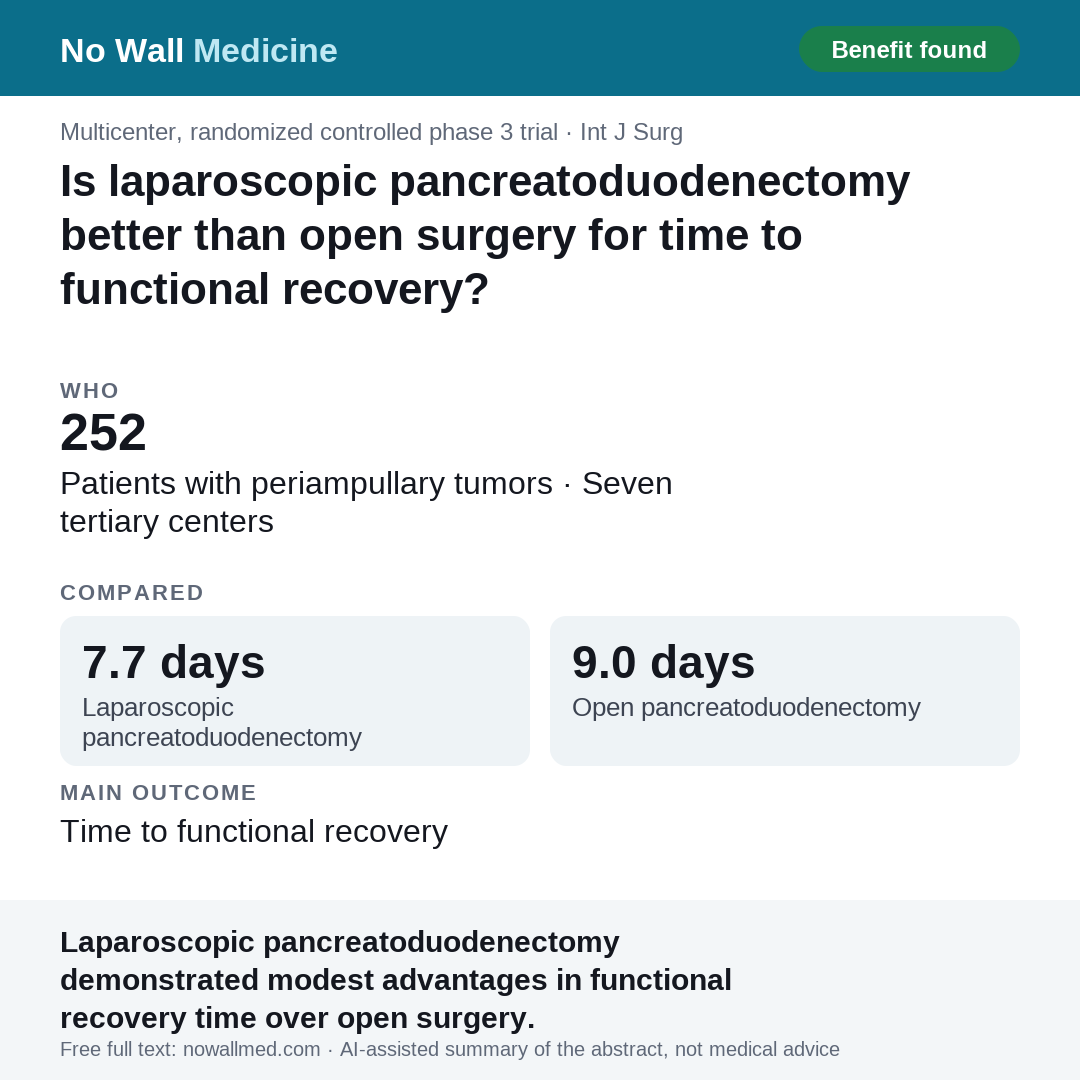
Laparoscopic versus open pancreatoduodenectomy for periampullary tumors: a randomized clinical trial
Multicenter, randomized controlled phase 3 trialBenefit found
Is laparoscopic pancreatoduodenectomy better than open surgery for time to functional recovery?
Who
252
Patients with periampullary tumors · Seven tertiary centers
Compared
7.7 daysLaparoscopic pancreatoduodenectomy
9.0 daysOpen pancreatoduodenectomy
Main outcome
Time to functional recovery
Result: hazard ratio 1.34 (95% CI 1.03-1.74)
Bottom line: Laparoscopic pancreatoduodenectomy demonstrated modest advantages in functional recovery time over open surgery.
Int J Surg · 2024-11-01Download image
Determinants of clinical response to injection laryngoplasty in unilateral vocal fold paralysis: a systematic review and meta-analysis
Meta-analysis of 82 studiesBenefit found
What determines response to injection laryngoplasty
Who
patients with unilateral vocal fold paralysis
Compared
injection laryngoplasty
control
Main outcome
vocal function improvement
Bottom line: Injection laryngoplasty improves vocal outcomes
Int J Surg · 2024-11-01Download image

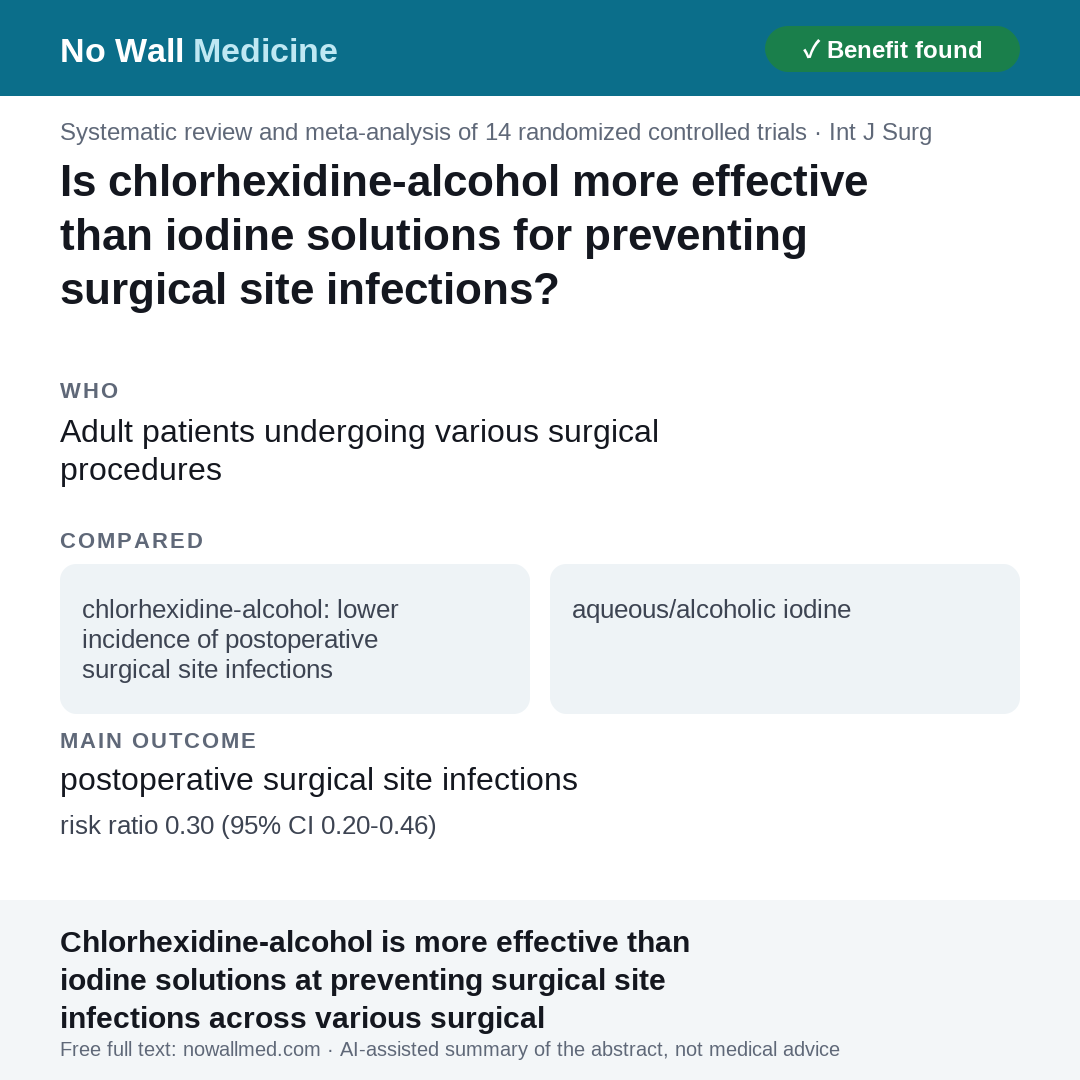
Evaluation of the efficacy of chlorhexidine-alcohol vs. aqueous/alcoholic iodine solutions for the prevention of surgical site infections: a systematic review and meta-analysis
Systematic review and meta-analysis of 14 randomized controlled trialsBenefit found
Is chlorhexidine-alcohol more effective than iodine solutions for preventing surgical site infections?
Who
Adult patients undergoing various surgical procedures
Compared
chlorhexidine-alcohol: lower incidence of postoperative surgical site infections
aqueous/alcoholic iodine
Main outcome
postoperative surgical site infections
Result: risk ratio 0.30 (95% CI 0.20-0.46)
Bottom line: Chlorhexidine-alcohol is more effective than iodine solutions at preventing surgical site infections across various surgical procedures.
Int J Surg · 2024-11-01Download image
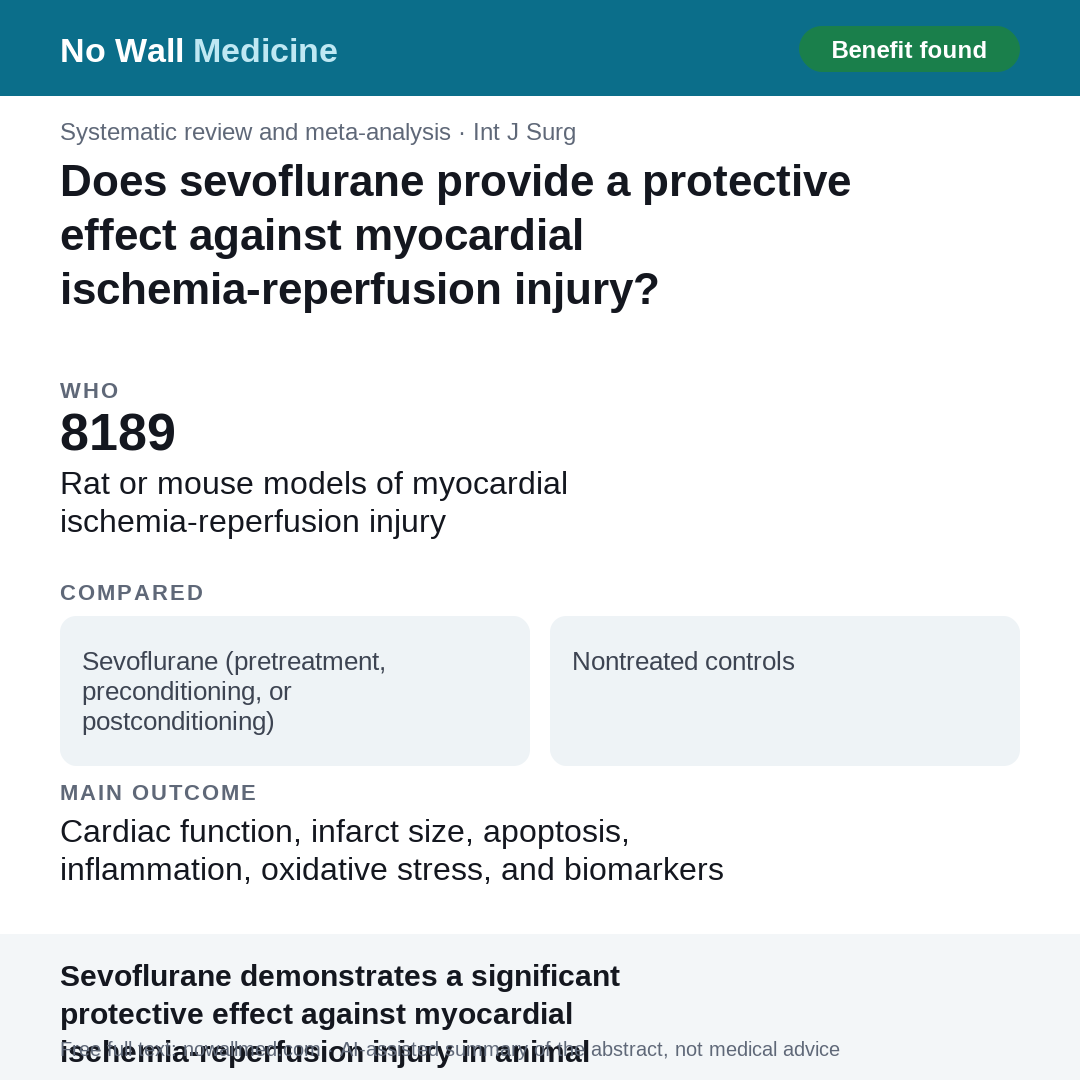
Protective effect of sevoflurane on myocardial ischemia-reperfusion injury: a systematic review and meta-analysis
Systematic review and meta-analysisBenefit found
Does sevoflurane provide a protective effect against myocardial ischemia-reperfusion injury?
Who
8189
Rat or mouse models of myocardial ischemia-reperfusion injury
Compared
Sevoflurane (pretreatment, preconditioning, or postconditioning)
Nontreated controls
Main outcome
Cardiac function, infarct size, apoptosis, inflammation, oxidative stress, and biomarkers
Bottom line: Sevoflurane demonstrates a significant protective effect against myocardial ischemia-reperfusion injury in animal models.
Int J Surg · 2024-11-01Download image
Interventions to achieve environmentally sustainable operating theatres: an umbrella systematic review using the behaviour change wheel
Umbrella systematic reviewBenefit found
Interventions for sustainable operating theatres
Who
operating theatre staff and settings
Compared
reduce strategy
other strategies
Main outcome
sustainability improvements
Bottom line: Reduce strategy guarantees environmental savings
Limitation: comparing outcomes is difficult
Int J Surg · 2024-11-01Download image
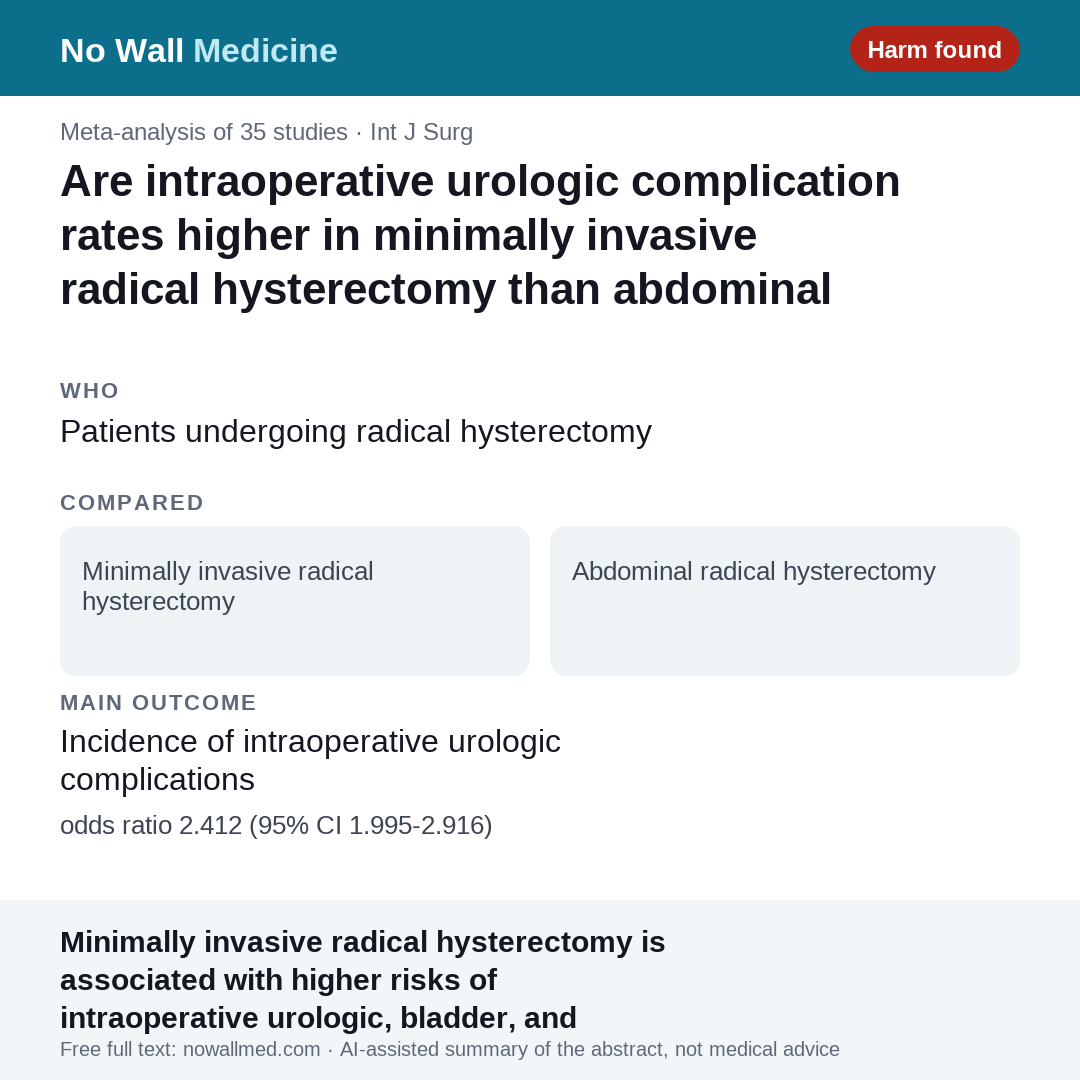
Meta-analysis reveals higher intraoperative urologic complication rates in minimally invasive radical hysterectomy compared to abdominal radical hysterectomy
Meta-analysis of 35 studiesHarm found
Are intraoperative urologic complication rates higher in minimally invasive radical hysterectomy than abdominal radical hysterectomy?
Who
Patients undergoing radical hysterectomy
Compared
Minimally invasive radical hysterectomy
Abdominal radical hysterectomy
Main outcome
Incidence of intraoperative urologic complications
Result: odds ratio 2.412 (95% CI 1.995-2.916)
Bottom line: Minimally invasive radical hysterectomy is associated with higher risks of intraoperative urologic, bladder, and ureteral injuries.
Int J Surg · 2024-11-01Download image
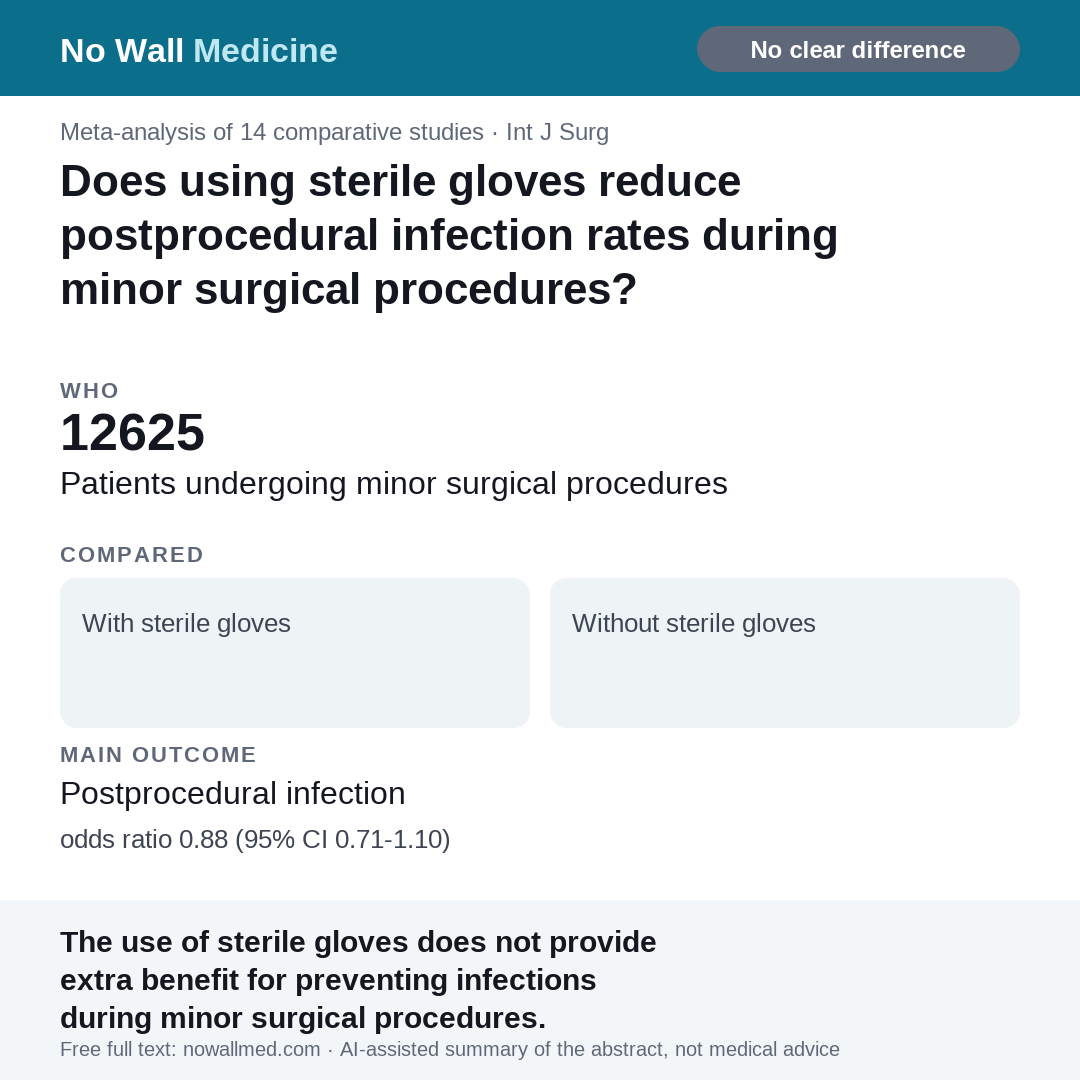
Postprocedural infection rate after minor surgical procedures performed with and without sterile gloves: a systematic review and meta-analysis
Meta-analysis of 14 comparative studiesNo clear difference
Does using sterile gloves reduce postprocedural infection rates during minor surgical procedures?
Who
12625
Patients undergoing minor surgical procedures
Compared
With sterile gloves
Without sterile gloves
Main outcome
Postprocedural infection
Result: odds ratio 0.88 (95% CI 0.71-1.10)
Bottom line: The use of sterile gloves does not provide extra benefit for preventing infections during minor surgical procedures.
Int J Surg · 2024-11-01Download image
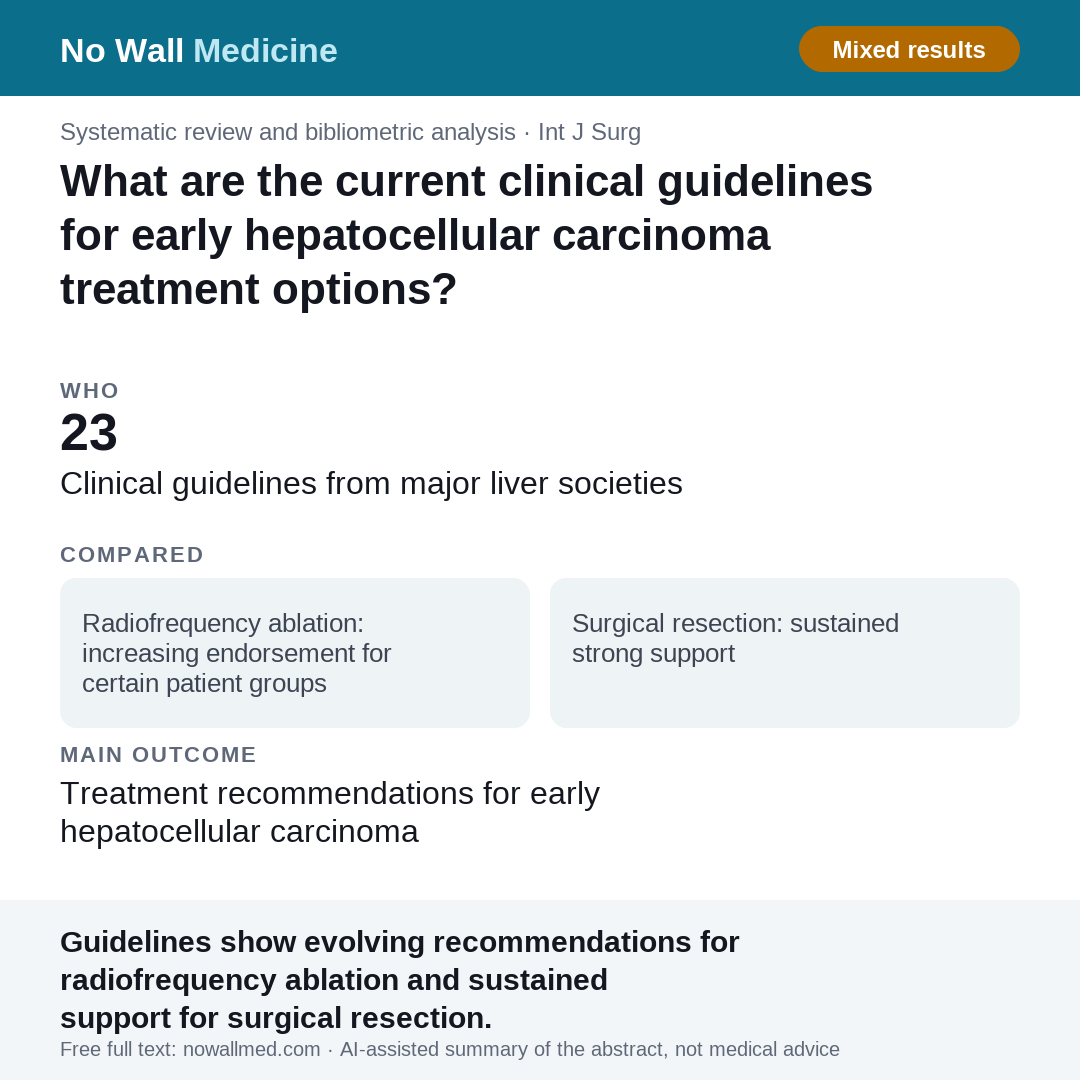
Clinical guidelines for early hepatocellular carcinoma treatment options: a systematic review and bibliometric analysis
Systematic review and bibliometric analysisMixed results
What are the current clinical guidelines for early hepatocellular carcinoma treatment options?
Who
23
Clinical guidelines from major liver societies
Compared
Radiofrequency ablation: increasing endorsement for certain patient groups
Surgical resection: sustained strong support
Main outcome
Treatment recommendations for early hepatocellular carcinoma
Bottom line: Guidelines show evolving recommendations for radiofrequency ablation and sustained support for surgical resection.
Int J Surg · 2024-11-01Download image
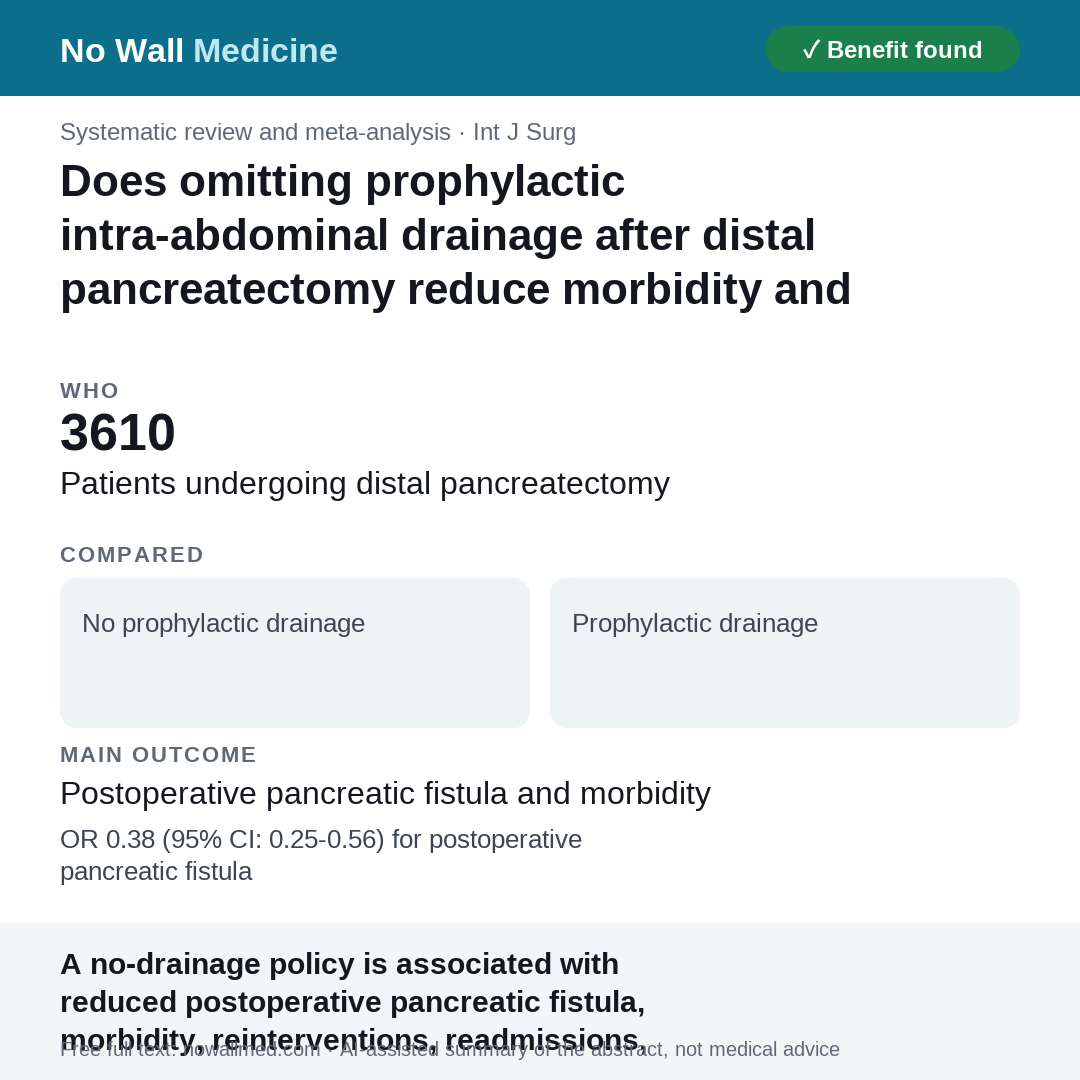
A systematic review and meta-analysis of morbidity and pancreatic fistula after distal pancreatectomy with versus without prophylactic intra-abdominal drainage
Systematic review and meta-analysisBenefit found
Does omitting prophylactic intra-abdominal drainage after distal pancreatectomy reduce morbidity and pancreatic fistula?
Who
3610
Patients undergoing distal pancreatectomy
Compared
No prophylactic drainage
Prophylactic drainage
Main outcome
Postoperative pancreatic fistula and morbidity
Result: OR 0.38 (95% CI: 0.25-0.56) for postoperative pancreatic fistula
Bottom line: A no-drainage policy is associated with reduced postoperative pancreatic fistula, morbidity, reinterventions, readmissions, and shorter hospital stays.
Int J Surg · 2024-11-01Download image
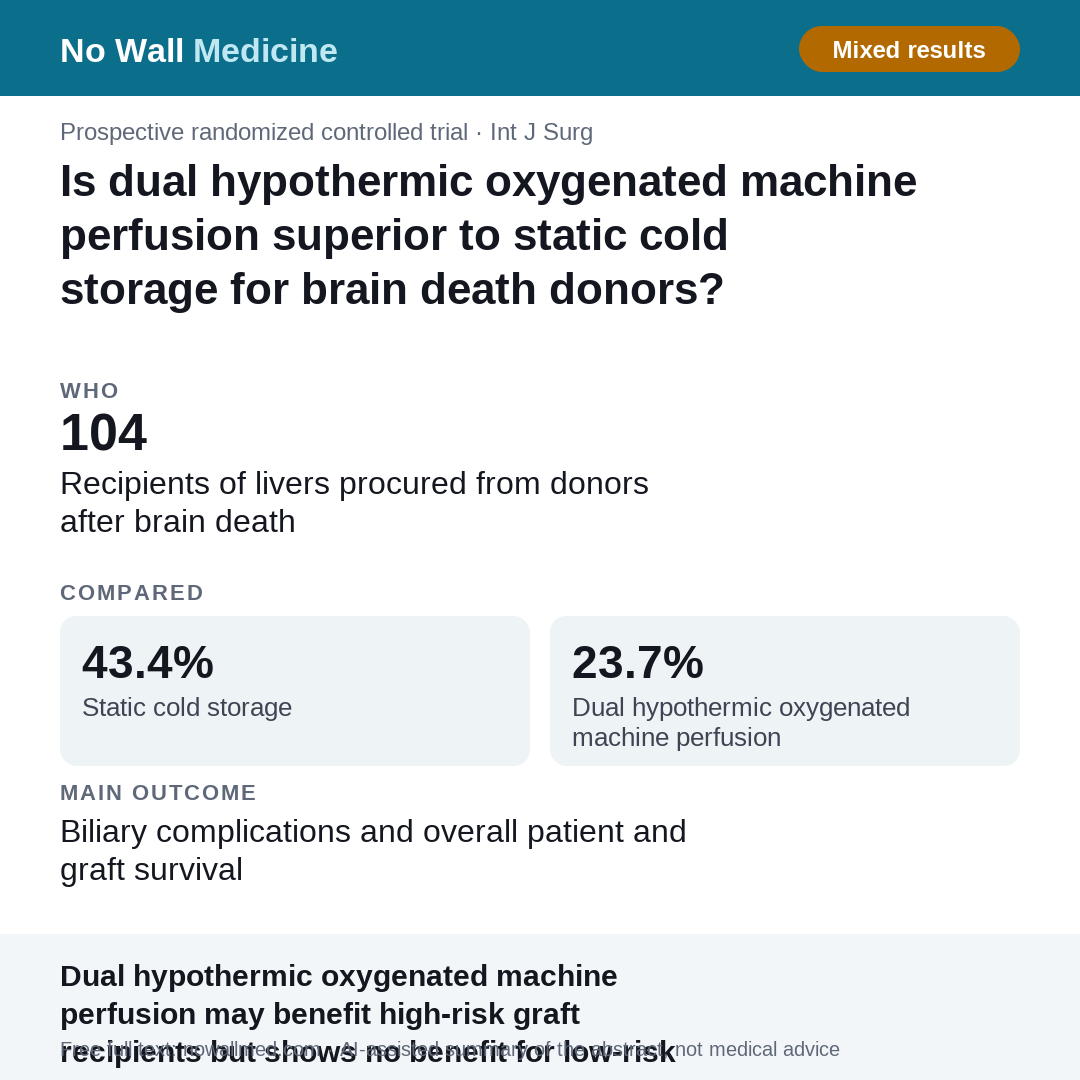
Routine end-ischemic hypothermic machine perfusion in liver transplantation from donors after brain death: results of 2-year follow-up of a randomized controlled trial
Prospective randomized controlled trialMixed results
Is dual hypothermic oxygenated machine perfusion superior to static cold storage for brain death donors?
Who
104
Recipients of livers procured from donors after brain death
Compared
43.4%Static cold storage
23.7%Dual hypothermic oxygenated machine perfusion
Main outcome
Biliary complications and overall patient and graft survival
Bottom line: Dual hypothermic oxygenated machine perfusion may benefit high-risk graft recipients but shows no benefit for low-risk grafts.
Limitation: The study does not provide evidence for benefits in low-risk grafts.
Int J Surg · 2024-11-01Download image
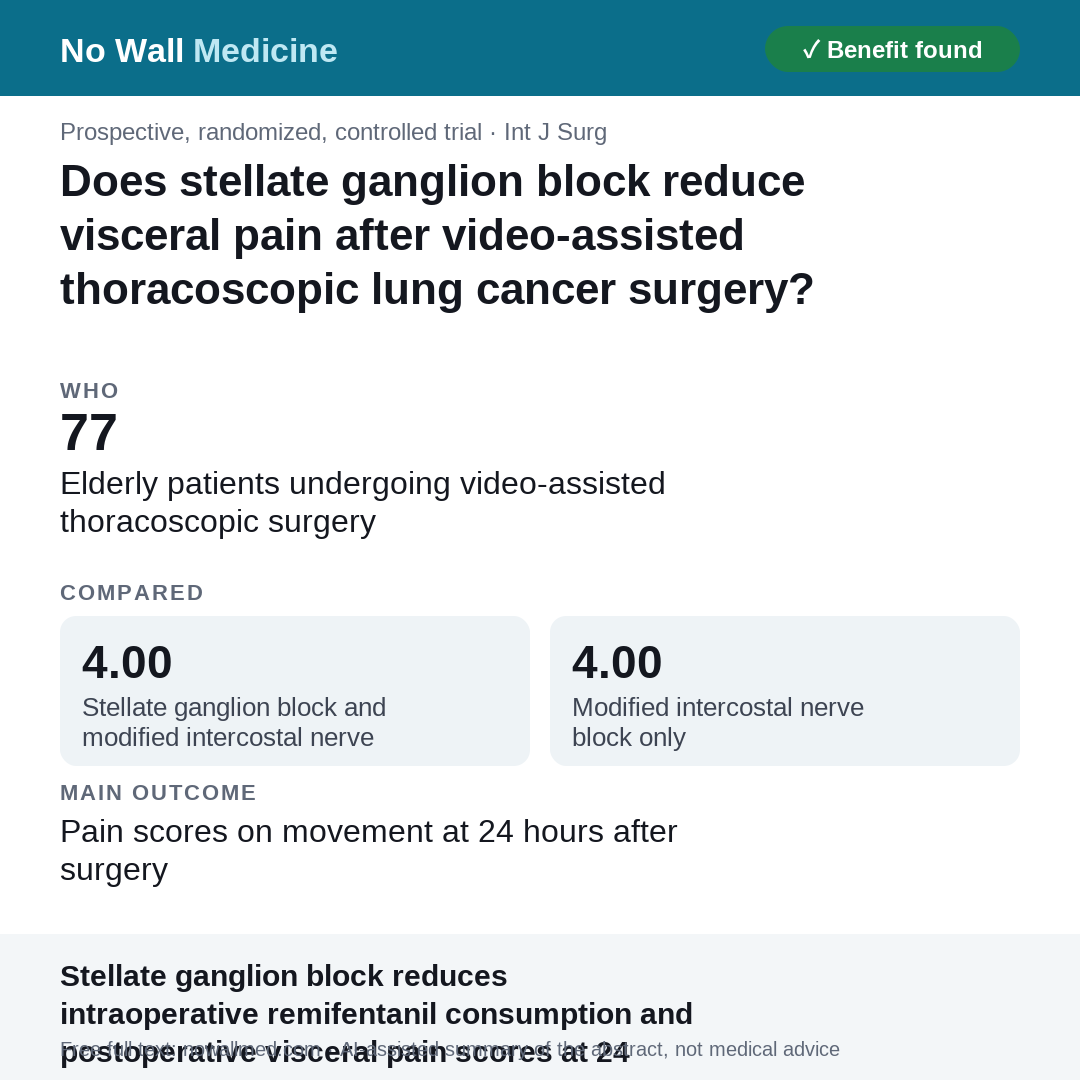
Stellate ganglion block for visceral pain in elderly patients undergoing video-assisted thoracoscopic lung cancer surgery: a randomized, controlled trial
Prospective, randomized, controlled trialBenefit found
Does stellate ganglion block reduce visceral pain after video-assisted thoracoscopic lung cancer surgery?
Who
77
Elderly patients undergoing video-assisted thoracoscopic surgery
Compared
4.00Stellate ganglion block and modified intercostal nerve block (3.00-4.00)
4.00Modified intercostal nerve block only (3.25-5.00)
Main outcome
Pain scores on movement at 24 hours after surgery
Result: P = 0.01
Bottom line: Stellate ganglion block reduces intraoperative remifentanil consumption and postoperative visceral pain scores at 24 hours.
Int J Surg · 2024-11-01Download image
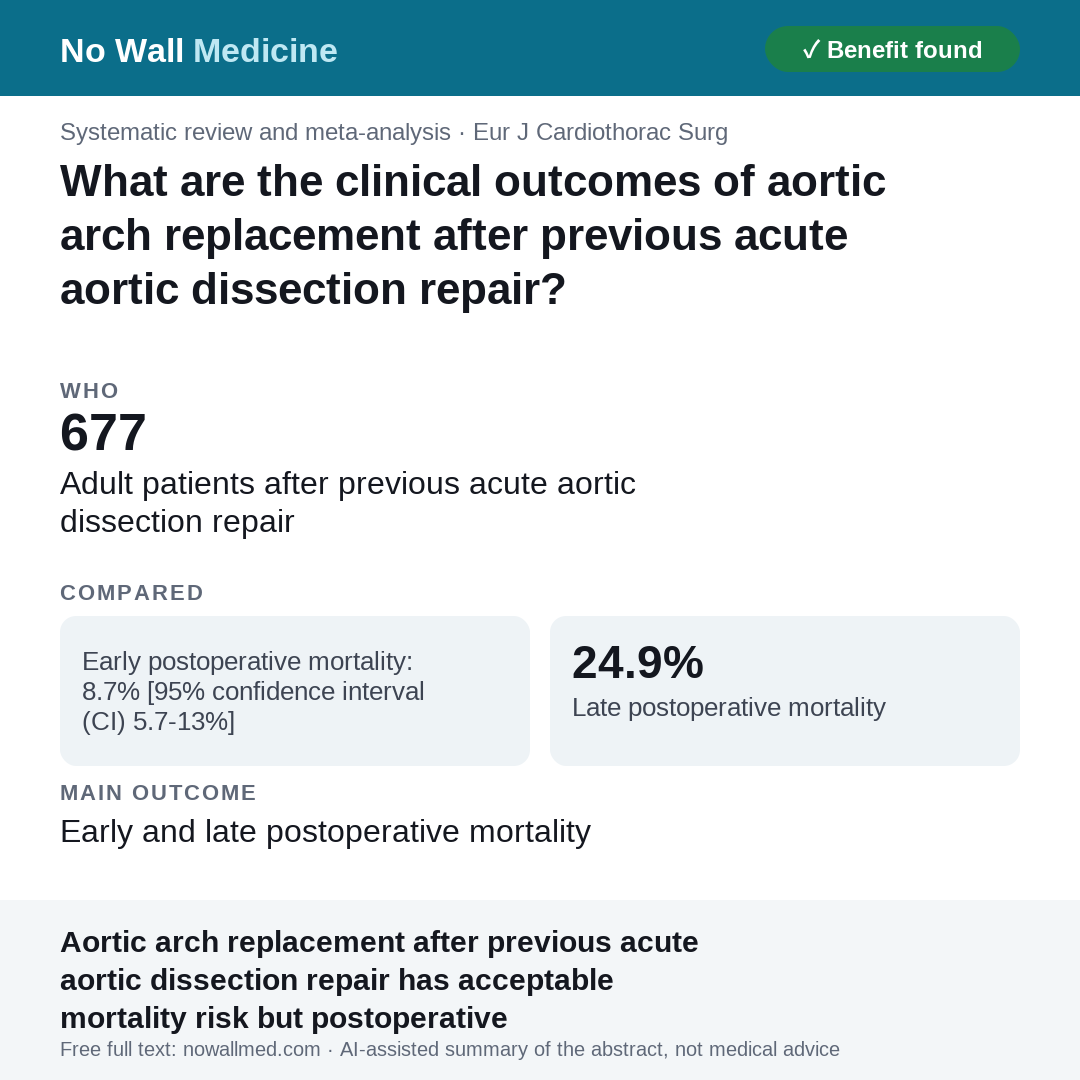
Aortic arch replacement in patients with previous repair of acute aortic dissection: a systematic review and meta-analysis
Systematic review and meta-analysisBenefit found
What are the clinical outcomes of aortic arch replacement after previous acute aortic dissection repair?
Who
677
Adult patients after previous acute aortic dissection repair
Compared
Early postoperative mortality: 8.7% [95% confidence interval (CI) 5.7-13%]
24.9%Late postoperative mortality (95% CI 19.5-31.1%)
Main outcome
Early and late postoperative mortality
Result: 8.7% [95% CI 5.7-13%] early and 24.9% (95% CI 19.5-31.1%) late mortality
Bottom line: Aortic arch replacement after previous acute aortic dissection repair has acceptable mortality risk but postoperative neurological deficit remains an issue.
Eur J Cardiothorac Surg · 2024-11-01Download image
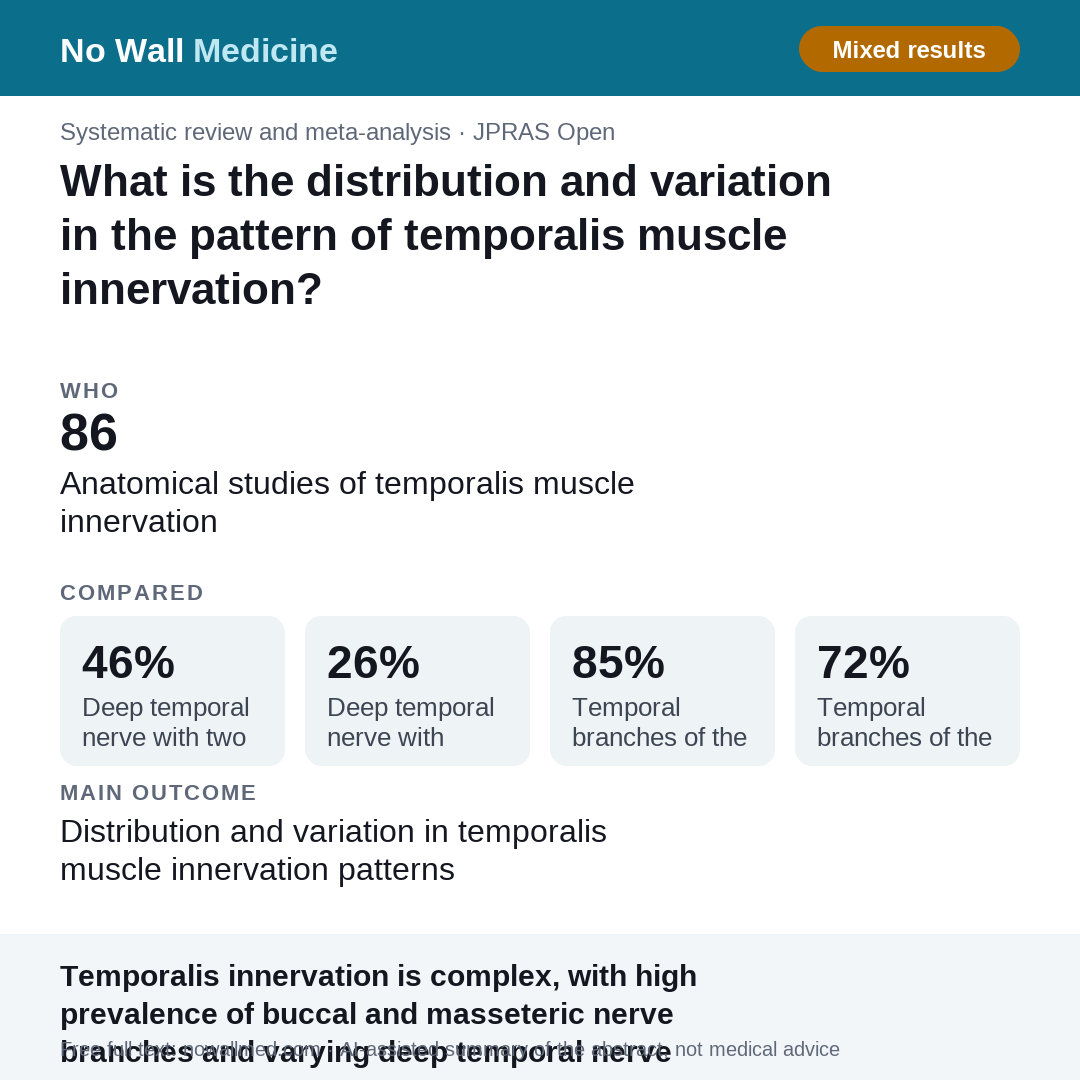
Variation and distribution in temporalis muscle innervation: A systematic review and meta-analysis of anatomical studies
Systematic review and meta-analysisMixed results
What is the distribution and variation in the pattern of temporalis muscle innervation?
Who
86
Anatomical studies of temporalis muscle innervation
Compared
46%Deep temporal nerve with two branches (95% CI: 46%-63%)
26%Deep temporal nerve with three branches (95% CI: 24%-39%)
85%Temporal branches of the buccal nerve (95% CI: 76%-92%)
72%Temporal branches of the masseteric nerve (95% CI: 63%-81%)
Main outcome
Distribution and variation in temporalis muscle innervation patterns
Bottom line: Temporalis innervation is complex, with high prevalence of buccal and masseteric nerve branches and varying deep temporal nerve patterns.
JPRAS Open · 2024-11-01Download image
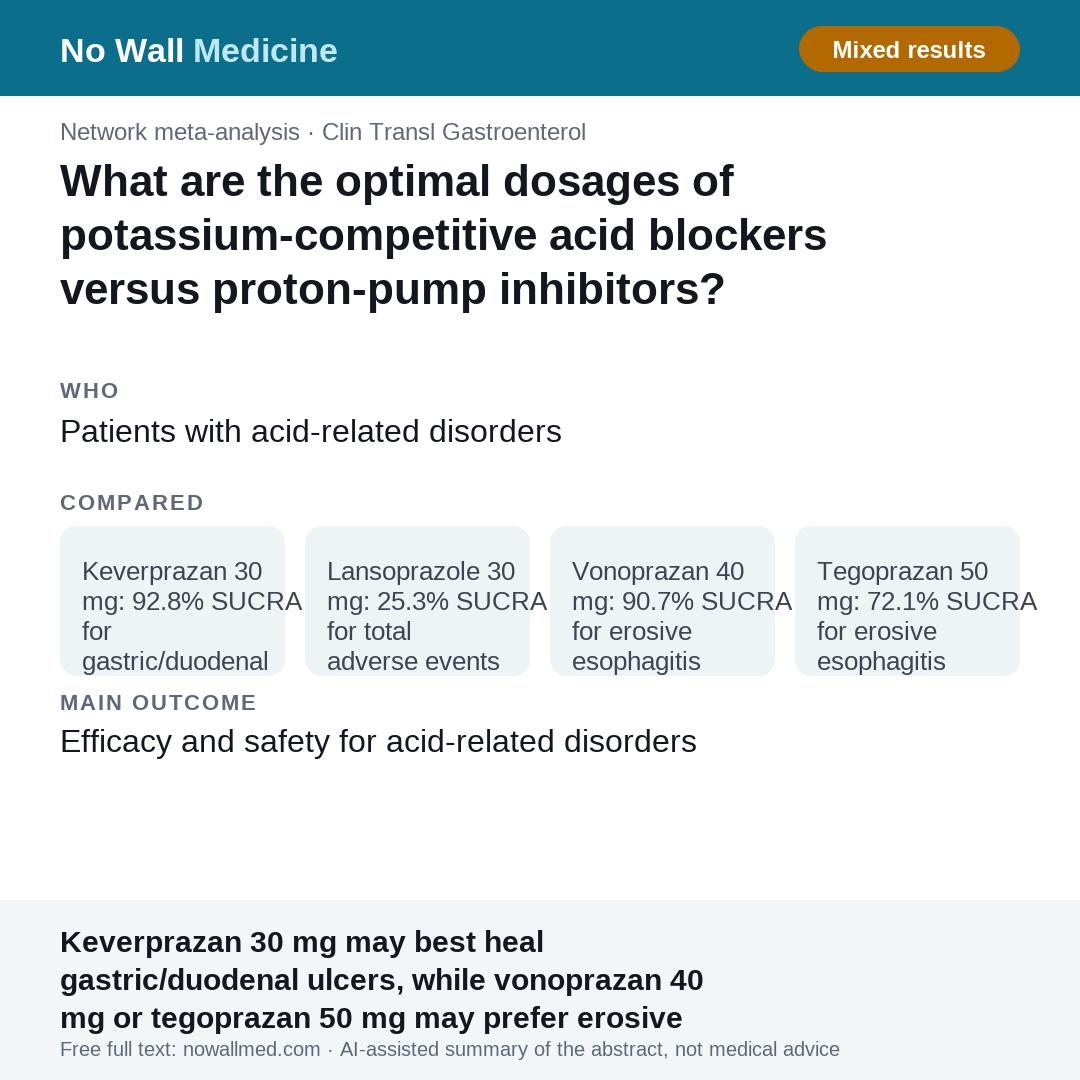
Network Meta-Analysis of Comparing Different Dosages of Potassium-Competitive Acid Blocker With Proton-Pump Inhibitor in Acid-Related Disorders
Network meta-analysisMixed results
What are the optimal dosages of potassium-competitive acid blockers versus proton-pump inhibitors?
Who
Patients with acid-related disorders
Compared
Keverprazan 30 mg: 92.8% SUCRA for gastric/duodenal ulcer healing rate
Lansoprazole 30 mg: 25.3% SUCRA for total adverse events in gastric/duodenal ulcers
Vonoprazan 40 mg: 90.7% SUCRA for erosive esophagitis healing rate
Tegoprazan 50 mg: 72.1% SUCRA for erosive esophagitis healing rate
Main outcome
Efficacy and safety for acid-related disorders
Bottom line: Keverprazan 30 mg may best heal gastric/duodenal ulcers, while vonoprazan 40 mg or tegoprazan 50 mg may prefer erosive esophagitis.
Clin Transl Gastroenterol · 2024-11-01Download image
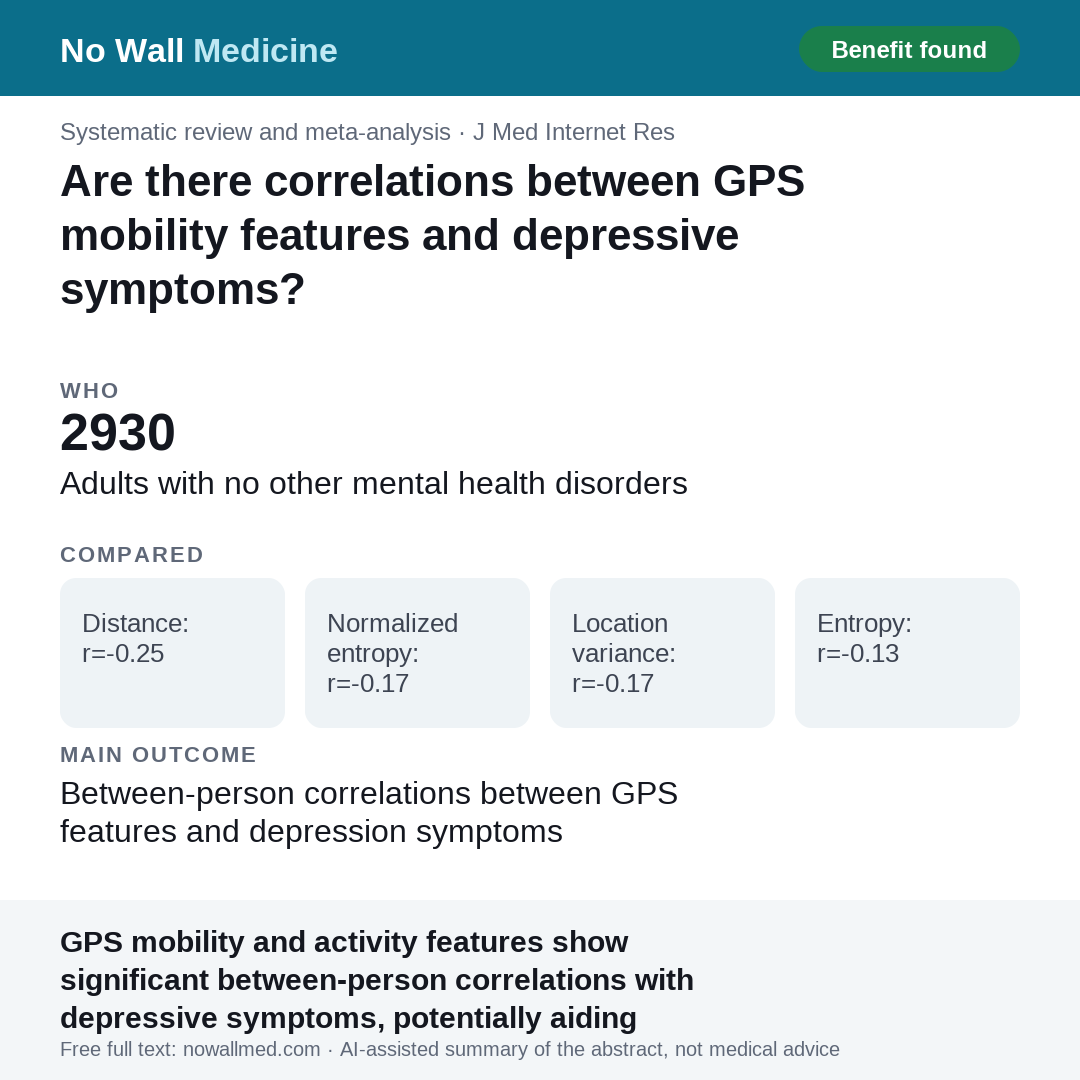
The Relation Between Passively Collected GPS Mobility Metrics and Depressive Symptoms: Systematic Review and Meta-Analysis
Systematic review and meta-analysisBenefit found
Are there correlations between GPS mobility features and depressive symptoms?
Who
2930
Adults with no other mental health disorders
Compared
Distance: r=-0.25
Normalized entropy: r=-0.17
Location variance: r=-0.17
Entropy: r=-0.13
Main outcome
Between-person correlations between GPS features and depression symptoms
Result: distance r=-0.25 (95% CI -0.29 to -0.21)
Bottom line: GPS mobility and activity features show significant between-person correlations with depressive symptoms, potentially aiding future depression diagnostics.
Limitation: Low study quality, lack of adherence to reporting guidelines, and potential publication bias.
J Med Internet Res · 2024-11-01Download image
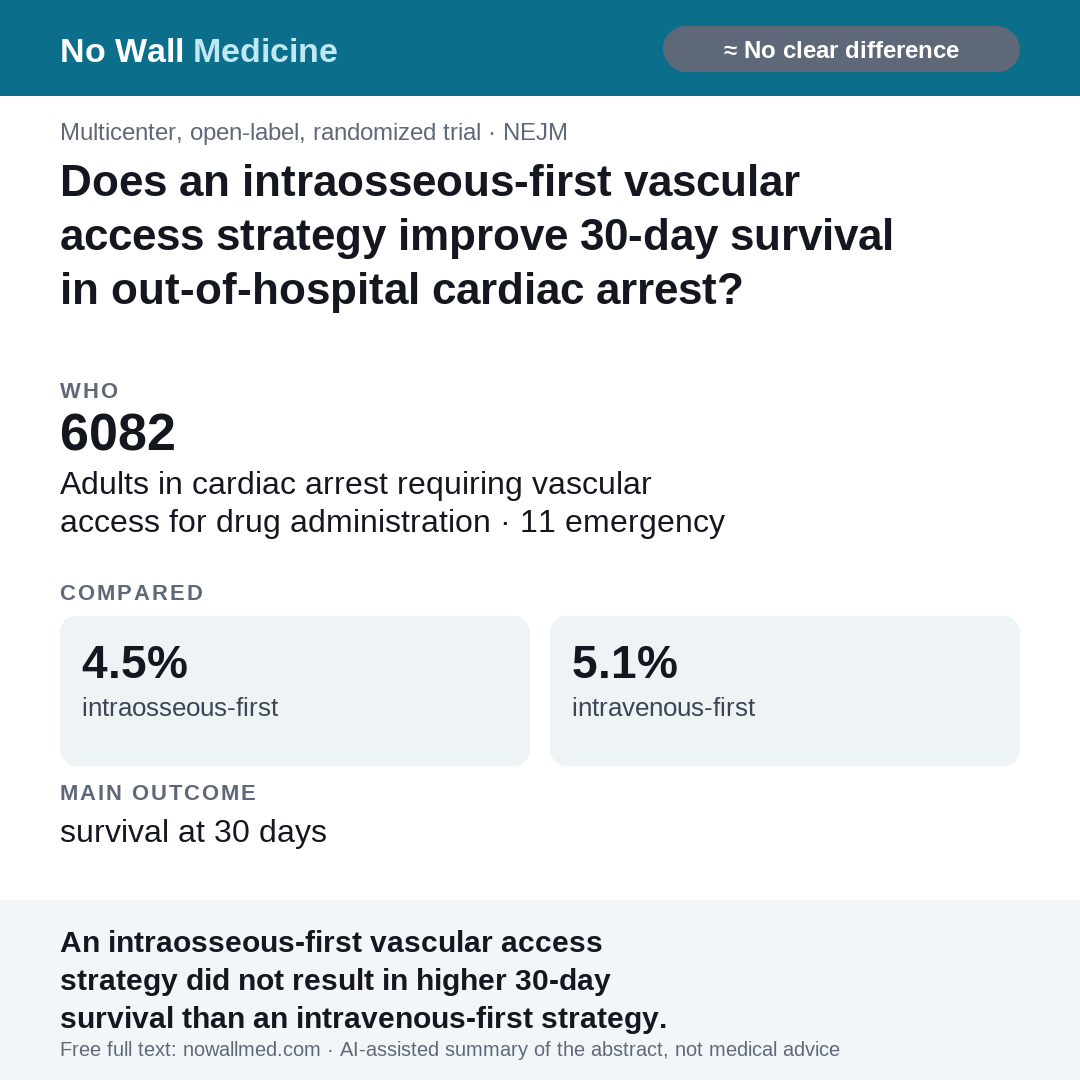
A Randomized Trial of Drug Route in Out-of-Hospital Cardiac Arrest
Multicenter, open-label, randomized trialNo clear difference
Does an intraosseous-first vascular access strategy improve 30-day survival in out-of-hospital cardiac arrest?
Who
6082
Adults in cardiac arrest requiring vascular access for drug administration · 11 emergency medical systems in the United Kingdom
Compared
4.5%intraosseous-first (137/3030)
5.1%intravenous-first (155/3034)
Main outcome
survival at 30 days
Result: adjusted odds ratio 0.94 (95% CI 0.68 to 1.32)
Bottom line: An intraosseous-first vascular access strategy did not result in higher 30-day survival than an intravenous-first strategy.
Limitation: No adjustment for multiplicity was made.
Funded by: National Institute for Health and Care Research
NEJM · 2024-10-31Download image
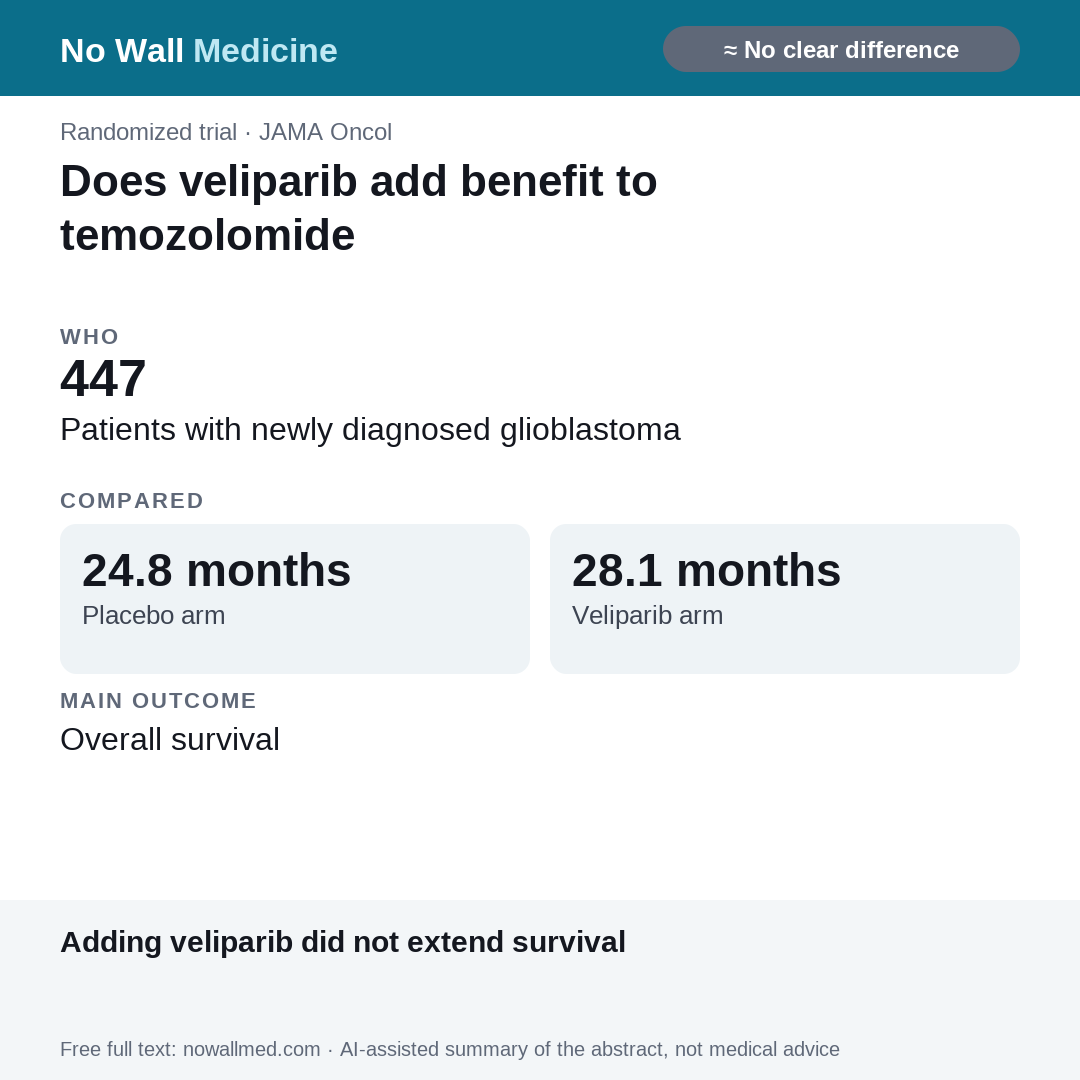
Efficacy of Adding Veliparib to Temozolomide for Patients With MGMT-Methylated Glioblastoma: A Randomized Clinical Trial
Randomized trialNo clear difference
Does veliparib add benefit to temozolomide
Who
447
Patients with newly diagnosed glioblastoma
Compared
24.8 monthsPlacebo arm
28.1 monthsVeliparib arm
Main outcome
Overall survival
Bottom line: Adding veliparib did not extend survival
JAMA Oncol · 2024-10-31Download image