Visual abstracts
New randomized trials and meta-analyses from leading journals at a glance: who was studied, what was compared, and what was found. Every paper is free to read in full.
All specialtiesCardiology 4877Oncology 4138Gastroenterology & Hepatology 1942Infectious Disease 3837Neurology 1905Psychiatry & Mental Health 2273Pulmonology 2143Critical Care 1365Endocrinology & Diabetes 2580Pediatrics 2980Surgery 2559Orthopedics & Sports Medicine 931Neurosurgery 537Cardiothoracic & Vascular Surgery 674Plastic & Reconstructive Surgery 591Nephrology 1133Rheumatology 823Hematology 1109Dermatology 621Ophthalmology 543Obstetrics & Gynecology 1686Public & Global Health 1058Radiology & Imaging 648Anesthesiology 986Urology 764ENT (Otolaryngology) 503Emergency Medicine 511Allergy & Immunology 313Geriatrics 981Family Medicine & Primary Care 562Medical Genetics & Genomics 676Pathology & Laboratory Medicine 159Physical Medicine & Rehabilitation 757Palliative Care 444Nutrition 1588Digital Health & AI 2201General Medicine 321
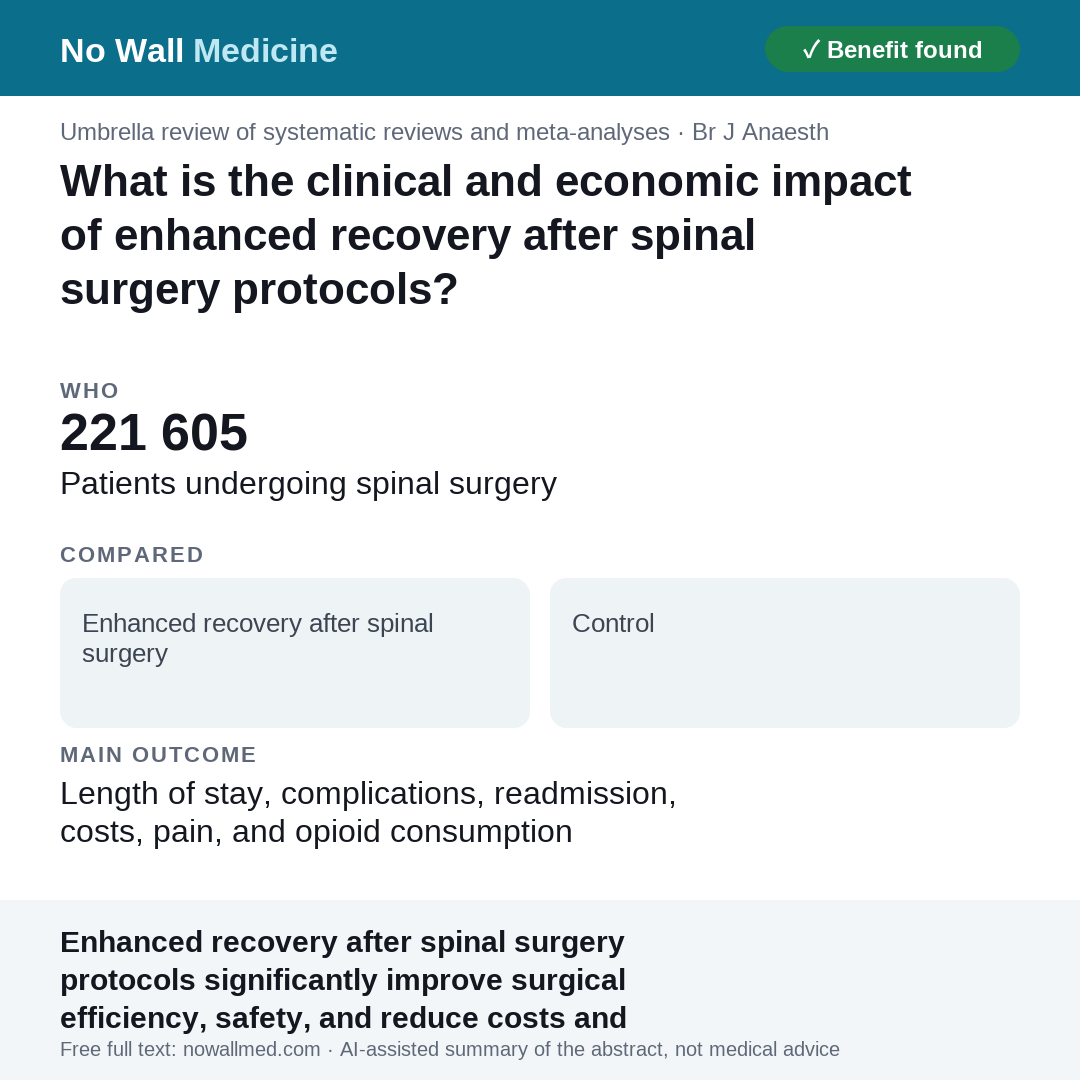
Optimising postoperative spine outcomes: an umbrella review of enhanced recovery after spinal surgery (ERASS) protocols
Umbrella review of systematic reviews and meta-analysesBenefit found
What is the clinical and economic impact of enhanced recovery after spinal surgery protocols?
Who
221 605
Patients undergoing spinal surgery
Compared
Enhanced recovery after spinal surgery
Control
Main outcome
Length of stay, complications, readmission, costs, pain, and opioid consumption
Result: length of stay -1.55 days (95% CI -1.83 to -1.27 days); postoperative complications relative risk 0.61 (95% CI 0.52-0.72); opioid consumption -7.26 mg morphine equivalents (95% CI -10.82 to -3.70 mg); healthcare costs -$1029.41 (95% CI -$1630.17 to -$428.65)
Bottom line: Enhanced recovery after spinal surgery protocols significantly improve surgical efficiency, safety, and reduce costs and opioid consumption.
Limitation: High heterogeneity was observed, reflecting protocol and design variation.
Br J Anaesth · 2025-10-08Download image
The Performance of Automatic Speaking Valves and Fixation Devices Enabling Hands-Free Speech Following Total Laryngectomy-A Systematic Review
Systematic reviewNo clear difference
How do automatic speaking valves and fixation devices perform in laryngectomized patients?
Who
Laryngectomized patients
Compared
Automatic speaking valve use: 3-13.25 h/day
Fixation device lifetime: 0.17-24 h/day
Main outcome
Automatic valve use, fixation lifetime, compliance, and voice assessment outcomes
Bottom line: No single automatic speaking valve or fixation device outperformed others in performance or voice outcomes.
Head Neck · 2025-10-08Download image

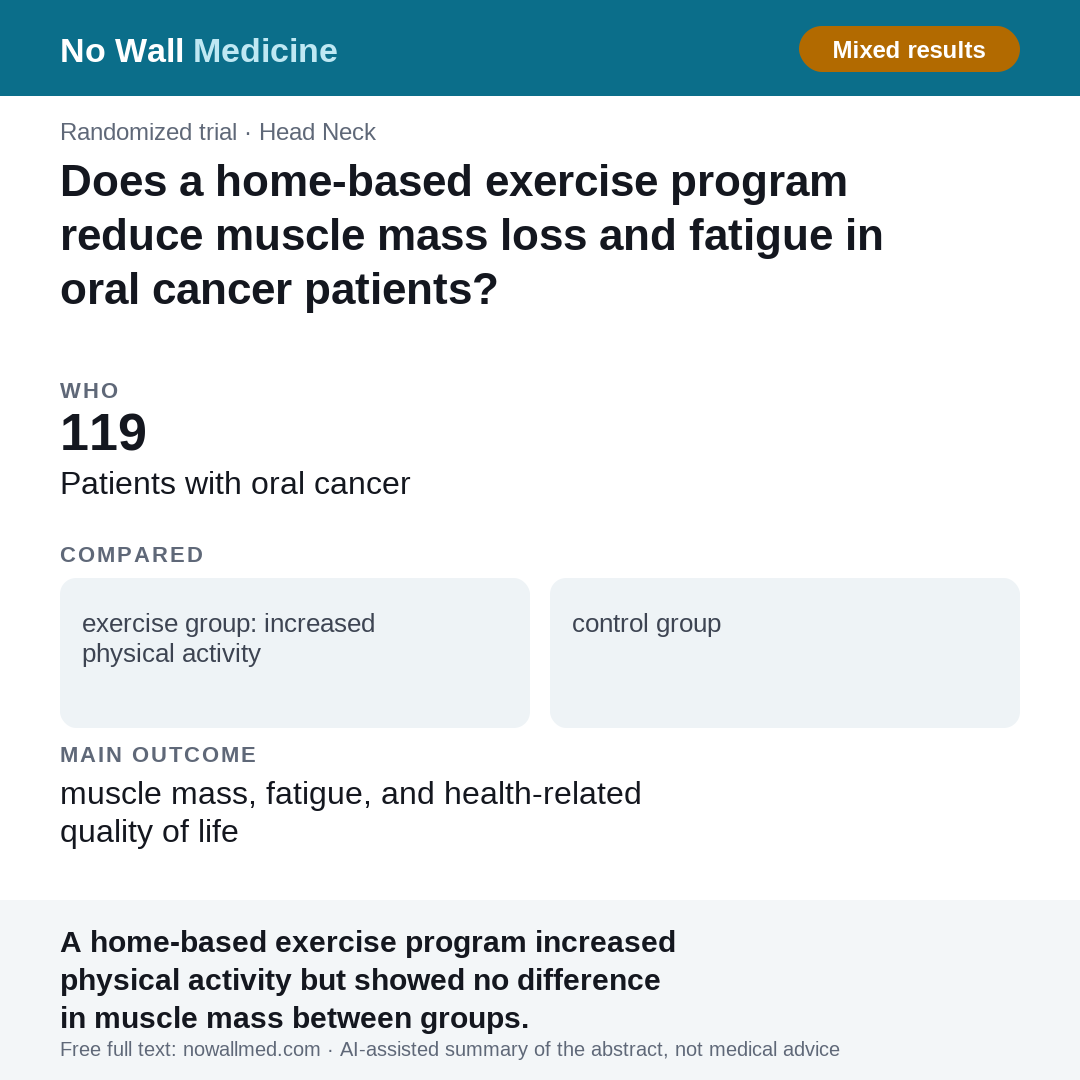
Effect of a Home-Based Exercise Program on Muscle Mass, Fatigue, and Health-Related Quality of Life Among Patients with Oral Cancer: A Randomized Trial
Randomized trialMixed results
Does a home-based exercise program reduce muscle mass loss and fatigue in oral cancer patients?
Who
119
Patients with oral cancer
Compared
exercise group: increased physical activity
control group
Main outcome
muscle mass, fatigue, and health-related quality of life
Bottom line: A home-based exercise program increased physical activity but showed no difference in muscle mass between groups.
Head Neck · 2025-10-08Download image
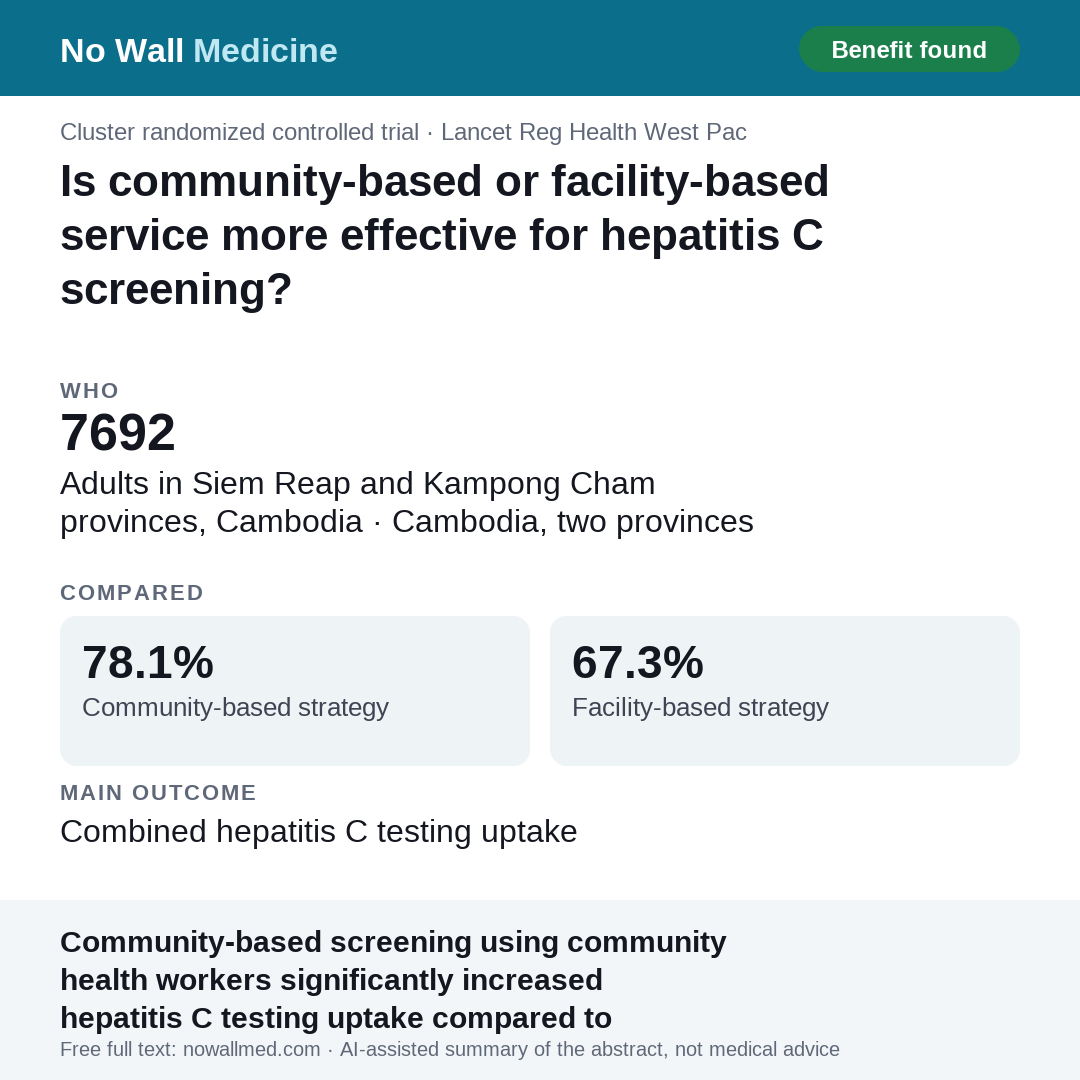
Community-based versus facility-based services to improve hepatitis C screening in Cambodia: a cluster randomized controlled trial (ANRS 12384 Cam-C study)
Cluster randomized controlled trialBenefit found
Is community-based or facility-based service more effective for hepatitis C screening?
Who
7692
Adults in Siem Reap and Kampong Cham provinces, Cambodia · Cambodia, two provinces
Compared
78.1%Community-based strategy
67.3%Facility-based strategy
Main outcome
Combined hepatitis C testing uptake
Result: odds ratio 2.18 (95% CI 1.28 to 3.73)
Bottom line: Community-based screening using community health workers significantly increased hepatitis C testing uptake compared to facility-based services.
Funded by: ANRS MIE
Lancet Reg Health West Pac · 2025-10-08Download image
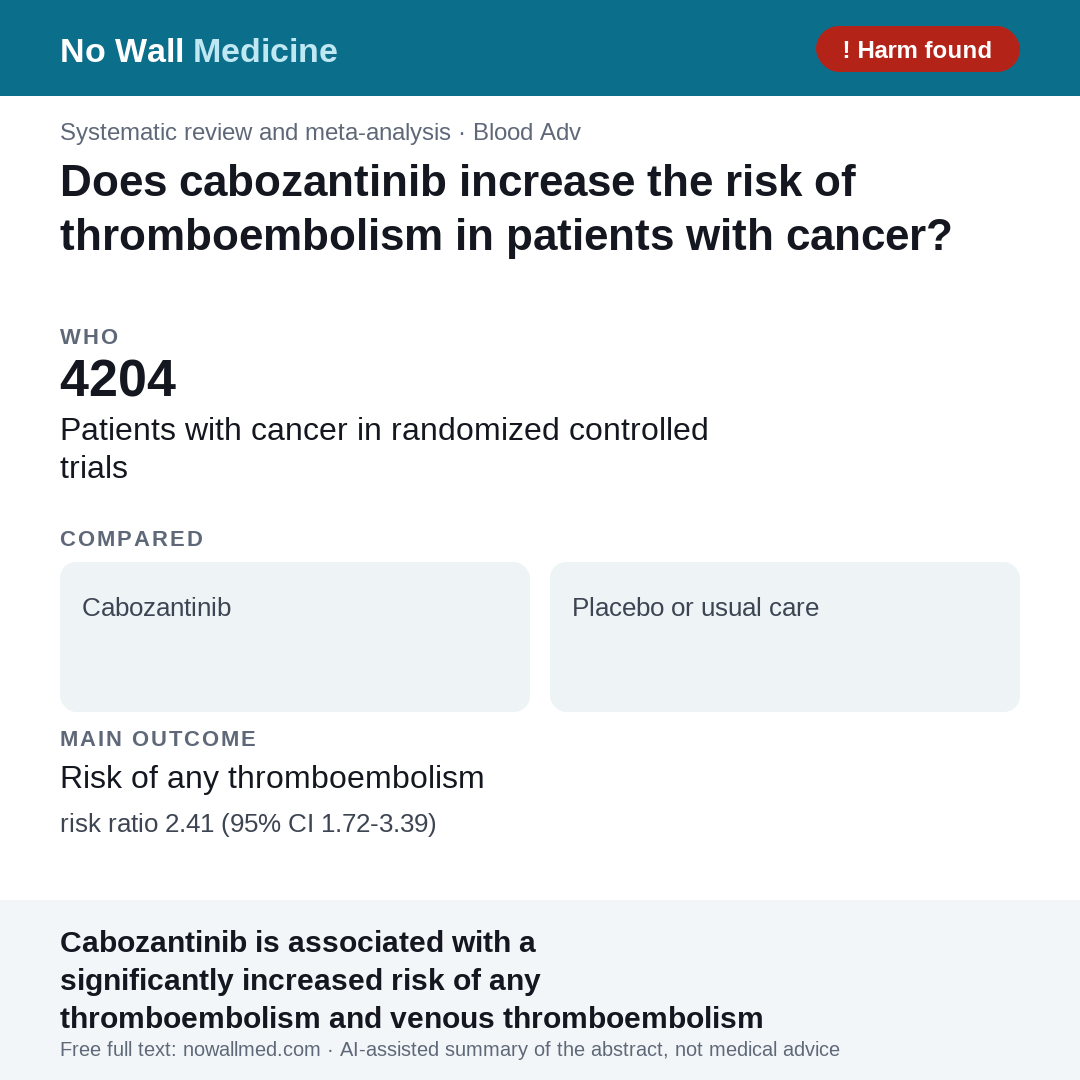
Cabozantinib and thromboembolism in patients with cancer: a systematic review, meta-analysis, and retrospective study
Systematic review and meta-analysisHarm found
Does cabozantinib increase the risk of thromboembolism in patients with cancer?
Who
4204
Patients with cancer in randomized controlled trials
Compared
Cabozantinib
Placebo or usual care
Main outcome
Risk of any thromboembolism
Result: risk ratio 2.41 (95% CI 1.72-3.39)
Bottom line: Cabozantinib is associated with a significantly increased risk of any thromboembolism and venous thromboembolism in cancer patients.
Blood Adv · 2025-10-08Download image
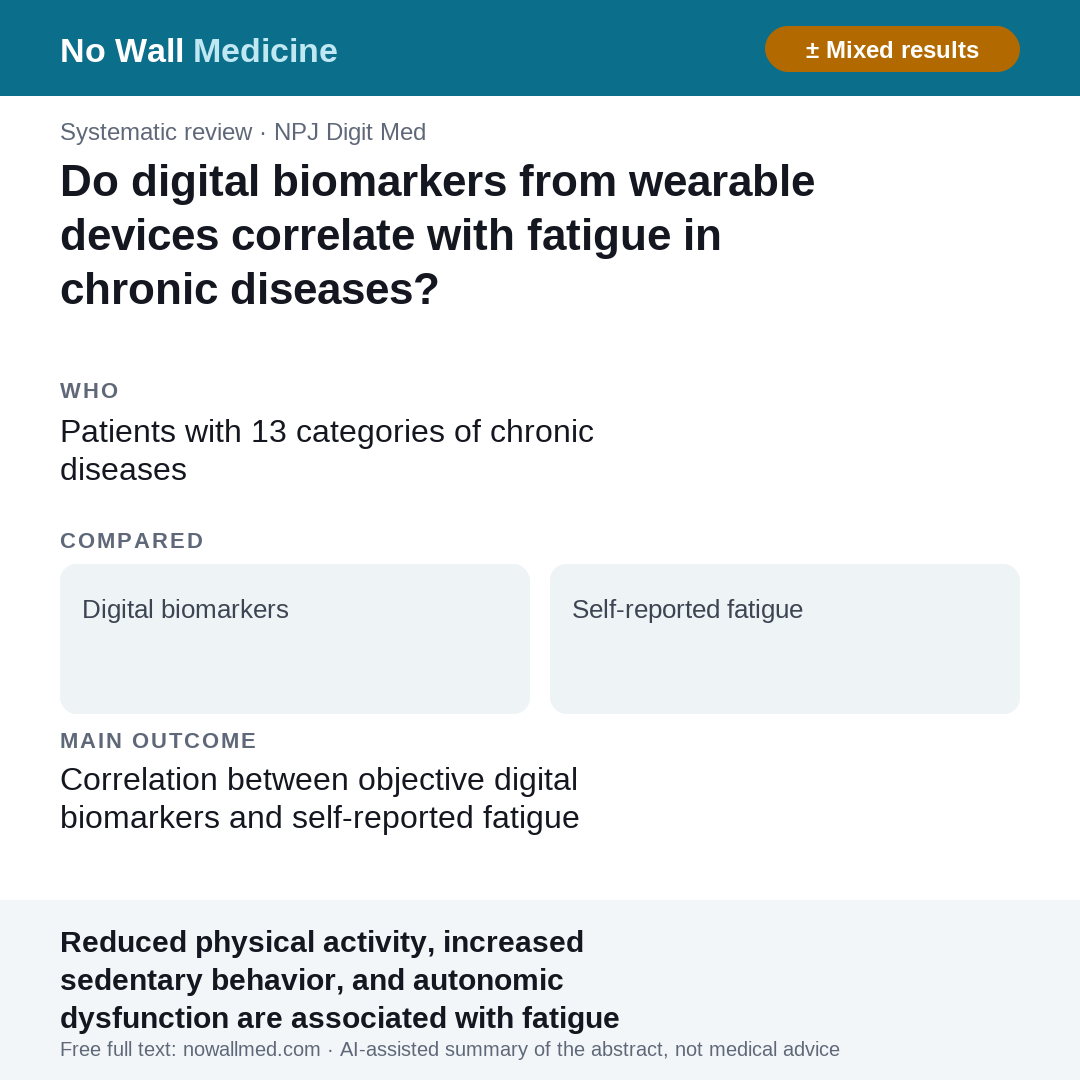
Systematic review: digital biomarkers of fatigue in chronic diseases
Systematic reviewMixed results
Do digital biomarkers from wearable devices correlate with fatigue in chronic diseases?
Who
Patients with 13 categories of chronic diseases
Compared
Digital biomarkers
Self-reported fatigue
Main outcome
Correlation between objective digital biomarkers and self-reported fatigue
Bottom line: Reduced physical activity, increased sedentary behavior, and autonomic dysfunction are associated with fatigue across multiple chronic diseases.
NPJ Digit Med · 2025-10-08Download image
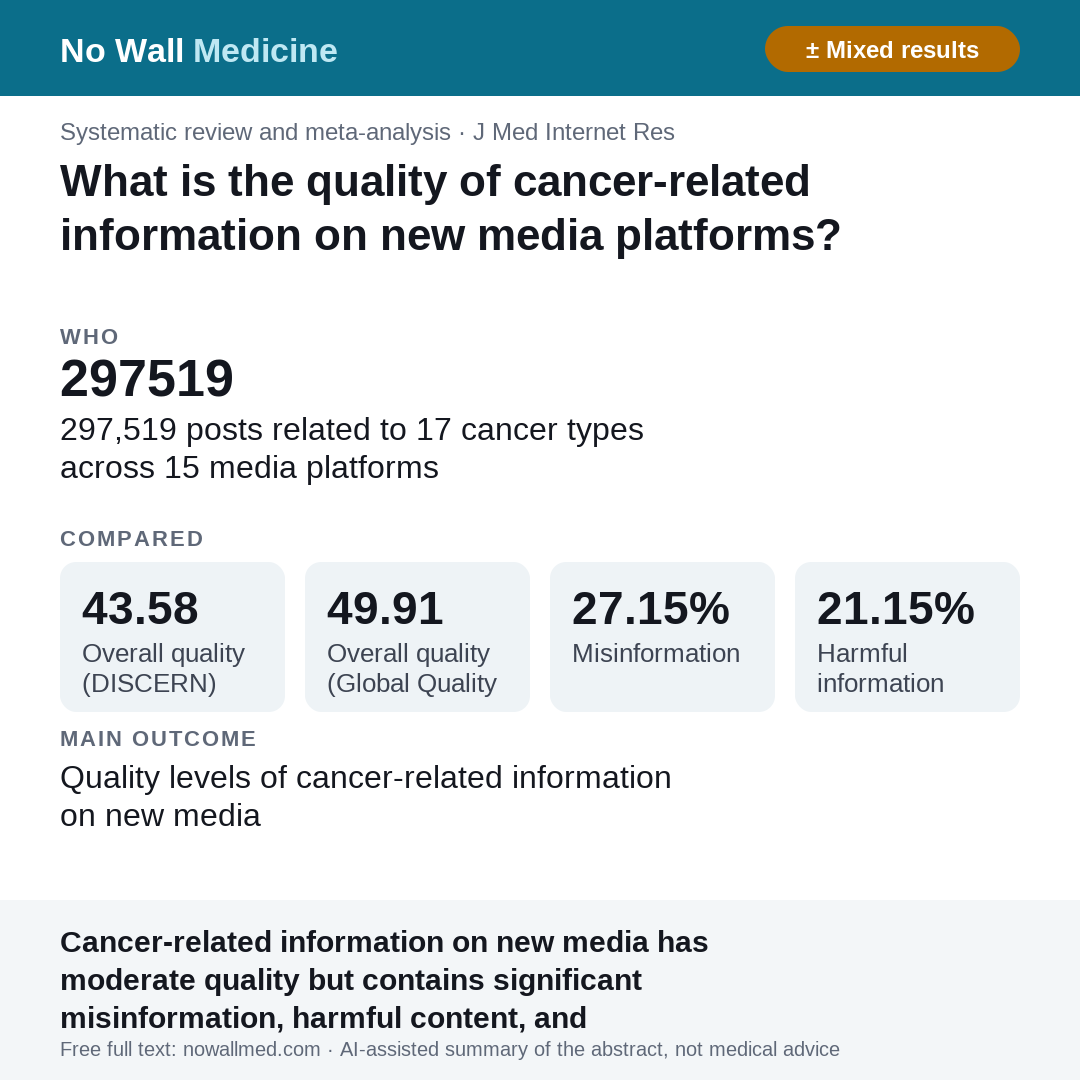
Quality of Cancer-Related Information on New Media (2014-2023): Systematic Review and Meta-Analysis
Systematic review and meta-analysisMixed results
What is the quality of cancer-related information on new media platforms?
Who
297519
297,519 posts related to 17 cancer types across 15 media platforms
Compared
43.58Overall quality (DISCERN) (95% CI 37.80-49.35)
49.91Overall quality (Global Quality Score) (95% CI 43.31-56.50)
27.15%Misinformation (95% CI 21.36-33.35)
21.15%Harmful information (95% CI 8.96-36.50)
Main outcome
Quality levels of cancer-related information on new media
Bottom line: Cancer-related information on new media has moderate quality but contains significant misinformation, harmful content, and commercial bias.
Limitation: High heterogeneity across most outcomes (I²>75%)
J Med Internet Res · 2025-10-08Download image
Clinical utility of diffusion tensor imaging in sport-related concussion: a systematic review
Systematic reviewUnclear result
What is the clinical utility of diffusion tensor imaging in sport-related concussion?
Who
26
Subjects with sport-related concussion
Compared
Acute injury: heterogenous changes in diffusion tensor imaging parameters
Chronic injury: reduced fractional anisotropy and elevated mean diffusivity
Main outcome
diffusion tensor imaging parameters
Bottom line: Diffusion tensor imaging shows heterogeneous changes in acute injury and more consistent alterations in chronic injury.
BJR Open · 2025-10-08Download image

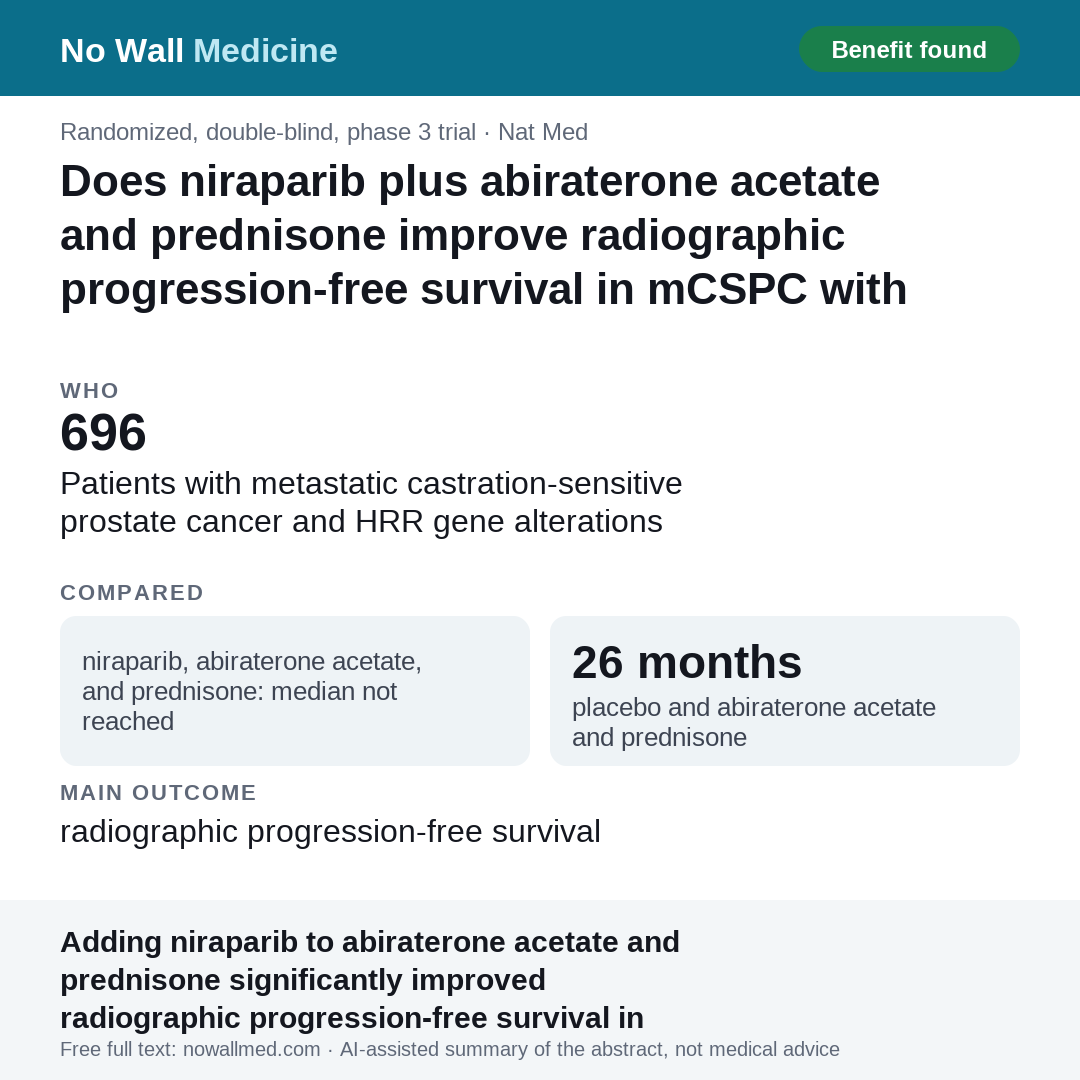
Niraparib and abiraterone acetate plus prednisone for HRR-deficient metastatic castration-sensitive prostate cancer: a randomized phase 3 trial
Randomized, double-blind, phase 3 trialBenefit found
Does niraparib plus abiraterone acetate and prednisone improve radiographic progression-free survival in mCSPC with HRR alterations?
Who
696
Patients with metastatic castration-sensitive prostate cancer and HRR gene alterations
Compared
niraparib, abiraterone acetate, and prednisone: median not reached
26 monthsplacebo and abiraterone acetate and prednisone
Main outcome
radiographic progression-free survival
Result: hazard ratio 0.63 (95% confidence interval: 0.49-0.80)
Bottom line: Adding niraparib to abiraterone acetate and prednisone significantly improved radiographic progression-free survival in patients with HRR-deficient metastatic castration-sensitive prostate cancer.
Nat Med · 2025-10-07Download image
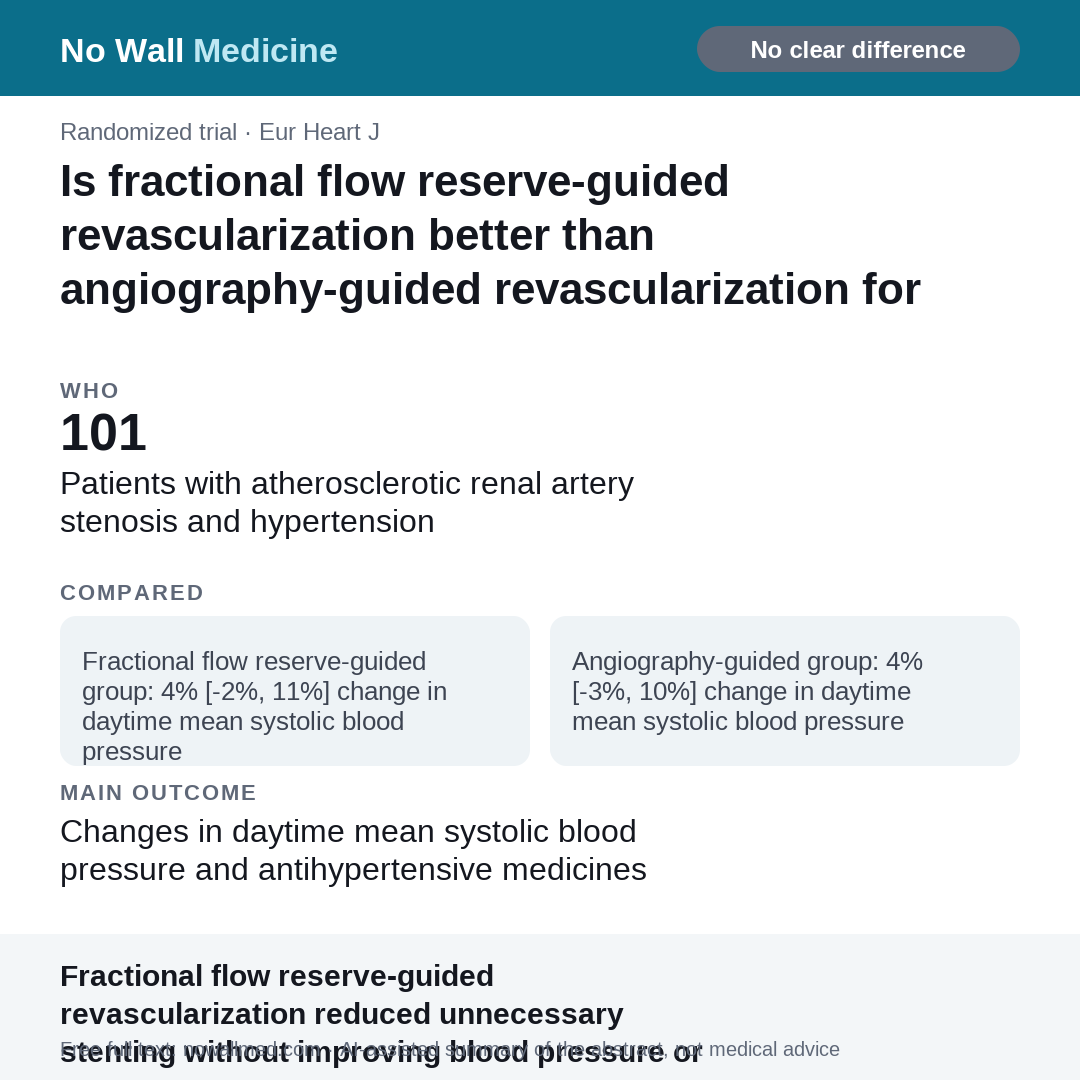
Fractional flow reserve-guided renal artery stenting in atherosclerotic renovascular hypertension: the FAIR randomized trial
Randomized trialNo clear difference
Is fractional flow reserve-guided revascularization better than angiography-guided revascularization for atherosclerotic renal artery stenosis?
Who
101
Patients with atherosclerotic renal artery stenosis and hypertension
Compared
Fractional flow reserve-guided group: 4% [-2%, 11%] change in daytime mean systolic blood pressure
Angiography-guided group: 4% [-3%, 10%] change in daytime mean systolic blood pressure
Main outcome
Changes in daytime mean systolic blood pressure and antihypertensive medicines
Bottom line: Fractional flow reserve-guided revascularization reduced unnecessary stenting without improving blood pressure or medication reduction compared to angiography guidance.
Eur Heart J · 2025-10-07Download image
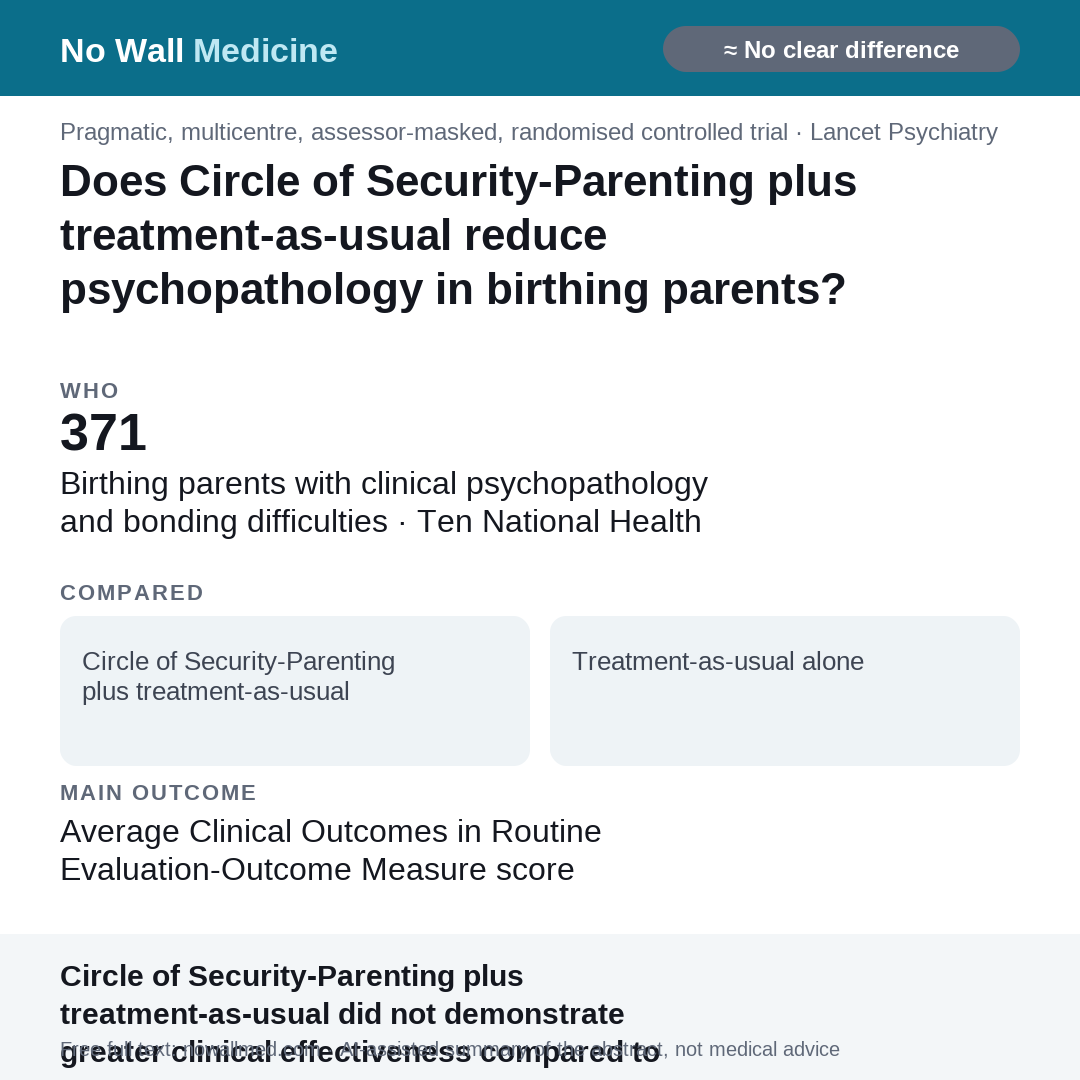
Clinical effectiveness of the Circle of Security-Parenting group intervention for birthing parents in perinatal mental health services in England (COSI): a pragmatic, multicentre, assessor-masked, randomised controlled trial
Pragmatic, multicentre, assessor-masked, randomised controlled trialNo clear difference
Does Circle of Security-Parenting plus treatment-as-usual reduce psychopathology in birthing parents?
Who
371
Birthing parents with clinical psychopathology and bonding difficulties · Ten National Health Service Trusts across England
Compared
Circle of Security-Parenting plus treatment-as-usual
Treatment-as-usual alone
Main outcome
Average Clinical Outcomes in Routine Evaluation-Outcome Measure score
Result: -1·41 (95% CI -5·11 to 2·28)
Bottom line: Circle of Security-Parenting plus treatment-as-usual did not demonstrate greater clinical effectiveness compared to treatment-as-usual alone.
Lancet Psychiatry · 2025-10-07Download image
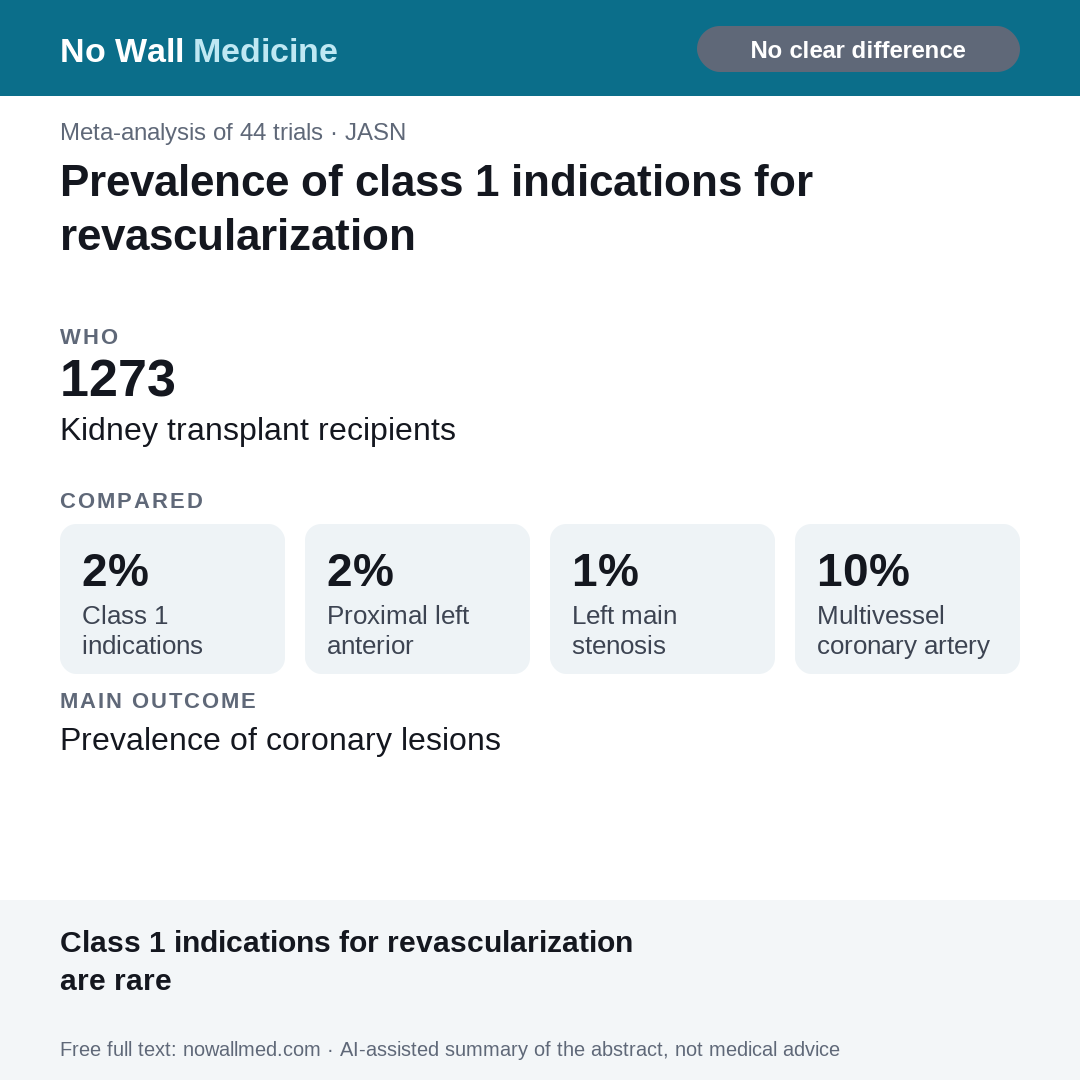
Class 1 Indications for Coronary Revascularization Identified in Prekidney Transplant Screening
Meta-analysis of 44 trialsNo clear difference
Prevalence of class 1 indications for revascularization
Who
1273
Kidney transplant recipients
Compared
2%Class 1 indications
2%Proximal left anterior descending disease
1%Left main stenosis
10%Multivessel coronary artery disease
Main outcome
Prevalence of coronary lesions
Bottom line: Class 1 indications for revascularization are rare
JASN · 2025-10-07Download image
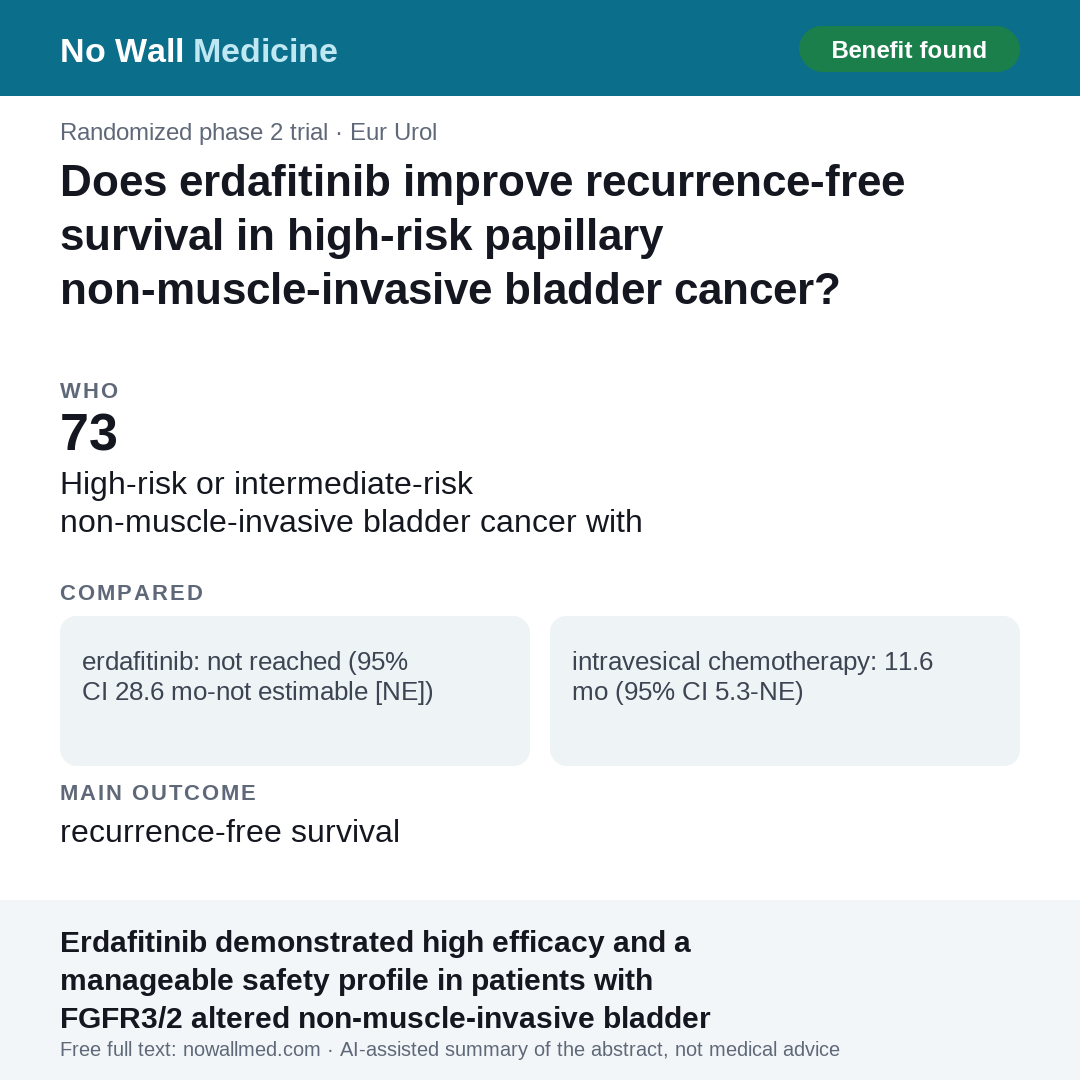
Erdafitinib in Patients with High- and Intermediate-risk Non-muscle-invasive Bladder Cancer: Final Analysis of THOR-2 Study
Randomized phase 2 trialBenefit found
Does erdafitinib improve recurrence-free survival in high-risk papillary non-muscle-invasive bladder cancer?
Who
73
High-risk or intermediate-risk non-muscle-invasive bladder cancer with FGFR3/2 alterations
Compared
erdafitinib: not reached (95% CI 28.6 mo-not estimable [NE])
intravesical chemotherapy: 11.6 mo (95% CI 5.3-NE)
Main outcome
recurrence-free survival
Result: hazard ratio 0.28 (95% CI 0.13-0.61)
Bottom line: Erdafitinib demonstrated high efficacy and a manageable safety profile in patients with FGFR3/2 altered non-muscle-invasive bladder cancer.
Limitation: Early termination in cohort 1 and small sample size that precluded prespecified hypothesis testing.
Eur Urol · 2025-10-07Download image
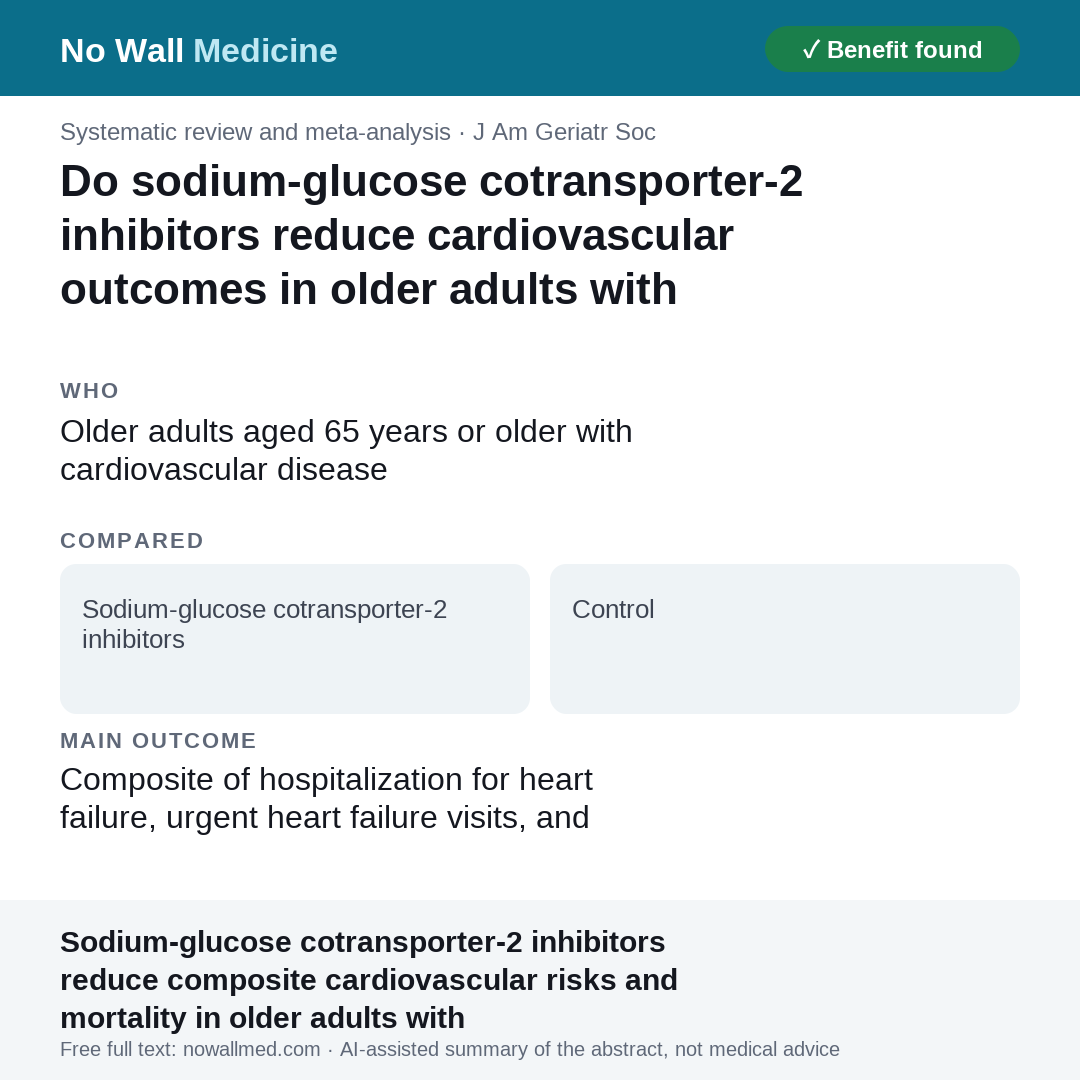
SGLT2 Inhibitors in Older Adults With Cardiovascular Disease: A Systematic Review and Meta-Analysis
Systematic review and meta-analysisBenefit found
Do sodium-glucose cotransporter-2 inhibitors reduce cardiovascular outcomes in older adults with cardiovascular disease?
Who
Older adults aged 65 years or older with cardiovascular disease
Compared
Sodium-glucose cotransporter-2 inhibitors
Control
Main outcome
Composite of hospitalization for heart failure, urgent heart failure visits, and cardiovascular death
Result: hazard ratio 0.75 (95% CI 0.67-0.83)
Bottom line: Sodium-glucose cotransporter-2 inhibitors reduce composite cardiovascular risks and mortality in older adults with cardiovascular disease.
J Am Geriatr Soc · 2025-10-07Download image
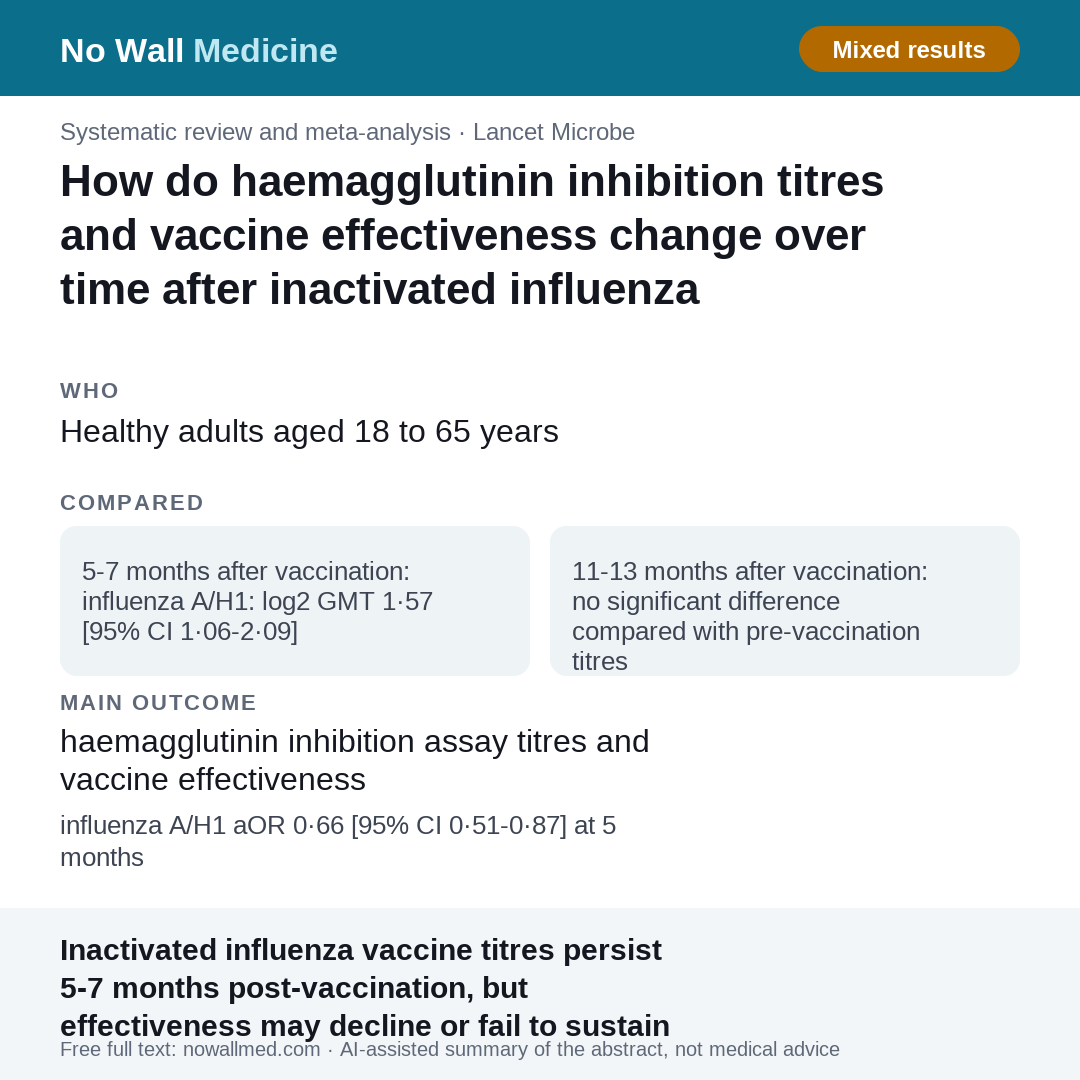
Duration of the serological response and effectiveness of the inactivated influenza vaccine in healthy adults aged 18-65 years: a systematic review and meta-analysis
Systematic review and meta-analysisMixed results
How do haemagglutinin inhibition titres and vaccine effectiveness change over time after inactivated influenza vaccine?
Who
Healthy adults aged 18 to 65 years
Compared
5-7 months after vaccination: influenza A/H1: log2 GMT 1·57 [95% CI 1·06-2·09]
11-13 months after vaccination: no significant difference compared with pre-vaccination titres
Main outcome
haemagglutinin inhibition assay titres and vaccine effectiveness
Result: influenza A/H1 aOR 0·66 [95% CI 0·51-0·87] at 5 months
Bottom line: Inactivated influenza vaccine titres persist 5-7 months post-vaccination, but effectiveness may decline or fail to sustain by 11-13 months.
Limitation: Evaluating temporal changes remains challenging due to methodological biases.
Lancet Microbe · 2025-10-07Download image
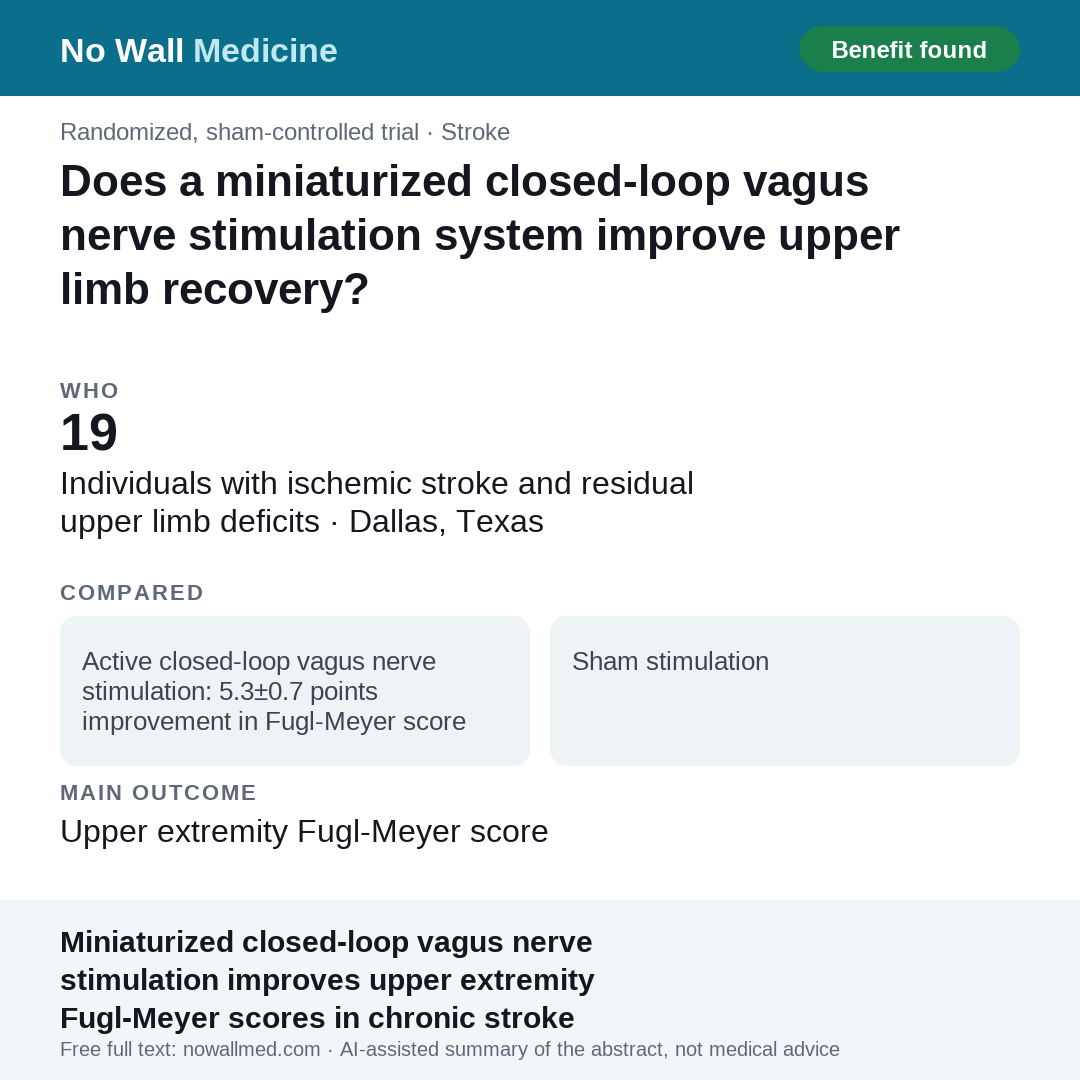
Closed-Loop Vagus Nerve Stimulation Delivered With a Miniaturized System Produces Lasting Recovery in Individuals With Chronic Stroke
Randomized, sham-controlled trialBenefit found
Does a miniaturized closed-loop vagus nerve stimulation system improve upper limb recovery?
Who
19
Individuals with ischemic stroke and residual upper limb deficits · Dallas, Texas
Compared
Active closed-loop vagus nerve stimulation: 5.3±0.7 points improvement in Fugl-Meyer score
Sham stimulation
Main outcome
Upper extremity Fugl-Meyer score
Bottom line: Miniaturized closed-loop vagus nerve stimulation improves upper extremity Fugl-Meyer scores in chronic stroke patients.
Stroke · 2025-10-07Download image
Genome-wide meta-analyses of cross substance use disorders in diverse populations
Genome-wide meta-analysisBenefit found
What are the shared genes across different substance use disorders in diverse populations?
Who
European, African, and American mixed populations
Compared
Concordant variants: 220 loci identified
SUD-shared genes: 785 genes
Main outcome
Identification of shared genetic loci and genes across substance use disorders
Bottom line: The study identified 220 loci and 785 shared genes across substance use disorders in diverse populations.
Mol Psychiatry · 2025-10-07Download image

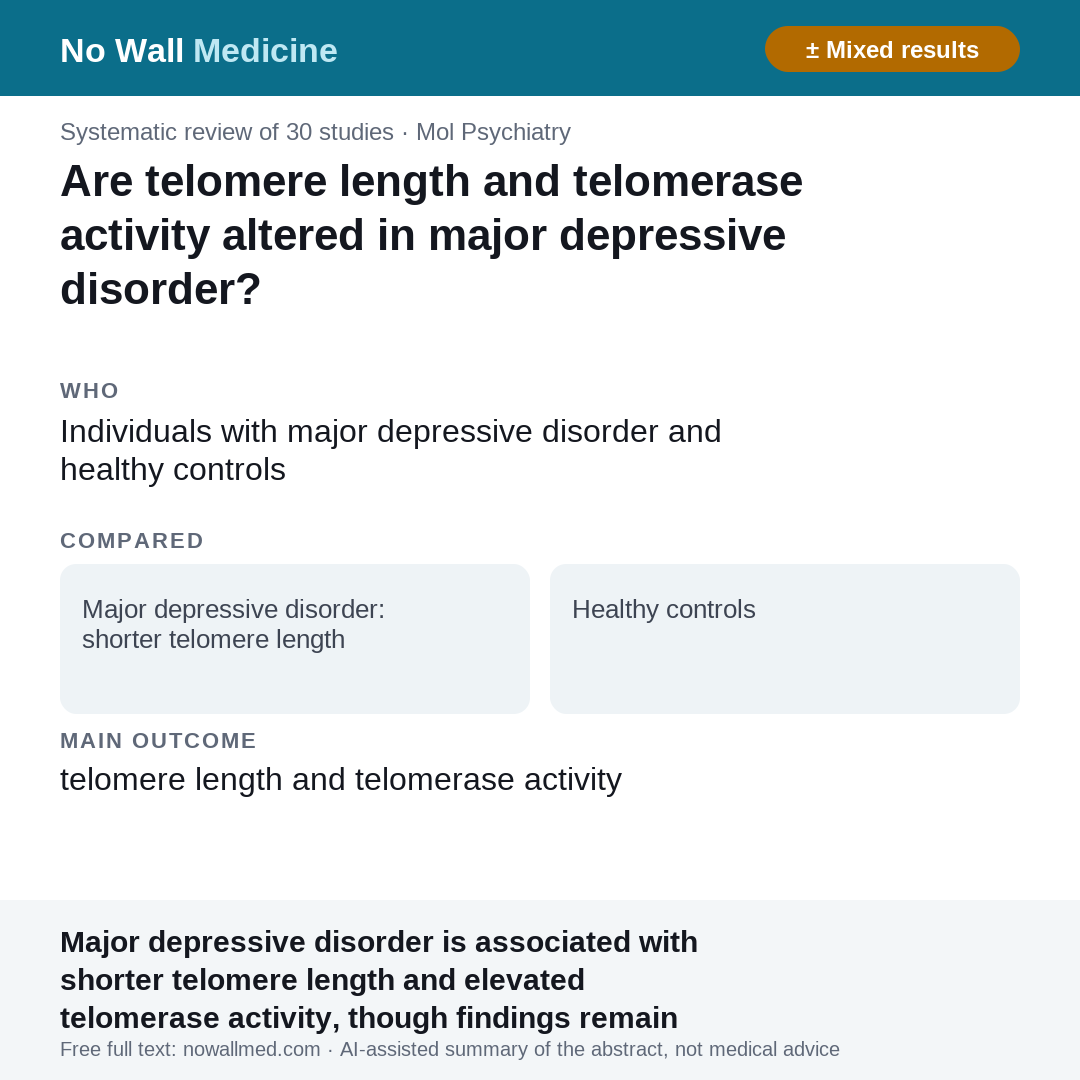
Role of telomere length and telomerase activity in accelerated cellular aging and major depressive disorder: a systematic review
Systematic review of 30 studiesMixed results
Are telomere length and telomerase activity altered in major depressive disorder?
Who
30
Individuals with major depressive disorder and healthy controls
Compared
Major depressive disorder: shorter telomere length
Healthy controls
Main outcome
telomere length and telomerase activity
Bottom line: Major depressive disorder is associated with shorter telomere length and elevated telomerase activity, though findings remain complex.
Limitation: conflicting findings and methodological variations
Mol Psychiatry · 2025-10-07Download image
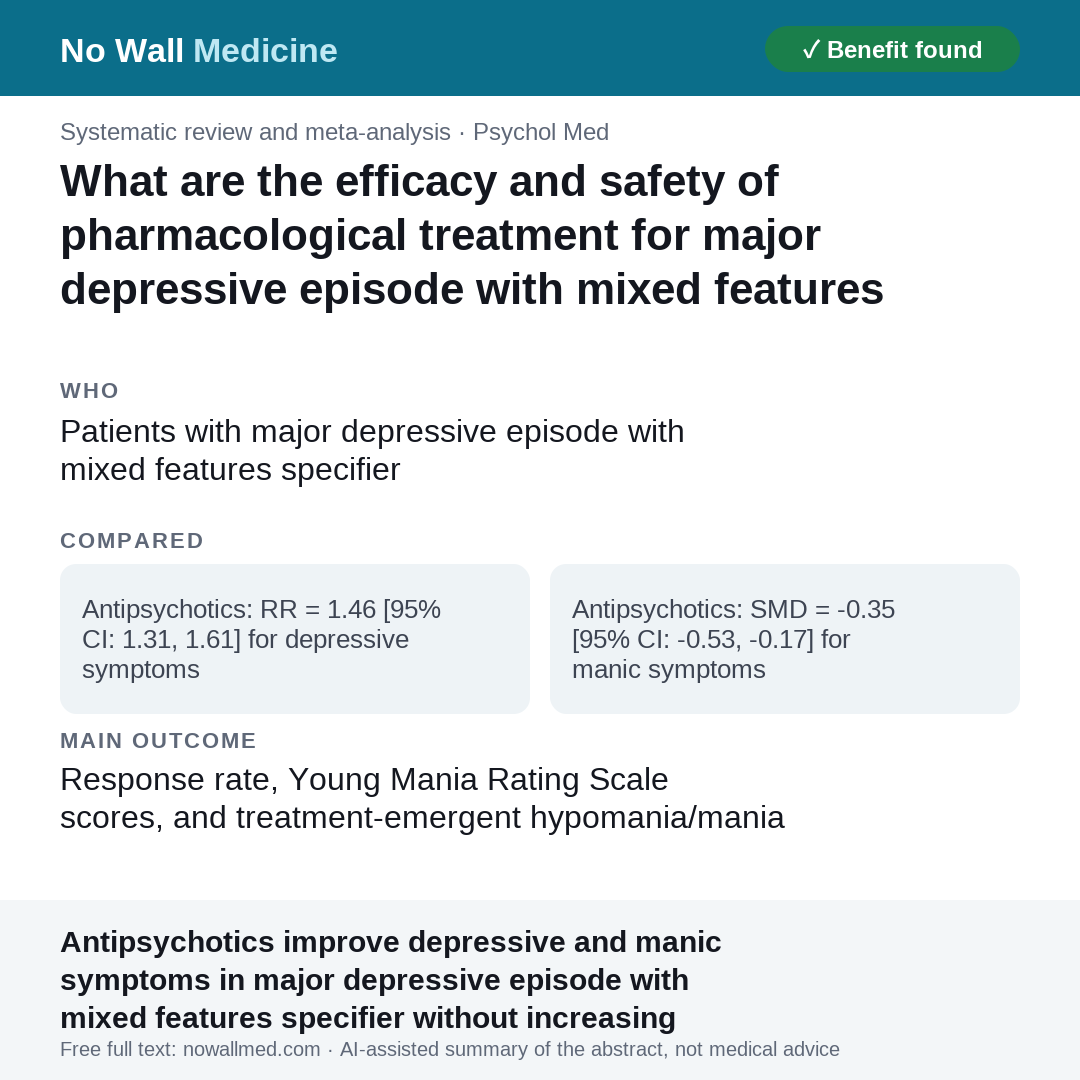
The efficacy and safety of pharmacological treatment for major depressive episode with mixed features specifier: a systematic review and meta-analysis
Systematic review and meta-analysisBenefit found
What are the efficacy and safety of pharmacological treatment for major depressive episode with mixed features specifier?
Who
Patients with major depressive episode with mixed features specifier
Compared
Antipsychotics: RR = 1.46 [95% CI: 1.31, 1.61] for depressive symptoms
Antipsychotics: SMD = -0.35 [95% CI: -0.53, -0.17] for manic symptoms
Main outcome
Response rate, Young Mania Rating Scale scores, and treatment-emergent hypomania/mania
Result: RR = 1.46 [95% CI: 1.31, 1.61] for depressive symptoms
Bottom line: Antipsychotics improve depressive and manic symptoms in major depressive episode with mixed features specifier without increasing manic switch risk.
Limitation: Findings are mostly based on post-hoc analyses, so evidence remains preliminary.
Psychol Med · 2025-10-07Download image
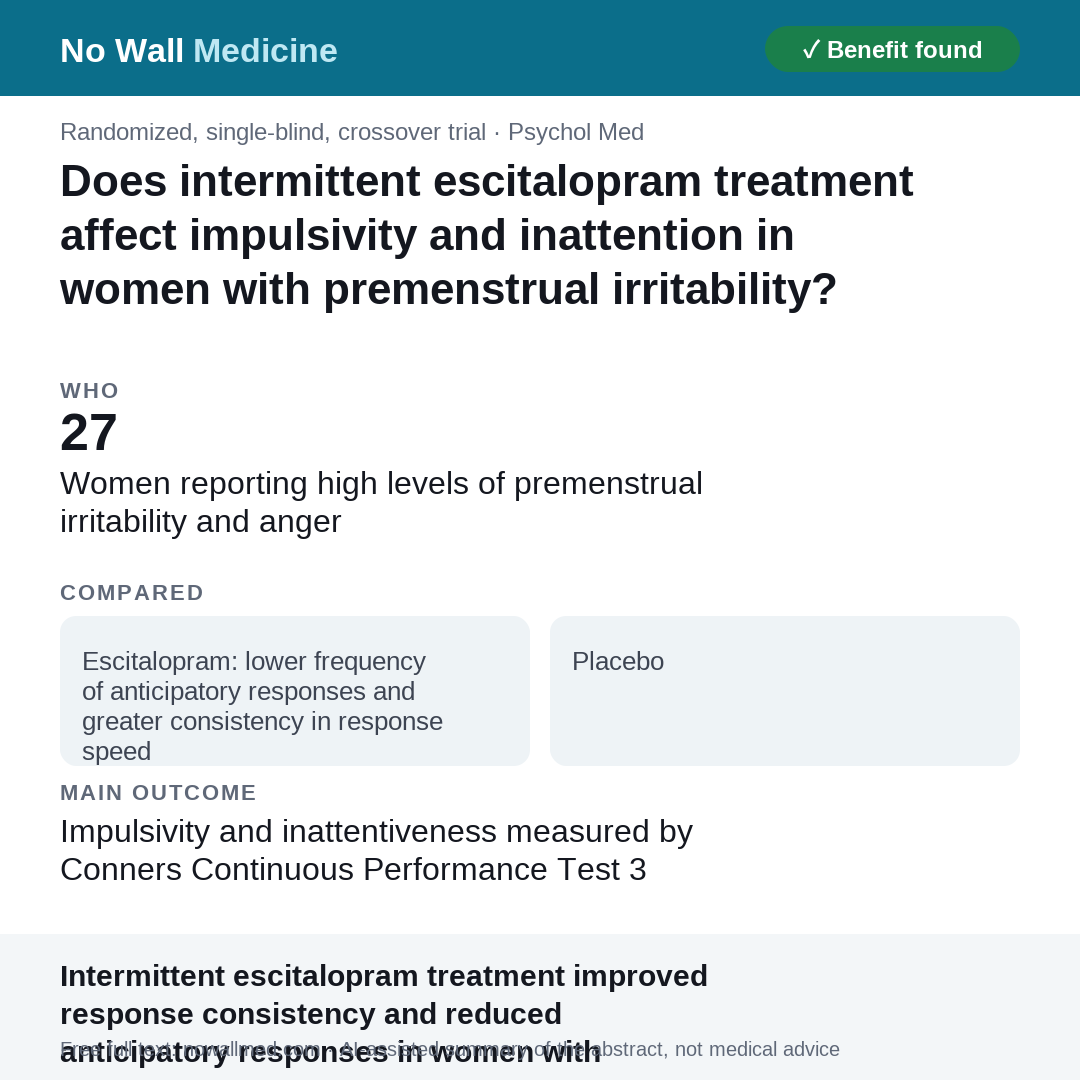
The effects of intermittent escitalopram treatment on impulsivity and inattention in women with premenstrual irritability and anger
Randomized, single-blind, crossover trialBenefit found
Does intermittent escitalopram treatment affect impulsivity and inattention in women with premenstrual irritability?
Who
27
Women reporting high levels of premenstrual irritability and anger
Compared
Escitalopram: lower frequency of anticipatory responses and greater consistency in response speed
Placebo
Main outcome
Impulsivity and inattentiveness measured by Conners Continuous Performance Test 3
Bottom line: Intermittent escitalopram treatment improved response consistency and reduced anticipatory responses in women with premenstrual irritability.
Psychol Med · 2025-10-07Download image