Visual abstracts
New randomized trials and meta-analyses from leading journals at a glance: who was studied, what was compared, and what was found. Every paper is free to read in full.
All specialtiesCardiology 2204Oncology 1887Gastroenterology & Hepatology 833Infectious Disease 1390Neurology 891Psychiatry & Mental Health 1059Pulmonology 931Critical Care 612Endocrinology & Diabetes 1164Pediatrics 1284Surgery 1108Orthopedics & Sports Medicine 408Neurosurgery 270Cardiothoracic & Vascular Surgery 237Plastic & Reconstructive Surgery 336Nephrology 467Rheumatology 308Hematology 479Dermatology 257Ophthalmology 261Obstetrics & Gynecology 721Public & Global Health 414Radiology & Imaging 305Anesthesiology 438Urology 382ENT (Otolaryngology) 285Emergency Medicine 242Allergy & Immunology 135Geriatrics 465Family Medicine & Primary Care 254Medical Genetics & Genomics 237Pathology & Laboratory Medicine 74Physical Medicine & Rehabilitation 380Palliative Care 191Nutrition 587Digital Health & AI 1122General Medicine 166
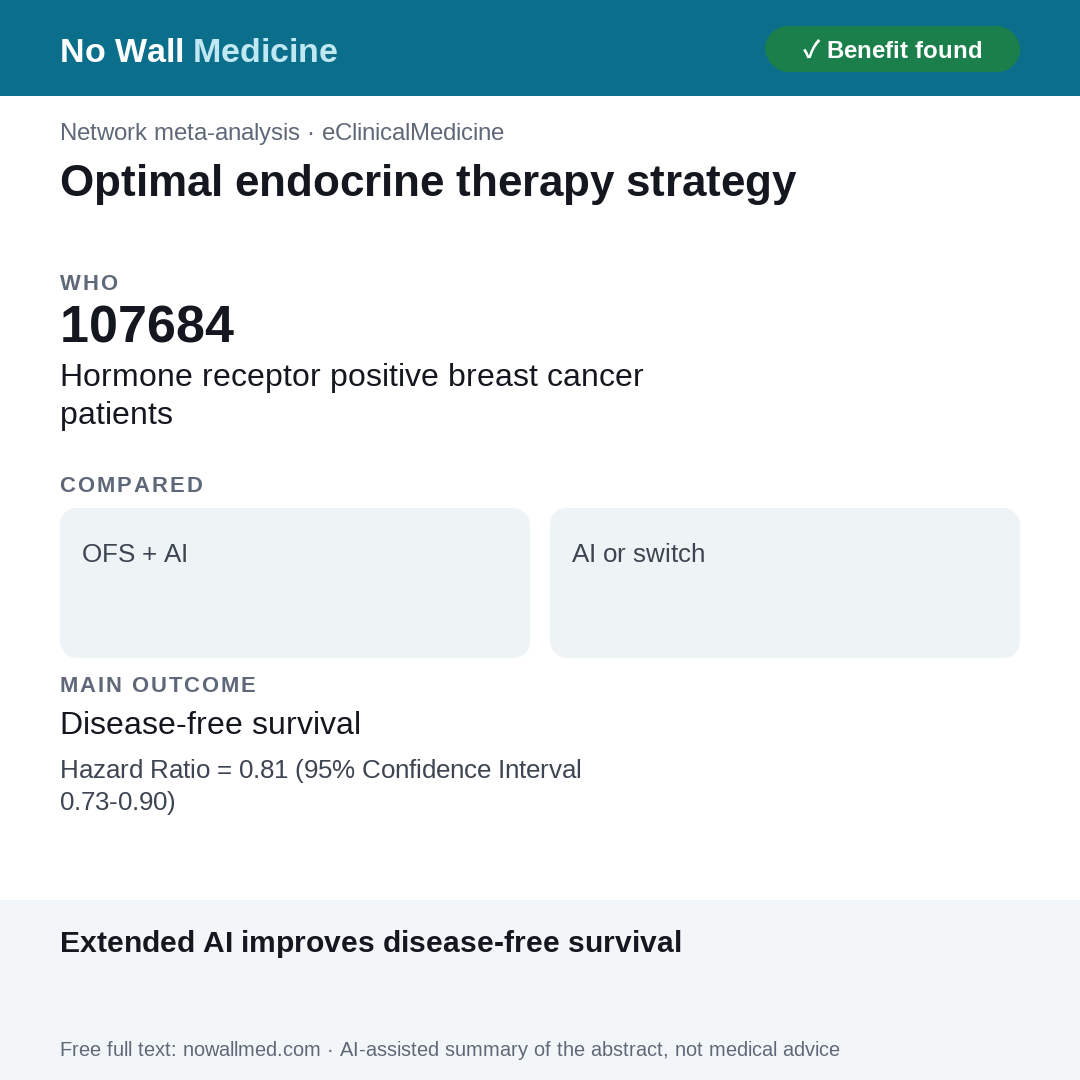
Adjuvant endocrine treatment strategies for non-metastatic breast cancer: a network meta-analysis
Network meta-analysisBenefit found
Optimal endocrine therapy strategy
Who
107684
Hormone receptor positive breast cancer patients
Compared
OFS + AI
AI or switch
Main outcome
Disease-free survival
Result: Hazard Ratio = 0.81 (95% Confidence Interval 0.73-0.90)
Bottom line: Extended AI improves disease-free survival
eClinicalMedicine · 2025-02-17Download image
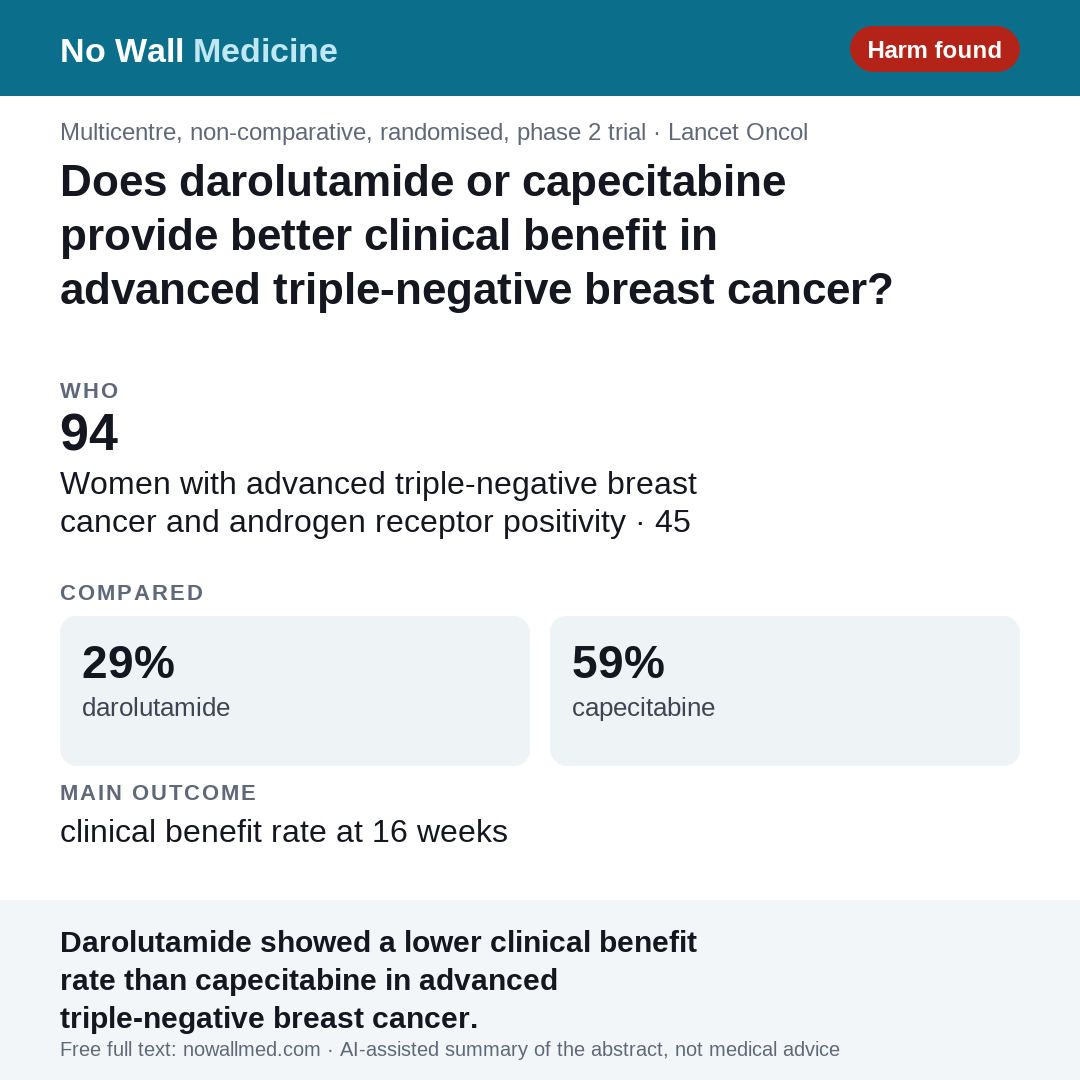
Darolutamide or capecitabine in triple-negative, androgen receptor-positive, advanced breast cancer (UCBG 3-06 START): a multicentre, non-comparative, randomised, phase 2 trial
Multicentre, non-comparative, randomised, phase 2 trialHarm found
Does darolutamide or capecitabine provide better clinical benefit in advanced triple-negative breast cancer?
Who
94
Women with advanced triple-negative breast cancer and androgen receptor positivity · 45 hospitals in France
Compared
29%darolutamide (17 of 58; 90% CI 19-39)
59%capecitabine (19 of 32; 90% CI 45-74)
Main outcome
clinical benefit rate at 16 weeks
Bottom line: Darolutamide showed a lower clinical benefit rate than capecitabine in advanced triple-negative breast cancer.
Funded by: Bayer and Fondation Bergonié
Lancet Oncol · 2025-02-17Download image
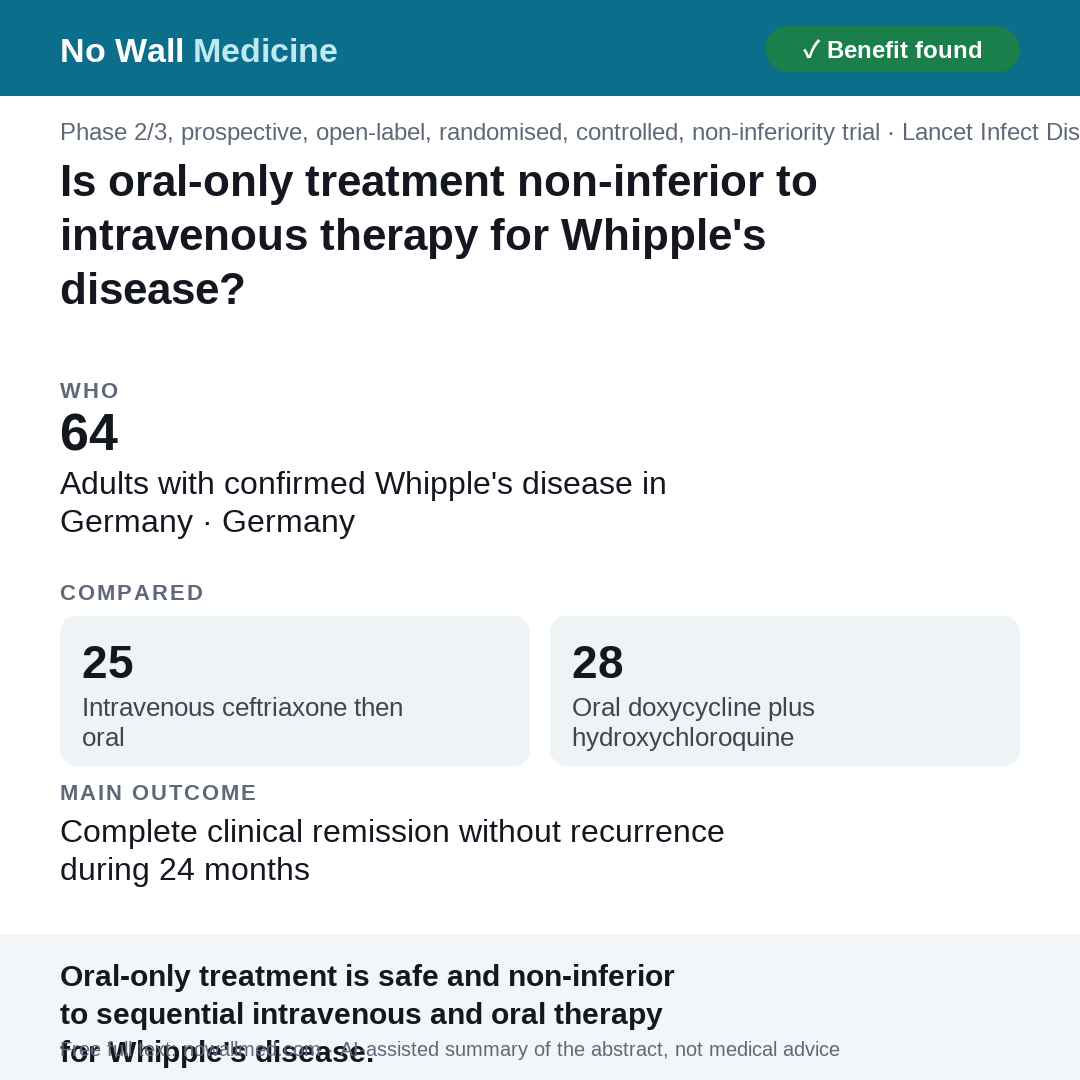
Oral treatment of Whipple's disease with doxycycline and hydroxychloroquine versus intravenous therapy with ceftriaxone followed by oral trimethoprim-sulfamethoxazole in Germany: a phase 2/3, prospective, open-label, randomised, controlled, non-inferiority trial
Phase 2/3, prospective, open-label, randomised, controlled, non-inferiority trialBenefit found
Is oral-only treatment non-inferior to intravenous therapy for Whipple's disease?
Who
64
Adults with confirmed Whipple's disease in Germany · Germany
Compared
25Intravenous ceftriaxone then oral trimethoprim-sulfamethoxazole (81%)
28Oral doxycycline plus hydroxychloroquine (97%)
Main outcome
Complete clinical remission without recurrence during 24 months
Result: risk difference 15·9 percentage points (95% CI -1·2 to 33·1)
Bottom line: Oral-only treatment is safe and non-inferior to sequential intravenous and oral therapy for Whipple's disease.
Funded by: German Research Foundation and the Robert Koch Institute
Lancet Infect Dis · 2025-02-17Download image
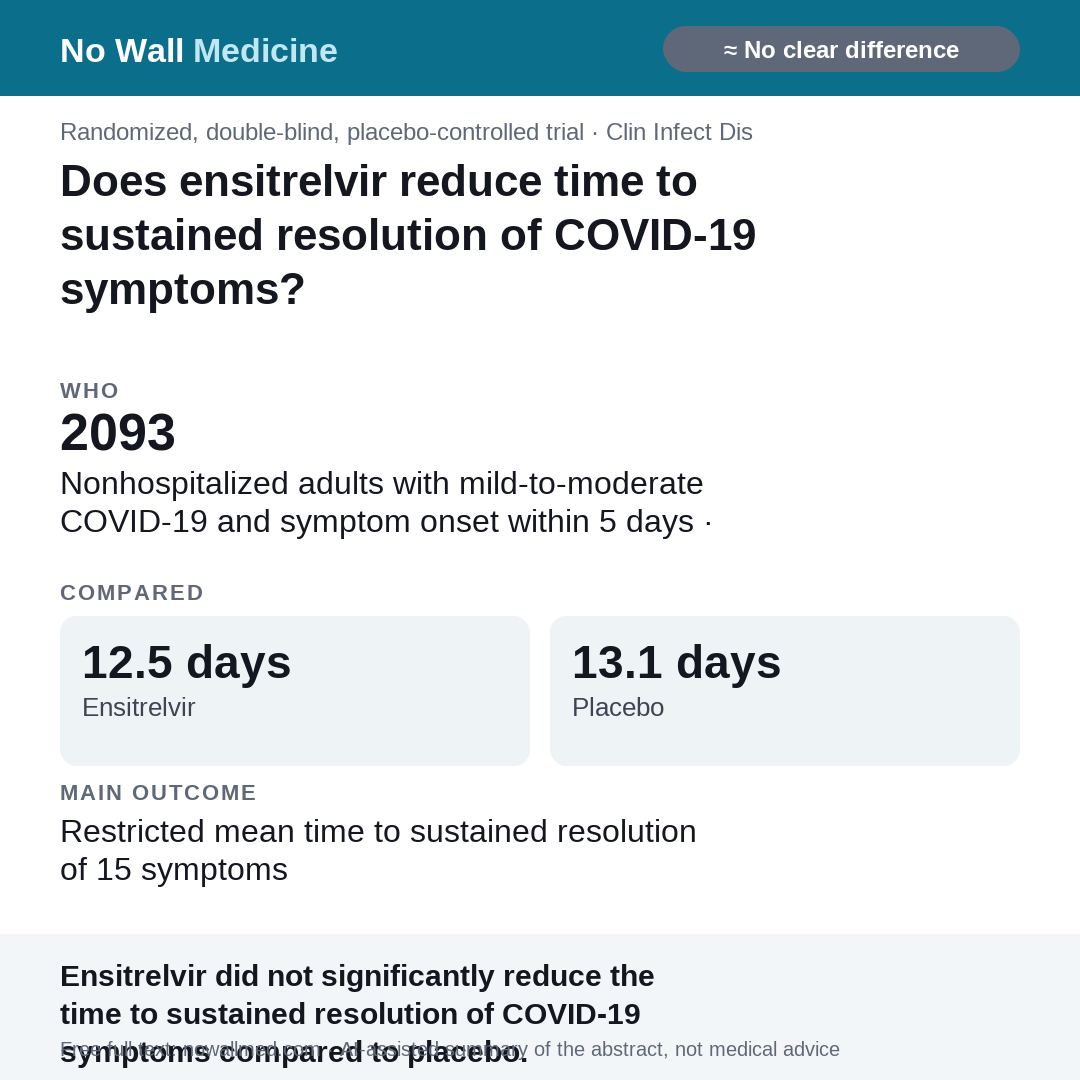
Ensitrelvir for the Treatment of Nonhospitalized Adults with COVID-19: Results from the SCORPIO-HR, Phase 3, Randomized, Double-blind, Placebo-Controlled Trial
Randomized, double-blind, placebo-controlled trialNo clear difference
Does ensitrelvir reduce time to sustained resolution of COVID-19 symptoms?
Who
2093
Nonhospitalized adults with mild-to-moderate COVID-19 and symptom onset within 5 days · Global
Compared
12.5 daysEnsitrelvir
13.1 daysPlacebo
Main outcome
Restricted mean time to sustained resolution of 15 symptoms
Result: difference, -0.6 days (95% confidence interval, -1.38 to 0.19)
Bottom line: Ensitrelvir did not significantly reduce the time to sustained resolution of COVID-19 symptoms compared to placebo.
Clin Infect Dis · 2025-02-17Download image
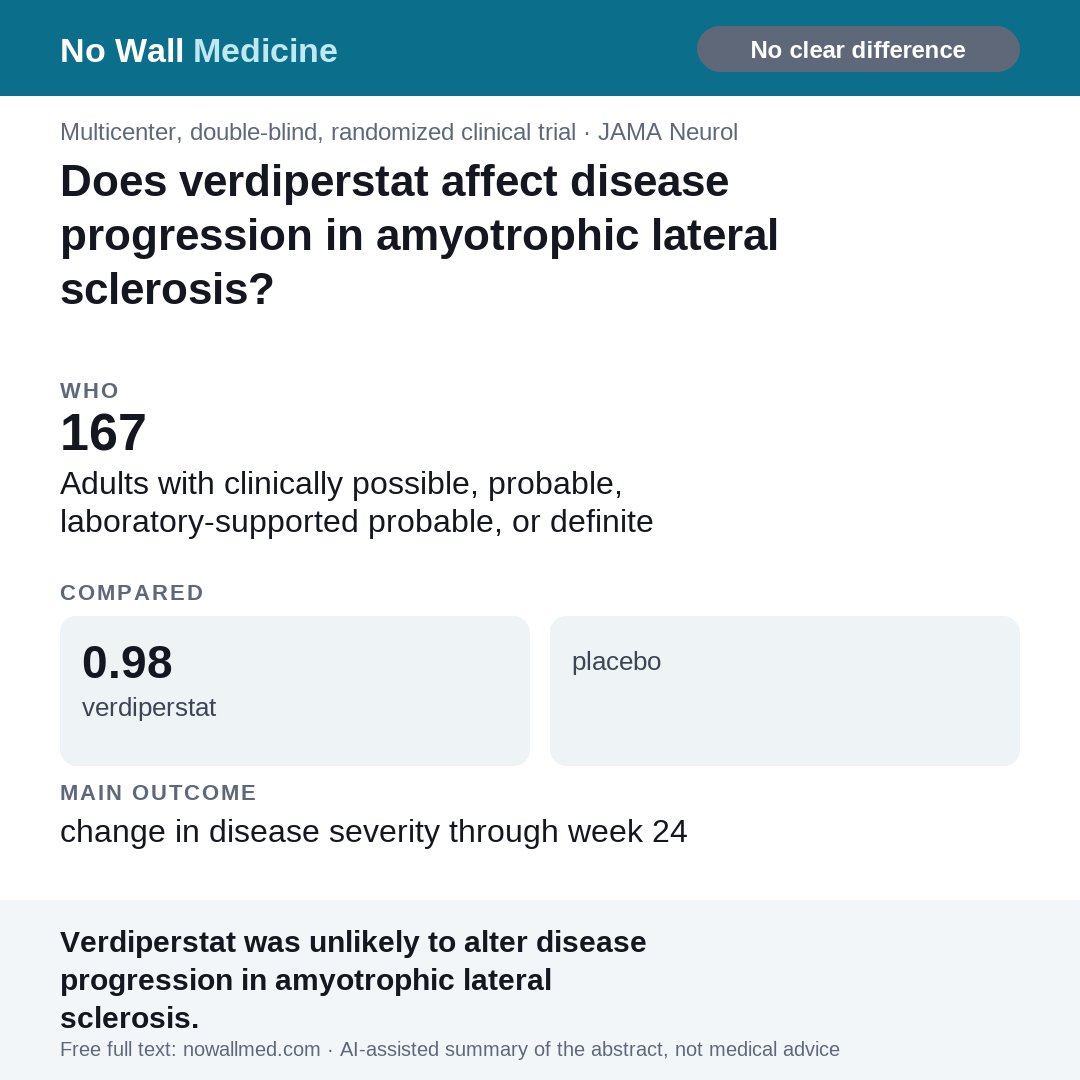
Verdiperstat in Amyotrophic Lateral Sclerosis: Results From the Randomized HEALEY ALS Platform Trial
Multicenter, double-blind, randomized clinical trialNo clear difference
Does verdiperstat affect disease progression in amyotrophic lateral sclerosis?
Who
167
Adults with clinically possible, probable, laboratory-supported probable, or definite amyotrophic lateral sclerosis · 54 referral centers across the United States
Compared
0.98verdiperstat (95% credible interval, 0.77-1.24)
placebo
Main outcome
change in disease severity through week 24
Result: disease rate ratio 0.98 (95% credible interval, 0.77-1.24)
Bottom line: Verdiperstat was unlikely to alter disease progression in amyotrophic lateral sclerosis.
JAMA Neurol · 2025-02-17Download image
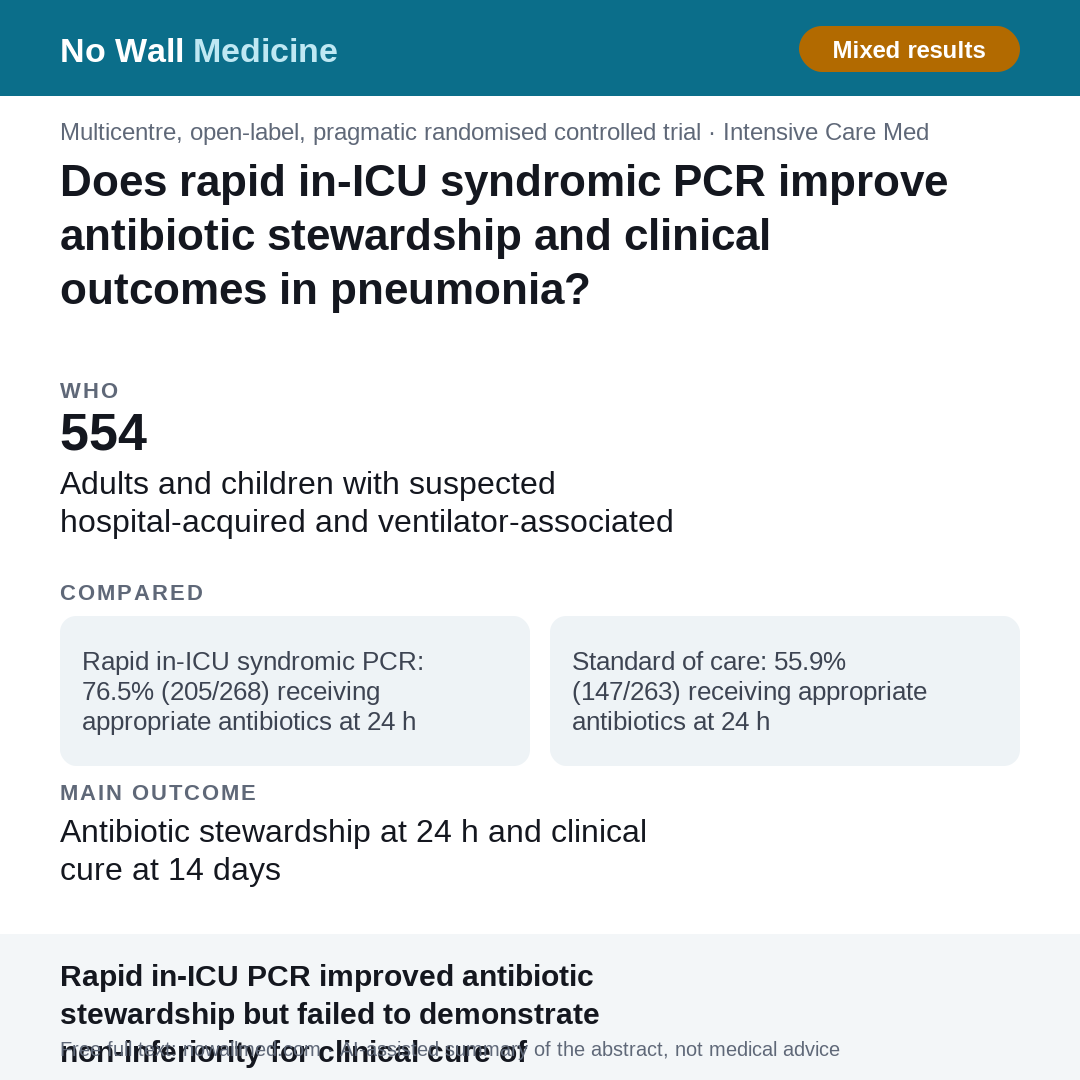
INHALE WP3, a multicentre, open-label, pragmatic randomised controlled trial assessing the impact of rapid, ICU-based, syndromic PCR, versus standard-of-care on antibiotic stewardship and clinical outcomes in hospital-acquired and ventilator-associated pneumonia
Multicentre, open-label, pragmatic randomised controlled trialMixed results
Does rapid in-ICU syndromic PCR improve antibiotic stewardship and clinical outcomes in pneumonia?
Who
554
Adults and children with suspected hospital-acquired and ventilator-associated pneumonia · 14 intensive care units
Compared
Rapid in-ICU syndromic PCR: 76.5% (205/268) receiving appropriate antibiotics at 24 h
Standard of care: 55.9% (147/263) receiving appropriate antibiotics at 24 h
Main outcome
Antibiotic stewardship at 24 h and clinical cure at 14 days
Result: estimated difference -6%, 95% CI -15 to 2%
Bottom line: Rapid in-ICU PCR improved antibiotic stewardship but failed to demonstrate non-inferiority for clinical cure of pneumonia.
Limitation: Secondary mortality and clinical score outcomes narrowly favoured the control arm without clear statistical significance.
Intensive Care Med · 2025-02-17Download image
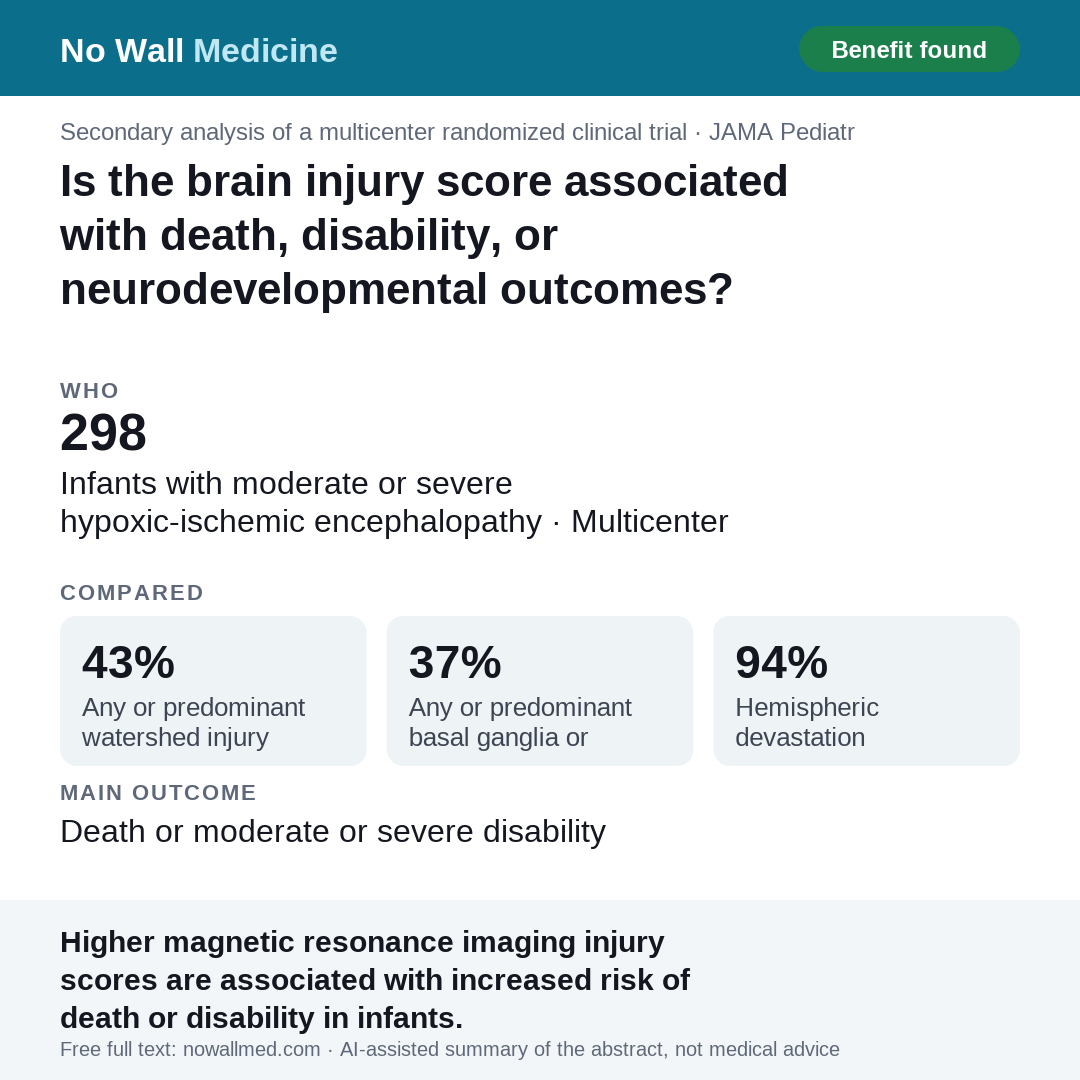
NICHD Magnetic Resonance Brain Imaging Score in Term Infants With Hypoxic-Ischemic Encephalopathy: A Secondary Analysis of a Randomized Clinical Trial
Secondary analysis of a multicenter randomized clinical trialBenefit found
Is the brain injury score associated with death, disability, or neurodevelopmental outcomes?
Who
298
Infants with moderate or severe hypoxic-ischemic encephalopathy · Multicenter
Compared
43%Any or predominant watershed injury (12/28)
37%Any or predominant basal ganglia or thalamic injury (17/46)
94%Hemispheric devastation (30/32)
Main outcome
Death or moderate or severe disability
Result: odds ratio 13.66 (95% CI 7.47-24.95)
Bottom line: Higher magnetic resonance imaging injury scores are associated with increased risk of death or disability in infants.
JAMA Pediatr · 2025-02-17Download image
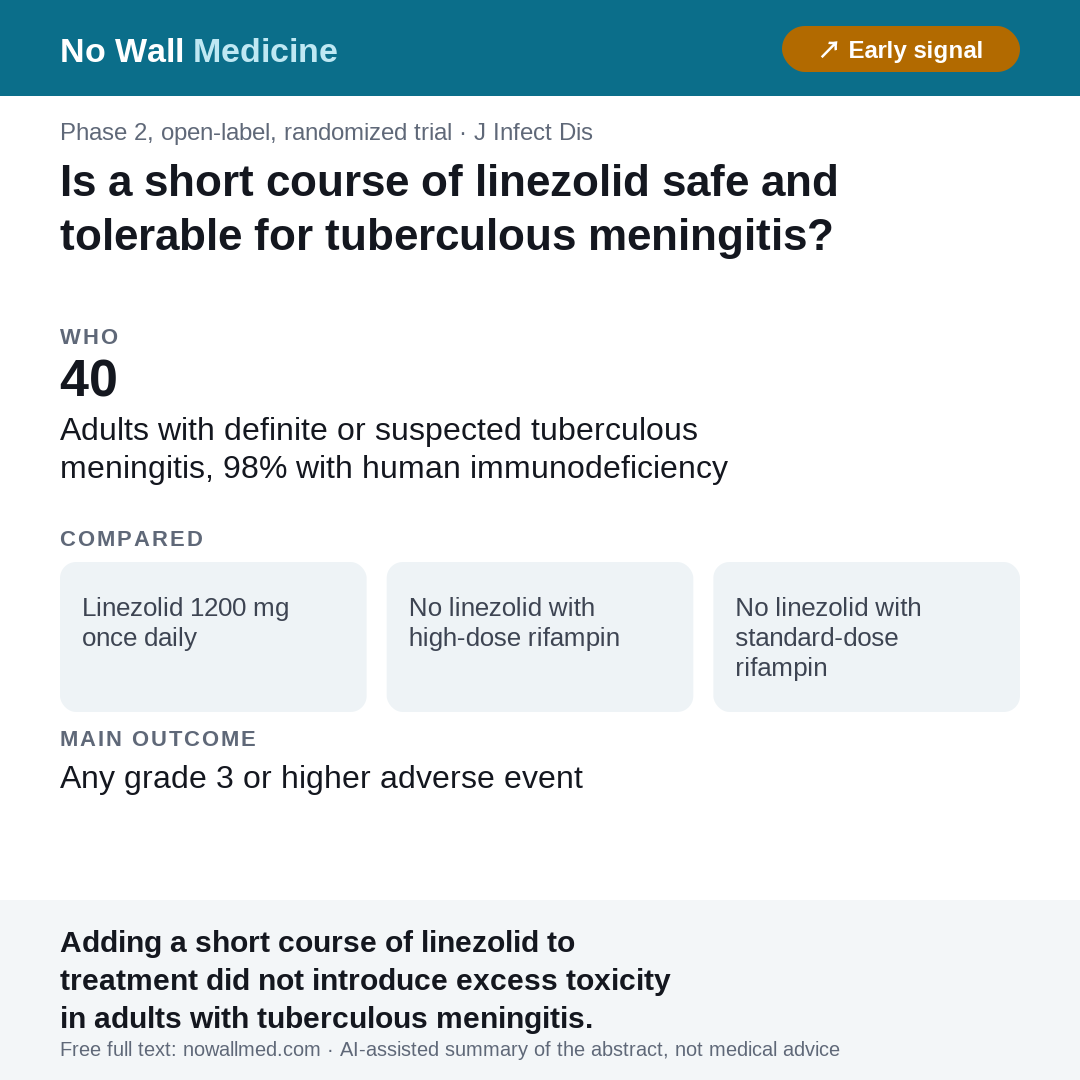
Safety and Tolerability of a Short Course of Linezolid for the Treatment of Predominantly Moderate to Severe Tuberculous Meningitis in Adults With Human Immunodeficiency Virus
Phase 2, open-label, randomized trialBenefit found
Is a short course of linezolid safe and tolerable for tuberculous meningitis?
Who
40
Adults with definite or suspected tuberculous meningitis, 98% with human immunodeficiency virus · Masaka, Uganda
Compared
Linezolid 1200 mg once daily
No linezolid with high-dose rifampin
No linezolid with standard-dose rifampin
Main outcome
Any grade 3 or higher adverse event
Bottom line: Adding a short course of linezolid to treatment did not introduce excess toxicity in adults with tuberculous meningitis.
J Infect Dis · 2025-02-17Download image
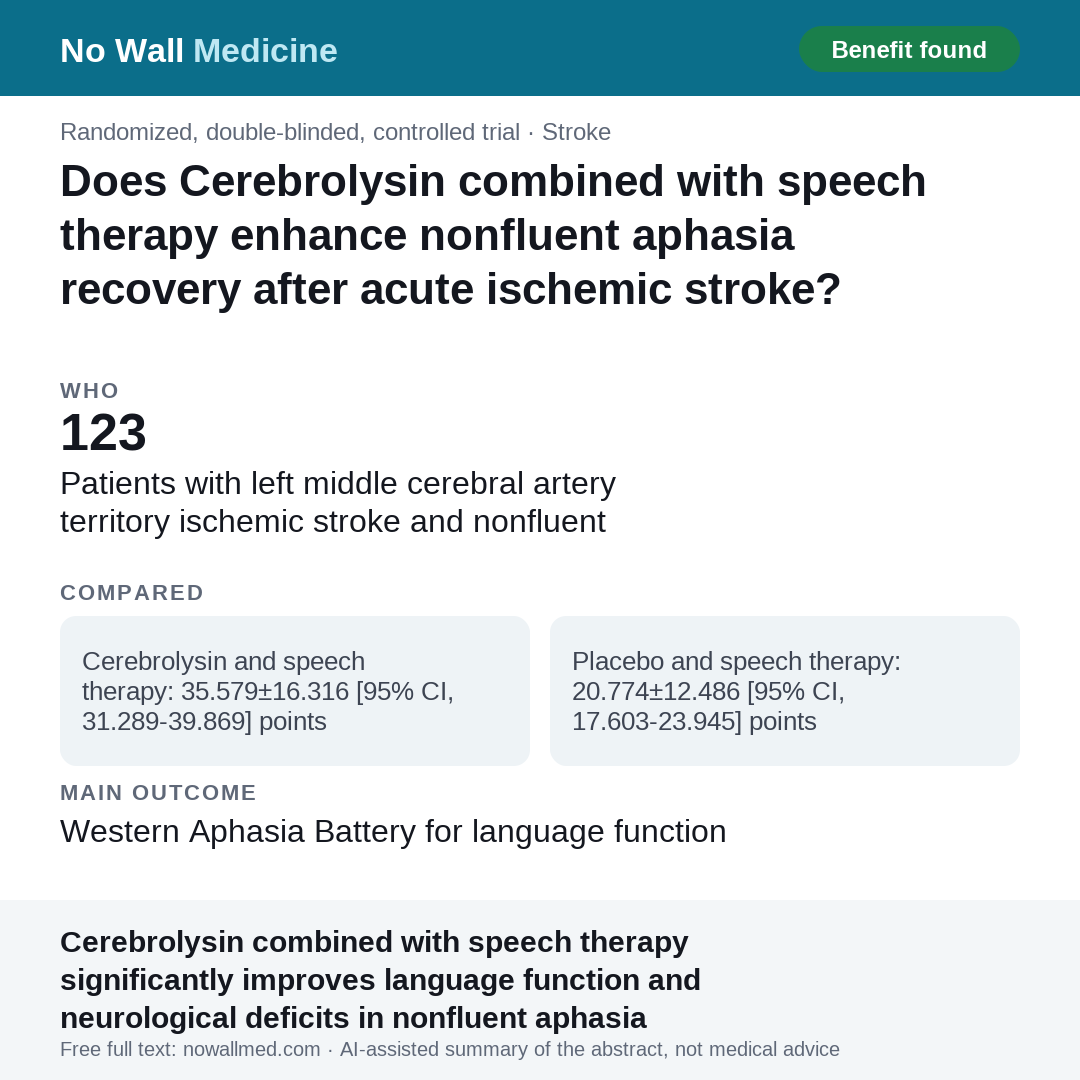
Speech Therapy Combined With Cerebrolysin in Enhancing Nonfluent Aphasia Recovery After Acute Ischemic Stroke: ESCAS Randomized Pilot Study
Randomized, double-blinded, controlled trialBenefit found
Does Cerebrolysin combined with speech therapy enhance nonfluent aphasia recovery after acute ischemic stroke?
Who
123
Patients with left middle cerebral artery territory ischemic stroke and nonfluent aphasia · 2 Romanian stroke centers
Compared
Cerebrolysin and speech therapy: 35.579±16.316 [95% CI, 31.289-39.869] points
Placebo and speech therapy: 20.774±12.486 [95% CI, 17.603-23.945] points
Main outcome
Western Aphasia Battery for language function
Result: difference in means of 14.805 (95% CI, 9.521-20.089) points
Bottom line: Cerebrolysin combined with speech therapy significantly improves language function and neurological deficits in nonfluent aphasia after acute ischemic stroke.
Stroke · 2025-02-17Download image
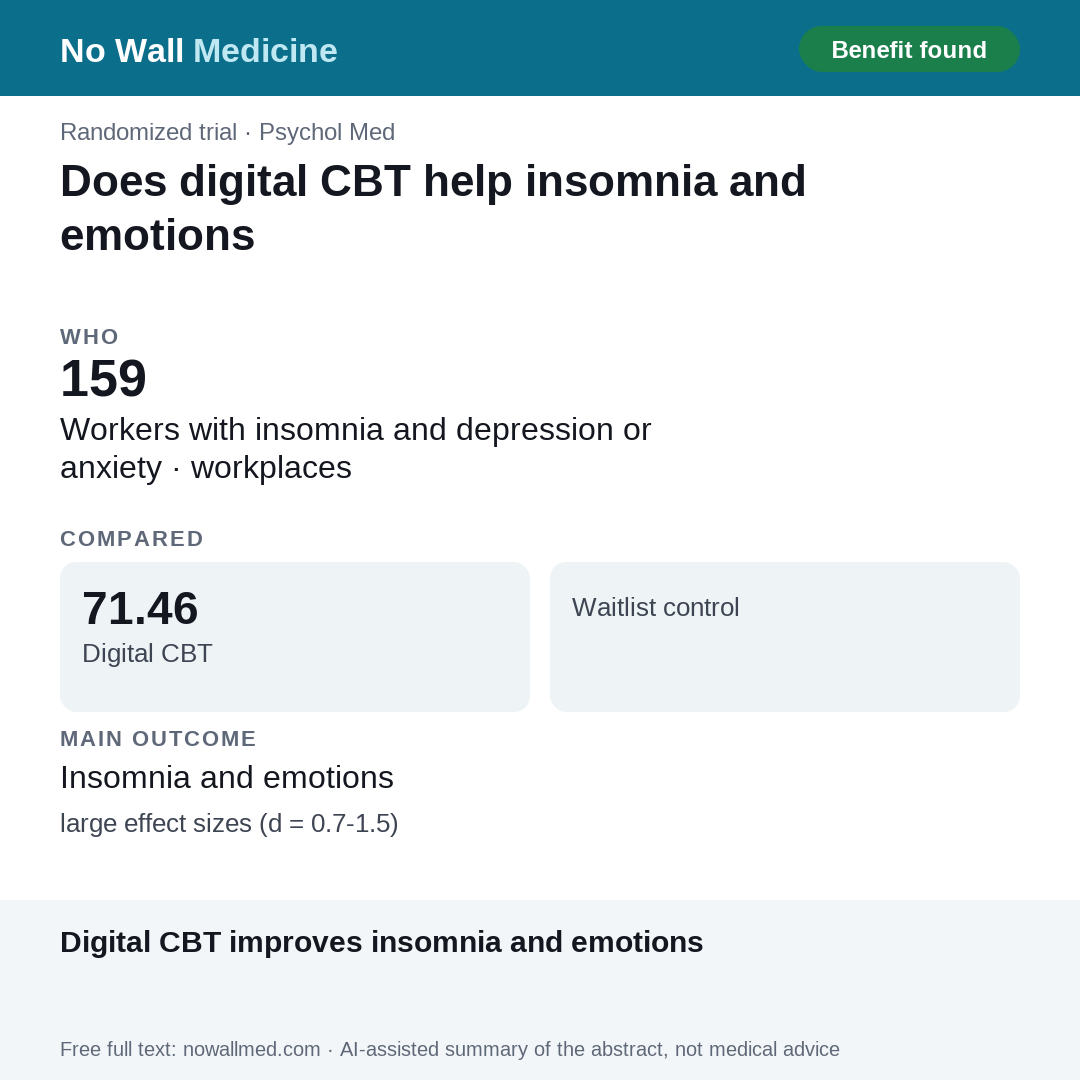
Digital CBT for insomnia and emotion regulation in the workplace: a randomised waitlist-controlled trial
Randomized trialBenefit found
Does digital CBT help insomnia and emotions
Who
159
Workers with insomnia and depression or anxiety · workplaces
Compared
71.46Digital CBT
Waitlist control
Main outcome
Insomnia and emotions
Result: large effect sizes (d = 0.7-1.5)
Bottom line: Digital CBT improves insomnia and emotions
Limitation: actigraphy data did not support findings
Psychol Med · 2025-02-17Download image
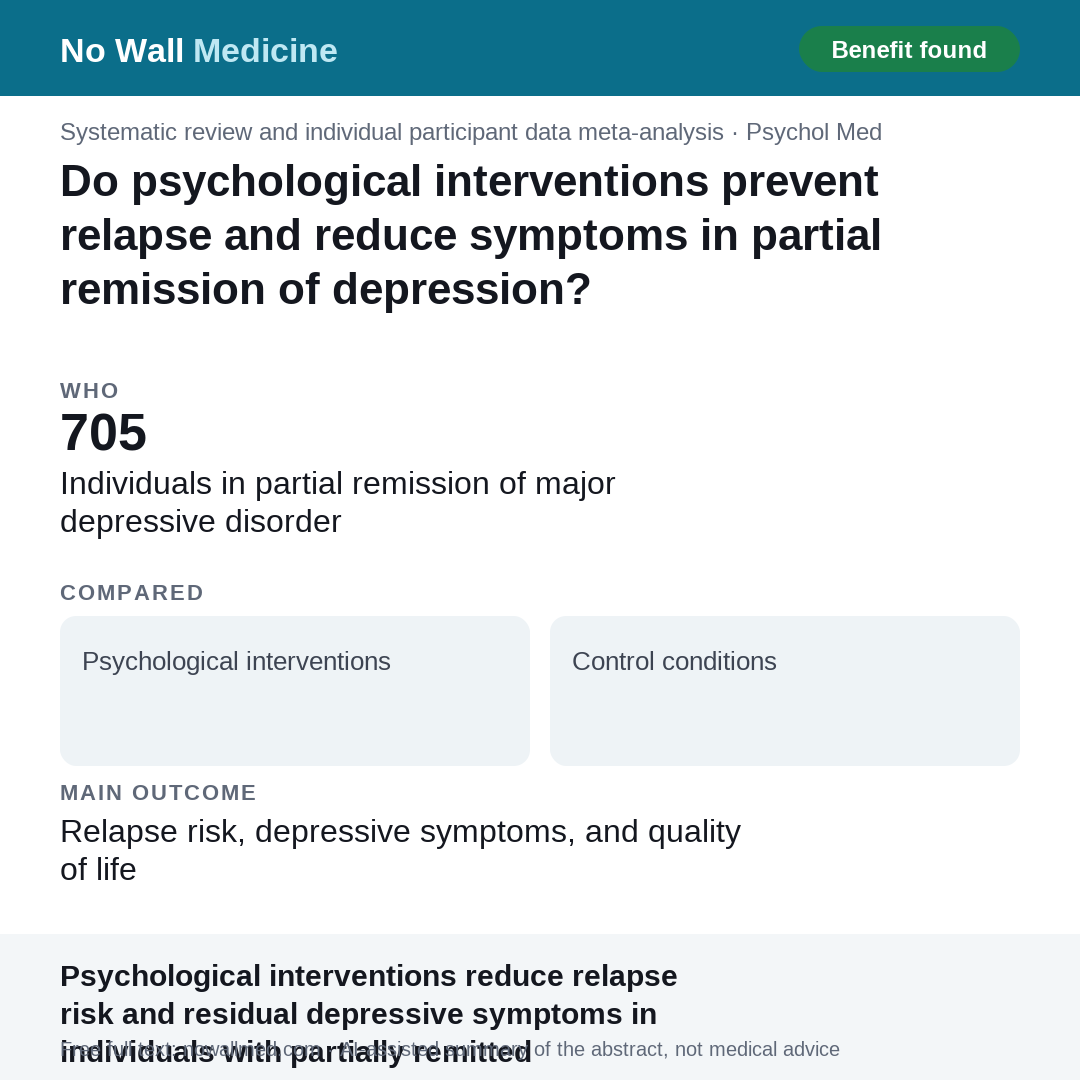
Psychological interventions for preventing relapse in individuals with partial remission of depression: a systematic review and individual participant data meta-analysis
Systematic review and individual participant data meta-analysisBenefit found
Do psychological interventions prevent relapse and reduce symptoms in partial remission of depression?
Who
705
Individuals in partial remission of major depressive disorder
Compared
Psychological interventions
Control conditions
Main outcome
Relapse risk, depressive symptoms, and quality of life
Result: hazard ratio 0.60 (95% CI 0.43-0.84)
Bottom line: Psychological interventions reduce relapse risk and residual depressive symptoms in individuals with partially remitted depression.
Psychol Med · 2025-02-17Download image
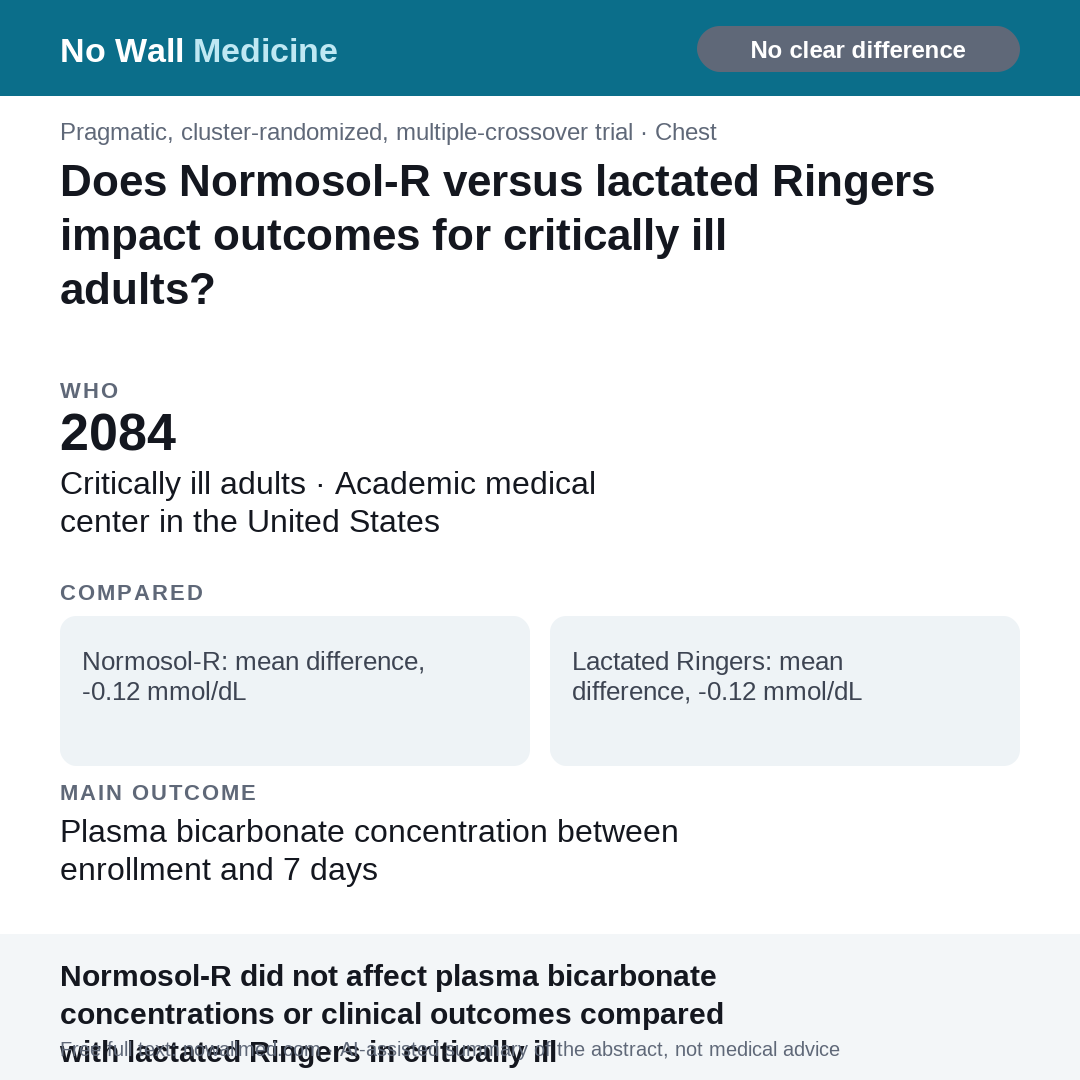
Normosol-R vs Lactated Ringers in the Critically Ill: A Randomized Trial
Pragmatic, cluster-randomized, multiple-crossover trialNo clear difference
Does Normosol-R versus lactated Ringers impact outcomes for critically ill adults?
Who
2084
Critically ill adults · Academic medical center in the United States
Compared
Normosol-R: mean difference, -0.12 mmol/dL
Lactated Ringers: mean difference, -0.12 mmol/dL
Main outcome
Plasma bicarbonate concentration between enrollment and 7 days
Result: mean difference, -0.12 mmol/dL; 95% CI, -0.61 to 0.36
Bottom line: Normosol-R did not affect plasma bicarbonate concentrations or clinical outcomes compared with lactated Ringers in critically ill adults.
Chest · 2025-02-17Download image
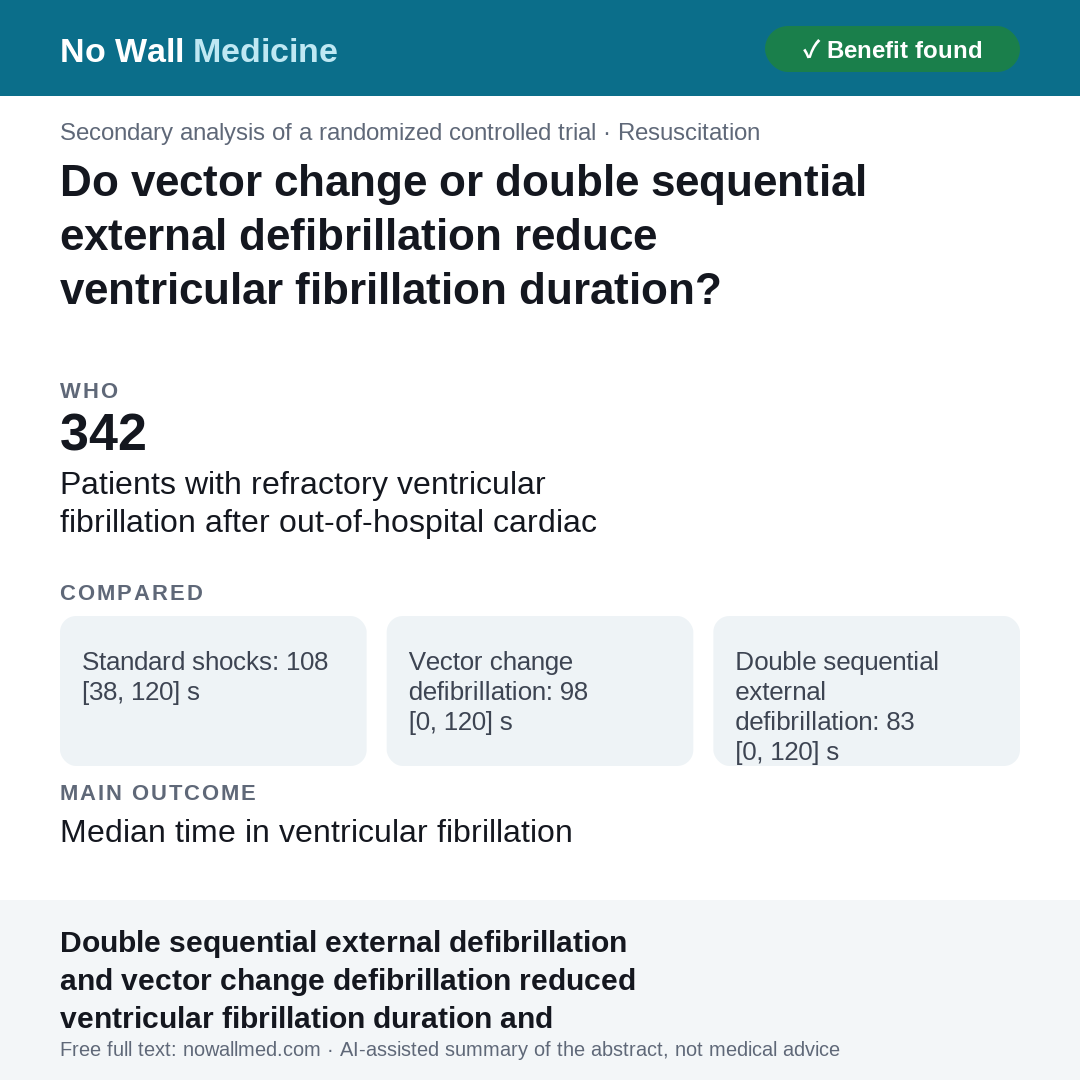
The impact of alternate defibrillation strategies on time in ventricular fibrillation
Secondary analysis of a randomized controlled trialBenefit found
Do vector change or double sequential external defibrillation reduce ventricular fibrillation duration?
Who
342
Patients with refractory ventricular fibrillation after out-of-hospital cardiac arrest
Compared
Standard shocks: 108 [38, 120] s
Vector change defibrillation: 98 [0, 120] s
Double sequential external defibrillation: 83 [0, 120] s
Main outcome
Median time in ventricular fibrillation
Bottom line: Double sequential external defibrillation and vector change defibrillation reduced ventricular fibrillation duration and improved survival outcomes.
Resuscitation · 2025-02-17Download image
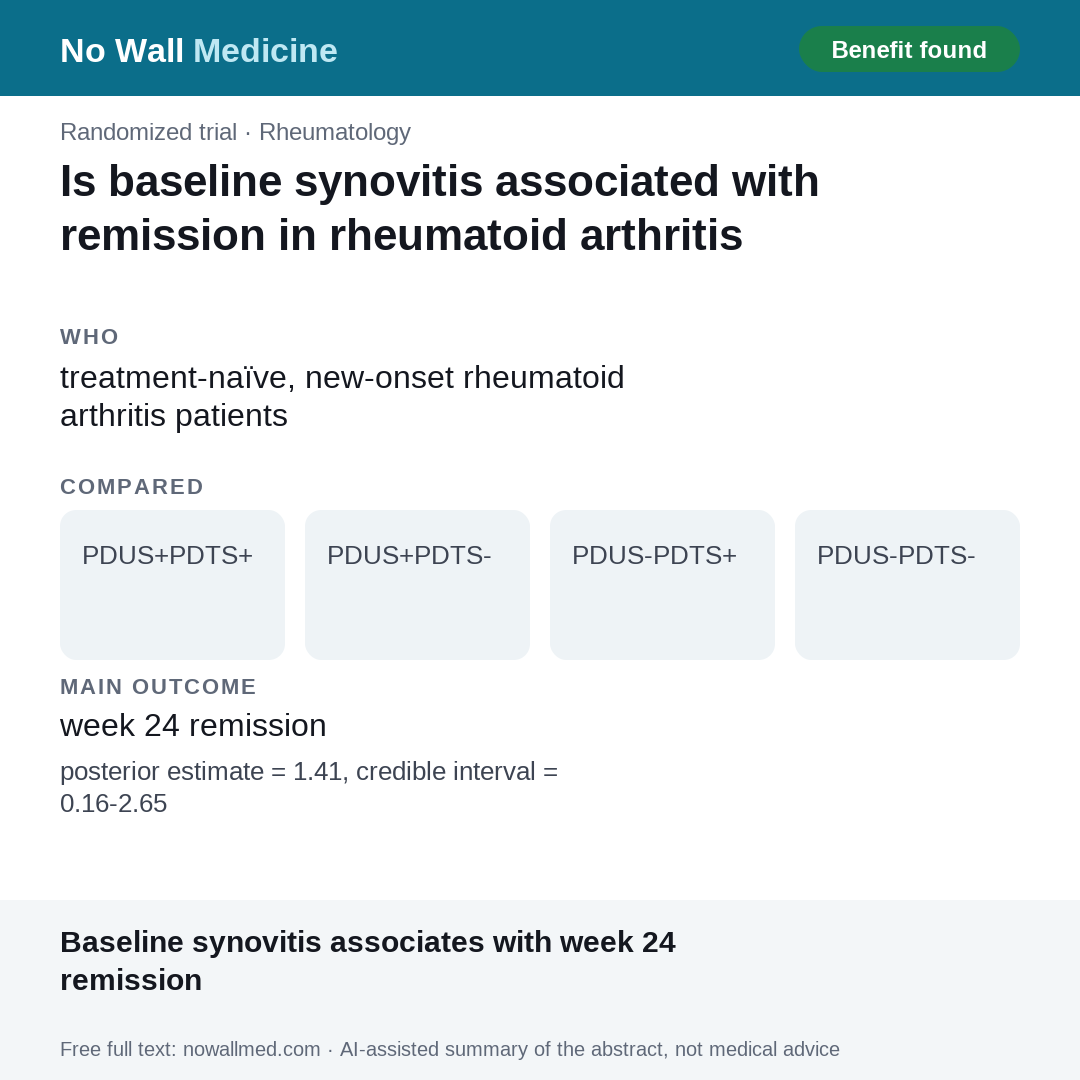
Baseline synovitis-tenosynovitis is associated with remission in early rheumatoid arthritis, but discordance with disease activity is a changeable state
Randomized trialBenefit found
Is baseline synovitis associated with remission in rheumatoid arthritis
Who
treatment-naïve, new-onset rheumatoid arthritis patients
Compared
PDUS+PDTS+
PDUS+PDTS-
PDUS-PDTS+
PDUS-PDTS-
Main outcome
week 24 remission
Result: posterior estimate = 1.41, credible interval = 0.16-2.65
Bottom line: Baseline synovitis associates with week 24 remission
Rheumatology · 2025-02-17Download image
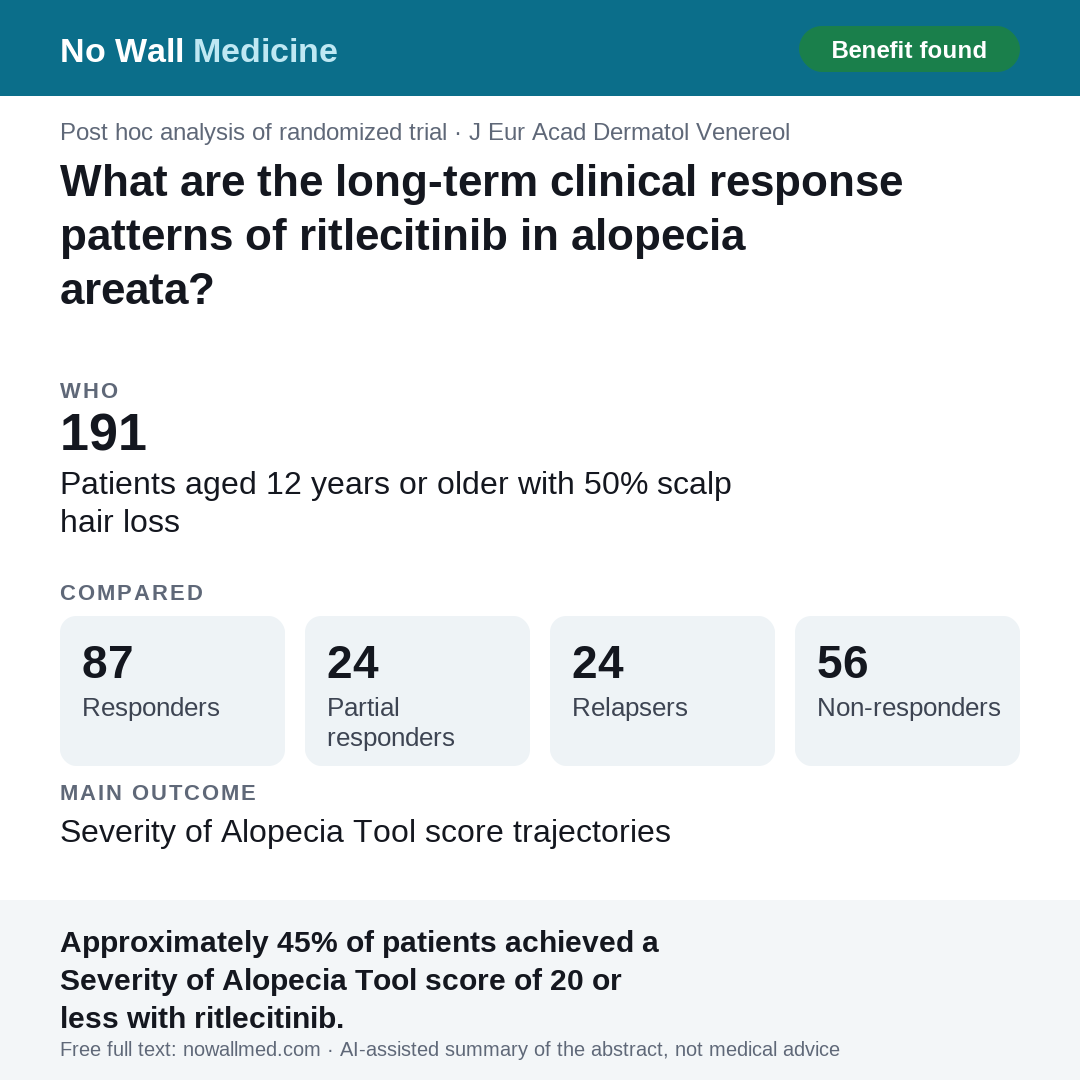
Patterns of clinical response in patients with alopecia areata treated with ritlecitinib in the ALLEGRO clinical development programme
Post hoc analysis of randomized trialBenefit found
What are the long-term clinical response patterns of ritlecitinib in alopecia areata?
Who
191
Patients aged 12 years or older with 50% scalp hair loss
Compared
87Responders (45.5%)
24Partial responders (12.6%)
24Relapsers (12.6%)
56Non-responders (29.3%)
Main outcome
Severity of Alopecia Tool score trajectories
Bottom line: Approximately 45% of patients achieved a Severity of Alopecia Tool score of 20 or less with ritlecitinib.
J Eur Acad Dermatol Venereol · 2025-02-17Download image
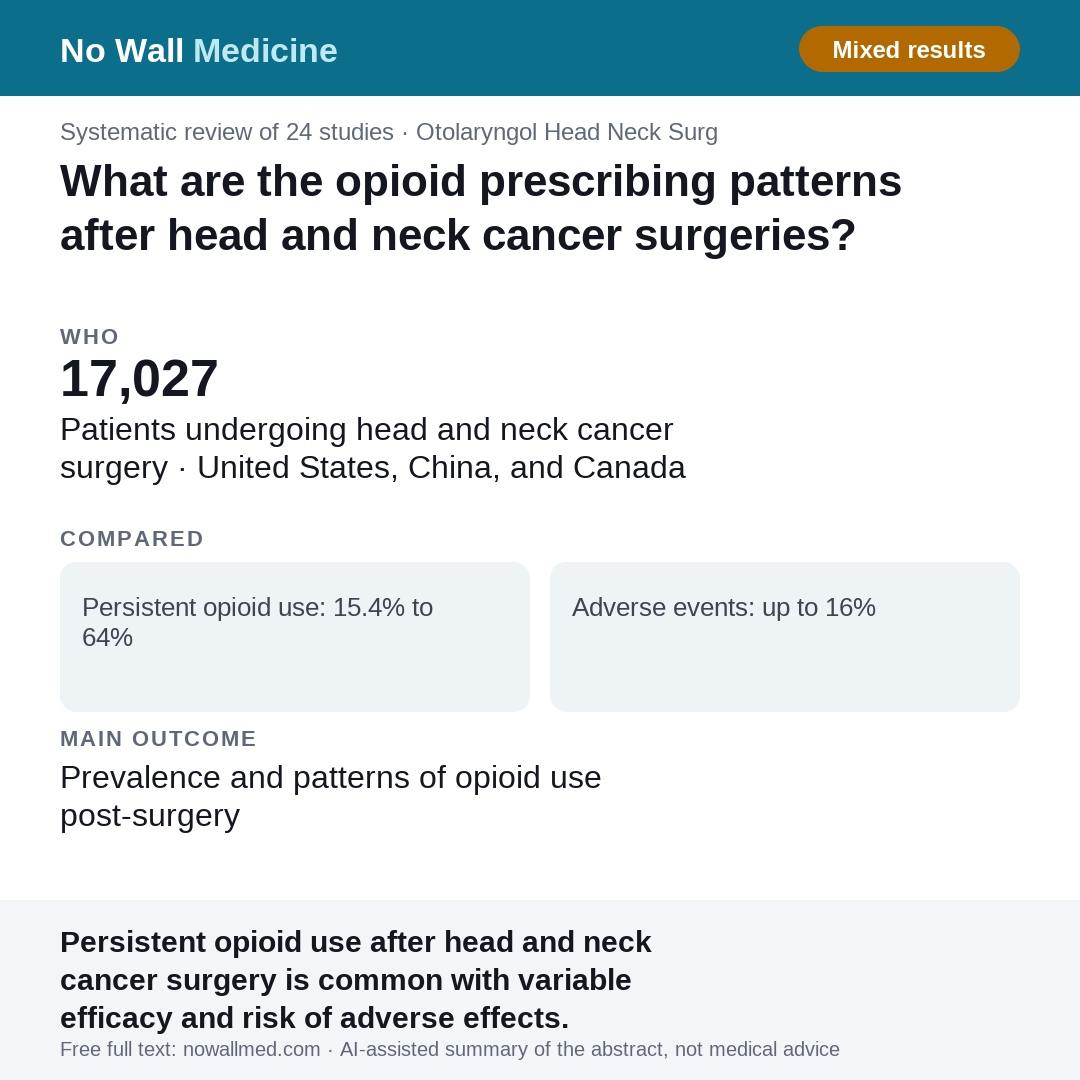
Unveiling Prescribing Patterns: A Systematic Review of Chronic Opioid Prescriptions After Head and Neck Cancer Surgeries
Systematic review of 24 studiesMixed results
What are the opioid prescribing patterns after head and neck cancer surgeries?
Who
17,027
Patients undergoing head and neck cancer surgery · United States, China, and Canada
Compared
Persistent opioid use: 15.4% to 64%
Adverse events: up to 16%
Main outcome
Prevalence and patterns of opioid use post-surgery
Bottom line: Persistent opioid use after head and neck cancer surgery is common with variable efficacy and risk of adverse effects.
Otolaryngol Head Neck Surg · 2025-02-17Download image
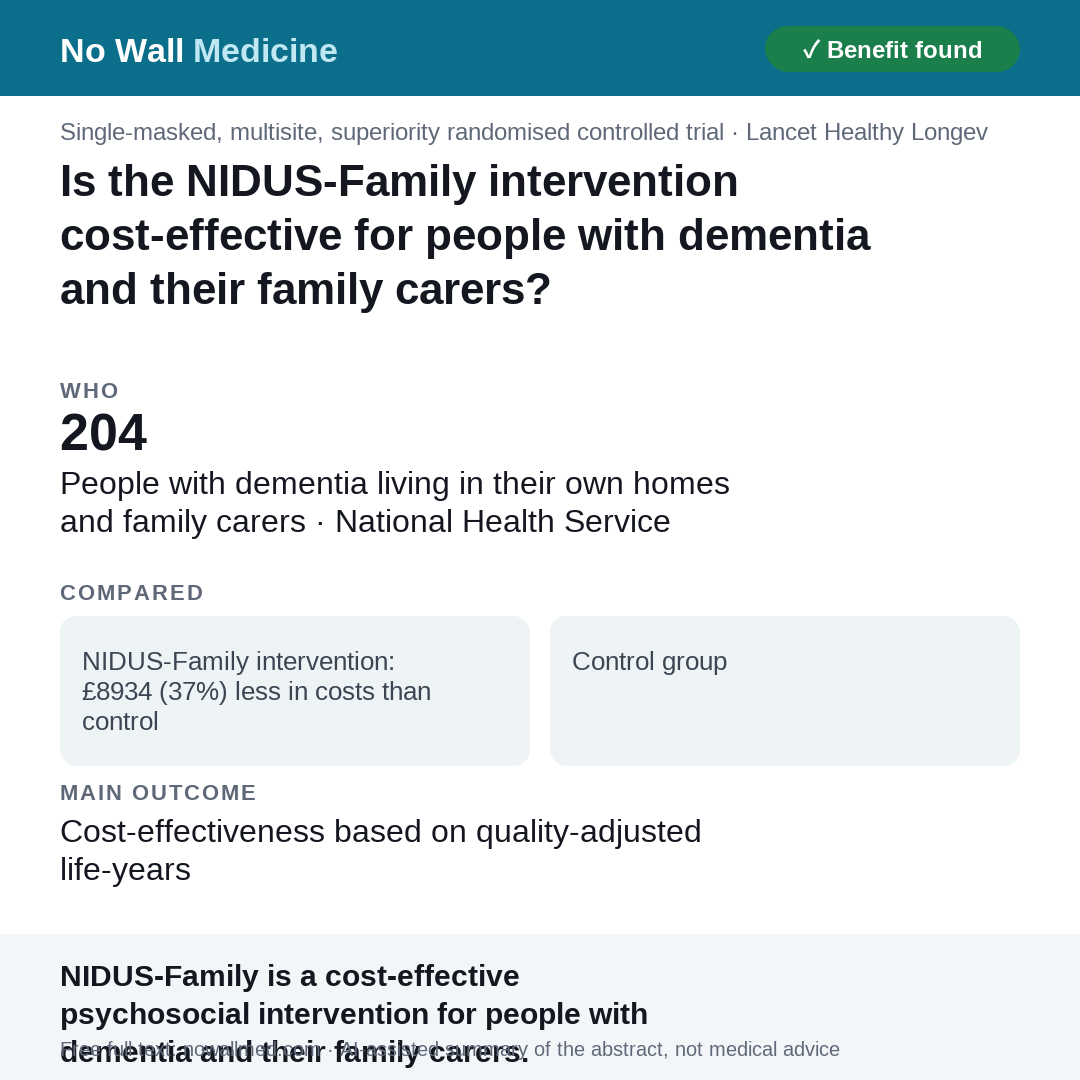
Cost-utility of a new psychosocial goal-setting and manualised support intervention for independence in dementia (NIDUS-Family) versus goal setting and routine care: an economic evaluation embedded within a randomised controlled trial
Single-masked, multisite, superiority randomised controlled trialBenefit found
Is the NIDUS-Family intervention cost-effective for people with dementia and their family carers?
Who
204
People with dementia living in their own homes and family carers · National Health Service community settings across England
Compared
NIDUS-Family intervention: £8934 (37%) less in costs than control
Control group
Main outcome
Cost-effectiveness based on quality-adjusted life-years
Result: 89% probability of cost-effectiveness at £20,000 threshold
Bottom line: NIDUS-Family is a cost-effective psychosocial intervention for people with dementia and their family carers.
Funded by: Alzheimer's Society
Lancet Healthy Longev · 2025-02-17Download image
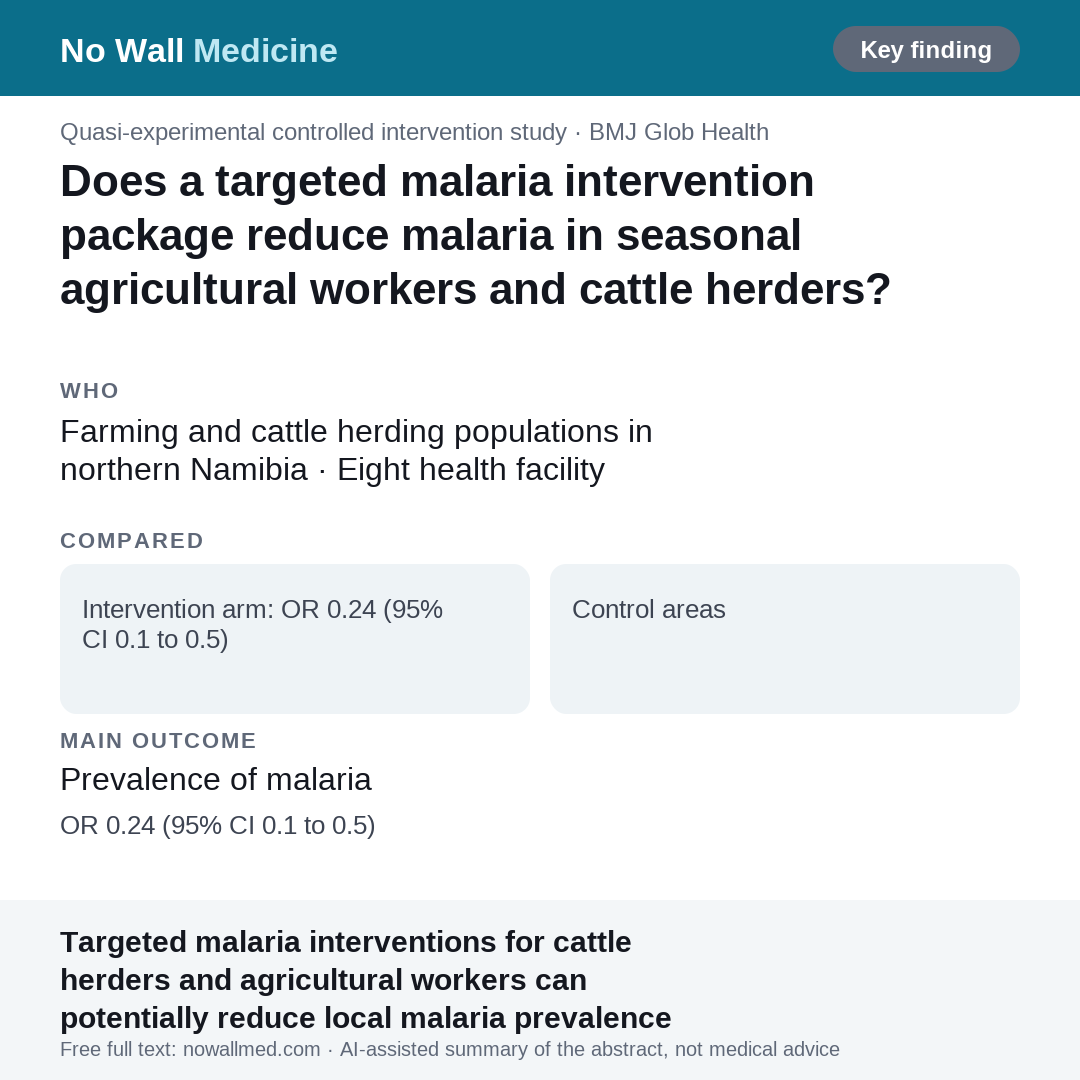
Targeting malaria in high-risk populations in low endemic regions in northern Namibia: a quasi-experimental controlled trial to reduce malaria in seasonal agricultural workers and cattle herders
Quasi-experimental controlled intervention studyBenefit found
Does a targeted malaria intervention package reduce malaria in seasonal agricultural workers and cattle herders?
Who
Farming and cattle herding populations in northern Namibia · Eight health facility catchment areas in Namibia
Compared
Intervention arm: OR 0.24 (95% CI 0.1 to 0.5)
Control areas
Main outcome
Prevalence of malaria
Result: OR 0.24 (95% CI 0.1 to 0.5)
Bottom line: Targeted malaria interventions for cattle herders and agricultural workers can potentially reduce local malaria prevalence and transmission.
BMJ Glob Health · 2025-02-17Download image
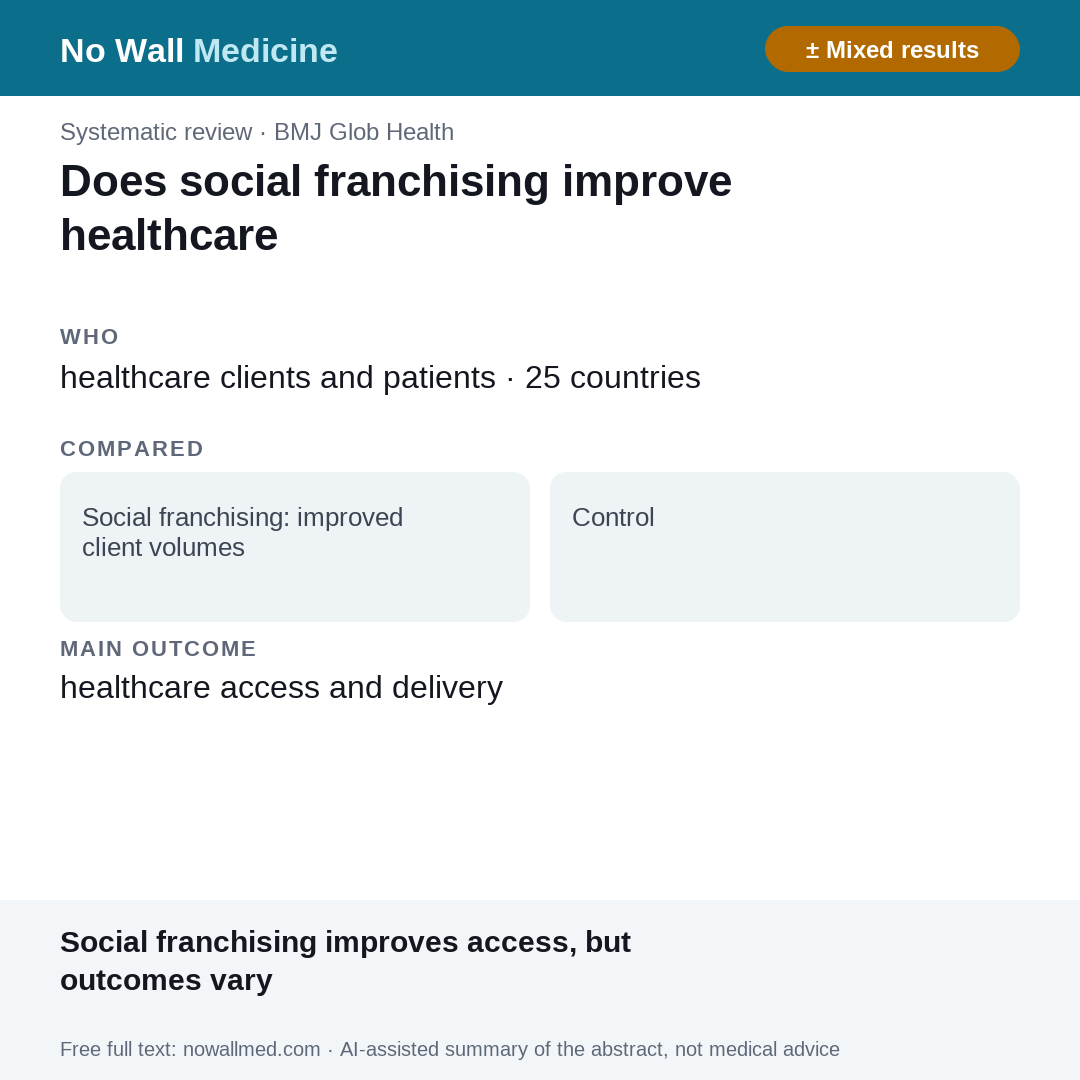
Social franchising in healthcare: a systematic review and narrative synthesis of implementation and outcomes
Systematic reviewMixed results
Does social franchising improve healthcare
Who
47
healthcare clients and patients · 25 countries
Compared
Social franchising: improved client volumes
Control
Main outcome
healthcare access and delivery
Bottom line: Social franchising improves access, but outcomes vary
Limitation: reliance on donor funding
BMJ Glob Health · 2025-02-17Download image
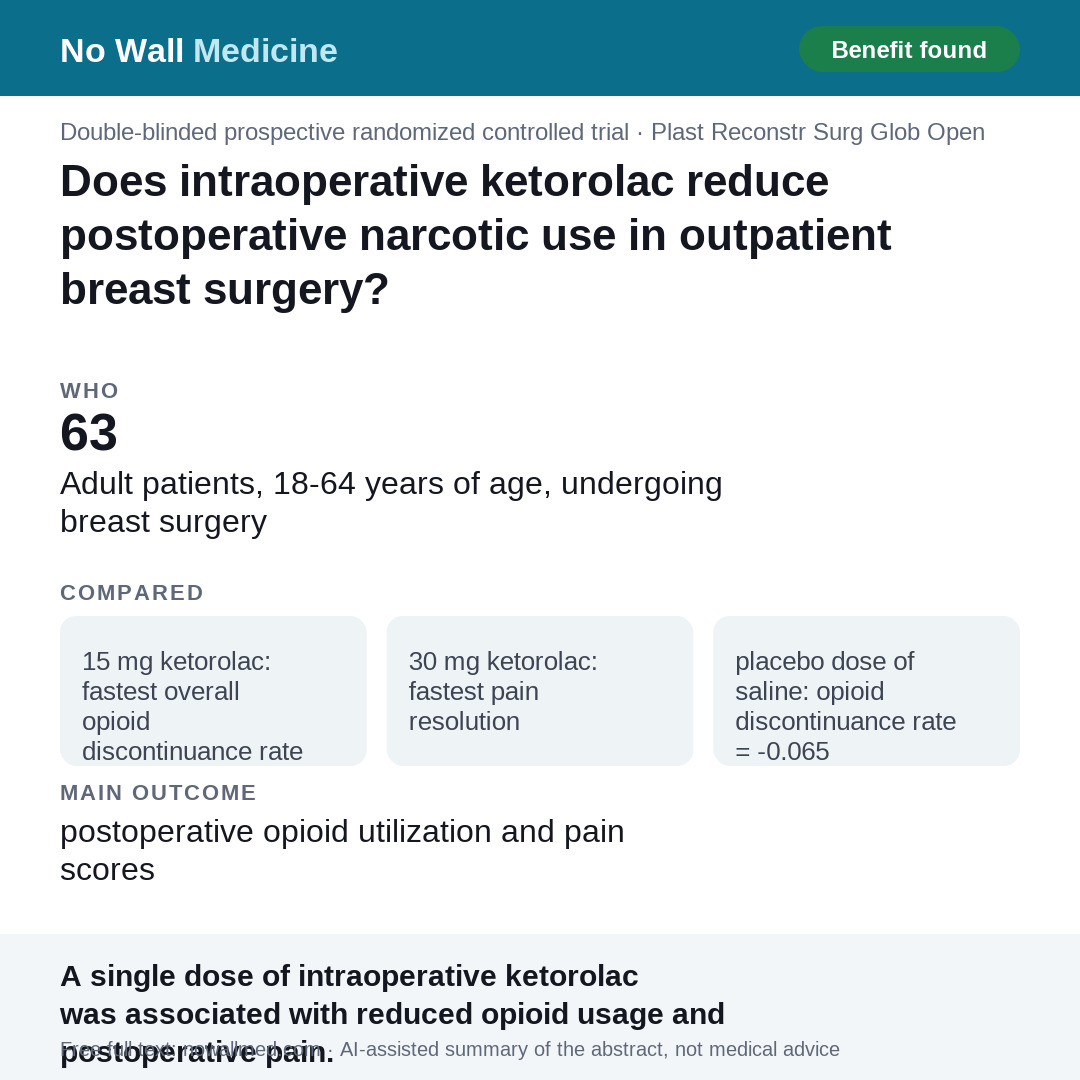
Effectiveness of Intraoperative Ketorolac in Outpatient Breast Surgery: A Double-blinded Prospective Randomized Controlled Trial
Double-blinded prospective randomized controlled trialBenefit found
Does intraoperative ketorolac reduce postoperative narcotic use in outpatient breast surgery?
Who
63
Adult patients, 18-64 years of age, undergoing breast surgery
Compared
15 mg ketorolac: fastest overall opioid discontinuance rate = -0.072
30 mg ketorolac: fastest pain resolution
placebo dose of saline: opioid discontinuance rate = -0.065
Main outcome
postoperative opioid utilization and pain scores
Bottom line: A single dose of intraoperative ketorolac was associated with reduced opioid usage and postoperative pain.
Limitation: due to the study size, the difference in hematoma rate was not statistically significant
Plast Reconstr Surg Glob Open · 2025-02-17Download image