Visual abstracts
New randomized trials and meta-analyses from leading journals at a glance: who was studied, what was compared, and what was found. Every paper is free to read in full.
All specialtiesCardiology 4877Oncology 4138Gastroenterology & Hepatology 1942Infectious Disease 3837Neurology 1905Psychiatry & Mental Health 2273Pulmonology 2143Critical Care 1365Endocrinology & Diabetes 2580Pediatrics 2980Surgery 2559Orthopedics & Sports Medicine 931Neurosurgery 537Cardiothoracic & Vascular Surgery 674Plastic & Reconstructive Surgery 591Nephrology 1133Rheumatology 823Hematology 1109Dermatology 621Ophthalmology 543Obstetrics & Gynecology 1686Public & Global Health 1058Radiology & Imaging 648Anesthesiology 986Urology 764ENT (Otolaryngology) 503Emergency Medicine 511Allergy & Immunology 313Geriatrics 981Family Medicine & Primary Care 562Medical Genetics & Genomics 676Pathology & Laboratory Medicine 159Physical Medicine & Rehabilitation 757Palliative Care 444Nutrition 1588Digital Health & AI 2201General Medicine 321
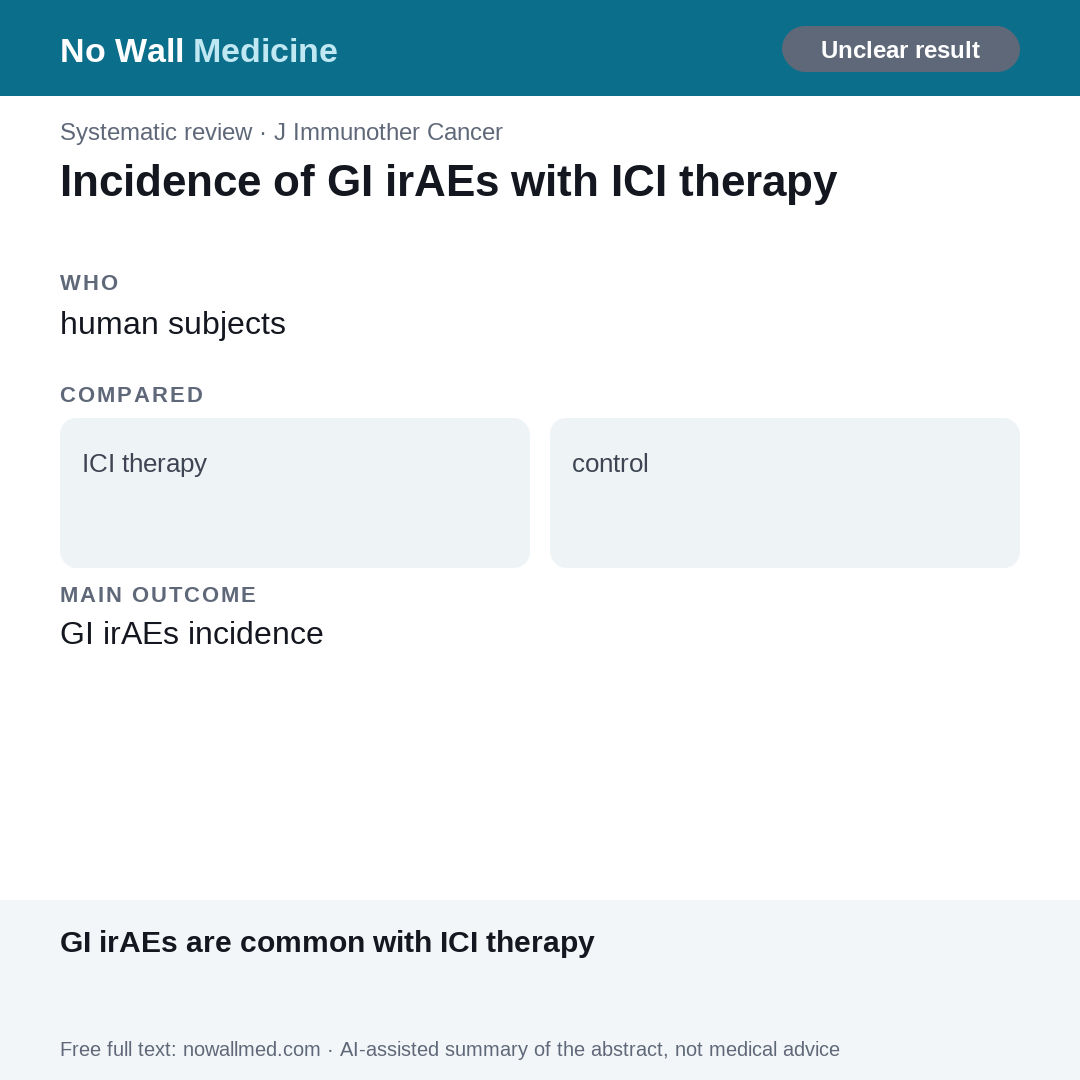
Systematic review of immune checkpoint inhibitor-related gastrointestinal, hepatobiliary, and pancreatic adverse events
Systematic reviewUnclear result
Incidence of GI irAEs with ICI therapy
Who
human subjects
Compared
ICI therapy
control
Main outcome
GI irAEs incidence
Bottom line: GI irAEs are common with ICI therapy
Limitation: no risk of bias tools used
J Immunother Cancer · 2024-11-14Download image
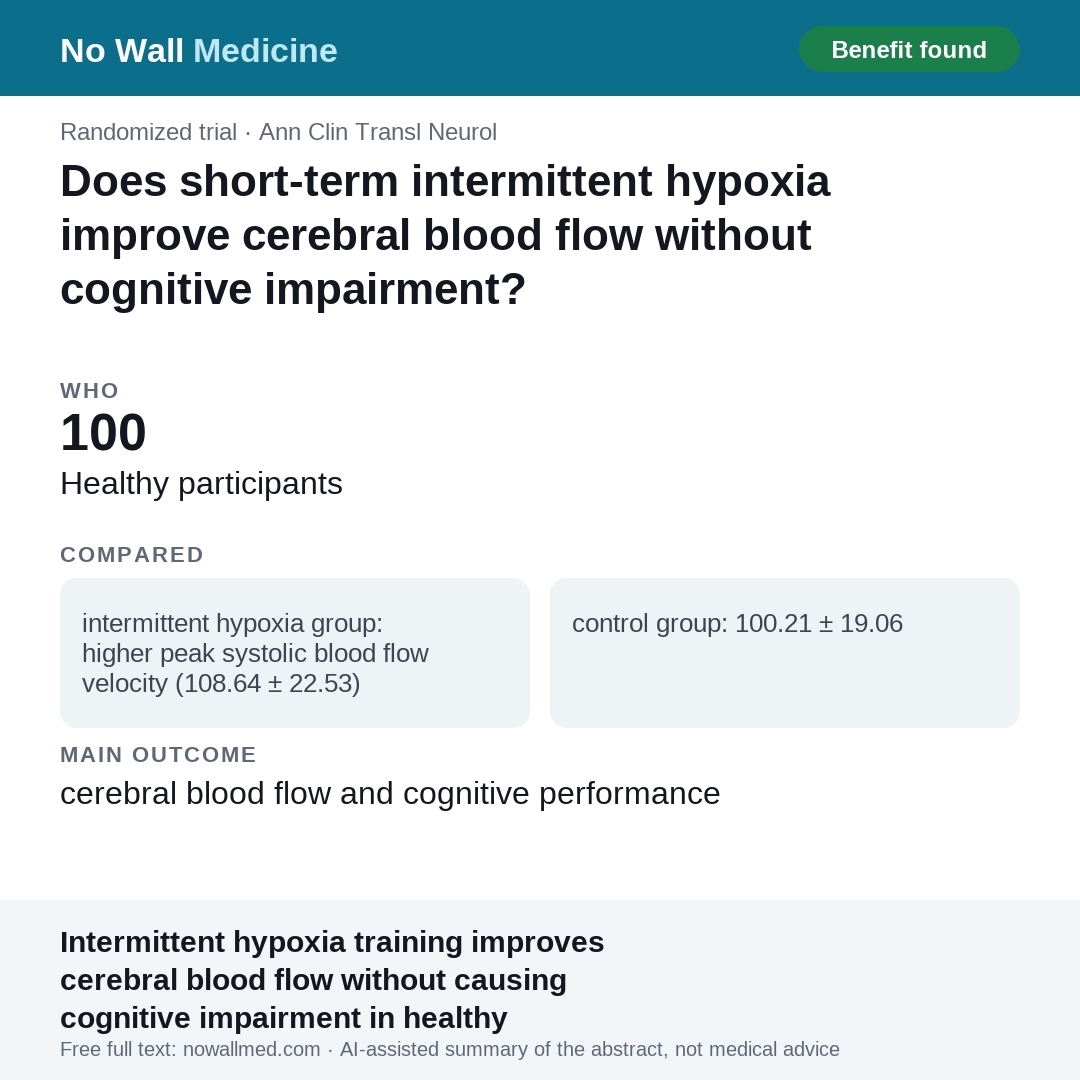
Intermittent hypoxia training improves cerebral blood flow without cognitive impairment
Randomized trialBenefit found
Does short-term intermittent hypoxia improve cerebral blood flow without cognitive impairment?
Who
100
Healthy participants
Compared
intermittent hypoxia group: higher peak systolic blood flow velocity (108.64 ± 22.53)
control group: 100.21 ± 19.06
Main outcome
cerebral blood flow and cognitive performance
Bottom line: Intermittent hypoxia training improves cerebral blood flow without causing cognitive impairment in healthy participants.
Ann Clin Transl Neurol · 2024-11-14Download image
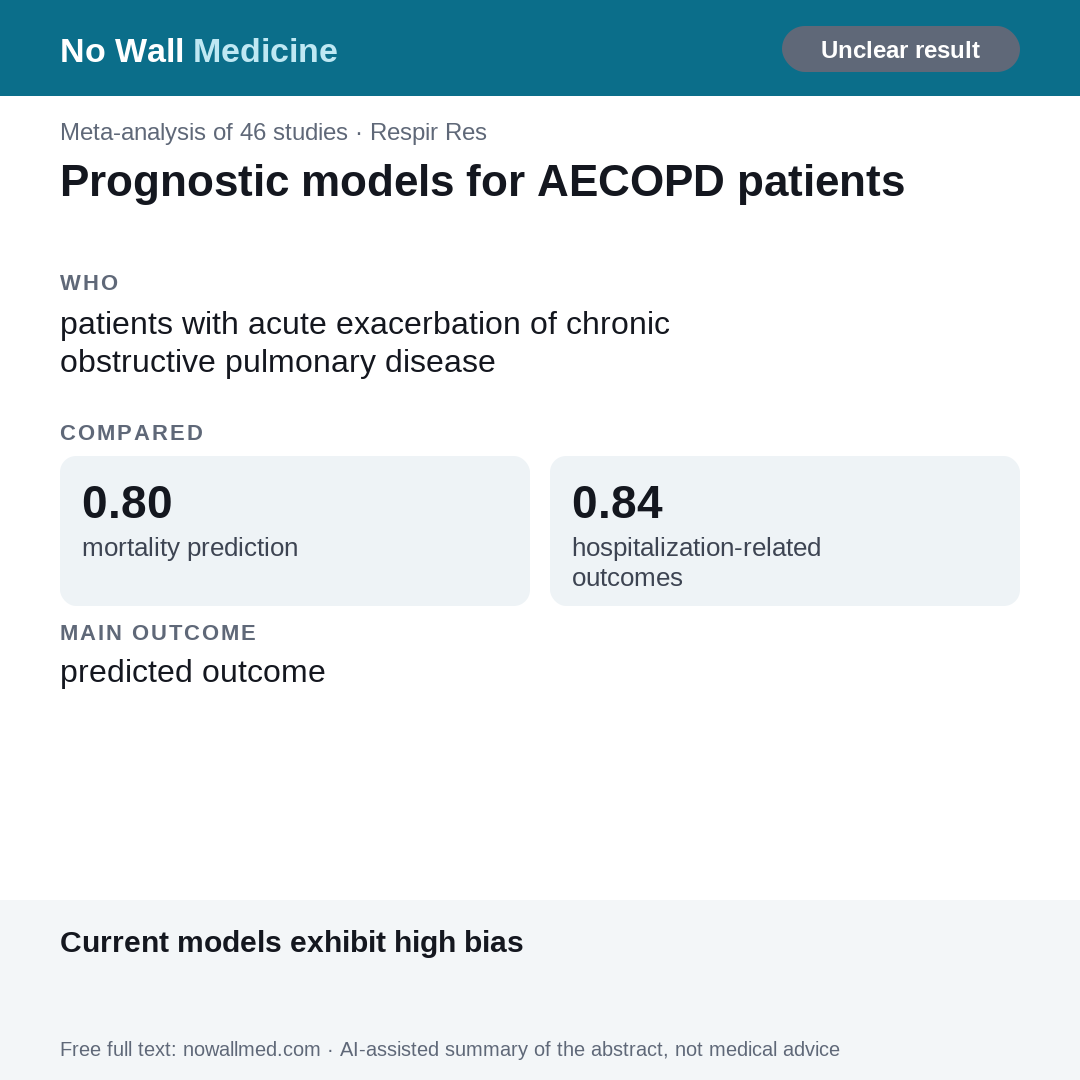
Prognostic risk prediction model for patients with acute exacerbation of chronic obstructive pulmonary disease (AECOPD): a systematic review and meta-analysis
Meta-analysis of 46 studiesUnclear result
Prognostic models for AECOPD patients
Who
patients with acute exacerbation of chronic obstructive pulmonary disease
Compared
0.80mortality prediction
0.84hospitalization-related outcomes
Main outcome
predicted outcome
Bottom line: Current models exhibit high bias
Limitation: high overall risk of bias
Respir Res · 2024-11-14Download image
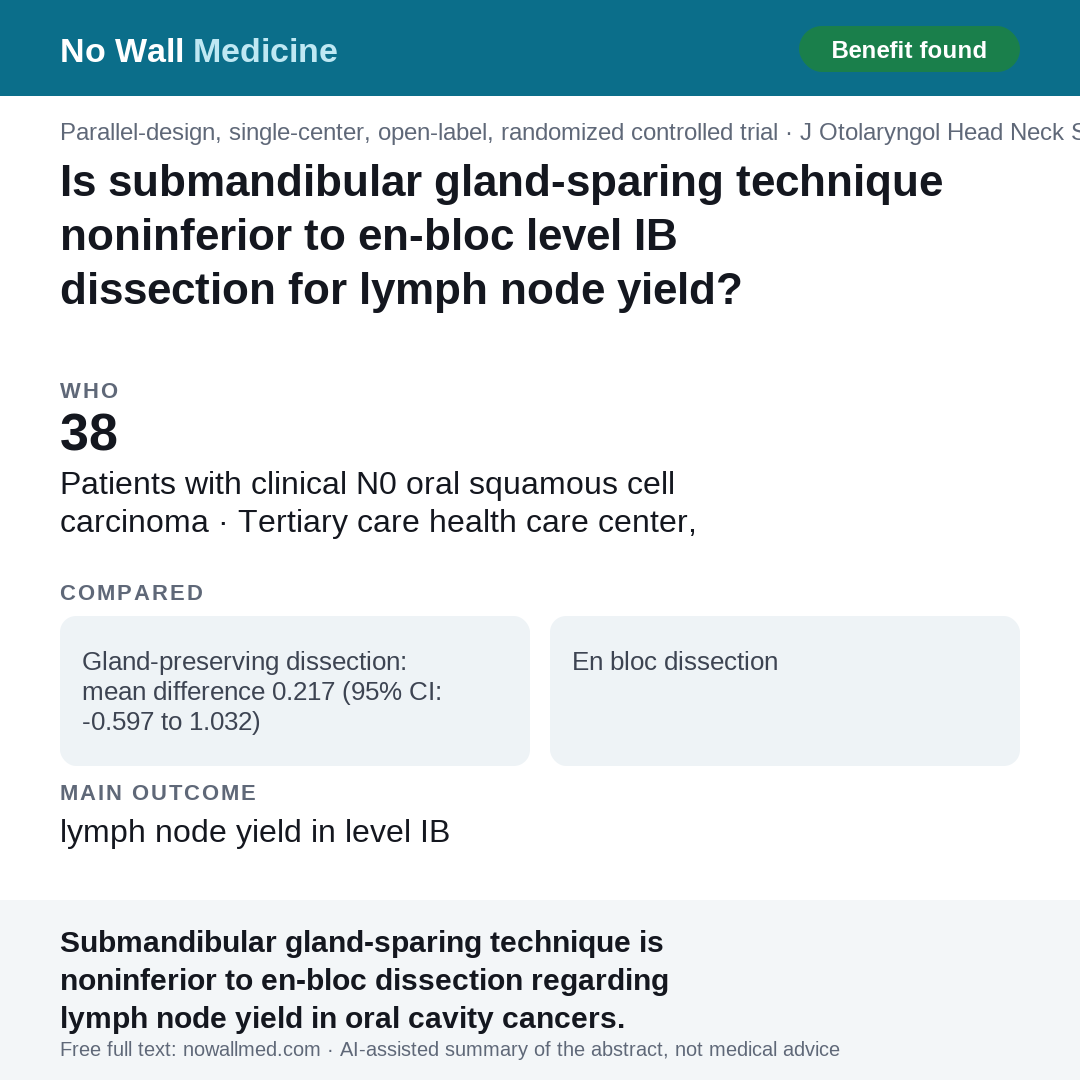
Submandibular Gland-Sparing Technique Versus En-Bloc Level IB Dissection in Oral Cavity Cancers with N0 Neck Status: A Randomized Controlled Trial
Parallel-design, single-center, open-label, randomized controlled trialBenefit found
Is submandibular gland-sparing technique noninferior to en-bloc level IB dissection for lymph node yield?
Who
38
Patients with clinical N0 oral squamous cell carcinoma · Tertiary care health care center, India
Compared
Gland-preserving dissection: mean difference 0.217 (95% CI: -0.597 to 1.032)
En bloc dissection
Main outcome
lymph node yield in level IB
Result: mean difference 0.217 (95% CI: -0.597 to 1.032)
Bottom line: Submandibular gland-sparing technique is noninferior to en-bloc dissection regarding lymph node yield in oral cavity cancers.
J Otolaryngol Head Neck Surg · 2024-11-14Download image
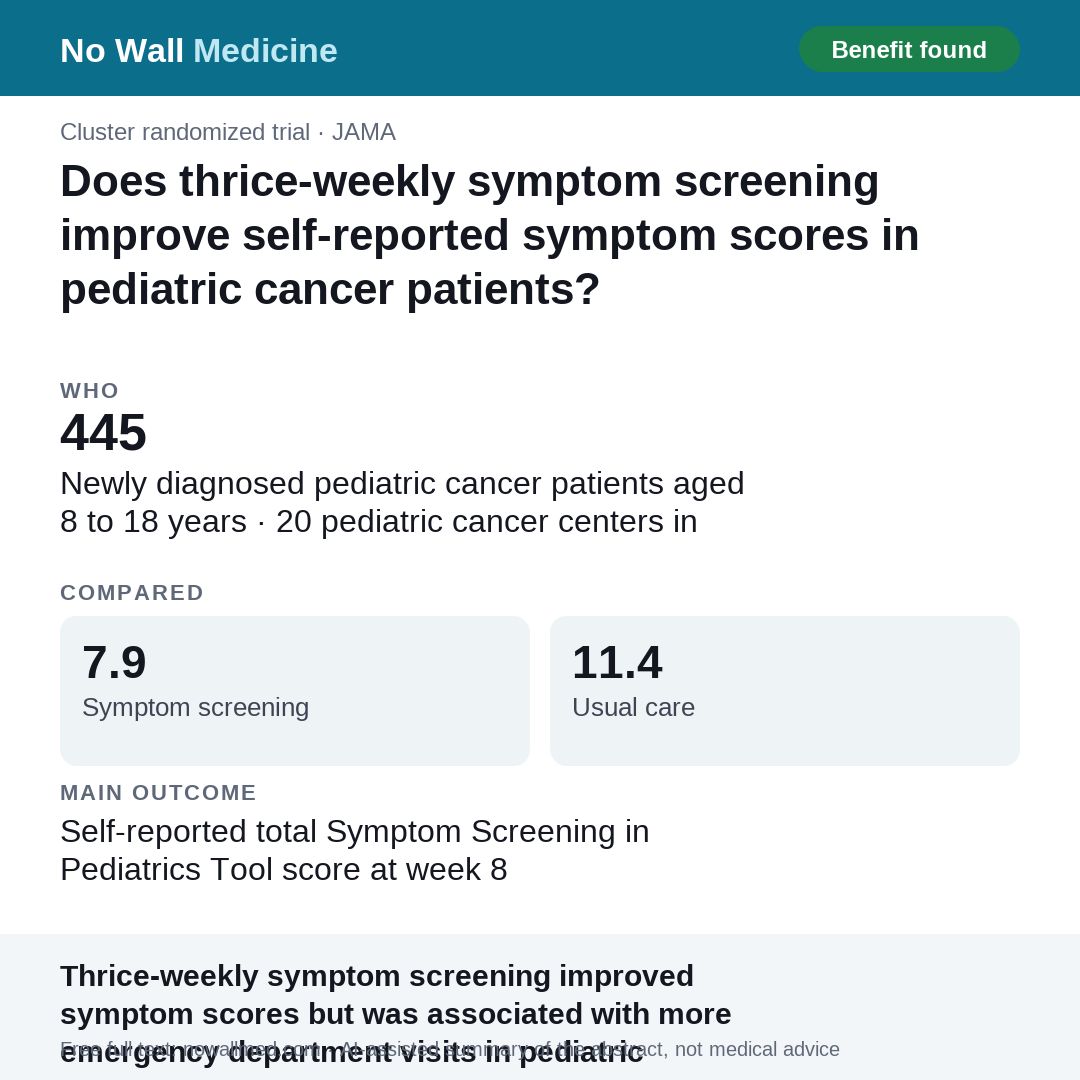
Symptom Screening Linked to Care Pathways for Pediatric Patients With Cancer: A Randomized Clinical Trial
Cluster randomized trialBenefit found
Does thrice-weekly symptom screening improve self-reported symptom scores in pediatric cancer patients?
Who
445
Newly diagnosed pediatric cancer patients aged 8 to 18 years · 20 pediatric cancer centers in the US
Compared
7.9Symptom screening (7.2)
11.4Usual care (8.7)
Main outcome
Self-reported total Symptom Screening in Pediatrics Tool score at week 8
Result: adjusted mean difference, -3.8 (95% CI, -6.4 to -1.2)
Bottom line: Thrice-weekly symptom screening improved symptom scores but was associated with more emergency department visits in pediatric cancer patients.
JAMA · 2024-11-13Download image
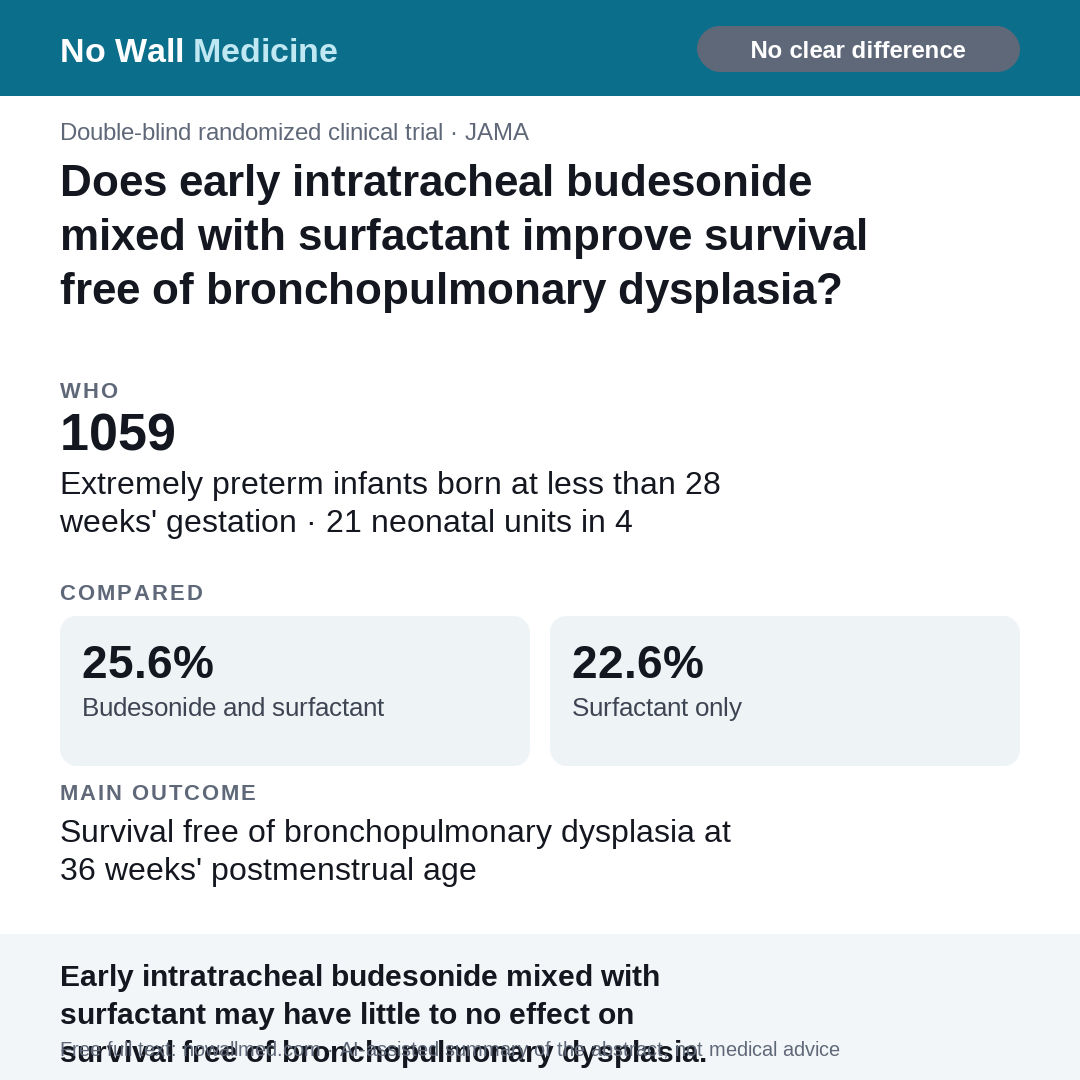
Intratracheal Budesonide Mixed With Surfactant for Extremely Preterm Infants: The PLUSS Randomized Clinical Trial
Double-blind randomized clinical trialNo clear difference
Does early intratracheal budesonide mixed with surfactant improve survival free of bronchopulmonary dysplasia?
Who
1059
Extremely preterm infants born at less than 28 weeks' gestation · 21 neonatal units in 4 countries
Compared
25.6%Budesonide and surfactant
22.6%Surfactant only
Main outcome
Survival free of bronchopulmonary dysplasia at 36 weeks' postmenstrual age
Result: adjusted risk difference, 2.7% (95% CI, -2.1% to 7.4%)
Bottom line: Early intratracheal budesonide mixed with surfactant may have little to no effect on survival free of bronchopulmonary dysplasia.
JAMA · 2024-11-13Download image
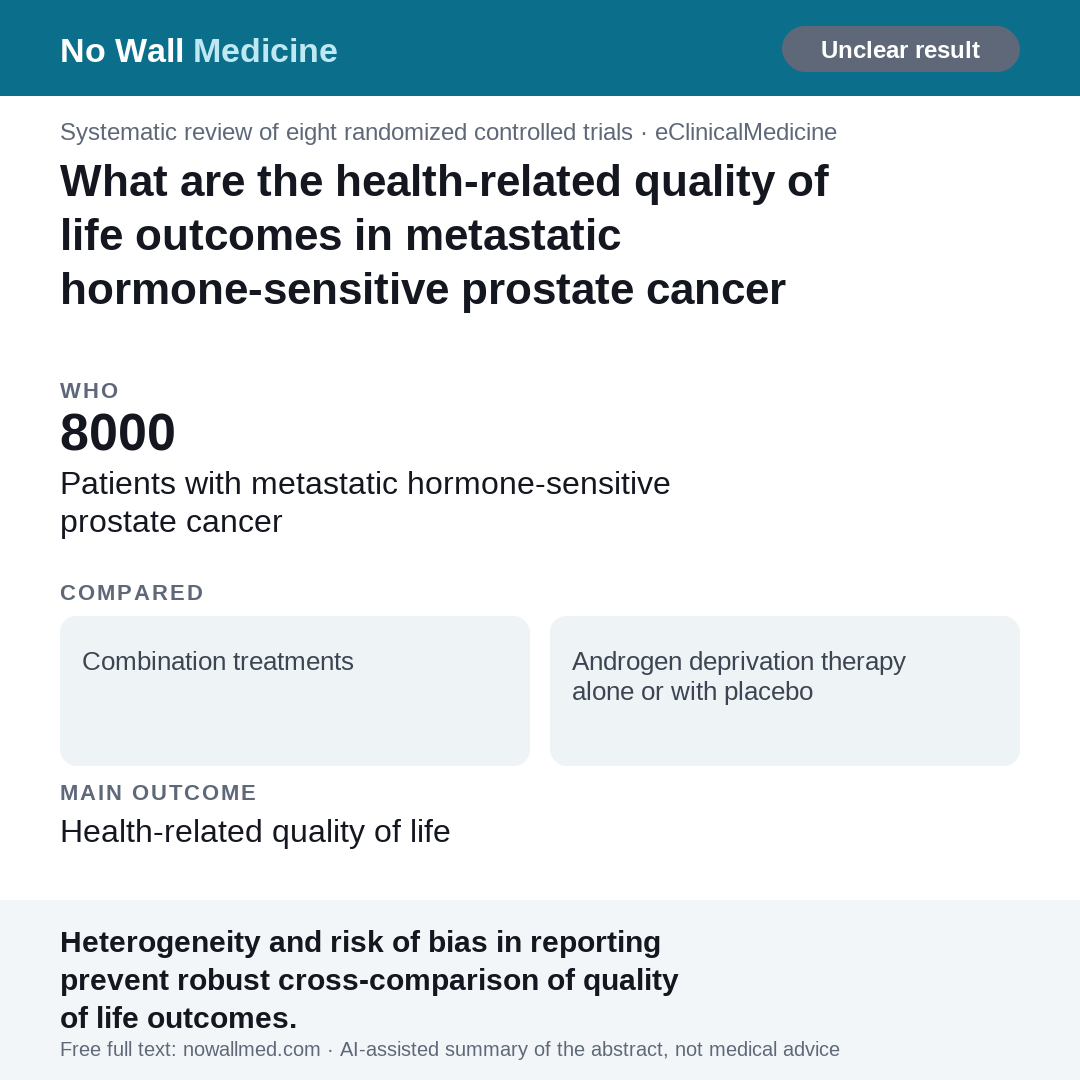
Health-related quality of life outcomes in randomized controlled trials in metastatic hormone-sensitive prostate cancer: a systematic review
Systematic review of eight randomized controlled trialsUnclear result
What are the health-related quality of life outcomes in metastatic hormone-sensitive prostate cancer trials?
Who
8000
Patients with metastatic hormone-sensitive prostate cancer
Compared
Combination treatments
Androgen deprivation therapy alone or with placebo
Main outcome
Health-related quality of life
Bottom line: Heterogeneity and risk of bias in reporting prevent robust cross-comparison of quality of life outcomes.
Limitation: Conceptual and methodological heterogeneity and risk of biases hamper cross-comparison.
eClinicalMedicine · 2024-11-13Download image
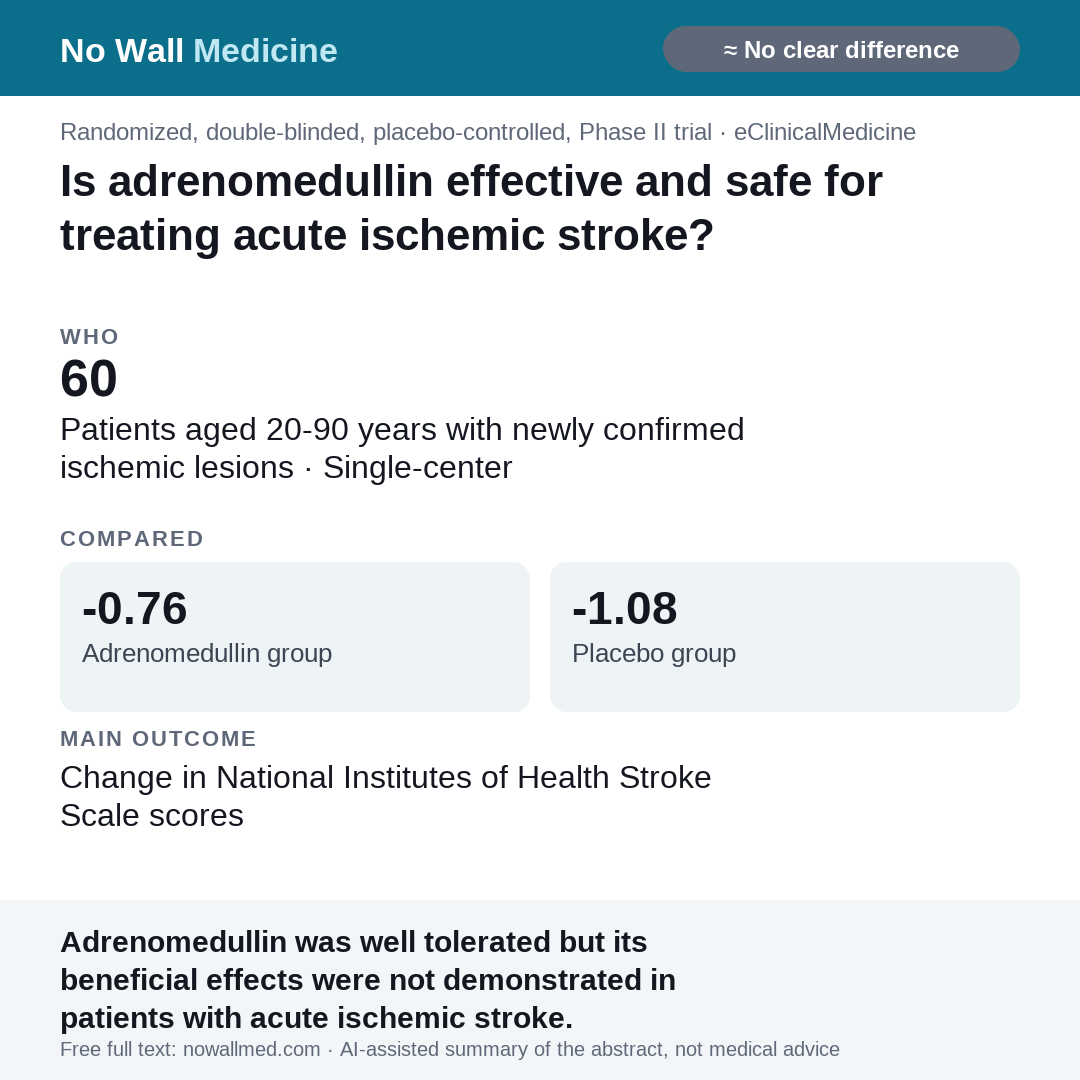
Efficacy and safety of adrenomedullin for acute ischemic stroke (AMFIS): a phase 2, randomized, double-blinded, placebo-controlled, clinical trial
Randomized, double-blinded, placebo-controlled, Phase II trialNo clear difference
Is adrenomedullin effective and safe for treating acute ischemic stroke?
Who
60
Patients aged 20-90 years with newly confirmed ischemic lesions · Single-center
Compared
-0.76Adrenomedullin group (-1.43 to -0.09)
-1.08Placebo group (-2.11 to -0.05)
Main outcome
Change in National Institutes of Health Stroke Scale scores
Bottom line: Adrenomedullin was well tolerated but its beneficial effects were not demonstrated in patients with acute ischemic stroke.
Limitation: Further clinical trials are necessary to show efficacy.
Funded by: Japan Agency for Medical Research and Development
eClinicalMedicine · 2024-11-13Download image
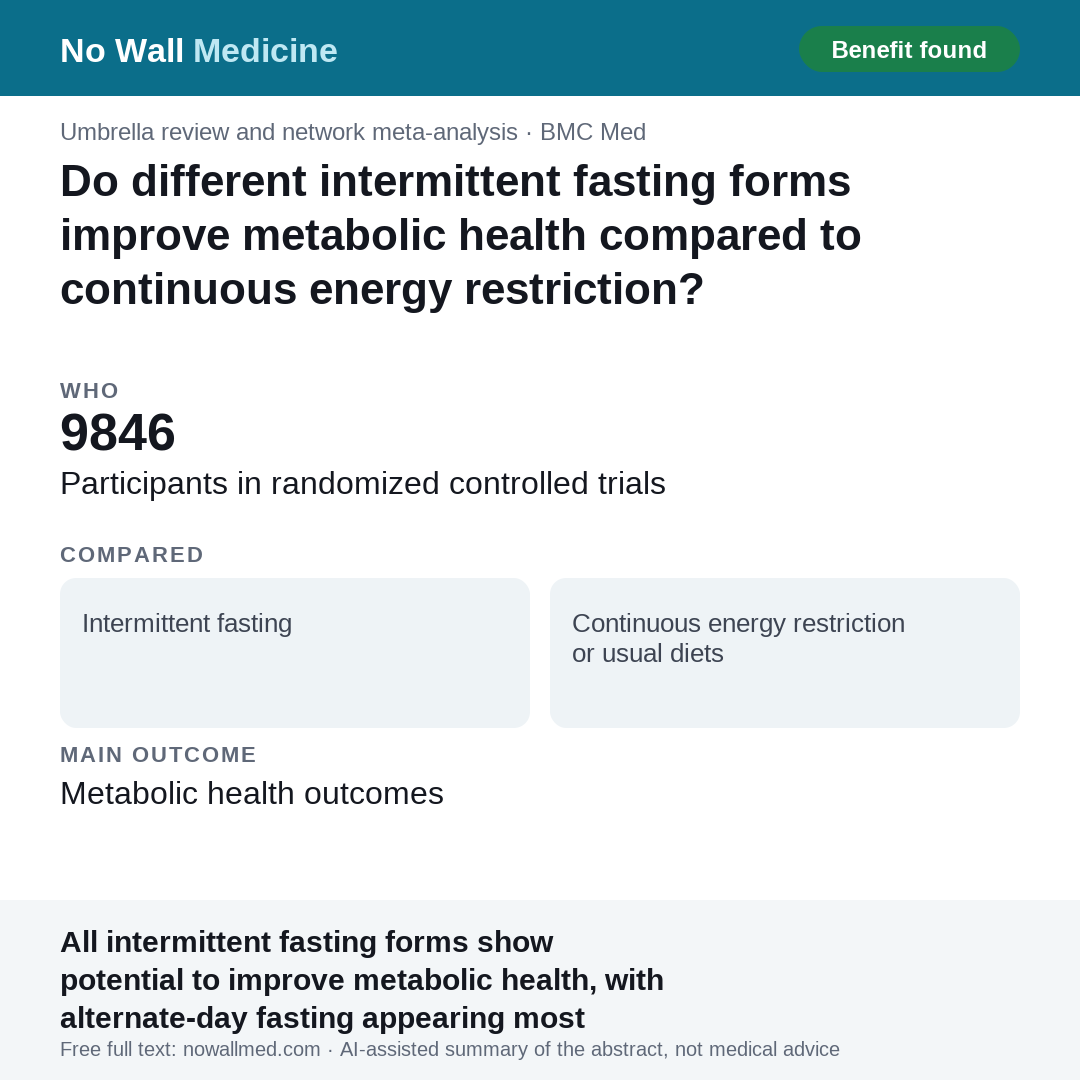
Effects of different types of intermittent fasting on metabolic outcomes: an umbrella review and network meta-analysis
Umbrella review and network meta-analysisBenefit found
Do different intermittent fasting forms improve metabolic health compared to continuous energy restriction?
Who
9846
Participants in randomized controlled trials
Compared
Intermittent fasting
Continuous energy restriction or usual diets
Main outcome
Metabolic health outcomes
Bottom line: All intermittent fasting forms show potential to improve metabolic health, with alternate-day fasting appearing most effective.
Limitation: Further high-quality trials are warranted to confirm relative efficacy.
BMC Med · 2024-11-13Download image
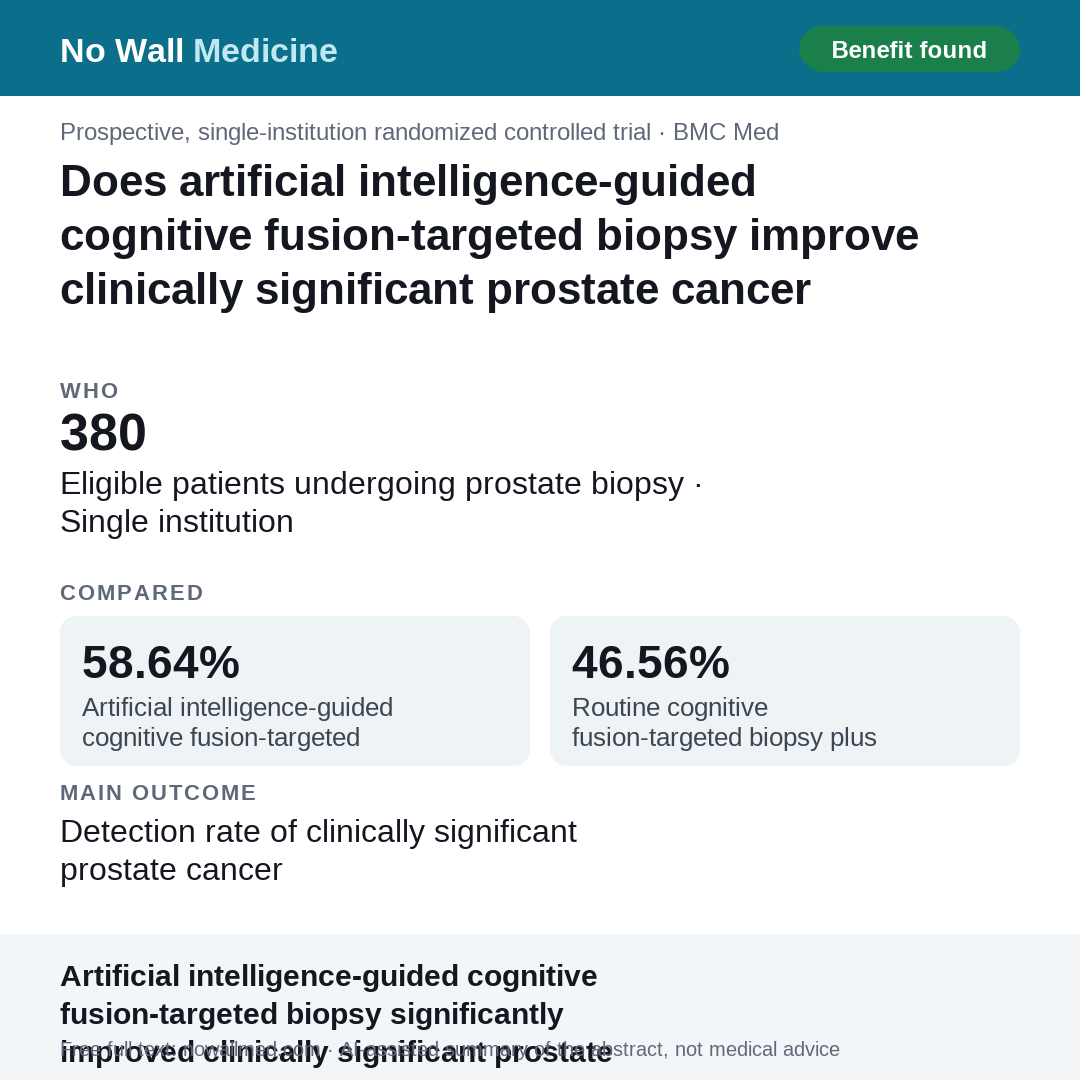
Comparison of MRI artificial intelligence-guided cognitive fusion-targeted biopsy versus routine cognitive fusion-targeted prostate biopsy in prostate cancer diagnosis: a randomized controlled trial
Prospective, single-institution randomized controlled trialBenefit found
Does artificial intelligence-guided cognitive fusion-targeted biopsy improve clinically significant prostate cancer detection?
Who
380
Eligible patients undergoing prostate biopsy · Single institution
Compared
58.64%Artificial intelligence-guided cognitive fusion-targeted biopsy plus systematic biopsy
46.56%Routine cognitive fusion-targeted biopsy plus systematic biopsy
Main outcome
Detection rate of clinically significant prostate cancer
Bottom line: Artificial intelligence-guided cognitive fusion-targeted biopsy significantly improved clinically significant prostate cancer detection rates compared to routine biopsy.
BMC Med · 2024-11-13Download image
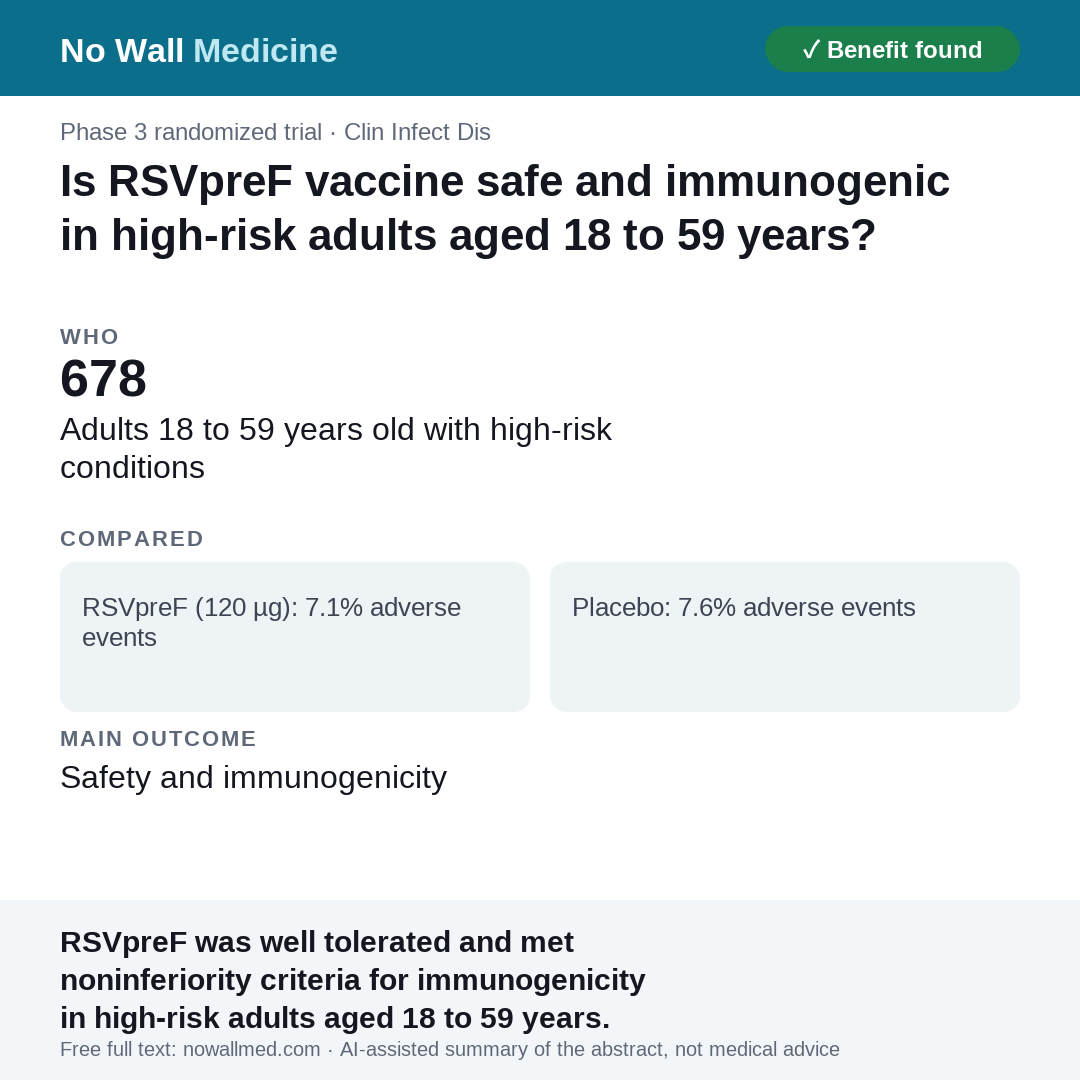
Bivalent RSVpreF Vaccine in Adults 18 to <60 Years Old With High-Risk Conditions
Phase 3 randomized trialBenefit found
Is RSVpreF vaccine safe and immunogenic in high-risk adults aged 18 to 59 years?
Who
678
Adults 18 to 59 years old with high-risk conditions
Compared
RSVpreF (120 µg): 7.1% adverse events
Placebo: 7.6% adverse events
Main outcome
Safety and immunogenicity
Bottom line: RSVpreF was well tolerated and met noninferiority criteria for immunogenicity in high-risk adults aged 18 to 59 years.
Clin Infect Dis · 2024-11-13Download image
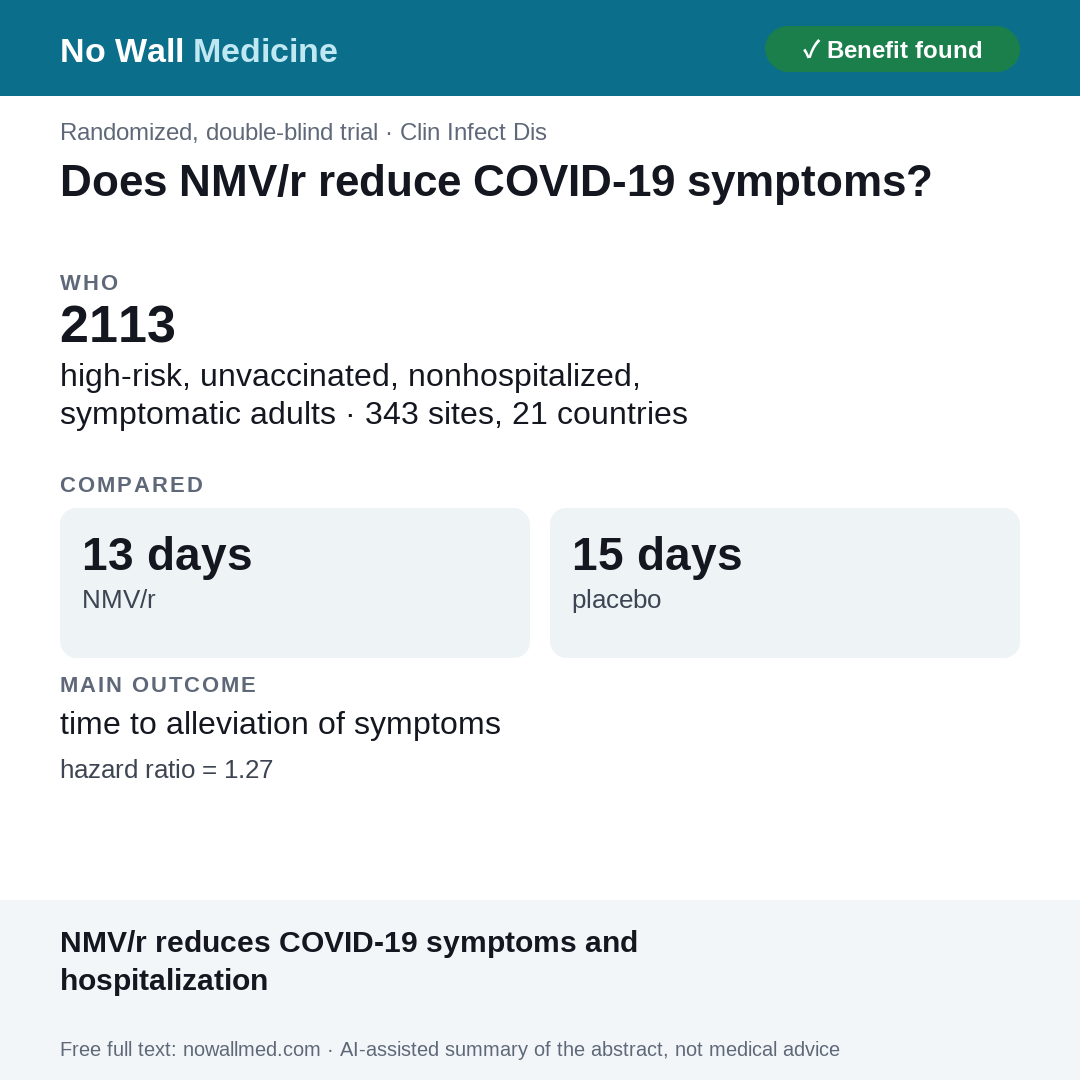
Alleviation of COVID-19 Symptoms and Reduction in Healthcare Utilization Among High-risk Patients Treated With Nirmatrelvir/Ritonavir (NMV/R): A Phase 3 Randomized Trial
Randomized, double-blind trialBenefit found
Does NMV/r reduce COVID-19 symptoms?
Who
2113
high-risk, unvaccinated, nonhospitalized, symptomatic adults · 343 sites, 21 countries
Compared
13 daysNMV/r
15 daysplacebo
Main outcome
time to alleviation of symptoms
Result: hazard ratio = 1.27
Bottom line: NMV/r reduces COVID-19 symptoms and hospitalization
Clin Infect Dis · 2024-11-13Download image
Grief-Specific Cognitive Behavioral Therapy vs Present-Centered Therapy: A Randomized Clinical Trial
Rater-blinded, multicenter, randomized clinical trialBenefit found
Is grief-specific cognitive behavioral therapy superior to present-centered therapy for prolonged grief disorder?
Who
212
Individuals aged 18 to 75 years with prolonged grief disorder · 4 university outpatient clinics in Germany
Compared
Grief-specific cognitive behavioral therapy: Cohen d = 1.64 (95% CI, 1.31-1.97)
Present-centered therapy: Cohen d = 1.38 (95% CI, 1.09-1.66)
Main outcome
Blinded assessment of the prolonged grief disorder 13 severity score
Result: Cohen d = 0.31 (95% CI, 0.03-0.57) after treatment
Bottom line: Grief-specific cognitive behavioral therapy was superior to present-centered therapy after treatment and improved comorbid symptoms at follow-up.
JAMA Psychiatry · 2024-11-13Download image

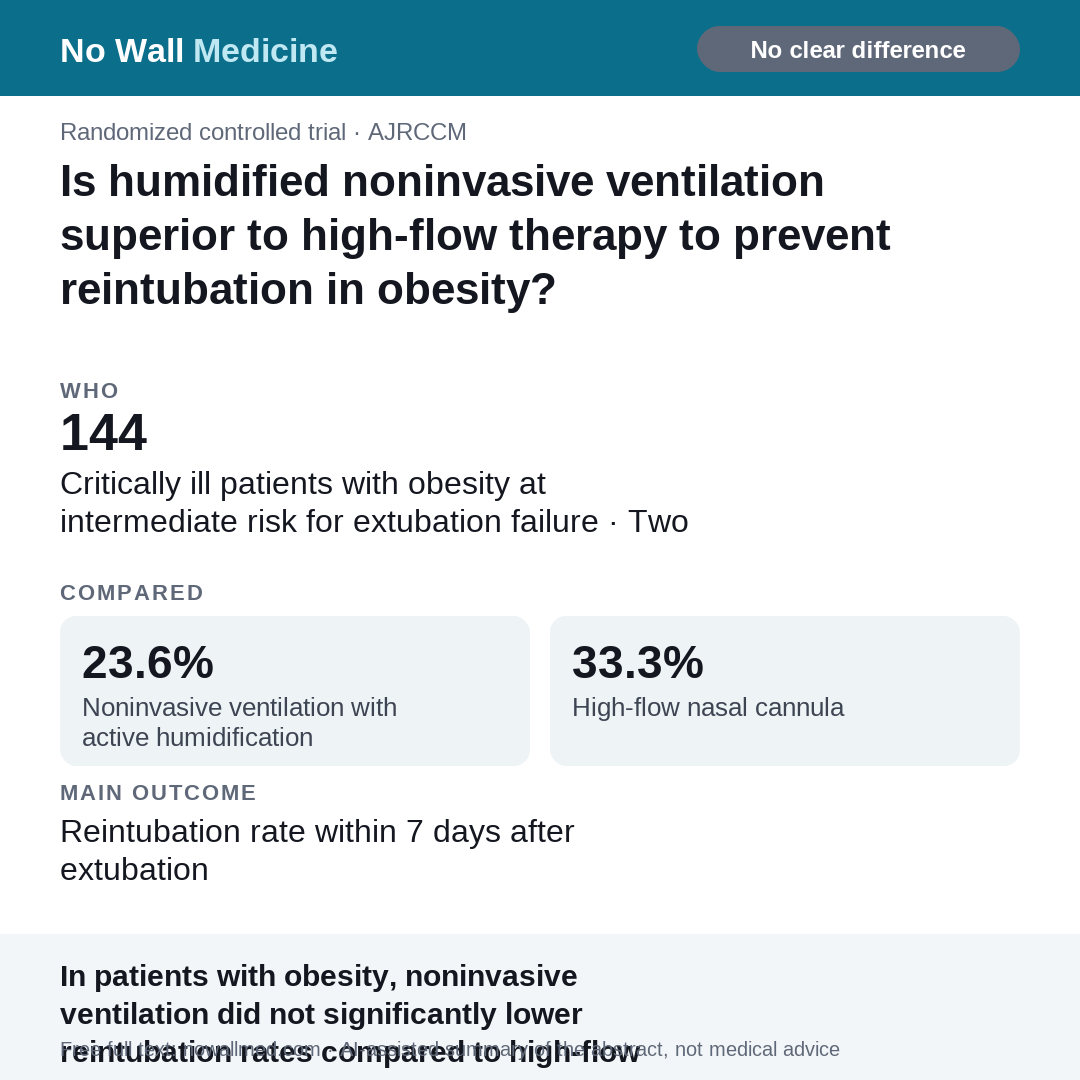
Humidified Noninvasive Ventilation versus High-Flow Therapy to Prevent Reintubation in Patients with Obesity: A Randomized Clinical Trial
Randomized controlled trialNo clear difference
Is humidified noninvasive ventilation superior to high-flow therapy to prevent reintubation in obesity?
Who
144
Critically ill patients with obesity at intermediate risk for extubation failure · Two intensive care units in Spain
Compared
23.6%Noninvasive ventilation with active humidification
33.3%High-flow nasal cannula
Main outcome
Reintubation rate within 7 days after extubation
Result: difference between groups, 9.7; 95% confidence interval, -4.9, 24.4
Bottom line: In patients with obesity, noninvasive ventilation did not significantly lower reintubation rates compared to high-flow nasal cannula.
AJRCCM · 2024-11-13Download image
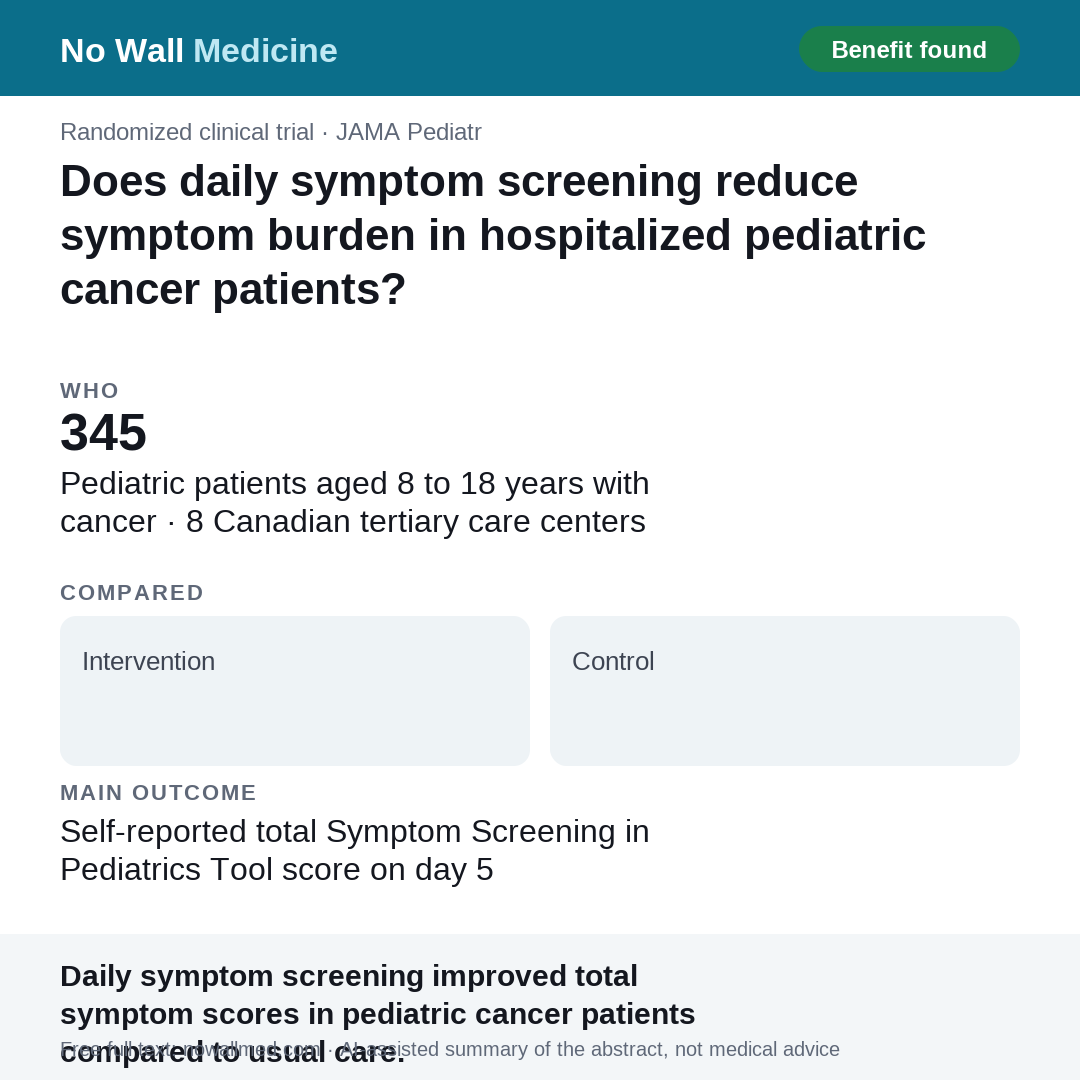
Symptom Screening for Hospitalized Pediatric Patients With Cancer: A Randomized Clinical Trial
Randomized clinical trialBenefit found
Does daily symptom screening reduce symptom burden in hospitalized pediatric cancer patients?
Who
345
Pediatric patients aged 8 to 18 years with cancer · 8 Canadian tertiary care centers
Compared
Intervention
Control
Main outcome
Self-reported total Symptom Screening in Pediatrics Tool score on day 5
Result: adjusted mean difference, -2.5 (95% CI, -3.8 to -1.2)
Bottom line: Daily symptom screening improved total symptom scores in pediatric cancer patients compared to usual care.
JAMA Pediatr · 2024-11-13Download image
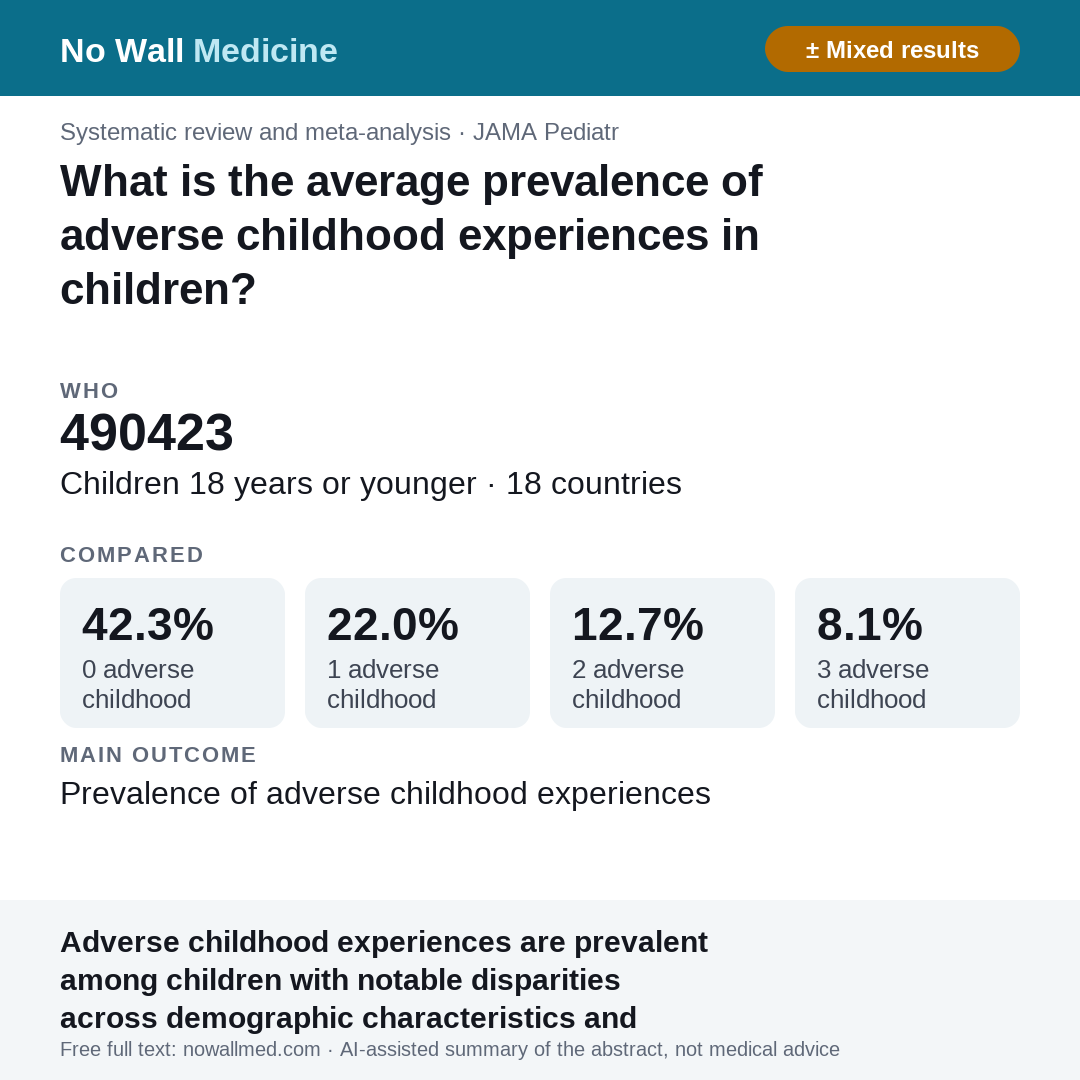
Prevalence of Adverse Childhood Experiences in Child Population Samples: A Systematic Review and Meta-Analysis
Systematic review and meta-analysisMixed results
What is the average prevalence of adverse childhood experiences in children?
Who
490423
Children 18 years or younger · 18 countries
Compared
42.3%0 adverse childhood experiences (95% CI, 25.3%-52.7%)
22.0%1 adverse childhood experience (95% CI, 9.9%-32.7%)
12.7%2 adverse childhood experiences (95% CI, 3.8%-22.3%)
8.1%3 adverse childhood experiences (95% CI, 1.4%-16.8%)
Main outcome
Prevalence of adverse childhood experiences
Bottom line: Adverse childhood experiences are prevalent among children with notable disparities across demographic characteristics and contexts.
JAMA Pediatr · 2024-11-13Download image
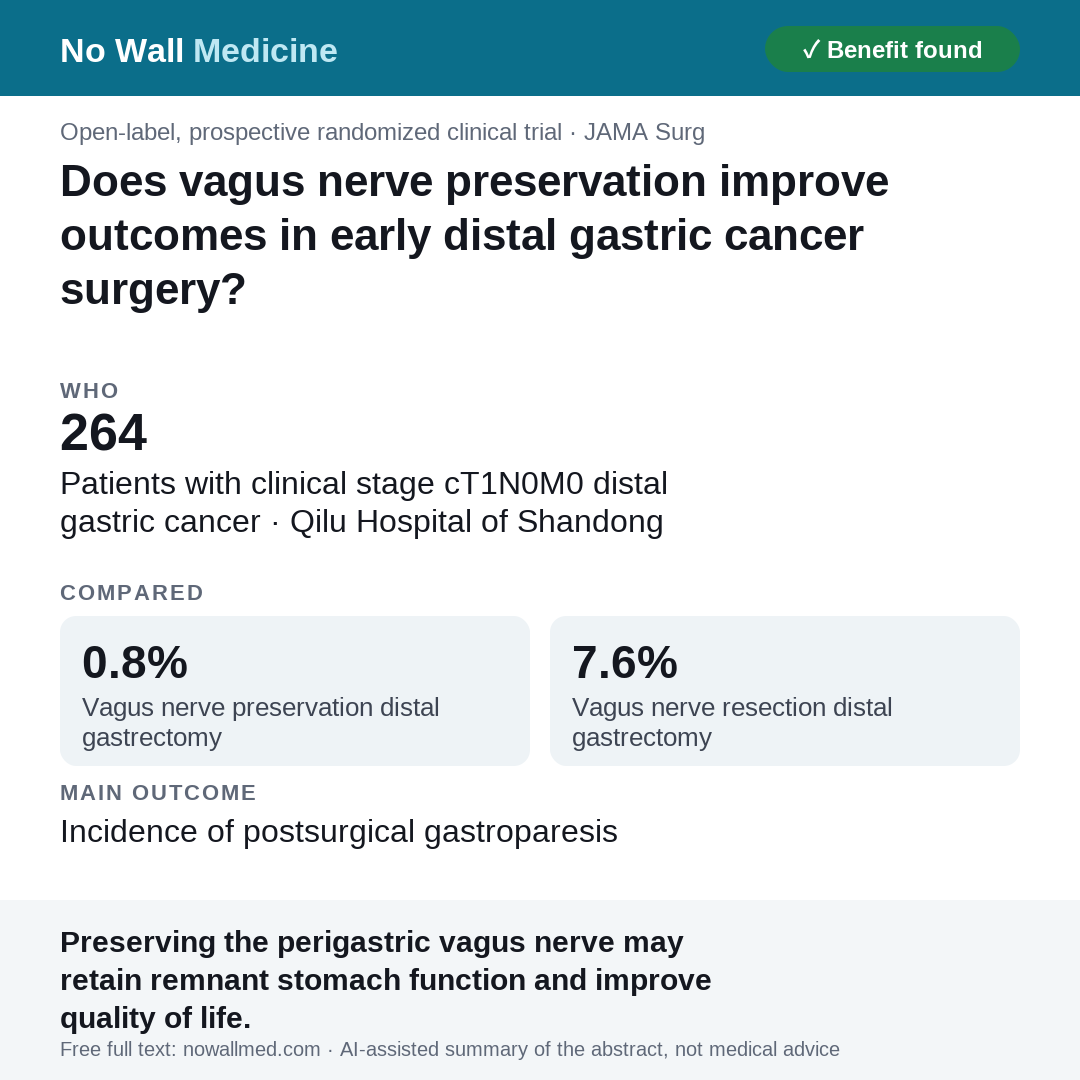
Vagus Nerve Preservation for Early Distal Gastric Cancer With Monitoring and Indocyanine Green Labeling: A Randomized Clinical Trial
Open-label, prospective randomized clinical trialBenefit found
Does vagus nerve preservation improve outcomes in early distal gastric cancer surgery?
Who
264
Patients with clinical stage cT1N0M0 distal gastric cancer · Qilu Hospital of Shandong University, China
Compared
0.8%Vagus nerve preservation distal gastrectomy
7.6%Vagus nerve resection distal gastrectomy
Main outcome
Incidence of postsurgical gastroparesis
Bottom line: Preserving the perigastric vagus nerve may retain remnant stomach function and improve quality of life.
JAMA Surg · 2024-11-13Download image
Skin Cancer Diagnosis by Lesion, Physician, and Examination Type: A Systematic Review and Meta-Analysis
Systematic review and meta-analysisMixed results
How do physician specialty, experience, and examination method affect skin cancer diagnostic accuracy?
Who
100
Dermatologists and primary care physicians examining skin lesions
Compared
Experienced dermatologists (keratinocytic carcinoma, dermoscopy): sensitivity 83.7% and specificity 87.4%
Experienced dermatologists (keratinocytic carcinoma, clinical examination): sensitivity 79.0% and specificity 89.1%
Primary care physicians (keratinocytic carcinoma): sensitivity 81.4% and specificity 80.1%
Experienced dermatologists (melanoma, dermoscopy): sensitivity 85.7% and specificity 81.3%
Main outcome
Diagnostic sensitivity and specificity for skin cancer
Bottom line: Diagnostic accuracy for skin cancer varies significantly by physician specialty, experience level, and the examination method used.
JAMA Dermatol · 2024-11-13Download image

Epidemiology and Risk Factors for Testicular Cancer: A Systematic Review
Systematic review and meta-analysisMixed results
What are the epidemiology and risk factors for testicular germ cell tumors?
Who
Global populations regarding testicular germ cell tumors
Compared
Prenatal or early-life risk factors
Control
Main outcome
Testicular germ cell tumor incidence
Result: odds ratio 1.44
Bottom line: Testicular germ cell tumor incidence is rising, influenced by genetic predisposition and early life exposures.
Limitation: Constrained evidence quality, heterogeneity in study types, and limited data volume.
Eur Urol · 2024-11-13Download image

Magnetic Resonance Imaging Versus Computed Tomography Guidance for Stereotactic Body Radiotherapy in Prostate Cancer: 2-year Outcomes from the MIRAGE Randomized Clinical Trial
Phase 3 randomized clinical trialBenefit found
Does magnetic resonance imaging guidance reduce 2-year toxicity compared to computed tomography guidance?
Who
Patients with prostate cancer receiving stereotactic body radiotherapy
Compared
Magnetic resonance imaging guidance: 27% (95% CI 19-39%) genitourinary and 1.4% (95% CI 0.2-9.6) gastrointestinal toxicity
Computed tomography guidance: 51% (95% CI 41-63%) genitourinary and 9.5% (95% CI 4.6-19) gastrointestinal toxicity
Main outcome
2-year physician-scored and patient-reported toxic effects
Result: odds ratio 0.444 (95% CI 0.209-0.942) for bowel function deterioration
Bottom line: Magnetic resonance imaging guidance for prostate radiotherapy leads to continued reductions in genitourinary and gastrointestinal toxic effects at 2 years.
Eur Urol · 2024-11-13Download image