Visual abstracts
New randomized trials and meta-analyses from leading journals at a glance: who was studied, what was compared, and what was found. Every paper is free to read in full.
All specialtiesCardiology 2927Oncology 2484Gastroenterology & Hepatology 1119Infectious Disease 1890Neurology 1172Psychiatry & Mental Health 1355Pulmonology 1218Critical Care 808Endocrinology & Diabetes 1481Pediatrics 1735Surgery 1523Orthopedics & Sports Medicine 529Neurosurgery 354Cardiothoracic & Vascular Surgery 330Plastic & Reconstructive Surgery 422Nephrology 608Rheumatology 447Hematology 648Dermatology 352Ophthalmology 326Obstetrics & Gynecology 963Public & Global Health 544Radiology & Imaging 415Anesthesiology 591Urology 489ENT (Otolaryngology) 332Emergency Medicine 321Allergy & Immunology 186Geriatrics 623Family Medicine & Primary Care 338Medical Genetics & Genomics 344Pathology & Laboratory Medicine 102Physical Medicine & Rehabilitation 469Palliative Care 251Nutrition 806Digital Health & AI 1384General Medicine 210
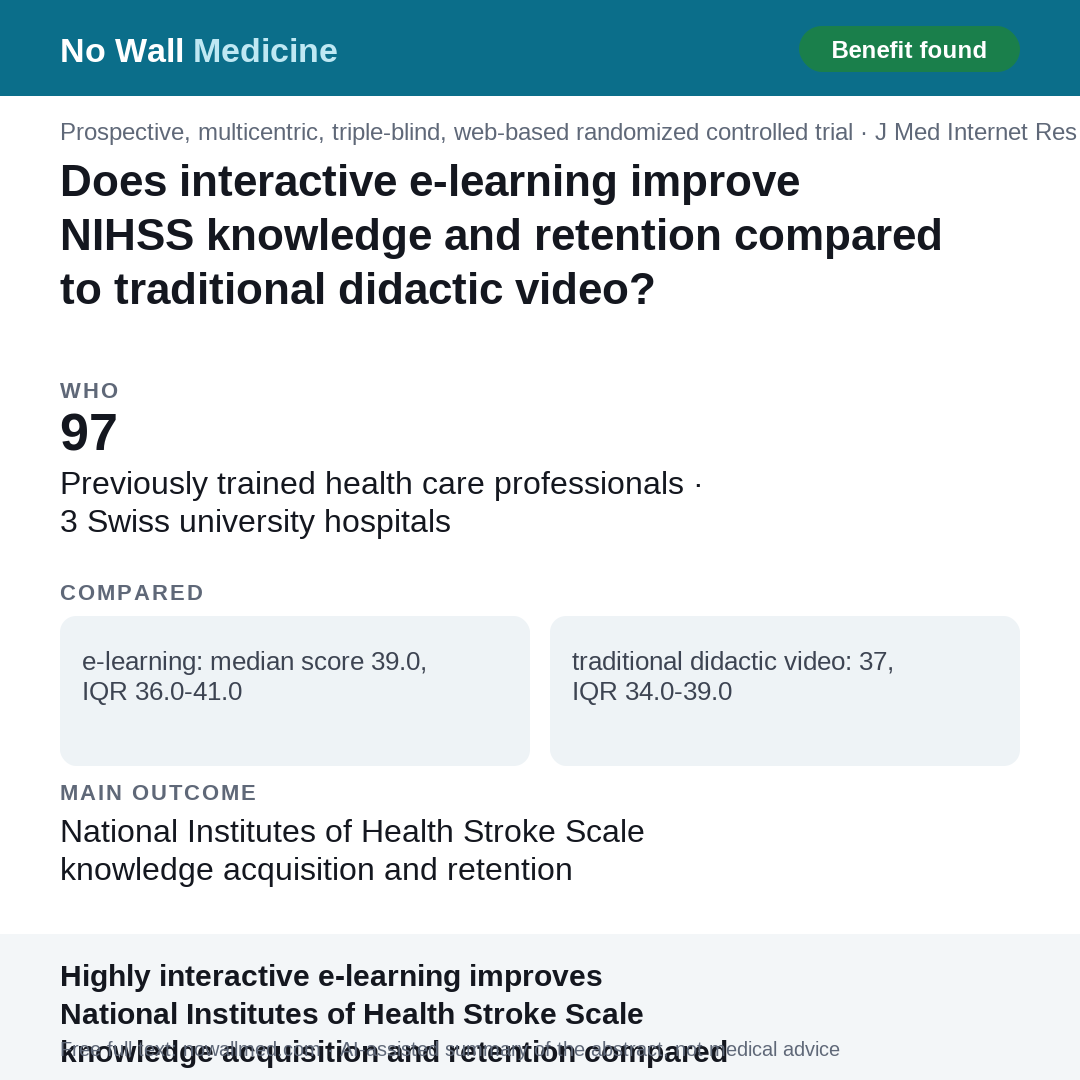
Asynchronous Distance Learning Performance and Knowledge Retention of the National Institutes of Health Stroke Scale Among Health Care Professionals Using Video or e-Learning: Web-based Randomized Controlled Trial
Prospective, multicentric, triple-blind, web-based randomized controlled trialBenefit found
Does interactive e-learning improve NIHSS knowledge and retention compared to traditional didactic video?
Who
97
Previously trained health care professionals · 3 Swiss university hospitals
Compared
e-learning: median score 39.0, IQR 36.0-41.0
traditional didactic video: 37, IQR 34.0-39.0
Main outcome
National Institutes of Health Stroke Scale knowledge acquisition and retention
Result: mean score 38.2, 95% CI 36.7-39.7 vs 35.8, 95% CI 34.8-36.8
Bottom line: Highly interactive e-learning improves National Institutes of Health Stroke Scale knowledge acquisition and retention compared to traditional didactic video.
J Med Internet Res · 2025-03-04Download image
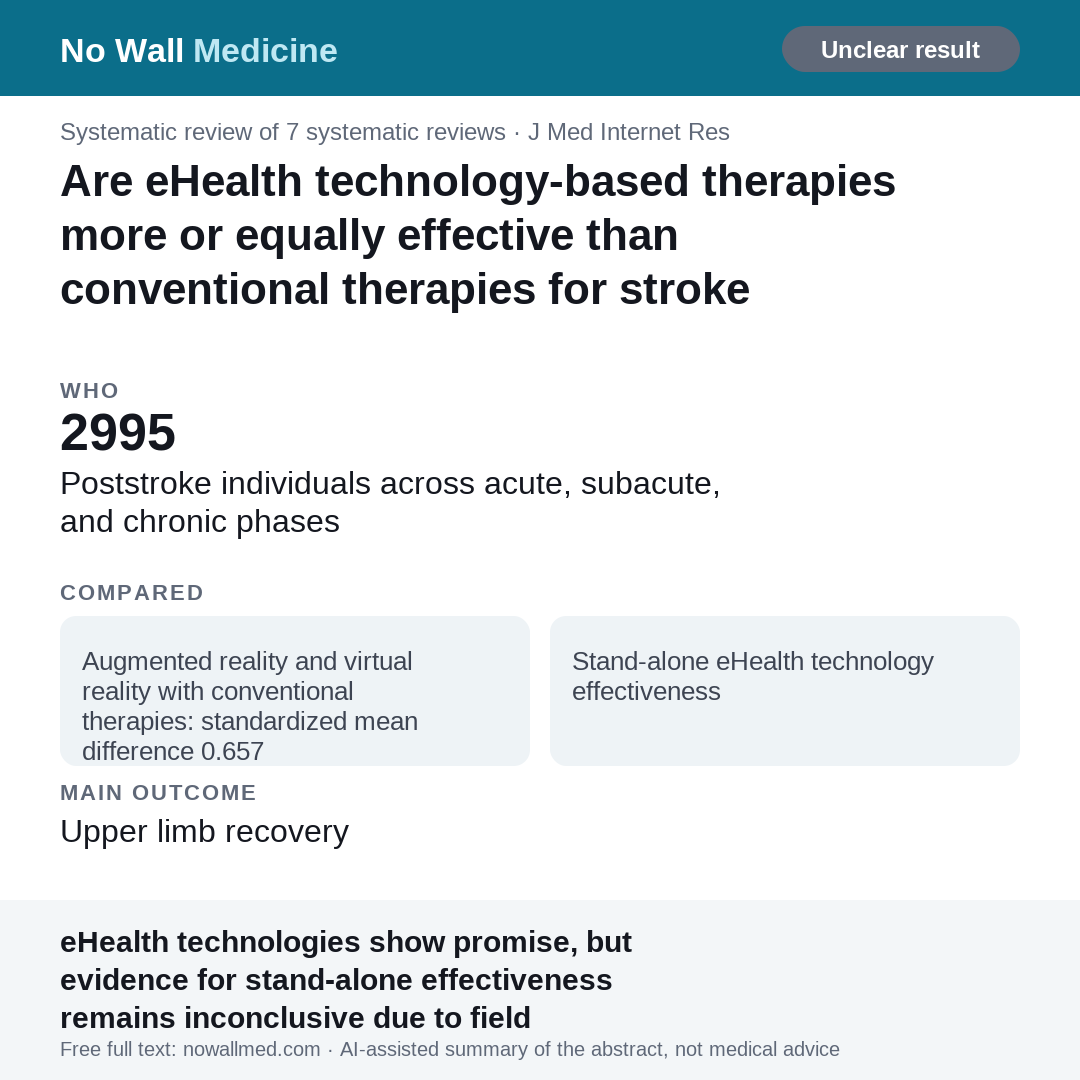
Poststroke eHealth Technologies-Based Rehabilitation for Upper Limb Recovery: Systematic Review
Systematic review of 7 systematic reviewsUnclear result
Are eHealth technology-based therapies more or equally effective than conventional therapies for stroke rehabilitation?
Who
2995
Poststroke individuals across acute, subacute, and chronic phases
Compared
Augmented reality and virtual reality with conventional therapies: standardized mean difference 0.657
Stand-alone eHealth technology effectiveness
Main outcome
Upper limb recovery
Bottom line: eHealth technologies show promise, but evidence for stand-alone effectiveness remains inconclusive due to field fragmentation.
Limitation: Most reviews were rated as critically low quality due to methodological limitations.
J Med Internet Res · 2025-03-04Download image
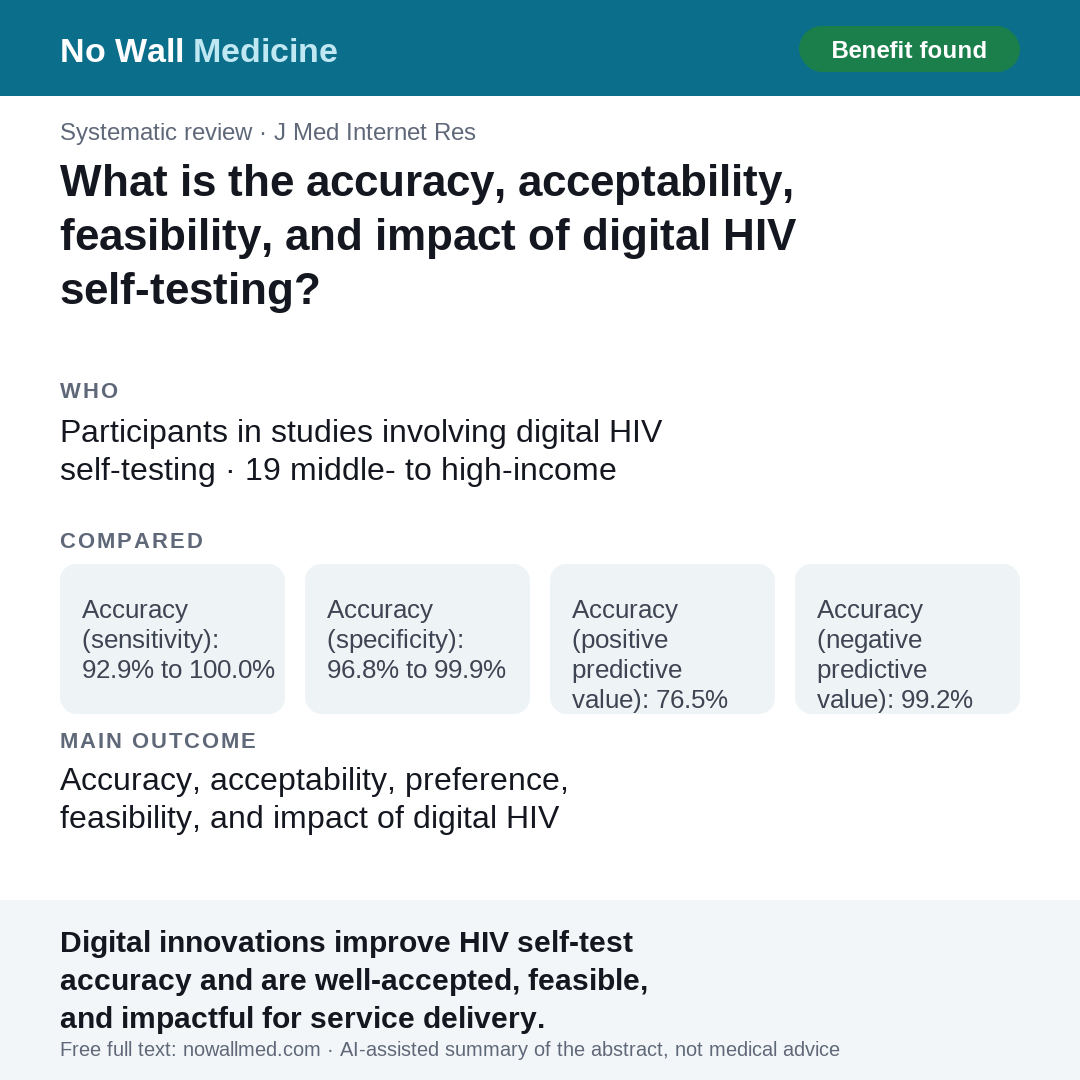
Evidence on Digital HIV Self-Testing From Accuracy to Impact: Updated Systematic Review
Systematic reviewBenefit found
What is the accuracy, acceptability, feasibility, and impact of digital HIV self-testing?
Who
Participants in studies involving digital HIV self-testing · 19 middle- to high-income countries
Compared
Accuracy (sensitivity): 92.9% to 100.0%
Accuracy (specificity): 96.8% to 99.9%
Accuracy (positive predictive value): 76.5% to 99.2%
Accuracy (negative predictive value): 99.2% to 100.0%
Main outcome
Accuracy, acceptability, preference, feasibility, and impact of digital HIV self-testing
Bottom line: Digital innovations improve HIV self-test accuracy and are well-accepted, feasible, and impactful for service delivery.
Limitation: The quality of studies varied, though they generally demonstrated low risk of bias.
J Med Internet Res · 2025-03-04Download image
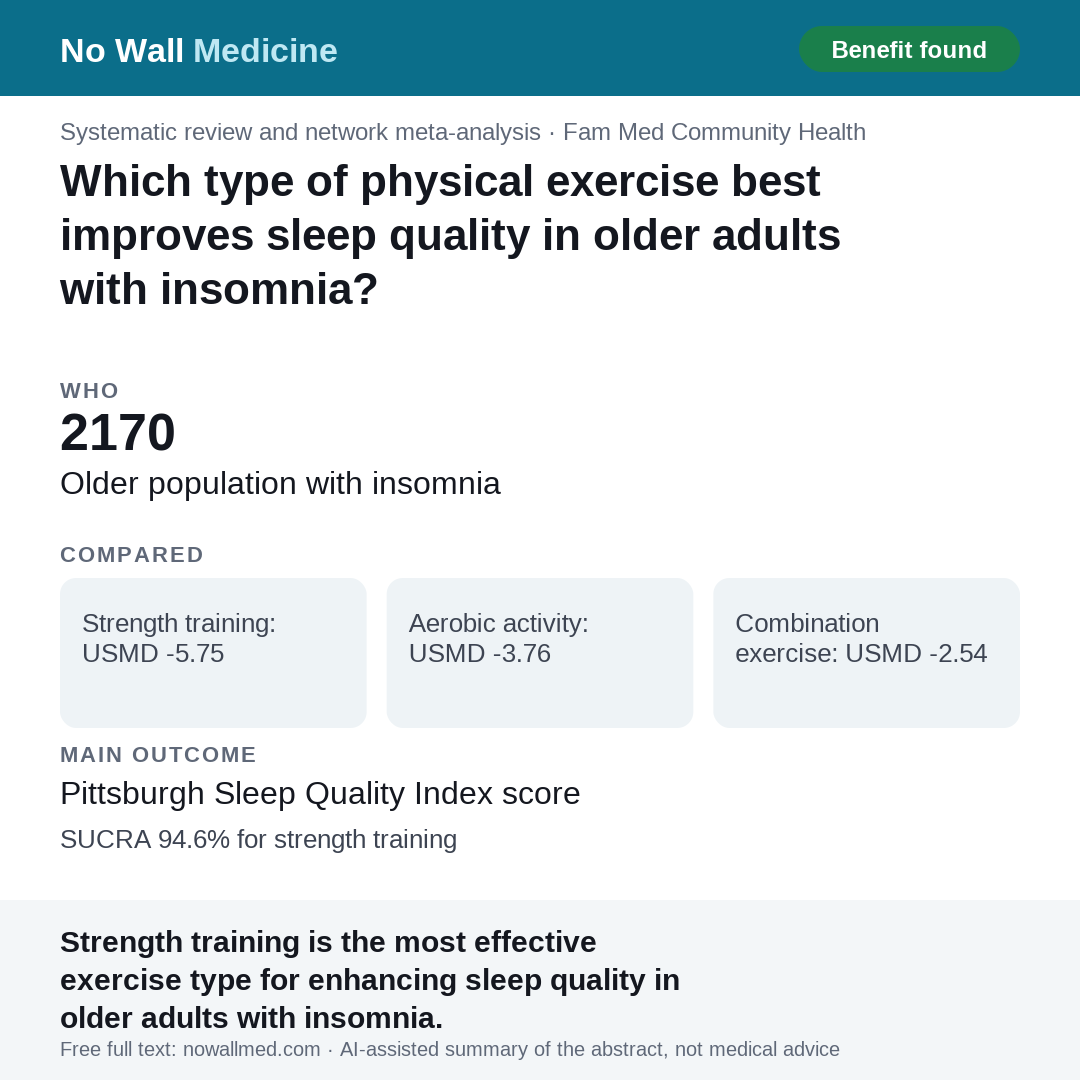
Impact of different types of physical exercise on sleep quality in older population with insomnia: a systematic review and network meta-analysis of randomised controlled trials
Systematic review and network meta-analysisBenefit found
Which type of physical exercise best improves sleep quality in older adults with insomnia?
Who
2170
Older population with insomnia
Compared
Strength training: USMD -5.75
Aerobic activity: USMD -3.76
Combination exercise: USMD -2.54
Main outcome
Pittsburgh Sleep Quality Index score
Result: SUCRA 94.6% for strength training
Bottom line: Strength training is the most effective exercise type for enhancing sleep quality in older adults with insomnia.
Fam Med Community Health · 2025-03-04Download image
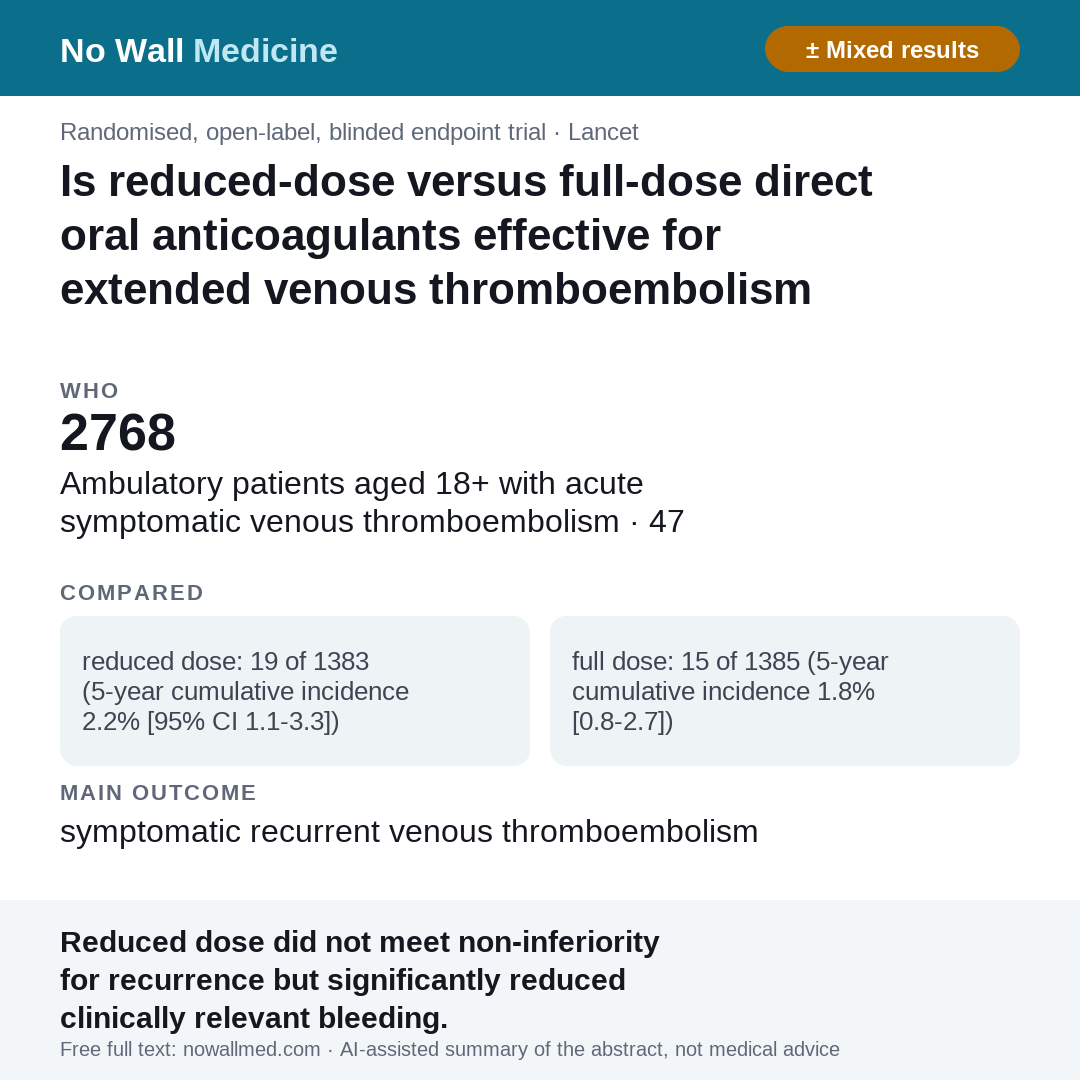
Extended treatment of venous thromboembolism with reduced-dose versus full-dose direct oral anticoagulants in patients at high risk of recurrence: a non-inferiority, multicentre, randomised, open-label, blinded endpoint trial
Randomised, open-label, blinded endpoint trialMixed results
Is reduced-dose versus full-dose direct oral anticoagulants effective for extended venous thromboembolism treatment?
Who
2768
Ambulatory patients aged 18+ with acute symptomatic venous thromboembolism · 47 hospitals in France
Compared
reduced dose: 19 of 1383 (5-year cumulative incidence 2.2% [95% CI 1.1-3.3])
full dose: 15 of 1385 (5-year cumulative incidence 1.8% [0.8-2.7])
Main outcome
symptomatic recurrent venous thromboembolism
Result: adjusted HR 1.32 (95% CI 0.67-2.60)
Bottom line: Reduced dose did not meet non-inferiority for recurrence but significantly reduced clinically relevant bleeding.
Lancet · 2025-03-03Download image
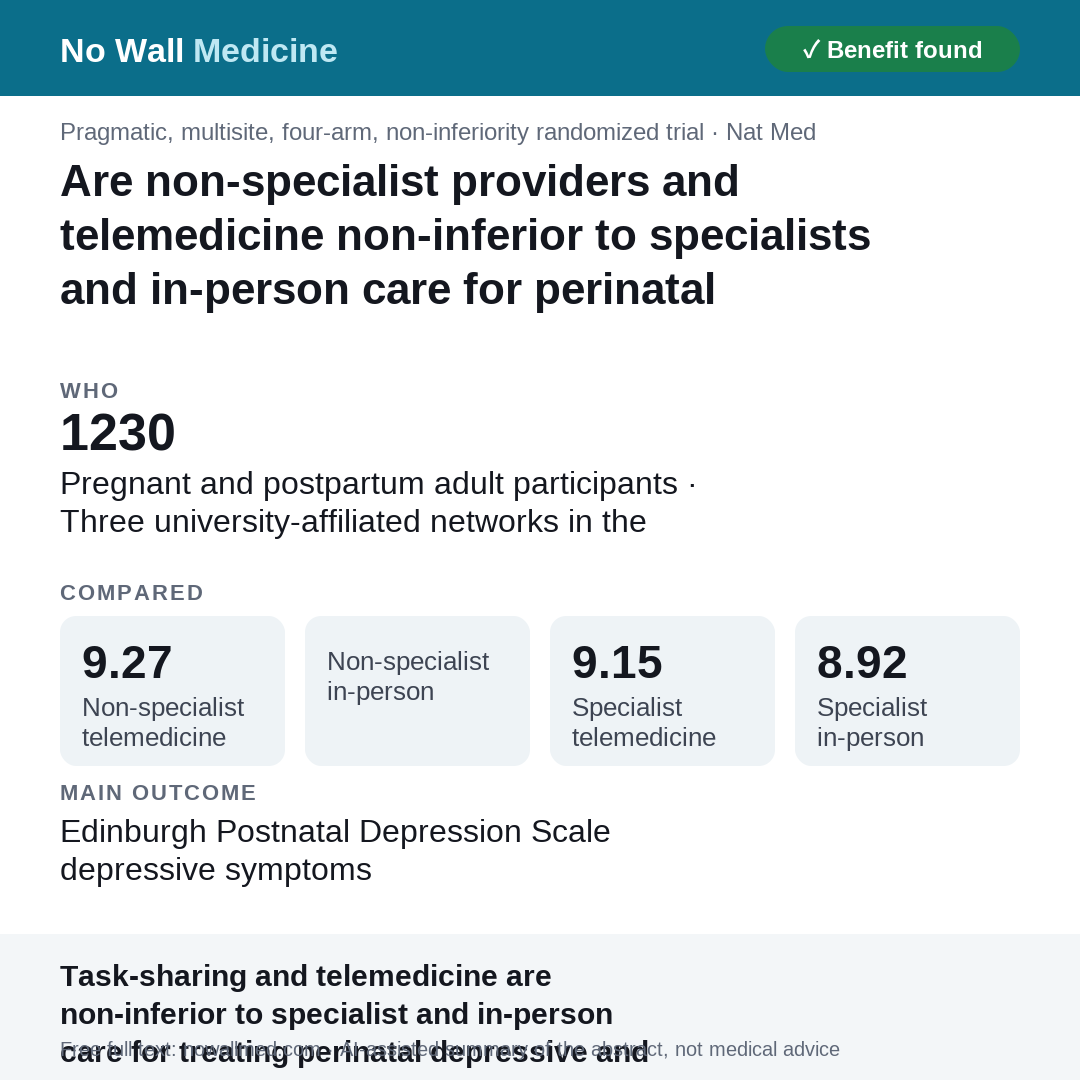
Task-sharing and telemedicine delivery of psychotherapy to treat perinatal depression: a pragmatic, noninferiority randomized trial
Pragmatic, multisite, four-arm, non-inferiority randomized trialBenefit found
Are non-specialist providers and telemedicine non-inferior to specialists and in-person care for perinatal depression?
Who
1230
Pregnant and postpartum adult participants · Three university-affiliated networks in the United States and Canada
Compared
9.27Non-specialist telemedicine (95% CI 8.85-9.70)
Non-specialist in-person
9.15Specialist telemedicine (95% CI 8.79-9.50)
8.92Specialist in-person (95% CI 8.39-9.45)
Main outcome
Edinburgh Postnatal Depression Scale depressive symptoms
Bottom line: Task-sharing and telemedicine are non-inferior to specialist and in-person care for treating perinatal depressive and anxiety symptoms.
Nat Med · 2025-03-03Download image
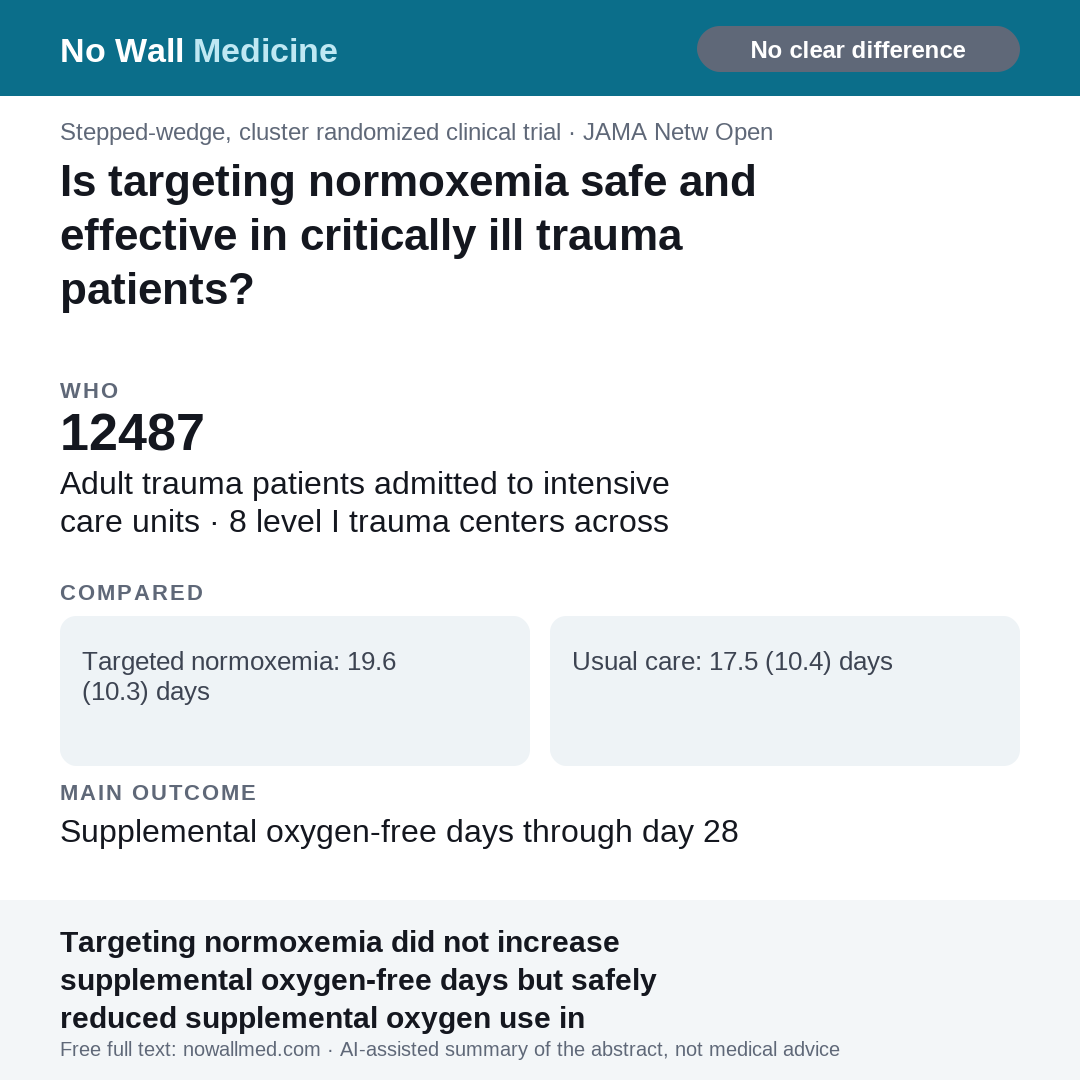
Targeted Normoxemia and Supplemental Oxygen-Free Days in Critically Injured Adults: A Stepped-Wedge Cluster Randomized Clinical Trial
Stepped-wedge, cluster randomized clinical trialNo clear difference
Is targeting normoxemia safe and effective in critically ill trauma patients?
Who
12487
Adult trauma patients admitted to intensive care units · 8 level I trauma centers across the US
Compared
Targeted normoxemia: 19.6 (10.3) days
Usual care: 17.5 (10.4) days
Main outcome
Supplemental oxygen-free days through day 28
Result: adjusted mean difference 0.32 (95% CI -0.37 to 1.00) days
Bottom line: Targeting normoxemia did not increase supplemental oxygen-free days but safely reduced supplemental oxygen use in critically ill trauma patients.
JAMA Netw Open · 2025-03-03Download image
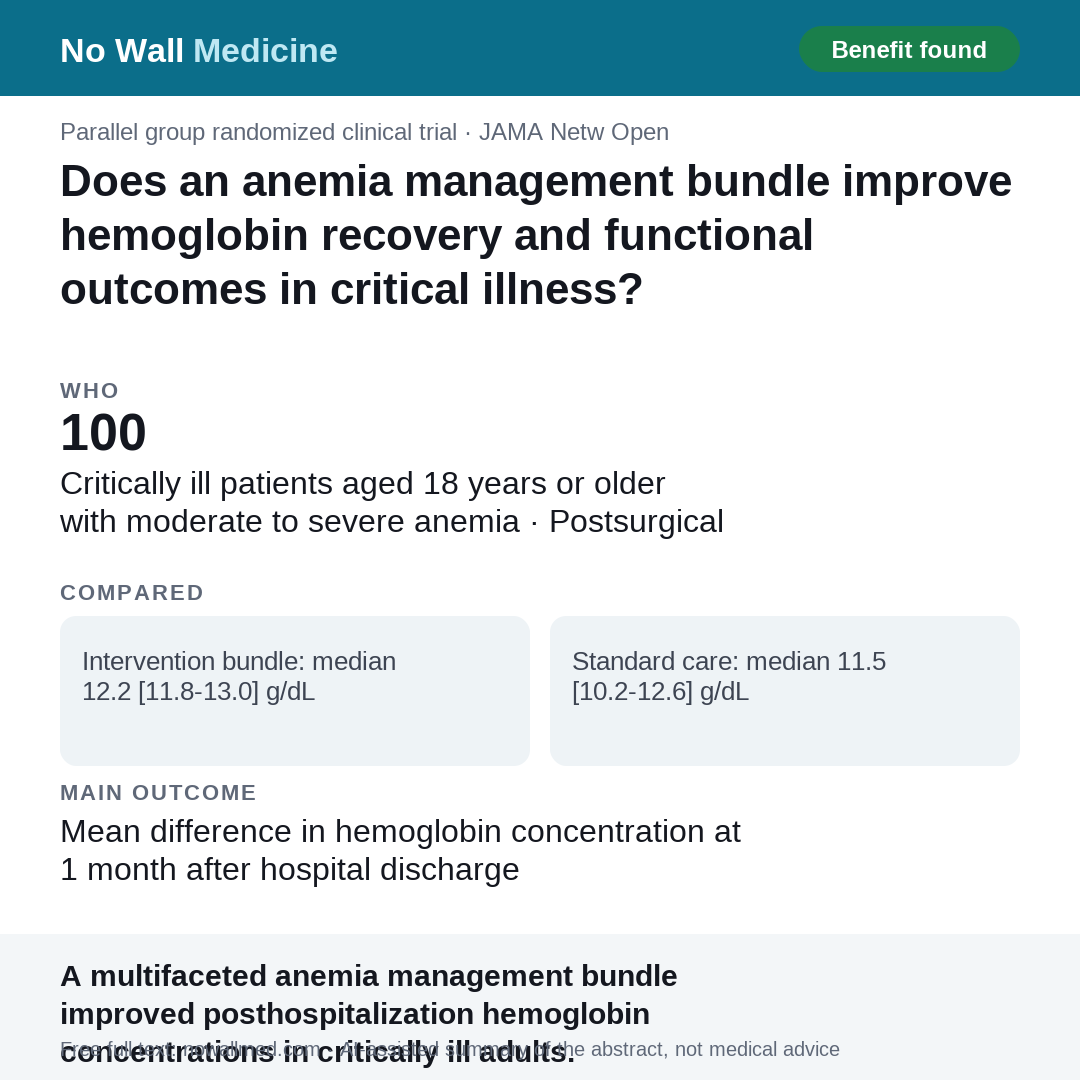
Practical Anemia Bundle and Hemoglobin Recovery in Critical Illness: A Randomized Clinical Trial
Parallel group randomized clinical trialBenefit found
Does an anemia management bundle improve hemoglobin recovery and functional outcomes in critical illness?
Who
100
Critically ill patients aged 18 years or older with moderate to severe anemia · Postsurgical and medical intensive care units at a large US medical center
Compared
Intervention bundle: median 12.2 [11.8-13.0] g/dL
Standard care: median 11.5 [10.2-12.6] g/dL
Main outcome
Mean difference in hemoglobin concentration at 1 month after hospital discharge
Result: adjusted mean difference, 0.69 [95% CI, 0.13-1.20] g/dL
Bottom line: A multifaceted anemia management bundle improved posthospitalization hemoglobin concentrations in critically ill adults.
JAMA Netw Open · 2025-03-03Download image
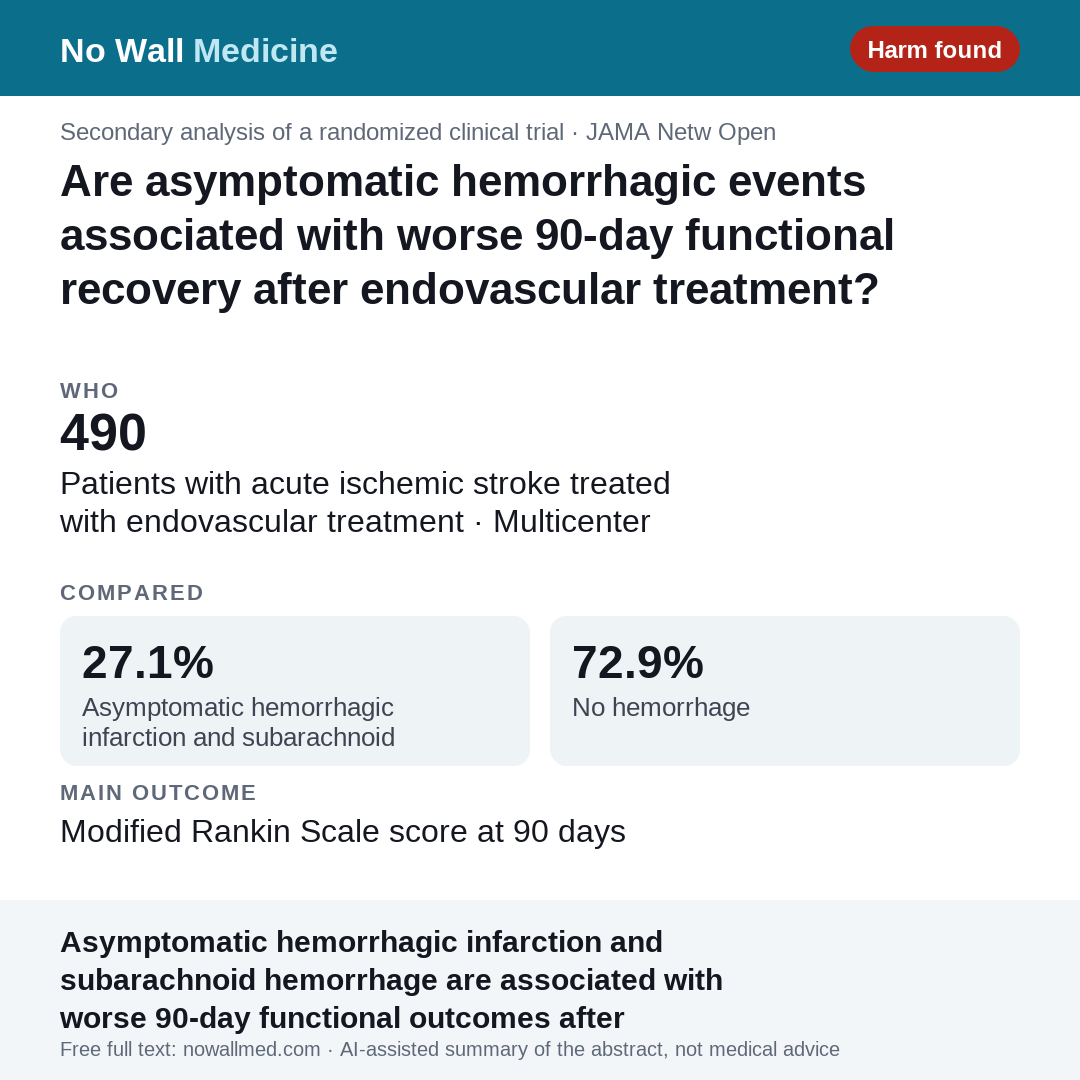
Asymptomatic Hemorrhagic Events and Functional Outcomes in Acute Stroke: A Secondary Analysis of the DIRECT-MI Randomized Clinical Trial
Secondary analysis of a randomized clinical trialHarm found
Are asymptomatic hemorrhagic events associated with worse 90-day functional recovery after endovascular treatment?
Who
490
Patients with acute ischemic stroke treated with endovascular treatment · Multicenter tertiary hospitals in China
Compared
27.1%Asymptomatic hemorrhagic infarction and subarachnoid hemorrhage
72.9%No hemorrhage
Main outcome
Modified Rankin Scale score at 90 days
Result: odds ratio 2.59 (95% CI 1.45-4.63)
Bottom line: Asymptomatic hemorrhagic infarction and subarachnoid hemorrhage are associated with worse 90-day functional outcomes after endovascular treatment.
JAMA Netw Open · 2025-03-03Download image
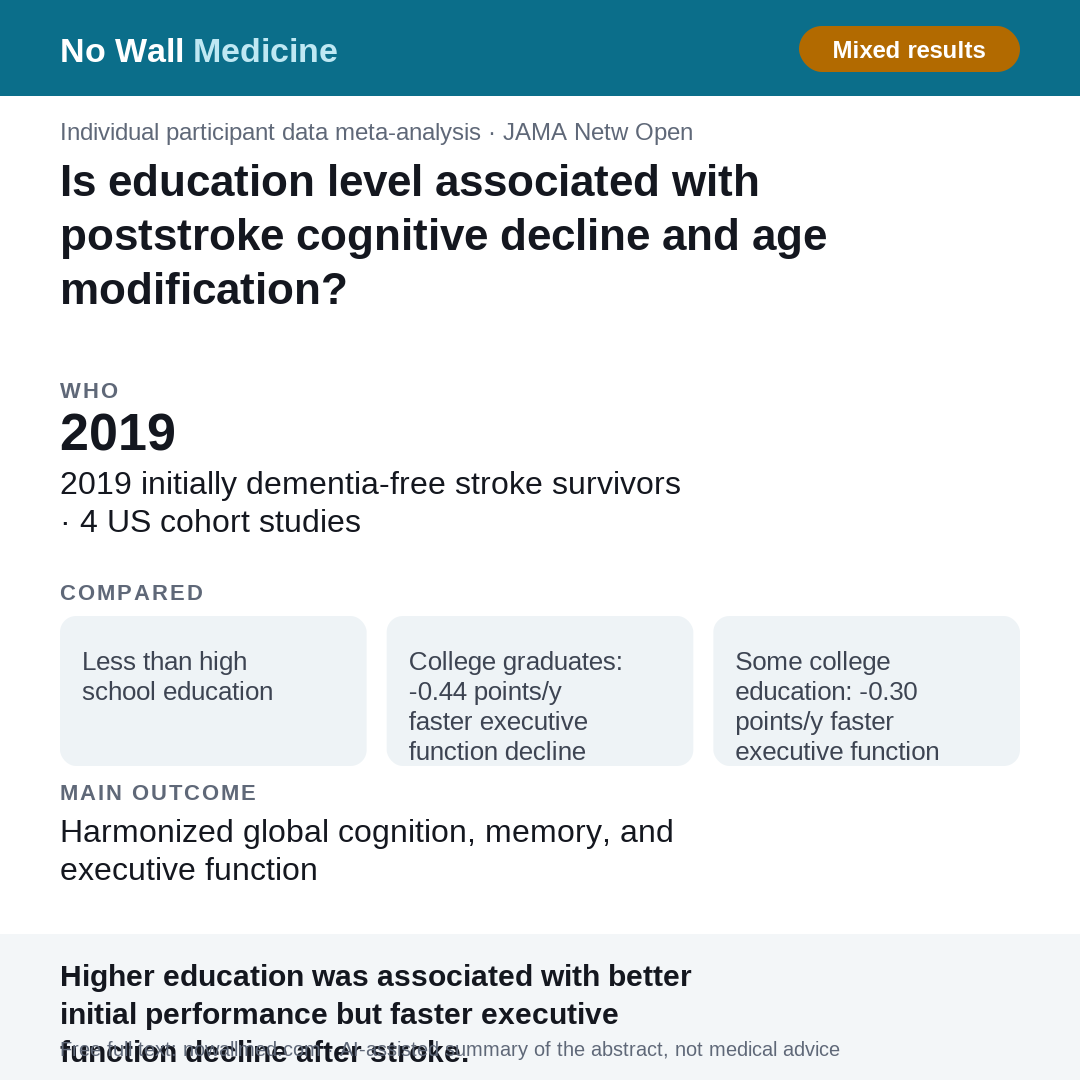
Education Levels and Poststroke Cognitive Trajectories
Individual participant data meta-analysisMixed results
Is education level associated with poststroke cognitive decline and age modification?
Who
2019
2019 initially dementia-free stroke survivors · 4 US cohort studies
Compared
Less than high school education
College graduates: -0.44 points/y faster executive function decline
Some college education: -0.30 points/y faster executive function decline
Main outcome
Harmonized global cognition, memory, and executive function
Bottom line: Higher education was associated with better initial performance but faster executive function decline after stroke.
JAMA Netw Open · 2025-03-03Download image
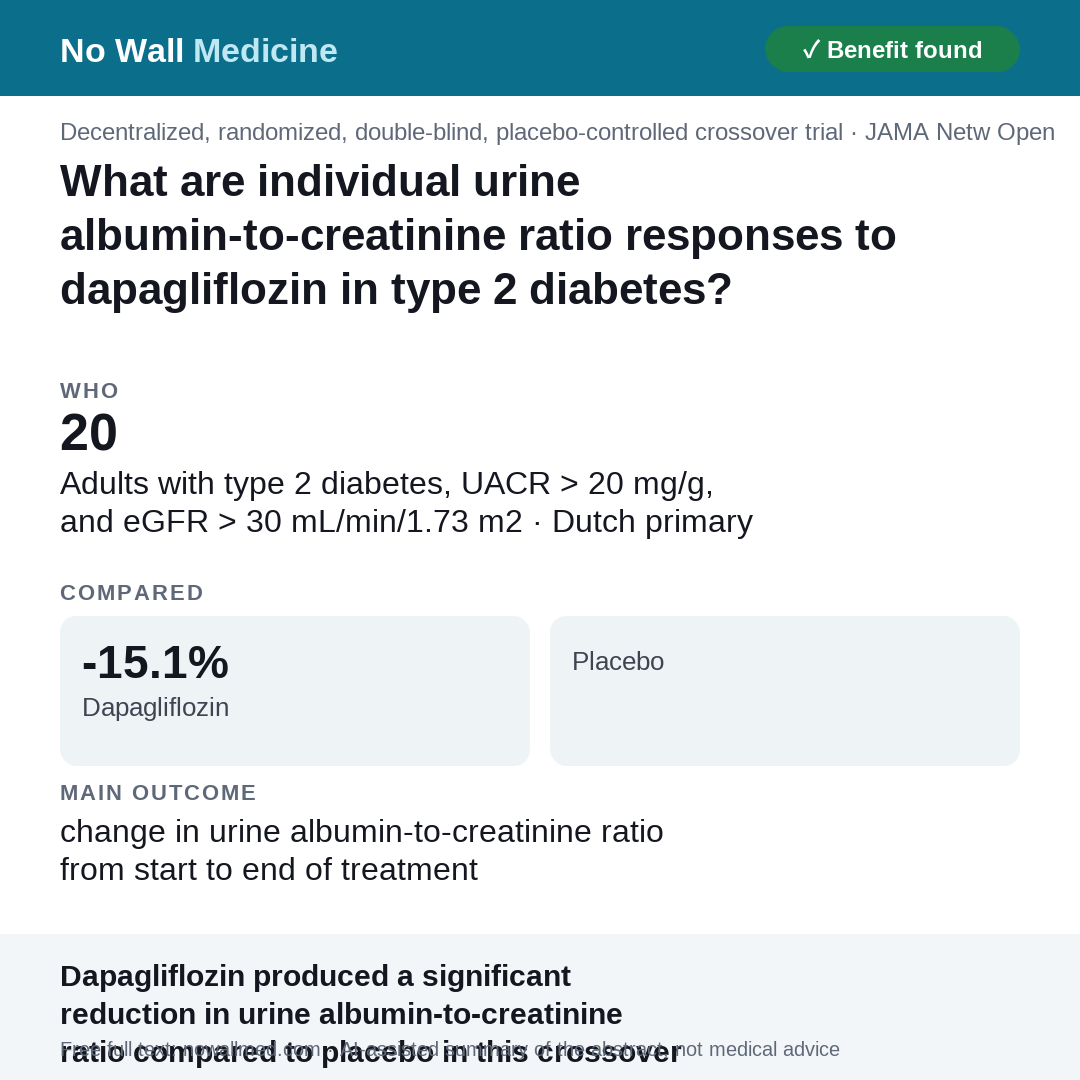
Albuminuria Responses to Dapagliflozin in Patients With Type 2 Diabetes: A Crossover Trial
Decentralized, randomized, double-blind, placebo-controlled crossover trialBenefit found
What are individual urine albumin-to-creatinine ratio responses to dapagliflozin in type 2 diabetes?
Who
20
Adults with type 2 diabetes, UACR > 20 mg/g, and eGFR > 30 mL/min/1.73 m2 · Dutch primary and secondary health care systems
Compared
-15.1%Dapagliflozin
Placebo
Main outcome
change in urine albumin-to-creatinine ratio from start to end of treatment
Result: -15.1% (95% CI, -28.2% to -3.3%)
Bottom line: Dapagliflozin produced a significant reduction in urine albumin-to-creatinine ratio compared to placebo in this crossover trial.
JAMA Netw Open · 2025-03-03Download image
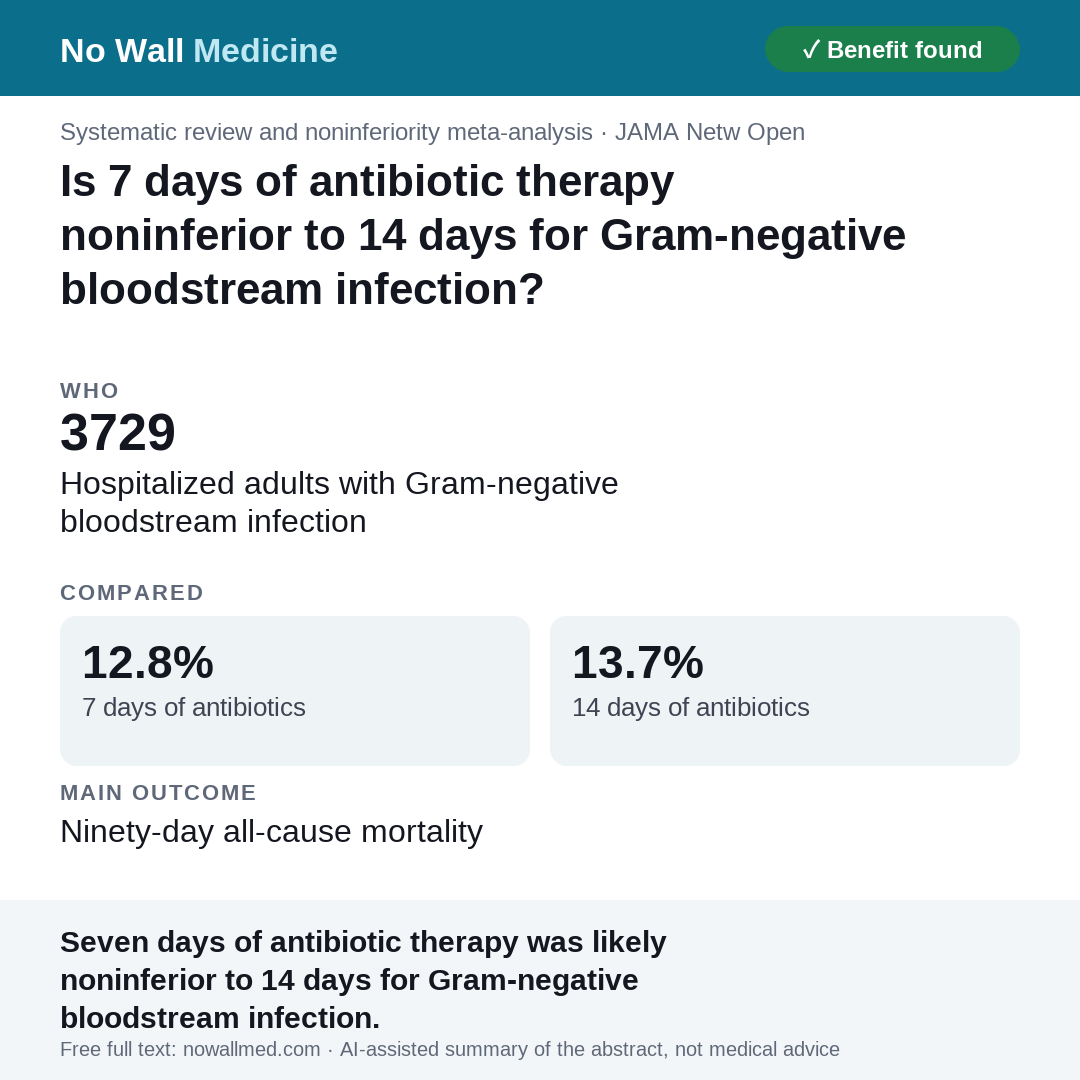
Seven vs Fourteen Days of Antibiotics for Gram-Negative Bloodstream Infection: A Systematic Review and Noninferiority Meta-Analysis
Systematic review and noninferiority meta-analysisBenefit found
Is 7 days of antibiotic therapy noninferior to 14 days for Gram-negative bloodstream infection?
Who
3729
Hospitalized adults with Gram-negative bloodstream infection
Compared
12.8%7 days of antibiotics
13.7%14 days of antibiotics
Main outcome
Ninety-day all-cause mortality
Result: risk ratio 0.91 (95% credible interval 0.69-1.22)
Bottom line: Seven days of antibiotic therapy was likely noninferior to 14 days for Gram-negative bloodstream infection.
JAMA Netw Open · 2025-03-03Download image
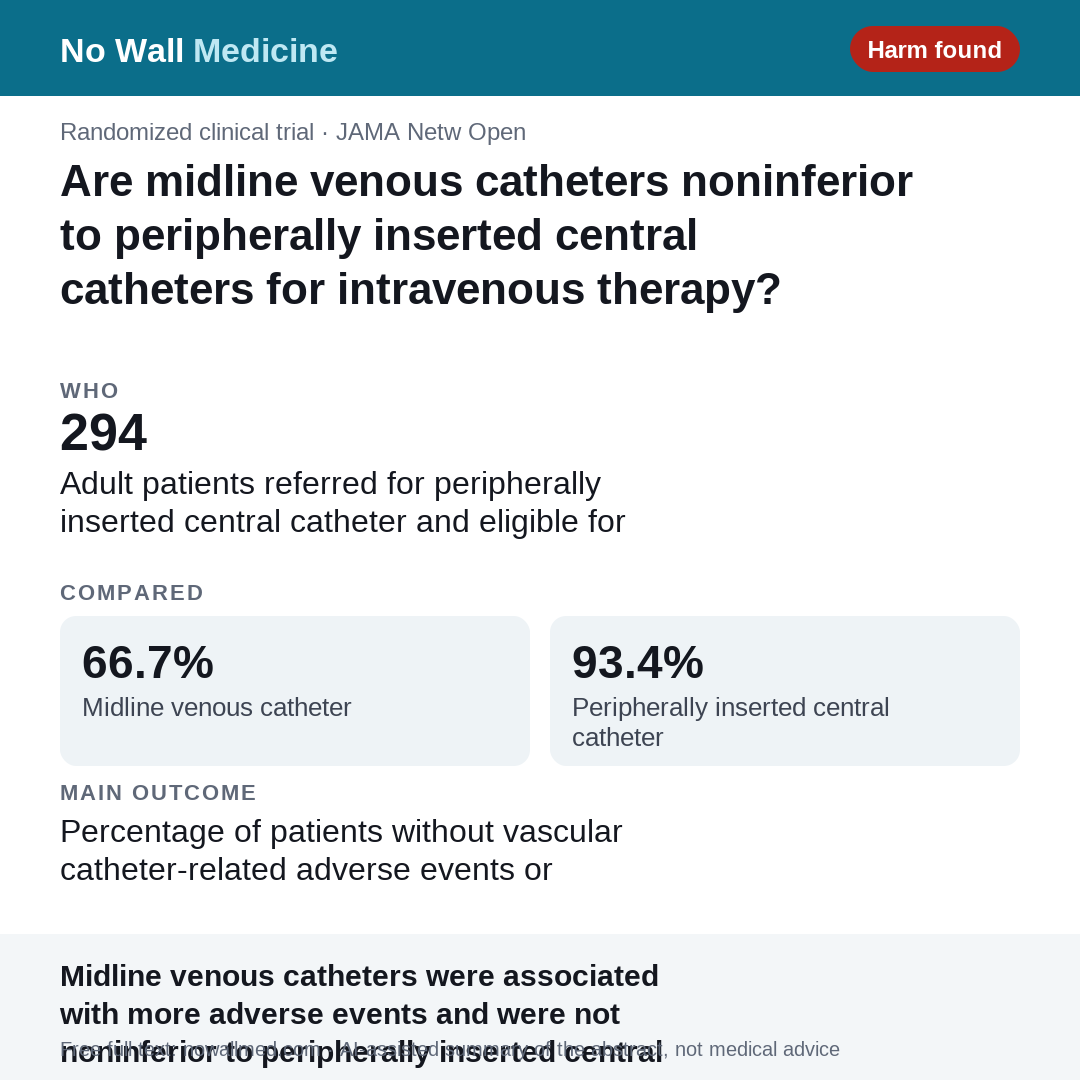
Midline Venous Catheter vs Peripherally Inserted Central Catheter for Intravenous Therapy: A Randomized Clinical Trial
Randomized clinical trialHarm found
Are midline venous catheters noninferior to peripherally inserted central catheters for intravenous therapy?
Who
294
Adult patients referred for peripherally inserted central catheter and eligible for midline venous catheter · Single tertiary care center
Compared
66.7%Midline venous catheter
93.4%Peripherally inserted central catheter
Main outcome
Percentage of patients without vascular catheter-related adverse events or dysfunctions
Bottom line: Midline venous catheters were associated with more adverse events and were not noninferior to peripherally inserted central catheters.
JAMA Netw Open · 2025-03-03Download image
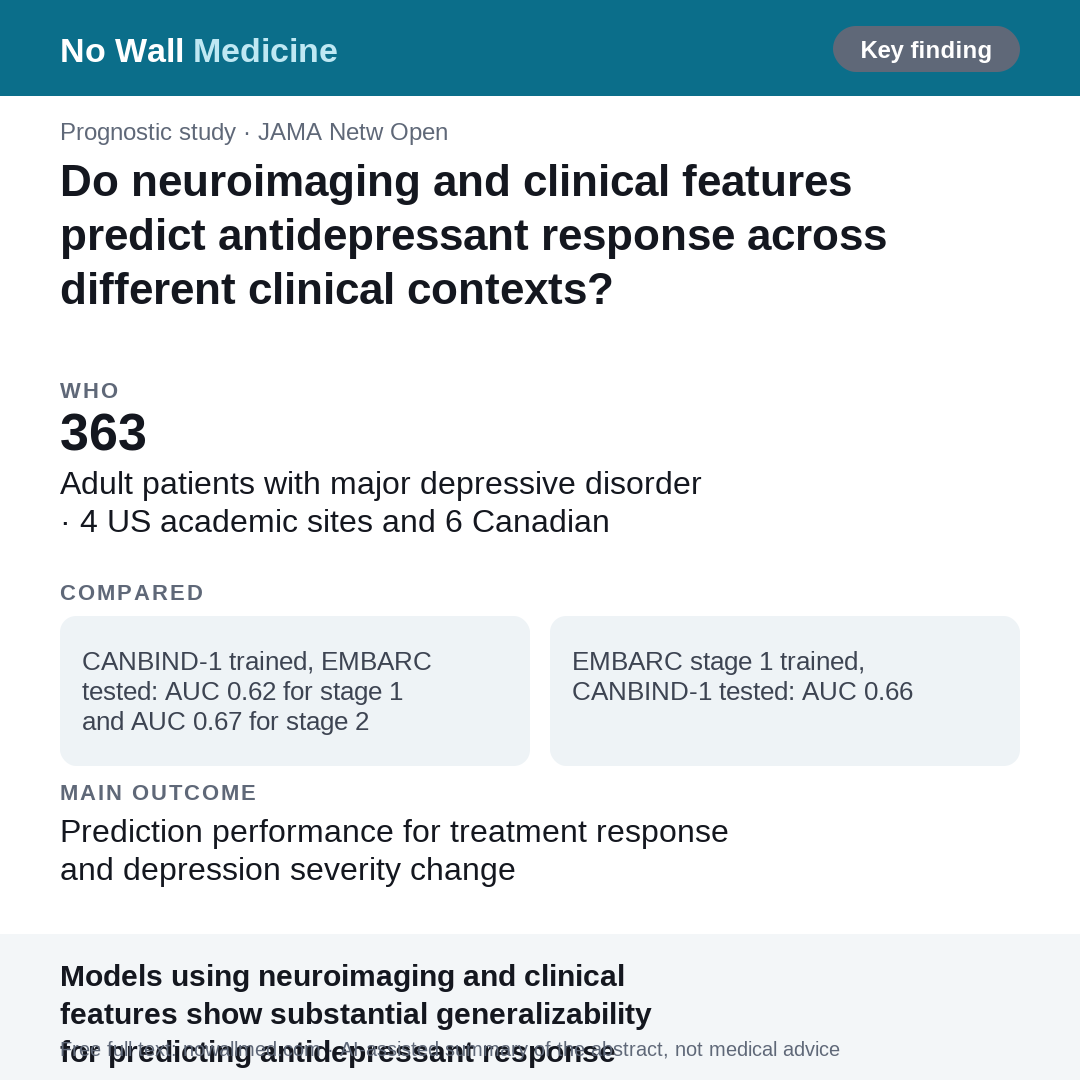
Generalizability of Treatment Outcome Prediction Across Antidepressant Treatment Trials in Depression
Prognostic studyBenefit found
Do neuroimaging and clinical features predict antidepressant response across different clinical contexts?
Who
363
Adult patients with major depressive disorder · 4 US academic sites and 6 Canadian outpatient centers
Compared
CANBIND-1 trained, EMBARC tested: AUC 0.62 for stage 1 and AUC 0.67 for stage 2
EMBARC stage 1 trained, CANBIND-1 tested: AUC 0.66
Main outcome
Prediction performance for treatment response and depression severity change
Bottom line: Models using neuroimaging and clinical features show substantial generalizability for predicting antidepressant response across different trials.
JAMA Netw Open · 2025-03-03Download image
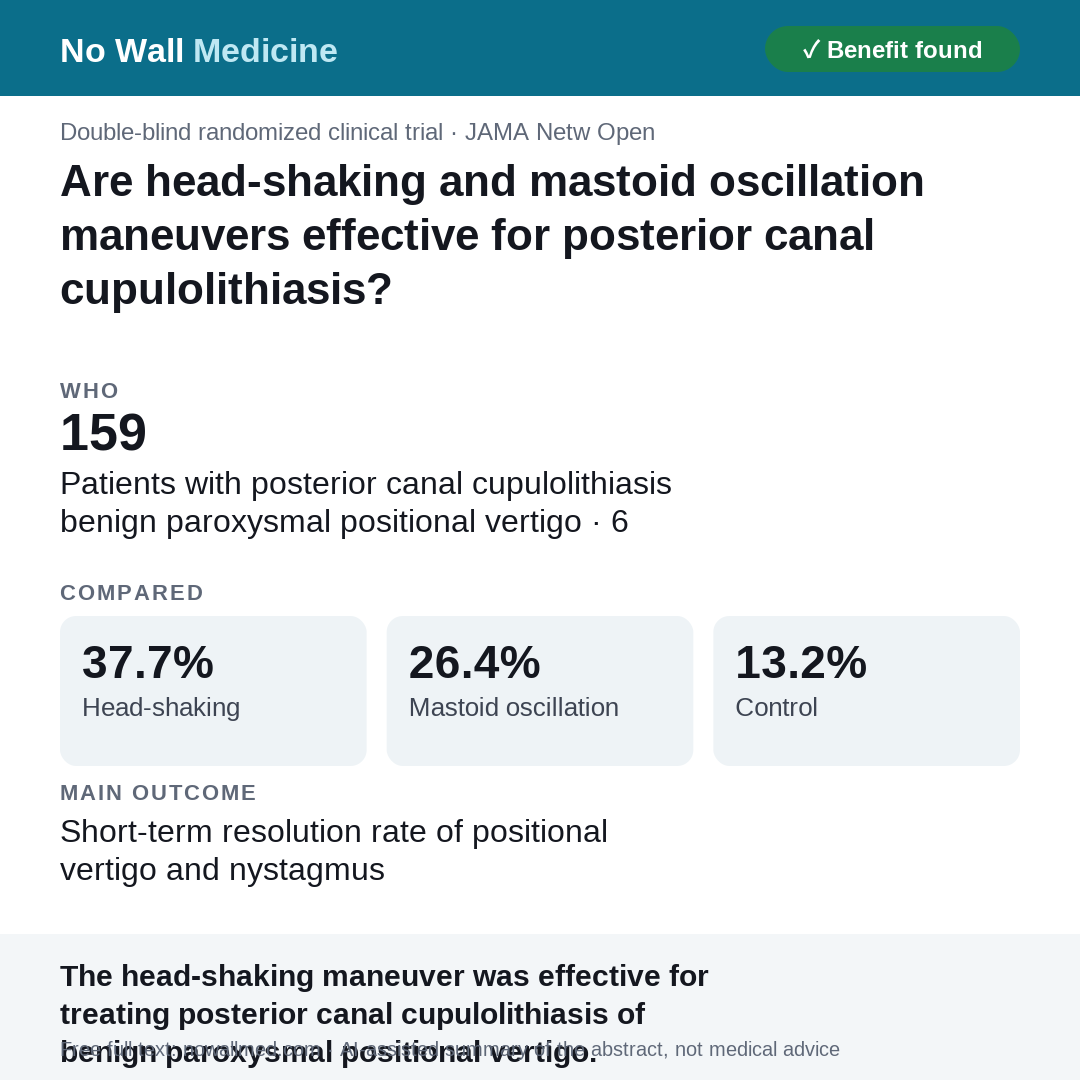
Treatment Maneuvers in Cupulolithiasis of the Posterior Canal Benign Paroxysmal Positional Vertigo: A Randomized Clinical Trial
Double-blind randomized clinical trialBenefit found
Are head-shaking and mastoid oscillation maneuvers effective for posterior canal cupulolithiasis?
Who
159
Patients with posterior canal cupulolithiasis benign paroxysmal positional vertigo · 6 referral-based university hospitals in South Korea
Compared
37.7%Head-shaking
26.4%Mastoid oscillation
13.2%Control
Main outcome
Short-term resolution rate of positional vertigo and nystagmus
Result: odds ratio 2.86 (95% CI 1.32-6.18)
Bottom line: The head-shaking maneuver was effective for treating posterior canal cupulolithiasis of benign paroxysmal positional vertigo.
JAMA Netw Open · 2025-03-03Download image
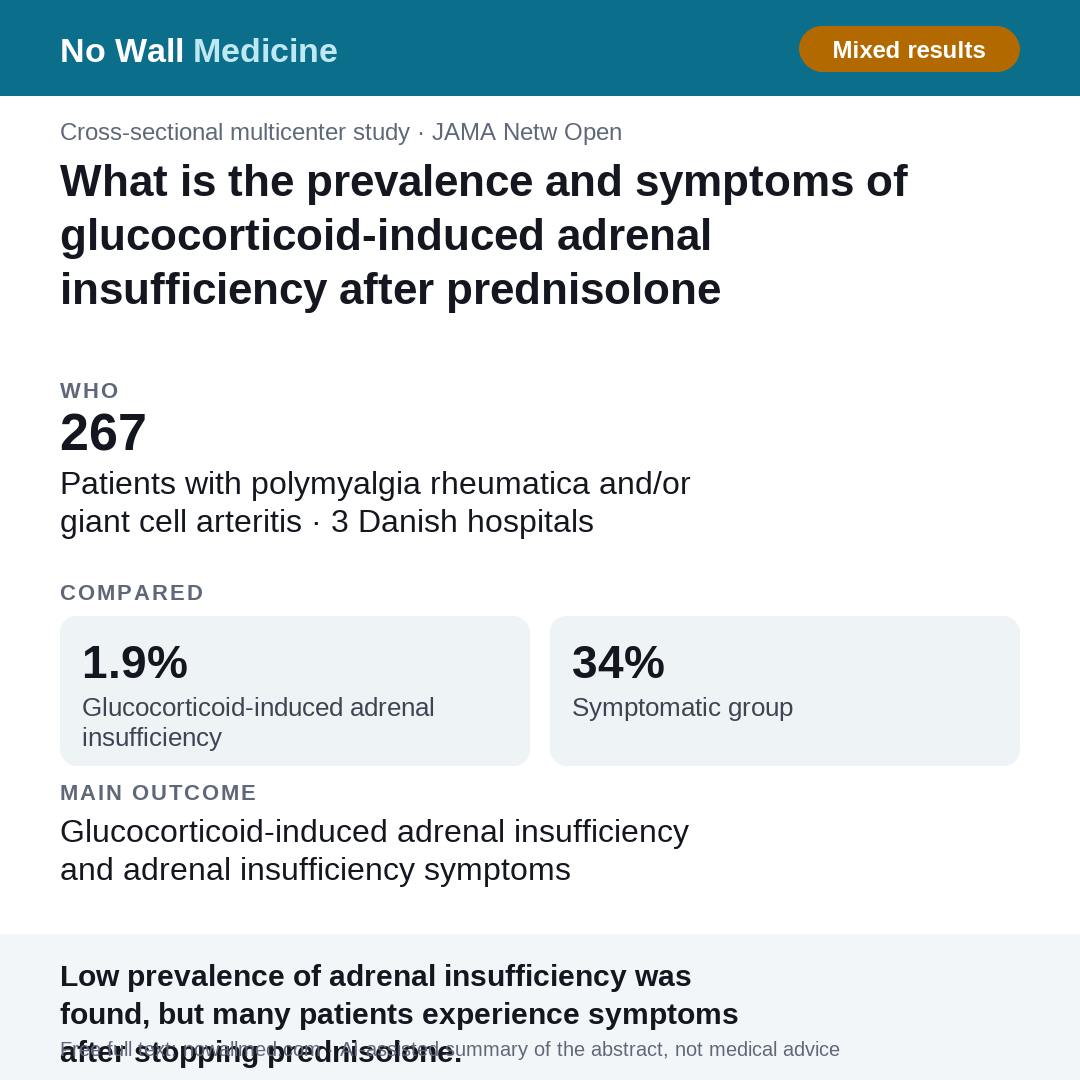
Changes in Adrenal Function and Insufficiency Symptoms After Cessation of Prednisolone
Cross-sectional multicenter studyMixed results
What is the prevalence and symptoms of glucocorticoid-induced adrenal insufficiency after prednisolone cessation?
Who
267
Patients with polymyalgia rheumatica and/or giant cell arteritis · 3 Danish hospitals
Compared
1.9%Glucocorticoid-induced adrenal insufficiency (95% CI, 0.8%-4.3%)
34%Symptomatic group (95% CI, 28%-41%)
Main outcome
Glucocorticoid-induced adrenal insufficiency and adrenal insufficiency symptoms
Bottom line: Low prevalence of adrenal insufficiency was found, but many patients experience symptoms after stopping prednisolone.
JAMA Netw Open · 2025-03-03Download image
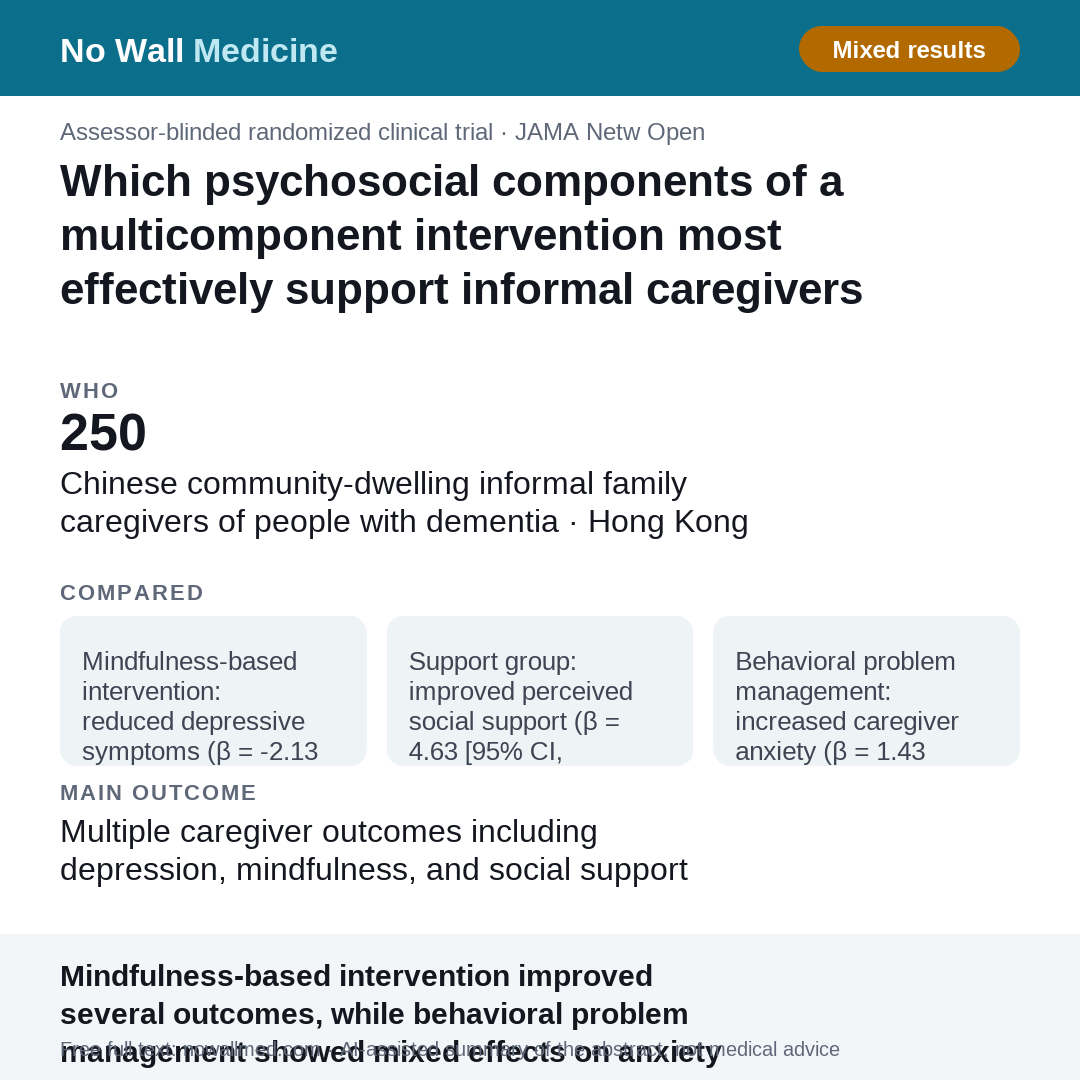
Multicomponent Intervention for Distressed Informal Caregivers of People With Dementia: A Randomized Clinical Trial
Assessor-blinded randomized clinical trialMixed results
Which psychosocial components of a multicomponent intervention most effectively support informal caregivers of people with dementia?
Who
250
Chinese community-dwelling informal family caregivers of people with dementia · Hong Kong
Compared
Mindfulness-based intervention: reduced depressive symptoms (β = -2.13 [95% CI, -2.85 to -1.38])
Support group: improved perceived social support (β = 4.63 [95% CI, 1.32-7.85])
Behavioral problem management: increased caregiver anxiety (β = 1.43 [95% CI, 0.43-2.42])
Main outcome
Multiple caregiver outcomes including depression, mindfulness, and social support
Bottom line: Mindfulness-based intervention improved several outcomes, while behavioral problem management showed mixed effects on anxiety and well-being.
JAMA Netw Open · 2025-03-03Download image
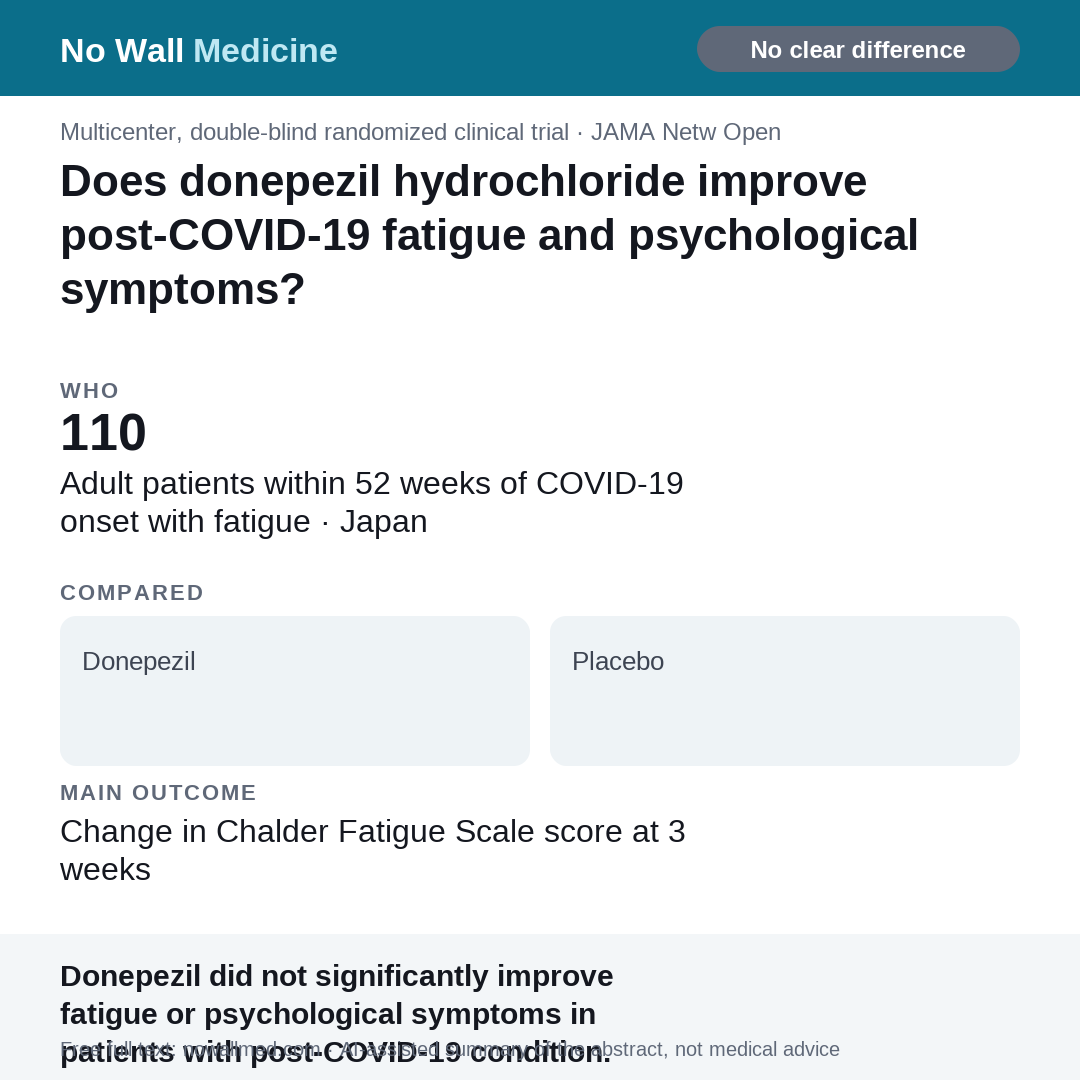
Donepezil for Fatigue and Psychological Symptoms in Post-COVID-19 Condition: A Randomized Clinical Trial
Multicenter, double-blind randomized clinical trialNo clear difference
Does donepezil hydrochloride improve post-COVID-19 fatigue and psychological symptoms?
Who
110
Adult patients within 52 weeks of COVID-19 onset with fatigue · Japan
Compared
Donepezil
Placebo
Main outcome
Change in Chalder Fatigue Scale score at 3 weeks
Result: mean difference 0.34 (95% CI, -2.23 to 2.91)
Bottom line: Donepezil did not significantly improve fatigue or psychological symptoms in patients with post-COVID-19 condition.
JAMA Netw Open · 2025-03-03Download image
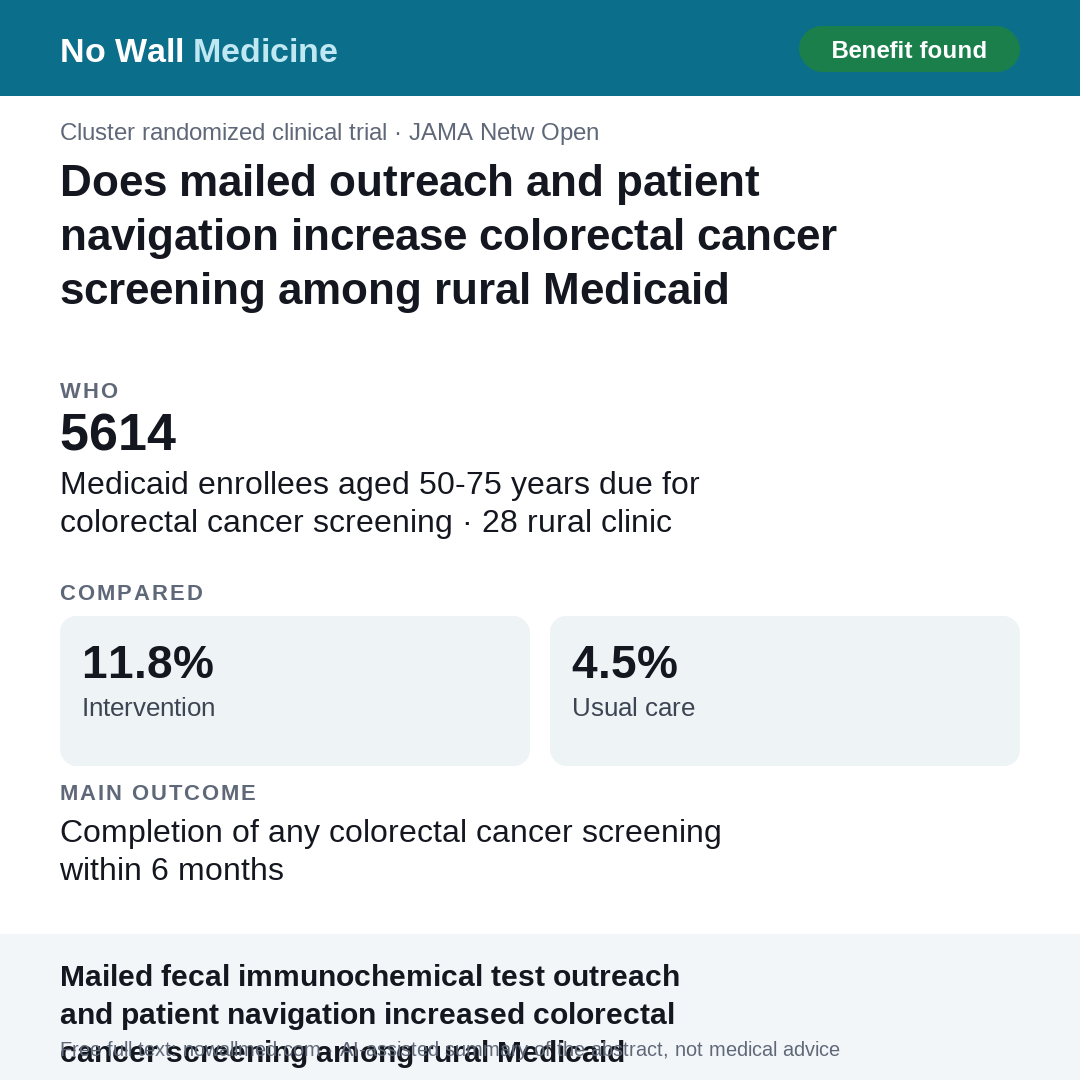
Mailed Outreach and Patient Navigation for Colorectal Cancer Screening Among Rural Medicaid Enrollees: A Cluster Randomized Clinical Trial
Cluster randomized clinical trialBenefit found
Does mailed outreach and patient navigation increase colorectal cancer screening among rural Medicaid enrollees?
Who
5614
Medicaid enrollees aged 50-75 years due for colorectal cancer screening · 28 rural clinic units in Oregon
Compared
11.8%Intervention
4.5%Usual care
Main outcome
Completion of any colorectal cancer screening within 6 months
Result: difference, 7.3 (95% CI, 5.3-9.2) percentage points
Bottom line: Mailed fecal immunochemical test outreach and patient navigation increased colorectal cancer screening among rural Medicaid enrollees.
JAMA Netw Open · 2025-03-03Download image
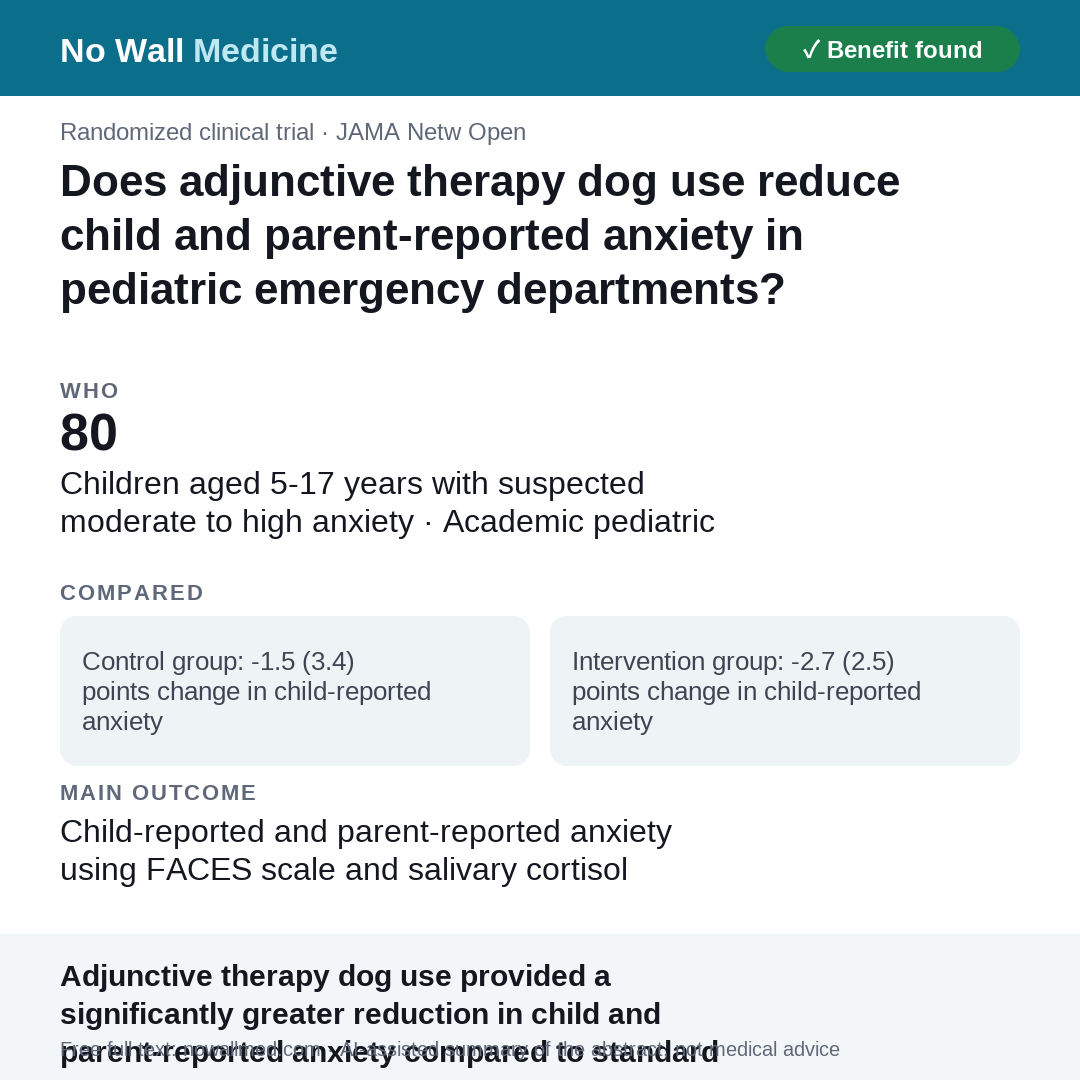
Therapy Dogs for Anxiety in Children in the Emergency Department: A Randomized Clinical Trial
Randomized clinical trialBenefit found
Does adjunctive therapy dog use reduce child and parent-reported anxiety in pediatric emergency departments?
Who
80
Children aged 5-17 years with suspected moderate to high anxiety · Academic pediatric emergency department
Compared
Control group: -1.5 (3.4) points change in child-reported anxiety
Intervention group: -2.7 (2.5) points change in child-reported anxiety
Main outcome
Child-reported and parent-reported anxiety using FACES scale and salivary cortisol
Bottom line: Adjunctive therapy dog use provided a significantly greater reduction in child and parent-reported anxiety compared to standard child-life therapy.
JAMA Netw Open · 2025-03-03Download image