Visual abstracts
New randomized trials and meta-analyses from leading journals at a glance: who was studied, what was compared, and what was found. Every paper is free to read in full.
All specialtiesCardiology 3352Oncology 2878Gastroenterology & Hepatology 1324Infectious Disease 2284Neurology 1346Psychiatry & Mental Health 1588Pulmonology 1426Critical Care 954Endocrinology & Diabetes 1708Pediatrics 2036Surgery 1794Orthopedics & Sports Medicine 611Neurosurgery 396Cardiothoracic & Vascular Surgery 390Plastic & Reconstructive Surgery 469Nephrology 720Rheumatology 525Hematology 753Dermatology 416Ophthalmology 377Obstetrics & Gynecology 1136Public & Global Health 641Radiology & Imaging 473Anesthesiology 687Urology 567ENT (Otolaryngology) 369Emergency Medicine 363Allergy & Immunology 208Geriatrics 707Family Medicine & Primary Care 389Medical Genetics & Genomics 418Pathology & Laboratory Medicine 110Physical Medicine & Rehabilitation 530Palliative Care 306Nutrition 1008Digital Health & AI 1593General Medicine 237
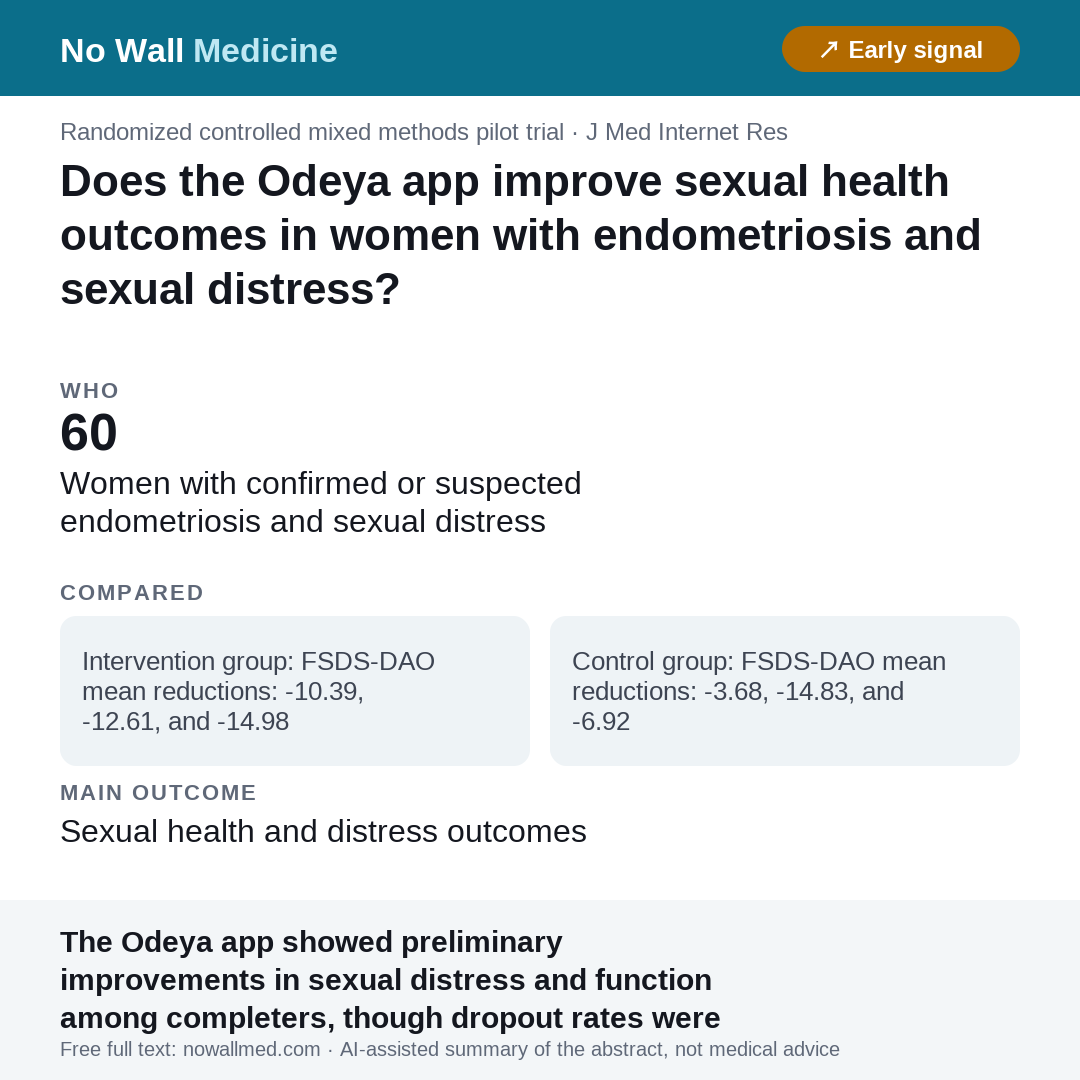
Adherence, Acceptability, and Sexual Health Outcomes of the Odeya App-Based Intervention for Sexual Distress in Women With Endometriosis: Randomized Controlled Mixed Methods Trial
Randomized controlled mixed methods pilot trialBenefit found
Does the Odeya app improve sexual health outcomes in women with endometriosis and sexual distress?
Who
60
Women with confirmed or suspected endometriosis and sexual distress
Compared
Intervention group: FSDS-DAO mean reductions: -10.39, -12.61, and -14.98
Control group: FSDS-DAO mean reductions: -3.68, -14.83, and -6.92
Main outcome
Sexual health and distress outcomes
Result: d=-0.66 at T1 and d=-0.79 at T3
Bottom line: The Odeya app showed preliminary improvements in sexual distress and function among completers, though dropout rates were high.
Limitation: Adherence and engagement were shaped by baseline psychosocial health, requiring larger confirmatory trials.
J Med Internet Res · 2026-02-19Download image
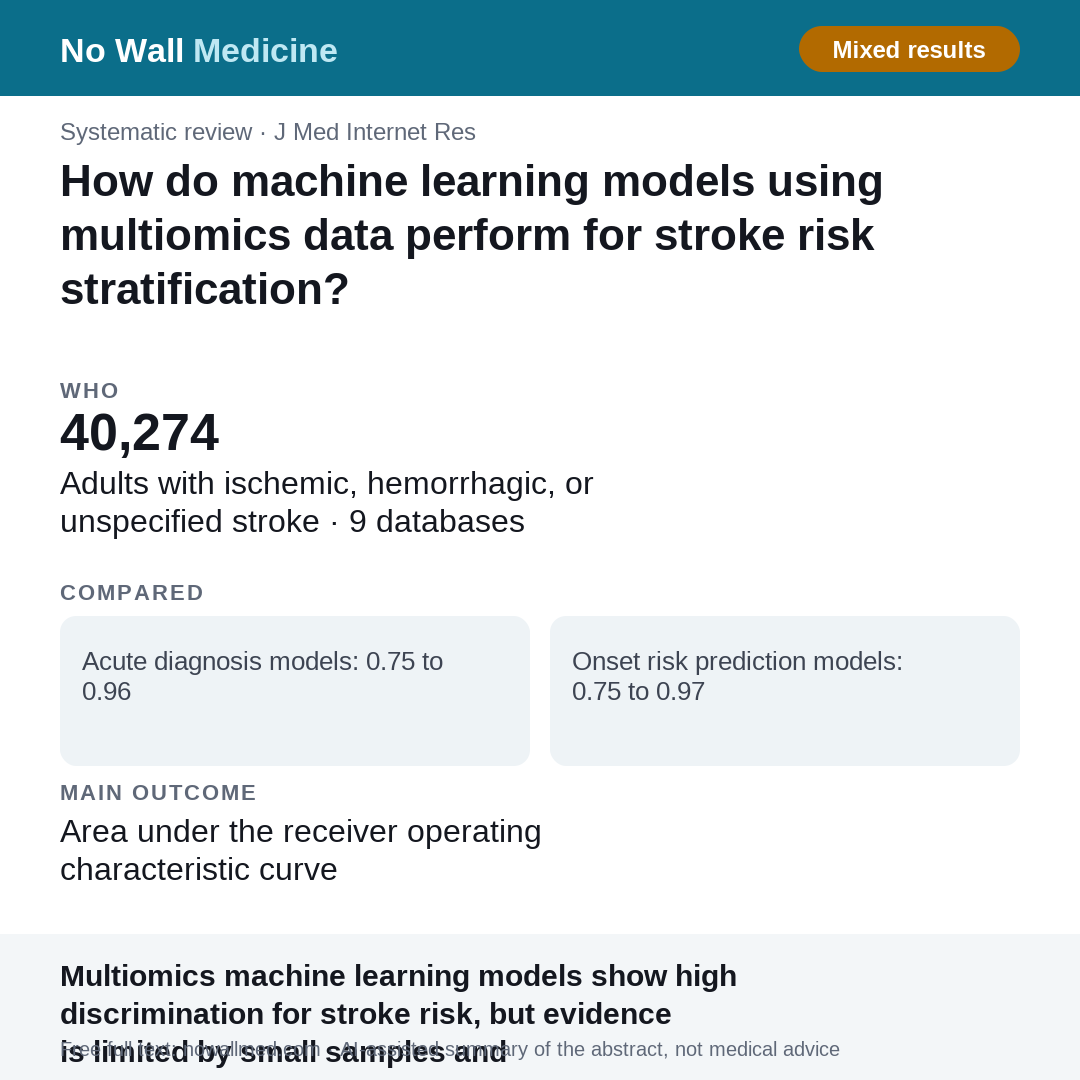
Machine Learning for Predicting Stroke Risk Stratification Using Multiomics Data: Systematic Review
Systematic reviewMixed results
How do machine learning models using multiomics data perform for stroke risk stratification?
Who
40,274
Adults with ischemic, hemorrhagic, or unspecified stroke · 9 databases
Compared
Acute diagnosis models: 0.75 to 0.96
Onset risk prediction models: 0.75 to 0.97
Main outcome
Area under the receiver operating characteristic curve
Bottom line: Multiomics machine learning models show high discrimination for stroke risk, but evidence is limited by small samples and heterogeneous designs.
Limitation: Small sample sizes, heterogeneous designs, and incomplete reporting hinder reproducibility and generalizability.
J Med Internet Res · 2026-02-19Download image
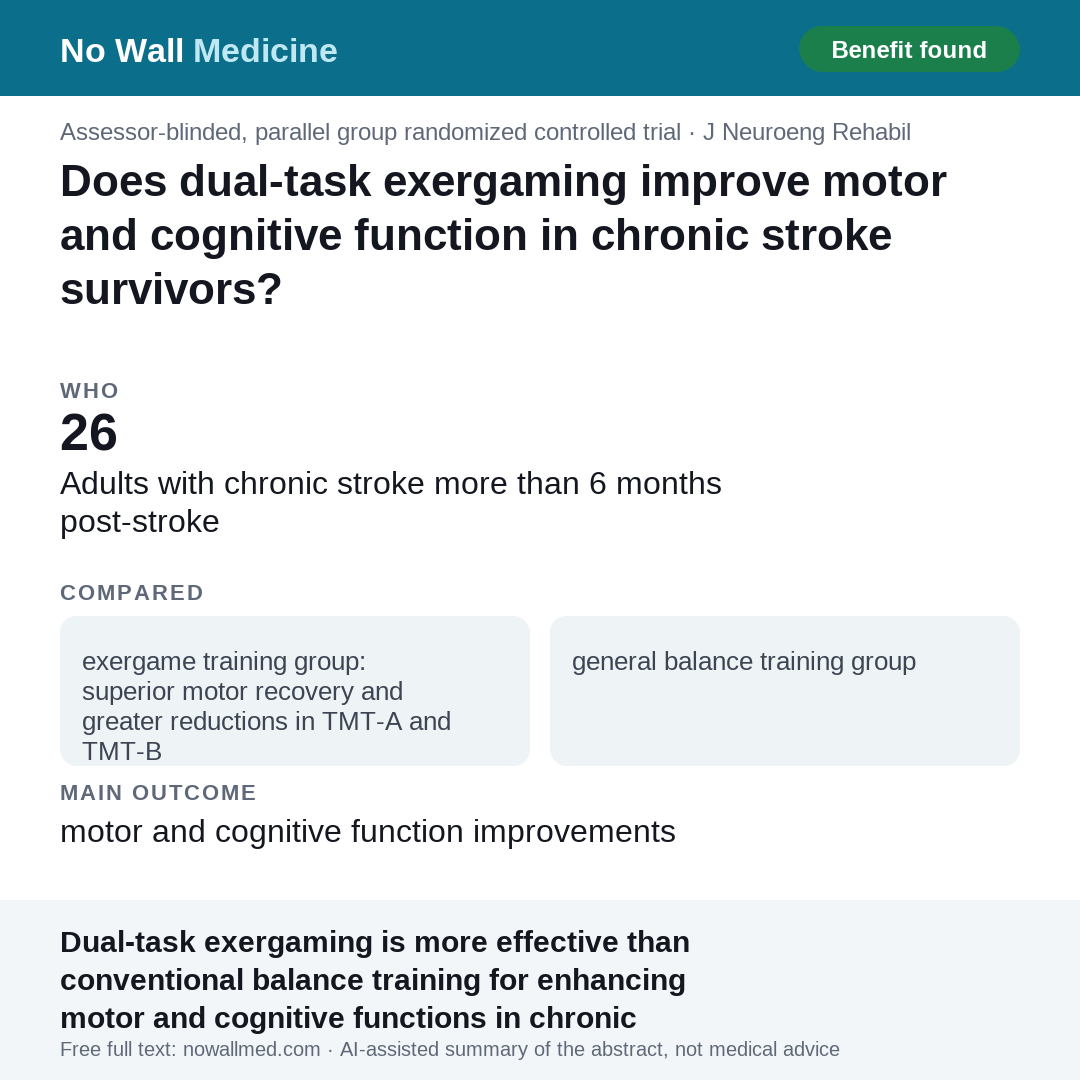
Dual‑task exergaming to enhance motor and cognitive function in chronic stroke: a prospective, assessor-blinded, parallel group randomized controlled trial
Assessor-blinded, parallel group randomized controlled trialBenefit found
Does dual-task exergaming improve motor and cognitive function in chronic stroke survivors?
Who
26
Adults with chronic stroke more than 6 months post-stroke
Compared
exergame training group: superior motor recovery and greater reductions in TMT-A and TMT-B
general balance training group
Main outcome
motor and cognitive function improvements
Bottom line: Dual-task exergaming is more effective than conventional balance training for enhancing motor and cognitive functions in chronic stroke.
J Neuroeng Rehabil · 2026-02-19Download image
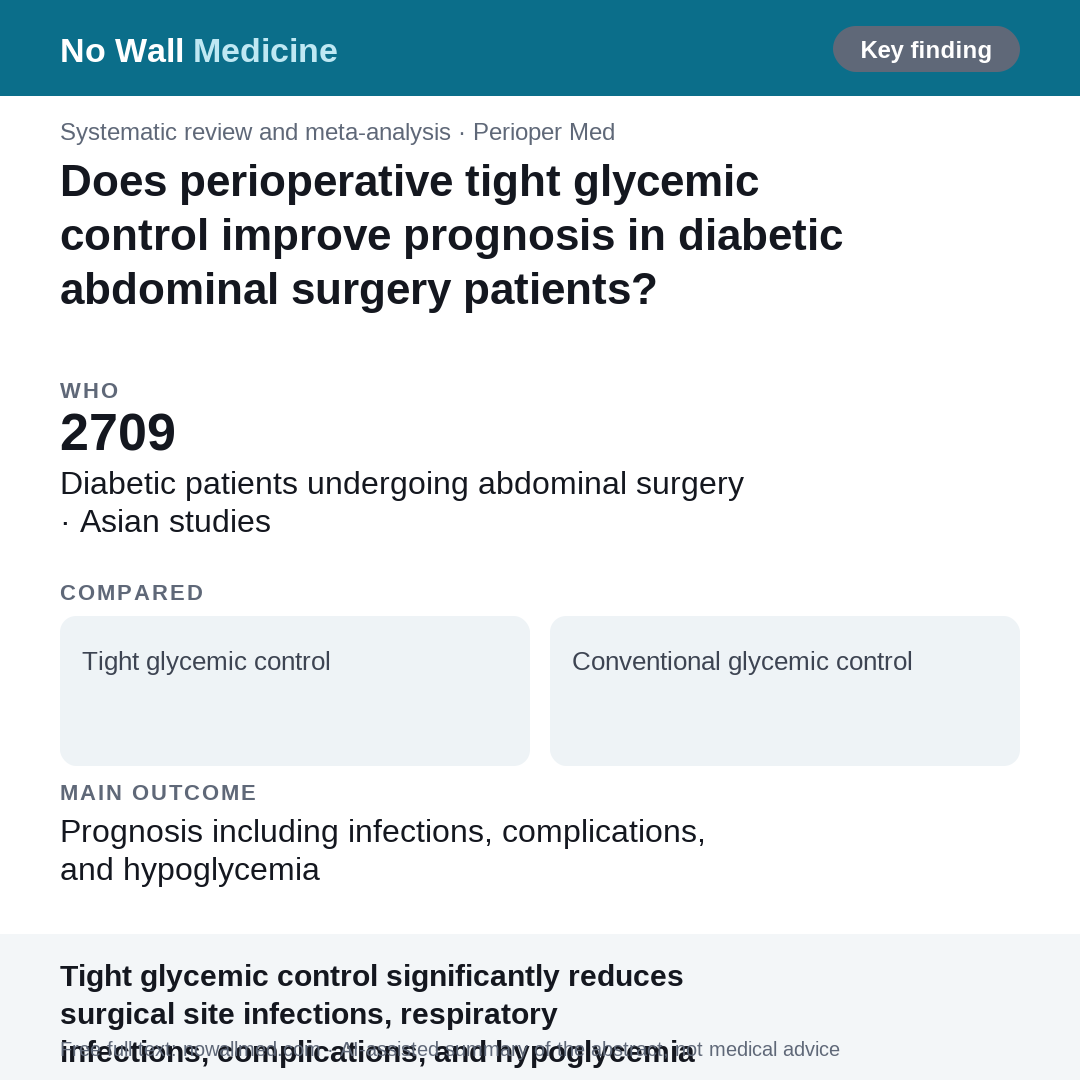
Effects of perioperative tight glycemic control on prognosis in diabetic abdominal surgery patients: a systematic review and meta-analysis
Systematic review and meta-analysisBenefit found
Does perioperative tight glycemic control improve prognosis in diabetic abdominal surgery patients?
Who
2709
Diabetic patients undergoing abdominal surgery · Asian studies
Compared
Tight glycemic control
Conventional glycemic control
Main outcome
Prognosis including infections, complications, and hypoglycemia
Bottom line: Tight glycemic control significantly reduces surgical site infections, respiratory infections, complications, and hypoglycemia in abdominal surgery patients.
Limitation: Publication bias and heterogeneity were noted for several outcomes.
Perioper Med · 2026-02-19Download image
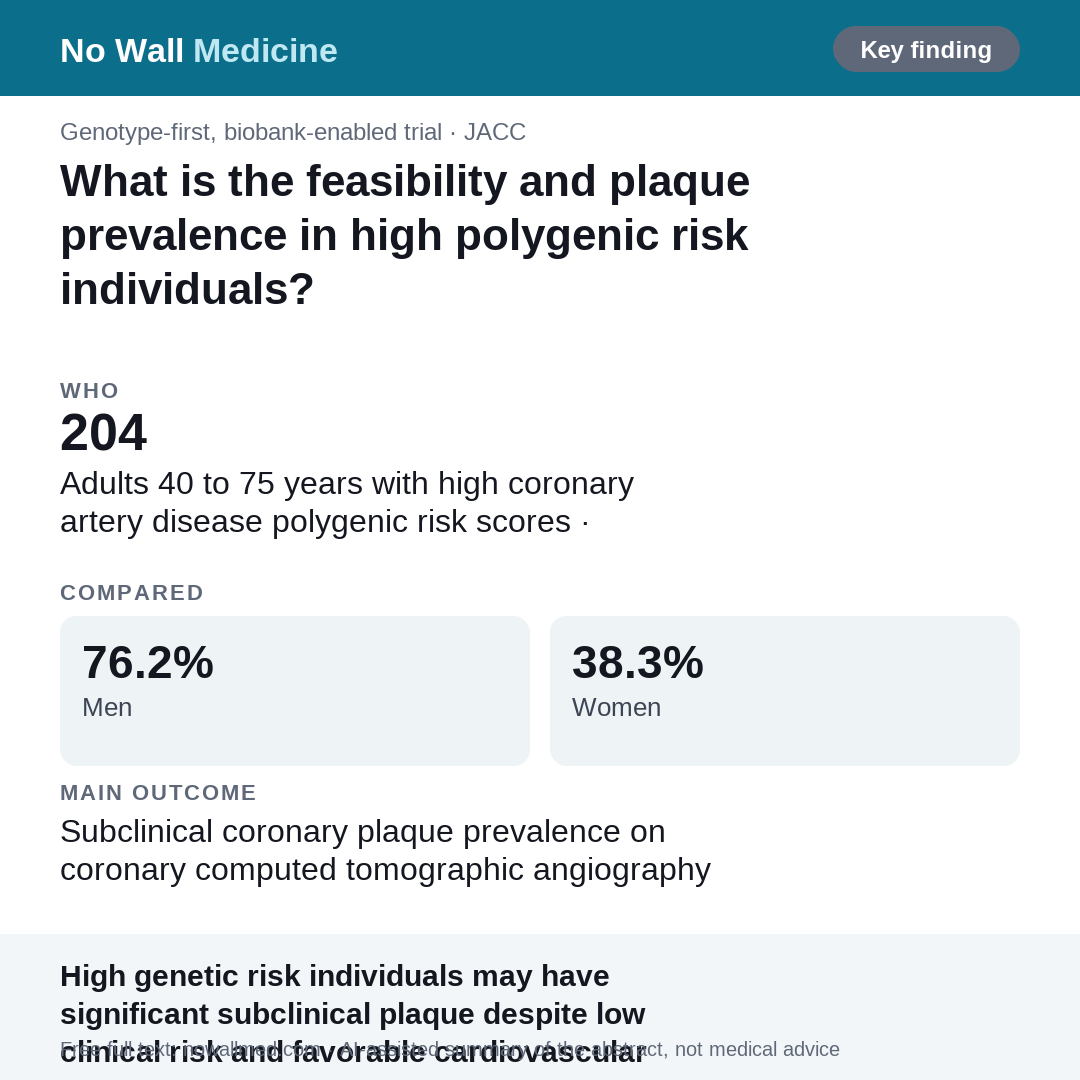
Polygenic Risk Based Detection and Treatment of Subclinical Coronary Atherosclerosis in the PROACT Clinical Trials
Genotype-first, biobank-enabled trialBenefit found
What is the feasibility and plaque prevalence in high polygenic risk individuals?
Who
204
Adults 40 to 75 years with high coronary artery disease polygenic risk scores · Hospital-based biobank
Compared
76.2%Men
38.3%Women
Main outcome
Subclinical coronary plaque prevalence on coronary computed tomographic angiography
Bottom line: High genetic risk individuals may have significant subclinical plaque despite low clinical risk and favorable cardiovascular health.
JACC · 2026-02-18Download image
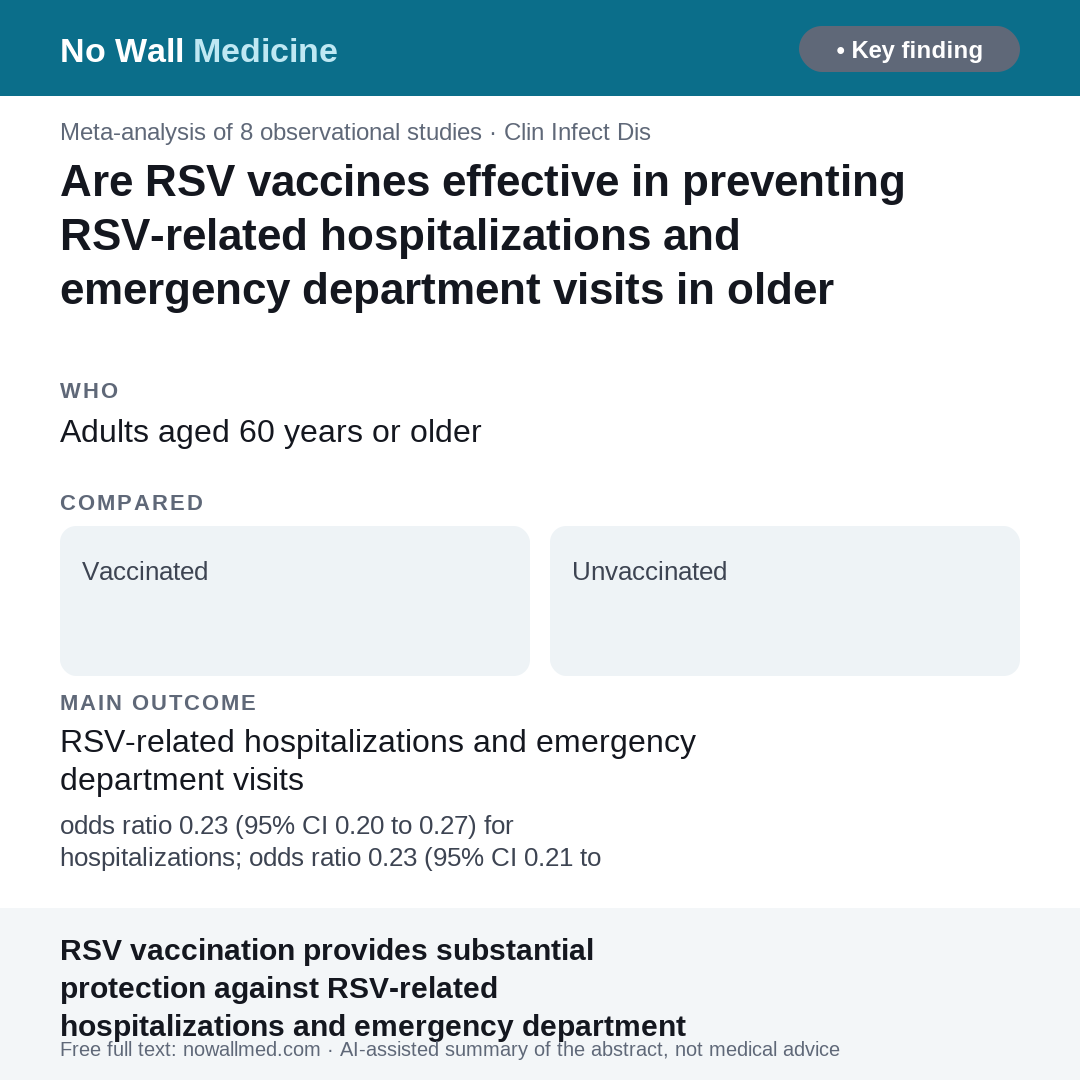
Real-World Effectiveness of RSVpreF and RSVpreF3 Vaccines in Preventing Hospitalization and Emergency Department Visits Associated With Respiratory Syncytial Virus in Older Adults: A Meta-analysis
Meta-analysis of 8 observational studiesBenefit found
Are RSV vaccines effective in preventing RSV-related hospitalizations and emergency department visits in older adults?
Who
Adults aged 60 years or older
Compared
Vaccinated
Unvaccinated
Main outcome
RSV-related hospitalizations and emergency department visits
Result: odds ratio 0.23 (95% CI 0.20 to 0.27) for hospitalizations; odds ratio 0.23 (95% CI 0.21 to 0.27) for emergency department visits
Bottom line: RSV vaccination provides substantial protection against RSV-related hospitalizations and emergency department visits among older adults.
Limitation: Continued surveillance and real-world evidence are needed to improve protection in immunocompromised individuals.
Clin Infect Dis · 2026-02-18Download image
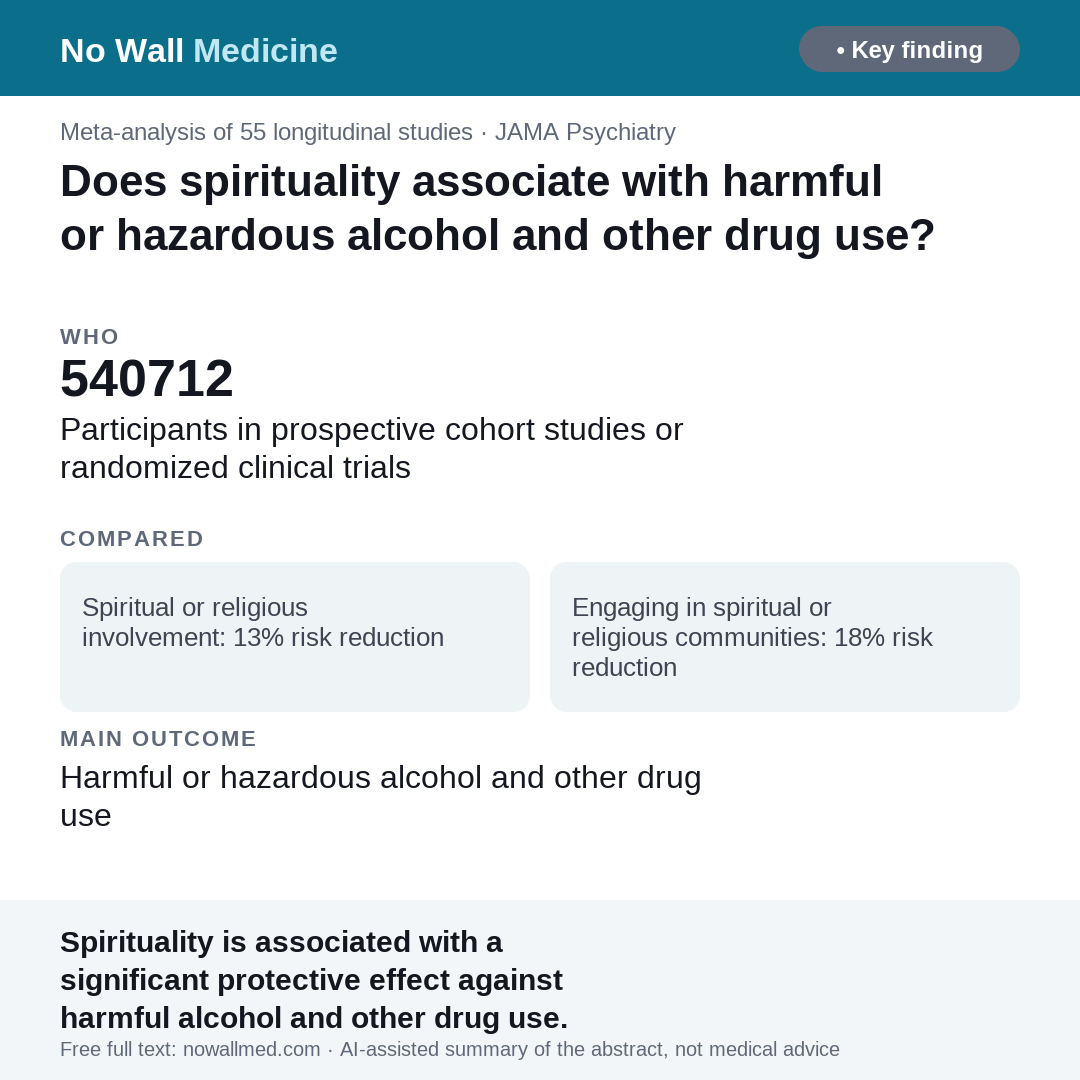
Spirituality and Harmful or Hazardous Alcohol and Other Drug Use: A Meta-Analysis of Longitudinal Studies
Meta-analysis of 55 longitudinal studiesBenefit found
Does spirituality associate with harmful or hazardous alcohol and other drug use?
Who
540712
Participants in prospective cohort studies or randomized clinical trials
Compared
Spiritual or religious involvement: 13% risk reduction
Engaging in spiritual or religious communities: 18% risk reduction
Main outcome
Harmful or hazardous alcohol and other drug use
Result: relative risk 0.87 (95% CI 0.84-0.91)
Bottom line: Spirituality is associated with a significant protective effect against harmful alcohol and other drug use.
JAMA Psychiatry · 2026-02-18Download image
Efficacy and Safety of the Neuroplastogen TSND-201 for the Treatment of PTSD: A Randomized Clinical Trial
Phase 2, multicenter, double-blind, placebo-controlled, randomized clinical trialBenefit found
Is TSND-201 effective and safe for treating adults with posttraumatic stress disorder?
Who
65
Adults aged 18 to 65 years with current posttraumatic stress disorder · 16 sites in the US, UK, and Ireland
Compared
9.64TSND-201 (90% CI, -16.48 to -2.80)
placebo
Main outcome
change from baseline to day 64 in CAPS-5 total severity score
Result: least-squares mean difference, 9.64; 90% CI, -16.48 to -2.80
Bottom line: TSND-201 demonstrated statistically significant efficacy and was well tolerated for treating posttraumatic stress disorder.
JAMA Psychiatry · 2026-02-18Download image
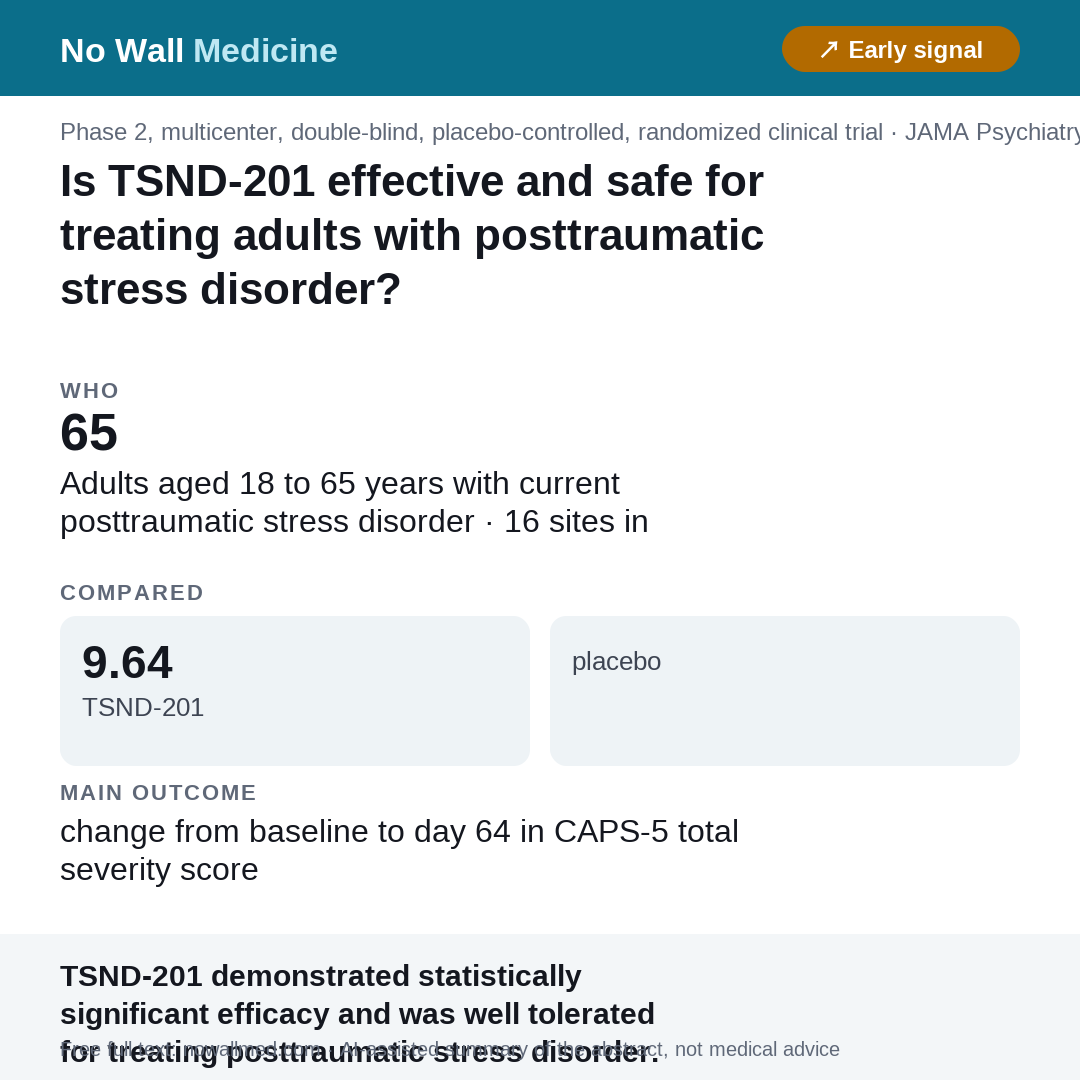
Long-Term Outcomes After Laparoscopic vs Open Adhesiolysis for Small Bowel Obstruction: The LASSO Randomized Clinical Trial
International, multicenter, parallel, open-label randomized clinical trialNo clear difference
Are long-term outcomes better with laparoscopic versus open adhesiolysis for small bowel obstruction?
Who
100
Patients with clinical and radiological signs of adhesive small bowel obstruction · 8 hospitals in Finland and Italy
Compared
Open surgery: 9.7% recurrent small bowel obstruction within 5 years
Laparoscopic surgery: 12.5% recurrent small bowel obstruction within 5 years
Main outcome
Small bowel obstruction recurrence, incisional hernia, and quality of life
Result: odds ratio 1.33 (95% CI 0.27-6.51)
Bottom line: Laparoscopic adhesiolysis was not superior to open surgery for long-term small bowel obstruction recurrence, incisional hernia, or quality of life.
JAMA Surg · 2026-02-18Download image
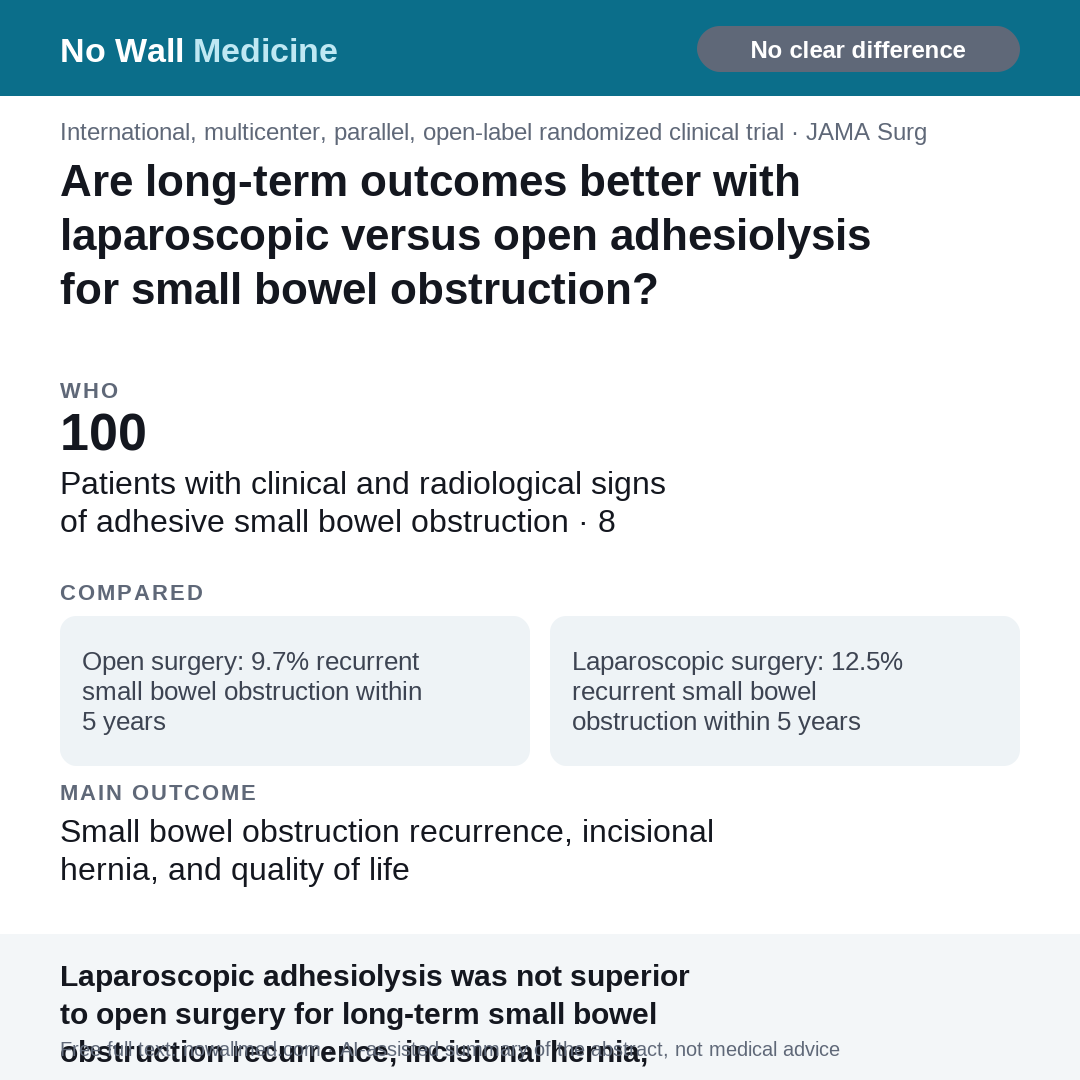
Dupilumab in Patients With Chronic Spontaneous Urticaria: Phase 3 LIBERTY-CSU CUPID Randomized Clinical Trials
Randomized, placebo-controlled, double-blind, 24-week phase 3 trialBenefit found
Is dupilumab effective versus placebo in anti-immunoglobulin E-naive patients with chronic spontaneous urticaria?
Who
151
Anti-immunoglobulin E-naive patients with chronic spontaneous urticaria uncontrolled with histamine 1-receptor antagonists · 10 countries in Asia, Europe, and North and South America
Compared
Dupilumab: -8.64 (1.41) ISS7 change
Placebo: -6.10 (1.40) ISS7 change
Main outcome
Change from baseline at week 24 in Itch Severity Score and Urticaria Activity Score
Result: difference in ISS7 -2.54 points (95% CI -4.65 to -0.43); difference in UAS7 -4.65 points (95% CI -8.65 to -0.65)
Bottom line: Dupilumab significantly reduced itch and hives severity in patients with chronic spontaneous urticaria uncontrolled by histamine 1-receptor antagonists.
JAMA Dermatol · 2026-02-18Download image
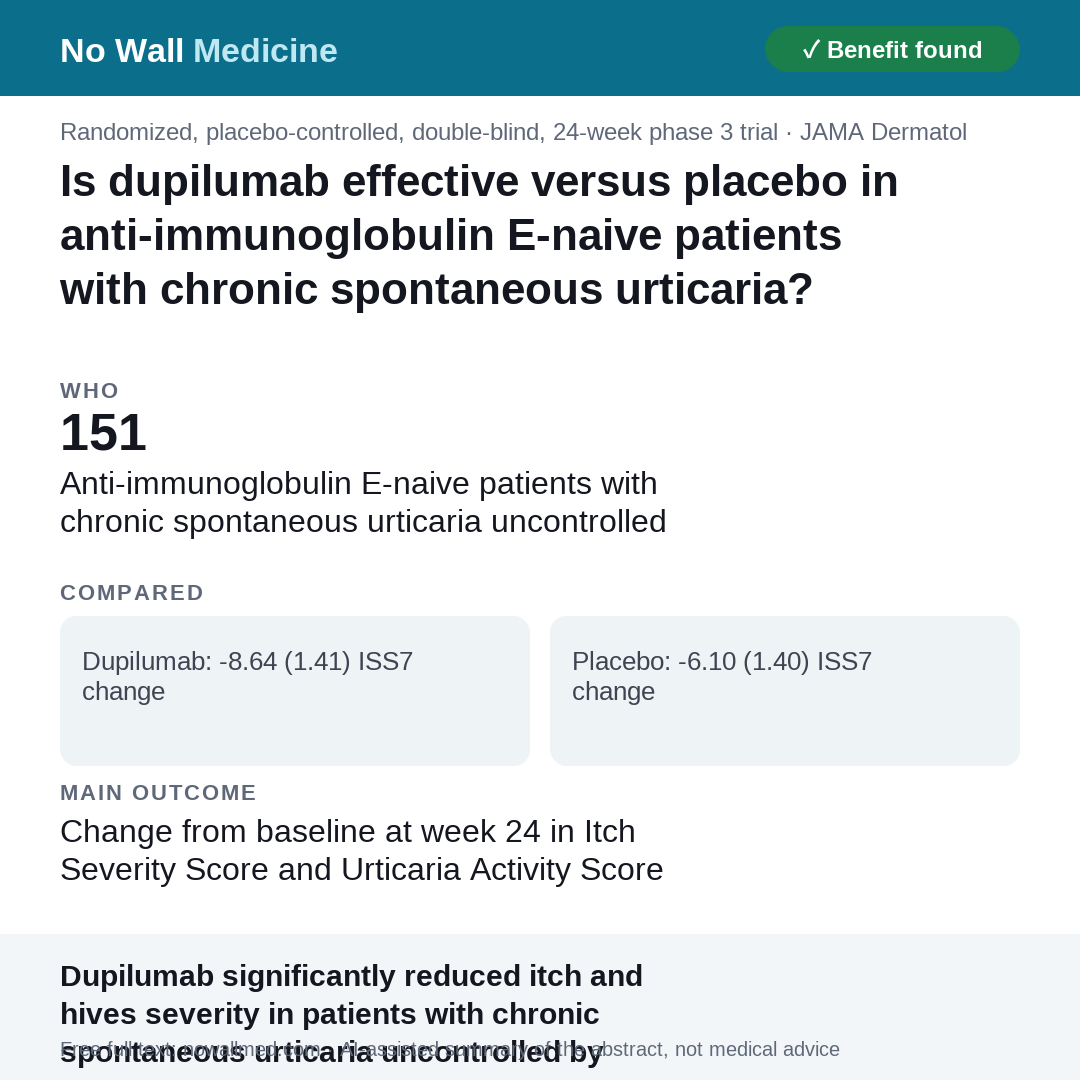
Coronary Plaque Progression After Androgen Deprivation Therapy in Men With Prostate Cancer: A Randomized Clinical Trial
Open-label randomized clinical trialHarm found
Does androgen deprivation therapy cause more coronary plaque progression with agonists versus antagonists?
Who
62
Men with nonmetastatic prostate cancer receiving pelvic radiotherapy · 4 centers in Atlanta, Georgia
Compared
GnRH agonist leuprolide
GnRH antagonist relugolix
Main outcome
change in coronary artery total plaque volume
Result: estimated difference, +68.9 mm3; 95% CI, 23.2-114.5 mm3
Bottom line: In men with prostate cancer, the GnRH agonist leuprolide was associated with greater coronary plaque progression than the antagonist relugolix.
JAMA Cardiol · 2026-02-18Download image
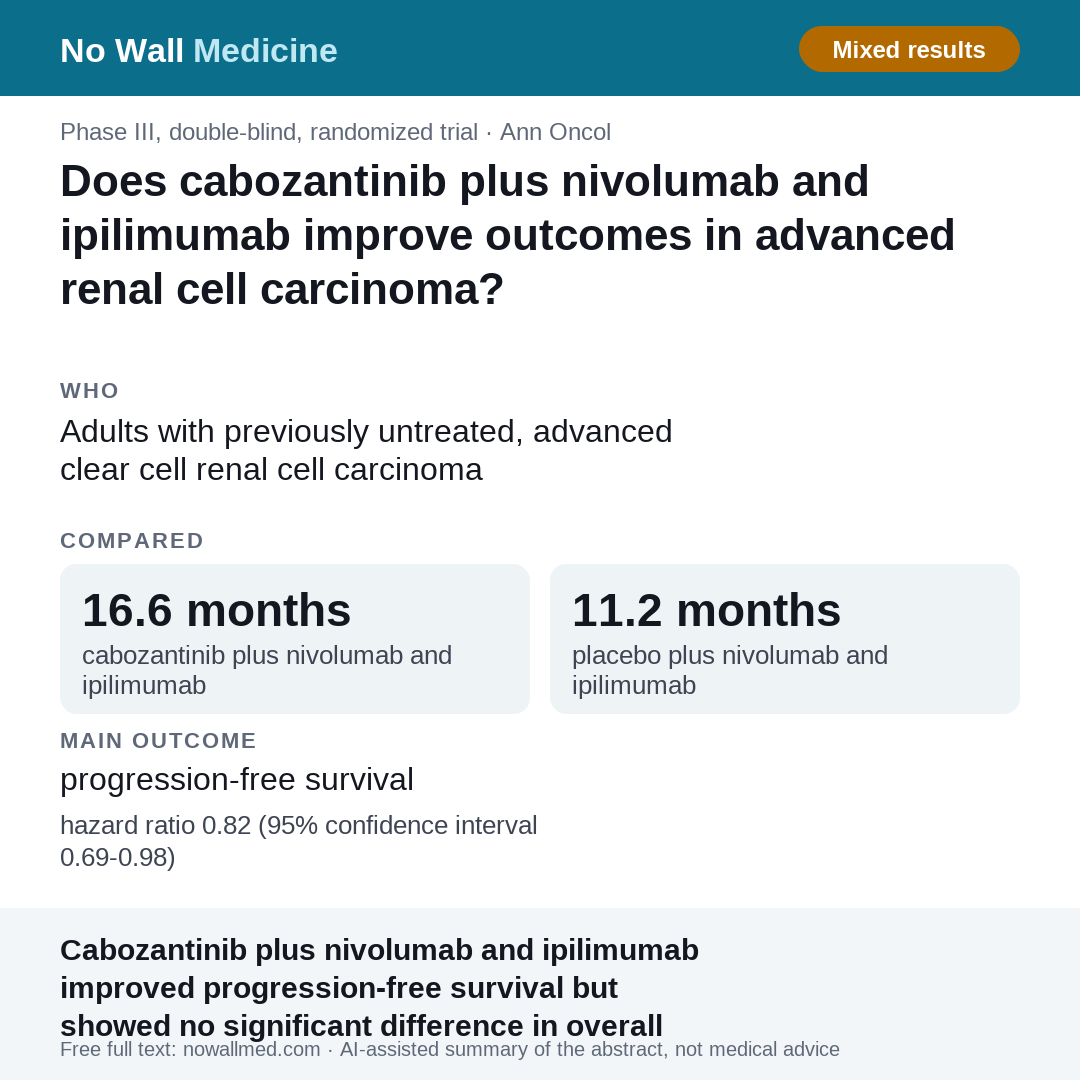
Cabozantinib plus nivolumab and ipilimumab in previously untreated, advanced renal cell carcinoma: final results and biomarker analyses from the phase III COSMIC-313 study
Phase III, double-blind, randomized trialMixed results
Does cabozantinib plus nivolumab and ipilimumab improve outcomes in advanced renal cell carcinoma?
Who
Adults with previously untreated, advanced clear cell renal cell carcinoma
Compared
16.6 monthscabozantinib plus nivolumab and ipilimumab
11.2 monthsplacebo plus nivolumab and ipilimumab
Main outcome
progression-free survival
Result: hazard ratio 0.82 (95% confidence interval 0.69-0.98)
Bottom line: Cabozantinib plus nivolumab and ipilimumab improved progression-free survival but showed no significant difference in overall survival.
Ann Oncol · 2026-02-18Download image
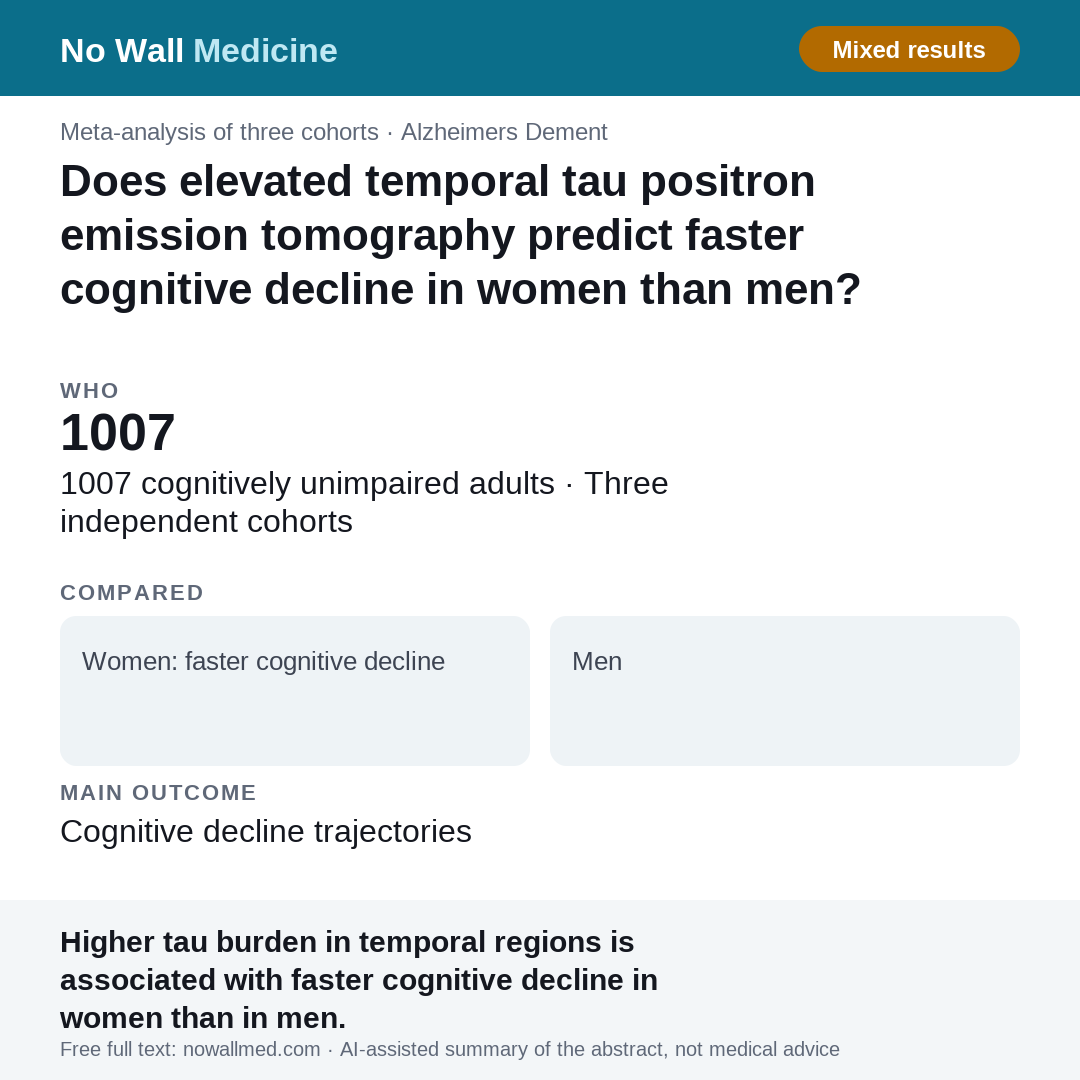
Elevated temporal tau PET predicts faster cognitive decline in women than men: A meta-analysis
Meta-analysis of three cohortsMixed results
Does elevated temporal tau positron emission tomography predict faster cognitive decline in women than men?
Who
1007
1007 cognitively unimpaired adults · Three independent cohorts
Compared
Women: faster cognitive decline
Men
Main outcome
Cognitive decline trajectories
Bottom line: Higher tau burden in temporal regions is associated with faster cognitive decline in women than in men.
Alzheimers Dement · 2026-02-18Download image
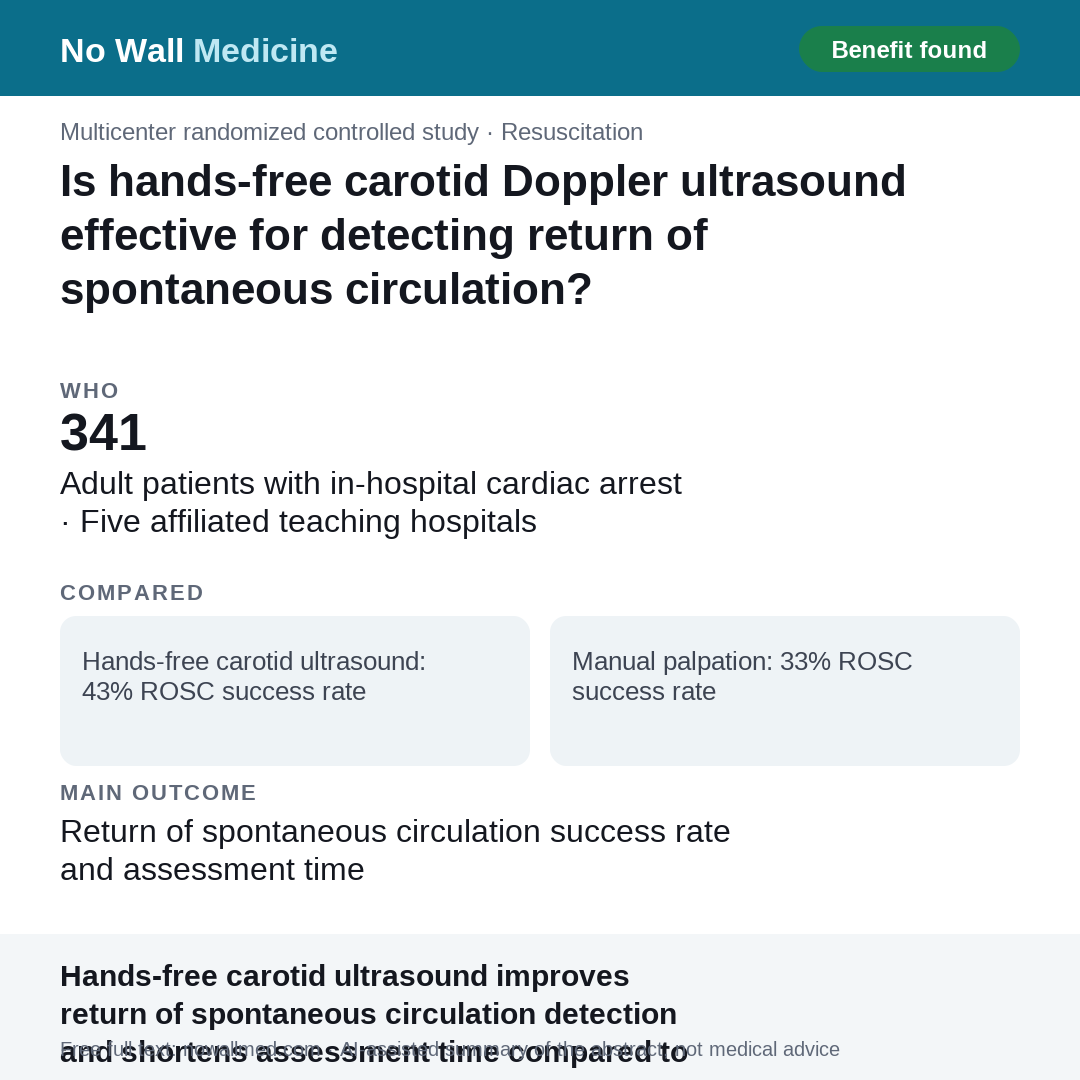
Evaluating hands-free carotid Doppler ultrasound for real-time return of spontaneous circulation detection in in-hospital cardiac arrest: a multicenter randomized controlled study
Multicenter randomized controlled studyBenefit found
Is hands-free carotid Doppler ultrasound effective for detecting return of spontaneous circulation?
Who
341
Adult patients with in-hospital cardiac arrest · Five affiliated teaching hospitals
Compared
Hands-free carotid ultrasound: 43% ROSC success rate
Manual palpation: 33% ROSC success rate
Main outcome
Return of spontaneous circulation success rate and assessment time
Bottom line: Hands-free carotid ultrasound improves return of spontaneous circulation detection and shortens assessment time compared to manual palpation.
Resuscitation · 2026-02-18Download image
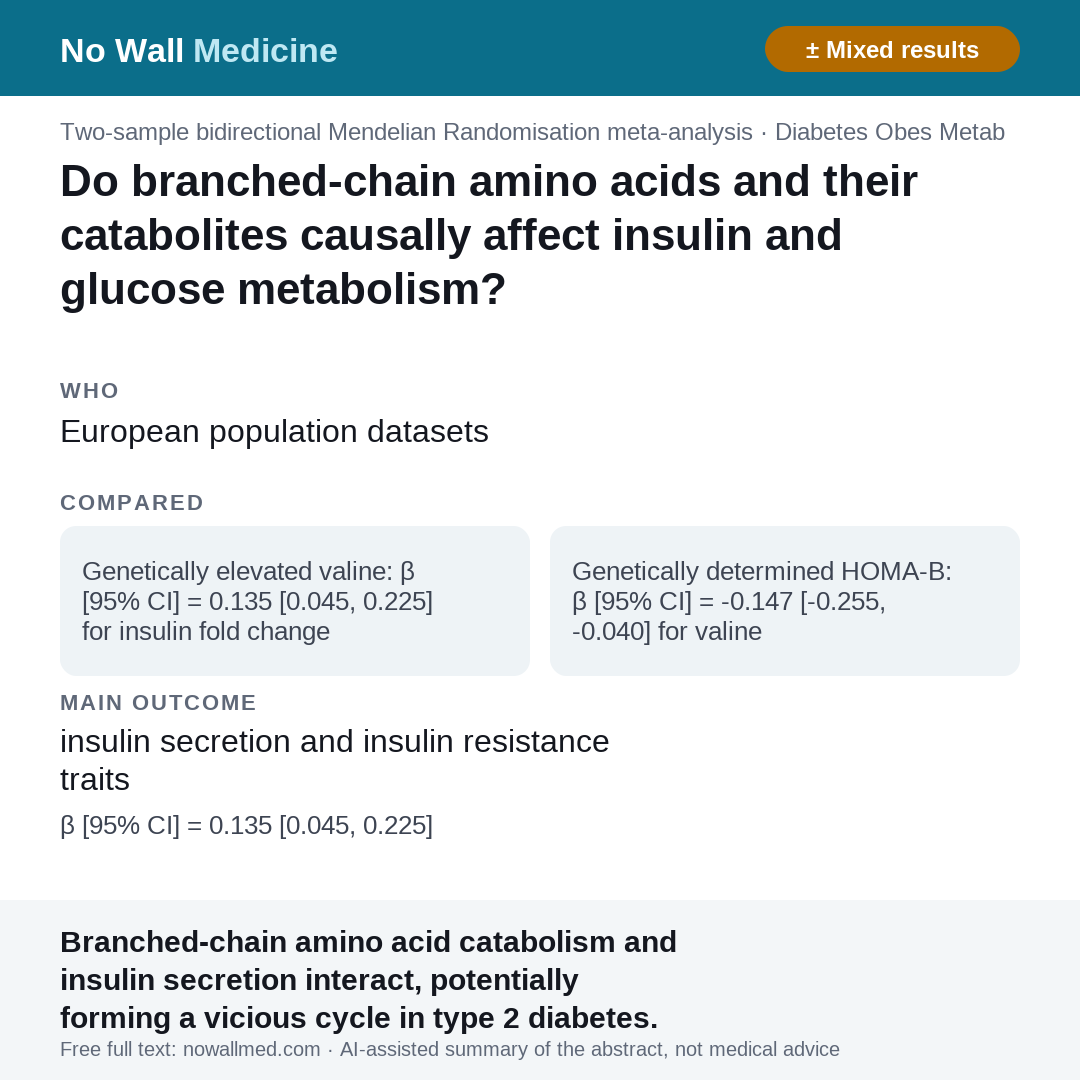
Causal role of genetically predicted impairment of branched-chain amino acid catabolism on insulin secretion and insulin resistance in type 2 diabetes
Two-sample bidirectional Mendelian Randomisation meta-analysisMixed results
Do branched-chain amino acids and their catabolites causally affect insulin and glucose metabolism?
Who
European population datasets
Compared
Genetically elevated valine: β [95% CI] = 0.135 [0.045, 0.225] for insulin fold change
Genetically determined HOMA-B: β [95% CI] = -0.147 [-0.255, -0.040] for valine
Main outcome
insulin secretion and insulin resistance traits
Result: β [95% CI] = 0.135 [0.045, 0.225]
Bottom line: Branched-chain amino acid catabolism and insulin secretion interact, potentially forming a vicious cycle in type 2 diabetes.
Diabetes Obes Metab · 2026-02-18Download image
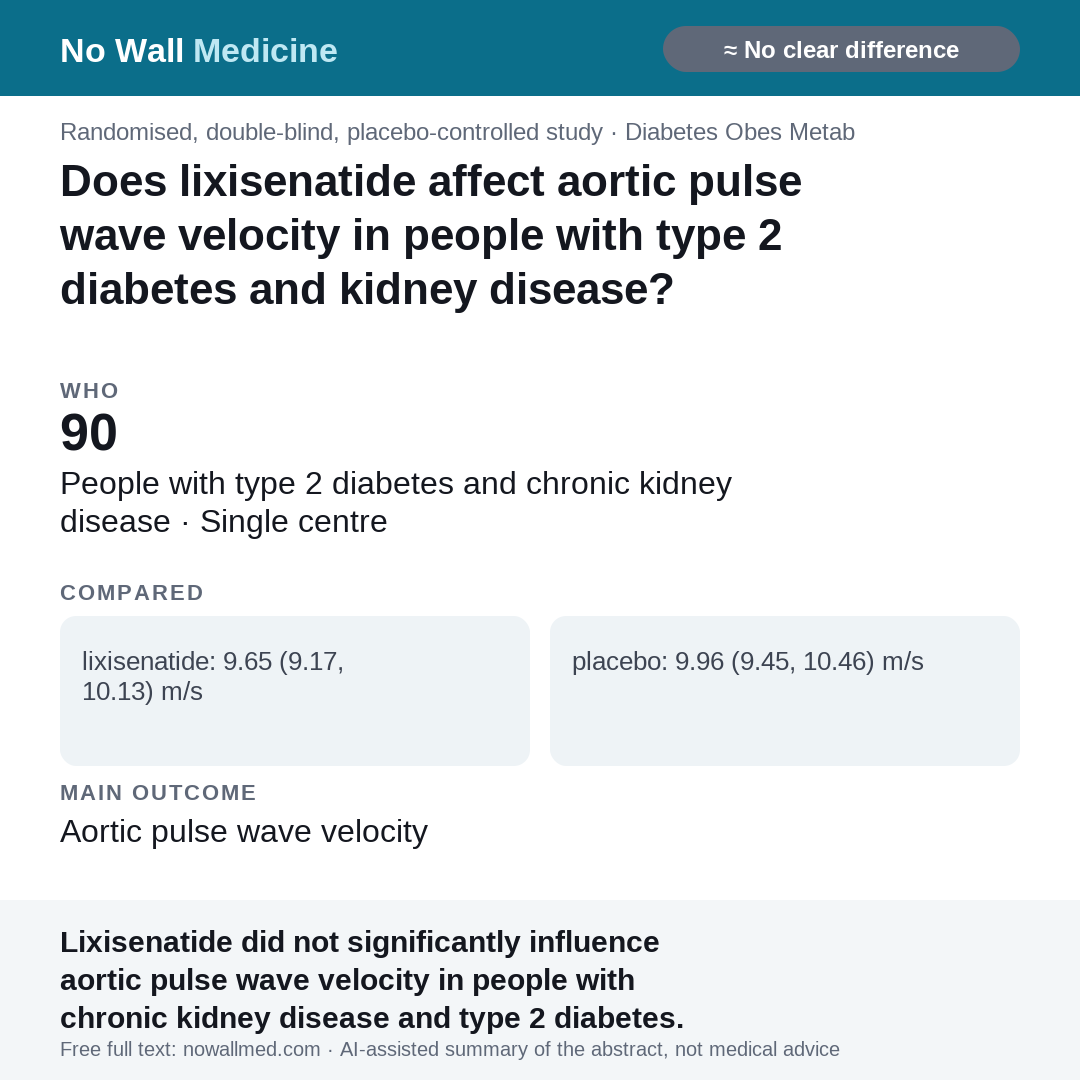
Effect of lixisenatide on arterial stiffness in people with type 2 diabetes and kidney disease: Results of a randomised controlled trial
Randomised, double-blind, placebo-controlled studyNo clear difference
Does lixisenatide affect aortic pulse wave velocity in people with type 2 diabetes and kidney disease?
Who
90
People with type 2 diabetes and chronic kidney disease · Single centre
Compared
lixisenatide: 9.65 (9.17, 10.13) m/s
placebo: 9.96 (9.45, 10.46) m/s
Main outcome
Aortic pulse wave velocity
Bottom line: Lixisenatide did not significantly influence aortic pulse wave velocity in people with chronic kidney disease and type 2 diabetes.
Diabetes Obes Metab · 2026-02-18Download image
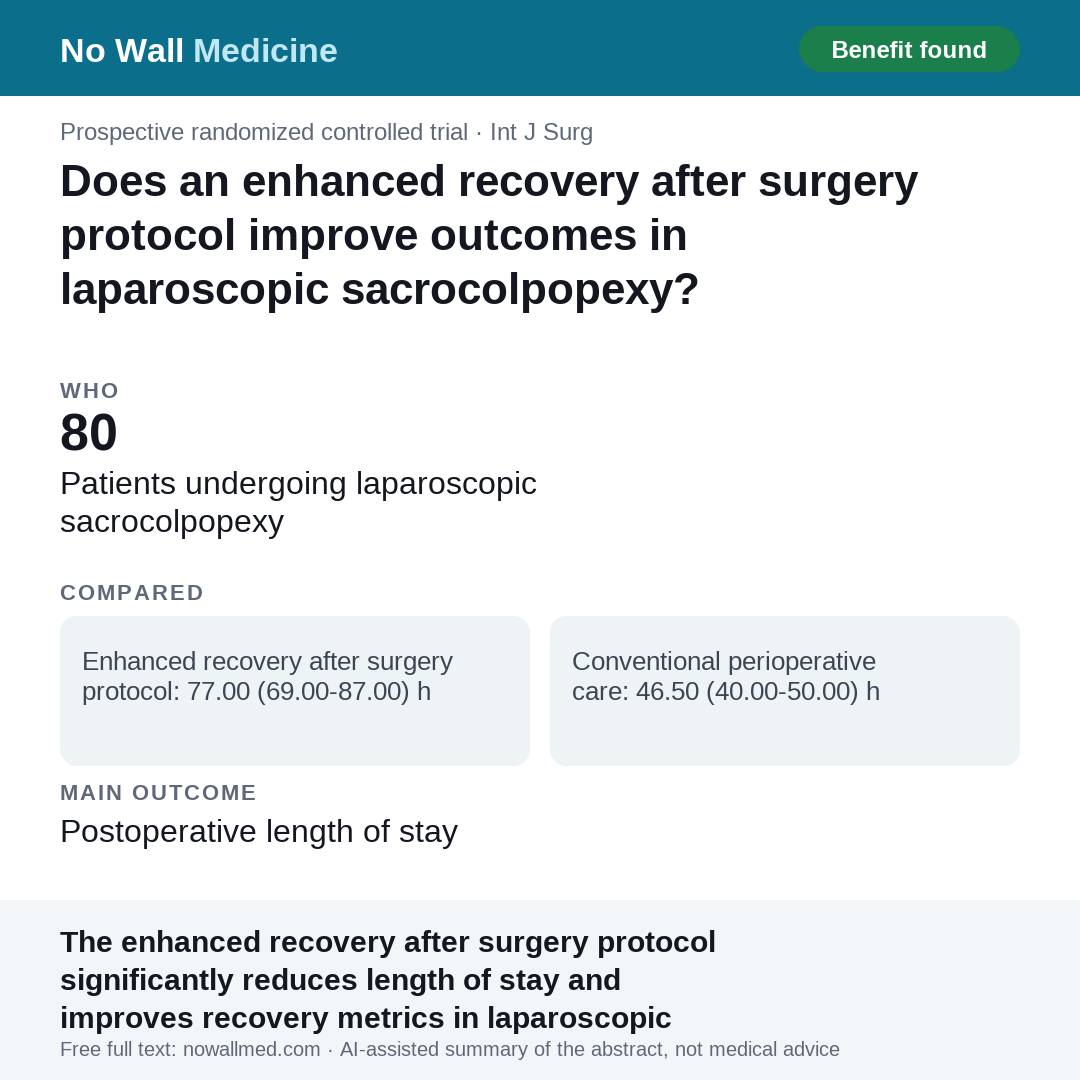
The effect of enhanced recovery after surgery in laparoscopic sacrocolpopexy: a randomized controlled trial
Prospective randomized controlled trialBenefit found
Does an enhanced recovery after surgery protocol improve outcomes in laparoscopic sacrocolpopexy?
Who
80
Patients undergoing laparoscopic sacrocolpopexy
Compared
Enhanced recovery after surgery protocol: 77.00 (69.00-87.00) h
Conventional perioperative care: 46.50 (40.00-50.00) h
Main outcome
Postoperative length of stay
Result: median difference: 31.00 h, 95% CI: 26.00-36.00
Bottom line: The enhanced recovery after surgery protocol significantly reduces length of stay and improves recovery metrics in laparoscopic sacrocolpopexy.
Int J Surg · 2026-02-18Download image
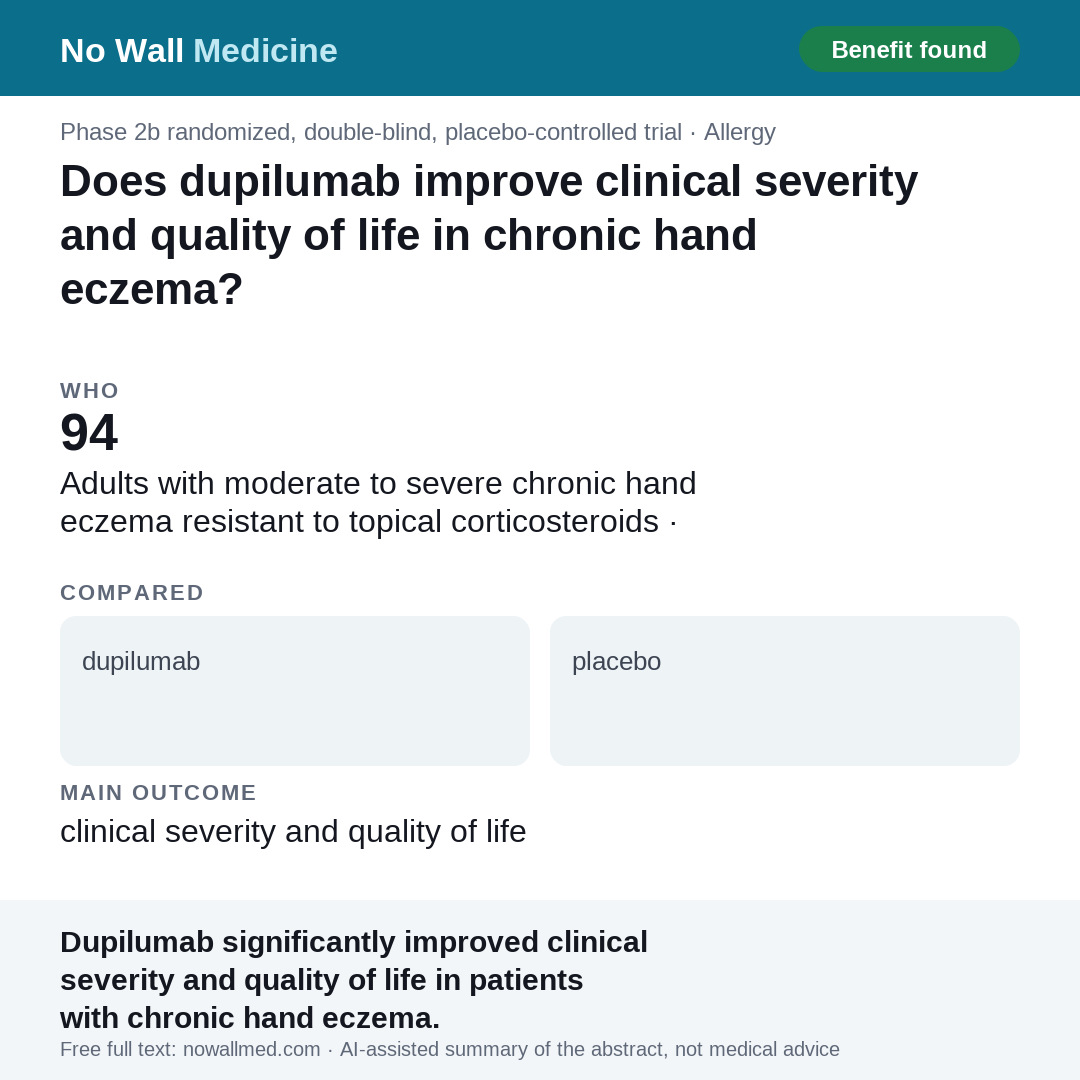
Integrated Clinical Trial and Molecular Profiling Reveals Immune Drivers of Chronic Hand Eczema
Phase 2b randomized, double-blind, placebo-controlled trialBenefit found
Does dupilumab improve clinical severity and quality of life in chronic hand eczema?
Who
94
Adults with moderate to severe chronic hand eczema resistant to topical corticosteroids · multicenter
Compared
dupilumab
placebo
Main outcome
clinical severity and quality of life
Bottom line: Dupilumab significantly improved clinical severity and quality of life in patients with chronic hand eczema.
Allergy · 2026-02-18Download image
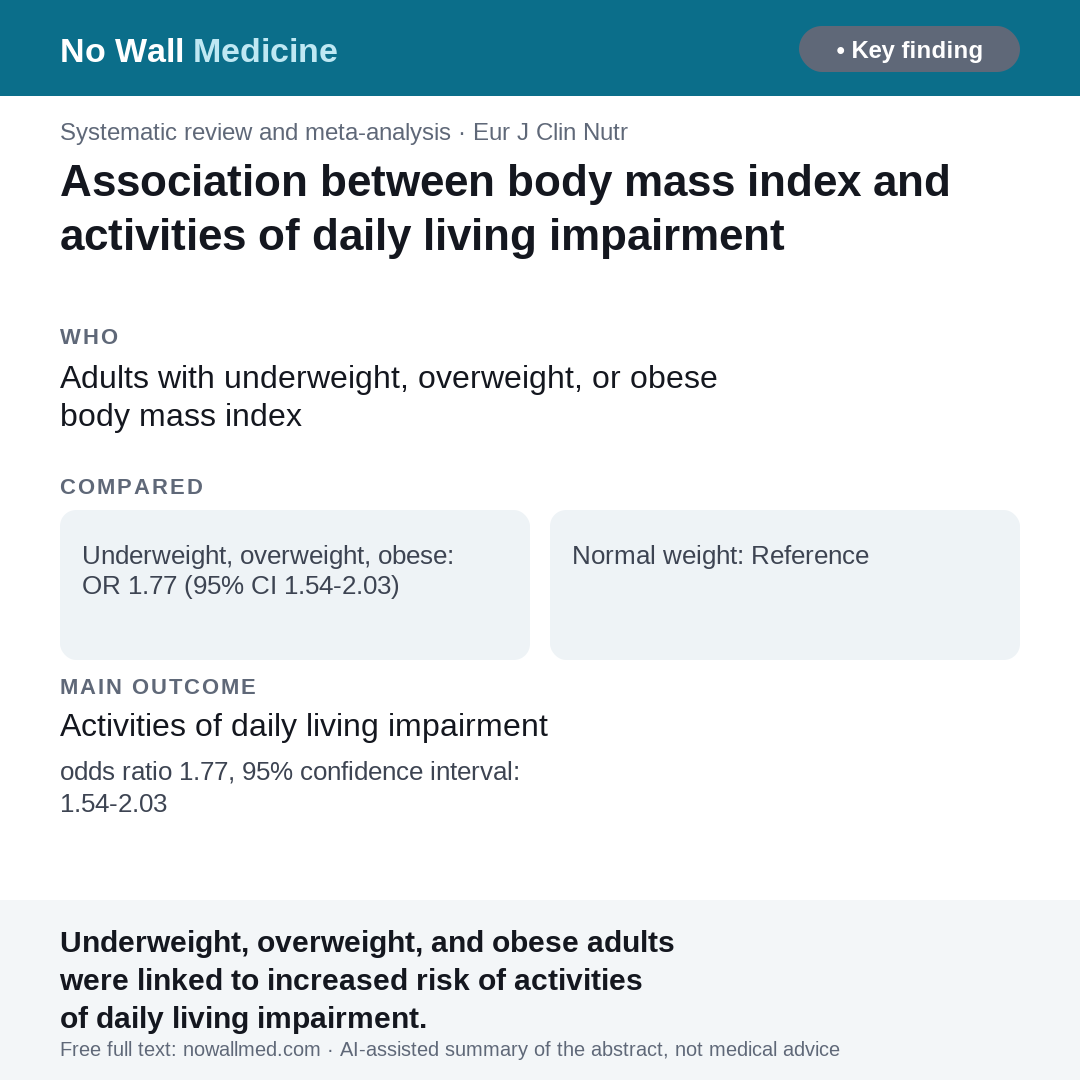
Body mass index and activities of daily living impairment: systematic review and meta-analysis
Systematic review and meta-analysisHarm found
How does body mass index relate to activities of daily living impairment in adults?
Who
Adults
Compared
Underweight: OR 1.20 (95% CI 1.02-1.42) in longitudinal studies
Overweight: OR 1.19 (95% CI 1.09-1.30) in longitudinal studies
Obese: OR 1.77 (95% CI 1.54-2.03) in longitudinal studies
Main outcome
Activities of daily living impairment
Result: OR 1.77 (95% CI 1.54-2.03) for longitudinal studies
Bottom line: Underweight, overweight, and obese individuals are at increased risk of activities of daily living impairment.
Eur J Clin Nutr · 2026-02-18Download image
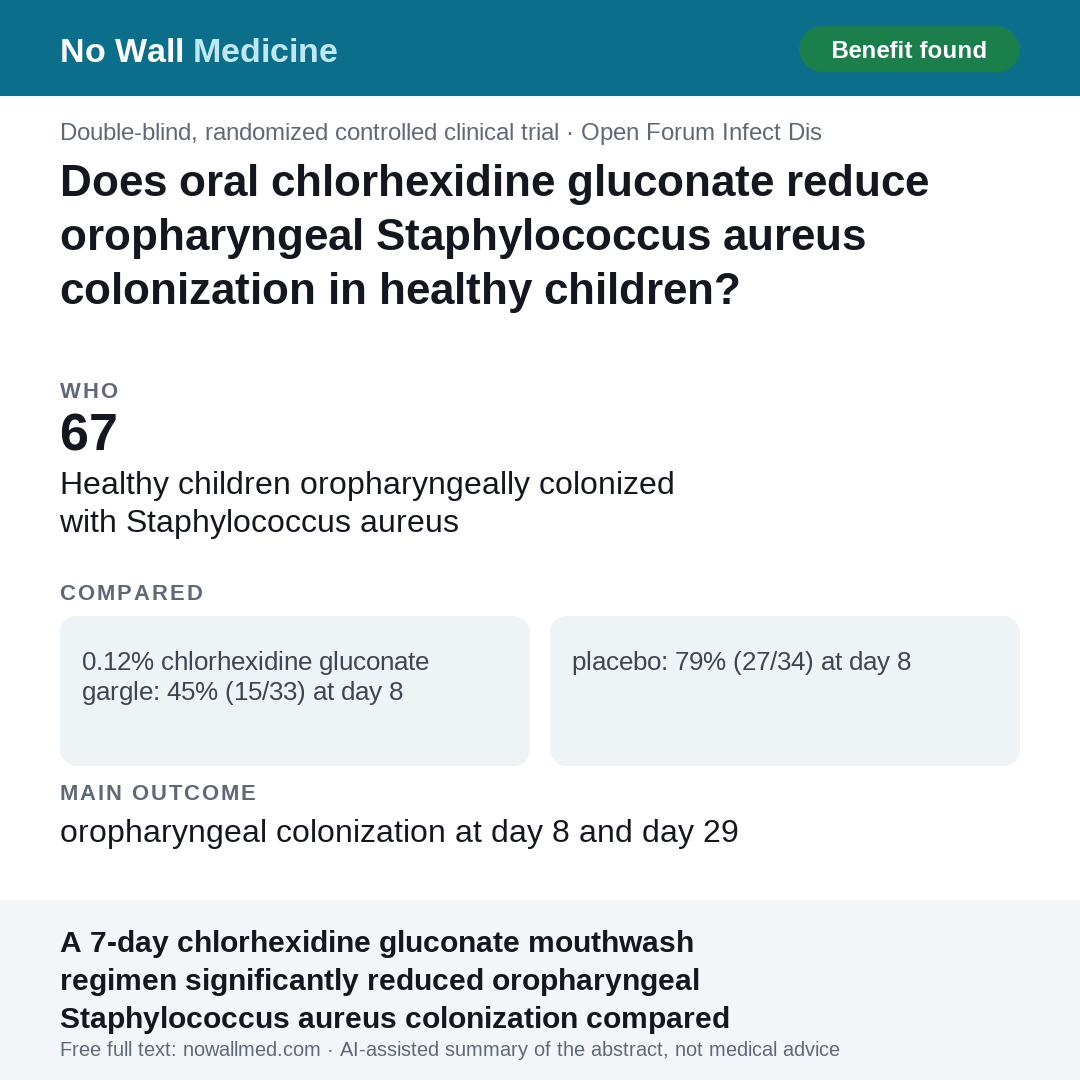
A Double-blind Randomized Trial of Oral Chlorhexidine Gluconate for Treatment of Oral Staphylococcus aureus Colonization in Healthy Children
Double-blind, randomized controlled clinical trialBenefit found
Does oral chlorhexidine gluconate reduce oropharyngeal Staphylococcus aureus colonization in healthy children?
Who
67
Healthy children oropharyngeally colonized with Staphylococcus aureus
Compared
0.12% chlorhexidine gluconate gargle: 45% (15/33) at day 8
placebo: 79% (27/34) at day 8
Main outcome
oropharyngeal colonization at day 8 and day 29
Bottom line: A 7-day chlorhexidine gluconate mouthwash regimen significantly reduced oropharyngeal Staphylococcus aureus colonization compared with placebo.
Open Forum Infect Dis · 2026-02-18Download image