Visual abstracts
New randomized trials and meta-analyses from leading journals at a glance: who was studied, what was compared, and what was found. Every paper is free to read in full.
All specialtiesCardiology 4040Oncology 3453Gastroenterology & Hepatology 1612Infectious Disease 3020Neurology 1599Psychiatry & Mental Health 1903Pulmonology 1745Critical Care 1136Endocrinology & Diabetes 2092Pediatrics 2425Surgery 2139Orthopedics & Sports Medicine 761Neurosurgery 461Cardiothoracic & Vascular Surgery 507Plastic & Reconstructive Surgery 537Nephrology 899Rheumatology 673Hematology 906Dermatology 515Ophthalmology 439Obstetrics & Gynecology 1412Public & Global Health 809Radiology & Imaging 545Anesthesiology 809Urology 650ENT (Otolaryngology) 436Emergency Medicine 431Allergy & Immunology 253Geriatrics 837Family Medicine & Primary Care 481Medical Genetics & Genomics 557Pathology & Laboratory Medicine 139Physical Medicine & Rehabilitation 617Palliative Care 360Nutrition 1229Digital Health & AI 1871General Medicine 280
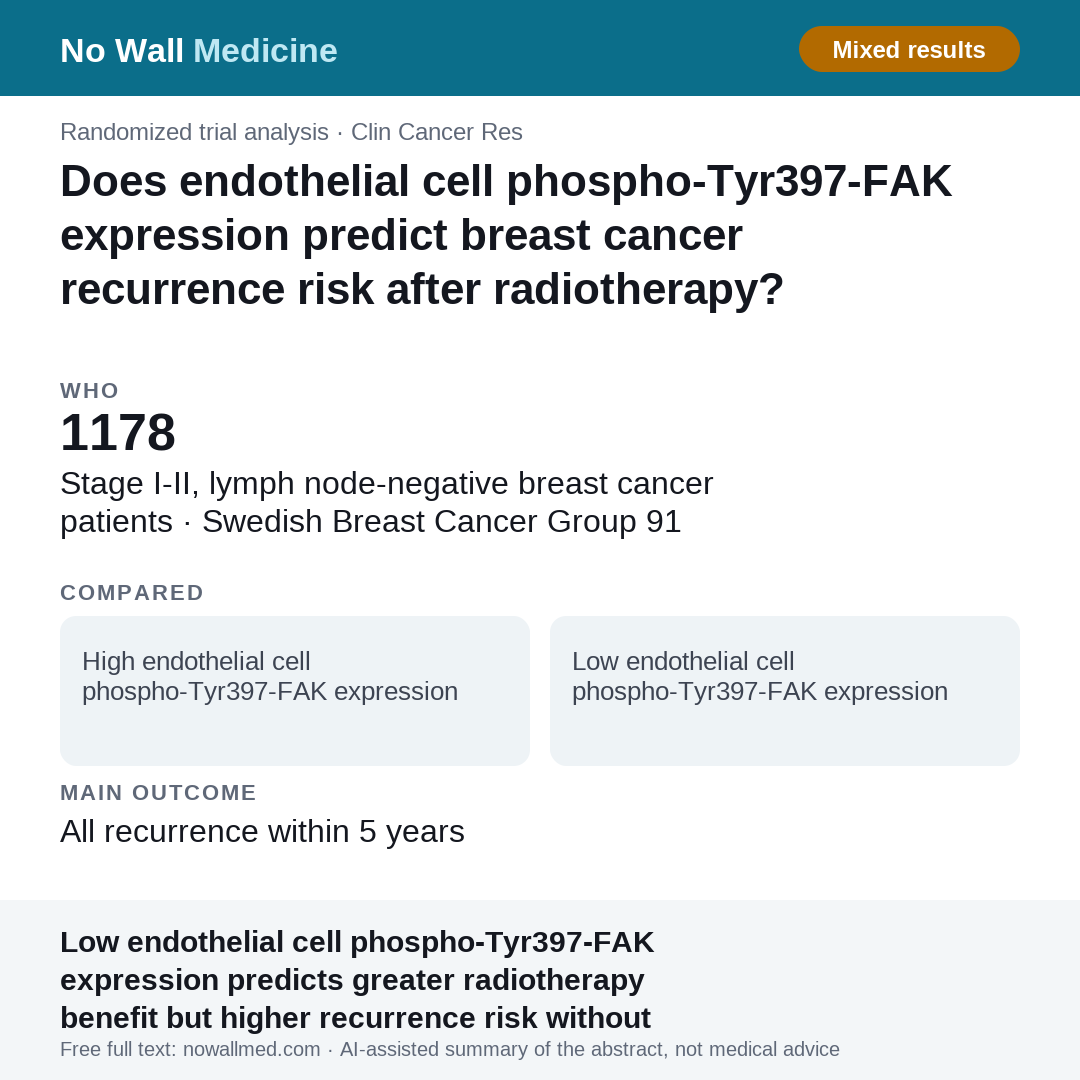
Endothelial Cell pY397-FAK Expression Predicts the Risk of Breast Cancer Recurrences after Radiotherapy in the SweBCG91-RT Cohort
Randomized trial analysisMixed results
Does endothelial cell phospho-Tyr397-FAK expression predict breast cancer recurrence risk after radiotherapy?
Who
1178
Stage I-II, lymph node-negative breast cancer patients · Swedish Breast Cancer Group 91 cohort
Compared
High endothelial cell phospho-Tyr397-FAK expression
Low endothelial cell phospho-Tyr397-FAK expression
Main outcome
All recurrence within 5 years
Result: hazard ratio 0.74 per SD (95% confidence interval 0.57-0.96)
Bottom line: Low endothelial cell phospho-Tyr397-FAK expression predicts greater radiotherapy benefit but higher recurrence risk without radiotherapy.
Limitation: Endothelial cell phospho-Tyr397-FAK expression was not predictive for locoregional recurrence.
Clin Cancer Res · 2025-02-05Download image
Safety and immunogenicity of a bivalent Ebola virus and Sudan virus ChAdOx1 vectored vaccine in adults in the UK: an open-label, non-randomised, first-in-human, phase 1 clinical trial
Open-label, non-randomised, phase 1 clinical trialBenefit found
What are the safety and immunogenicity of the ChAdOx1 biEBOV vaccine?
Who
26
Adults aged 18-55 years without significant medical comorbidities · Single site, Oxford, UK
Compared
Low-dose group
Medium-dose group
High-dose group: 14 (100%) seropositivity to Ebola virus
Main outcome
Safety, adverse events, and humoral and cellular immunity
Bottom line: The ChAdOx1 biEBOV vaccine was safe, well tolerated, and immunogenic against Ebola and Sudan viruses.
Funded by: UK Research and Innovation
Lancet Microbe · 2025-02-05Download image

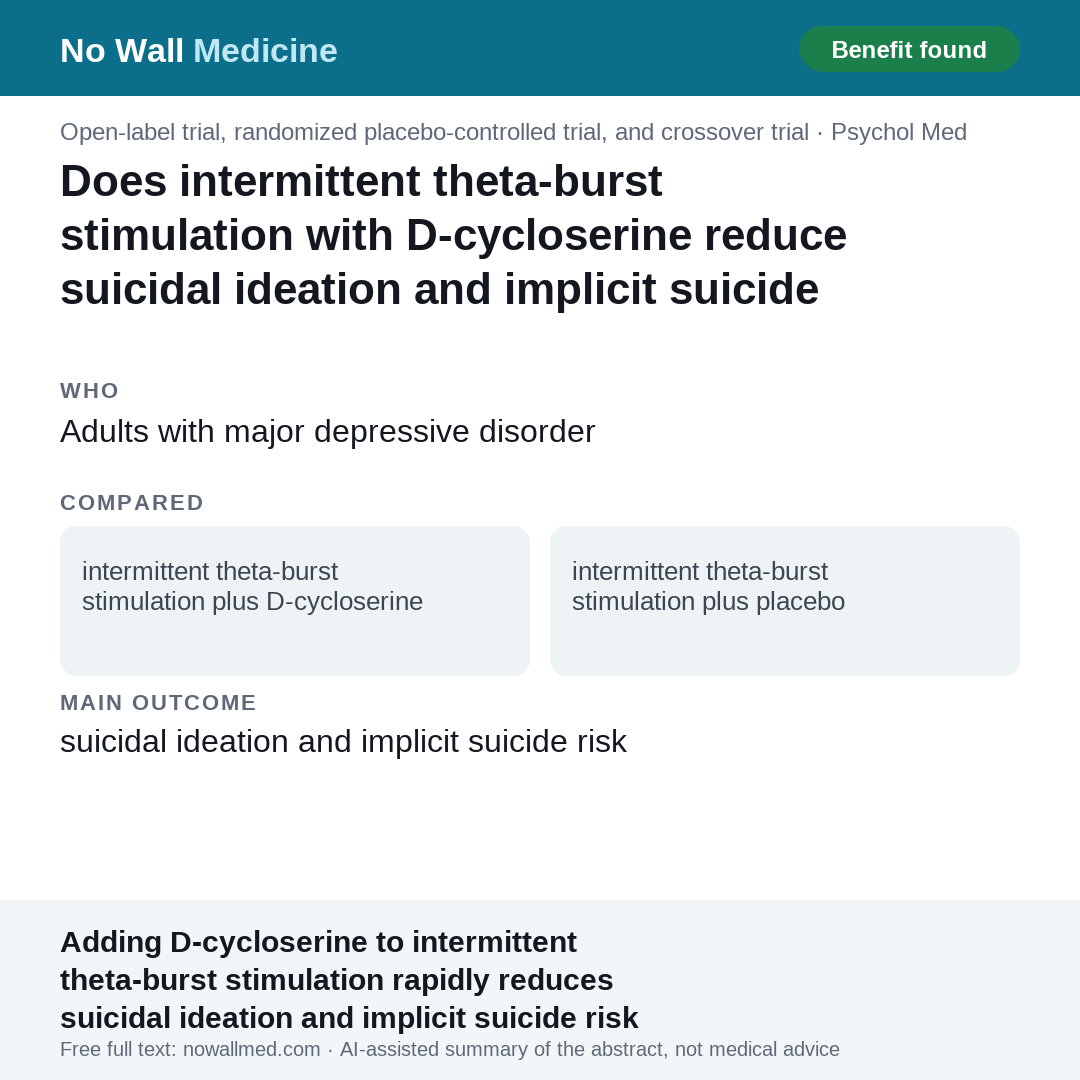
Intermittent theta-burst stimulation with adjunctive D-cycloserine rapidly resolves suicidal ideation and decreases implicit association with death/suicide
Open-label trial, randomized placebo-controlled trial, and crossover trialBenefit found
Does intermittent theta-burst stimulation with D-cycloserine reduce suicidal ideation and implicit suicide risk?
Who
Adults with major depressive disorder
Compared
intermittent theta-burst stimulation plus D-cycloserine
intermittent theta-burst stimulation plus placebo
Main outcome
suicidal ideation and implicit suicide risk
Bottom line: Adding D-cycloserine to intermittent theta-burst stimulation rapidly reduces suicidal ideation and implicit suicide risk in depression.
Psychol Med · 2025-02-05Download image
The cognitive model of negative symptoms: a systematic review and meta-analysis of the dysfunctional belief systems associated with negative symptoms in schizophrenia spectrum disorders
Systematic review and meta-analysisBenefit found
Does the cognitive model of negative symptoms hold for schizophrenia spectrum disorders?
Who
Patients with schizophrenia spectrum disorders
Compared
Defeatist performance beliefs: r = 0.23 (95% CI, 0.18-0.27)
Asocial beliefs: r = 0.21 (95% CI, 0.12-0.28)
Low expectancies for success: r = -0.21 (95% CI, -0.15 - -0.26)
Low expectancies for pleasure: r = -0.19 (95% CI, -0.06 - -0.31)
Main outcome
Correlation between negative symptom severity and dysfunctional beliefs
Bottom line: The meta-analysis supports the cognitive model of negative symptoms in schizophrenia spectrum disorders.
Psychol Med · 2025-02-05Download image

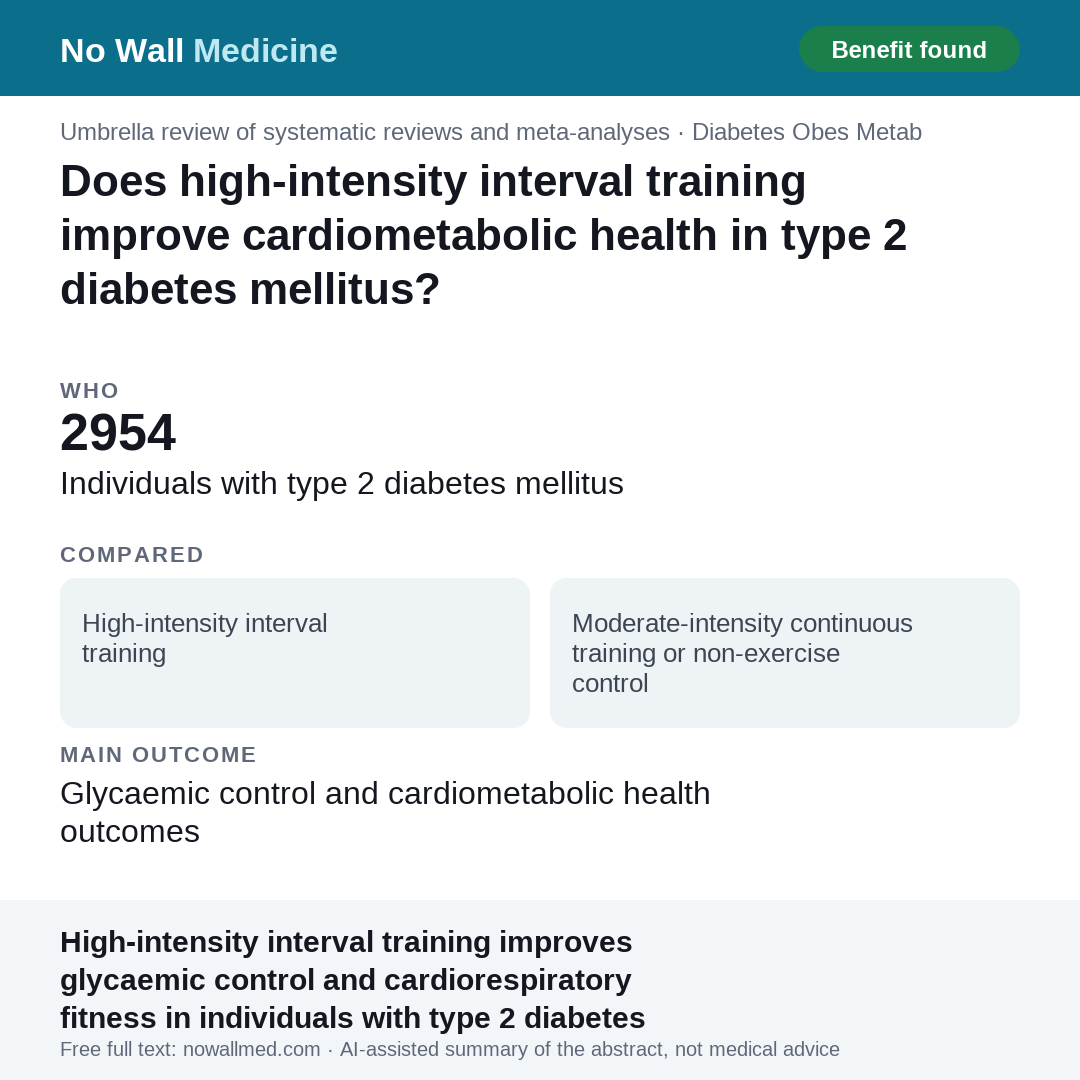
Efficacy of high-intensity interval training in individuals with type 2 diabetes mellitus: An umbrella review of systematic reviews and meta-analyses
Umbrella review of systematic reviews and meta-analysesBenefit found
Does high-intensity interval training improve cardiometabolic health in type 2 diabetes mellitus?
Who
2954
Individuals with type 2 diabetes mellitus
Compared
High-intensity interval training
Moderate-intensity continuous training or non-exercise control
Main outcome
Glycaemic control and cardiometabolic health outcomes
Bottom line: High-intensity interval training improves glycaemic control and cardiorespiratory fitness in individuals with type 2 diabetes mellitus.
Diabetes Obes Metab · 2025-02-05Download image
Deep learning-based breast cancer diagnosis in breast MRI: systematic review and meta-analysis
Meta-analysis of 40 studiesBenefit found
Can deep learning improve breast cancer diagnosis?
Who
40
breast cancer patients
Compared
0.90Deep learning models (95% CI: 0.87, 0.93)
Control
Main outcome
diagnostic accuracy
Result: area under the curve 0.90 (95% CI: 0.87, 0.93)
Bottom line: Deep learning improves breast cancer diagnosis
Limitation: considerable inherent variability
Eur Radiol · 2025-02-05Download image

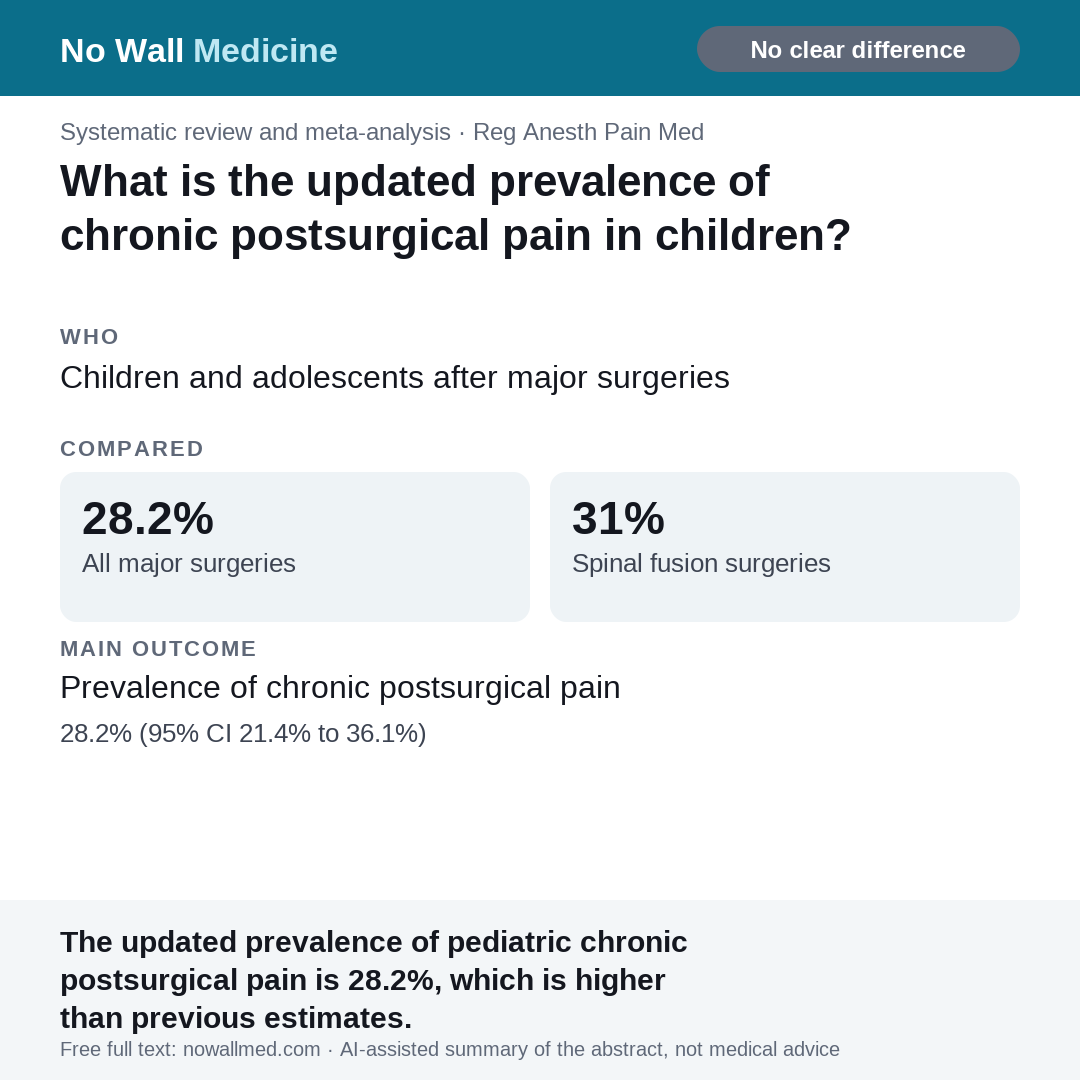
Prevalence of and recommendation for measuring chronic postsurgical pain in children: an updated systematic review and meta-analysis
Systematic review and meta-analysisNo clear difference
What is the updated prevalence of chronic postsurgical pain in children?
Who
Children and adolescents after major surgeries
Compared
28.2%All major surgeries (95% CI 21.4% to 36.1%)
31%Spinal fusion surgeries (95% CI 21.4% to 43.5%)
Main outcome
Prevalence of chronic postsurgical pain
Result: 28.2% (95% CI 21.4% to 36.1%)
Bottom line: The updated prevalence of pediatric chronic postsurgical pain is 28.2%, which is higher than previous estimates.
Limitation: Studies often used pain intensity measures without pain interference or quality of life measures.
Reg Anesth Pain Med · 2025-02-05Download image
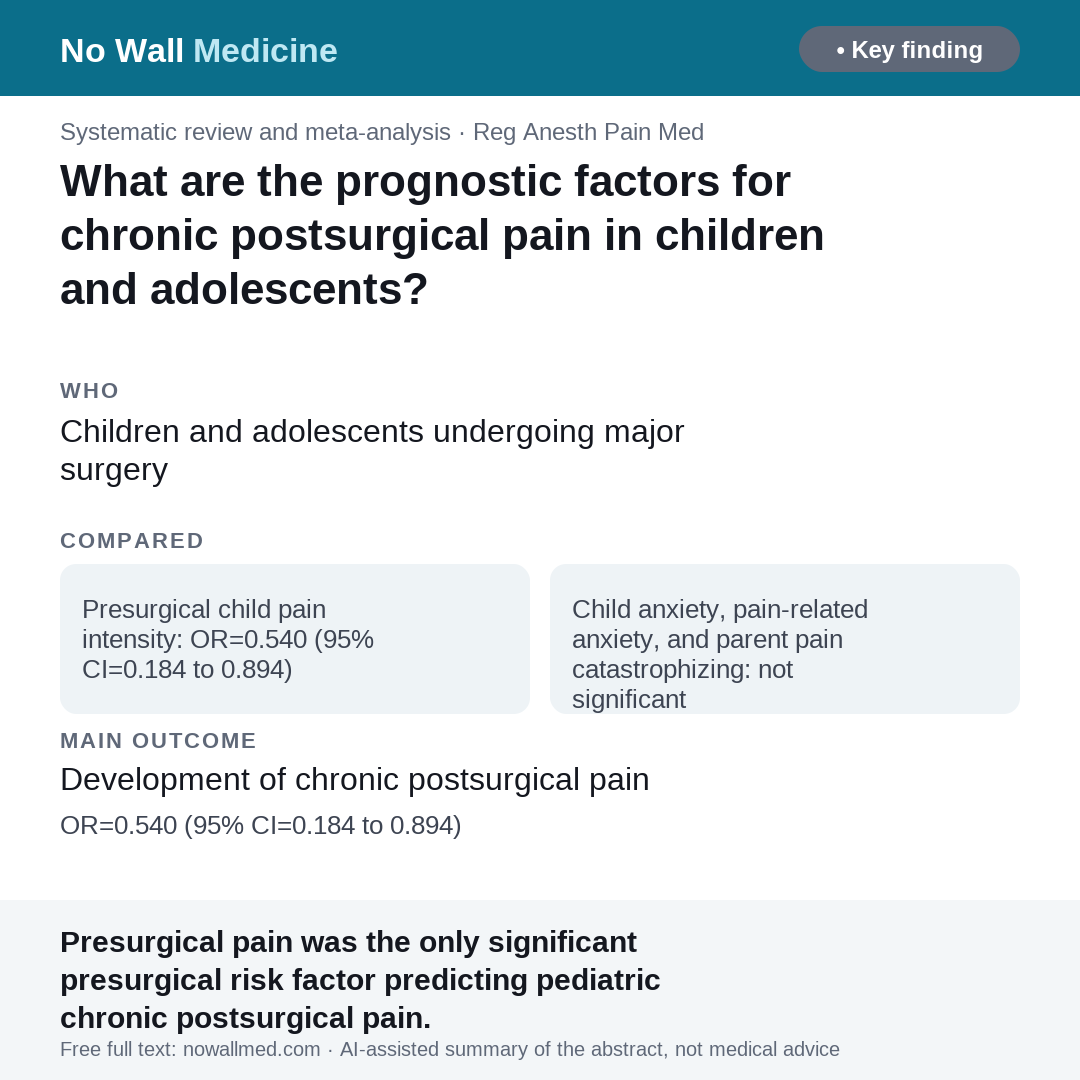
Prognostic factors of chronic postsurgical pain in children and adolescents: a systematic review and meta-analysis
Systematic review and meta-analysisBenefit found
What are the prognostic factors for chronic postsurgical pain in children and adolescents?
Who
Children and adolescents undergoing major surgery
Compared
Presurgical child pain intensity: OR=0.540 (95% CI=0.184 to 0.894)
Child anxiety, pain-related anxiety, and parent pain catastrophizing: not significant
Main outcome
Development of chronic postsurgical pain
Result: OR=0.540 (95% CI=0.184 to 0.894)
Bottom line: Presurgical pain was the only significant presurgical risk factor predicting pediatric chronic postsurgical pain.
Limitation: Insufficient data or unvalidated measures prevented assessment of depressive symptoms and sleep disturbance.
Reg Anesth Pain Med · 2025-02-05Download image
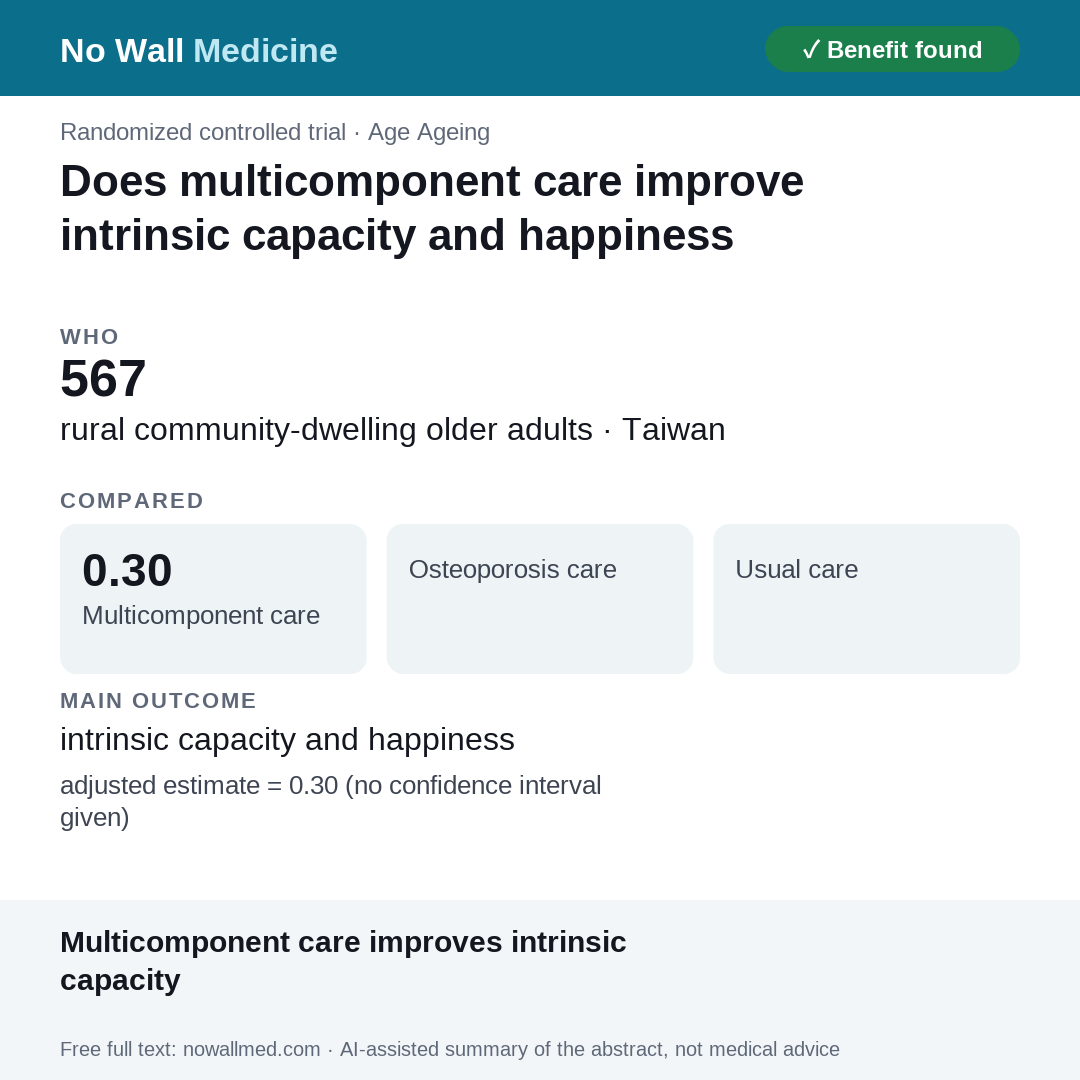
Effects of osteoporosis treatment and multicomponent integrated care on intrinsic capacity and happiness among rural community-dwelling older adults: the Healthy Longevity and Ageing in Place (HOPE) randomised controlled trial
Randomized controlled trialBenefit found
Does multicomponent care improve intrinsic capacity and happiness
Who
567
rural community-dwelling older adults · Taiwan
Compared
0.30Multicomponent care
Osteoporosis care
Usual care
Main outcome
intrinsic capacity and happiness
Result: adjusted estimate = 0.30 (no confidence interval given)
Bottom line: Multicomponent care improves intrinsic capacity
Age Ageing · 2025-02-05Download image
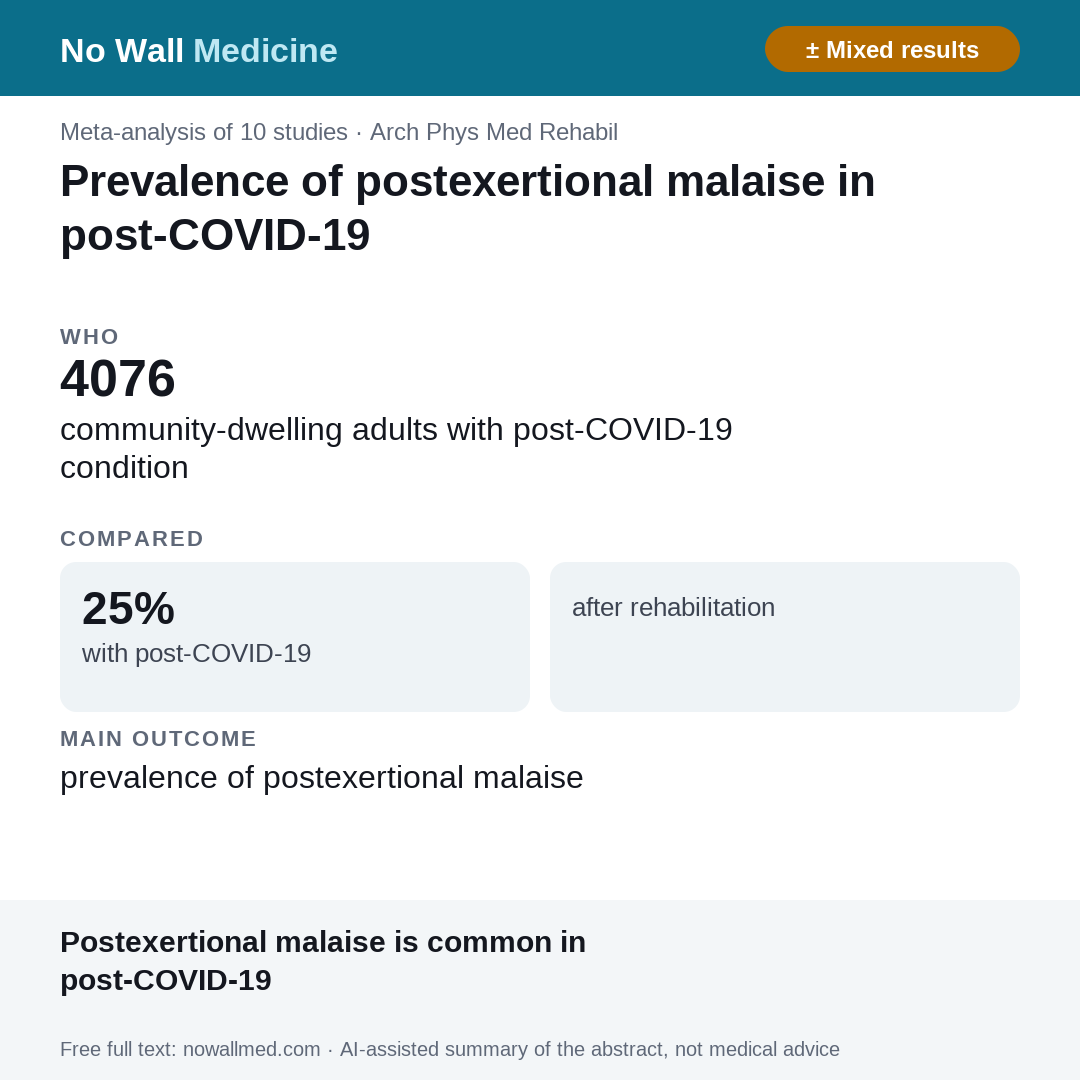
Prevalence and Impact of Postexertional Malaise on Recovery in Adults With Post-COVID-19 Condition: A Systematic Review With Meta-analysis
Meta-analysis of 10 studiesMixed results
Prevalence of postexertional malaise in post-COVID-19
Who
4076
community-dwelling adults with post-COVID-19 condition
Compared
25%with post-COVID-19 (95% CI: 0.17-0.36)
after rehabilitation
Main outcome
prevalence of postexertional malaise
Bottom line: Postexertional malaise is common in post-COVID-19
Limitation: high risk of bias and insufficient reporting
Arch Phys Med Rehabil · 2025-02-05Download image
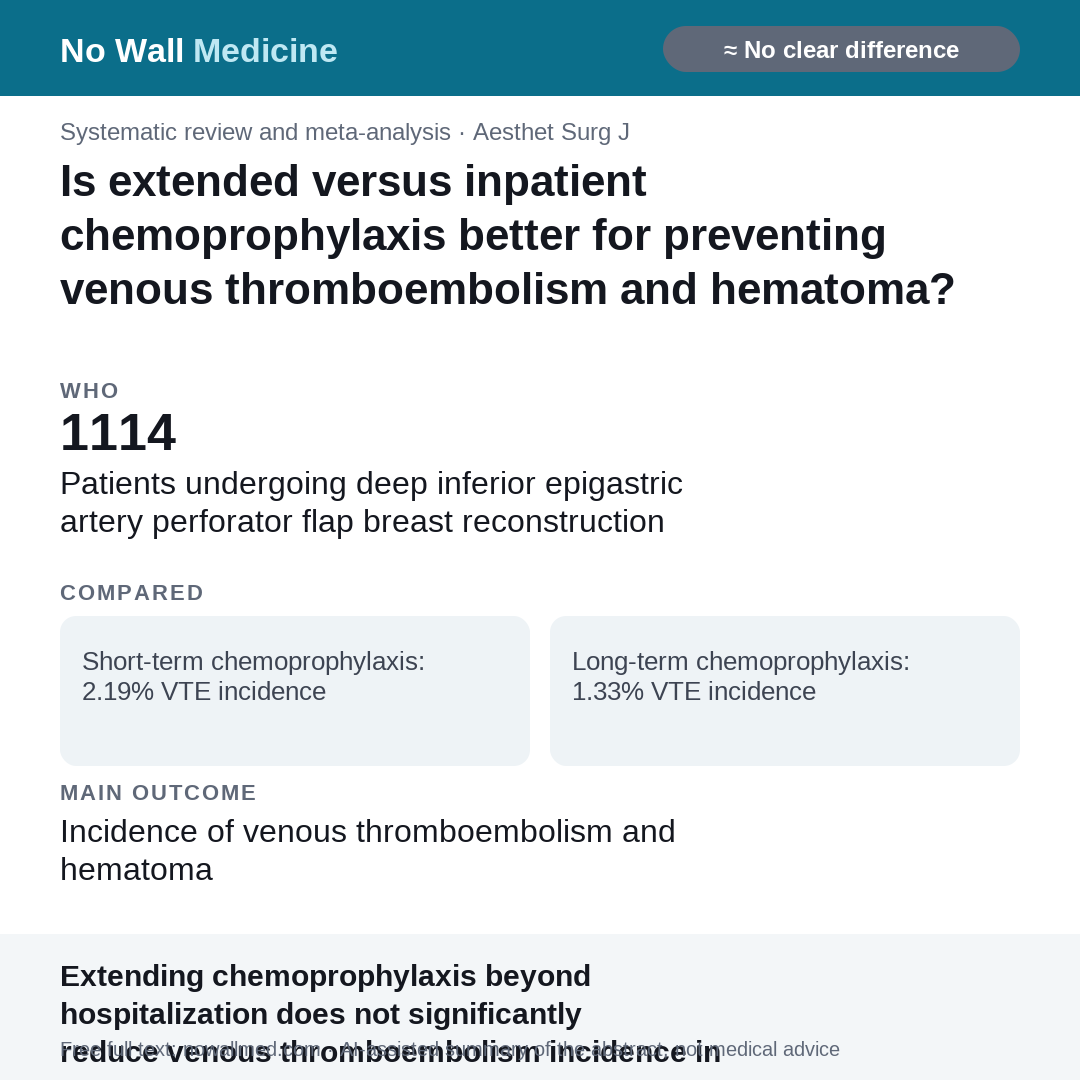
Extended vs Inpatient Chemoprophylaxis for Venous Thromboembolism in DIEP Flap Breast Reconstruction: A Systematic Review and Meta-analysis
Systematic review and meta-analysisNo clear difference
Is extended versus inpatient chemoprophylaxis better for preventing venous thromboembolism and hematoma?
Who
1114
Patients undergoing deep inferior epigastric artery perforator flap breast reconstruction
Compared
Short-term chemoprophylaxis: 2.19% VTE incidence
Long-term chemoprophylaxis: 1.33% VTE incidence
Main outcome
Incidence of venous thromboembolism and hematoma
Result: risk ratio 1.42 for short-term compared to long-term
Bottom line: Extending chemoprophylaxis beyond hospitalization does not significantly reduce venous thromboembolism incidence in DIEP flap reconstruction.
Aesthet Surg J · 2025-02-05Download image
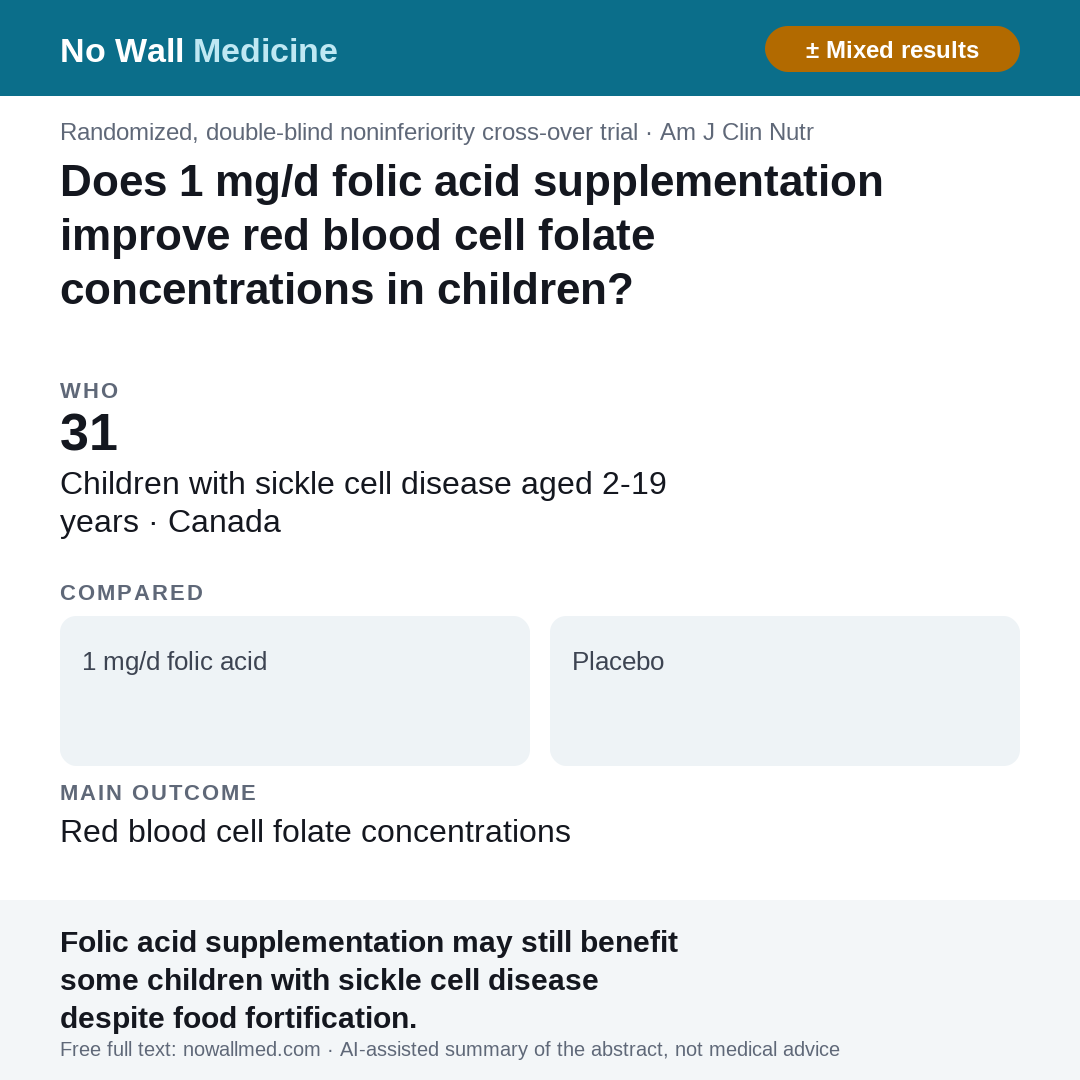
Folic acid supplementation in children with sickle cell disease: a randomized double-blind noninferiority cross-over trial
Randomized, double-blind noninferiority cross-over trialMixed results
Does 1 mg/d folic acid supplementation improve red blood cell folate concentrations in children?
Who
31
Children with sickle cell disease aged 2-19 years · Canada
Compared
1 mg/d folic acid
Placebo
Main outcome
Red blood cell folate concentrations
Result: -179 (-260, -99) nmol/L
Bottom line: Folic acid supplementation may still benefit some children with sickle cell disease despite food fortification.
Limitation: Whether improved folate levels translate to improved clinical outcomes remains uncertain.
Am J Clin Nutr · 2025-02-05Download image
Impact of formula protein quantity and source on infant metabolism: serum, urine, and fecal metabolomes of a randomized controlled study
Randomized, double-blind controlled trialMixed results
How do formula protein quantity and source impact infant serum, urine, and fecal metabolomes?
Who
200
Well-characterized per-protocol infants
Compared
Standard formula
Protein-reduced formula with alpha-lactalbumin-enriched whey
Protein-reduced formula with casein glycomacropeptide-reduced whey
Exclusively breastfed infants
Main outcome
Serum, urine, and fecal metabolomes
Bottom line: Reduced protein formulas yield metabolic profiles closer to breastfed infants, but cannot fully mimic human milk metabolism.
Limitation: This was a secondary analysis performed on a random subset of infants.
Am J Clin Nutr · 2025-02-05Download image

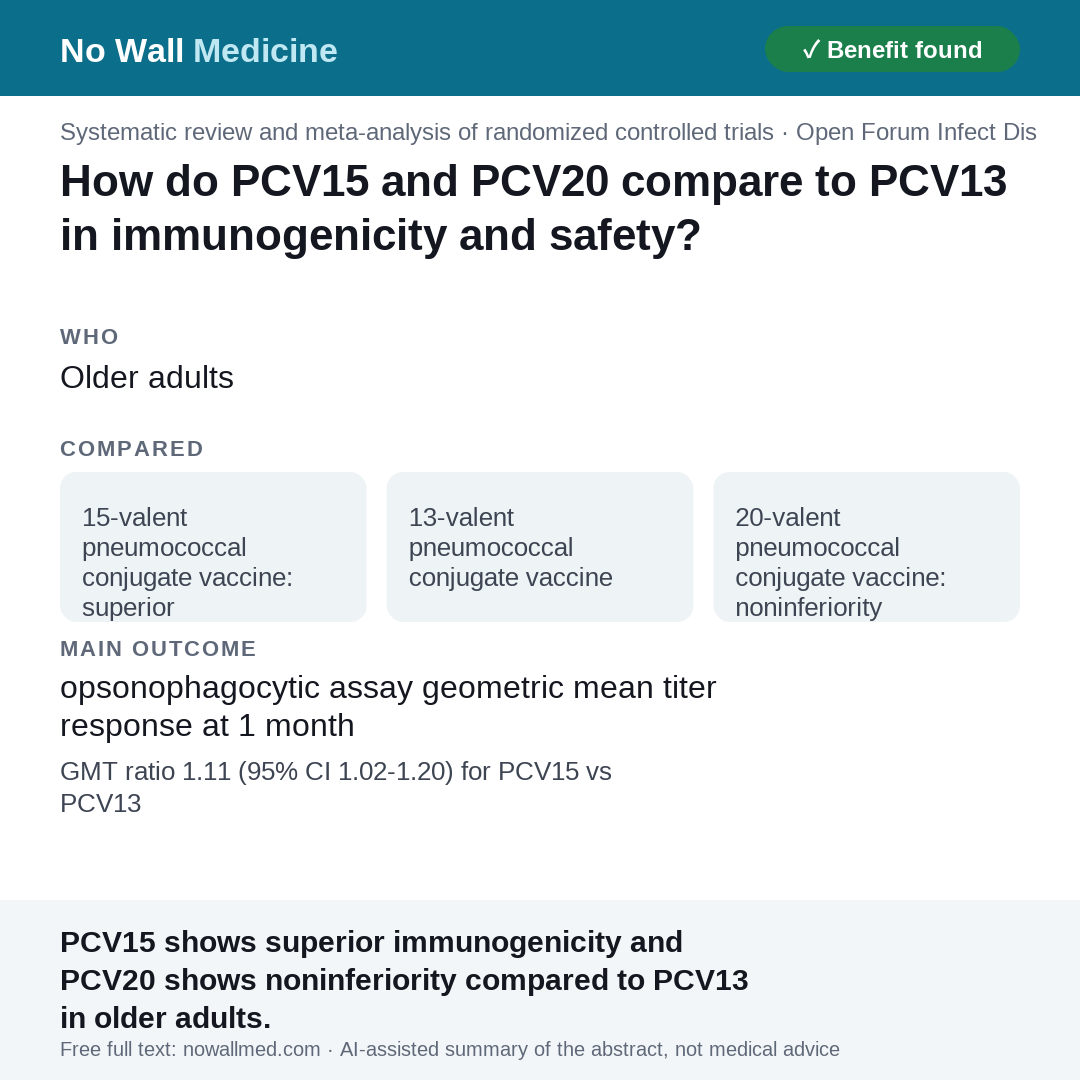
Immunogenicity and Safety of the Higher-Valent Pneumococcal Conjugate Vaccine vs the 13-Valent Pneumococcal Conjugate Vaccine in Older Adults: A Systematic Review and Meta-analysis of Randomized Controlled Trials
Systematic review and meta-analysis of randomized controlled trialsBenefit found
How do PCV15 and PCV20 compare to PCV13 in immunogenicity and safety?
Who
Older adults
Compared
15-valent pneumococcal conjugate vaccine: superior immunogenicity
13-valent pneumococcal conjugate vaccine
20-valent pneumococcal conjugate vaccine: noninferiority
Main outcome
opsonophagocytic assay geometric mean titer response at 1 month
Result: GMT ratio 1.11 (95% CI 1.02-1.20) for PCV15 vs PCV13
Bottom line: PCV15 shows superior immunogenicity and PCV20 shows noninferiority compared to PCV13 in older adults.
Open Forum Infect Dis · 2025-02-05Download image
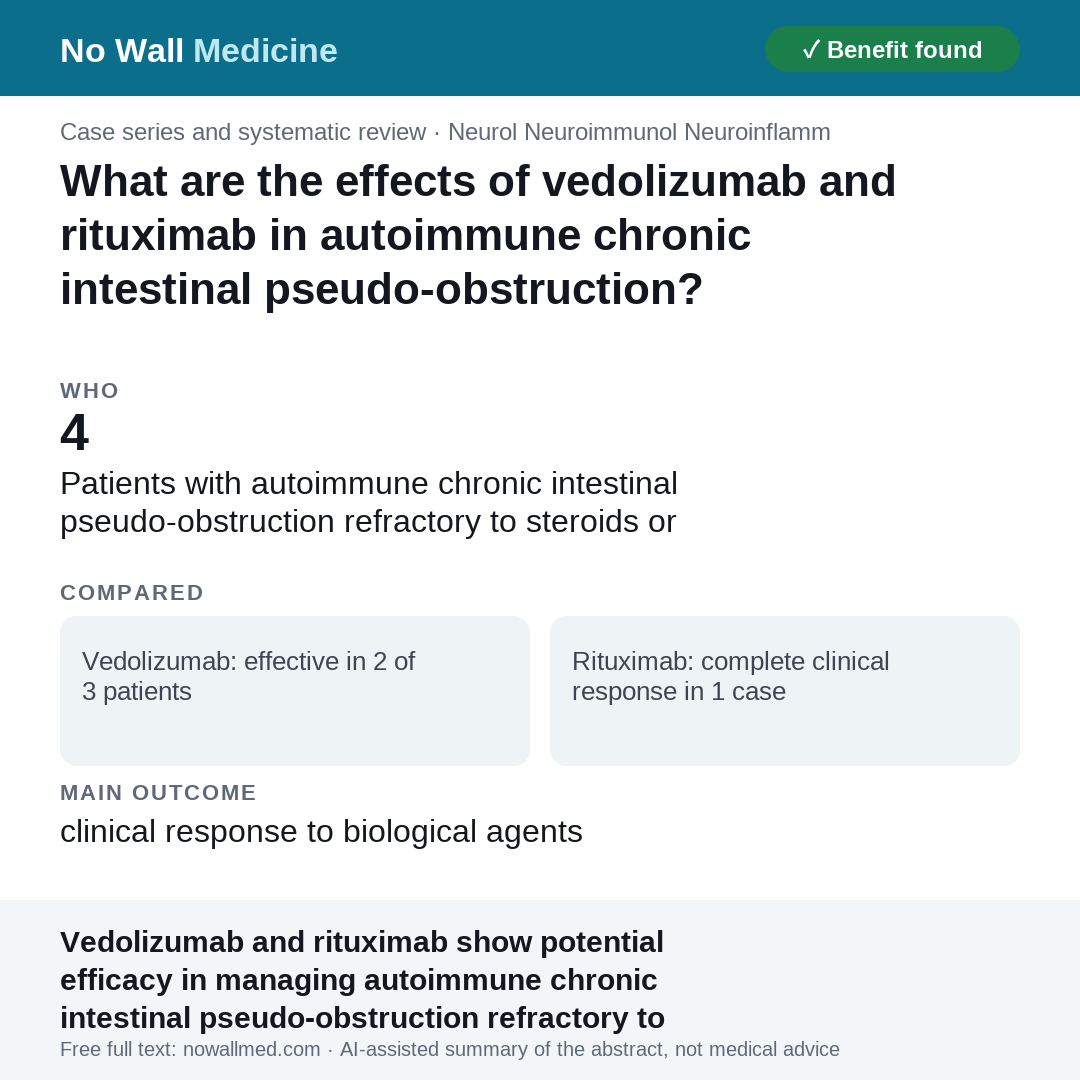
Novel Approaches to Treatment of Immune-Mediated Chronic Intestinal Pseudo-Obstruction
Case series and systematic reviewBenefit found
What are the effects of vedolizumab and rituximab in autoimmune chronic intestinal pseudo-obstruction?
Who
4
Patients with autoimmune chronic intestinal pseudo-obstruction refractory to steroids or intravenous immunoglobulins
Compared
Vedolizumab: effective in 2 of 3 patients
Rituximab: complete clinical response in 1 case
Main outcome
clinical response to biological agents
Bottom line: Vedolizumab and rituximab show potential efficacy in managing autoimmune chronic intestinal pseudo-obstruction refractory to first-line treatments.
Limitation: lack of clinical trials and small number of patients
Neurol Neuroimmunol Neuroinflamm · 2025-02-05Download image
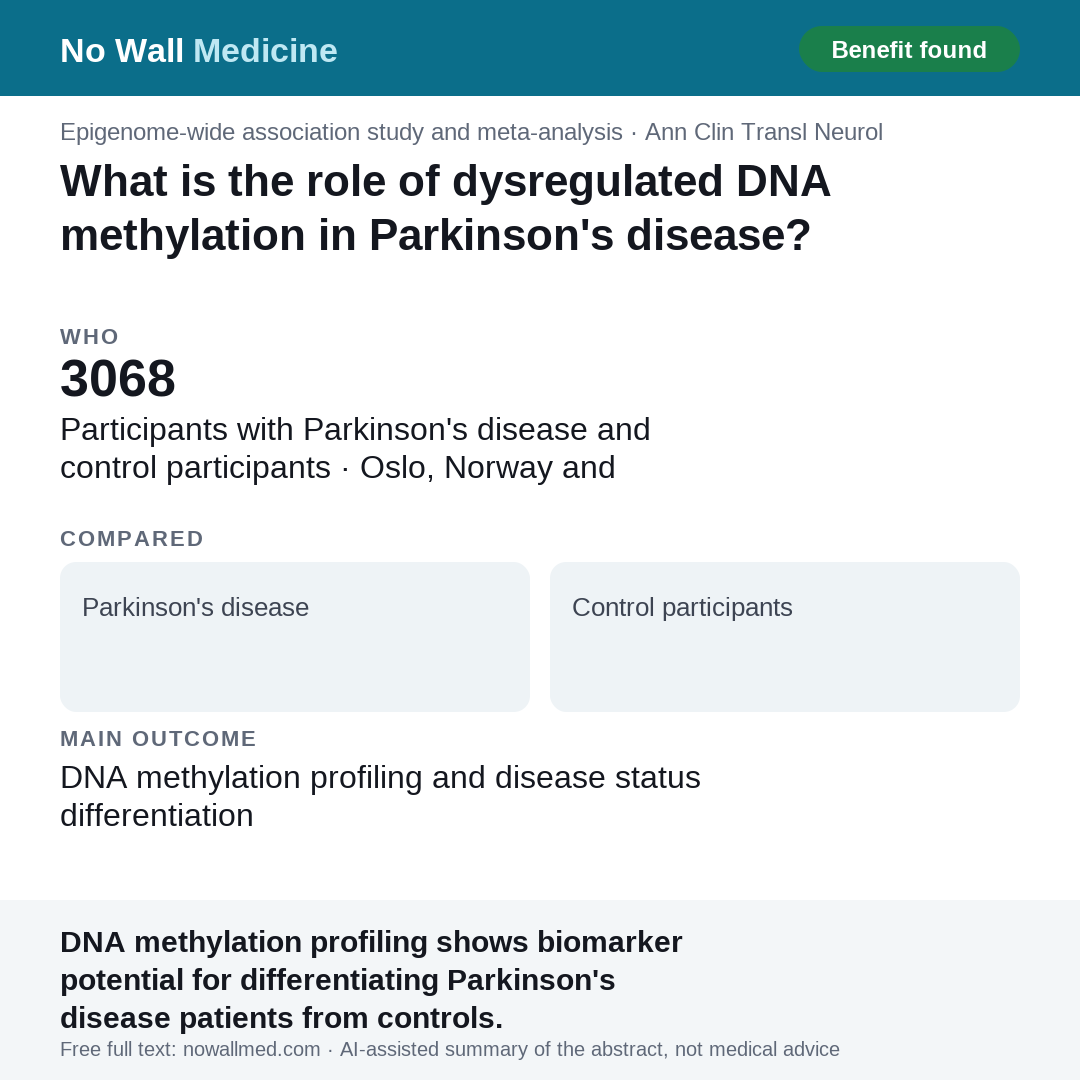
Epigenome-wide association study, meta-analysis, and multiscore profiling of whole blood in Parkinson's disease
Epigenome-wide association study and meta-analysisBenefit found
What is the role of dysregulated DNA methylation in Parkinson's disease?
Who
3068
Participants with Parkinson's disease and control participants · Oslo, Norway and Parkinson's Progression Markers Initiative
Compared
Parkinson's disease
Control participants
Main outcome
DNA methylation profiling and disease status differentiation
Result: area under the receiver-operator curve of 0.82 in Oslo and 0.65 in PPMI
Bottom line: DNA methylation profiling shows biomarker potential for differentiating Parkinson's disease patients from controls.
Limitation: Reproducibility of specific differentially methylated CpG across data sets was limited.
Ann Clin Transl Neurol · 2025-02-05Download image
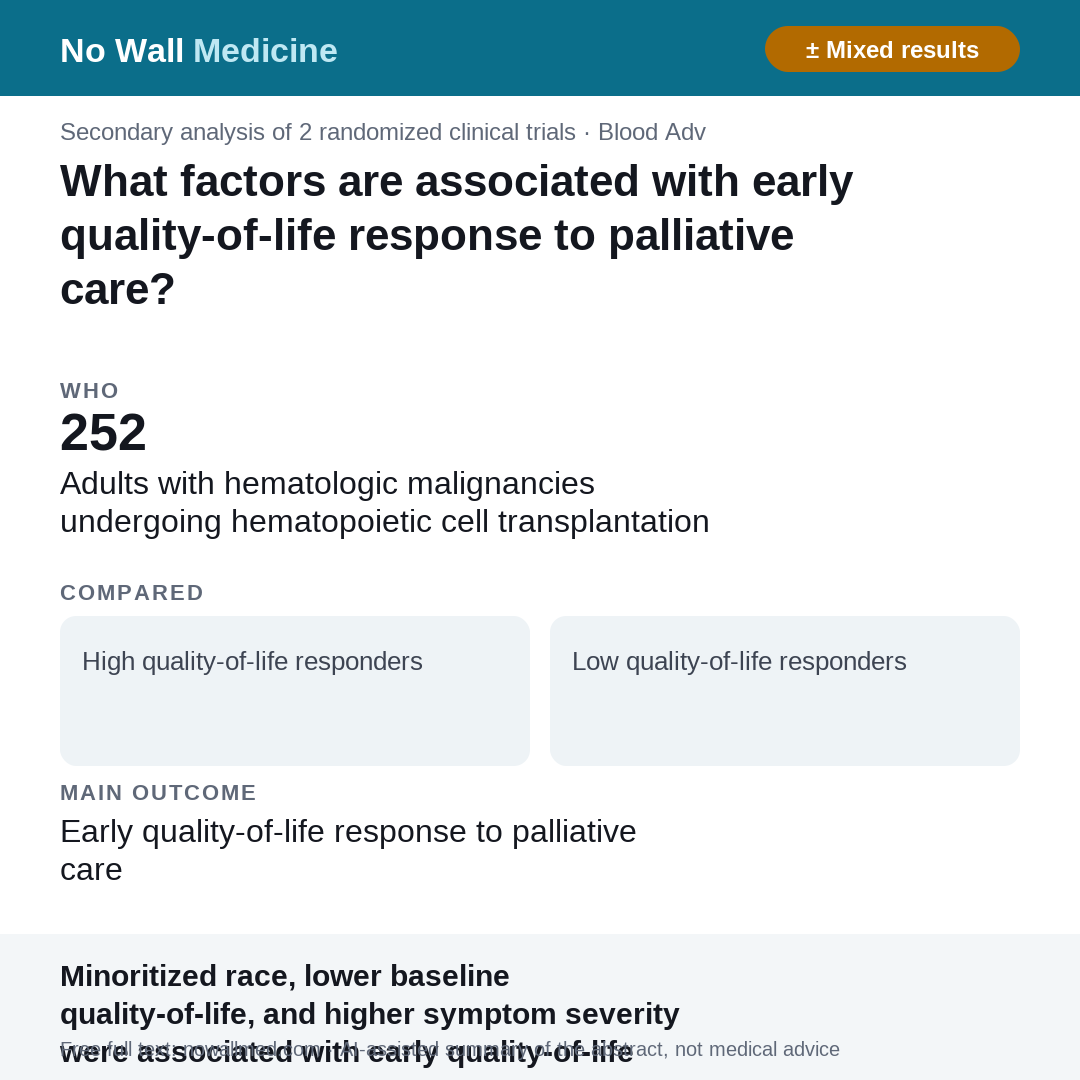
Factors associated with early quality-of-life response to palliative care during hematopoietic cell transplantation
Secondary analysis of 2 randomized clinical trialsMixed results
What factors are associated with early quality-of-life response to palliative care?
Who
252
Adults with hematologic malignancies undergoing hematopoietic cell transplantation
Compared
High quality-of-life responders
Low quality-of-life responders
Main outcome
Early quality-of-life response to palliative care
Bottom line: Minoritized race, lower baseline quality-of-life, and higher symptom severity were associated with early quality-of-life response.
Blood Adv · 2025-02-05Download image
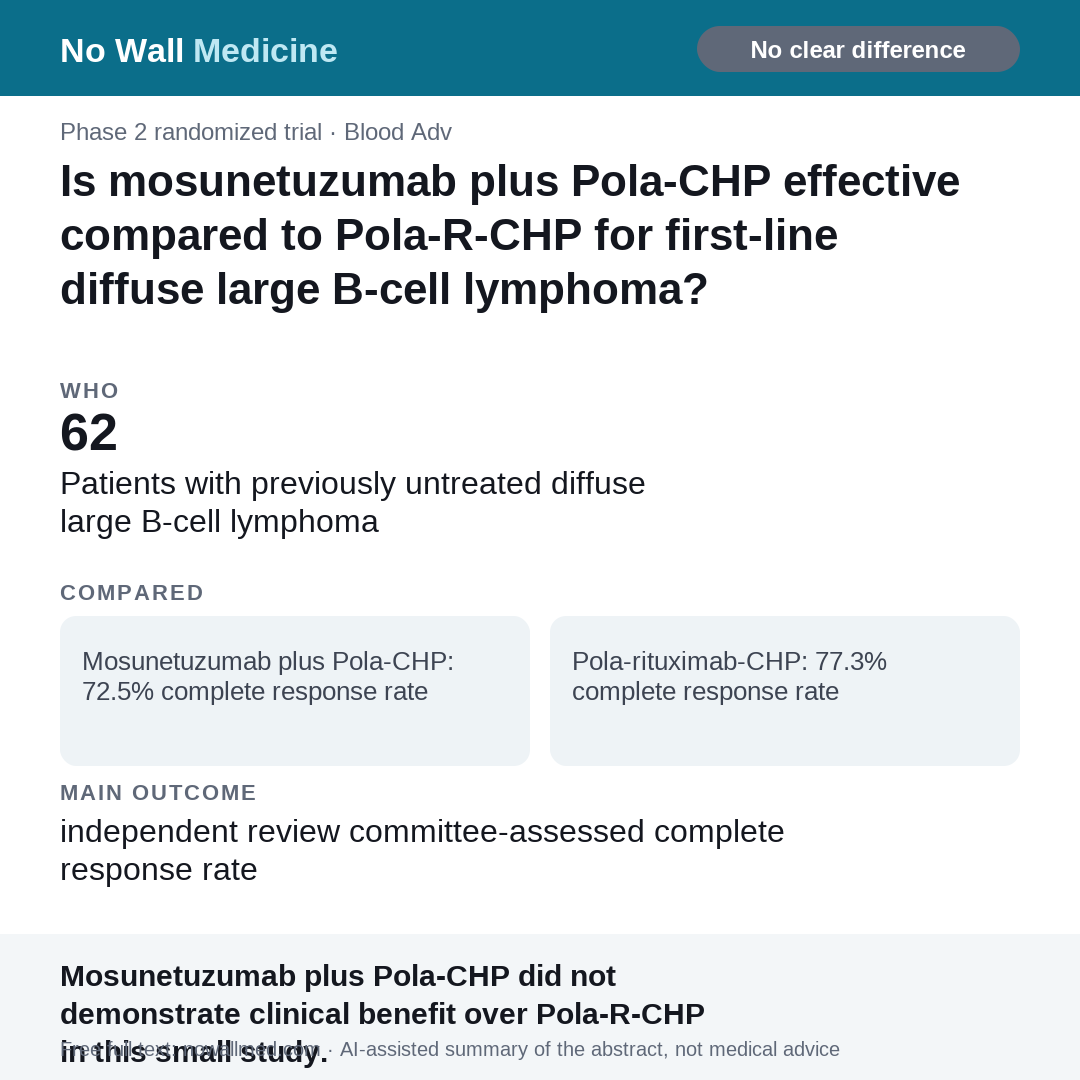
Mosunetuzumab plus Pola-CHP compared with Pola-R-CHP in previously untreated DLBCL: final results from a phase 2 study
Phase 2 randomized trialNo clear difference
Is mosunetuzumab plus Pola-CHP effective compared to Pola-R-CHP for first-line diffuse large B-cell lymphoma?
Who
62
Patients with previously untreated diffuse large B-cell lymphoma
Compared
Mosunetuzumab plus Pola-CHP: 72.5% complete response rate
Pola-rituximab-CHP: 77.3% complete response rate
Main outcome
independent review committee-assessed complete response rate
Result: 24-month progression-free survival rate 70.8% (95% CI, 55.6-86.1) vs 81.8% (95% CI, 65.7-97.9)
Bottom line: Mosunetuzumab plus Pola-CHP did not demonstrate clinical benefit over Pola-R-CHP in this small study.
Blood Adv · 2025-02-05Download image
AI for IMPACTS Framework for Evaluating the Long-Term Real-World Impacts of AI-Powered Clinician Tools: Systematic Review and Narrative Synthesis
Systematic review and narrative synthesisBenefit found
How can the long-term real-world impacts of artificial intelligence tools be evaluated?
Who
44
Studies evaluating artificial intelligence in health care · PubMed, Cochrane, Scopus, and IEEE Xplore databases
Compared
Traditional technical metrics
AI for IMPACTS framework
Main outcome
A framework for assessing long-term real-world impact
Bottom line: The AI for IMPACTS framework provides a holistic approach to evaluate artificial intelligence tools beyond technical metrics.
Limitation: Many assessors lack the necessary multidisciplinary training for assessment.
J Med Internet Res · 2025-02-05Download image

Digital Health Technology Interventions for Improving Medication Safety: Systematic Review of Economic Evaluations
Systematic reviewBenefit found
What is the economic impact of digital health technology interventions on medication safety?
Who
Studies evaluating digital health technology for medication safety
Compared
Digital health technology: 37.12% reduction in adverse drug events
Standard care
Main outcome
Cost-effectiveness, cost-benefit, and cost-utility of interventions
Bottom line: Digital health technology interventions are economically viable, reducing adverse drug events and medication errors with a return on investment.
J Med Internet Res · 2025-02-05Download image