Visual abstracts
New randomized trials and meta-analyses from leading journals at a glance: who was studied, what was compared, and what was found. Every paper is free to read in full.
All specialtiesCardiology 1501Oncology 1338Gastroenterology & Hepatology 550Infectious Disease 965Neurology 625Psychiatry & Mental Health 751Pulmonology 648Critical Care 445Endocrinology & Diabetes 826Pediatrics 895Surgery 730Orthopedics & Sports Medicine 287Neurosurgery 196Cardiothoracic & Vascular Surgery 168Plastic & Reconstructive Surgery 242Nephrology 318Rheumatology 199Hematology 327Dermatology 162Ophthalmology 173Obstetrics & Gynecology 488Public & Global Health 292Radiology & Imaging 200Anesthesiology 300Urology 281ENT (Otolaryngology) 208Emergency Medicine 171Allergy & Immunology 99Geriatrics 319Family Medicine & Primary Care 183Medical Genetics & Genomics 164Pathology & Laboratory Medicine 48Physical Medicine & Rehabilitation 267Palliative Care 137Nutrition 401Digital Health & AI 801General Medicine 127
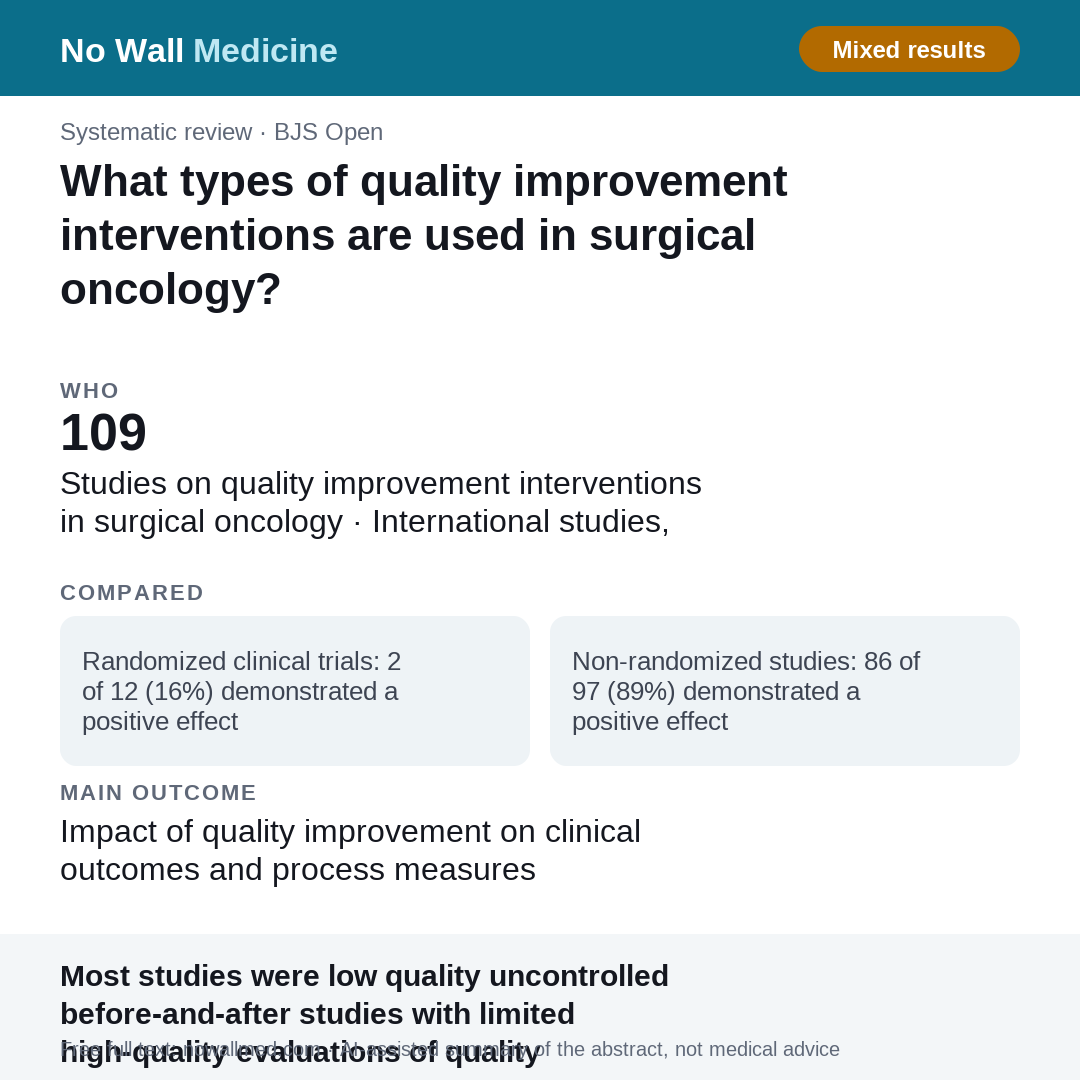
Quality improvement interventions in surgical oncology: systematic review of international studies
Systematic reviewMixed results
What types of quality improvement interventions are used in surgical oncology?
Who
109
Studies on quality improvement interventions in surgical oncology · International studies, mostly USA, Canada, and UK
Compared
Randomized clinical trials: 2 of 12 (16%) demonstrated a positive effect
Non-randomized studies: 86 of 97 (89%) demonstrated a positive effect
Main outcome
Impact of quality improvement on clinical outcomes and process measures
Bottom line: Most studies were low quality uncontrolled before-and-after studies with limited high-quality evaluations of quality improvement interventions.
Limitation: Most studies were uncontrolled before-and-after studies and were classified as low quality.
BJS Open · 2026-05-20Download image
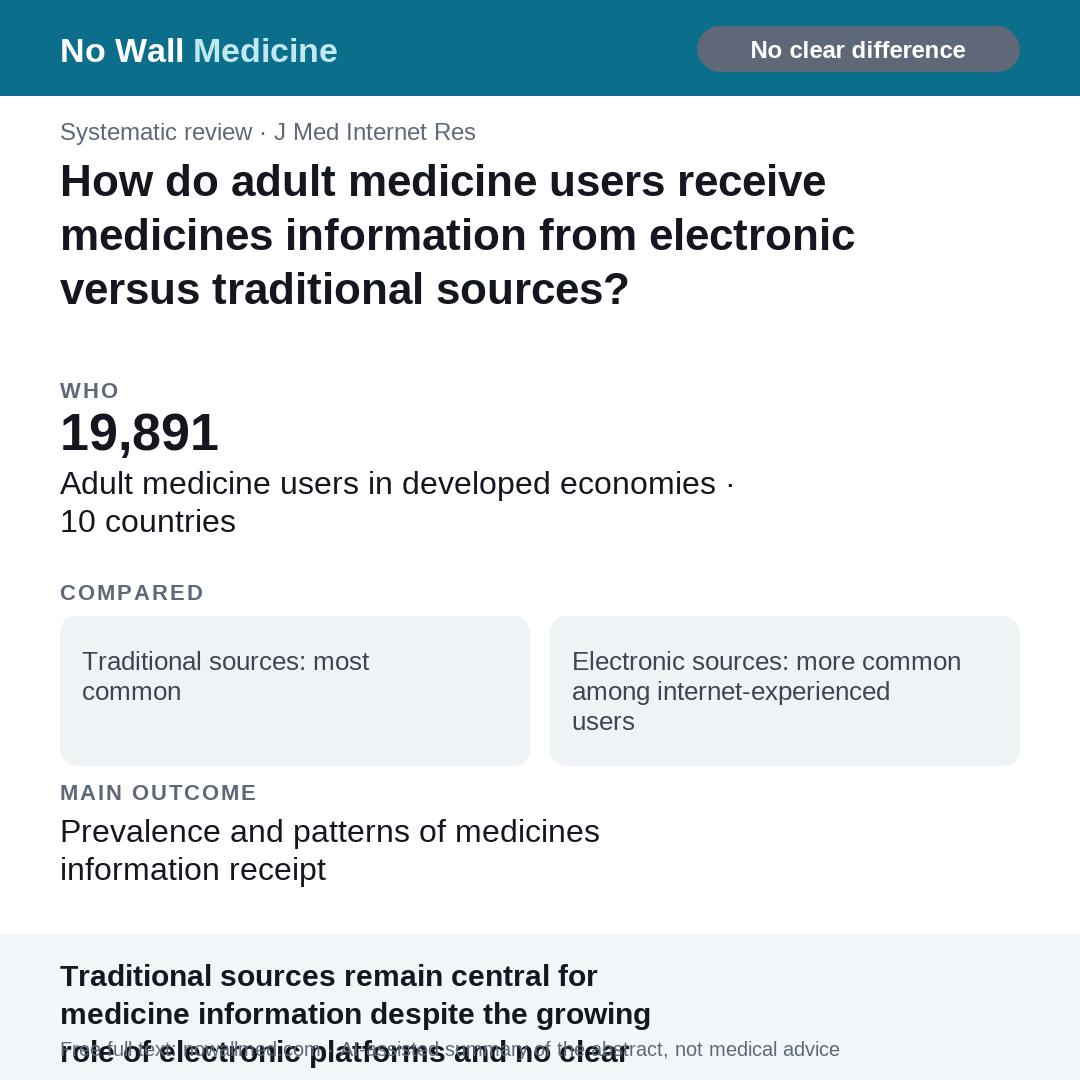
Receipt of Medicines Information From the Internet and Other Information Sources Among Adult Medicine Users in Developed Economies, 2010-2025: Systematic Review
Systematic reviewNo clear difference
How do adult medicine users receive medicines information from electronic versus traditional sources?
Who
19,891
Adult medicine users in developed economies · 10 countries
Compared
Traditional sources: most common
Electronic sources: more common among internet-experienced users
Main outcome
Prevalence and patterns of medicines information receipt
Bottom line: Traditional sources remain central for medicine information despite the growing role of electronic platforms and no clear temporal trends.
Limitation: Substantial heterogeneity prevented meta-analysis and only 3 studies used an explicit theoretical framework.
J Med Internet Res · 2026-05-20Download image
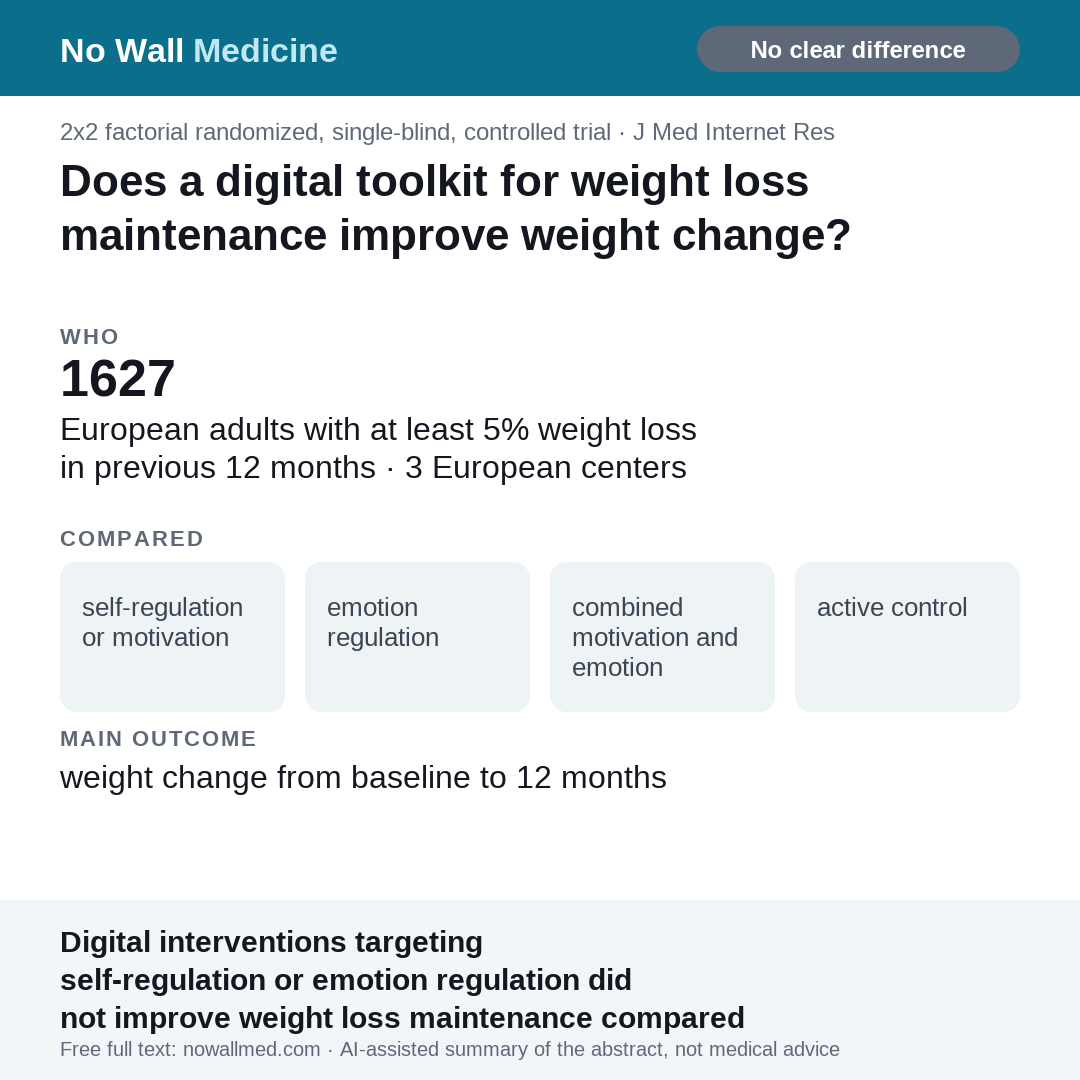
A Digital Toolkit for Weight Loss Maintenance in European Adults (NoHoW): 2×2 Factorial Randomized Controlled Trial
2x2 factorial randomized, single-blind, controlled trialNo clear difference
Does a digital toolkit for weight loss maintenance improve weight change?
Who
1627
European adults with at least 5% weight loss in previous 12 months · 3 European centers (United Kingdom, Denmark, and Portugal)
Compared
self-regulation or motivation
emotion regulation
combined motivation and emotion
active control
Main outcome
weight change from baseline to 12 months
Bottom line: Digital interventions targeting self-regulation or emotion regulation did not improve weight loss maintenance compared to active control.
Limitation: A small subgroup effect in men should be interpreted cautiously.
J Med Internet Res · 2026-05-20Download image
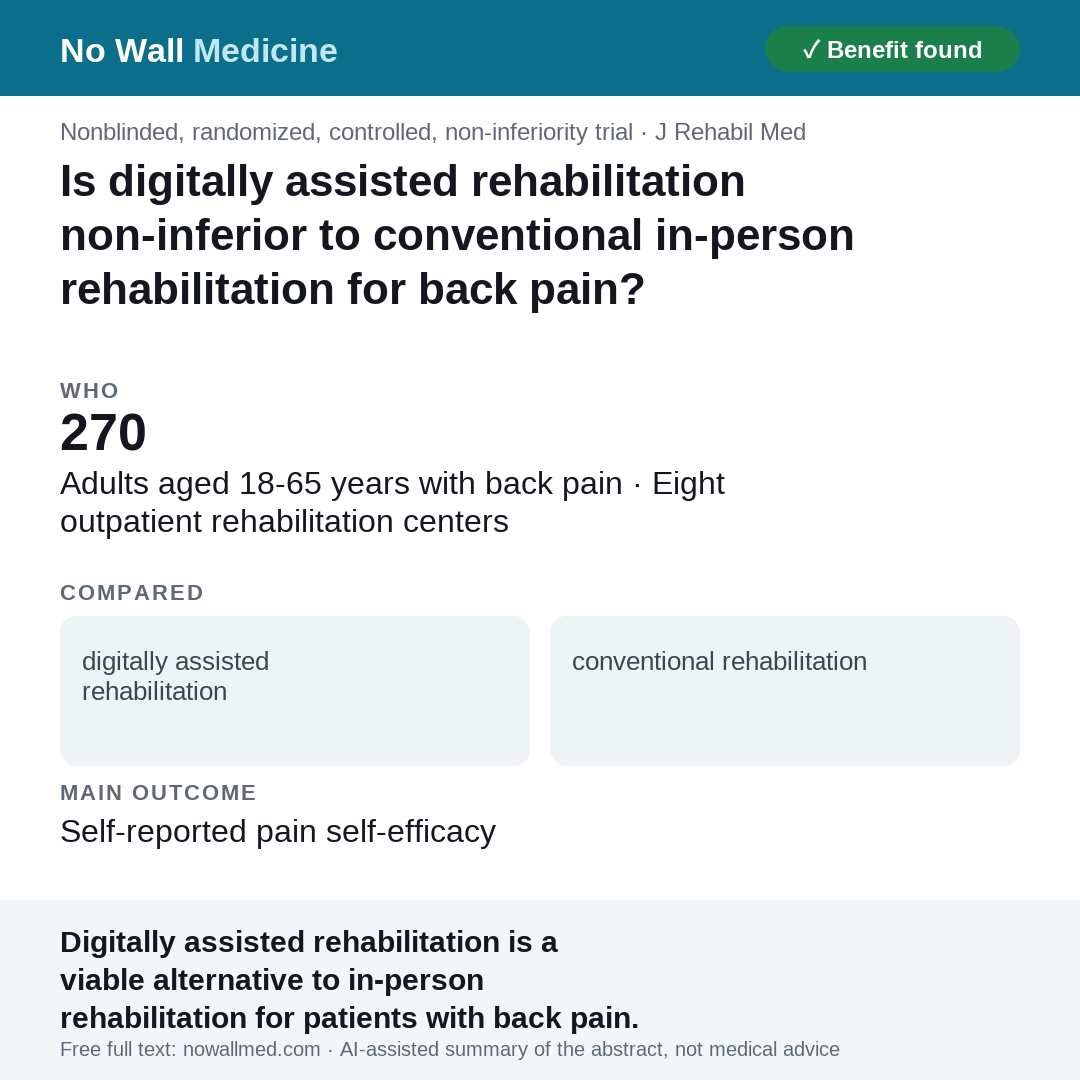
Non-inferiority of digitally assisted outpatient rehabilitation in patients with back pain: 12-month follow-up of a randomized controlled trial
Nonblinded, randomized, controlled, non-inferiority trialBenefit found
Is digitally assisted rehabilitation non-inferior to conventional in-person rehabilitation for back pain?
Who
270
Adults aged 18-65 years with back pain · Eight outpatient rehabilitation centers
Compared
digitally assisted rehabilitation
conventional rehabilitation
Main outcome
Self-reported pain self-efficacy
Result: b = 0.48 (95% CI = -3.09 to ∞)
Bottom line: Digitally assisted rehabilitation is a viable alternative to in-person rehabilitation for patients with back pain.
J Rehabil Med · 2026-05-20Download image
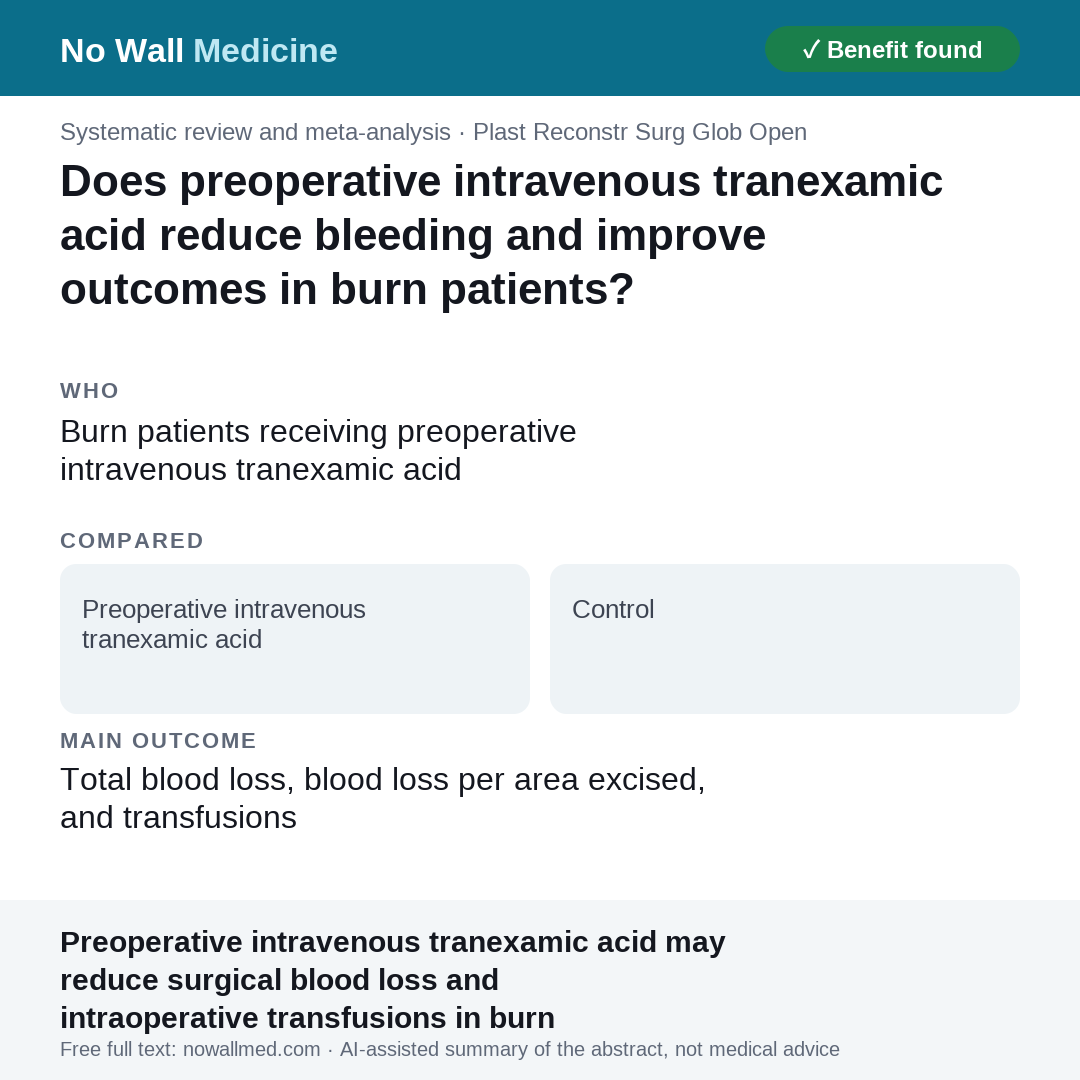
Efficacy and Safety of the Use of Tranexamic Acid in Burn Patients: A Systematic Review and Meta-analysis
Systematic review and meta-analysisBenefit found
Does preoperative intravenous tranexamic acid reduce bleeding and improve outcomes in burn patients?
Who
Burn patients receiving preoperative intravenous tranexamic acid
Compared
Preoperative intravenous tranexamic acid
Control
Main outcome
Total blood loss, blood loss per area excised, and transfusions
Result: standardized mean difference -0.65 for total blood loss; -3.66 for blood loss per area excised; -0.48 for packed red blood cell units
Bottom line: Preoperative intravenous tranexamic acid may reduce surgical blood loss and intraoperative transfusions in burn patients.
Limitation: Impact on graft survival and overall transfusion needs is uncertain.
Plast Reconstr Surg Glob Open · 2026-05-20Download image
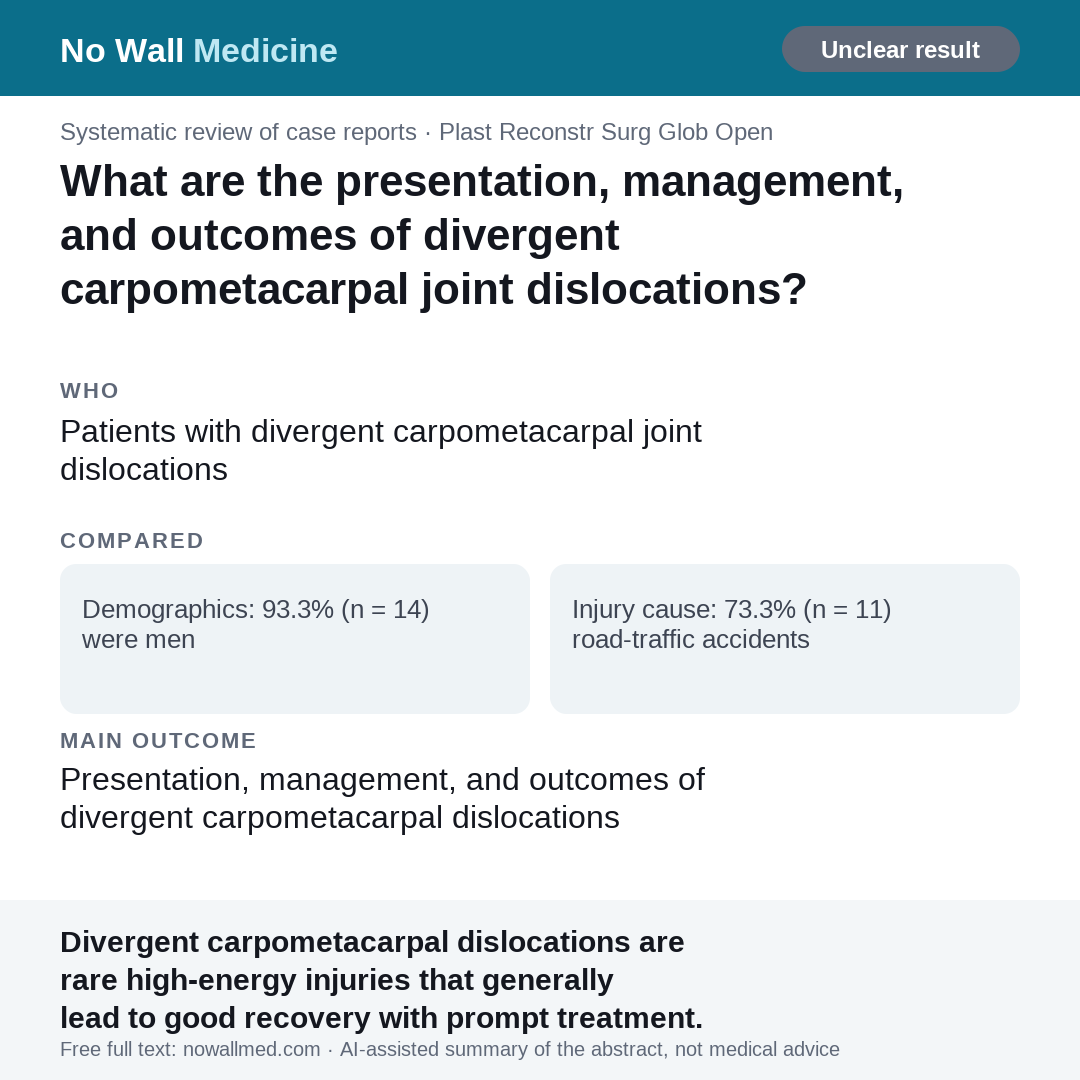
Divergent Dislocation of the Carpometacarpal Joints: A Case Report and Systematic Review
Systematic review of case reportsUnclear result
What are the presentation, management, and outcomes of divergent carpometacarpal joint dislocations?
Who
15
Patients with divergent carpometacarpal joint dislocations
Compared
Demographics: 93.3% (n = 14) were men
Injury cause: 73.3% (n = 11) road-traffic accidents
Main outcome
Presentation, management, and outcomes of divergent carpometacarpal dislocations
Bottom line: Divergent carpometacarpal dislocations are rare high-energy injuries that generally lead to good recovery with prompt treatment.
Limitation: Evidence is limited to case reports.
Plast Reconstr Surg Glob Open · 2026-05-20Download image
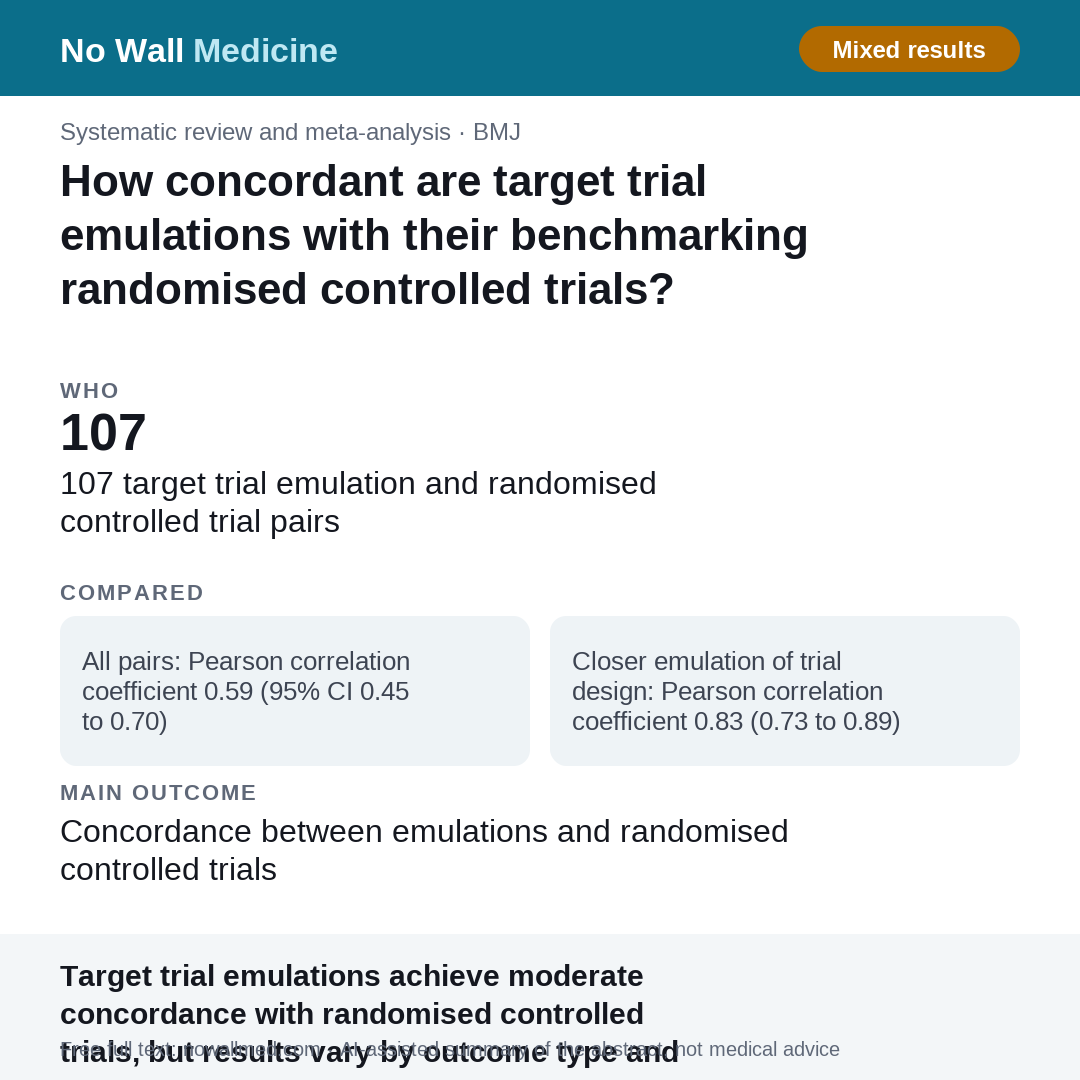
Concordance between target trial emulation and randomised controlled trials: systematic review and meta-analysis
Systematic review and meta-analysisMixed results
How concordant are target trial emulations with their benchmarking randomised controlled trials?
Who
107
107 target trial emulation and randomised controlled trial pairs
Compared
All pairs: Pearson correlation coefficient 0.59 (95% CI 0.45 to 0.70)
Closer emulation of trial design: Pearson correlation coefficient 0.83 (0.73 to 0.89)
Main outcome
Concordance between emulations and randomised controlled trials
Result: summary ratio of ratios 0.96 (95% CI 0.92 to 1.01)
Bottom line: Target trial emulations achieve moderate concordance with randomised controlled trials, but results vary by outcome type and data source.
BMJ · 2026-05-19Download image
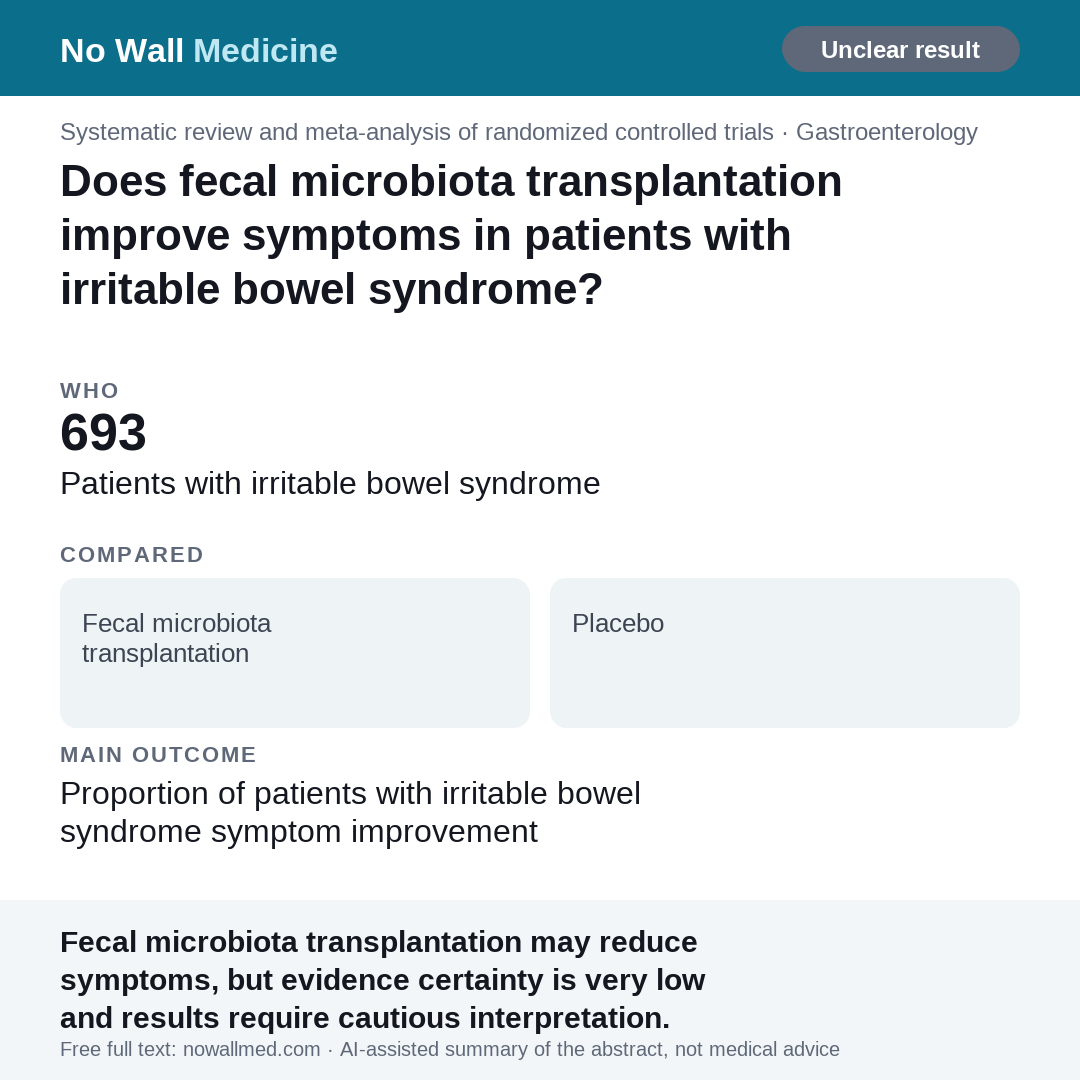
Fecal Microbiota Transplantation for Symptom Improvement in Patients With Irritable Bowel Syndrome: Systematic Review and Meta-Analysis of Randomized Controlled Trials
Systematic review and meta-analysis of randomized controlled trialsUnclear result
Does fecal microbiota transplantation improve symptoms in patients with irritable bowel syndrome?
Who
693
Patients with irritable bowel syndrome
Compared
Fecal microbiota transplantation
Placebo
Main outcome
Proportion of patients with irritable bowel syndrome symptom improvement
Result: risk ratio 0.72 (95% CI 0.50-1.03)
Bottom line: Fecal microbiota transplantation may reduce symptoms, but evidence certainty is very low and results require cautious interpretation.
Limitation: The certainty of evidence is very uncertain or very low.
Gastroenterology · 2026-05-19Download image
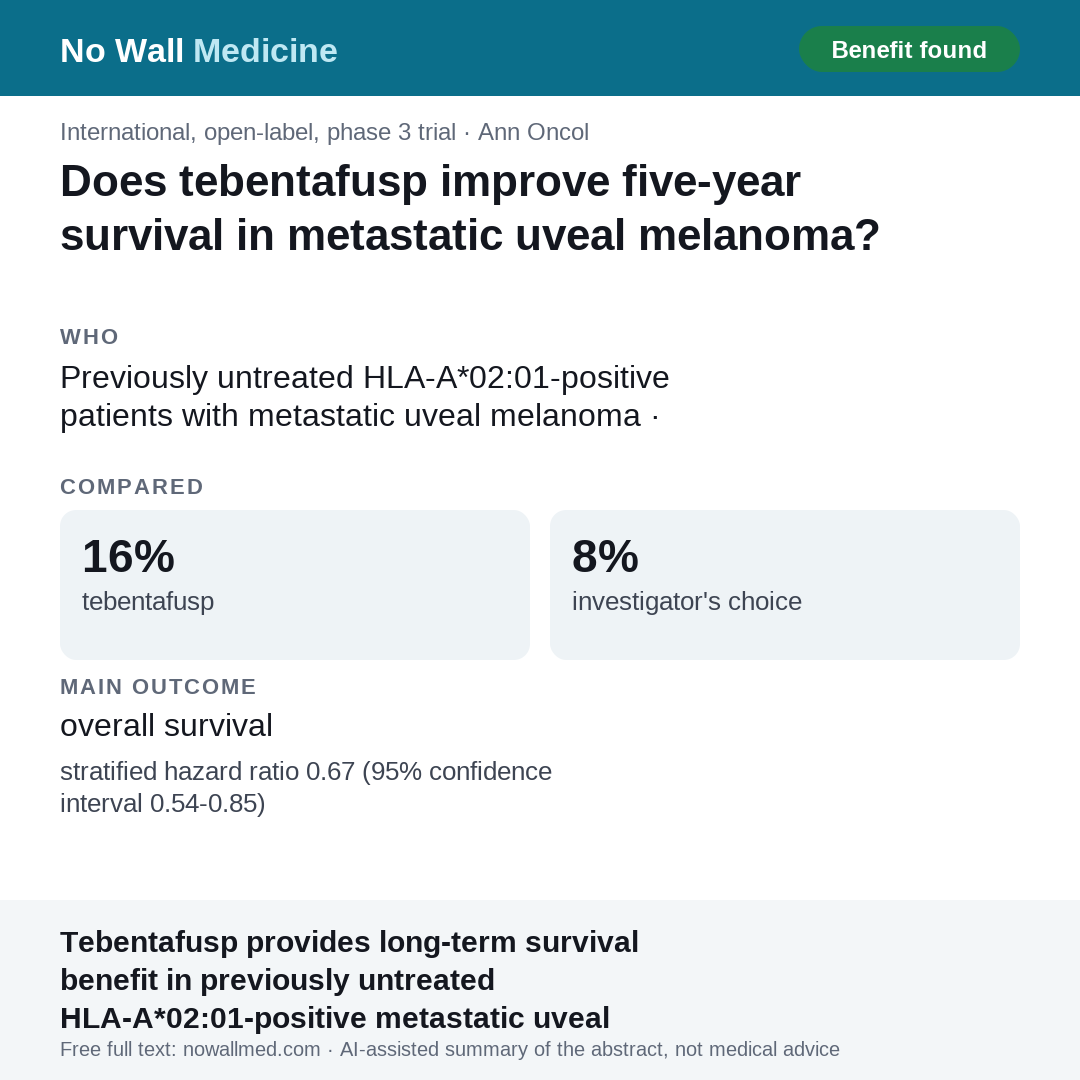
Five-year survival with tebentafusp in metastatic uveal melanoma
International, open-label, phase 3 trialBenefit found
Does tebentafusp improve five-year survival in metastatic uveal melanoma?
Who
Previously untreated HLA-A*02:01-positive patients with metastatic uveal melanoma · International
Compared
16%tebentafusp
8%investigator's choice
Main outcome
overall survival
Result: stratified hazard ratio 0.67 (95% confidence interval 0.54-0.85)
Bottom line: Tebentafusp provides long-term survival benefit in previously untreated HLA-A*02:01-positive metastatic uveal melanoma patients.
Ann Oncol · 2026-05-19Download image
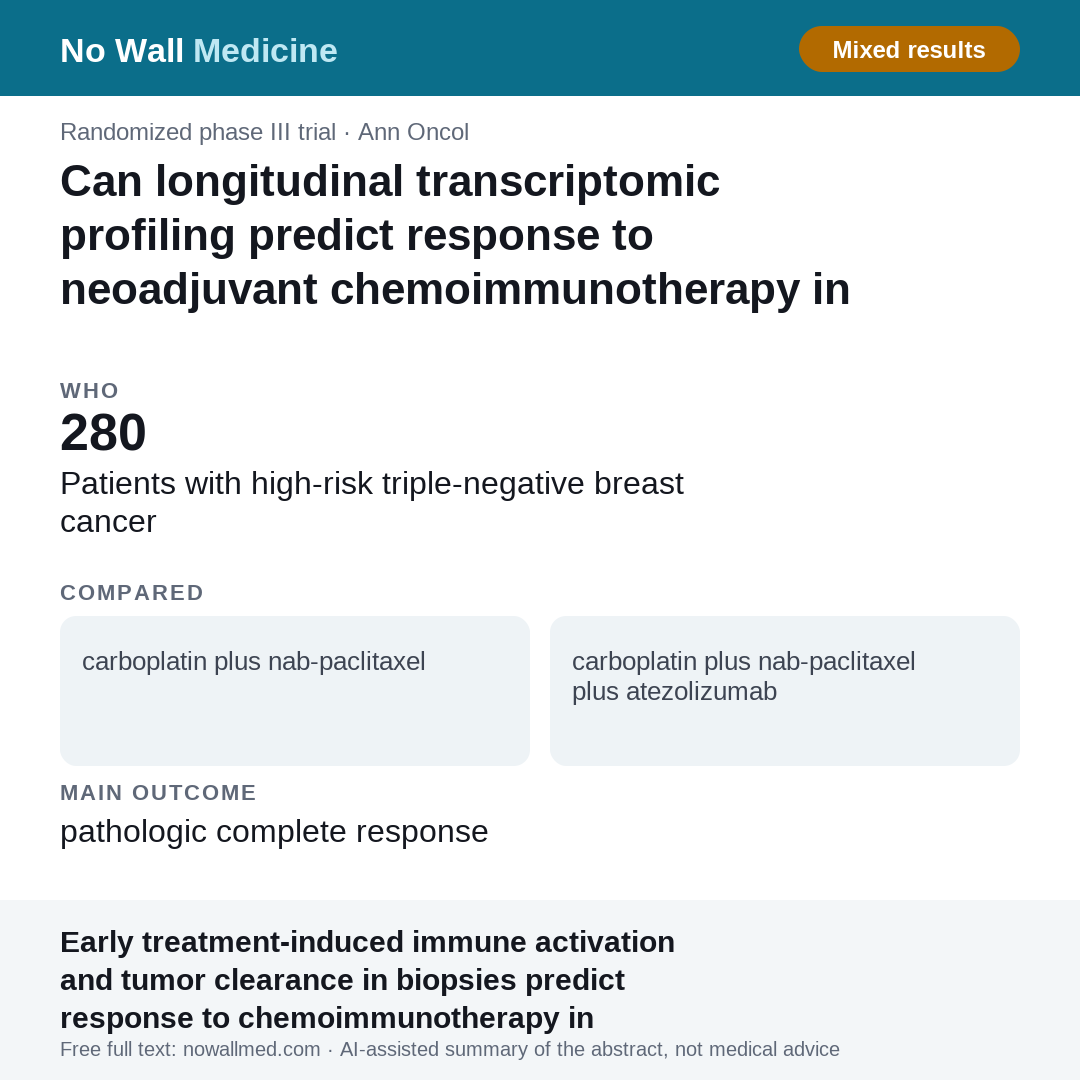
Longitudinal transcriptomic profiling identifies predictors of response to neoadjuvant chemoimmunotherapy in triple-negative breast cancer: results from the NeoTRIPaPDL1 trial
Randomized phase III trialMixed results
Can longitudinal transcriptomic profiling predict response to neoadjuvant chemoimmunotherapy in triple-negative breast cancer?
Who
280
Patients with high-risk triple-negative breast cancer
Compared
carboplatin plus nab-paclitaxel
carboplatin plus nab-paclitaxel plus atezolizumab
Main outcome
pathologic complete response
Bottom line: Early treatment-induced immune activation and tumor clearance in biopsies predict response to chemoimmunotherapy in triple-negative breast cancer.
Ann Oncol · 2026-05-19Download image
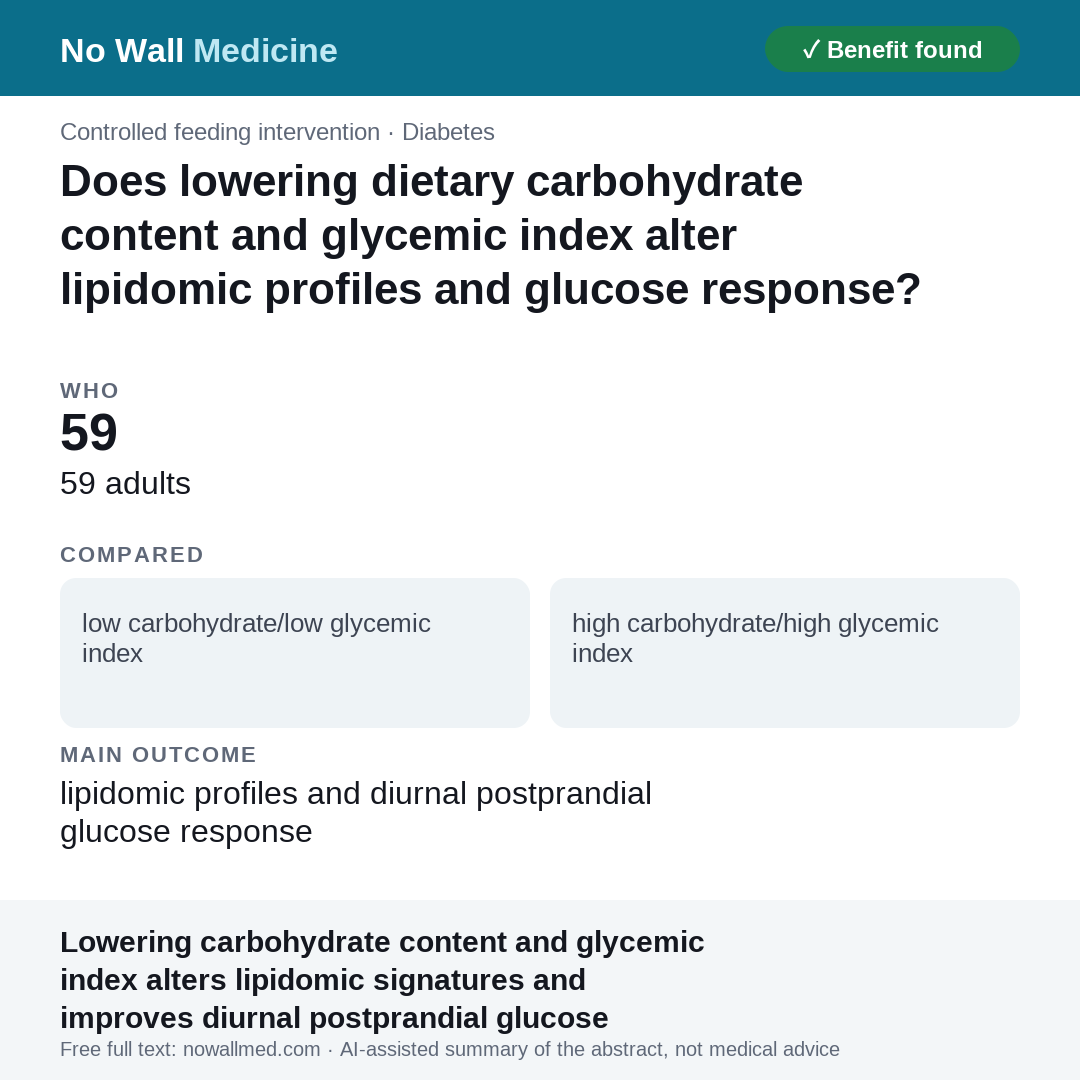
Effects of Dietary Carbohydrate Amount and Glycemic Index on Blood Lipidomic Signatures and Diurnal Postprandial Glucose Responses: The OmniCarb Trial
Controlled feeding interventionBenefit found
Does lowering dietary carbohydrate content and glycemic index alter lipidomic profiles and glucose response?
Who
59
59 adults
Compared
low carbohydrate/low glycemic index
high carbohydrate/high glycemic index
Main outcome
lipidomic profiles and diurnal postprandial glucose response
Bottom line: Lowering carbohydrate content and glycemic index alters lipidomic signatures and improves diurnal postprandial glucose responses.
Diabetes · 2026-05-19Download image
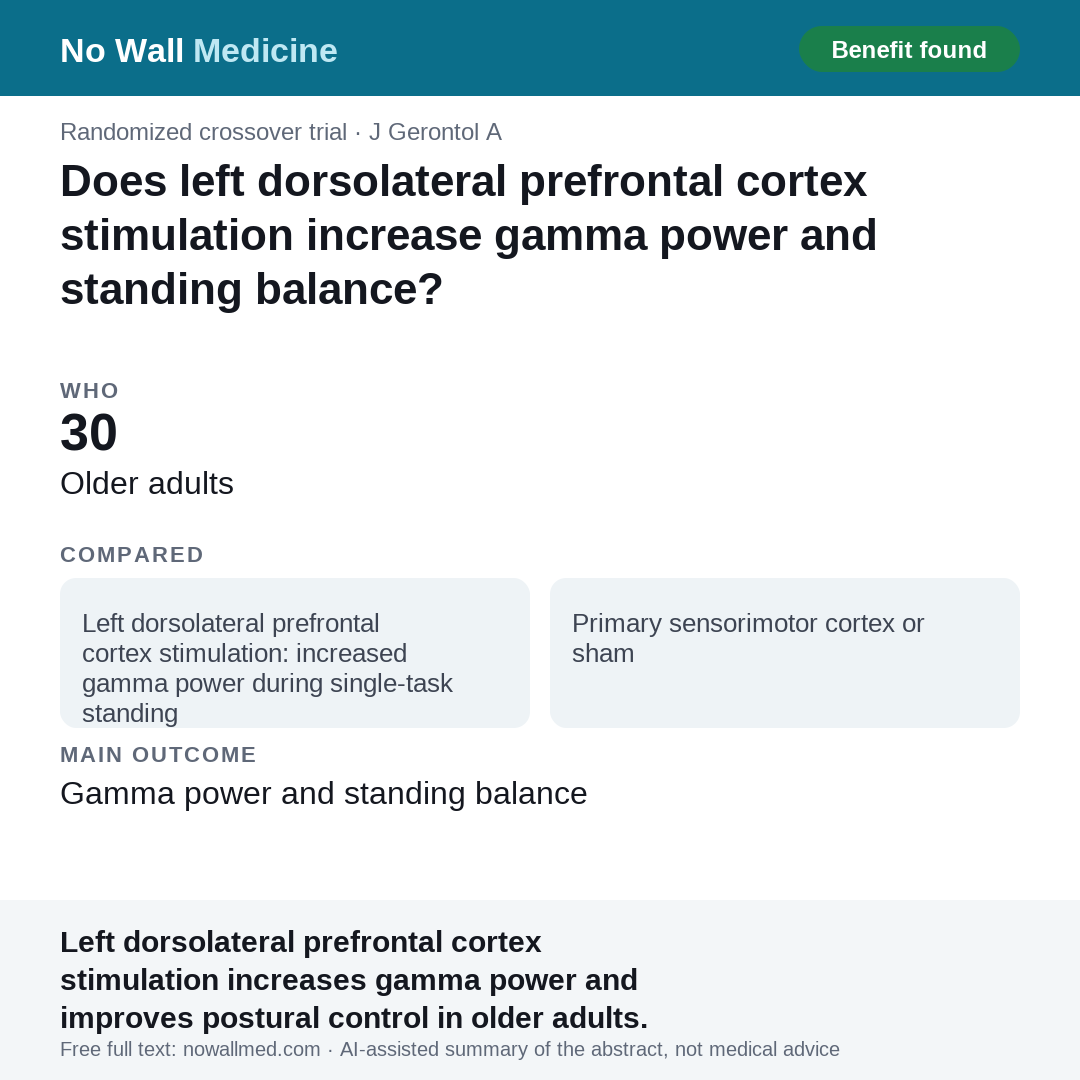
Transcranial direct current stimulation targeting the left dorsolateral prefrontal cortex increases gamma power and standing balance in older adults
Randomized crossover trialBenefit found
Does left dorsolateral prefrontal cortex stimulation increase gamma power and standing balance?
Who
30
Older adults
Compared
Left dorsolateral prefrontal cortex stimulation: increased gamma power during single-task standing
Primary sensorimotor cortex or sham
Main outcome
Gamma power and standing balance
Bottom line: Left dorsolateral prefrontal cortex stimulation increases gamma power and improves postural control in older adults.
J Gerontol A · 2026-05-19Download image
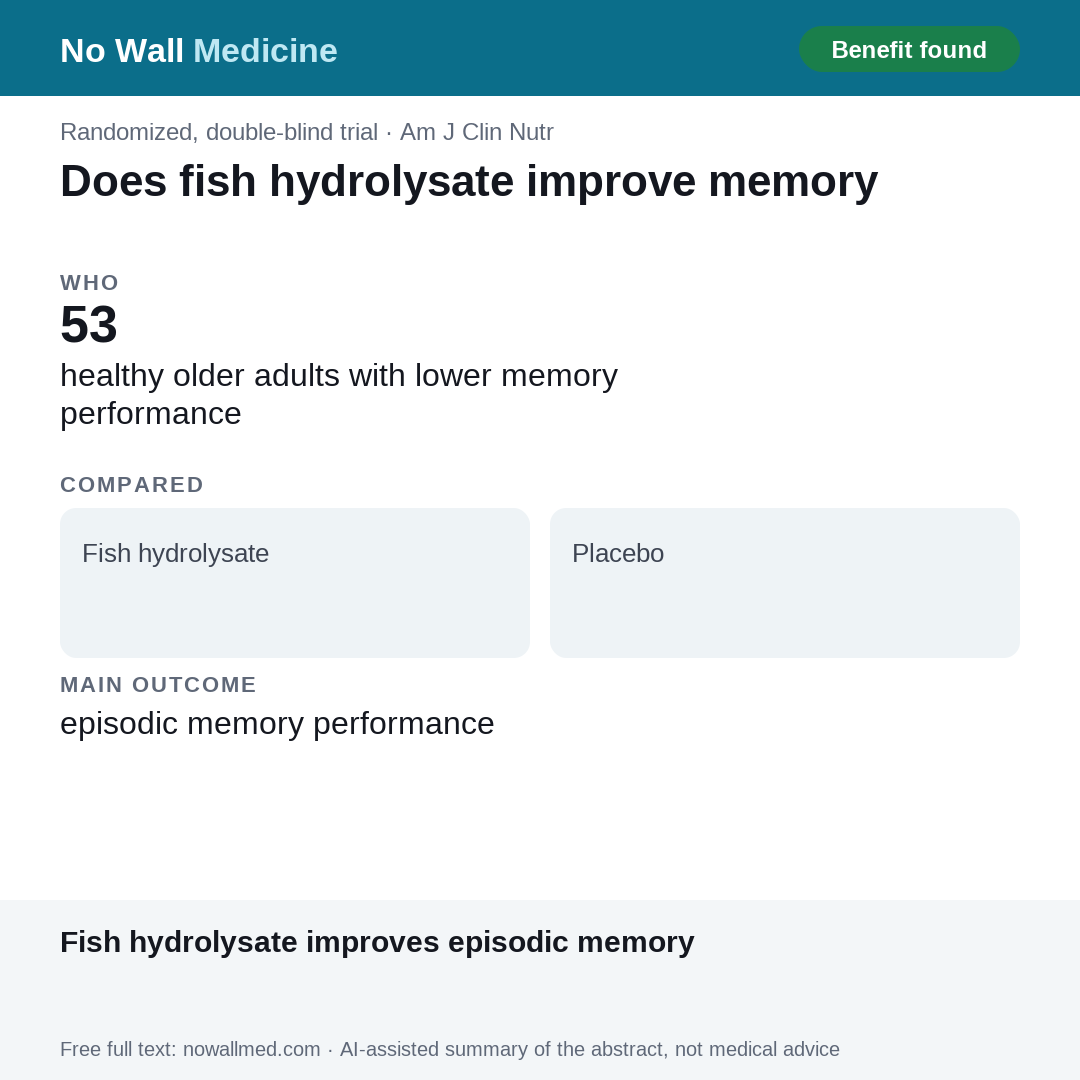
Dietary fish hydrolysate improves episodic memory in healthy elderly with lower level of memory performance: a double-blind, randomized, placebo-controlled clinical study
Randomized, double-blind trialBenefit found
Does fish hydrolysate improve memory
Who
53
healthy older adults with lower memory performance
Compared
Fish hydrolysate
Placebo
Main outcome
episodic memory performance
Bottom line: Fish hydrolysate improves episodic memory
Am J Clin Nutr · 2026-05-19Download image
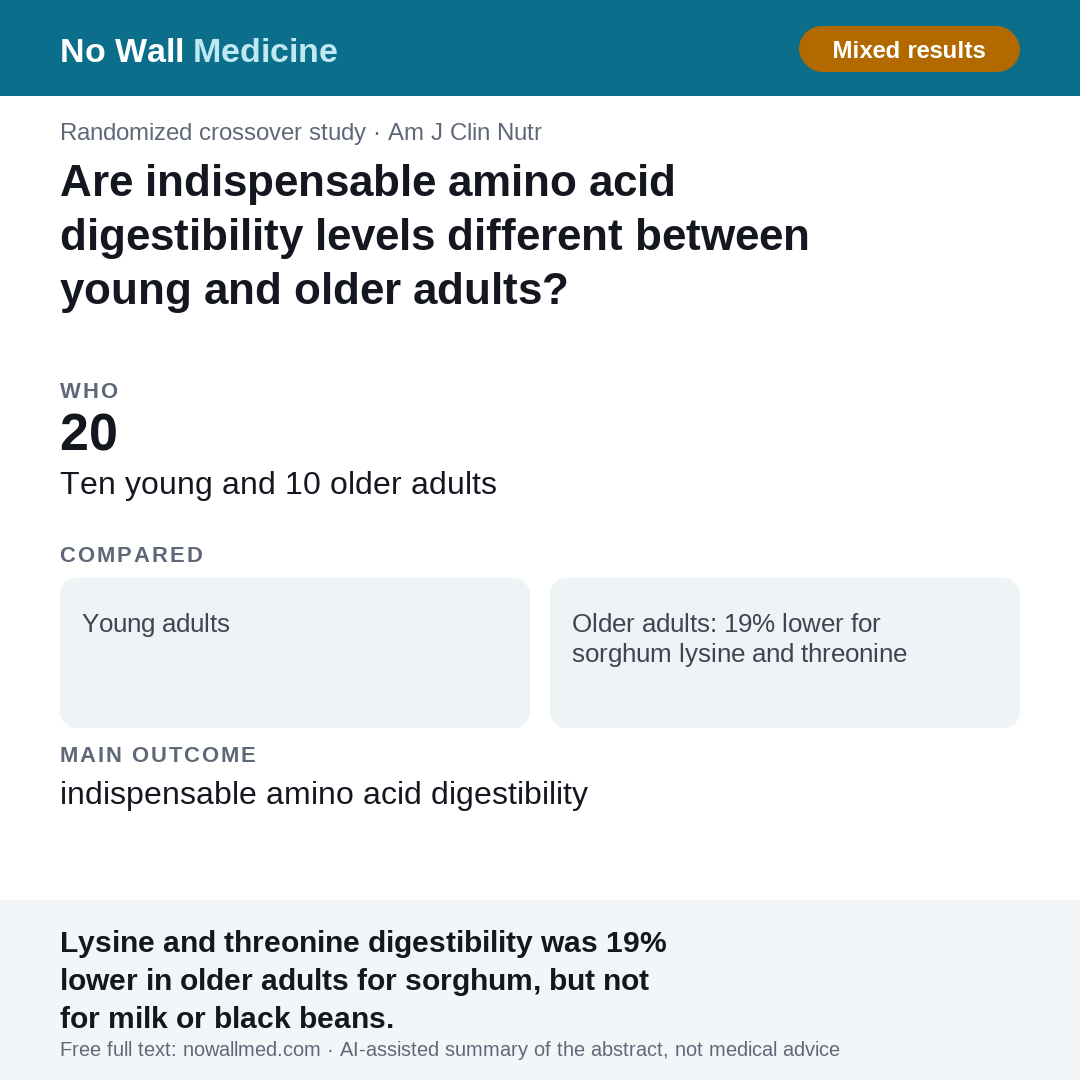
Differences in amino acid digestibility between young and older adults: a randomized crossover study using the dual tracer method
Randomized crossover studyMixed results
Are indispensable amino acid digestibility levels different between young and older adults?
Who
20
Ten young and 10 older adults
Compared
Young adults
Older adults: 19% lower for sorghum lysine and threonine
Main outcome
indispensable amino acid digestibility
Bottom line: Lysine and threonine digestibility was 19% lower in older adults for sorghum, but not for milk or black beans.
Am J Clin Nutr · 2026-05-19Download image
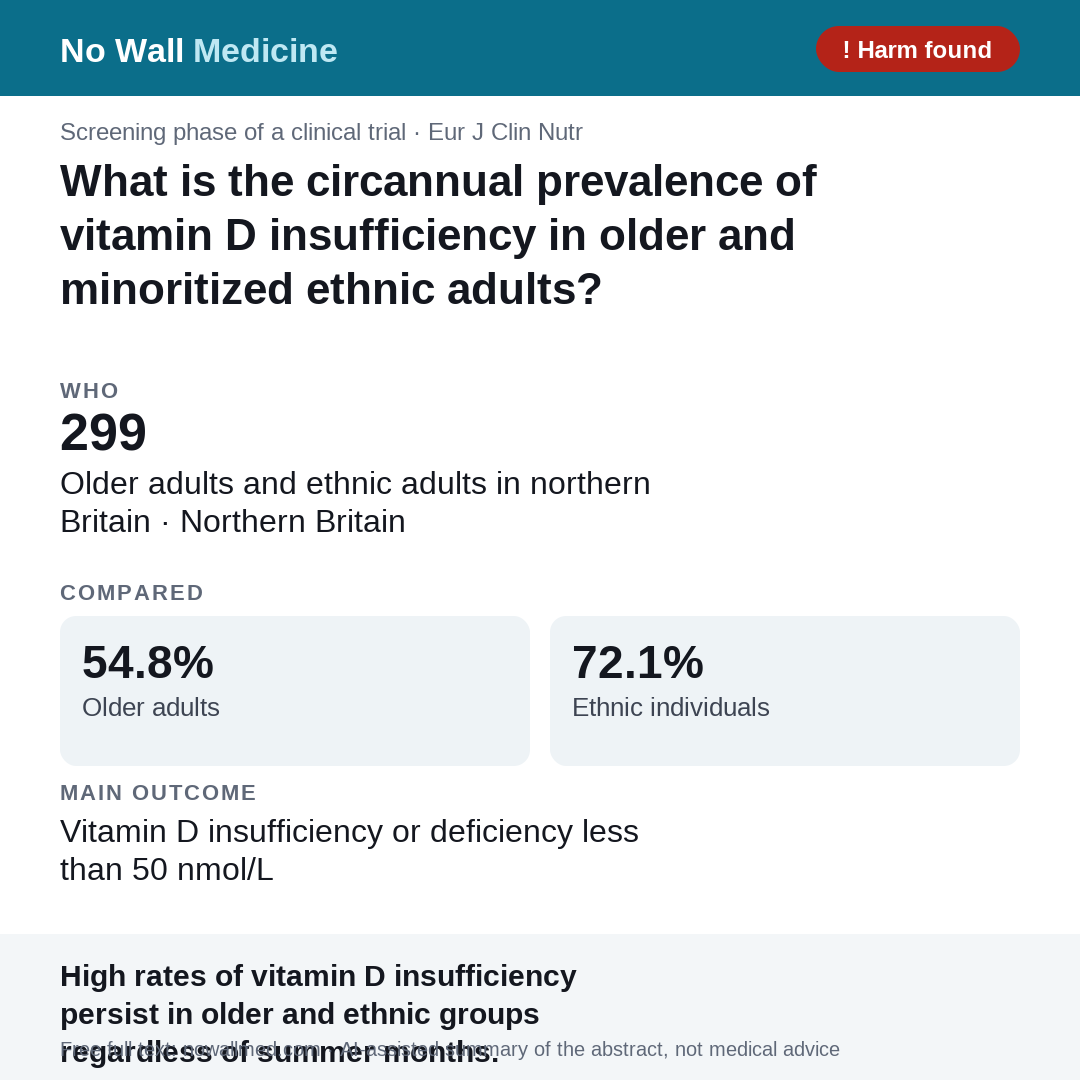
Circannual prevalence of vitamin D insufficiency in older and minoritized ethnic adults in Northern Britain: screening outcomes from a clinical trial
Screening phase of a clinical trialHarm found
What is the circannual prevalence of vitamin D insufficiency in older and minoritized ethnic adults?
Who
299
Older adults and ethnic adults in northern Britain · Northern Britain
Compared
54.8%Older adults
72.1%Ethnic individuals
Main outcome
Vitamin D insufficiency or deficiency less than 50 nmol/L
Bottom line: High rates of vitamin D insufficiency persist in older and ethnic groups regardless of summer months.
Eur J Clin Nutr · 2026-05-19Download image
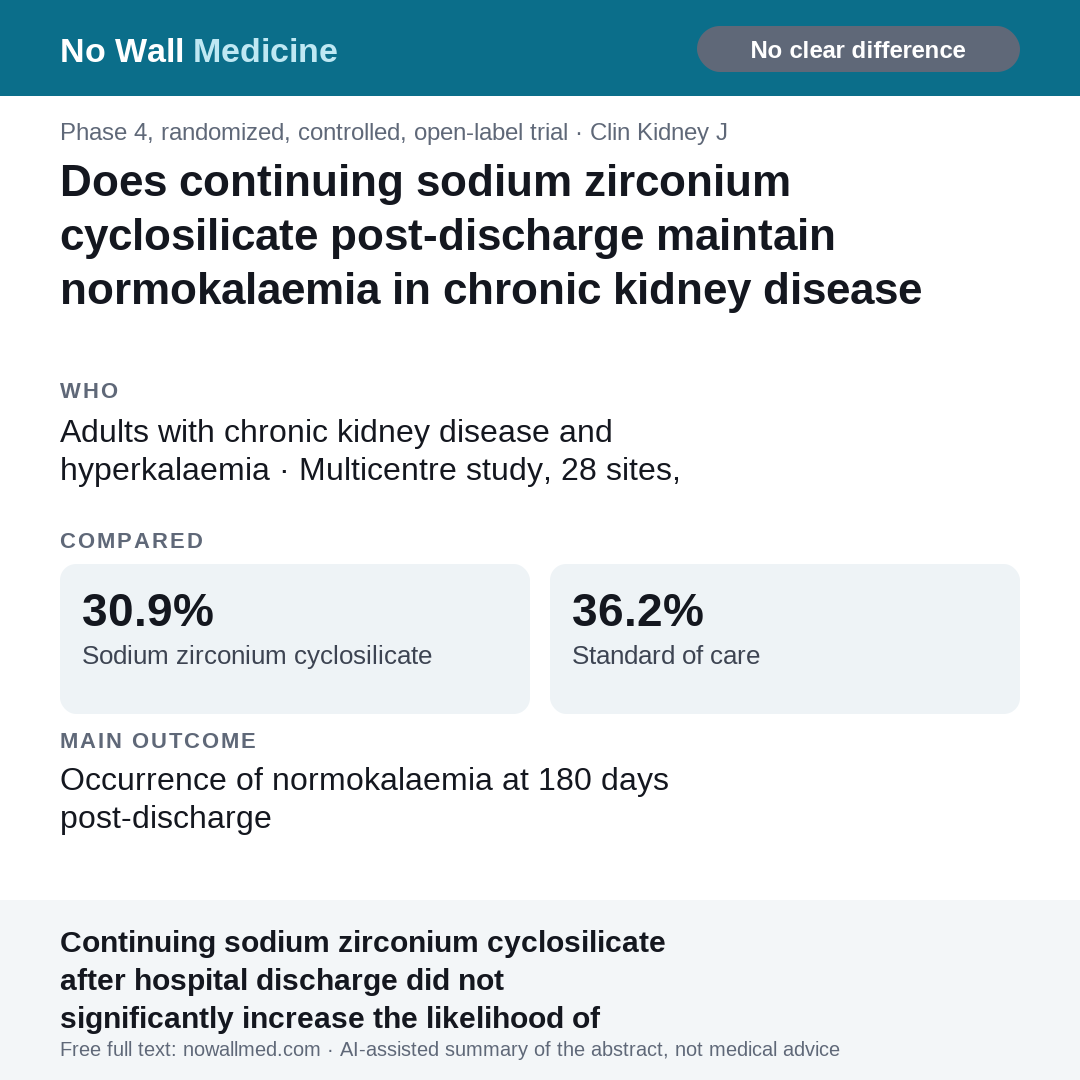
Sodium zirconium cyclosilicate post hospital discharge to prevent hyperkalaemia: phase 4, randomized CONTINUITY trial
Phase 4, randomized, controlled, open-label trialNo clear difference
Does continuing sodium zirconium cyclosilicate post-discharge maintain normokalaemia in chronic kidney disease patients?
Who
Adults with chronic kidney disease and hyperkalaemia · Multicentre study, 28 sites, six European countries
Compared
30.9%Sodium zirconium cyclosilicate
36.2%Standard of care
Main outcome
Occurrence of normokalaemia at 180 days post-discharge
Result: odds ratio 0.81 (95% CI 0.39-1.66)
Bottom line: Continuing sodium zirconium cyclosilicate after hospital discharge did not significantly increase the likelihood of maintaining normokalaemia.
Limitation: High and imbalanced levels of missing serum potassium measurements at 180 days.
Clin Kidney J · 2026-05-19Download image
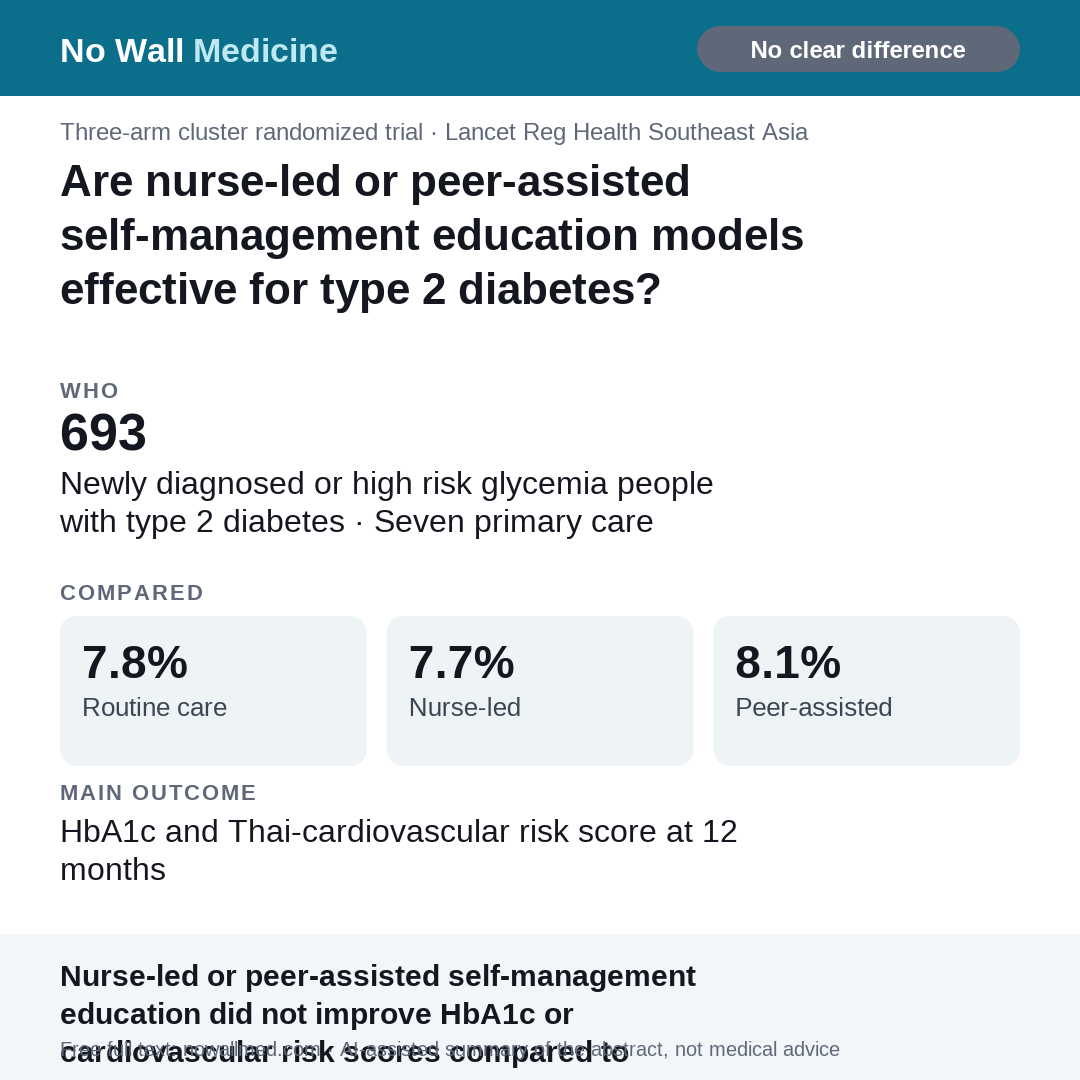
Self-management education and support for type 2 diabetes in Thailand: a cluster randomized trial (2019-2021)
Three-arm cluster randomized trialNo clear difference
Are nurse-led or peer-assisted self-management education models effective for type 2 diabetes?
Who
693
Newly diagnosed or high risk glycemia people with type 2 diabetes · Seven primary care units in Thailand
Compared
7.8%Routine care (SD 1.6)
7.7%Nurse-led (SD 1.3)
8.1%Peer-assisted (SD 1.6)
Main outcome
HbA1c and Thai-cardiovascular risk score at 12 months
Result: HbA1c difference: -0.1% (-0.4 to 0.1) and 0.1% (-0.2 to 0.5)
Bottom line: Nurse-led or peer-assisted self-management education did not improve HbA1c or cardiovascular risk scores compared to routine care.
Funded by: UK Medical Research Council and Thailand Research Fund
Lancet Reg Health Southeast Asia · 2026-05-19Download image
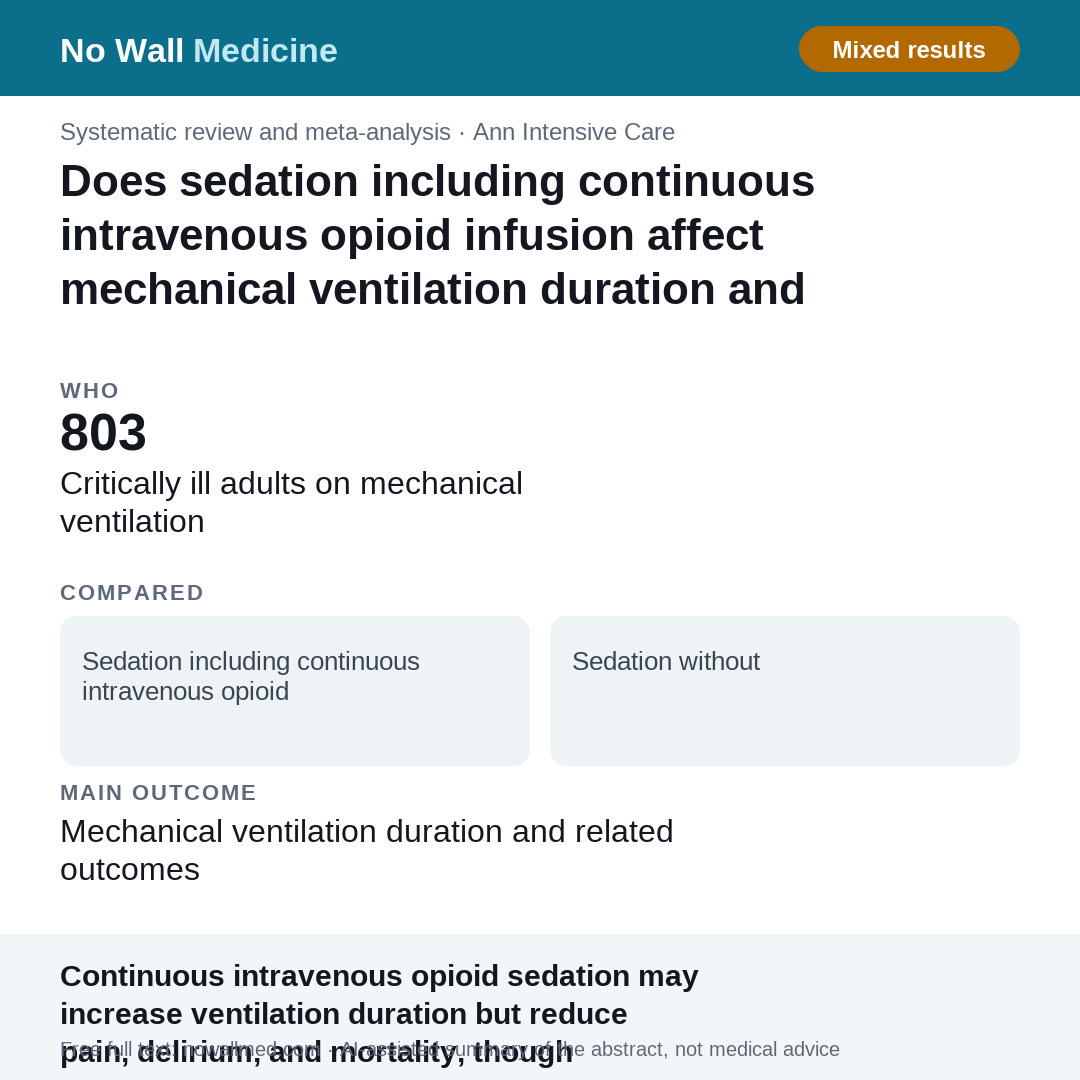
Association between opioid infusion use and duration of mechanical ventilation and related outcomes in critically ill adults: a systematic review and meta-analysis
Systematic review and meta-analysisMixed results
Does sedation including continuous intravenous opioid infusion affect mechanical ventilation duration and outcomes?
Who
803
Critically ill adults on mechanical ventilation
Compared
Sedation including continuous intravenous opioid
Sedation without
Main outcome
Mechanical ventilation duration and related outcomes
Result: mean difference 3.63 h (95% CI 2.27-4.99)
Bottom line: Continuous intravenous opioid sedation may increase ventilation duration but reduce pain, delirium, and mortality, though certainty remains very low.
Limitation: Risk of bias was critical for most studies.
Ann Intensive Care · 2026-05-19Download image
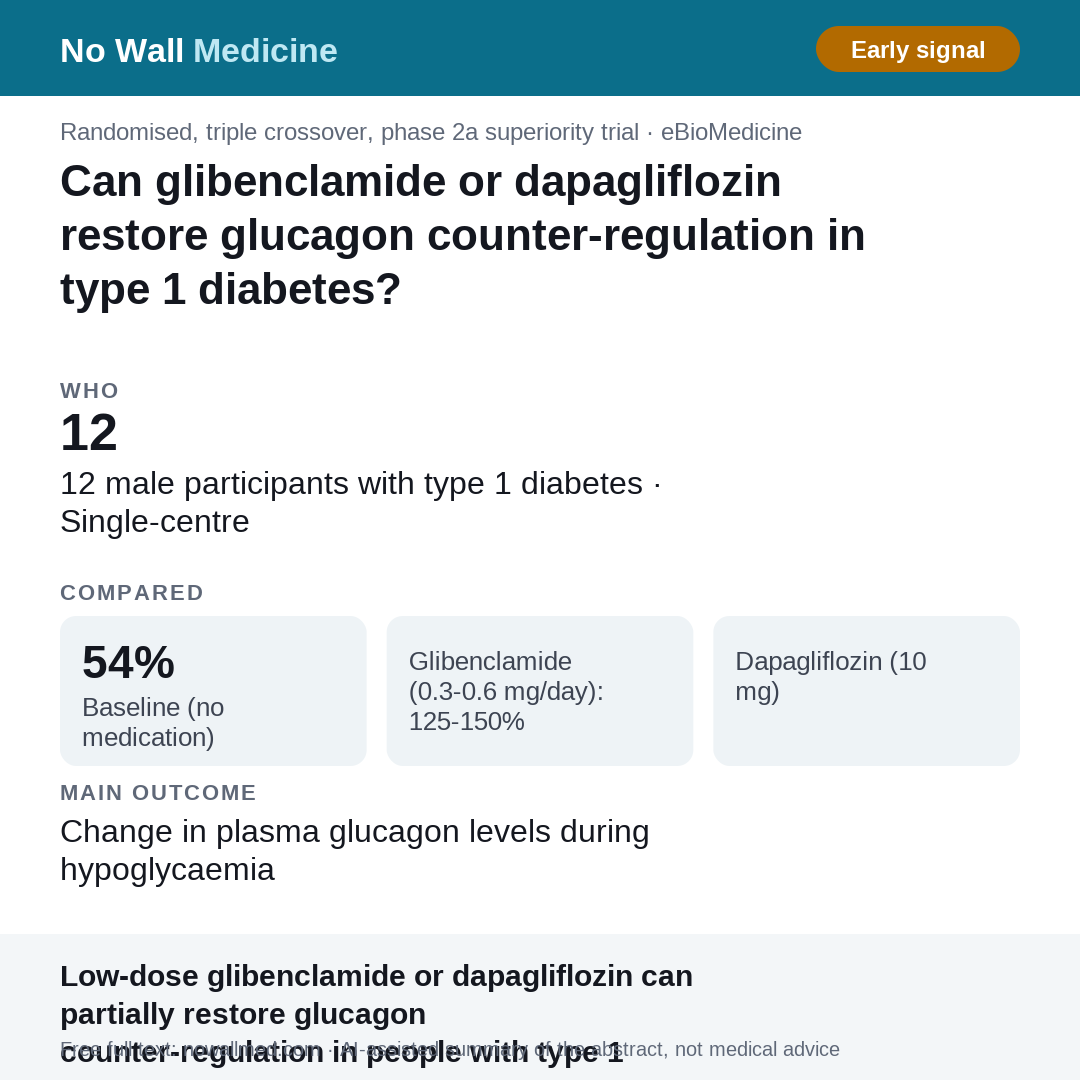
Partial restoration of counterregulatory circulating glucagon by dapagliflozin and low-dose glibenclamide in men with type 1 diabetes: in vitro studies and randomised clinical crossover trial
Randomised, triple crossover, phase 2a superiority trialBenefit found
Can glibenclamide or dapagliflozin restore glucagon counter-regulation in type 1 diabetes?
Who
12
12 male participants with type 1 diabetes · Single-centre
Compared
54%Baseline (no medication)
Glibenclamide (0.3-0.6 mg/day): 125-150%
Dapagliflozin (10 mg)
Main outcome
Change in plasma glucagon levels during hypoglycaemia
Bottom line: Low-dose glibenclamide or dapagliflozin can partially restore glucagon counter-regulation in people with type 1 diabetes.
Funded by: The Leona M. and Harry B. Helmsley Charitable Trust
eBioMedicine · 2026-05-19Download image
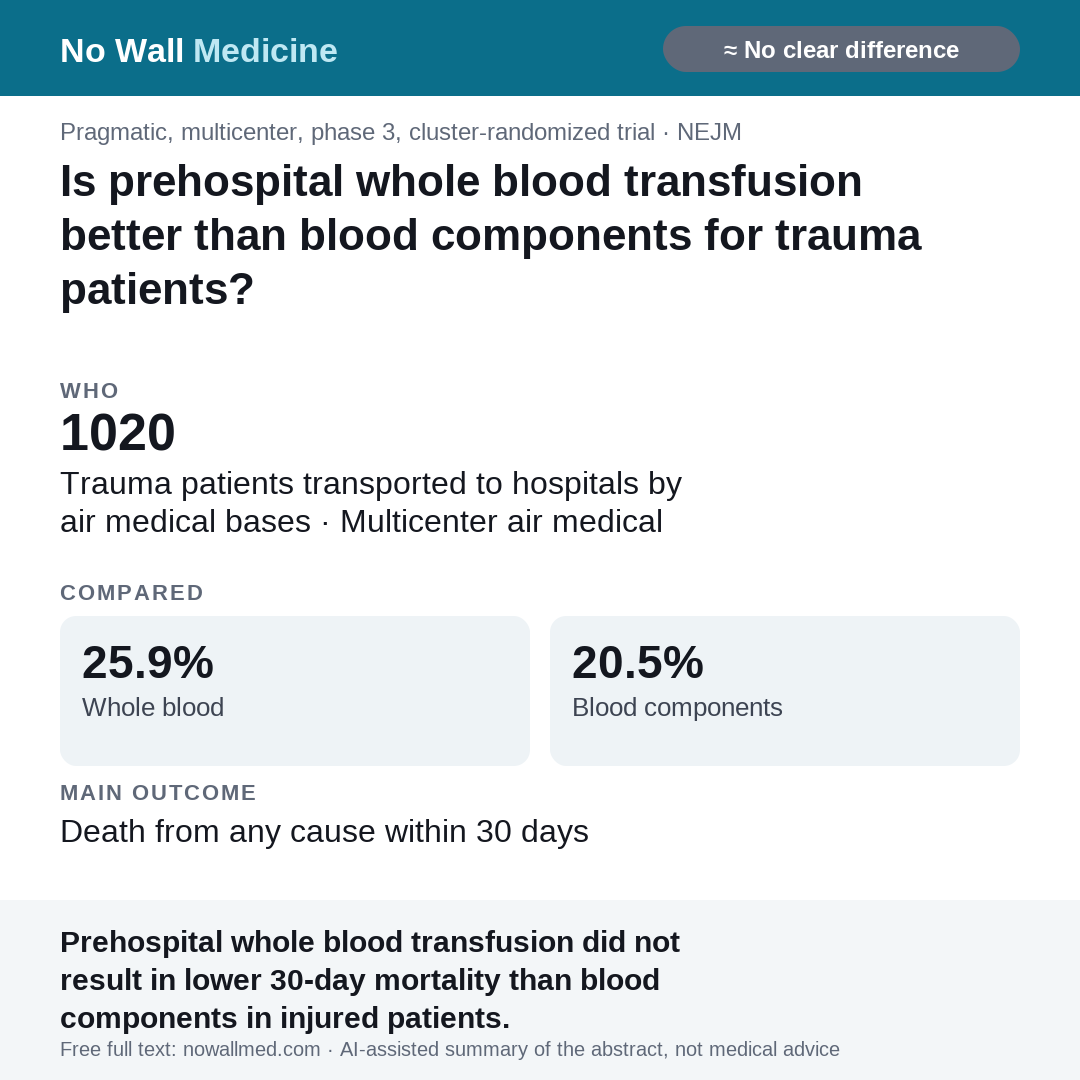
Prehospital Resuscitation with Type O Whole Blood for Trauma and Hemorrhage
Pragmatic, multicenter, phase 3, cluster-randomized trialNo clear difference
Is prehospital whole blood transfusion better than blood components for trauma patients?
Who
1020
Trauma patients transported to hospitals by air medical bases · Multicenter air medical bases
Compared
25.9%Whole blood
20.5%Blood components
Main outcome
Death from any cause within 30 days
Result: adjusted odds ratio 1.24 (95% CI 0.87 to 1.76)
Bottom line: Prehospital whole blood transfusion did not result in lower 30-day mortality than blood components in injured patients.
Funded by: Defense Health Agency Research Technology Portfolio Management
NEJM · 2026-05-18Download image