Visual abstracts
New randomized trials and meta-analyses from leading journals at a glance: who was studied, what was compared, and what was found. Every paper is free to read in full.
All specialtiesCardiology 4877Oncology 4138Gastroenterology & Hepatology 1942Infectious Disease 3837Neurology 1905Psychiatry & Mental Health 2273Pulmonology 2143Critical Care 1365Endocrinology & Diabetes 2580Pediatrics 2980Surgery 2559Orthopedics & Sports Medicine 931Neurosurgery 537Cardiothoracic & Vascular Surgery 674Plastic & Reconstructive Surgery 591Nephrology 1133Rheumatology 823Hematology 1109Dermatology 621Ophthalmology 543Obstetrics & Gynecology 1686Public & Global Health 1058Radiology & Imaging 648Anesthesiology 986Urology 764ENT (Otolaryngology) 503Emergency Medicine 511Allergy & Immunology 313Geriatrics 981Family Medicine & Primary Care 562Medical Genetics & Genomics 676Pathology & Laboratory Medicine 159Physical Medicine & Rehabilitation 757Palliative Care 444Nutrition 1588Digital Health & AI 2201General Medicine 321
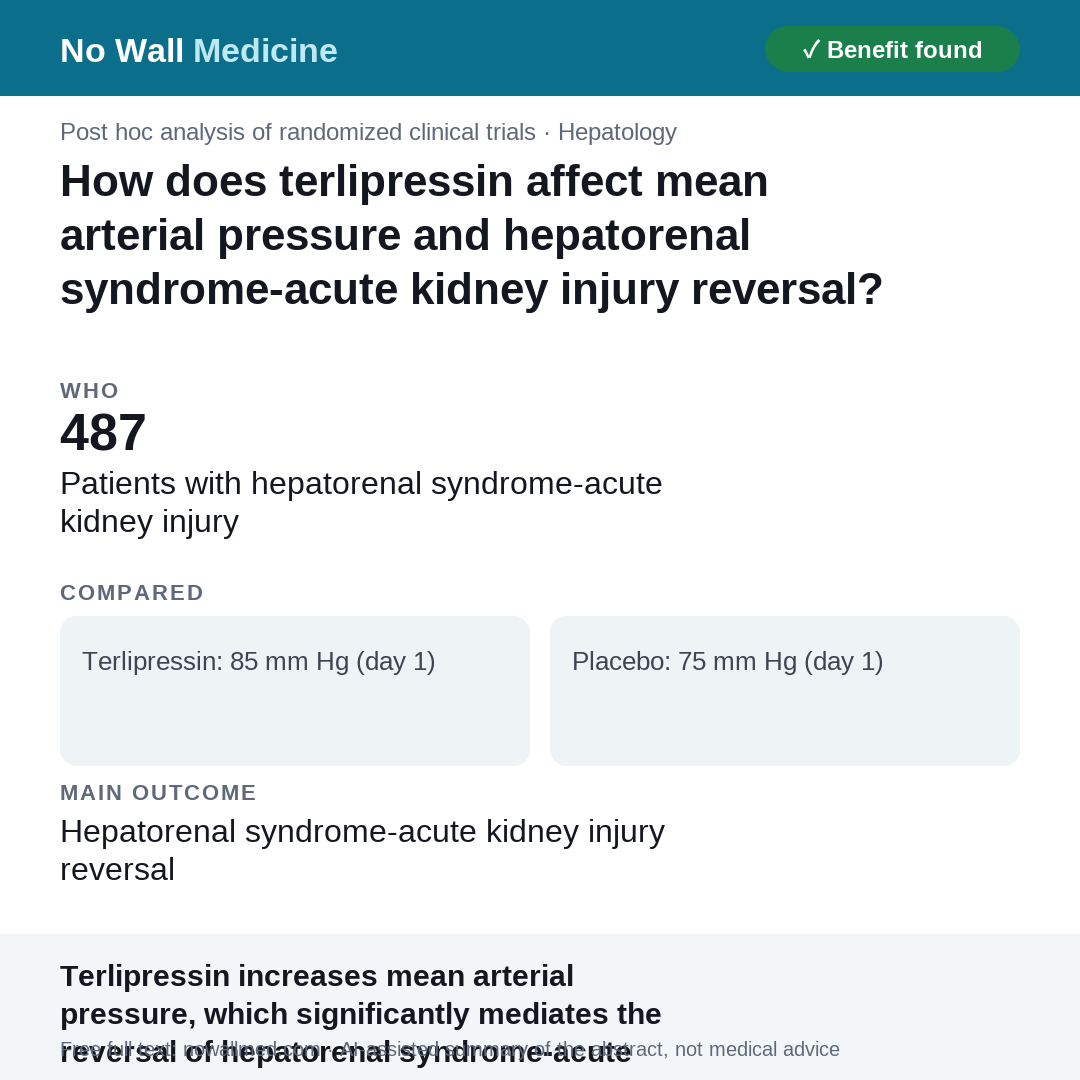
The relationship between mean arterial pressure and terlipressin in hepatorenal syndrome-acute kidney injury reversal: A post hoc analysis
Post hoc analysis of randomized clinical trialsBenefit found
How does terlipressin affect mean arterial pressure and hepatorenal syndrome-acute kidney injury reversal?
Who
487
Patients with hepatorenal syndrome-acute kidney injury
Compared
Terlipressin: 85 mm Hg (day 1)
Placebo: 75 mm Hg (day 1)
Main outcome
Hepatorenal syndrome-acute kidney injury reversal
Result: hazard ratio 1.17 (95% CI 1.11-1.22) per 5 mm Hg increase
Bottom line: Terlipressin increases mean arterial pressure, which significantly mediates the reversal of hepatorenal syndrome-acute kidney injury.
Hepatology · 2025-03-07Download image
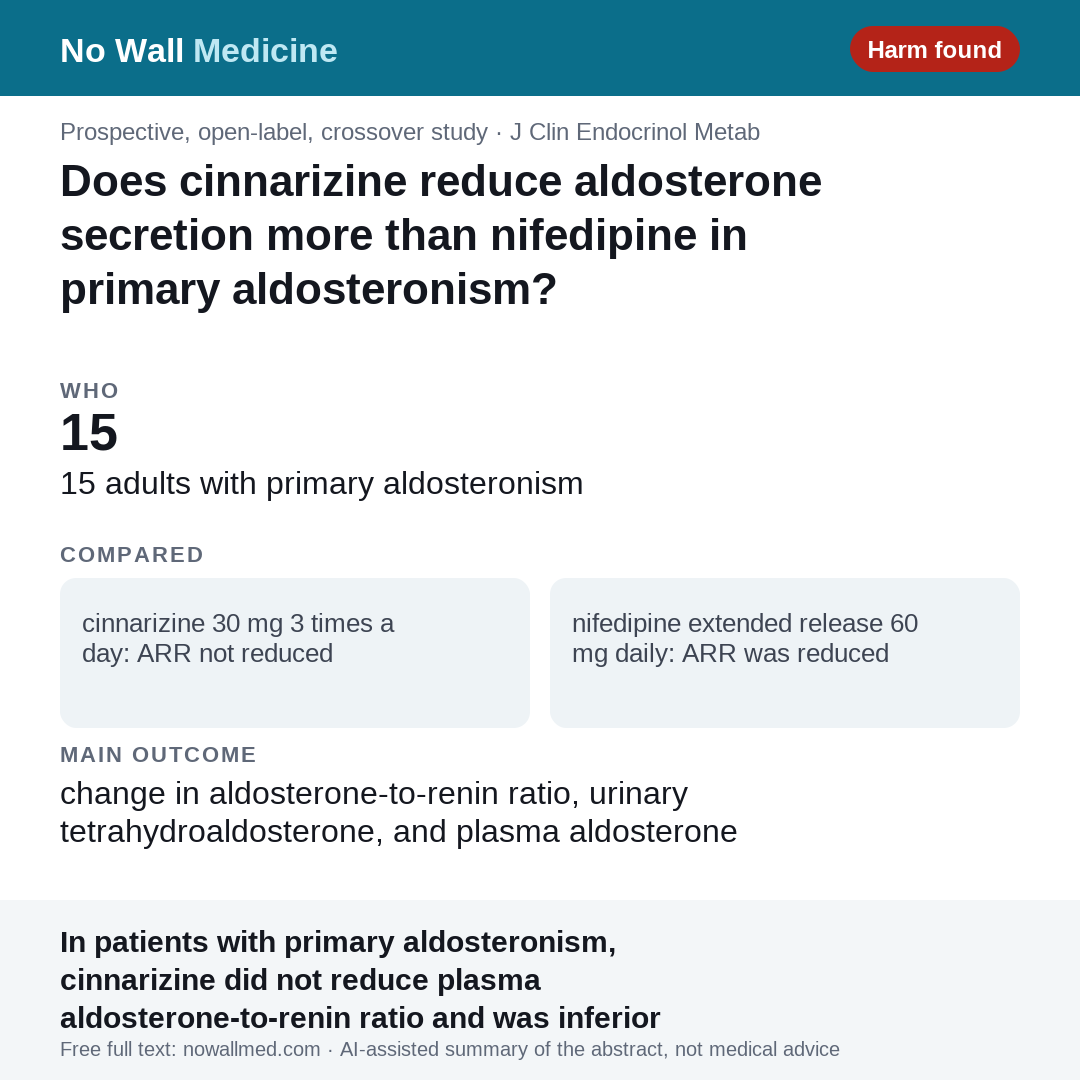
Evaluation of Aldosterone Suppression by Cinnarizine, a Putative Cav1.3 Inhibitor
Prospective, open-label, crossover studyHarm found
Does cinnarizine reduce aldosterone secretion more than nifedipine in primary aldosteronism?
Who
15
15 adults with primary aldosteronism
Compared
cinnarizine 30 mg 3 times a day: ARR not reduced
nifedipine extended release 60 mg daily: ARR was reduced
Main outcome
change in aldosterone-to-renin ratio, urinary tetrahydroaldosterone, and plasma aldosterone concentration
Bottom line: In patients with primary aldosteronism, cinnarizine did not reduce plasma aldosterone-to-renin ratio and was inferior to nifedipine.
Limitation: The study used a small sample of 15 adults.
J Clin Endocrinol Metab · 2025-03-07Download image
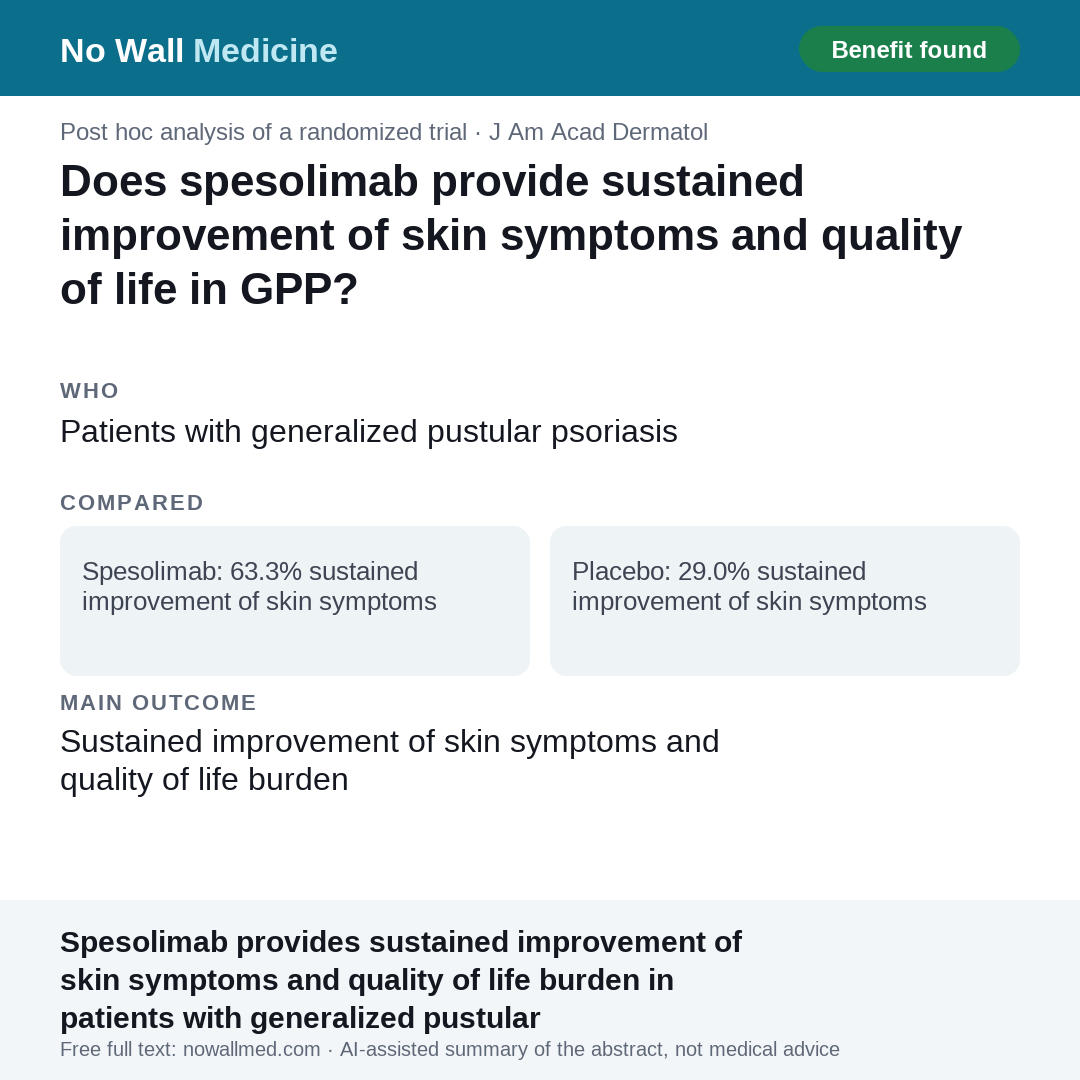
Effect of spesolimab on sustained disease control in patients with generalized pustular psoriasis: Post hoc analysis of the EFFISAYIL 2 study
Post hoc analysis of a randomized trialBenefit found
Does spesolimab provide sustained improvement of skin symptoms and quality of life in GPP?
Who
Patients with generalized pustular psoriasis
Compared
Spesolimab: 63.3% sustained improvement of skin symptoms
Placebo: 29.0% sustained improvement of skin symptoms
Main outcome
Sustained improvement of skin symptoms and quality of life burden
Bottom line: Spesolimab provides sustained improvement of skin symptoms and quality of life burden in patients with generalized pustular psoriasis.
Limitation: Retrospective, descriptive, post hoc analysis.
J Am Acad Dermatol · 2025-03-07Download image
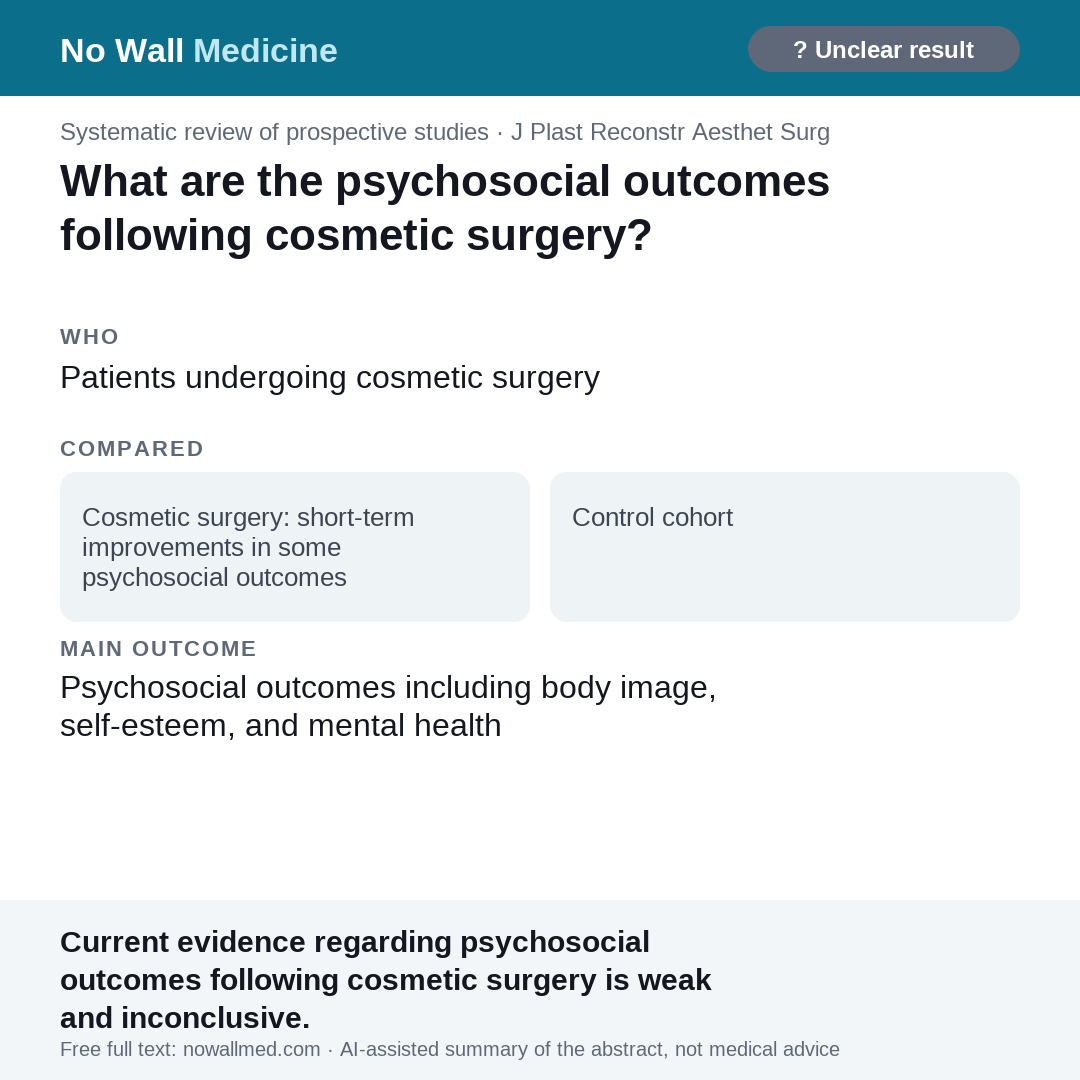
The psychosocial outcomes following cosmetic surgery are largely unknown: A systematic review
Systematic review of prospective studiesUnclear result
What are the psychosocial outcomes following cosmetic surgery?
Who
Patients undergoing cosmetic surgery
Compared
Cosmetic surgery: short-term improvements in some psychosocial outcomes
Control cohort
Main outcome
Psychosocial outcomes including body image, self-esteem, and mental health
Bottom line: Current evidence regarding psychosocial outcomes following cosmetic surgery is weak and inconclusive.
Limitation: Considerable heterogeneity across research designs and overall poor quality of studies.
J Plast Reconstr Aesthet Surg · 2025-03-07Download image
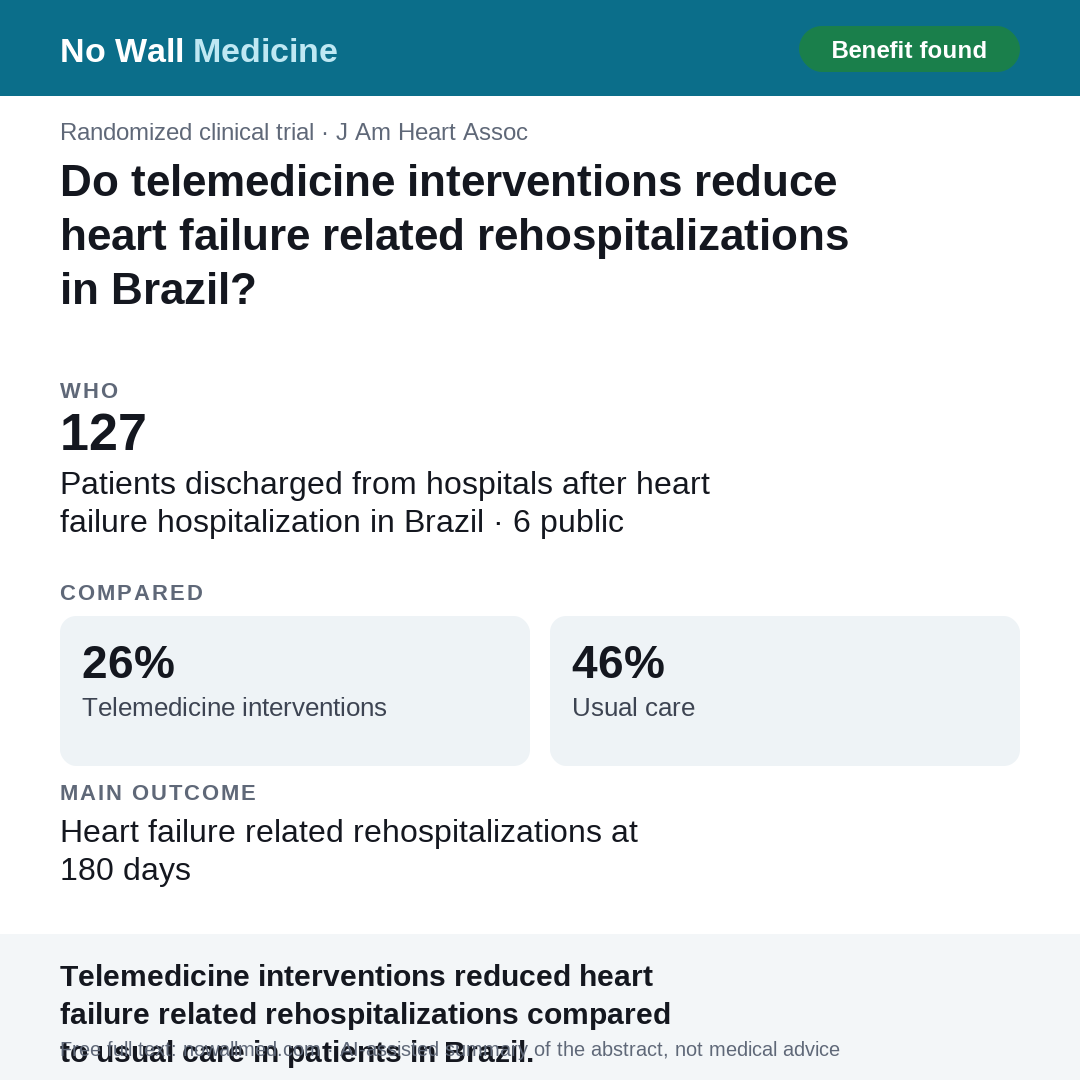
Effect of Telemedicine Interventions on Heart Failure Hospitalizations: A Randomized Trial
Randomized clinical trialBenefit found
Do telemedicine interventions reduce heart failure related rehospitalizations in Brazil?
Who
127
Patients discharged from hospitals after heart failure hospitalization in Brazil · 6 public hospitals in Brazil
Compared
26%Telemedicine interventions
46%Usual care
Main outcome
Heart failure related rehospitalizations at 180 days
Result: relative risk 0.56 (P<0.02)
Bottom line: Telemedicine interventions reduced heart failure related rehospitalizations compared to usual care in patients in Brazil.
Limitation: Enrollment was lower than expected because of COVID-19 disruptions.
J Am Heart Assoc · 2025-03-07Download image
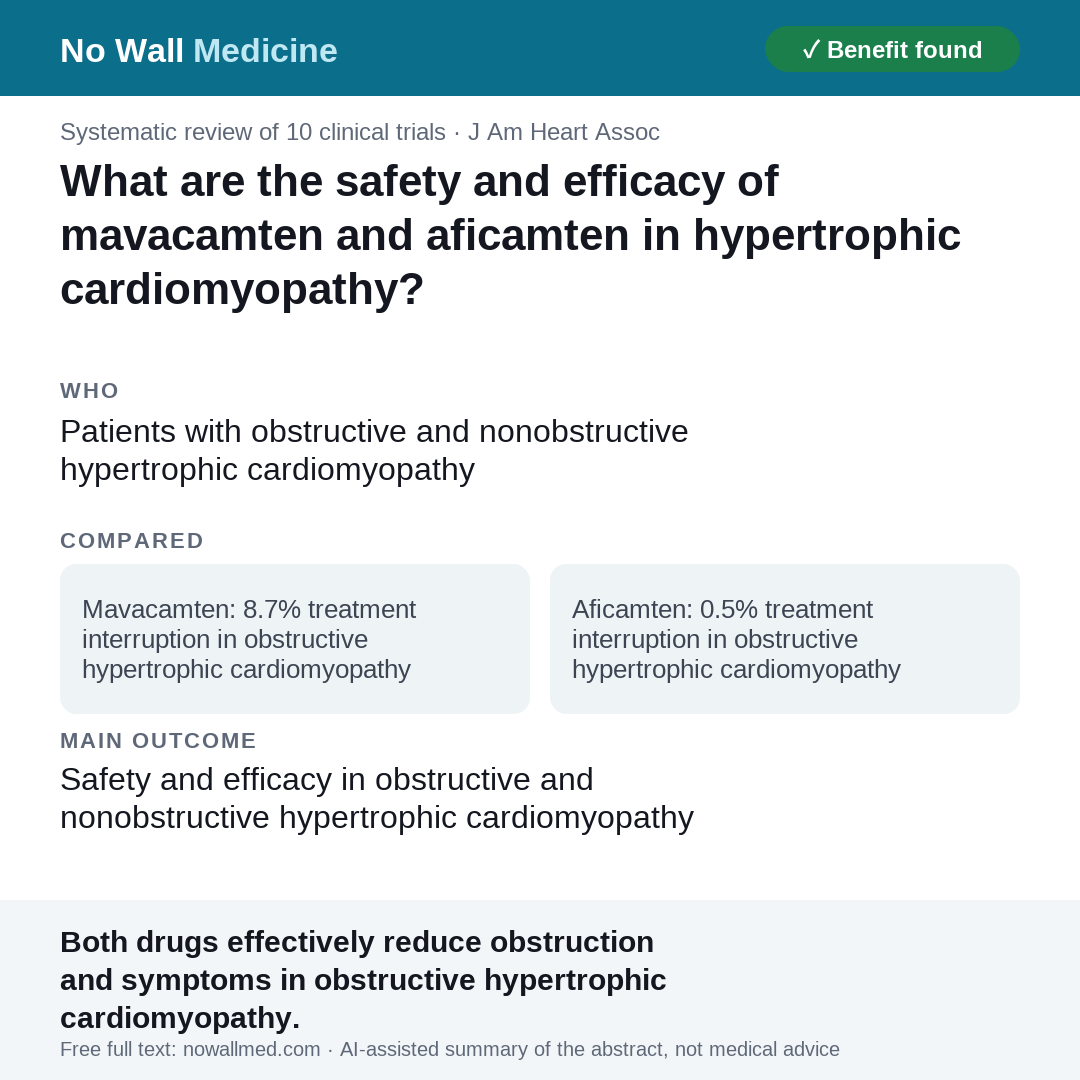
Safety and Efficacy of Mavacamten and Aficamten in Patients With Hypertrophic Cardiomyopathy
Systematic review of 10 clinical trialsBenefit found
What are the safety and efficacy of mavacamten and aficamten in hypertrophic cardiomyopathy?
Who
Patients with obstructive and nonobstructive hypertrophic cardiomyopathy
Compared
Mavacamten: 8.7% treatment interruption in obstructive hypertrophic cardiomyopathy
Aficamten: 0.5% treatment interruption in obstructive hypertrophic cardiomyopathy
Main outcome
Safety and efficacy in obstructive and nonobstructive hypertrophic cardiomyopathy
Bottom line: Both drugs effectively reduce obstruction and symptoms in obstructive hypertrophic cardiomyopathy.
Limitation: Comparisons are limited by shorter aficamten exposure and ongoing phase III trials.
J Am Heart Assoc · 2025-03-07Download image
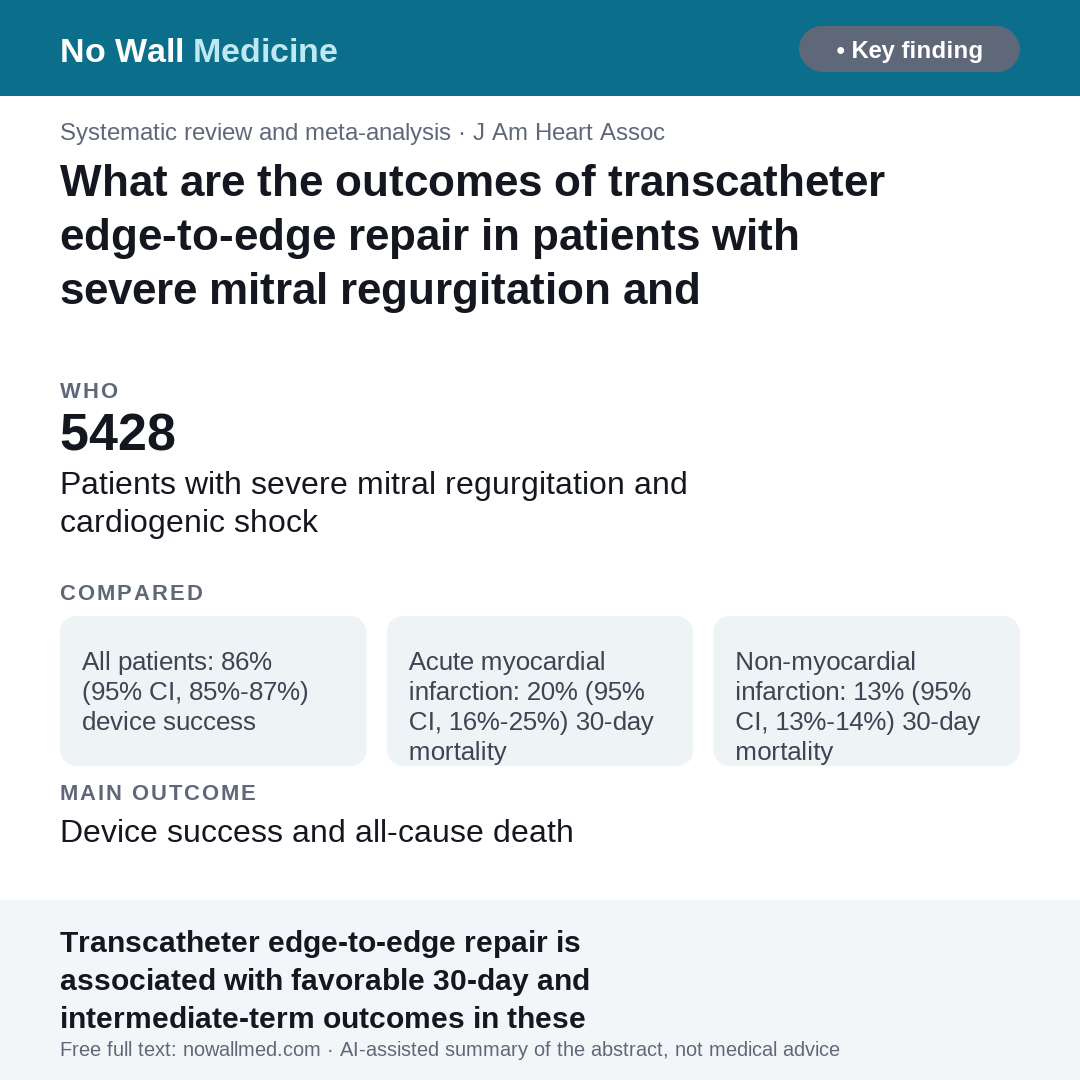
Transcatheter Edge-to-Edge Repair for Severe Mitral Regurgitation in Patients With Cardiogenic Shock: A Systematic Review and Meta-Analysis
Systematic review and meta-analysisBenefit found
What are the outcomes of transcatheter edge-to-edge repair in patients with severe mitral regurgitation and cardiogenic shock?
Who
5428
Patients with severe mitral regurgitation and cardiogenic shock
Compared
All patients: 86% (95% CI, 85%-87%) device success
Acute myocardial infarction: 20% (95% CI, 16%-25%) 30-day mortality
Non-myocardial infarction: 13% (95% CI, 13%-14%) 30-day mortality
Main outcome
Device success and all-cause death
Bottom line: Transcatheter edge-to-edge repair is associated with favorable 30-day and intermediate-term outcomes in these patients.
Limitation: Observational design of included studies and considerable heterogeneity.
J Am Heart Assoc · 2025-03-07Download image
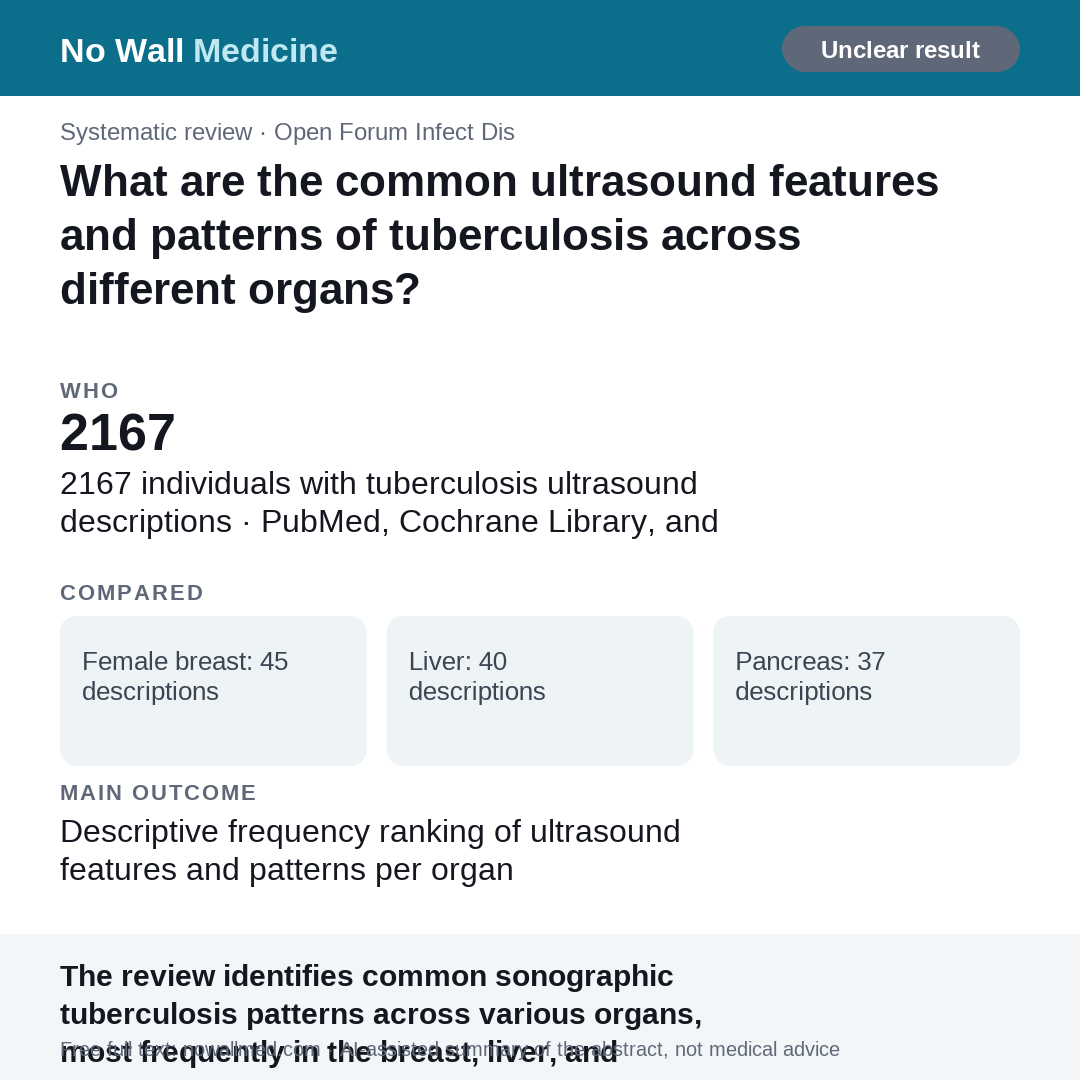
Tuberculosis Visualized With the Ultrasound Probe: A Systematic Review of Sonographic Pattern Descriptions and an Analysis of Common Sonographic Features
Systematic reviewUnclear result
What are the common ultrasound features and patterns of tuberculosis across different organs?
Who
2167
2167 individuals with tuberculosis ultrasound descriptions · PubMed, Cochrane Library, and others
Compared
Female breast: 45 descriptions
Liver: 40 descriptions
Pancreas: 37 descriptions
Main outcome
Descriptive frequency ranking of ultrasound features and patterns per organ
Bottom line: The review identifies common sonographic tuberculosis patterns across various organs, most frequently in the breast, liver, and pancreas.
Limitation: Limited representativeness of studies and partly subjective analysis.
Open Forum Infect Dis · 2025-03-07Download image
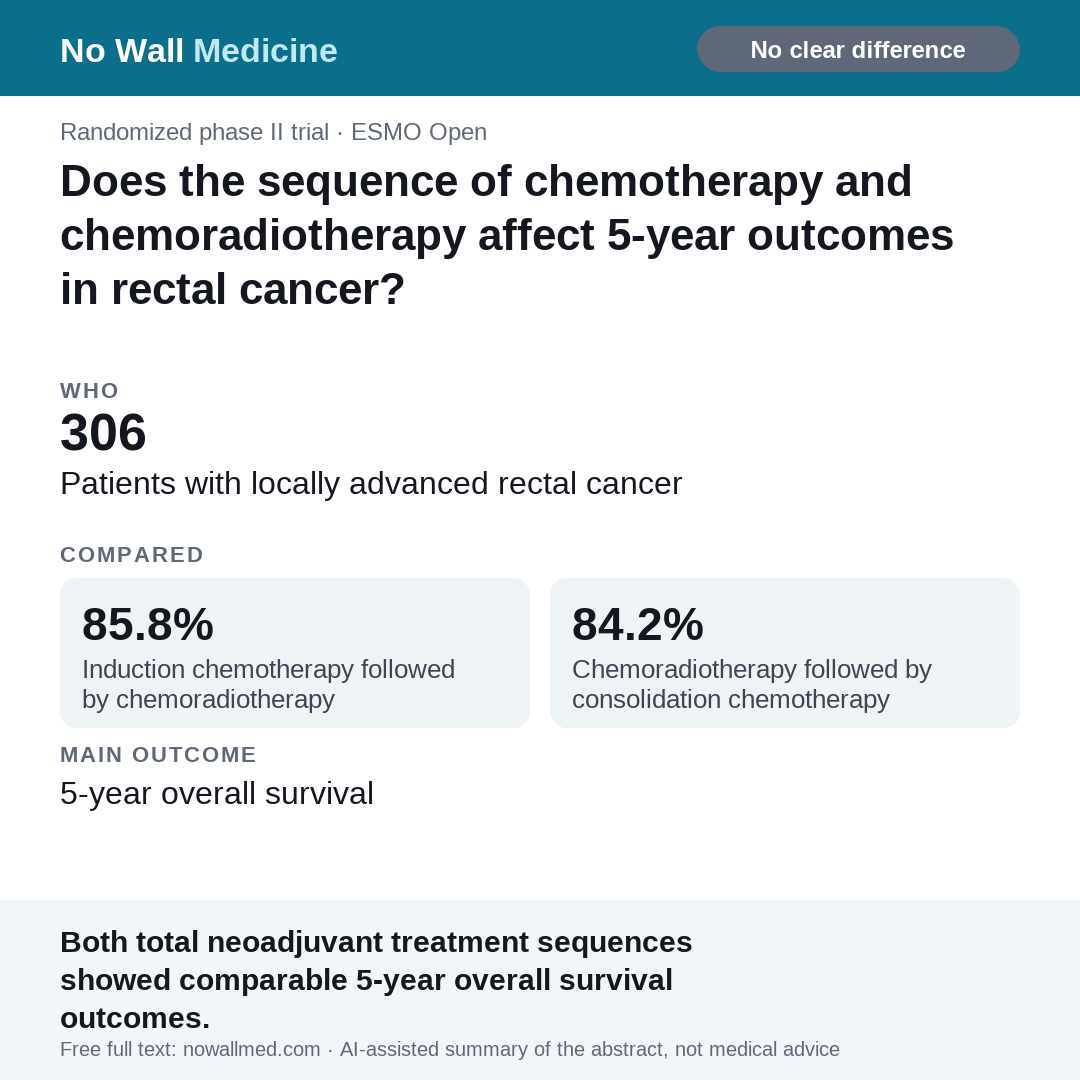
Chemotherapy before or after preoperative chemoradiotherapy and surgery for locally advanced rectal cancer: 5-year results of the CAO/ARO/AIO-12 trial - a general pairwise comparison
Randomized phase II trialNo clear difference
Does the sequence of chemotherapy and chemoradiotherapy affect 5-year outcomes in rectal cancer?
Who
306
Patients with locally advanced rectal cancer
Compared
85.8%Induction chemotherapy followed by chemoradiotherapy (95% confidence interval 80.2% to 91.8%)
84.2%Chemoradiotherapy followed by consolidation chemotherapy (95% confidence interval 78.2% to 90.5%)
Main outcome
5-year overall survival
Bottom line: Both total neoadjuvant treatment sequences showed comparable 5-year overall survival outcomes.
ESMO Open · 2025-03-07Download image
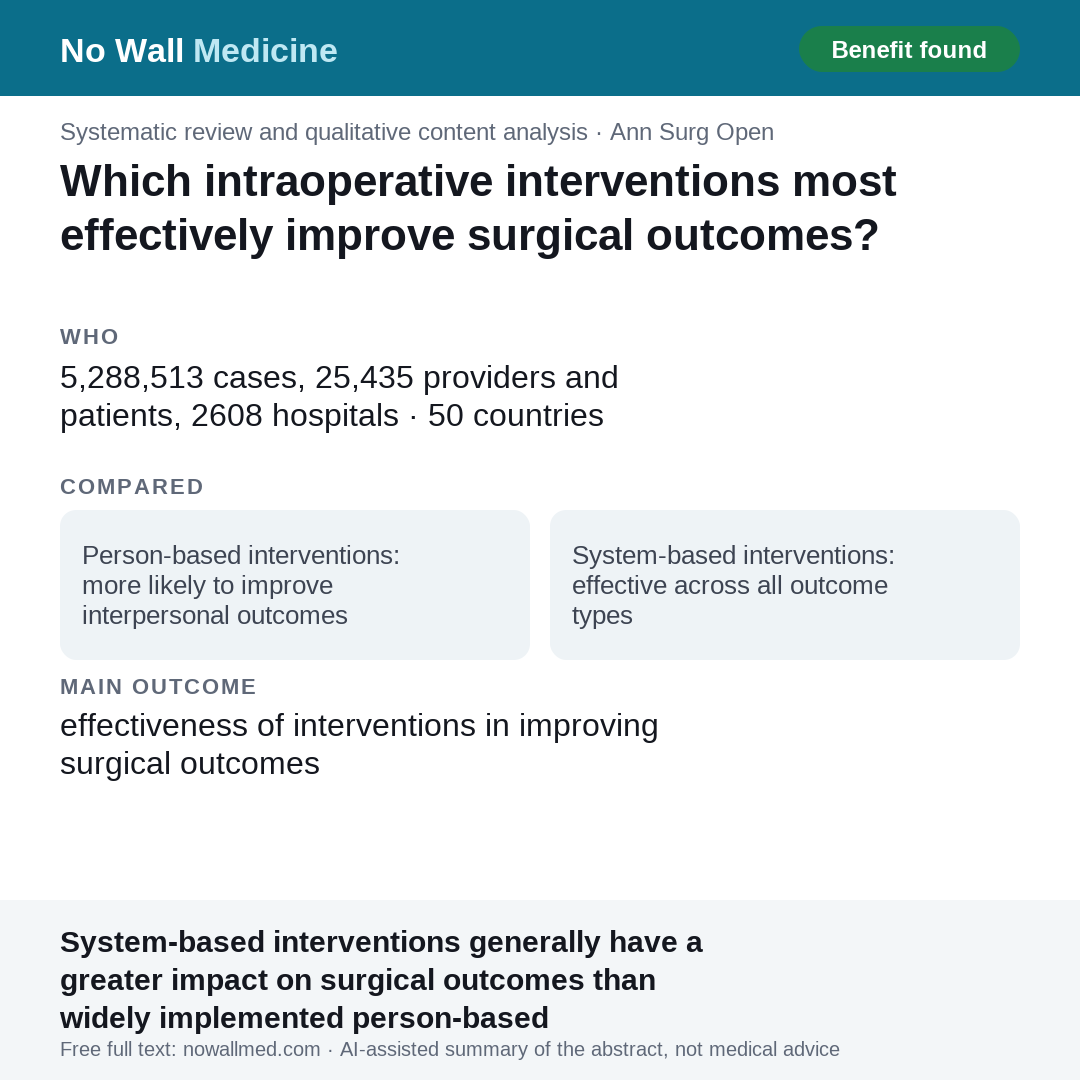
Maximizing Surgical Success by Aligning Interventions to Outcomes: A Systematic Review
Systematic review and qualitative content analysisBenefit found
Which intraoperative interventions most effectively improve surgical outcomes?
Who
5,288,513 cases, 25,435 providers and patients, 2608 hospitals · 50 countries
Compared
Person-based interventions: more likely to improve interpersonal outcomes
System-based interventions: effective across all outcome types
Main outcome
effectiveness of interventions in improving surgical outcomes
Bottom line: System-based interventions generally have a greater impact on surgical outcomes than widely implemented person-based interventions.
Ann Surg Open · 2025-03-07Download image
A systematic review of digital and imaging technologies for measuring fatigue in immune mediated inflammatory diseases
Systematic reviewMixed results
How are digital and imaging technologies used to measure fatigue in immune mediated inflammatory diseases?
Who
Individuals with rheumatoid arthritis, primary Sjögren's syndrome, systemic lupus erythematosus, and inflammatory bowel disease · PubMed and Cochrane Library
Compared
Digital and imaging technologies
Patient-reported outcome questionnaires
Main outcome
Associations between fatigue and digital or imaging endpoints
Bottom line: Digital and imaging technologies show significant associations with fatigue, but more research is needed.
Limitation: Studies were limited by a small sample size and short duration.
NPJ Digit Med · 2025-03-07Download image

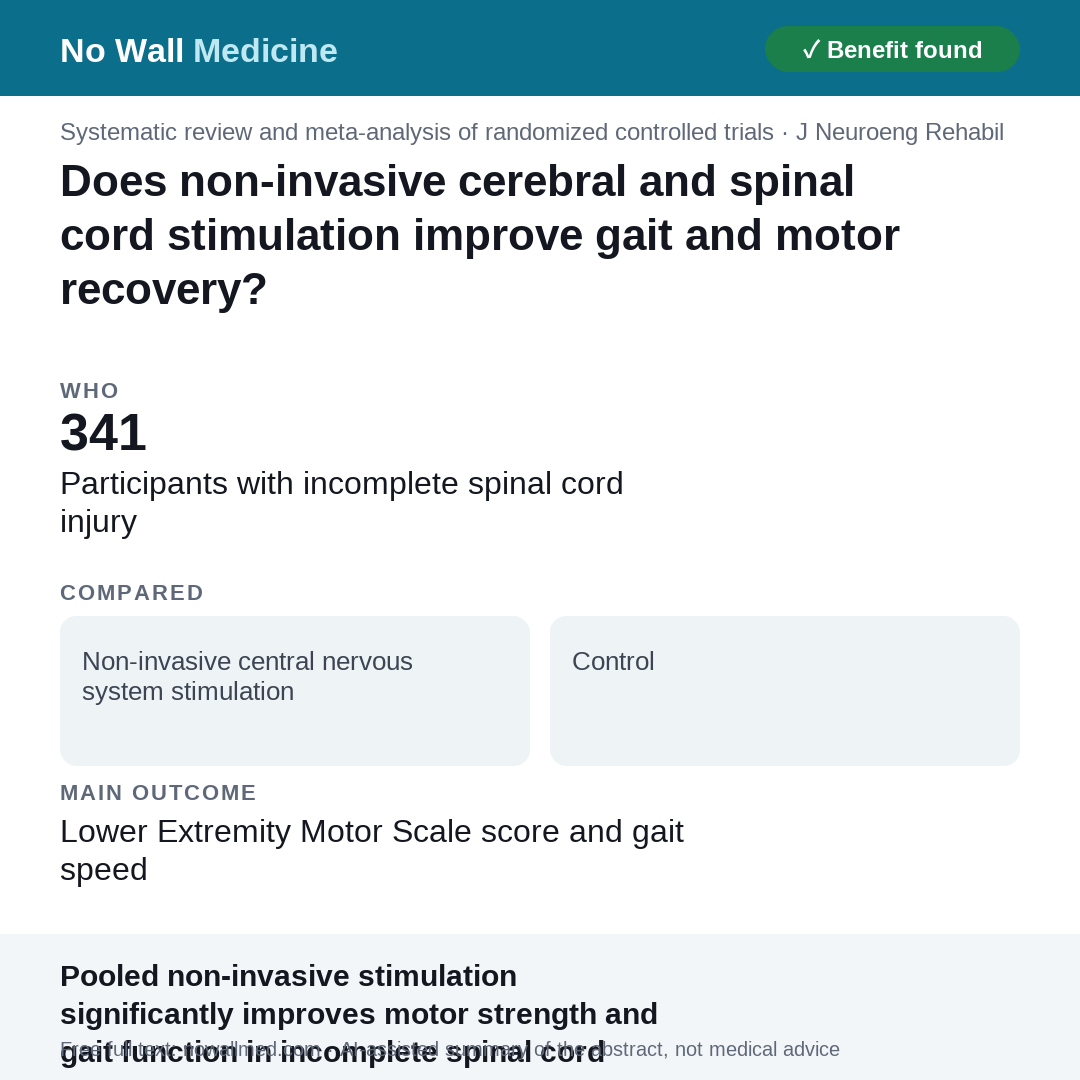
Non-invasive cerebral and spinal cord stimulation for motor and gait recovery in incomplete spinal cord injury: systematic review and meta-analysis
Systematic review and meta-analysis of randomized controlled trialsBenefit found
Does non-invasive cerebral and spinal cord stimulation improve gait and motor recovery?
Who
341
Participants with incomplete spinal cord injury
Compared
Non-invasive central nervous system stimulation
Control
Main outcome
Lower Extremity Motor Scale score and gait speed
Bottom line: Pooled non-invasive stimulation significantly improves motor strength and gait function in incomplete spinal cord injury.
Limitation: Subgroup effects were less apparent and spinal cord stimulation data was insufficient for meta-analysis.
J Neuroeng Rehabil · 2025-03-07Download image
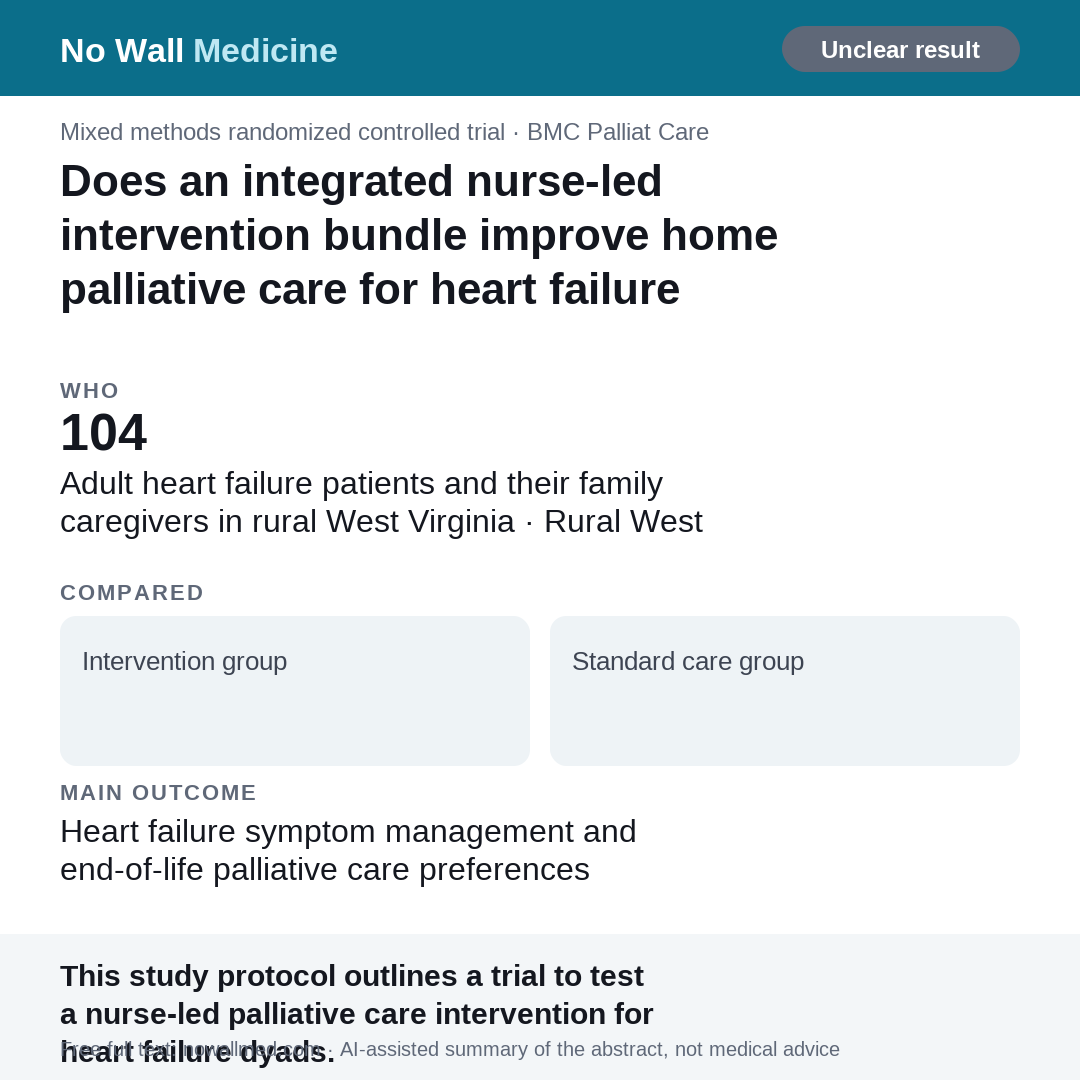
Study protocol of sustaining home palliative care for patients with Heart Failure (HF) and their family caregivers in rural Appalachia: a mixed methods randomized clinical trial
Mixed methods randomized controlled trialUnclear result
Does an integrated nurse-led intervention bundle improve home palliative care for heart failure patients?
Who
104
Adult heart failure patients and their family caregivers in rural West Virginia · Rural West Virginia
Compared
Intervention group
Standard care group
Main outcome
Heart failure symptom management and end-of-life palliative care preferences
Bottom line: This study protocol outlines a trial to test a nurse-led palliative care intervention for heart failure dyads.
BMC Palliat Care · 2025-03-07Download image
Physician associates and anaesthetic associates in UK: rapid systematic review of recent UK based research
Rapid systematic reviewUnclear result
What is the efficacy and safety of UK physician associates and anaesthetic associates?
Who
Physician associates and anaesthetic associates in UK healthcare · United Kingdom
Compared
Physician associates
Anaesthetic associates
Main outcome
Clinical efficacy or safety
Bottom line: Evidence is sparse and of variable quality, with no evidence that these roles add value in primary care or anaesthetics.
Limitation: Literature is sparse, of variable quality, and some is outdated.
BMJ · 2025-03-06Download image

Pathways through which water, sanitation, hygiene, and nutrition interventions reduce antibiotic use in young children: a mediation analysis of a cohort nested within a cluster-randomized trial
Causal mediation analysis of a cluster-randomized trialBenefit found
How do water, sanitation, hygiene, and nutrition interventions reduce antibiotic use in children?
Who
1409
Children in a rural, low-income population in Bangladesh · Bangladesh
Compared
49.5%Control group (95% CI 45.9%, 53.0%)
45.0%Pooled intervention group (95% CI 42.7%, 47.2%)
Main outcome
Caregiver-reported antibiotic use
Result: 5.5 percentage points (95% CI 1.2, 9.9)
Bottom line: Water, sanitation, hygiene, and nutrition interventions reduce antibiotic use by preventing enteric and respiratory infections.
Funded by: Bill & Melinda Gates Foundation, National Institute of Allergy and Infectious Diseases
eClinicalMedicine · 2025-03-06Download image

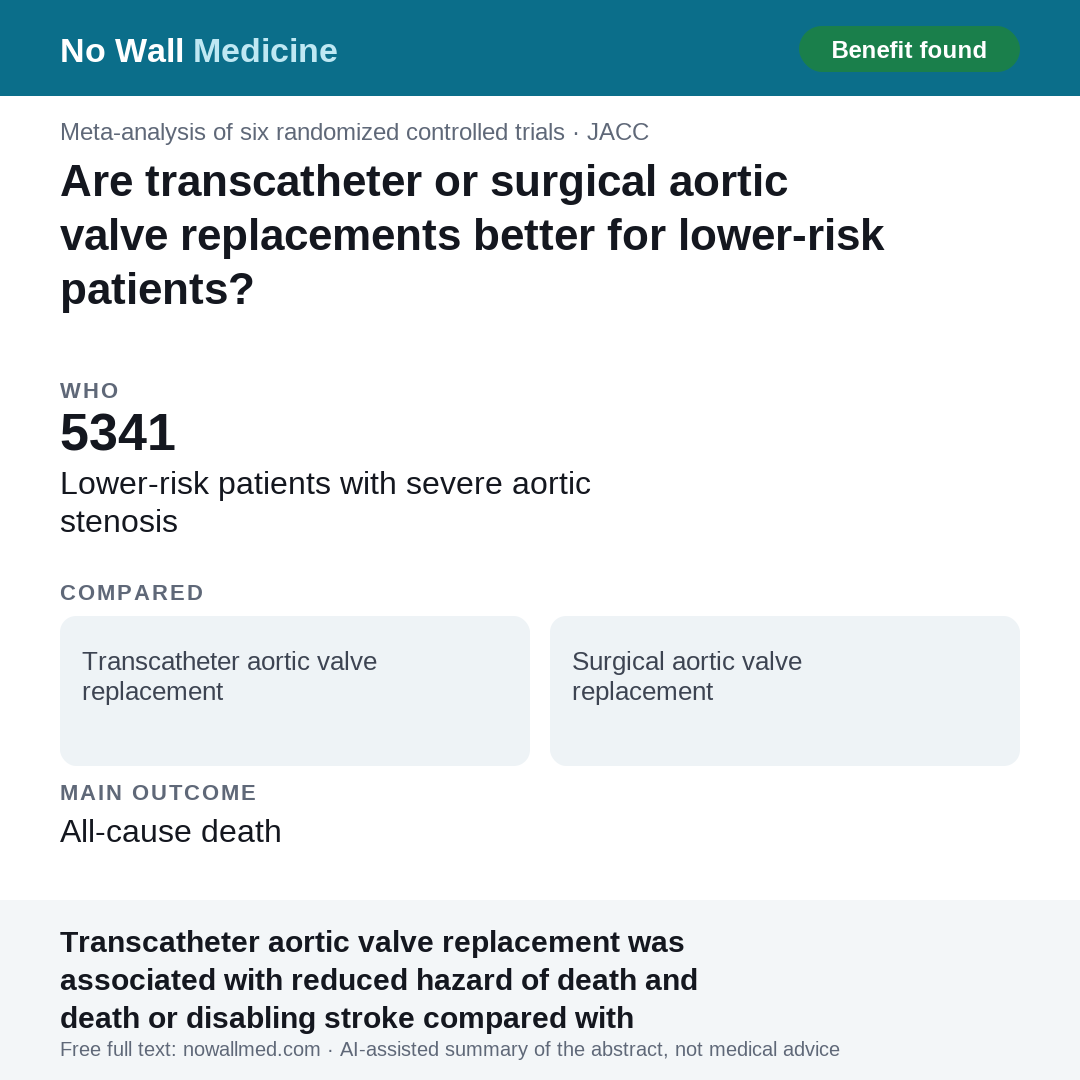
Transcatheter vs Surgical Aortic Valve Replacement in Lower-Risk Patients: An Updated Meta-Analysis of Randomized Controlled Trials
Meta-analysis of six randomized controlled trialsBenefit found
Are transcatheter or surgical aortic valve replacements better for lower-risk patients?
Who
5341
Lower-risk patients with severe aortic stenosis
Compared
Transcatheter aortic valve replacement
Surgical aortic valve replacement
Main outcome
All-cause death
Result: hazard ratio 0.80 (95% CI 0.66-0.97)
Bottom line: Transcatheter aortic valve replacement was associated with reduced hazard of death and death or disabling stroke compared with surgical replacement.
JACC · 2025-03-06Download image
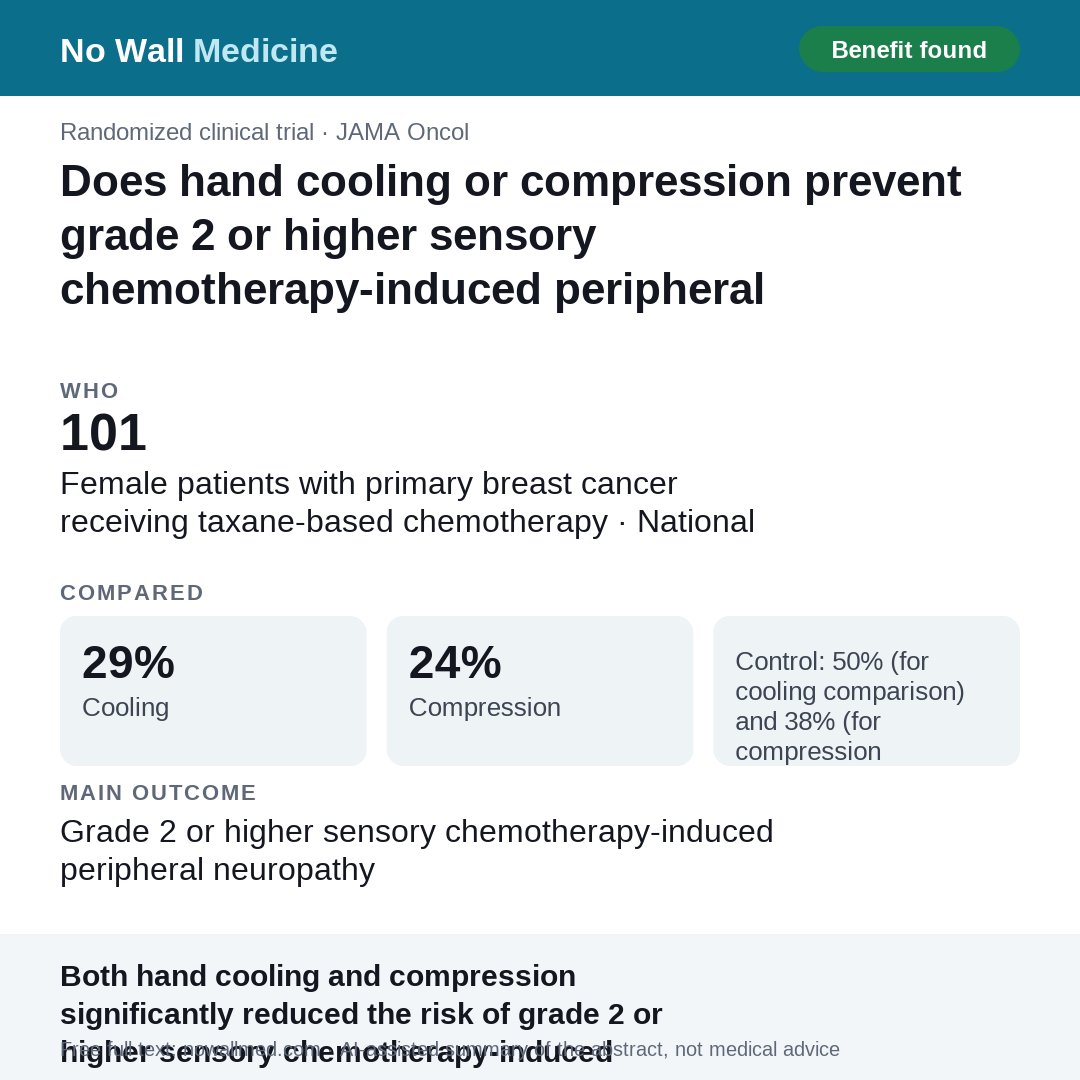
Efficacy of Hand Cooling and Compression in Preventing Taxane-Induced Neuropathy: The POLAR Randomized Clinical Trial
Randomized clinical trialBenefit found
Does hand cooling or compression prevent grade 2 or higher sensory chemotherapy-induced peripheral neuropathy?
Who
101
Female patients with primary breast cancer receiving taxane-based chemotherapy · National Center for Tumor Diseases Heidelberg
Compared
29%Cooling
24%Compression
Control: 50% (for cooling comparison) and 38% (for compression comparison)
Main outcome
Grade 2 or higher sensory chemotherapy-induced peripheral neuropathy
Bottom line: Both hand cooling and compression significantly reduced the risk of grade 2 or higher sensory chemotherapy-induced peripheral neuropathy.
JAMA Oncol · 2025-03-06Download image
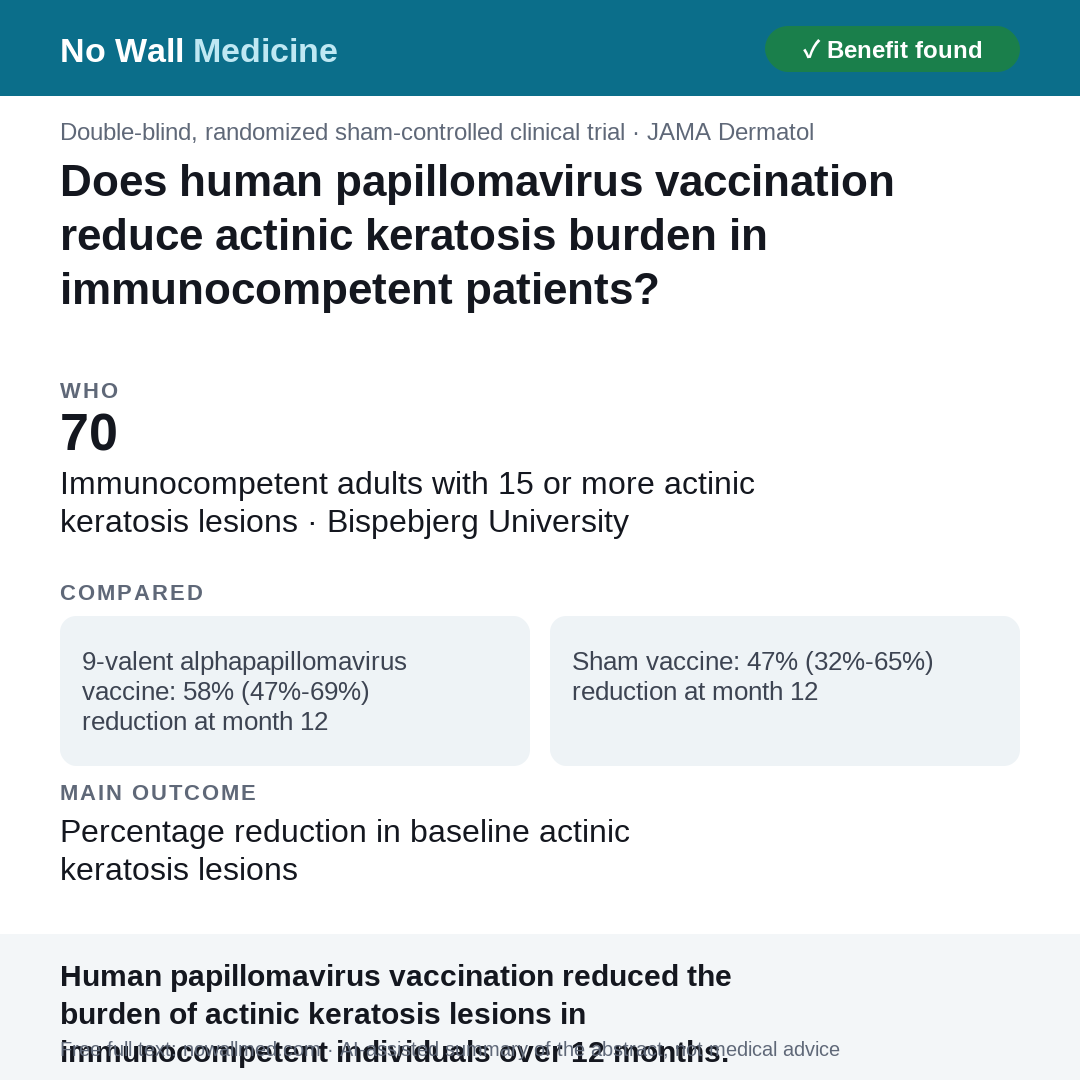
Human Papillomavirus Vaccination and Actinic Keratosis Burden: The VAXAK Randomized Clinical Trial
Double-blind, randomized sham-controlled clinical trialBenefit found
Does human papillomavirus vaccination reduce actinic keratosis burden in immunocompetent patients?
Who
70
Immunocompetent adults with 15 or more actinic keratosis lesions · Bispebjerg University Hospital in Copenhagen, Denmark
Compared
9-valent alphapapillomavirus vaccine: 58% (47%-69%) reduction at month 12
Sham vaccine: 47% (32%-65%) reduction at month 12
Main outcome
Percentage reduction in baseline actinic keratosis lesions
Bottom line: Human papillomavirus vaccination reduced the burden of actinic keratosis lesions in immunocompetent individuals over 12 months.
JAMA Dermatol · 2025-03-06Download image
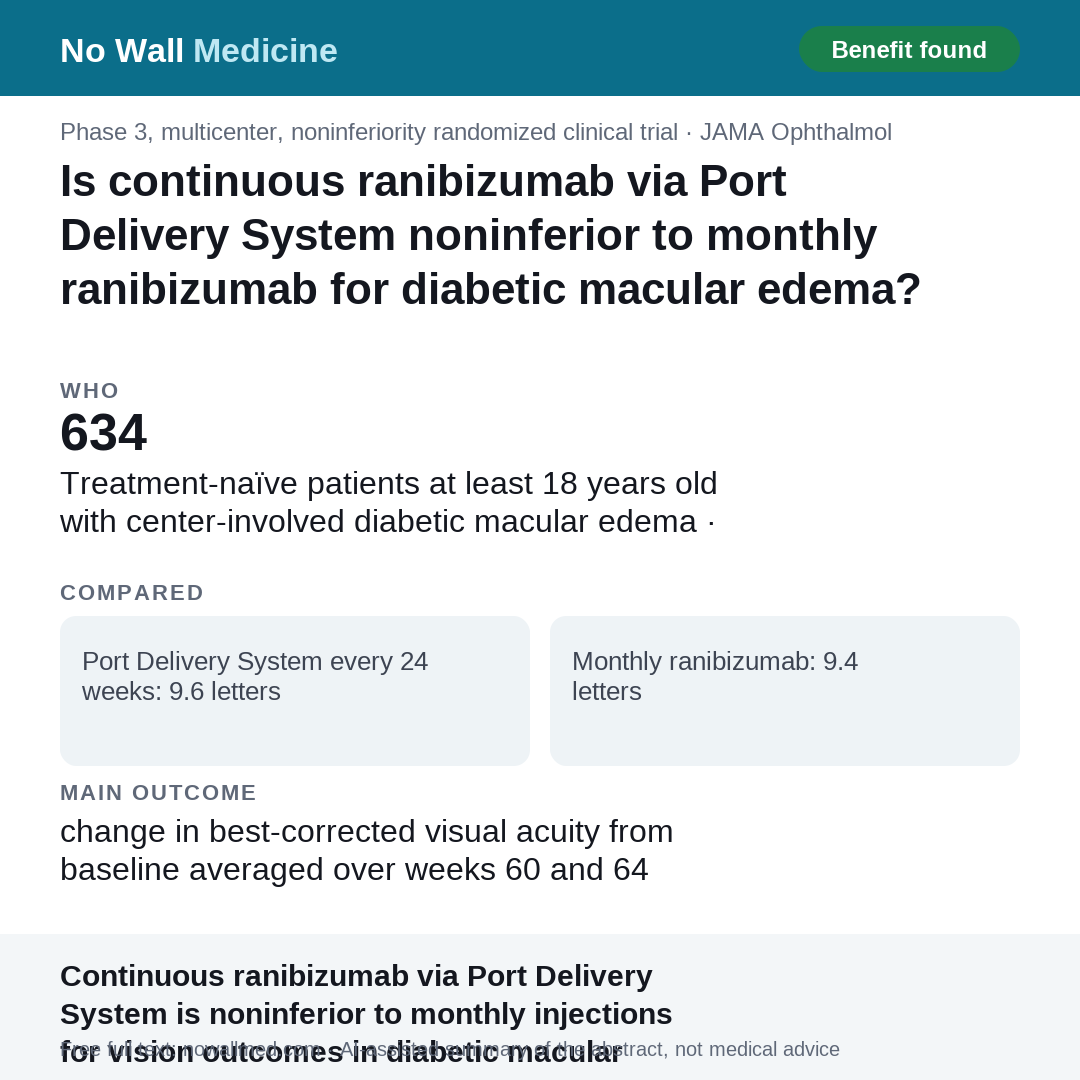
Continuous Ranibizumab via Port Delivery System vs Monthly Ranibizumab for Treatment of Diabetic Macular Edema: The Pagoda Randomized Clinical Trial
Phase 3, multicenter, noninferiority randomized clinical trialBenefit found
Is continuous ranibizumab via Port Delivery System noninferior to monthly ranibizumab for diabetic macular edema?
Who
634
Treatment-naïve patients at least 18 years old with center-involved diabetic macular edema · 87 sites in the US
Compared
Port Delivery System every 24 weeks: 9.6 letters
Monthly ranibizumab: 9.4 letters
Main outcome
change in best-corrected visual acuity from baseline averaged over weeks 60 and 64
Result: difference 0.2 (95% CI, -1.2 to 1.6)
Bottom line: Continuous ranibizumab via Port Delivery System is noninferior to monthly injections for vision outcomes in diabetic macular edema.
JAMA Ophthalmol · 2025-03-06Download image
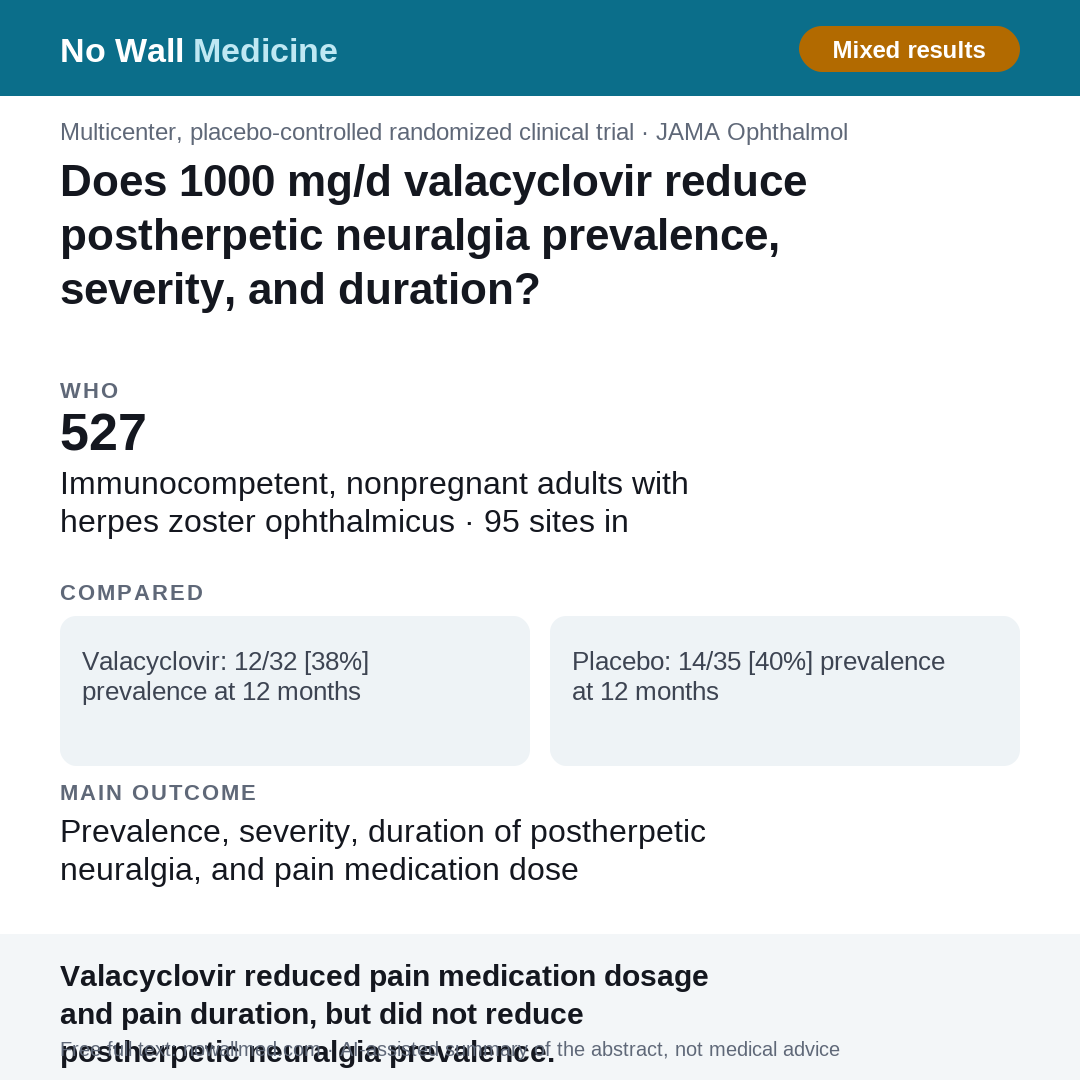
Low-Dose Valacyclovir for Postherpetic Neuralgia in the Zoster Eye Disease Study: A Randomized Clinical Trial
Multicenter, placebo-controlled randomized clinical trialMixed results
Does 1000 mg/d valacyclovir reduce postherpetic neuralgia prevalence, severity, and duration?
Who
527
Immunocompetent, nonpregnant adults with herpes zoster ophthalmicus · 95 sites in Canada, New Zealand, and the US
Compared
Valacyclovir: 12/32 [38%] prevalence at 12 months
Placebo: 14/35 [40%] prevalence at 12 months
Main outcome
Prevalence, severity, duration of postherpetic neuralgia, and pain medication dose
Result: between-group difference, 2.5% [95% CI, -20.8% to 25.8%]
Bottom line: Valacyclovir reduced pain medication dosage and pain duration, but did not reduce postherpetic neuralgia prevalence.
JAMA Ophthalmol · 2025-03-06Download image