Visual abstracts
New randomized trials and meta-analyses from leading journals at a glance: who was studied, what was compared, and what was found. Every paper is free to read in full.
All specialtiesCardiology 4763Oncology 4042Gastroenterology & Hepatology 1902Infectious Disease 3756Neurology 1872Psychiatry & Mental Health 2214Pulmonology 2042Critical Care 1319Endocrinology & Diabetes 2544Pediatrics 2889Surgery 2479Orthopedics & Sports Medicine 917Neurosurgery 525Cardiothoracic & Vascular Surgery 656Plastic & Reconstructive Surgery 574Nephrology 1107Rheumatology 810Hematology 1090Dermatology 611Ophthalmology 532Obstetrics & Gynecology 1645Public & Global Health 1037Radiology & Imaging 617Anesthesiology 957Urology 745ENT (Otolaryngology) 494Emergency Medicine 481Allergy & Immunology 309Geriatrics 972Family Medicine & Primary Care 533Medical Genetics & Genomics 659Pathology & Laboratory Medicine 156Physical Medicine & Rehabilitation 734Palliative Care 421Nutrition 1560Digital Health & AI 2133General Medicine 318
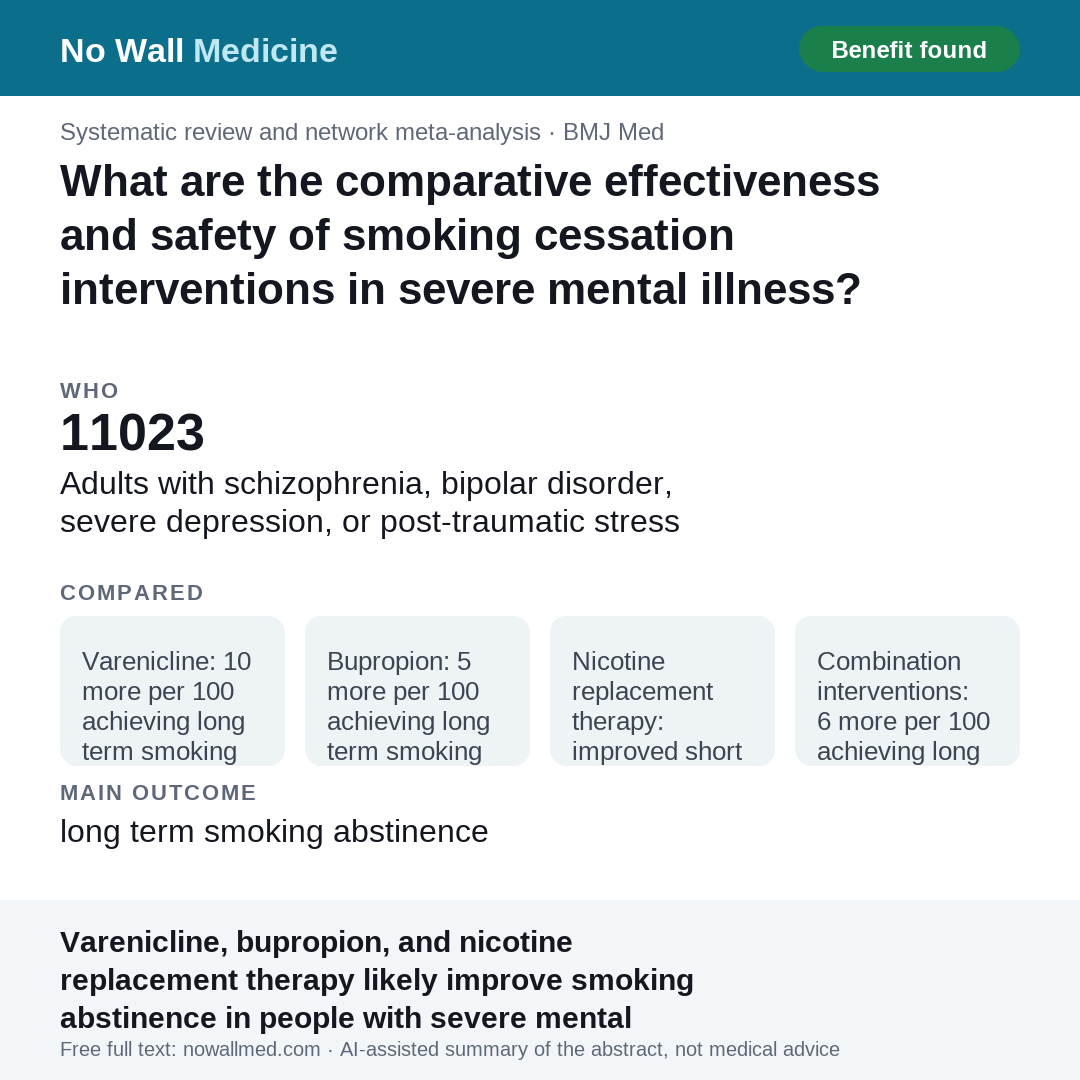
Smoking cessation for people with severe mental illness: systematic review and network meta-analysis
Systematic review and network meta-analysisBenefit, low certainty
What are the comparative effectiveness and safety of smoking cessation interventions in severe mental illness?
Who
11023
Adults with schizophrenia, bipolar disorder, severe depression, or post-traumatic stress disorder
Compared
Varenicline: 10 more per 100 achieving long term smoking abstinence
Bupropion: 5 more per 100 achieving long term smoking abstinence
Nicotine replacement therapy: improved short term abstinence
Combination interventions: 6 more per 100 achieving long term smoking abstinence
Main outcome
long term smoking abstinence
Bottom line: Varenicline, bupropion, and nicotine replacement therapy likely improve smoking abstinence in people with severe mental illness.
BMJ Med · 2026-02-12Download image
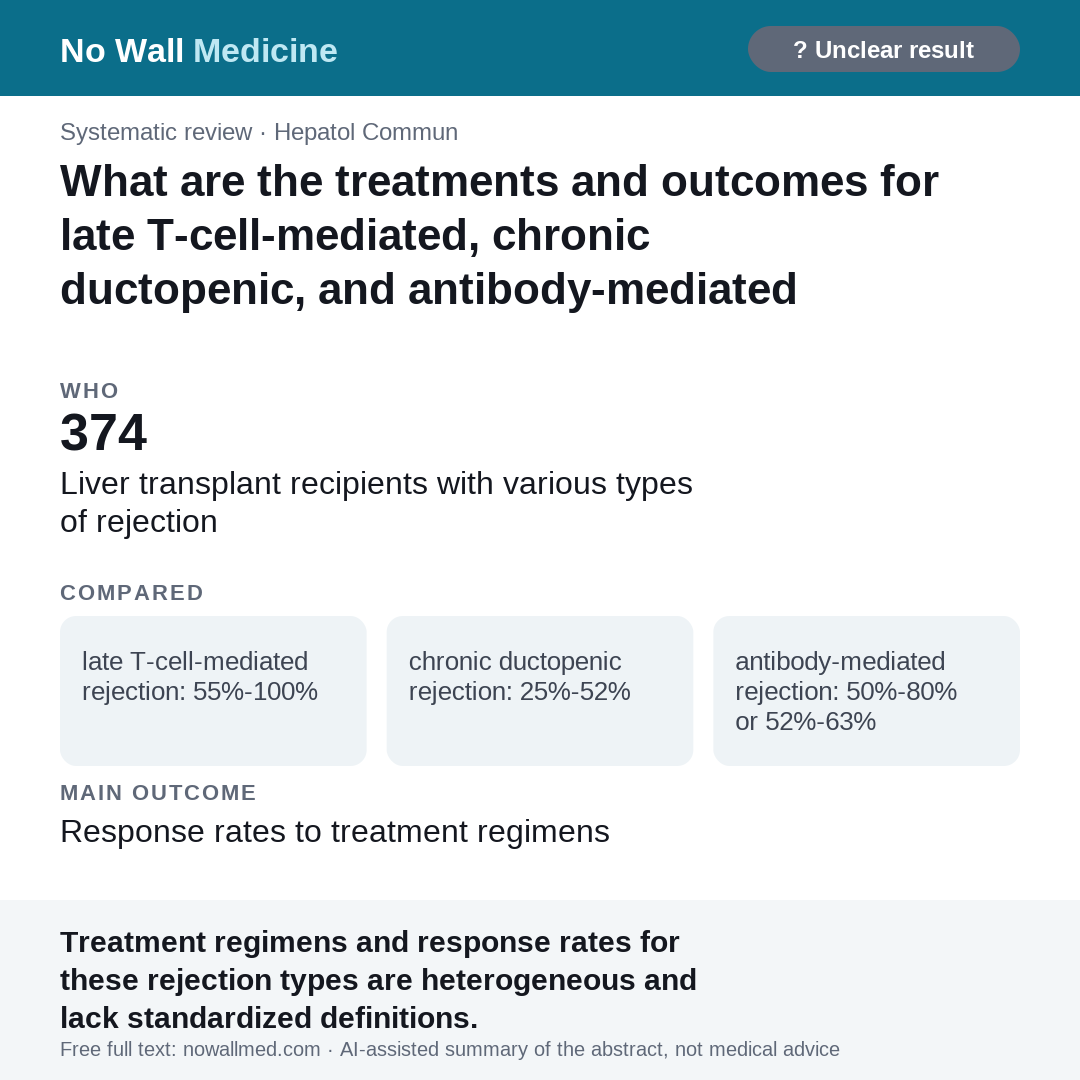
A systematic review of post-liver transplantation treatment and outcomes for late T-cell mediated, chronic ductopenic, and antibody-mediated rejection
Systematic reviewUnclear result
What are the treatments and outcomes for late T-cell-mediated, chronic ductopenic, and antibody-mediated rejection?
Who
374
Liver transplant recipients with various types of rejection
Compared
late T-cell-mediated rejection: 55%-100%
chronic ductopenic rejection: 25%-52%
antibody-mediated rejection: 50%-80% or 52%-63%
Main outcome
Response rates to treatment regimens
Bottom line: Treatment regimens and response rates for these rejection types are heterogeneous and lack standardized definitions.
Hepatol Commun · 2026-02-12Download image
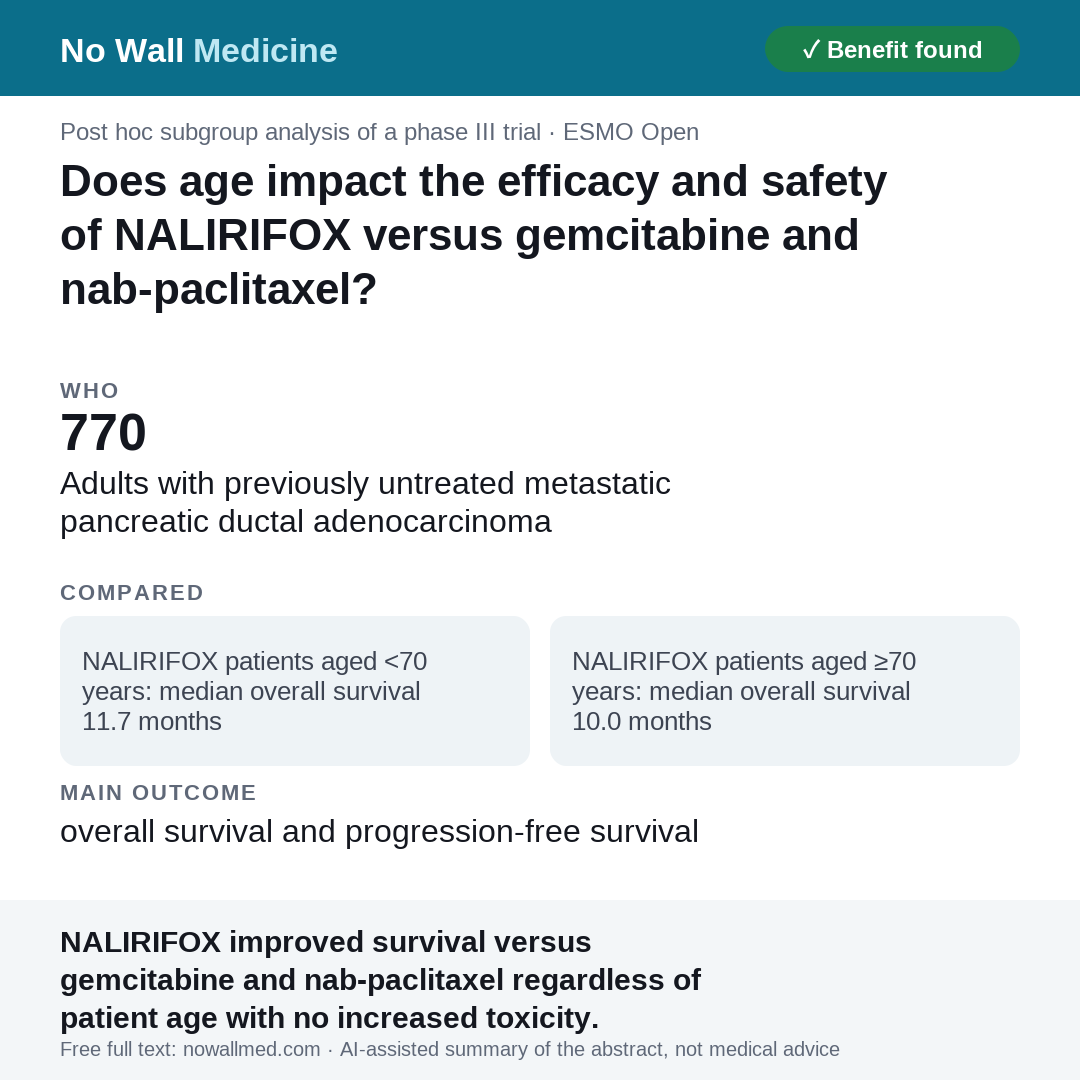
NALIRIFOX versus nab-paclitaxel and gemcitabine in older patients with treatment-naive metastatic pancreatic cancer: a subgroup analysis of the pivotal NAPOLI 3 trial
Post hoc subgroup analysis of a phase III trialBenefit found
Does age impact the efficacy and safety of NALIRIFOX versus gemcitabine and nab-paclitaxel?
Who
770
Adults with previously untreated metastatic pancreatic ductal adenocarcinoma
Compared
NALIRIFOX patients aged <70 years: median overall survival 11.7 months
NALIRIFOX patients aged ≥70 years: median overall survival 10.0 months
Main outcome
overall survival and progression-free survival
Bottom line: NALIRIFOX improved survival versus gemcitabine and nab-paclitaxel regardless of patient age with no increased toxicity.
ESMO Open · 2026-02-12Download image
Depression and anxiety in interstitial lung disease: a systematic review, meta-analysis and Mendelian randomization
Systematic review, meta-analysis and Mendelian randomizationNo clear difference
What is the prevalence of depression and anxiety in interstitial lung disease and its causality?
Who
Patients with interstitial lung disease
Compared
22%Depression prevalence (95% CI 17%, 26%)
25%Anxiety prevalence (95% CI 18%, 32%)
Main outcome
Prevalence of depression and anxiety and causal associations
Result: ILD-depression OR 1.000 (95% CI 0.997, 1.003); ILD-anxiety OR 1.000 (95% CI 0.998, 1.002)
Bottom line: Depression and anxiety are prevalent in interstitial lung disease, but no causal relationship was observed.
Transl Psychiatry · 2026-02-12Download image
Fecal microbiota transplantation from psychiatric patients to mice - systematic review of methodologies and a call for standardization
Systematic reviewUnclear result
Fecal microbiota transplantation methods consistent
Who
human patients with psychiatric conditions
Compared
psychiatric patients
rodent models
Main outcome
methodological consistency
Bottom line: Fecal microbiota transplantation methods are inconsistent
Limitation: methodological inconsistencies
Transl Psychiatry · 2026-02-12Download image
Lithium effects in the frontolimbic circuitry: a systematic review of neuroimaging findings in bipolar disorder
Systematic review of 115 studiesKey finding
How does lithium affect frontolimbic circuitry in bipolar disorder?
Who
Humans with bipolar disorder
Compared
Lithium-treated: larger volumes in hippocampus, amygdala, anterior cingulate cortex, and prefrontal cortex
Non-lithium or controls
Main outcome
Neuroimaging findings in frontolimbic circuitry
Bottom line: Lithium treatment is associated with larger volumes in key frontolimbic brain regions and higher white-matter integrity.
Limitation: Overall risk of bias was substantial, yielding low-to-moderate certainty of evidence.
Transl Psychiatry · 2026-02-12Download image
On-scene selective brain cooling in ventricular fibrillation cardiac arrest: pilot results from the PRINCESS2 randomised trial
Randomized pilot trialNo clear difference
Is on-scene trans-nasal cooling safe and feasible in ventricular fibrillation cardiac arrest?
Who
100
Out-of-hospital cardiac arrest patients with initial shockable rhythms · European multicentre trial
Compared
Intervention (trans-nasal cooling): 64% (32/50) 72-hour survival
Control (normothermia): 63% (31/49) 72-hour survival
Main outcome
Protocol adherence and safety aspects
Bottom line: On-scene trans-nasal cooling was performed with high protocol adherence without safety concerns in this pilot phase.
Crit Care · 2026-02-12Download image
Hypophosphatemia as a biomarker of metabolic intolerance to enhanced nutrition in the PICU: a secondary analysis of the PEPaNIC RCT
Secondary analysis of a randomized controlled trialHarm found
Does early hypophosphatemia indicate metabolic intolerance to early parenteral nutrition in critically ill children?
Who
1440
Critically ill children in the pediatric intensive care unit
Compared
Early parenteral nutrition with hypophosphatemia
Late parenteral nutrition with hypophosphatemia
Main outcome
New infections, PICU dependency, 90-day mortality, and ventilation duration
Bottom line: Hypophosphatemia on day 2 may identify critically ill children particularly harmed by early parenteral nutrition.
Crit Care · 2026-02-12Download image
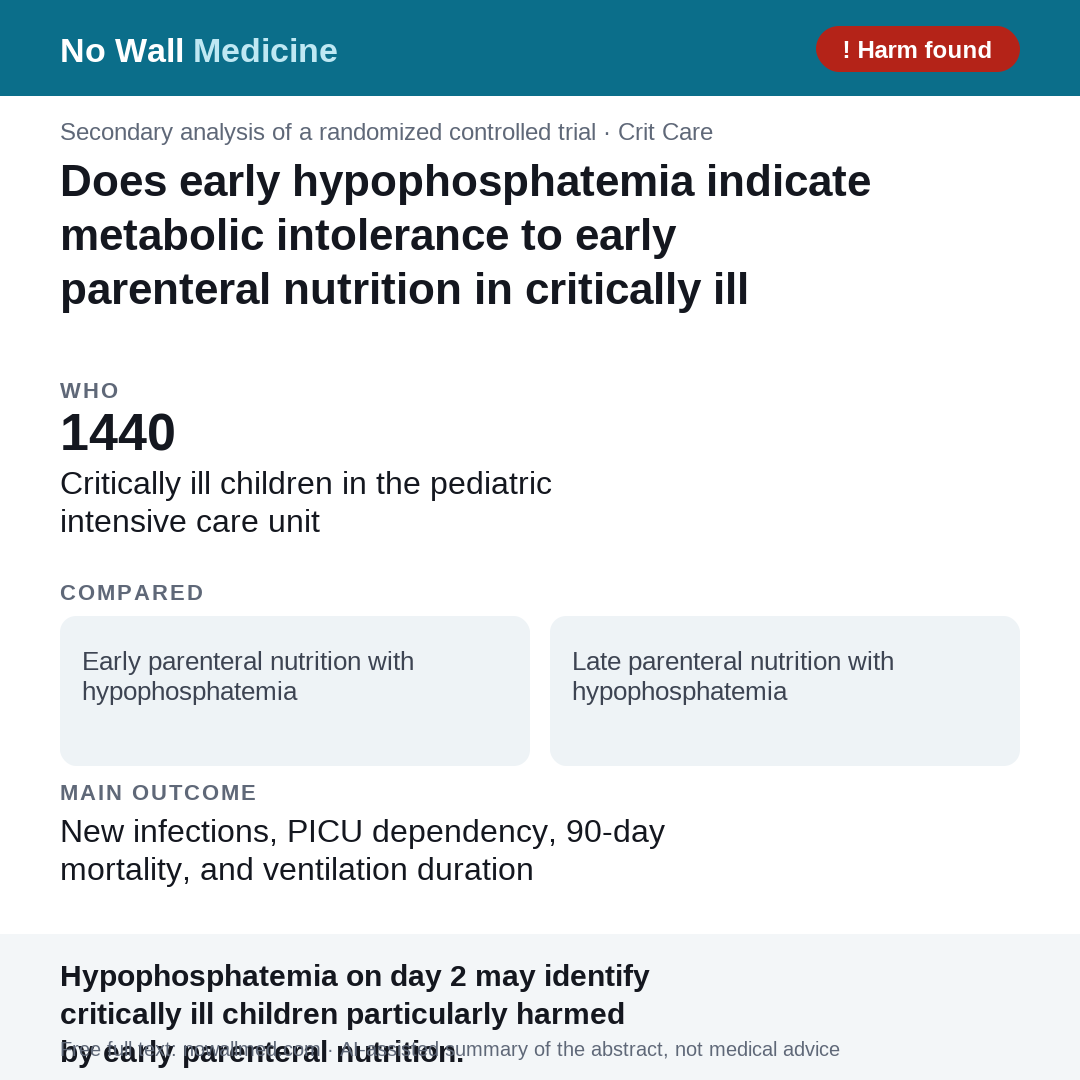
Perineural Invasion in Radical Prostatectomy Specimens and Its Association with Biochemical Recurrence and Survival in Prostate Cancer: A Systematic Review and Meta-analysis
Systematic review and meta-analysisHarm found
Is perineural invasion associated with survival outcomes in radical prostatectomy specimens?
Who
27030
Patients with prostate cancer undergoing radical prostatectomy
Compared
Perineural invasion present
Perineural invasion absent
Main outcome
Biochemical recurrence and survival outcomes
Result: hazard ratio 1.40 (95% CI 1.28-1.52)
Bottom line: Perineural invasion is associated with higher risk of biochemical recurrence and worse cancer-specific survival in prostate cancer.
Limitation: Reliance on predominantly retrospective studies with small samples and high risk of bias.
Eur Urol Open Sci · 2026-02-12Download image
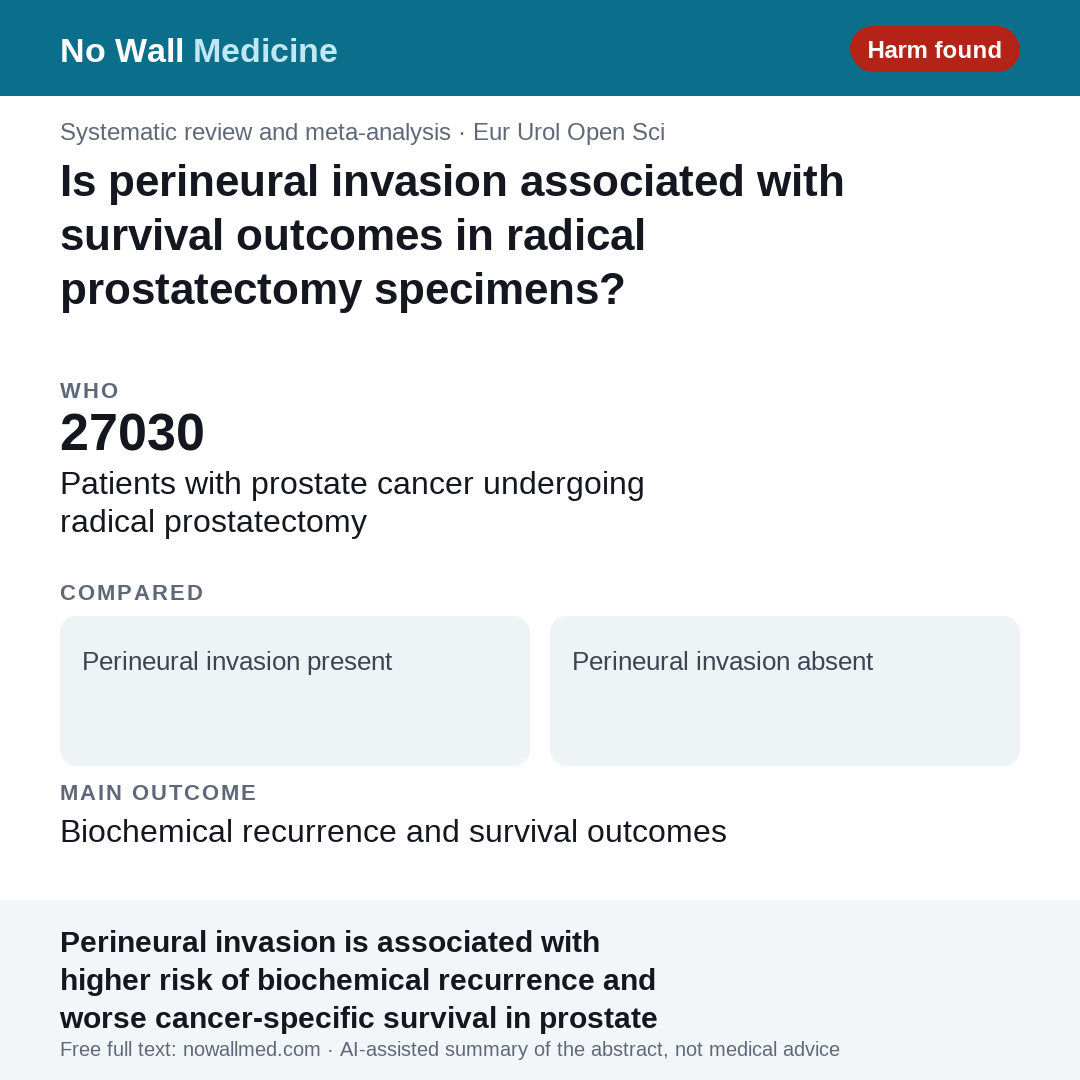
Implementing patient-centred outcome measures in palliative care clinical practice. An updated systematic review of facilitators and barriers
Systematic reviewMixed results
What are the facilitators and barriers to implementing patient-centred outcome measures in palliative care?
Who
Adult patients with advanced disease · All settings
Compared
Facilitators: integration of electronic/digital patient-centred outcome measures into Information Technology systems
Barriers: healthcare professionals' beliefs
Main outcome
Facilitators, barriers, lessons learned, measures used, models, costs, and implementation outcomes
Bottom line: Implementing patient-centred outcome measures is a complex intervention requiring staff engagement, training, and digital integration.
BMC Palliat Care · 2026-02-12Download image
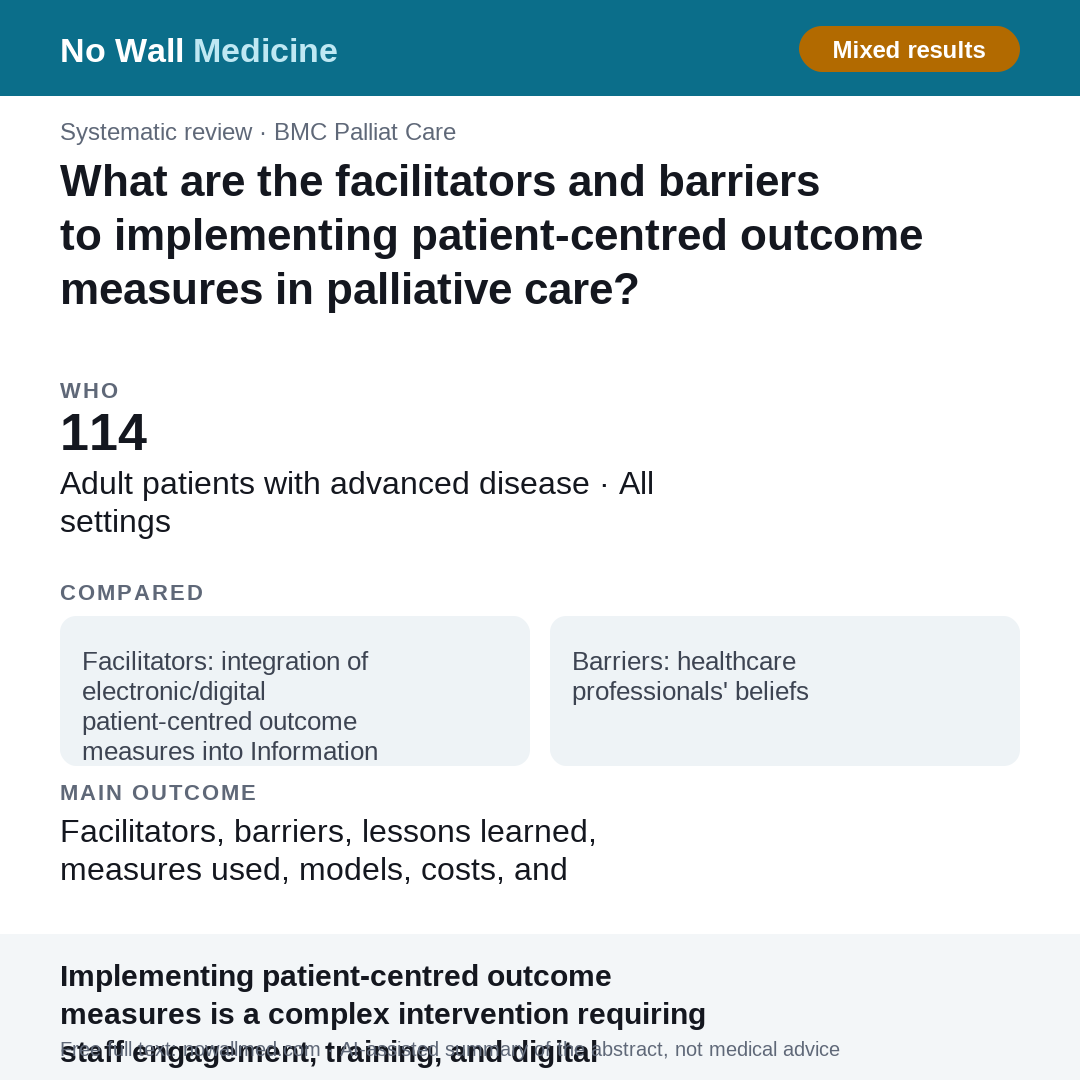
Applying randomized control trial criteria to an ECPR cohort
Single-center retrospective cohort studyNo clear difference
How do randomized controlled trial inclusion criteria apply to a cannulated ECPR cohort?
Who
66
Adults undergoing extracorporeal cardiopulmonary resuscitation for out of hospital cardiac arrest · Single 1,000-bed tertiary medical center
Compared
14%Overall cohort (9/66; 95% CI 6.4-24.3%)
Meeting trial inclusion criteria: numerically higher
Main outcome
Survival to hospital discharge
Bottom line: Trial inclusion criteria did not clearly distinguish survivors from non-survivors in this cannulated extracorporeal cardiopulmonary resuscitation cohort.
Resusc Plus · 2026-02-12Download image
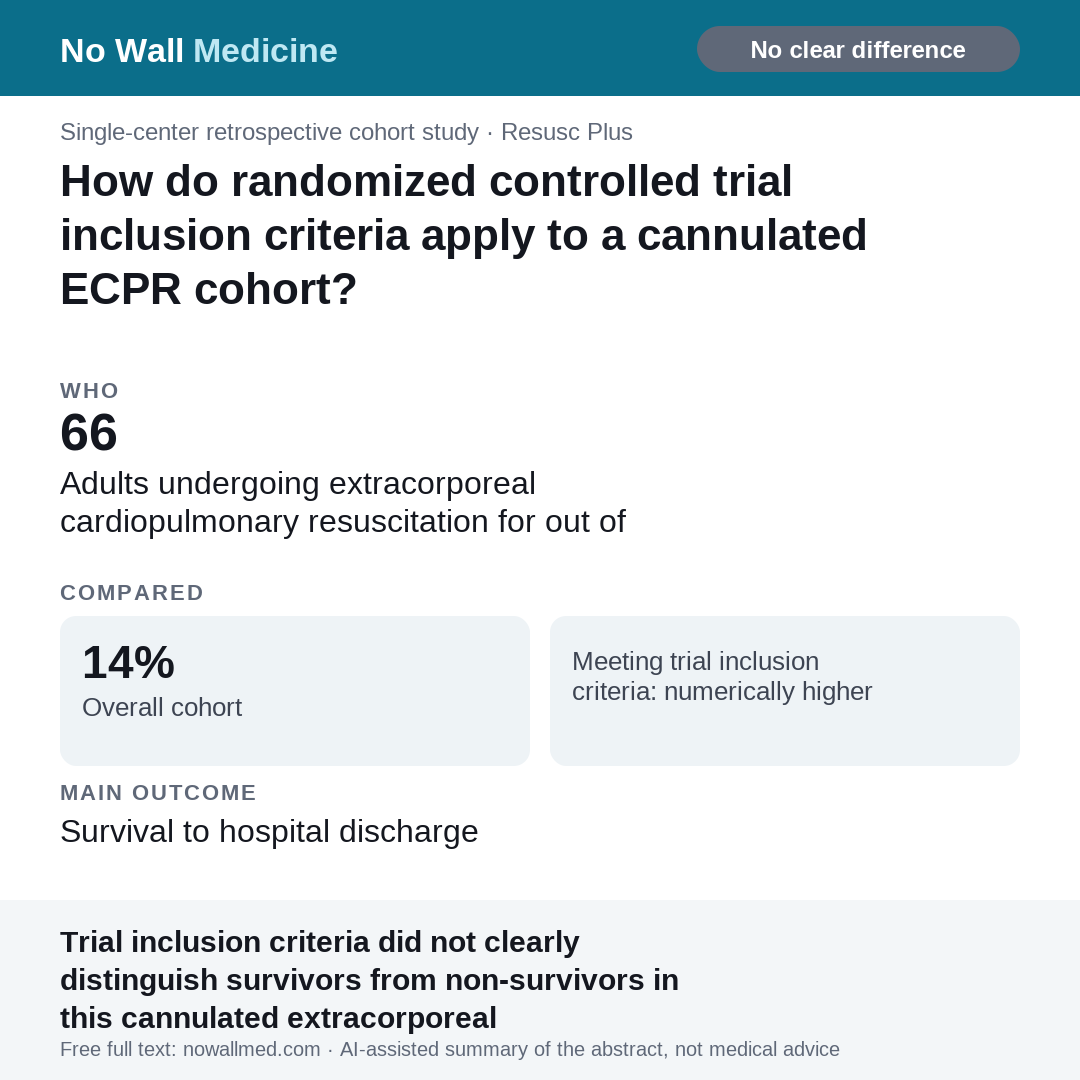
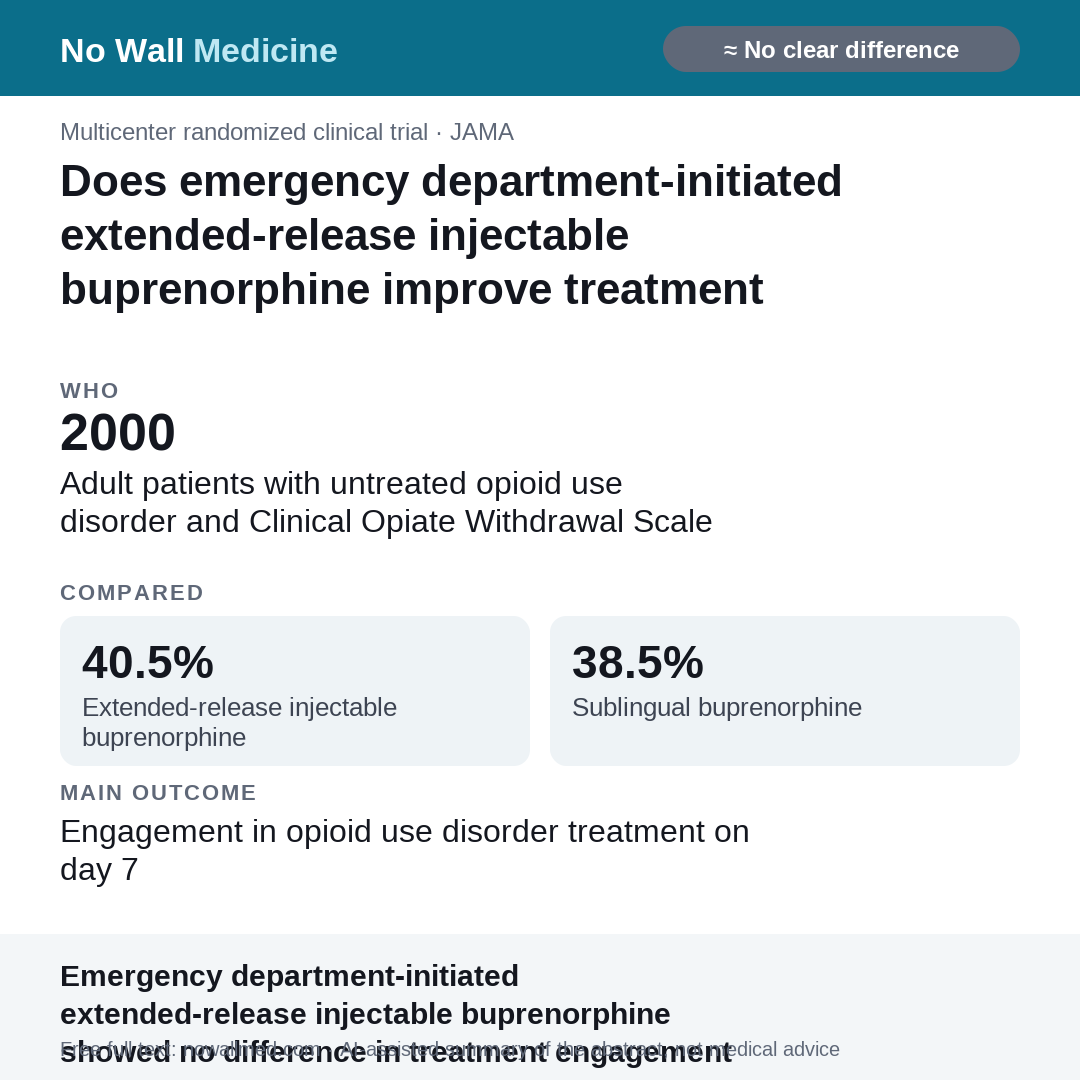
Emergency Department-Initiated Buprenorphine for Opioid Use Disorder: A Randomized Clinical Trial
Multicenter randomized clinical trialNo clear difference
Does emergency department-initiated extended-release injectable buprenorphine improve treatment engagement compared to sublingual buprenorphine?
Who
2000
Adult patients with untreated opioid use disorder and Clinical Opiate Withdrawal Scale score ≥4 · 29 emergency departments in the United States
Compared
40.5%Extended-release injectable buprenorphine
38.5%Sublingual buprenorphine
Main outcome
Engagement in opioid use disorder treatment on day 7
Result: adjusted difference, 1.6%; 95% CI, -2.8% to 6.0%
Bottom line: Emergency department-initiated extended-release injectable buprenorphine showed no difference in treatment engagement at 7 days compared to sublingual buprenorphine.
JAMA · 2026-02-11Download image
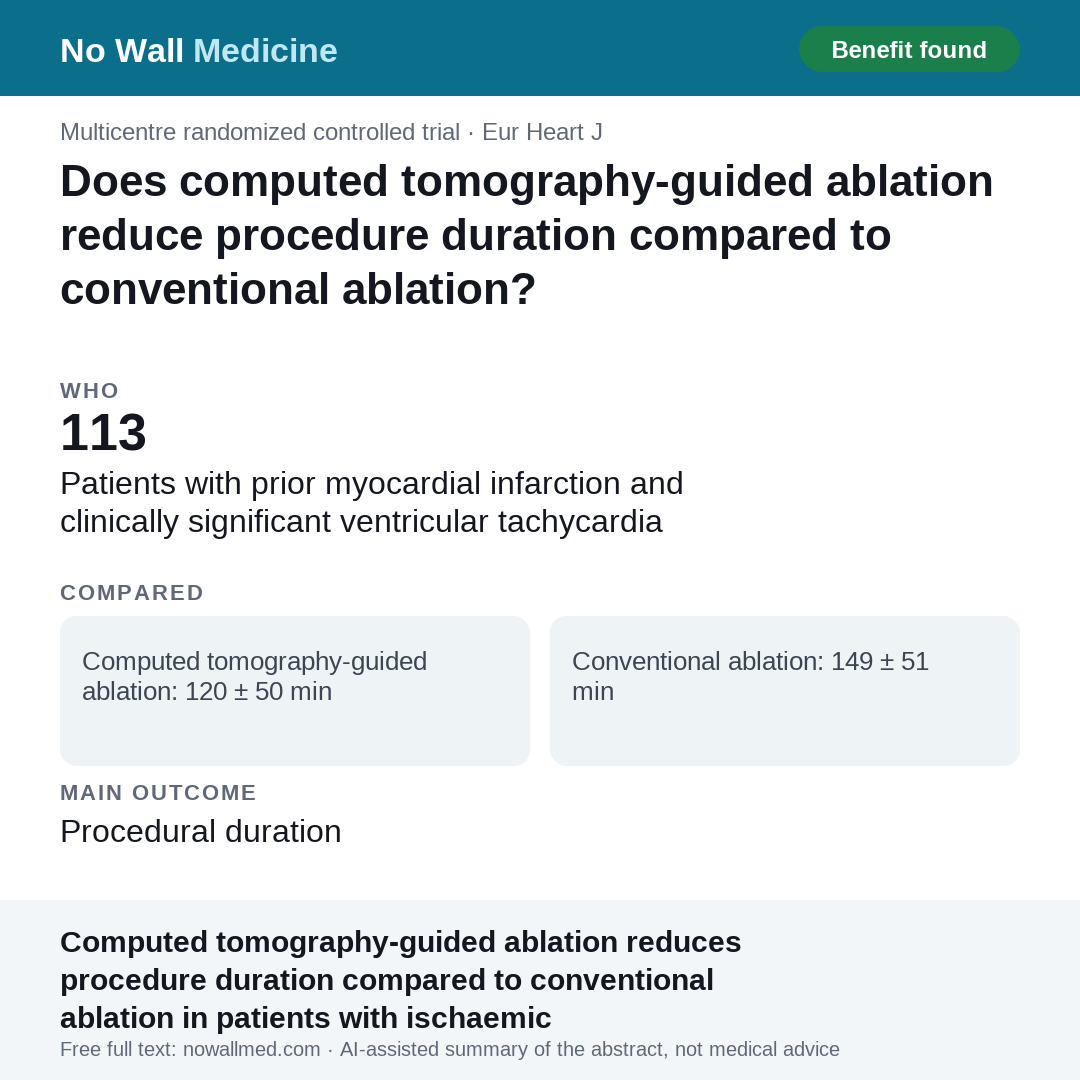
Computed tomography-guided vs conventional catheter ablation for ventricular tachycardia: the InEurHeart trial
Multicentre randomized controlled trialBenefit found
Does computed tomography-guided ablation reduce procedure duration compared to conventional ablation?
Who
113
Patients with prior myocardial infarction and clinically significant ventricular tachycardia · 14 European centres
Compared
Computed tomography-guided ablation: 120 ± 50 min
Conventional ablation: 149 ± 51 min
Main outcome
Procedural duration
Result: -19% [95% confidence interval (CI) -32; -7]
Bottom line: Computed tomography-guided ablation reduces procedure duration compared to conventional ablation in patients with ischaemic cardiomyopathy.
Eur Heart J · 2026-02-11Download image
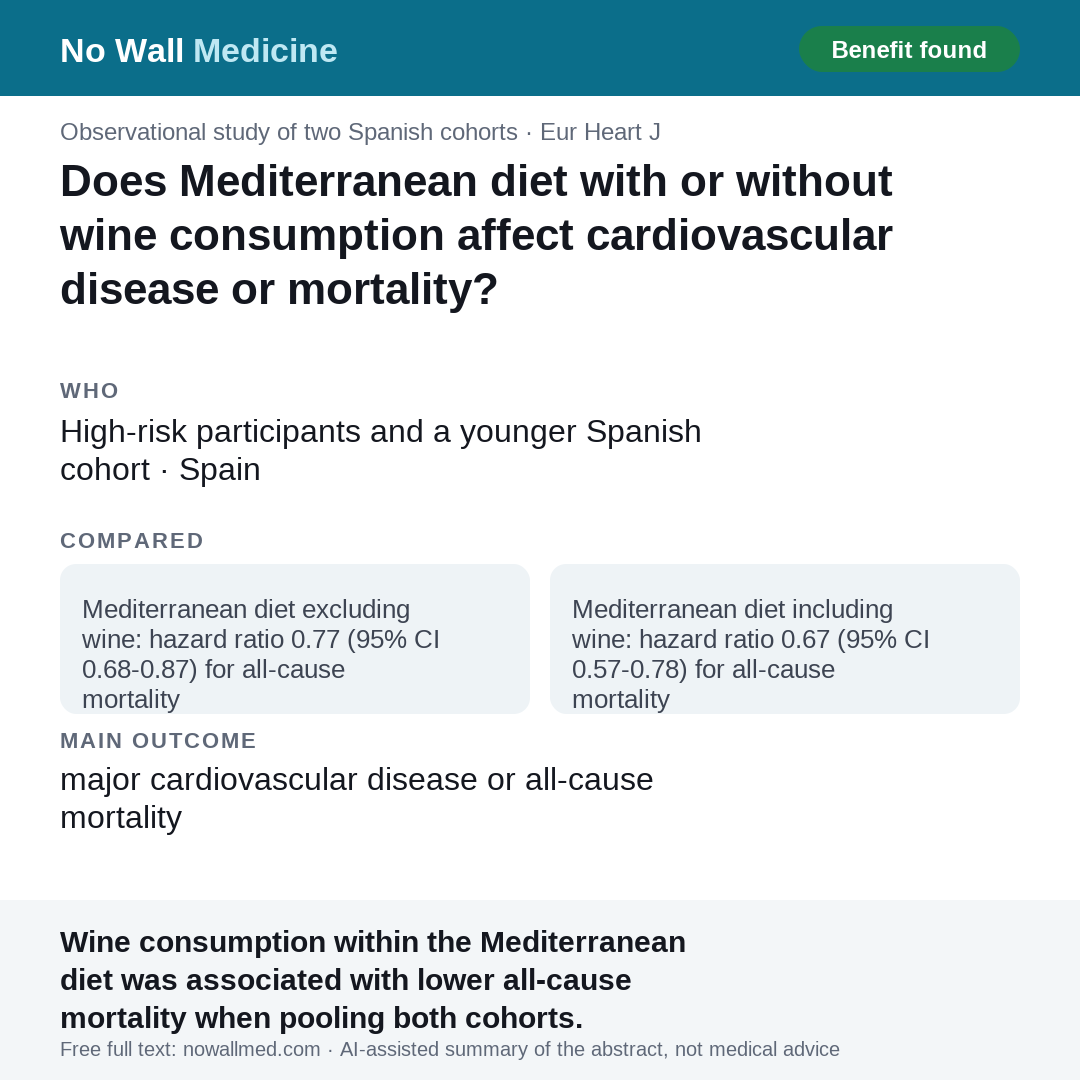
Wine consumption, Mediterranean diet, and cardiovascular risk in two Spanish cohorts
Observational study of two Spanish cohortsKey finding
Does Mediterranean diet with or without wine consumption affect cardiovascular disease or mortality?
Who
High-risk participants and a younger Spanish cohort · Spain
Compared
Mediterranean diet excluding wine: hazard ratio 0.77 (95% CI 0.68-0.87) for all-cause mortality
Mediterranean diet including wine: hazard ratio 0.67 (95% CI 0.57-0.78) for all-cause mortality
Main outcome
major cardiovascular disease or all-cause mortality
Result: hazard ratio 0.67 (95% CI 0.57-0.78) for all-cause mortality
Bottom line: Wine consumption within the Mediterranean diet was associated with lower all-cause mortality when pooling both cohorts.
Limitation: Non-significant associations and interactions advise caution in interpretation of these findings.
Eur Heart J · 2026-02-11Download image
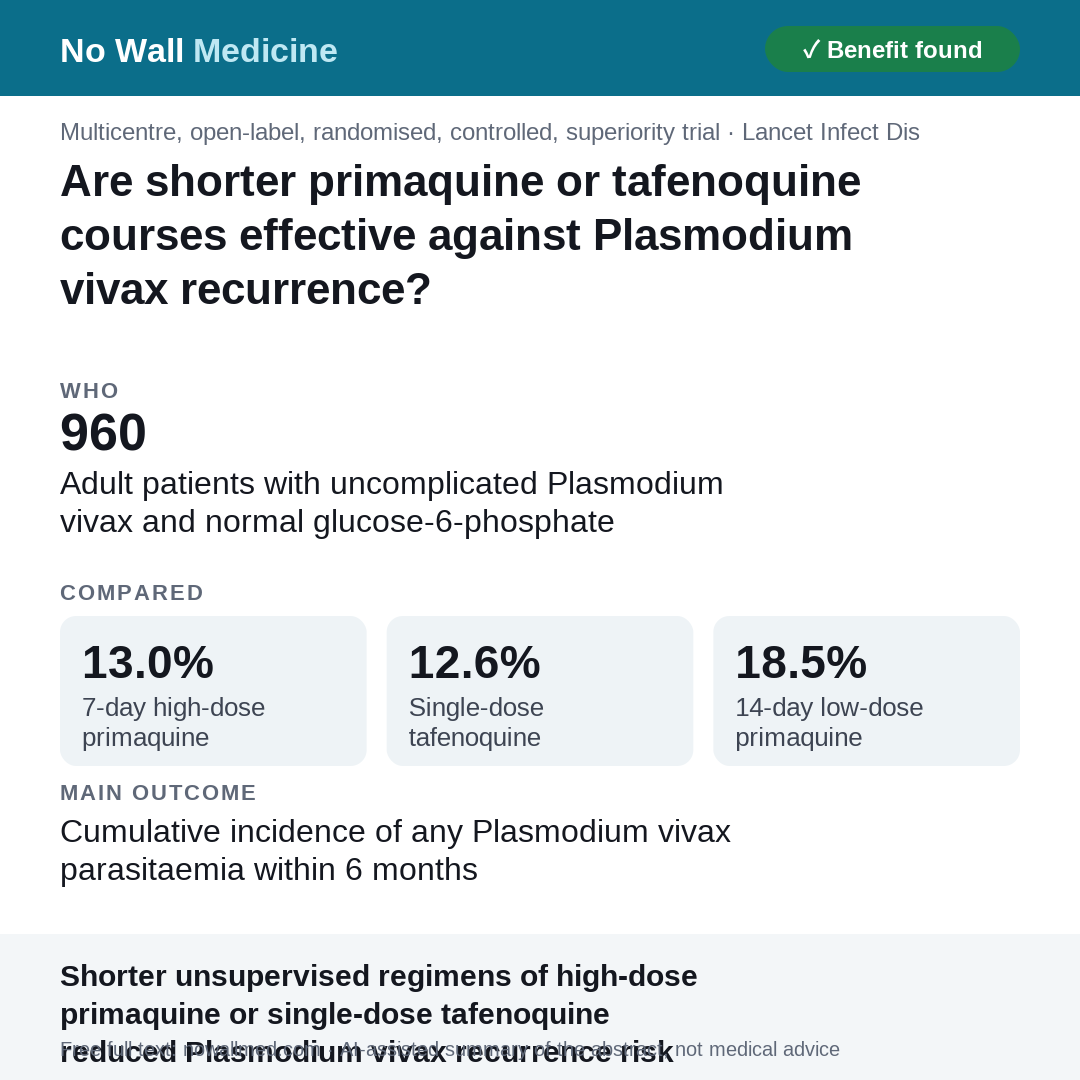
Effectiveness and safety of 7-day high-dose primaquine and single-dose tafenoquine versus 14-day low-dose primaquine in patients with Plasmodium vivax malaria (EFFORT): a multicentre, open-label, randomised, controlled, superiority trial
Multicentre, open-label, randomised, controlled, superiority trialBenefit found
Are shorter primaquine or tafenoquine courses effective against Plasmodium vivax recurrence?
Who
960
Adult patients with uncomplicated Plasmodium vivax and normal glucose-6-phosphate dehydrogenase activity · Ethiopia, Pakistan, Indonesia, and Cambodia
Compared
13.0%7-day high-dose primaquine (97.55% CI 9.0-18.5)
12.6%Single-dose tafenoquine (97.55% CI 8.8-18.0)
18.5%14-day low-dose primaquine (13.8-24.6)
Main outcome
Cumulative incidence of any Plasmodium vivax parasitaemia within 6 months
Result: hazard ratio 0.64 (97.55% CI 0.39-1.05)
Bottom line: Shorter unsupervised regimens of high-dose primaquine or single-dose tafenoquine reduced Plasmodium vivax recurrence risk compared to 14-day low-dose primaquine.
Funded by: National Health and Medical Research Council of Australia and Bill and Melinda Gates Foundation
Lancet Infect Dis · 2026-02-11Download image
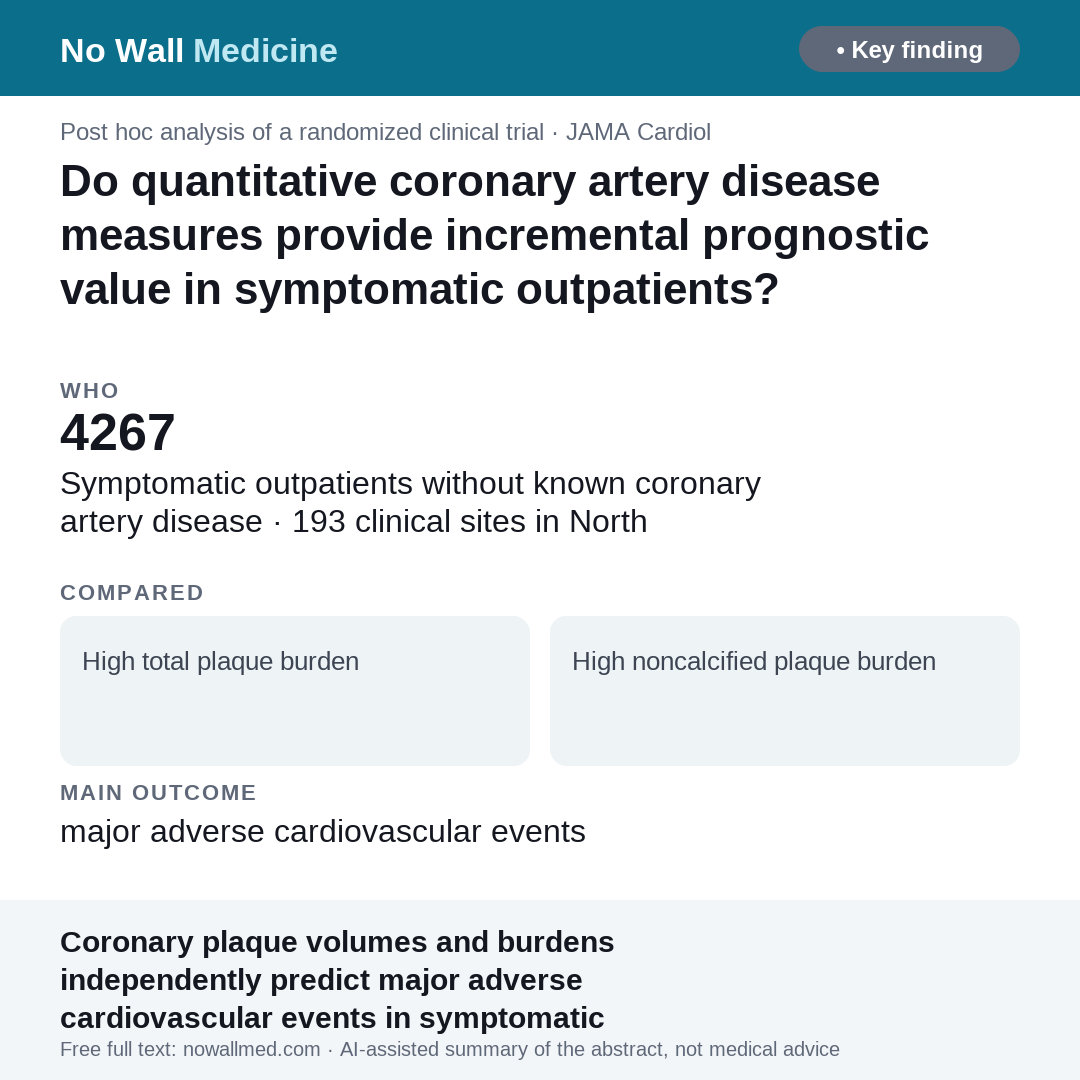
Prognostic Value of Plaque Volume in Patients With First Diagnosis of Coronary Artery Disease: A Substudy of the PROMISE Randomized Clinical Trial
Post hoc analysis of a randomized clinical trialKey finding
Do quantitative coronary artery disease measures provide incremental prognostic value in symptomatic outpatients?
Who
4267
Symptomatic outpatients without known coronary artery disease · 193 clinical sites in North America
Compared
High total plaque burden
High noncalcified plaque burden
Main outcome
major adverse cardiovascular events
Result: TPB: adjusted HR 1.18 (95% CI 1.05-1.34); NCPB: adjusted HR 1.20 (95% CI 1.05-1.37)
Bottom line: Coronary plaque volumes and burdens independently predict major adverse cardiovascular events in symptomatic patients without known disease.
JAMA Cardiol · 2026-02-11Download image
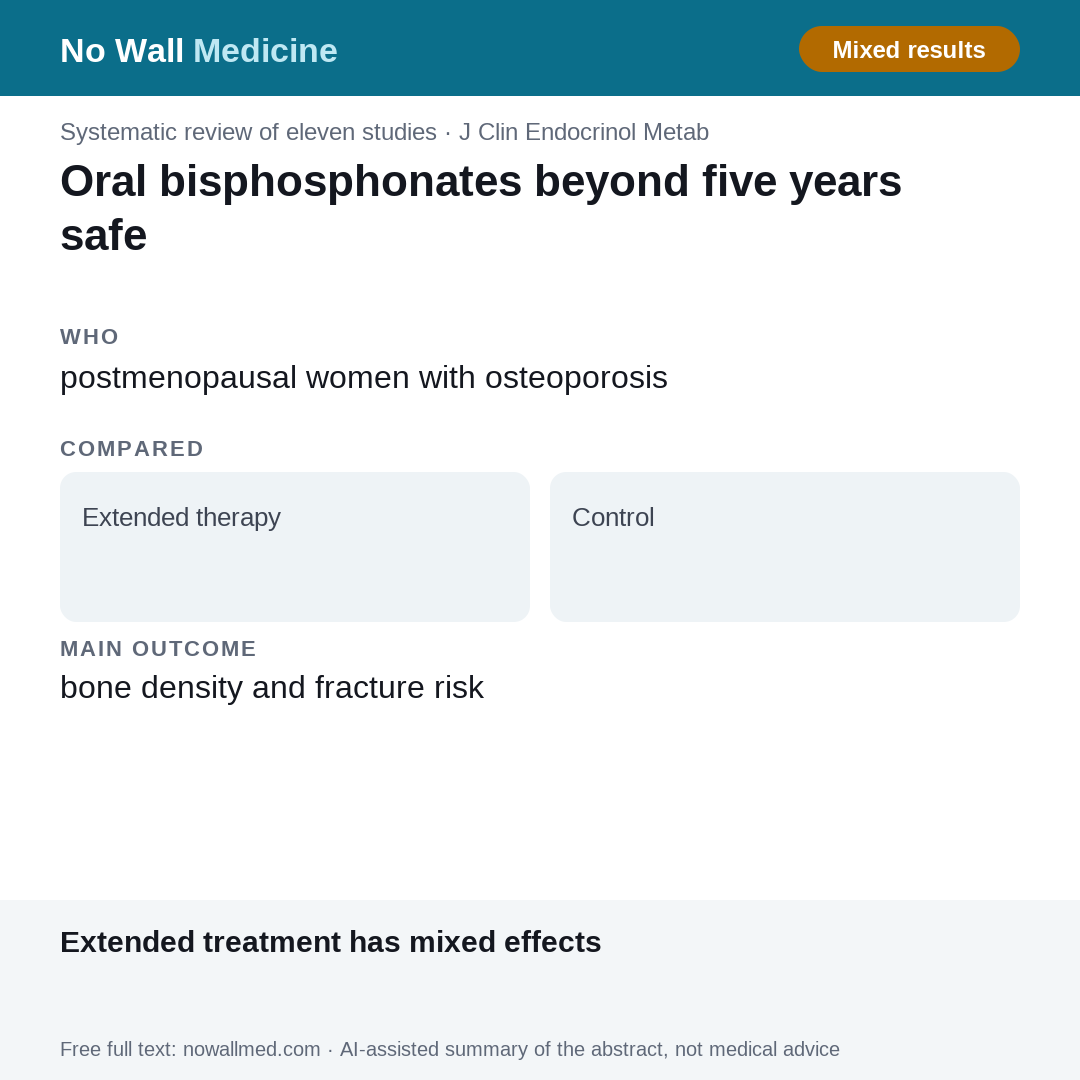
Health and adverse events associated with extended oral bisphosphonates among postmenopausal women: a systematic review
Systematic review of eleven studiesMixed results
Oral bisphosphonates beyond five years safe
Who
postmenopausal women with osteoporosis
Compared
Extended therapy
Control
Main outcome
bone density and fracture risk
Bottom line: Extended treatment has mixed effects
Limitation: substantial heterogeneity and limited evidence
J Clin Endocrinol Metab · 2026-02-11Download image
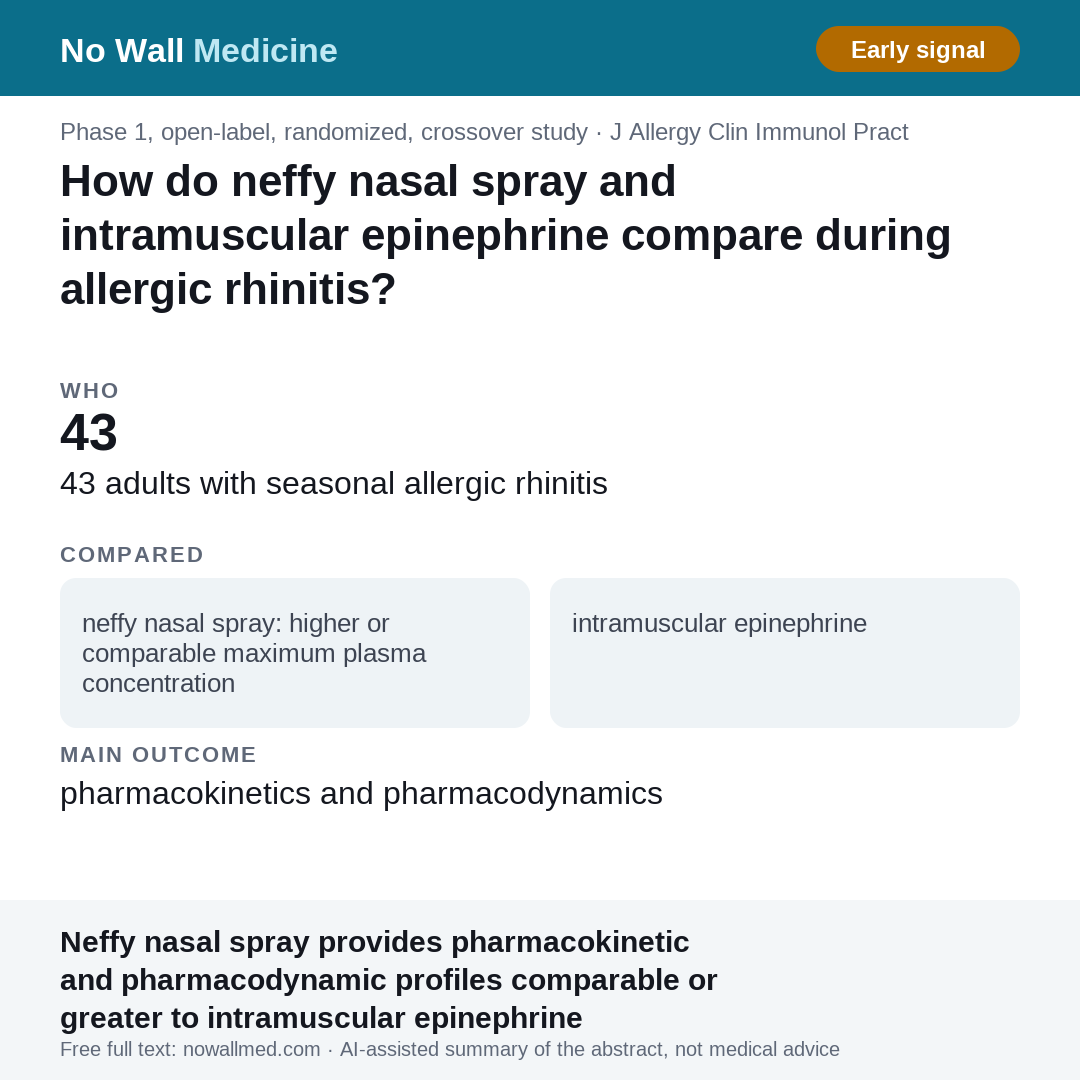
Pharmacokinetics and Pharmacodynamics Following Repeat Dosing of neffy (Epinephrine Nasal Spray) Versus Intramuscular Injection During Induced Allergic Rhinitis
Phase 1, open-label, randomized, crossover studyEarly signal
How do neffy nasal spray and intramuscular epinephrine compare during allergic rhinitis?
Who
43
43 adults with seasonal allergic rhinitis
Compared
neffy nasal spray: higher or comparable maximum plasma concentration
intramuscular epinephrine
Main outcome
pharmacokinetics and pharmacodynamics
Bottom line: Neffy nasal spray provides pharmacokinetic and pharmacodynamic profiles comparable or greater to intramuscular epinephrine injection.
J Allergy Clin Immunol Pract · 2026-02-11Download image
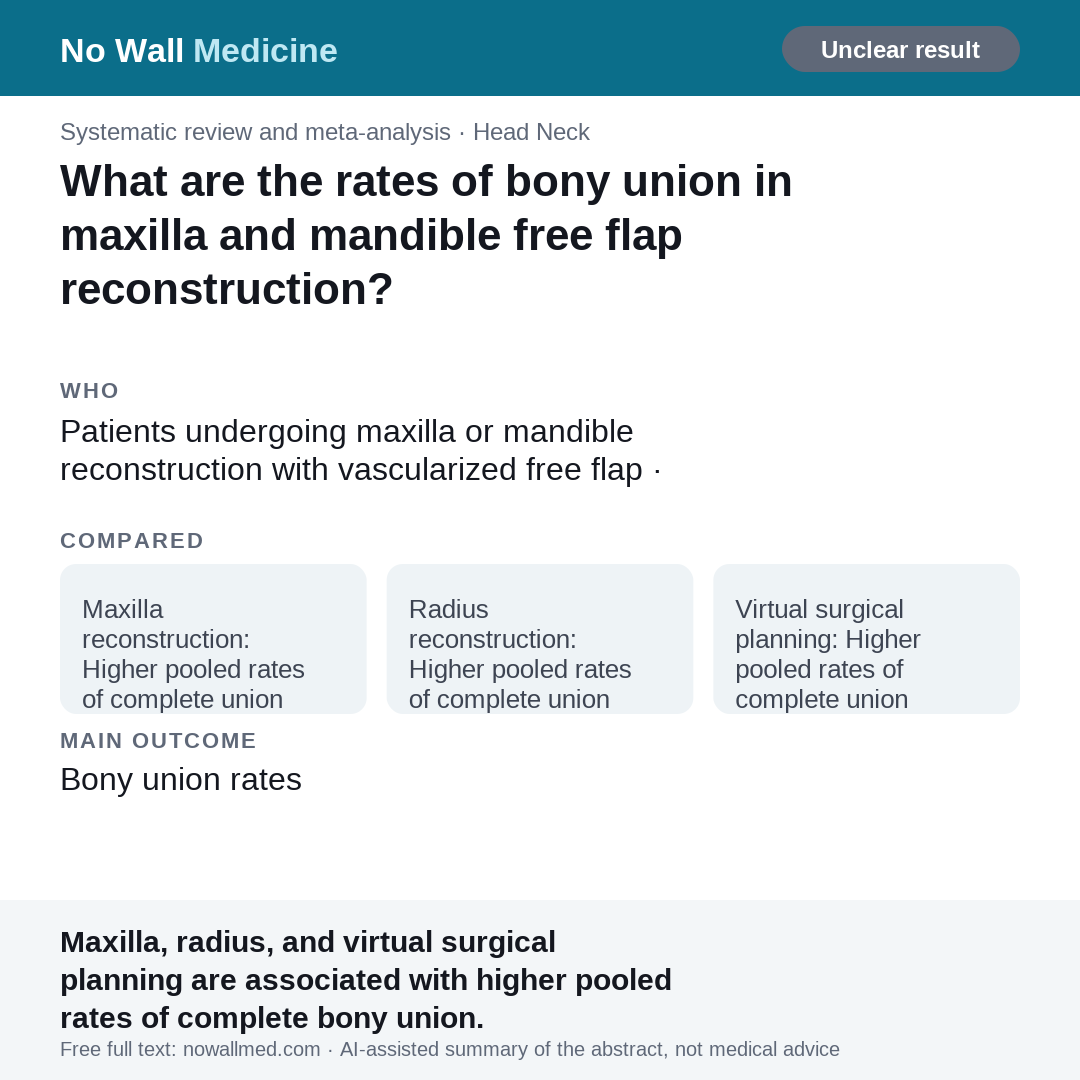
Bony Union in Maxilla and Mandible Free Flap Reconstruction: A Systematic Review and Meta-Analysis
Systematic review and meta-analysisUnclear result
What are the rates of bony union in maxilla and mandible free flap reconstruction?
Who
Patients undergoing maxilla or mandible reconstruction with vascularized free flap · Not specified
Compared
Maxilla reconstruction: Higher pooled rates of complete union
Radius reconstruction: Higher pooled rates of complete union
Virtual surgical planning: Higher pooled rates of complete union
Main outcome
Bony union rates
Bottom line: Maxilla, radius, and virtual surgical planning are associated with higher pooled rates of complete bony union.
Head Neck · 2026-02-11Download image
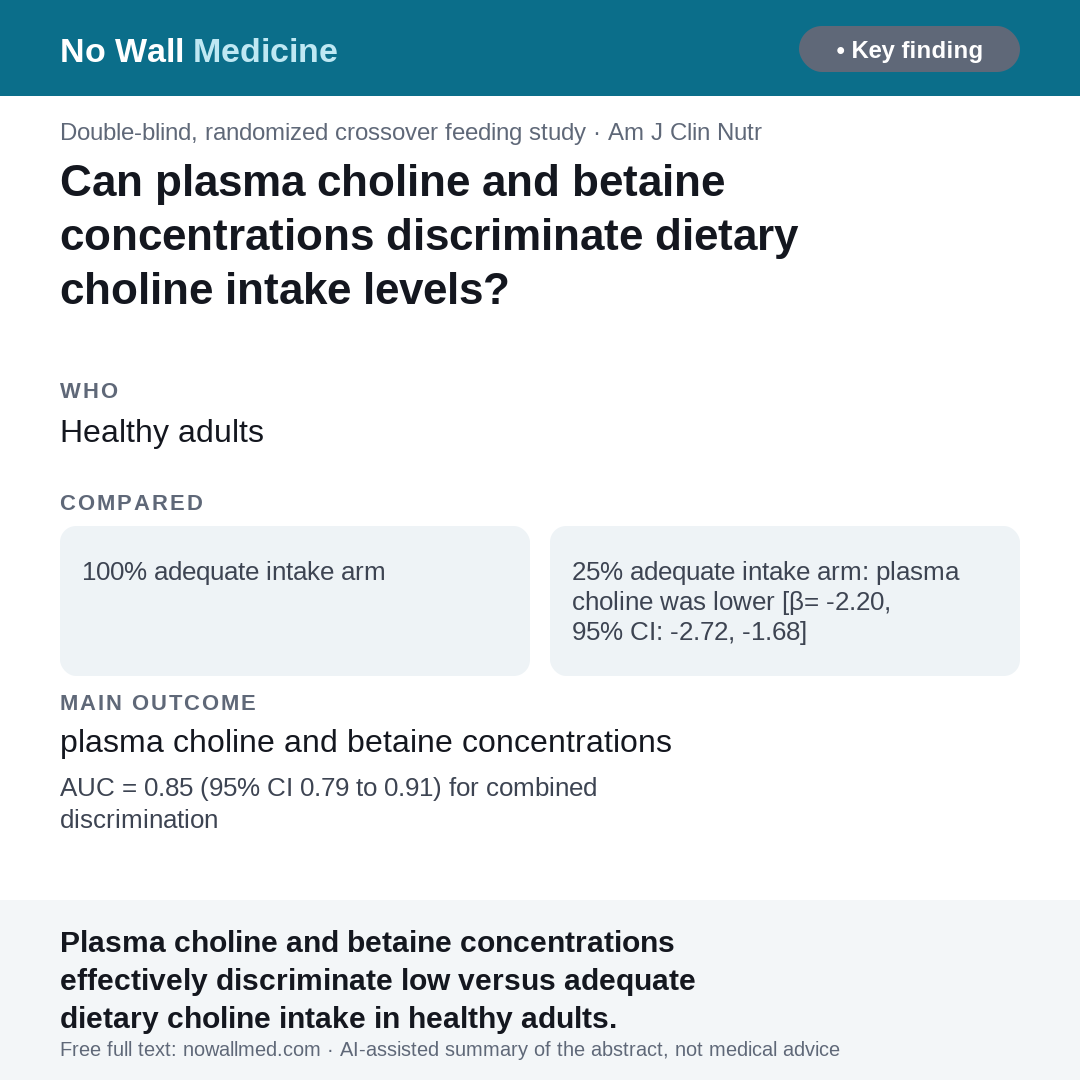
Choline and betaine concentrations in plasma discriminate levels of dietary choline intake in healthy adults: analysis of a double-blind randomized crossover controlled feeding study
Double-blind, randomized crossover feeding studyKey finding
Can plasma choline and betaine concentrations discriminate dietary choline intake levels?
Who
Healthy adults
Compared
100% adequate intake arm
25% adequate intake arm: plasma choline was lower [β= -2.20, 95% CI: -2.72, -1.68]
Main outcome
plasma choline and betaine concentrations
Result: AUC = 0.85 (95% CI 0.79 to 0.91) for combined discrimination
Bottom line: Plasma choline and betaine concentrations effectively discriminate low versus adequate dietary choline intake in healthy adults.
Am J Clin Nutr · 2026-02-11Download image