Visual abstracts
New randomized trials and meta-analyses from leading journals at a glance: who was studied, what was compared, and what was found. Every paper is free to read in full.
All specialtiesCardiology 4763Oncology 4043Gastroenterology & Hepatology 1903Infectious Disease 3756Neurology 1872Psychiatry & Mental Health 2216Pulmonology 2044Critical Care 1319Endocrinology & Diabetes 2544Pediatrics 2889Surgery 2480Orthopedics & Sports Medicine 917Neurosurgery 525Cardiothoracic & Vascular Surgery 656Plastic & Reconstructive Surgery 574Nephrology 1107Rheumatology 810Hematology 1090Dermatology 611Ophthalmology 532Obstetrics & Gynecology 1645Public & Global Health 1037Radiology & Imaging 619Anesthesiology 958Urology 745ENT (Otolaryngology) 494Emergency Medicine 481Allergy & Immunology 309Geriatrics 972Family Medicine & Primary Care 534Medical Genetics & Genomics 659Pathology & Laboratory Medicine 156Physical Medicine & Rehabilitation 734Palliative Care 421Nutrition 1560Digital Health & AI 2137General Medicine 318
Spatially distributed sequential stimulation applied to the paralyzed quadriceps muscles while performing motor-assisted FES cycling
Randomized trialBenefit found
Does spatially distributed sequential stimulation improve power output and fatigue compared to single electrode stimulation?
Who
4
Four subjects without lower-limb motor function
Compared
Spatially distributed sequential stimulation: mean power 10.5 W ± 1.2 W
Single electrode stimulation: mean power 4.3 W ± 1.4 W
Main outcome
mean power output and muscle fatigue
Bottom line: Spatially distributed sequential stimulation produced significantly higher mean power output than single electrode stimulation during motor-assisted cycling.
J Neuroeng Rehabil · 2025-11-28 · Save PNG

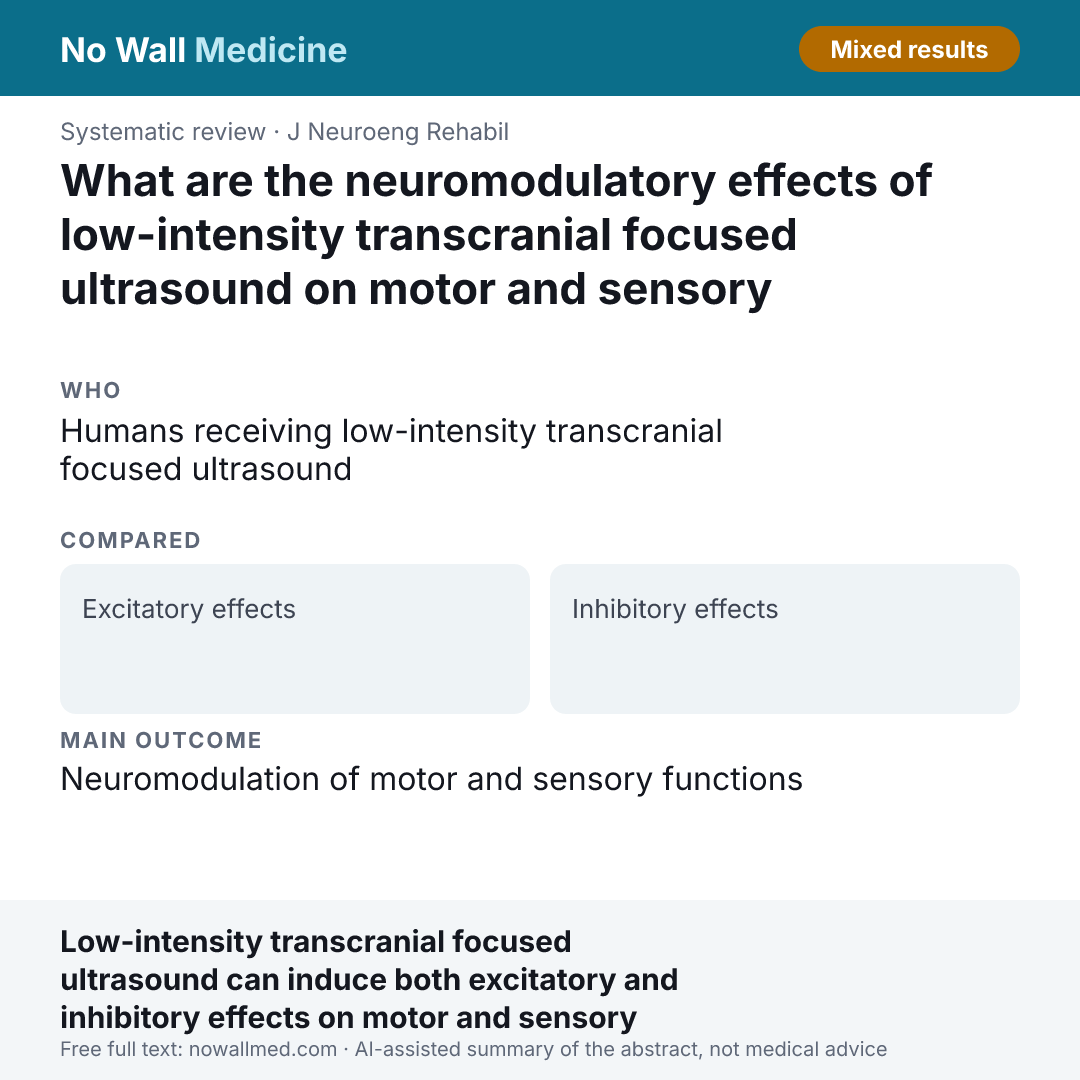
Neuromodulation effects of low-intensity transcranial focused ultrasound in human, a systematic review focusing on motor and sensory functions
Systematic reviewMixed results
What are the neuromodulatory effects of low-intensity transcranial focused ultrasound on motor and sensory functions?
Who
Humans receiving low-intensity transcranial focused ultrasound
Compared
Excitatory effects
Inhibitory effects
Main outcome
Neuromodulation of motor and sensory functions
Bottom line: Low-intensity transcranial focused ultrasound can induce both excitatory and inhibitory effects on motor and sensory brain regions.
Limitation: The underlying mechanisms of neuromodulation remain incompletely understood.
J Neuroeng Rehabil · 2025-11-28 · Save PNG
Spinal manifestations of Paget's disease: Case presentation and systematic review
Case presentation and systematic reviewMixed results
What are the spinal manifestations of Paget's disease of the bone?
Who
87
Patients with Paget's disease of the bone
Compared
Systematic review of ten articles: spinal stenosis, vertebral fracture, spinal cord compression, cauda equina syndrome, and neurological deficits
Synovial cyst cases: one reported case
Main outcome
Spinal complications associated with Paget's disease of the bone
Bottom line: Spinal stenosis and fractures are common, but facet joint synovial cysts are extremely rare manifestations of Paget's disease.
Brain Spine · 2025-11-28 · Save PNG

Diagnostic and prognostic value of myocardial flow reserve quantification with single photon emission computed tomography - a systematic review and meta-analysis
Systematic review and meta-analysisKey finding
What is the diagnostic accuracy and prognostic value of SPECT-derived myocardial flow reserve?
Who
Patients with known or suspected coronary artery disease
Compared
SPECT-derived myocardial flow reserve
PET-MPI
Main outcome
Diagnostic accuracy and prognostic value
Result: sensitivity 78.5% (95% CI: 71.7-84.1%), specificity 89.3% (95% CI: 70.4-96.7%)
Bottom line: SPECT-derived myocardial flow reserve correlates well with reference standards and independently predicts major adverse cardiac events.
Limitation: Standardised protocols and large-scale prospective validation are needed.
EJNMMI Res · 2025-11-28 · Save PNG

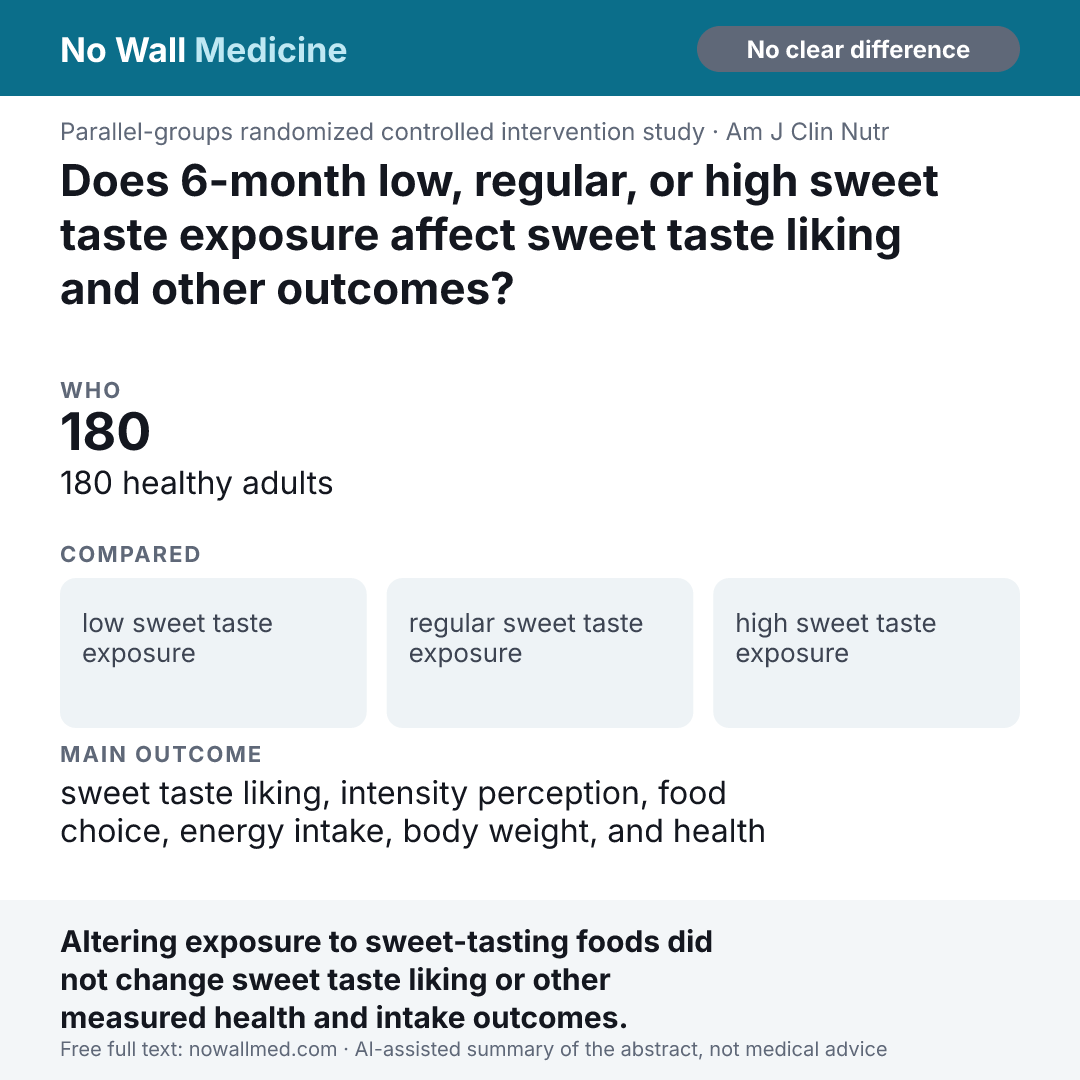
The Sweet Tooth Trial: A Parallel Randomized Controlled Trial Investigating the Effects of A 6-Month Low, Regular, or High Dietary Sweet Taste Exposure on Sweet Taste Liking, and Various Outcomes Related to Food Intake and Weight Status
Parallel-groups randomized controlled intervention studyNo clear difference
Does 6-month low, regular, or high sweet taste exposure affect sweet taste liking and other outcomes?
Who
180
180 healthy adults
Compared
low sweet taste exposure
regular sweet taste exposure
high sweet taste exposure
Main outcome
sweet taste liking, intensity perception, food choice, energy intake, body weight, and health markers
Bottom line: Altering exposure to sweet-tasting foods did not change sweet taste liking or other measured health and intake outcomes.
Am J Clin Nutr · 2025-11-27 · Save PNG
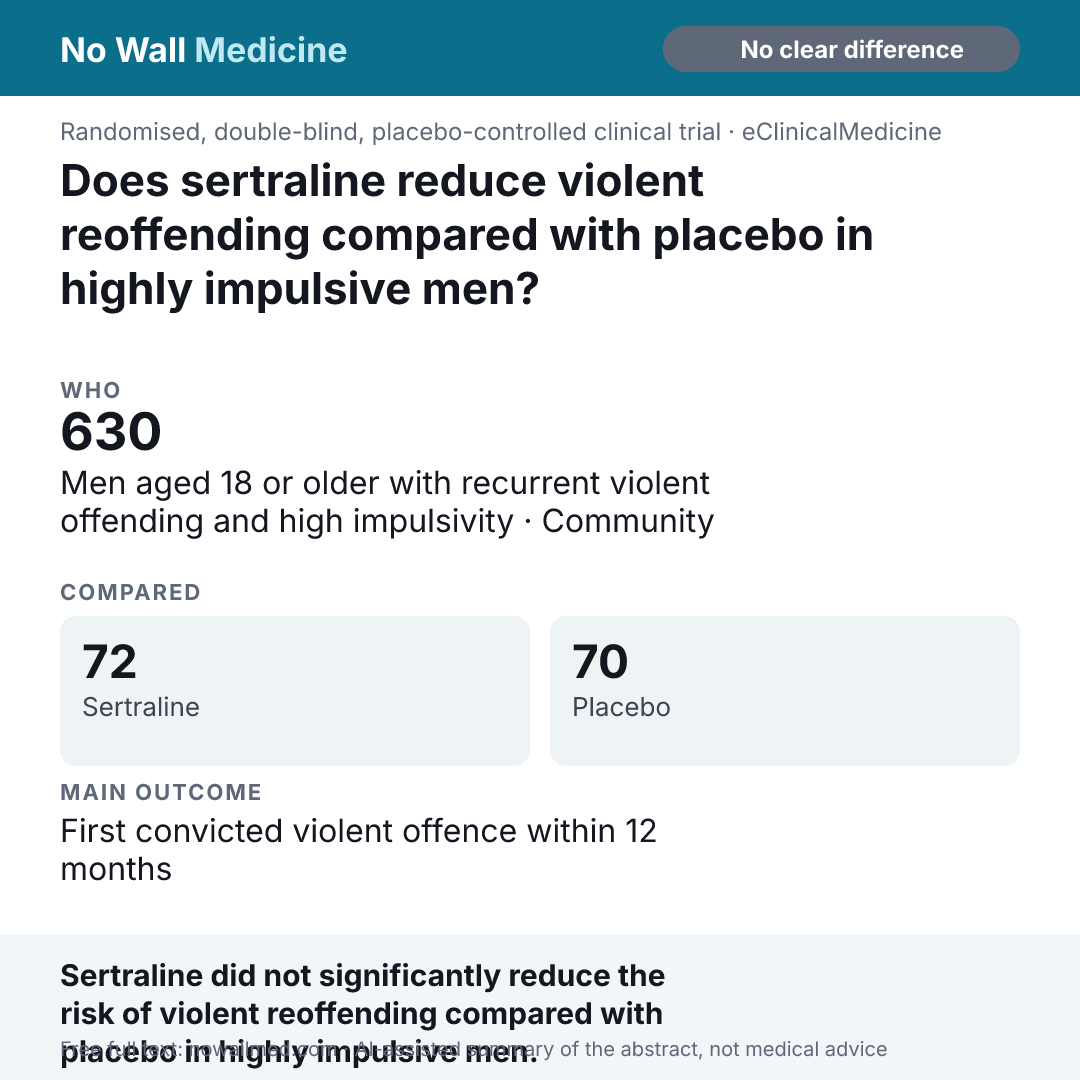
Sertraline to reduce recidivism in impulsive violent offenders (ReINVEST): a randomised double blind clinical trial
Randomised, double-blind, placebo-controlled clinical trialNo clear difference
Does sertraline reduce violent reoffending compared with placebo in highly impulsive men?
Who
630
Men aged 18 or older with recurrent violent offending and high impulsivity · Community settings in New South Wales, Australia
Compared
72Sertraline (22.6%)
70Placebo (22.5%)
Main outcome
First convicted violent offence within 12 months
Result: Relative Risk 1.00, 95% CI 0.75-1.34
Bottom line: Sertraline did not significantly reduce the risk of violent reoffending compared with placebo in highly impulsive men.
Limitation: Only 204 participants remained engaged with the study by 12 months.
Funded by: Australian National Health and Medical Research Council; NSW Department of Communities and Justice
eClinicalMedicine · 2025-11-27 · Save PNG
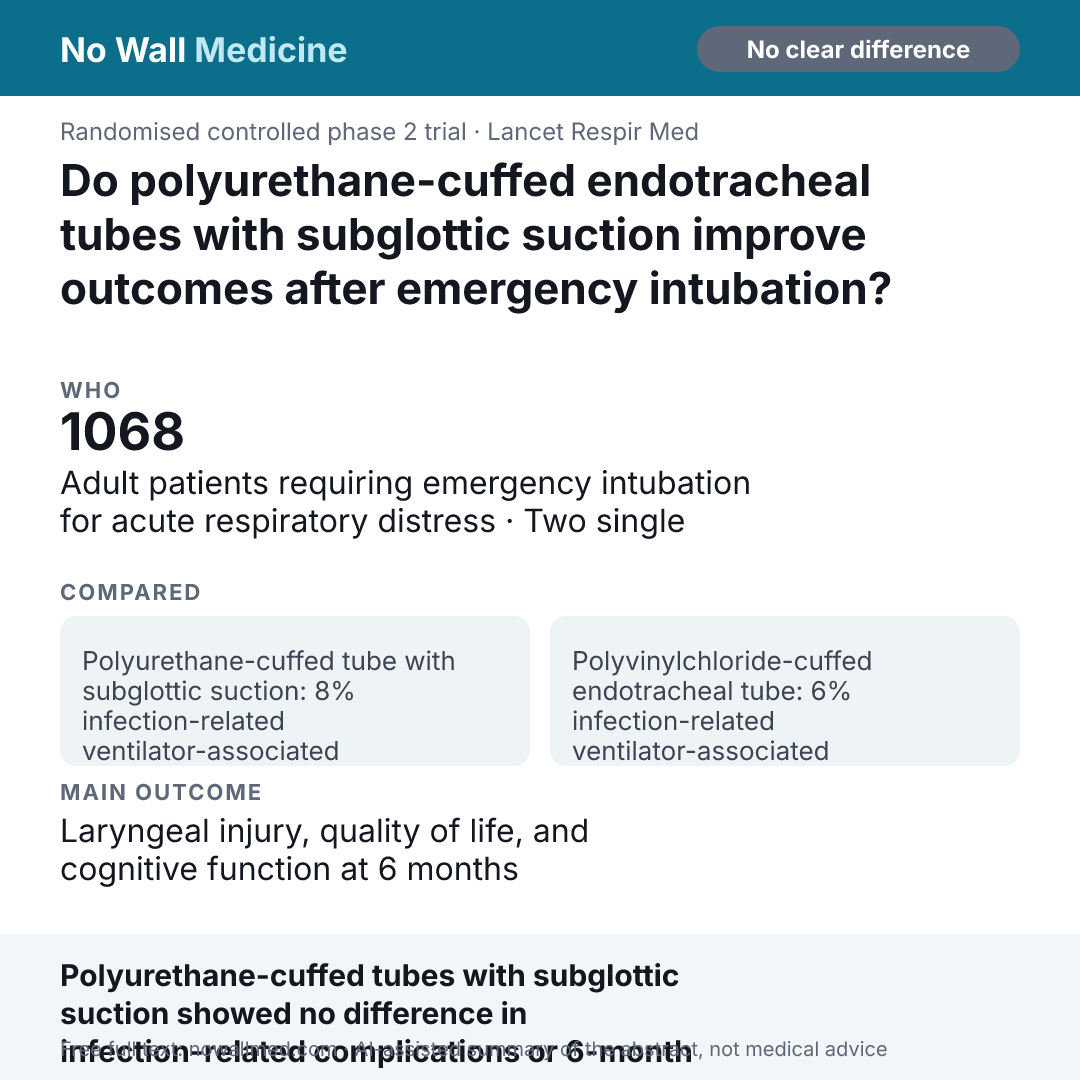
Hospital and long-term outcomes for subglottic suction and polyurethane cuff versus standard endotracheal tubes in emergency intubation (PreVent 2): a randomised controlled phase 2 trial
Randomised controlled phase 2 trialNo clear difference
Do polyurethane-cuffed endotracheal tubes with subglottic suction improve outcomes after emergency intubation?
Who
1068
Adult patients requiring emergency intubation for acute respiratory distress · Two single centres in the United States
Compared
Polyurethane-cuffed tube with subglottic suction: 8% infection-related ventilator-associated complications
Polyvinylchloride-cuffed endotracheal tube: 6% infection-related ventilator-associated complications
Main outcome
Laryngeal injury, quality of life, and cognitive function at 6 months
Result: risk difference 0·02 [95% CI -0·01 to 0·05] for infection-related ventilator-associated complications
Bottom line: Polyurethane-cuffed tubes with subglottic suction showed no difference in infection-related complications or 6-month long-term outcomes.
Limitation: Small number of survivors who provided information on physical and mental status limits conclusions.
Funded by: National Institutes of Health and National Heart, Lung, and Blood Institute
Lancet Respir Med · 2025-11-27 · Save PNG
Age-specific distribution of cervical precancer and cancer among women living with HIV across seven countries: a systematic review and an individual patient data meta-analysis
Systematic review and individual patient data meta-analysisBenefit found
What is the age-specific distribution of cervical precancer and cancer among women living with HIV?
Who
128732
Women living with HIV · 12 countries
Compared
6.0%Ages 15-19 years (95% CI 0.74-64.1)
32.4%Ages 20-24 years (8.3-72.7)
42.1%Ages 25-29 years (16.4-80.2)
50.3%Ages 30-34 years (16.3-80.0)
Main outcome
Predicted probability of cervical intraepithelial neoplasia grade 2 or 3
Bottom line: Cervical precancer risk increases with age in women living with HIV, peaking in the 45-49 age group.
Funded by: US Agency for International Development and US President's Emergency Plan for AIDS Relief
Lancet HIV · 2025-11-27 · Save PNG

Efficacy and safety of deuruxolitinib, an oral selective Janus kinase 1/2 inhibitor, in adults with alopecia areata: Results from the THRIVE-AA2 Phase 3, randomized, double-blind, controlled trial
Randomized, double-blind trialBenefit found
Deuruxolitinib efficacy in alopecia areata
Who
517
Adults with severe chronic alopecia areata · Multicenter
Compared
33.0%Deuruxolitinib 8mg
38.3%Deuruxolitinib 12mg
0.8%Placebo
Main outcome
SALT score ≤20 at Week 24
Bottom line: Deuruxolitinib helps alopecia areata patients
Limitation: No long-term efficacy assessment
J Am Acad Dermatol · 2025-11-27 · Save PNG

Identifying predictors of neuropathic pain medication prescribing, adherence, and discontinuation: a systematic review and meta-analysis
Systematic review and meta-analysisMixed results
What predicts neuropathic pain medication prescribing, adherence, and discontinuation in adults?
Who
Adults with neuropathic pain
Compared
Prescribing predictors: mental health disorder, diabetes mellitus, and White race
Adherence predictors: serotonin-norepinephrine reuptake inhibitors, dose titration, and medicine reminders
Discontinuation predictors: tricyclic antidepressants and combination neuropathic pain medications
Main outcome
medication prescribing, adherence, and discontinuation
Bottom line: Predictors for prescribing, adherence, and discontinuation vary across different medication management strategies in neuropathic pain.
Br J Anaesth · 2025-11-27 · Save PNG

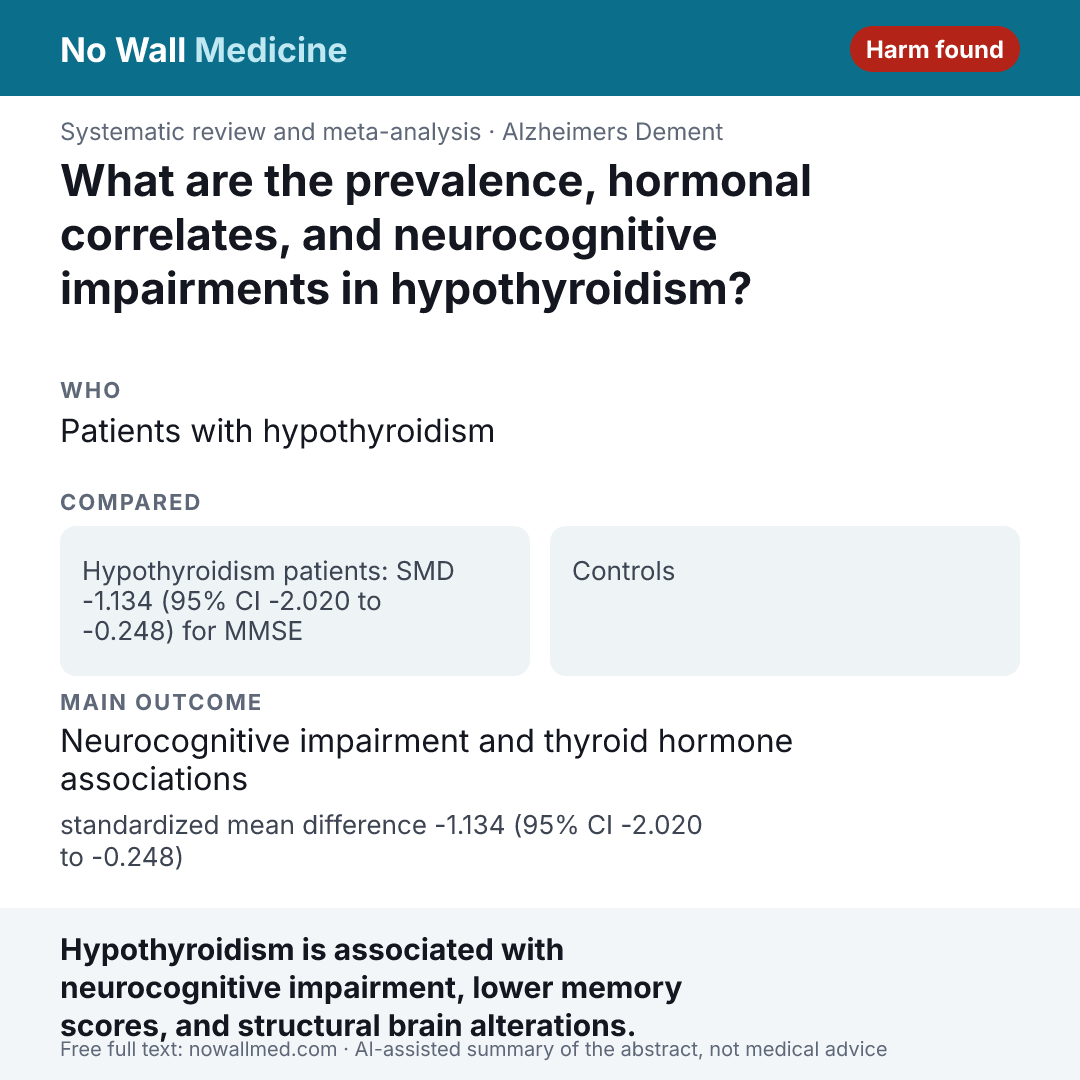
Prevalence, hormonal correlates, severity, and neural basis of neurocognitive impairment in patients with hypothyroidism: Systematic review and meta-analyses
Systematic review and meta-analysisHarm found
What are the prevalence, hormonal correlates, and neurocognitive impairments in hypothyroidism?
Who
Patients with hypothyroidism
Compared
Hypothyroidism patients: SMD -1.134 (95% CI -2.020 to -0.248) for MMSE
Controls
Main outcome
Neurocognitive impairment and thyroid hormone associations
Result: standardized mean difference -1.134 (95% CI -2.020 to -0.248)
Bottom line: Hypothyroidism is associated with neurocognitive impairment, lower memory scores, and structural brain alterations.
Alzheimers Dement · 2025-11-27 · Save PNG
Magnetic resonance imaging in the diagnosis of trigeminal neuralgia: a systematic review of the imaging protocol and diagnostic accuracy
Systematic reviewUnclear result
What are the diagnostic performance and effective MRI protocols for trigeminal neuralgia?
Who
Patients with suspected trigeminal neuralgia
Compared
Advanced MRI sequences
3.0 Tesla imaging
Main outcome
Visualization of neurovascular conflicts and diagnostic accuracy
Bottom line: Advanced sequences and higher field strength improve visualization, but distinguishing clinically significant conflicts remains a challenge.
Limitation: Variable imaging protocols, interobserver variability, and limited clinical correlation.
Eur Radiol · 2025-11-27 · Save PNG

Effectiveness and Safety of a Polyvinyl Alcohol Microsphere and Hyaluronic Acid Suspension for Chin Augmentation: A Randomized Controlled Trial and Multidisciplinary Study
Randomized controlled trialBenefit found
Is PVA-HA filler effective for chin augmentation?
Who
144
Subjects with chin retrusion
Compared
PVA-HA: 1.12° (95% CI, 0.83°-1.41°)
Control: -0.42° (95% CI, -0.87° to 0.03°)
Main outcome
G-Sn-Pog' angle increase
Result: between-group difference, 1.54°
Bottom line: PVA-HA filler is effective for chin augmentation
Aesthet Surg J · 2025-11-27 · Save PNG

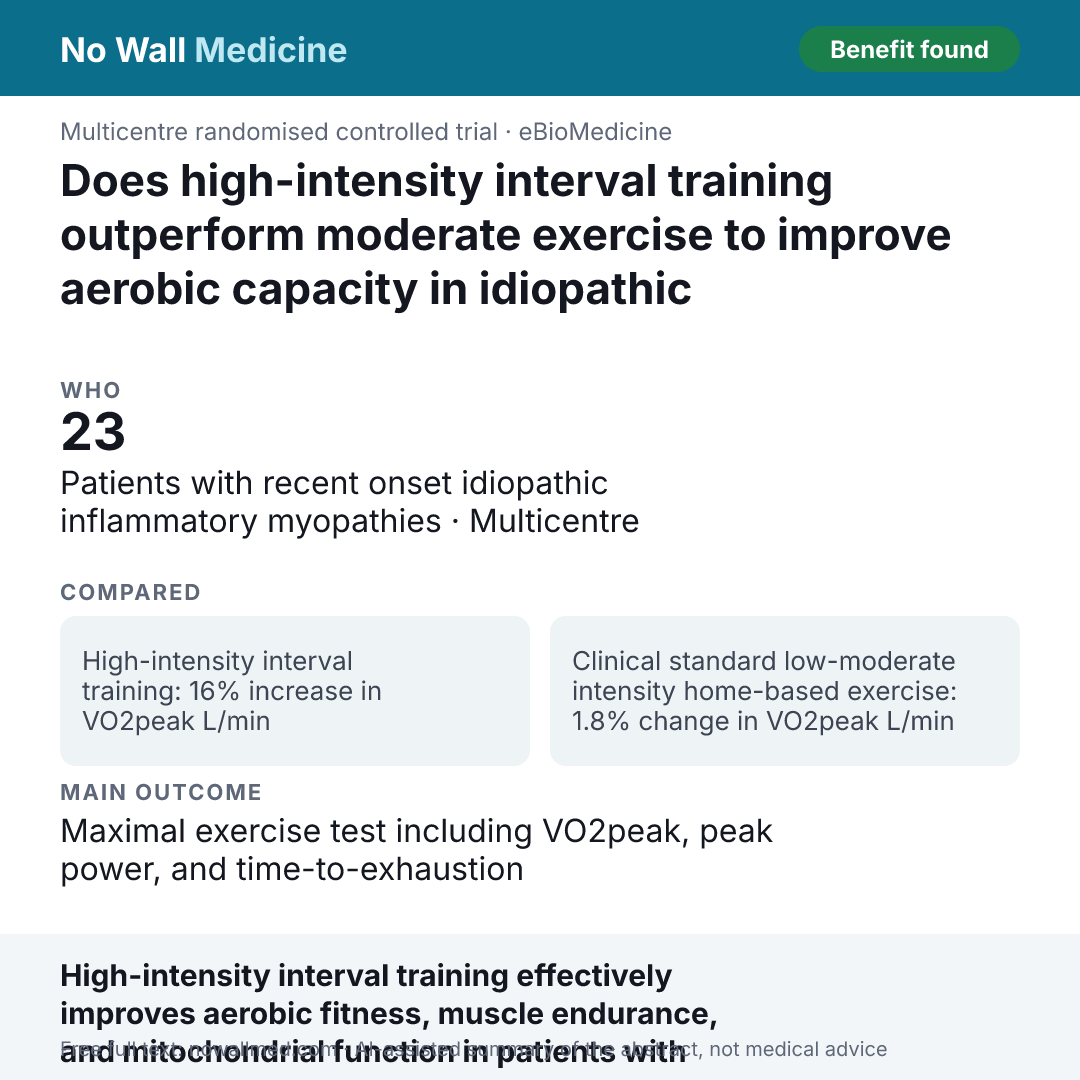
High-intensity interval training outperforms moderate exercise to improve aerobic capacity in patients with recent-onset idiopathic inflammatory myopathies: a multicentre randomised controlled trial
Multicentre randomised controlled trialBenefit found
Does high-intensity interval training outperform moderate exercise to improve aerobic capacity in idiopathic inflammatory myopathies?
Who
23
Patients with recent onset idiopathic inflammatory myopathies · Multicentre
Compared
High-intensity interval training: 16% increase in VO2peak L/min
Clinical standard low-moderate intensity home-based exercise: 1.8% change in VO2peak L/min
Main outcome
Maximal exercise test including VO2peak, peak power, and time-to-exhaustion
Result: 95% CI 0.1; 0.47
Bottom line: High-intensity interval training effectively improves aerobic fitness, muscle endurance, and mitochondrial function in patients with recent onset idiopathic inflammatory myopathies.
Funded by: Swedish Research Council, Swedish Rheumatism Association, and others
eBioMedicine · 2025-11-27 · Save PNG
First-in-human high dose AAV9 intrathecal gene therapy for paediatric CLN7 disease: a phase 1, open-label, single ascending dose, non-randomised clinical trial
Phase 1, open-label, single ascending dose, non-randomised clinical trialEarly signal
Is high dose intrathecal AAV9 gene therapy safe for paediatric CLN7 disease?
Who
4
Children with Neuronal Ceroid Lipofuscinoses type 7 disease
Compared
low dose
high dose
Main outcome
safety and preliminary efficacy
Bottom line: High dose intrathecal AAV9 gene therapy was safe and showed preliminary efficacy in children with CLN7 disease.
Limitation: Additional long-term monitoring of the immune system is needed during immunosuppression tapering.
Funded by: The Batten's Hope Foundation, Mila's Miracle Foundation, Children's Health Dallas
eBioMedicine · 2025-11-27 · Save PNG

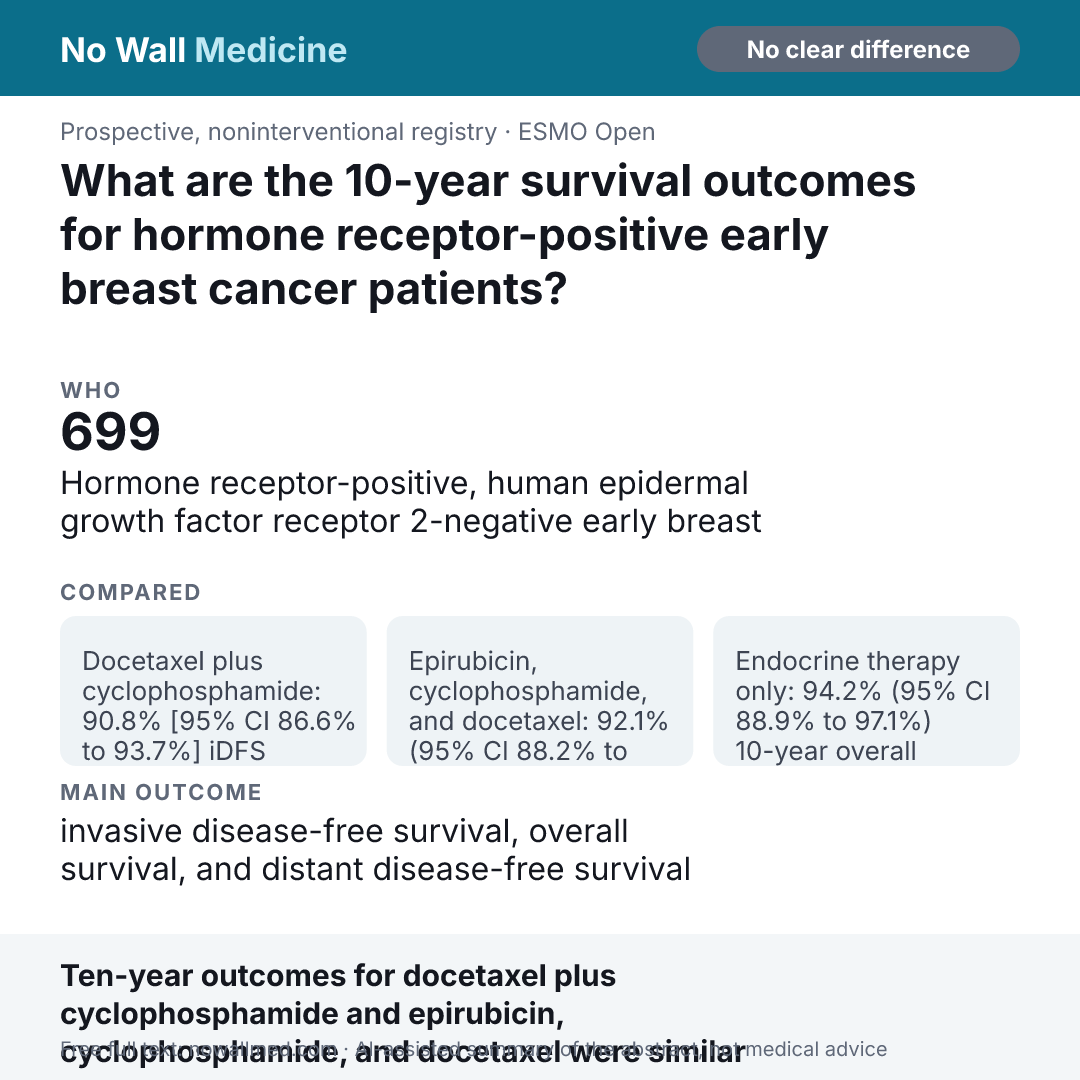
Long-term outcome data for patients with hormone receptor-positive early breast cancer participating in the WSG PlanB trial after preselection by gene expression analysis: 10-year survival results from the WSG PlanB registry
Prospective, noninterventional registryNo clear difference
What are the 10-year survival outcomes for hormone receptor-positive early breast cancer patients?
Who
699
Hormone receptor-positive, human epidermal growth factor receptor 2-negative early breast cancer patients
Compared
Docetaxel plus cyclophosphamide: 90.8% [95% CI 86.6% to 93.7%] iDFS
Epirubicin, cyclophosphamide, and docetaxel: 92.1% (95% CI 88.2% to 94.7%) iDFS
Endocrine therapy only: 94.2% (95% CI 88.9% to 97.1%) 10-year overall survival
Main outcome
invasive disease-free survival, overall survival, and distant disease-free survival
Bottom line: Ten-year outcomes for docetaxel plus cyclophosphamide and epirubicin, cyclophosphamide, and docetaxel were similar and excellent.
ESMO Open · 2025-11-27 · Save PNG
Long-term effect of neoadjuvant denosumab treatment in high-risk early breast cancer (GeparX)
Randomized, open-label, phase II studyEarly signal
Does neoadjuvant denosumab improve long-term outcomes in high-risk early breast cancer?
Who
High-risk early breast cancer patients
Compared
9.2%Denosumab-treated
13.8%Non-denosumab-treated
Main outcome
Invasive disease-free survival, distant disease-free survival, overall survival, and locoregional recurrence-free interval
Result: hazard ratio 0.64 (95% CI 0.43-0.93)
Bottom line: Neoadjuvant denosumab significantly reduced the risk of distant relapses despite not improving pathological complete response rates.
ESMO Open · 2025-11-27 · Save PNG

The evolving etiologies of rapidly progressive dementia: a systematic review
Systematic reviewMixed results
What are the evolving etiologies and temporal trends of rapidly progressive dementia?
Who
1,701
Patients with rapidly progressive dementia
Compared
Neurodegenerative diseases: 459 cases, 27.0%
Neuroimmune diseases: 327 cases, 19.2%
Central nervous system infections: 295 cases, 17.3%
Main outcome
Etiological categories and temporal trends of rapidly progressive dementia
Bottom line: Neuroimmune diseases, particularly autoimmune encephalitis, show a significant upward trend in prevalence over time.
Transl Psychiatry · 2025-11-27 · Save PNG

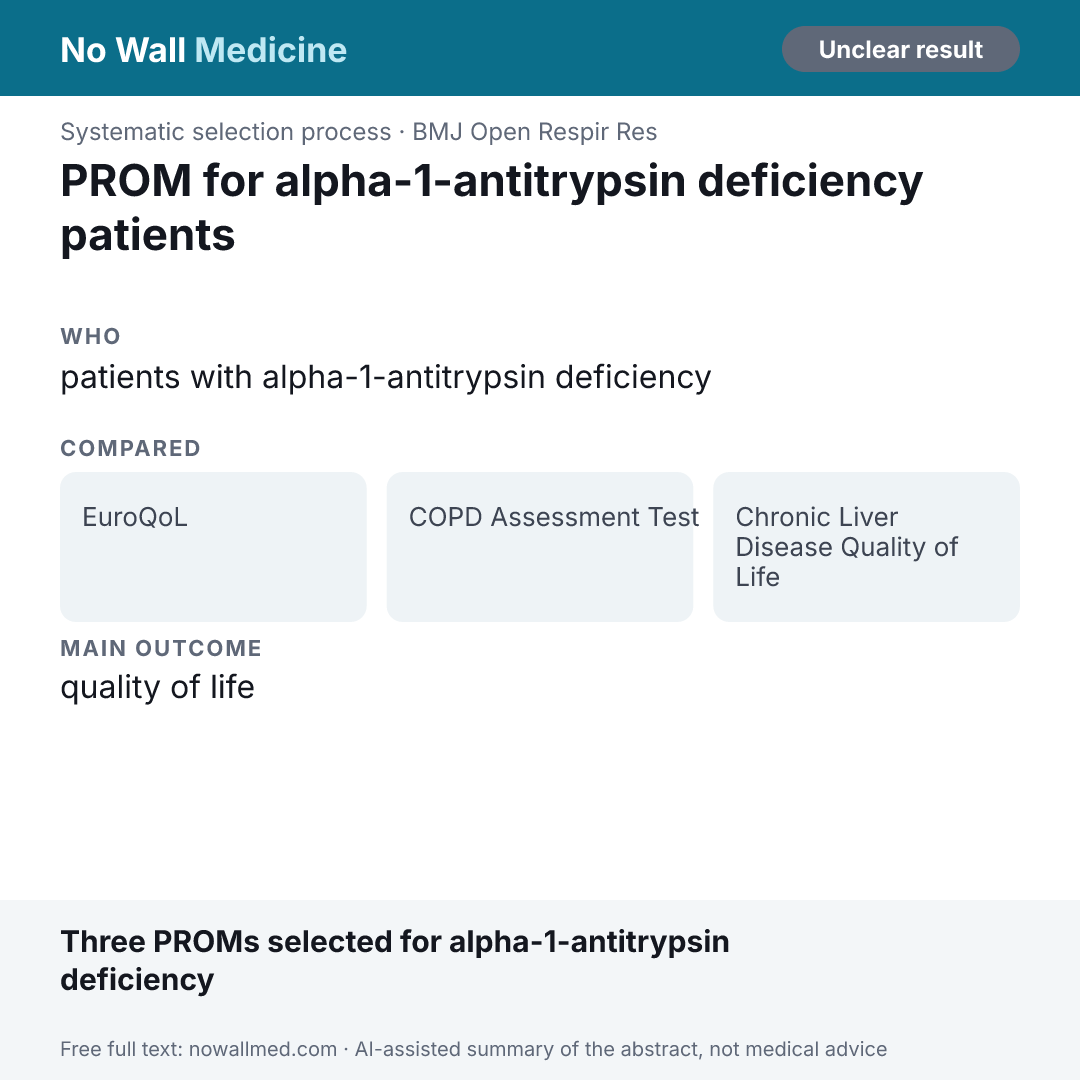
Patient-reported outcome measures for use in patients with alpha-1-antitrypsin deficiency: results of a systematic selection process
Systematic selection processUnclear result
PROM for alpha-1-antitrypsin deficiency patients
Who
patients with alpha-1-antitrypsin deficiency
Compared
EuroQoL
COPD Assessment Test
Chronic Liver Disease Quality of Life
Main outcome
quality of life
Bottom line: Three PROMs selected for alpha-1-antitrypsin deficiency
BMJ Open Respir Res · 2025-11-27 · Save PNG
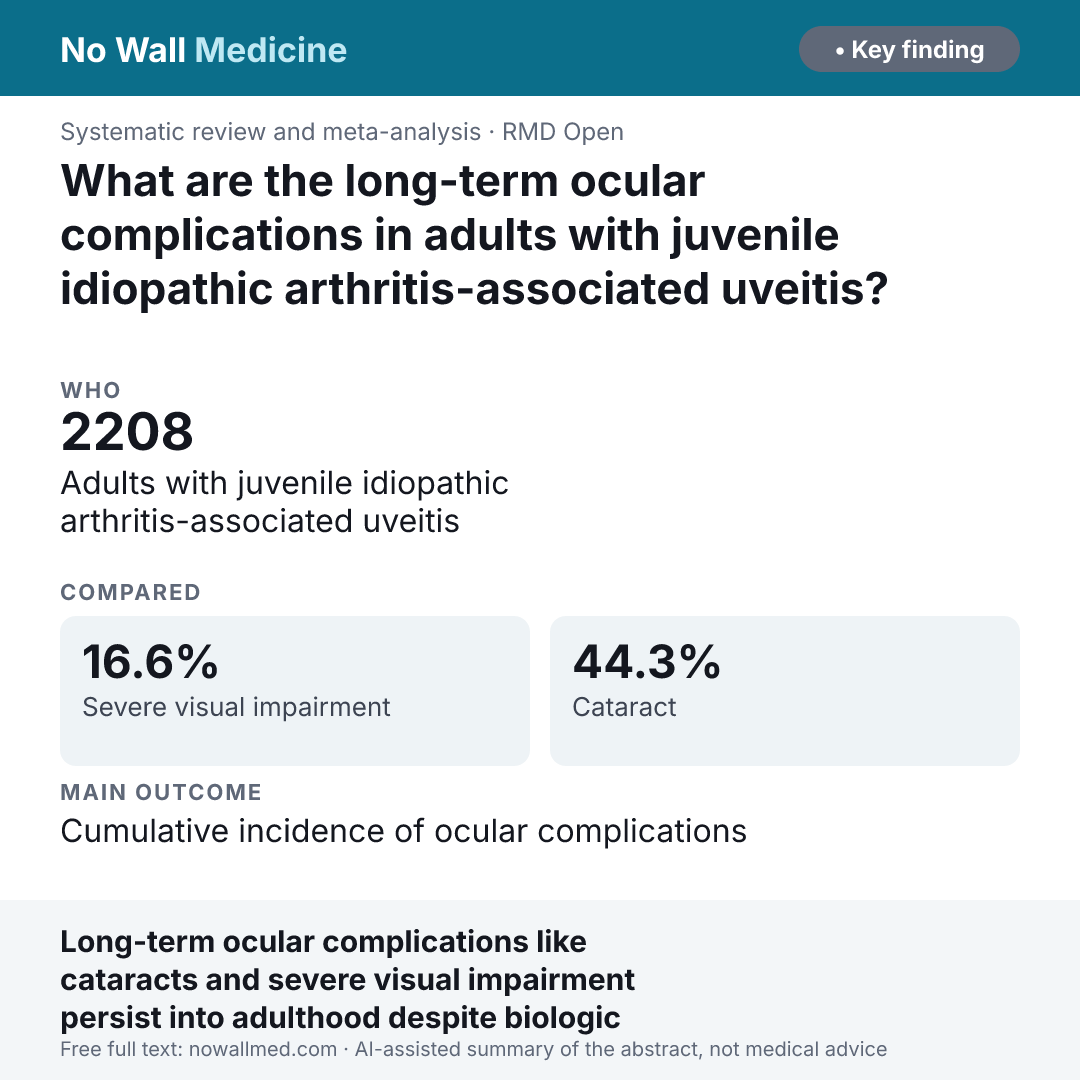
Long-term outcomes of JIA-associated uveitis: a systematic review and meta-analysis
Systematic review and meta-analysisKey finding
What are the long-term ocular complications in adults with juvenile idiopathic arthritis-associated uveitis?
Who
2208
Adults with juvenile idiopathic arthritis-associated uveitis
Compared
16.6%Severe visual impairment (95% CI 9.9% to 22.6%)
44.3%Cataract (95% CI 27.5% to 61.7%)
Main outcome
Cumulative incidence of ocular complications
Bottom line: Long-term ocular complications like cataracts and severe visual impairment persist into adulthood despite biologic therapy.
Limitation: High heterogeneity and evidence of reporting bias for severe visual impairment and cataract.
RMD Open · 2025-11-27 · Save PNG