Visual abstracts
New randomized trials and meta-analyses from leading journals at a glance: who was studied, what was compared, and what was found. Every paper is free to read in full.
All specialtiesCardiology 2345Oncology 2009Gastroenterology & Hepatology 884Infectious Disease 1456Neurology 941Psychiatry & Mental Health 1111Pulmonology 984Critical Care 651Endocrinology & Diabetes 1229Pediatrics 1370Surgery 1190Orthopedics & Sports Medicine 426Neurosurgery 292Cardiothoracic & Vascular Surgery 255Plastic & Reconstructive Surgery 357Nephrology 491Rheumatology 332Hematology 503Dermatology 272Ophthalmology 274Obstetrics & Gynecology 769Public & Global Health 431Radiology & Imaging 323Anesthesiology 473Urology 395ENT (Otolaryngology) 303Emergency Medicine 266Allergy & Immunology 145Geriatrics 500Family Medicine & Primary Care 274Medical Genetics & Genomics 254Pathology & Laboratory Medicine 75Physical Medicine & Rehabilitation 398Palliative Care 200Nutrition 618Digital Health & AI 1166General Medicine 173
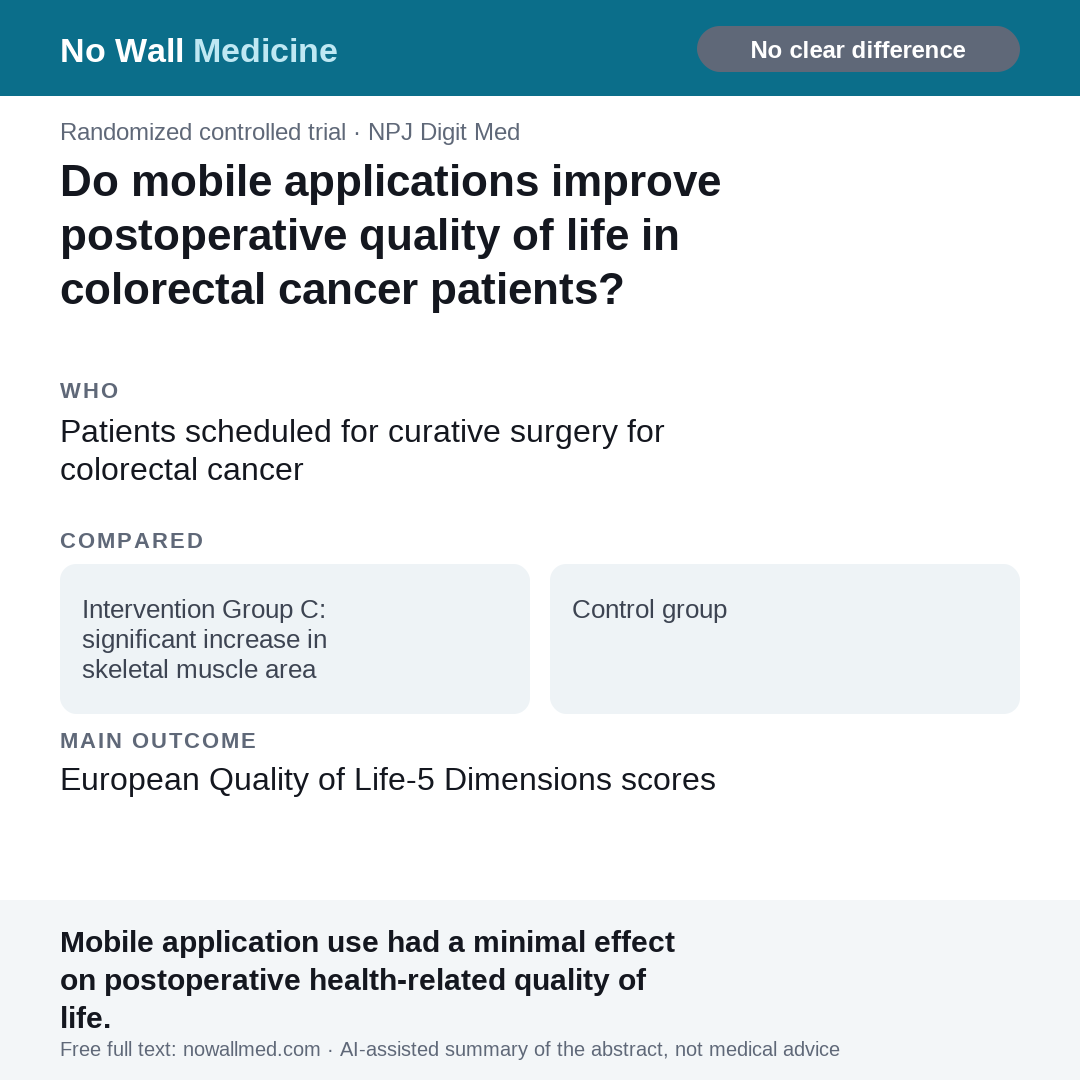
A randomized controlled trial of a digital lifestyle intervention involving postoperative patients with colorectal cancer
Randomized controlled trialNo clear difference
Do mobile applications improve postoperative quality of life in colorectal cancer patients?
Who
Patients scheduled for curative surgery for colorectal cancer
Compared
Intervention Group C: significant increase in skeletal muscle area
Control group
Main outcome
European Quality of Life-5 Dimensions scores
Bottom line: Mobile application use had a minimal effect on postoperative health-related quality of life.
NPJ Digit Med · 2025-05-20Download image
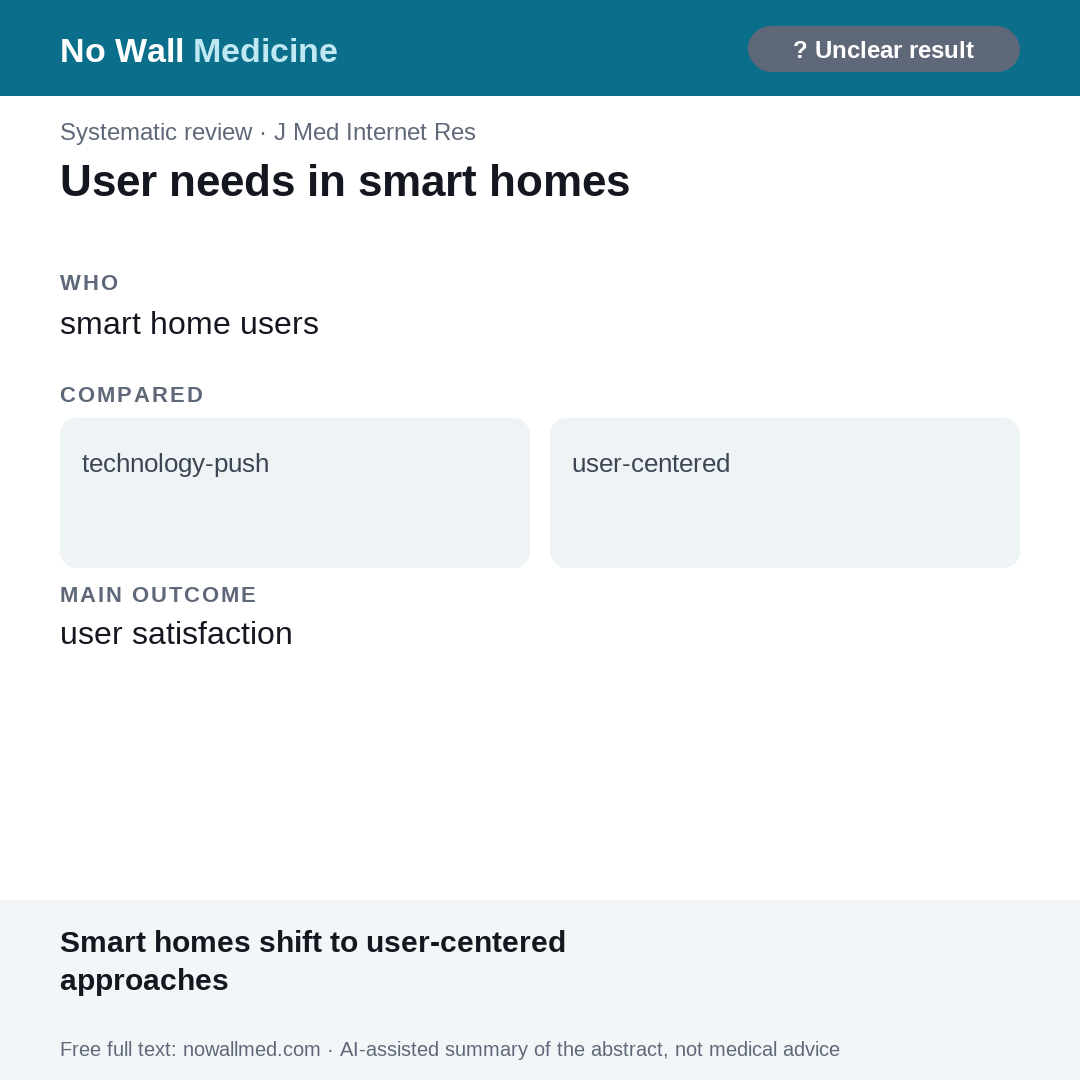
Smart Home Advancements for Health Care and Beyond: Systematic Review of Two Decades of User-Centric Innovation
Systematic reviewUnclear result
User needs in smart homes
Who
smart home users
Compared
technology-push
user-centered
Main outcome
user satisfaction
Bottom line: Smart homes shift to user-centered approaches
Limitation: technology-push approach limitations
J Med Internet Res · 2025-05-20Download image
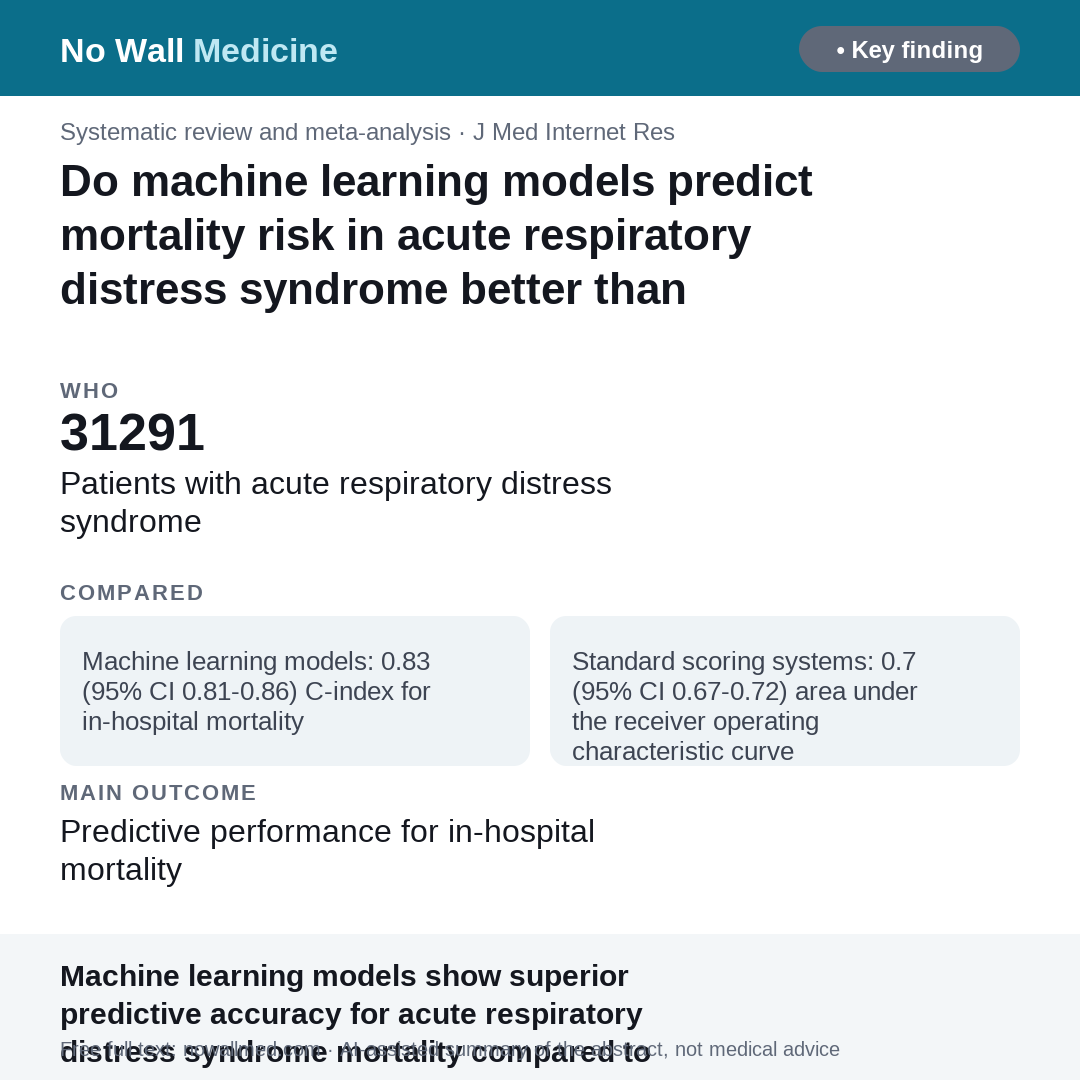
Early Prediction of Mortality Risk in Acute Respiratory Distress Syndrome: Systematic Review and Meta-Analysis
Systematic review and meta-analysisBenefit found
Do machine learning models predict mortality risk in acute respiratory distress syndrome better than conventional scoring systems?
Who
31291
Patients with acute respiratory distress syndrome
Compared
Machine learning models: 0.83 (95% CI 0.81-0.86) C-index for in-hospital mortality
Standard scoring systems: 0.7 (95% CI 0.67-0.72) area under the receiver operating characteristic curve
Main outcome
Predictive performance for in-hospital mortality
Result: area under the receiver operating characteristic curve 0.7 (95% CI 0.67-0.72) for standard scoring systems
Bottom line: Machine learning models show superior predictive accuracy for acute respiratory distress syndrome mortality compared to traditional scoring tools.
Limitation: Further research is needed to refine models, improve interpretability, and enhance clinical applicability.
J Med Internet Res · 2025-05-20Download image
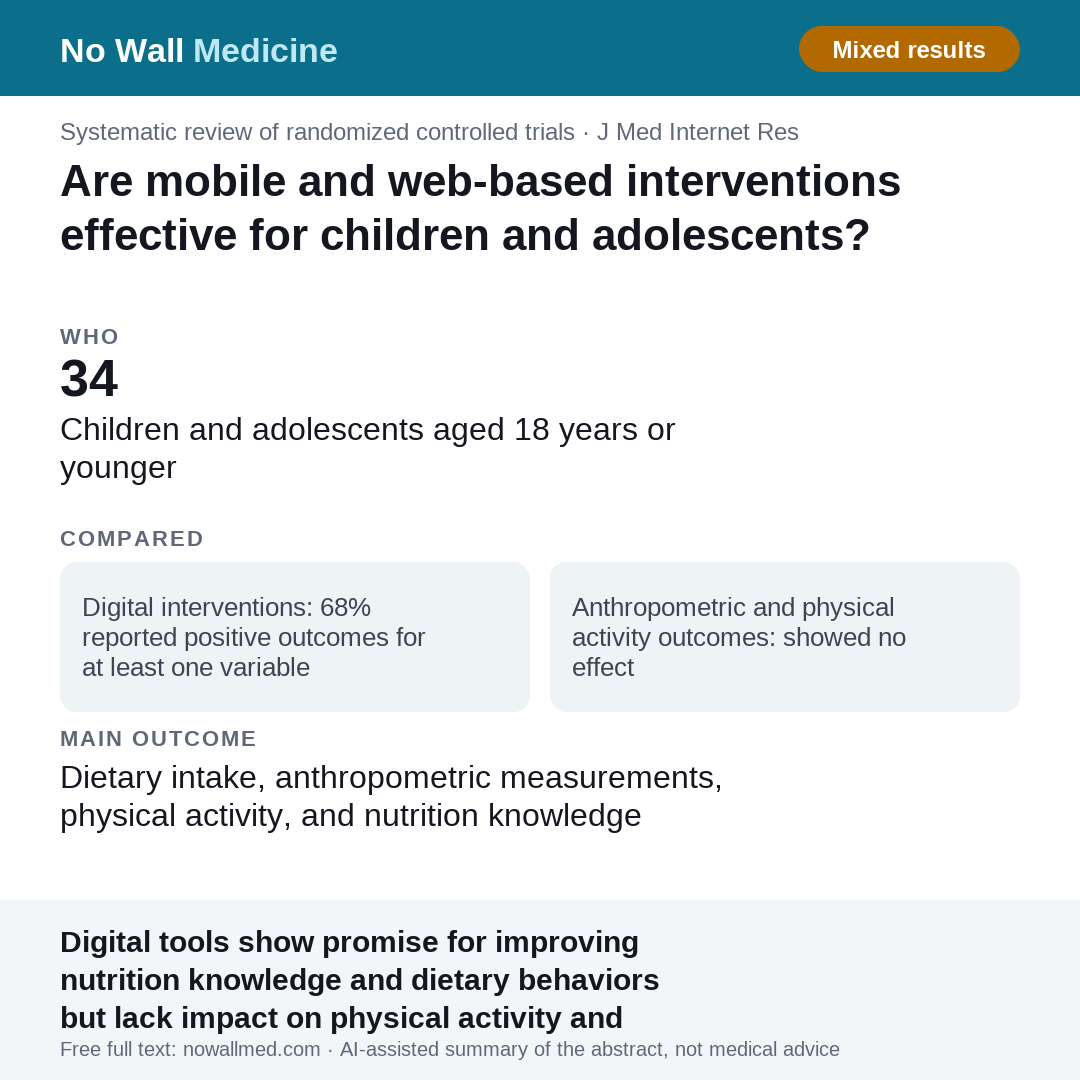
Mobile- and Web-Based Interventions for Promoting Healthy Diets, Preventing Obesity, and Improving Health Behaviors in Children and Adolescents: Systematic Review of Randomized Controlled Trials
Systematic review of randomized controlled trialsMixed results
Are mobile and web-based interventions effective for children and adolescents?
Who
34
Children and adolescents aged 18 years or younger
Compared
Digital interventions: 68% reported positive outcomes for at least one variable
Anthropometric and physical activity outcomes: showed no effect
Main outcome
Dietary intake, anthropometric measurements, physical activity, and nutrition knowledge
Bottom line: Digital tools show promise for improving nutrition knowledge and dietary behaviors but lack impact on physical activity and anthropometric measures.
Limitation: Evidence for long-term sustainability and impact on anthropometric and physical activity outcomes remains limited.
J Med Internet Res · 2025-05-20Download image
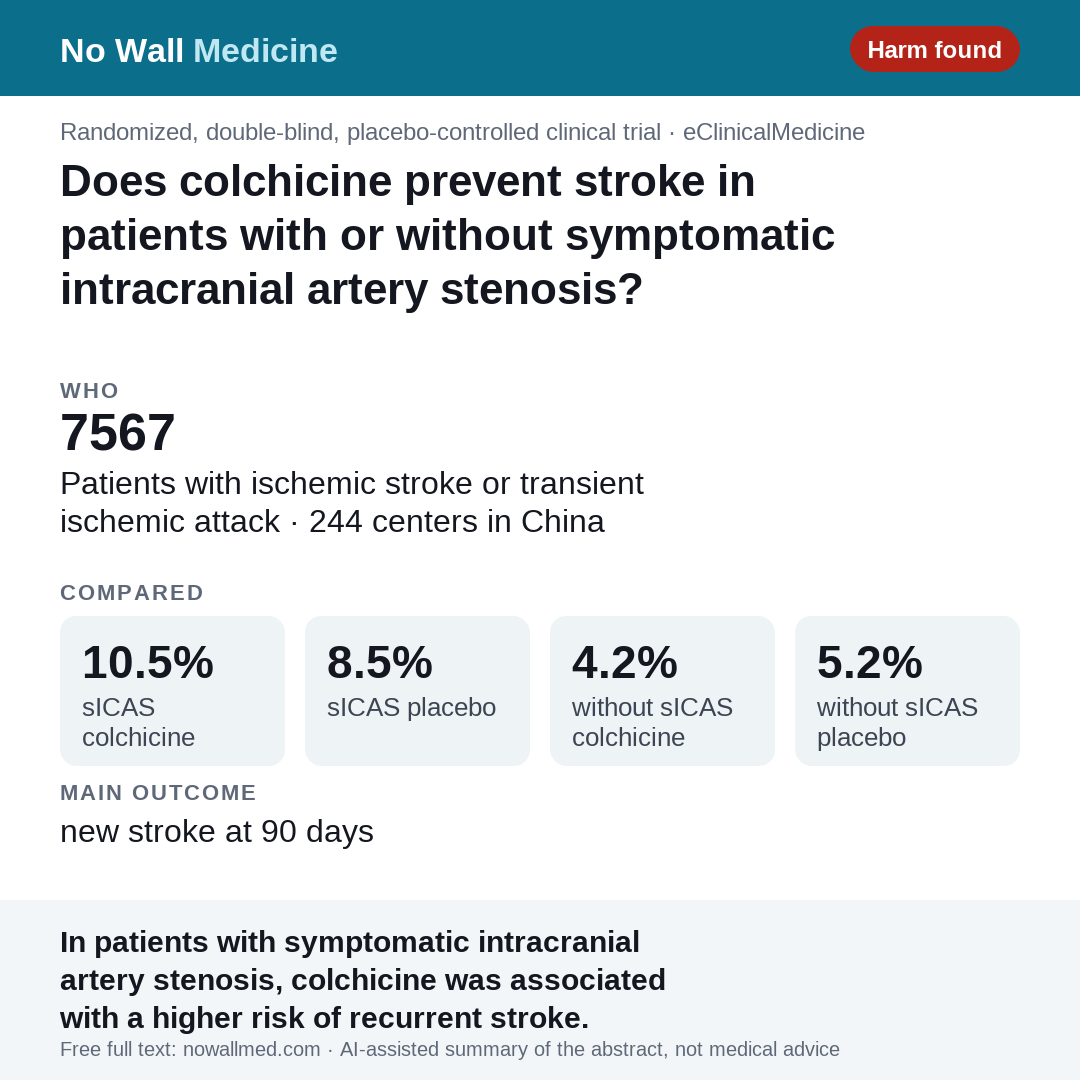
Colchicine for preventing stroke in patients with and without intracranial atherosclerotic stenosis: a prespecified analysis of a randomized clinical trial
Randomized, double-blind, placebo-controlled clinical trialHarm found
Does colchicine prevent stroke in patients with or without symptomatic intracranial artery stenosis?
Who
7567
Patients with ischemic stroke or transient ischemic attack · 244 centers in China
Compared
10.5%sICAS colchicine
8.5%sICAS placebo
4.2%without sICAS colchicine
5.2%without sICAS placebo
Main outcome
new stroke at 90 days
Result: adjusted HR 1.30 (95% CI 1.01-1.69) for sICAS
Bottom line: In patients with symptomatic intracranial artery stenosis, colchicine was associated with a higher risk of recurrent stroke.
Funded by: National Key R&D Program of China and others
eClinicalMedicine · 2025-05-19Download image
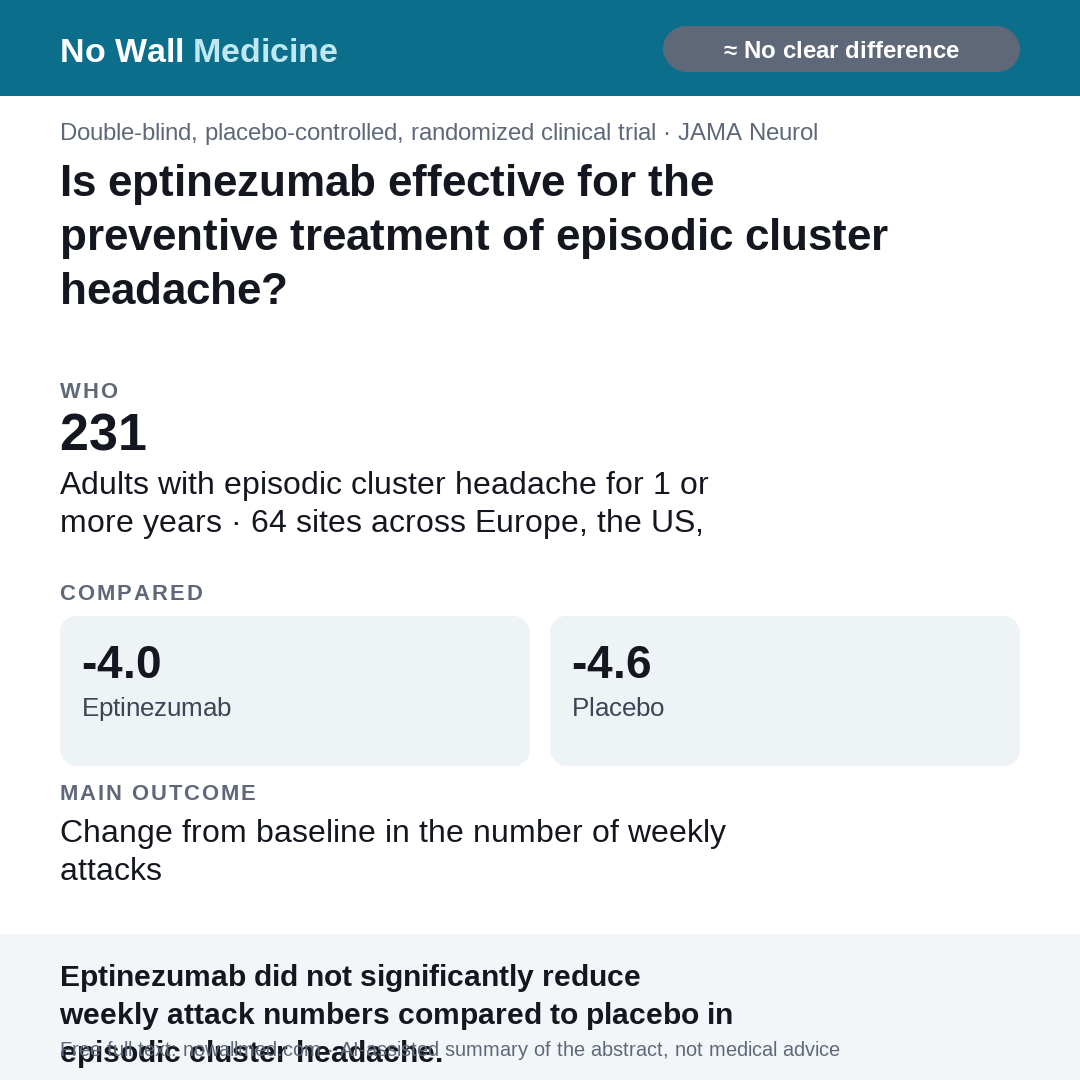
Efficacy and Safety of Eptinezumab in Episodic Cluster Headache: A Randomized Clinical Trial
Double-blind, placebo-controlled, randomized clinical trialNo clear difference
Is eptinezumab effective for the preventive treatment of episodic cluster headache?
Who
231
Adults with episodic cluster headache for 1 or more years · 64 sites across Europe, the US, and Japan
Compared
-4.0Eptinezumab (SD 0.93)
-4.6Placebo (SD 0.89)
Main outcome
Change from baseline in the number of weekly attacks
Result: between-group difference 0.7 (95% CI -1.3 to 2.6)
Bottom line: Eptinezumab did not significantly reduce weekly attack numbers compared to placebo in episodic cluster headache.
JAMA Neurol · 2025-05-19Download image
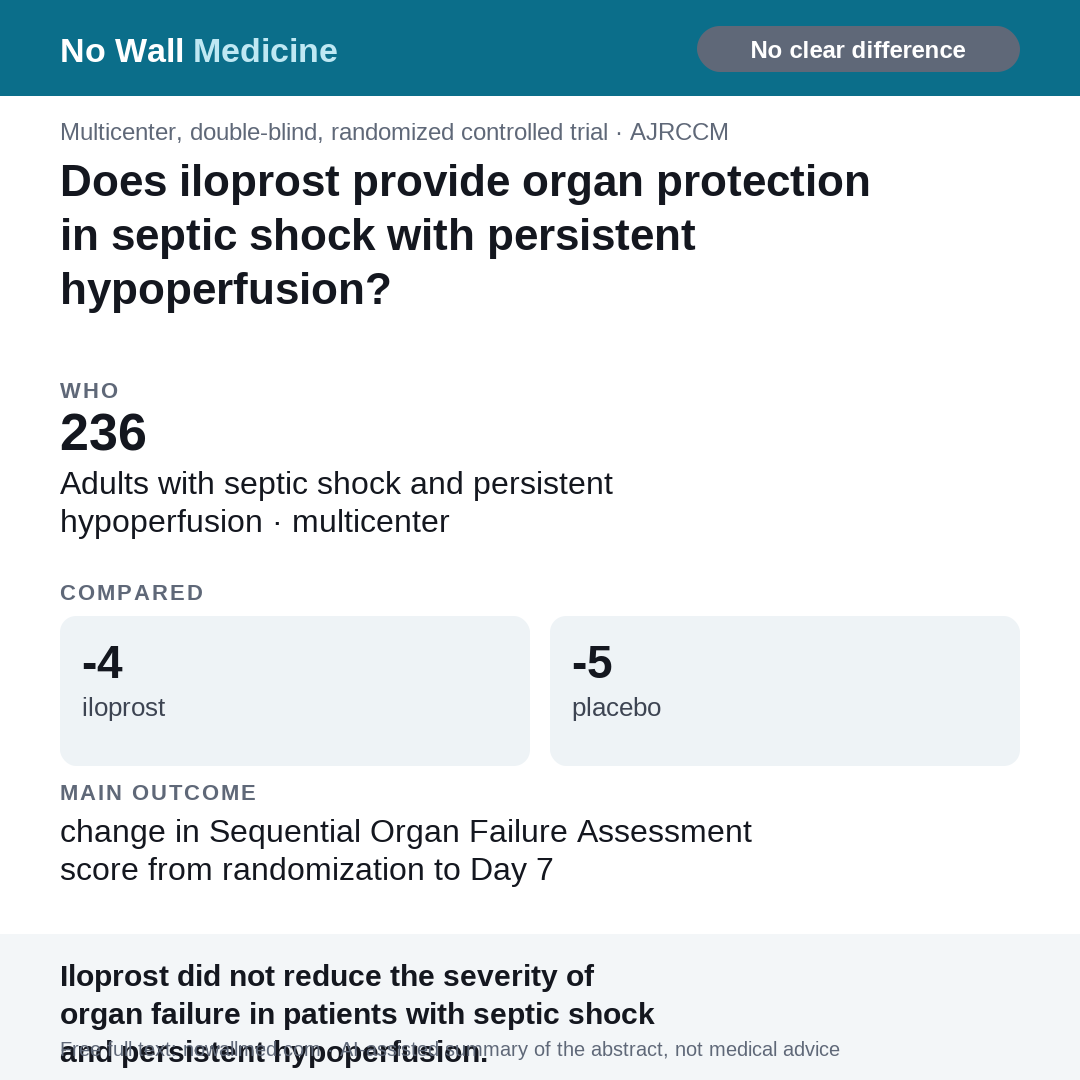
Iloprost for the Treatment of Severe Septic Shock with Persistent Hypoperfusion: A Double-Blind, Randomized Controlled Trial
Multicenter, double-blind, randomized controlled trialNo clear difference
Does iloprost provide organ protection in septic shock with persistent hypoperfusion?
Who
236
Adults with septic shock and persistent hypoperfusion · multicenter
Compared
-4iloprost (-7 to 7)
-5placebo (-8 to 5)
Main outcome
change in Sequential Organ Failure Assessment score from randomization to Day 7
Result: median difference, 1; 95% CI, 0-3
Bottom line: Iloprost did not reduce the severity of organ failure in patients with septic shock and persistent hypoperfusion.
AJRCCM · 2025-05-19Download image
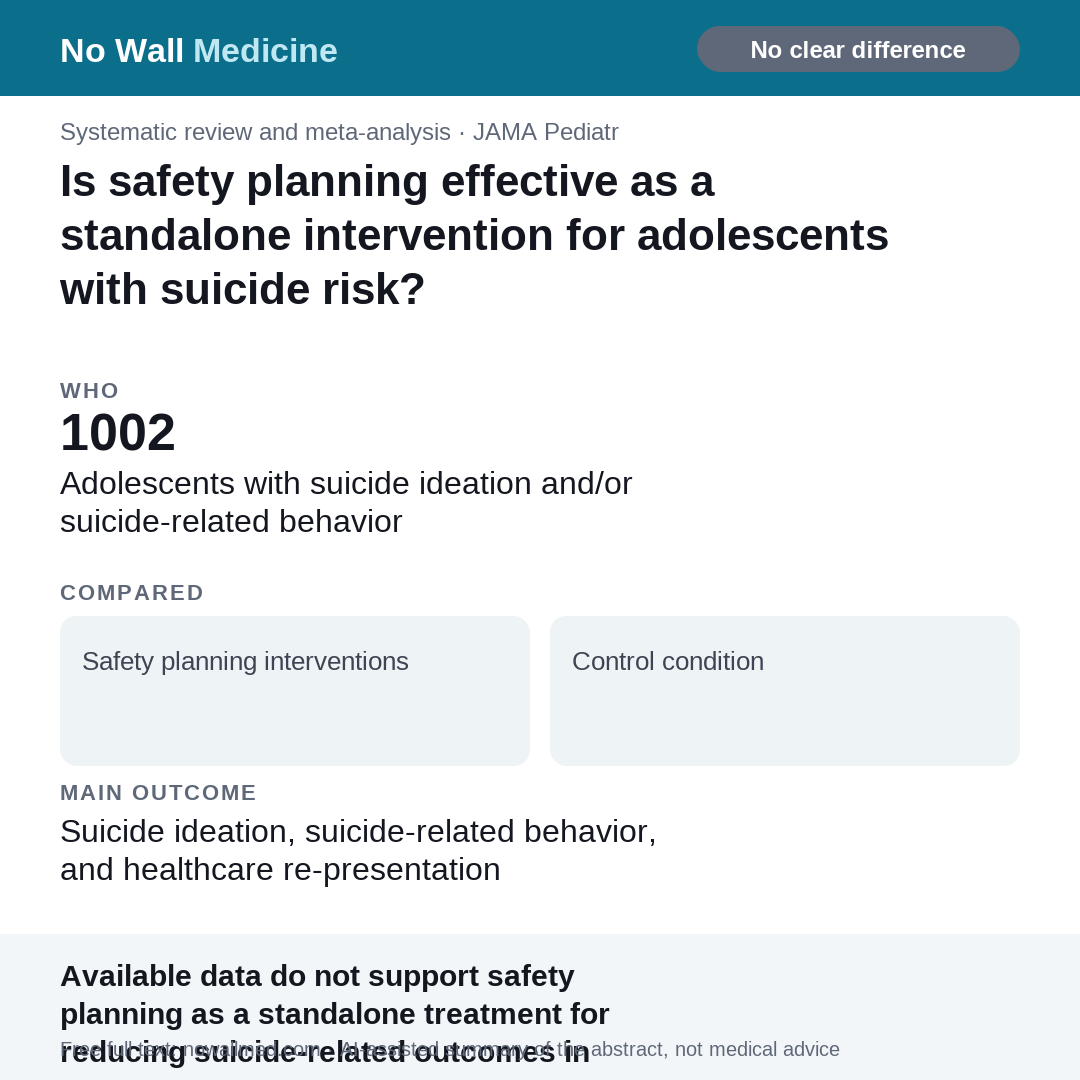
Safety Planning Interventions for Suicide Prevention in Children and Adolescents: A Systematic Review and Meta-Analysis
Systematic review and meta-analysisNo clear difference
Is safety planning effective as a standalone intervention for adolescents with suicide risk?
Who
1002
Adolescents with suicide ideation and/or suicide-related behavior
Compared
Safety planning interventions
Control condition
Main outcome
Suicide ideation, suicide-related behavior, and healthcare re-presentation
Result: Hedges g 0.11 (95% CI, 0.01-0.21) for suicide ideation
Bottom line: Available data do not support safety planning as a standalone treatment for reducing suicide-related outcomes in adolescents.
Limitation: Risk of bias for the majority of studies was moderate to high.
JAMA Pediatr · 2025-05-19Download image
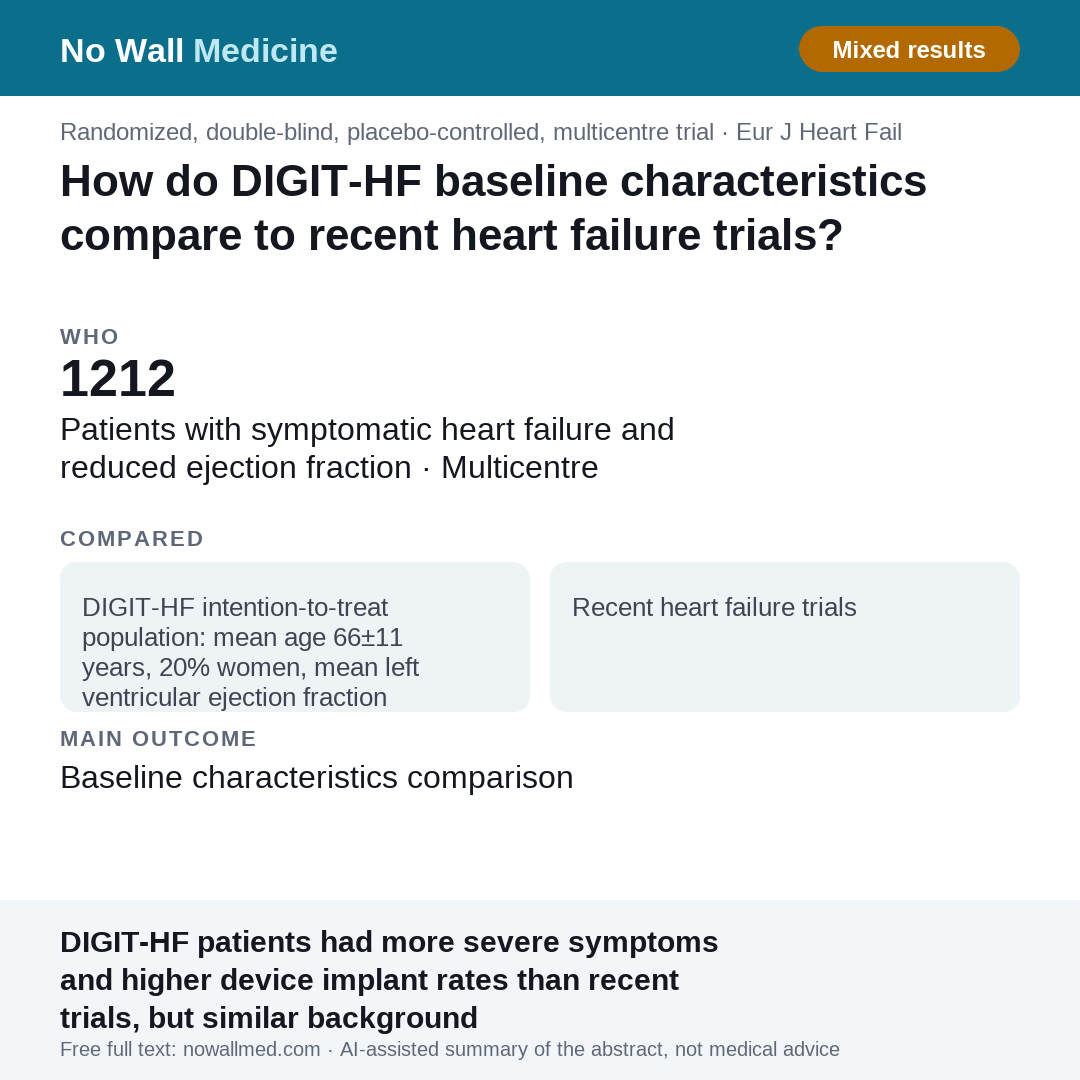
DIGitoxin to Improve ouTcomes in patients with advanced chronic Heart Failure (DIGIT-HF): Baseline characteristics compared to recent randomized controlled heart failure trials
Randomized, double-blind, placebo-controlled, multicentre trialMixed results
How do DIGIT-HF baseline characteristics compare to recent heart failure trials?
Who
1212
Patients with symptomatic heart failure and reduced ejection fraction · Multicentre
Compared
DIGIT-HF intention-to-treat population: mean age 66±11 years, 20% women, mean left ventricular ejection fraction 29±7%
Recent heart failure trials
Main outcome
Baseline characteristics comparison
Bottom line: DIGIT-HF patients had more severe symptoms and higher device implant rates than recent trials, but similar background pharmacotherapy.
Eur J Heart Fail · 2025-05-19Download image
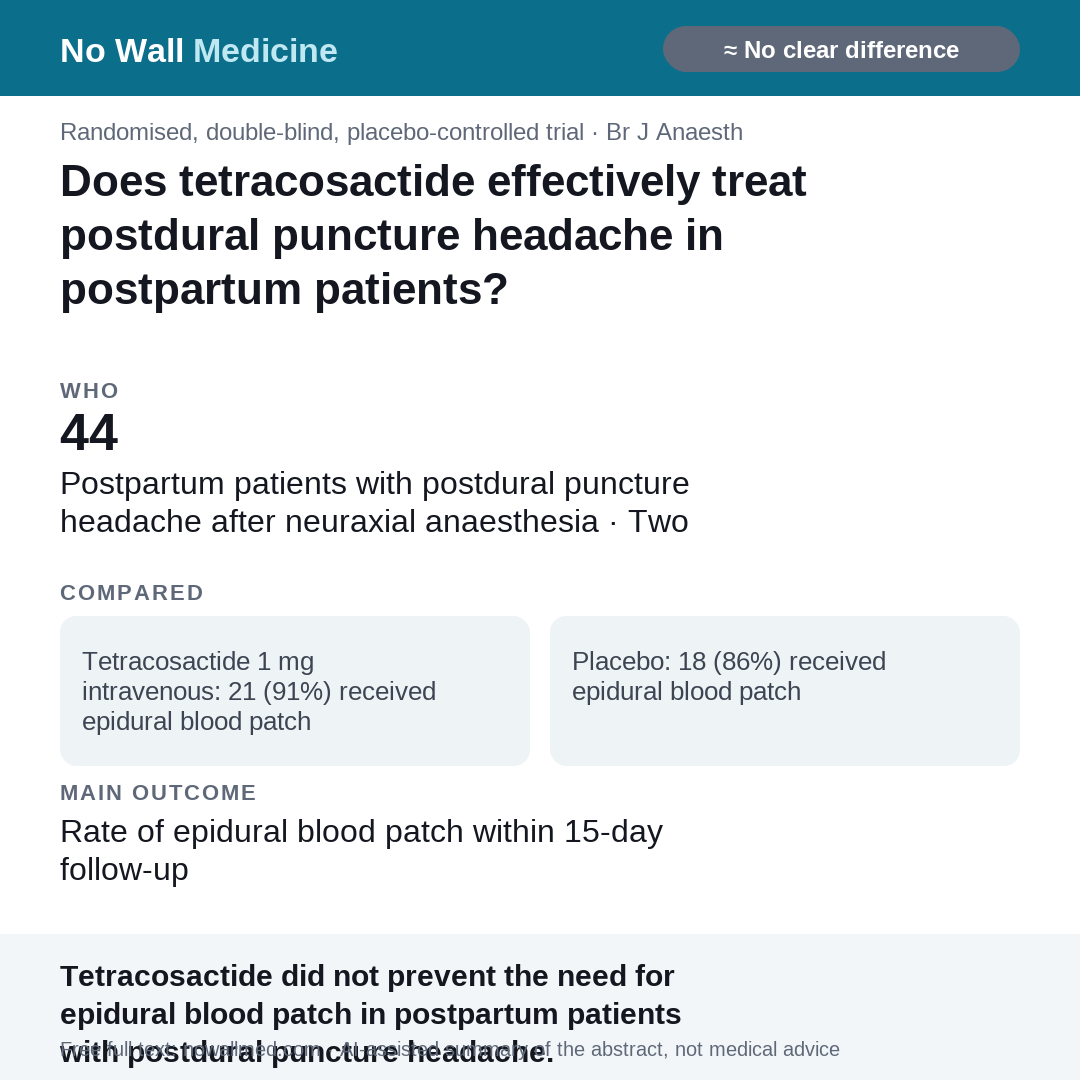
No effect of tetracosactide for treatment of postdural puncture headaches in parturient women: a double-blind randomised controlled clinical trial
Randomised, double-blind, placebo-controlled trialNo clear difference
Does tetracosactide effectively treat postdural puncture headache in postpartum patients?
Who
44
Postpartum patients with postdural puncture headache after neuraxial anaesthesia · Two tertiary care maternal hospitals
Compared
Tetracosactide 1 mg intravenous: 21 (91%) received epidural blood patch
Placebo: 18 (86%) received epidural blood patch
Main outcome
Rate of epidural blood patch within 15-day follow-up
Bottom line: Tetracosactide did not prevent the need for epidural blood patch in postpartum patients with postdural puncture headache.
Limitation: The study was terminated because of futility.
Br J Anaesth · 2025-05-19Download image
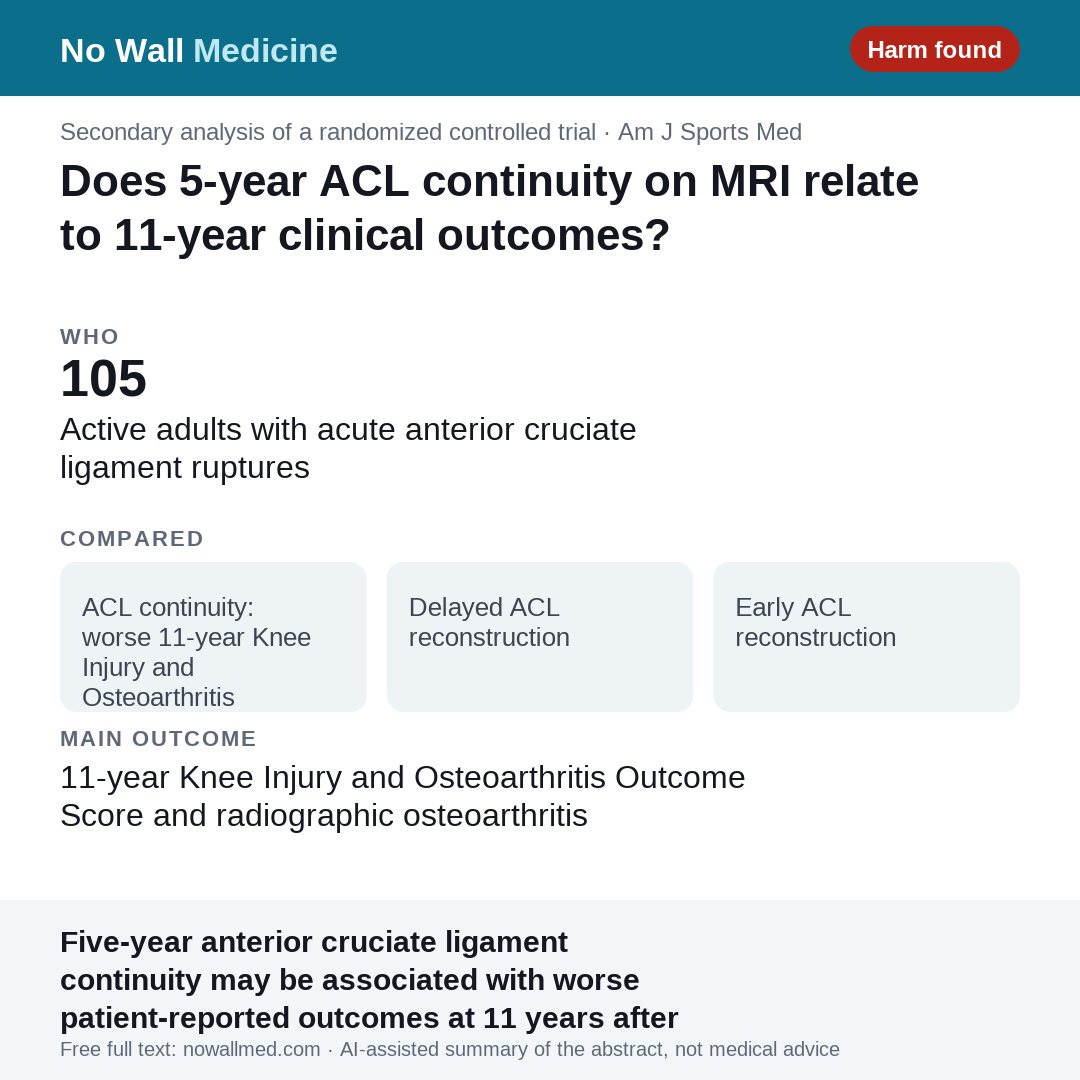
Association Between ACL Continuity on Magnetic Resonance Imaging at 5 Years After an Acute ACL Rupture and 11-Year Outcomes: A Secondary Analysis From the KANON Trial
Secondary analysis of a randomized controlled trialHarm found
Does 5-year ACL continuity on MRI relate to 11-year clinical outcomes?
Who
105
Active adults with acute anterior cruciate ligament ruptures
Compared
ACL continuity: worse 11-year Knee Injury and Osteoarthritis Outcome Score
Delayed ACL reconstruction
Early ACL reconstruction
Main outcome
11-year Knee Injury and Osteoarthritis Outcome Score and radiographic osteoarthritis
Result: adjusted mean difference, -20.2 (95% CI, -31.9 to -8.6) vs delayed ACLR
Bottom line: Five-year anterior cruciate ligament continuity may be associated with worse patient-reported outcomes at 11 years after injury.
Am J Sports Med · 2025-05-19Download image
Does robotic surgery have a role in abdominal wall reconstruction? A systematic review and meta-analysis
Systematic review and meta-analysisBenefit found
Is robotic surgery feasible for abdominal wall reconstruction and hernia repair?
Who
Patients undergoing abdominal wall reconstruction or hernia repair
Compared
Robotic surgery
Open surgery
Laparoscopic surgery
Main outcome
Hospital stay, complications, and operative times
Result: mean difference: -1.59 days (95% CI: -1.89 to -1.30)
Bottom line: Robotic surgery is feasible and safe, showing shorter hospital stays compared to open surgery.
Limitation: Further high-quality comparative studies against laparoscopic surgery are needed.
J Plast Reconstr Aesthet Surg · 2025-05-19Download image

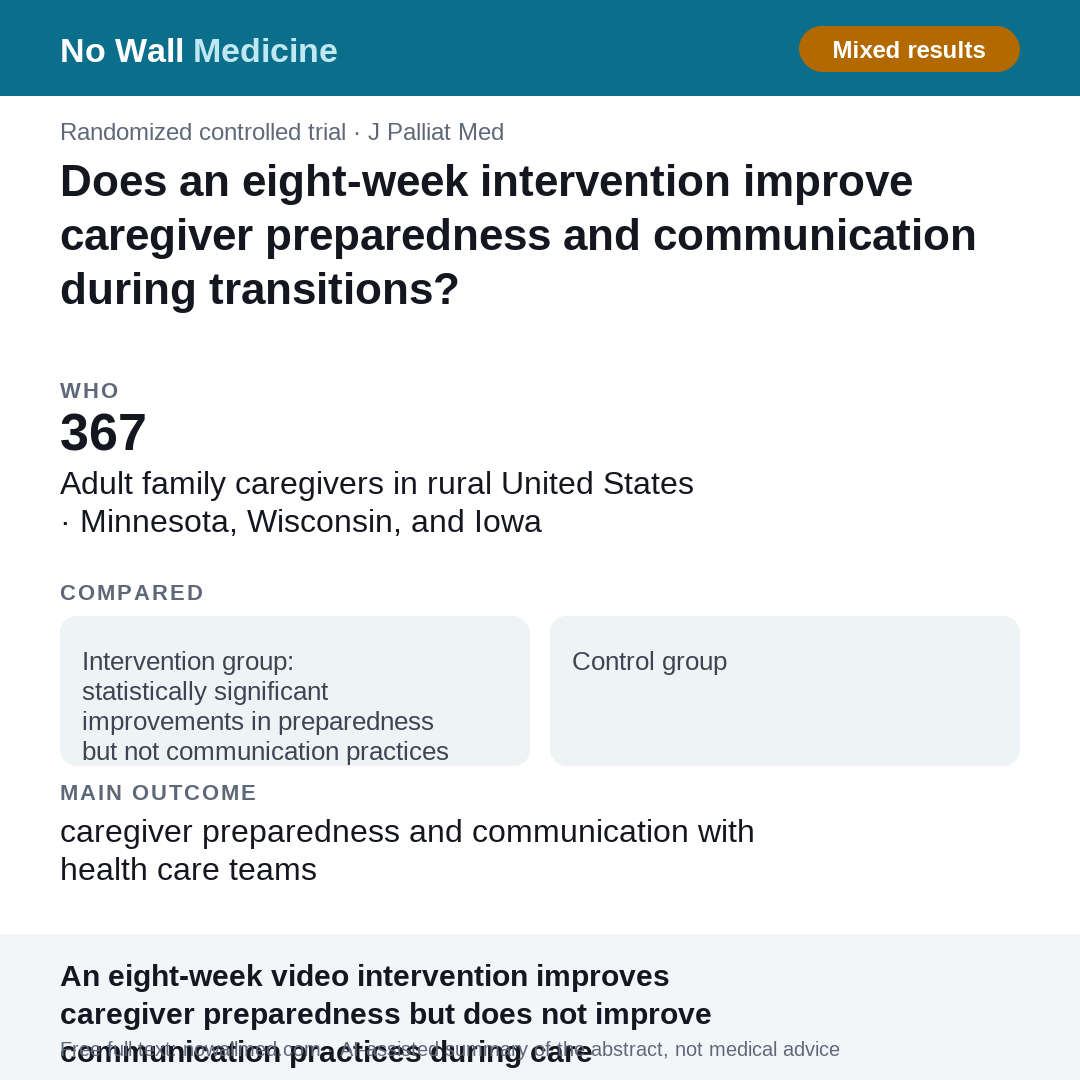
Caregiver Communication and Preparedness During Transitions in Care: Results from a Randomized Controlled Trial
Randomized controlled trialMixed results
Does an eight-week intervention improve caregiver preparedness and communication during transitions?
Who
367
Adult family caregivers in rural United States · Minnesota, Wisconsin, and Iowa
Compared
Intervention group: statistically significant improvements in preparedness but not communication practices
Control group
Main outcome
caregiver preparedness and communication with health care teams
Bottom line: An eight-week video intervention improves caregiver preparedness but does not improve communication practices during care transitions.
J Palliat Med · 2025-05-19Download image
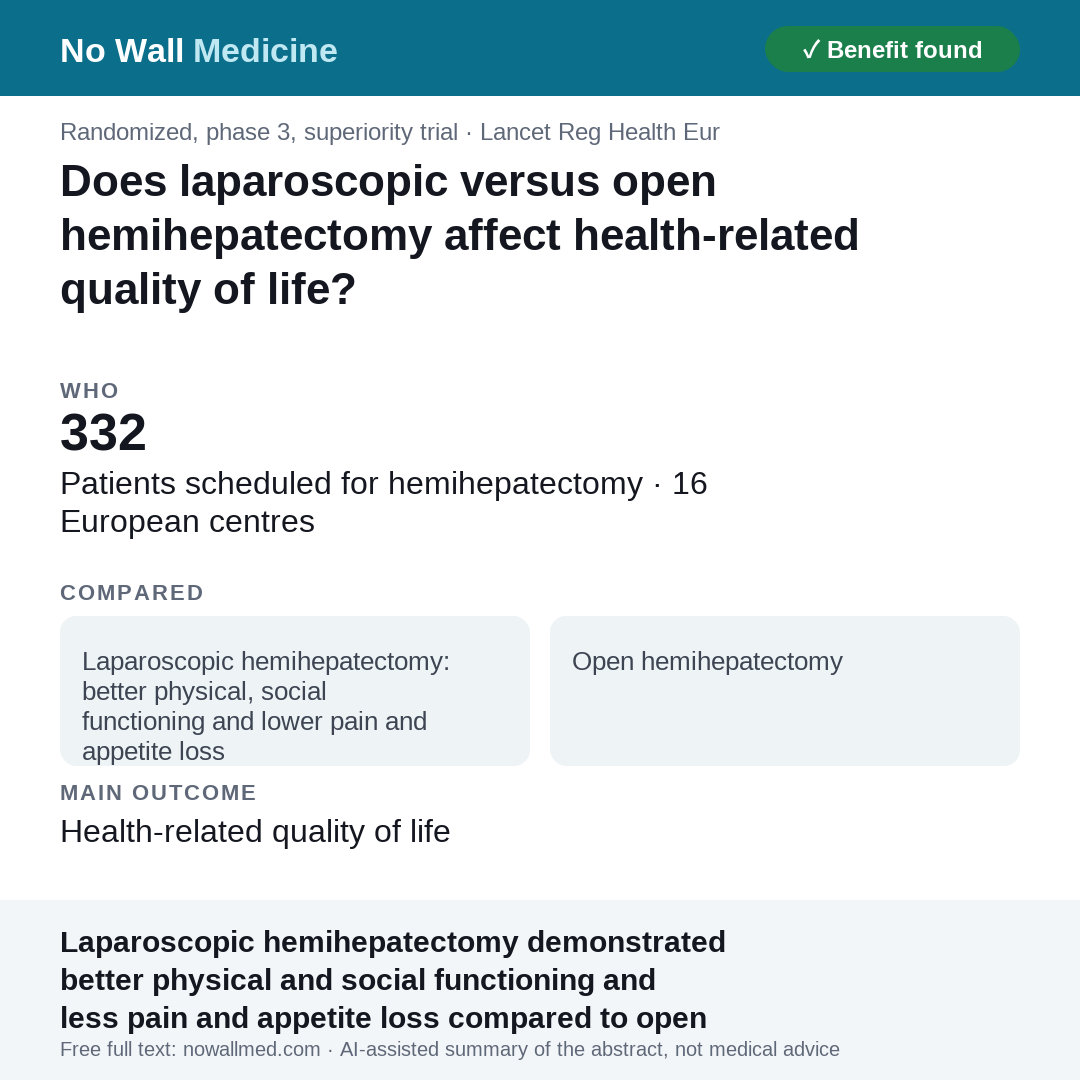
Health-related quality of life in patients undergoing laparoscopic versus open hemihepatectomy: a secondary analysis of the ORANGE II PLUS randomised controlled, phase 3, superiority trial
Randomized, phase 3, superiority trialBenefit found
Does laparoscopic versus open hemihepatectomy affect health-related quality of life?
Who
332
Patients scheduled for hemihepatectomy · 16 European centres
Compared
Laparoscopic hemihepatectomy: better physical, social functioning and lower pain and appetite loss
Open hemihepatectomy
Main outcome
Health-related quality of life
Result: difference 4.20 points (95% CI 1.07-7.34) for physical functioning
Bottom line: Laparoscopic hemihepatectomy demonstrated better physical and social functioning and less pain and appetite loss compared to open hemihepatectomy.
Funded by: Maastricht University Medical Centre+, University Hospital RWTH Aachen, Cancer Research UK
Lancet Reg Health Eur · 2025-05-19Download image
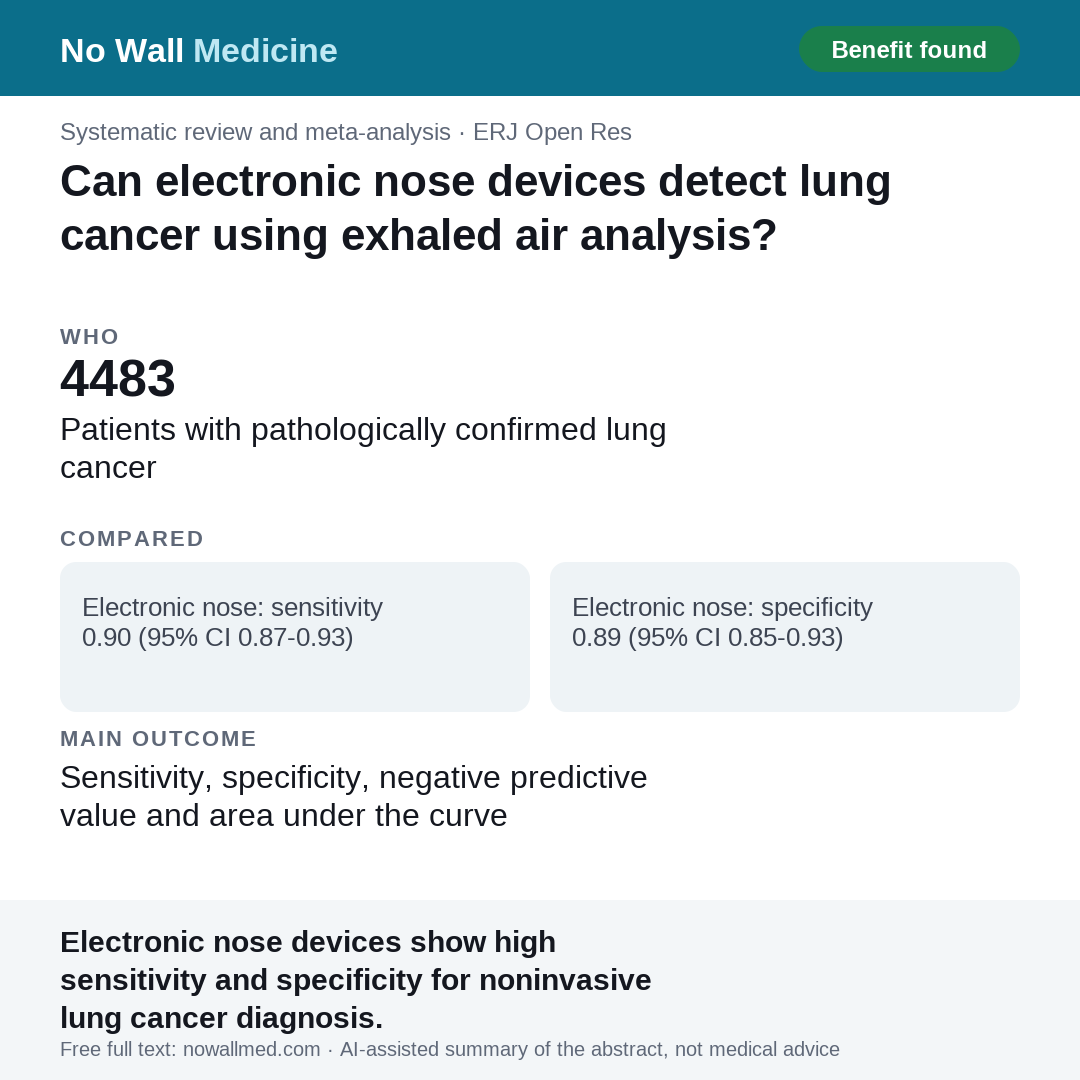
The electronic nose in lung cancer diagnostics: a systematic review and meta-analysis
Systematic review and meta-analysisBenefit found
Can electronic nose devices detect lung cancer using exhaled air analysis?
Who
4483
Patients with pathologically confirmed lung cancer
Compared
Electronic nose: sensitivity 0.90 (95% CI 0.87-0.93)
Electronic nose: specificity 0.89 (95% CI 0.85-0.93)
Main outcome
Sensitivity, specificity, negative predictive value and area under the curve
Result: sensitivity 0.90 (95% CI 0.87-0.93), specificity 0.89 (95% CI 0.85-0.93)
Bottom line: Electronic nose devices show high sensitivity and specificity for noninvasive lung cancer diagnosis.
Limitation: Further research and validation efforts are critical to maximise impact.
ERJ Open Res · 2025-05-19Download image
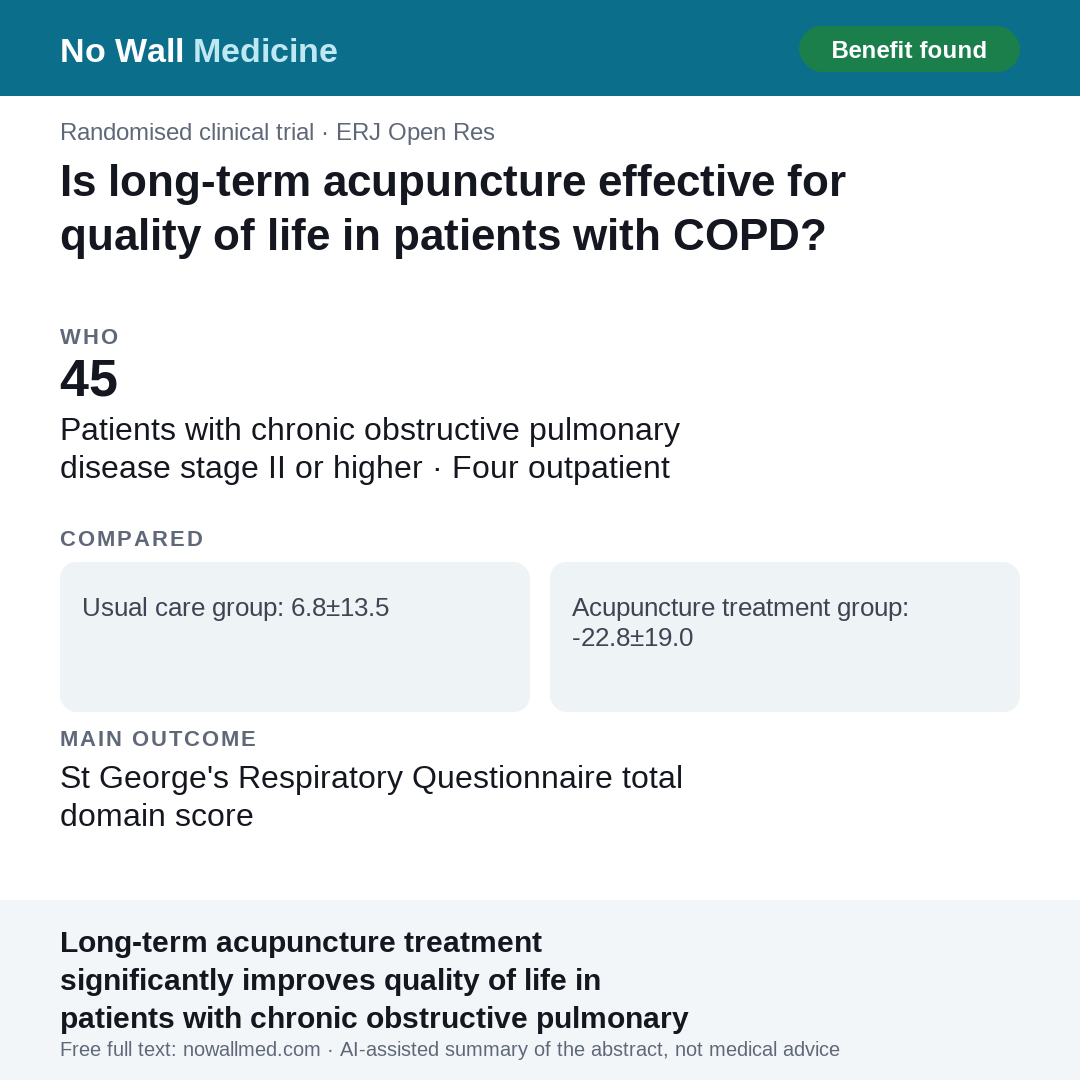
Effectiveness of a long-term acupuncture treatment in patients with COPD: a randomised controlled trial
Randomised clinical trialBenefit found
Is long-term acupuncture effective for quality of life in patients with COPD?
Who
45
Patients with chronic obstructive pulmonary disease stage II or higher · Four outpatient sites in Japan
Compared
Usual care group: 6.8±13.5
Acupuncture treatment group: -22.8±19.0
Main outcome
St George's Respiratory Questionnaire total domain score
Result: -26.9, 95% CI -35.8 to -17.9
Bottom line: Long-term acupuncture treatment significantly improves quality of life in patients with chronic obstructive pulmonary disease.
ERJ Open Res · 2025-05-19Download image
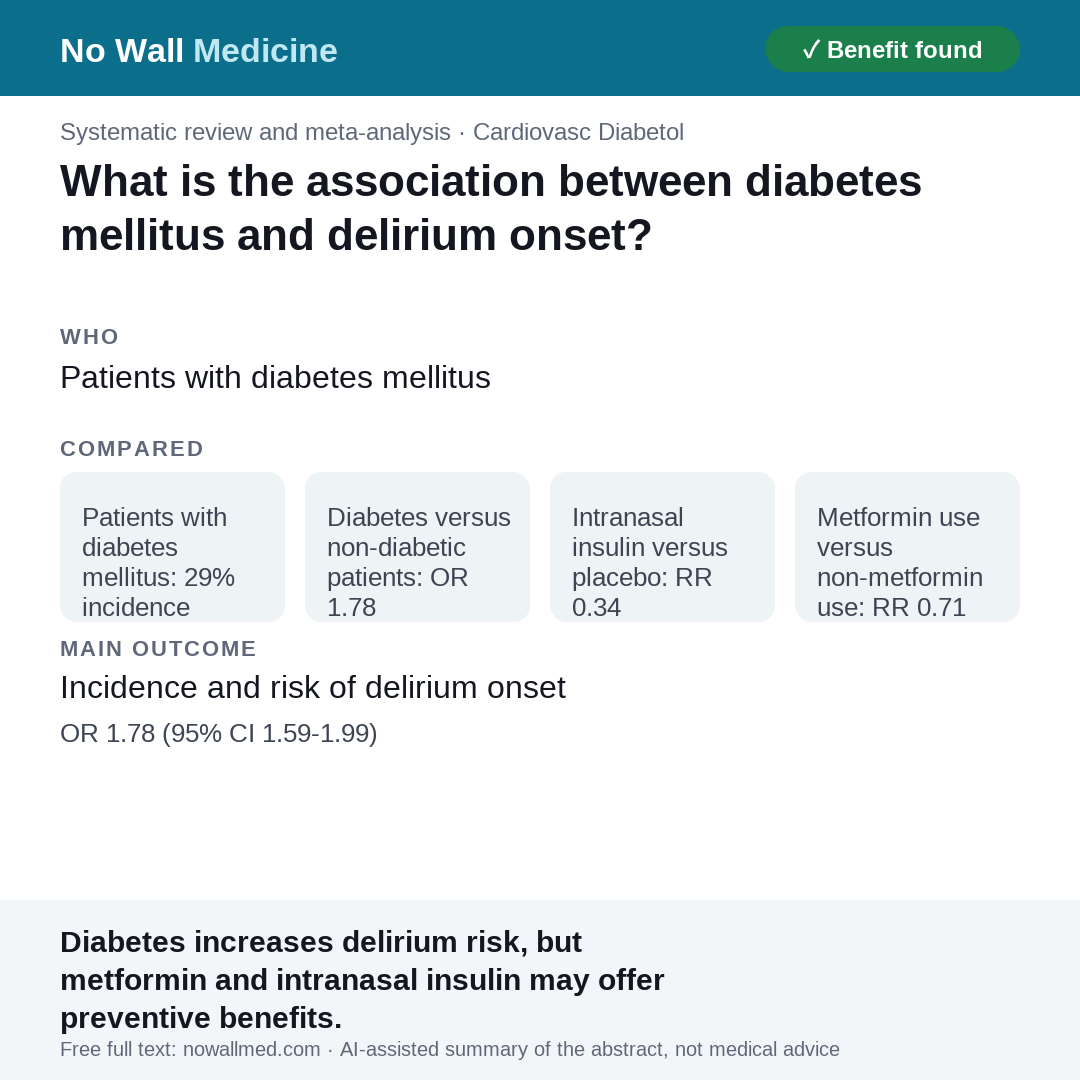
The role of diabetes mellitus on delirium onset: a systematic review and meta-analysis
Systematic review and meta-analysisBenefit found
What is the association between diabetes mellitus and delirium onset?
Who
Patients with diabetes mellitus
Compared
Patients with diabetes mellitus: 29% incidence
Diabetes versus non-diabetic patients: OR 1.78
Intranasal insulin versus placebo: RR 0.34
Metformin use versus non-metformin use: RR 0.71
Main outcome
Incidence and risk of delirium onset
Result: OR 1.78 (95% CI 1.59-1.99)
Bottom line: Diabetes increases delirium risk, but metformin and intranasal insulin may offer preventive benefits.
Limitation: Significant heterogeneity which hampers their interpretation.
Cardiovasc Diabetol · 2025-05-19Download image
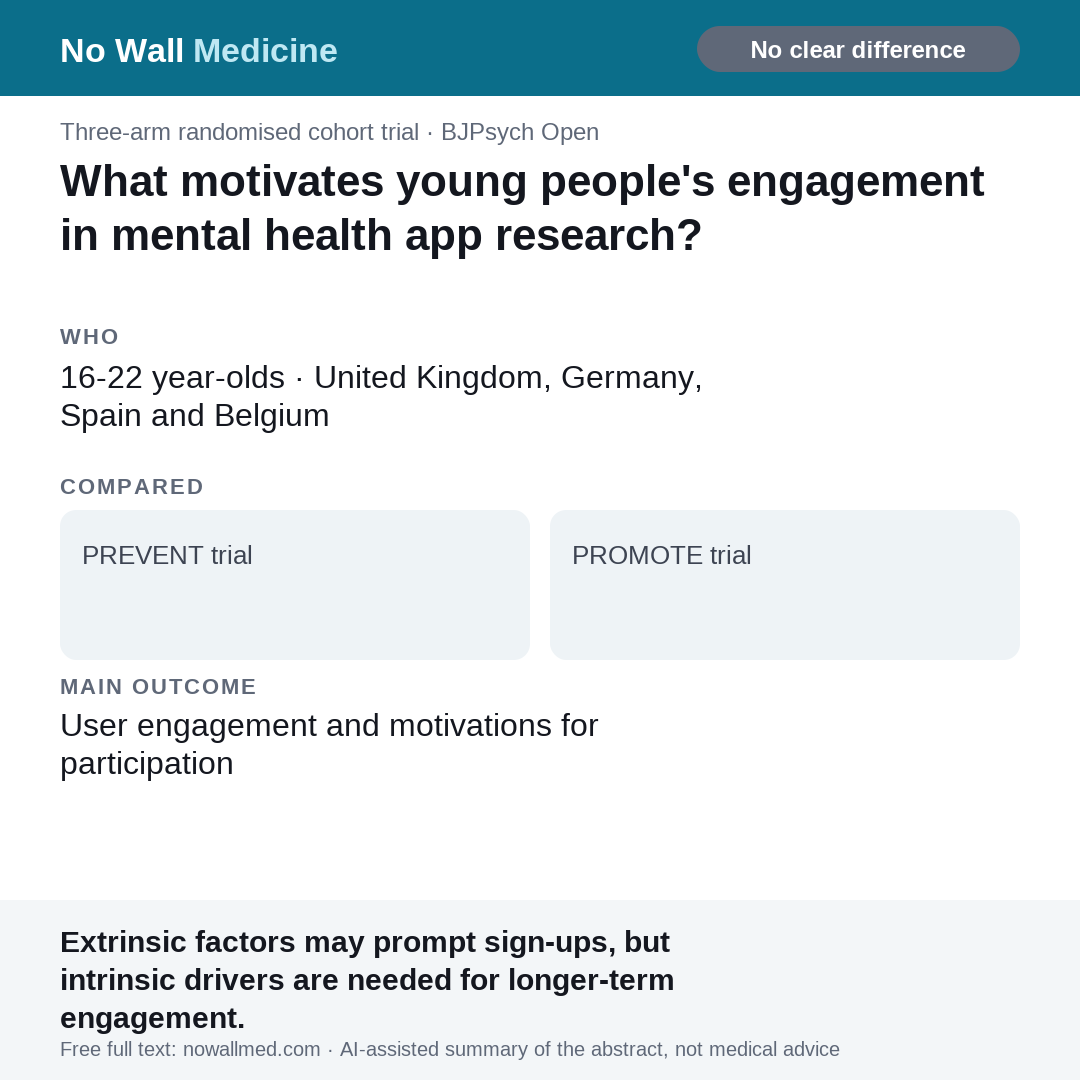
Incentivising participation in mental health app research: lessons learned from a mixed methods randomised controlled trial
Three-arm randomised cohort trialNo clear difference
What motivates young people's engagement in mental health app research?
Who
16-22 year-olds · United Kingdom, Germany, Spain and Belgium
Compared
PREVENT trial
PROMOTE trial
Main outcome
User engagement and motivations for participation
Bottom line: Extrinsic factors may prompt sign-ups, but intrinsic drivers are needed for longer-term engagement.
BJPsych Open · 2025-05-19Download image
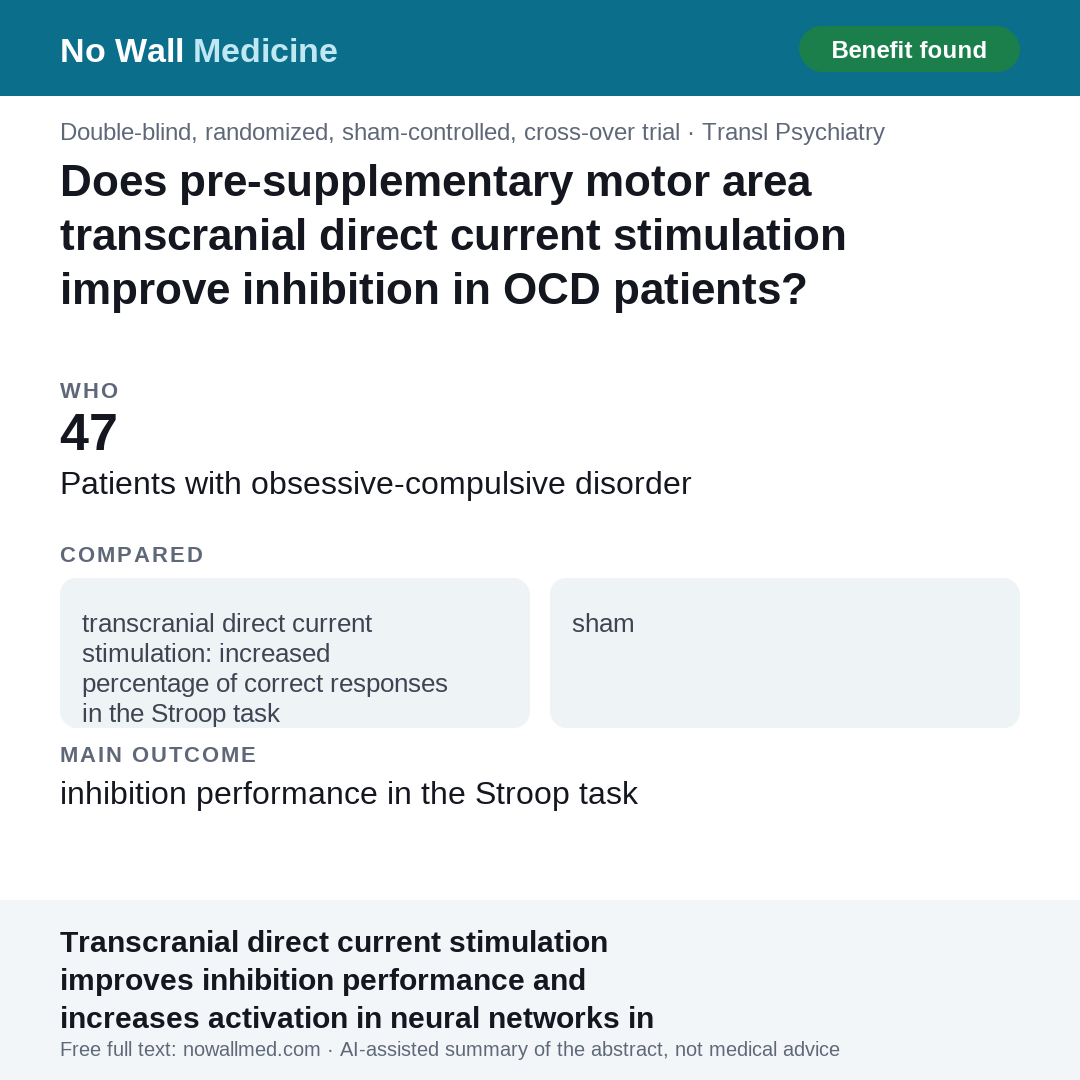
Investigating the effects of brain stimulation on the neural substrates of inhibition in patients with OCD: A simultaneous tDCS - fMRI study
Double-blind, randomized, sham-controlled, cross-over trialBenefit found
Does pre-supplementary motor area transcranial direct current stimulation improve inhibition in OCD patients?
Who
47
Patients with obsessive-compulsive disorder
Compared
transcranial direct current stimulation: increased percentage of correct responses in the Stroop task
sham
Main outcome
inhibition performance in the Stroop task
Bottom line: Transcranial direct current stimulation improves inhibition performance and increases activation in neural networks in patients with obsessive-compulsive disorder.
Transl Psychiatry · 2025-05-19Download image
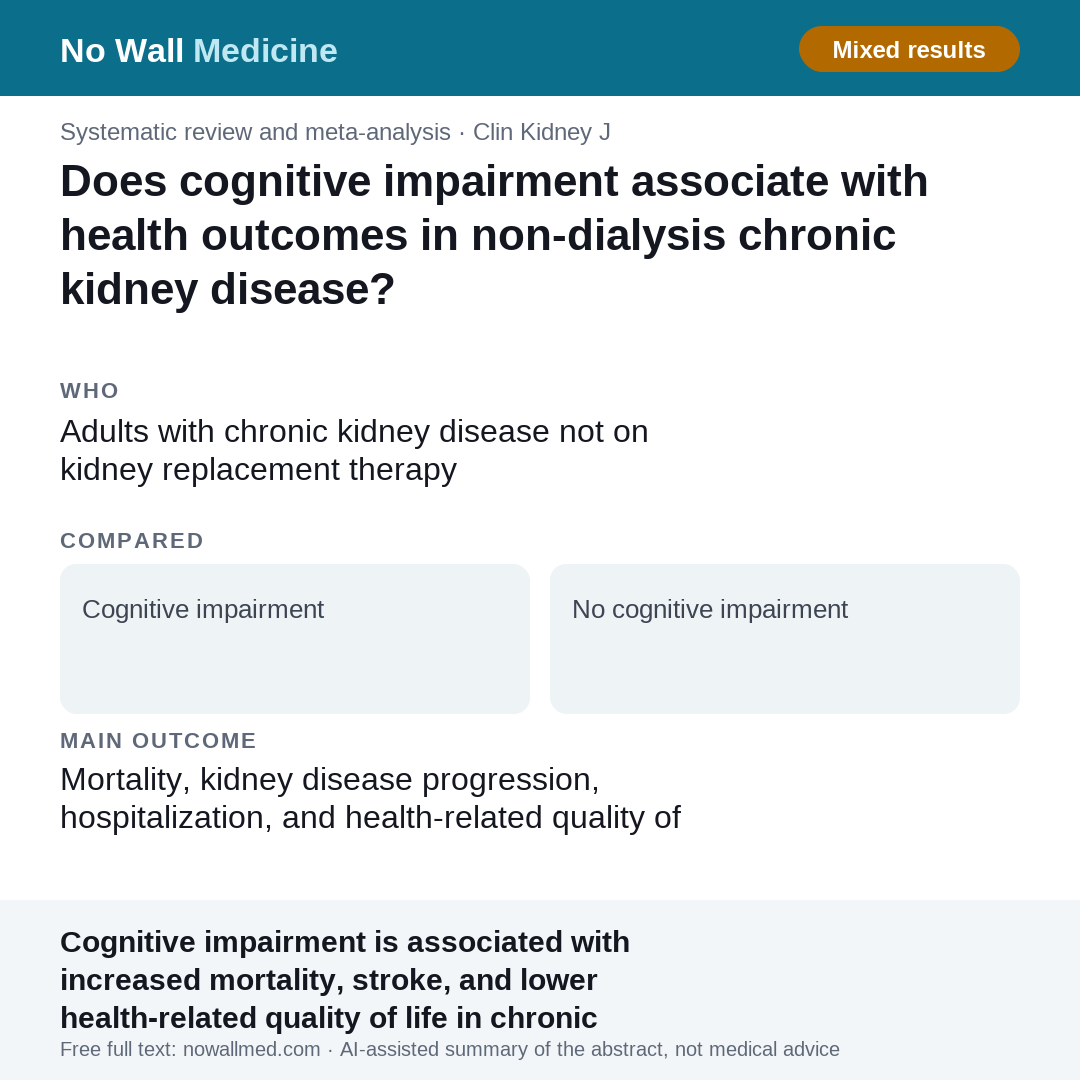
Cognitive impairment and health outcomes in non-dialysis chronic kidney disease: a systematic review and meta-analysis
Systematic review and meta-analysisMixed results
Does cognitive impairment associate with health outcomes in non-dialysis chronic kidney disease?
Who
Adults with chronic kidney disease not on kidney replacement therapy
Compared
Cognitive impairment
No cognitive impairment
Main outcome
Mortality, kidney disease progression, hospitalization, and health-related quality of life
Bottom line: Cognitive impairment is associated with increased mortality, stroke, and lower health-related quality of life in chronic kidney disease.
Limitation: No causal link could be established due to potential residual confounding by frailty or shared comorbidities.
Clin Kidney J · 2025-05-19Download image