Visual abstracts
New randomized trials and meta-analyses from leading journals at a glance: who was studied, what was compared, and what was found. Every paper is free to read in full.
All specialtiesCardiology 4031Oncology 3444Gastroenterology & Hepatology 1599Infectious Disease 3006Neurology 1594Psychiatry & Mental Health 1900Pulmonology 1740Critical Care 1135Endocrinology & Diabetes 2085Pediatrics 2416Surgery 2130Orthopedics & Sports Medicine 758Neurosurgery 461Cardiothoracic & Vascular Surgery 504Plastic & Reconstructive Surgery 536Nephrology 897Rheumatology 671Hematology 903Dermatology 514Ophthalmology 438Obstetrics & Gynecology 1407Public & Global Health 806Radiology & Imaging 544Anesthesiology 808Urology 650ENT (Otolaryngology) 436Emergency Medicine 431Allergy & Immunology 252Geriatrics 837Family Medicine & Primary Care 480Medical Genetics & Genomics 554Pathology & Laboratory Medicine 138Physical Medicine & Rehabilitation 617Palliative Care 360Nutrition 1226Digital Health & AI 1867General Medicine 280
Genome-wide meta-analysis of heavy menstrual bleeding reveals 36 risk loci
Genome-wide meta-analysisBenefit found
What are the genetic risk loci associated with heavy menstrual bleeding?
Who
Women of reproductive age with heavy menstrual bleeding · 5 biobanks from several ancestries
Compared
Heavy menstrual bleeding cases: 84 633
Controls: 598 195
Main outcome
Genetic association with heavy menstrual bleeding
Bottom line: The study identified 36 genetic signals, including 33 novel loci, associated with heavy menstrual bleeding.
Blood · 2025-05-05Download image

Frequency and timing of complications within the first postpartum year in the United States and Canada: a systematic review and meta-analysis
Systematic review and meta-analysisMixed results
What are the frequency and timing of postpartum complications within the first year?
Who
246,521,464
Adults in the United States and Canada · United States and Canada
Compared
Anxiety: 1380 (845-2174) per 10,000
Depression: 1008 (749-1343) per 10,000
Hypertension: 890 (345-2109) per 10,000
Obsessive-compulsive disorder: 886 (135-4089) per 10,000
Main outcome
Frequency and timing of 41 complications and mortality
Bottom line: Anxiety, depression, hypertension, obsessive-compulsive disorder, and hemorrhage were the most frequent postpartum complications reported.
AJOG · 2025-05-05Download image

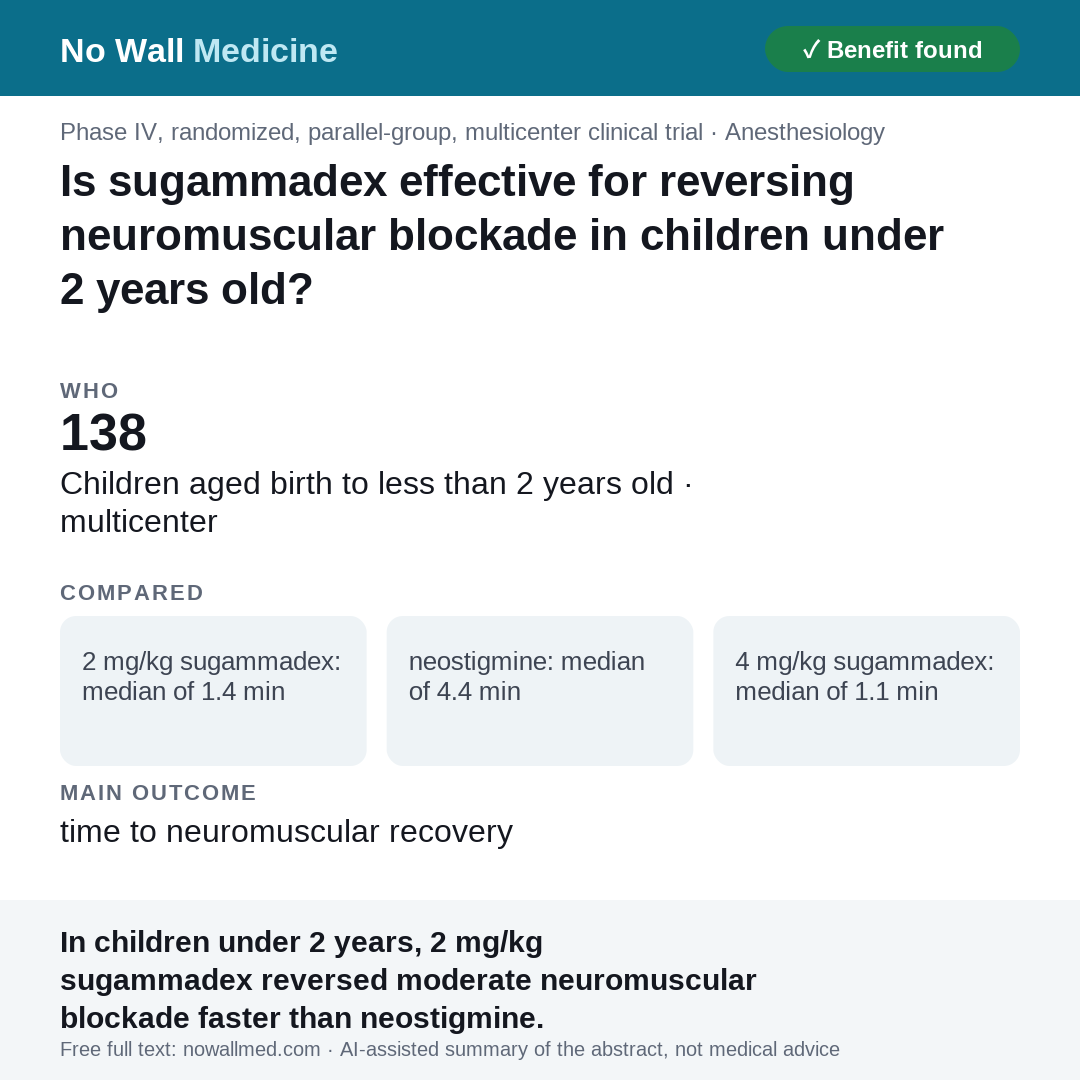
Sugammadex for Reversal of Neuromuscular Blockade in Neonates and Infants Less than 2 Years Old: Results from a Phase IV Randomized Clinical Trial
Phase IV, randomized, parallel-group, multicenter clinical trialBenefit found
Is sugammadex effective for reversing neuromuscular blockade in children under 2 years old?
Who
138
Children aged birth to less than 2 years old · multicenter
Compared
2 mg/kg sugammadex: median of 1.4 min
neostigmine: median of 4.4 min
4 mg/kg sugammadex: median of 1.1 min
Main outcome
time to neuromuscular recovery
Result: hazard ratio 2.40 (95% CI 1.37 to 4.18)
Bottom line: In children under 2 years, 2 mg/kg sugammadex reversed moderate neuromuscular blockade faster than neostigmine.
Anesthesiology · 2025-05-05Download image
Tirzepatide 10 and 15 mg versus semaglutide 2.4 mg in people with obesity or overweight with type 2 diabetes: An indirect treatment comparison
Indirect treatment comparisonBenefit found
How do tirzepatide 10 and 15 mg compare to semaglutide 2.4 mg for weight and HbA1c?
Who
People with obesity or overweight and type 2 diabetes
Compared
Tirzepatide 10 mg: mean difference 2.57% weight reduction
Tirzepatide 15 mg: mean difference 4.79% weight reduction
Semaglutide 2.4 mg
Main outcome
Mean percent change in weight and glycated haemoglobin
Result: odds ratio 15 mg: 1.76, 95% CI 1.04-2.97
Bottom line: Tirzepatide 10 and 15 mg were associated with greater weight and glycated haemoglobin reductions than semaglutide 2.4 mg.
Diabetes Obes Metab · 2025-05-05Download image

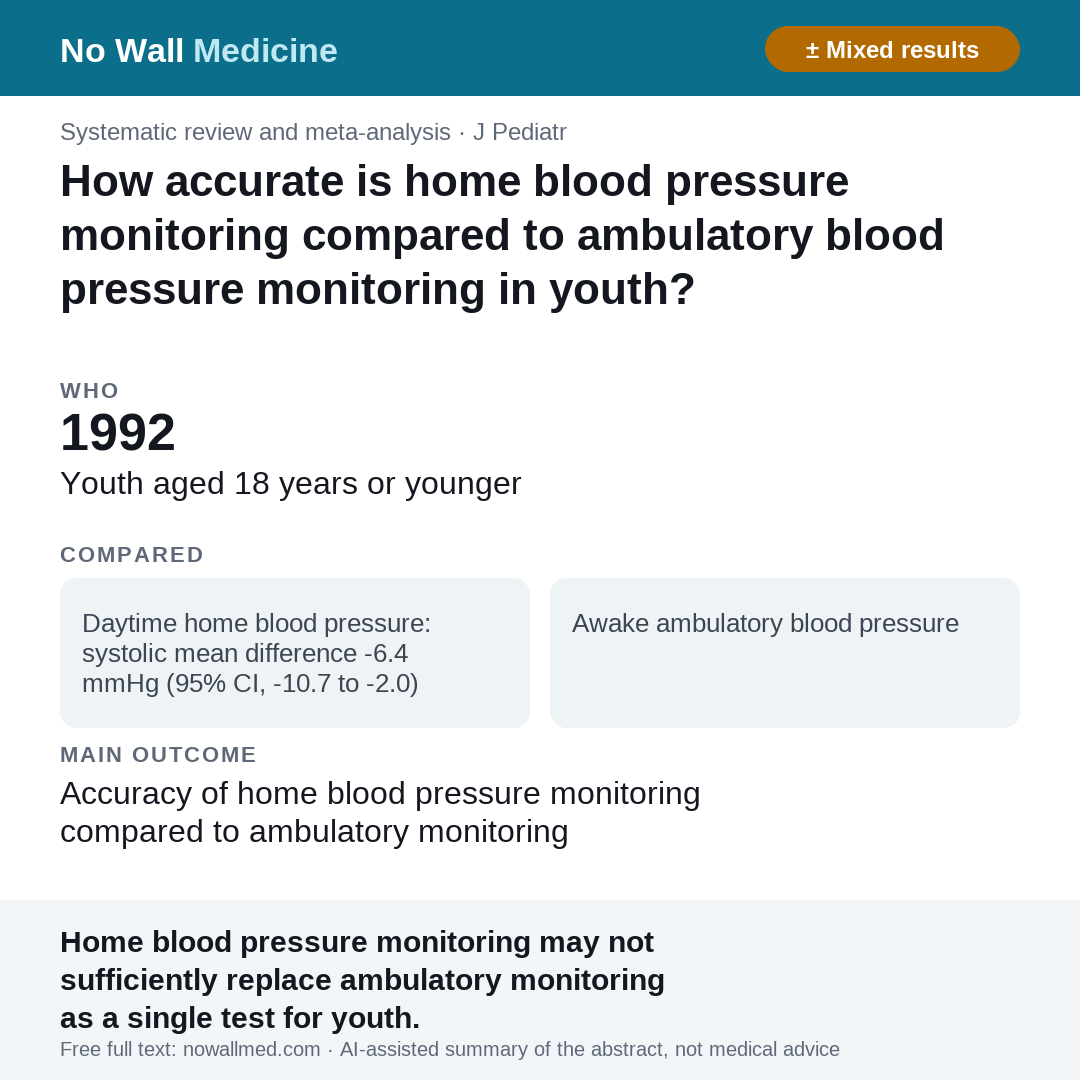
Accuracy of Home Blood Pressure Monitoring in Youth: A Systematic Review and Meta-Analysis
Systematic review and meta-analysisMixed results
How accurate is home blood pressure monitoring compared to ambulatory blood pressure monitoring in youth?
Who
1992
Youth aged 18 years or younger
Compared
Daytime home blood pressure: systolic mean difference -6.4 mmHg (95% CI, -10.7 to -2.0)
Awake ambulatory blood pressure
Main outcome
Accuracy of home blood pressure monitoring compared to ambulatory monitoring
Result: systolic MD, -6.4 mmHg [95% CI, -10.7 to -2.0]
Bottom line: Home blood pressure monitoring may not sufficiently replace ambulatory monitoring as a single test for youth.
Limitation: Different hypertension thresholds and home blood pressure monitoring protocols.
J Pediatr · 2025-05-05Download image
Human and non-human primate female in vitro gametogenesis toward meiotic entry: a systematic review
Systematic reviewUnclear result
What is the progress of meiotic entry in human and non-human primate in vitro gametogenesis?
Who
Human and non-human primate female germ cells
Compared
Human and non-human primate
Mice: complete oogenesis has been successfully achieved
Main outcome
Meiotic entry from pluripotent stem cells or fetal germ cells
Bottom line: Meiotic entry is a key milestone, but extending mouse success to primates remains a major hurdle.
Fertil Steril · 2025-05-05Download image

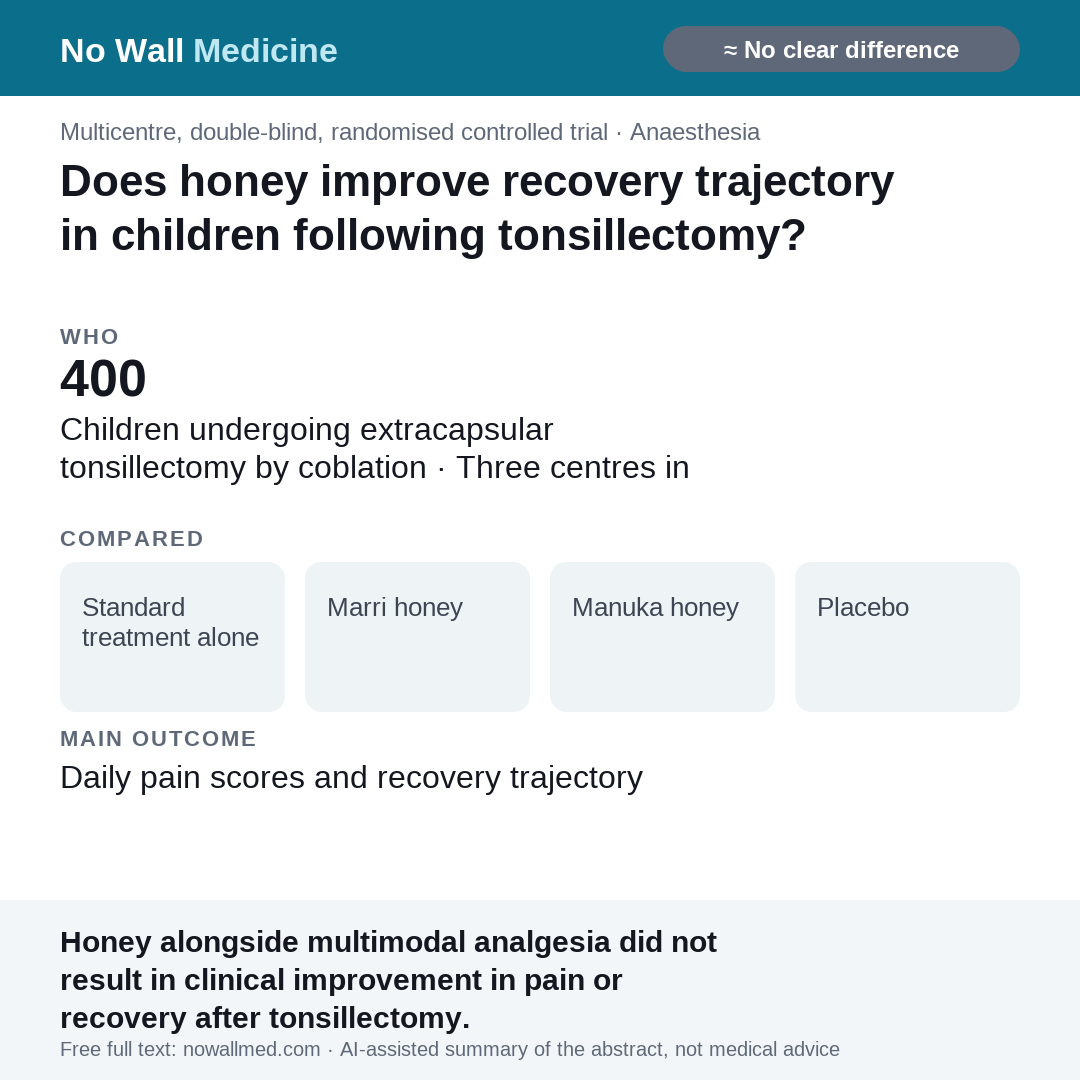
Impact of honey on post-tonsillectomy pain in children (BEE PAIN FREE Trial): a multicentre, double-blind, randomised controlled trial
Multicentre, double-blind, randomised controlled trialNo clear difference
Does honey improve recovery trajectory in children following tonsillectomy?
Who
400
Children undergoing extracapsular tonsillectomy by coblation · Three centres in Western Australia
Compared
Standard treatment alone
Marri honey
Manuka honey
Placebo
Main outcome
Daily pain scores and recovery trajectory
Bottom line: Honey alongside multimodal analgesia did not result in clinical improvement in pain or recovery after tonsillectomy.
Anaesthesia · 2025-05-05Download image
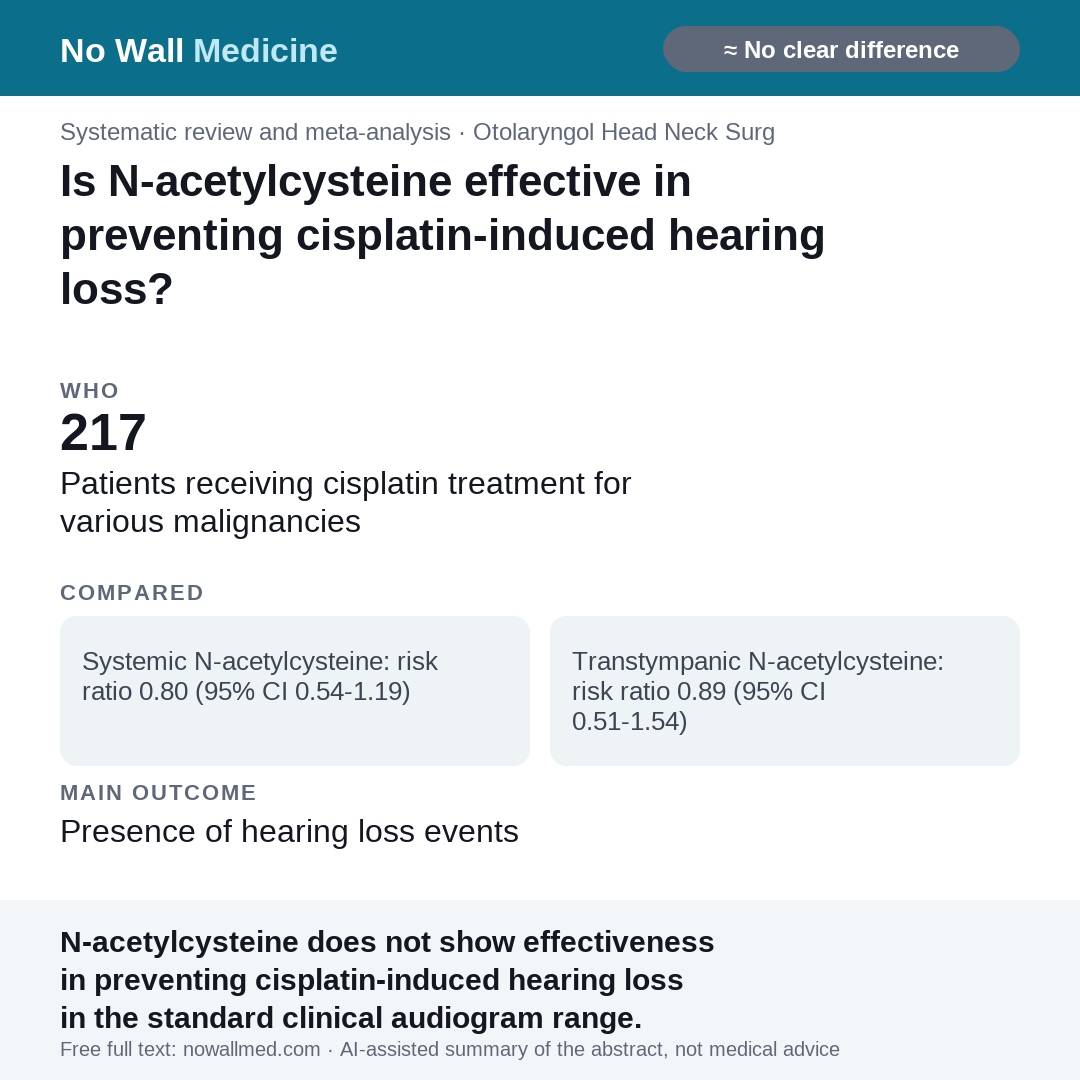
N-acetylcysteine for the Prevention of Cisplatin-Induced Hearing Loss: A Systematic Review and Meta-analysis
Systematic review and meta-analysisNo clear difference
Is N-acetylcysteine effective in preventing cisplatin-induced hearing loss?
Who
217
Patients receiving cisplatin treatment for various malignancies
Compared
Systemic N-acetylcysteine: risk ratio 0.80 (95% CI 0.54-1.19)
Transtympanic N-acetylcysteine: risk ratio 0.89 (95% CI 0.51-1.54)
Main outcome
Presence of hearing loss events
Result: risk ratio 0.80 (95% CI 0.54-1.19)
Bottom line: N-acetylcysteine does not show effectiveness in preventing cisplatin-induced hearing loss in the standard clinical audiogram range.
Limitation: Further studies with larger samples are needed to confirm findings.
Otolaryngol Head Neck Surg · 2025-05-05Download image
Management of Calvarial Osteoradionecrosis After Treatment of Cutaneous Malignancy: A Systematic Review
Systematic reviewMixed results
What are the characteristics and management outcomes of calvarial osteoradionecrosis after cutaneous malignancy treatment?
Who
42
Patients with calvarial osteoradionecrosis following cutaneous malignancy treatment
Compared
Wound care and antibiotics: demonstrated a spectrum of success rates
Surgically managed: 90% healed
Main outcome
Management success rates of calvarial osteoradionecrosis
Bottom line: Surgical management showed 90% healing, but overall evidence quality is poor and definitions remain inconsistent.
Limitation: Relatively poor data quality and no consensus on a definition of calvarial osteoradionecrosis.
Otolaryngol Head Neck Surg · 2025-05-05Download image

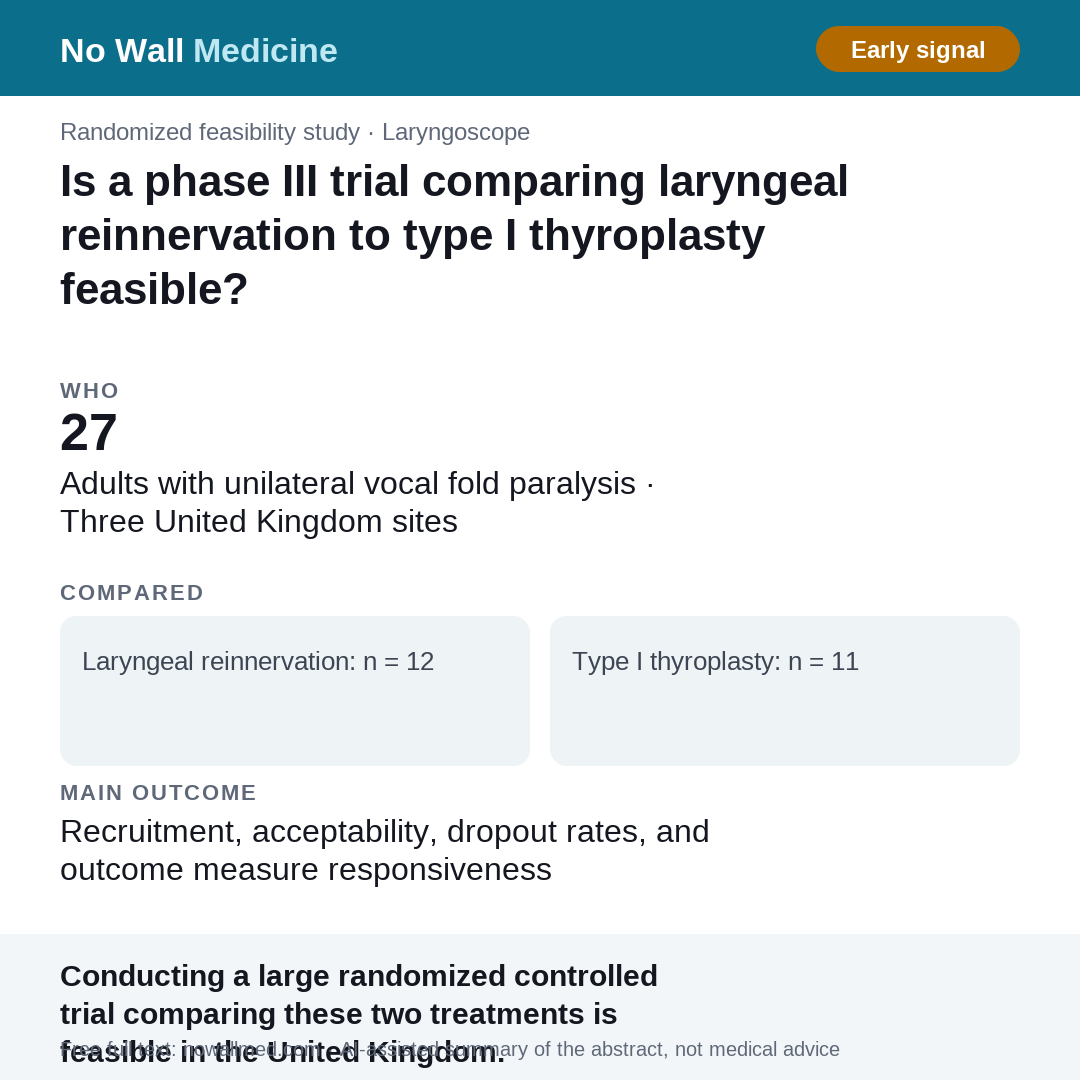
Laryngeal Reinnervation vs Type I Thyroplasty in Unilateral Vocal Fold Paralysis (VOCALIST): A Randomized Feasibility Study
Randomized feasibility studyBenefit found
Is a phase III trial comparing laryngeal reinnervation to type I thyroplasty feasible?
Who
27
Adults with unilateral vocal fold paralysis · Three United Kingdom sites
Compared
Laryngeal reinnervation: n = 12
Type I thyroplasty: n = 11
Main outcome
Recruitment, acceptability, dropout rates, and outcome measure responsiveness
Bottom line: Conducting a large randomized controlled trial comparing these two treatments is feasible in the United Kingdom.
Laryngoscope · 2025-05-05Download image
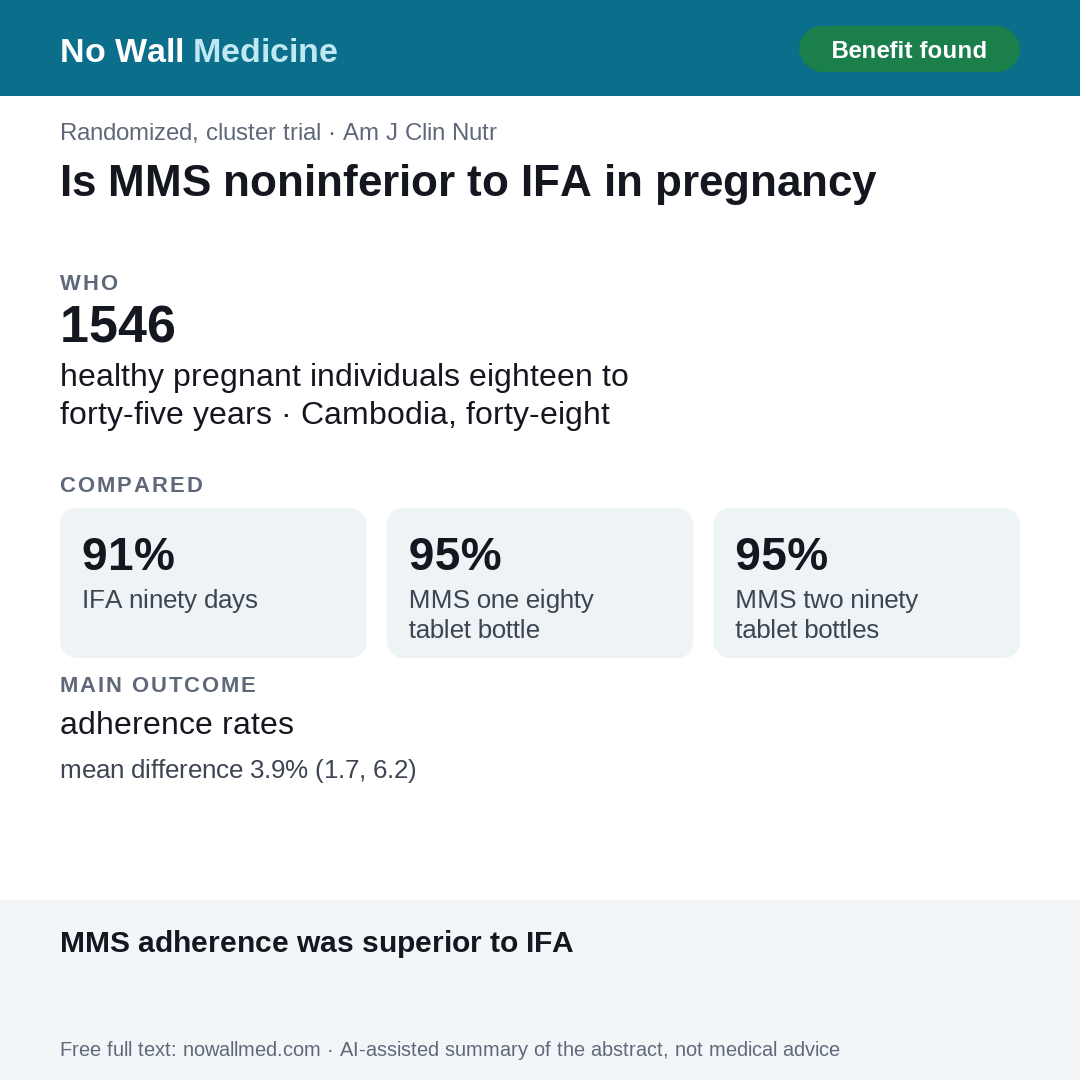
Assessing the adherence and acceptability to iron and folic acid compared with multiple micronutrient supplements during pregnancy: a cluster-randomized noninferiority trial in Cambodia
Randomized, cluster trialBenefit found
Is MMS noninferior to IFA in pregnancy
Who
1546
healthy pregnant individuals eighteen to forty-five years · Cambodia, forty-eight health centers
Compared
91%IFA ninety days
95%MMS one eighty tablet bottle
95%MMS two ninety tablet bottles
Main outcome
adherence rates
Result: mean difference 3.9% (1.7, 6.2)
Bottom line: MMS adherence was superior to IFA
Am J Clin Nutr · 2025-05-05Download image
The association of early pregnancy vitamin D and BMI status with composite adverse pregnancy outcomes: an ancillary analysis of the Vitamin D Antenatal Asthma Reduction Trial
Ancillary analysis of a randomized trialMixed results
Does early pregnancy vitamin D and BMI status associate with composite adverse pregnancy outcomes?
Who
816
Participants in the Vitamin D Antenatal Asthma Reduction Trial
Compared
BMI < 25: OR: 0.96 (95% CI: 0.93, 0.99)
BMI ≥ 25 kg/m2: OR: 1.00 (95% CI: 0.98, 1.02)
Main outcome
composite adverse pregnancy outcomes
Result: OR: 0.96 (95% CI: 0.93, 0.99) for BMI < 25
Bottom line: Higher early pregnancy vitamin D concentrations were associated with lower adverse pregnancy outcome odds in participants with BMI < 25.
Am J Clin Nutr · 2025-05-05Download image

Artificial Intelligence in the Management of Malnutrition in Cancer Patients: A Systematic Review
Systematic reviewBenefit found
What is the role of artificial intelligence in managing malnutrition in cancer patients?
Who
52,228
Cancer patients
Compared
Artificial intelligence models: area under the curve >0.80
Conventional screening tools
Main outcome
Malnutrition detection, body composition, and clinical outcomes
Bottom line: Artificial intelligence shows high predictive accuracy and potential to optimize malnutrition screening and personalized nutritional interventions in oncology.
Adv Nutr · 2025-05-05Download image

Nurse-Delivered Telehealth in Home-Based Palliative Care: Integrative Systematic Review
Integrative systematic reviewUnclear result
What are the roles, facilitators, and barriers to nurse-delivered telehealth in home-based palliative care?
Who
Patients and families in home-based palliative care · Not specified
Compared
Facilitators
Barriers
Main outcome
Nurses' roles and multilevel implementation facilitators and barriers
Bottom line: Nurses play diverse roles in telehealth, facing barriers like reimbursement issues and facilitators like patient engagement.
J Med Internet Res · 2025-05-05Download image

Electronic Implementation of Patient-Reported Outcome Measures in Primary Health Care: Mixed Methods Systematic Review
Mixed methods systematic reviewMixed results
What is the implementation and effectiveness of electronic patient-reported outcome measures in primary health care?
Who
22
Adults with chronic diseases in primary health care settings · United States and Canada
Compared
45%Studies reporting improvements
55%Studies reporting no significant change
Main outcome
Patient health outcomes, provider workflow, and implementation factors
Bottom line: Electronic patient-reported outcome measures show mixed effectiveness in improving health outcomes and self-management in primary health care.
Limitation: Long-term cost-effectiveness and sustainability remain uncertain.
J Med Internet Res · 2025-05-05Download image

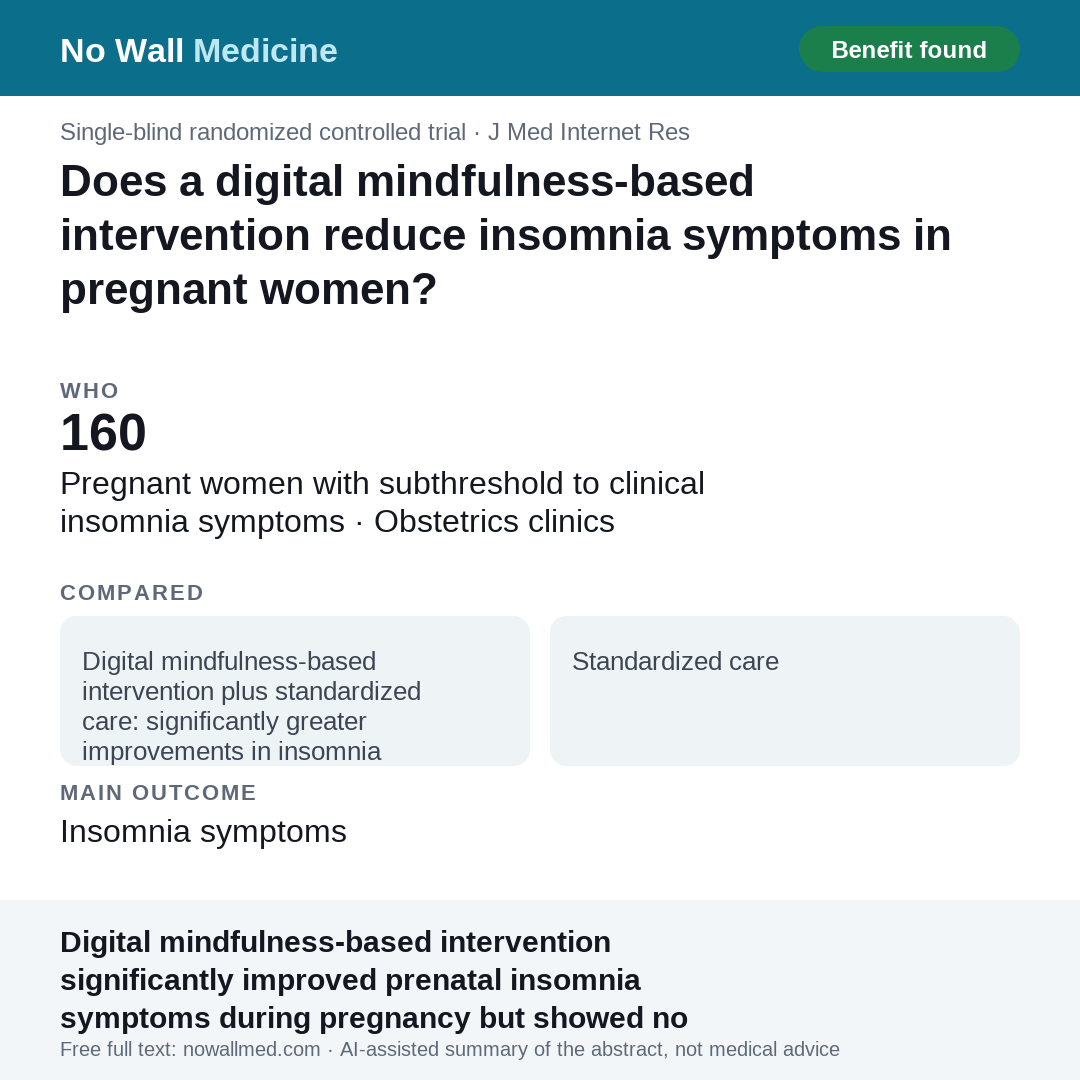
Effectiveness and Mechanisms of a Digital Mindfulness-Based Intervention for Subthreshold to Clinical Insomnia Symptoms in Pregnant Women: Randomized Controlled Trial
Single-blind randomized controlled trialBenefit found
Does a digital mindfulness-based intervention reduce insomnia symptoms in pregnant women?
Who
160
Pregnant women with subthreshold to clinical insomnia symptoms · Obstetrics clinics
Compared
Digital mindfulness-based intervention plus standardized care: significantly greater improvements in insomnia symptoms
Standardized care
Main outcome
Insomnia symptoms
Result: mean between-group difference -2.02, 95% CI -3.42 to -0.62
Bottom line: Digital mindfulness-based intervention significantly improved prenatal insomnia symptoms during pregnancy but showed no beneficial effect postpartum.
J Med Internet Res · 2025-05-05Download image
The Application Status of Radiomics-Based Machine Learning in Intrahepatic Cholangiocarcinoma: Systematic Review and Meta-Analysis
Systematic review and meta-analysisBenefit found
What is the application value of radiomics-based machine learning in intrahepatic cholangiocarcinoma?
Who
12,903
Patients with intrahepatic cholangiocarcinoma
Compared
Clinical features only: C-index 0.762 (95% CI 0.728-0.796)
Radiomics-based machine learning: C-index 0.853 (95% CI 0.824-0.882)
Radiomics and clinical features: C-index 0.912 (95% CI 0.889-0.935)
Main outcome
Accuracy in detecting intrahepatic cholangiocarcinoma
Result: C-index 0.912 (95% CI 0.889-0.935) for radiomics and clinical features
Bottom line: Radiomics-based machine learning demonstrates excellent accuracy in the clinical diagnosis of intrahepatic cholangiocarcinoma.
Limitation: Challenges include data heterogeneity, interpretability, segmentation, and imaging parameter variations.
J Med Internet Res · 2025-05-05Download image

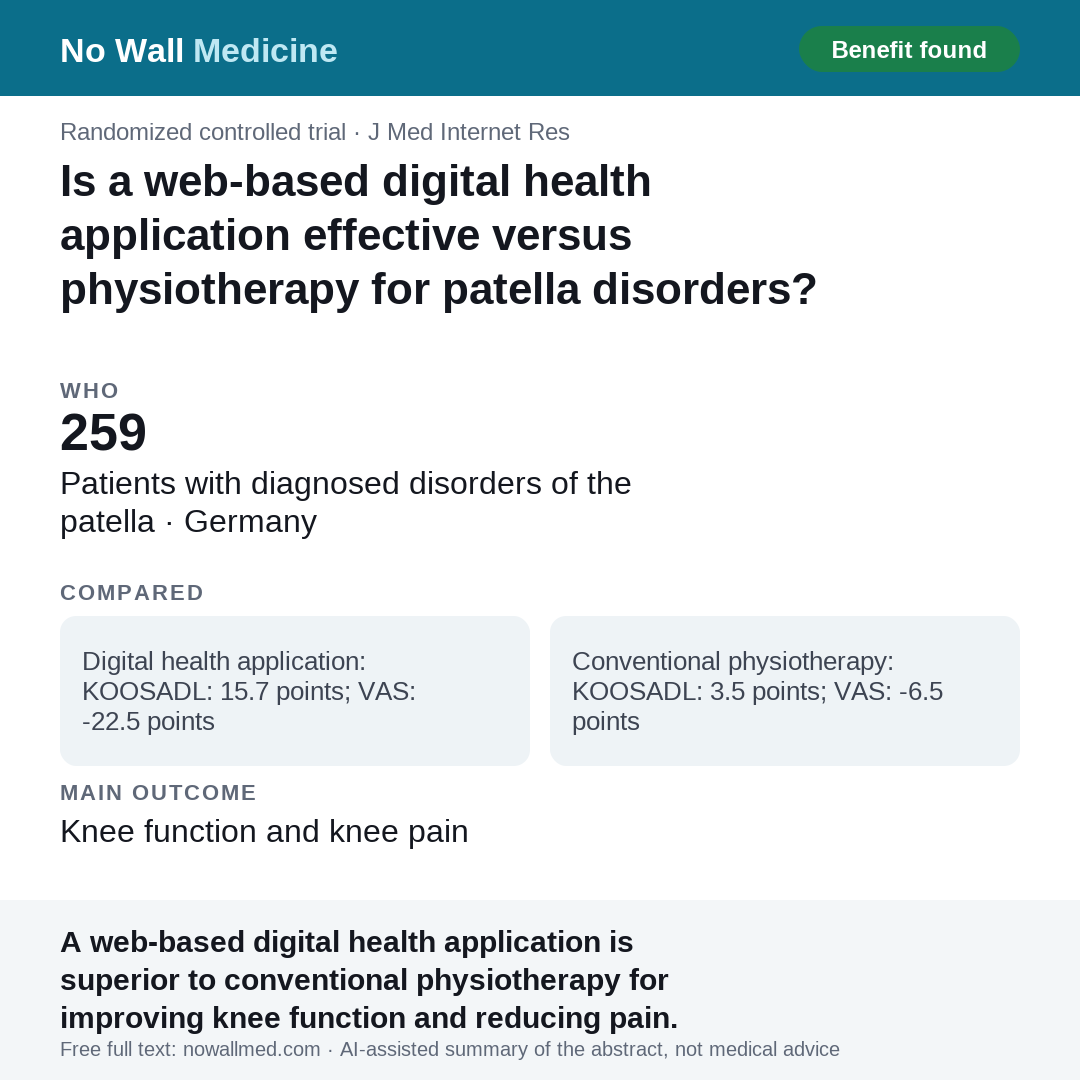
Effectiveness of Self-Training With a Web-Based Digital Health Application Versus Physiotherapy in the Treatment of Disorders of the Patella: Randomized Controlled Trial
Randomized controlled trialBenefit found
Is a web-based digital health application effective versus physiotherapy for patella disorders?
Who
259
Patients with diagnosed disorders of the patella · Germany
Compared
Digital health application: KOOSADL: 15.7 points; VAS: -22.5 points
Conventional physiotherapy: KOOSADL: 3.5 points; VAS: -6.5 points
Main outcome
Knee function and knee pain
Result: KOOSADL difference -10.1 points (95% CI -infinity to -8.0); VAS difference 14.3 points (95% CI 11.7-infinity)
Bottom line: A web-based digital health application is superior to conventional physiotherapy for improving knee function and reducing pain.
J Med Internet Res · 2025-05-05Download image
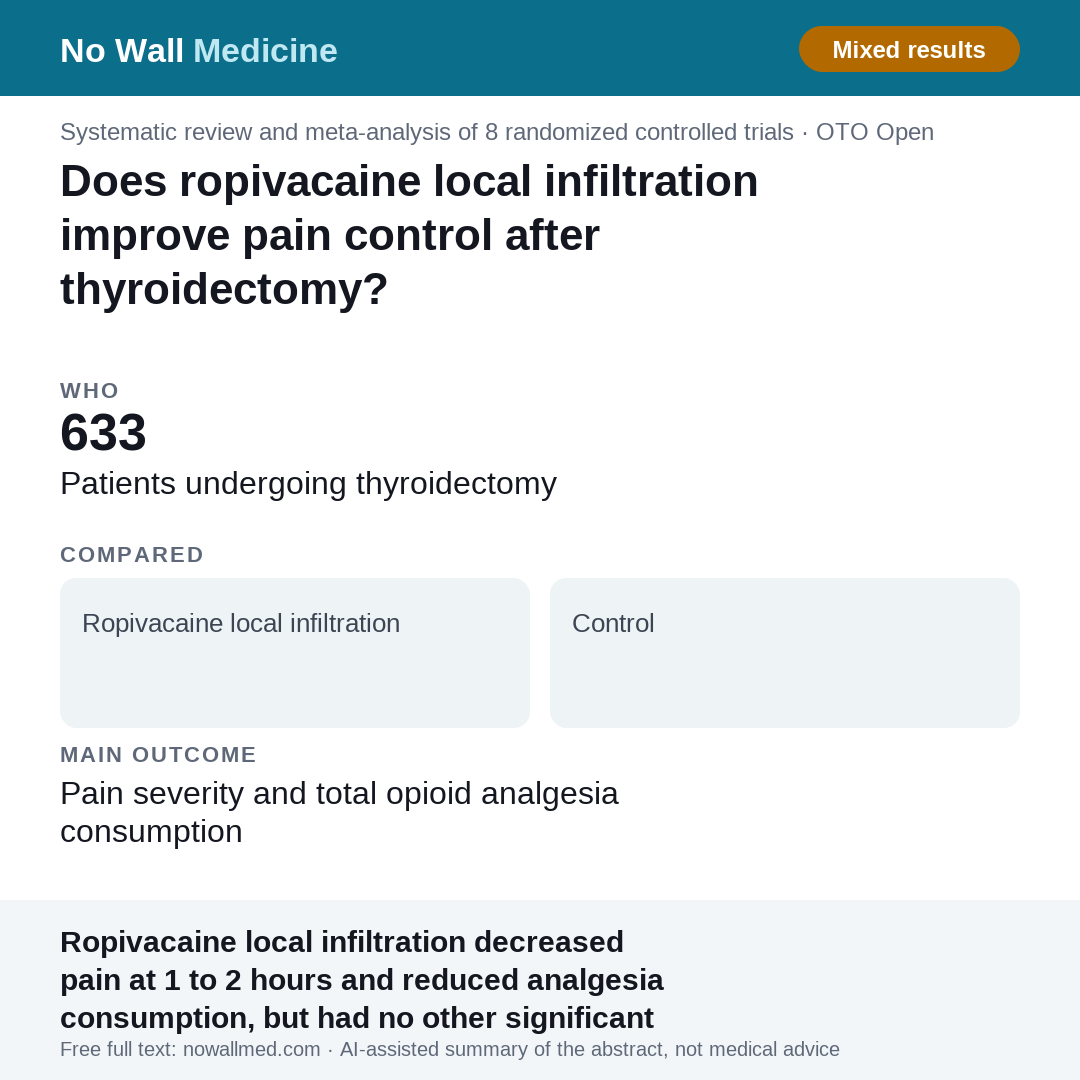
Ropivacaine Local Infiltration for Pain Control After Thyroidectomy: A Systematic Review and Meta-Analysis
Systematic review and meta-analysis of 8 randomized controlled trialsMixed results
Does ropivacaine local infiltration improve pain control after thyroidectomy?
Who
633
Patients undergoing thyroidectomy
Compared
Ropivacaine local infiltration
Control
Main outcome
Pain severity and total opioid analgesia consumption
Result: SMD -1.40 (95% CI -2.30 to -0.51) for pain at 1 to 2 hours
Bottom line: Ropivacaine local infiltration decreased pain at 1 to 2 hours and reduced analgesia consumption, but had no other significant effects.
Limitation: uncertain evidence
OTO Open · 2025-05-05Download image
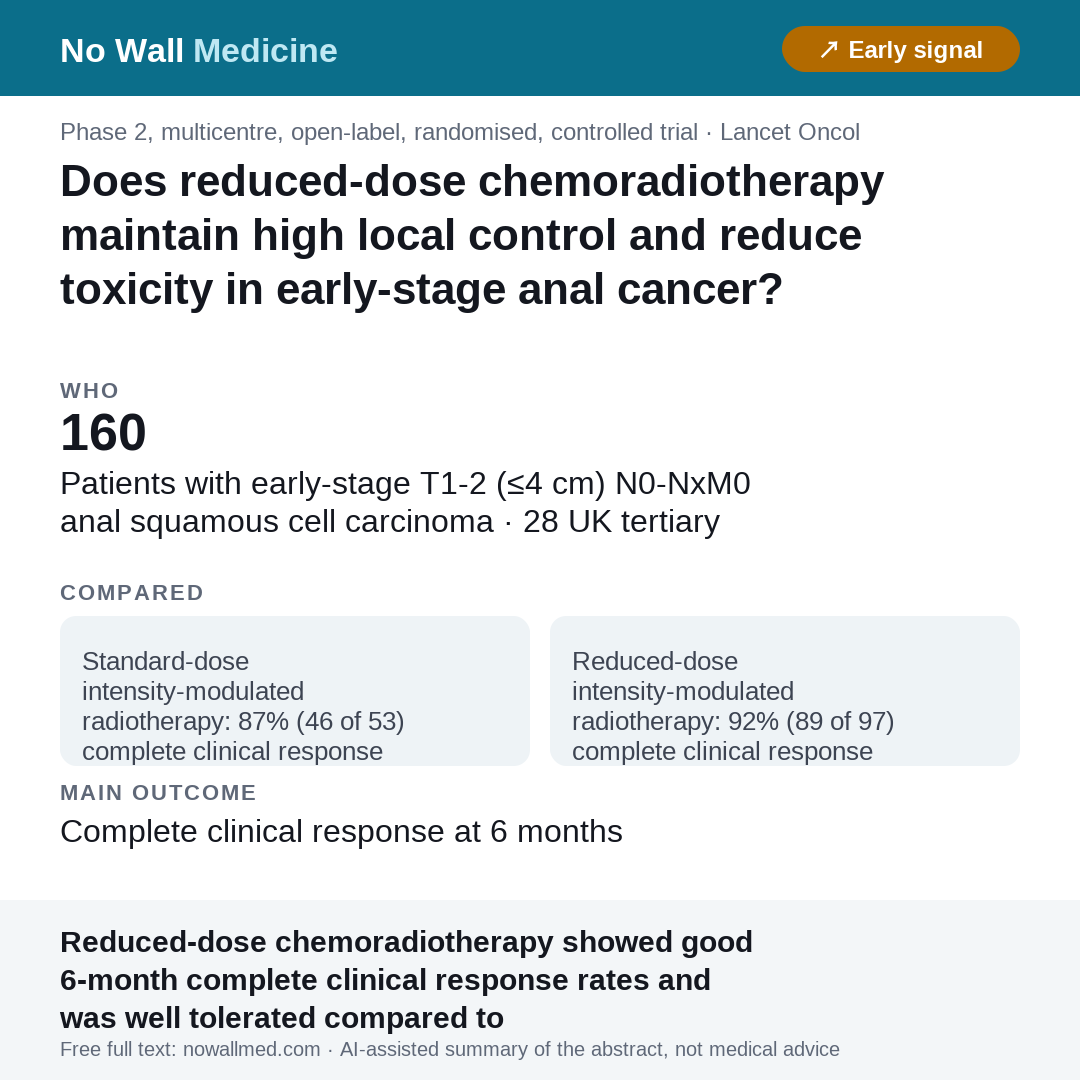
Standard versus reduced-dose chemoradiotherapy in anal cancer (PLATO-ACT4): short-term results of a phase 2 randomised controlled trial
Phase 2, multicentre, open-label, randomised, controlled trialBenefit found
Does reduced-dose chemoradiotherapy maintain high local control and reduce toxicity in early-stage anal cancer?
Who
160
Patients with early-stage T1-2 (≤4 cm) N0-NxM0 anal squamous cell carcinoma · 28 UK tertiary centres
Compared
Standard-dose intensity-modulated radiotherapy: 87% (46 of 53) complete clinical response
Reduced-dose intensity-modulated radiotherapy: 92% (89 of 97) complete clinical response
Main outcome
Complete clinical response at 6 months
Bottom line: Reduced-dose chemoradiotherapy showed good 6-month complete clinical response rates and was well tolerated compared to standard-dose.
Funded by: Cancer Research UK and Stand Up to Cancer
Lancet Oncol · 2025-05-04Download image