Visual abstracts
New randomized trials and meta-analyses from leading journals at a glance: who was studied, what was compared, and what was found. Every paper is free to read in full.
All specialtiesCardiology 840Oncology 760Gastroenterology & Hepatology 306Infectious Disease 626Neurology 350Psychiatry & Mental Health 430Pulmonology 365Critical Care 243Endocrinology & Diabetes 480Pediatrics 534Surgery 319Orthopedics & Sports Medicine 161Neurosurgery 89Cardiothoracic & Vascular Surgery 87Plastic & Reconstructive Surgery 118Nephrology 197Rheumatology 108Hematology 181Dermatology 78Ophthalmology 97Obstetrics & Gynecology 261Public & Global Health 167Radiology & Imaging 96Anesthesiology 107Urology 162ENT (Otolaryngology) 86Emergency Medicine 68Allergy & Immunology 58Geriatrics 160Family Medicine & Primary Care 111Medical Genetics & Genomics 91Pathology & Laboratory Medicine 24Physical Medicine & Rehabilitation 148Palliative Care 81Nutrition 223Digital Health & AI 460General Medicine 101
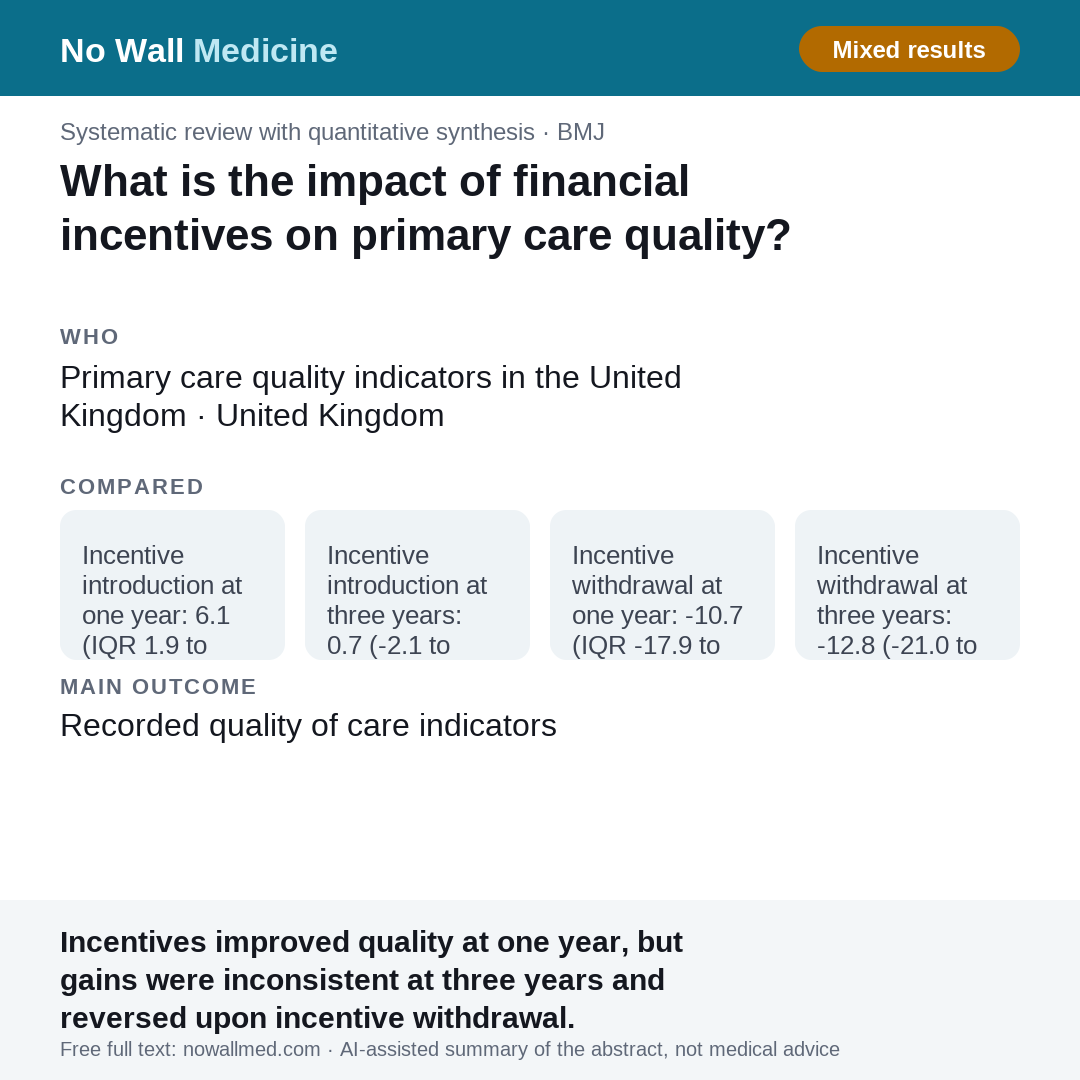
Effect of UK Quality and Outcomes Framework pay-for-performance programme on quality of primary care: systematic review with quantitative synthesis
Systematic review with quantitative synthesisMixed results
What is the impact of financial incentives on primary care quality?
Who
Primary care quality indicators in the United Kingdom · United Kingdom
Compared
Incentive introduction at one year: 6.1 (IQR 1.9 to 14.6) percentage points
Incentive introduction at three years: 0.7 (-2.1 to 8.9) percentage points
Incentive withdrawal at one year: -10.7 (IQR -17.9 to -3.8) percentage points
Incentive withdrawal at three years: -12.8 (-21.0 to -4.4) percentage points
Main outcome
Recorded quality of care indicators
Bottom line: Incentives improved quality at one year, but gains were inconsistent at three years and reversed upon incentive withdrawal.
BMJ · 2025-06-25Download image
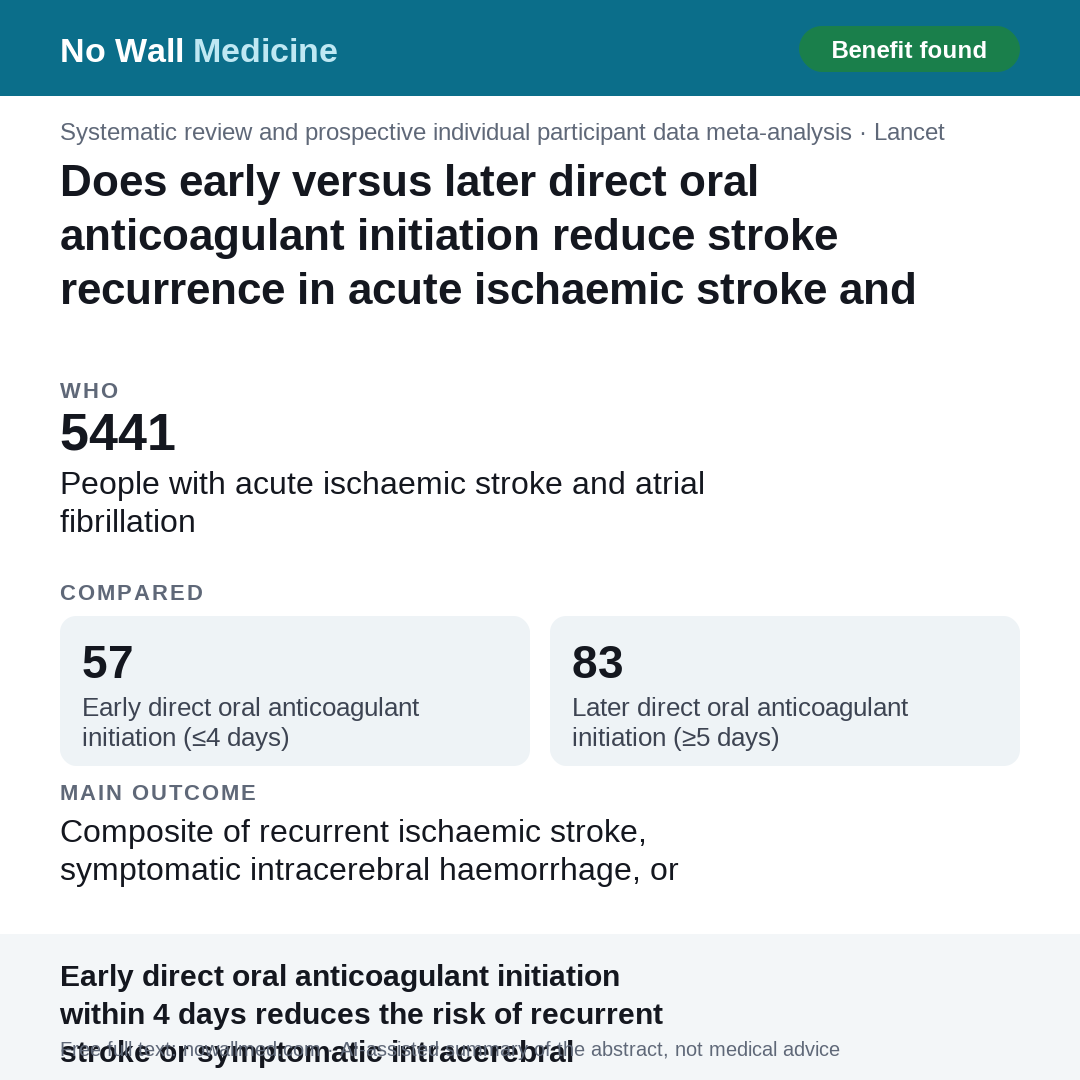
Collaboration on the optimal timing of anticoagulation after ischaemic stroke and atrial fibrillation: a systematic review and prospective individual participant data meta-analysis of randomised controlled trials (CATALYST)
Systematic review and prospective individual participant data meta-analysisBenefit found
Does early versus later direct oral anticoagulant initiation reduce stroke recurrence in acute ischaemic stroke and atrial fibrillation?
Who
5441
People with acute ischaemic stroke and atrial fibrillation
Compared
57Early direct oral anticoagulant initiation (≤4 days) (2·1%)
83Later direct oral anticoagulant initiation (≥5 days) (3·0%)
Main outcome
Composite of recurrent ischaemic stroke, symptomatic intracerebral haemorrhage, or unclassified stroke within 30 days
Result: odds ratio 0·70 (95% CI 0·50-0·98)
Bottom line: Early direct oral anticoagulant initiation within 4 days reduces the risk of recurrent stroke or symptomatic intracerebral haemorrhage.
Funded by: British Heart Foundation, National Institute for Health and Care Research, Swiss National Science Foundation
Lancet · 2025-06-23Download image
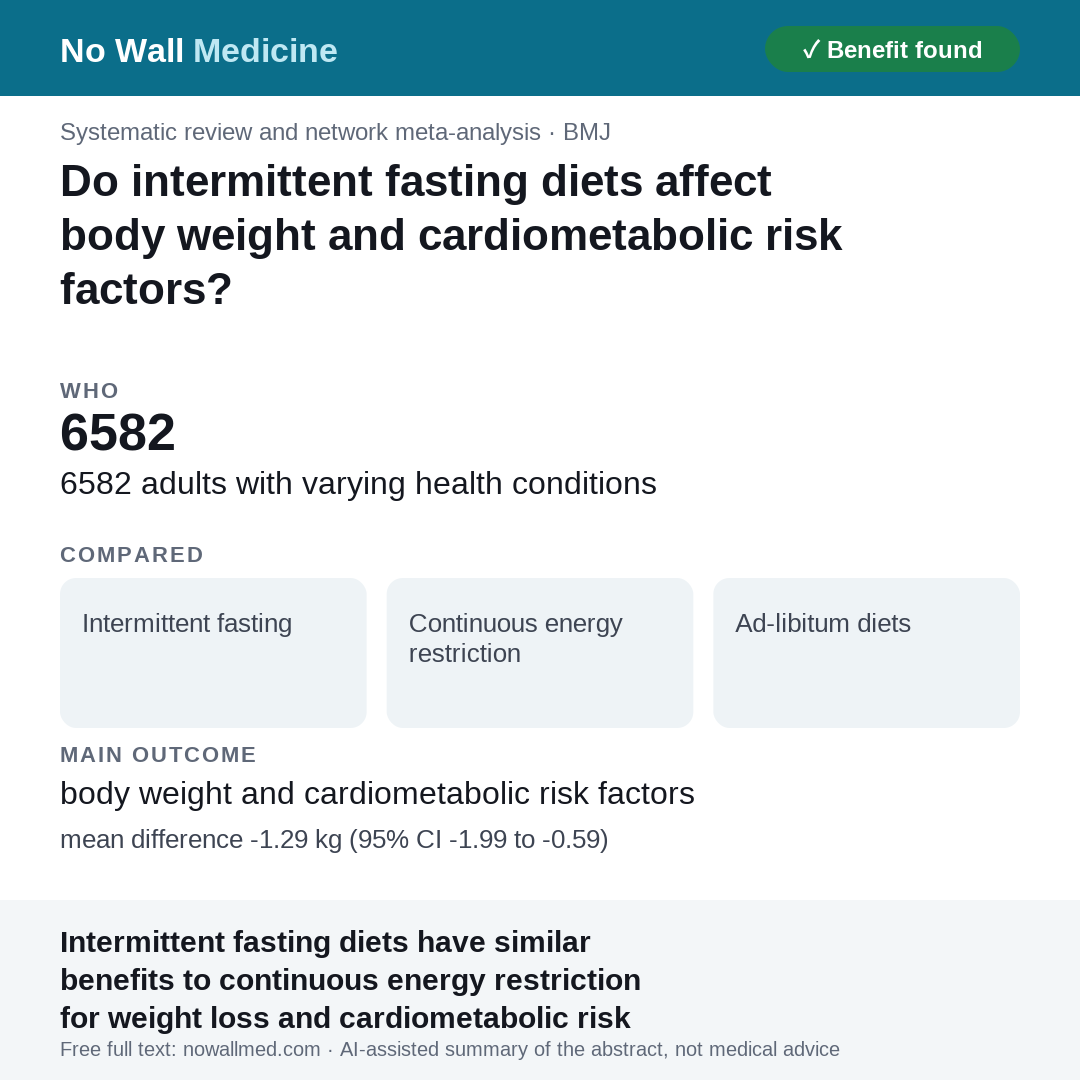
Intermittent fasting strategies and their effects on body weight and other cardiometabolic risk factors: systematic review and network meta-analysis of randomised clinical trials
Systematic review and network meta-analysisBenefit found
Do intermittent fasting diets affect body weight and cardiometabolic risk factors?
Who
6582
6582 adults with varying health conditions
Compared
Intermittent fasting
Continuous energy restriction
Ad-libitum diets
Main outcome
body weight and cardiometabolic risk factors
Result: mean difference -1.29 kg (95% CI -1.99 to -0.59)
Bottom line: Intermittent fasting diets have similar benefits to continuous energy restriction for weight loss and cardiometabolic risk factors.
Limitation: Longer duration trials are needed to further substantiate these findings.
BMJ · 2025-06-18Download image
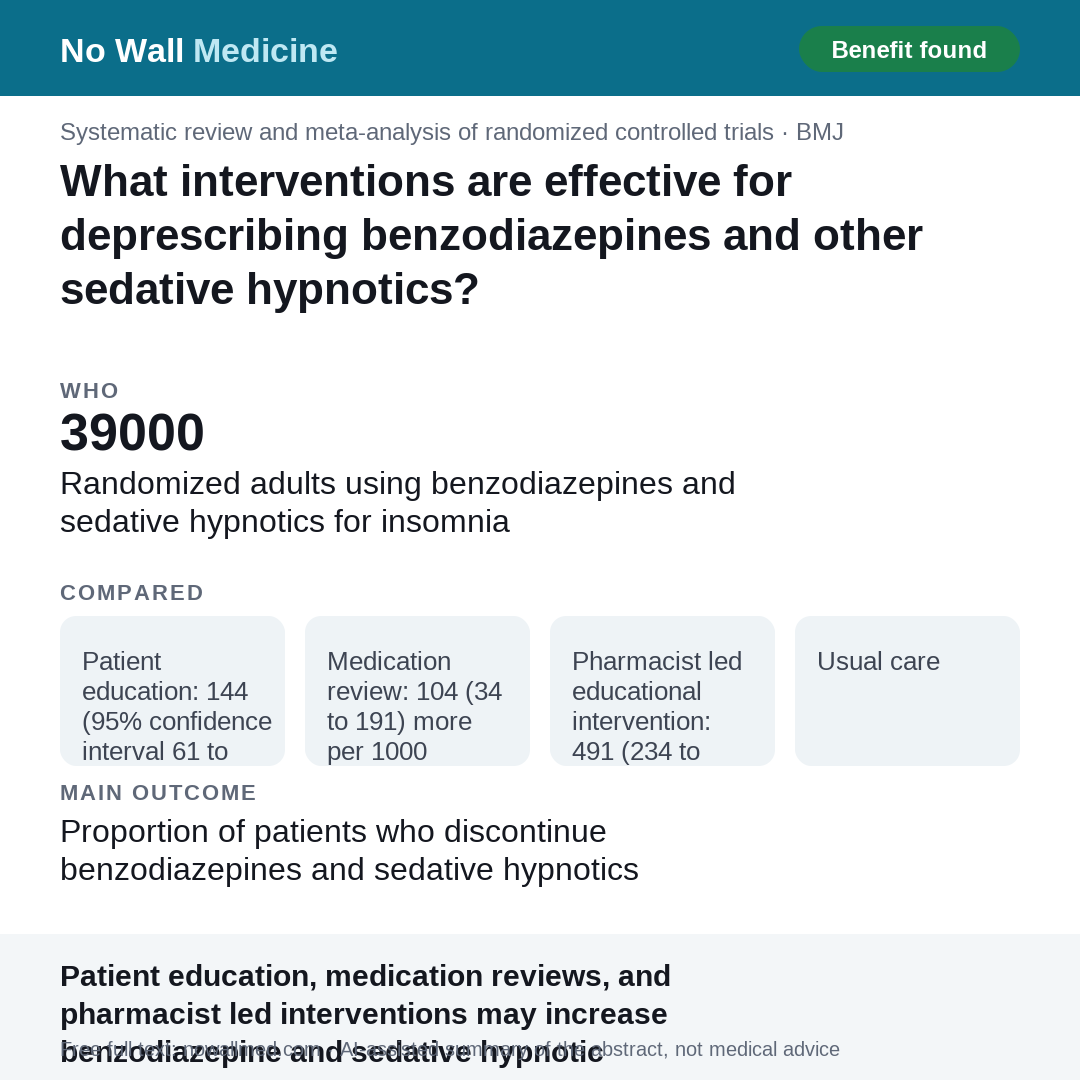
Comparative effectiveness of interventions to facilitate deprescription of benzodiazepines and other sedative hypnotics: systematic review and meta-analysis
Systematic review and meta-analysis of randomized controlled trialsBenefit found
What interventions are effective for deprescribing benzodiazepines and other sedative hypnotics?
Who
39000
Randomized adults using benzodiazepines and sedative hypnotics for insomnia
Compared
Patient education: 144 (95% confidence interval 61 to 246) more per 1000 patients
Medication review: 104 (34 to 191) more per 1000 patients
Pharmacist led educational intervention: 491 (234 to 928) more per 1000 patients
Usual care
Main outcome
Proportion of patients who discontinue benzodiazepines and sedative hypnotics
Bottom line: Patient education, medication reviews, and pharmacist led interventions may increase benzodiazepine and sedative hypnotic discontinuation rates.
Limitation: The evidence on the effectiveness of interventions is of low certainty.
BMJ · 2025-06-17Download image
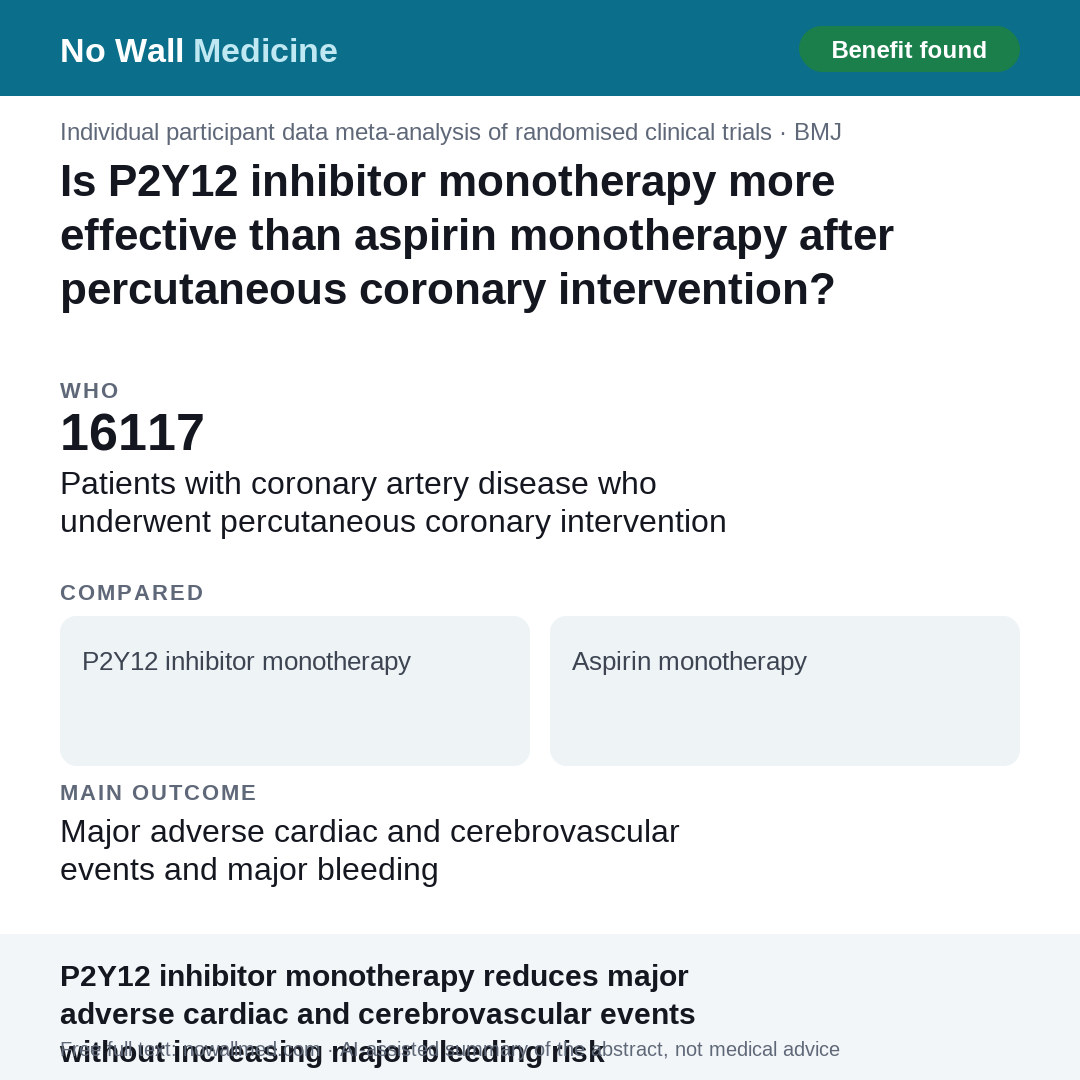
P2Y12 inhibitor or aspirin after percutaneous coronary intervention: individual patient data meta-analysis of randomised clinical trials
Individual participant data meta-analysis of randomised clinical trialsBenefit found
Is P2Y12 inhibitor monotherapy more effective than aspirin monotherapy after percutaneous coronary intervention?
Who
16117
Patients with coronary artery disease who underwent percutaneous coronary intervention
Compared
P2Y12 inhibitor monotherapy
Aspirin monotherapy
Main outcome
Major adverse cardiac and cerebrovascular events and major bleeding
Result: hazard ratio 0.77 (95% CI 0.67 to 0.89)
Bottom line: P2Y12 inhibitor monotherapy reduces major adverse cardiac and cerebrovascular events without increasing major bleeding risk compared to aspirin.
BMJ · 2025-06-04Download image
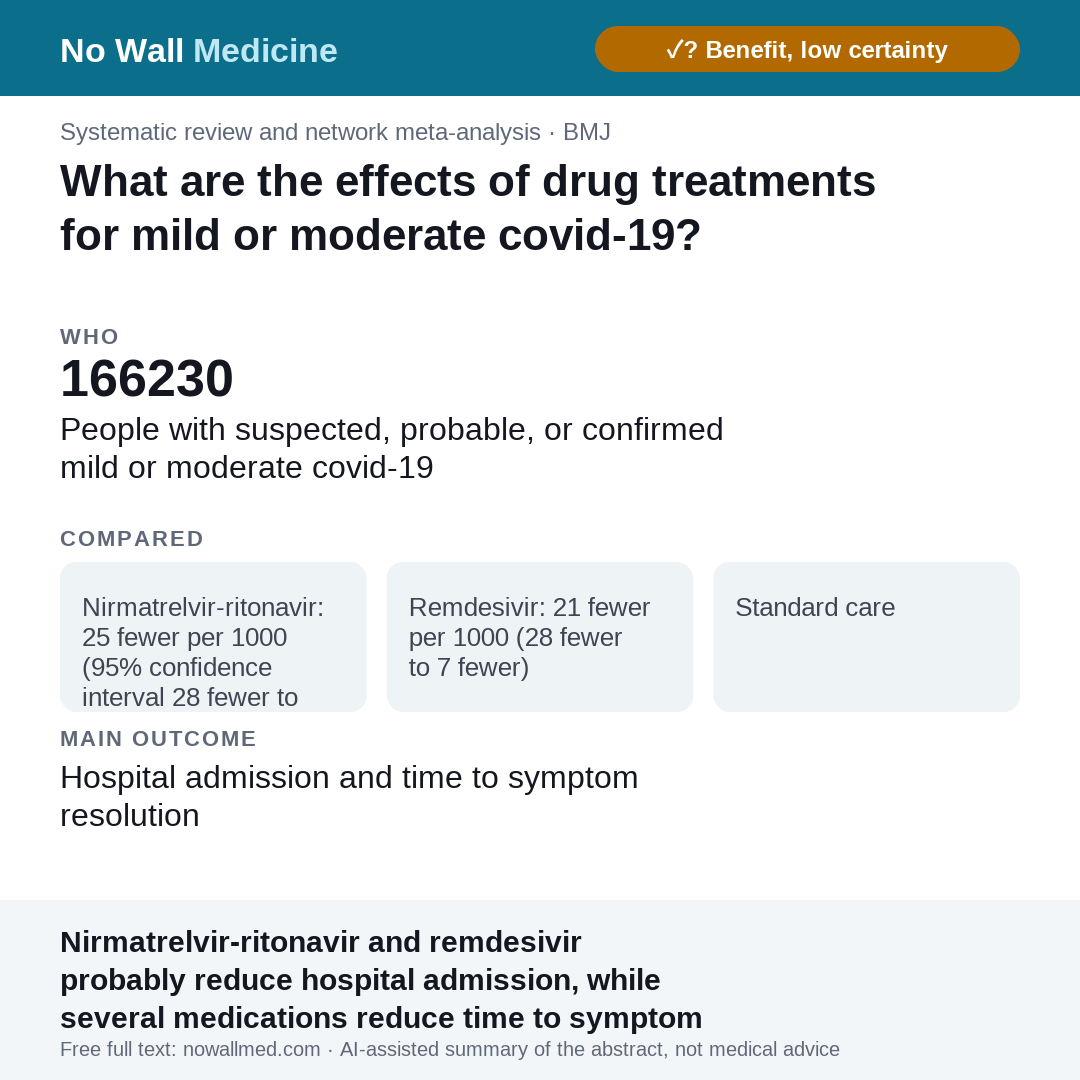
Drug treatments for mild or moderate covid-19: systematic review and network meta-analysis
Systematic review and network meta-analysisBenefit found
What are the effects of drug treatments for mild or moderate covid-19?
Who
166230
People with suspected, probable, or confirmed mild or moderate covid-19
Compared
Nirmatrelvir-ritonavir: 25 fewer per 1000 (95% confidence interval 28 fewer to 20 fewer)
Remdesivir: 21 fewer per 1000 (28 fewer to 7 fewer)
Standard care
Main outcome
Hospital admission and time to symptom resolution
Bottom line: Nirmatrelvir-ritonavir and remdesivir probably reduce hospital admission, while several medications reduce time to symptom resolution.
BMJ · 2025-05-29Download image
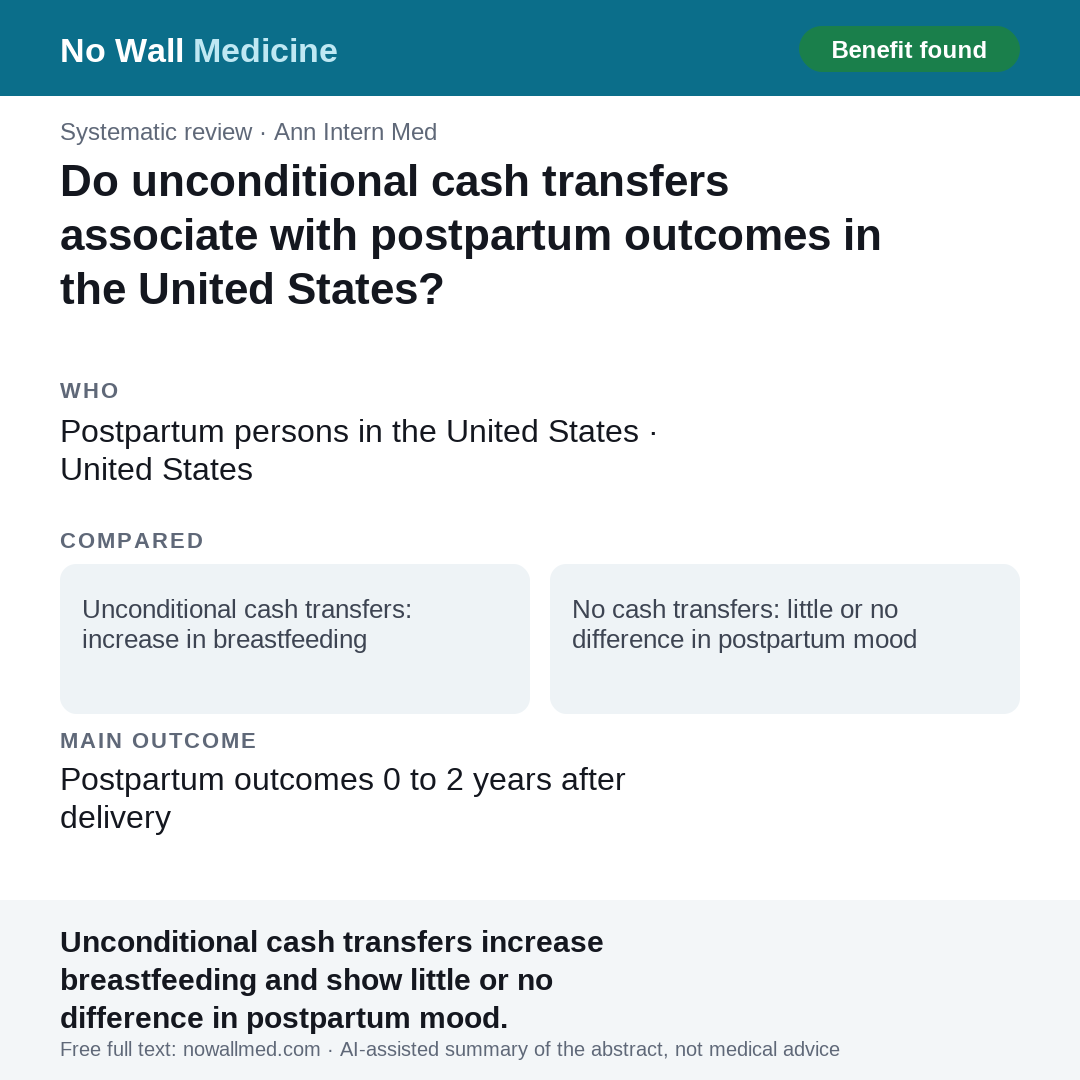
Associations Between Unconditional Cash Transfers and Postpartum Outcomes in the United States : A Systematic Review
Systematic reviewBenefit found
Do unconditional cash transfers associate with postpartum outcomes in the United States?
Who
Postpartum persons in the United States · United States
Compared
Unconditional cash transfers: increase in breastfeeding
No cash transfers: little or no difference in postpartum mood
Main outcome
Postpartum outcomes 0 to 2 years after delivery
Bottom line: Unconditional cash transfers increase breastfeeding and show little or no difference in postpartum mood.
Limitation: Unpublished studies, non-English studies, and nonrandomized study bias may have been present.
Ann Intern Med · 2025-05-27Download image
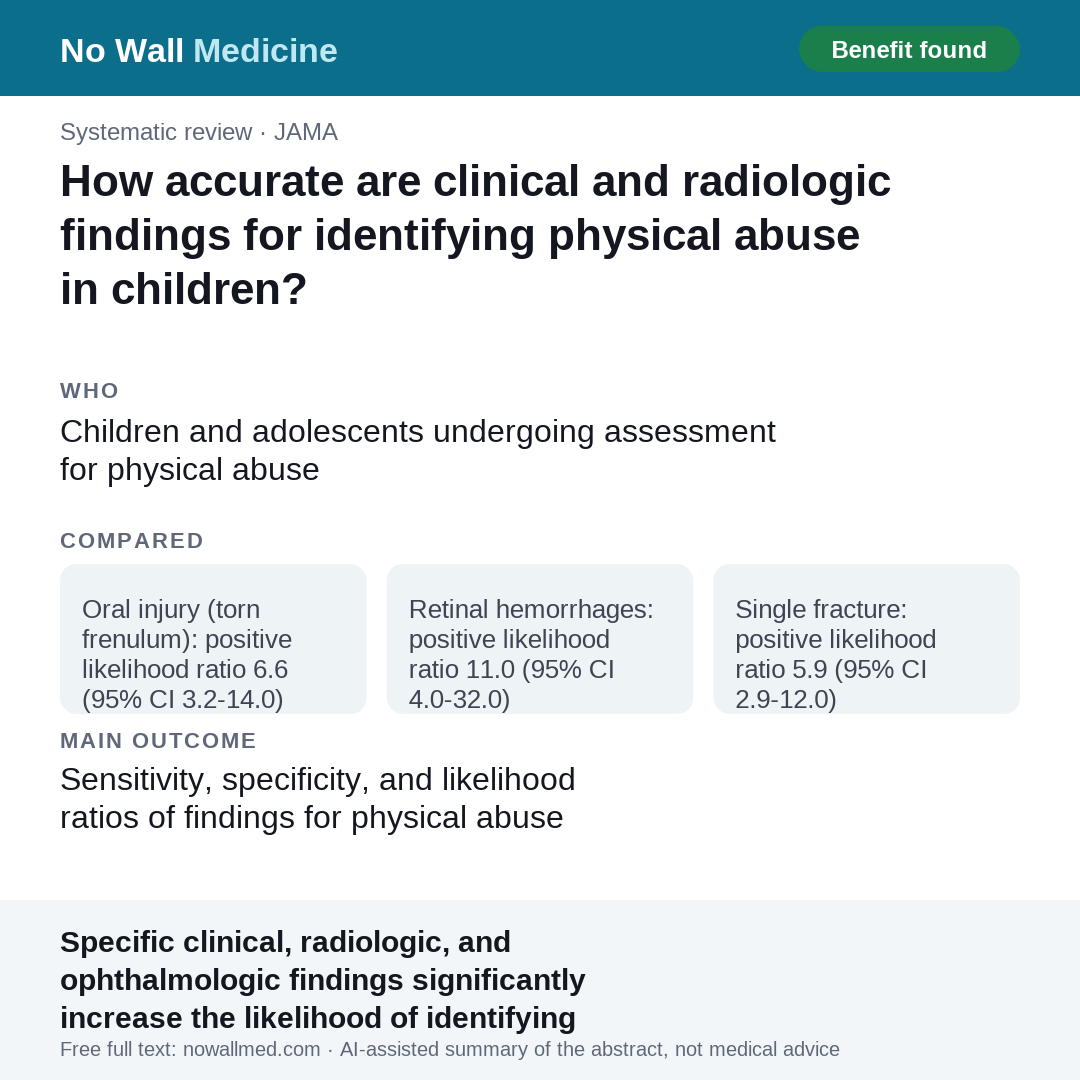
Has This Child Experienced Physical Abuse?: The Rational Clinical Examination Systematic Review
Systematic reviewBenefit found
How accurate are clinical and radiologic findings for identifying physical abuse in children?
Who
Children and adolescents undergoing assessment for physical abuse
Compared
Oral injury (torn frenulum): positive likelihood ratio 6.6 (95% CI 3.2-14.0)
Retinal hemorrhages: positive likelihood ratio 11.0 (95% CI 4.0-32.0)
Single fracture: positive likelihood ratio 5.9 (95% CI 2.9-12.0)
Main outcome
Sensitivity, specificity, and likelihood ratios of findings for physical abuse
Bottom line: Specific clinical, radiologic, and ophthalmologic findings significantly increase the likelihood of identifying physical abuse in children.
JAMA · 2025-04-21Download image
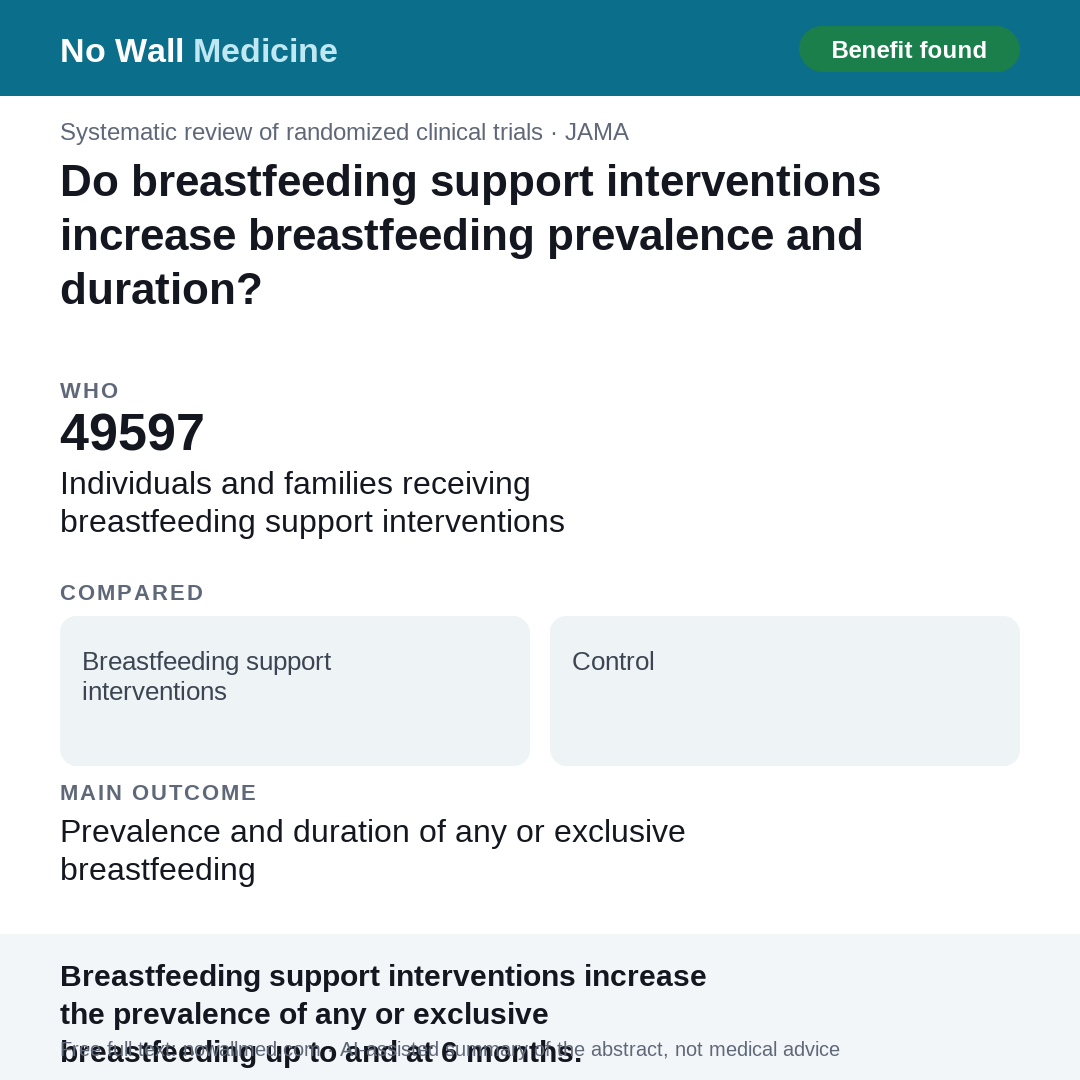
Interventions to Support Breastfeeding: Updated Evidence Report and Systematic Review for the US Preventive Services Task Force
Systematic review of randomized clinical trialsBenefit found
Do breastfeeding support interventions increase breastfeeding prevalence and duration?
Who
49597
Individuals and families receiving breastfeeding support interventions
Compared
Breastfeeding support interventions
Control
Main outcome
Prevalence and duration of any or exclusive breastfeeding
Result: any breastfeeding: risk ratio, 1.13 (95% CI, 1.05-1.22); exclusive breastfeeding: risk ratio, 1.46 (95% CI, 1.20-1.78)
Bottom line: Breastfeeding support interventions increase the prevalence of any or exclusive breastfeeding up to and at 6 months.
Limitation: Limited and mixed evidence on infant health outcomes and maternal mental health symptoms.
JAMA · 2025-04-08Download image
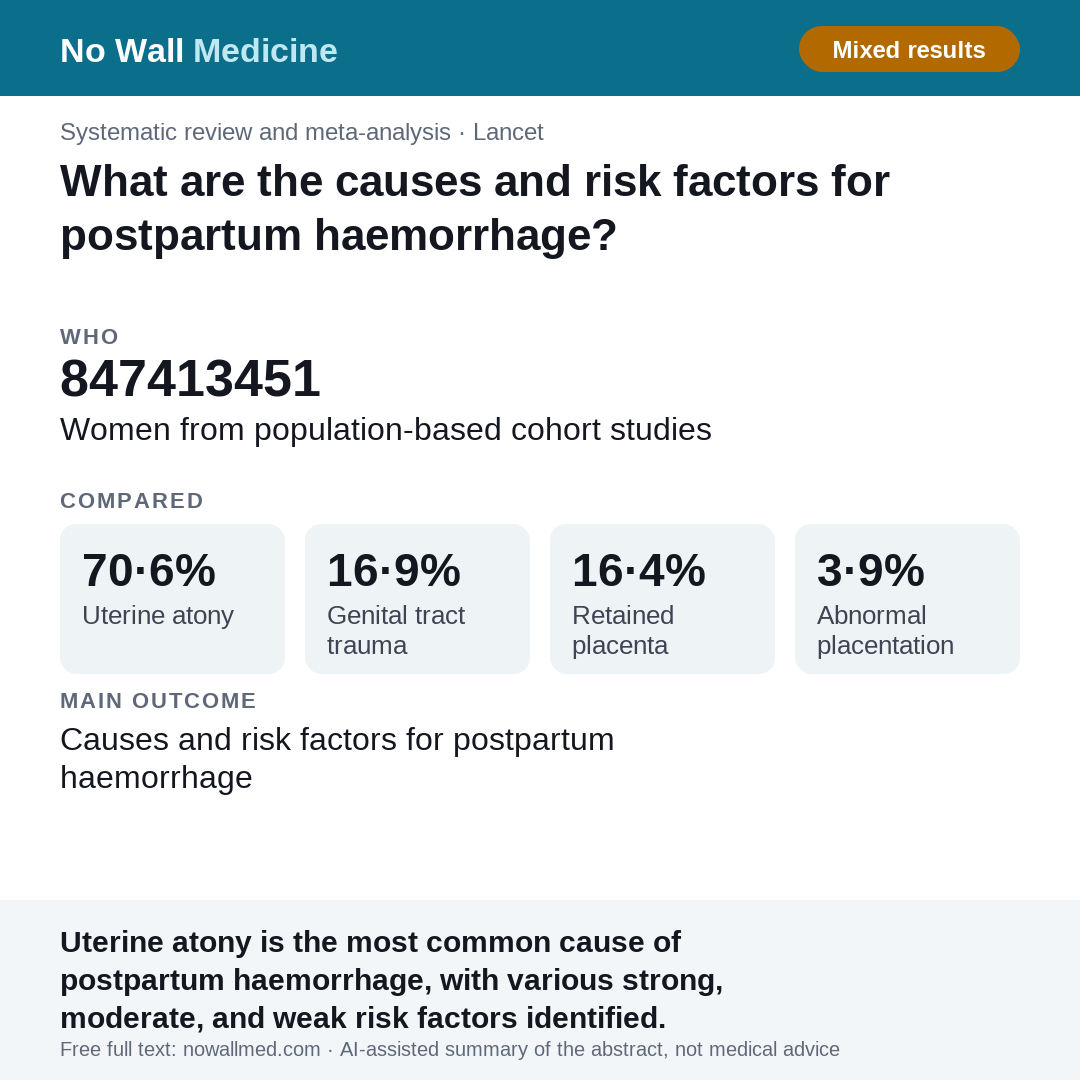
Causes of and risk factors for postpartum haemorrhage: a systematic review and meta-analysis
Systematic review and meta-analysisMixed results
What are the causes and risk factors for postpartum haemorrhage?
Who
847413451
Women from population-based cohort studies
Compared
70·6%Uterine atony (95% CI 63·9-77·3)
16·9%Genital tract trauma (9·3-24·6)
16·4%Retained placenta (12·3-20·5)
3·9%Abnormal placentation (0·1-7·6)
Main outcome
Causes and risk factors for postpartum haemorrhage
Bottom line: Uterine atony is the most common cause of postpartum haemorrhage, with various strong, moderate, and weak risk factors identified.
Funded by: Gates Foundation
Lancet · 2025-04-03Download image
Systematic review and meta-analysis of intravenous iron therapy for patients with heart failure and iron deficiency
Meta-analysis of six trialsBenefit found
Intravenous iron for heart failure with iron deficiency
Who
7175
Patients with heart failure and iron deficiency
Compared
Intravenous iron
Placebo
Main outcome
Heart failure hospitalizations and cardiovascular mortality
Result: risk ratio 0.72 (95% CI 0.55 to 0.89)
Bottom line: Intravenous iron reduces heart failure events
Nat Med · 2025-03-30Download image

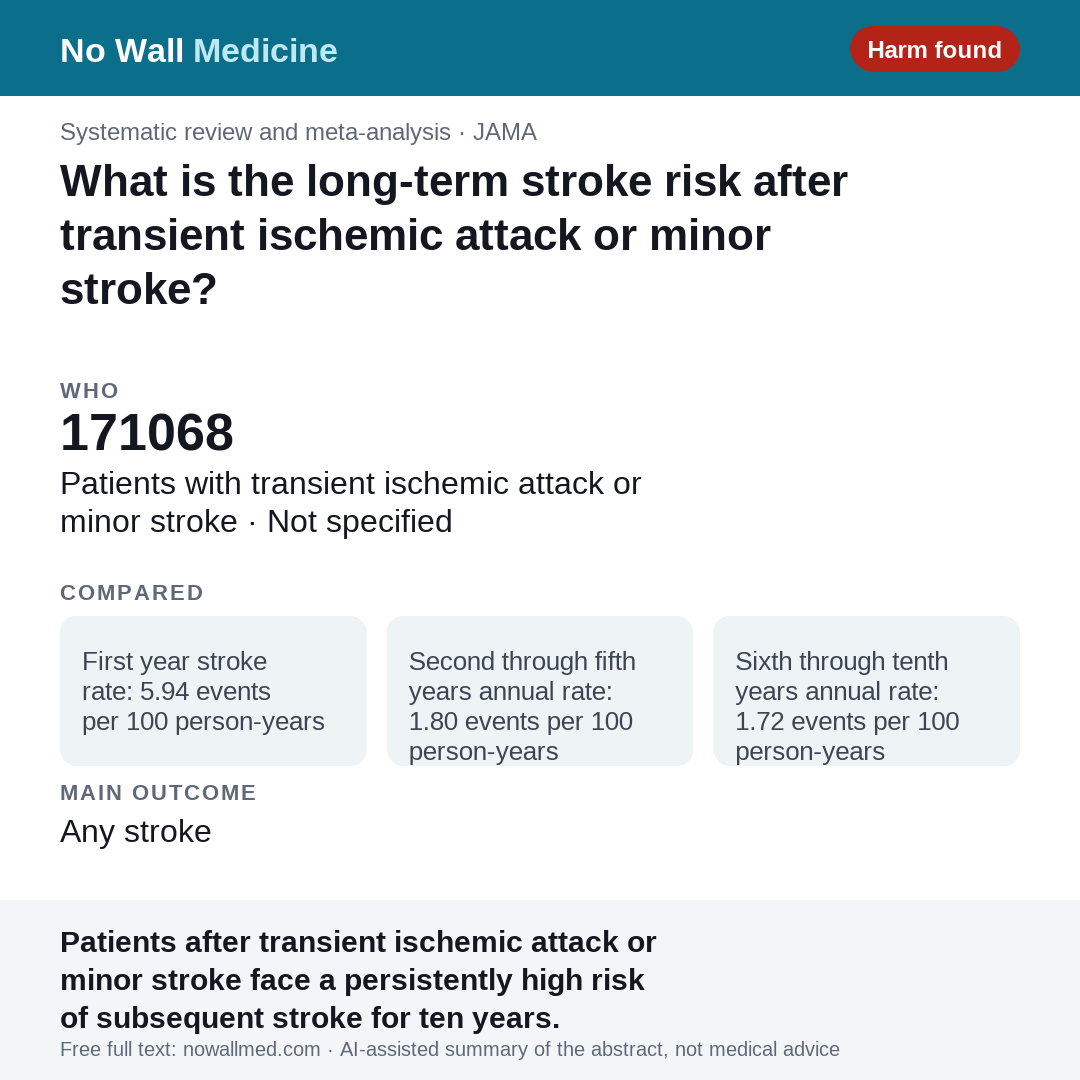
Long-Term Risk of Stroke After Transient Ischemic Attack or Minor Stroke: A Systematic Review and Meta-Analysis
Systematic review and meta-analysisHarm found
What is the long-term stroke risk after transient ischemic attack or minor stroke?
Who
171068
Patients with transient ischemic attack or minor stroke · Not specified
Compared
First year stroke rate: 5.94 events per 100 person-years
Second through fifth years annual rate: 1.80 events per 100 person-years
Sixth through tenth years annual rate: 1.72 events per 100 person-years
Main outcome
Any stroke
Result: 5-year cumulative incidence 12.5% (95% CI, 11.0%-14.1%)
Bottom line: Patients after transient ischemic attack or minor stroke face a persistently high risk of subsequent stroke for ten years.
JAMA · 2025-03-26Download image
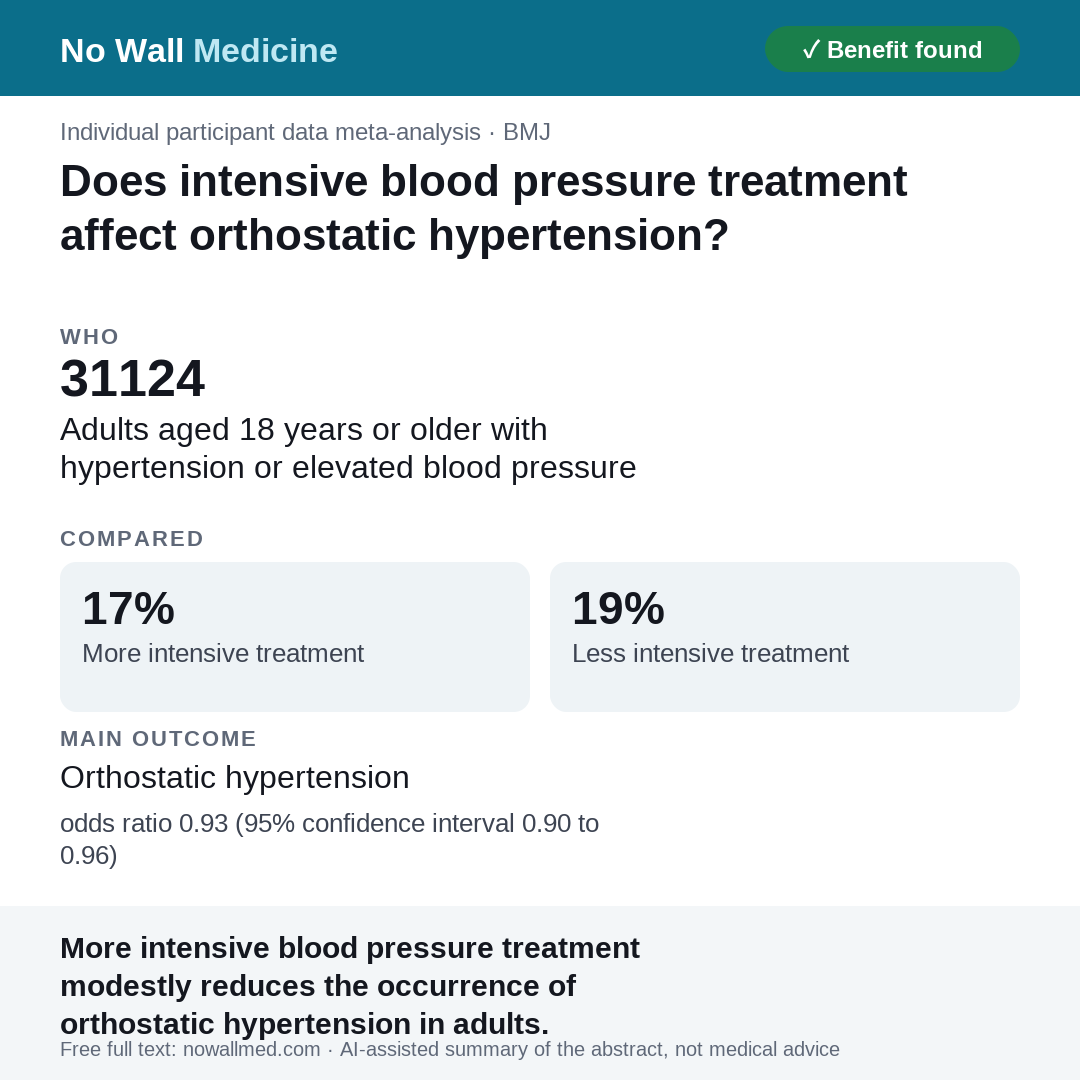
Effects of intensive blood pressure treatment on orthostatic hypertension: individual level meta-analysis
Individual participant data meta-analysisBenefit found
Does intensive blood pressure treatment affect orthostatic hypertension?
Who
31124
Adults aged 18 years or older with hypertension or elevated blood pressure
Compared
17%More intensive treatment
19%Less intensive treatment
Main outcome
Orthostatic hypertension
Result: odds ratio 0.93 (95% confidence interval 0.90 to 0.96)
Bottom line: More intensive blood pressure treatment modestly reduces the occurrence of orthostatic hypertension in adults.
BMJ · 2025-03-25Download image
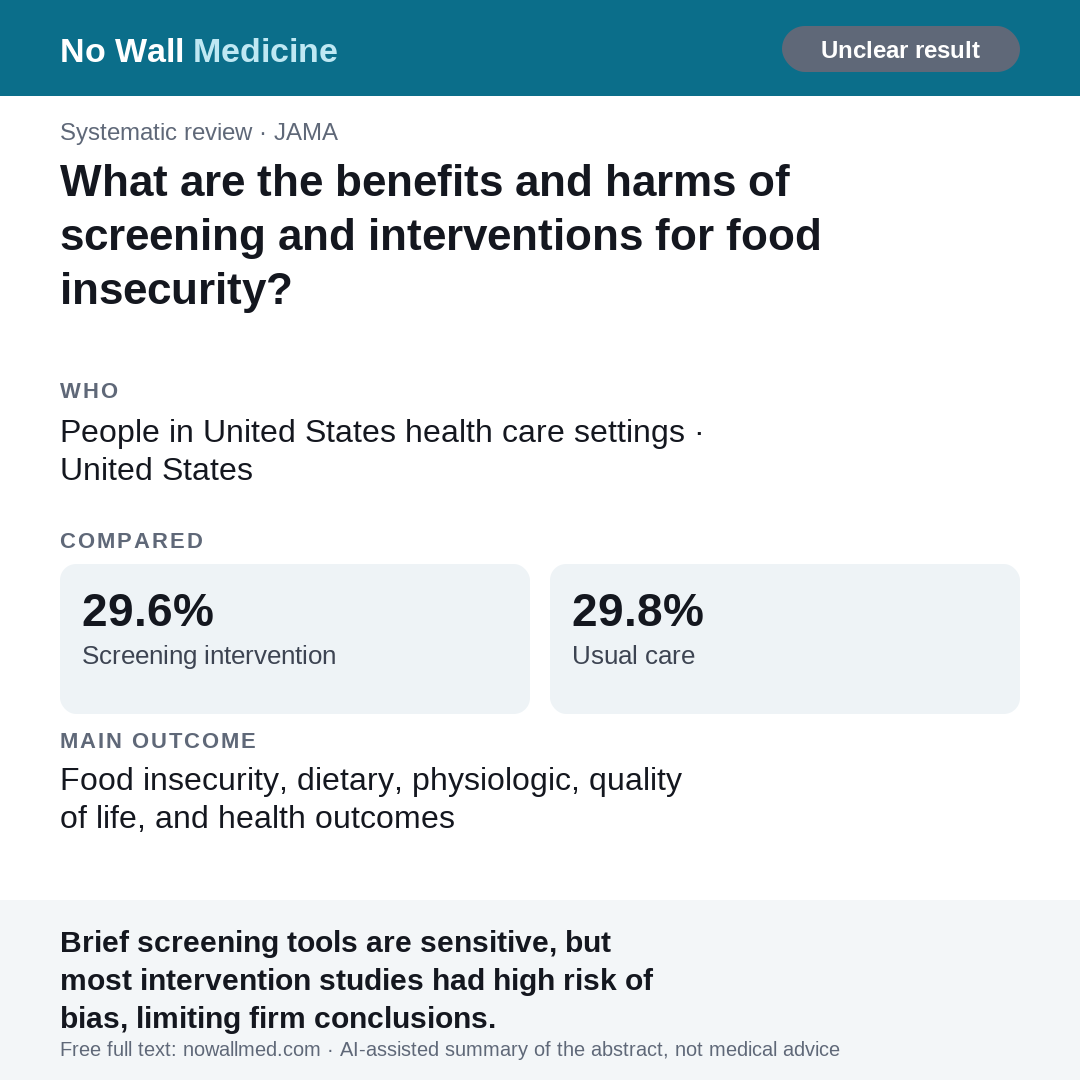
Preventive Services for Food Insecurity: Evidence Report and Systematic Review for the US Preventive Services Task Force
Systematic reviewUnclear result
What are the benefits and harms of screening and interventions for food insecurity?
Who
People in United States health care settings · United States
Compared
29.6%Screening intervention
29.8%Usual care
Main outcome
Food insecurity, dietary, physiologic, quality of life, and health outcomes
Bottom line: Brief screening tools are sensitive, but most intervention studies had high risk of bias, limiting firm conclusions.
Limitation: Most studies of interventions to improve food insecurity had high risk of bias.
JAMA · 2025-03-12Download image
Health Care Delivery of Clinical Preventive Services for People With Disabilities : A Systematic Review
Systematic reviewUnclear result
Preventive services for people with disabilities
Who
74
people with disabilities
Compared
intervention
control
Main outcome
receipt of preventive services
Bottom line: Barriers exist to preventive services
Limitation: high methodological heterogeneity
Funded by: Agency for Healthcare Research and Quality
Ann Intern Med · 2025-03-11Download image
Physician associates and anaesthetic associates in UK: rapid systematic review of recent UK based research
Rapid systematic reviewUnclear result
What is the efficacy and safety of UK physician associates and anaesthetic associates?
Who
Physician associates and anaesthetic associates in UK healthcare · United Kingdom
Compared
Physician associates
Anaesthetic associates
Main outcome
Clinical efficacy or safety
Bottom line: Evidence is sparse and of variable quality, with no evidence that these roles add value in primary care or anaesthetics.
Limitation: Literature is sparse, of variable quality, and some is outdated.
BMJ · 2025-03-06Download image

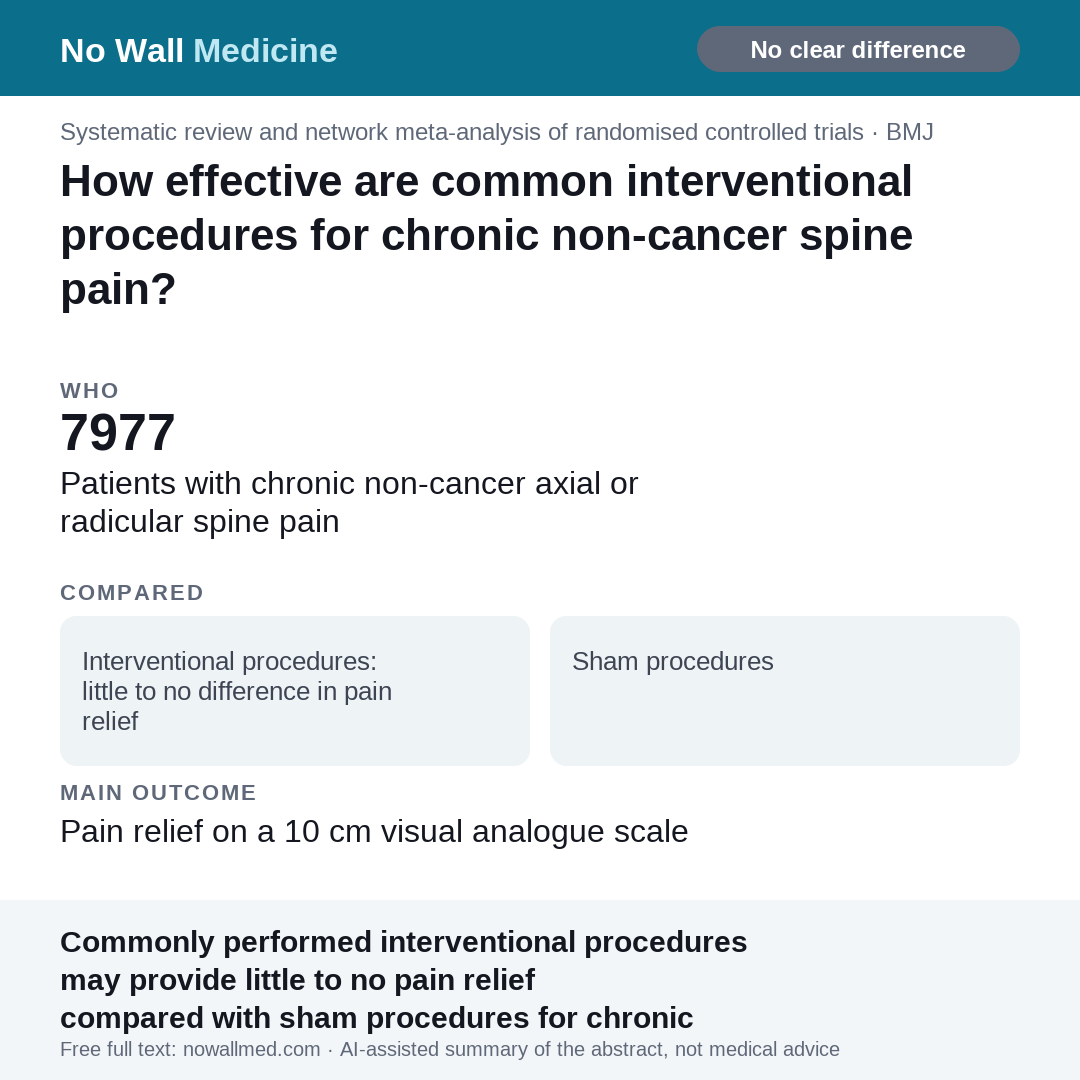
Common interventional procedures for chronic non-cancer spine pain: a systematic review and network meta-analysis of randomised trials
Systematic review and network meta-analysis of randomised controlled trialsNo clear difference
How effective are common interventional procedures for chronic non-cancer spine pain?
Who
7977
Patients with chronic non-cancer axial or radicular spine pain
Compared
Interventional procedures: little to no difference in pain relief
Sham procedures
Main outcome
Pain relief on a 10 cm visual analogue scale
Bottom line: Commonly performed interventional procedures may provide little to no pain relief compared with sham procedures for chronic spine pain.
Limitation: Certainty of evidence ranged from very low to moderate.
BMJ · 2025-02-19Download image
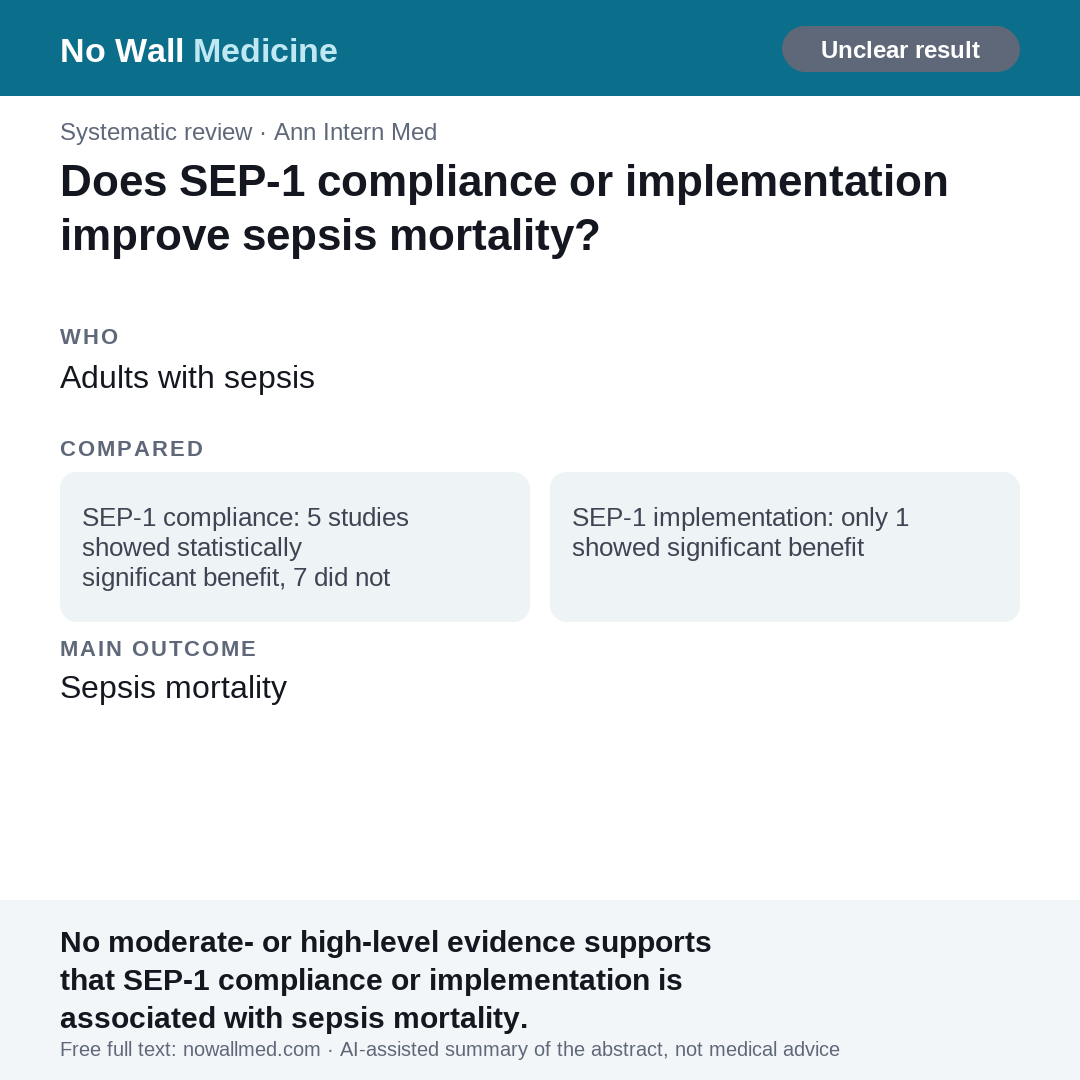
The Effect of Severe Sepsis and Septic Shock Management Bundle (SEP-1) Compliance and Implementation on Mortality Among Patients With Sepsis : A Systematic Review
Systematic reviewUnclear result
Does SEP-1 compliance or implementation improve sepsis mortality?
Who
Adults with sepsis
Compared
SEP-1 compliance: 5 studies showed statistically significant benefit, 7 did not
SEP-1 implementation: only 1 showed significant benefit
Main outcome
Sepsis mortality
Bottom line: No moderate- or high-level evidence supports that SEP-1 compliance or implementation is associated with sepsis mortality.
Limitation: All 17 studies were observational and none had low risk of bias.
Ann Intern Med · 2025-02-18Download image
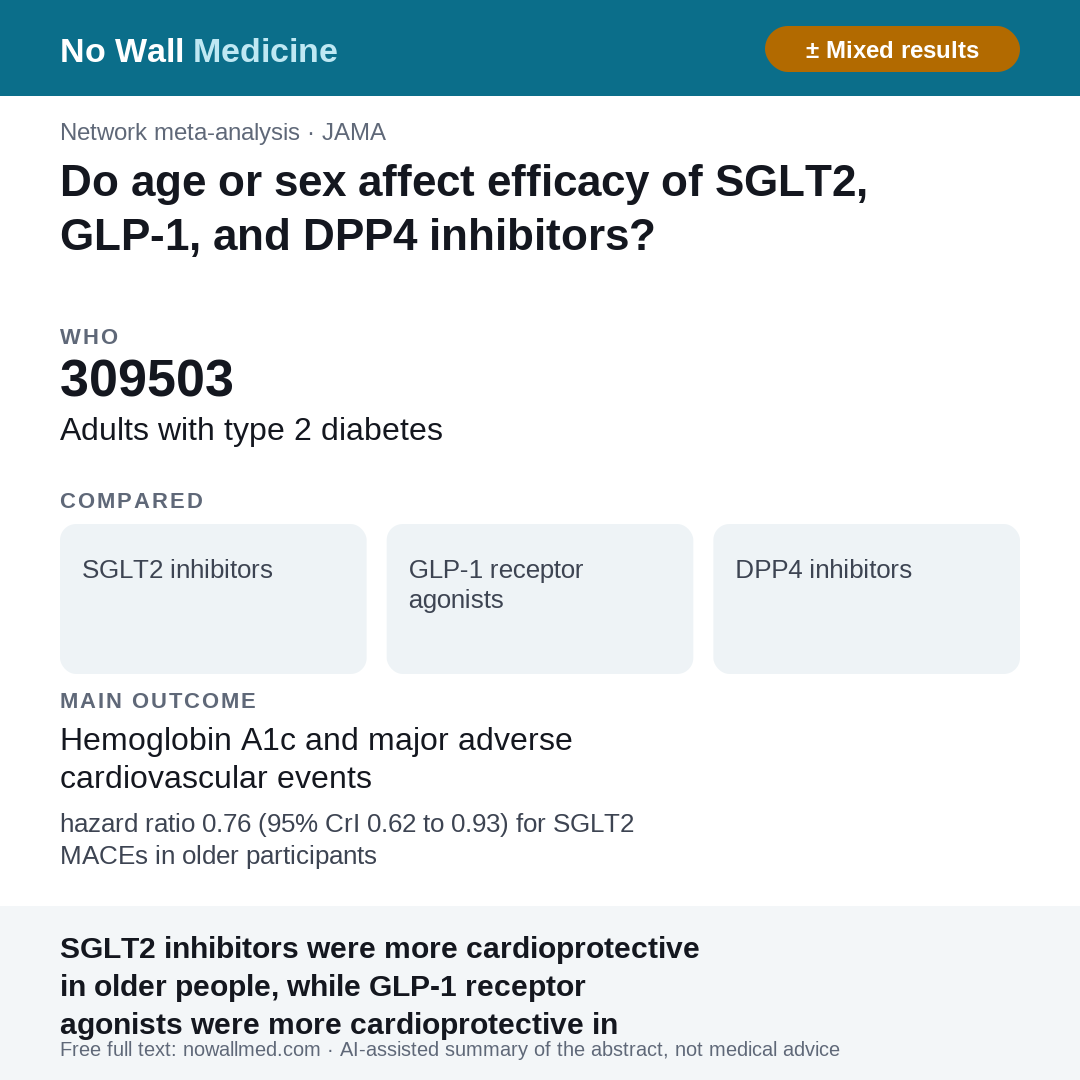
Age and Sex Differences in Efficacy of Treatments for Type 2 Diabetes: A Network Meta-Analysis
Network meta-analysisMixed results
Do age or sex affect efficacy of SGLT2, GLP-1, and DPP4 inhibitors?
Who
309503
Adults with type 2 diabetes
Compared
SGLT2 inhibitors
GLP-1 receptor agonists
DPP4 inhibitors
Main outcome
Hemoglobin A1c and major adverse cardiovascular events
Result: hazard ratio 0.76 (95% CrI 0.62 to 0.93) for SGLT2 MACEs in older participants
Bottom line: SGLT2 inhibitors were more cardioprotective in older people, while GLP-1 receptor agonists were more cardioprotective in younger people.
JAMA · 2025-02-03Download image
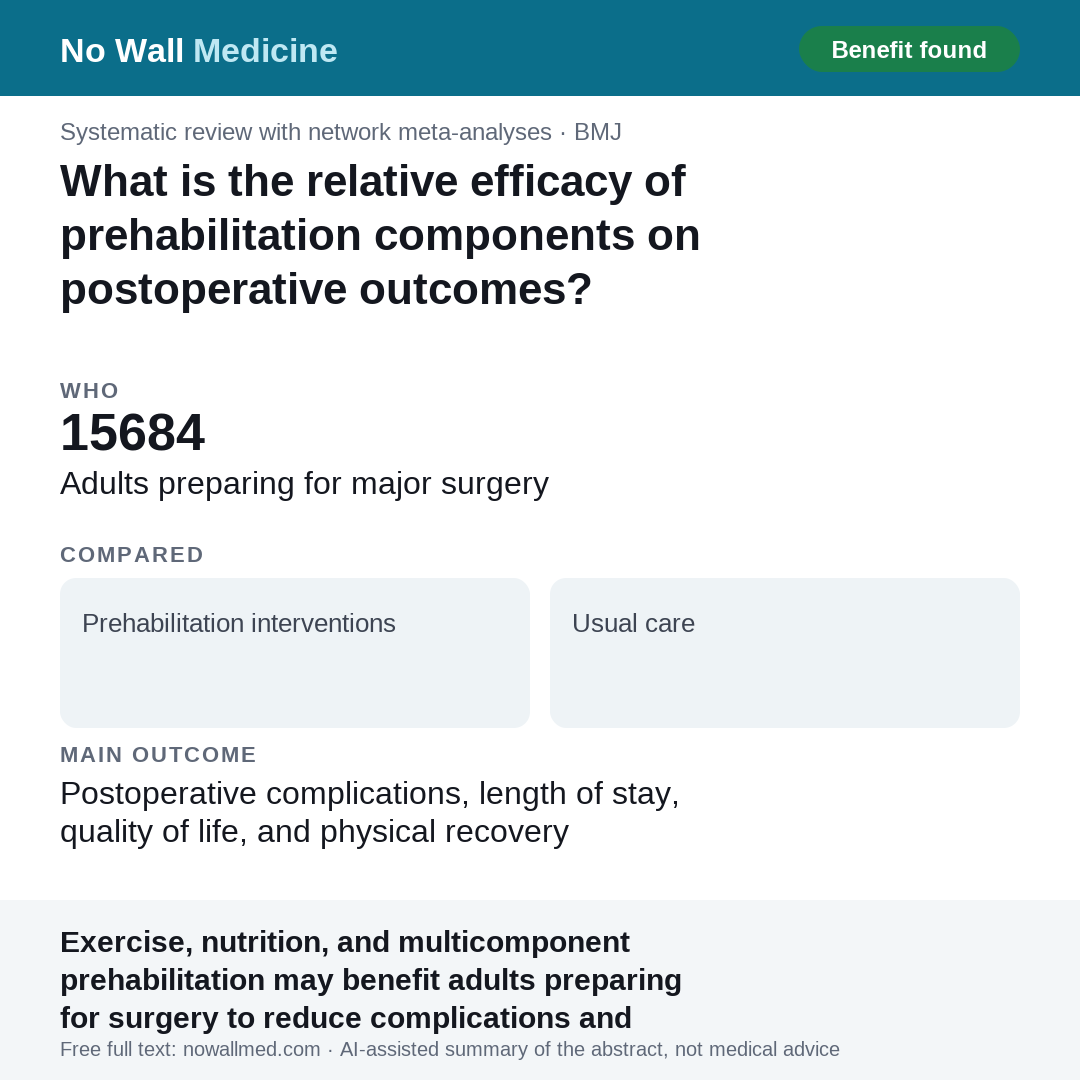
Relative efficacy of prehabilitation interventions and their components: systematic review with network and component network meta-analyses of randomised controlled trials
Systematic review with network meta-analysesBenefit found
What is the relative efficacy of prehabilitation components on postoperative outcomes?
Who
15684
Adults preparing for major surgery
Compared
Prehabilitation interventions
Usual care
Main outcome
Postoperative complications, length of stay, quality of life, and physical recovery
Result: isolated exercise odds ratio 0.50 (95% CI 0.39 to 0.64)
Bottom line: Exercise, nutrition, and multicomponent prehabilitation may benefit adults preparing for surgery to reduce complications and improve recovery.
Limitation: Certainty was low to very low due to trial level risk of bias and imprecision.
BMJ · 2025-01-22Download image