Visual abstracts
New randomized trials and meta-analyses from leading journals at a glance: who was studied, what was compared, and what was found. Every paper is free to read in full.
All specialtiesCardiology 842Oncology 763Gastroenterology & Hepatology 307Infectious Disease 626Neurology 350Psychiatry & Mental Health 430Pulmonology 366Critical Care 245Endocrinology & Diabetes 480Pediatrics 536Surgery 324Orthopedics & Sports Medicine 162Neurosurgery 93Cardiothoracic & Vascular Surgery 87Plastic & Reconstructive Surgery 124Nephrology 197Rheumatology 108Hematology 182Dermatology 80Ophthalmology 97Obstetrics & Gynecology 261Public & Global Health 167Radiology & Imaging 98Anesthesiology 114Urology 162ENT (Otolaryngology) 91Emergency Medicine 73Allergy & Immunology 58Geriatrics 160Family Medicine & Primary Care 111Medical Genetics & Genomics 91Pathology & Laboratory Medicine 24Physical Medicine & Rehabilitation 148Palliative Care 81Nutrition 223Digital Health & AI 460General Medicine 101
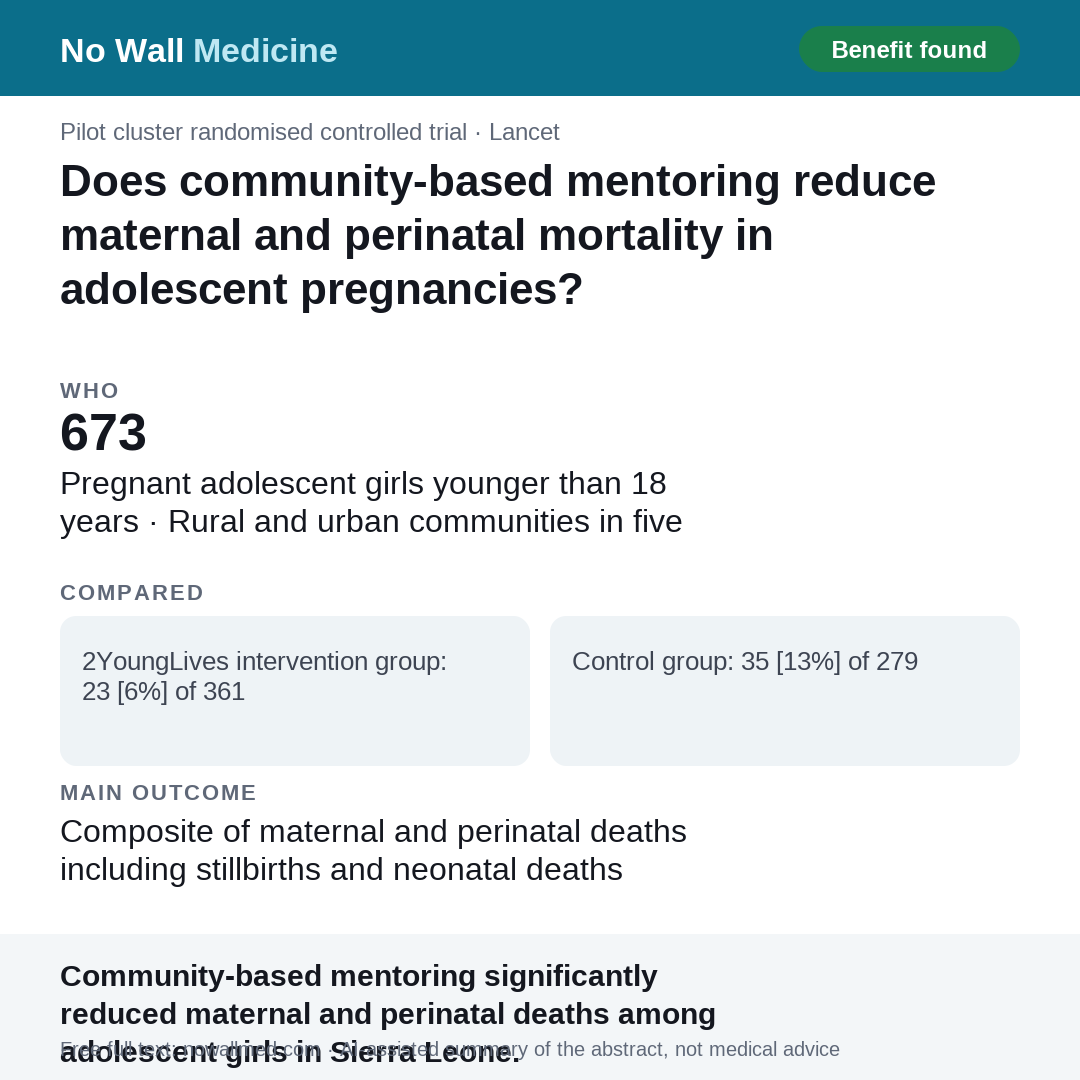
Community-based mentoring to reduce maternal and perinatal mortality in adolescent pregnancies in Sierra Leone (2YoungLives): a pilot cluster-randomised controlled trial
Pilot cluster randomised controlled trialBenefit found
Does community-based mentoring reduce maternal and perinatal mortality in adolescent pregnancies?
Who
673
Pregnant adolescent girls younger than 18 years · Rural and urban communities in five districts of Sierra Leone
Compared
2YoungLives intervention group: 23 [6%] of 361
Control group: 35 [13%] of 279
Main outcome
Composite of maternal and perinatal deaths including stillbirths and neonatal deaths
Result: adjusted risk ratio 0·52, 95% CI 0·34 to 0·81
Bottom line: Community-based mentoring significantly reduced maternal and perinatal deaths among adolescent girls in Sierra Leone.
Funded by: UK National Institute for Health and Care Research
Lancet · 2025-06-18Download image
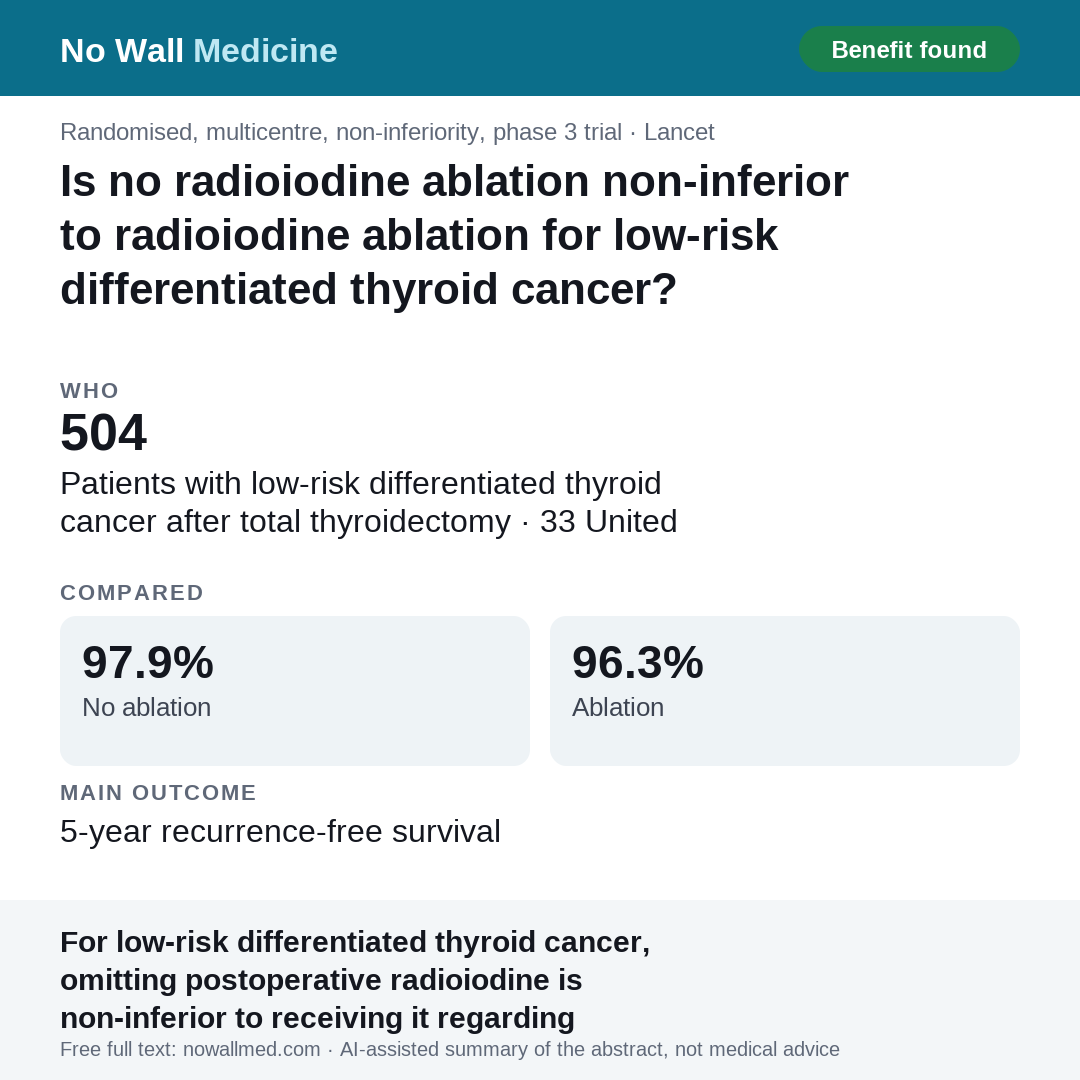
Thyroidectomy with or without postoperative radioiodine for patients with low-risk differentiated thyroid cancer in the UK (IoN): a randomised, multicentre, non-inferiority trial
Randomised, multicentre, non-inferiority, phase 3 trialBenefit found
Is no radioiodine ablation non-inferior to radioiodine ablation for low-risk differentiated thyroid cancer?
Who
504
Patients with low-risk differentiated thyroid cancer after total thyroidectomy · 33 United Kingdom cancer centres
Compared
97.9%No ablation (95% CI 96.1-99.7)
96.3%Ablation (93.9-98.7)
Main outcome
5-year recurrence-free survival
Result: absolute risk difference 0.5 percentage points (95% CI -2.2 to 3.2)
Bottom line: For low-risk differentiated thyroid cancer, omitting postoperative radioiodine is non-inferior to receiving it regarding 5-year recurrence-free survival.
Funded by: Cancer Research UK
Lancet · 2025-06-18Download image
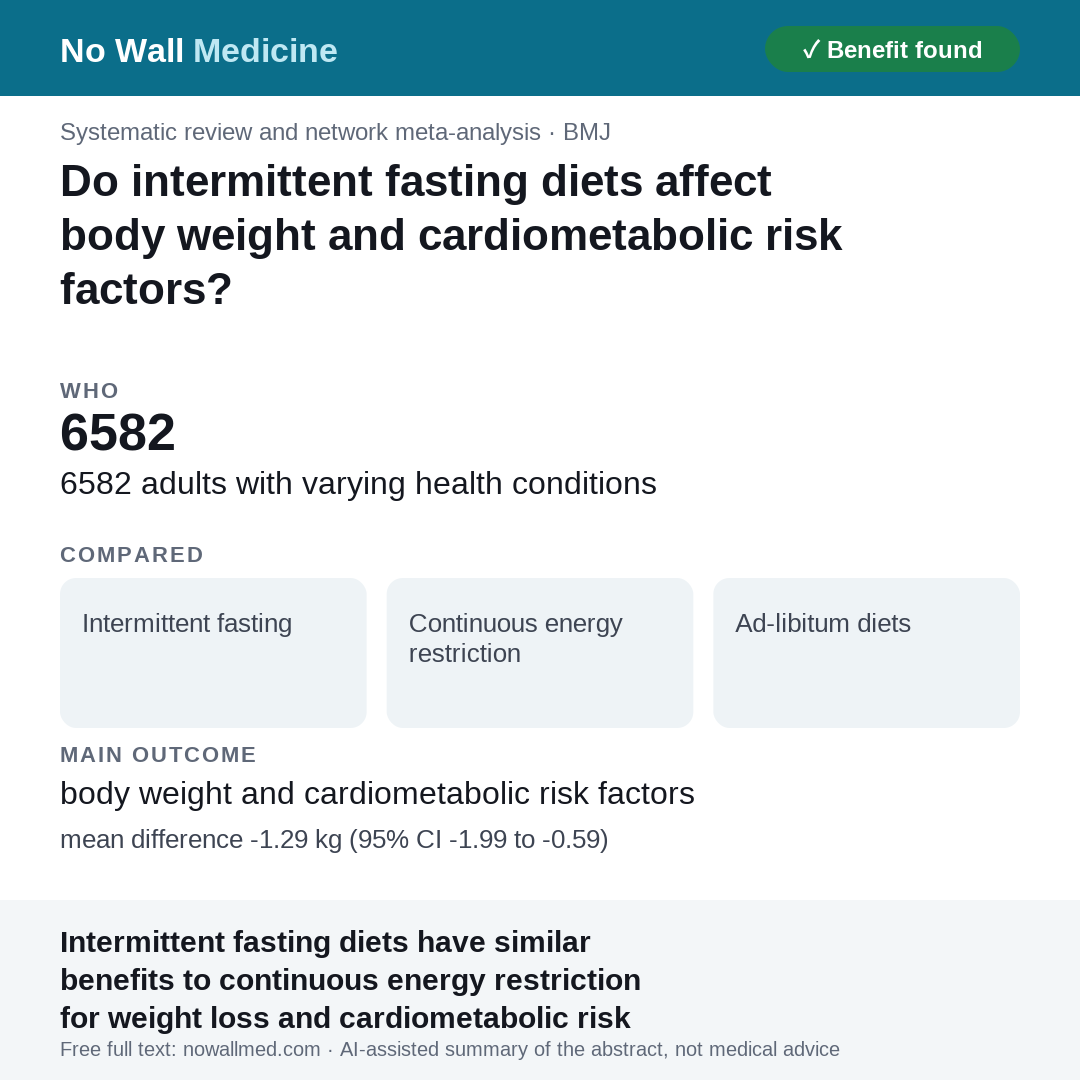
Intermittent fasting strategies and their effects on body weight and other cardiometabolic risk factors: systematic review and network meta-analysis of randomised clinical trials
Systematic review and network meta-analysisBenefit found
Do intermittent fasting diets affect body weight and cardiometabolic risk factors?
Who
6582
6582 adults with varying health conditions
Compared
Intermittent fasting
Continuous energy restriction
Ad-libitum diets
Main outcome
body weight and cardiometabolic risk factors
Result: mean difference -1.29 kg (95% CI -1.99 to -0.59)
Bottom line: Intermittent fasting diets have similar benefits to continuous energy restriction for weight loss and cardiometabolic risk factors.
Limitation: Longer duration trials are needed to further substantiate these findings.
BMJ · 2025-06-18Download image
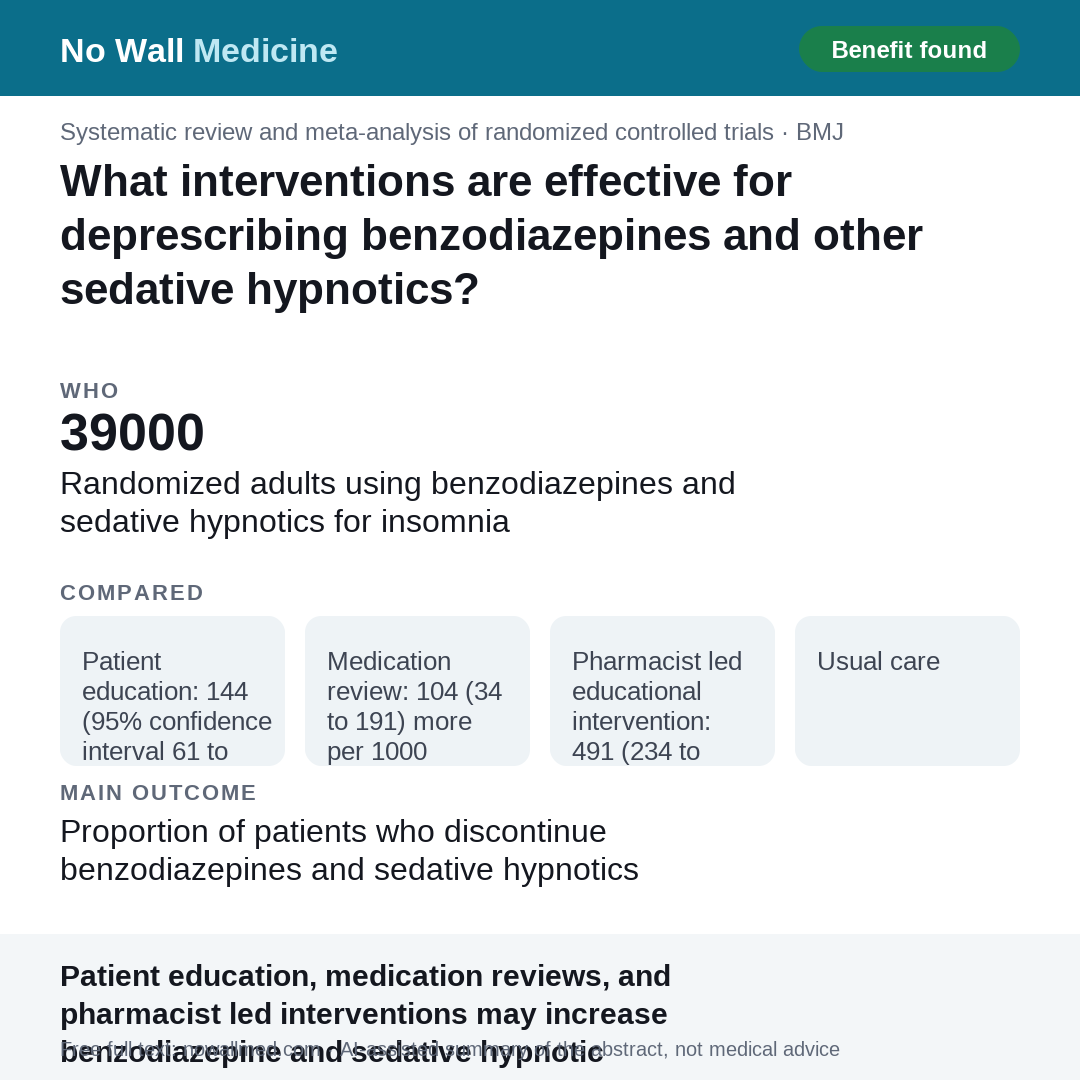
Comparative effectiveness of interventions to facilitate deprescription of benzodiazepines and other sedative hypnotics: systematic review and meta-analysis
Systematic review and meta-analysis of randomized controlled trialsBenefit found
What interventions are effective for deprescribing benzodiazepines and other sedative hypnotics?
Who
39000
Randomized adults using benzodiazepines and sedative hypnotics for insomnia
Compared
Patient education: 144 (95% confidence interval 61 to 246) more per 1000 patients
Medication review: 104 (34 to 191) more per 1000 patients
Pharmacist led educational intervention: 491 (234 to 928) more per 1000 patients
Usual care
Main outcome
Proportion of patients who discontinue benzodiazepines and sedative hypnotics
Bottom line: Patient education, medication reviews, and pharmacist led interventions may increase benzodiazepine and sedative hypnotic discontinuation rates.
Limitation: The evidence on the effectiveness of interventions is of low certainty.
BMJ · 2025-06-17Download image
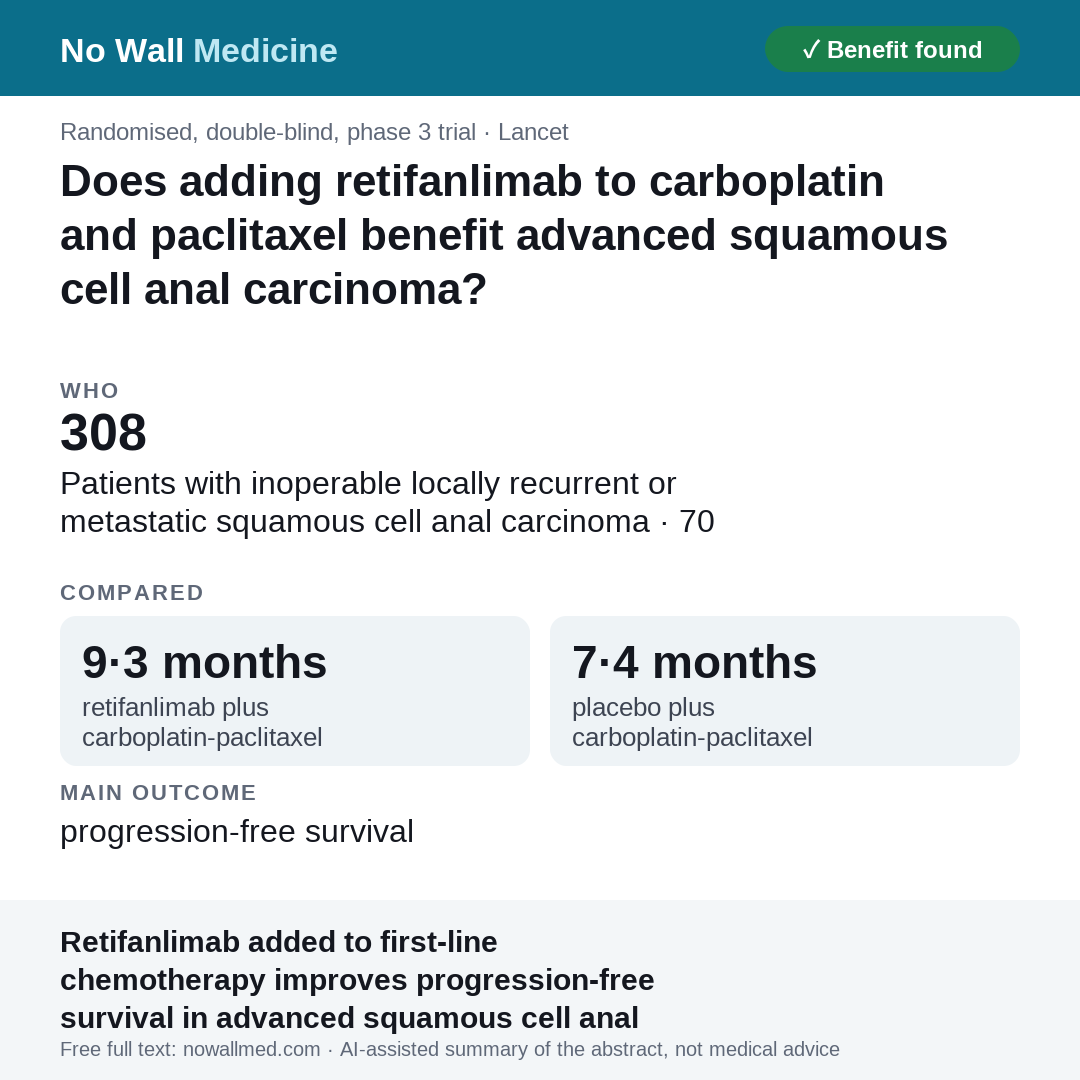
Retifanlimab with carboplatin and paclitaxel for locally recurrent or metastatic squamous cell carcinoma of the anal canal (POD1UM-303/InterAACT-2): a global, phase 3 randomised controlled trial
Randomised, double-blind, phase 3 trialBenefit found
Does adding retifanlimab to carboplatin and paclitaxel benefit advanced squamous cell anal carcinoma?
Who
308
Patients with inoperable locally recurrent or metastatic squamous cell anal carcinoma · 70 centres in 12 countries
Compared
9·3 monthsretifanlimab plus carboplatin-paclitaxel
7·4 monthsplacebo plus carboplatin-paclitaxel
Main outcome
progression-free survival
Result: hazard ratio 0·63 (95% CI 0·47-0·84)
Bottom line: Retifanlimab added to first-line chemotherapy improves progression-free survival in advanced squamous cell anal carcinoma.
Funded by: Incyte
Lancet · 2025-06-15Download image
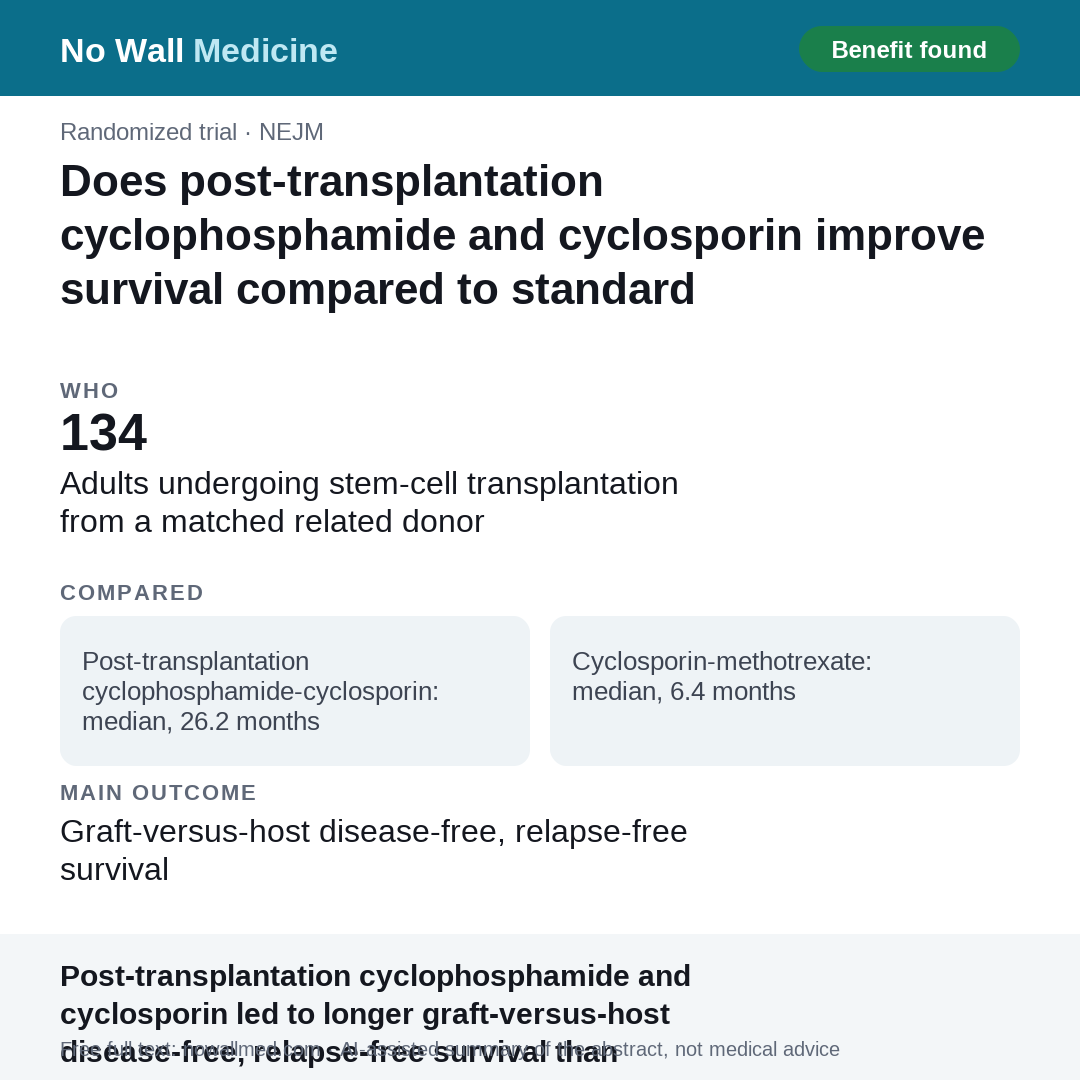
Graft-versus-Host Disease Prophylaxis with Cyclophosphamide and Cyclosporin
Randomized trialBenefit found
Does post-transplantation cyclophosphamide and cyclosporin improve survival compared to standard prophylaxis?
Who
134
Adults undergoing stem-cell transplantation from a matched related donor
Compared
Post-transplantation cyclophosphamide-cyclosporin: median, 26.2 months
Cyclosporin-methotrexate: median, 6.4 months
Main outcome
Graft-versus-host disease-free, relapse-free survival
Result: hazard ratio 0.42 (95% CI, 0.27 to 0.66)
Bottom line: Post-transplantation cyclophosphamide and cyclosporin led to longer graft-versus-host disease-free, relapse-free survival than standard prophylaxis.
Funded by: Australian Government Medical Research Future Fund and others
NEJM · 2025-06-13Download image
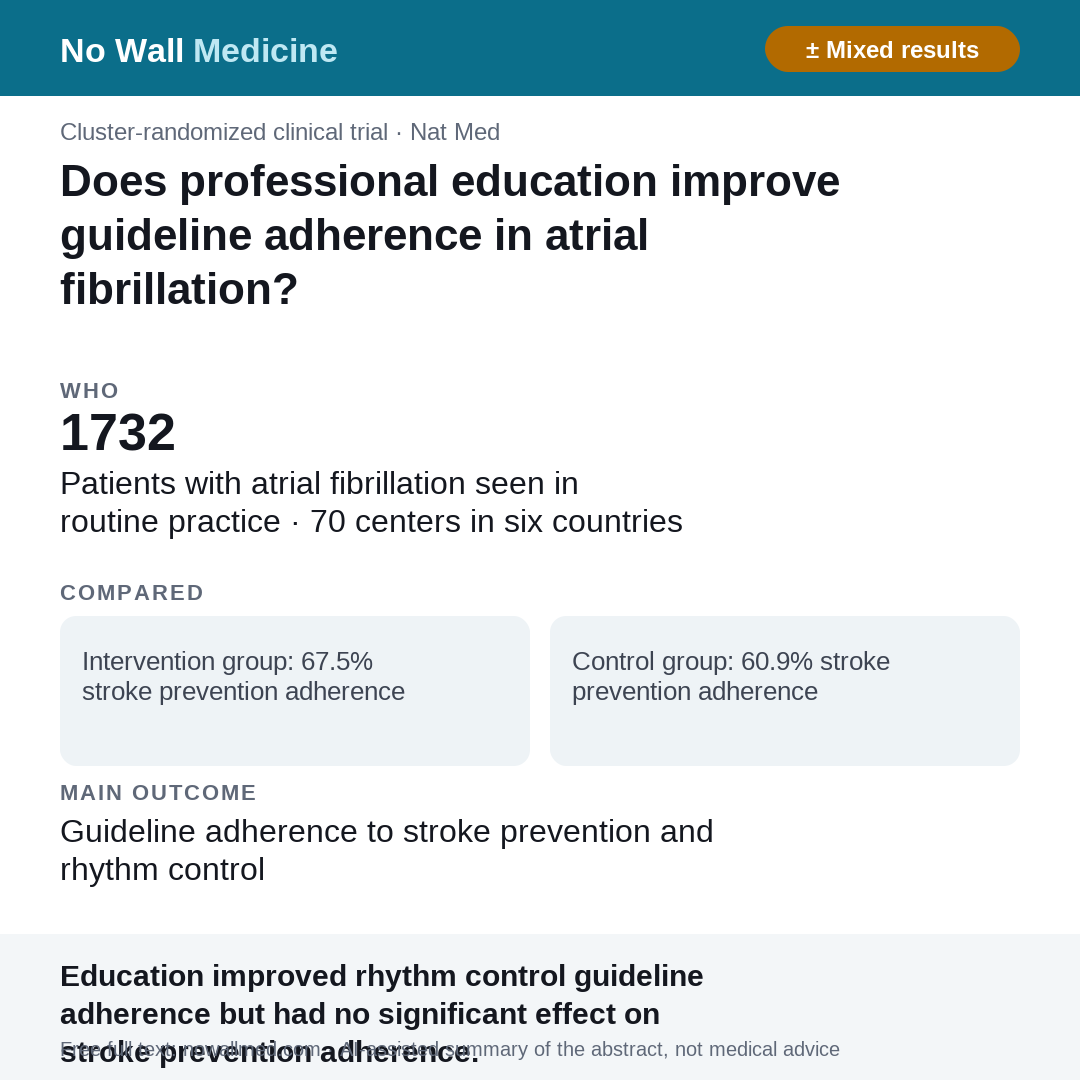
Education of healthcare professionals to improve guideline adherence in atrial fibrillation: the STEEER-AF cluster-randomized clinical trial
Cluster-randomized clinical trialMixed results
Does professional education improve guideline adherence in atrial fibrillation?
Who
1732
Patients with atrial fibrillation seen in routine practice · 70 centers in six countries
Compared
Intervention group: 67.5% stroke prevention adherence
Control group: 60.9% stroke prevention adherence
Main outcome
Guideline adherence to stroke prevention and rhythm control
Result: adjusted risk ratio 1.10 (95% CI 0.97 to 1.24)
Bottom line: Education improved rhythm control guideline adherence but had no significant effect on stroke prevention adherence.
Nat Med · 2025-06-13Download image
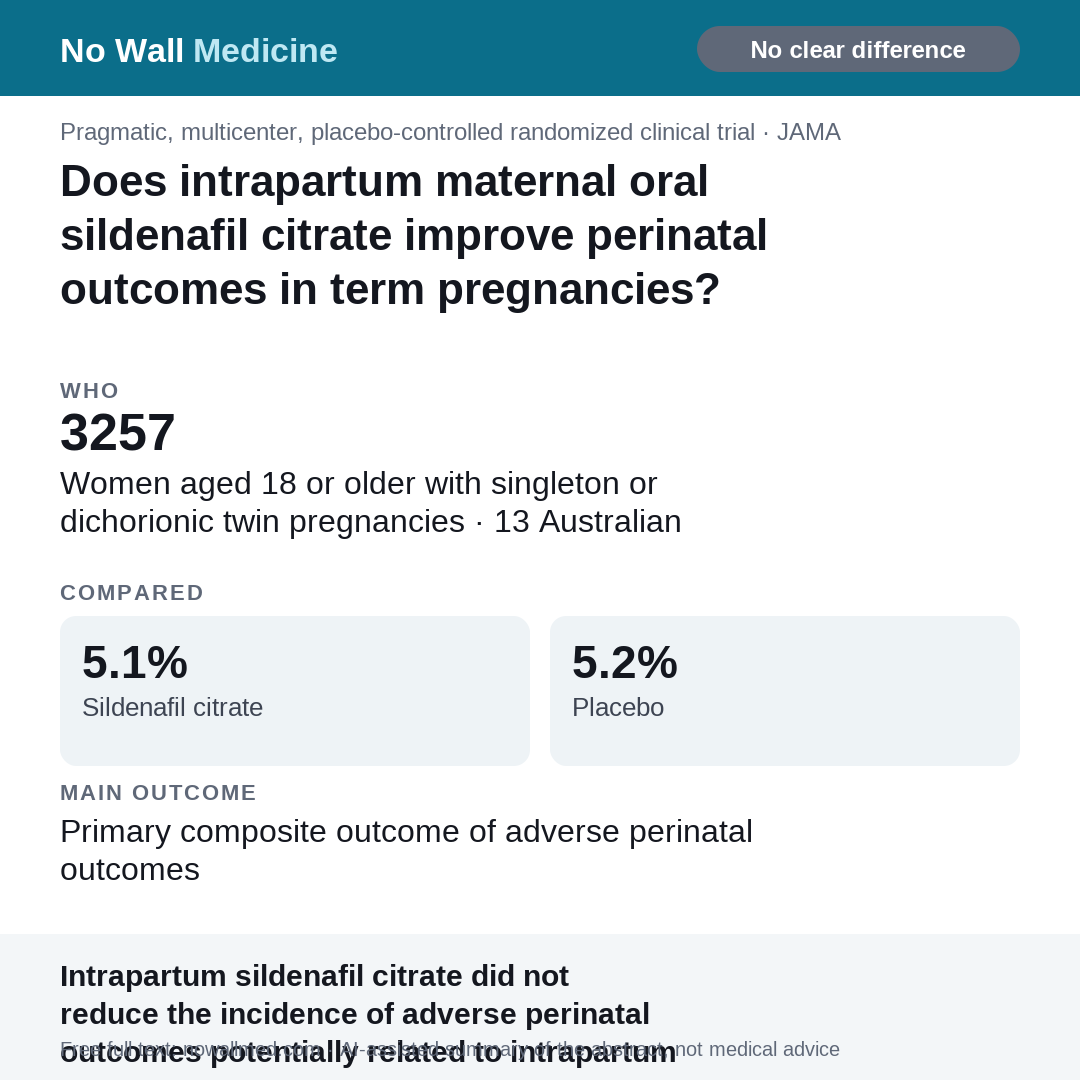
Conservative Oxygen Therapy in Mechanically Ventilated Critically Ill Adult Patients: The UK-ROX Randomized Clinical Trial
Multicenter, pragmatic, randomized clinical trialNo clear difference
Does conservative oxygen therapy reduce 90-day mortality in mechanically ventilated ICU patients?
Who
16500
Mechanically ventilated adult patients receiving supplemental oxygen in the ICU · 97 intensive care units in the UK
Compared
35.4%Conservative oxygen therapy (2908/8211)
34.9%Usual oxygen therapy (2858/8183)
Main outcome
All-cause mortality at 90 days
Result: risk difference 0.7 percentage points (95% CI, -0.7 to 2.0)
Bottom line: Conservative oxygen therapy using a 90% saturation target did not significantly reduce 90-day mortality in mechanically ventilated patients.
JAMA · 2025-06-12Download image
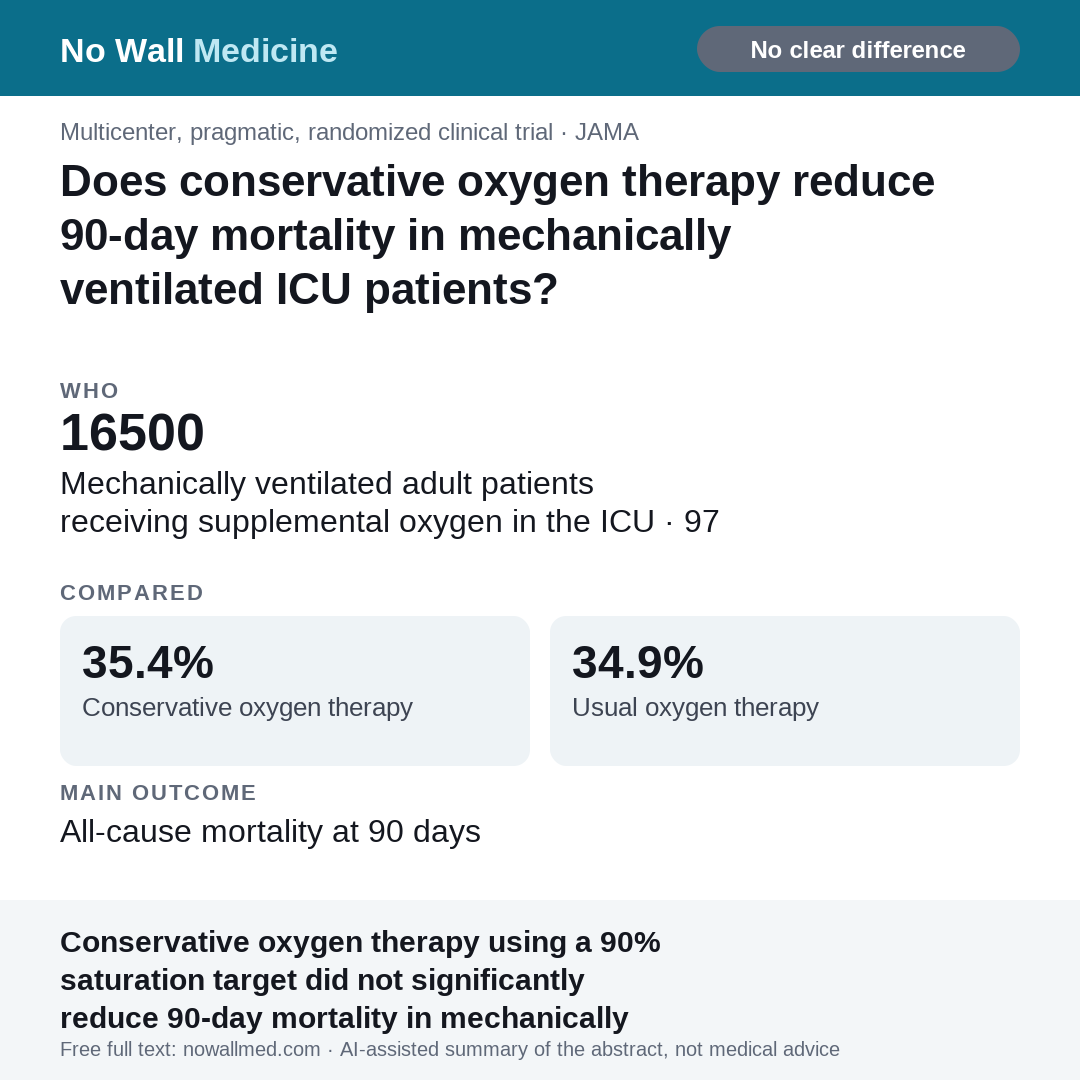
Augmented Enteral Protein During Critical Illness: The TARGET Protein Randomized Clinical Trial
Cluster randomized, crossover, open-label trialNo clear difference
Does augmenting enteral protein increase days alive and free from hospitalization?
Who
3397
Critically ill patients receiving enteral nutrition · 8 intensive care units in Australia and New Zealand
Compared
Augmented protein: 62 (0-77) days
Usual protein: 64 (0-77) days
Main outcome
Days free of admittance to the index hospital and alive at day 90
Result: -1.97 (95% CI, -7.24 to 3.30) days
Bottom line: Augmenting enteral protein during critical illness did not improve days alive and free from the index hospital at day 90.
JAMA · 2025-06-11Download image
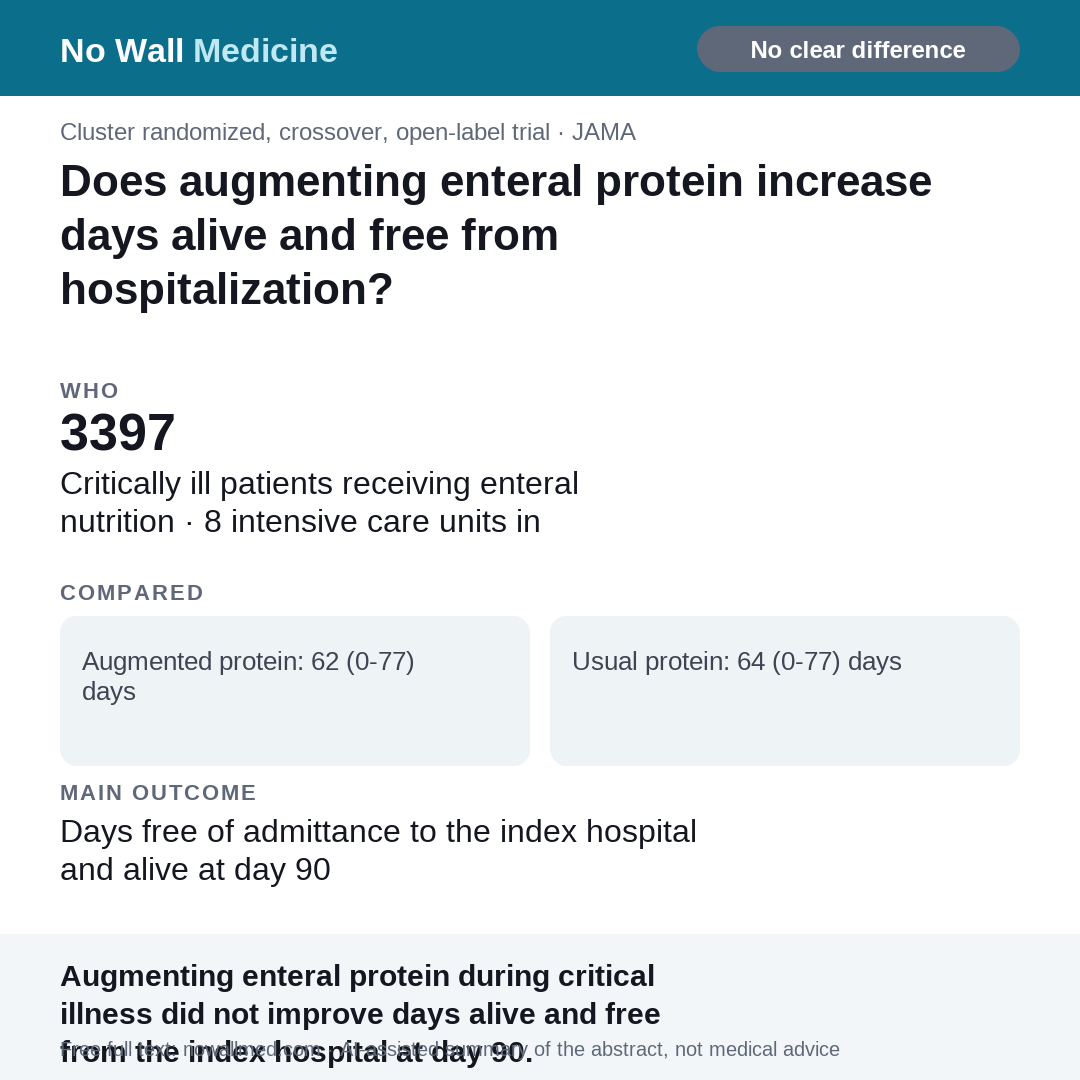
TERN-501 monotherapy and combination therapy with TERN-101 in metabolic dysfunction-associated steatohepatitis: the randomized phase 2a DUET trial
Randomized, double-blind, placebo-controlled phase 2a studyBenefit found
Does TERN-501 monotherapy or combination therapy reduce liver fat in MASH patients?
Who
162
Patients with presumed metabolic dysfunction-associated steatohepatitis · multicenter
Compared
-15.4%TERN-501 1 mg monotherapy (5.2%)
-27.5%TERN-501 3 mg monotherapy (5.7%)
-44.8%TERN-501 6 mg monotherapy (5.9%)
-4.0%placebo (5.4%)
Main outcome
relative change from baseline at week 12 in liver fat content
Bottom line: TERN-501 monotherapy resulted in dose-dependent, significant reductions in liver fat content compared to placebo.
Nat Med · 2025-06-11Download image
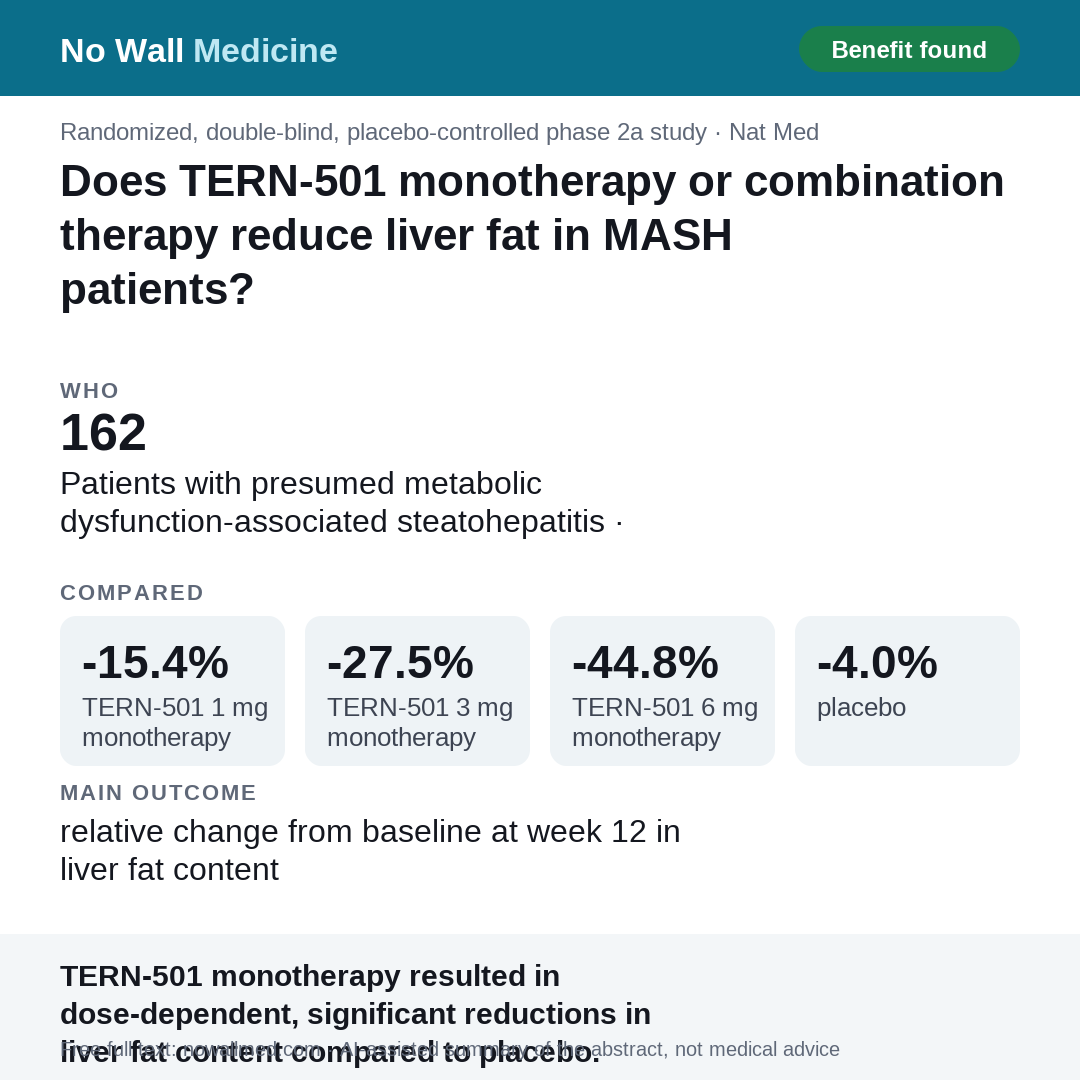
Intrapartum Sildenafil to Improve Perinatal Outcomes: A Randomized Clinical Trial
Pragmatic, multicenter, placebo-controlled randomized clinical trialNo clear difference
Does intrapartum maternal oral sildenafil citrate improve perinatal outcomes in term pregnancies?
Who
3257
Women aged 18 or older with singleton or dichorionic twin pregnancies · 13 Australian hospitals
Compared
5.1%Sildenafil citrate (83/1625)
5.2%Placebo (84/1625)
Main outcome
Primary composite outcome of adverse perinatal outcomes
Result: relative risk 1.02 (95% CI 0.75-1.37)
Bottom line: Intrapartum sildenafil citrate did not reduce the incidence of adverse perinatal outcomes potentially related to intrapartum hypoxia.
JAMA · 2025-06-09Download image
Meningeal Embolization for Preventing Chronic Subdural Hematoma Recurrence After Surgery: The EMPROTECT Randomized Clinical Trial
Multicenter, open-label, randomized clinical trialNo clear difference
Does middle meningeal artery embolization reduce chronic subdural hematoma recurrence at 6 months?
Who
342
Patients undergoing operation for chronic subdural hematoma recurrence or high risk first episode · 12 French neurosurgical and interventional neuroradiology centers
Compared
14.8%Middle meningeal artery embolization
21.0%Standard medical care alone
Main outcome
Rate of chronic subdural hematoma recurrence at 6 months
Result: odds ratio 0.64 (95% CI 0.36-1.14)
Bottom line: Middle meningeal artery embolization did not significantly lower chronic subdural hematoma recurrence at 6 months compared to standard care.
JAMA · 2025-06-05Download image
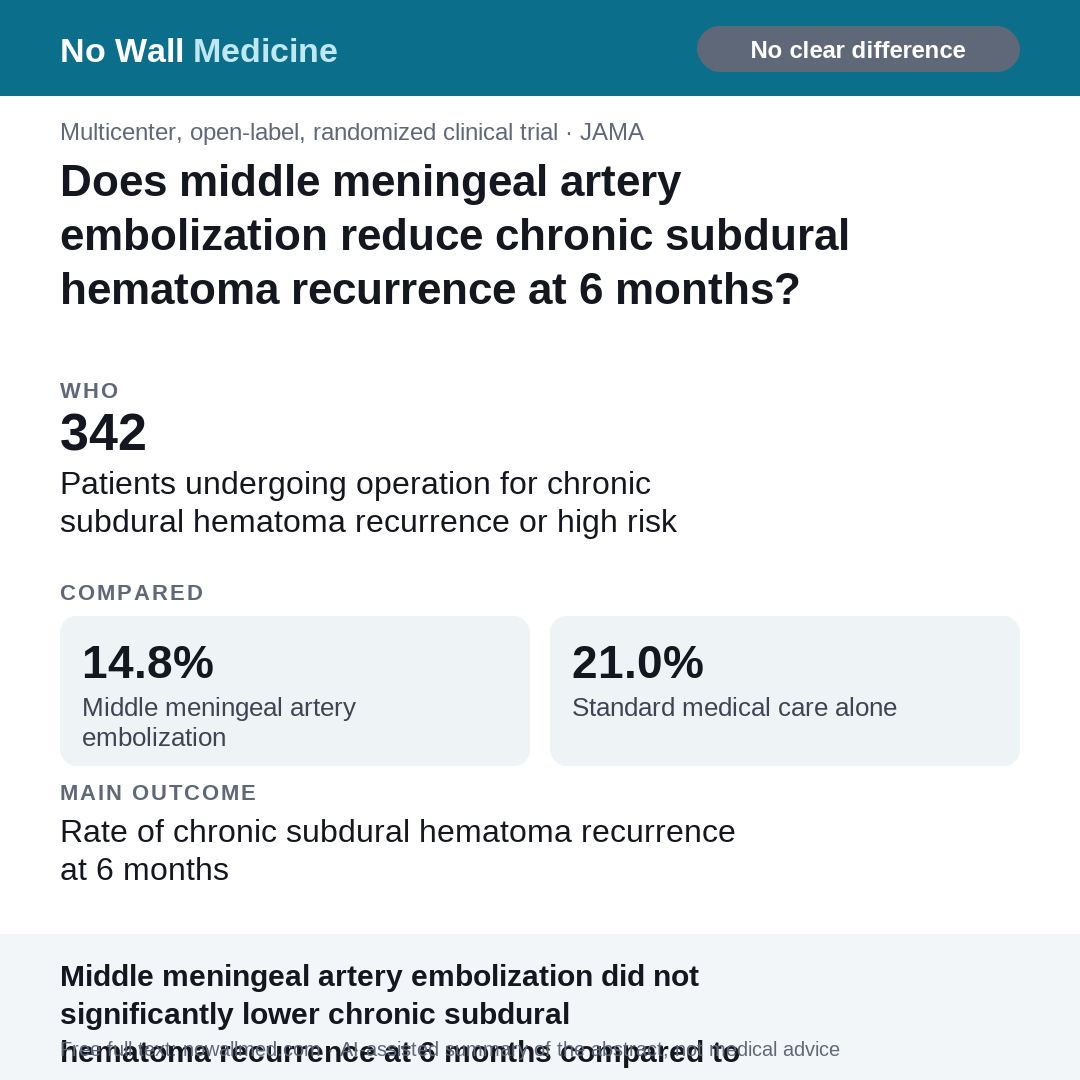
Sacituzumab tirumotecan versus docetaxel for previously treated EGFR-mutated advanced non-small cell lung cancer: multicentre, open label, randomised controlled trial
Multicentre, open label, randomised controlled trialBenefit found
Is sacituzumab tirumotecan more effective than docetaxel for EGFR-mutated advanced non-small cell lung cancer?
Who
137
Adults with EGFR-mutated advanced or metastatic non-small cell lung cancer · 48 centres in China
Compared
45%sacituzumab tirumotecan (41/91)
16%docetaxel (7/45)
Main outcome
objective response rate assessed by a blinded independent review committee
Result: hazard ratio 0.30, 95% CI 0.20 to 0.46
Bottom line: Sacituzumab tirumotecan improved objective response rate, progression-free survival, and overall survival compared to docetaxel.
BMJ · 2025-06-05Download image
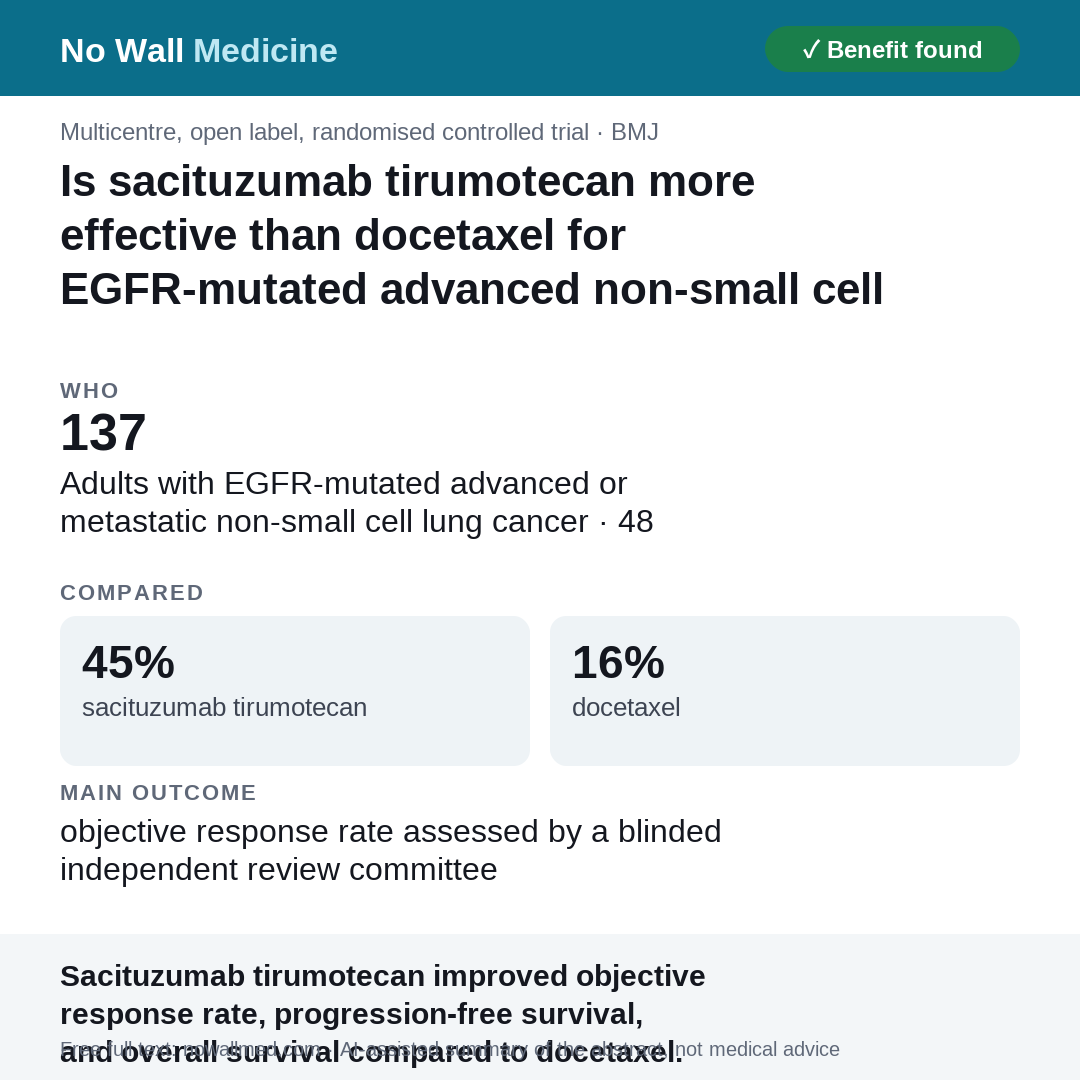
Omitting Regional Nodal Irradiation after Response to Neoadjuvant Chemotherapy
Randomized trialNo clear difference
Does regional nodal irradiation improve outcomes in node-positive breast cancer patients reaching ypN0 status?
Who
1641
Node-positive breast cancer patients with ypN0 status after neoadjuvant chemotherapy
Compared
92.7%regional nodal irradiation
91.8%no regional nodal irradiation
Main outcome
invasive breast cancer recurrence-free interval
Result: hazard ratio 0.88 (95% confidence interval 0.60 to 1.28)
Bottom line: Regional nodal irradiation did not decrease invasive breast cancer recurrence or death in patients with negative axillary nodes after chemotherapy.
Funded by: National Institutes of Health
NEJM · 2025-06-04Download image
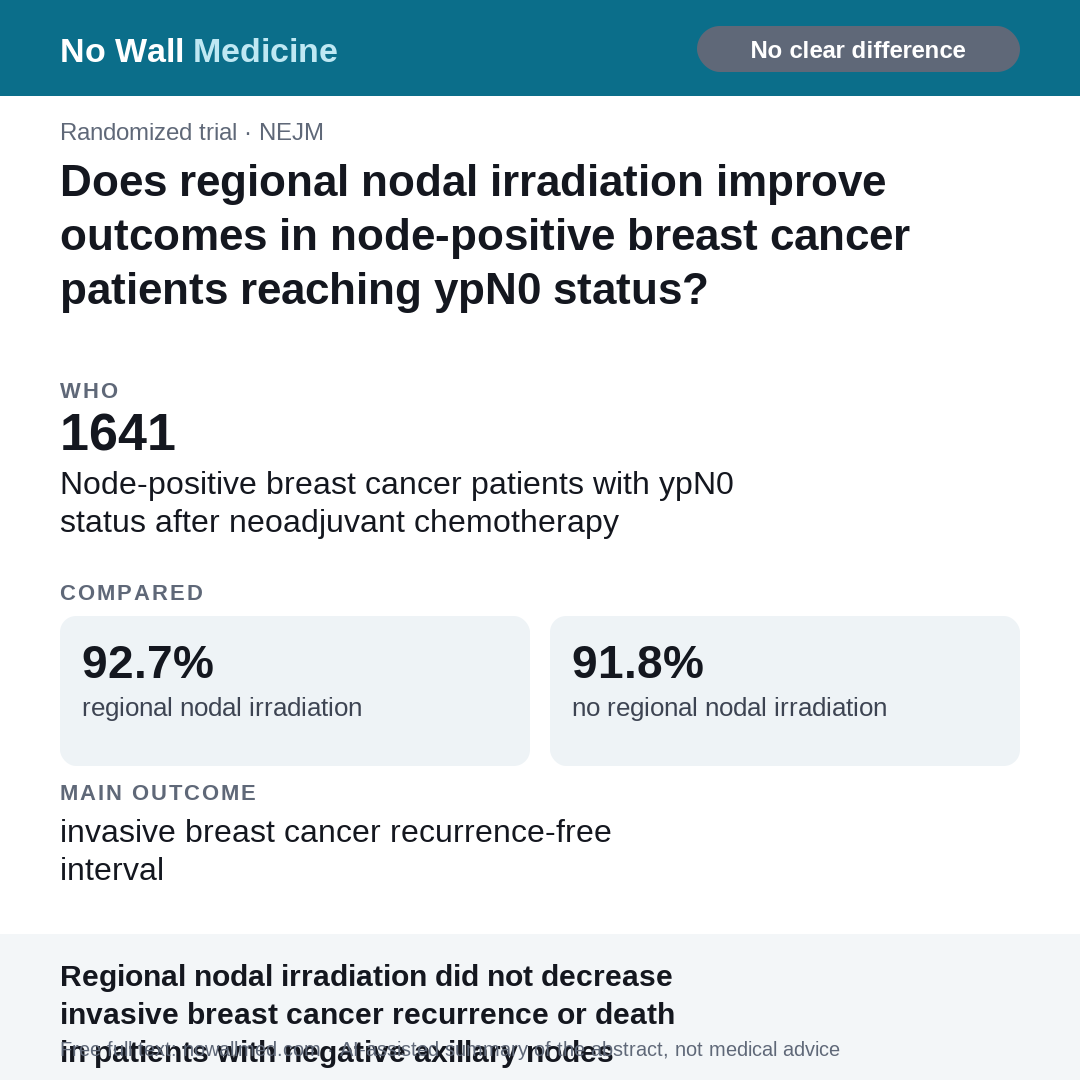
Effect of dapagliflozin on metabolic dysfunction-associated steatohepatitis: multicentre, double blind, randomised, placebo controlled trial
Multicentre, double blind, randomised, placebo controlled trialBenefit found
Does dapagliflozin improve metabolic dysfunction-associated steatohepatitis?
Who
154
154 adults with biopsy diagnosed metabolic dysfunction-associated steatohepatitis · Six tertiary hospitals in China
Compared
53%dapagliflozin (41/78)
30%placebo (23/76)
Main outcome
MASH improvement without worsening of fibrosis
Result: risk ratio 1.73 (95% CI 1.16 to 2.58)
Bottom line: Dapagliflozin resulted in higher rates of MASH improvement and resolution without worsening of fibrosis compared to placebo.
BMJ · 2025-06-04Download image
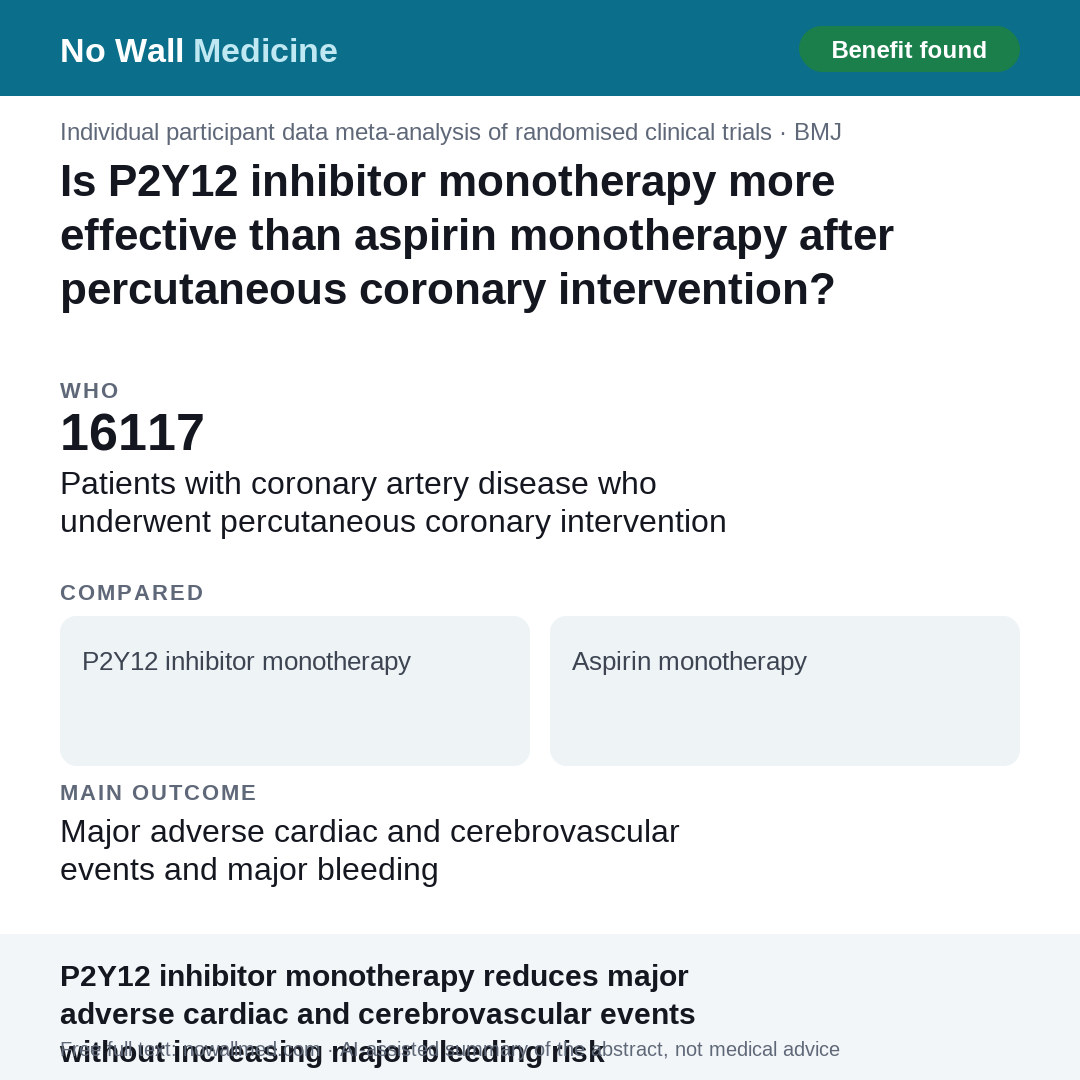
P2Y12 inhibitor or aspirin after percutaneous coronary intervention: individual patient data meta-analysis of randomised clinical trials
Individual participant data meta-analysis of randomised clinical trialsBenefit found
Is P2Y12 inhibitor monotherapy more effective than aspirin monotherapy after percutaneous coronary intervention?
Who
16117
Patients with coronary artery disease who underwent percutaneous coronary intervention
Compared
P2Y12 inhibitor monotherapy
Aspirin monotherapy
Main outcome
Major adverse cardiac and cerebrovascular events and major bleeding
Result: hazard ratio 0.77 (95% CI 0.67 to 0.89)
Bottom line: P2Y12 inhibitor monotherapy reduces major adverse cardiac and cerebrovascular events without increasing major bleeding risk compared to aspirin.
BMJ · 2025-06-04Download image
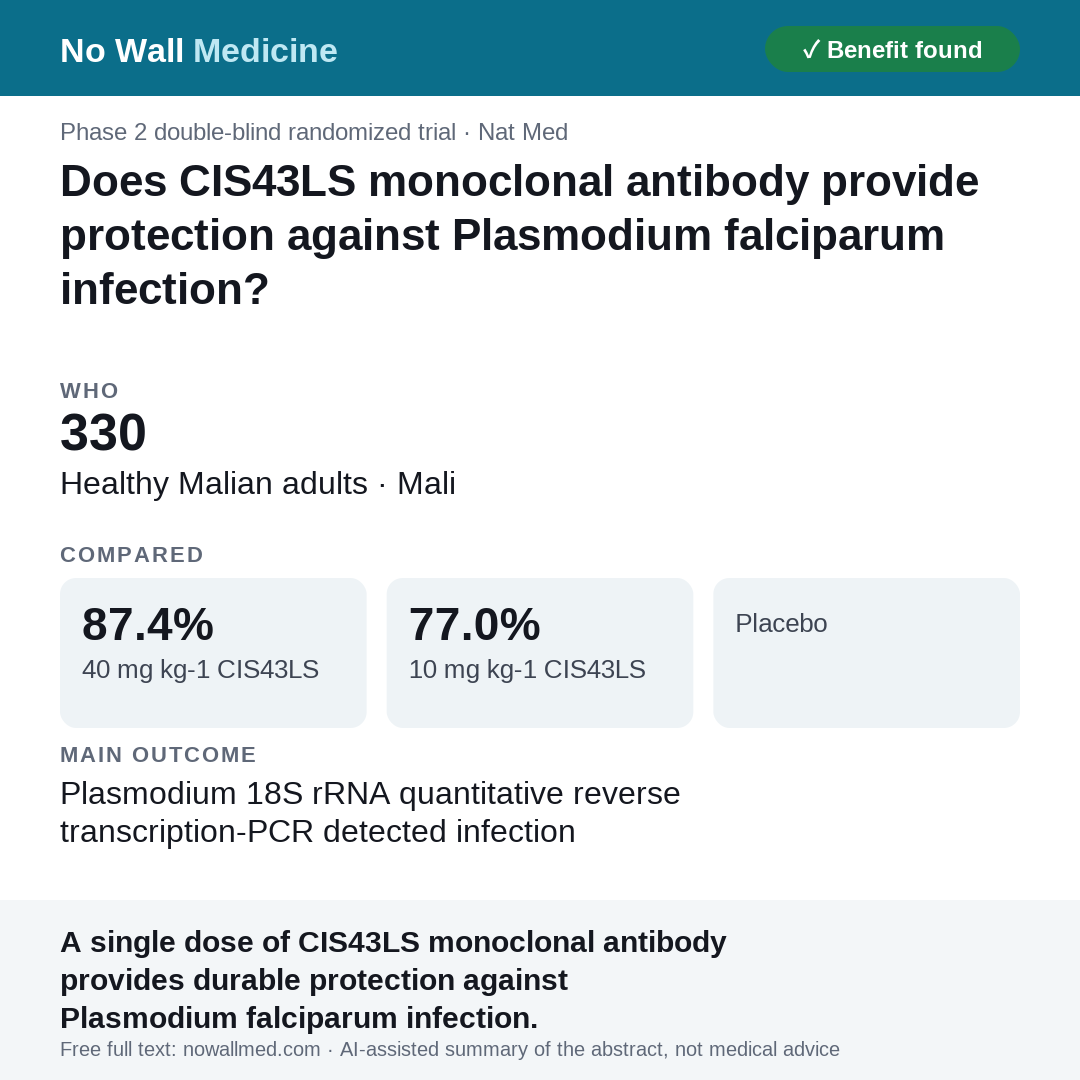
Anti-sporozoite monoclonal antibody for malaria prevention: secondary efficacy outcome of a phase 2 randomized trial
Phase 2 double-blind randomized trialBenefit found
Does CIS43LS monoclonal antibody provide protection against Plasmodium falciparum infection?
Who
330
Healthy Malian adults · Mali
Compared
87.4%40 mg kg-1 CIS43LS
77.0%10 mg kg-1 CIS43LS
Placebo
Main outcome
Plasmodium 18S rRNA quantitative reverse transcription-PCR detected infection
Result: 87.4% (adjusted 95% CI, 79.5-92.3) and 77.0% (adjusted 95% CI, 65.0-84.0)
Bottom line: A single dose of CIS43LS monoclonal antibody provides durable protection against Plasmodium falciparum infection.
Nat Med · 2025-06-03Download image
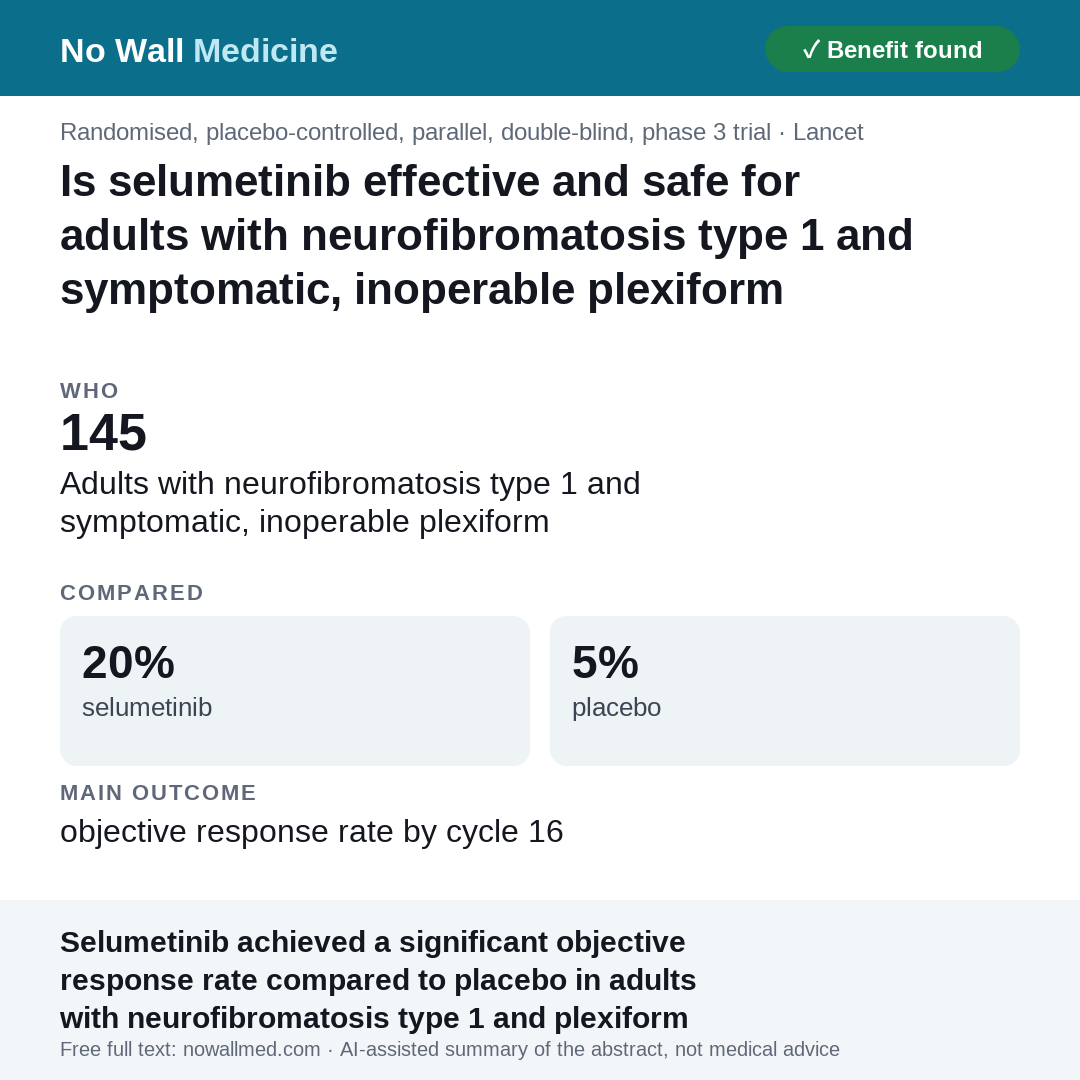
Efficacy and safety of selumetinib in adults with neurofibromatosis type 1 and symptomatic, inoperable plexiform neurofibromas (KOMET): a multicentre, international, randomised, placebo-controlled, parallel, double-blind, phase 3 study
Randomised, placebo-controlled, parallel, double-blind, phase 3 trialBenefit found
Is selumetinib effective and safe for adults with neurofibromatosis type 1 and symptomatic, inoperable plexiform neurofibromas?
Who
145
Adults with neurofibromatosis type 1 and symptomatic, inoperable plexiform neurofibromas · Multicentre, international
Compared
20%selumetinib (14/71)
5%placebo (4/74)
Main outcome
objective response rate by cycle 16
Result: 20% (95% CI 11·2 to 30·9) vs 5% (95% CI 1·5 to 13·3)
Bottom line: Selumetinib achieved a significant objective response rate compared to placebo in adults with neurofibromatosis type 1 and plexiform neurofibromas.
Funded by: AstraZeneca and Merck Sharp & Dohme
Lancet · 2025-06-02Download image
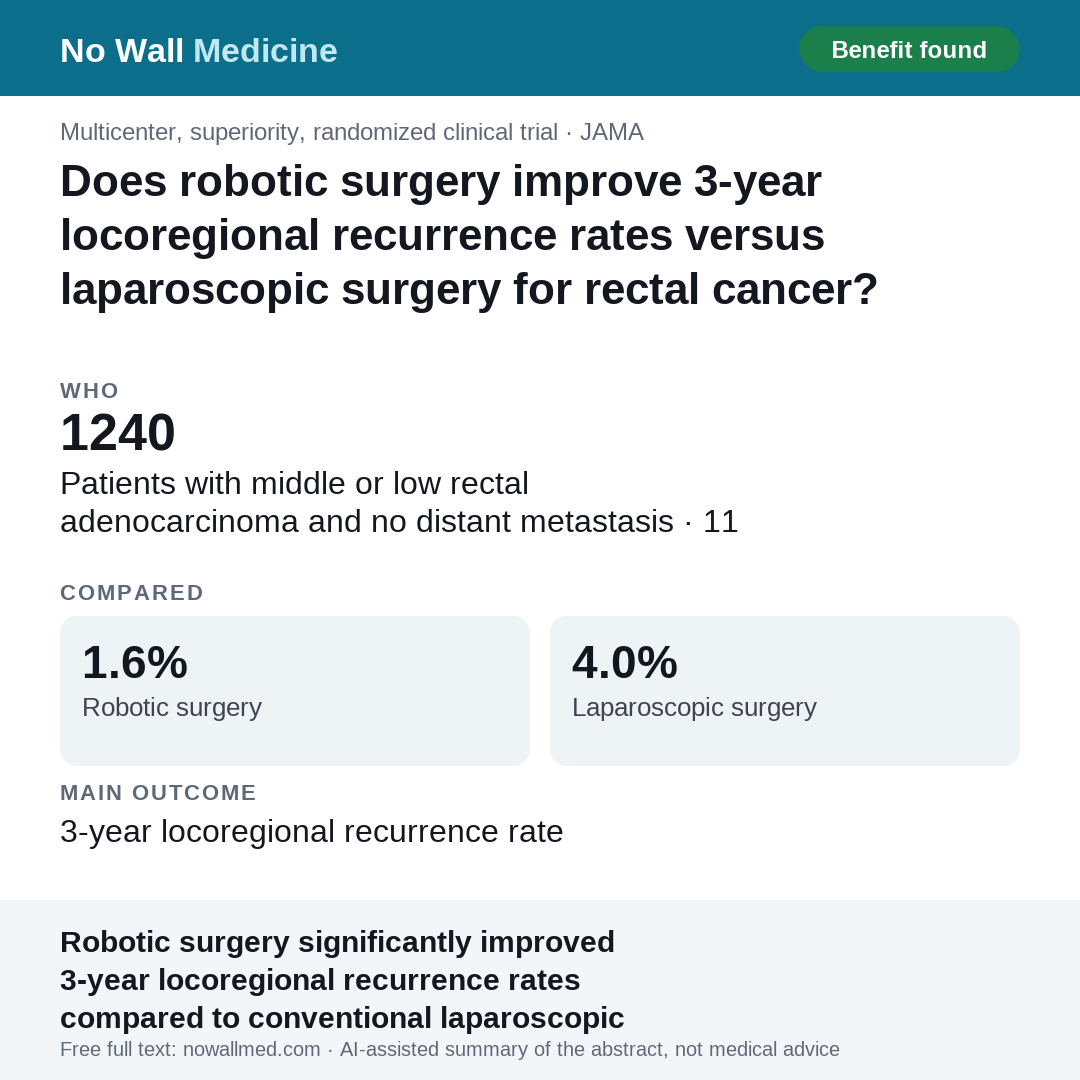
Robotic vs Laparoscopic Surgery for Middle and Low Rectal Cancer: The REAL Randomized Clinical Trial
Multicenter, superiority, randomized clinical trialBenefit found
Does robotic surgery improve 3-year locoregional recurrence rates versus laparoscopic surgery for rectal cancer?
Who
1240
Patients with middle or low rectal adenocarcinoma and no distant metastasis · 11 centers across 8 provinces in China
Compared
1.6%Robotic surgery (95% CI, 0.6%-2.6%)
4.0%Laparoscopic surgery (95% CI, 2.4%-5.6%)
Main outcome
3-year locoregional recurrence rate
Result: hazard ratio 0.45 (95% CI, 0.22-0.92)
Bottom line: Robotic surgery significantly improved 3-year locoregional recurrence rates compared to conventional laparoscopic surgery for rectal cancer.
JAMA · 2025-06-02Download image
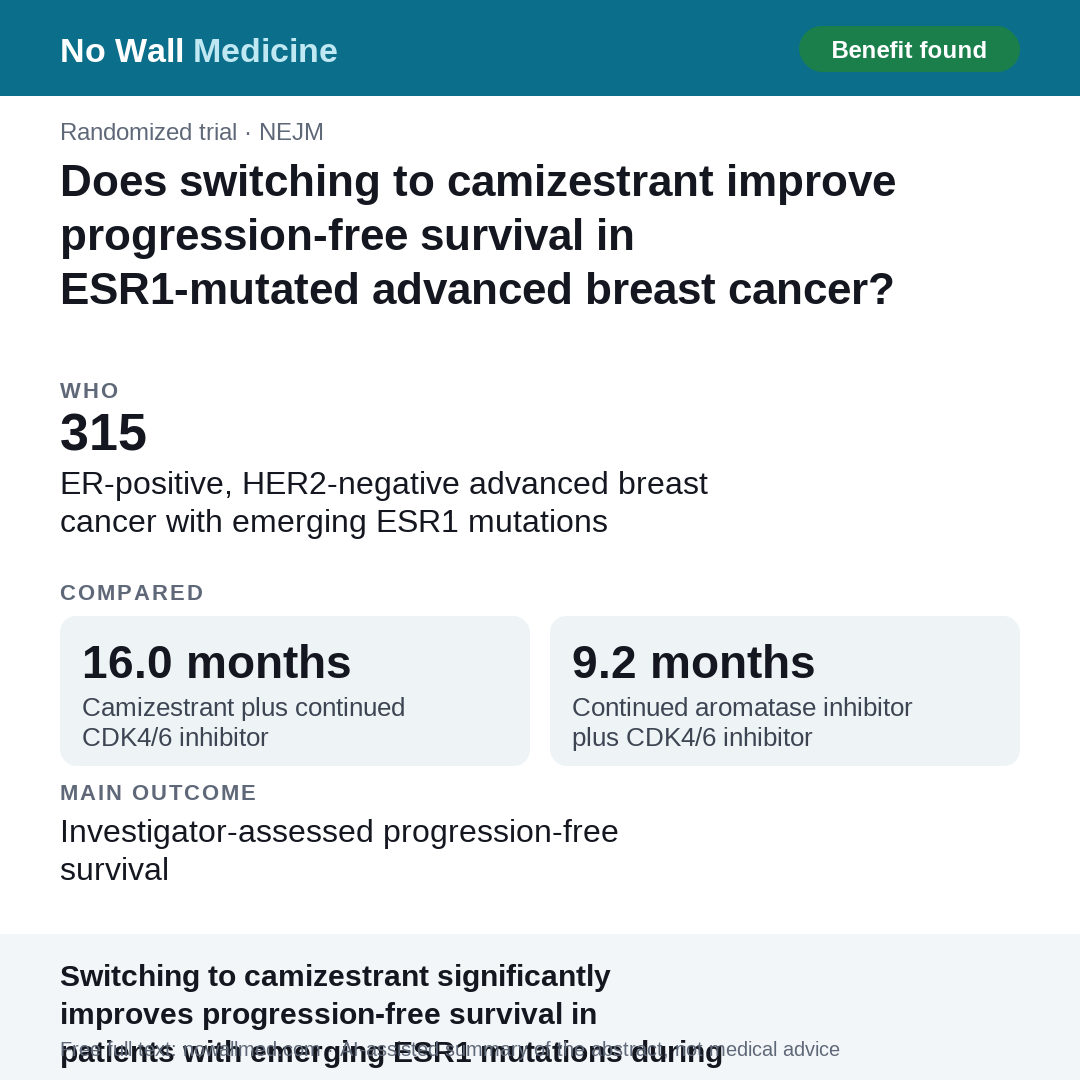
First-Line Camizestrant for Emerging ESR1-Mutated Advanced Breast Cancer
Randomized trialBenefit found
Does switching to camizestrant improve progression-free survival in ESR1-mutated advanced breast cancer?
Who
315
ER-positive, HER2-negative advanced breast cancer with emerging ESR1 mutations
Compared
16.0 monthsCamizestrant plus continued CDK4/6 inhibitor (95% CI, 12.7 to 18.2)
9.2 monthsContinued aromatase inhibitor plus CDK4/6 inhibitor (95% CI, 7.2 to 9.5)
Main outcome
Investigator-assessed progression-free survival
Result: hazard ratio 0.44 (95% CI 0.31 to 0.60)
Bottom line: Switching to camizestrant significantly improves progression-free survival in patients with emerging ESR1 mutations during first-line therapy.
Funded by: AstraZeneca
NEJM · 2025-06-01Download image