Visual abstracts
New randomized trials and meta-analyses from leading journals at a glance: who was studied, what was compared, and what was found. Every paper is free to read in full.
All specialtiesCardiology 4763Oncology 4043Gastroenterology & Hepatology 1903Infectious Disease 3756Neurology 1872Psychiatry & Mental Health 2216Pulmonology 2044Critical Care 1319Endocrinology & Diabetes 2544Pediatrics 2889Surgery 2480Orthopedics & Sports Medicine 917Neurosurgery 525Cardiothoracic & Vascular Surgery 656Plastic & Reconstructive Surgery 574Nephrology 1107Rheumatology 810Hematology 1090Dermatology 611Ophthalmology 532Obstetrics & Gynecology 1645Public & Global Health 1037Radiology & Imaging 619Anesthesiology 958Urology 745ENT (Otolaryngology) 494Emergency Medicine 481Allergy & Immunology 309Geriatrics 972Family Medicine & Primary Care 534Medical Genetics & Genomics 659Pathology & Laboratory Medicine 156Physical Medicine & Rehabilitation 734Palliative Care 421Nutrition 1560Digital Health & AI 2137General Medicine 318
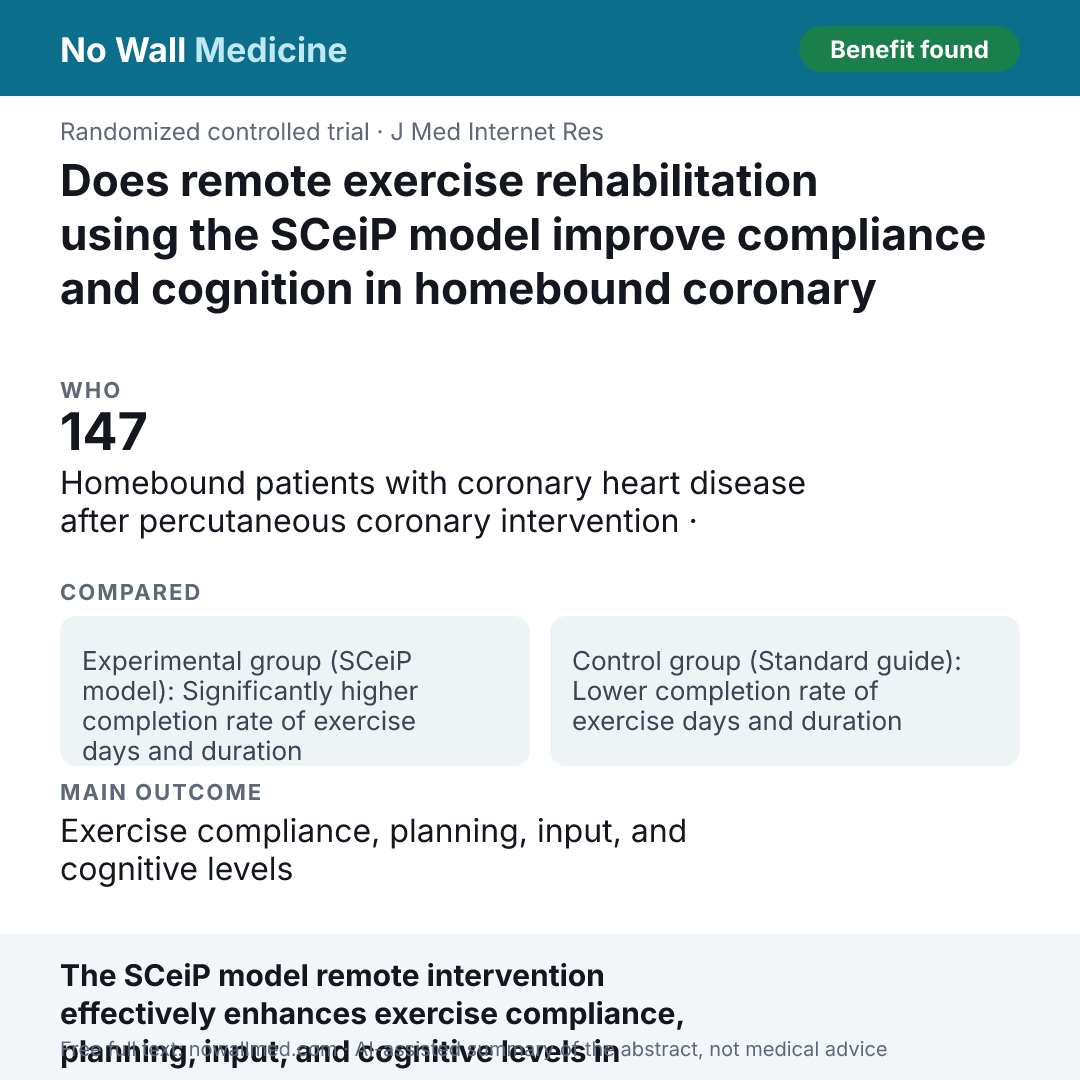
The Effectiveness of Remote Exercise Rehabilitation Based on the "SCeiP" Model in Homebound Patients With Coronary Heart Disease: Randomized Controlled Trial
Randomized controlled trialBenefit found
Does remote exercise rehabilitation using the SCeiP model improve compliance and cognition in homebound coronary heart disease patients?
Who
147
Homebound patients with coronary heart disease after percutaneous coronary intervention · Grade III hospital in Jiangsu Province
Compared
Experimental group (SCeiP model): Significantly higher completion rate of exercise days and duration
Control group (Standard guide): Lower completion rate of exercise days and duration
Main outcome
Exercise compliance, planning, input, and cognitive levels
Bottom line: The SCeiP model remote intervention effectively enhances exercise compliance, planning, input, and cognitive levels in coronary heart disease patients.
J Med Internet Res · 2024-11-05 · Save PNG
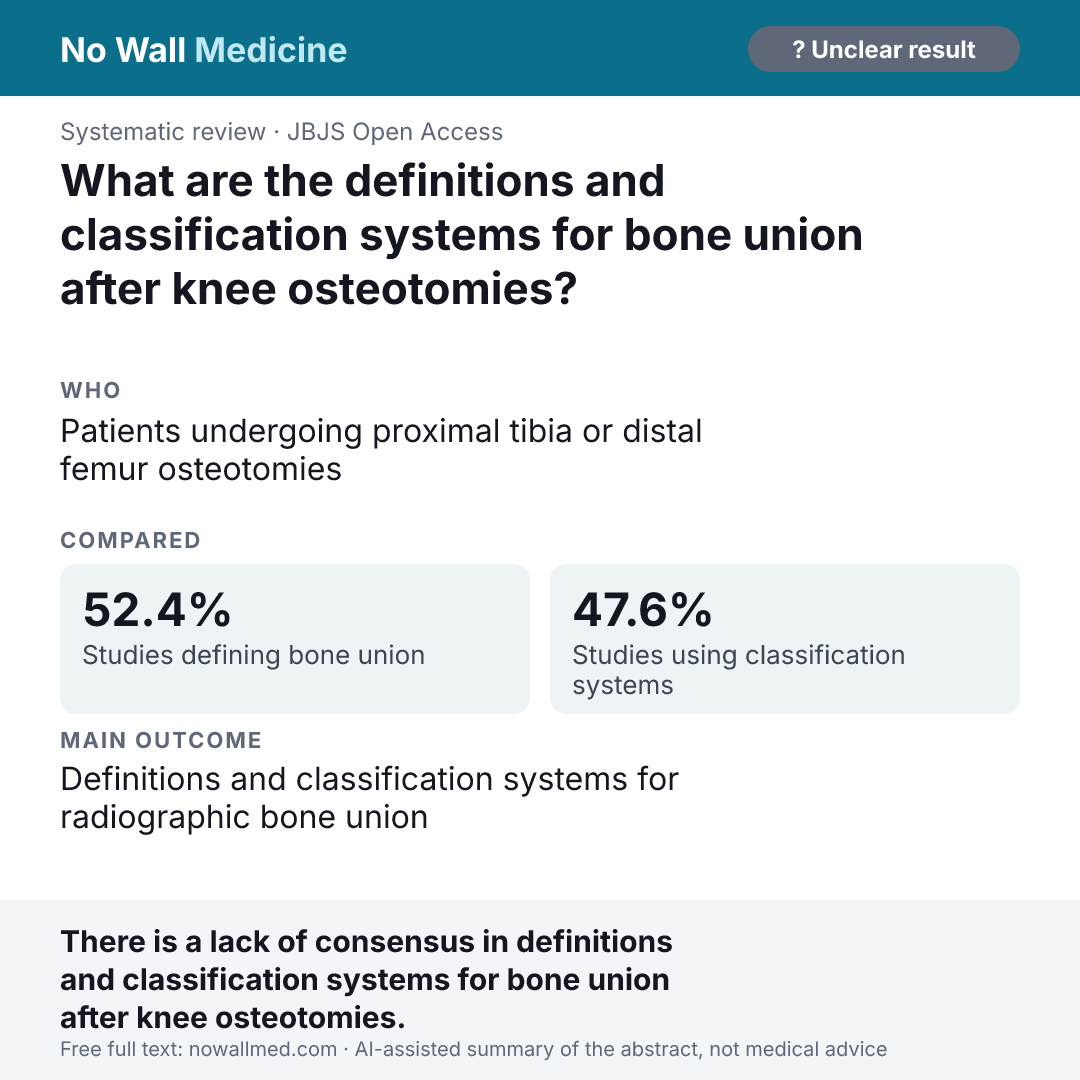
Radiographic Assessment of Bone Union in Proximal Tibia and Distal Femur Osteotomies: A Systematic Review
Systematic reviewUnclear result
What are the definitions and classification systems for bone union after knee osteotomies?
Who
Patients undergoing proximal tibia or distal femur osteotomies
Compared
52.4%Studies defining bone union
47.6%Studies using classification systems
Main outcome
Definitions and classification systems for radiographic bone union
Bottom line: There is a lack of consensus in definitions and classification systems for bone union after knee osteotomies.
Limitation: Majority of included studies used a retrospective design.
JBJS Open Access · 2024-11-05 · Save PNG
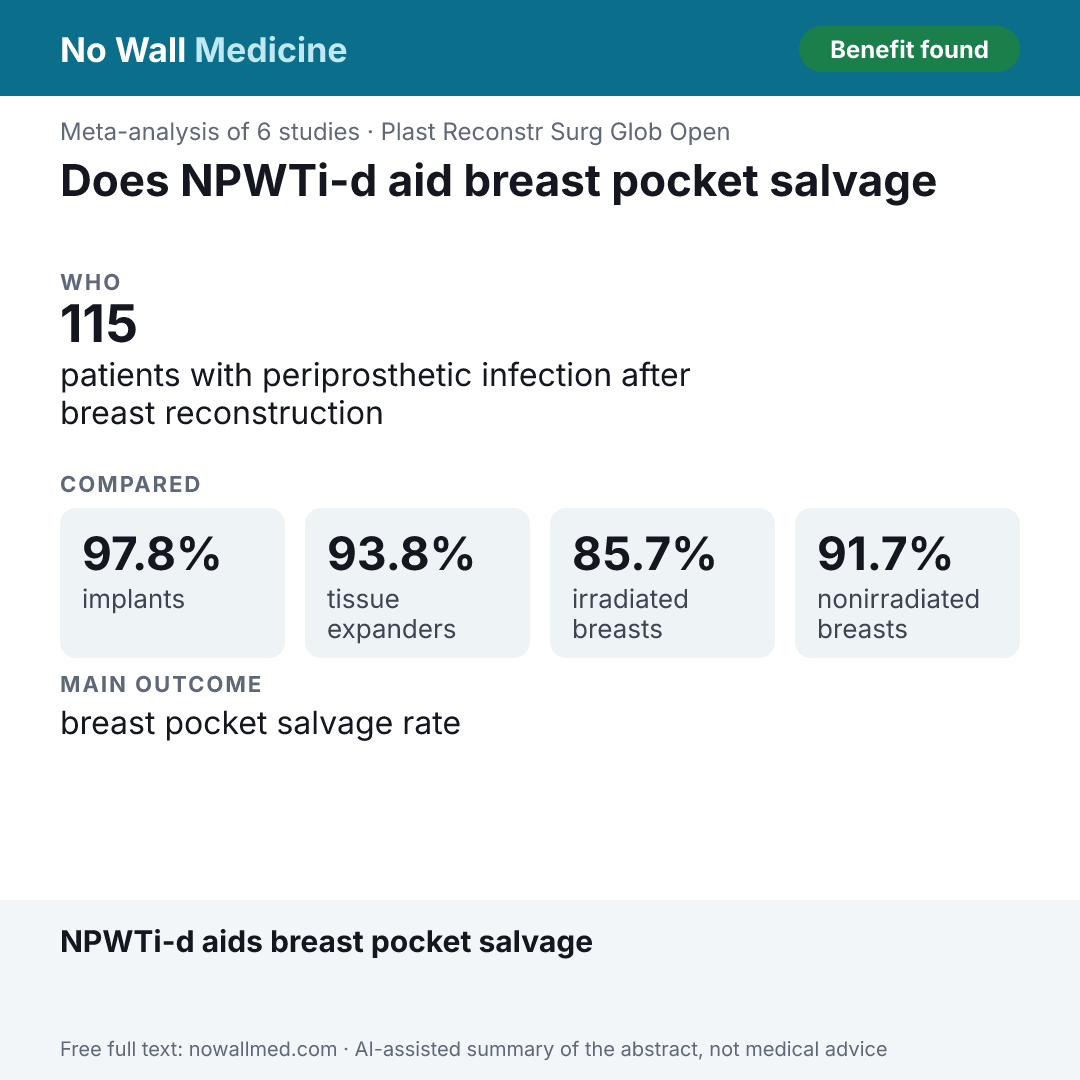
Negative Pressure Wound Therapy with Instillation for Periprosthetic Infection after Breast Reconstruction: A Systematic Review
Meta-analysis of 6 studiesBenefit found
Does NPWTi-d aid breast pocket salvage
Who
115
patients with periprosthetic infection after breast reconstruction
Compared
97.8%implants (45/46)
93.8%tissue expanders (15/16)
85.7%irradiated breasts (12/14)
91.7%nonirradiated breasts (53/58)
Main outcome
breast pocket salvage rate
Bottom line: NPWTi-d aids breast pocket salvage
Plast Reconstr Surg Glob Open · 2024-11-05 · Save PNG
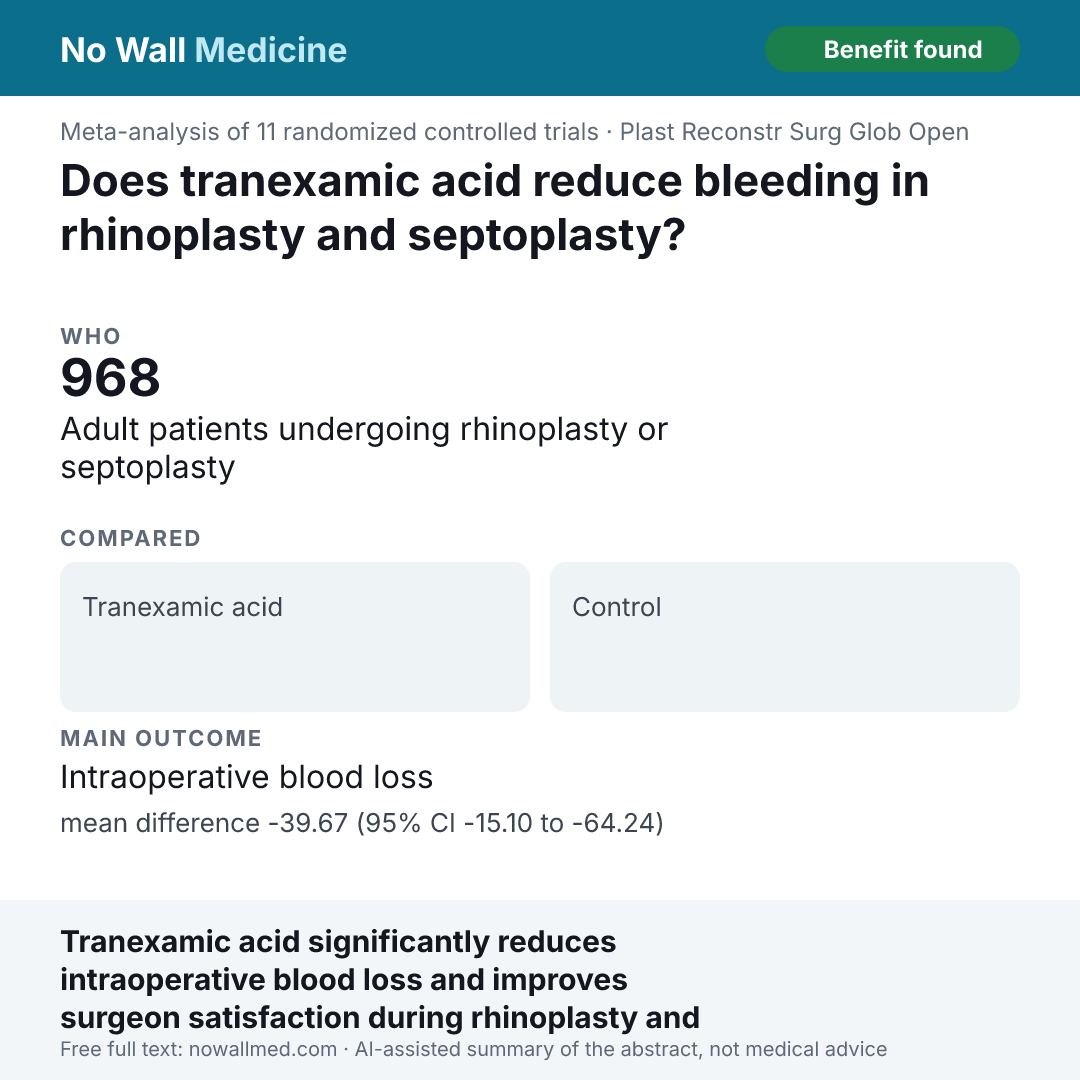
Tranexamic Acid in Rhinoplasty and Septoplasty: A Systematic Review and Meta-analysis of Randomized Controlled Trials
Meta-analysis of 11 randomized controlled trialsBenefit found
Does tranexamic acid reduce bleeding in rhinoplasty and septoplasty?
Who
968
Adult patients undergoing rhinoplasty or septoplasty
Compared
Tranexamic acid
Control
Main outcome
Intraoperative blood loss
Result: mean difference -39.67 (95% CI -15.10 to -64.24)
Bottom line: Tranexamic acid significantly reduces intraoperative blood loss and improves surgeon satisfaction during rhinoplasty and septoplasty.
Plast Reconstr Surg Glob Open · 2024-11-05 · Save PNG
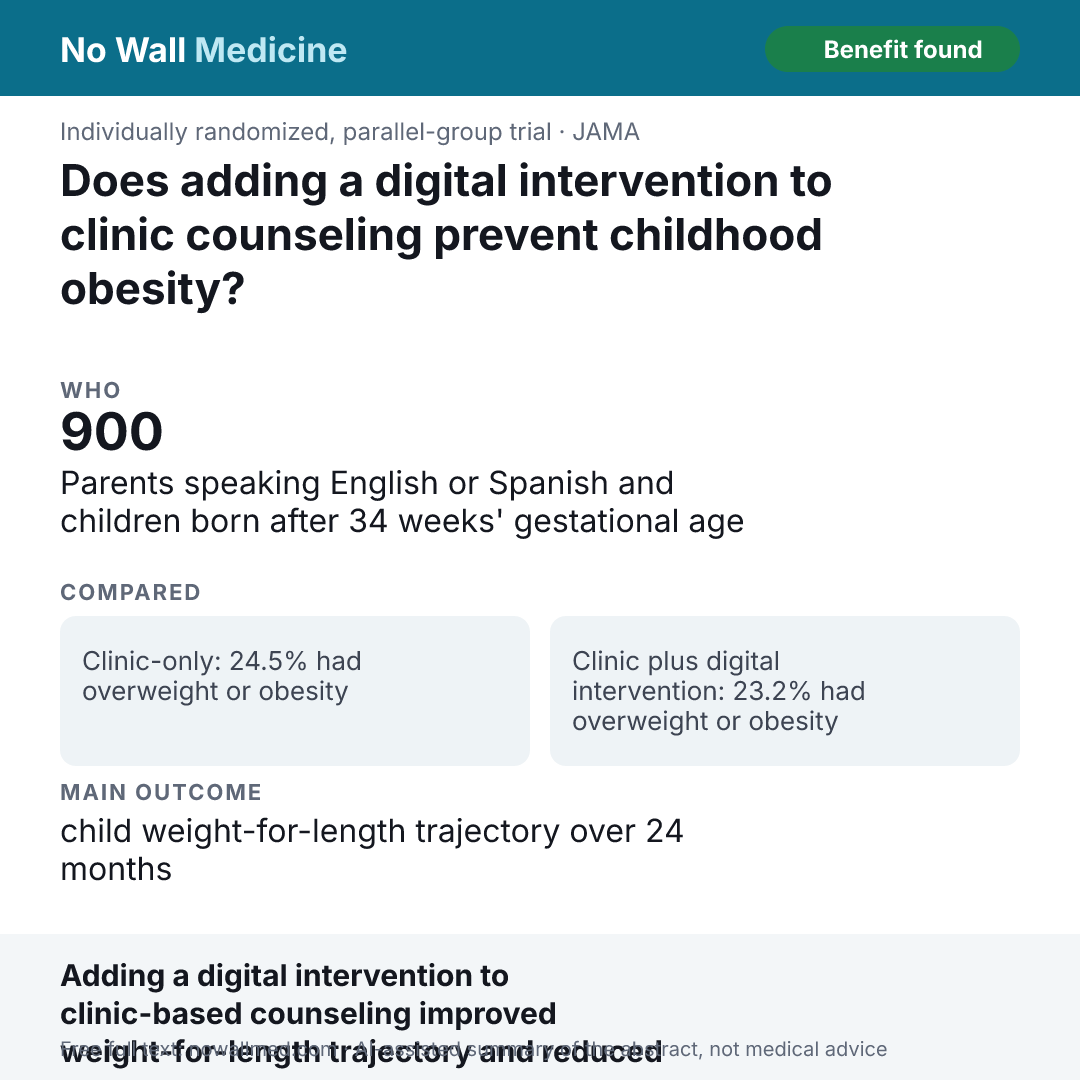
A Digital Health Behavior Intervention to Prevent Childhood Obesity: The Greenlight Plus Randomized Clinical Trial
Individually randomized, parallel-group trialBenefit found
Does adding a digital intervention to clinic counseling prevent childhood obesity?
Who
900
Parents speaking English or Spanish and children born after 34 weeks' gestational age · 6 US medical centers
Compared
Clinic-only: 24.5% had overweight or obesity
Clinic plus digital intervention: 23.2% had overweight or obesity
Main outcome
child weight-for-length trajectory over 24 months
Result: estimated reduction of 0.33 kg/m (95% CI, 0.09 to 0.57)
Bottom line: Adding a digital intervention to clinic-based counseling improved weight-for-length trajectory and reduced obesity at 24 months.
JAMA · 2024-11-04 · Save PNG
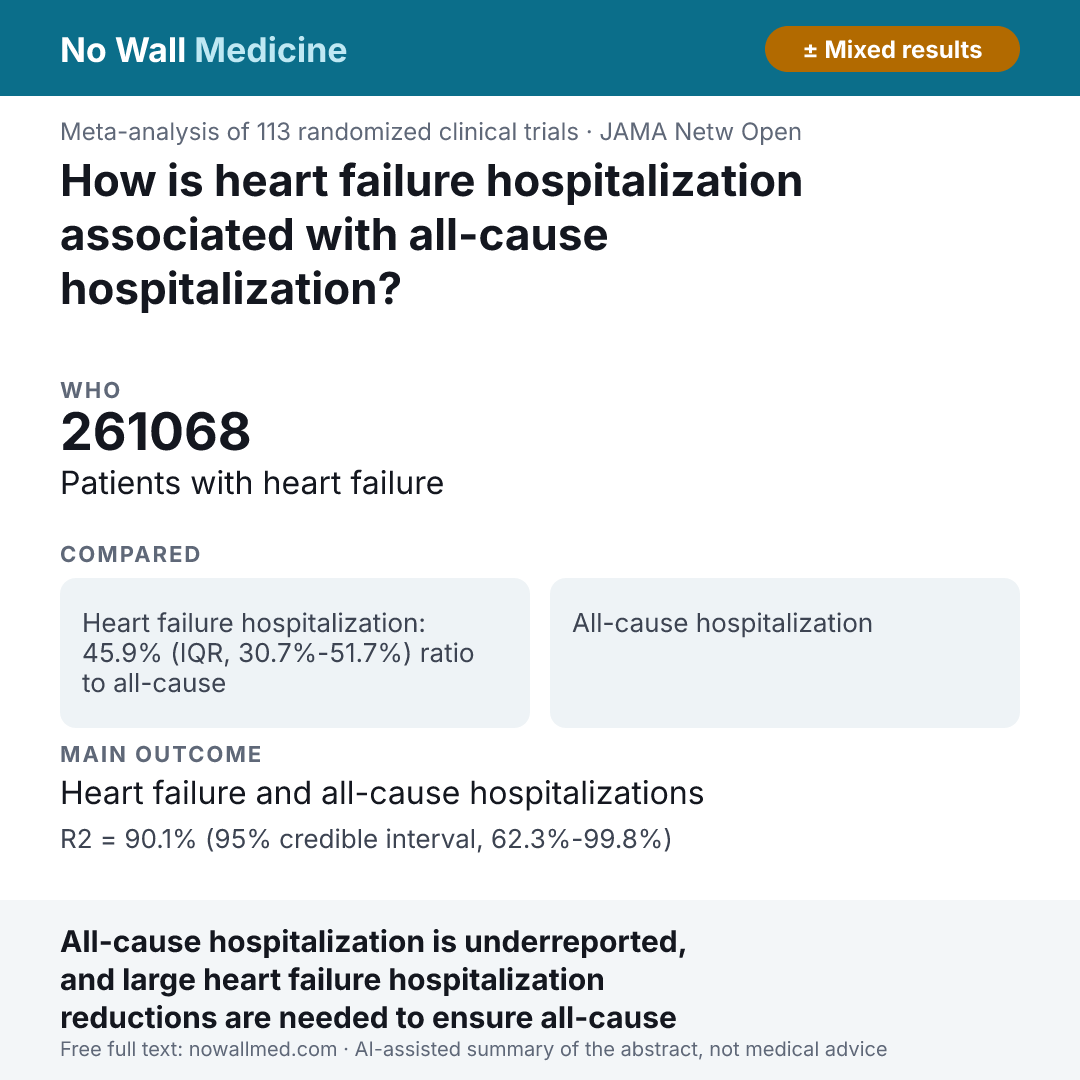
Heart Failure and All-Cause Hospitalizations in Patients With Heart Failure: A Meta-Analysis
Meta-analysis of 113 randomized clinical trialsMixed results
How is heart failure hospitalization associated with all-cause hospitalization?
Who
261068
Patients with heart failure
Compared
Heart failure hospitalization: 45.9% (IQR, 30.7%-51.7%) ratio to all-cause
All-cause hospitalization
Main outcome
Heart failure and all-cause hospitalizations
Result: R2 = 90.1% (95% credible interval, 62.3%-99.8%)
Bottom line: All-cause hospitalization is underreported, and large heart failure hospitalization reductions are needed to ensure all-cause hospitalization reductions.
JAMA Netw Open · 2024-11-04 · Save PNG
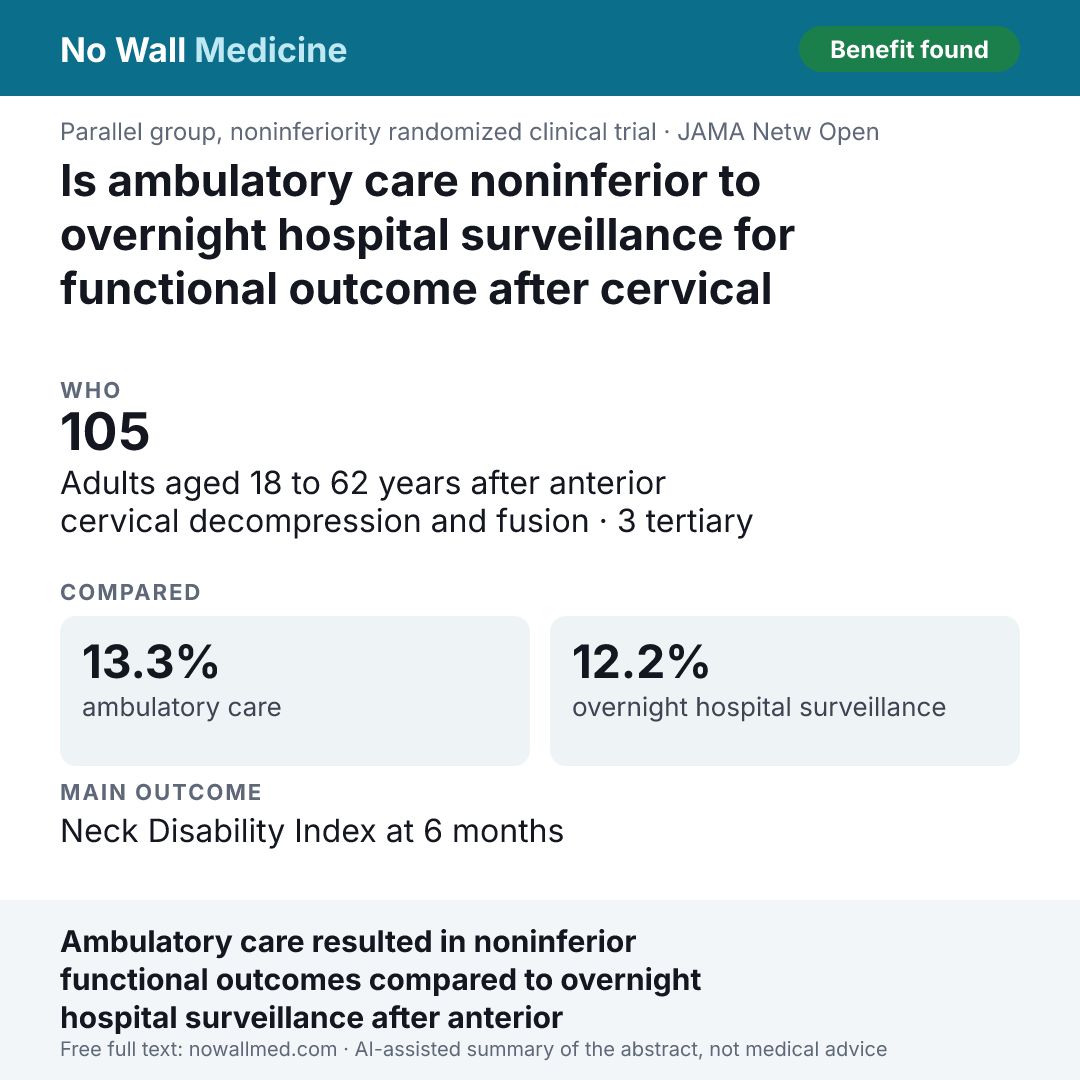
Ambulatory Care vs Overnight Hospitalization After Anterior Surgery for Cervical Radiculopathy: The FACADE Randomized Clinical Trial
Parallel group, noninferiority randomized clinical trialBenefit found
Is ambulatory care noninferior to overnight hospital surveillance for functional outcome after cervical surgery?
Who
105
Adults aged 18 to 62 years after anterior cervical decompression and fusion · 3 tertiary neurosurgical centers in Finland
Compared
13.3%ambulatory care (95% CI, 9.3%-17.3%)
12.2%overnight hospital surveillance (95% CI, 8.2%-16.2%)
Main outcome
Neck Disability Index at 6 months
Result: between-group mean difference, 1.1 (95% CI, -4.6 to 6.8) percentage points
Bottom line: Ambulatory care resulted in noninferior functional outcomes compared to overnight hospital surveillance after anterior cervical decompression and fusion.
JAMA Netw Open · 2024-11-04 · Save PNG
Selection of Patients With Early-Stage Breast Cancer for Extended Endocrine Therapy: A Secondary Analysis of the IDEAL Randomized Clinical Trial
Secondary analysis of a randomized clinical trialBenefit found
Does the 70-gene assay identify patients benefiting from 5 versus 2.5 years of letrozole?
Who
515
Postmenopausal women with hormone receptor-positive early-stage breast cancer
Compared
Low-risk tumors (5 vs 2.5 years): 10.1% absolute benefit for distant recurrence
High-risk or ultralow-risk tumors: not associated with improved benefit for distant recurrence
Main outcome
distant recurrence
Result: hazard ratio 0.32 (95% CI 0.12-0.87)
Bottom line: The 70-gene assay identifies low-risk patients who benefit from 5 years of letrozole over 2.5 years.
JAMA Netw Open · 2024-11-04 · Save PNG

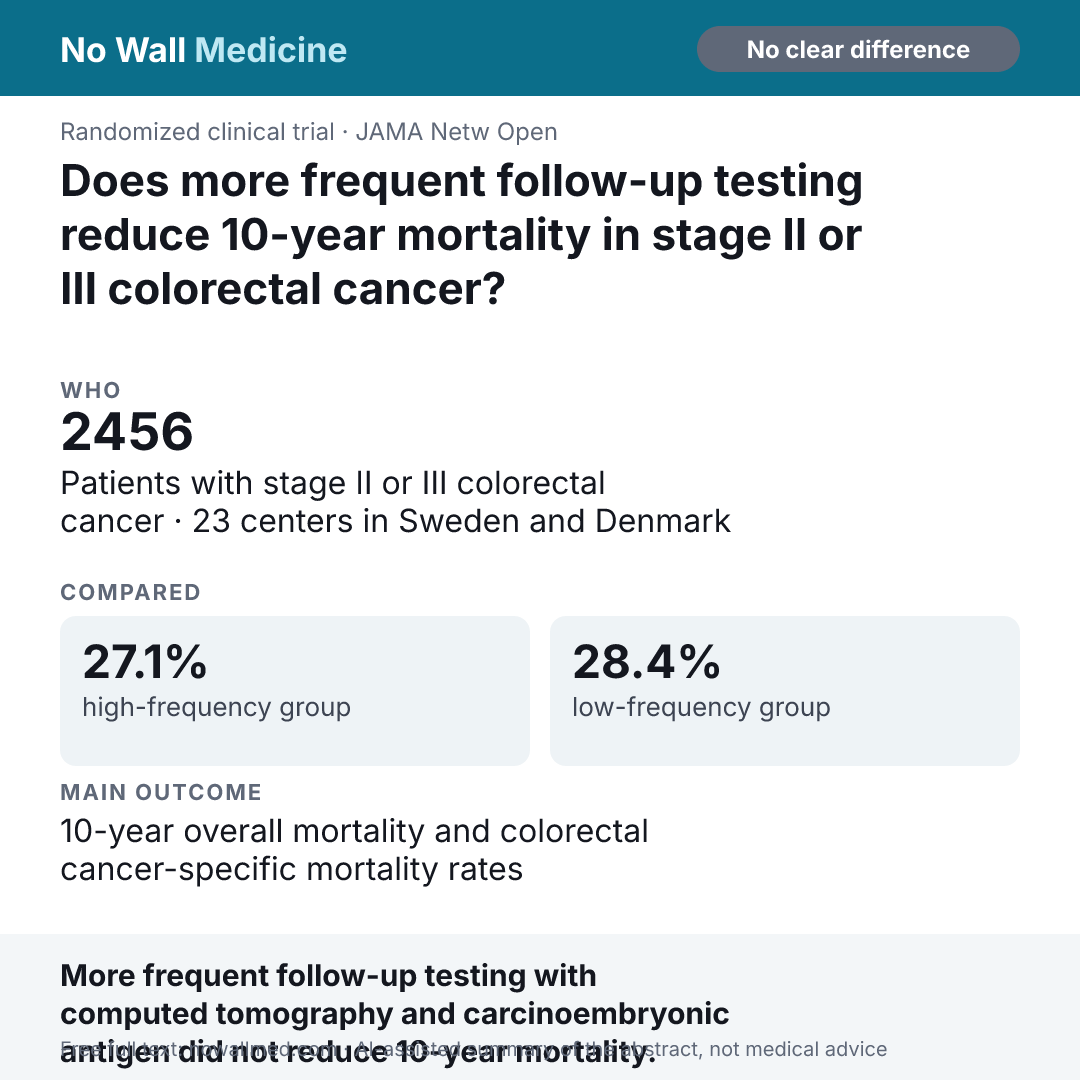
Locoregional Therapies for Hepatocellular Carcinoma: A Systematic Review and Meta-Analysis
Systematic review and meta-analysis of 40 randomized clinical trialsMixed results
What is the relative efficacy of different locoregional therapies for nonmetastatic hepatocellular carcinoma?
Who
11576
Patients with localized hepatocellular carcinoma treated with locoregional therapies
Compared
Surgery with adjuvant therapy: hazard ratio 0.62 (95% CI 0.51-0.75)
Surgery alone
Main outcome
Progression-free survival
Result: hazard ratio 0.62 (95% CI 0.51-0.75)
Bottom line: Locoregional therapies for localized hepatocellular carcinoma are not equivalent, following a hierarchy from surgery to embolization-based options.
Limitation: Substantial heterogeneity was noted for radiotherapy-based regimens compared with tyrosine kinase inhibitor therapy.
JAMA Netw Open · 2024-11-04 · Save PNG
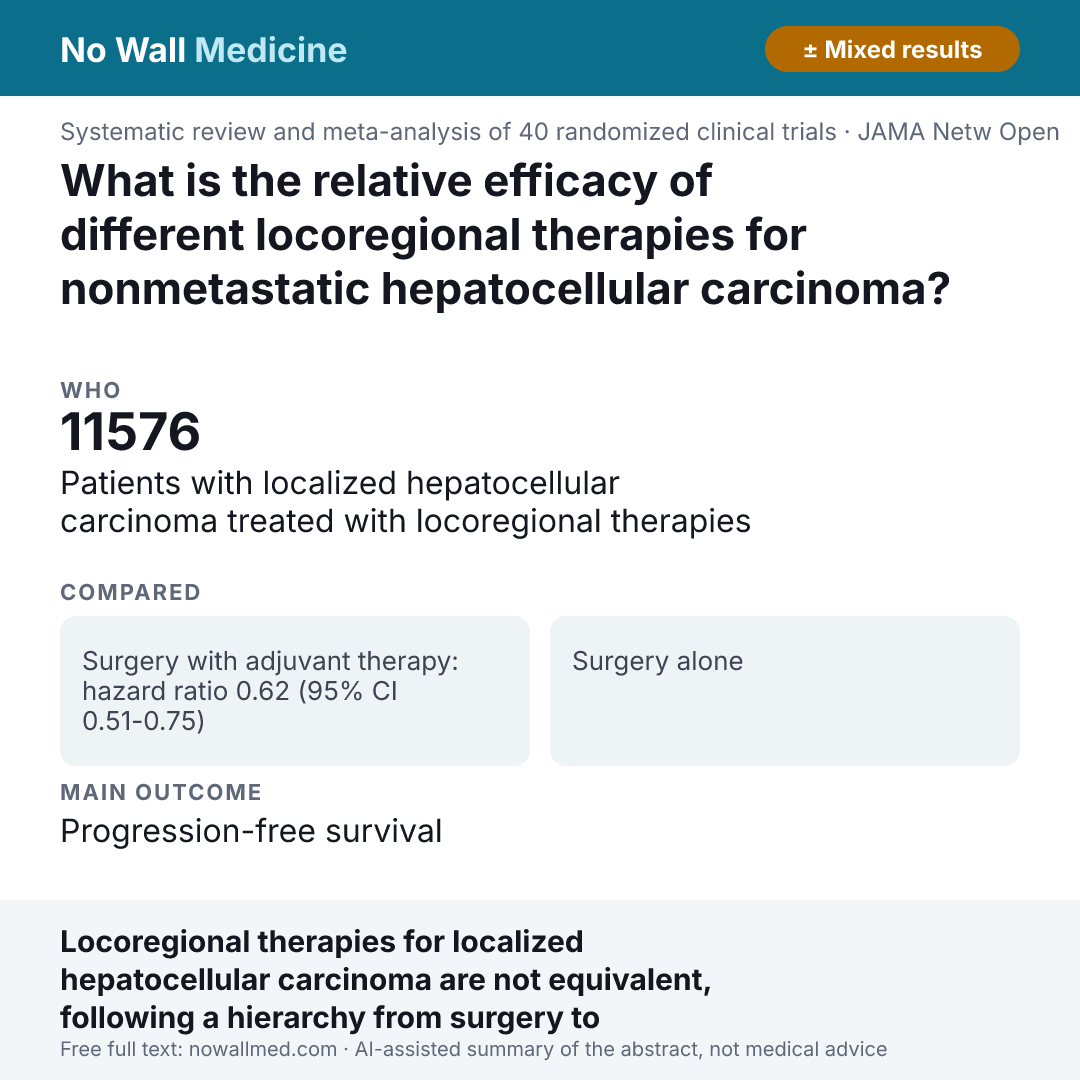
Centralized Colorectal Cancer Screening Outreach in Federally Qualified Health Centers: A Randomized Clinical Trial
Pragmatic randomized clinical trialBenefit found
Does centralized colorectal cancer screening outreach improve screening completion in federally qualified health centers?
Who
4002
Active individuals aged 50 to 75 years at average risk · 12 clinical delivery sites in North Carolina
Compared
30.0%Intervention
9.7%Control
Main outcome
Completion of recommended colorectal cancer screening within 6 months
Result: difference, 20.29 percentage points; 95% CI, 17.85-22.73 percentage points
Bottom line: Centralized outreach with mailed kits and navigation increased colorectal cancer screening completion rates in federally qualified health centers.
JAMA Netw Open · 2024-11-04 · Save PNG
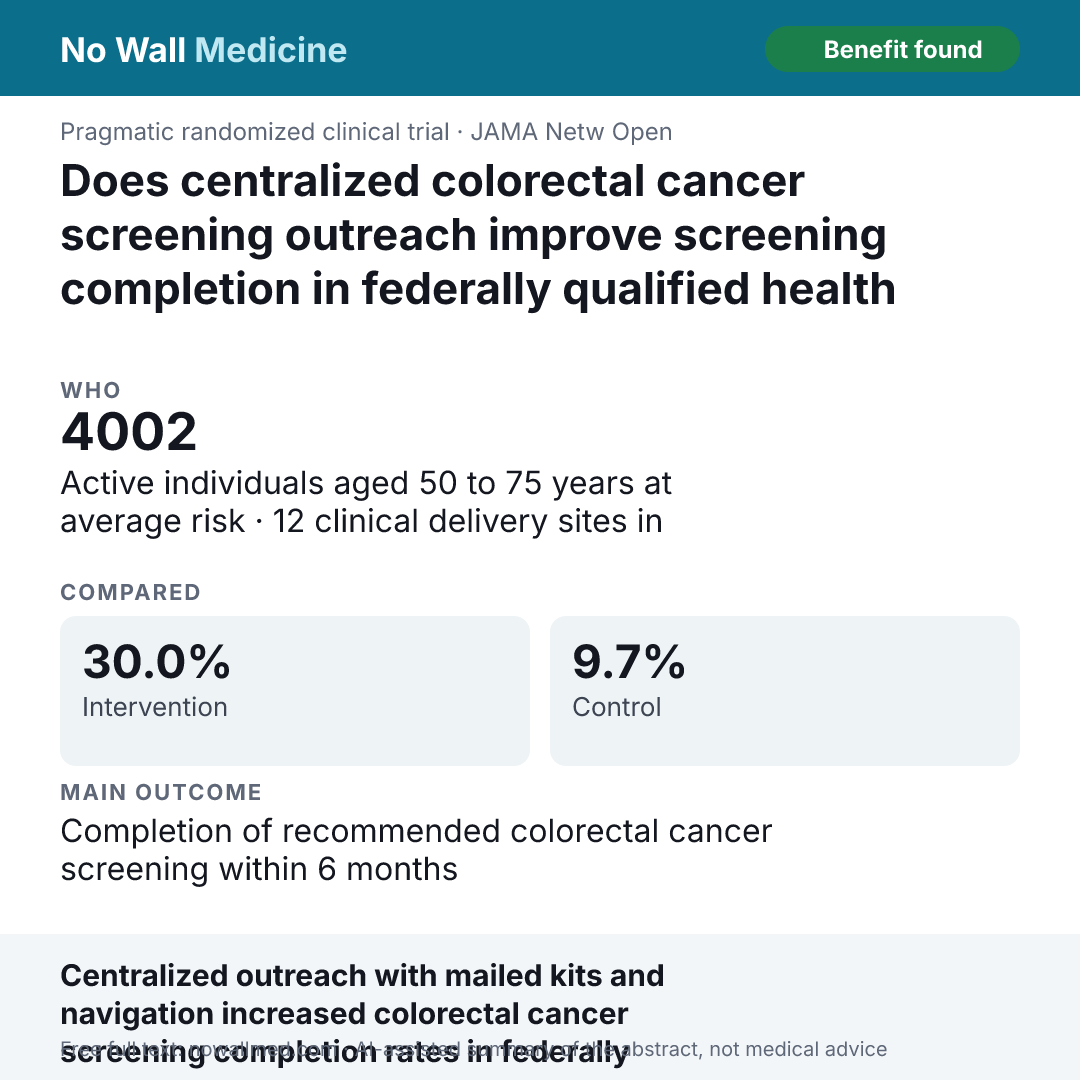
Outcomes in Randomized Clinical Trials Testing Changes in Daily Water Intake: A Systematic Review
Systematic review of randomized clinical trialsBenefit found
What are the health-related outcomes associated with changing daily water consumption?
Who
18
Various populations in 18 eligible studies
Compared
Increased water consumption: greater weight loss (range, 44%-100% more than control conditions)
Control groups
Main outcome
health-related outcomes including weight loss and nephrolithiasis
Result: 15 fewer nephrolithiasis events per 100 participants over 5 years
Bottom line: Increasing water intake may benefit weight loss and nephrolithiasis, though evidence quality and quantity are limited.
Limitation: The quality and quantity of evidence is limited.
JAMA Netw Open · 2024-11-04 · Save PNG
Nurse Care Management of Opioid Use Disorder Treatment After 3 Years: A Secondary Analysis of the PROUD Cluster Randomized Clinical Trial
Cluster randomized implementation trial secondary analysisBenefit found
Does nurse care management increase opioid use disorder medication treatment over 3 years?
Who
290071
Primary care patients aged 16 to 90 years · 6 health systems in 5 states
Compared
Intervention clinics
Usual care clinics
Main outcome
Patient-years of opioid use disorder treatment per 10,000 primary care patients
Result: 19.7 (95% CI, 11.1-28.4) more patient-years
Bottom line: Nurse care management implementation led to ongoing increases in opioid use disorder treatment over three years.
JAMA Netw Open · 2024-11-04 · Save PNG

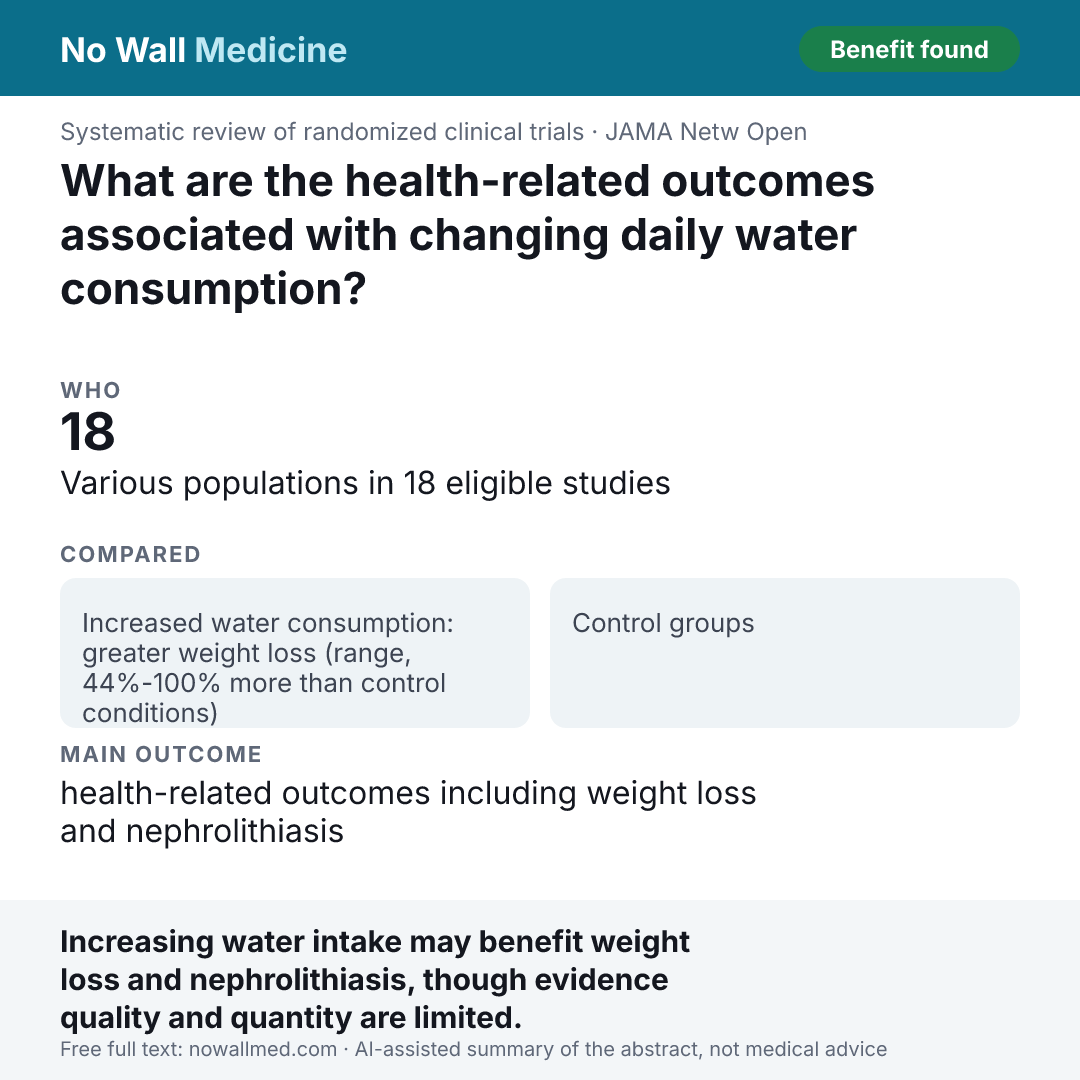
More vs Less Frequent Follow-Up Testing and 10-Year Mortality in Patients With Stage II or III Colorectal Cancer: Secondary Analysis of the COLOFOL Randomized Clinical Trial
Randomized clinical trialNo clear difference
Does more frequent follow-up testing reduce 10-year mortality in stage II or III colorectal cancer?
Who
2456
Patients with stage II or III colorectal cancer · 23 centers in Sweden and Denmark
Compared
27.1%high-frequency group (333/1227)
28.4%low-frequency group (349/1229)
Main outcome
10-year overall mortality and colorectal cancer-specific mortality rates
Result: risk difference, 1.3% (95% CI, -2.3% to 4.8%)
Bottom line: More frequent follow-up testing with computed tomography and carcinoembryonic antigen did not reduce 10-year mortality.
JAMA Netw Open · 2024-11-04 · Save PNG
Laparoscopic Cytoreduction After Neoadjuvant Chemotherapy in High-Grade Epithelial Ovarian Cancer: A LANCE Randomized Clinical Trial
International, open-label, noninferiority randomized clinical trialEarly signal
Is minimally invasive surgery feasible compared to laparotomy for cytoreduction after neoadjuvant chemotherapy?
Who
100
Adults with stage IIIC or IV epithelial ovarian cancer · 11 academic cancer centers in North America and Europe
Compared
Minimally invasive surgery: 88% complete gross resection rate
Laparotomy: 83% complete gross resection rate
Main outcome
Trial feasibility including conversion rates and complete gross resection rates
Result: difference 4.5 (95% CI -9.7 to 18.8) percentage points
Bottom line: The pilot study demonstrates the feasibility of conducting the LANCE randomized clinical trial.
JAMA Netw Open · 2024-11-04 · Save PNG

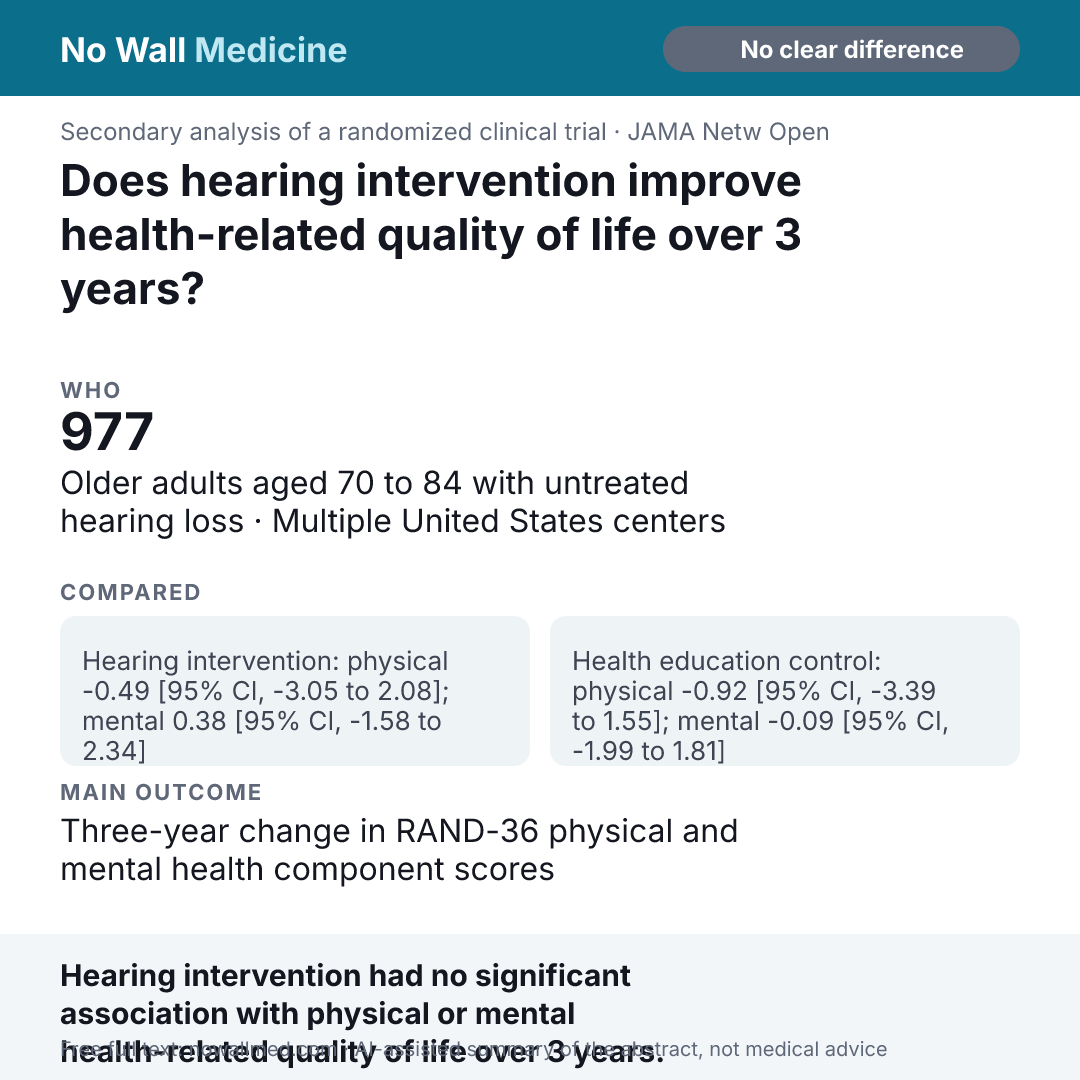
A Hearing Intervention and Health-Related Quality of Life in Older Adults: A Secondary Analysis of the ACHIEVE Randomized Clinical Trial
Secondary analysis of a randomized clinical trialNo clear difference
Does hearing intervention improve health-related quality of life over 3 years?
Who
977
Older adults aged 70 to 84 with untreated hearing loss · Multiple United States centers
Compared
Hearing intervention: physical -0.49 [95% CI, -3.05 to 2.08]; mental 0.38 [95% CI, -1.58 to 2.34]
Health education control: physical -0.92 [95% CI, -3.39 to 1.55]; mental -0.09 [95% CI, -1.99 to 1.81]
Main outcome
Three-year change in RAND-36 physical and mental health component scores
Result: difference 0.43 [95% CI, -0.64 to 1.51] for physical; 0.47 [95% CI, -0.41 to 1.35] for mental
Bottom line: Hearing intervention had no significant association with physical or mental health-related quality of life over 3 years.
JAMA Netw Open · 2024-11-04 · Save PNG
Measurement Properties of the Patient Health Questionnaire-15 and Somatic Symptom Scale-8: A Systematic Review and Meta-Analysis
Systematic review and meta-analysisBenefit found
What are the measurement properties of the PHQ-15 and SSS-8 scales?
Who
361243
361,243 participants from 305 studies
Compared
Patient Health Questionnaire-15: alpha 0.81 (95% CI, 0.80-0.82)
Somatic Symptom Scale-8: alpha 0.80 (0.77-0.83)
Main outcome
measurement properties including reliability and validity
Bottom line: Both scales are useful for assessing symptom burden, though they have complex, multifactorial structures.
JAMA Netw Open · 2024-11-04 · Save PNG

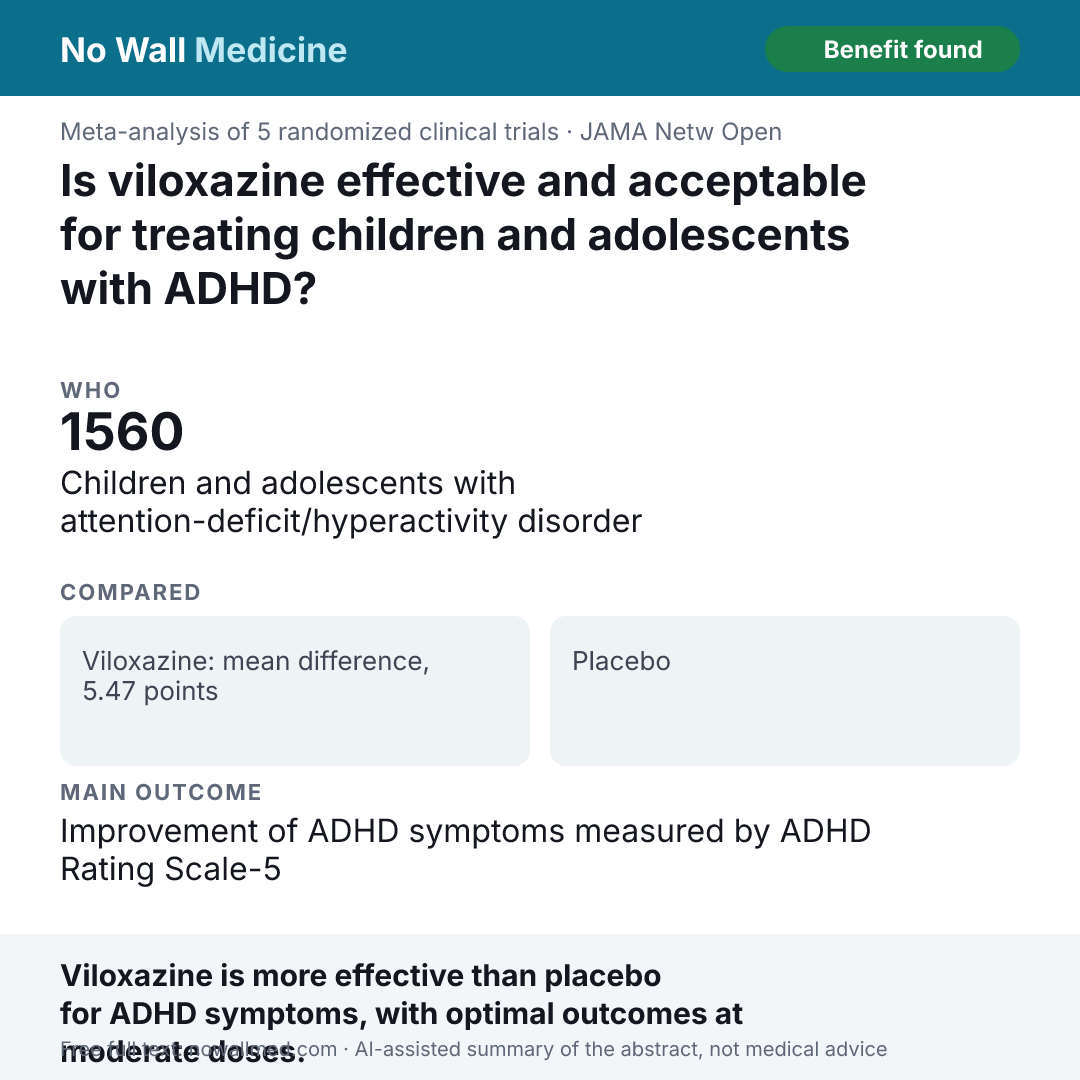
Response Trajectories and Temporal Trends of Viloxazine Treatment for Young People With ADHD: A Meta-Analysis
Meta-analysis of 5 randomized clinical trialsBenefit found
Is viloxazine effective and acceptable for treating children and adolescents with ADHD?
Who
1560
Children and adolescents with attention-deficit/hyperactivity disorder
Compared
Viloxazine: mean difference, 5.47 points
Placebo
Main outcome
Improvement of ADHD symptoms measured by ADHD Rating Scale-5
Result: mean difference, 5.47 points; 95% CI, 4.03-6.91 points
Bottom line: Viloxazine is more effective than placebo for ADHD symptoms, with optimal outcomes at moderate doses.
JAMA Netw Open · 2024-11-04 · Save PNG
Hand-Arm Bimanual Intensive Therapy Including Lower Extremities in Infants With Unilateral Cerebral Palsy: A Randomized Clinical Trial
Randomized clinical trialBenefit found
Does HABIT-ILE improve motor function in infants with unilateral cerebral palsy?
Who
46
Infants with unilateral cerebral palsy · Brussels, Belgium
Compared
Treatment: 7.4 [1.4] Mini-AHA units
Control: 1.9 [1.5] Mini-AHA units
Main outcome
Use of more affected hand
Result: Mean difference 5.5 Mini-AHA units
Bottom line: HABIT-ILE improves motor function in infants with unilateral cerebral palsy
JAMA Netw Open · 2024-11-04 · Save PNG

A Nature-Based Intervention and Mental Health of Schoolchildren: A Cluster Randomized Clinical Trial
2-arm, cluster randomized clinical trialNo clear difference
Does a 12-week nature-based intervention reduce mental health symptoms in elementary schoolchildren?
Who
1015
elementary schoolchildren in grades 5 and 6 · French-language elementary schools in Quebec, Canada
Compared
Open Sky School Program
Control group
Main outcome
change in student mental health Social Behavior Questionnaire scores
Result: adjusted mean difference -0.04 (95% CI, -0.13 to 0.04)
Bottom line: A 12-week nature-based school program did not reduce mental health symptoms in students aged 10 to 12 years.
Limitation: Post hoc analyses revealed low mental health symptoms at baseline, with low variability.
JAMA Netw Open · 2024-11-04 · Save PNG

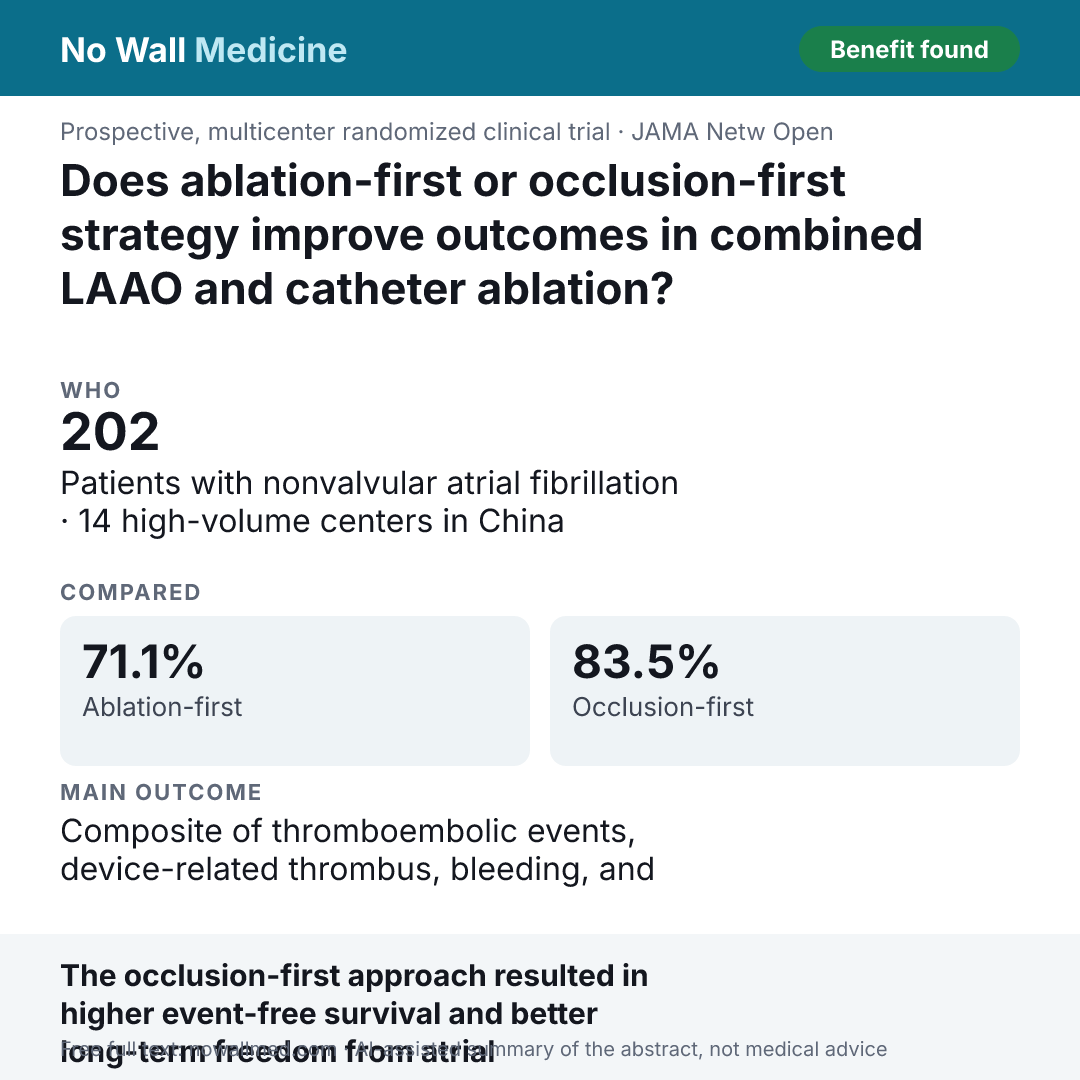
Strategy Optimization for a Combined Procedure in Patients With Atrial Fibrillation: The COMBINATION Randomized Clinical Trial
Prospective, multicenter randomized clinical trialBenefit found
Does ablation-first or occlusion-first strategy improve outcomes in combined LAAO and catheter ablation?
Who
202
Patients with nonvalvular atrial fibrillation · 14 high-volume centers in China
Compared
71.1%Ablation-first
83.5%Occlusion-first
Main outcome
Composite of thromboembolic events, device-related thrombus, bleeding, and cardiovascular rehospitalization or death
Result: hazard ratio 0.53 (95% CI, 0.29-0.95)
Bottom line: The occlusion-first approach resulted in higher event-free survival and better long-term freedom from atrial tachyarrhythmia.
JAMA Netw Open · 2024-11-04 · Save PNG