Visual abstracts
New randomized trials and meta-analyses from leading journals at a glance: who was studied, what was compared, and what was found. Every paper is free to read in full.
All specialtiesCardiology 4763Oncology 4043Gastroenterology & Hepatology 1903Infectious Disease 3756Neurology 1872Psychiatry & Mental Health 2216Pulmonology 2044Critical Care 1319Endocrinology & Diabetes 2544Pediatrics 2889Surgery 2480Orthopedics & Sports Medicine 917Neurosurgery 525Cardiothoracic & Vascular Surgery 656Plastic & Reconstructive Surgery 574Nephrology 1107Rheumatology 810Hematology 1090Dermatology 611Ophthalmology 532Obstetrics & Gynecology 1645Public & Global Health 1037Radiology & Imaging 619Anesthesiology 958Urology 745ENT (Otolaryngology) 494Emergency Medicine 481Allergy & Immunology 309Geriatrics 972Family Medicine & Primary Care 534Medical Genetics & Genomics 659Pathology & Laboratory Medicine 156Physical Medicine & Rehabilitation 734Palliative Care 421Nutrition 1560Digital Health & AI 2137General Medicine 318
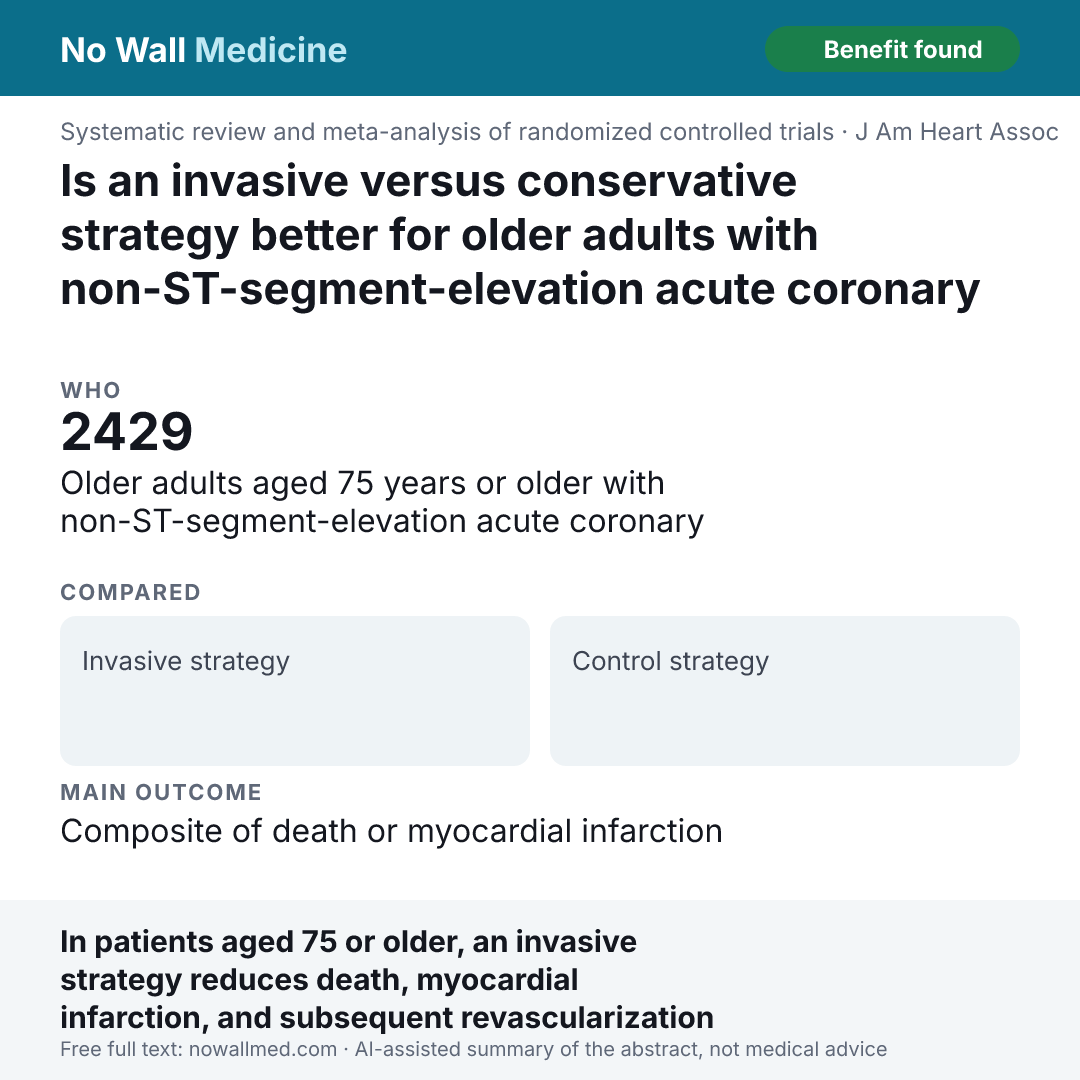
Invasive Versus Conservative Strategy in Older Adults ≥75 Years of Age With Non-ST-segment-Elevation Acute Coronary Syndrome: A Systematic Review and Meta-Analysis of Randomized Controlled Trials
Systematic review and meta-analysis of randomized controlled trialsBenefit found
Is an invasive versus conservative strategy better for older adults with non-ST-segment-elevation acute coronary syndrome?
Who
2429
Older adults aged 75 years or older with non-ST-segment-elevation acute coronary syndrome
Compared
Invasive strategy
Control strategy
Main outcome
Composite of death or myocardial infarction
Result: odds ratio 0.67 (95% CI 0.54-0.83)
Bottom line: In patients aged 75 or older, an invasive strategy reduces death, myocardial infarction, and subsequent revascularization risk.
Limitation: Older adults with higher geriatric condition burdens should be included in future trials to improve generalizability.
J Am Heart Assoc · 2024-11-04 · Save PNG
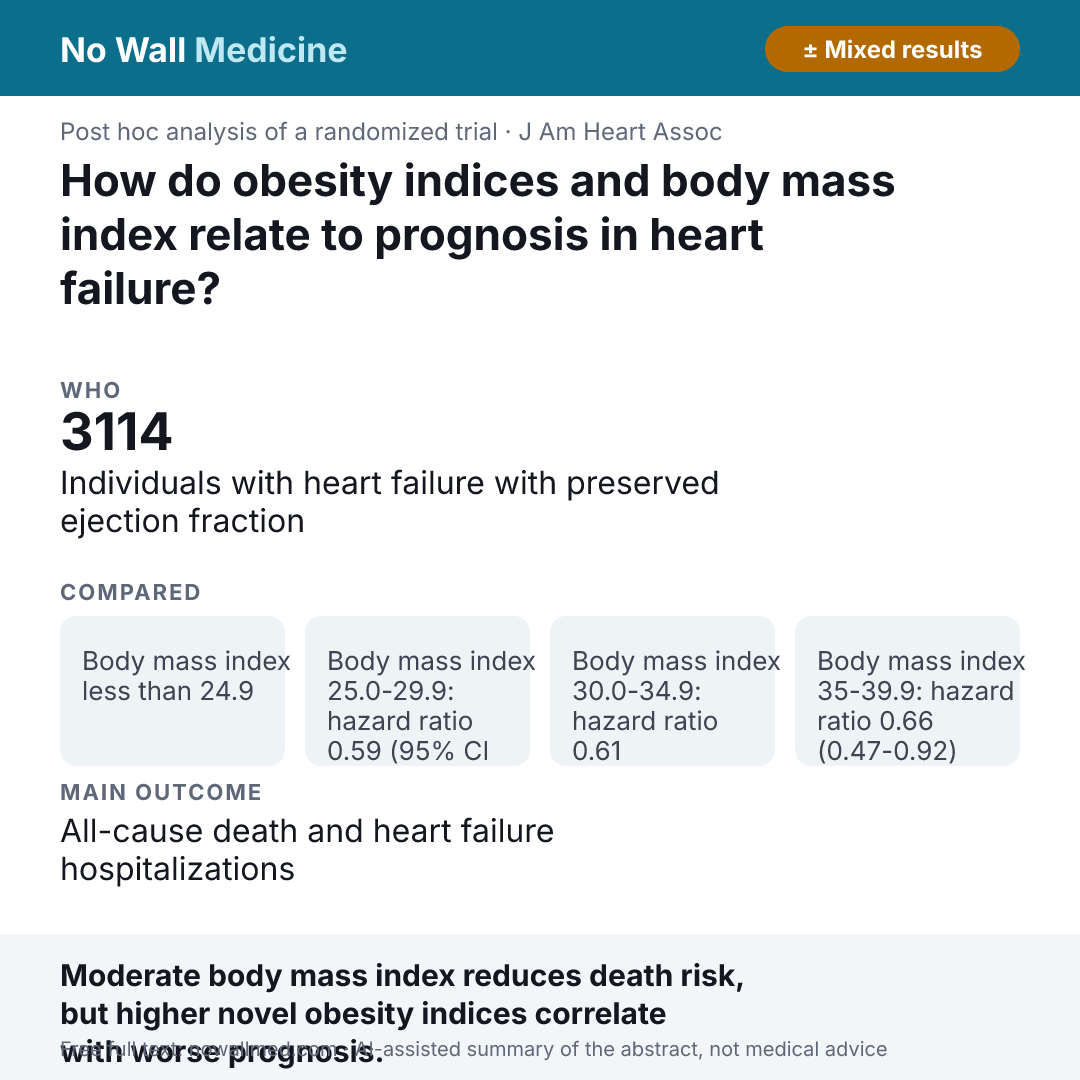
Novel Adiposity Indices Are Associated With Poor Prognosis in Heart Failure With Preserved Ejection Fraction Without the Obesity Paradox
Post hoc analysis of a randomized trialMixed results
How do obesity indices and body mass index relate to prognosis in heart failure?
Who
3114
Individuals with heart failure with preserved ejection fraction
Compared
Body mass index less than 24.9
Body mass index 25.0-29.9: hazard ratio 0.59 (95% CI 0.45-0.78)
Body mass index 30.0-34.9: hazard ratio 0.61 (0.46-0.82)
Body mass index 35-39.9: hazard ratio 0.66 (0.47-0.92)
Main outcome
All-cause death and heart failure hospitalizations
Bottom line: Moderate body mass index reduces death risk, but higher novel obesity indices correlate with worse prognosis.
Limitation: This is a post hoc analysis of the TOPCAT trial data.
J Am Heart Assoc · 2024-11-04 · Save PNG
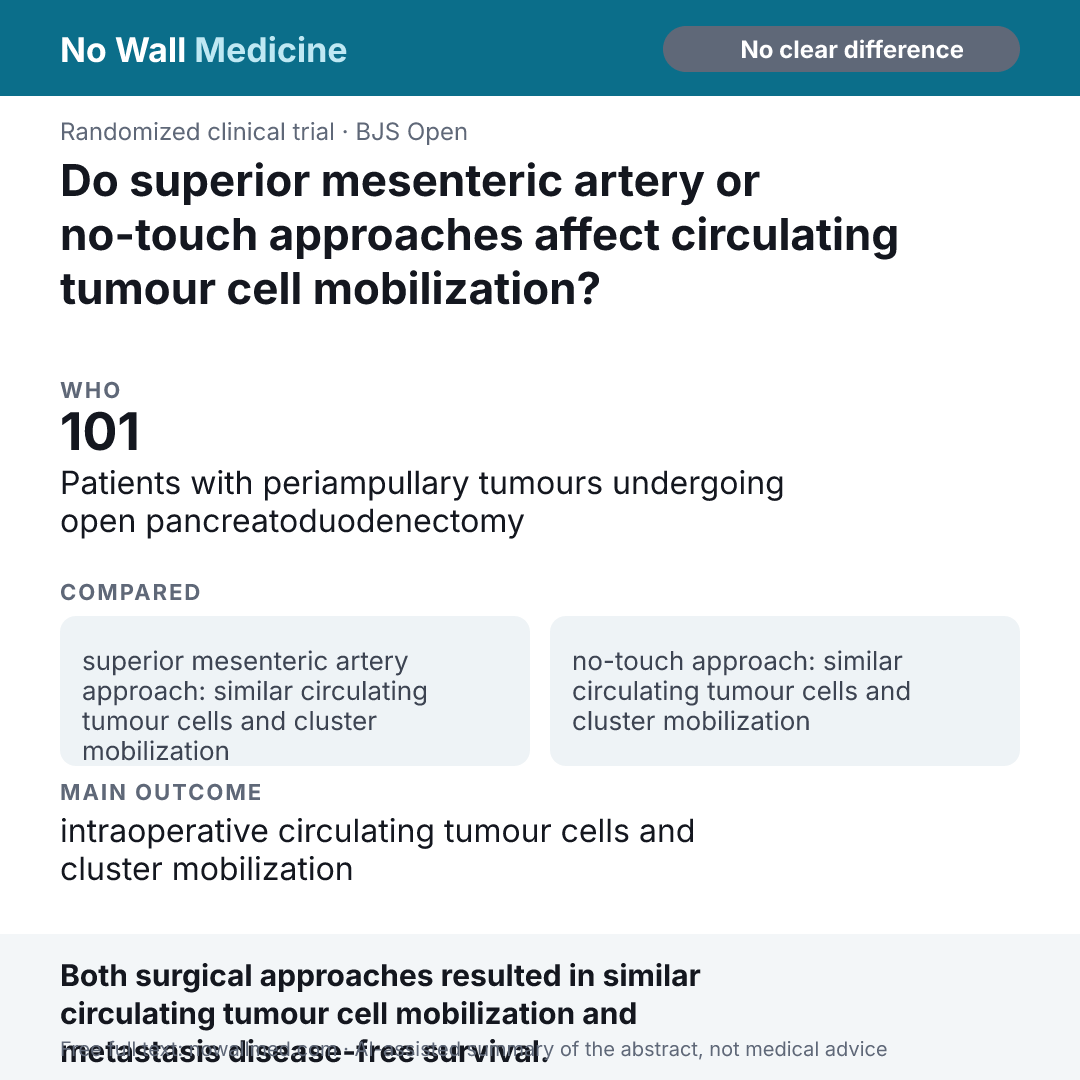
Effects of the superior mesenteric artery approach versus the no-touch approach during pancreatoduodenectomy on the mobilization of circulating tumour cells and clusters in pancreatic cancer (CETUPANC): randomized clinical trial
Randomized clinical trialNo clear difference
Do superior mesenteric artery or no-touch approaches affect circulating tumour cell mobilization?
Who
101
Patients with periampullary tumours undergoing open pancreatoduodenectomy
Compared
superior mesenteric artery approach: similar circulating tumour cells and cluster mobilization
no-touch approach: similar circulating tumour cells and cluster mobilization
Main outcome
intraoperative circulating tumour cells and cluster mobilization
Bottom line: Both surgical approaches resulted in similar circulating tumour cell mobilization and metastasis disease-free survival.
BJS Open · 2024-11-04 · Save PNG
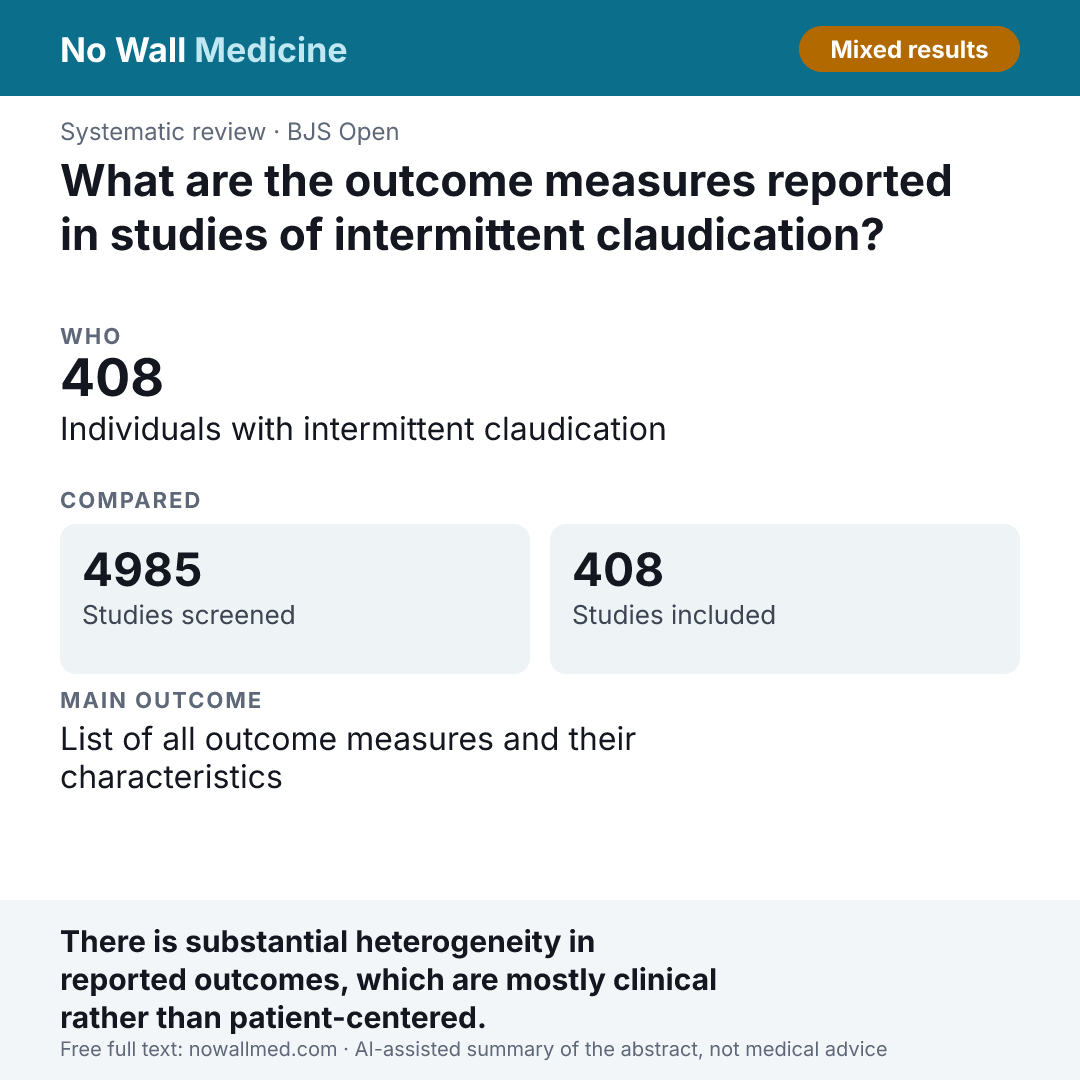
Reported outcomes in studies of intermittent claudication - first step toward a core outcome set: systematic review
Systematic reviewMixed results
What are the outcome measures reported in studies of intermittent claudication?
Who
408
Individuals with intermittent claudication
Compared
4985Studies screened
408Studies included
Main outcome
List of all outcome measures and their characteristics
Bottom line: There is substantial heterogeneity in reported outcomes, which are mostly clinical rather than patient-centered.
BJS Open · 2024-11-04 · Save PNG
Attention and executive delays in early childhood: a meta-analysis of neurodevelopmental conditions
Meta-analysisHarm found
How do attention and executive function compare in children with neurodevelopmental conditions?
Who
12292
Children aged 0 to 5 years with neurodevelopmental conditions
Compared
Neurodevelopmental conditions
Neurotypical peers
Main outcome
Standardised mean difference in attention and executive function
Result: attention g=0.36 (95% CI 0.23-0.48), executive function g=0.64 (95% CI 0.53-0.76)
Bottom line: Children with neurodevelopmental conditions show small attention and moderate executive function delays by preschool age.
Mol Psychiatry · 2024-11-03 · Save PNG

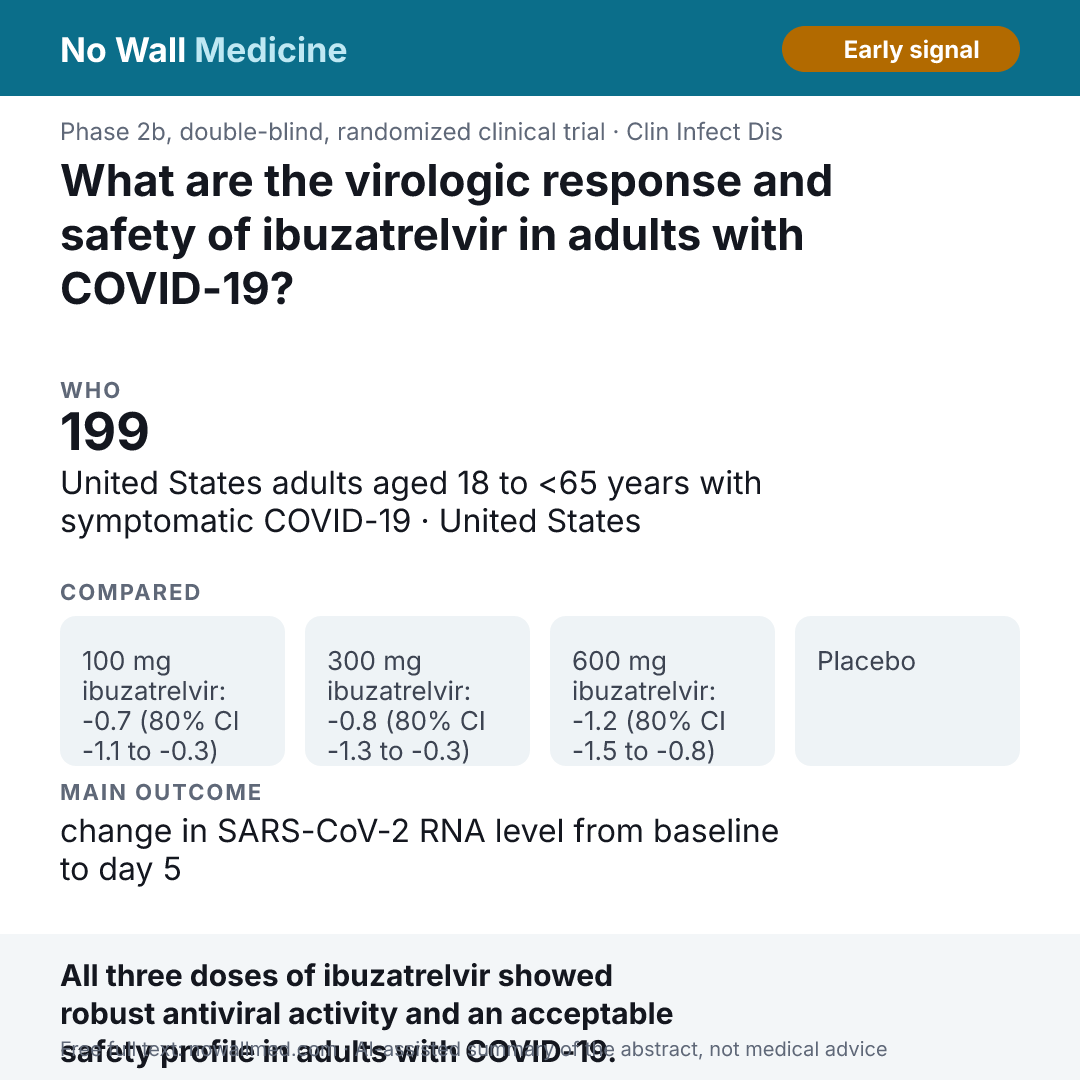
Virologic Response and Safety of Ibuzatrelvir, A Novel SARS-CoV-2 Antiviral, in Adults With COVID-19
Phase 2b, double-blind, randomized clinical trialEarly signal
What are the virologic response and safety of ibuzatrelvir in adults with COVID-19?
Who
199
United States adults aged 18 to <65 years with symptomatic COVID-19 · United States
Compared
100 mg ibuzatrelvir: -0.7 (80% CI -1.1 to -0.3) log10 copies/mL
300 mg ibuzatrelvir: -0.8 (80% CI -1.3 to -0.3) log10 copies/mL
600 mg ibuzatrelvir: -1.2 (80% CI -1.5 to -0.8) log10 copies/mL
Placebo
Main outcome
change in SARS-CoV-2 RNA level from baseline to day 5
Bottom line: All three doses of ibuzatrelvir showed robust antiviral activity and an acceptable safety profile in adults with COVID-19.
Clin Infect Dis · 2024-11-02 · Save PNG
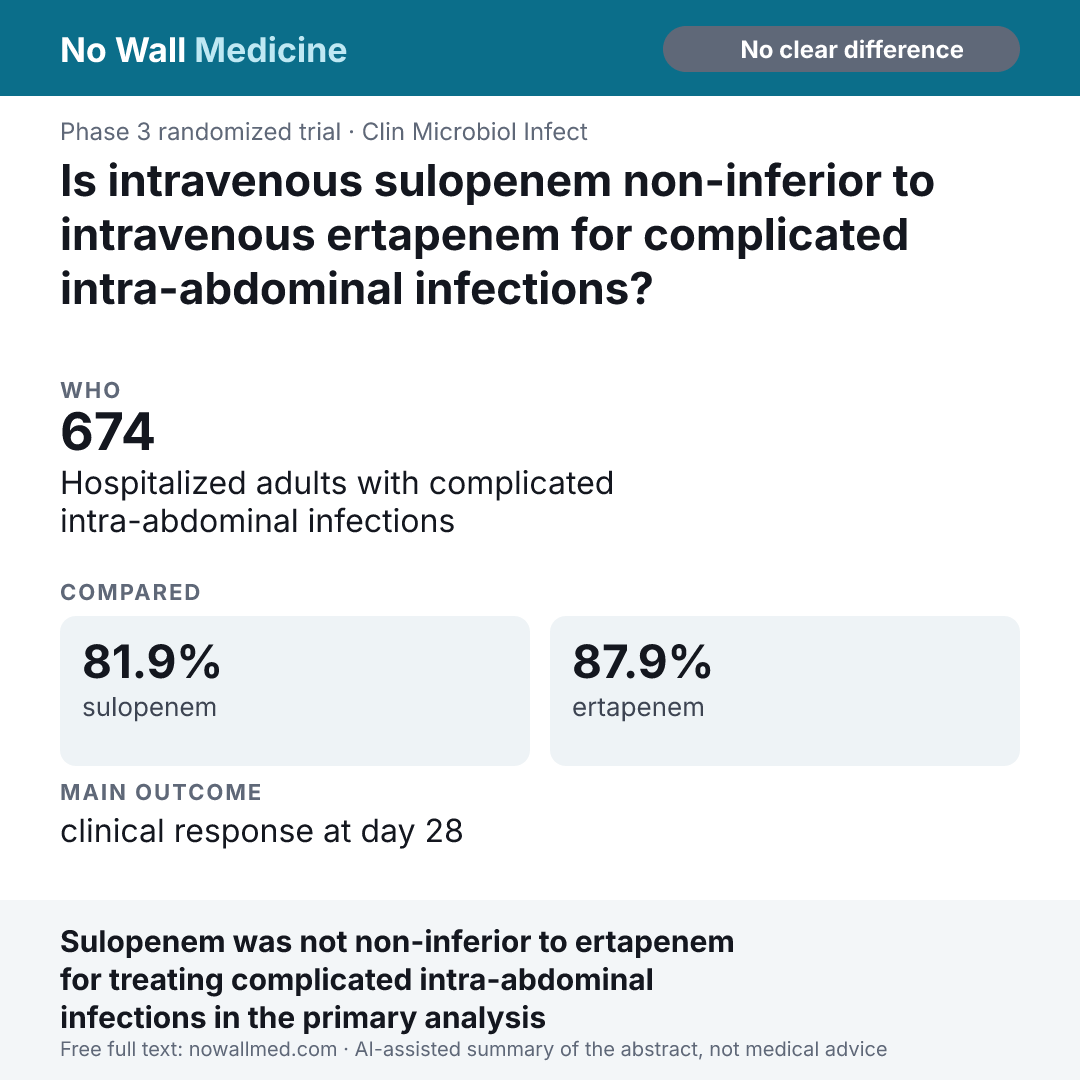
A phase 3 randomized trial of sulopenem vs. ertapenem in patients with complicated intra-abdominal infections
Phase 3 randomized trialNo clear difference
Is intravenous sulopenem non-inferior to intravenous ertapenem for complicated intra-abdominal infections?
Who
674
Hospitalized adults with complicated intra-abdominal infections
Compared
81.9%sulopenem (204/249)
87.9%ertapenem (233/265)
Main outcome
clinical response at day 28
Result: treatment difference -6.0%, 95% CI, [-12.2 to 0.2]
Bottom line: Sulopenem was not non-inferior to ertapenem for treating complicated intra-abdominal infections in the primary analysis population.
Clin Microbiol Infect · 2024-11-02 · Save PNG
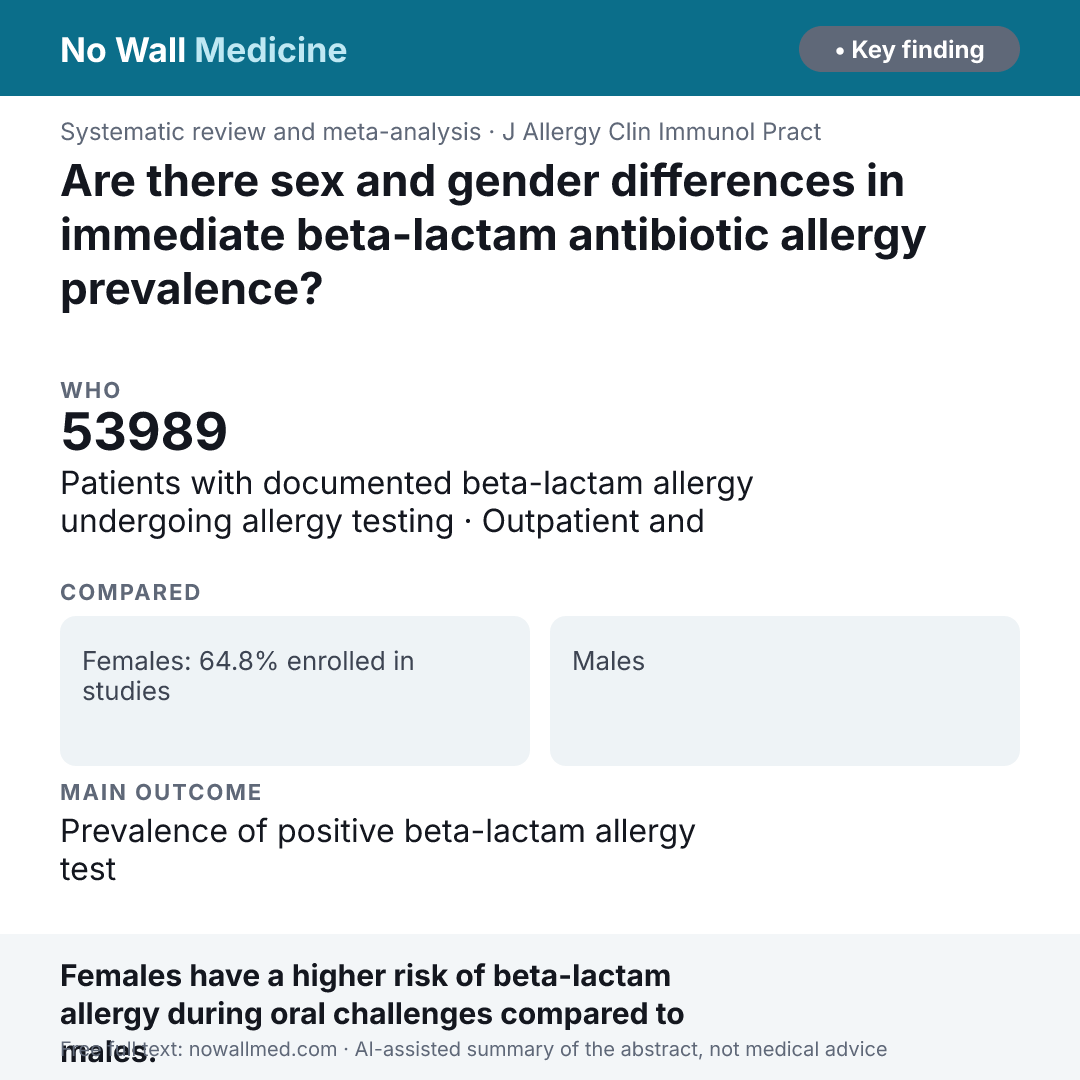
Effects of Sex and Gender in Immediate β-Lactam Antibiotic Allergy: A Systematic Review and Meta-Analysis
Systematic review and meta-analysisKey finding
Are there sex and gender differences in immediate beta-lactam antibiotic allergy prevalence?
Who
53989
Patients with documented beta-lactam allergy undergoing allergy testing · Outpatient and inpatient cohorts
Compared
Females: 64.8% enrolled in studies
Males
Main outcome
Prevalence of positive beta-lactam allergy test
Result: relative risk 1.40 (95% CI, 1.18-1.66)
Bottom line: Females have a higher risk of beta-lactam allergy during oral challenges compared to males.
J Allergy Clin Immunol Pract · 2024-11-02 · Save PNG
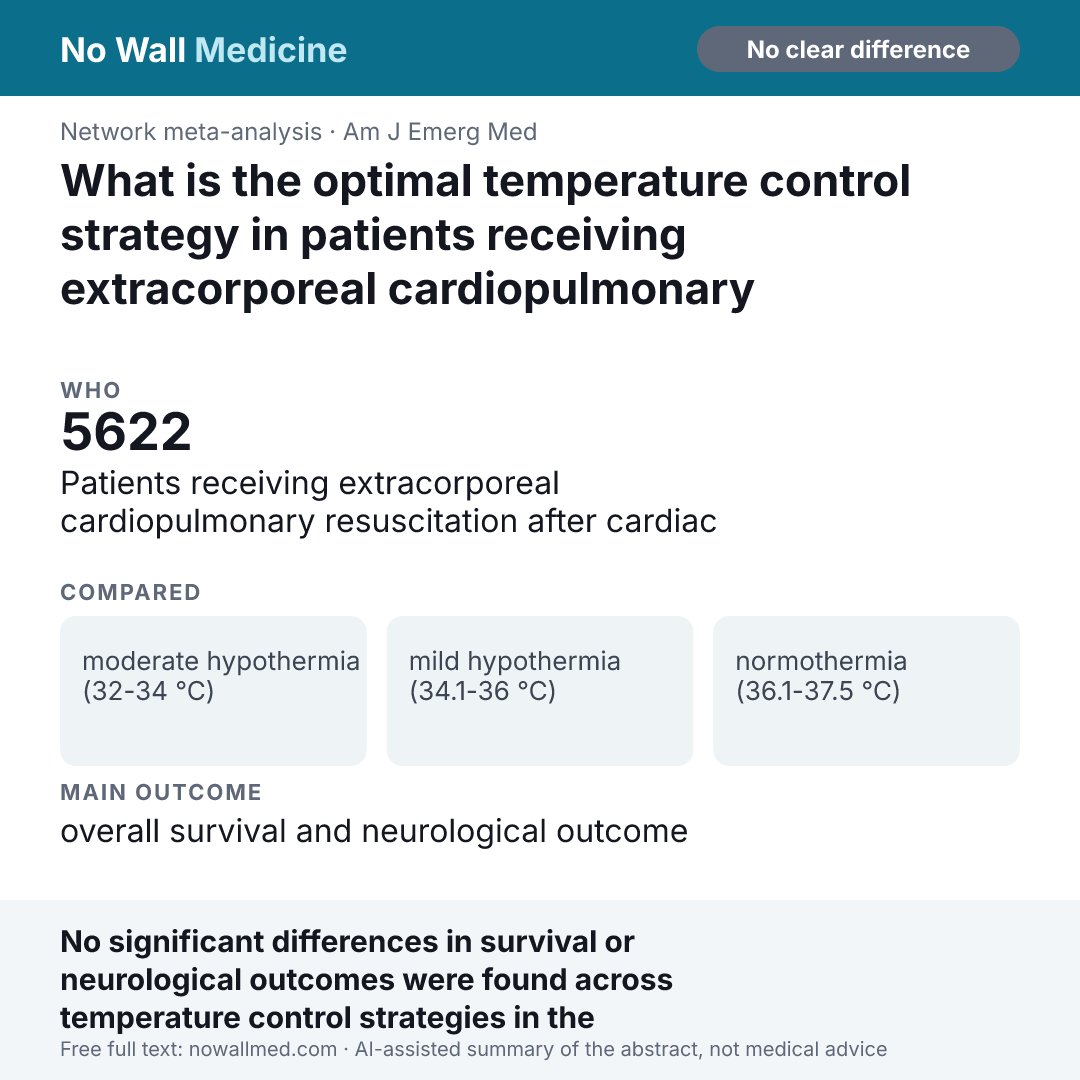
What's the optimal temperature control strategy in patients receiving ECPR after cardiac arrest? A network meta-analysis
Network meta-analysisNo clear difference
What is the optimal temperature control strategy in patients receiving extracorporeal cardiopulmonary resuscitation?
Who
5622
Patients receiving extracorporeal cardiopulmonary resuscitation after cardiac arrest
Compared
moderate hypothermia (32-34 °C)
mild hypothermia (34.1-36 °C)
normothermia (36.1-37.5 °C)
Main outcome
overall survival and neurological outcome
Bottom line: No significant differences in survival or neurological outcomes were found across temperature control strategies in the network meta-analysis.
Limitation: lower level of the evidence
Am J Emerg Med · 2024-11-02 · Save PNG
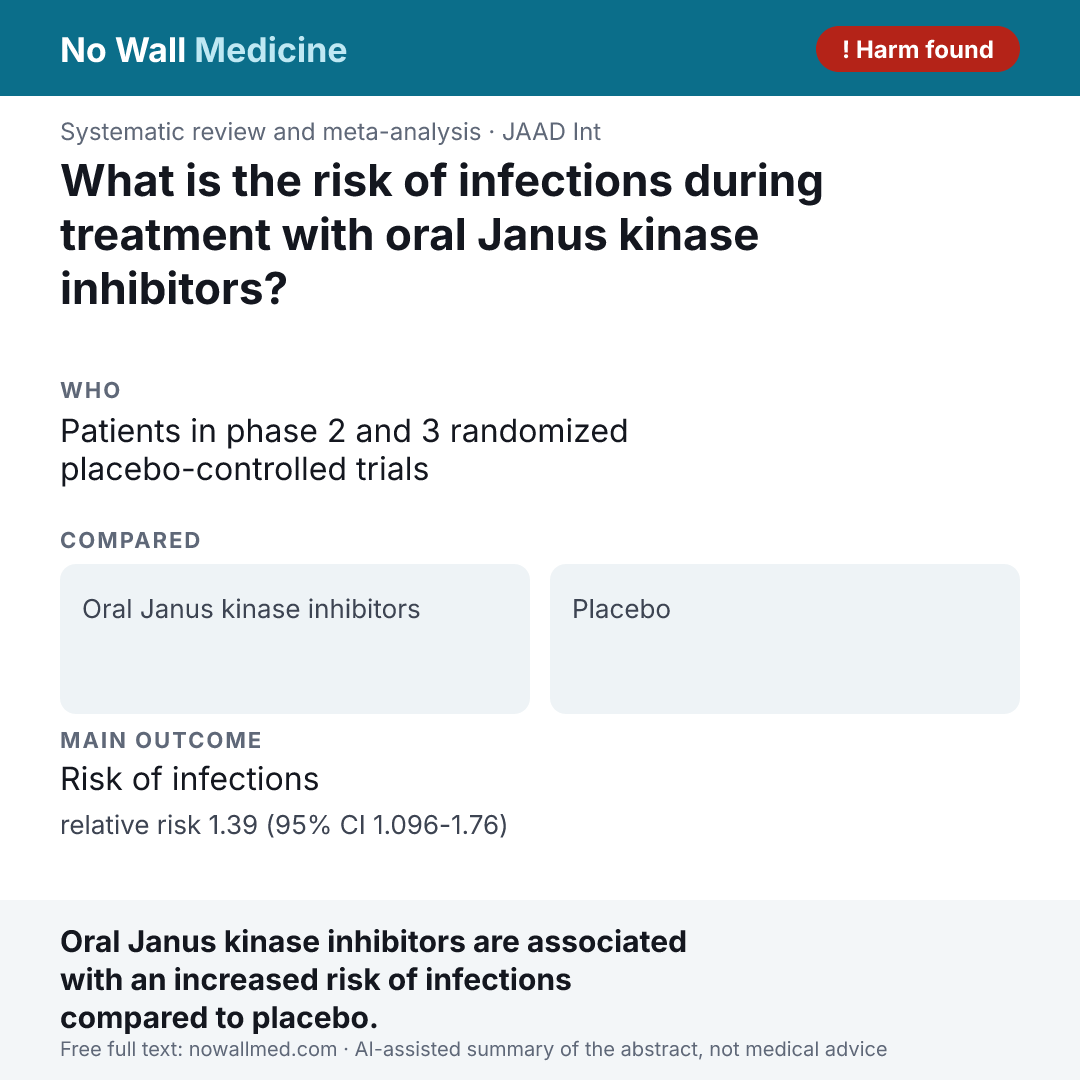
Risk of infections during treatment with oral Janus kinase inhibitors in randomized placebo-controlled trials: A systematic review and meta-analysis
Systematic review and meta-analysisHarm found
What is the risk of infections during treatment with oral Janus kinase inhibitors?
Who
Patients in phase 2 and 3 randomized placebo-controlled trials
Compared
Oral Janus kinase inhibitors
Placebo
Main outcome
Risk of infections
Result: relative risk 1.39 (95% CI 1.096-1.76)
Bottom line: Oral Janus kinase inhibitors are associated with an increased risk of infections compared to placebo.
JAAD Int · 2024-11-02 · Save PNG
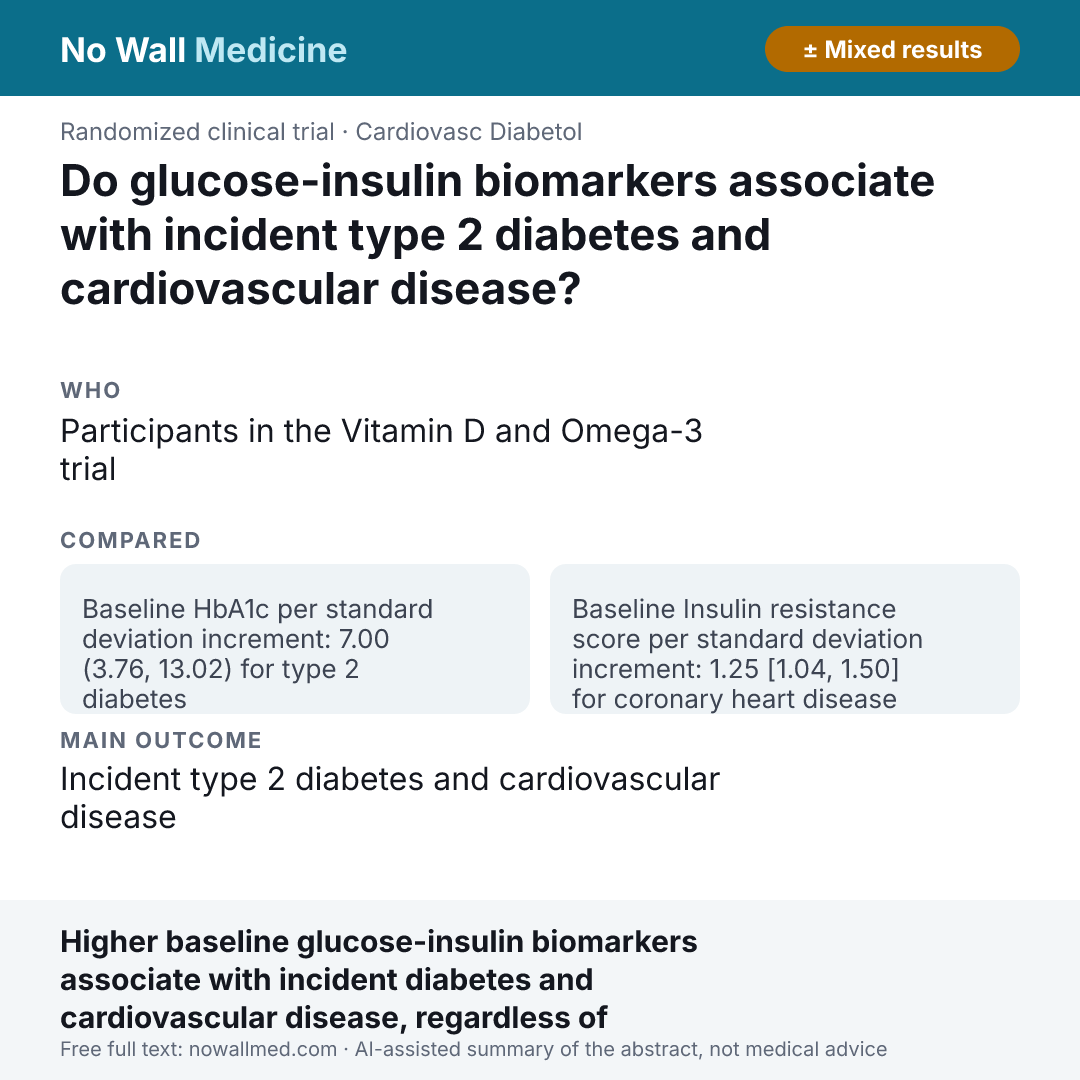
Biomarkers of glucose-insulin homeostasis and incident type 2 diabetes and cardiovascular disease: results from the Vitamin D and Omega-3 trial
Randomized clinical trialMixed results
Do glucose-insulin biomarkers associate with incident type 2 diabetes and cardiovascular disease?
Who
Participants in the Vitamin D and Omega-3 trial
Compared
Baseline HbA1c per standard deviation increment: 7.00 (3.76, 13.02) for type 2 diabetes
Baseline Insulin resistance score per standard deviation increment: 1.25 [1.04, 1.50] for coronary heart disease
Main outcome
Incident type 2 diabetes and cardiovascular disease
Bottom line: Higher baseline glucose-insulin biomarkers associate with incident diabetes and cardiovascular disease, regardless of vitamin D or omega-3 supplementation.
Cardiovasc Diabetol · 2024-11-02 · Save PNG
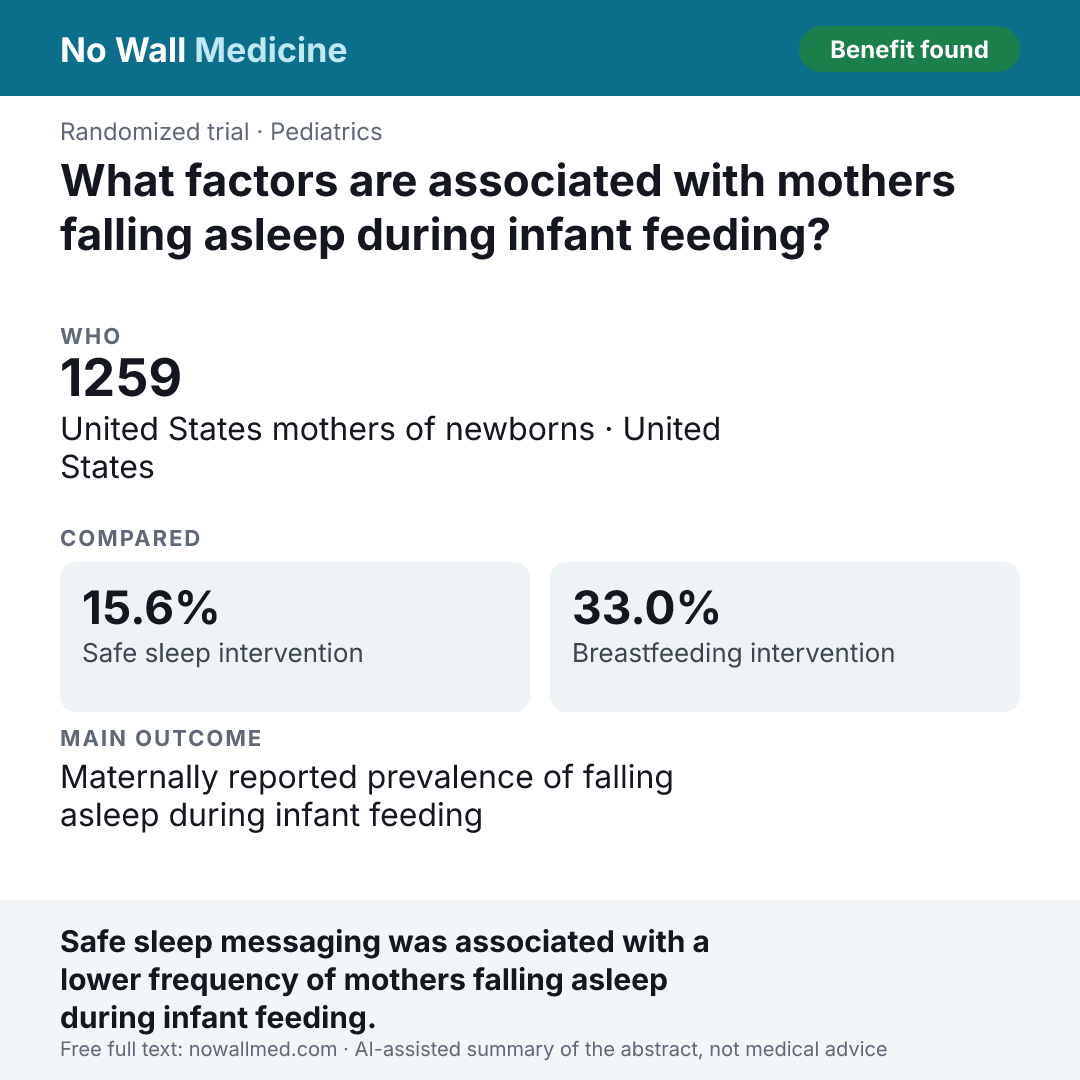
Mothers Falling Asleep During Infant Feeding
Randomized trialBenefit found
What factors are associated with mothers falling asleep during infant feeding?
Who
1259
United States mothers of newborns · United States
Compared
15.6%Safe sleep intervention
33.0%Breastfeeding intervention
Main outcome
Maternally reported prevalence of falling asleep during infant feeding
Result: adjusted odds ratio 0.40 (95% confidence interval, 0.25-0.65)
Bottom line: Safe sleep messaging was associated with a lower frequency of mothers falling asleep during infant feeding.
Pediatrics · 2024-11-01 · Save PNG
Safety and efficacy of pegcetacoplan treatment for cold agglutinin disease and warm antibody autoimmune hemolytic anemia
Open-label phase 2 randomized trialEarly signal
Is pegcetacoplan safe and effective for cold agglutinin disease and warm antibody autoimmune hemolytic anemia?
Who
Patients with cold agglutinin disease and warm antibody autoimmune hemolytic anemia
Compared
Cold agglutinin disease cohort: median change from baseline hemoglobin 2.4 (0.90-3.00) g/dL
Warm antibody autoimmune hemolytic anemia cohort: median change from baseline hemoglobin 1.7 g/dL (-1.40 to 2.90)
Main outcome
Hemoglobin levels, hemolysis, and fatigue scale scores
Bottom line: Pegcetacoplan is generally well tolerated and effective for patients with cold agglutinin disease and warm antibody autoimmune hemolytic anemia.
Blood · 2024-11-01 · Save PNG

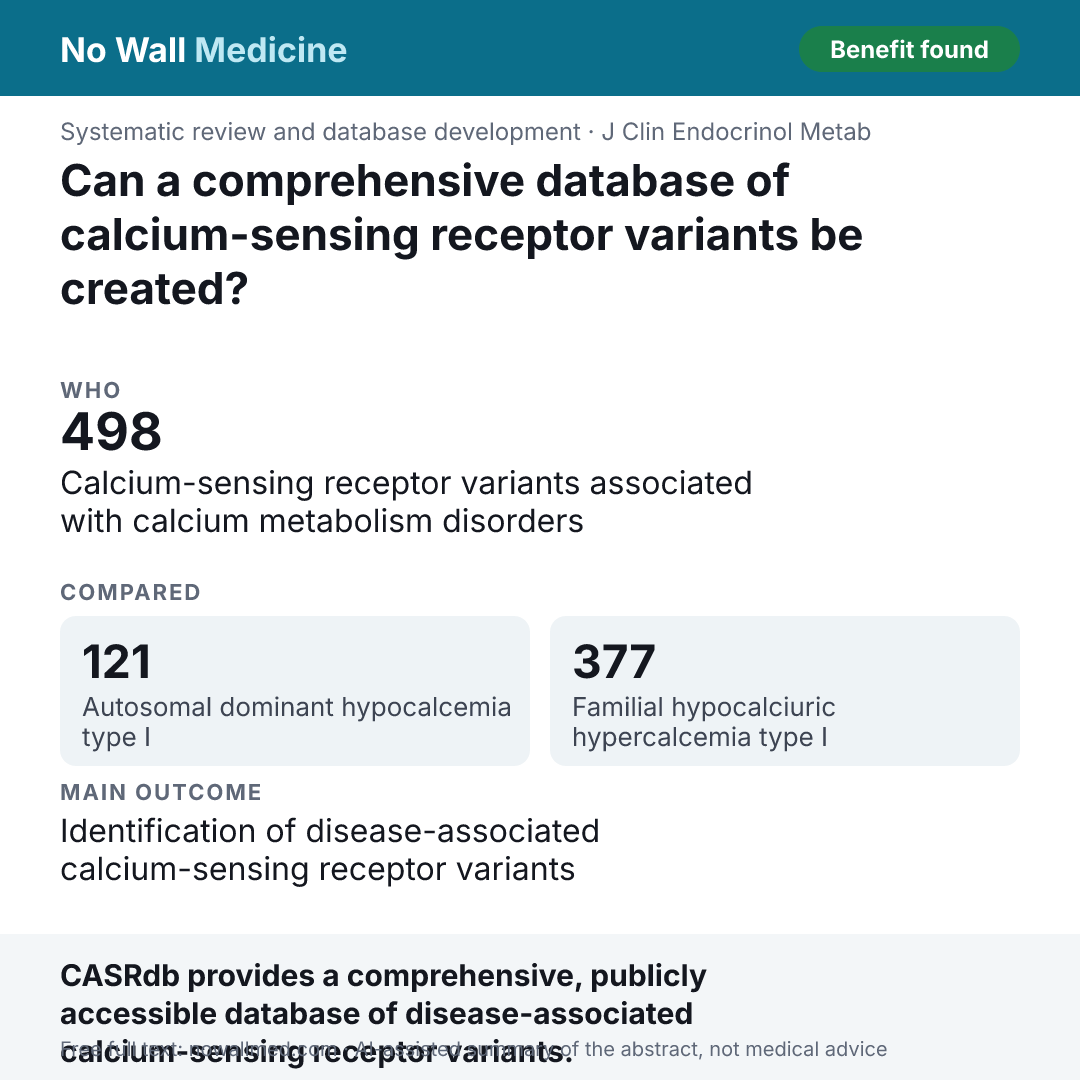
CASRdb: A Publicly Accessible Comprehensive Database for Disease-Associated Calcium-Sensing Receptor Variants
Systematic review and database developmentBenefit found
Can a comprehensive database of calcium-sensing receptor variants be created?
Who
498
Calcium-sensing receptor variants associated with calcium metabolism disorders
Compared
121Autosomal dominant hypocalcemia type I (24.3%)
377Familial hypocalciuric hypercalcemia type I (75.7%)
Main outcome
Identification of disease-associated calcium-sensing receptor variants
Bottom line: CASRdb provides a comprehensive, publicly accessible database of disease-associated calcium-sensing receptor variants.
J Clin Endocrinol Metab · 2024-11-01 · Save PNG
Cardiovascular and all-cause mortality outcomes of adrenalectomy versus medical treatment in primary aldosteronism: an umbrella review
Umbrella reviewBenefit found
Are adrenalectomy or mineralocorticoid receptor antagonist treatments better for primary aldosteronism outcomes?
Who
Patients with primary aldosteronism
Compared
Adrenalectomy
Mineralocorticoid receptor antagonist treatment
Main outcome
Cardiovascular outcomes and all-cause mortality
Result: major adverse cardiovascular events OR 1.81 (95% CI 1.33-2.46)
Bottom line: Adrenalectomy may offer favorable outcomes compared to mineralocorticoid receptor antagonist treatment for cardiovascular events and mortality.
Int J Surg · 2024-11-01 · Save PNG

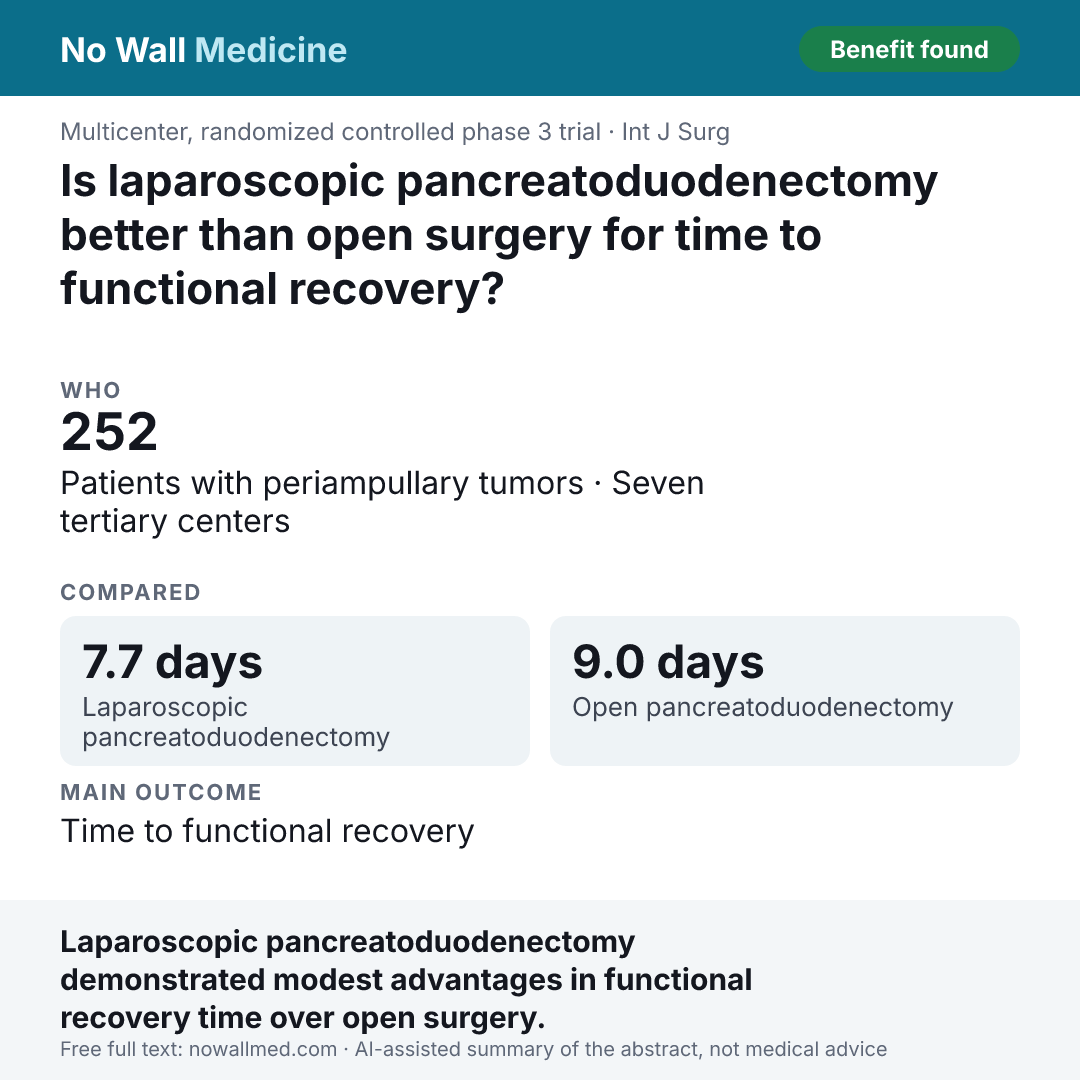
Laparoscopic versus open pancreatoduodenectomy for periampullary tumors: a randomized clinical trial
Multicenter, randomized controlled phase 3 trialBenefit found
Is laparoscopic pancreatoduodenectomy better than open surgery for time to functional recovery?
Who
252
Patients with periampullary tumors · Seven tertiary centers
Compared
7.7 daysLaparoscopic pancreatoduodenectomy
9.0 daysOpen pancreatoduodenectomy
Main outcome
Time to functional recovery
Result: hazard ratio 1.34 (95% CI 1.03-1.74)
Bottom line: Laparoscopic pancreatoduodenectomy demonstrated modest advantages in functional recovery time over open surgery.
Int J Surg · 2024-11-01 · Save PNG
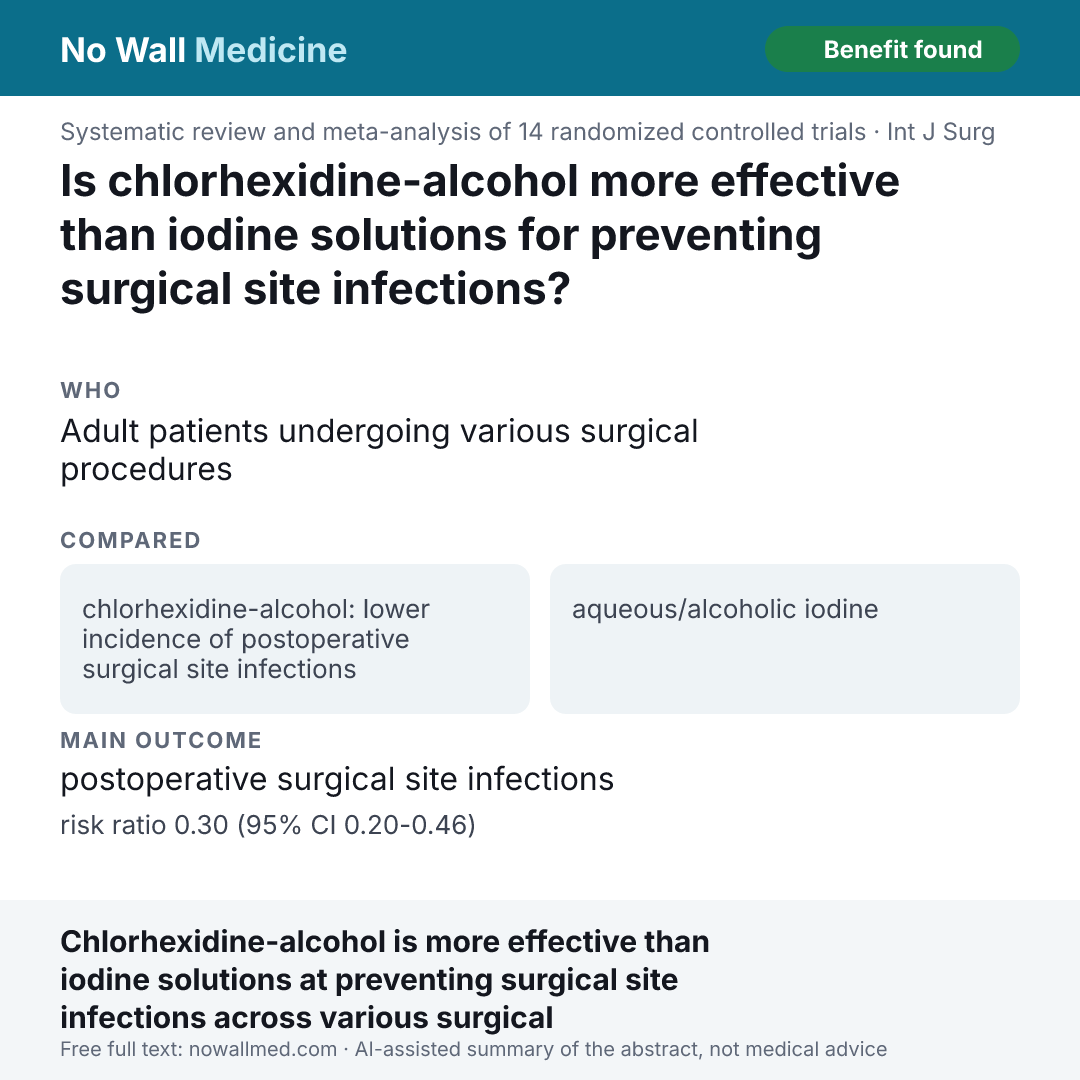
Evaluation of the efficacy of chlorhexidine-alcohol vs. aqueous/alcoholic iodine solutions for the prevention of surgical site infections: a systematic review and meta-analysis
Systematic review and meta-analysis of 14 randomized controlled trialsBenefit found
Is chlorhexidine-alcohol more effective than iodine solutions for preventing surgical site infections?
Who
Adult patients undergoing various surgical procedures
Compared
chlorhexidine-alcohol: lower incidence of postoperative surgical site infections
aqueous/alcoholic iodine
Main outcome
postoperative surgical site infections
Result: risk ratio 0.30 (95% CI 0.20-0.46)
Bottom line: Chlorhexidine-alcohol is more effective than iodine solutions at preventing surgical site infections across various surgical procedures.
Int J Surg · 2024-11-01 · Save PNG
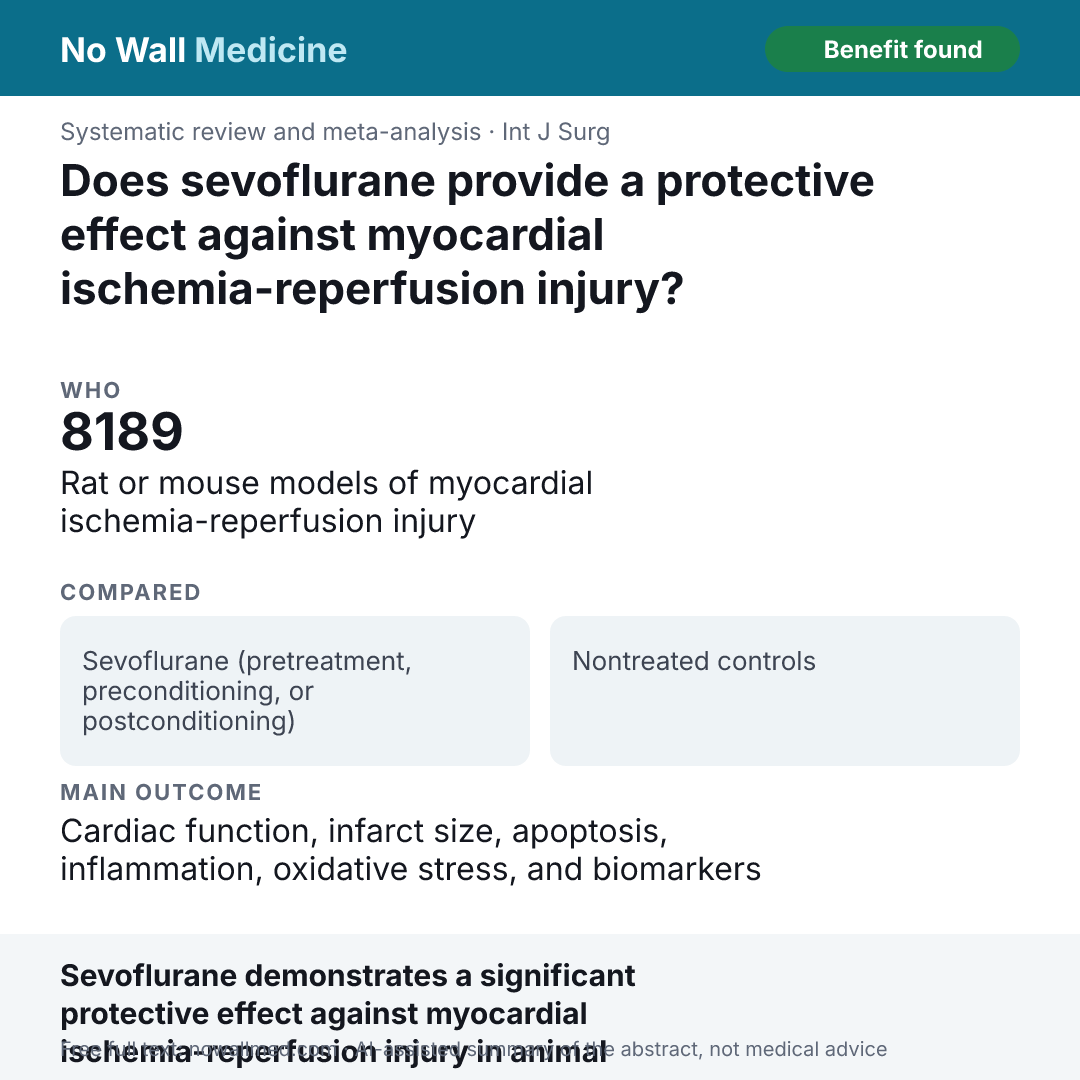
Protective effect of sevoflurane on myocardial ischemia-reperfusion injury: a systematic review and meta-analysis
Systematic review and meta-analysisBenefit found
Does sevoflurane provide a protective effect against myocardial ischemia-reperfusion injury?
Who
8189
Rat or mouse models of myocardial ischemia-reperfusion injury
Compared
Sevoflurane (pretreatment, preconditioning, or postconditioning)
Nontreated controls
Main outcome
Cardiac function, infarct size, apoptosis, inflammation, oxidative stress, and biomarkers
Bottom line: Sevoflurane demonstrates a significant protective effect against myocardial ischemia-reperfusion injury in animal models.
Int J Surg · 2024-11-01 · Save PNG
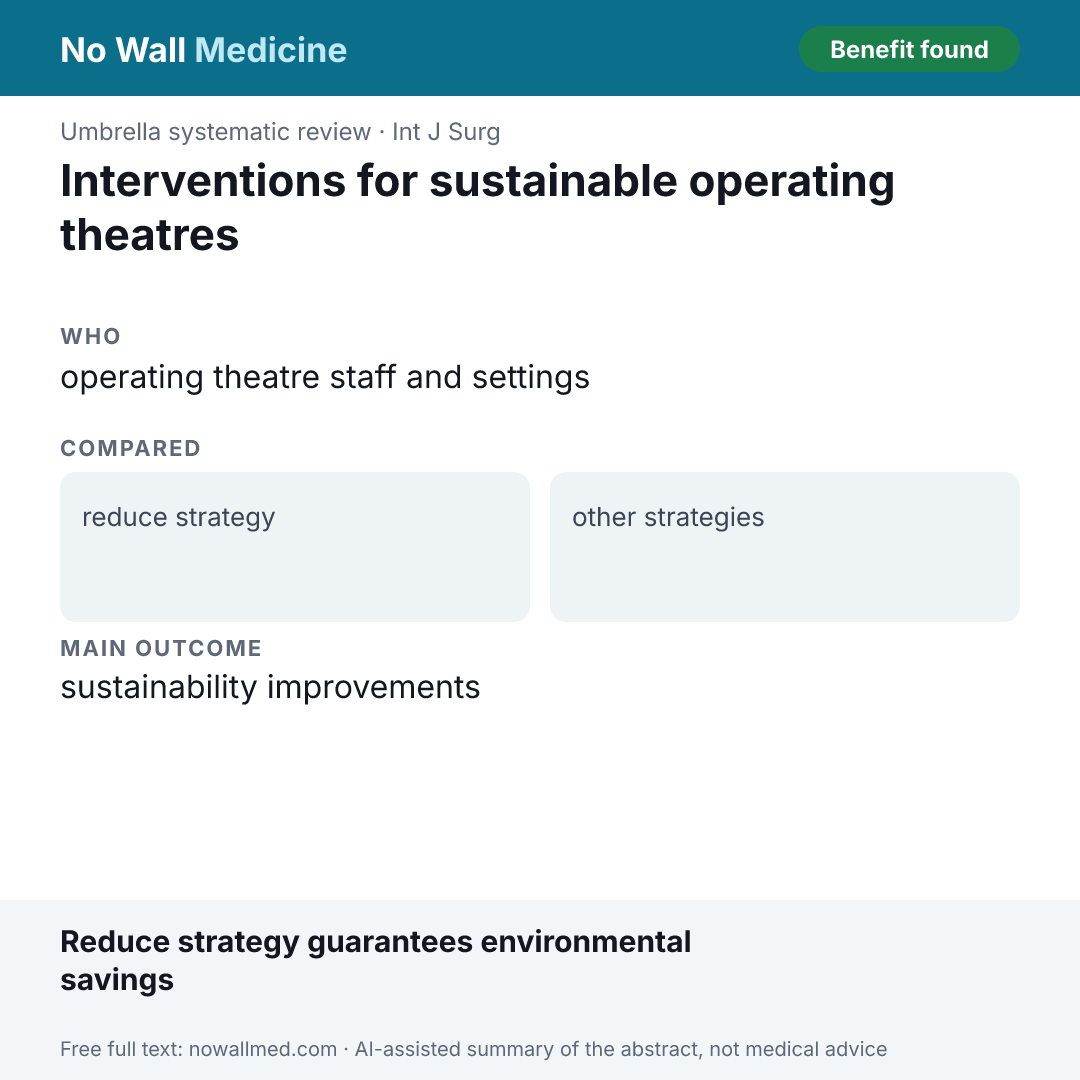
Interventions to achieve environmentally sustainable operating theatres: an umbrella systematic review using the behaviour change wheel
Umbrella systematic reviewBenefit found
Interventions for sustainable operating theatres
Who
operating theatre staff and settings
Compared
reduce strategy
other strategies
Main outcome
sustainability improvements
Bottom line: Reduce strategy guarantees environmental savings
Limitation: comparing outcomes is difficult
Int J Surg · 2024-11-01 · Save PNG
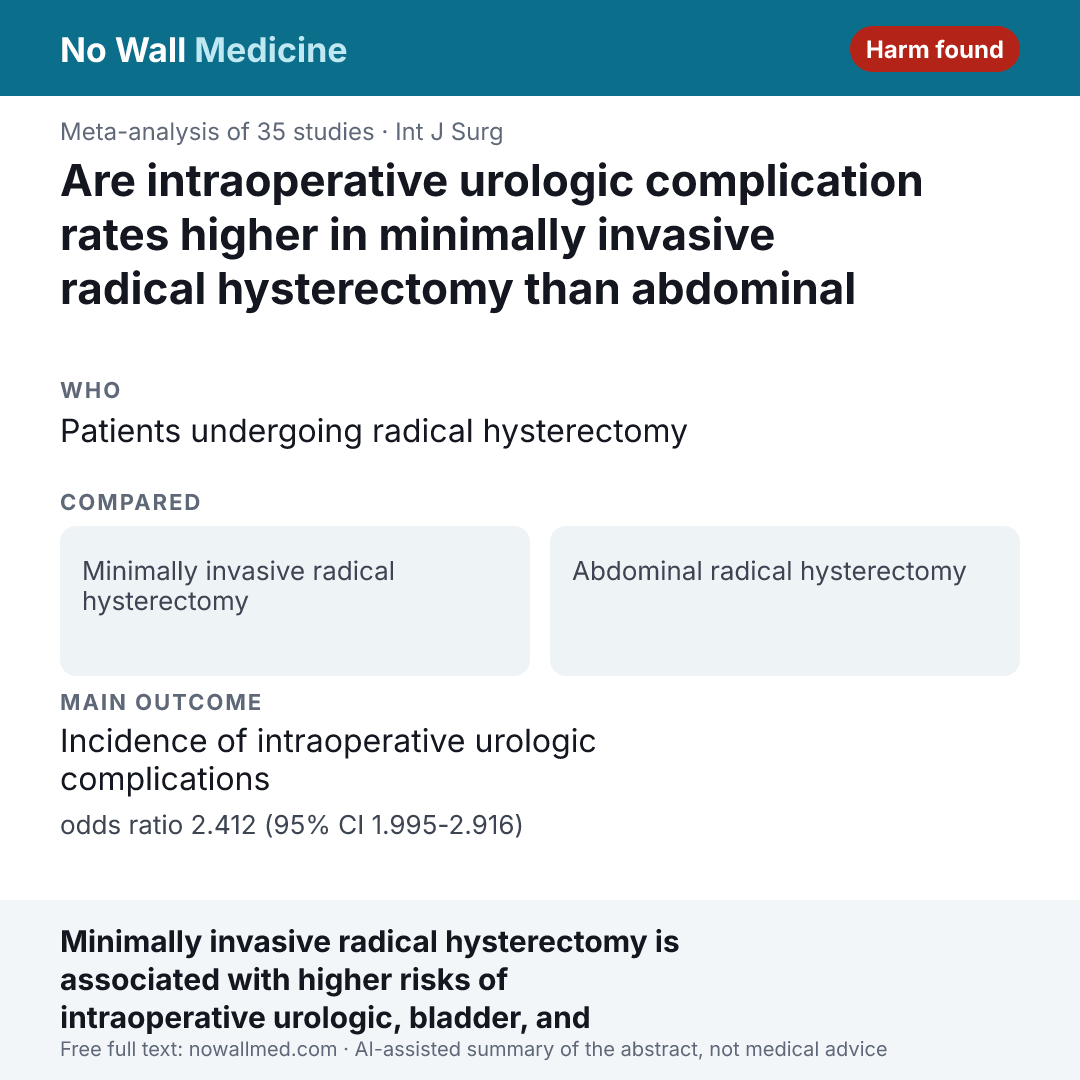
Meta-analysis reveals higher intraoperative urologic complication rates in minimally invasive radical hysterectomy compared to abdominal radical hysterectomy
Meta-analysis of 35 studiesHarm found
Are intraoperative urologic complication rates higher in minimally invasive radical hysterectomy than abdominal radical hysterectomy?
Who
Patients undergoing radical hysterectomy
Compared
Minimally invasive radical hysterectomy
Abdominal radical hysterectomy
Main outcome
Incidence of intraoperative urologic complications
Result: odds ratio 2.412 (95% CI 1.995-2.916)
Bottom line: Minimally invasive radical hysterectomy is associated with higher risks of intraoperative urologic, bladder, and ureteral injuries.
Int J Surg · 2024-11-01 · Save PNG