Visual abstracts
New randomized trials and meta-analyses from leading journals at a glance: who was studied, what was compared, and what was found. Every paper is free to read in full.
All specialtiesCardiology 2127Oncology 1807Gastroenterology & Hepatology 797Infectious Disease 1324Neurology 863Psychiatry & Mental Health 1028Pulmonology 887Critical Care 595Endocrinology & Diabetes 1127Pediatrics 1238Surgery 1063Orthopedics & Sports Medicine 393Neurosurgery 259Cardiothoracic & Vascular Surgery 226Plastic & Reconstructive Surgery 319Nephrology 448Rheumatology 294Hematology 464Dermatology 244Ophthalmology 245Obstetrics & Gynecology 692Public & Global Health 399Radiology & Imaging 291Anesthesiology 416Urology 373ENT (Otolaryngology) 277Emergency Medicine 232Allergy & Immunology 133Geriatrics 446Family Medicine & Primary Care 246Medical Genetics & Genomics 228Pathology & Laboratory Medicine 72Physical Medicine & Rehabilitation 369Palliative Care 181Nutrition 572Digital Health & AI 1082General Medicine 162
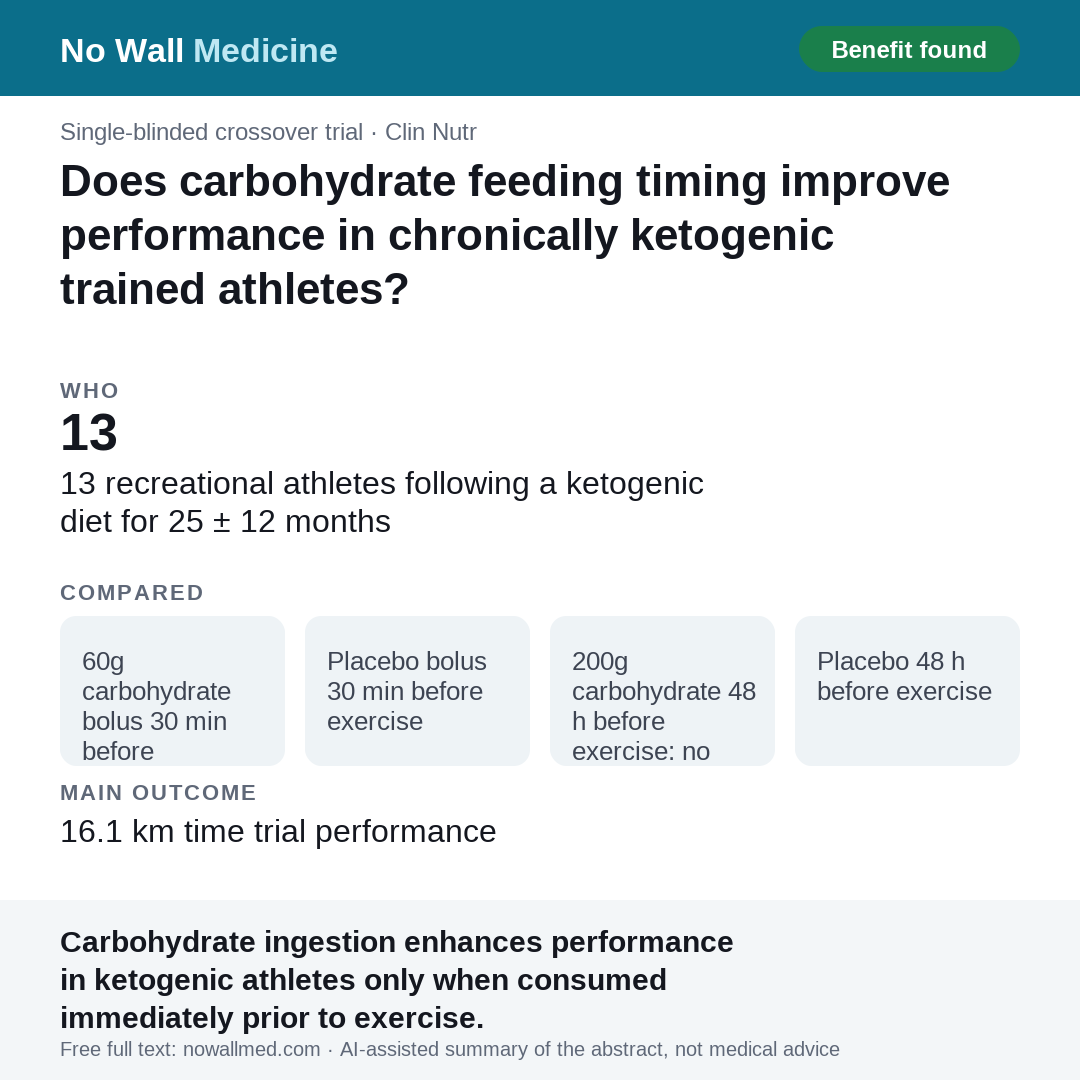
Strategic carbohydrate feeding improves performance in ketogenic trained athletes
Single-blinded crossover trialBenefit found
Does carbohydrate feeding timing improve performance in chronically ketogenic trained athletes?
Who
13
13 recreational athletes following a ketogenic diet for 25 ± 12 months
Compared
60g carbohydrate bolus 30 min before exercise: significantly improved 16.1 km time trial performance
Placebo bolus 30 min before exercise
200g carbohydrate 48 h before exercise: no impact on performance
Placebo 48 h before exercise
Main outcome
16.1 km time trial performance
Bottom line: Carbohydrate ingestion enhances performance in ketogenic athletes only when consumed immediately prior to exercise.
Clin Nutr · 2025-06-25Download image
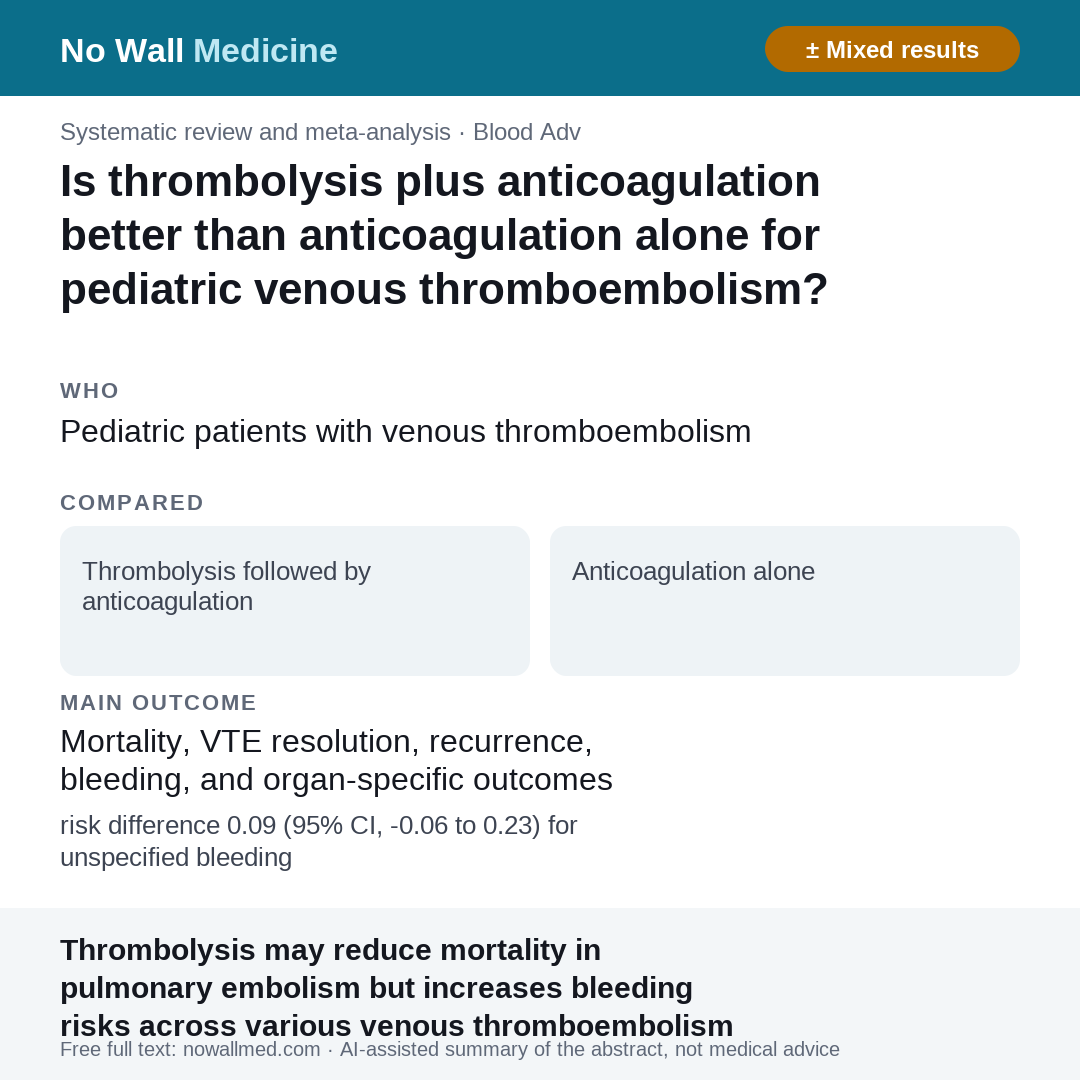
Efficacy and safety of thrombolysis for pediatric venous thromboembolism: a systematic review and meta-analysis
Systematic review and meta-analysisMixed results
Is thrombolysis plus anticoagulation better than anticoagulation alone for pediatric venous thromboembolism?
Who
Pediatric patients with venous thromboembolism
Compared
Thrombolysis followed by anticoagulation
Anticoagulation alone
Main outcome
Mortality, VTE resolution, recurrence, bleeding, and organ-specific outcomes
Result: risk difference 0.09 (95% CI, -0.06 to 0.23) for unspecified bleeding
Bottom line: Thrombolysis may reduce mortality in pulmonary embolism but increases bleeding risks across various venous thromboembolism types.
Limitation: Very-low-certainty evidence due to confounding and imprecision from small sample sizes.
Blood Adv · 2025-06-25Download image
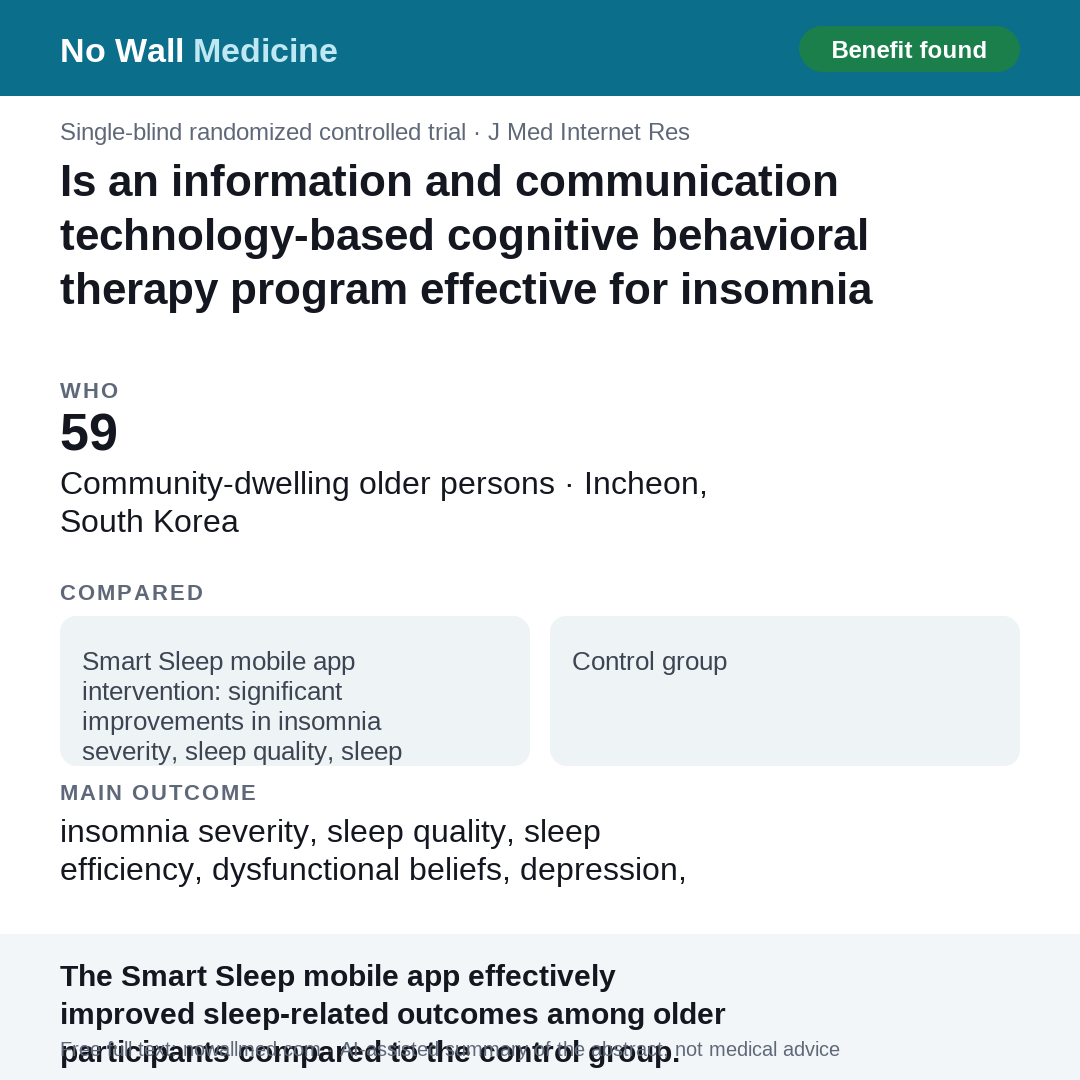
Effectiveness of Information and Communication Technology-Based Cognitive Behavioral Therapy Using the Smart Sleep App on Insomnia in Older Adults: Randomized Controlled Trial
Single-blind randomized controlled trialBenefit found
Is an information and communication technology-based cognitive behavioral therapy program effective for insomnia in older adults?
Who
59
Community-dwelling older persons · Incheon, South Korea
Compared
Smart Sleep mobile app intervention: significant improvements in insomnia severity, sleep quality, sleep efficiency, and dysfunctional beliefs about sleep
Control group
Main outcome
insomnia severity, sleep quality, sleep efficiency, dysfunctional beliefs, depression, and quality of life
Bottom line: The Smart Sleep mobile app effectively improved sleep-related outcomes among older participants compared to the control group.
J Med Internet Res · 2025-06-25Download image
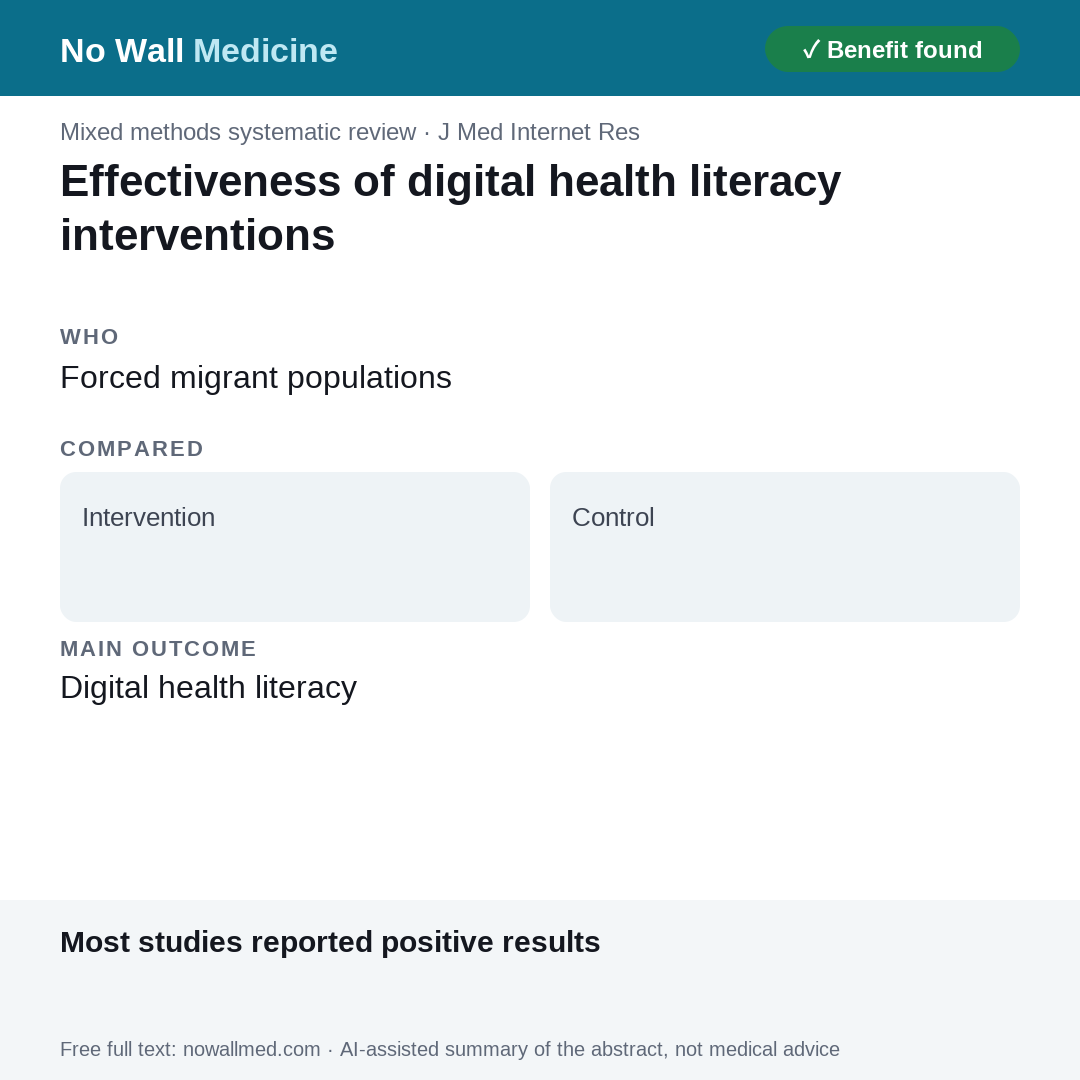
Effectiveness of Interventions to Improve Digital Health Literacy in Forced Migrant Populations: Mixed Methods Systematic Review
Mixed methods systematic reviewBenefit found
Effectiveness of digital health literacy interventions
Who
Forced migrant populations
Compared
Intervention
Control
Main outcome
Digital health literacy
Bottom line: Most studies reported positive results
J Med Internet Res · 2025-06-25Download image
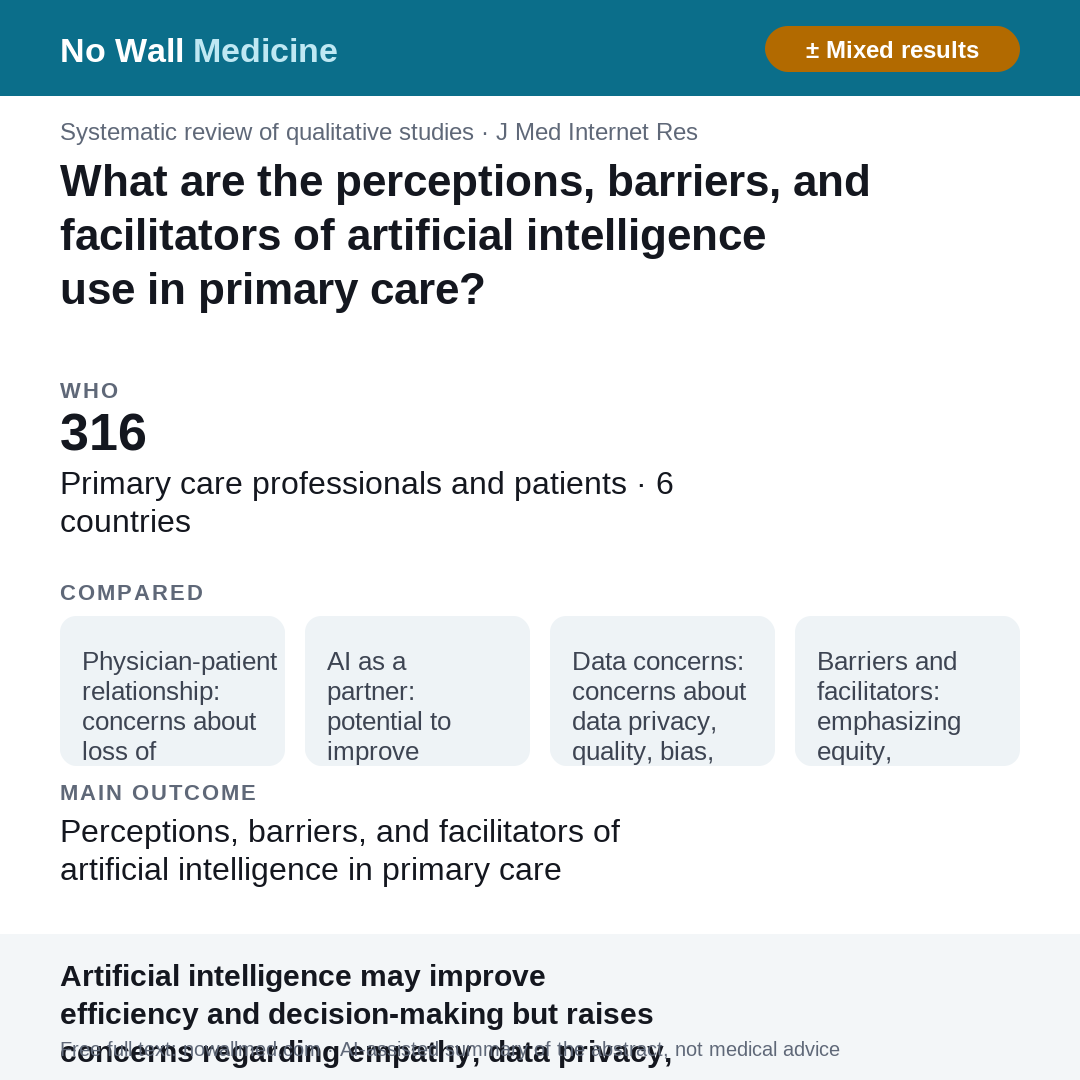
Perceptions of, Barriers to, and Facilitators of the Use of AI in Primary Care: Systematic Review of Qualitative Studies
Systematic review of qualitative studiesMixed results
What are the perceptions, barriers, and facilitators of artificial intelligence use in primary care?
Who
316
Primary care professionals and patients · 6 countries
Compared
Physician-patient relationship: concerns about loss of empathy, connection, and trust
AI as a partner: potential to improve workflow and decision-making
Data concerns: concerns about data privacy, quality, bias, and corporate responsibility
Barriers and facilitators: emphasizing equity, accessibility, and stakeholder co-design
Main outcome
Perceptions, barriers, and facilitators of artificial intelligence in primary care
Bottom line: Artificial intelligence may improve efficiency and decision-making but raises concerns regarding empathy, data privacy, and bias.
Limitation: Heterogeneity in methods and sampling strategies; lack of perspectives from other professionals.
J Med Internet Res · 2025-06-25Download image
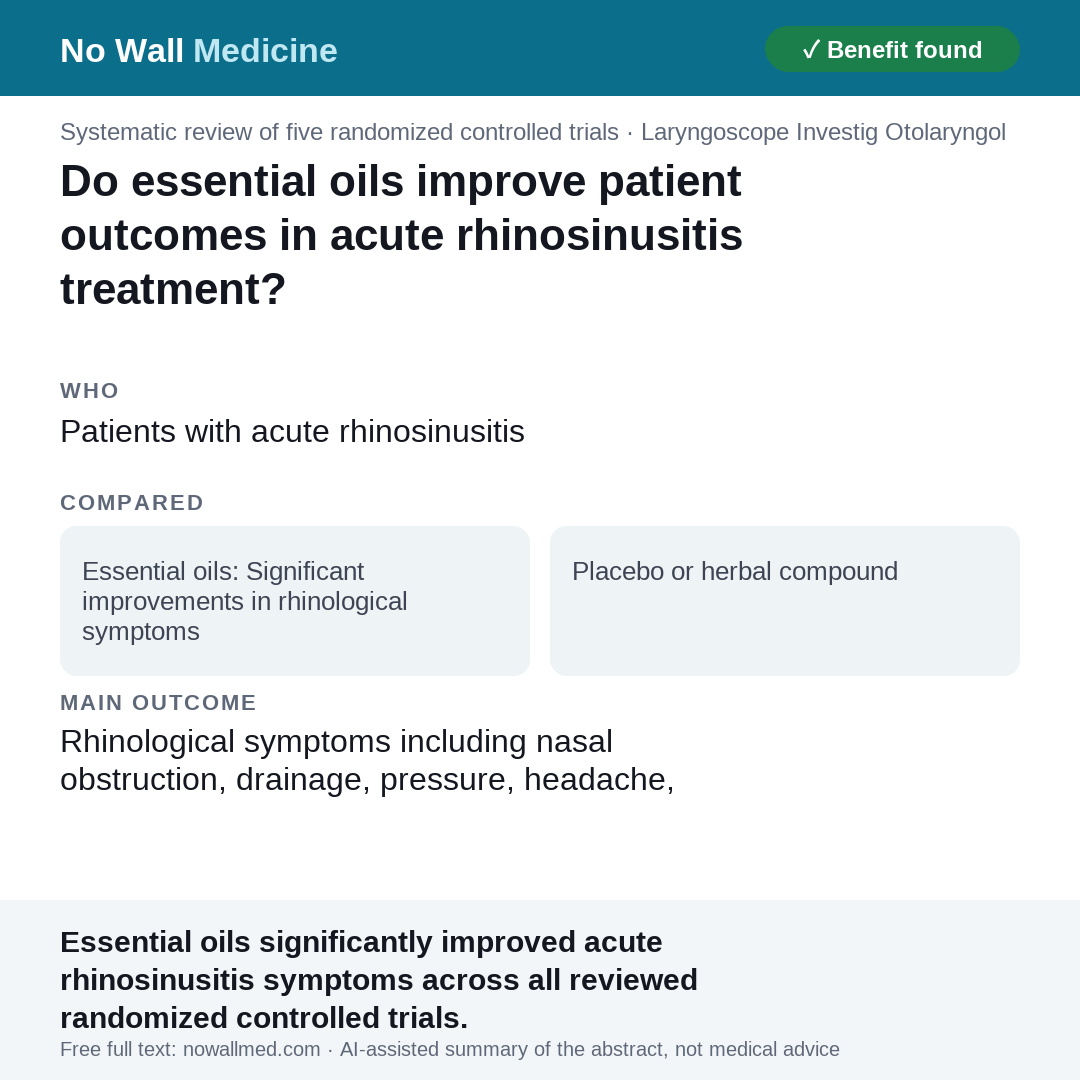
Effects of Essential Oils in the Treatment of Acute Rhinosinusitis: A Systematic Review
Systematic review of five randomized controlled trialsBenefit found
Do essential oils improve patient outcomes in acute rhinosinusitis treatment?
Who
Patients with acute rhinosinusitis
Compared
Essential oils: Significant improvements in rhinological symptoms
Placebo or herbal compound
Main outcome
Rhinological symptoms including nasal obstruction, drainage, pressure, headache, fatigue, and fever
Bottom line: Essential oils significantly improved acute rhinosinusitis symptoms across all reviewed randomized controlled trials.
Limitation: Clinical studies examining the effect of essential oils on patient outcomes are limited.
Laryngoscope Investig Otolaryngol · 2025-06-25Download image
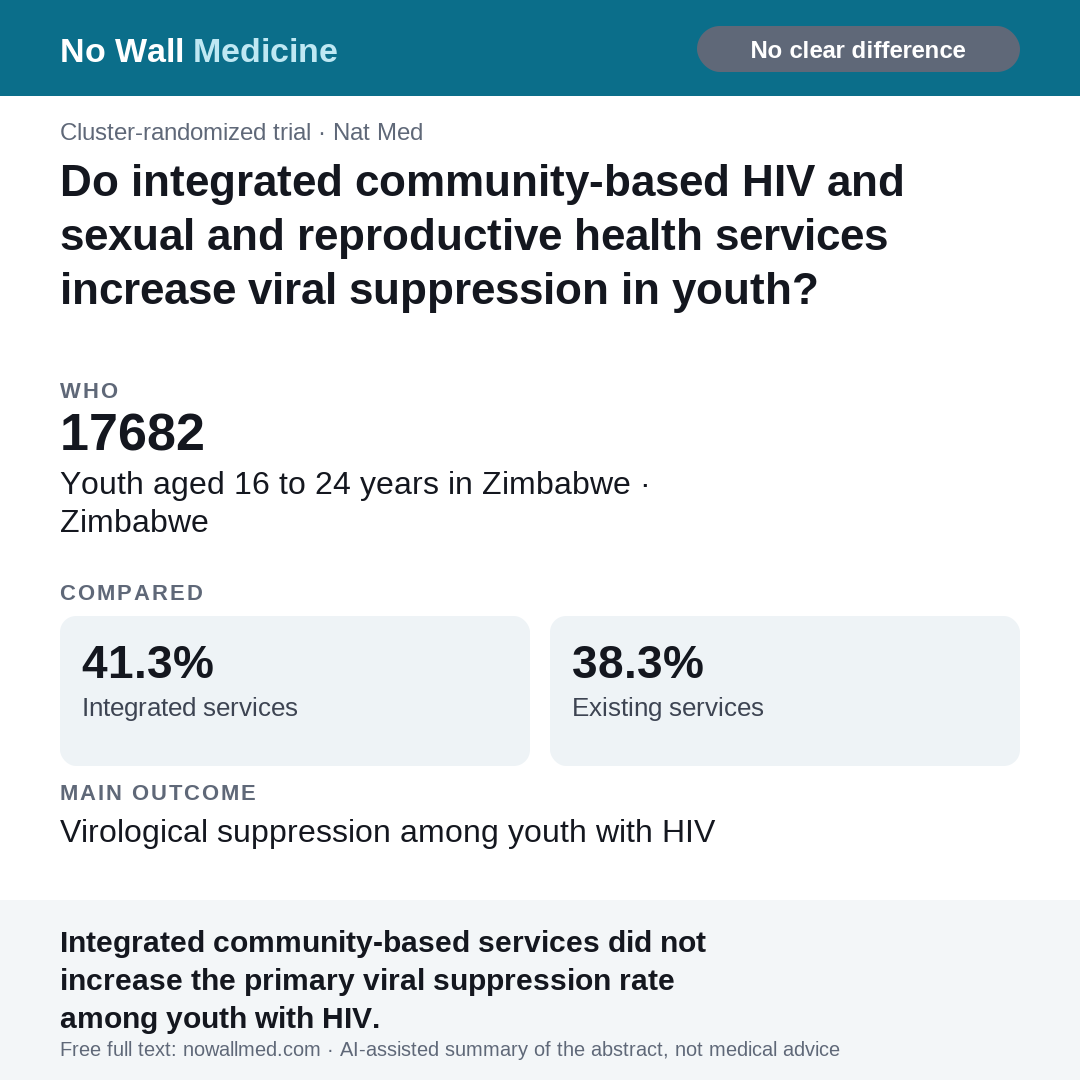
Integrated community-based HIV and sexual and reproductive health services for youth: a cluster-randomized trial
Cluster-randomized trialNo clear difference
Do integrated community-based HIV and sexual and reproductive health services increase viral suppression in youth?
Who
17682
Youth aged 16 to 24 years in Zimbabwe · Zimbabwe
Compared
41.3%Integrated services
38.3%Existing services
Main outcome
Virological suppression among youth with HIV
Result: risk ratio 1.07 (95% confidence interval 0.88 to 1.30)
Bottom line: Integrated community-based services did not increase the primary viral suppression rate among youth with HIV.
Nat Med · 2025-06-24Download image
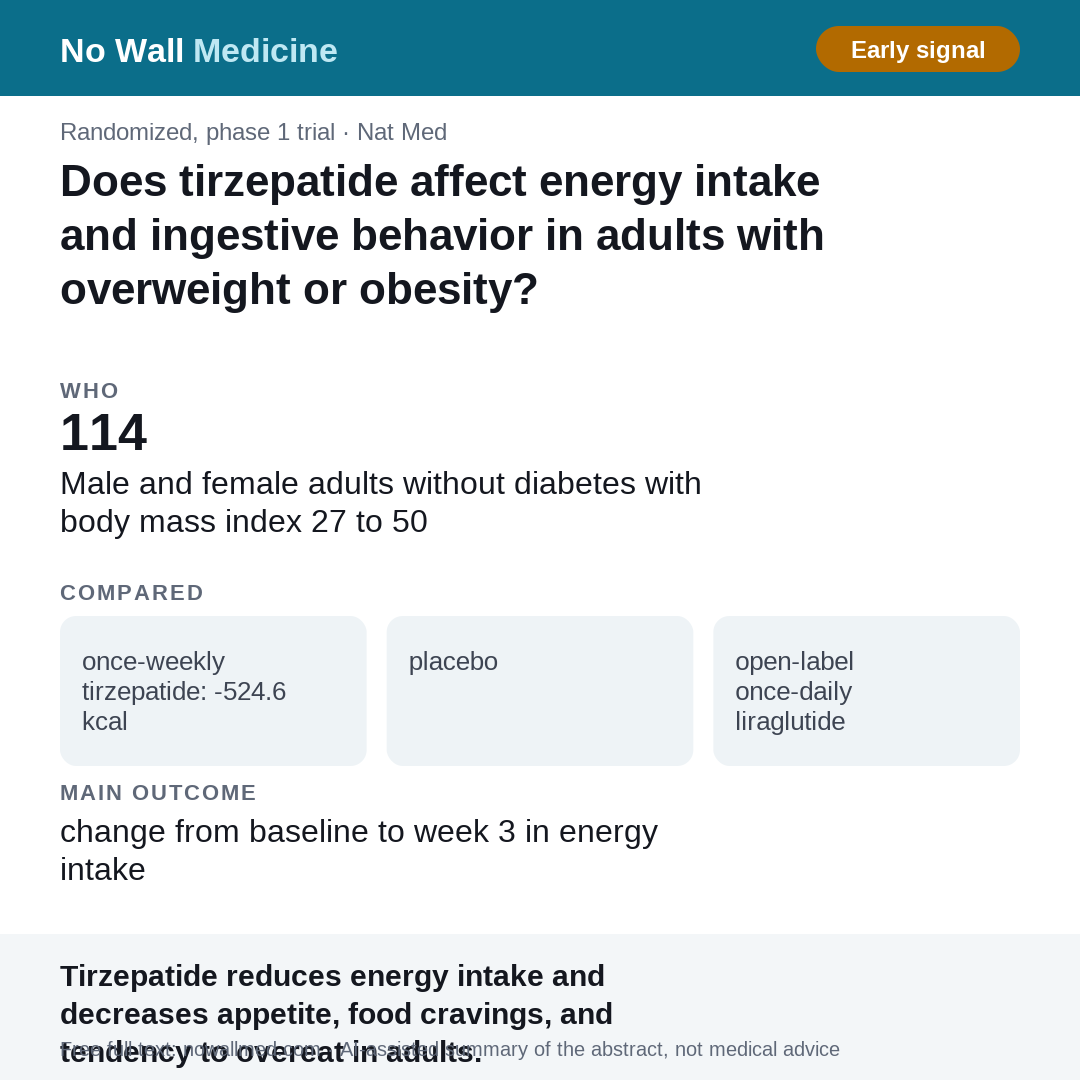
Tirzepatide on ingestive behavior in adults with overweight or obesity: a randomized 6-week phase 1 trial
Randomized, phase 1 trialBenefit found
Does tirzepatide affect energy intake and ingestive behavior in adults with overweight or obesity?
Who
114
Male and female adults without diabetes with body mass index 27 to 50
Compared
once-weekly tirzepatide: -524.6 kcal
placebo
open-label once-daily liraglutide
Main outcome
change from baseline to week 3 in energy intake
Result: estimated treatment difference -524.6 kcal (95% confidence interval -648.1 to -401.0)
Bottom line: Tirzepatide reduces energy intake and decreases appetite, food cravings, and tendency to overeat in adults.
Nat Med · 2025-06-24Download image
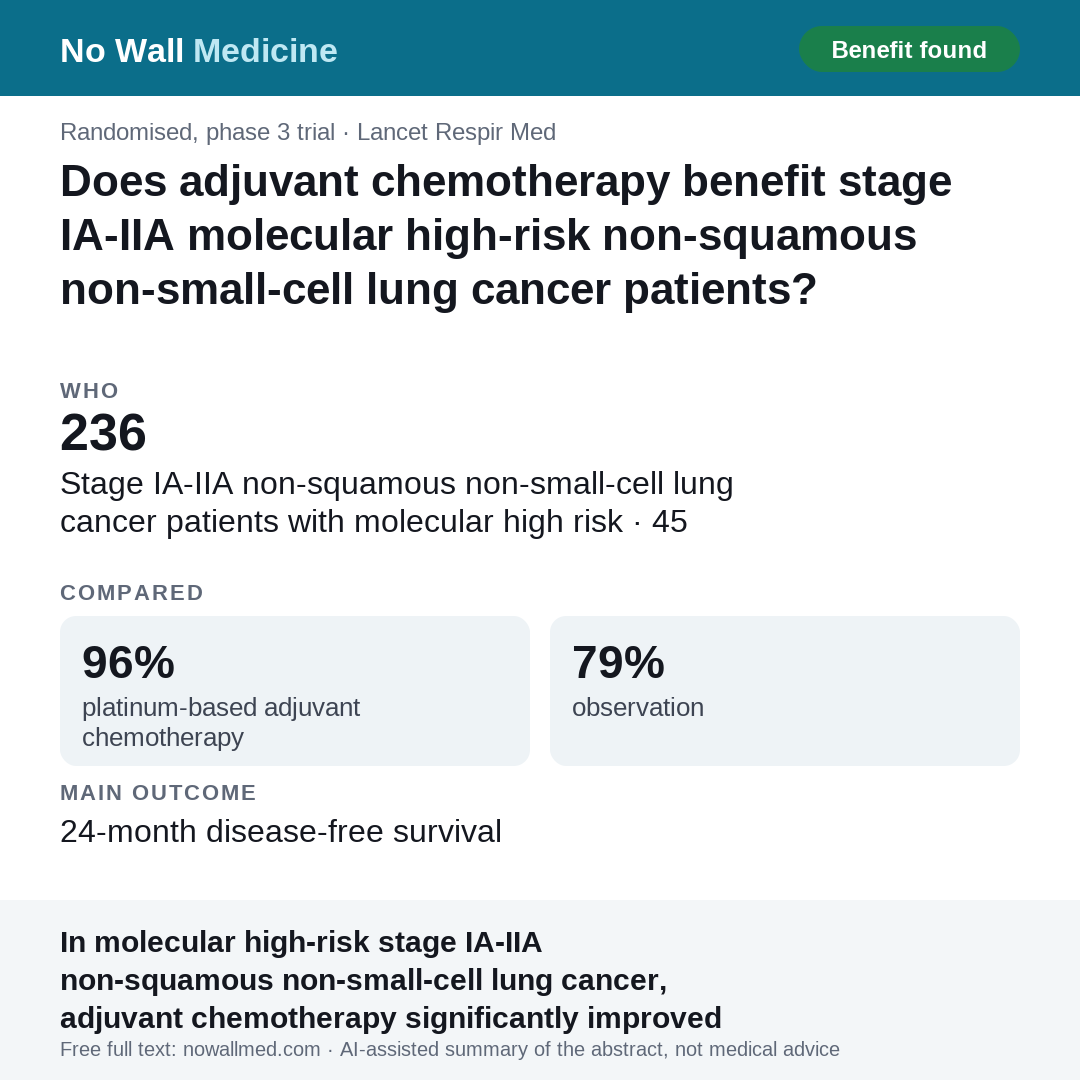
Adjuvant chemotherapy for stage IA-IIA non-squamous, non-small-cell lung cancer identified as molecular high-risk by a 14-gene expression profile (AIM-HIGH): an international, randomised, phase 3 trial
Randomised, phase 3 trialBenefit found
Does adjuvant chemotherapy benefit stage IA-IIA molecular high-risk non-squamous non-small-cell lung cancer patients?
Who
236
Stage IA-IIA non-squamous non-small-cell lung cancer patients with molecular high risk · 45 centres in France, Germany, and the USA
Compared
96%platinum-based adjuvant chemotherapy (95% CI 92-100)
79%observation (70-90)
Main outcome
24-month disease-free survival
Result: hazard ratio 0·22 (95% CI 0·06-0·76)
Bottom line: In molecular high-risk stage IA-IIA non-squamous non-small-cell lung cancer, adjuvant chemotherapy significantly improved 24-month disease-free survival.
Funded by: Razor Genomics
Lancet Respir Med · 2025-06-24Download image
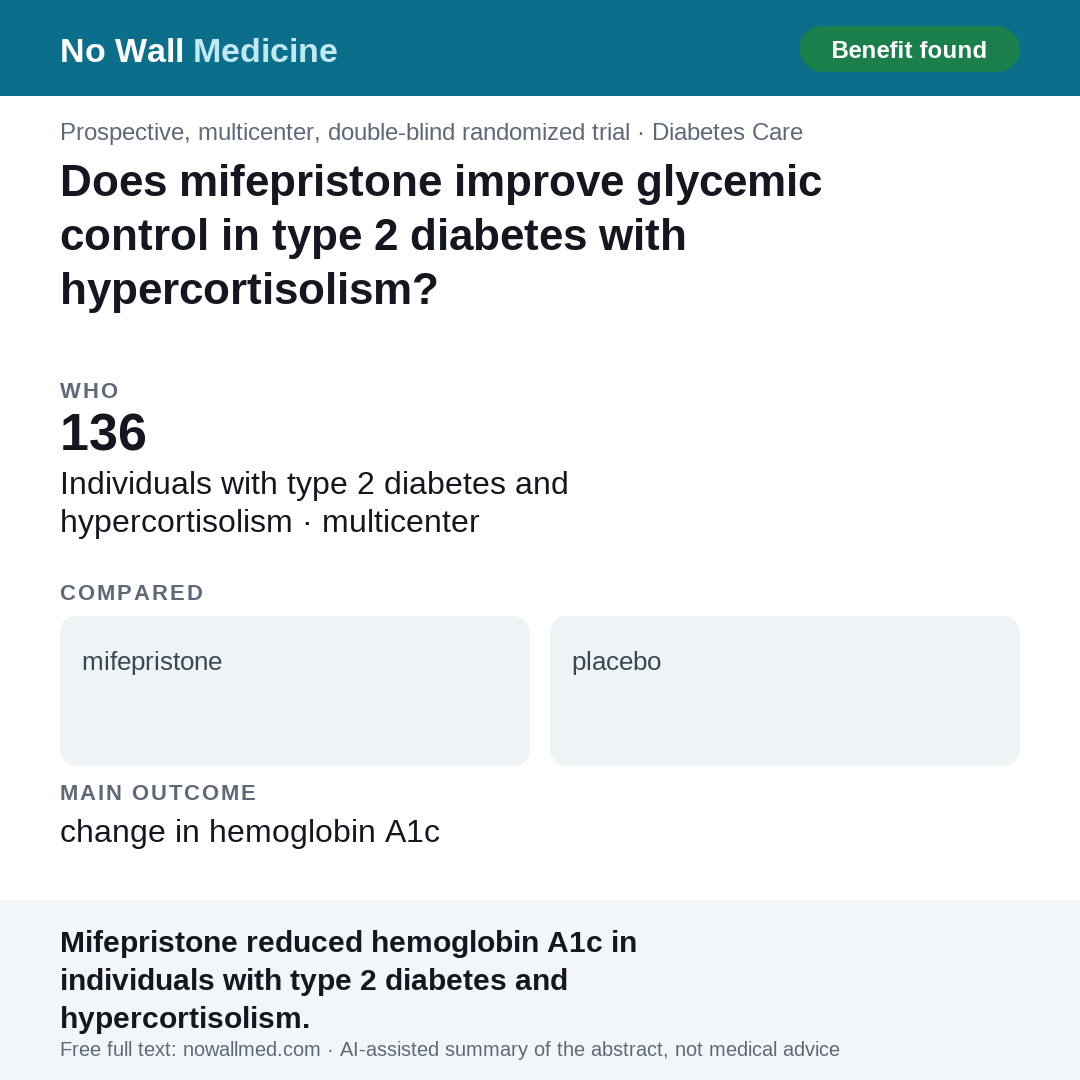
Inadequately Controlled Type 2 Diabetes and Hypercortisolism: Improved Glycemia With Mifepristone Treatment
Prospective, multicenter, double-blind randomized trialBenefit found
Does mifepristone improve glycemic control in type 2 diabetes with hypercortisolism?
Who
136
Individuals with type 2 diabetes and hypercortisolism · multicenter
Compared
mifepristone
placebo
Main outcome
change in hemoglobin A1c
Result: least squares mean difference -1.32% (95% CI -1.81 to -0.83)
Bottom line: Mifepristone reduced hemoglobin A1c in individuals with type 2 diabetes and hypercortisolism.
Diabetes Care · 2025-06-24Download image
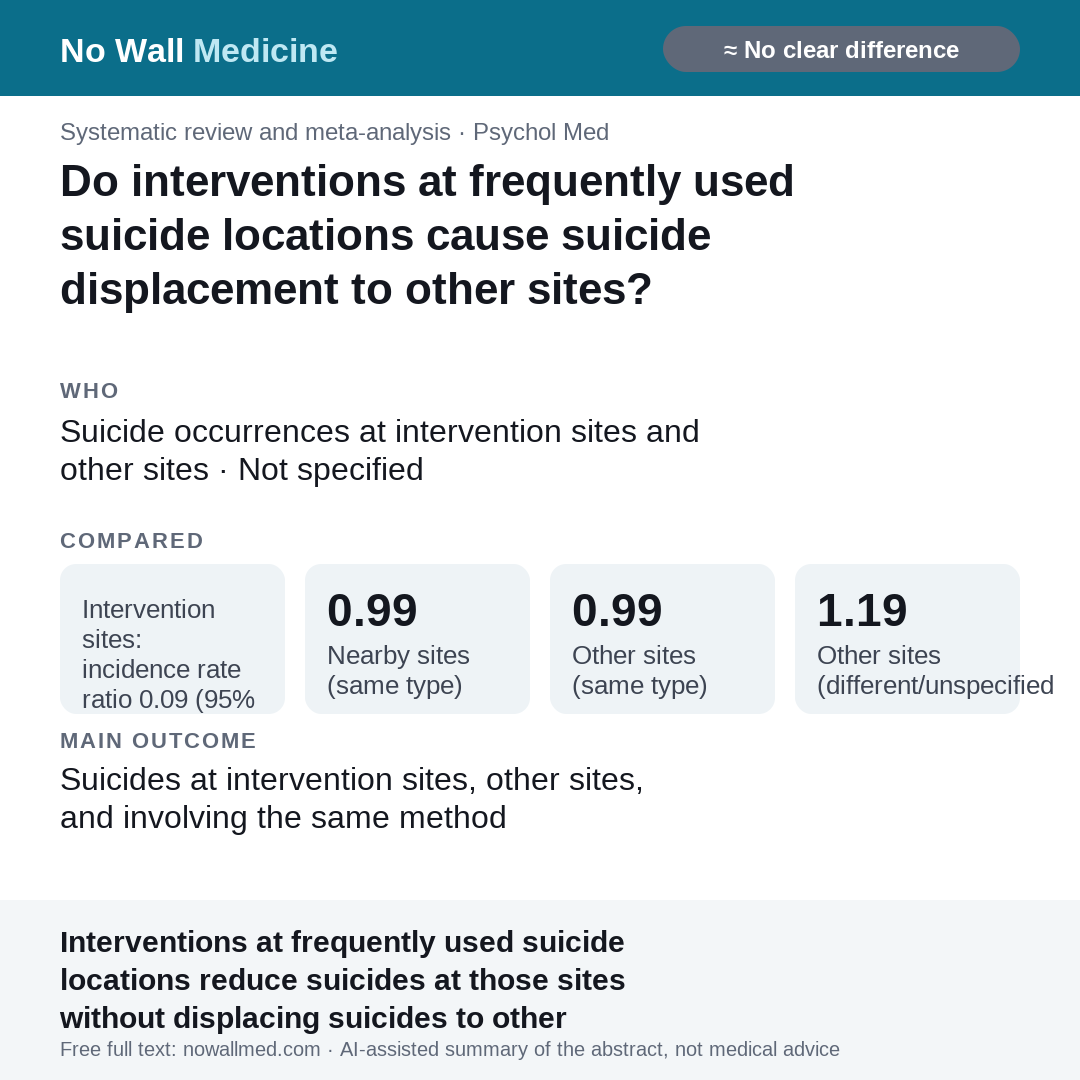
Impact of interventions at frequently used suicide locations on occurrence of suicides at other sites: a systematic review and meta-analysis
Systematic review and meta-analysisNo clear difference
Do interventions at frequently used suicide locations cause suicide displacement to other sites?
Who
Suicide occurrences at intervention sites and other sites · Not specified
Compared
Intervention sites: incidence rate ratio 0.09 (95% CI 0.04-0.21)
0.99Nearby sites (same type) (95% CI 0.72-1.38)
0.99Other sites (same type) (95% CI 0.76-1.29)
1.19Other sites (different/unspecified type) (95% CI 0.90-1.58)
Main outcome
Suicides at intervention sites, other sites, and involving the same method
Result: overall reduction in suicides involving the same method (IRR 0.77, 95% CI 0.65-0.92)
Bottom line: Interventions at frequently used suicide locations reduce suicides at those sites without displacing suicides to other locations.
Psychol Med · 2025-06-24Download image
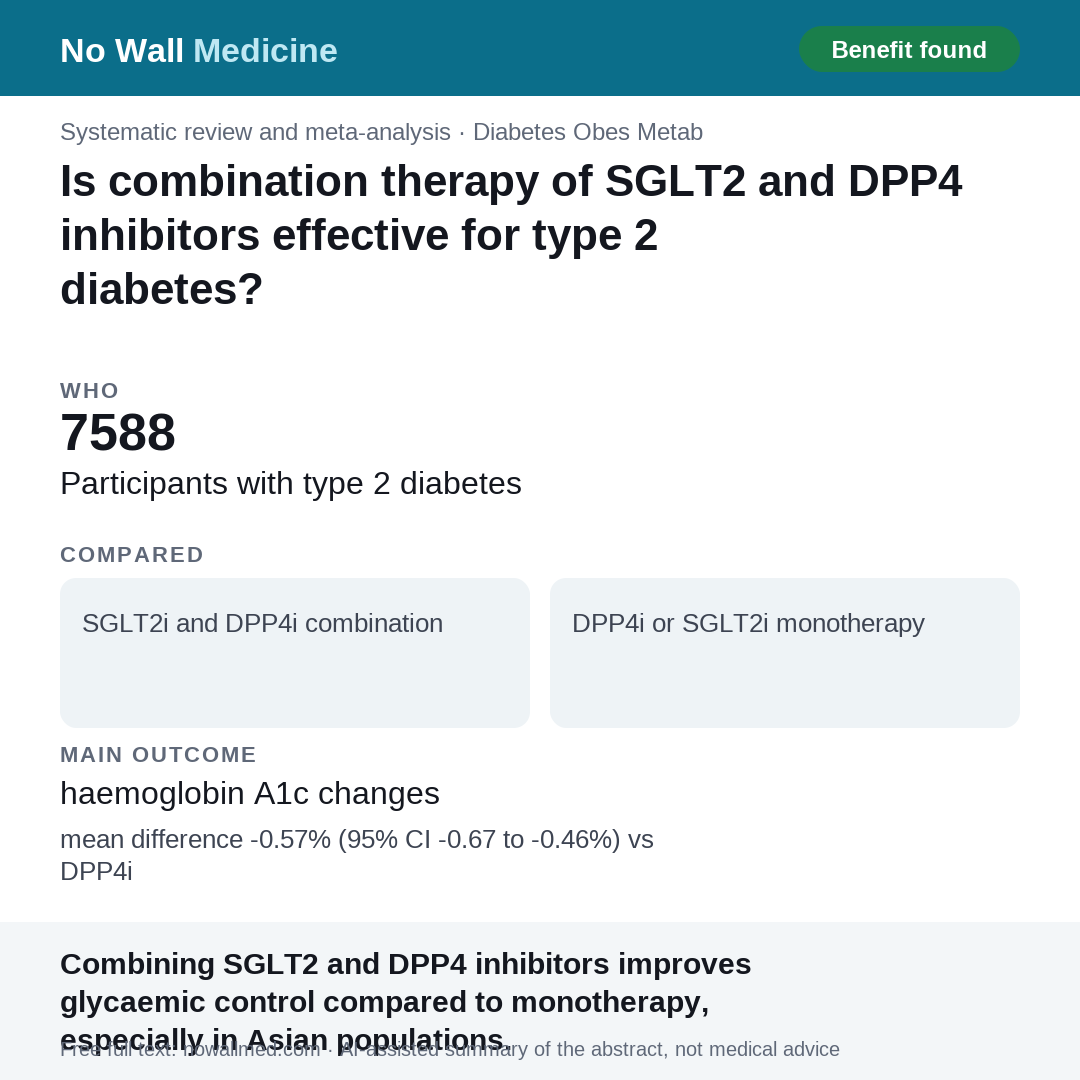
Efficacy and safety of combination therapy using SGLT2 and DPP4 inhibitors to treat type 2 diabetes: An updated systematic review and meta-analysis with focus on an Asian subpopulation
Systematic review and meta-analysisBenefit found
Is combination therapy of SGLT2 and DPP4 inhibitors effective for type 2 diabetes?
Who
7588
Participants with type 2 diabetes
Compared
SGLT2i and DPP4i combination
DPP4i or SGLT2i monotherapy
Main outcome
haemoglobin A1c changes
Result: mean difference -0.57% (95% CI -0.67 to -0.46%) vs DPP4i
Bottom line: Combining SGLT2 and DPP4 inhibitors improves glycaemic control compared to monotherapy, especially in Asian populations.
Diabetes Obes Metab · 2025-06-24Download image
Bioartificial Hearts, Assist Devices, and Myocardium: New Developments
Systematic reviewUnclear result
What are the developments and clinical readiness of bioartificial hearts and engineered myocardium?
Who
Bioartificial hearts, engineered myocardium, and biohybrid ventricular assist devices
Compared
Bioartificial hearts and larger constructs: remains in preclinical stages
Cardiac patches: 2 approved for clinical use
Main outcome
clinical readiness and outcomes of bioengineered cardiac solutions
Bottom line: Bioartificial hearts remain preclinical, and cardiac patch clinical benefits or safety cannot yet be concluded.
Limitation: Significant variability in study designs and outcomes and very little clinical experience.
Transplantation · 2025-06-24Download image

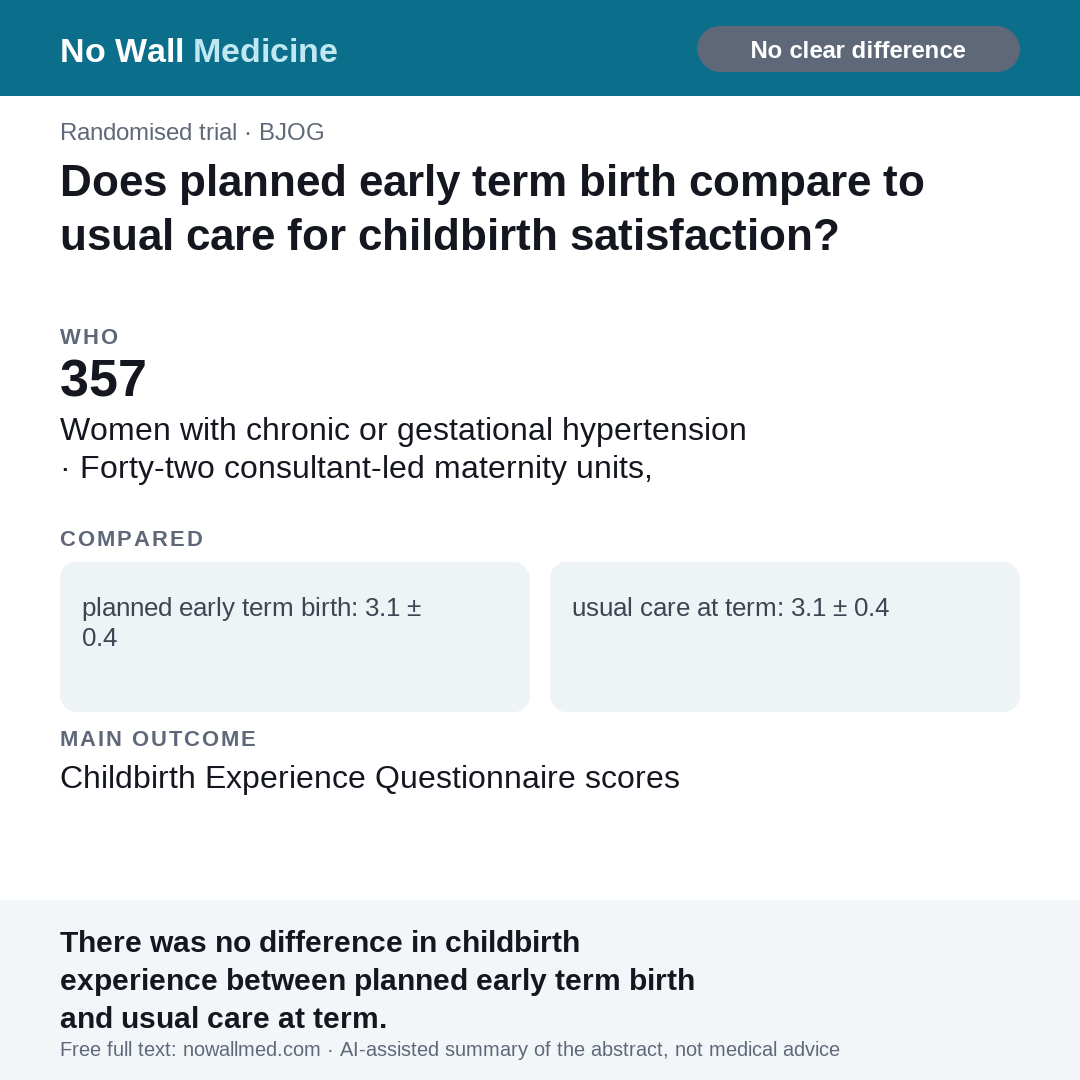
Women's Childbirth Experiences in the WILL Randomised Trial (When to Induce Labour to Limit Risk in Pregnancy Hypertension): A Mixed Methods Analysis
Randomised trialNo clear difference
Does planned early term birth compare to usual care for childbirth satisfaction?
Who
357
Women with chronic or gestational hypertension · Forty-two consultant-led maternity units, United Kingdom
Compared
planned early term birth: 3.1 ± 0.4
usual care at term: 3.1 ± 0.4
Main outcome
Childbirth Experience Questionnaire scores
Bottom line: There was no difference in childbirth experience between planned early term birth and usual care at term.
BJOG · 2025-06-24Download image
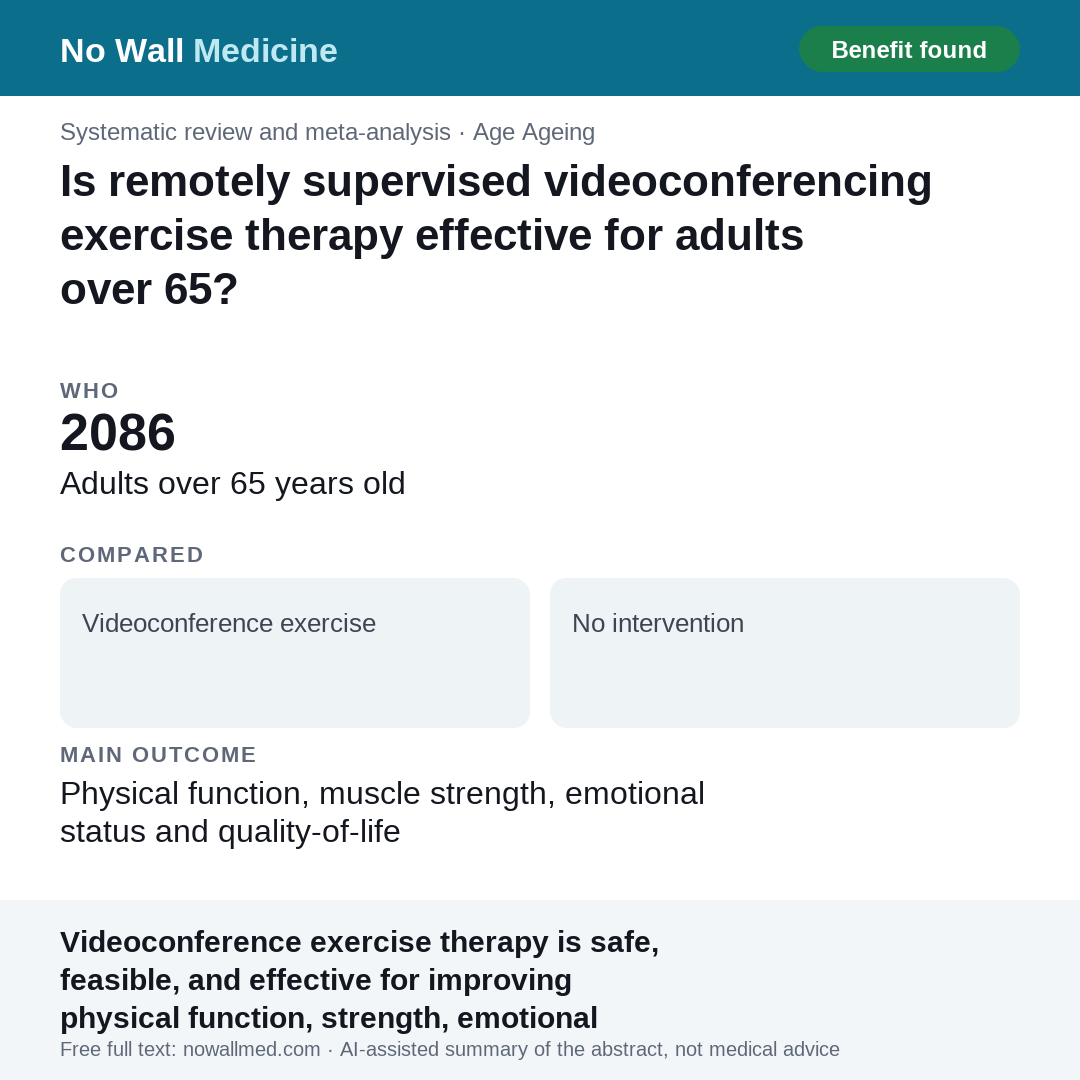
Feasibility and effectiveness of physical exercise for older adults delivered remotely via videoconferencing-systematic review and meta analysis
Systematic review and meta-analysisBenefit found
Is remotely supervised videoconferencing exercise therapy effective for adults over 65?
Who
2086
Adults over 65 years old
Compared
Videoconference exercise
No intervention
Main outcome
Physical function, muscle strength, emotional status and quality-of-life
Result: physical function SMD 0.82 (95% CI 0.46-1.19); muscle strength SMD 0.86 (95% CI 0.46-1.26); emotional status SMD 0.72 (95% CI 0.35-1.09); quality-of-life SMD 0.61 (95% CI 0.19-1.03)
Bottom line: Videoconference exercise therapy is safe, feasible, and effective for improving physical function, strength, emotional status, and quality-of-life.
Limitation: High heterogeneity in outcome measures and small sample sizes may affect generalizability.
Age Ageing · 2025-06-24Download image
From suspicion of cognitive decline to dementia diagnosis: a systematic review of healthcare professionals' considerations and attitudes
Systematic reviewUnclear result
Healthcare professionals' considerations for dementia diagnosis
Who
Healthcare professionals, primary care physicians, nurses
Compared
Primary care physicians
Primary care nurses
Main outcome
Dementia diagnosis process
Bottom line: Dementia diagnosis is a delicate process
Age Ageing · 2025-06-24Download image

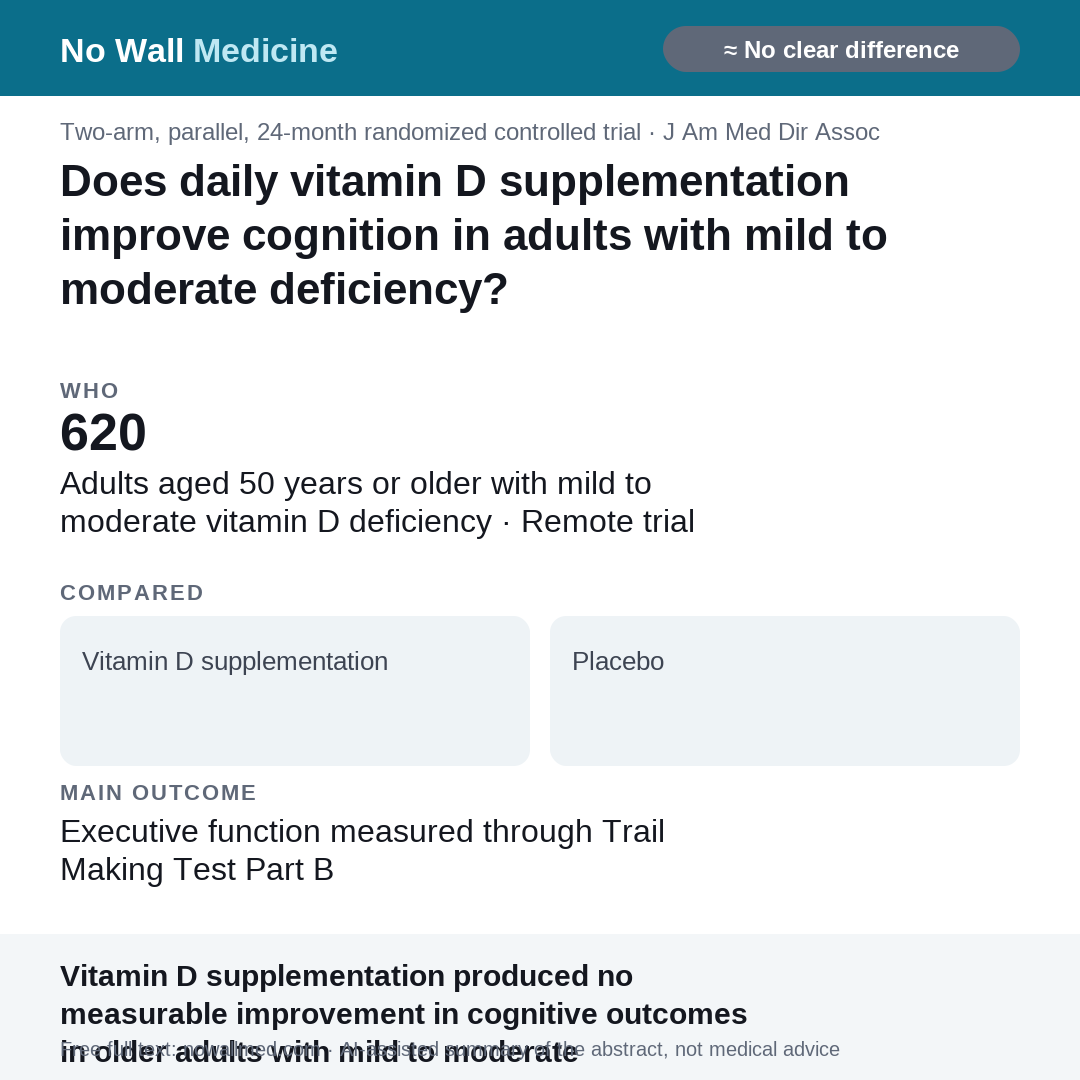
Impact of Vitamin D Supplementation on Cognition in Adults With Mild to Moderate Vitamin D Deficiency: Outcomes From the VitaMIND Randomized Controlled Trial
Two-arm, parallel, 24-month randomized controlled trialNo clear difference
Does daily vitamin D supplementation improve cognition in adults with mild to moderate deficiency?
Who
620
Adults aged 50 years or older with mild to moderate vitamin D deficiency · Remote trial completed from home
Compared
Vitamin D supplementation
Placebo
Main outcome
Executive function measured through Trail Making Test Part B
Result: between-group difference, 5770; 95% CI, -2189 to 13,730
Bottom line: Vitamin D supplementation produced no measurable improvement in cognitive outcomes in older adults with mild to moderate vitamin D deficiency.
J Am Med Dir Assoc · 2025-06-24Download image
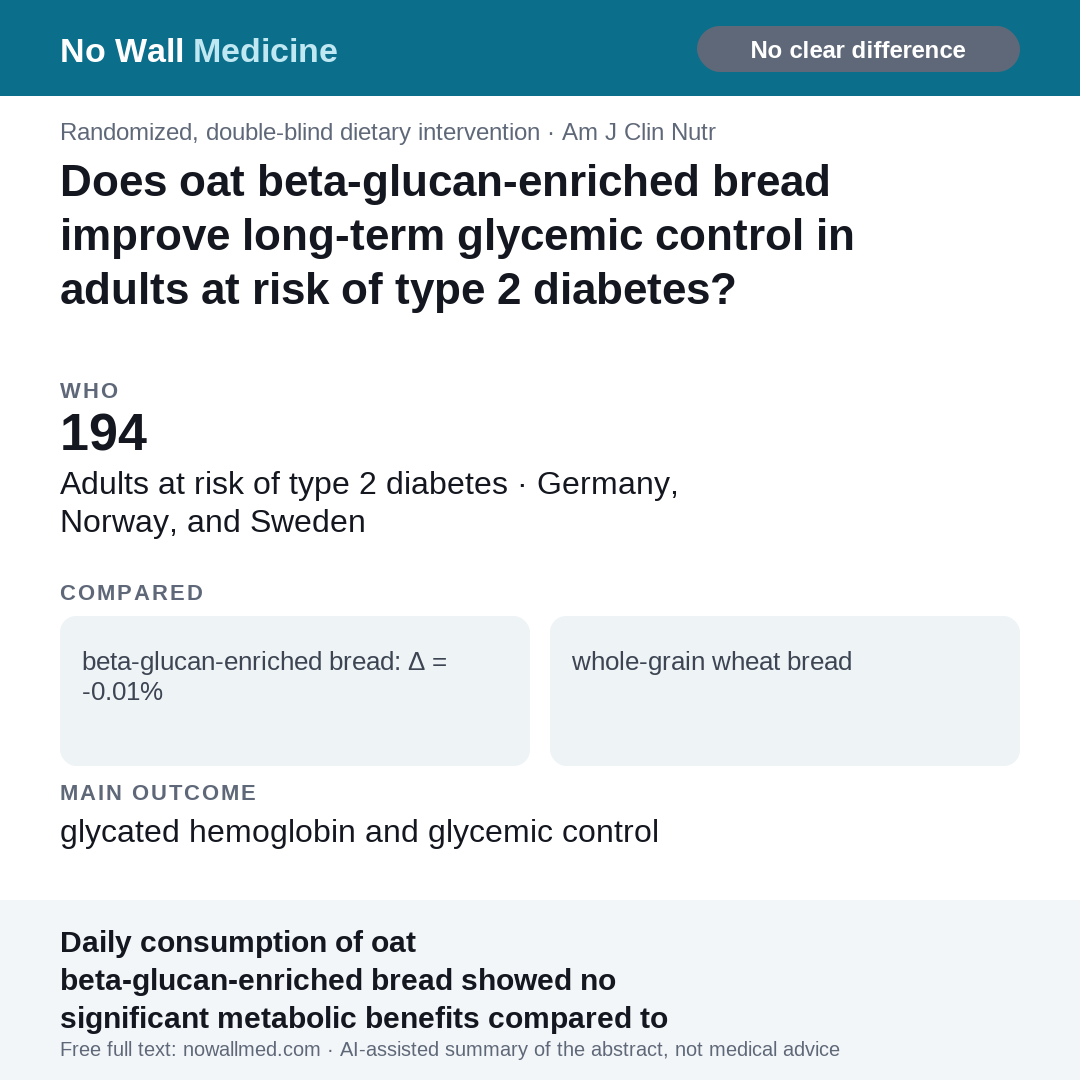
Effectiveness of regular oat β-glucan-enriched bread compared with whole-grain wheat bread on long-term glycemic control in adults at risk of type 2 diabetes: a randomized controlled trial
Randomized, double-blind dietary interventionNo clear difference
Does oat beta-glucan-enriched bread improve long-term glycemic control in adults at risk of type 2 diabetes?
Who
194
Adults at risk of type 2 diabetes · Germany, Norway, and Sweden
Compared
beta-glucan-enriched bread: Δ = -0.01%
whole-grain wheat bread
Main outcome
glycated hemoglobin and glycemic control
Result: Δ = -0.01%, 95% confidence interval (CI): -0.03, 0.06
Bottom line: Daily consumption of oat beta-glucan-enriched bread showed no significant metabolic benefits compared to whole-grain wheat bread.
Am J Clin Nutr · 2025-06-24Download image
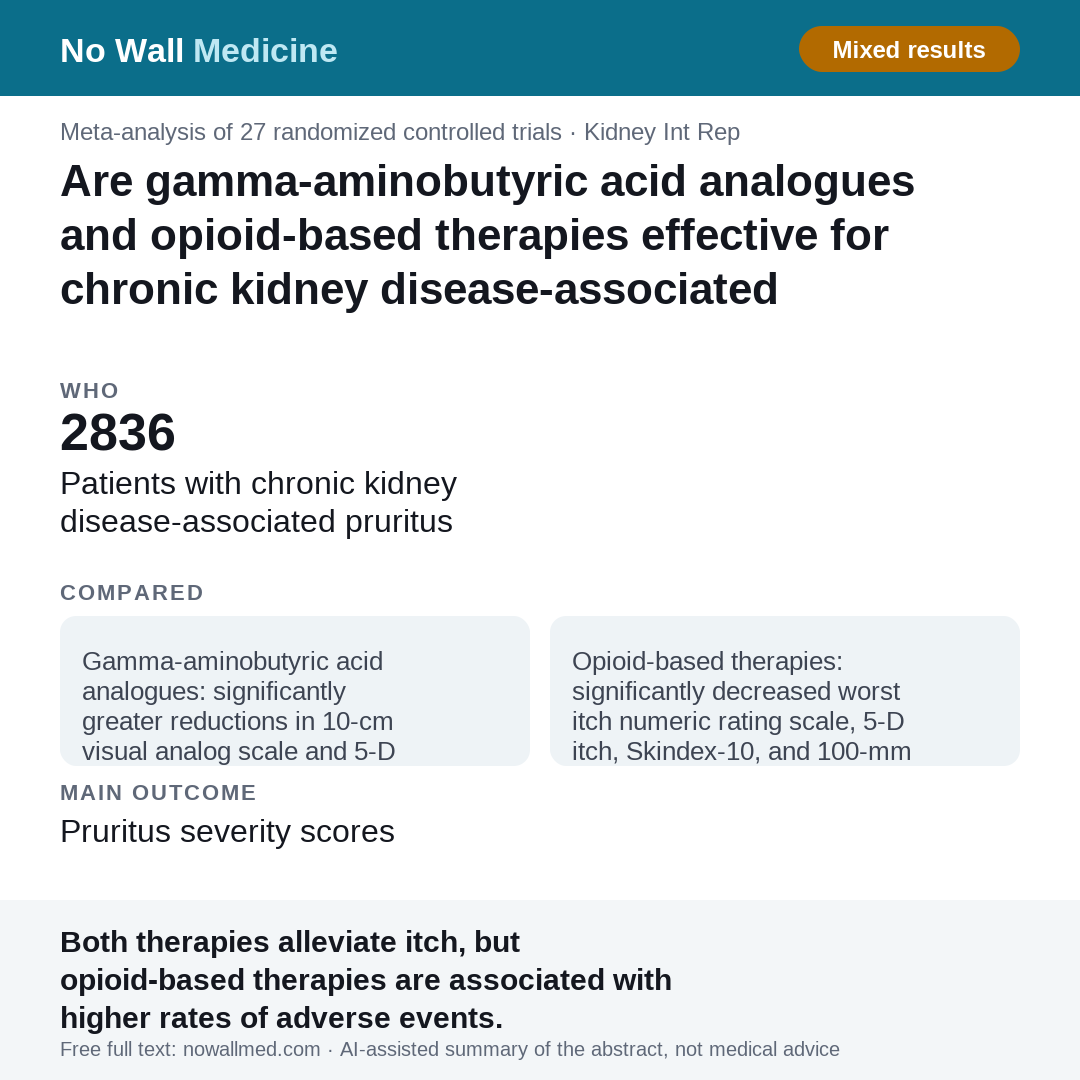
Meta-Analysis of Randomized Controlled Trials on Gamma-Aminobutyric Acid Analogues and Opioid-Based Therapies for CKD-Associated Pruritus
Meta-analysis of 27 randomized controlled trialsMixed results
Are gamma-aminobutyric acid analogues and opioid-based therapies effective for chronic kidney disease-associated pruritus?
Who
2836
Patients with chronic kidney disease-associated pruritus
Compared
Gamma-aminobutyric acid analogues: significantly greater reductions in 10-cm visual analog scale and 5-D itch scores
Opioid-based therapies: significantly decreased worst itch numeric rating scale, 5-D itch, Skindex-10, and 100-mm visual analog scale
Main outcome
Pruritus severity scores
Bottom line: Both therapies alleviate itch, but opioid-based therapies are associated with higher rates of adverse events.
Limitation: Substantial heterogeneity observed in most of the results.
Kidney Int Rep · 2025-06-24Download image
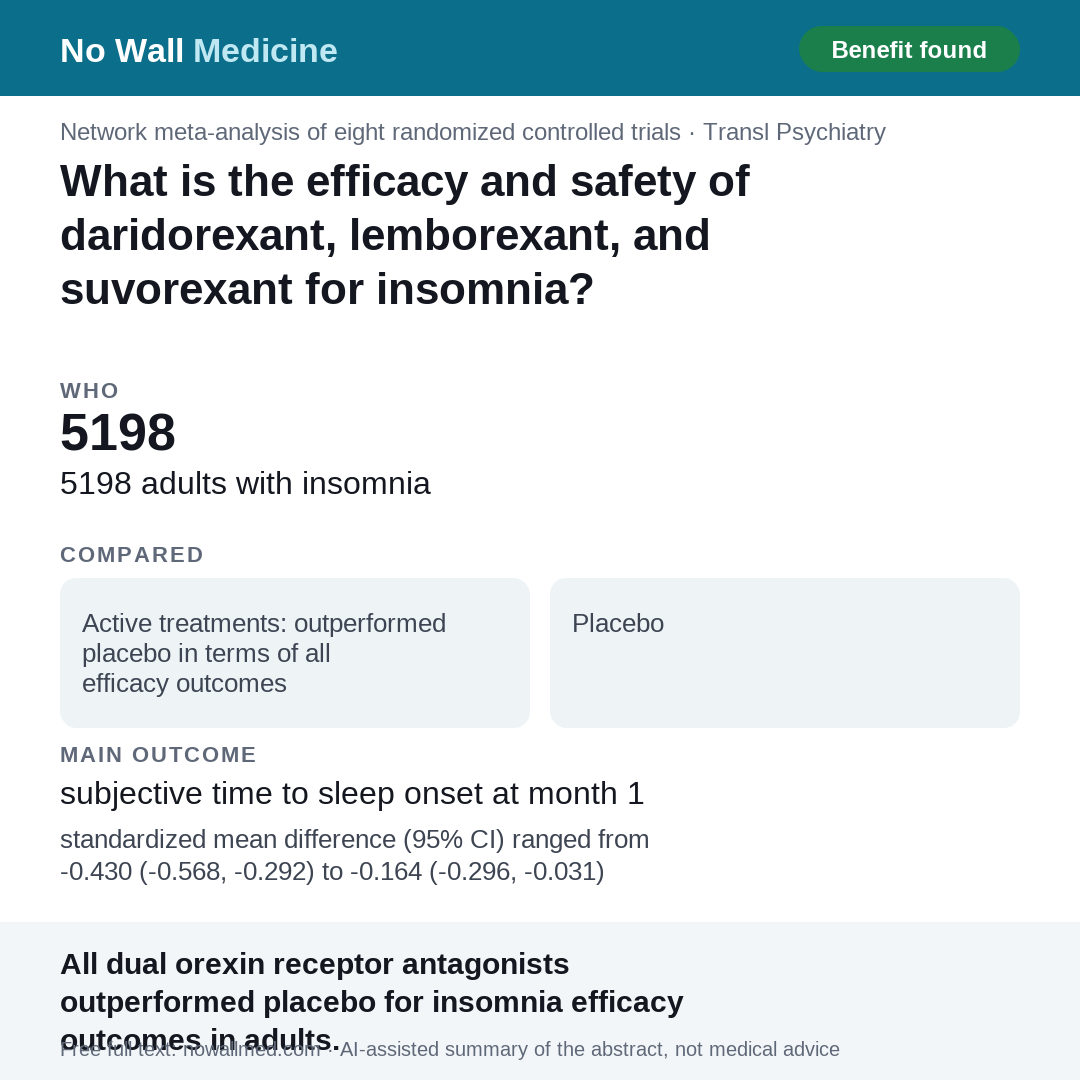
Comparative efficacy and safety of daridorexant, lemborexant, and suvorexant for insomnia: a systematic review and network meta-analysis
Network meta-analysis of eight randomized controlled trialsBenefit found
What is the efficacy and safety of daridorexant, lemborexant, and suvorexant for insomnia?
Who
5198
5198 adults with insomnia
Compared
Active treatments: outperformed placebo in terms of all efficacy outcomes
Placebo
Main outcome
subjective time to sleep onset at month 1
Result: standardized mean difference (95% CI) ranged from -0.430 (-0.568, -0.292) to -0.164 (-0.296, -0.031)
Bottom line: All dual orexin receptor antagonists outperformed placebo for insomnia efficacy outcomes in adults.
Transl Psychiatry · 2025-06-24Download image