Visual abstracts
New randomized trials and meta-analyses from leading journals at a glance: who was studied, what was compared, and what was found. Every paper is free to read in full.
All specialtiesCardiology 4877Oncology 4138Gastroenterology & Hepatology 1942Infectious Disease 3837Neurology 1905Psychiatry & Mental Health 2273Pulmonology 2143Critical Care 1365Endocrinology & Diabetes 2580Pediatrics 2980Surgery 2559Orthopedics & Sports Medicine 931Neurosurgery 537Cardiothoracic & Vascular Surgery 674Plastic & Reconstructive Surgery 591Nephrology 1133Rheumatology 823Hematology 1109Dermatology 621Ophthalmology 543Obstetrics & Gynecology 1686Public & Global Health 1058Radiology & Imaging 648Anesthesiology 986Urology 764ENT (Otolaryngology) 503Emergency Medicine 511Allergy & Immunology 313Geriatrics 981Family Medicine & Primary Care 562Medical Genetics & Genomics 676Pathology & Laboratory Medicine 159Physical Medicine & Rehabilitation 757Palliative Care 444Nutrition 1588Digital Health & AI 2201General Medicine 321
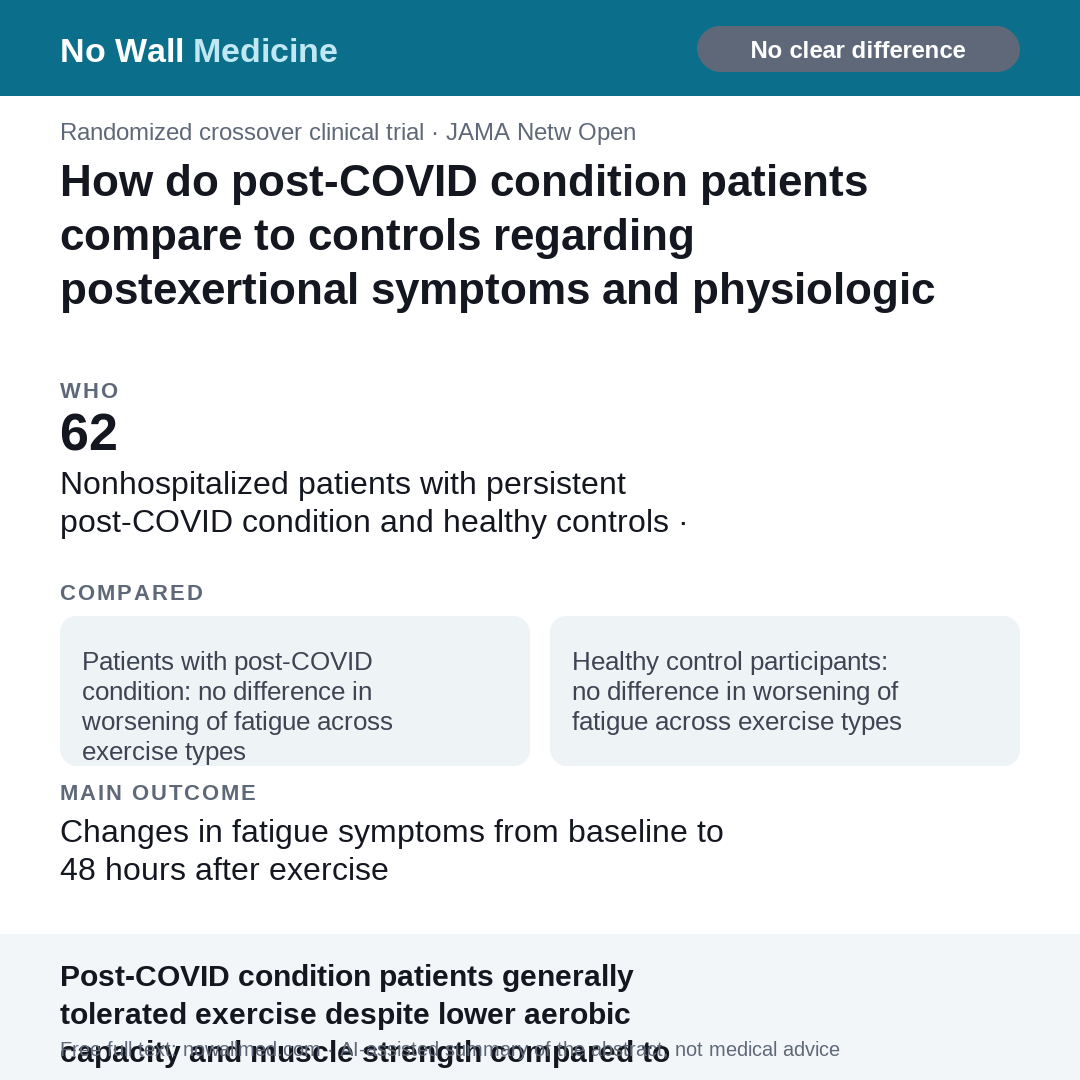
Functional Limitations and Exercise Intolerance in Patients With Post-COVID Condition: A Randomized Crossover Clinical Trial
Randomized crossover clinical trialNo clear difference
How do post-COVID condition patients compare to controls regarding postexertional symptoms and physiologic function?
Who
62
Nonhospitalized patients with persistent post-COVID condition and healthy controls · Sweden
Compared
Patients with post-COVID condition: no difference in worsening of fatigue across exercise types
Healthy control participants: no difference in worsening of fatigue across exercise types
Main outcome
Changes in fatigue symptoms from baseline to 48 hours after exercise
Bottom line: Post-COVID condition patients generally tolerated exercise despite lower aerobic capacity and muscle strength compared to controls.
JAMA Netw Open · 2024-04-01Download image
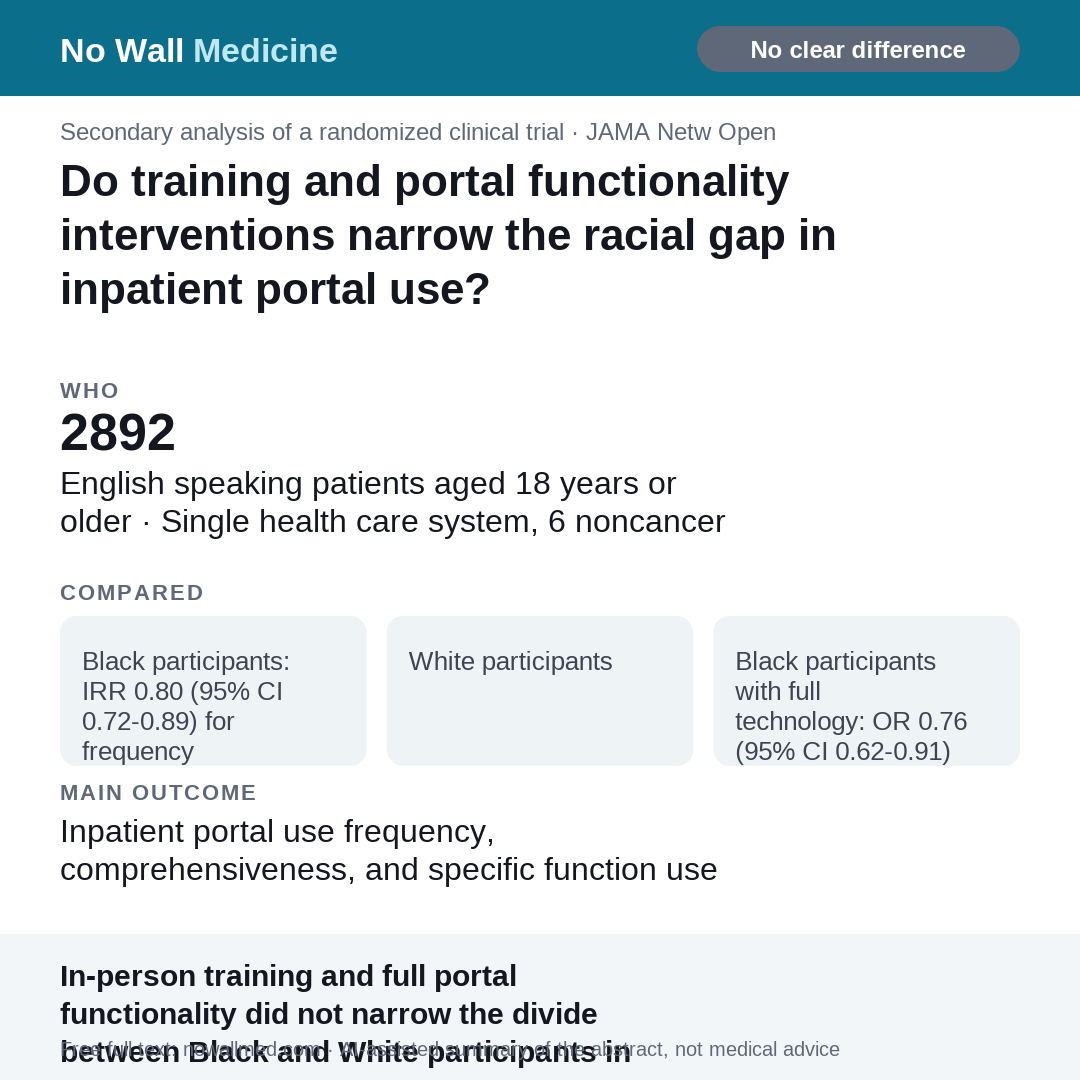
Differences by Race in Outcomes of an In-Person Training Intervention on Use of an Inpatient Portal: A Secondary Analysis of a Randomized Clinical Trial
Secondary analysis of a randomized clinical trialNo clear difference
Do training and portal functionality interventions narrow the racial gap in inpatient portal use?
Who
2892
English speaking patients aged 18 years or older · Single health care system, 6 noncancer hospitals
Compared
Black participants: IRR 0.80 (95% CI 0.72-0.89) for frequency
White participants
Black participants with full technology: OR 0.76 (95% CI 0.62-0.91) for comprehensiveness
Main outcome
Inpatient portal use frequency, comprehensiveness, and specific function use
Result: OR 0.76 (95% CI 0.62-0.91) for comprehensiveness in full technology group
Bottom line: In-person training and full portal functionality did not narrow the divide between Black and White participants in portal use.
JAMA Netw Open · 2024-04-01Download image
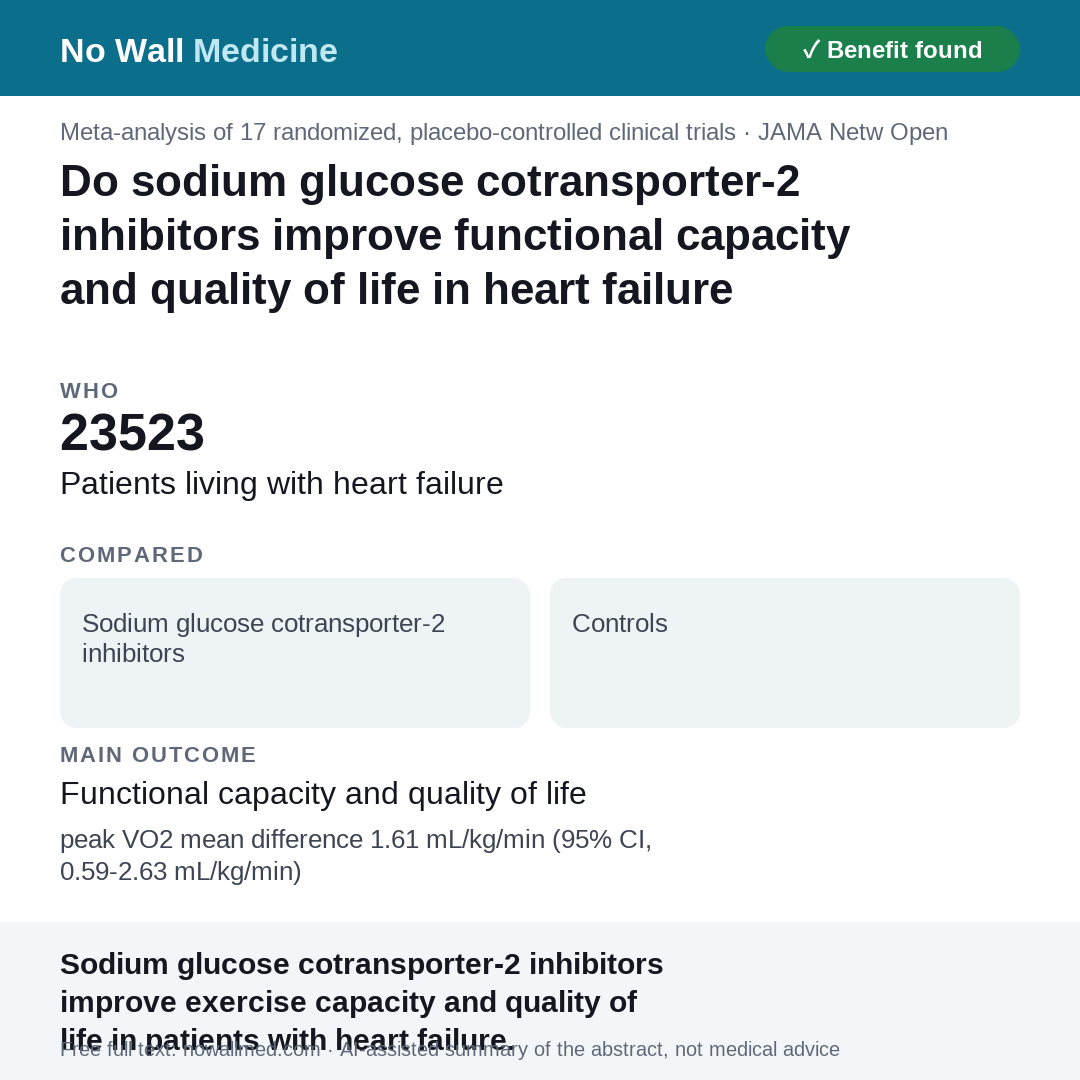
SGLT2 Inhibitors, Functional Capacity, and Quality of Life in Patients With Heart Failure: A Systematic Review and Meta-Analysis
Meta-analysis of 17 randomized, placebo-controlled clinical trialsBenefit found
Do sodium glucose cotransporter-2 inhibitors improve functional capacity and quality of life in heart failure patients?
Who
23523
Patients living with heart failure
Compared
Sodium glucose cotransporter-2 inhibitors
Controls
Main outcome
Functional capacity and quality of life
Result: peak VO2 mean difference 1.61 mL/kg/min (95% CI, 0.59-2.63 mL/kg/min)
Bottom line: Sodium glucose cotransporter-2 inhibitors improve exercise capacity and quality of life in patients with heart failure.
JAMA Netw Open · 2024-04-01Download image
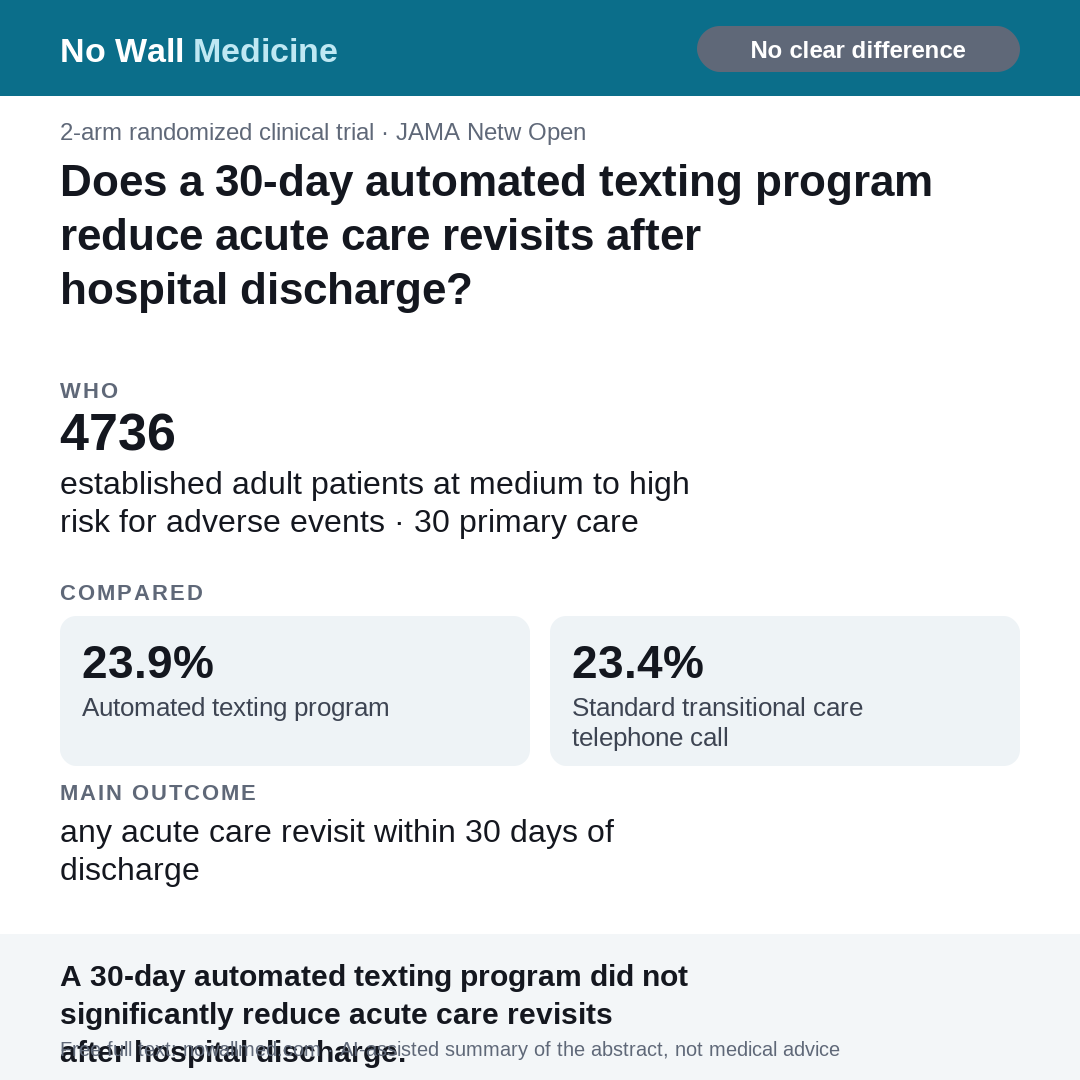
Automated Text Message-Based Program and Use of Acute Health Care Resources After Hospital Discharge: A Randomized Clinical Trial
2-arm randomized clinical trialNo clear difference
Does a 30-day automated texting program reduce acute care revisits after hospital discharge?
Who
4736
established adult patients at medium to high risk for adverse events · 30 primary care practices in Philadelphia, Pennsylvania
Compared
23.9%Automated texting program
23.4%Standard transitional care telephone call
Main outcome
any acute care revisit within 30 days of discharge
Result: risk ratio 1.02 (95% CI 0.92-1.13)
Bottom line: A 30-day automated texting program did not significantly reduce acute care revisits after hospital discharge.
Limitation: patients and practice staff were not blinded to assignment
JAMA Netw Open · 2024-04-01Download image
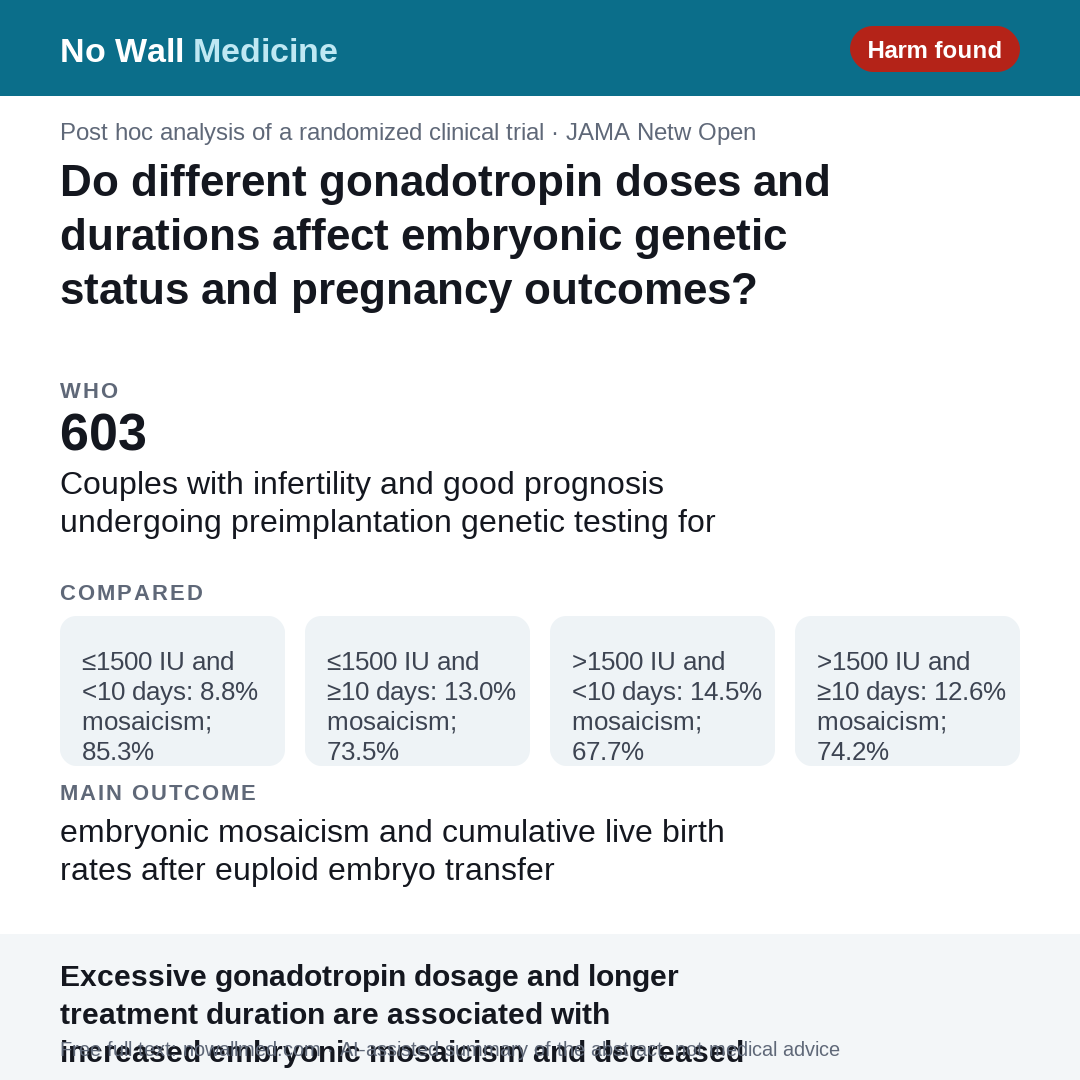
Excessive Exogenous Gonadotropins and Genetic and Pregnancy Outcomes After Euploidy Embryo Transfer: A Secondary Analysis of a Randomized Clinical Trial
Post hoc analysis of a randomized clinical trialHarm found
Do different gonadotropin doses and durations affect embryonic genetic status and pregnancy outcomes?
Who
603
Couples with infertility and good prognosis undergoing preimplantation genetic testing for aneuploidy · 14 reproductive centers in China
Compared
≤1500 IU and <10 days: 8.8% mosaicism; 85.3% cumulative live birth rate
≤1500 IU and ≥10 days: 13.0% mosaicism; 73.5% cumulative live birth rate
>1500 IU and <10 days: 14.5% mosaicism; 67.7% cumulative live birth rate
>1500 IU and ≥10 days: 12.6% mosaicism; 74.2% cumulative live birth rate
Main outcome
embryonic mosaicism and cumulative live birth rates after euploid embryo transfer
Result: aOR 0.49 (95% CI 0.27-0.88) for group 2 live birth rate
Bottom line: Excessive gonadotropin dosage and longer treatment duration are associated with increased embryonic mosaicism and decreased cumulative live birth rates.
JAMA Netw Open · 2024-04-01Download image
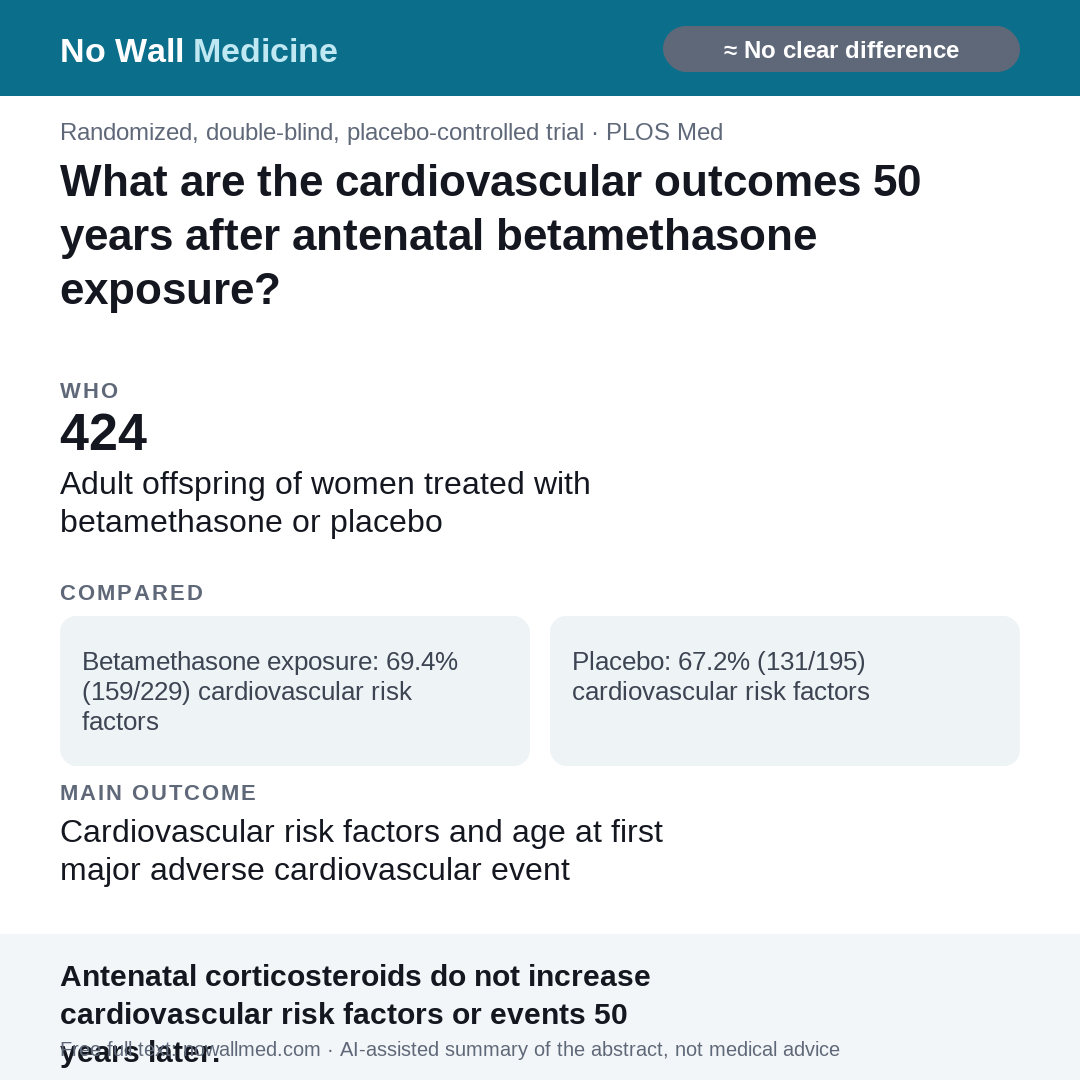
Cardiovascular outcomes 50 years after antenatal exposure to betamethasone: Follow-up of a randomised double-blind, placebo-controlled trial
Randomized, double-blind, placebo-controlled trialNo clear difference
What are the cardiovascular outcomes 50 years after antenatal betamethasone exposure?
Who
424
Adult offspring of women treated with betamethasone or placebo
Compared
Betamethasone exposure: 69.4% (159/229) cardiovascular risk factors
Placebo: 67.2% (131/195) cardiovascular risk factors
Main outcome
Cardiovascular risk factors and age at first major adverse cardiovascular event
Result: adjusted relative risk 1.02 (95% CI 0.89 to 1.18)
Bottom line: Antenatal corticosteroids do not increase cardiovascular risk factors or events 50 years later.
Limitation: Follow-up rate and lack of in-person assessments.
PLOS Med · 2024-04-01Download image
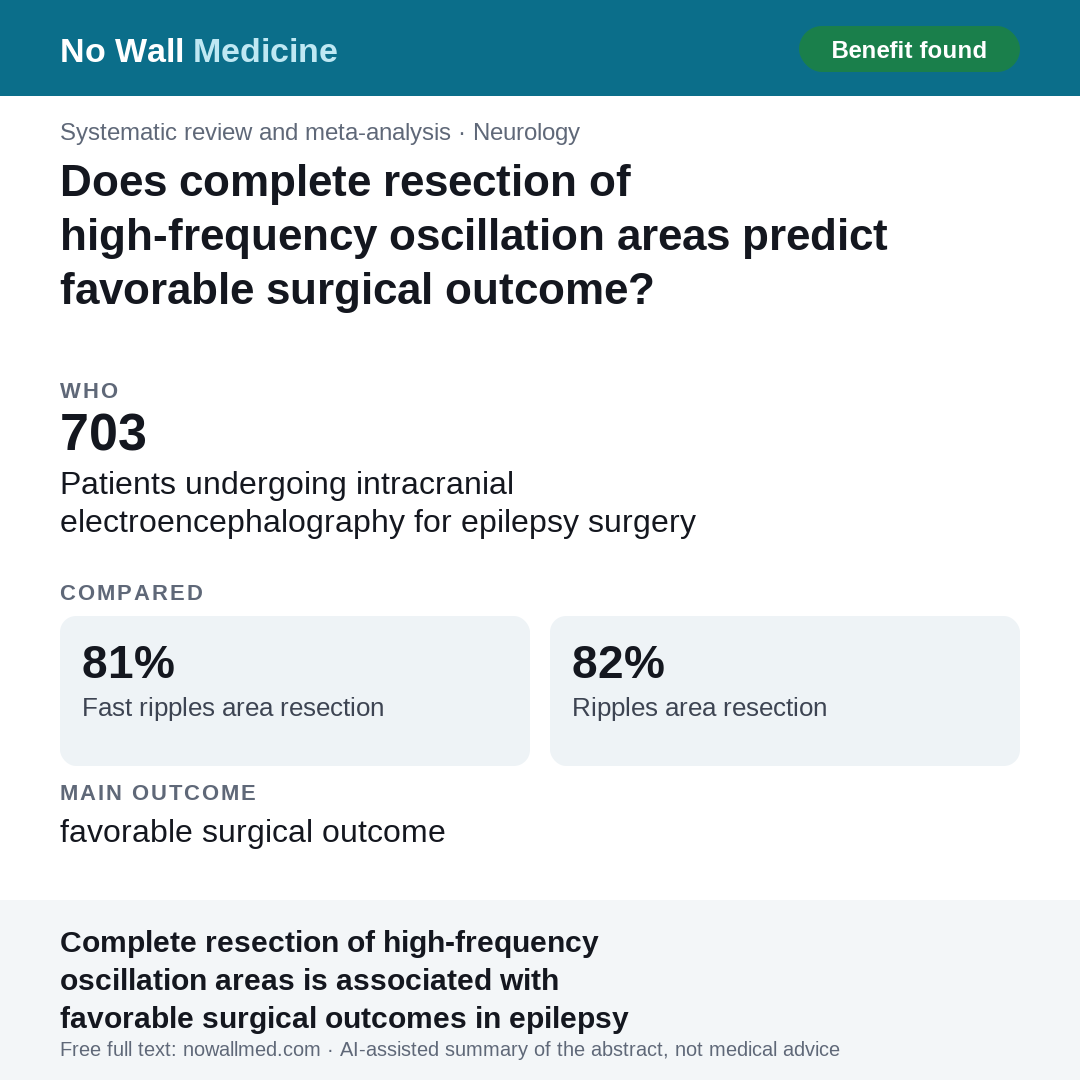
Prognostic Value of Complete Resection of the High-Frequency Oscillation Area in Intracranial EEG: A Systematic Review and Meta-Analysis
Systematic review and meta-analysisBenefit found
Does complete resection of high-frequency oscillation areas predict favorable surgical outcome?
Who
703
Patients undergoing intracranial electroencephalography for epilepsy surgery
Compared
81%Fast ripples area resection (95% CI 76%-86%)
82%Ripples area resection (73%-89%)
Main outcome
favorable surgical outcome
Result: fast ripples odds ratio 6.38 (95% CI 4.03-10.09); ripples odds ratio 4.04 (95% CI 2.32-7.04)
Bottom line: Complete resection of high-frequency oscillation areas is associated with favorable surgical outcomes in epilepsy patients.
Neurology · 2024-04-01Download image
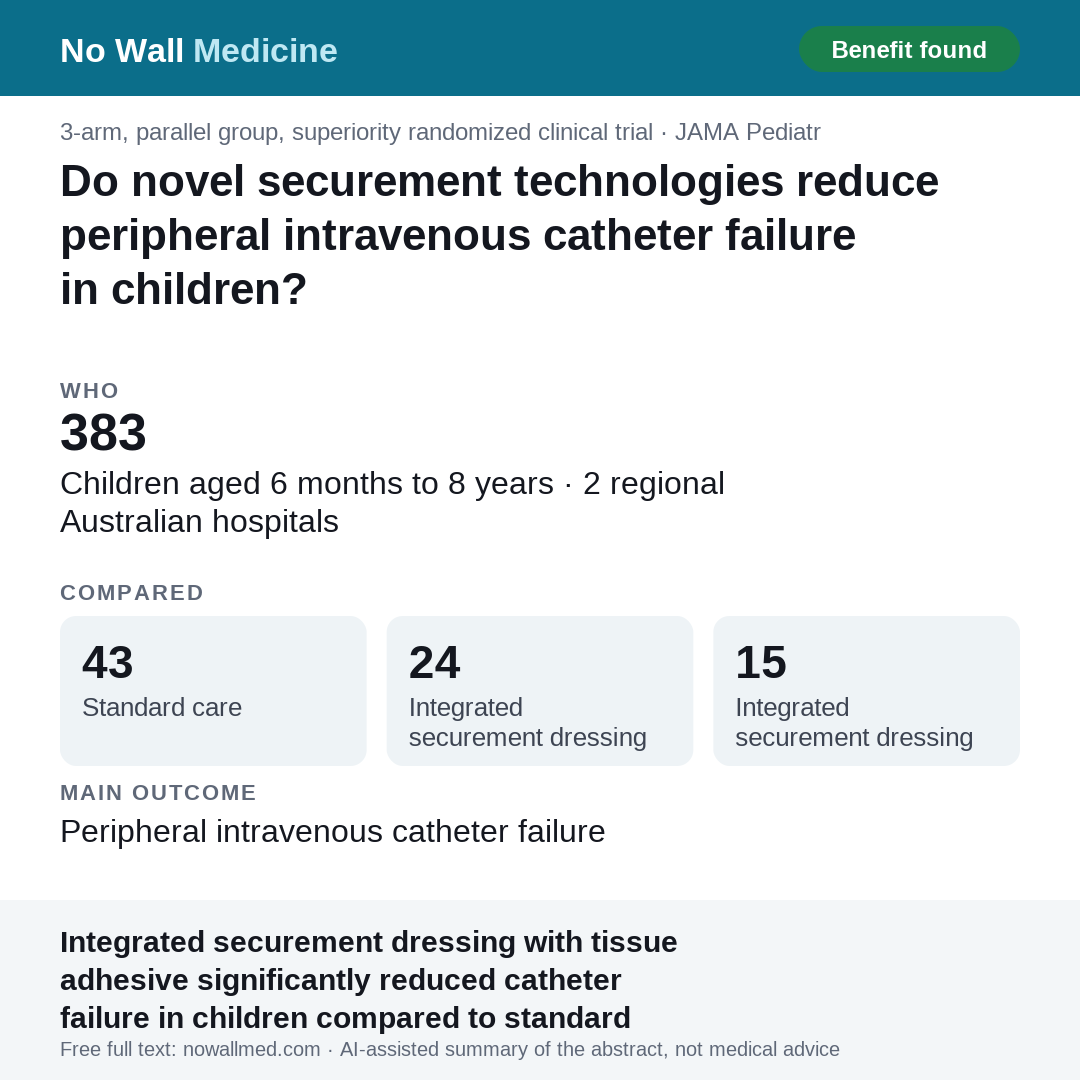
Novel Peripheral Intravenous Catheter Securement for Children and Catheter Failure Reduction: A Randomized Clinical Trial
3-arm, parallel group, superiority randomized clinical trialBenefit found
Do novel securement technologies reduce peripheral intravenous catheter failure in children?
Who
383
Children aged 6 months to 8 years · 2 regional Australian hospitals
Compared
43Standard care (34%)
24Integrated securement dressing (21%)
15Integrated securement dressing with tissue adhesive (12%)
Main outcome
Peripheral intravenous catheter failure
Result: adjusted hazard ratio 0.47 (95% CI, 0.26-0.84)
Bottom line: Integrated securement dressing with tissue adhesive significantly reduced catheter failure in children compared to standard care and integrated securement dressing.
JAMA Pediatr · 2024-04-01Download image
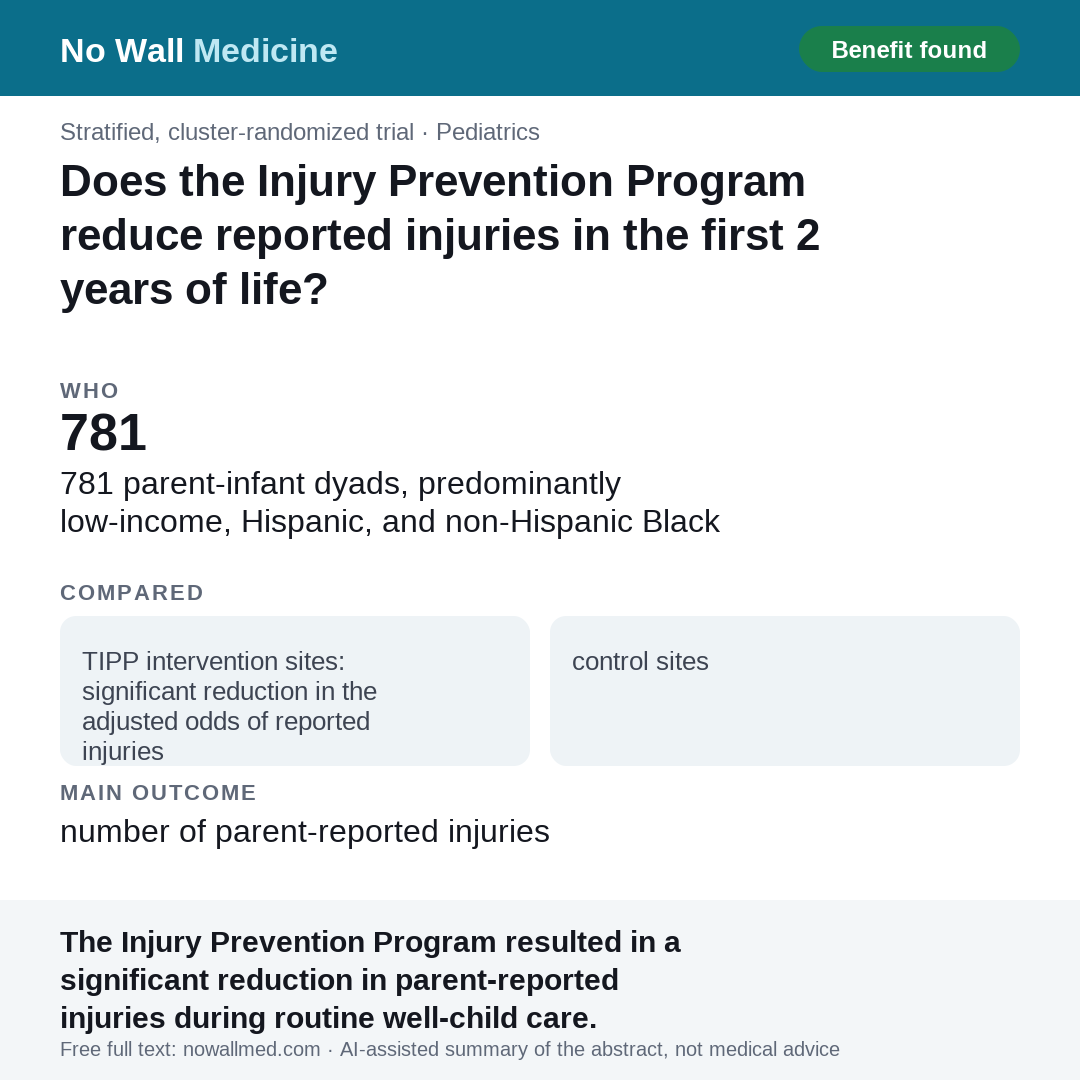
The Injury Prevention Program to Reduce Early Childhood Injuries: A Cluster Randomized Trial
Stratified, cluster-randomized trialBenefit found
Does the Injury Prevention Program reduce reported injuries in the first 2 years of life?
Who
781
781 parent-infant dyads, predominantly low-income, Hispanic, and non-Hispanic Black families · 4 academic medical centers
Compared
TIPP intervention sites: significant reduction in the adjusted odds of reported injuries
control sites
Main outcome
number of parent-reported injuries
Result: adjusted odds ratios (95% CI) of 0.77 (0.66-0.91), 0.60 (0.44-0.82), 0.32 (0.16-0.62), 0.26 (0.12-0.53), and 0.27 (0.14-0.52)
Bottom line: The Injury Prevention Program resulted in a significant reduction in parent-reported injuries during routine well-child care.
Pediatrics · 2024-04-01Download image
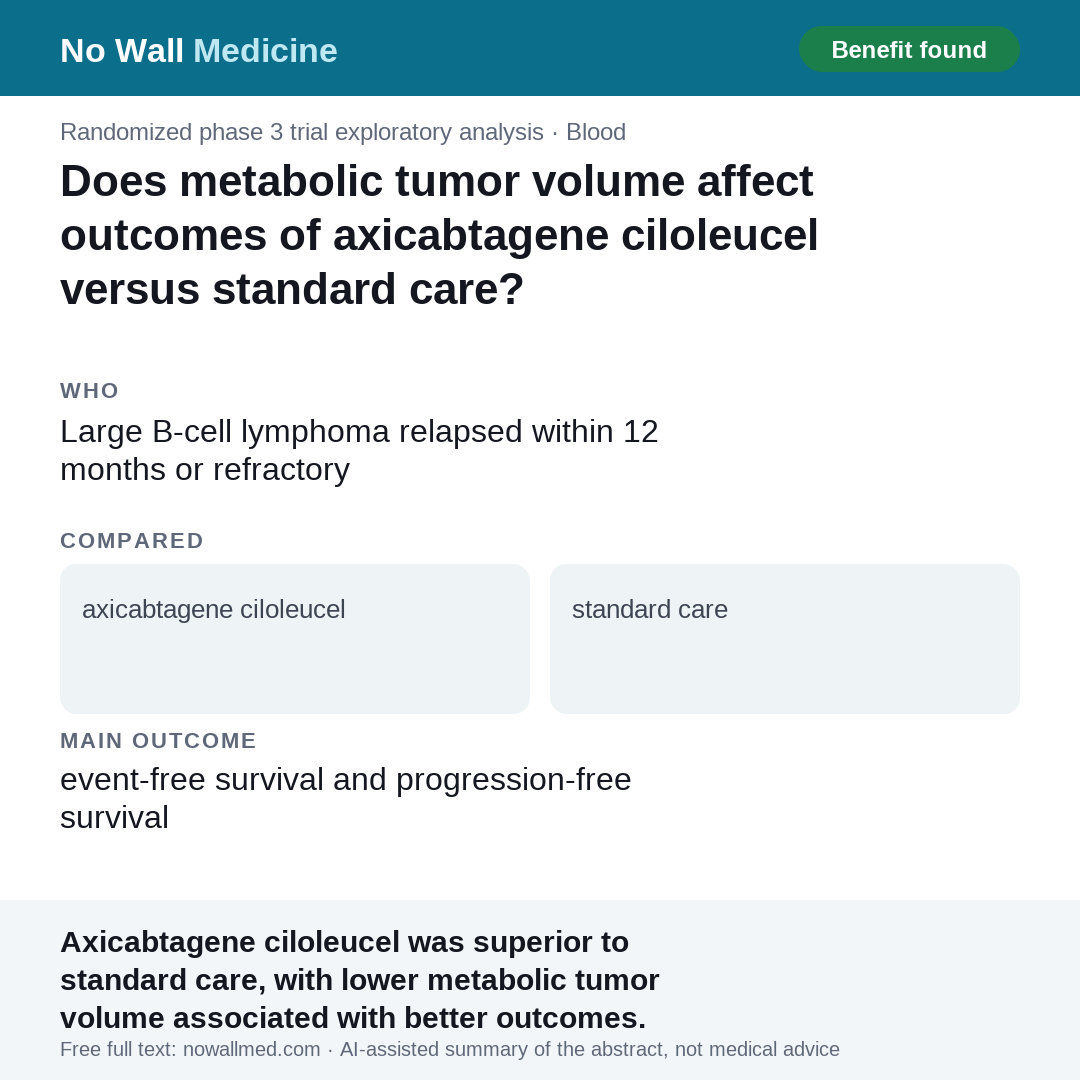
Axicabtagene ciloleucel vs standard of care in second-line large B-cell lymphoma: outcomes by metabolic tumor volume
Randomized phase 3 trial exploratory analysisBenefit found
Does metabolic tumor volume affect outcomes of axicabtagene ciloleucel versus standard care?
Who
Large B-cell lymphoma relapsed within 12 months or refractory
Compared
axicabtagene ciloleucel
standard care
Main outcome
event-free survival and progression-free survival
Bottom line: Axicabtagene ciloleucel was superior to standard care, with lower metabolic tumor volume associated with better outcomes.
Blood · 2024-04-01Download image
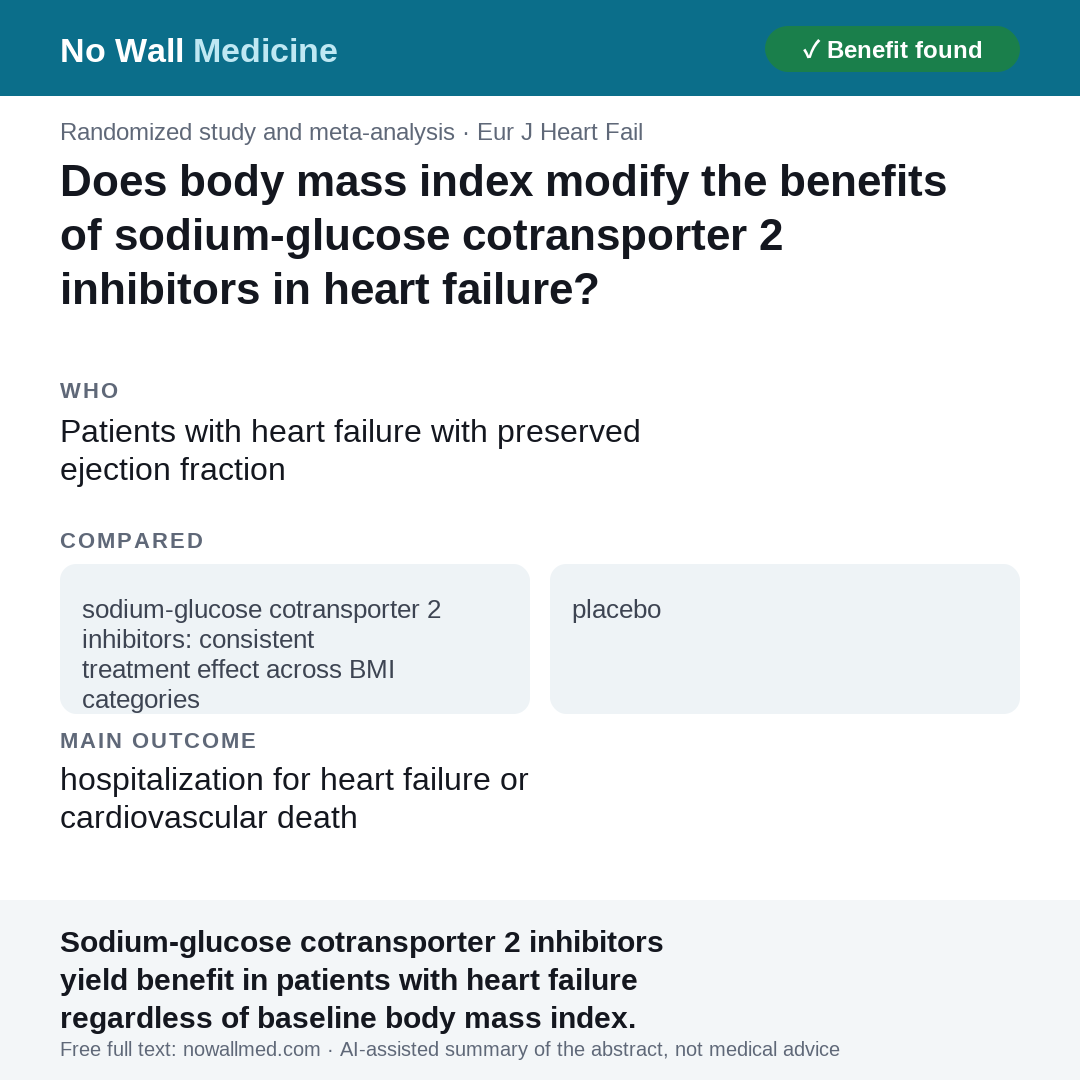
Body mass index and cardiorenal outcomes in the EMPEROR-Preserved trial: Principal findings and meta-analysis with the DELIVER trial
Randomized trial and meta-analysisBenefit found
Does body mass index modify the benefits of sodium-glucose cotransporter 2 inhibitors in heart failure?
Who
Patients with heart failure with preserved ejection fraction
Compared
sodium-glucose cotransporter 2 inhibitors: consistent treatment effect across BMI categories
placebo
Main outcome
hospitalization for heart failure or cardiovascular death
Bottom line: Sodium-glucose cotransporter 2 inhibitors yield benefit in patients with heart failure regardless of baseline body mass index.
Eur J Heart Fail · 2024-04-01Download image
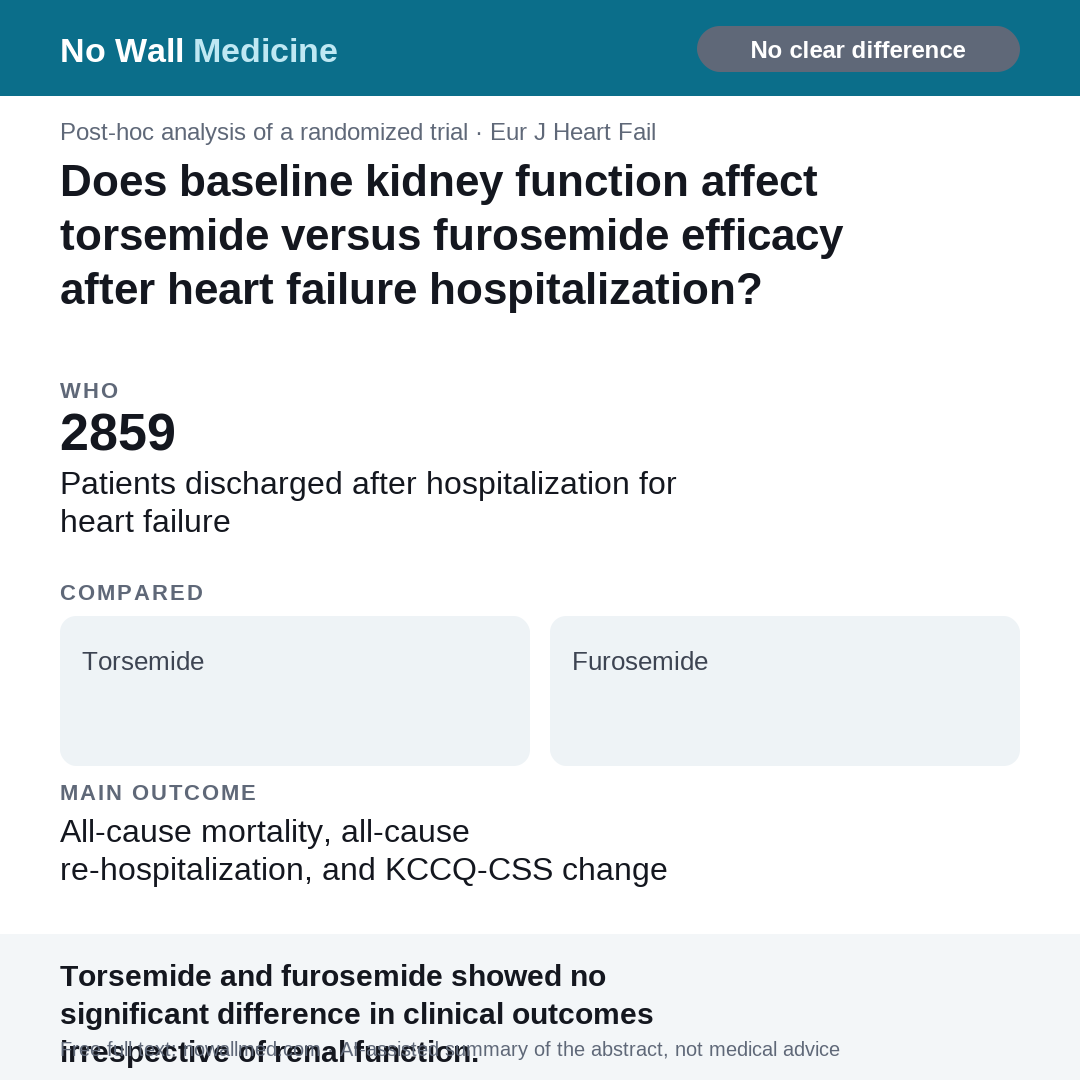
Impact of baseline kidney dysfunction on oral diuretic efficacy following hospitalization for heart failure - insights from TRANSFORM-HF
Post-hoc analysis of a randomized trialNo clear difference
Does baseline kidney function affect torsemide versus furosemide efficacy after heart failure hospitalization?
Who
2859
Patients discharged after hospitalization for heart failure
Compared
Torsemide
Furosemide
Main outcome
All-cause mortality, all-cause re-hospitalization, and KCCQ-CSS change
Bottom line: Torsemide and furosemide showed no significant difference in clinical outcomes irrespective of renal function.
Eur J Heart Fail · 2024-04-01Download image
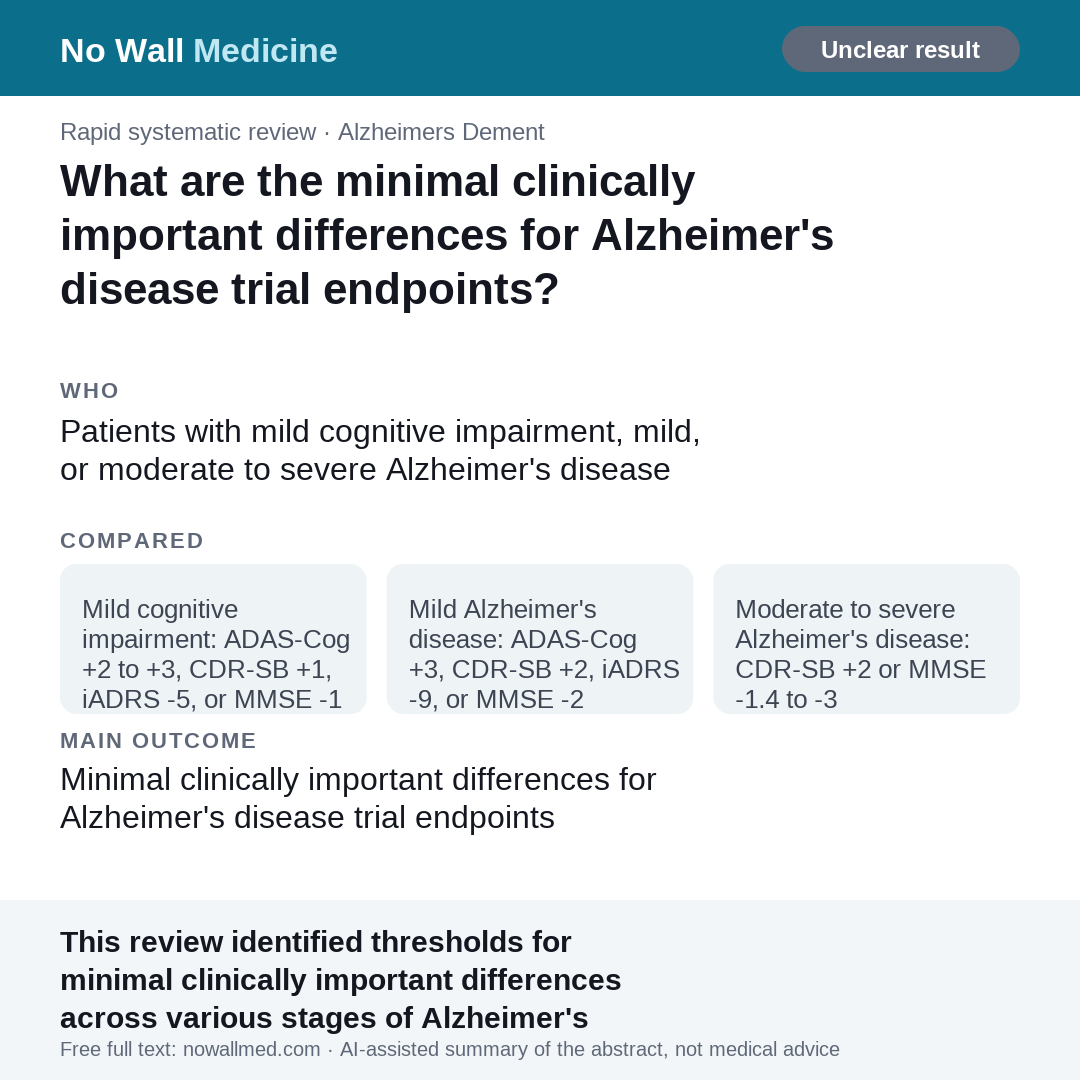
Minimal clinically important difference in Alzheimer's disease: Rapid review
Rapid systematic reviewUnclear result
What are the minimal clinically important differences for Alzheimer's disease trial endpoints?
Who
Patients with mild cognitive impairment, mild, or moderate to severe Alzheimer's disease
Compared
Mild cognitive impairment: ADAS-Cog +2 to +3, CDR-SB +1, iADRS -5, or MMSE -1 to -2
Mild Alzheimer's disease: ADAS-Cog +3, CDR-SB +2, iADRS -9, or MMSE -2
Moderate to severe Alzheimer's disease: CDR-SB +2 or MMSE -1.4 to -3
Main outcome
Minimal clinically important differences for Alzheimer's disease trial endpoints
Bottom line: This review identified thresholds for minimal clinically important differences across various stages of Alzheimer's disease.
Alzheimers Dement · 2024-04-01Download image
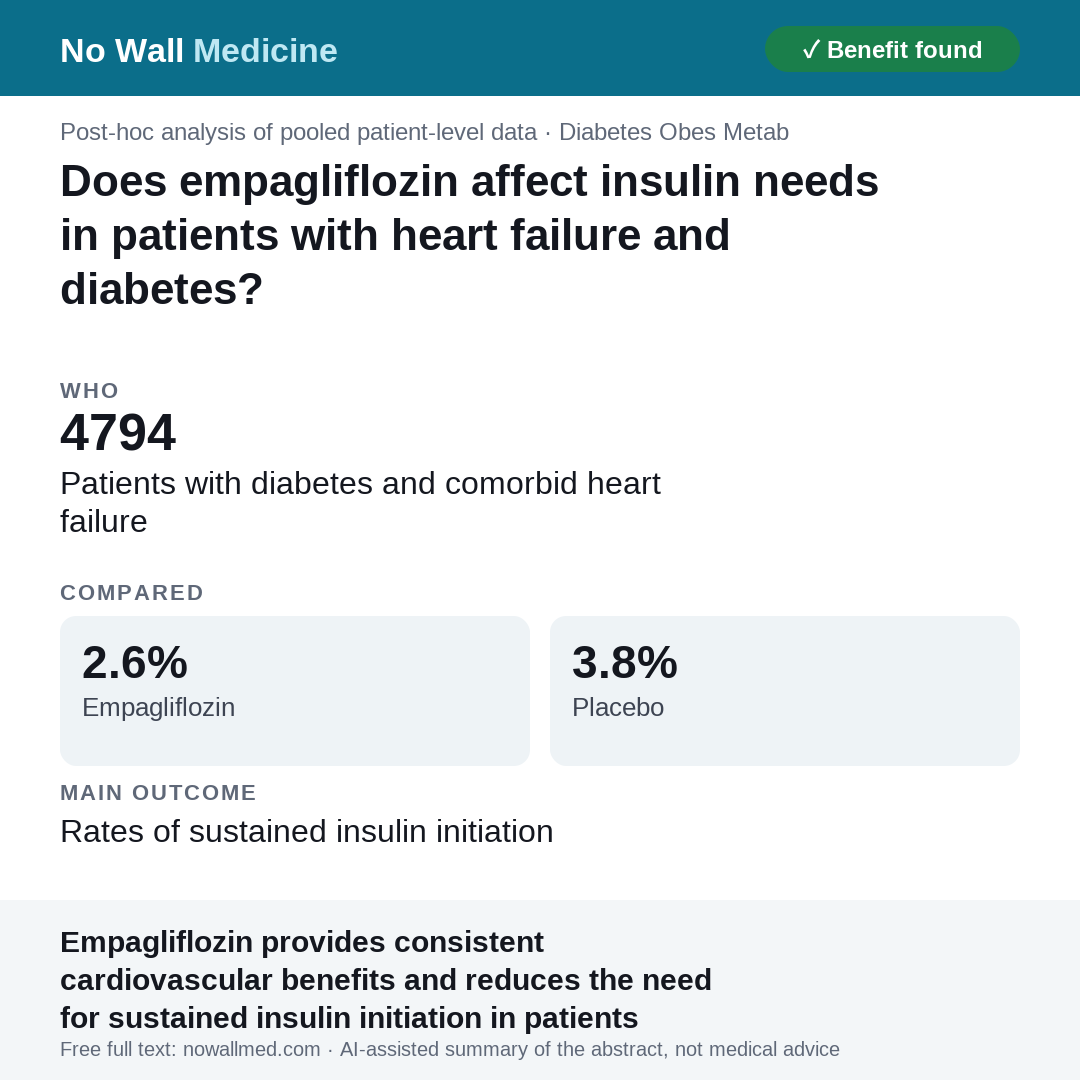
Impact of empagliflozin on insulin needs in patients with heart failure and diabetes: An EMPEROR-Pooled analysis
Post-hoc analysis of pooled patient-level dataBenefit found
Does empagliflozin affect insulin needs in patients with heart failure and diabetes?
Who
4794
Patients with diabetes and comorbid heart failure
Compared
2.6%Empagliflozin (for insulin initiation in those not using insulin at baseline)
3.8%Placebo (for insulin initiation in those not using insulin at baseline)
Main outcome
Rates of sustained insulin initiation
Result: odds ratio 0.66 (95% CI 0.50-0.88)
Bottom line: Empagliflozin provides consistent cardiovascular benefits and reduces the need for sustained insulin initiation in patients without baseline insulin use.
Diabetes Obes Metab · 2024-04-01Download image
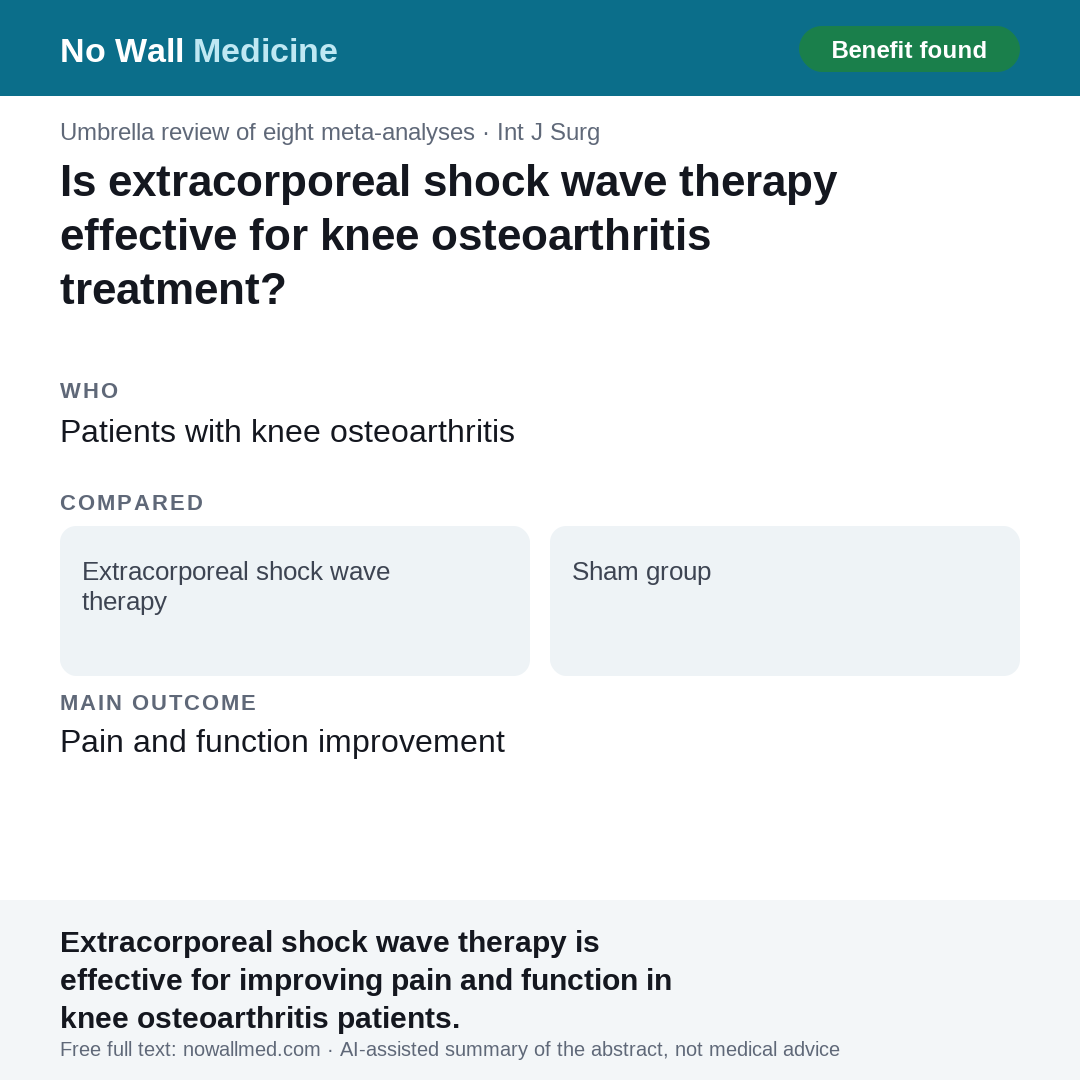
The efficacy of extracorporeal shock wave therapy for knee osteoarthritis : an umbrella review
Umbrella review of eight meta-analysesBenefit found
Is extracorporeal shock wave therapy effective for knee osteoarthritis treatment?
Who
Patients with knee osteoarthritis
Compared
Extracorporeal shock wave therapy
Sham group
Main outcome
Pain and function improvement
Bottom line: Extracorporeal shock wave therapy is effective for improving pain and function in knee osteoarthritis patients.
Int J Surg · 2024-04-01Download image
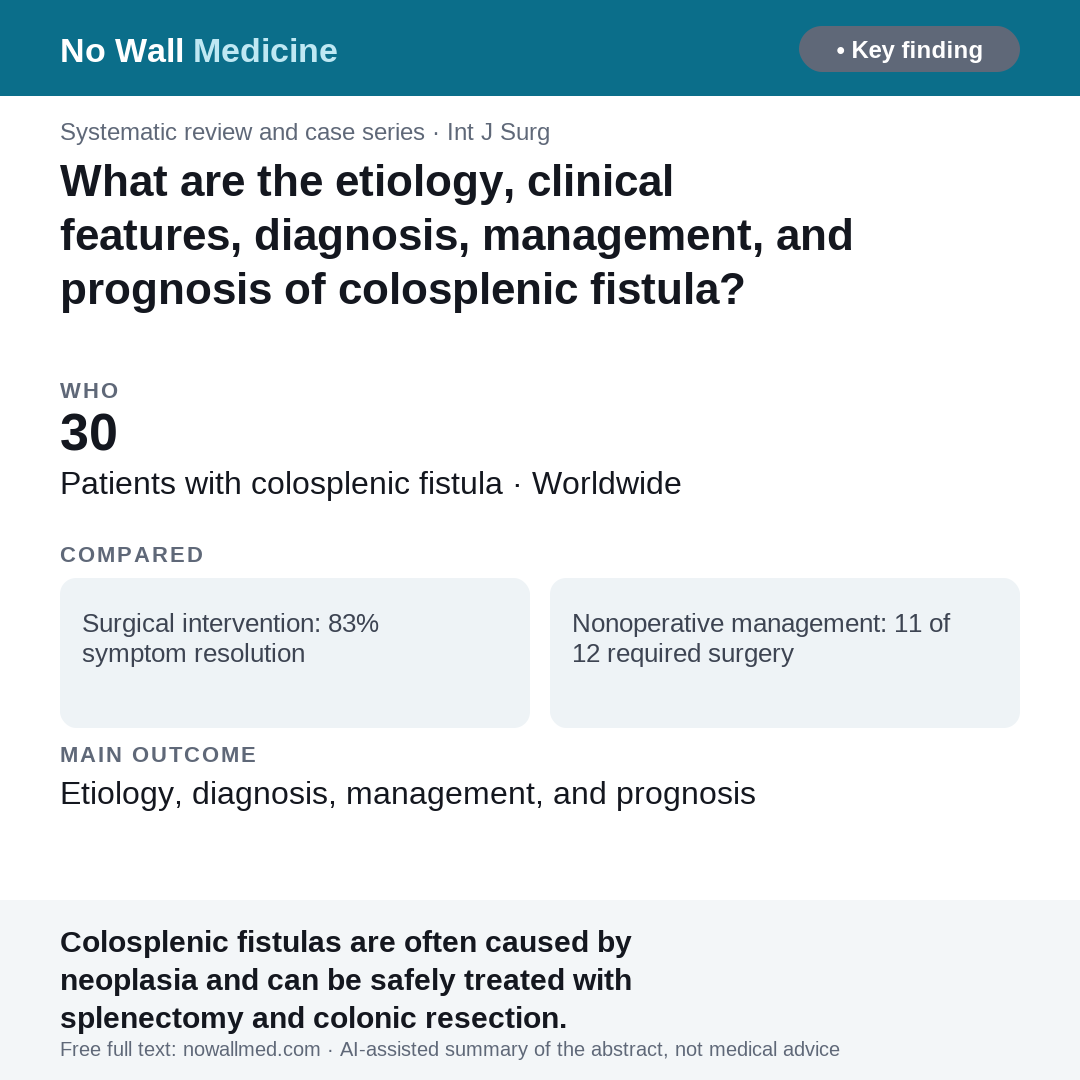
Colosplenic fistula diagnosis and management: a case series and review of literature
Systematic review and case seriesBenefit found
What are the etiology, clinical features, diagnosis, management, and prognosis of colosplenic fistula?
Who
30
Patients with colosplenic fistula · Worldwide
Compared
Surgical intervention: 83% symptom resolution
Nonoperative management: 11 of 12 required surgery
Main outcome
Etiology, diagnosis, management, and prognosis
Bottom line: Colosplenic fistulas are often caused by neoplasia and can be safely treated with splenectomy and colonic resection.
Limitation: Extremely rare complication with infrequent incidence
Int J Surg · 2024-04-01Download image
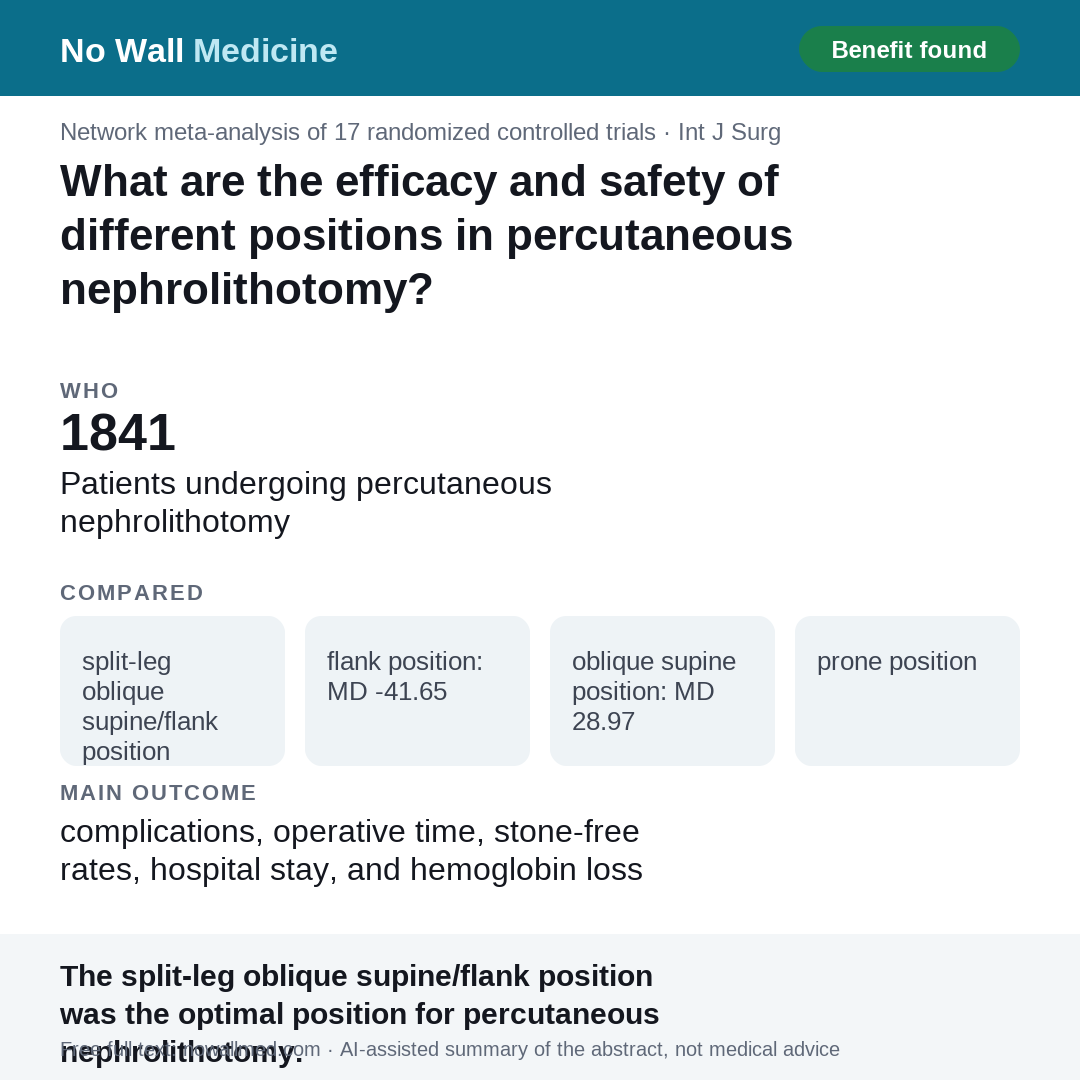
Comparison of safety and efficacy of different positions in percutaneous nephrolithotomy: a network meta-analysis
Network meta-analysis of 17 randomized controlled trialsBenefit found
What are the efficacy and safety of different positions in percutaneous nephrolithotomy?
Who
1841
Patients undergoing percutaneous nephrolithotomy
Compared
split-leg oblique supine/flank position
flank position: MD -41.65
oblique supine position: MD 28.97
prone position
Main outcome
complications, operative time, stone-free rates, hospital stay, and hemoglobin loss
Bottom line: The split-leg oblique supine/flank position was the optimal position for percutaneous nephrolithotomy.
Limitation: Further randomized controlled trials are necessary to confirm the outstanding safety and efficacy of split-leg position.
Int J Surg · 2024-04-01Download image
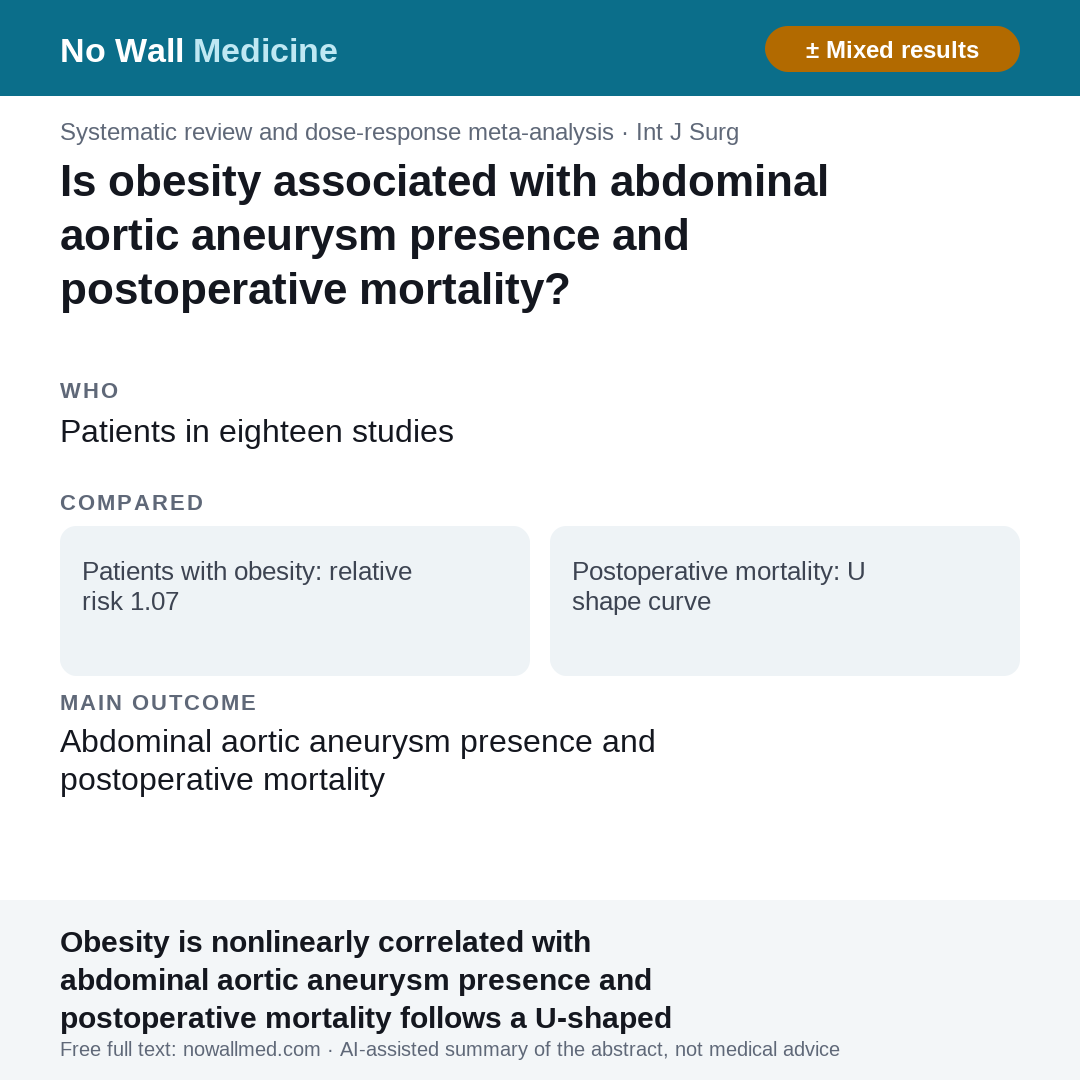
Body mass index and the risk of abdominal aortic aneurysm presence and postoperative mortality: a systematic review and dose-response meta-analysis
Systematic review and dose-response meta-analysisMixed results
Is obesity associated with abdominal aortic aneurysm presence and postoperative mortality?
Who
Patients in eighteen studies
Compared
Patients with obesity: relative risk 1.07
Postoperative mortality: U shape curve
Main outcome
Abdominal aortic aneurysm presence and postoperative mortality
Bottom line: Obesity is nonlinearly correlated with abdominal aortic aneurysm presence and postoperative mortality follows a U-shaped curve.
Int J Surg · 2024-04-01Download image
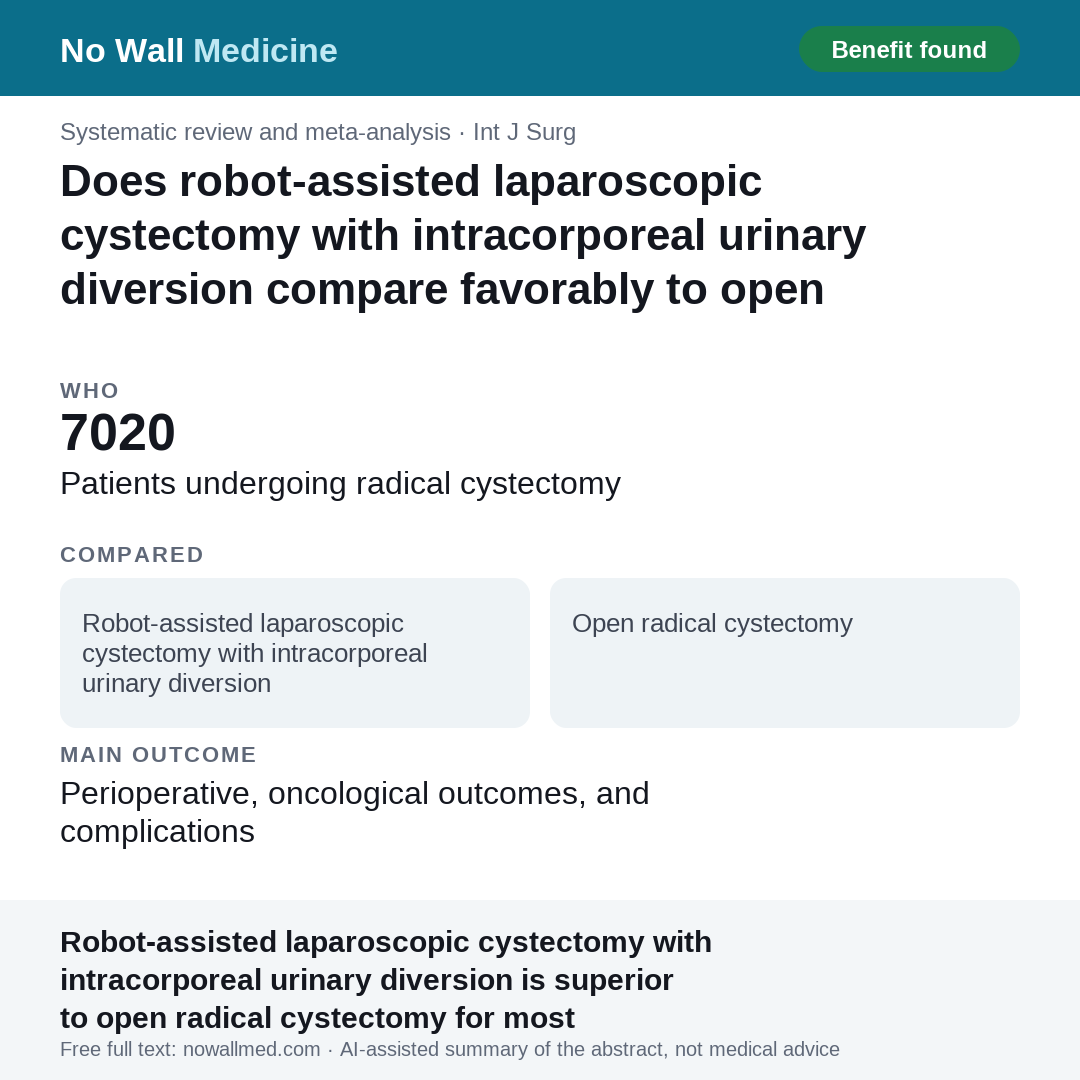
Robot-assisted radical cystectomy with intracorporeal urinary diversion: an updated systematic review and meta-analysis of its differential effect on effectiveness and safety
Systematic review and meta-analysisBenefit found
Does robot-assisted laparoscopic cystectomy with intracorporeal urinary diversion compare favorably to open radical cystectomy?
Who
7020
Patients undergoing radical cystectomy
Compared
Robot-assisted laparoscopic cystectomy with intracorporeal urinary diversion
Open radical cystectomy
Main outcome
Perioperative, oncological outcomes, and complications
Result: blood loss WMD -555.52 (95% CI -681.64 to -429.39); transfusion OR 0.16 (95% CI 0.09-0.28); hospital stay WMD -2.05 (95% CI -2.93 to -1.17); grade III complications 30 days OR 0.57 (95% CI 0.44-0.75); positive surgical margin OR 0.65 (95% CI 0.49-0.85); operative time WMD 68.54 (95% CI 47.41-89.67); ureteroenteric stricture OR 1.56 (95% CI 1.16-2.11)
Bottom line: Robot-assisted laparoscopic cystectomy with intracorporeal urinary diversion is superior to open radical cystectomy for most outcomes, despite longer operative time and higher stricture rates.
Int J Surg · 2024-04-01Download image
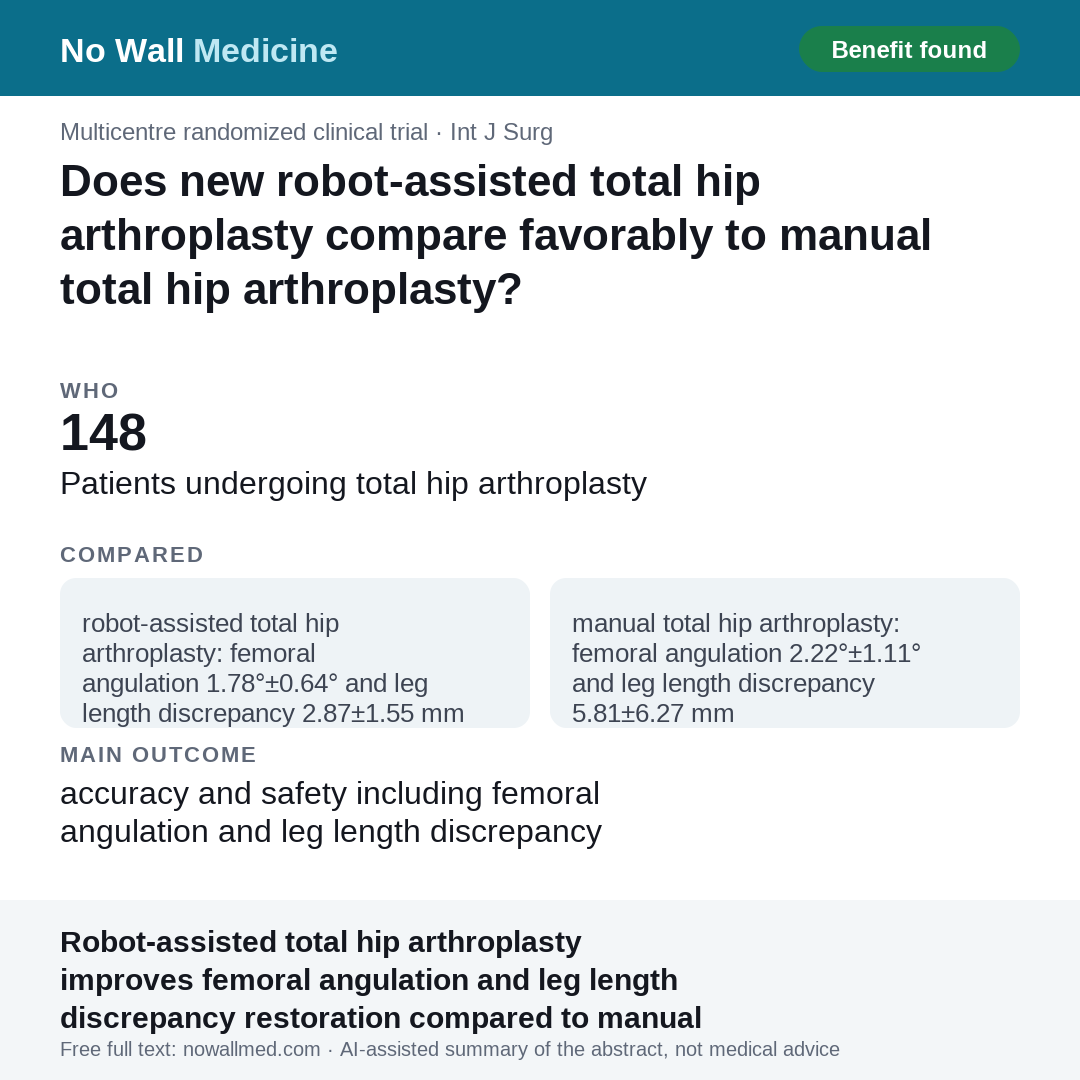
A new designed full process coverage robot-assisted total hip arthroplasty: a multicentre randomized clinical trial
Multicentre randomized clinical trialBenefit found
Does new robot-assisted total hip arthroplasty compare favorably to manual total hip arthroplasty?
Who
148
Patients undergoing total hip arthroplasty
Compared
robot-assisted total hip arthroplasty: femoral angulation 1.78°±0.64° and leg length discrepancy 2.87±1.55 mm
manual total hip arthroplasty: femoral angulation 2.22°±1.11° and leg length discrepancy 5.81±6.27 mm
Main outcome
accuracy and safety including femoral angulation and leg length discrepancy
Bottom line: Robot-assisted total hip arthroplasty improves femoral angulation and leg length discrepancy restoration compared to manual procedures.
Int J Surg · 2024-04-01Download image