Visual abstracts
New randomized trials and meta-analyses from leading journals at a glance: who was studied, what was compared, and what was found. Every paper is free to read in full.
All specialtiesCardiology 4877Oncology 4138Gastroenterology & Hepatology 1942Infectious Disease 3837Neurology 1905Psychiatry & Mental Health 2273Pulmonology 2143Critical Care 1365Endocrinology & Diabetes 2580Pediatrics 2980Surgery 2559Orthopedics & Sports Medicine 931Neurosurgery 537Cardiothoracic & Vascular Surgery 674Plastic & Reconstructive Surgery 591Nephrology 1133Rheumatology 823Hematology 1109Dermatology 621Ophthalmology 543Obstetrics & Gynecology 1686Public & Global Health 1058Radiology & Imaging 648Anesthesiology 986Urology 764ENT (Otolaryngology) 503Emergency Medicine 511Allergy & Immunology 313Geriatrics 981Family Medicine & Primary Care 562Medical Genetics & Genomics 676Pathology & Laboratory Medicine 159Physical Medicine & Rehabilitation 757Palliative Care 444Nutrition 1588Digital Health & AI 2201General Medicine 321
Peripheral Vision in Patients Following Intraocular Lens Implantation: A Systematic Review and Meta-Analysis
Systematic review and meta-analysisMixed results
How do intraocular lenses influence peripheral vision and optical quality after cataract surgery?
Who
5963
Patients following intraocular lens implantation
Compared
Patients with intraocular lenses: mean deviation lower than healthy age-matched controls
Healthy age-matched controls
Main outcome
Peripheral visual function and peripheral optical quality
Bottom line: Peripheral image quality is degraded after cataract surgery, though visual function impairment requires further investigation.
Am J Ophthalmol · 2024-03-21Download image

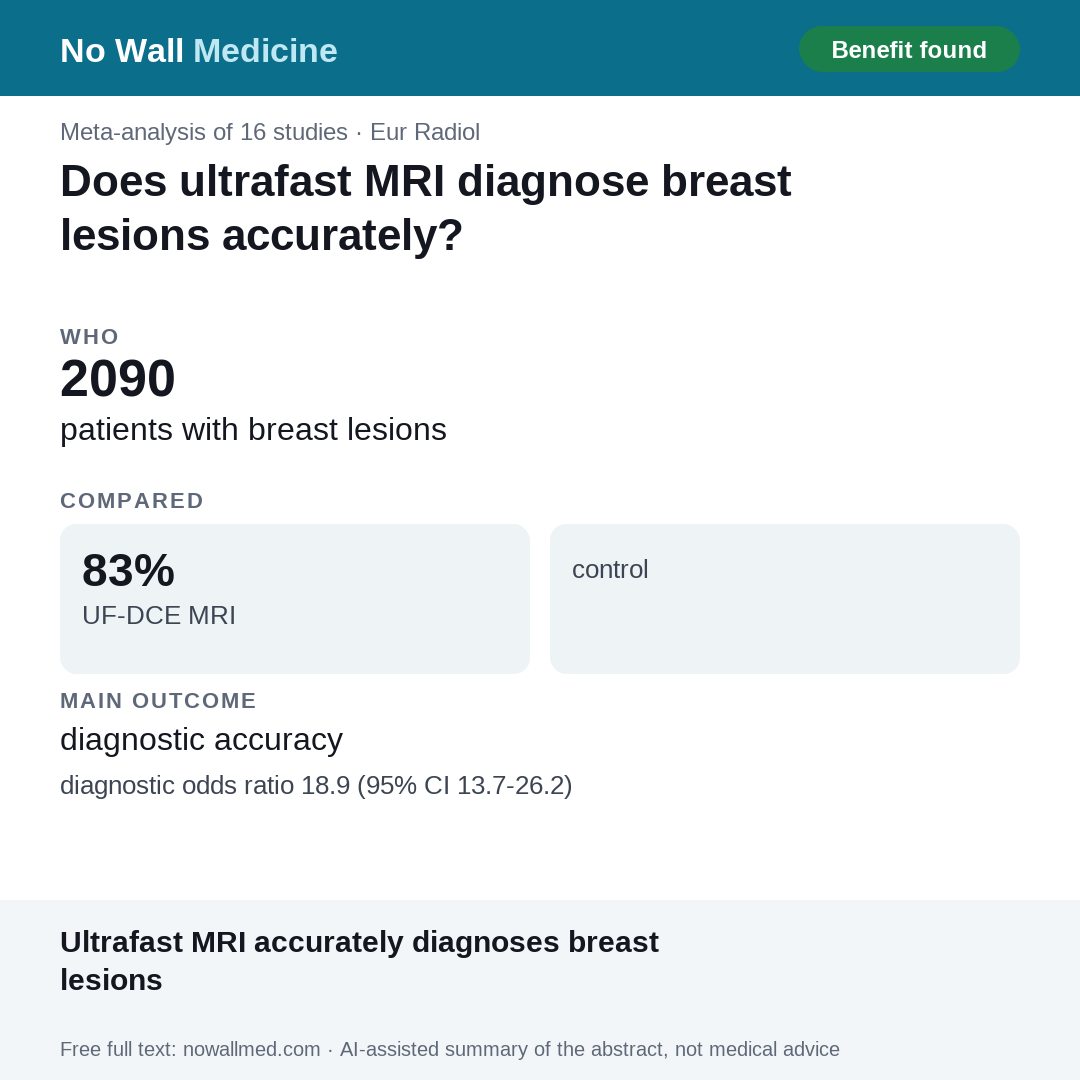
The diagnostic performance of ultrafast MRI to differentiate benign from malignant breast lesions: a systematic review and meta-analysis
Meta-analysis of 16 studiesBenefit found
Does ultrafast MRI diagnose breast lesions accurately?
Who
2090
patients with breast lesions
Compared
83%UF-DCE MRI (95% CI 79-88%)
control
Main outcome
diagnostic accuracy
Result: diagnostic odds ratio 18.9 (95% CI 13.7-26.2)
Bottom line: Ultrafast MRI accurately diagnoses breast lesions
Eur Radiol · 2024-03-21Download image
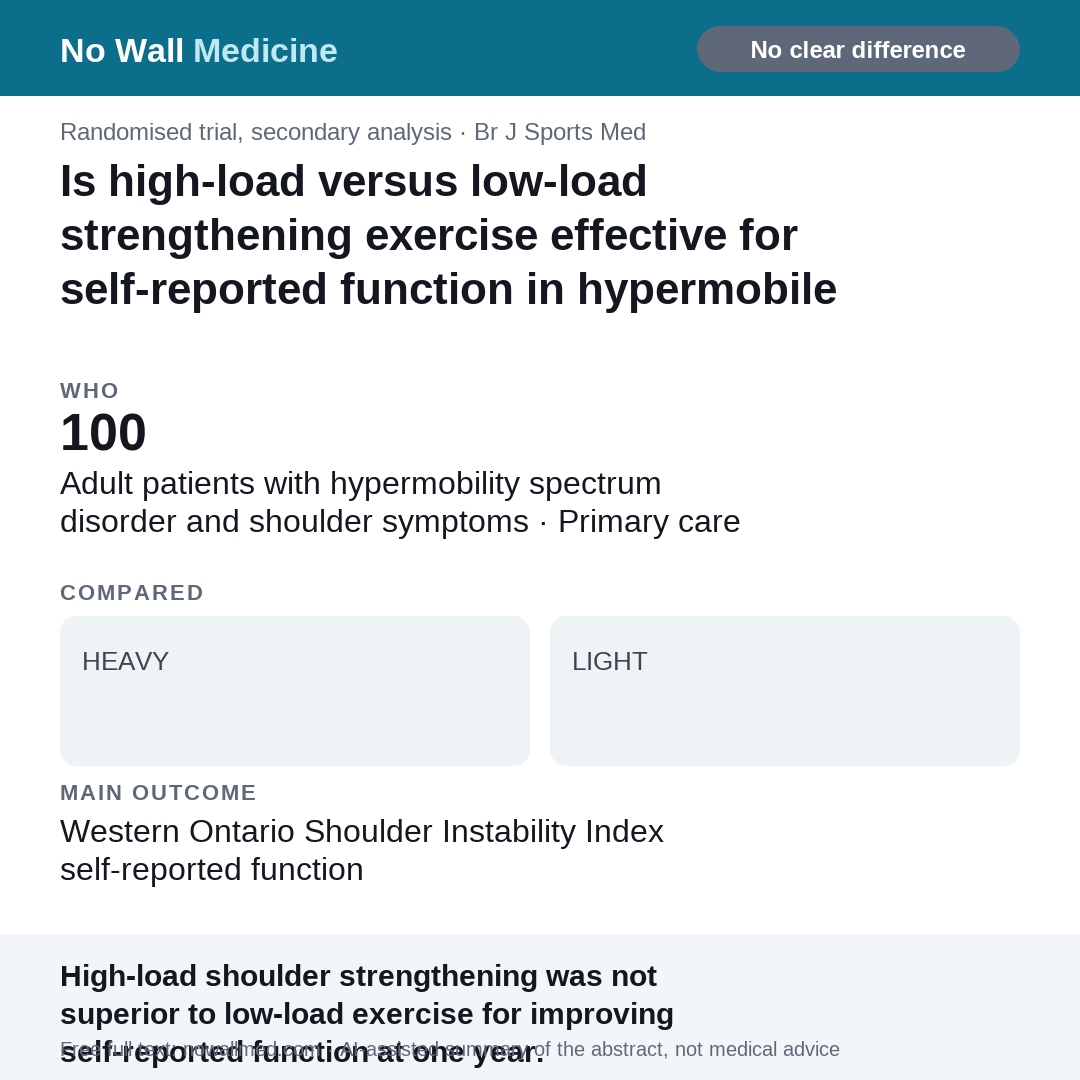
One-year effectiveness of high-load compared with low-load strengthening exercise on self-reported function in patients with hypermobile shoulders: a secondary analysis from a randomised controlled trial
Randomised trial, secondary analysisNo clear difference
Is high-load versus low-load strengthening exercise effective for self-reported function in hypermobile shoulders?
Who
100
Adult patients with hypermobility spectrum disorder and shoulder symptoms · Primary care
Compared
HEAVY
LIGHT
Main outcome
Western Ontario Shoulder Instability Index self-reported function
Result: -92.9 (95% CI -257.4 to 71.5)
Bottom line: High-load shoulder strengthening was not superior to low-load exercise for improving self-reported function at one year.
Br J Sports Med · 2024-03-21Download image
Effect of a coaching intervention to enhance physical activity and prevent falls in community-dwelling people aged 60+ years: a cluster randomised controlled trial
Cluster randomised controlled trialNo clear difference
Does a coaching intervention enhance physical activity and prevent falls in community-dwelling people aged 60+ years?
Who
605
Community-dwelling people aged 60+ years · Community-dwelling
Compared
Intervention: 0.71 falls/person/year
Control: 0.87 falls/person/year
Main outcome
Physical activity counts per minute and falls rate
Result: incidence rate ratio 0.86, 95% CI 0.65 to 1.14
Bottom line: The coaching intervention did not significantly change physical activity counts per minute or falls rate at 12 months.
Br J Sports Med · 2024-03-21Download image

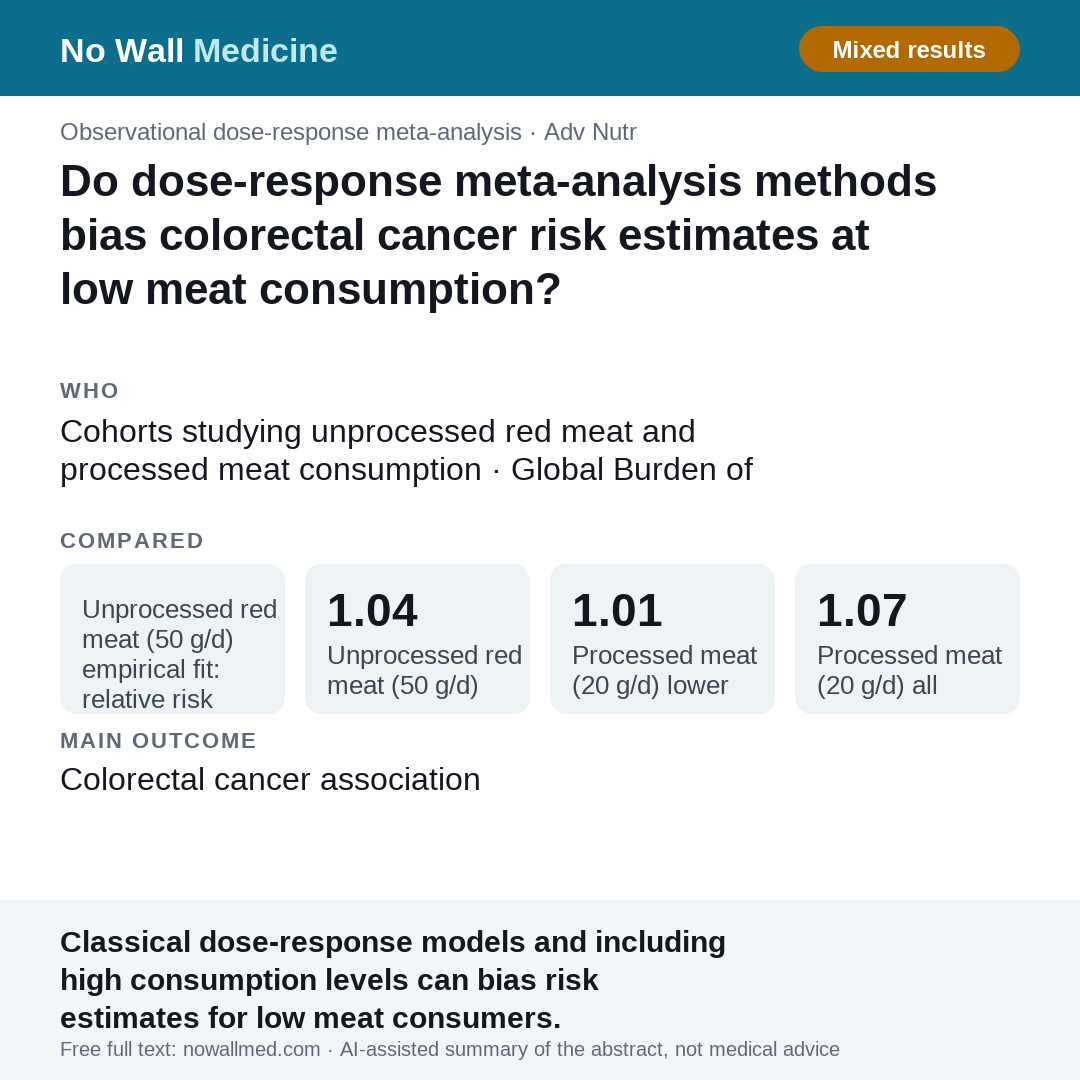
Observational Dose-Response Meta-Analysis Methods May Bias Risk Estimates at Low Consumption Levels: The Case of Meat and Colorectal Cancer
Observational dose-response meta-analysisMixed results
Do dose-response meta-analysis methods bias colorectal cancer risk estimates at low meat consumption?
Who
Cohorts studying unprocessed red meat and processed meat consumption · Global Burden of Disease project systematic reviews
Compared
Unprocessed red meat (50 g/d) empirical fit: relative risk 0.93 (0.8-1.02)
1.04Unprocessed red meat (50 g/d) all consumption (0.99-1.10)
1.01Processed meat (20 g/d) lower consumer data (0.87-1.18)
1.07Processed meat (20 g/d) all consumption empirical (1.02-1.12)
Main outcome
Colorectal cancer association
Bottom line: Classical dose-response models and including high consumption levels can bias risk estimates for low meat consumers.
Limitation: Observational studies are susceptible to bias from confounding between diet and lifestyle factors.
Adv Nutr · 2024-03-21Download image
Preliminary results of hypofractionated radiotherapy in breast cancer in Chandigarh, India: single-centre, non-inferiority, open-label, randomised, phase 3 trial
Open-label, randomised, phase 3 trialBenefit found
Is a 2-week hypofractionated radiotherapy schedule non-inferior to a 3-week schedule using 2-D technique?
Who
1121
Breast cancer patients, stage I-III, post mastectomy or breast conservative surgery · Chandigarh, India
Compared
2-week arm: 94% Excellent or Good cosmetic outcome
3-week arm: 89% Excellent or Good cosmetic outcome
Main outcome
Acute skin toxicity and cosmetic outcome
Bottom line: A 2-week radiotherapy schedule with 2-D technique showed better cosmetic outcomes than a 3-week schedule.
Limitation: Disease outcomes and late-term toxicities need to be further checked.
Funded by: Science and Engineering Research Board (SERB), India
Lancet Reg Health Southeast Asia · 2024-03-21Download image

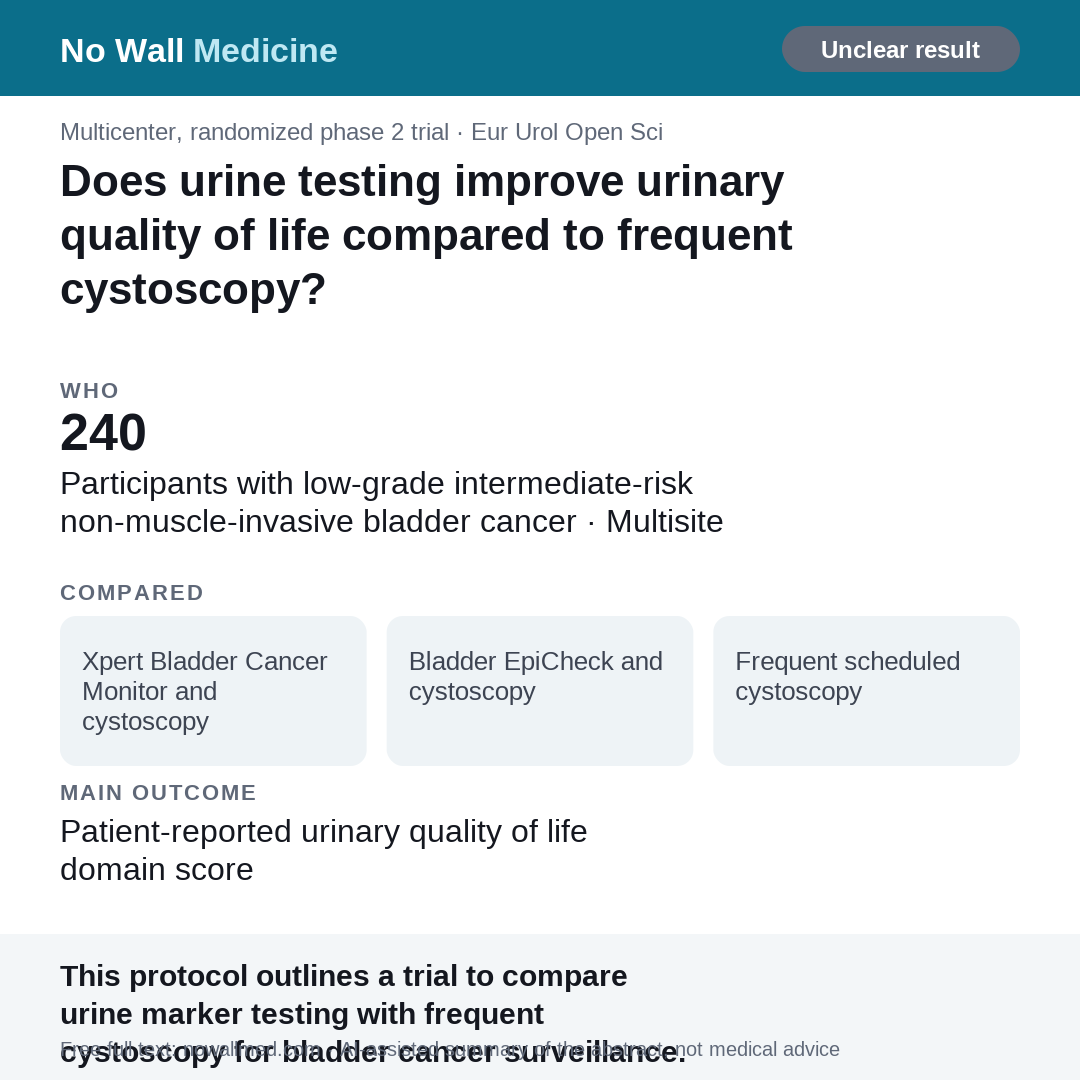
Clinical Trial Protocol for "Replace Cysto": Replacing Invasive Cystoscopy with Urine Testing for Non-muscle-invasive Bladder Cancer Surveillance-A Multicenter, Randomized, Phase 2 Healthcare Delivery Trial Comparing Quality of Life During Cancer Surveillance with Xpert Bladder Cancer Monitor or Bladder EpiCheck Urine Testing Versus Frequent Cystoscopy
Multicenter, randomized phase 2 trialUnclear result
Does urine testing improve urinary quality of life compared to frequent cystoscopy?
Who
240
Participants with low-grade intermediate-risk non-muscle-invasive bladder cancer · Multisite
Compared
Xpert Bladder Cancer Monitor and cystoscopy
Bladder EpiCheck and cystoscopy
Frequent scheduled cystoscopy
Main outcome
Patient-reported urinary quality of life domain score
Bottom line: This protocol outlines a trial to compare urine marker testing with frequent cystoscopy for bladder cancer surveillance.
Eur Urol Open Sci · 2024-03-21Download image
Measuring patients' medical treatment preferences in advance care planning: development and validation of the Treat-Me-ACP instrument - a secondary analysis of a cluster-randomized controlled trial
Randomized trialUnclear result
Does Treat-Me-ACP measure treatment preferences?
Who
80
care-dependent community-dwelling older persons
Compared
intervention
control
Main outcome
medical treatment preferences
Bottom line: Treat-Me-ACP validated for older persons
BMC Palliat Care · 2024-03-21Download image

Baseline Antipsychotic Dose and Transition to Psychosis in Individuals at Clinical High Risk: A Systematic Review and Meta-Analysis
Systematic review and meta-analysisHarm found
Does baseline antipsychotic dose follow a dose-effect pattern for transition to psychosis?
Who
290
Individuals at clinical high risk for psychosis exposed to antipsychotics
Compared
Transitioned to psychosis: 60 to 395 mg/d
Did not transition: 13 to 224 mg/d
Main outcome
Transition to psychosis measured by mean chlorpromazine equivalent doses
Result: Hedges g, 0.41 (95% CI, 0.15 to 0.67)
Bottom line: Higher baseline antipsychotic doses are associated with an increased likelihood of transitioning to psychosis in high-risk individuals.
JAMA Psychiatry · 2024-03-20Download image

Morbidity After Mechanical Bowel Preparation and Oral Antibiotics Prior to Rectal Resection: The MOBILE2 Randomized Clinical Trial
Multicenter, double-blind, placebo-controlled randomized clinical trialBenefit found
Does mechanical bowel preparation and oral antibiotics reduce complications after elective rectal resection?
Who
565
Patients undergoing elective resection of a rectal tumor · 3 university hospitals in Finland
Compared
Mechanical bowel preparation and oral antibiotics: median Comprehensive Complication Index 0
Mechanical bowel preparation plus placebo: median Comprehensive Complication Index 8.66
Main outcome
overall cumulative postoperative complications
Result: odds ratio 0.45 (95% CI 0.27-0.77) for surgical site infections
Bottom line: Mechanical bowel preparation and oral antibiotics reduced overall complications, surgical site infections, and anastomotic dehiscences after elective rectal resection.
JAMA Surg · 2024-03-20Download image

Ticagrelor or Clopidogrel Monotherapy vs Dual Antiplatelet Therapy After Percutaneous Coronary Intervention: A Systematic Review and Patient-Level Meta-Analysis
Systematic review and patient-level meta-analysisMixed results
Is ticagrelor or clopidogrel monotherapy noninferior to dual antiplatelet therapy after PCI?
Who
25960
Patients undergoing percutaneous coronary intervention without indication to oral anticoagulation · Asia, Europe, and North America
Compared
Dual antiplatelet therapy
Ticagrelor monotherapy: HR, 0.89
Clopidogrel monotherapy: HR, 1.37
Main outcome
Composite of death, myocardial infarction, or stroke
Result: ticagrelor HR, 0.89 (95% CI, 0.74-1.06); clopidogrel HR, 1.37 (95% CI, 1.01-1.87)
Bottom line: Ticagrelor monotherapy was noninferior to dual antiplatelet therapy, while clopidogrel monotherapy was not noninferior for the primary composite endpoint.
JAMA Cardiol · 2024-03-20Download image

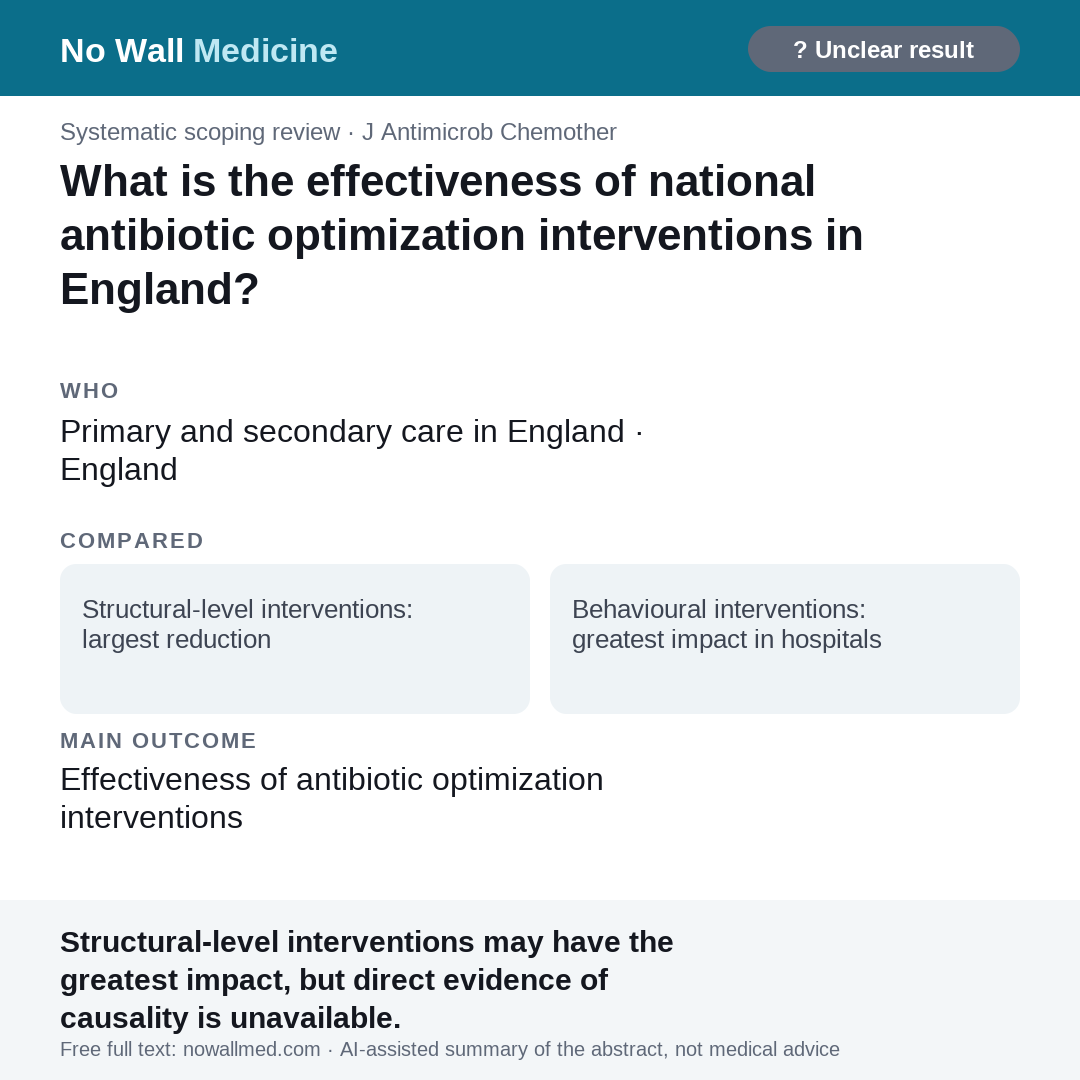
A systematic review of national interventions and policies to optimize antibiotic use in healthcare settings in England
Systematic scoping reviewUnclear result
What is the effectiveness of national antibiotic optimization interventions in England?
Who
Primary and secondary care in England · England
Compared
Structural-level interventions: largest reduction
Behavioural interventions: greatest impact in hospitals
Main outcome
Effectiveness of antibiotic optimization interventions
Bottom line: Structural-level interventions may have the greatest impact, but direct evidence of causality is unavailable.
J Antimicrob Chemother · 2024-03-20Download image
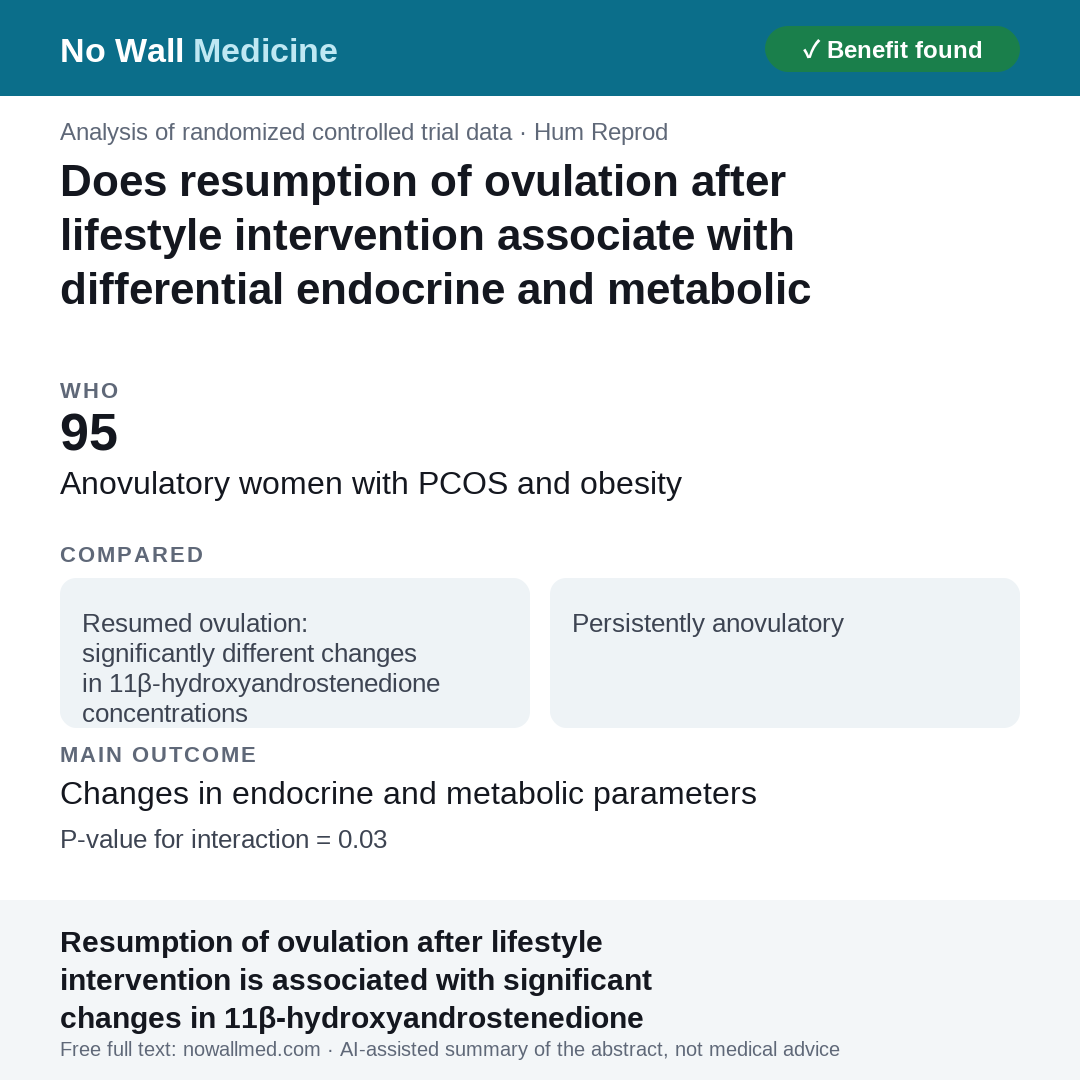
Resumption of ovulation in anovulatory women with PCOS and obesity is associated with reduction of 11β-hydroxyandrostenedione concentrations
Analysis of randomized controlled trial dataBenefit found
Does resumption of ovulation after lifestyle intervention associate with differential endocrine and metabolic changes?
Who
95
Anovulatory women with PCOS and obesity
Compared
Resumed ovulation: significantly different changes in 11β-hydroxyandrostenedione concentrations
Persistently anovulatory
Main outcome
Changes in endocrine and metabolic parameters
Result: P-value for interaction = 0.03
Bottom line: Resumption of ovulation after lifestyle intervention is associated with significant changes in 11β-hydroxyandrostenedione concentrations.
Limitation: No high-resolution transvaginal ultrasonography was used and the small sample size may limit robustness.
Funded by: ZonMw, the Dutch Organization for Health Research and Development
Hum Reprod · 2024-03-20Download image
MRI imaging features for predicting macrotrabecular-massive subtype hepatocellular carcinoma: a systematic review and meta-analysis
Systematic review and meta-analysisBenefit found
Which MRI features predict macrotrabecular-massive hepatocellular carcinoma subtype?
Who
2031
Patients with hepatocellular carcinoma
Compared
Macrotrabecular-massive hepatocellular carcinoma: LR-5: 63% (95% CI, 55-71%)
Non-macrotrabecular-massive hepatocellular carcinoma: LR-5: 77% (95% CI, 71-82%)
Main outcome
Significant MRI features and Liver Imaging Radiology and Data System categories
Result: necrosis DOR = 4.2 (95% CI, 2.0-8.5)
Bottom line: Six MRI features can suggest the macrotrabecular-massive hepatocellular carcinoma subtype to assist in guiding treatment plans.
Eur Radiol · 2024-03-20Download image

Association between inflammation and post-intensive care syndrome: a systematic review
Systematic reviewMixed results
Is there an association between inflammation and post-intensive care syndrome features?
Who
Survivors of critical illness
Compared
Interleukin-8: 71% of studies
C-reactive protein: 62% of studies
Interleukin-10: 60% of studies
Main outcome
Post-intensive care syndrome features
Bottom line: There was mixed evidence of a potential association between inflammatory processes and long-term outcomes following critical illness.
Limitation: Variability in biomarkers sampled, time-points of sampling, and outcome measures reported.
Anaesthesia · 2024-03-20Download image

Exercise Therapy for Treatment of Acute Non-specific Low Back Pain: A Cochrane Systematic Review and Meta-analysis of Randomized Controlled Trials
Meta-analysis of 23 randomized controlled trialsNo clear difference
Is exercise effective for acute non-specific low back pain versus sham or no treatment?
Who
2674
Adults with acute non-specific low back pain
Compared
Exercise therapy
Sham or no treatment
Main outcome
Back pain, back-specific functional status, and recovery
Result: mean difference -0.80 (95% CI -5.79 to 4.19)
Bottom line: Exercise therapy may have no clinically relevant effect on pain or functional status in the short term.
Limitation: Very low-certainty evidence due to high risk of bias, small study size, and substantial heterogeneity.
Arch Phys Med Rehabil · 2024-03-20Download image

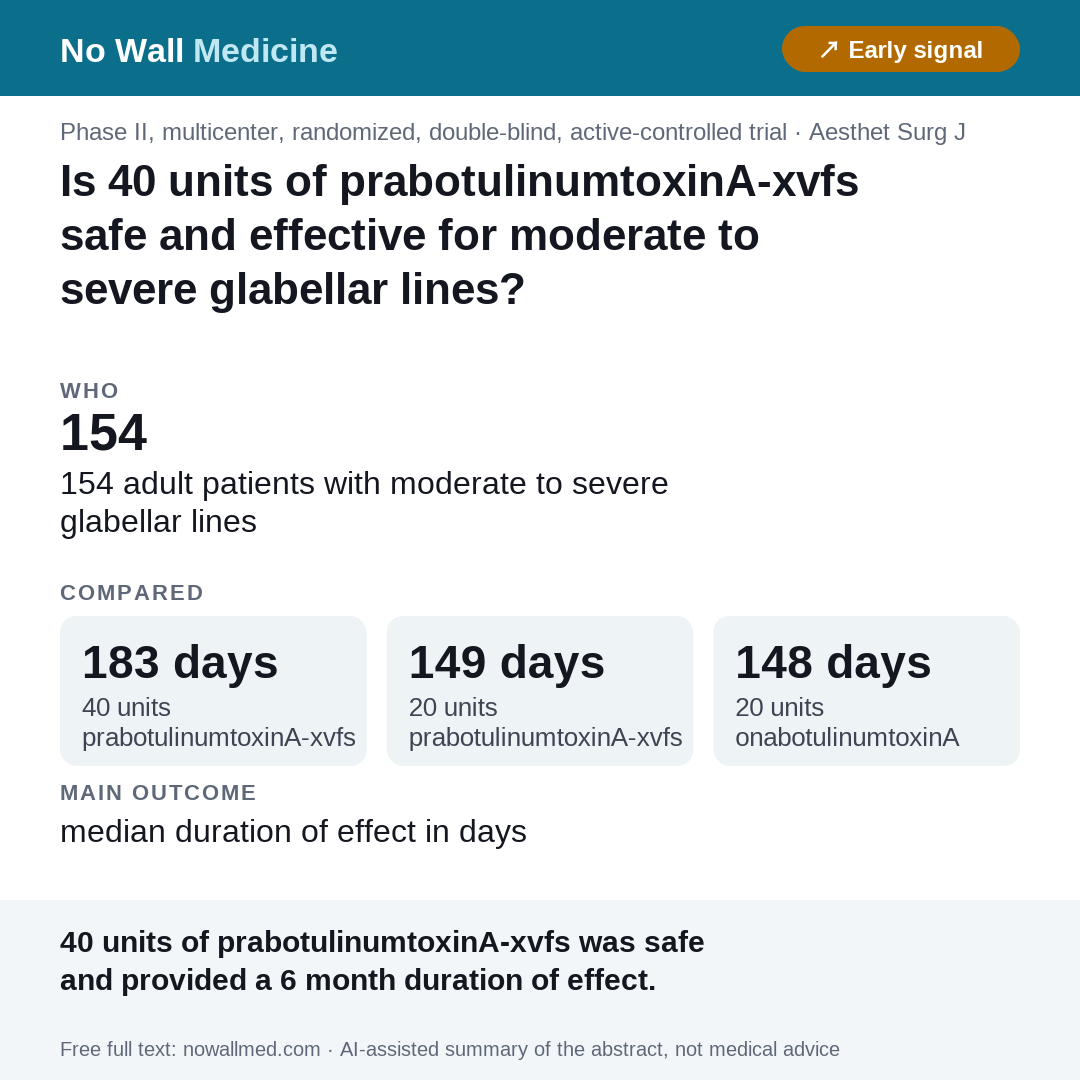
Safety and Duration of Effect of 40-Unit PrabotulinumtoxinA-xvfs for the Treatment of Moderate to Severe Glabellar Lines in Adult Patients: A Phase II, Multicenter, Randomized, Double-Blind, Active-Controlled Trial
Phase II, multicenter, randomized, double-blind, active-controlled trialBenefit found
Is 40 units of prabotulinumtoxinA-xvfs safe and effective for moderate to severe glabellar lines?
Who
154
154 adult patients with moderate to severe glabellar lines
Compared
183 days40 units prabotulinumtoxinA-xvfs
149 days20 units prabotulinumtoxinA-xvfs
148 days20 units onabotulinumtoxinA
Main outcome
median duration of effect in days
Bottom line: 40 units of prabotulinumtoxinA-xvfs was safe and provided a 6 month duration of effect.
Aesthet Surg J · 2024-03-20Download image
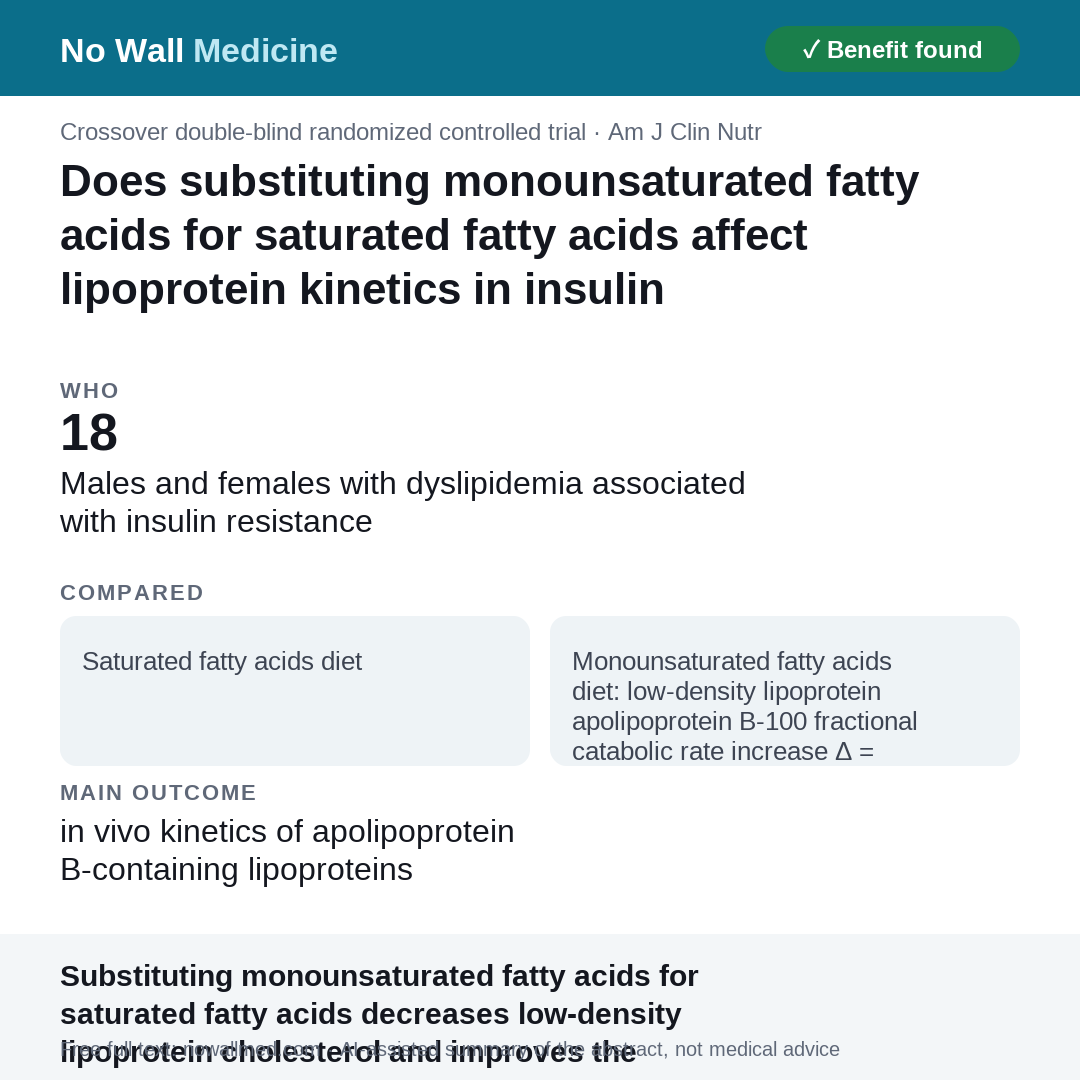
Substitution of dietary monounsaturated fatty acids from olive oil for saturated fatty acids from lard increases low-density lipoprotein apolipoprotein B-100 fractional catabolic rate in subjects with dyslipidemia associated with insulin resistance: a randomized controlled trial
Crossover double-blind randomized controlled trialBenefit found
Does substituting monounsaturated fatty acids for saturated fatty acids affect lipoprotein kinetics in insulin resistance?
Who
18
Males and females with dyslipidemia associated with insulin resistance
Compared
Saturated fatty acids diet
Monounsaturated fatty acids diet: low-density lipoprotein apolipoprotein B-100 fractional catabolic rate increase Δ = +1.6%
Main outcome
in vivo kinetics of apolipoprotein B-containing lipoproteins
Result: low-density lipoprotein cholesterol Δ = -7.0%
Bottom line: Substituting monounsaturated fatty acids for saturated fatty acids decreases low-density lipoprotein cholesterol and improves the plasma lipidomic profile.
Am J Clin Nutr · 2024-03-20Download image
Probiotics and synbiotics for glycemic control in diabetes: A systematic review and meta-analysis of randomized controlled trials
Meta-analysis of 41 randomized controlled trialsBenefit found
Do probiotics and synbiotics improve glycemic control in patients with diabetes?
Who
2991
Adults with Type 1 or Type 2 diabetes mellitus
Compared
Probiotics and synbiotics
Comparators
Main outcome
Glycated hemoglobin, fasting plasma glucose, and insulin levels
Result: HbA1c SMD -0.282 (95% CI -0.37 to -0.19)
Bottom line: Probiotics and synbiotics may effectively improve glycemic control in patients with diabetes.
Limitation: Efficacy varied based on the type of strains used and the country.
Clin Nutr · 2024-03-20Download image

Deep-learning automated quantification of longitudinal OCT scans demonstrates reduced RPE loss rate, preservation of intact macular area and predictive value of isolated photoreceptor degeneration in geographic atrophy patients receiving C3 inhibition treatment
Post hoc analysis of a randomized trialBenefit found
Does C3 inhibition affect geographic atrophy progression and retinal features?
Who
197
Patients with geographic atrophy receiving C3 inhibition treatment · not specified
Compared
pegcetacoplan monthly: 0.151 mm change in cRORA at 12 months
pegcetacoplan every other month: not specified
sham treatment: not specified
Main outcome
change in area of geographic atrophy as complete retinal atrophy
Bottom line: Pegcetacoplan slows geographic atrophy progression, reduces retinal pigment epithelium loss, and preserves intact macular area.
Br J Ophthalmol · 2024-03-20Download image