Visual abstracts
New randomized trials and meta-analyses from leading journals at a glance: who was studied, what was compared, and what was found. Every paper is free to read in full.
All specialtiesCardiology 4780Oncology 4080Gastroenterology & Hepatology 1914Infectious Disease 3775Neurology 1883Psychiatry & Mental Health 2238Pulmonology 2058Critical Care 1331Endocrinology & Diabetes 2550Pediatrics 2908Surgery 2496Orthopedics & Sports Medicine 922Neurosurgery 532Cardiothoracic & Vascular Surgery 662Plastic & Reconstructive Surgery 584Nephrology 1111Rheumatology 812Hematology 1095Dermatology 617Ophthalmology 537Obstetrics & Gynecology 1656Public & Global Health 1041Radiology & Imaging 637Anesthesiology 958Urology 751ENT (Otolaryngology) 497Emergency Medicine 484Allergy & Immunology 310Geriatrics 973Family Medicine & Primary Care 538Medical Genetics & Genomics 662Pathology & Laboratory Medicine 156Physical Medicine & Rehabilitation 744Palliative Care 422Nutrition 1564Digital Health & AI 2188General Medicine 318
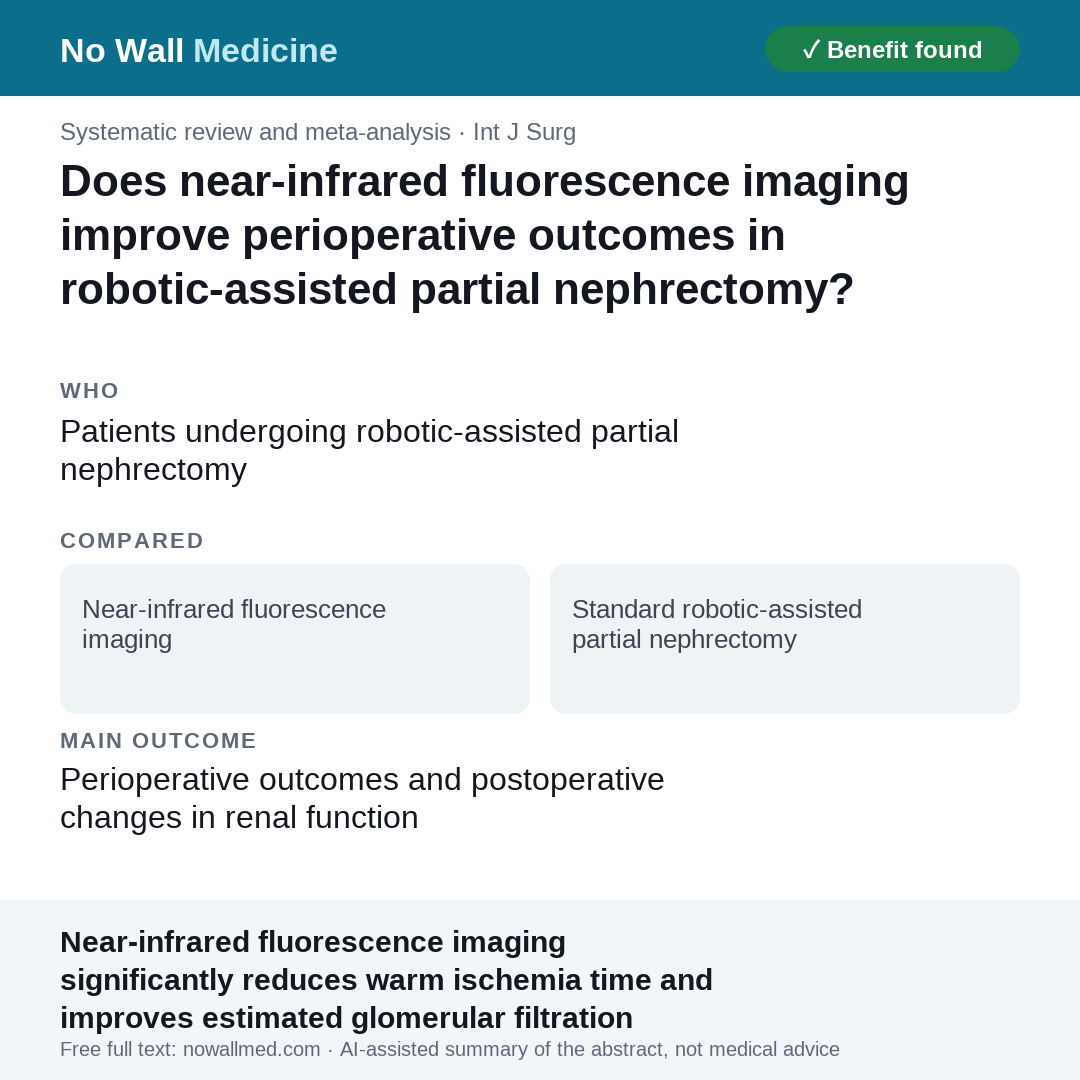
Comparison of perioperative outcomes of selective arterial clipping guided by near-infrared fluorescence imaging using indocyanine green versus undergoing standard robotic-assisted partial nephrectomy: a systematic review and meta-analysis
Systematic review and meta-analysisBenefit found
Does near-infrared fluorescence imaging improve perioperative outcomes in robotic-assisted partial nephrectomy?
Who
Patients undergoing robotic-assisted partial nephrectomy
Compared
Near-infrared fluorescence imaging
Standard robotic-assisted partial nephrectomy
Main outcome
Perioperative outcomes and postoperative changes in renal function
Bottom line: Near-infrared fluorescence imaging significantly reduces warm ischemia time and improves estimated glomerular filtration rate at discharge.
Int J Surg · 2024-02-01Download image
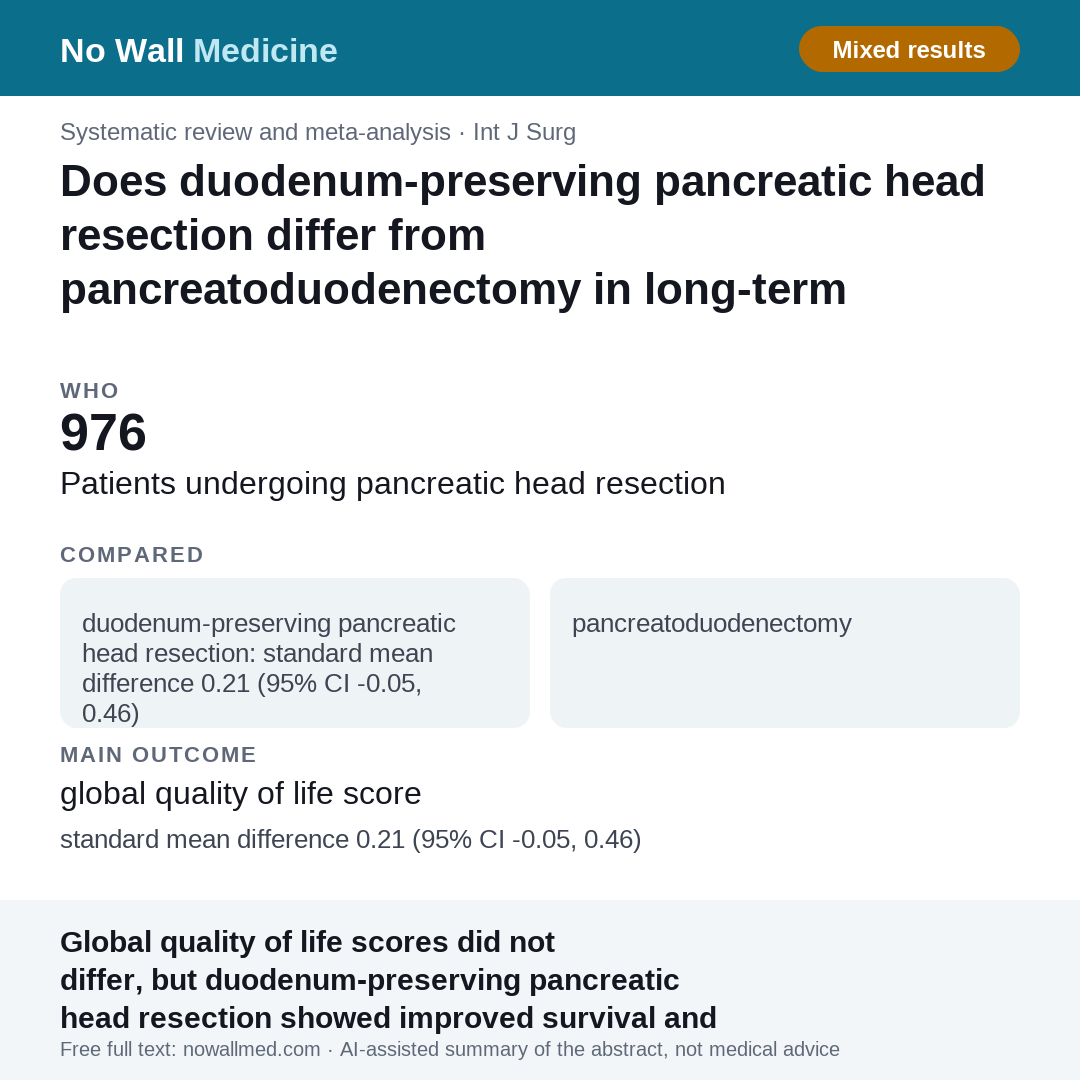
Long-term quality of life between duodenum-preserving pancreatic head resection and pancreatoduodenectomy: a systematic review and meta-analysis
Systematic review and meta-analysisMixed results
Does duodenum-preserving pancreatic head resection differ from pancreatoduodenectomy in long-term quality of life?
Who
976
Patients undergoing pancreatic head resection
Compared
duodenum-preserving pancreatic head resection: standard mean difference 0.21 (95% CI -0.05, 0.46)
pancreatoduodenectomy
Main outcome
global quality of life score
Result: standard mean difference 0.21 (95% CI -0.05, 0.46)
Bottom line: Global quality of life scores did not differ, but duodenum-preserving pancreatic head resection showed improved survival and lower symptom scores.
Limitation: The follow-up length may be an important source of heterogeneity.
Int J Surg · 2024-02-01Download image
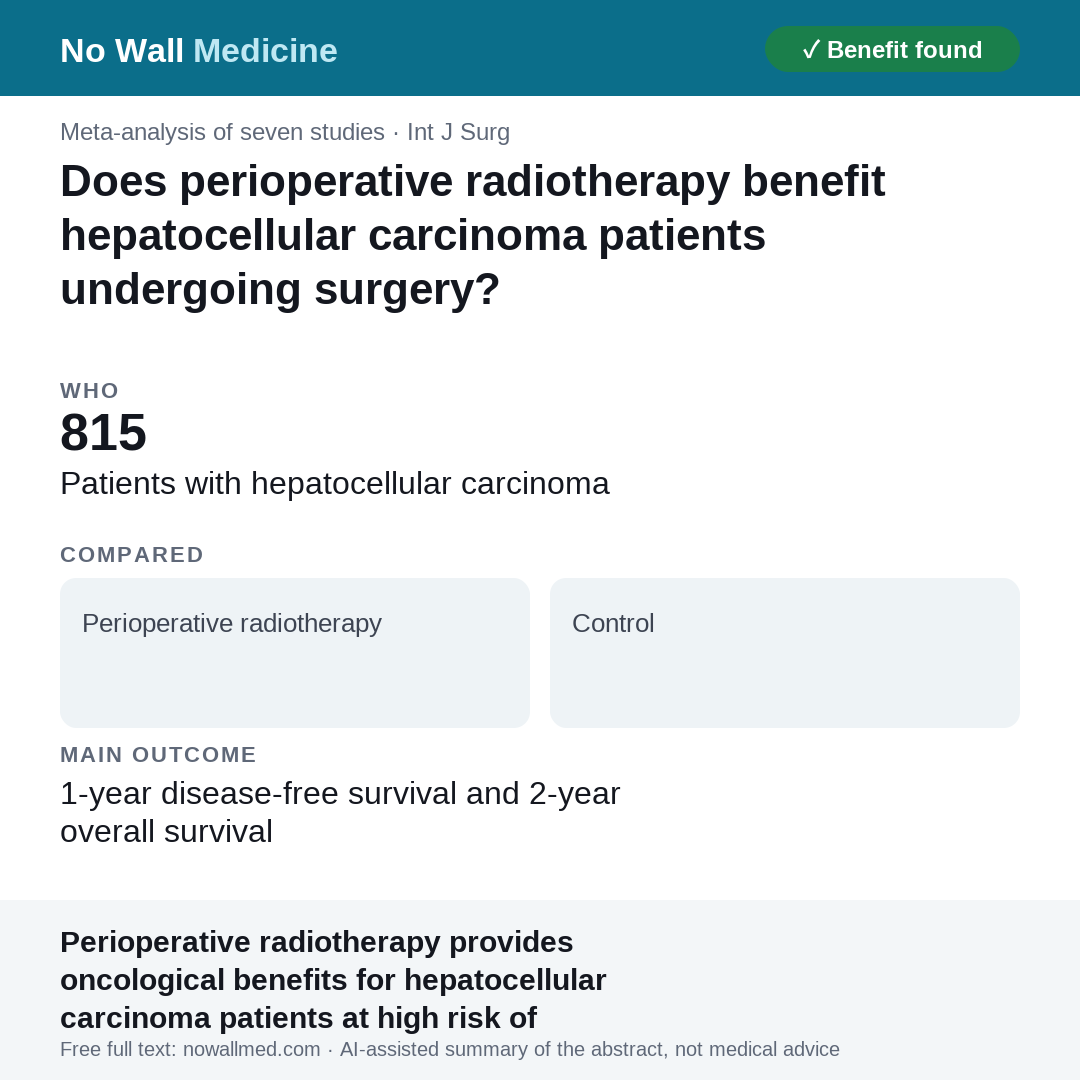
Benefit of perioperative radiotherapy for hepatocellular carcinoma: a quality-based systematic review and meta-analysis
Meta-analysis of seven studiesBenefit found
Does perioperative radiotherapy benefit hepatocellular carcinoma patients undergoing surgery?
Who
815
Patients with hepatocellular carcinoma
Compared
Perioperative radiotherapy
Control
Main outcome
1-year disease-free survival and 2-year overall survival
Result: OR 0.359 (95% CI: 0.246-0.523) for 1-year DFS; OR 0.371 (95% CI: 0.293-0.576) for 2-year OS
Bottom line: Perioperative radiotherapy provides oncological benefits for hepatocellular carcinoma patients at high risk of recurrence.
Int J Surg · 2024-02-01Download image
The application and therapeutic effect of botulinum toxin type a (BTX-A) in the treatment of patients with pain after cancer treatment: a systematic review and meta-analysis
Systematic review and meta-analysisBenefit found
Is botulinum toxin type A effective and safe for treating pain after cancer treatment?
Who
Patients with pain after cancer treatment
Compared
Botulinum toxin type A
Placebo
Main outcome
self-reported pain post-treatment
Result: mean difference=-1.79 (95% CI: -2.14--1.43)
Bottom line: Botulinum toxin type A is safe and effective for pain relief in patients with pain after cancer treatment.
Int J Surg · 2024-02-01Download image

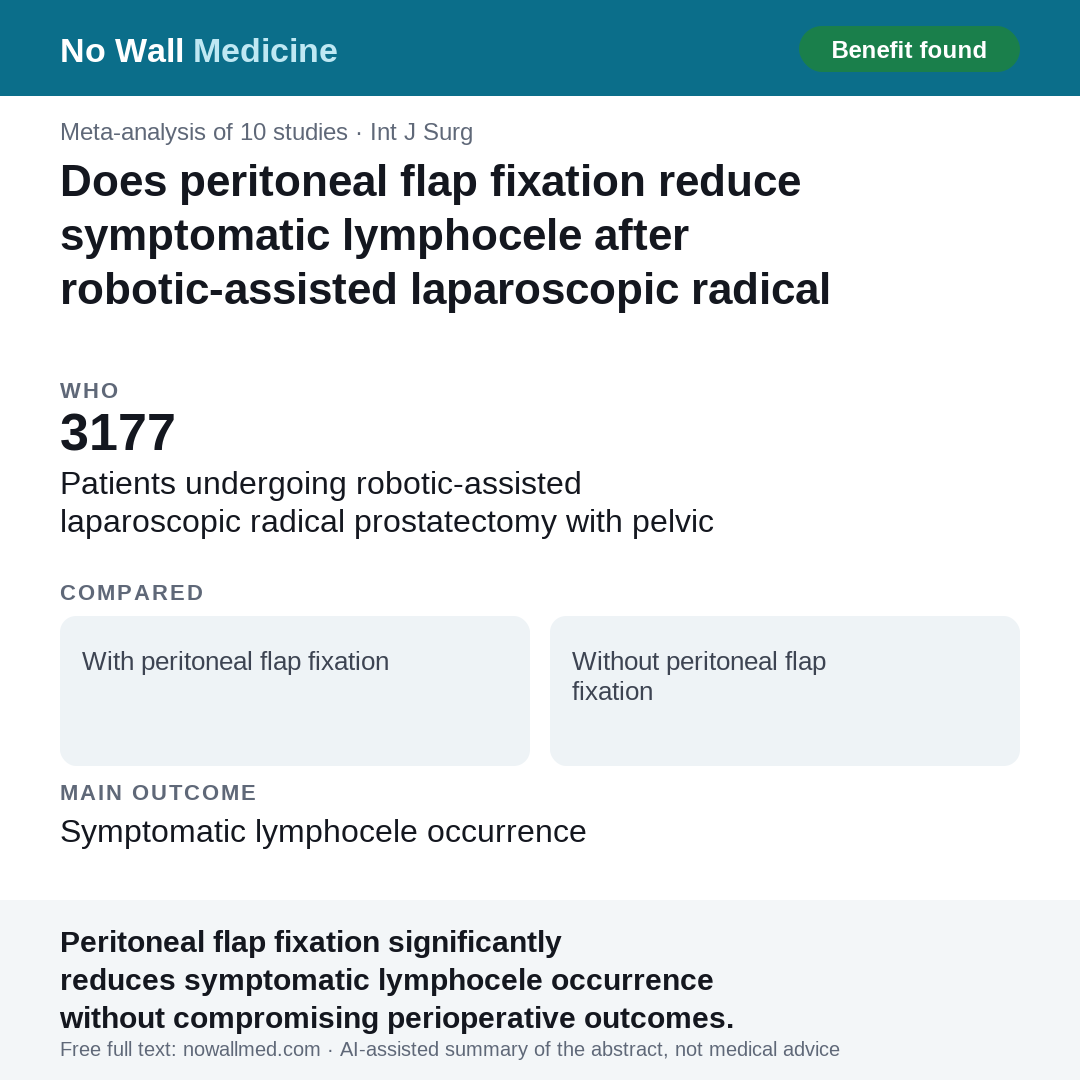
The efficacy of peritoneal flap fixation on symptomatic lymphocele formation following robotic-assisted laparoscopic radical prostatectomy with pelvic lymph node dissection: a systematic review and meta-analysis
Meta-analysis of 10 studiesBenefit found
Does peritoneal flap fixation reduce symptomatic lymphocele after robotic-assisted laparoscopic radical prostatectomy?
Who
3177
Patients undergoing robotic-assisted laparoscopic radical prostatectomy with pelvic lymph node dissection
Compared
With peritoneal flap fixation
Without peritoneal flap fixation
Main outcome
Symptomatic lymphocele occurrence
Result: risk ratio 0.35 (95% CI: 0.24-0.50)
Bottom line: Peritoneal flap fixation significantly reduces symptomatic lymphocele occurrence without compromising perioperative outcomes.
Int J Surg · 2024-02-01Download image
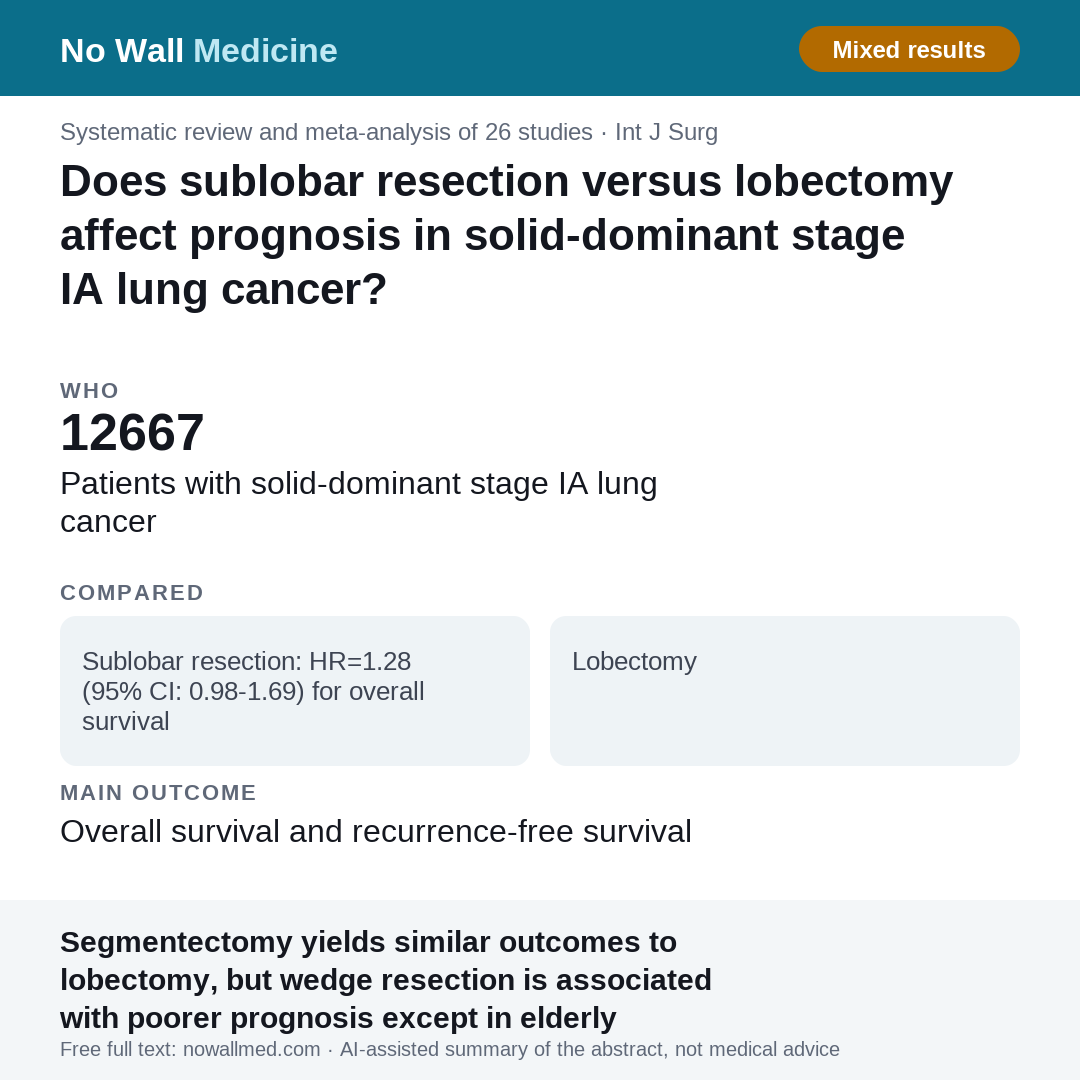
Differential efficacy of segmentectomy and wedge resection in sublobar resection compared to lobectomy for solid-dominant stage IA lung cancer: a systematic review and meta-analysis
Systematic review and meta-analysis of 26 studiesMixed results
Does sublobar resection versus lobectomy affect prognosis in solid-dominant stage IA lung cancer?
Who
12667
Patients with solid-dominant stage IA lung cancer
Compared
Sublobar resection: HR=1.28 (95% CI: 0.98-1.69) for overall survival
Lobectomy
Main outcome
Overall survival and recurrence-free survival
Result: hazard ratio 1.28 (95% CI: 0.98-1.69) for overall survival
Bottom line: Segmentectomy yields similar outcomes to lobectomy, but wedge resection is associated with poorer prognosis except in elderly patients.
Int J Surg · 2024-02-01Download image
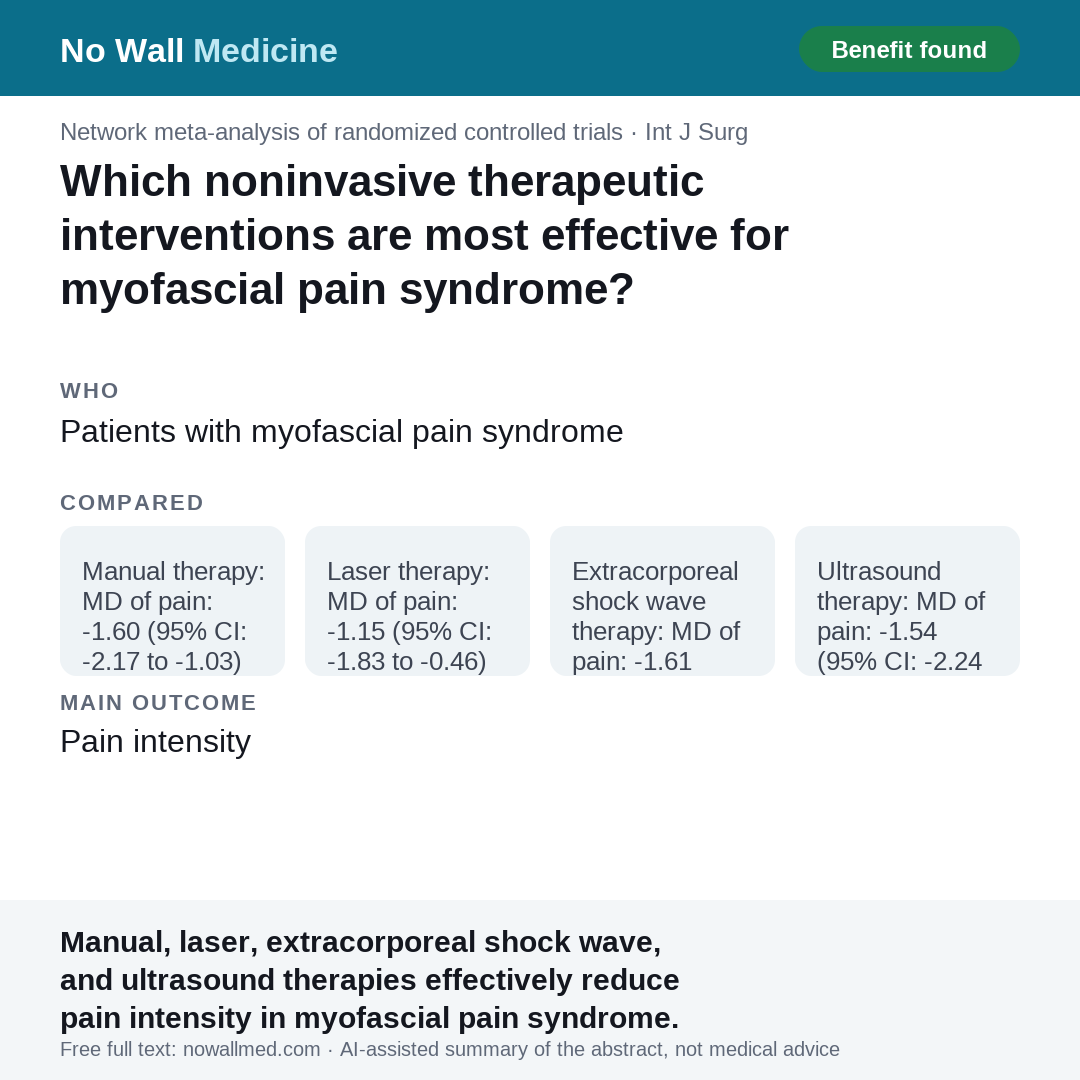
Comparative effectiveness of noninvasive therapeutic interventions for myofascial pain syndrome: a network meta-analysis of randomized controlled trials
Network meta-analysis of randomized controlled trialsBenefit found
Which noninvasive therapeutic interventions are most effective for myofascial pain syndrome?
Who
Patients with myofascial pain syndrome
Compared
Manual therapy: MD of pain: -1.60 (95% CI: -2.17 to -1.03)
Laser therapy: MD of pain: -1.15 (95% CI: -1.83 to -0.46)
Extracorporeal shock wave therapy: MD of pain: -1.61 (95% CI: -2.43 to -0.78)
Ultrasound therapy: MD of pain: -1.54 (95% CI: -2.24 to -0.84)
Main outcome
Pain intensity
Bottom line: Manual, laser, extracorporeal shock wave, and ultrasound therapies effectively reduce pain intensity in myofascial pain syndrome.
Int J Surg · 2024-02-01Download image
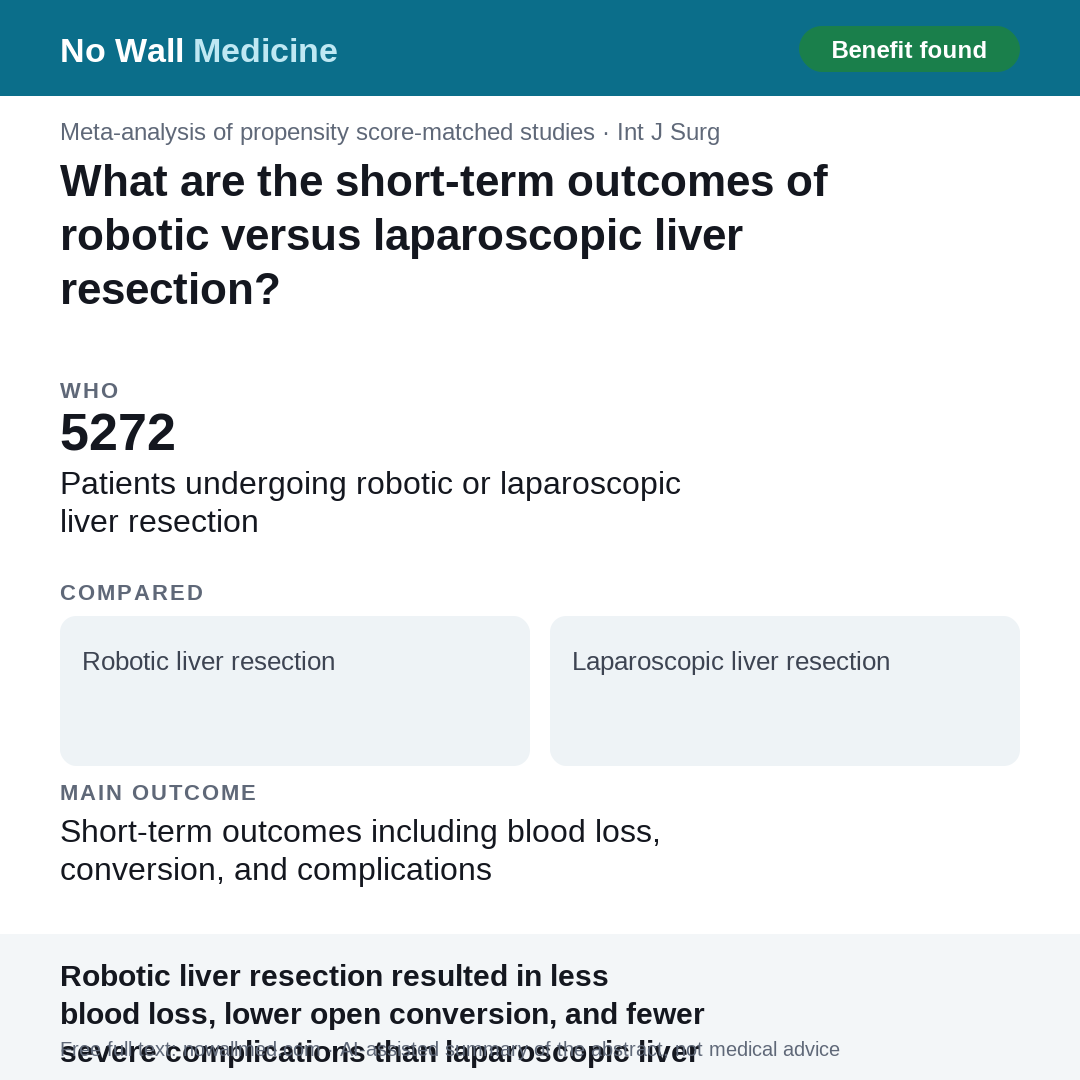
Comparison of short-term outcomes between robotic and laparoscopic liver resection: a meta-analysis of propensity score-matched studies
Meta-analysis of propensity score-matched studiesBenefit found
What are the short-term outcomes of robotic versus laparoscopic liver resection?
Who
5272
Patients undergoing robotic or laparoscopic liver resection
Compared
Robotic liver resection
Laparoscopic liver resection
Main outcome
Short-term outcomes including blood loss, conversion, and complications
Result: open conversion OR 0.46 (95% CI 0.37-0.58)
Bottom line: Robotic liver resection resulted in less blood loss, lower open conversion, and fewer severe complications than laparoscopic liver resection.
Int J Surg · 2024-02-01Download image
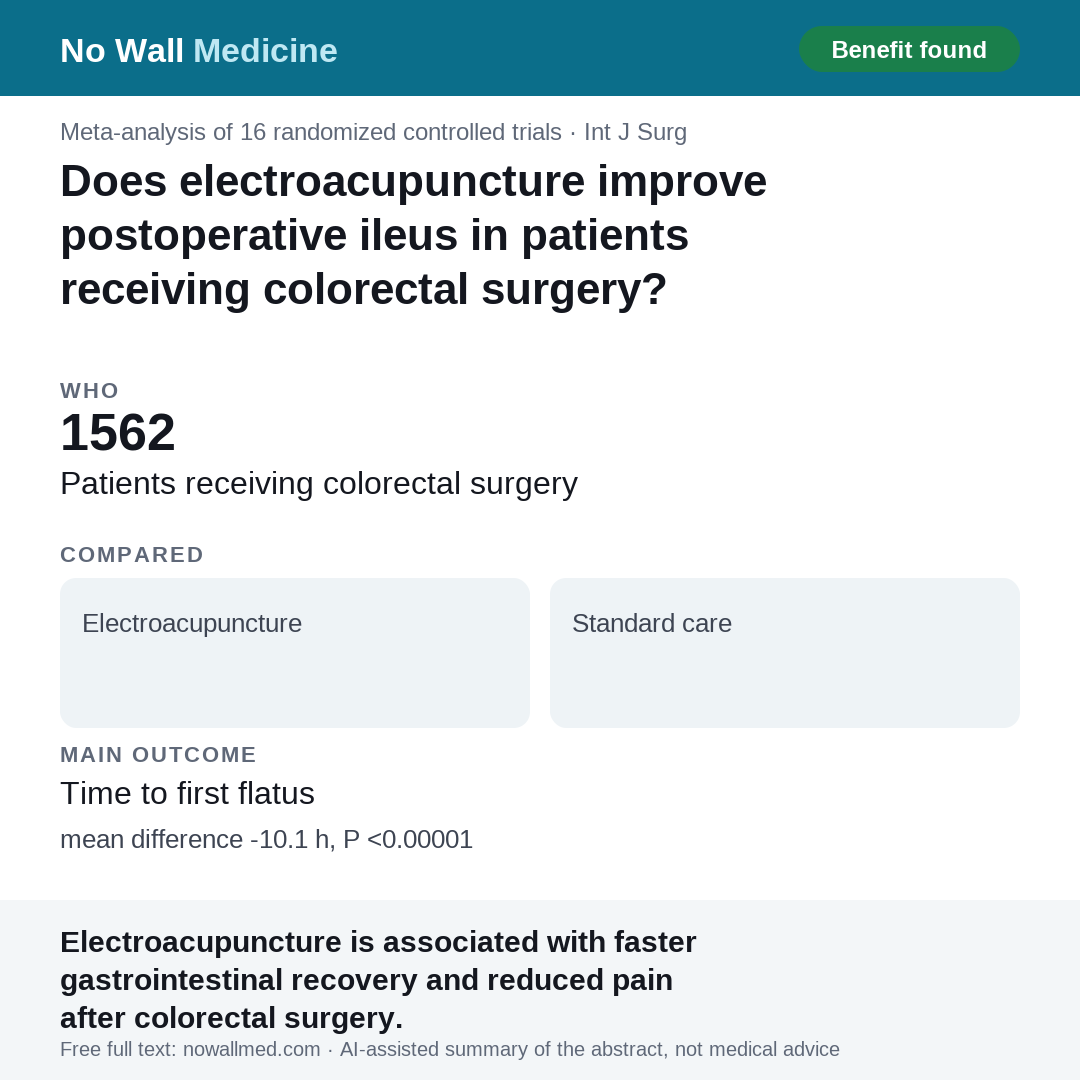
Efficacy of electroacupuncture in improving postoperative ileus in patients receiving colorectal surgery: a systematic review and meta-analysis
Meta-analysis of 16 randomized controlled trialsBenefit found
Does electroacupuncture improve postoperative ileus in patients receiving colorectal surgery?
Who
1562
Patients receiving colorectal surgery
Compared
Electroacupuncture
Standard care
Main outcome
Time to first flatus
Result: mean difference -10.1 h, P <0.00001
Bottom line: Electroacupuncture is associated with faster gastrointestinal recovery and reduced pain after colorectal surgery.
Int J Surg · 2024-02-01Download image
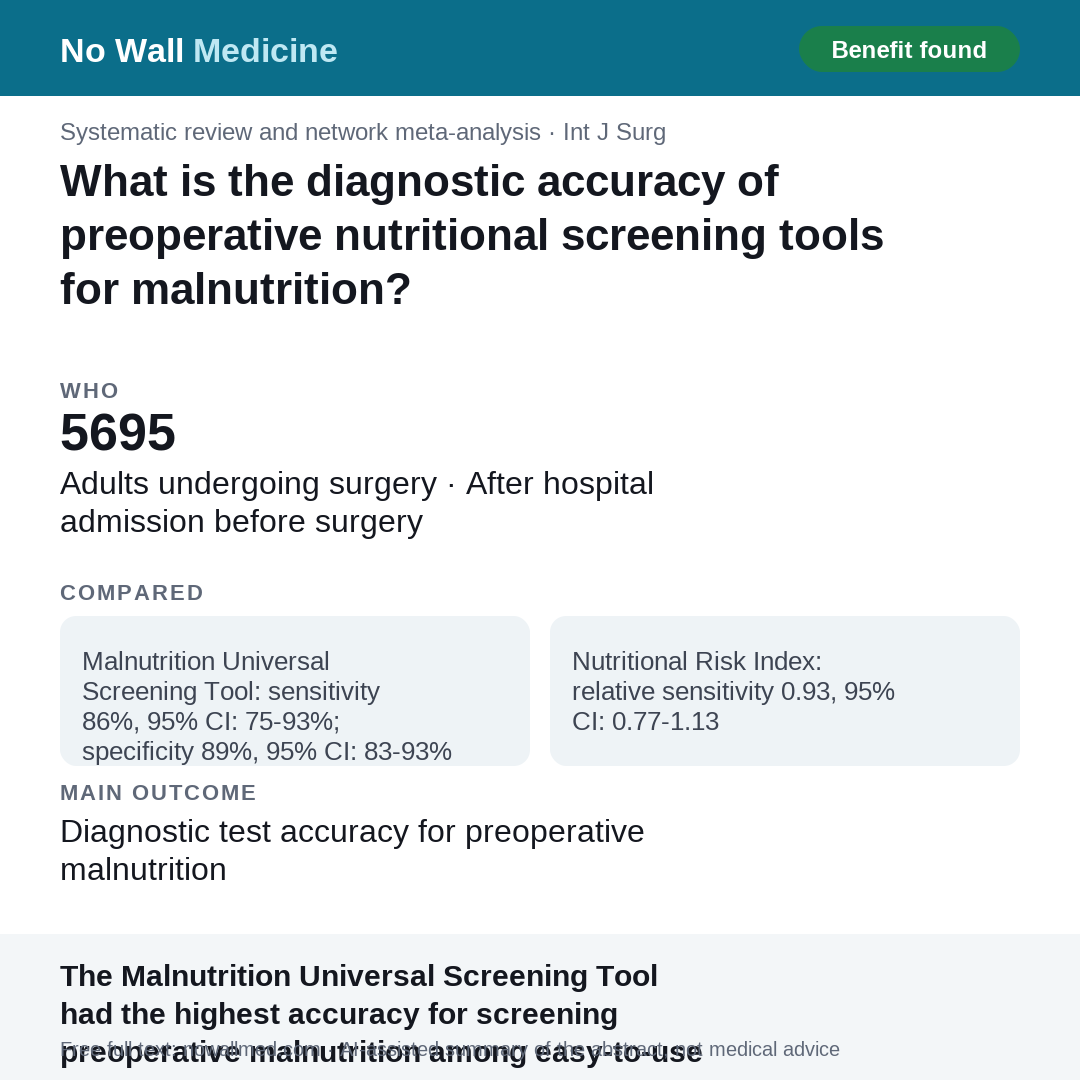
Diagnostic test accuracy of preoperative nutritional screening tools in adults for malnutrition: a systematic review and network meta-analysis
Systematic review and network meta-analysisKey finding
What is the diagnostic accuracy of preoperative nutritional screening tools for malnutrition?
Who
5695
Adults undergoing surgery · After hospital admission before surgery
Compared
Malnutrition Universal Screening Tool: sensitivity 86%, 95% CI: 75-93%; specificity 89%, 95% CI: 83-93%
Nutritional Risk Index: relative sensitivity 0.93, 95% CI: 0.77-1.13
Main outcome
Diagnostic test accuracy for preoperative malnutrition
Result: relative specificity 0.75 (95% CI 0.61 to 0.92) for NRI compared to MUST
Bottom line: The Malnutrition Universal Screening Tool had the highest accuracy for screening preoperative malnutrition among easy-to-use bedside tests.
Limitation: Eleven studies were at high risk of bias due to lack of blinded assessments.
Int J Surg · 2024-02-01Download image
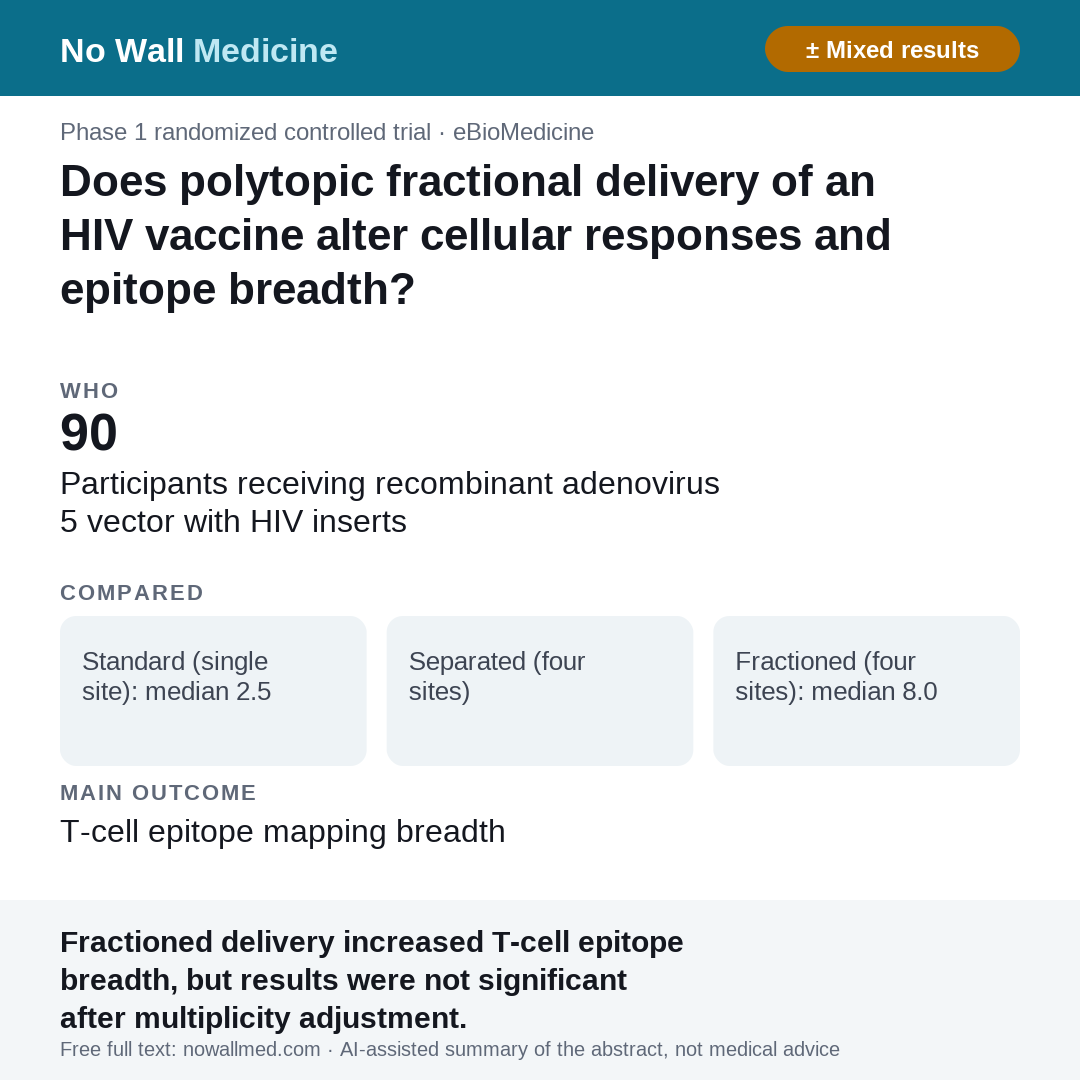
Polytopic fractional delivery of an HIV vaccine alters cellular responses and results in increased epitope breadth in a phase 1 randomized trial
Phase 1 randomized controlled trialMixed results
Does polytopic fractional delivery of an HIV vaccine alter cellular responses and epitope breadth?
Who
90
Participants receiving recombinant adenovirus 5 vector with HIV inserts
Compared
Standard (single site): median 2.5
Separated (four sites)
Fractioned (four sites): median 8.0
Main outcome
T-cell epitope mapping breadth
Result: median 8.0 vs 2.5 for Standard, Wilcoxon p = 0.03
Bottom line: Fractioned delivery increased T-cell epitope breadth, but results were not significant after multiplicity adjustment.
Funded by: National Institute of Allergy and Infectious Diseases, NIH
eBioMedicine · 2024-02-01Download image
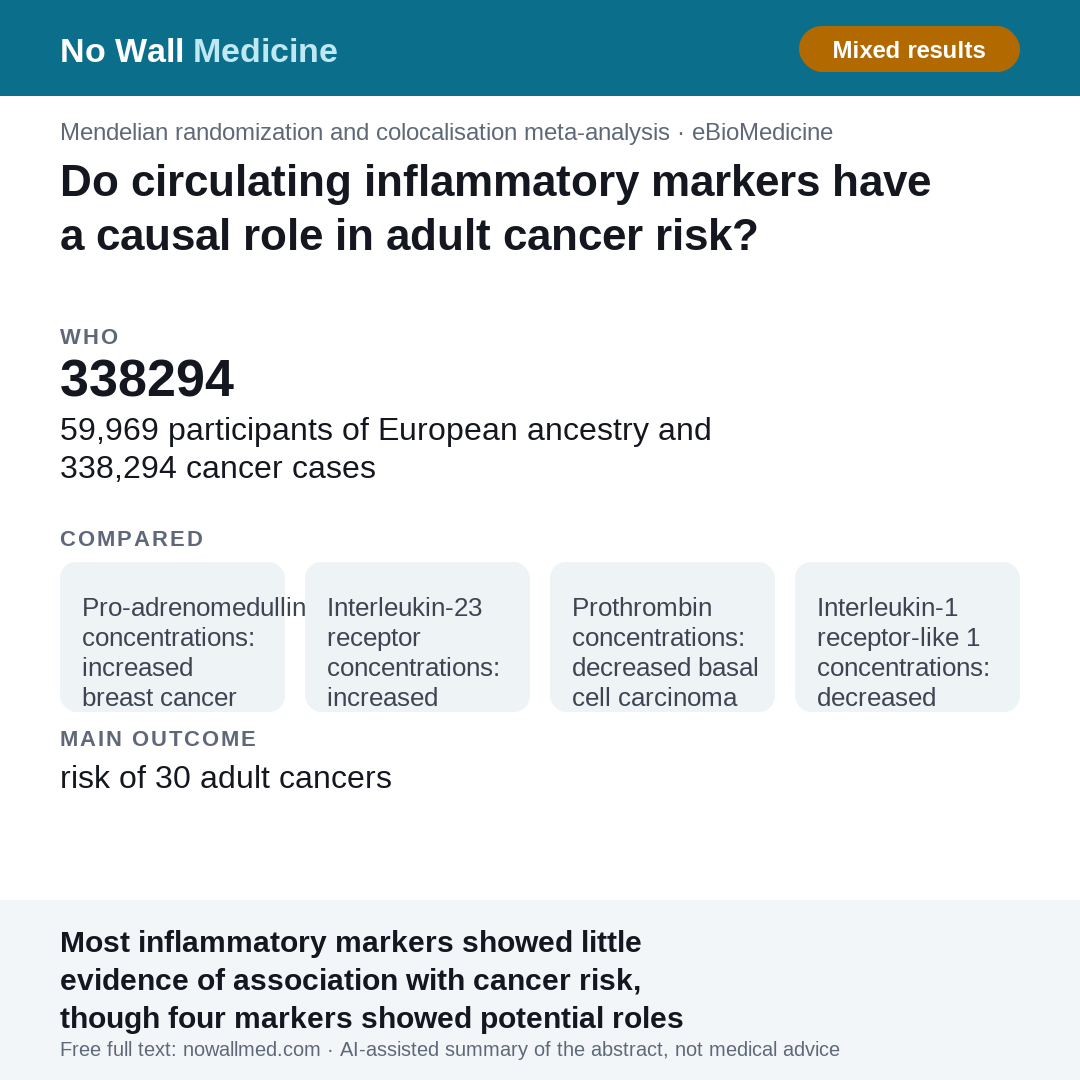
Association between circulating inflammatory markers and adult cancer risk: a Mendelian randomization analysis
Mendelian randomization and colocalisation meta-analysisMixed results
Do circulating inflammatory markers have a causal role in adult cancer risk?
Who
338294
59,969 participants of European ancestry and 338,294 cancer cases
Compared
Pro-adrenomedullin concentrations: increased breast cancer risk (OR: 1.19, 95% CI: 1.10-1.29)
Interleukin-23 receptor concentrations: increased pancreatic cancer risk (OR: 1.42, 95% CI: 1.20-1.69)
Prothrombin concentrations: decreased basal cell carcinoma risk (OR: 0.66, 95% CI: 0.53-0.81)
Interleukin-1 receptor-like 1 concentrations: decreased triple-negative breast cancer risk (OR: 0.92, 95% CI: 0.88-0.97)
Main outcome
risk of 30 adult cancers
Bottom line: Most inflammatory markers showed little evidence of association with cancer risk, though four markers showed potential roles in specific cancers.
Funded by: Cancer Research UK, World Cancer Research Fund, NIHR, Medical Research Council
eBioMedicine · 2024-02-01Download image
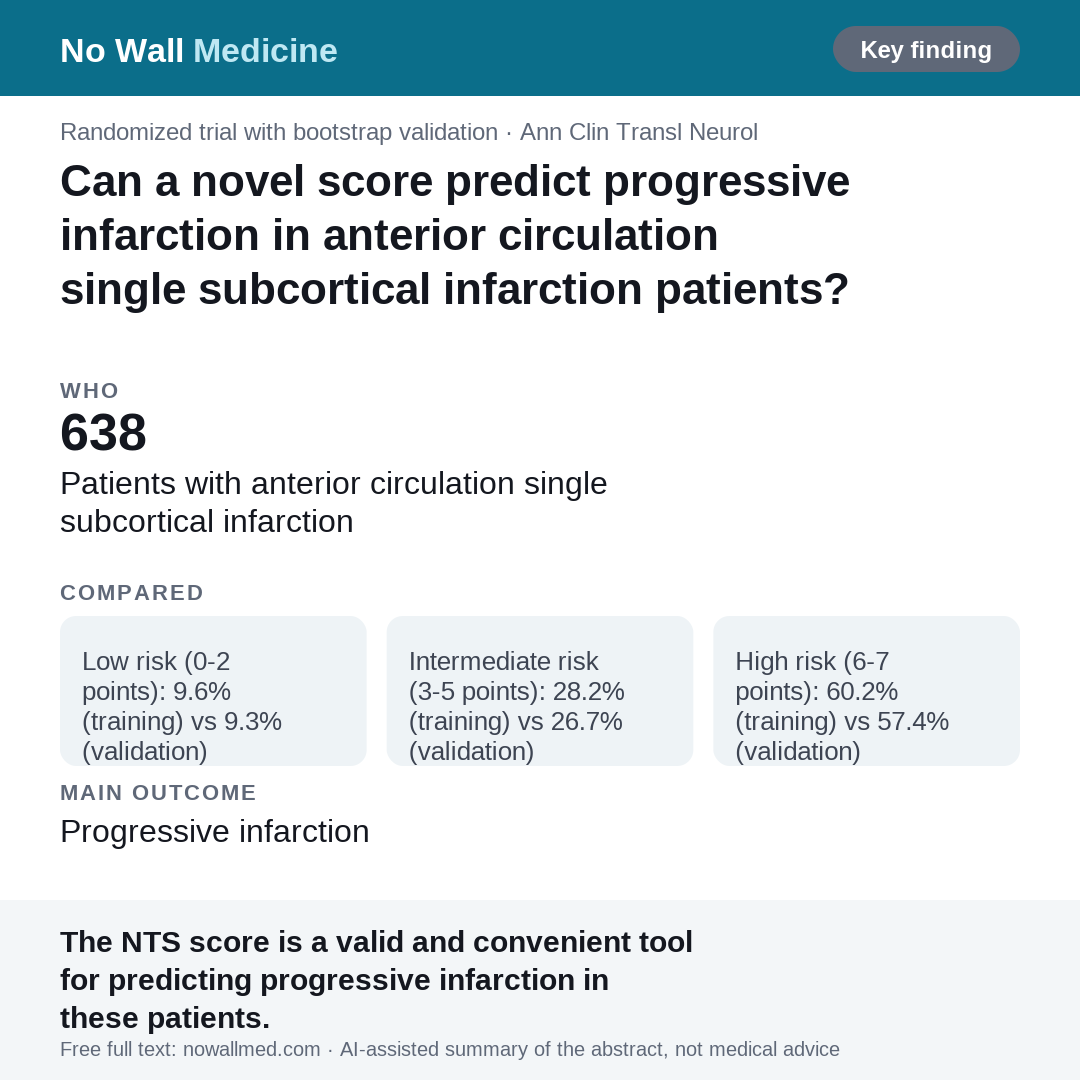
A novel score to predict progression in anterior circulation single subcortical infarction patients
Randomized trial with bootstrap validationKey finding
Can a novel score predict progressive infarction in anterior circulation single subcortical infarction patients?
Who
638
Patients with anterior circulation single subcortical infarction
Compared
Low risk (0-2 points): 9.6% (training) vs 9.3% (validation)
Intermediate risk (3-5 points): 28.2% (training) vs 26.7% (validation)
High risk (6-7 points): 60.2% (training) vs 57.4% (validation)
Main outcome
Progressive infarction
Result: C-statistic 0.686 (training) and 0.681 (validation)
Bottom line: The NTS score is a valid and convenient tool for predicting progressive infarction in these patients.
Ann Clin Transl Neurol · 2024-02-01Download image
Race, Ethnicity, and Other Cultural Background Factors in Trials of Internet-Based Cognitive Behavioral Therapy for Depression: Systematic Review
Systematic review of randomized controlled trialsHarm found
How well are racial and ethnic identities reported in internet-based cognitive behavioral therapy trials for depression?
Who
17,210
Participants in internet-based cognitive behavioral therapy trials for depression · Global, with heavy United States focus
Compared
17Trials reporting race (27%)
12Trials reporting ethnicity (19%)
Main outcome
Reporting of racial and ethnic identities
Bottom line: There is poor reporting of race and ethnicity in internet-based cognitive behavioral therapy trials for depression.
Limitation: Underreporting does not necessarily indicate underrepresentation in the actual study population.
J Med Internet Res · 2024-02-01Download image

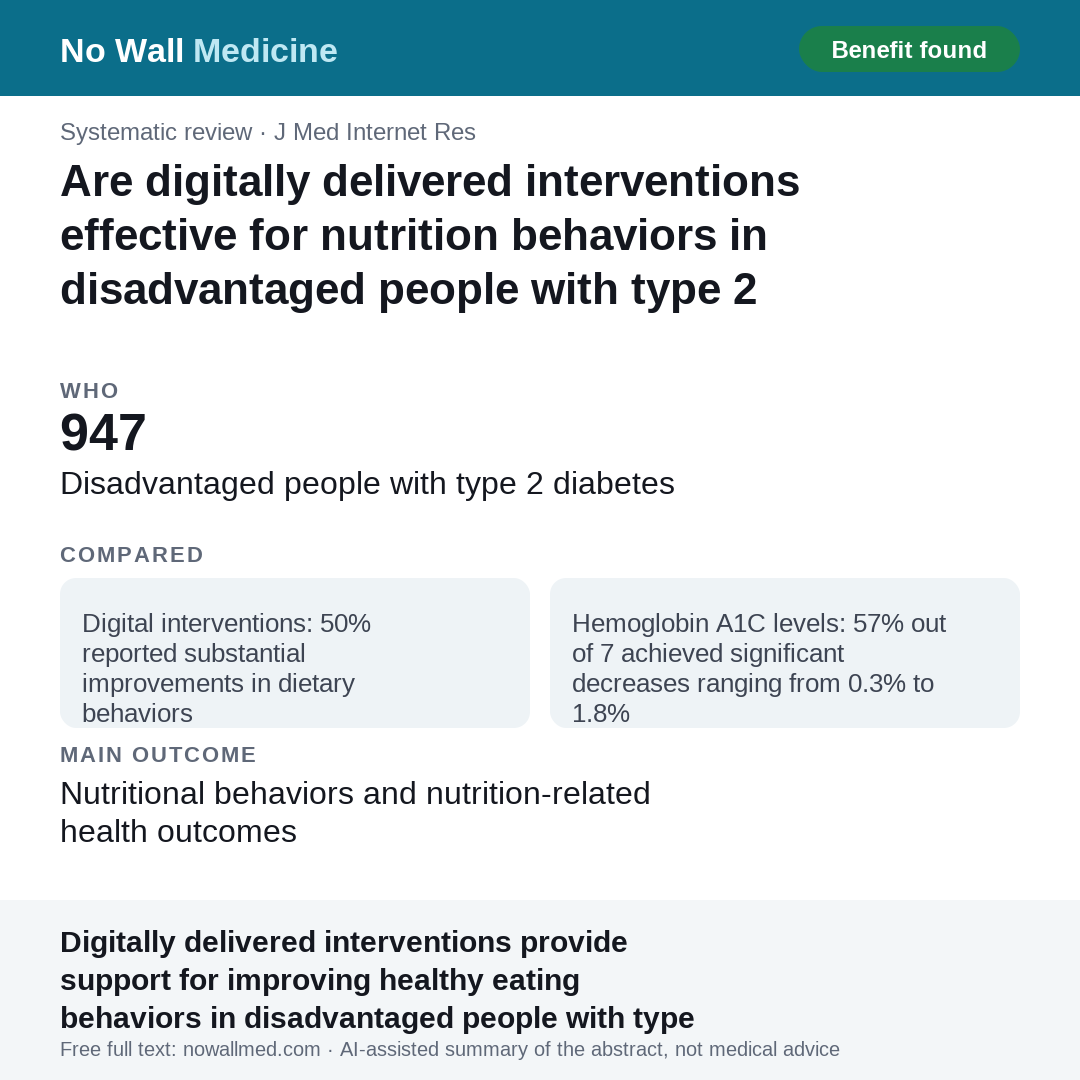
Digitally Delivered Interventions to Improve Nutrition Behaviors Among Resource-Poor and Ethnic Minority Groups With Type 2 Diabetes: Systematic Review
Systematic reviewBenefit found
Are digitally delivered interventions effective for nutrition behaviors in disadvantaged people with type 2 diabetes?
Who
947
Disadvantaged people with type 2 diabetes
Compared
Digital interventions: 50% reported substantial improvements in dietary behaviors
Hemoglobin A1C levels: 57% out of 7 achieved significant decreases ranging from 0.3% to 1.8%
Main outcome
Nutritional behaviors and nutrition-related health outcomes
Bottom line: Digitally delivered interventions provide support for improving healthy eating behaviors in disadvantaged people with type 2 diabetes.
Limitation: Further research is needed to identify specific features of effective digital interventions.
J Med Internet Res · 2024-02-01Download image
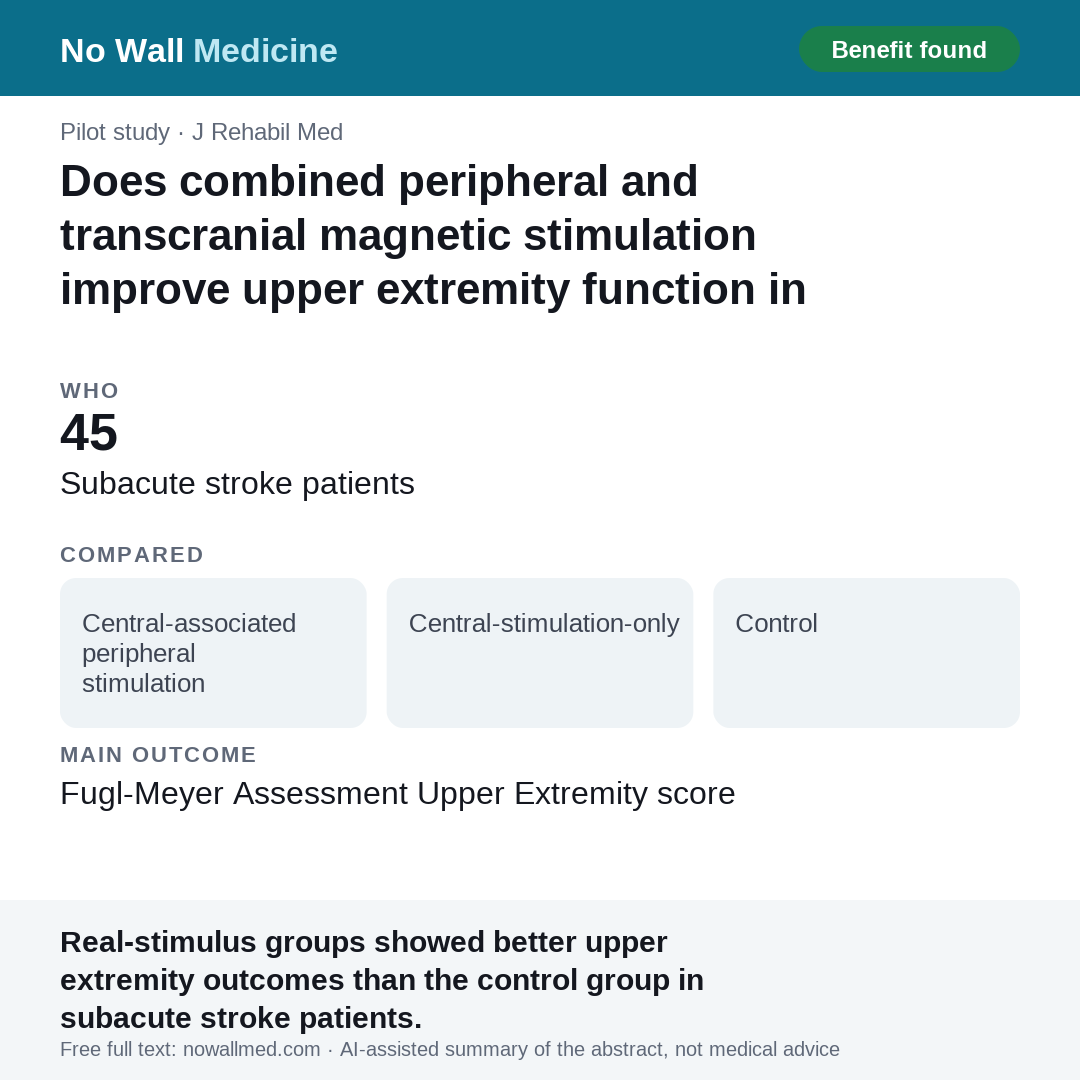
Repetitive peripheral magnetic stimulation combined with transcranial magnetic stimulation in rehabilitation of upper extremity hemiparesis following stroke: a pilot study
Pilot studyEarly signal
Does combined peripheral and transcranial magnetic stimulation improve upper extremity function in subacute stroke?
Who
45
Subacute stroke patients
Compared
Central-associated peripheral stimulation
Central-stimulation-only
Control
Main outcome
Fugl-Meyer Assessment Upper Extremity score
Bottom line: Real-stimulus groups showed better upper extremity outcomes than the control group in subacute stroke patients.
J Rehabil Med · 2024-02-01Download image
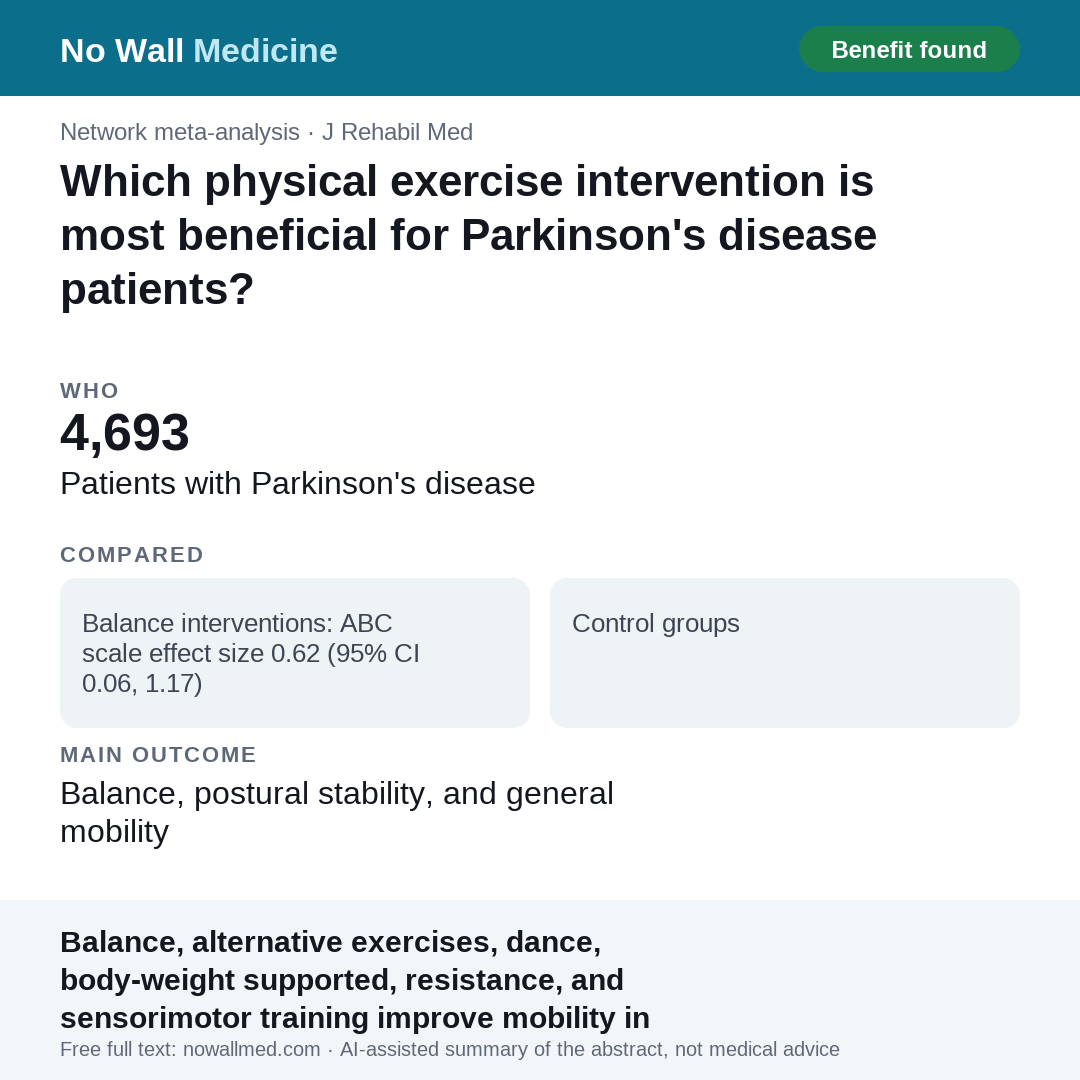
Effects of physical exercise interventions on balance, postural stability and general mobility in Parkinson's disease: a network meta-analysis
Network meta-analysisBenefit found
Which physical exercise intervention is most beneficial for Parkinson's disease patients?
Who
4,693
Patients with Parkinson's disease
Compared
Balance interventions: ABC scale effect size 0.62 (95% CI 0.06, 1.17)
Control groups
Main outcome
Balance, postural stability, and general mobility
Bottom line: Balance, alternative exercises, dance, body-weight supported, resistance, and sensorimotor training improve mobility in Parkinson's disease.
J Rehabil Med · 2024-02-01Download image
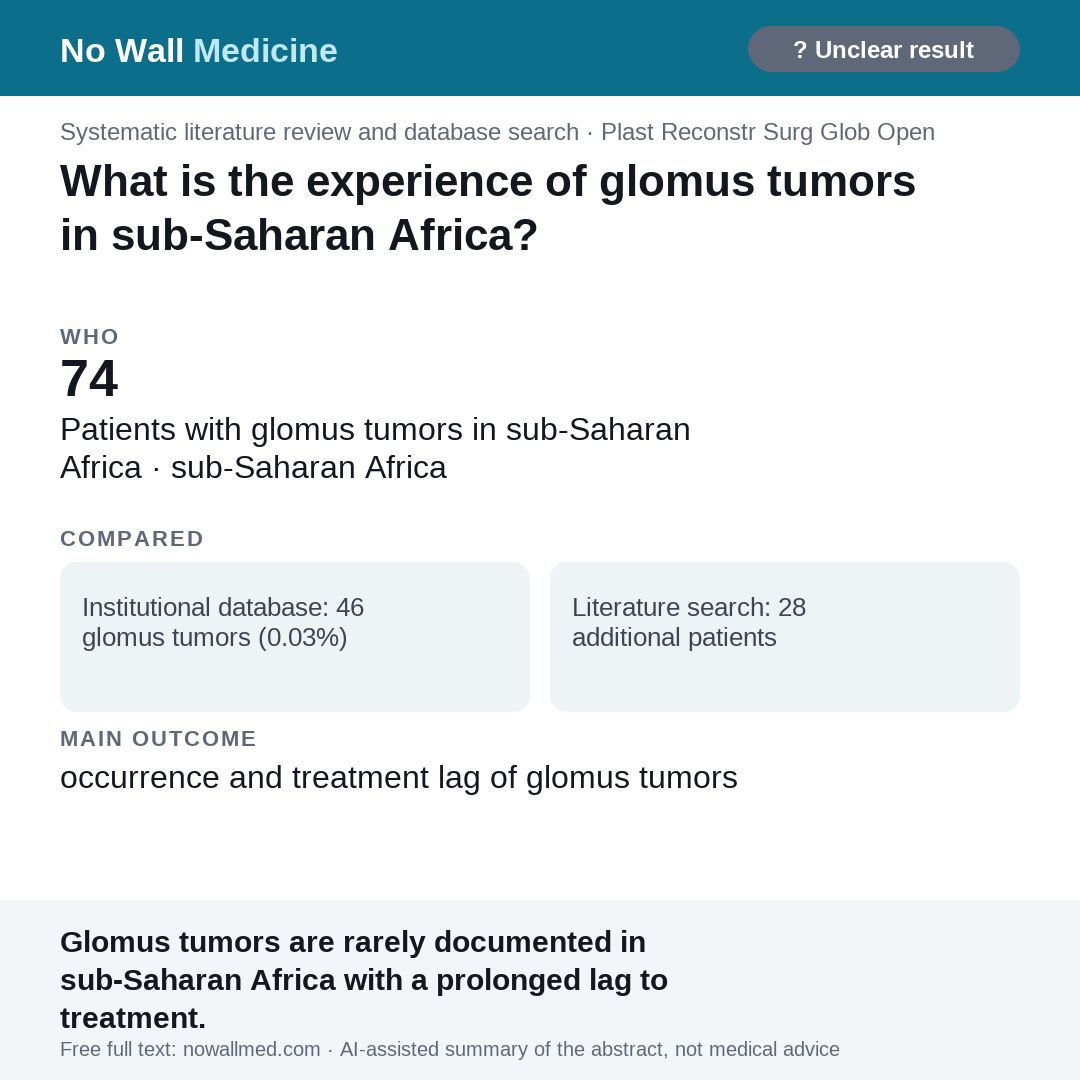
Glomus Tumors: A Systematic Review of the Sub-Saharan Africa Experience
Systematic literature review and database searchUnclear result
What is the experience of glomus tumors in sub-Saharan Africa?
Who
74
Patients with glomus tumors in sub-Saharan Africa · sub-Saharan Africa
Compared
Institutional database: 46 glomus tumors (0.03%)
Literature search: 28 additional patients
Main outcome
occurrence and treatment lag of glomus tumors
Bottom line: Glomus tumors are rarely documented in sub-Saharan Africa with a prolonged lag to treatment.
Plast Reconstr Surg Glob Open · 2024-02-01Download image
Cutaneous manifestations of myelodysplastic syndrome: A systematic review
Systematic reviewMixed results
What are the prevalence, types, and prognostic significance of cutaneous manifestations in myelodysplastic syndrome?
Who
134
Patients with myelodysplastic syndrome
Compared
Neutrophilic dermatoses: 39.2% death
Vasculitis: 50% death
Granulomatous: 62.5% death
Connective tissue disease: 14.3% death
Main outcome
Prevalence, types, and prognosis of skin lesions
Bottom line: Cutaneous manifestations vary in type and are associated with poor prognosis, including high rates of death and leukemia transformation.
Limitation: The review consists of case reports and case series.
Skin Health Dis · 2024-02-01Download image

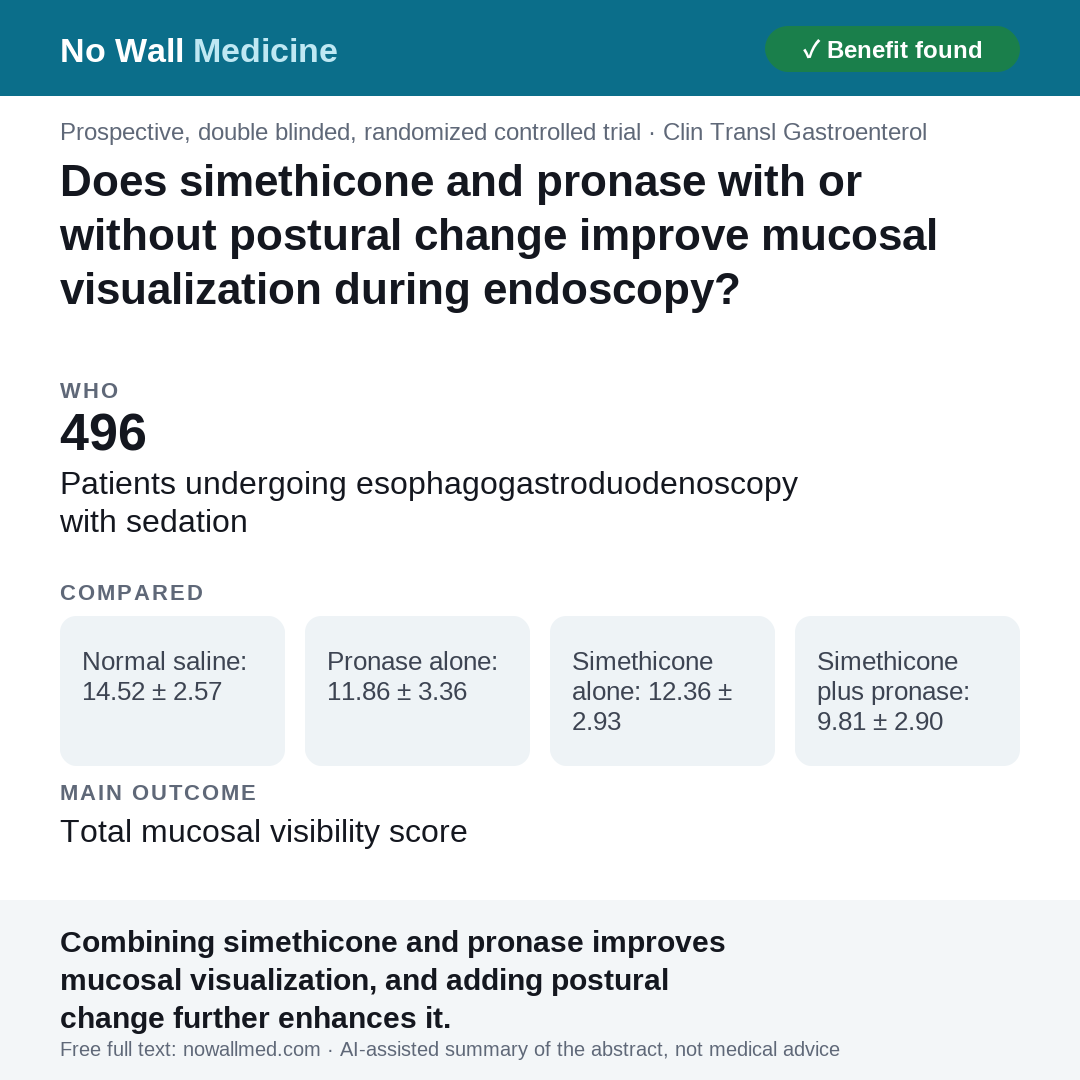
The Effect of Using Premedication of Simethicone/Pronase With or Without Postural Change on Visualization of the Mucosa Before Endoscopy: A Prospective, Double Blinded, Randomized Controlled Trial
Prospective, double blinded, randomized controlled trialBenefit found
Does simethicone and pronase with or without postural change improve mucosal visualization during endoscopy?
Who
496
Patients undergoing esophagogastroduodenoscopy with sedation
Compared
Normal saline: 14.52 ± 2.57
Pronase alone: 11.86 ± 3.36
Simethicone alone: 12.36 ± 2.93
Simethicone plus pronase: 9.81 ± 2.90
Main outcome
Total mucosal visibility score
Bottom line: Combining simethicone and pronase improves mucosal visualization, and adding postural change further enhances it.
Clin Transl Gastroenterol · 2024-02-01Download image