Visual abstracts
New randomized trials and meta-analyses from leading journals at a glance: who was studied, what was compared, and what was found. Every paper is free to read in full.
All specialtiesCardiology 4877Oncology 4138Gastroenterology & Hepatology 1942Infectious Disease 3837Neurology 1905Psychiatry & Mental Health 2273Pulmonology 2143Critical Care 1365Endocrinology & Diabetes 2580Pediatrics 2980Surgery 2559Orthopedics & Sports Medicine 931Neurosurgery 537Cardiothoracic & Vascular Surgery 674Plastic & Reconstructive Surgery 591Nephrology 1133Rheumatology 823Hematology 1109Dermatology 621Ophthalmology 543Obstetrics & Gynecology 1686Public & Global Health 1058Radiology & Imaging 648Anesthesiology 986Urology 764ENT (Otolaryngology) 503Emergency Medicine 511Allergy & Immunology 313Geriatrics 981Family Medicine & Primary Care 562Medical Genetics & Genomics 676Pathology & Laboratory Medicine 159Physical Medicine & Rehabilitation 757Palliative Care 444Nutrition 1588Digital Health & AI 2201General Medicine 321
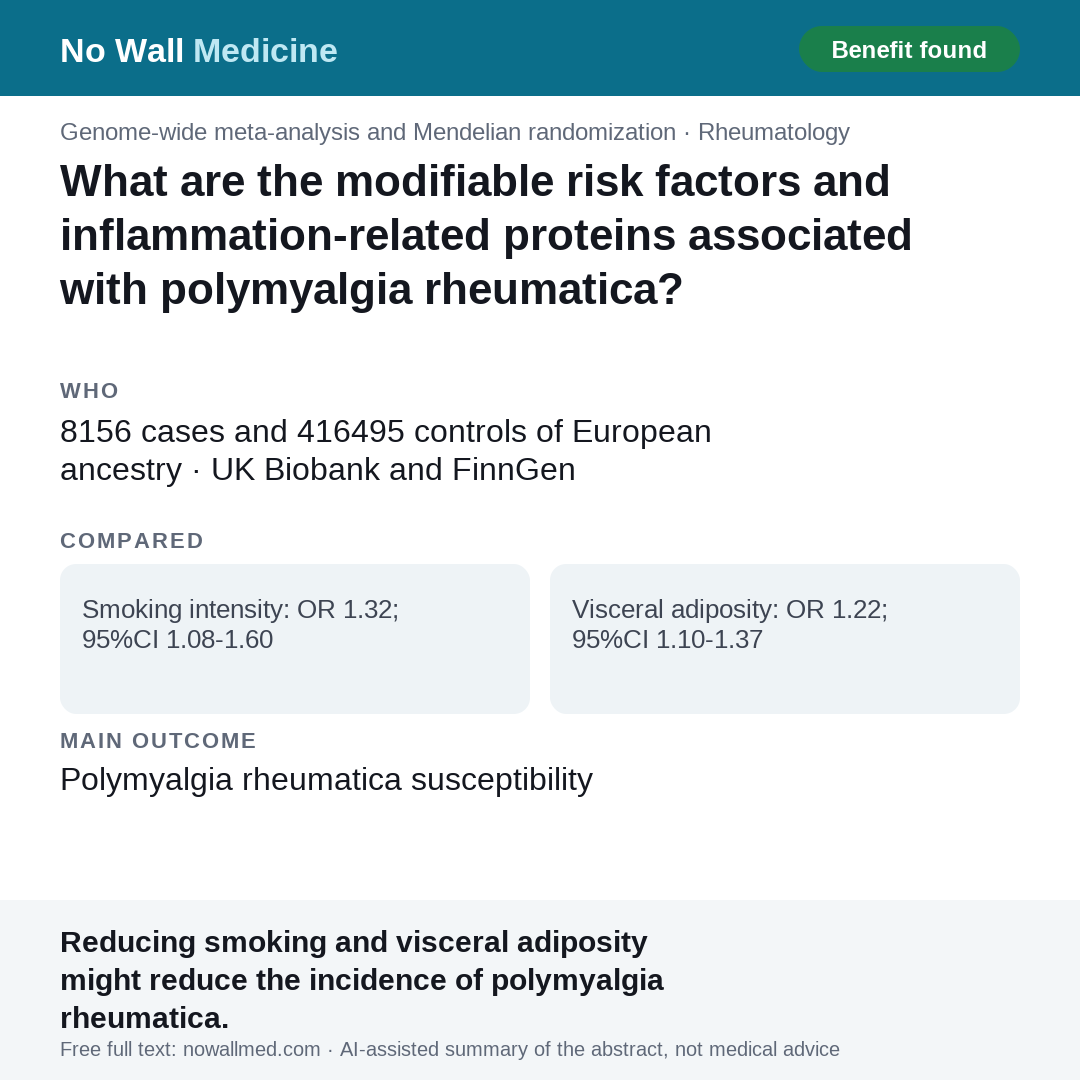
Modifiable risk factors and inflammation-related proteins in polymyalgia rheumatica: genome-wide meta-analysis and Mendelian randomization
Genome-wide meta-analysis and Mendelian randomizationBenefit found
What are the modifiable risk factors and inflammation-related proteins associated with polymyalgia rheumatica?
Who
8156 cases and 416495 controls of European ancestry · UK Biobank and FinnGen
Compared
Smoking intensity: OR 1.32; 95%CI 1.08-1.60
Visceral adiposity: OR 1.22; 95%CI 1.10-1.37
Main outcome
Polymyalgia rheumatica susceptibility
Bottom line: Reducing smoking and visceral adiposity might reduce the incidence of polymyalgia rheumatica.
Rheumatology · 2024-05-25Download image
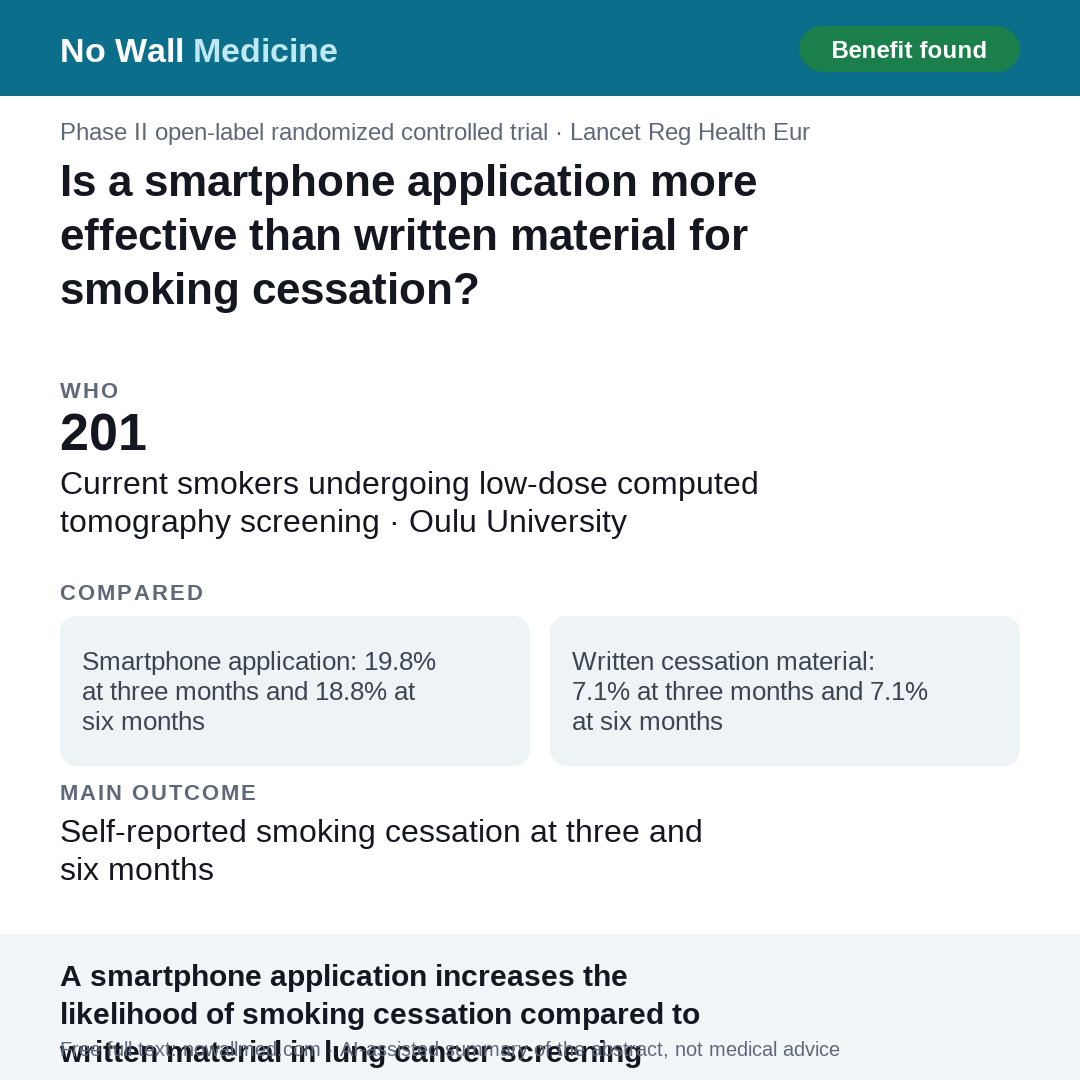
Smartphone application versus written material for smoking reduction and cessation in individuals undergoing low-dose computed tomography (LDCT) screening for lung cancer: a phase II open-label randomised controlled trial
Phase II open-label randomized controlled trialBenefit found
Is a smartphone application more effective than written material for smoking cessation?
Who
201
Current smokers undergoing low-dose computed tomography screening · Oulu University Hospital, Finland
Compared
Smartphone application: 19.8% at three months and 18.8% at six months
Written cessation material: 7.1% at three months and 7.1% at six months
Main outcome
Self-reported smoking cessation at three and six months
Result: OR 3.175 (95% CI 1.276-7.899) at three months; OR 2.847 (95% CI 1.137-7.128) at six months
Bottom line: A smartphone application increases the likelihood of smoking cessation compared to written material in lung cancer screening participants.
Funded by: AstraZeneca, Roche, and Cancer Foundation Finland
Lancet Reg Health Eur · 2024-05-25Download image
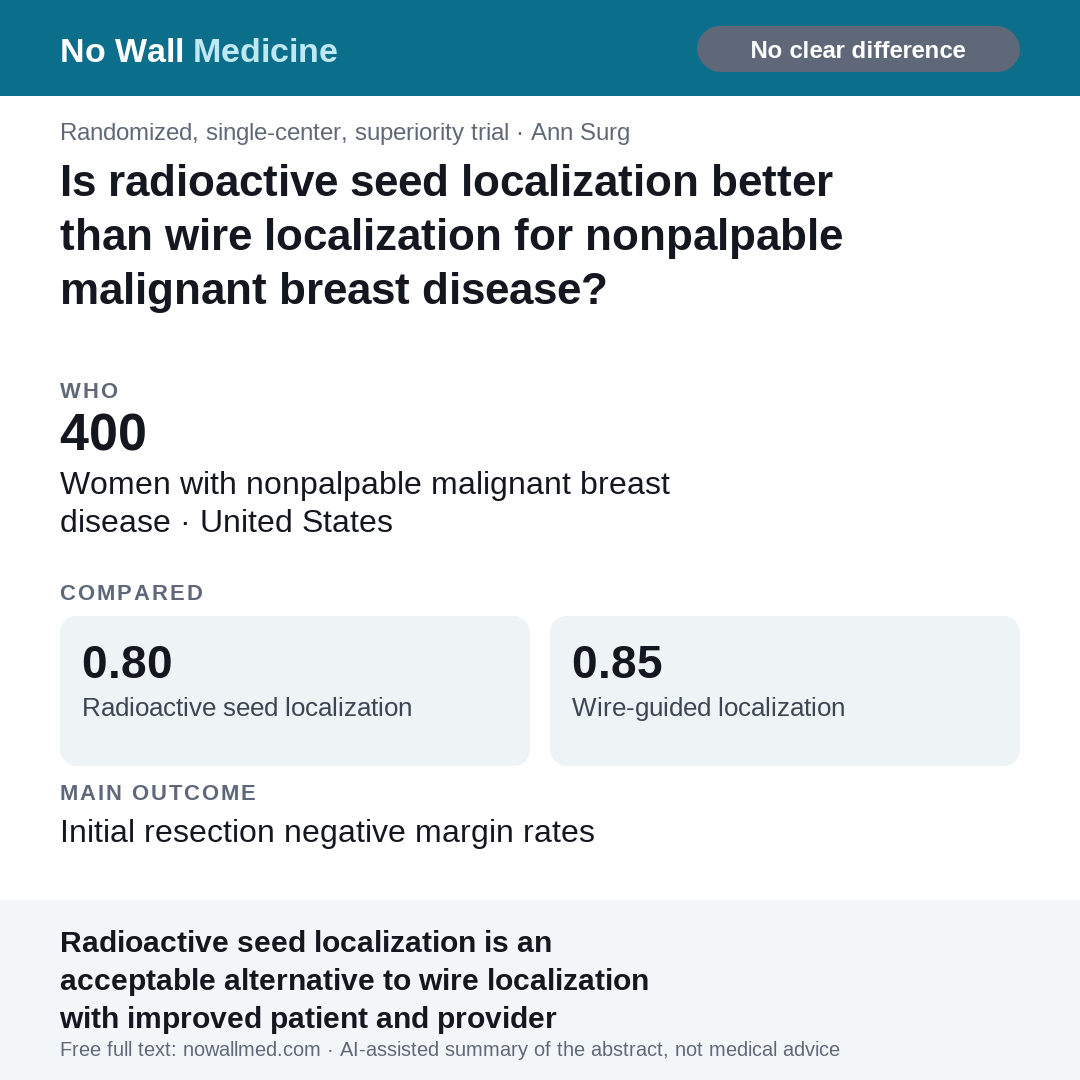
A Randomized, Single-Center, Superiority Trial of Radioactive Seed Localization Versus Wire Localization for Malignant Breast Disease
Randomized, single-center, superiority trialNo clear difference
Is radioactive seed localization better than wire localization for nonpalpable malignant breast disease?
Who
400
Women with nonpalpable malignant breast disease · United States
Compared
0.80Radioactive seed localization (95% CI: 0.75-0.86)
0.85Wire-guided localization (95% CI: 0.80-0.89)
Main outcome
Initial resection negative margin rates
Result: no significant difference (P=0.29)
Bottom line: Radioactive seed localization is an acceptable alternative to wire localization with improved patient and provider satisfaction.
Ann Surg · 2024-05-24Download image
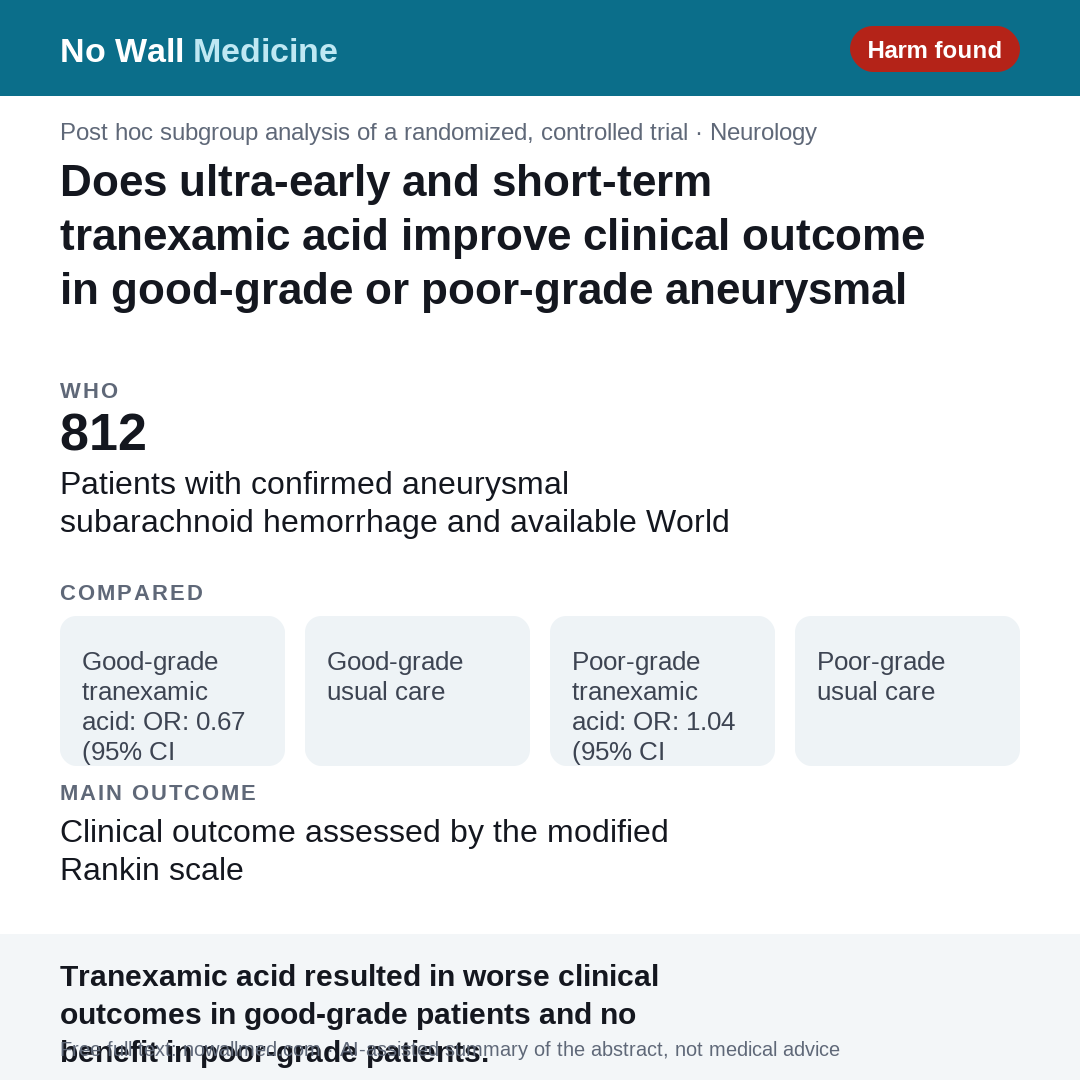
Ultra-Early and Short-Term Tranexamic Acid Treatment in Patients With Good- and Poor-Grade Aneurysmal Subarachnoid Hemorrhage
Post hoc subgroup analysis of a randomized, controlled trialHarm found
Does ultra-early and short-term tranexamic acid improve clinical outcome in good-grade or poor-grade aneurysmal subarachnoid hemorrhage?
Who
812
Patients with confirmed aneurysmal subarachnoid hemorrhage and available World Federation of Neurosurgical Societies grade · Multicenter
Compared
Good-grade tranexamic acid: OR: 0.67 (95% CI 0.48-0.94)
Good-grade usual care
Poor-grade tranexamic acid: OR: 1.04 (95% CI 0.70-1.55)
Poor-grade usual care
Main outcome
Clinical outcome assessed by the modified Rankin scale
Result: aOR 0.68 (95% CI 0.48-0.94) for good-grade; aOR 1.05 (95% CI 0.70-1.56) for poor-grade
Bottom line: Tranexamic acid resulted in worse clinical outcomes in good-grade patients and no benefit in poor-grade patients.
Neurology · 2024-05-24Download image
Hyperangulated vs. Macintosh videolaryngoscopy in adults with anticipated difficult airway management: a randomised controlled trial
Open-label, patient-blinded, randomised controlled trialBenefit found
Does hyperangulated versus Macintosh videolaryngoscopy affect glottic view and intubation success?
Who
182
Adults scheduled for elective ear, nose, throat or oral surgery
Compared
hyperangulated videolaryngoscope blades: 89 (69-99 [0-100])%
Macintosh videolaryngoscope blades: 54 (9-90 [0-100])%
Main outcome
percentage of glottic opening
Bottom line: Hyperangulated videolaryngoscope blades provided superior glottic view and first attempt success rate compared to Macintosh blades.
Anaesthesia · 2024-05-24Download image

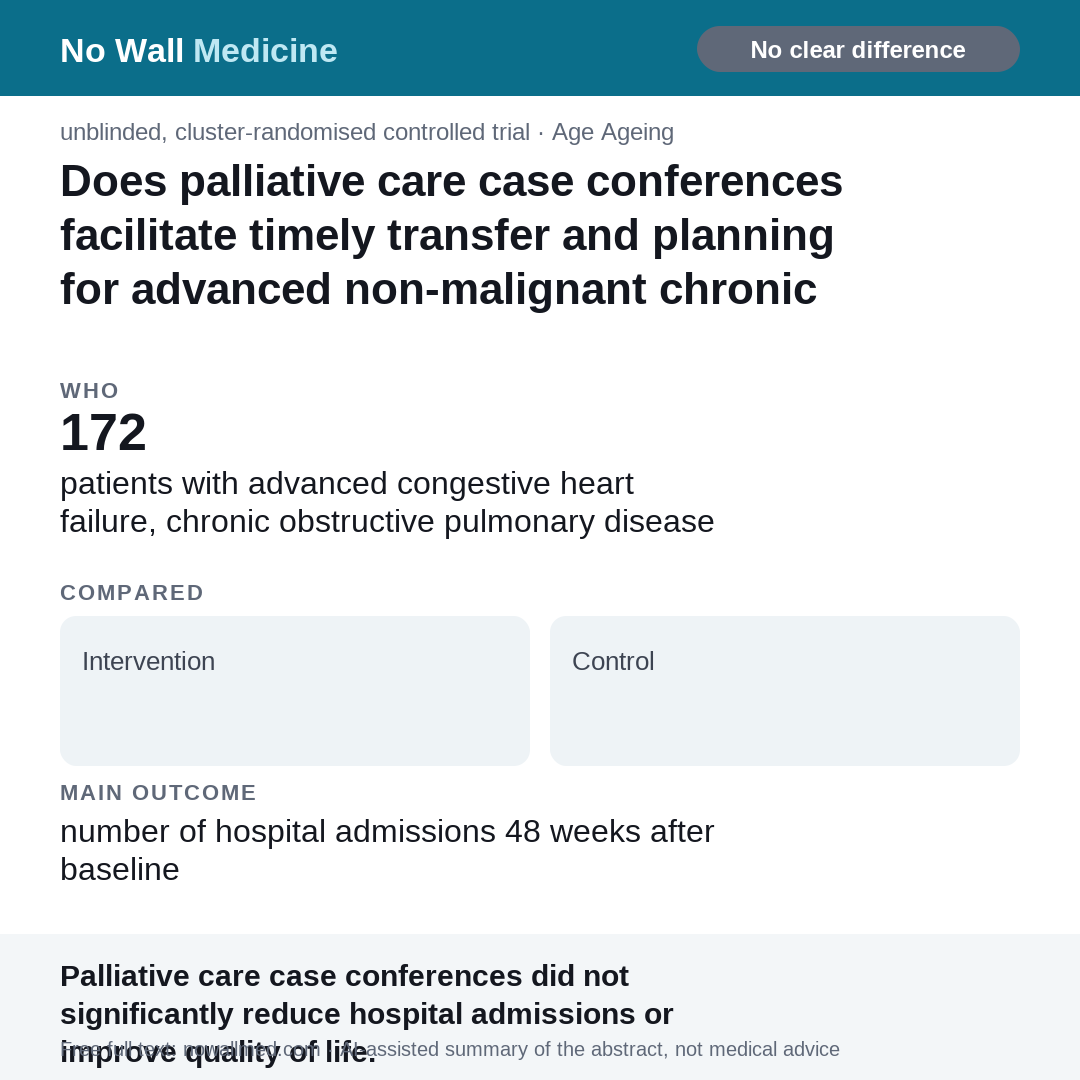
Evaluating palliative care case conferences in primary care for patients with advanced non-malignant chronic conditions: a cluster-randomised controlled trial (KOPAL)
unblinded, cluster-randomised controlled trialNo clear difference
Does palliative care case conferences facilitate timely transfer and planning for advanced non-malignant chronic conditions?
Who
172
patients with advanced congestive heart failure, chronic obstructive pulmonary disease and/or dementia · 49 general practitioner practices in northern Germany
Compared
Intervention
Control
Main outcome
number of hospital admissions 48 weeks after baseline
Result: incidence rate ratio 0.79 (95%CI: [0.49, 1.26])
Bottom line: Palliative care case conferences did not significantly reduce hospital admissions or improve quality of life.
Limitation: Future research should focus on refining the approach and optimizing the timing of case conferences.
Age Ageing · 2024-05-24Download image
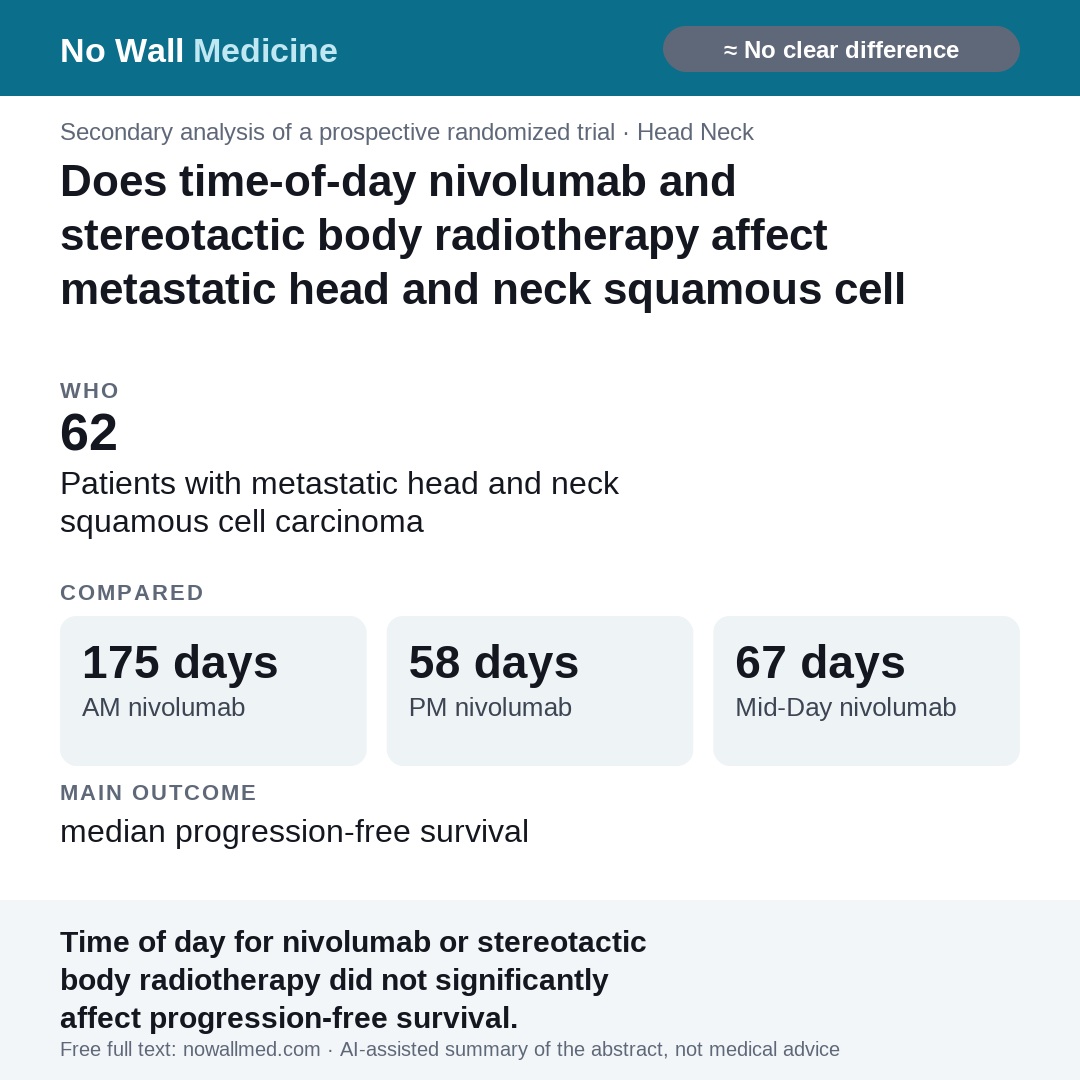
Effect of time-of-day nivolumab and stereotactic body radiotherapy in metastatic head and neck squamous cell carcinoma: A secondary analysis of a prospective randomized trial
Secondary analysis of a prospective randomized trialNo clear difference
Does time-of-day nivolumab and stereotactic body radiotherapy affect metastatic head and neck squamous cell carcinoma?
Who
62
Patients with metastatic head and neck squamous cell carcinoma
Compared
175 daysAM nivolumab
58 daysPM nivolumab
67 daysMid-Day nivolumab
Main outcome
median progression-free survival
Bottom line: Time of day for nivolumab or stereotactic body radiotherapy did not significantly affect progression-free survival.
Limitation: Further work may elucidate circadian impacts on select patients, tumors, and therapies.
Head Neck · 2024-05-24Download image
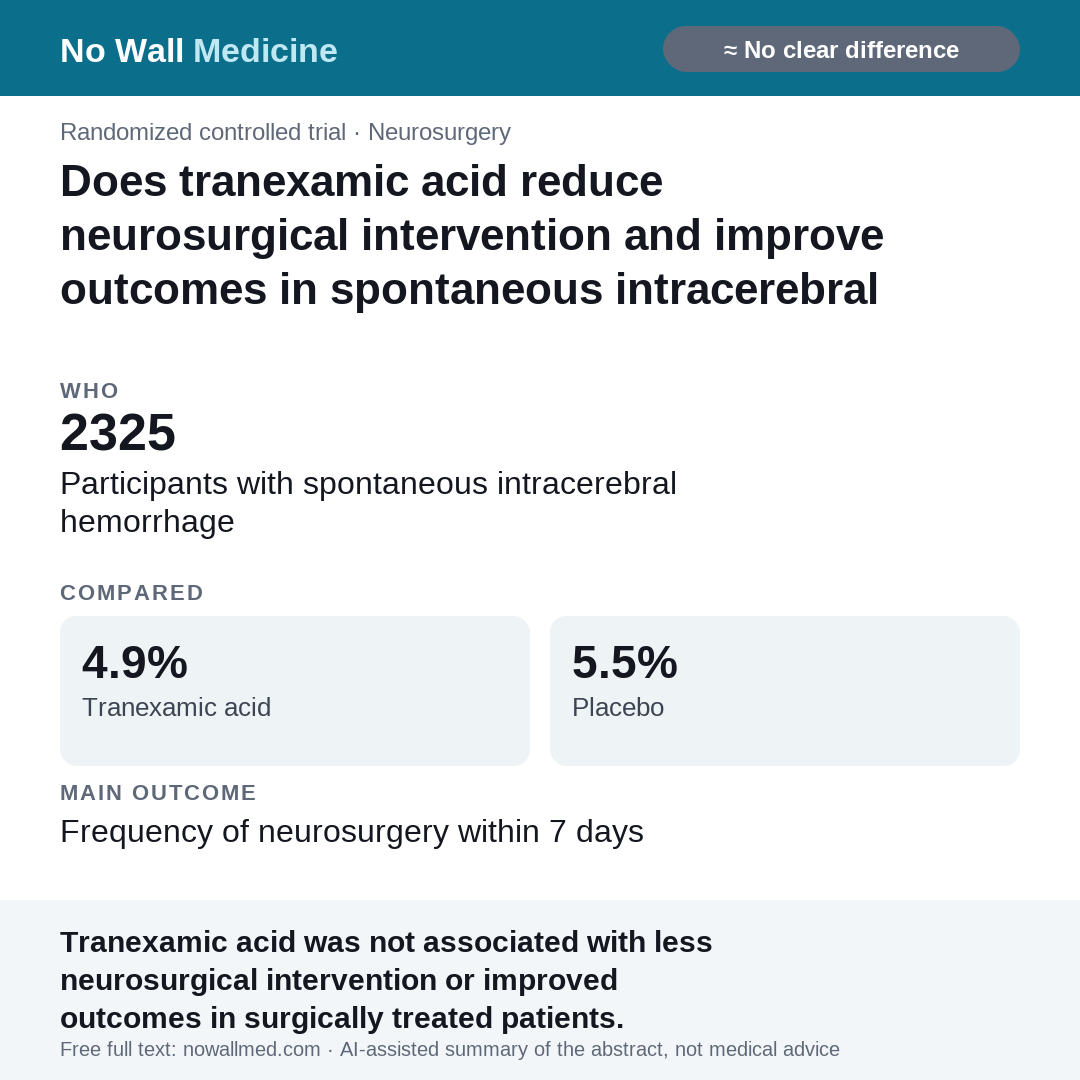
The Effect of Tranexamic Acid on Neurosurgical Intervention in Spontaneous Intracerebral Hematoma: Data From 121 Surgically Treated Participants From the Tranexamic Acid in IntraCerebral Hemorrhage-2 Randomized Controlled Trial
Randomized controlled trialNo clear difference
Does tranexamic acid reduce neurosurgical intervention and improve outcomes in spontaneous intracerebral hemorrhage?
Who
2325
Participants with spontaneous intracerebral hemorrhage
Compared
4.9%Tranexamic acid (57/1153)
5.5%Placebo (64/1163)
Main outcome
Frequency of neurosurgery within 7 days
Result: odds ratio 0.893 (95% CI 0.619-1.289)
Bottom line: Tranexamic acid was not associated with less neurosurgical intervention or improved outcomes in surgically treated patients.
Neurosurgery · 2024-05-24Download image
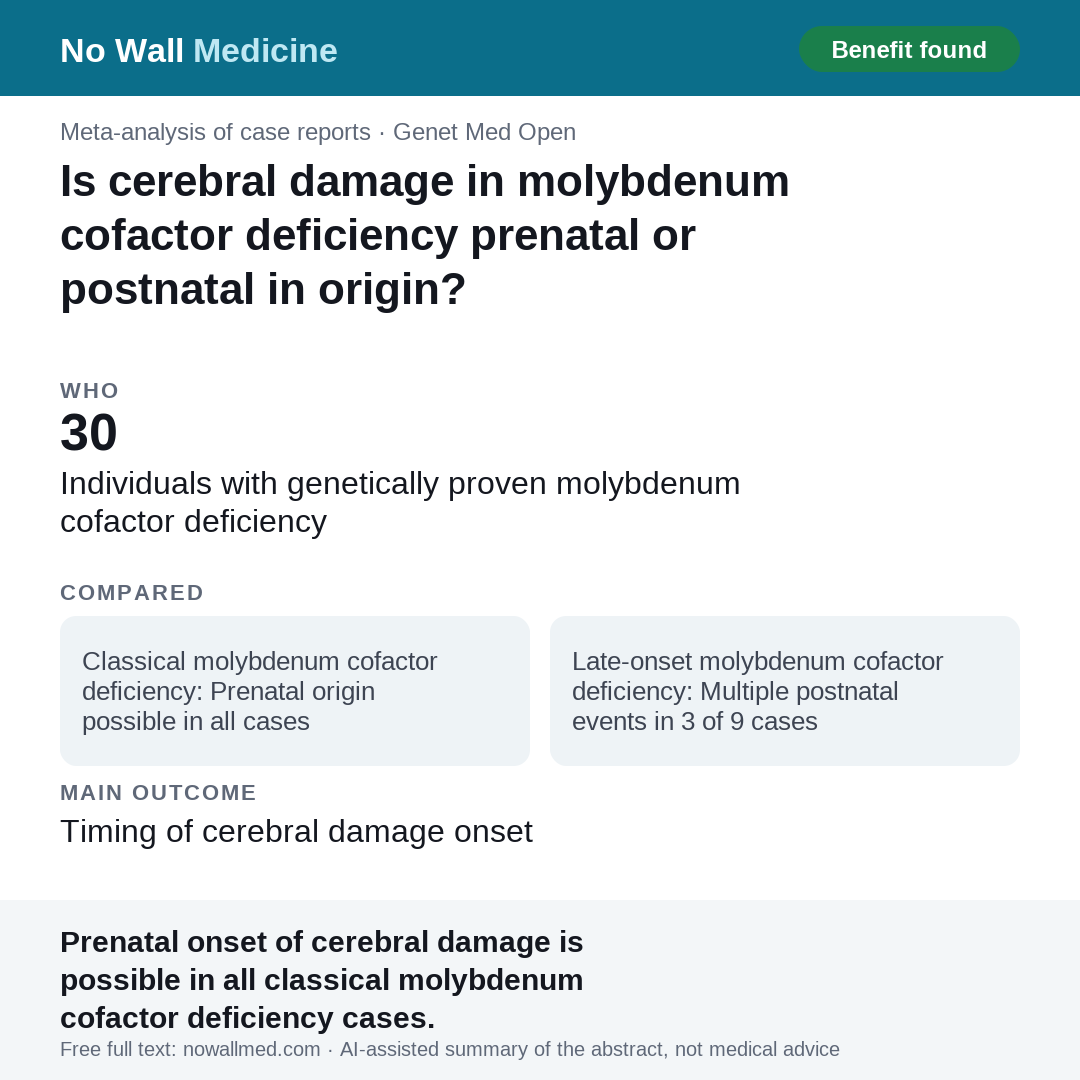
Timing of cerebral damage in molybdenum cofactor deficiency: A meta-analysis of case reports
Meta-analysis of case reportsBenefit found
Is cerebral damage in molybdenum cofactor deficiency prenatal or postnatal in origin?
Who
30
Individuals with genetically proven molybdenum cofactor deficiency
Compared
Classical molybdenum cofactor deficiency: Prenatal origin possible in all cases
Late-onset molybdenum cofactor deficiency: Multiple postnatal events in 3 of 9 cases
Main outcome
Timing of cerebral damage onset
Bottom line: Prenatal onset of cerebral damage is possible in all classical molybdenum cofactor deficiency cases.
Genet Med Open · 2024-05-24Download image
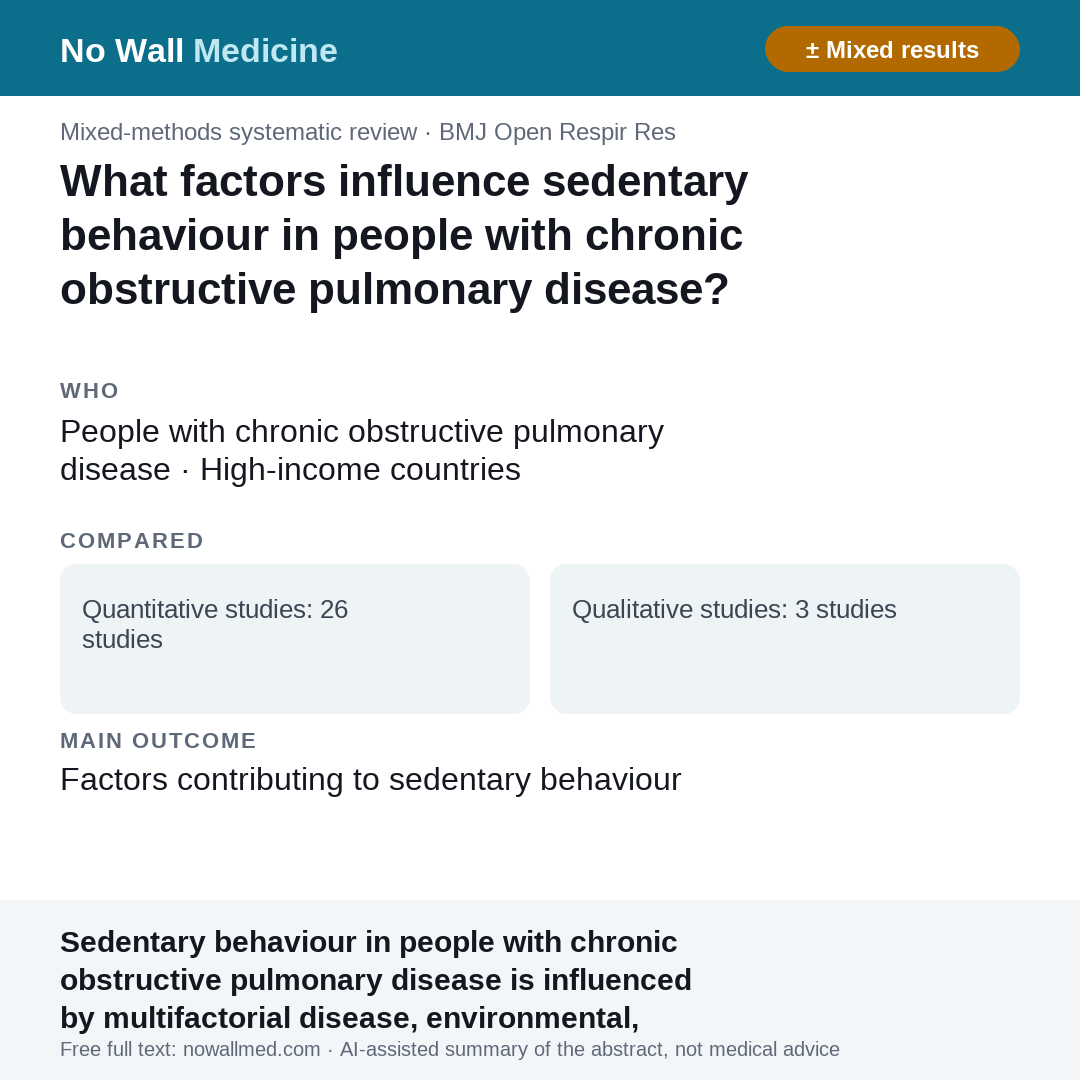
Influencing factors of sedentary behaviour in people with chronic obstructive pulmonary disease: a systematic review
Mixed-methods systematic reviewMixed results
What factors influence sedentary behaviour in people with chronic obstructive pulmonary disease?
Who
People with chronic obstructive pulmonary disease · High-income countries
Compared
Quantitative studies: 26 studies
Qualitative studies: 3 studies
Main outcome
Factors contributing to sedentary behaviour
Bottom line: Sedentary behaviour in people with chronic obstructive pulmonary disease is influenced by multifactorial disease, environmental, and psychological factors.
BMJ Open Respir Res · 2024-05-24Download image
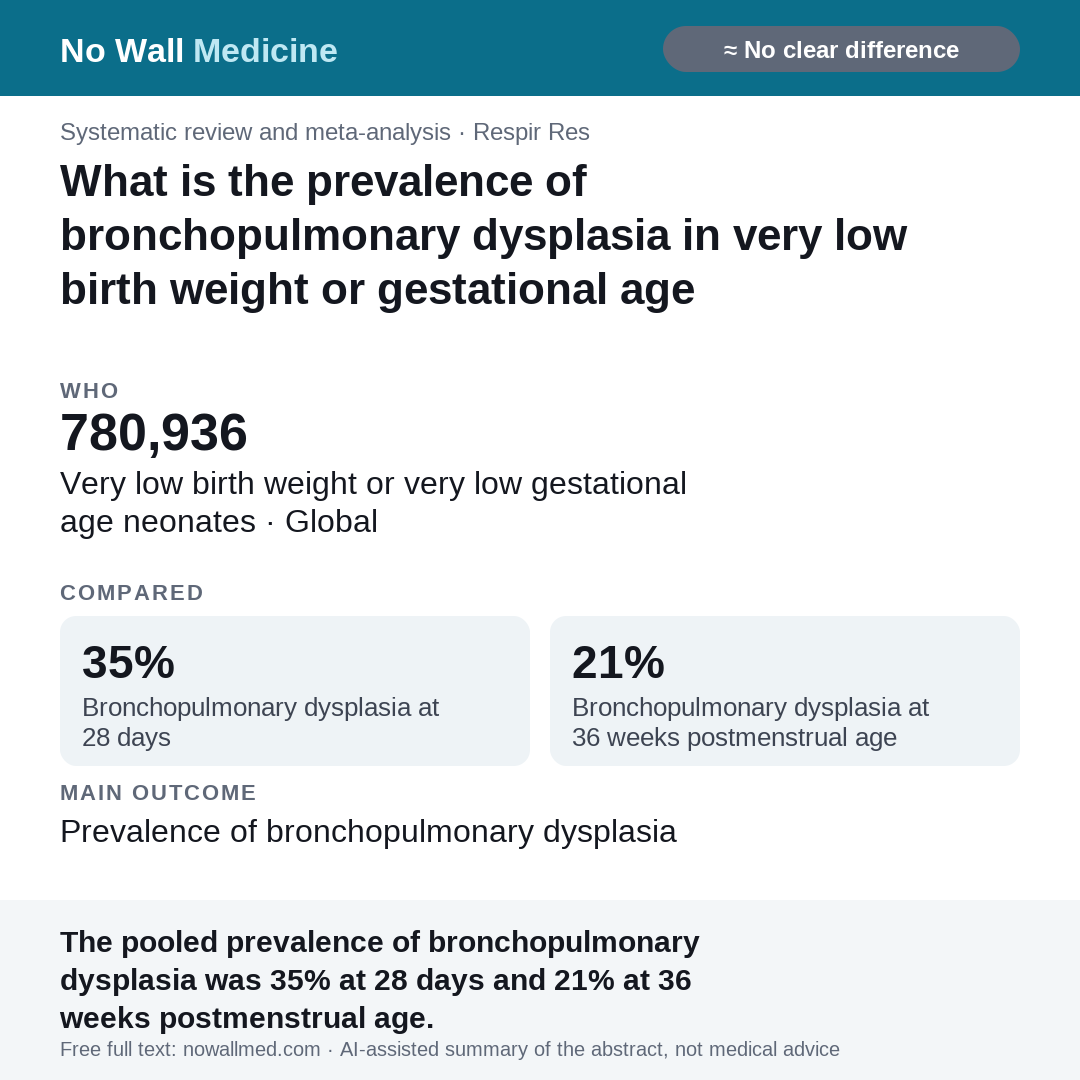
Rates of bronchopulmonary dysplasia in very low birth weight neonates: a systematic review and meta-analysis
Systematic review and meta-analysisNo clear difference
What is the prevalence of bronchopulmonary dysplasia in very low birth weight or gestational age neonates?
Who
780,936
Very low birth weight or very low gestational age neonates · Global
Compared
35%Bronchopulmonary dysplasia at 28 days (95% CI, 28-42%)
21%Bronchopulmonary dysplasia at 36 weeks postmenstrual age (95% CI, 19-24%)
Main outcome
Prevalence of bronchopulmonary dysplasia
Bottom line: The pooled prevalence of bronchopulmonary dysplasia was 35% at 28 days and 21% at 36 weeks postmenstrual age.
Respir Res · 2024-05-24Download image
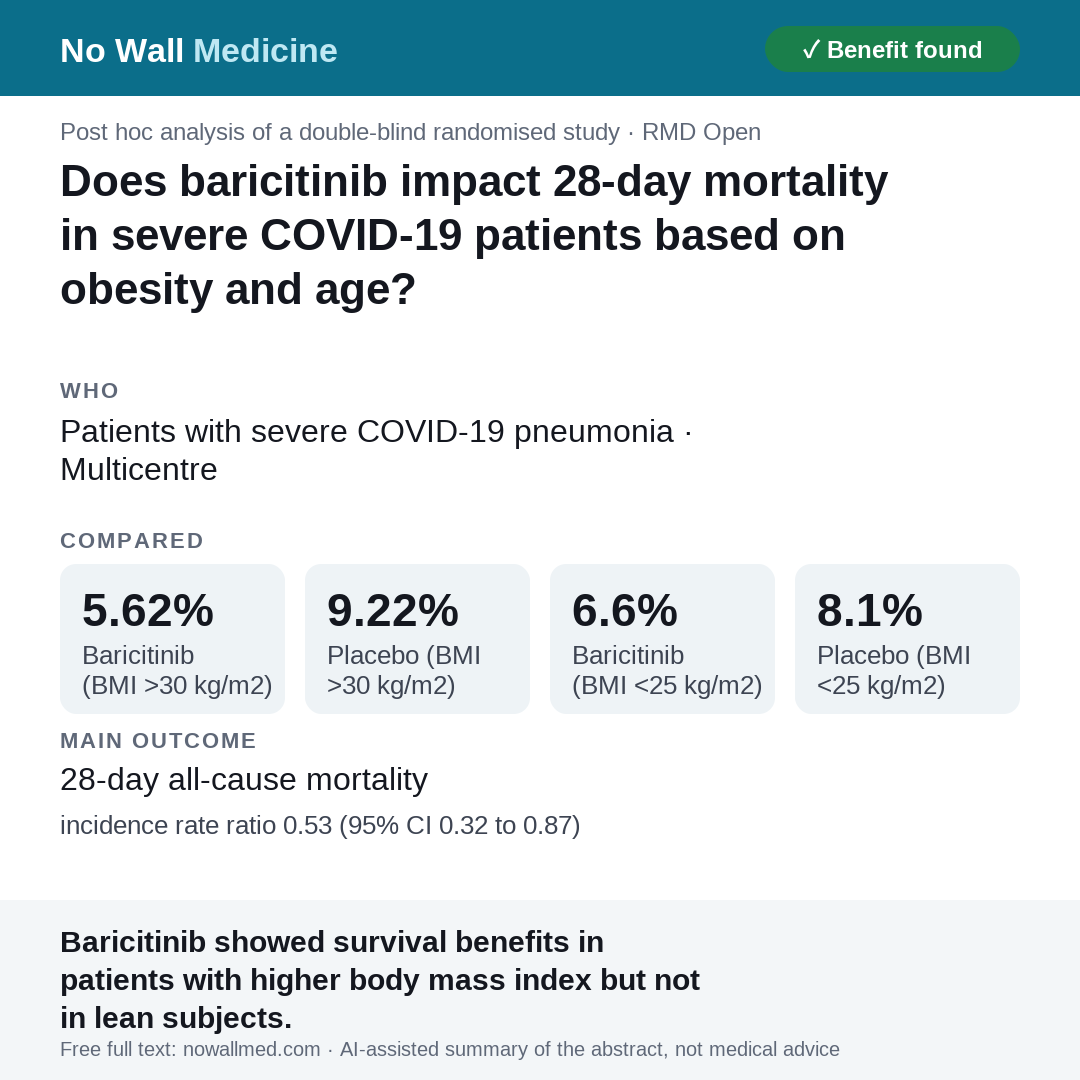
Pronounced benefits of JAK inhibition with baricitinib in COVID-19 pneumonia in obese but not lean subjects
Post hoc analysis of a double-blind randomised studyBenefit found
Does baricitinib impact 28-day mortality in severe COVID-19 patients based on obesity and age?
Who
Patients with severe COVID-19 pneumonia · Multicentre
Compared
5.62%Baricitinib (BMI >30 kg/m2)
9.22%Placebo (BMI >30 kg/m2)
6.6%Baricitinib (BMI <25 kg/m2)
8.1%Placebo (BMI <25 kg/m2)
Main outcome
28-day all-cause mortality
Result: incidence rate ratio 0.53 (95% CI 0.32 to 0.87)
Bottom line: Baricitinib showed survival benefits in patients with higher body mass index but not in lean subjects.
RMD Open · 2024-05-24Download image
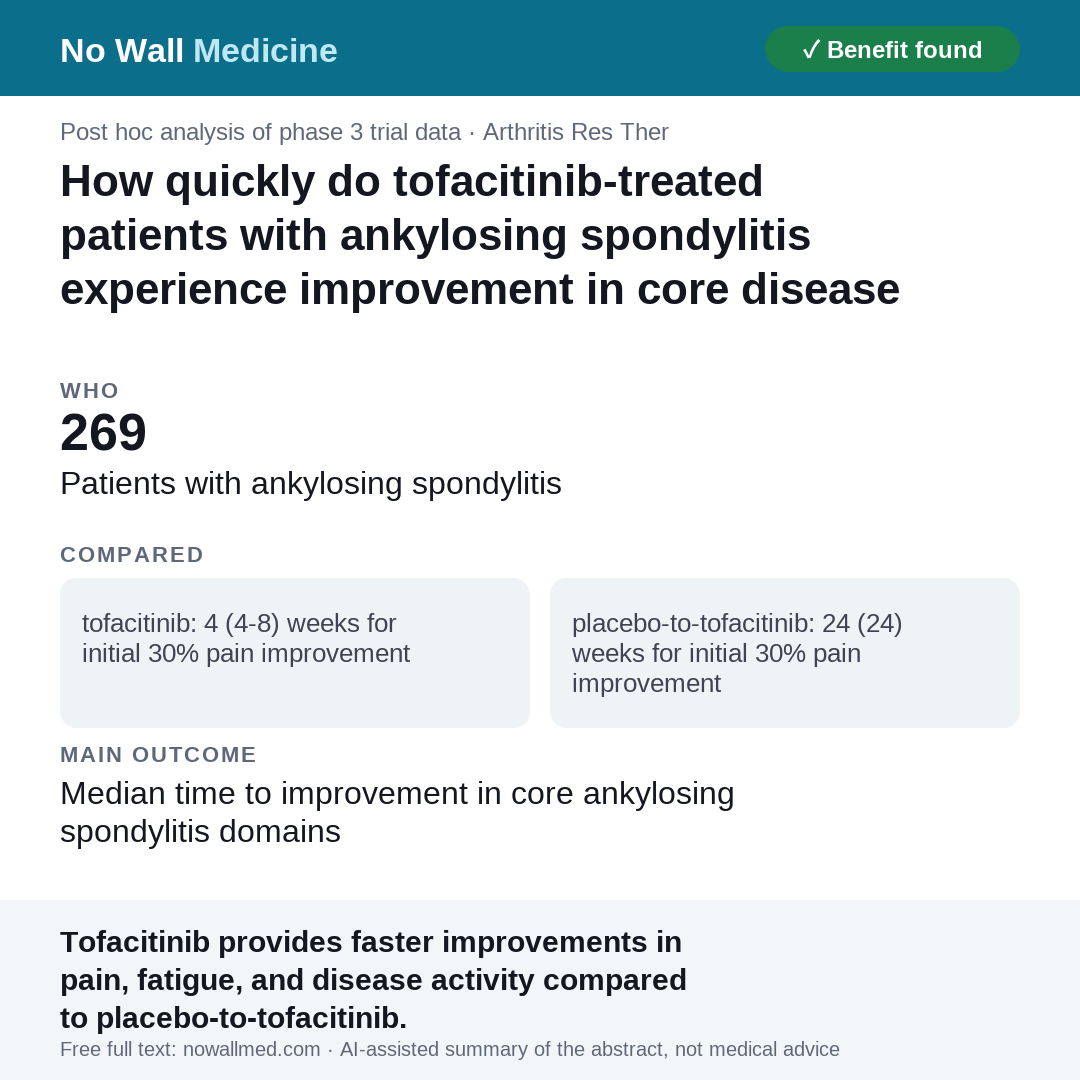
Time to improvement of pain, morning stiffness, fatigue, and disease activity in patients with ankylosing spondylitis treated with tofacitinib: a post hoc analysis
Post hoc analysis of phase 3 trial dataBenefit found
How quickly do tofacitinib-treated patients with ankylosing spondylitis experience improvement in core disease domains?
Who
269
Patients with ankylosing spondylitis
Compared
tofacitinib: 4 (4-8) weeks for initial 30% pain improvement
placebo-to-tofacitinib: 24 (24) weeks for initial 30% pain improvement
Main outcome
Median time to improvement in core ankylosing spondylitis domains
Bottom line: Tofacitinib provides faster improvements in pain, fatigue, and disease activity compared to placebo-to-tofacitinib.
Arthritis Res Ther · 2024-05-24Download image
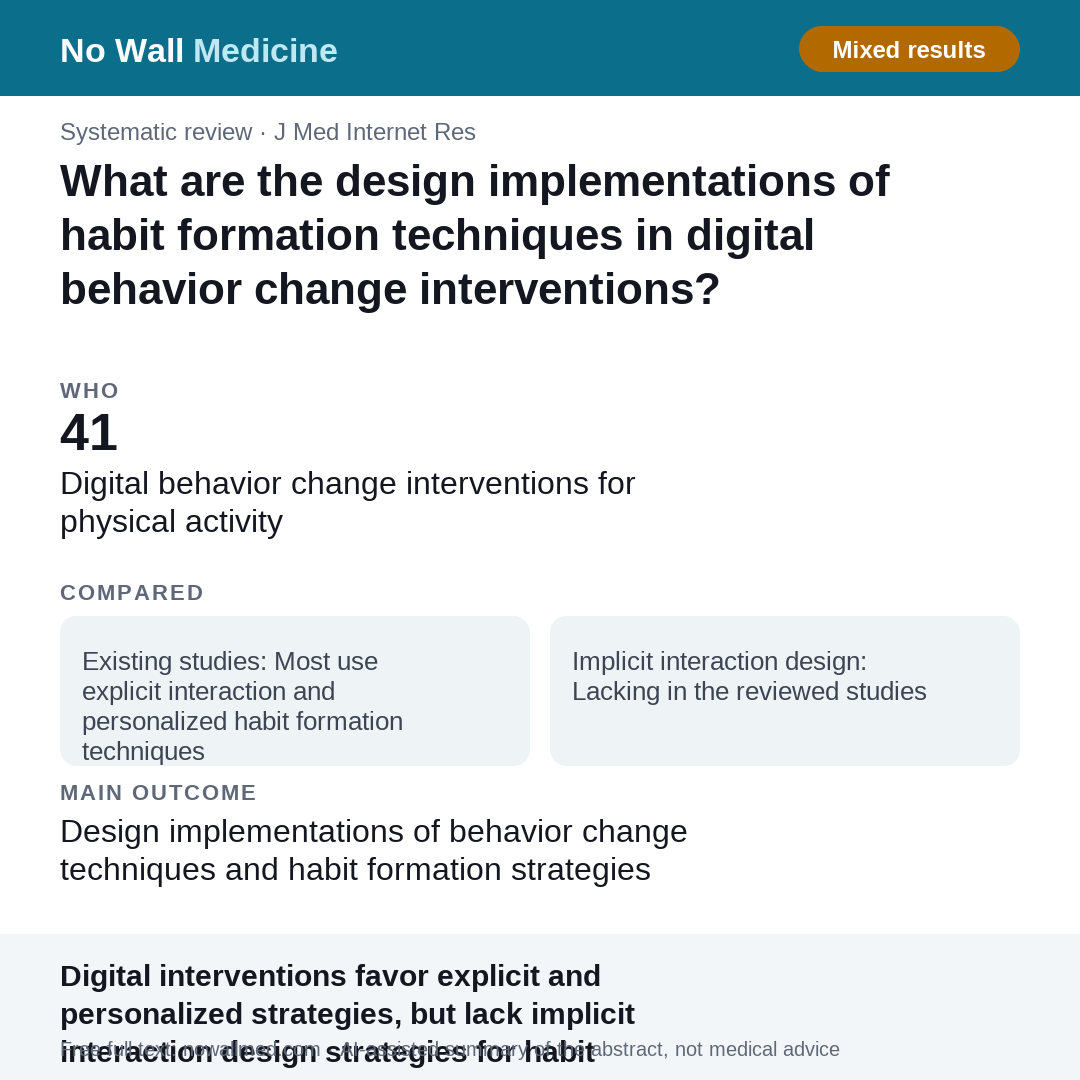
Digital Behavior Change Intervention Designs for Habit Formation: Systematic Review
Systematic reviewMixed results
What are the design implementations of habit formation techniques in digital behavior change interventions?
Who
41
Digital behavior change interventions for physical activity
Compared
Existing studies: Most use explicit interaction and personalized habit formation techniques
Implicit interaction design: Lacking in the reviewed studies
Main outcome
Design implementations of behavior change techniques and habit formation strategies
Bottom line: Digital interventions favor explicit and personalized strategies, but lack implicit interaction design strategies for habit formation.
J Med Internet Res · 2024-05-24Download image
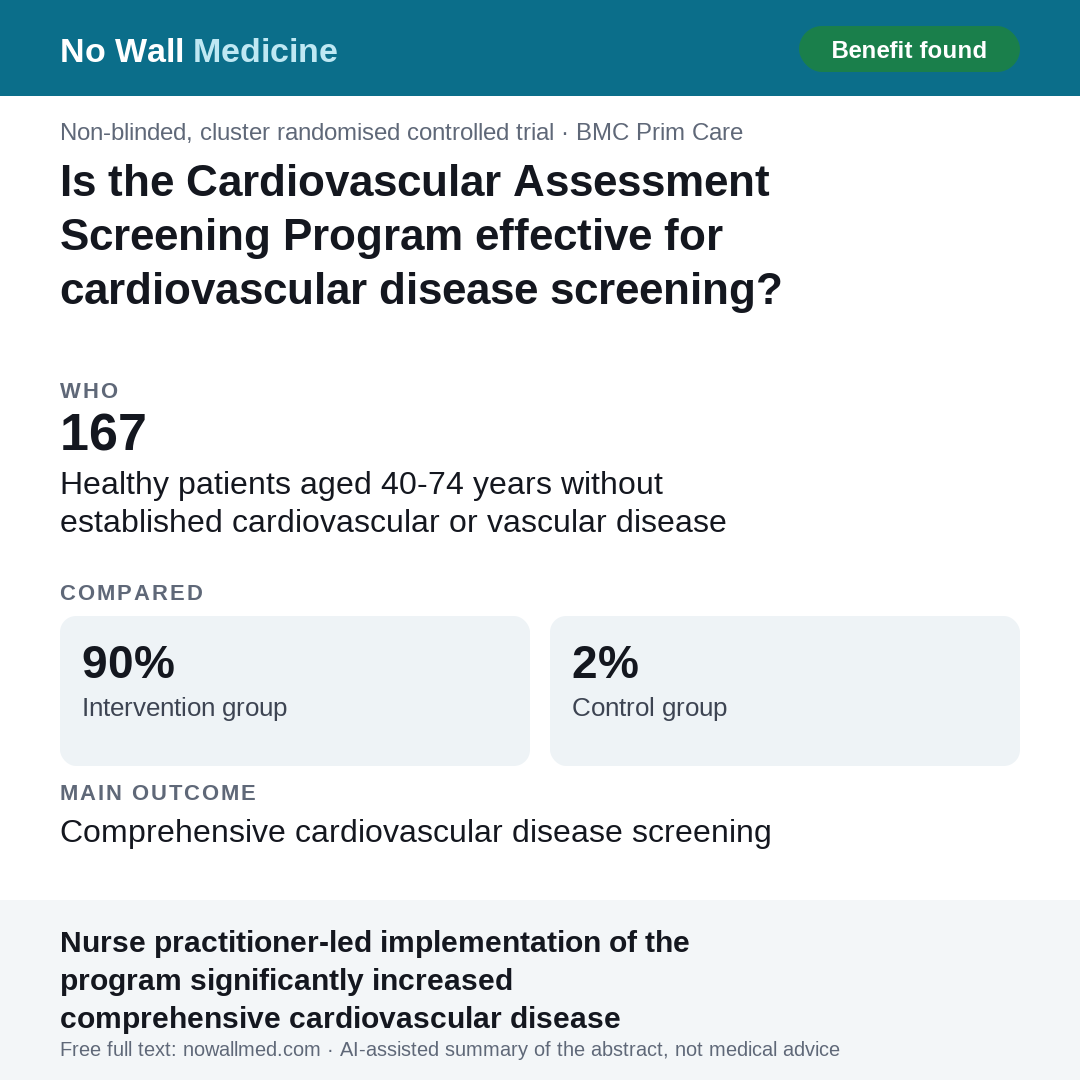
Evaluating the effectiveness of the cardiovascular assessment screening program with nurse practitioners and patients: results of a cluster randomised controlled trial
Non-blinded, cluster randomised controlled trialBenefit found
Is the Cardiovascular Assessment Screening Program effective for cardiovascular disease screening?
Who
167
Healthy patients aged 40-74 years without established cardiovascular or vascular disease · Community practice clinics across one Canadian province
Compared
90%Intervention group (n = 61)
2%Control group (n = 2)
Main outcome
Comprehensive cardiovascular disease screening
Result: relative risk 30.2 (95% CI 8.76 to 103.9)
Bottom line: Nurse practitioner-led implementation of the program significantly increased comprehensive cardiovascular disease screening compared to usual care.
BMC Prim Care · 2024-05-24Download image
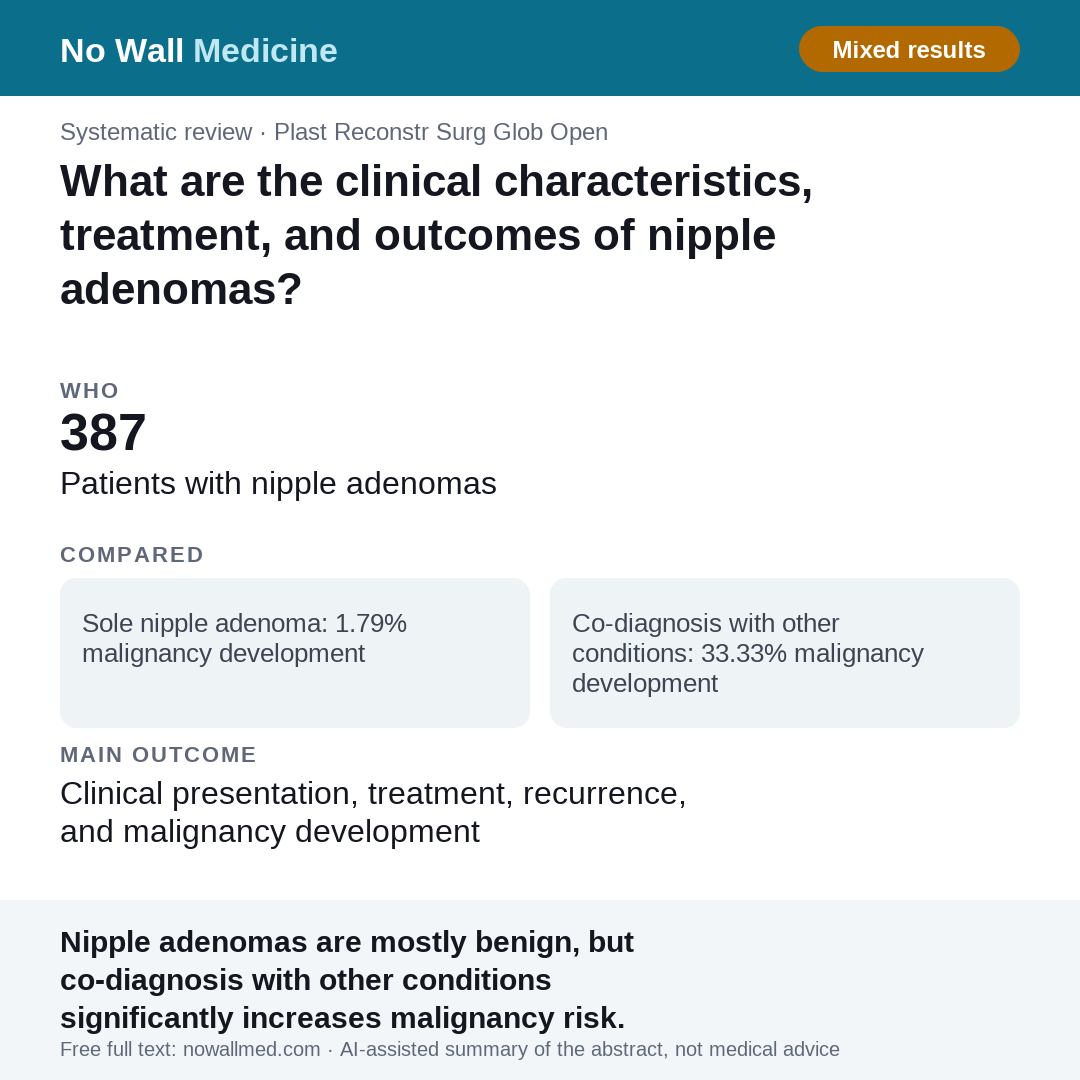
Nipple Adenoma: Systematic Review of Literature
Systematic reviewMixed results
What are the clinical characteristics, treatment, and outcomes of nipple adenomas?
Who
387
Patients with nipple adenomas
Compared
Sole nipple adenoma: 1.79% malignancy development
Co-diagnosis with other conditions: 33.33% malignancy development
Main outcome
Clinical presentation, treatment, recurrence, and malignancy development
Bottom line: Nipple adenomas are mostly benign, but co-diagnosis with other conditions significantly increases malignancy risk.
Limitation: Predominance of case reports may introduce bias.
Plast Reconstr Surg Glob Open · 2024-05-24Download image
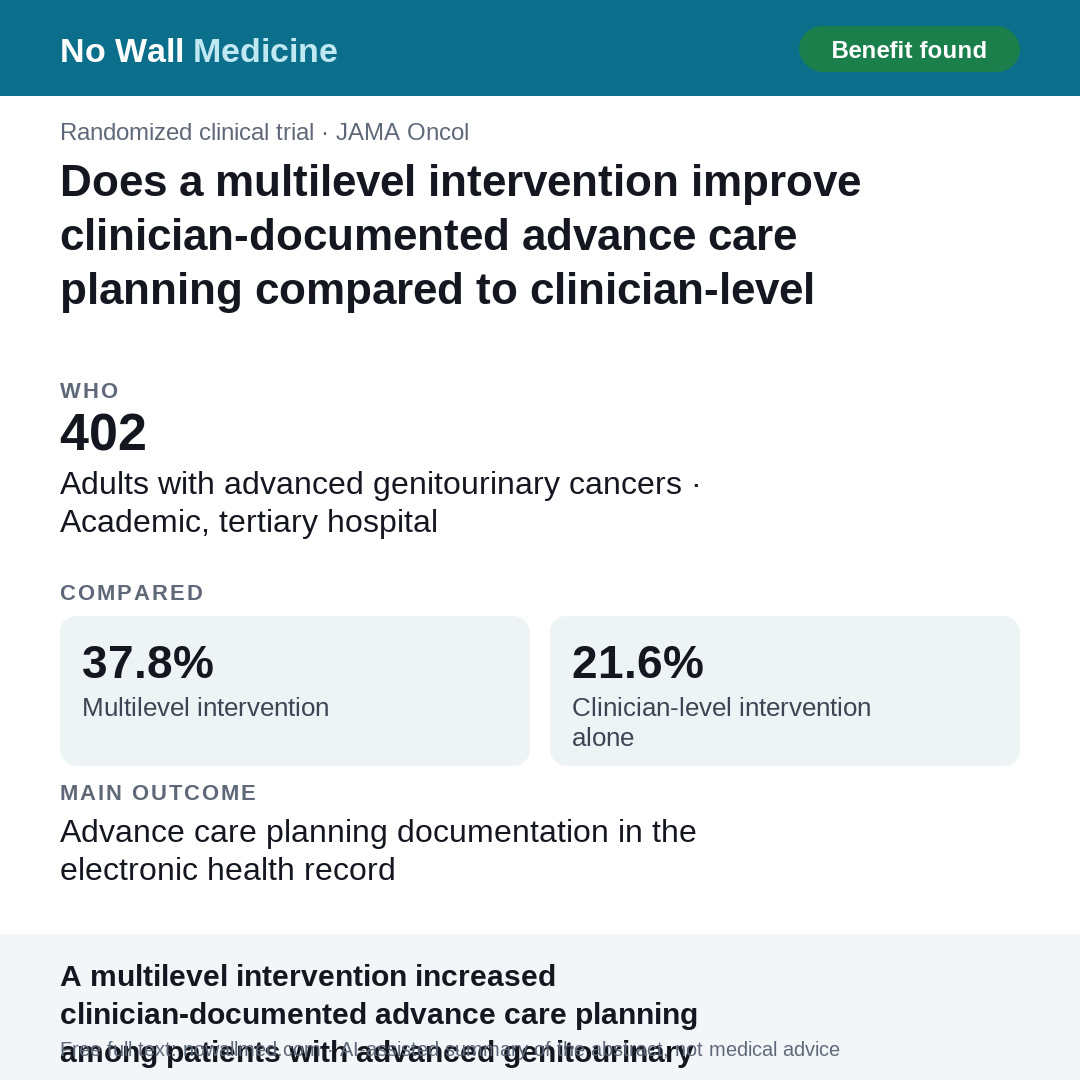
Coaches Activating, Reaching, and Engaging Patients to Engage in Advance Care Planning: A Randomized Clinical Trial
Randomized clinical trialBenefit found
Does a multilevel intervention improve clinician-documented advance care planning compared to clinician-level intervention alone?
Who
402
Adults with advanced genitourinary cancers · Academic, tertiary hospital
Compared
37.8%Multilevel intervention
21.6%Clinician-level intervention alone
Main outcome
Advance care planning documentation in the electronic health record
Result: odds ratio 2.29 (95% CI, 1.44-3.64)
Bottom line: A multilevel intervention increased clinician-documented advance care planning among patients with advanced genitourinary cancers.
JAMA Oncol · 2024-05-23Download image
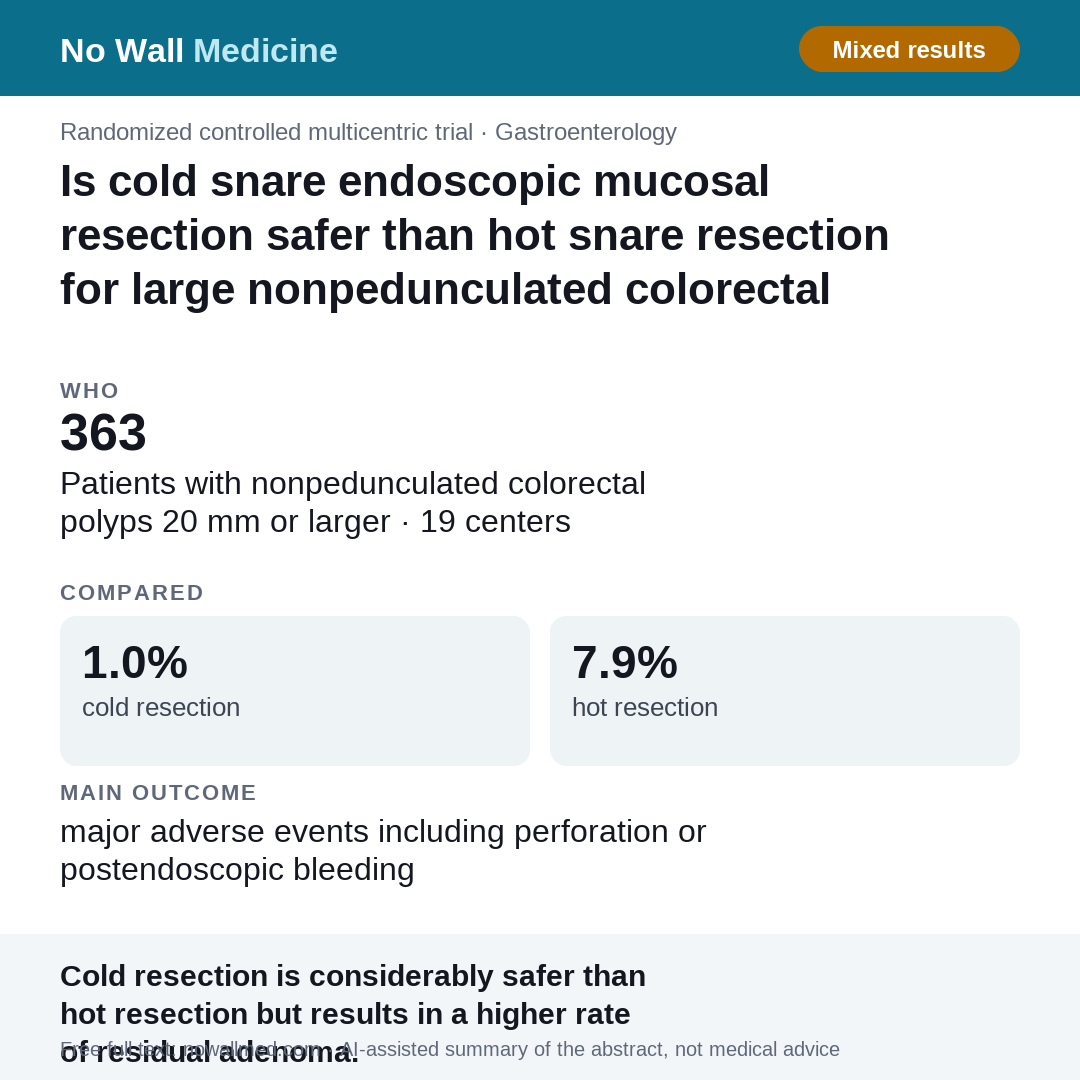
Cold Versus Hot Snare Endoscopic Resection of Large Nonpedunculated Colorectal Polyps: Randomized Controlled German CHRONICLE Trial
Randomized controlled multicentric trialMixed results
Is cold snare endoscopic mucosal resection safer than hot snare resection for large nonpedunculated colorectal polyps?
Who
363
Patients with nonpedunculated colorectal polyps 20 mm or larger · 19 centers
Compared
1.0%cold resection
7.9%hot resection
Main outcome
major adverse events including perforation or postendoscopic bleeding
Result: odds ratio 0.12 (95% CI, 0.03-0.54)
Bottom line: Cold resection is considerably safer than hot resection but results in a higher rate of residual adenoma.
Gastroenterology · 2024-05-23Download image
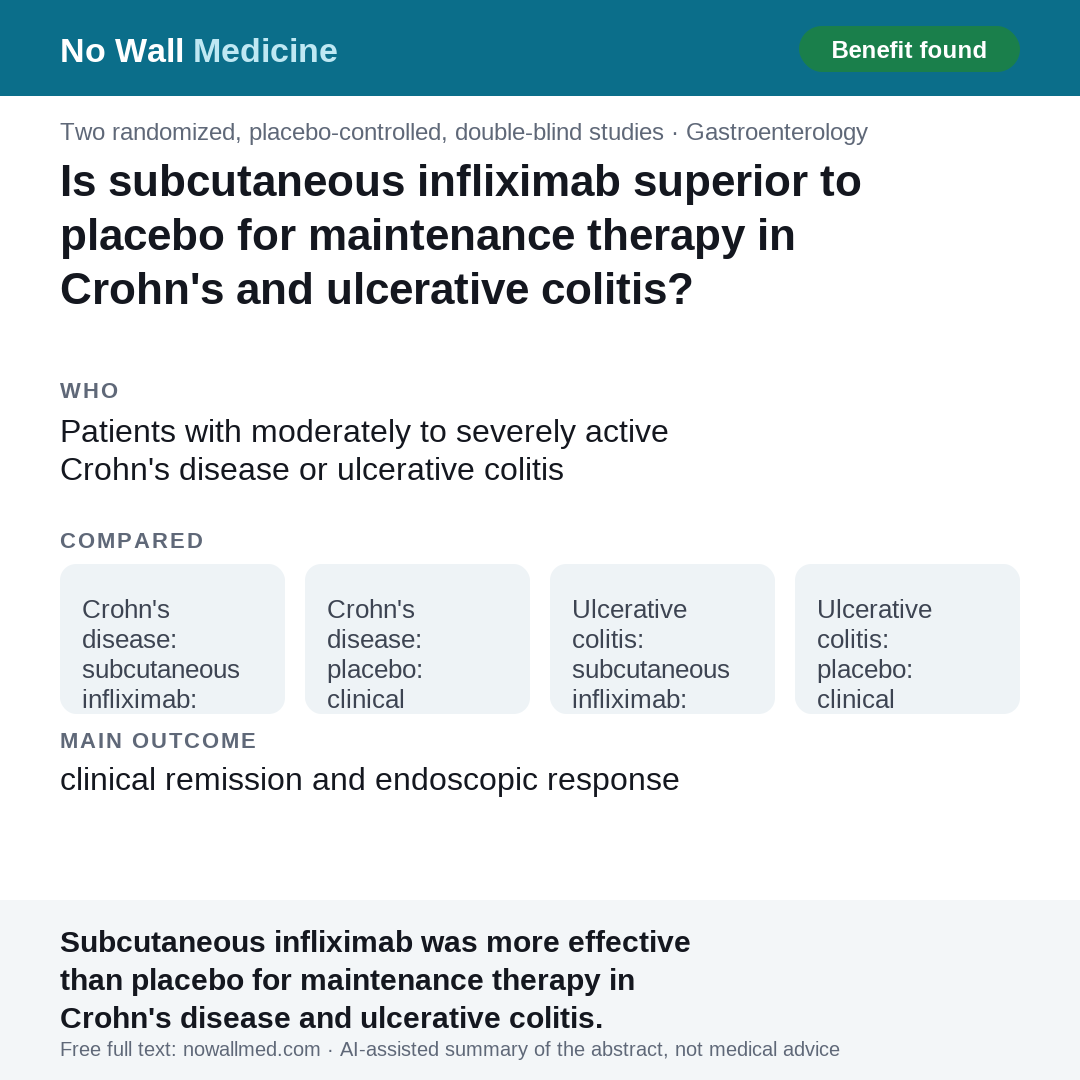
Subcutaneous Infliximab (CT-P13 SC) as Maintenance Therapy for Inflammatory Bowel Disease: Two Randomized Phase 3 Trials (LIBERTY)
Two randomized, placebo-controlled, double-blind studiesBenefit found
Is subcutaneous infliximab superior to placebo for maintenance therapy in Crohn's and ulcerative colitis?
Who
Patients with moderately to severely active Crohn's disease or ulcerative colitis
Compared
Crohn's disease: subcutaneous infliximab: clinical remission 62.3%
Crohn's disease: placebo: clinical remission 32.1%
Ulcerative colitis: subcutaneous infliximab: clinical remission 43.2%
Ulcerative colitis: placebo: clinical remission 20.8%
Main outcome
clinical remission and endoscopic response
Bottom line: Subcutaneous infliximab was more effective than placebo for maintenance therapy in Crohn's disease and ulcerative colitis.
Gastroenterology · 2024-05-23Download image
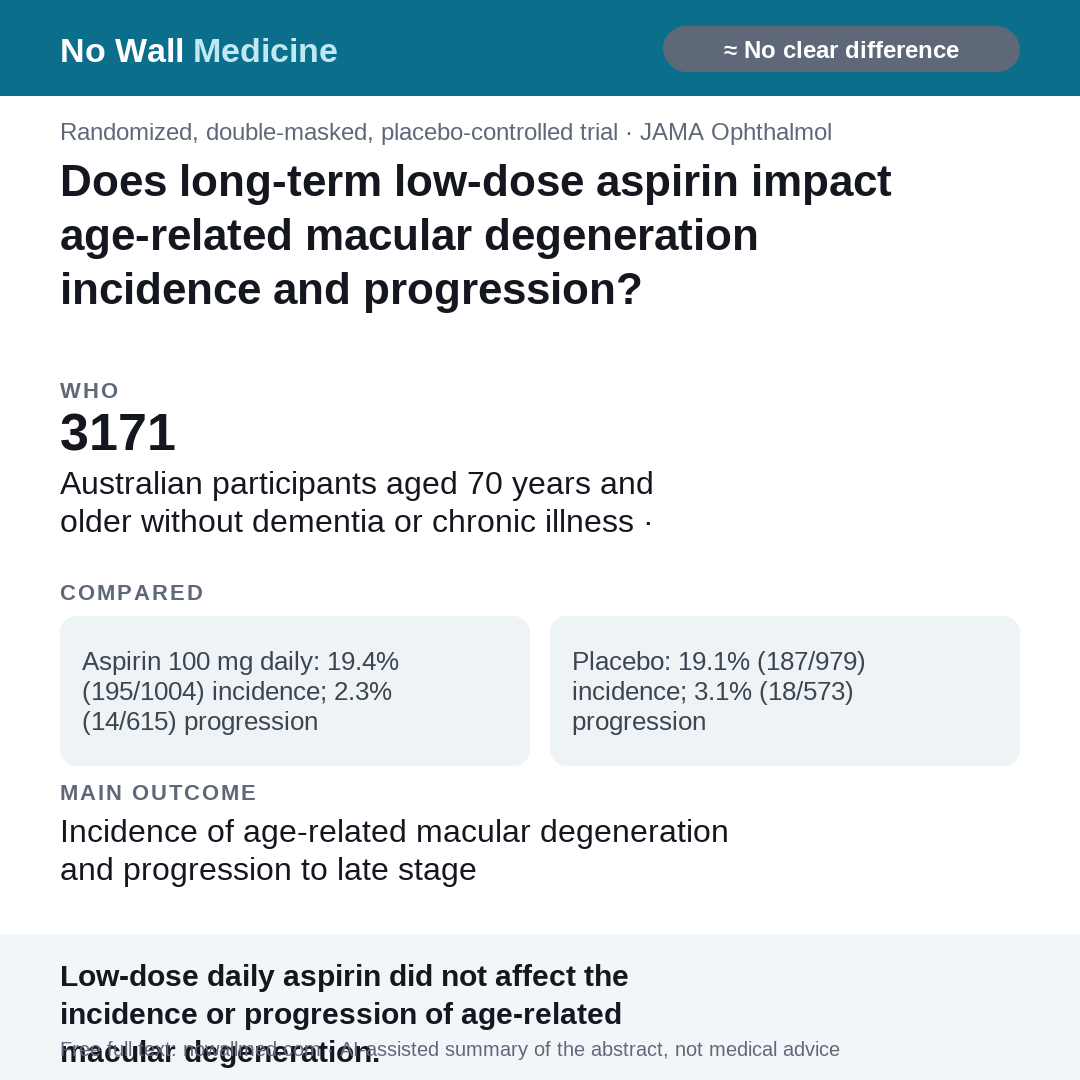
Effect of Low-Dose Aspirin on the Course of Age-Related Macular Degeneration: A Secondary Analysis of the ASPREE Randomized Clinical Trial
Randomized, double-masked, placebo-controlled trialNo clear difference
Does long-term low-dose aspirin impact age-related macular degeneration incidence and progression?
Who
3171
Australian participants aged 70 years and older without dementia or chronic illness · Multicenter, international, Australia
Compared
Aspirin 100 mg daily: 19.4% (195/1004) incidence; 2.3% (14/615) progression
Placebo: 19.1% (187/979) incidence; 3.1% (18/573) progression
Main outcome
Incidence of age-related macular degeneration and progression to late stage
Result: relative risk 1.02 (95% CI, 0.85-1.22) for incidence; RR 0.72 (95% CI, 0.36-1.44) for progression
Bottom line: Low-dose daily aspirin did not affect the incidence or progression of age-related macular degeneration.
JAMA Ophthalmol · 2024-05-23Download image