Visual abstracts
New randomized trials and meta-analyses from leading journals at a glance: who was studied, what was compared, and what was found. Every paper is free to read in full.
All specialtiesCardiology 4877Oncology 4138Gastroenterology & Hepatology 1942Infectious Disease 3837Neurology 1905Psychiatry & Mental Health 2273Pulmonology 2143Critical Care 1365Endocrinology & Diabetes 2580Pediatrics 2980Surgery 2559Orthopedics & Sports Medicine 931Neurosurgery 537Cardiothoracic & Vascular Surgery 674Plastic & Reconstructive Surgery 591Nephrology 1133Rheumatology 823Hematology 1109Dermatology 621Ophthalmology 543Obstetrics & Gynecology 1686Public & Global Health 1058Radiology & Imaging 648Anesthesiology 986Urology 764ENT (Otolaryngology) 503Emergency Medicine 511Allergy & Immunology 313Geriatrics 981Family Medicine & Primary Care 562Medical Genetics & Genomics 676Pathology & Laboratory Medicine 159Physical Medicine & Rehabilitation 757Palliative Care 444Nutrition 1588Digital Health & AI 2201General Medicine 321
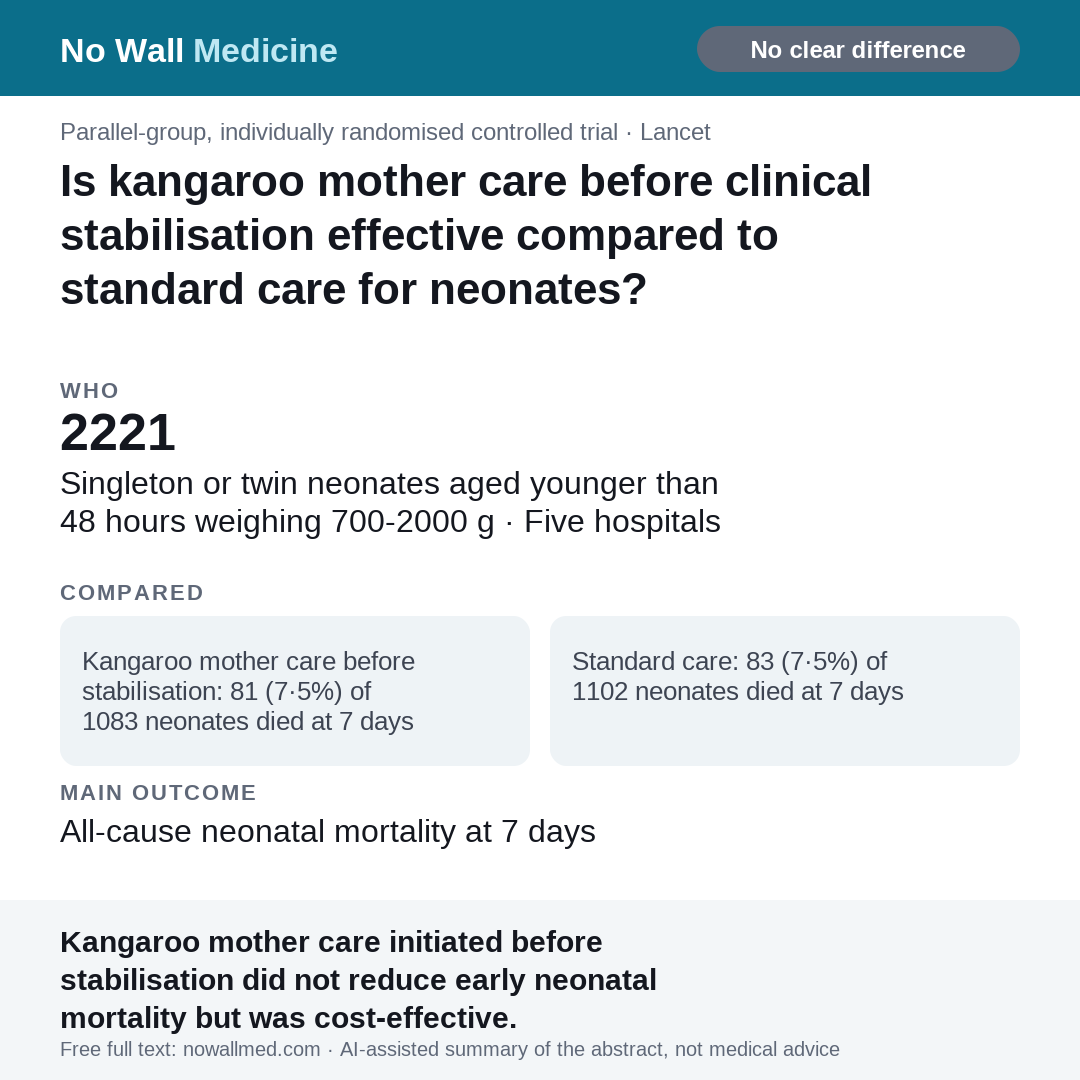
Effectiveness of kangaroo mother care before clinical stabilisation versus standard care among neonates at five hospitals in Uganda (OMWaNA): a parallel-group, individually randomised controlled trial and economic evaluation
Parallel-group, individually randomised controlled trialNo clear difference
Is kangaroo mother care before clinical stabilisation effective compared to standard care for neonates?
Who
2221
Singleton or twin neonates aged younger than 48 hours weighing 700-2000 g · Five hospitals in Uganda
Compared
Kangaroo mother care before stabilisation: 81 (7·5%) of 1083 neonates died at 7 days
Standard care: 83 (7·5%) of 1102 neonates died at 7 days
Main outcome
All-cause neonatal mortality at 7 days
Result: relative risk 0·97 (95% CI 0·74-1·28)
Bottom line: Kangaroo mother care initiated before stabilisation did not reduce early neonatal mortality but was cost-effective.
Funded by: Joint Global Health Trials scheme, UKRI Medical Research Council, Wellcome Trust, and NIH
Lancet · 2024-05-13Download image
Long-term weight loss effects of semaglutide in obesity without diabetes in the SELECT trial
Randomized trialBenefit found
What are the long-term weight and anthropometric effects of semaglutide in obesity without diabetes?
Who
17604
Adults with preexisting cardiovascular disease, overweight or obesity, without diabetes
Compared
semaglutide: mean reduction in weight -10.2%
-1.5%placebo
Main outcome
weight, waist circumference, and waist-to-height ratio
Bottom line: Semaglutide produced clinically significant, sustained weight loss and anthropometric improvements over 4 years compared to placebo.
Nat Med · 2024-05-13Download image

Bacille Calmette-Guérin vaccination to prevent febrile and respiratory illness in adults (BRACE): secondary outcomes of a randomised controlled phase 3 trial
Randomised controlled phase 3 trialHarm found
Does Bacille Calmette-Guérin vaccination prevent febrile and respiratory illness in adults?
Who
6828
Healthcare workers · 36 healthcare centres in five countries
Compared
66.8%BCG-Denmark (95% CI 65.3%-68.2%)
63.4%control (95% CI 61.8%-65.0%)
Main outcome
occurrence of febrile or respiratory illness
Result: +3.4 percentage points (95% CI +1.3% to +5.5%; p 0.002)
Bottom line: Bacille Calmette-Guérin vaccination was associated with a small increased risk of symptomatic febrile or respiratory illness in adults.
Funded by: Bill & Melinda Gates Foundation and others
eClinicalMedicine · 2024-05-13Download image

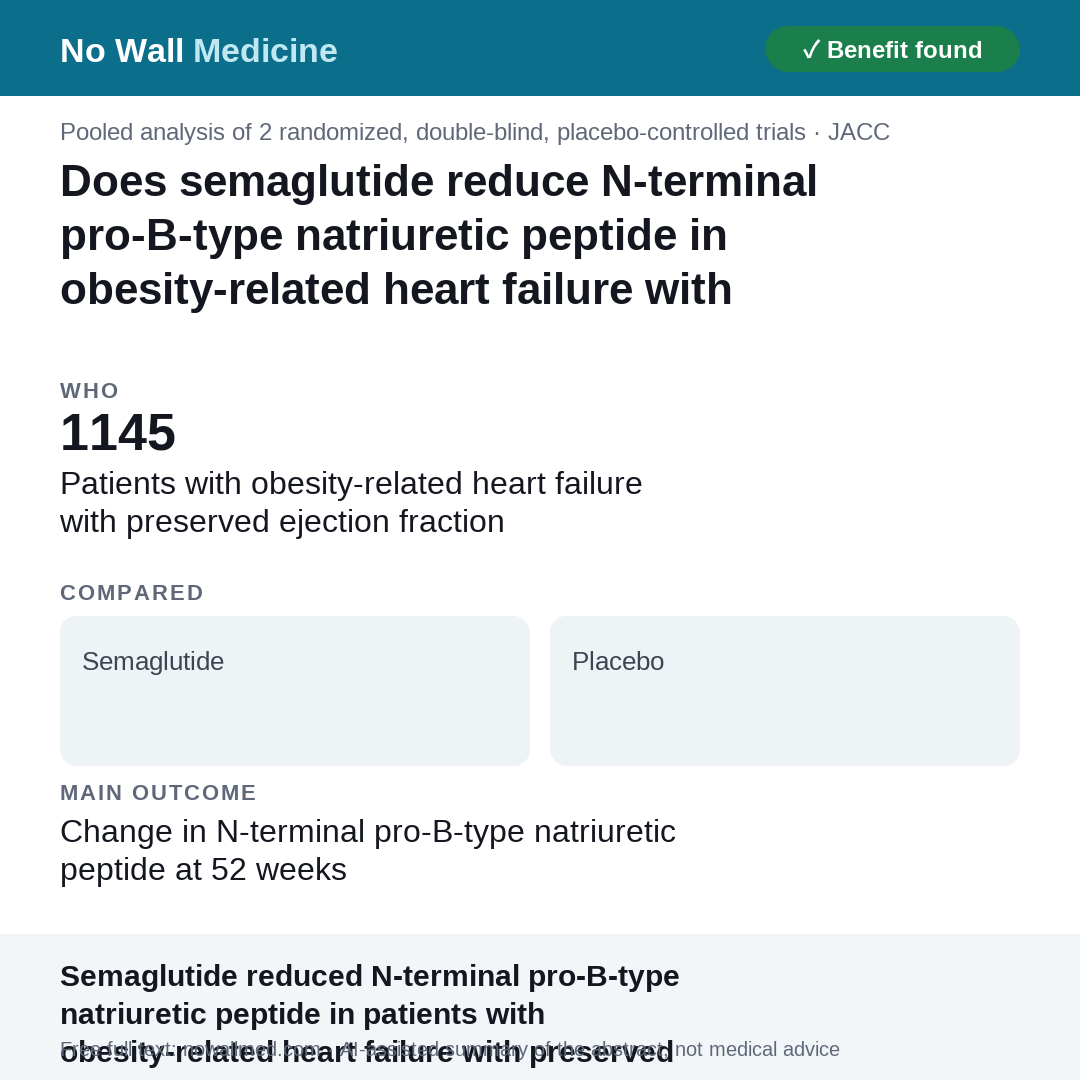
Semaglutide and NT-proBNP in Obesity-Related HFpEF: Insights From the STEP-HFpEF Program
Pooled analysis of 2 randomized, double-blind, placebo-controlled trialsBenefit found
Does semaglutide reduce N-terminal pro-B-type natriuretic peptide in obesity-related heart failure with preserved ejection fraction?
Who
1145
Patients with obesity-related heart failure with preserved ejection fraction
Compared
Semaglutide
Placebo
Main outcome
Change in N-terminal pro-B-type natriuretic peptide at 52 weeks
Result: estimated treatment ratio: 0.82 (95% CI: 0.74-0.91)
Bottom line: Semaglutide reduced N-terminal pro-B-type natriuretic peptide in patients with obesity-related heart failure with preserved ejection fraction.
JACC · 2024-05-13Download image
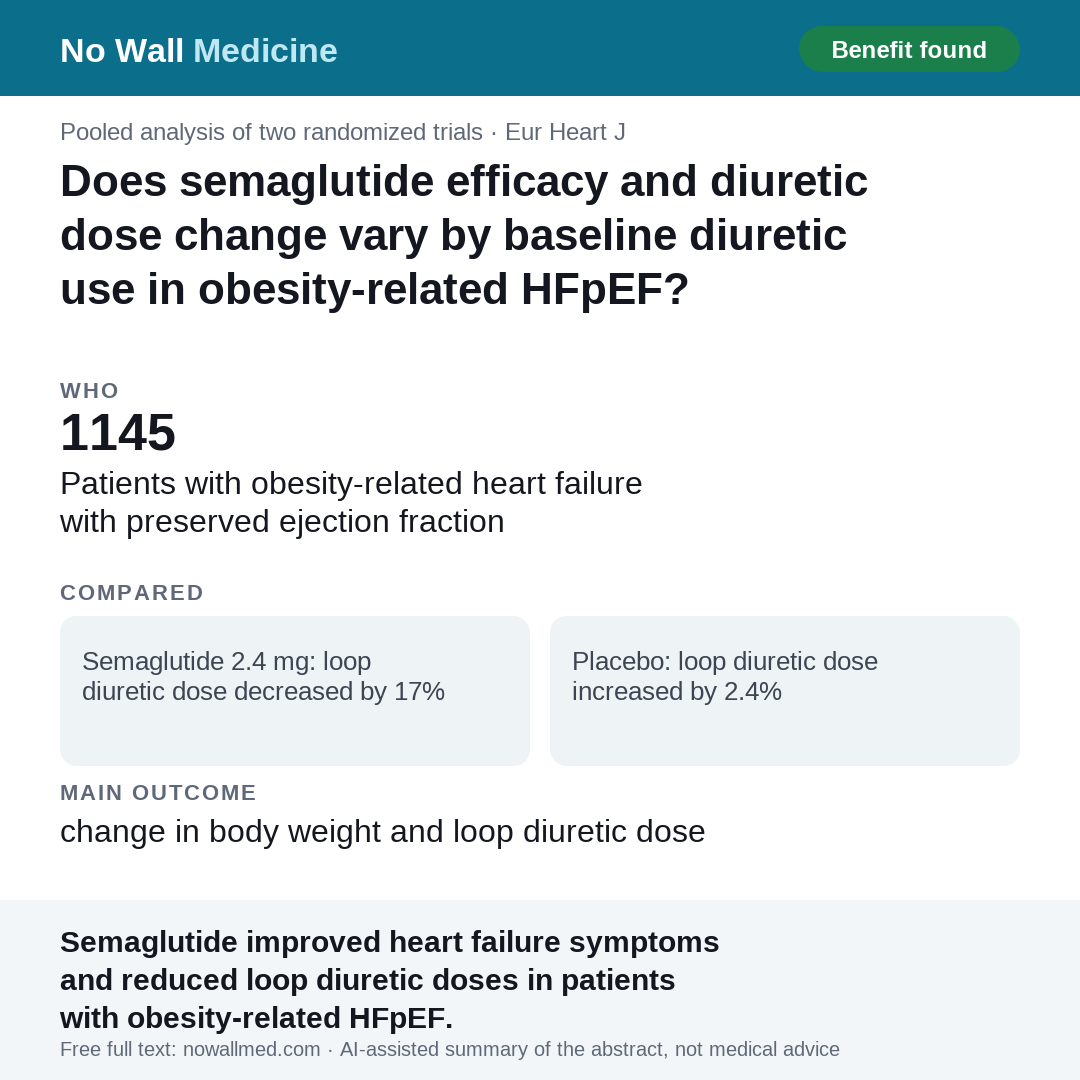
Semaglutide and diuretic use in obesity-related heart failure with preserved ejection fraction: a pooled analysis of the STEP-HFpEF and STEP-HFpEF-DM trials
Pooled analysis of two randomized trialsBenefit found
Does semaglutide efficacy and diuretic dose change vary by baseline diuretic use in obesity-related HFpEF?
Who
1145
Patients with obesity-related heart failure with preserved ejection fraction
Compared
Semaglutide 2.4 mg: loop diuretic dose decreased by 17%
Placebo: loop diuretic dose increased by 2.4%
Main outcome
change in body weight and loop diuretic dose
Result: odds ratio 2.67 (95% CI 1.70, 4.18) for loop diuretic dose reduction
Bottom line: Semaglutide improved heart failure symptoms and reduced loop diuretic doses in patients with obesity-related HFpEF.
Eur Heart J · 2024-05-13Download image
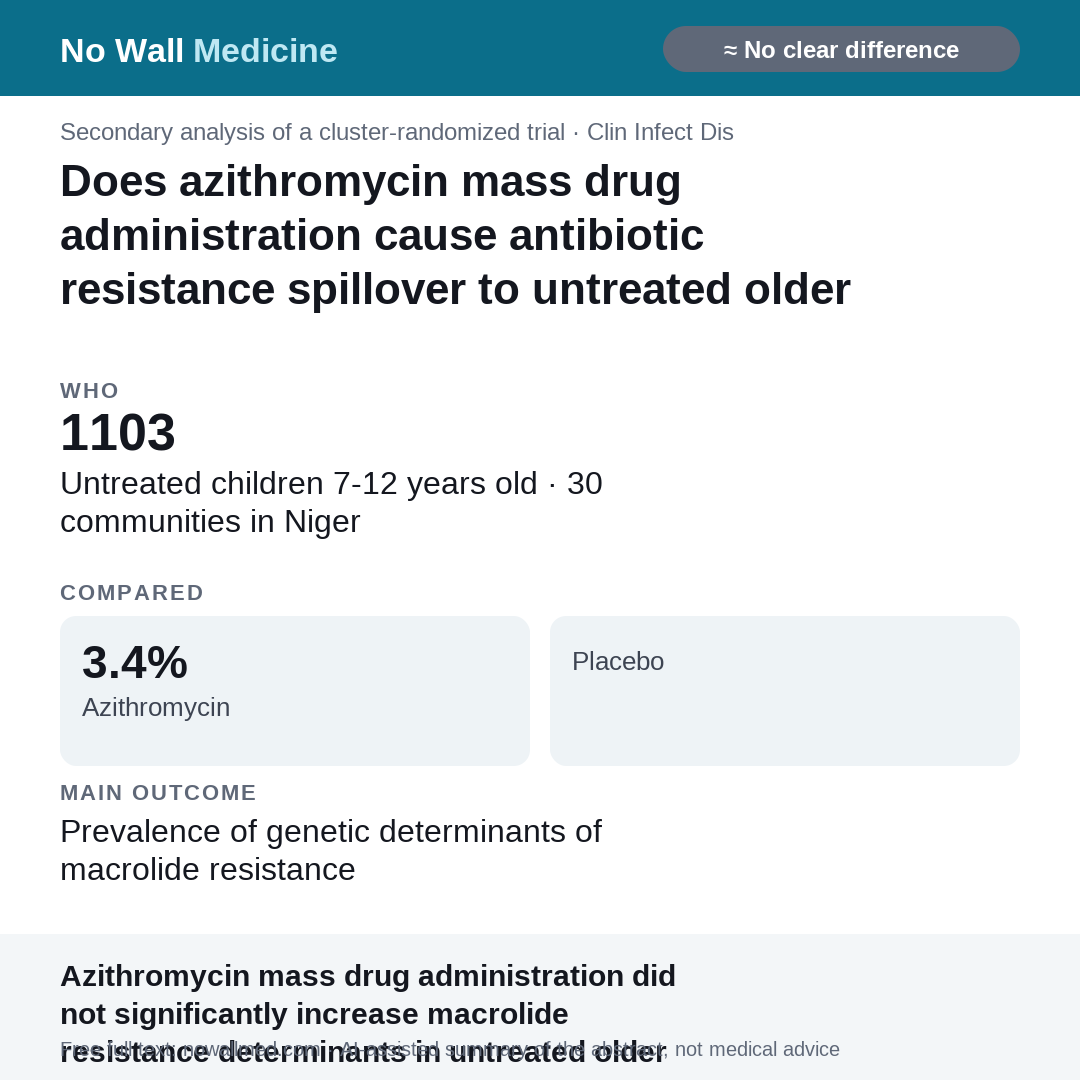
Assessment of Spillover of Antimicrobial Resistance to Untreated Children 7-12 Years Old After Mass Drug Administration of Azithromycin for Child Survival in Niger: A Secondary Analysis of the MORDOR Cluster-Randomized Trial
Secondary analysis of a cluster-randomized trialNo clear difference
Does azithromycin mass drug administration cause antibiotic resistance spillover to untreated older children?
Who
1103
Untreated children 7-12 years old · 30 communities in Niger
Compared
3.4%Azithromycin (95% confidence interval, -4.1% to 10.8%)
Placebo
Main outcome
Prevalence of genetic determinants of macrolide resistance
Result: 3.4% (95% confidence interval, -4.1% to 10.8%)
Bottom line: Azithromycin mass drug administration did not significantly increase macrolide resistance determinants in untreated older children.
Clin Infect Dis · 2024-05-13Download image
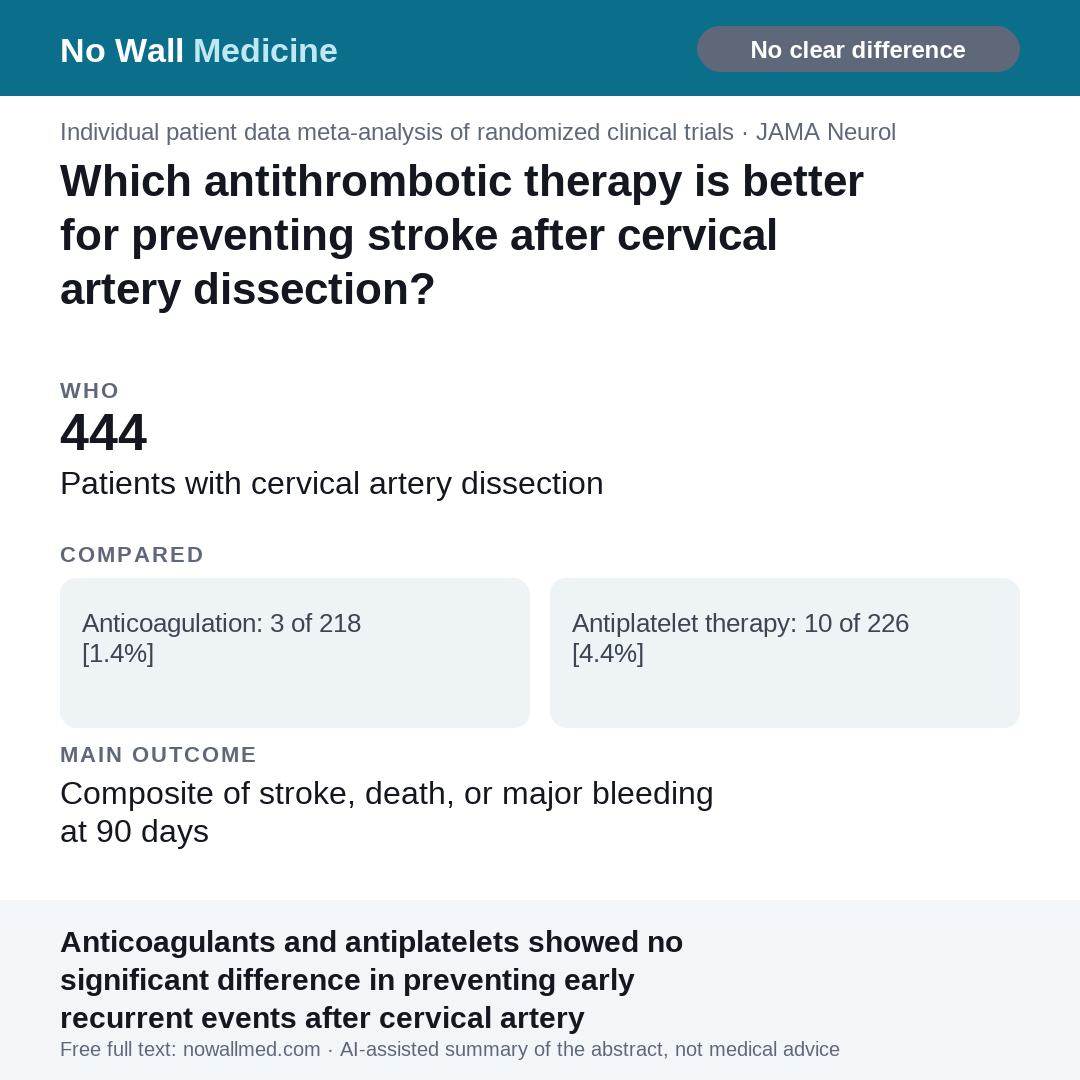
Antithrombotic Treatment for Cervical Artery Dissection: A Systematic Review and Individual Patient Data Meta-Analysis
Individual patient data meta-analysis of randomized clinical trialsNo clear difference
Which antithrombotic therapy is better for preventing stroke after cervical artery dissection?
Who
444
Patients with cervical artery dissection
Compared
Anticoagulation: 3 of 218 [1.4%]
Antiplatelet therapy: 10 of 226 [4.4%]
Main outcome
Composite of stroke, death, or major bleeding at 90 days
Result: odds ratio 0.33 (95% CI, 0.08-1.05)
Bottom line: Anticoagulants and antiplatelets showed no significant difference in preventing early recurrent events after cervical artery dissection.
JAMA Neurol · 2024-05-13Download image
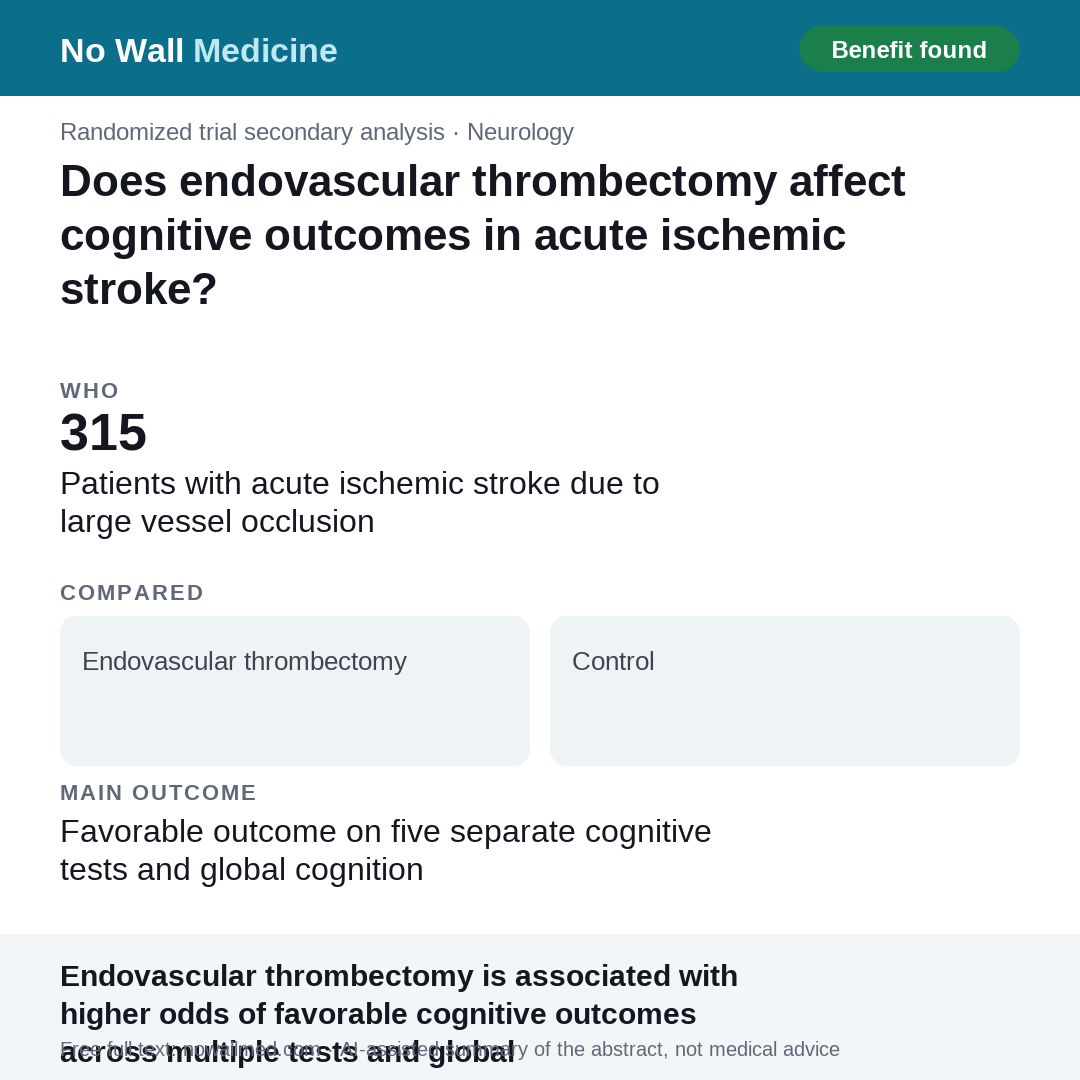
Effect of Endovascular Thrombectomy for Acute Ischemic Stroke on Cognitive Outcomes: A Secondary Analysis of the ESCAPE Trial
Randomized trial secondary analysisBenefit found
Does endovascular thrombectomy affect cognitive outcomes in acute ischemic stroke?
Who
315
Patients with acute ischemic stroke due to large vessel occlusion
Compared
Endovascular thrombectomy
Control
Main outcome
Favorable outcome on five separate cognitive tests and global cognition
Result: adjusted odds ratio 2.57 (95% CI 1.67 to 3.94) for global binary analysis
Bottom line: Endovascular thrombectomy is associated with higher odds of favorable cognitive outcomes across multiple tests and global assessments.
Neurology · 2024-05-13Download image
Oral challenge vs routine care to assess low-risk penicillin allergy in critically ill hospital patients (ORACLE): a pilot safety and feasibility randomised controlled trial
Randomised controlled trialBenefit found
Is oral challenge safe for low-risk penicillin allergy
Who
80
Critically ill hospital patients with low-risk penicillin allergy · Four ICUs in Melbourne, Australia
Compared
2.5%Oral challenge
Routine care
Main outcome
Positive challenge rate
Result: odds ratio 4.33 (1.27 to 14.78)
Bottom line: Oral challenge is safe for low-risk penicillin allergy
Intensive Care Med · 2024-05-13Download image

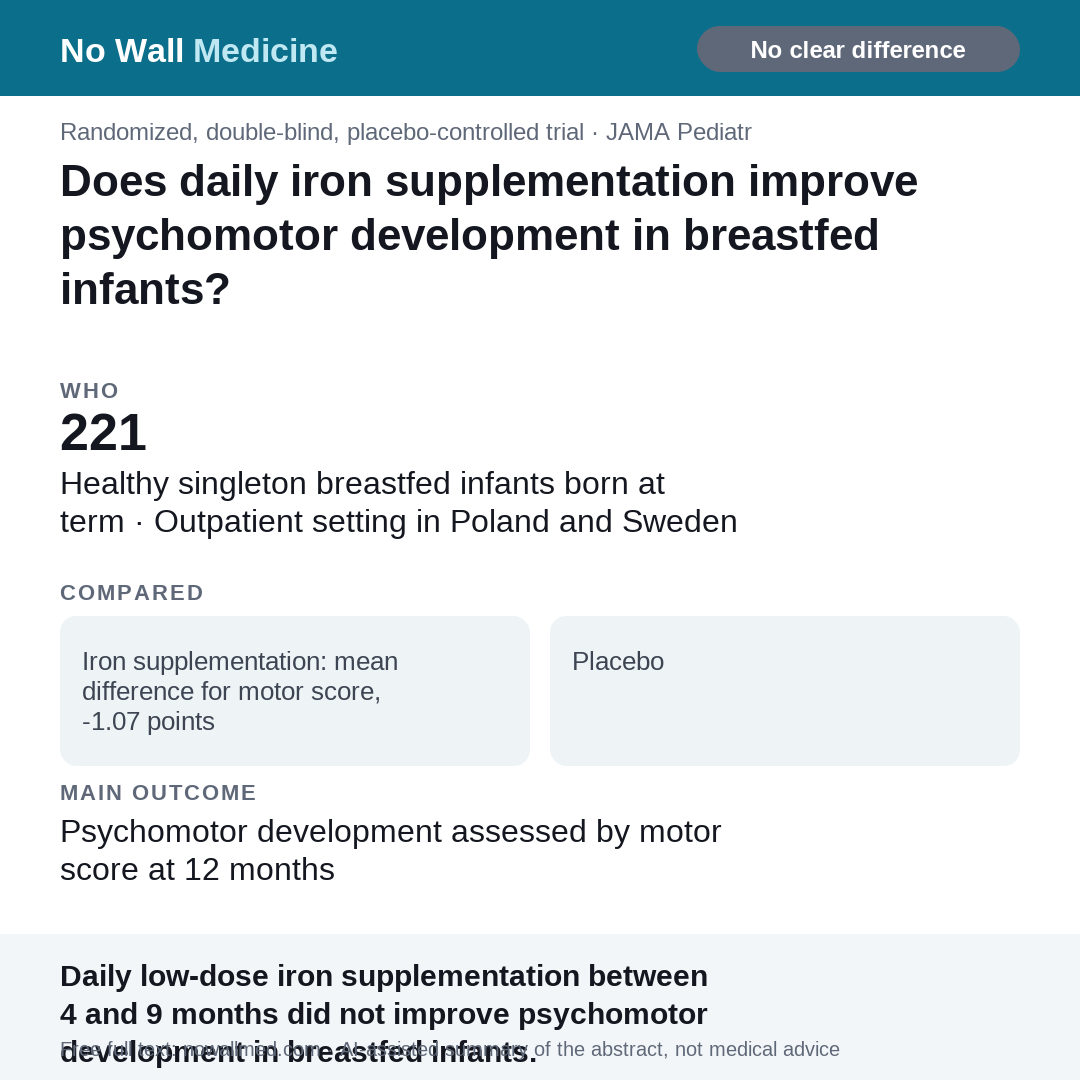
Effect of Low-Dose Iron Supplementation on Early Development in Breastfed Infants: A Randomized Clinical Trial
Randomized, double-blind, placebo-controlled trialNo clear difference
Does daily iron supplementation improve psychomotor development in breastfed infants?
Who
221
Healthy singleton breastfed infants born at term · Outpatient setting in Poland and Sweden
Compared
Iron supplementation: mean difference for motor score, -1.07 points
Placebo
Main outcome
Psychomotor development assessed by motor score at 12 months
Result: mean difference for motor score, -1.07 points (95% CI, -4.69 to 2.55)
Bottom line: Daily low-dose iron supplementation between 4 and 9 months did not improve psychomotor development in breastfed infants.
JAMA Pediatr · 2024-05-13Download image
Secukinumab in adult patients with lichen planus: efficacy and safety results from the randomized placebo-controlled proof-of-concept PRELUDE study
Randomized, double-blind, placebo-controlled phase II studyMixed results
Is secukinumab effective and safe for adult patients with lichen planus?
Who
111
Adult patients with cutaneous, mucosal, or lichen planopilaris
Compared
Secukinumab 300 mg: MLP 37.5%; LPP 37.5%
Placebo: MLP 23.1%; LPP 30.8%
Main outcome
Investigator's Global Assessment score less than or equal to 2
Bottom line: Secukinumab showed numerical improvements in mucosal and lichen planopilaris subtypes but failed to meet primary proof-of-concept criteria.
Br J Dermatol · 2024-05-13Download image

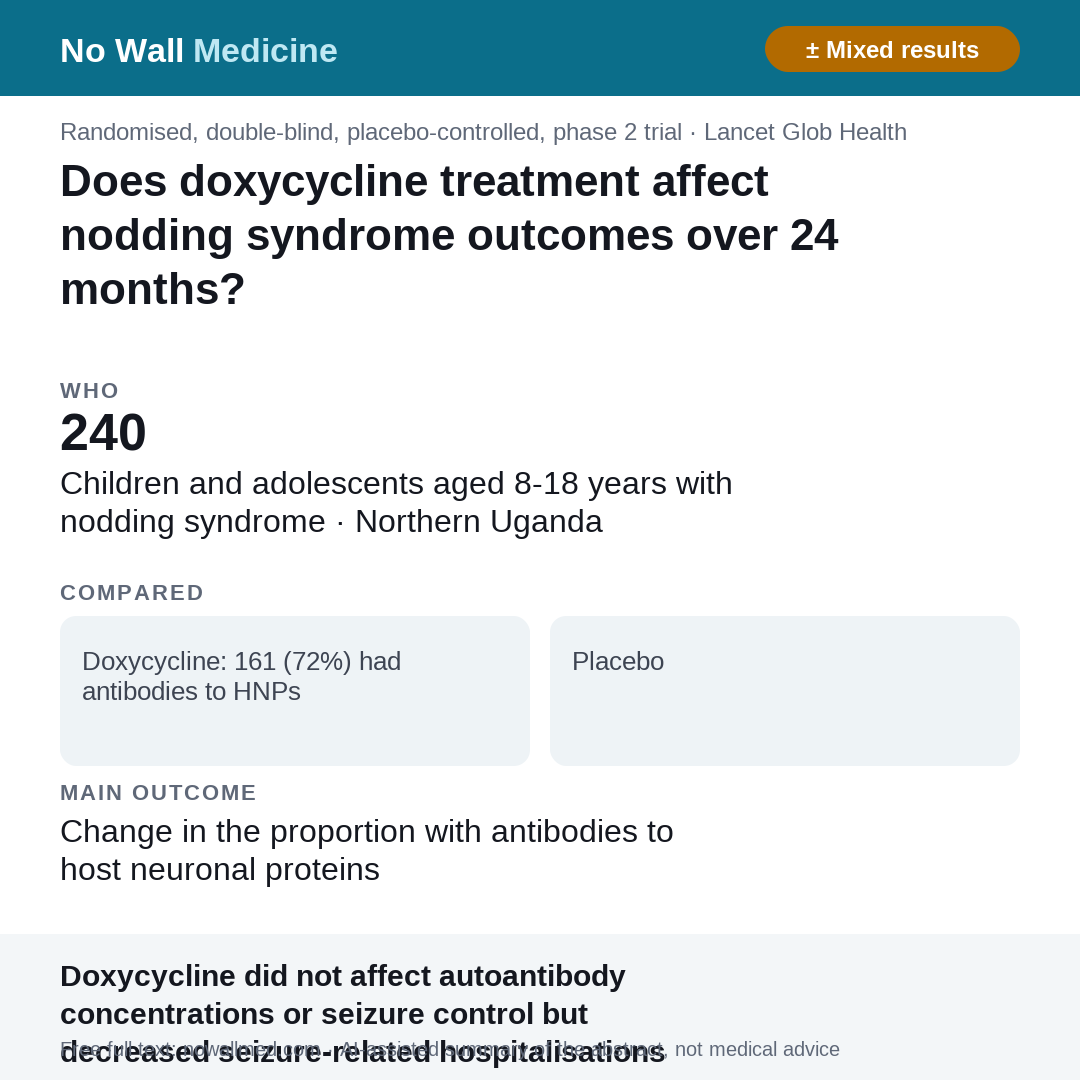
Doxycycline for the treatment of nodding syndrome: a randomised, placebo-controlled, phase 2 trial
Randomised, double-blind, placebo-controlled, phase 2 trialMixed results
Does doxycycline treatment affect nodding syndrome outcomes over 24 months?
Who
240
Children and adolescents aged 8-18 years with nodding syndrome · Northern Uganda
Compared
Doxycycline: 161 (72%) had antibodies to HNPs
Placebo
Main outcome
Change in the proportion with antibodies to host neuronal proteins
Bottom line: Doxycycline did not affect autoantibody concentrations or seizure control but decreased seizure-related hospitalisations and deaths.
Lancet Glob Health · 2024-05-13Download image
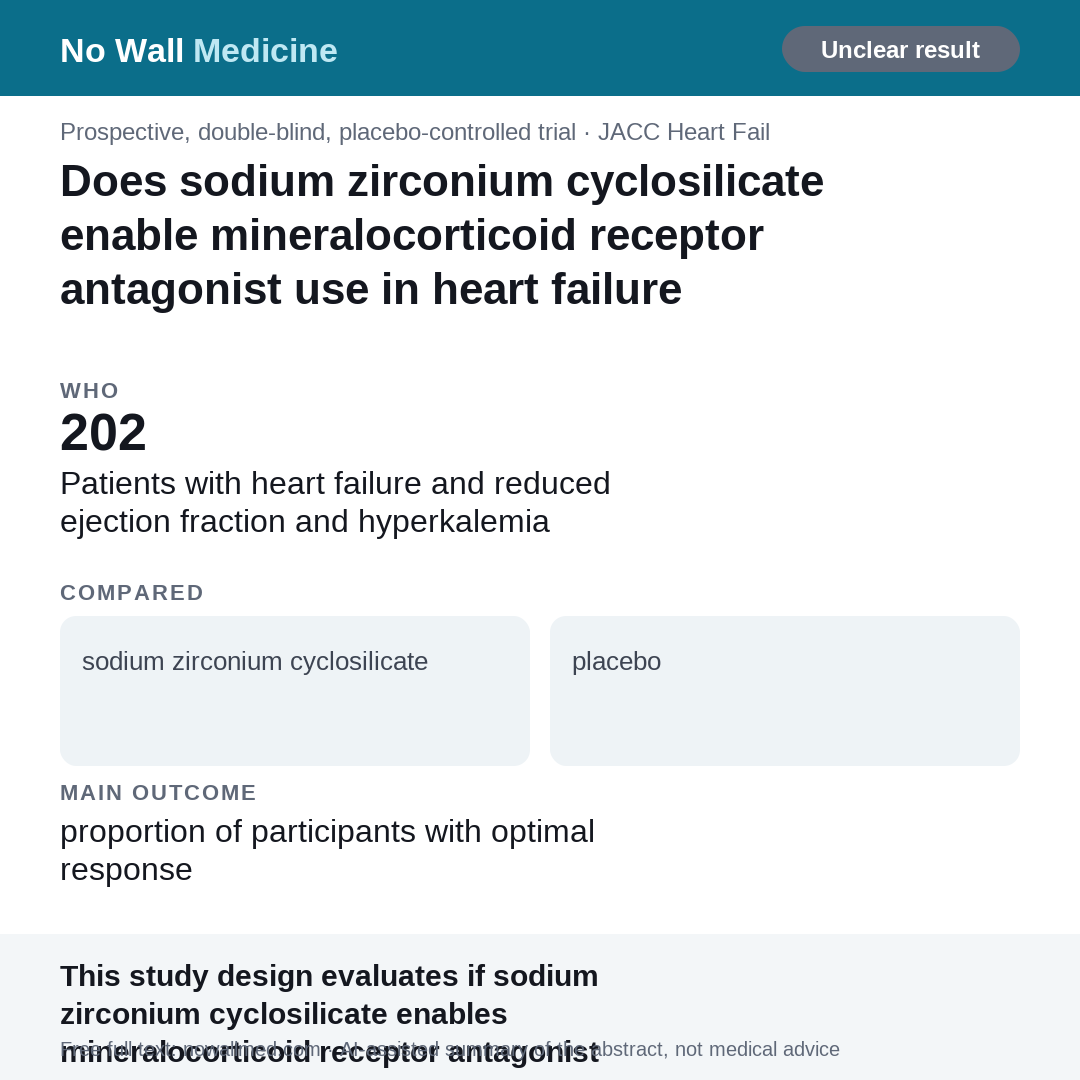
Sodium Zirconium Cyclosilicate in HFrEF and Hyperkalemia: REALIZE-K Design and Baseline Characteristics
Prospective, double-blind, placebo-controlled trialUnclear result
Does sodium zirconium cyclosilicate enable mineralocorticoid receptor antagonist use in heart failure patients?
Who
202
Patients with heart failure and reduced ejection fraction and hyperkalemia
Compared
sodium zirconium cyclosilicate
placebo
Main outcome
proportion of participants with optimal response
Bottom line: This study design evaluates if sodium zirconium cyclosilicate enables mineralocorticoid receptor antagonist optimization in heart failure patients.
JACC Heart Fail · 2024-05-13Download image
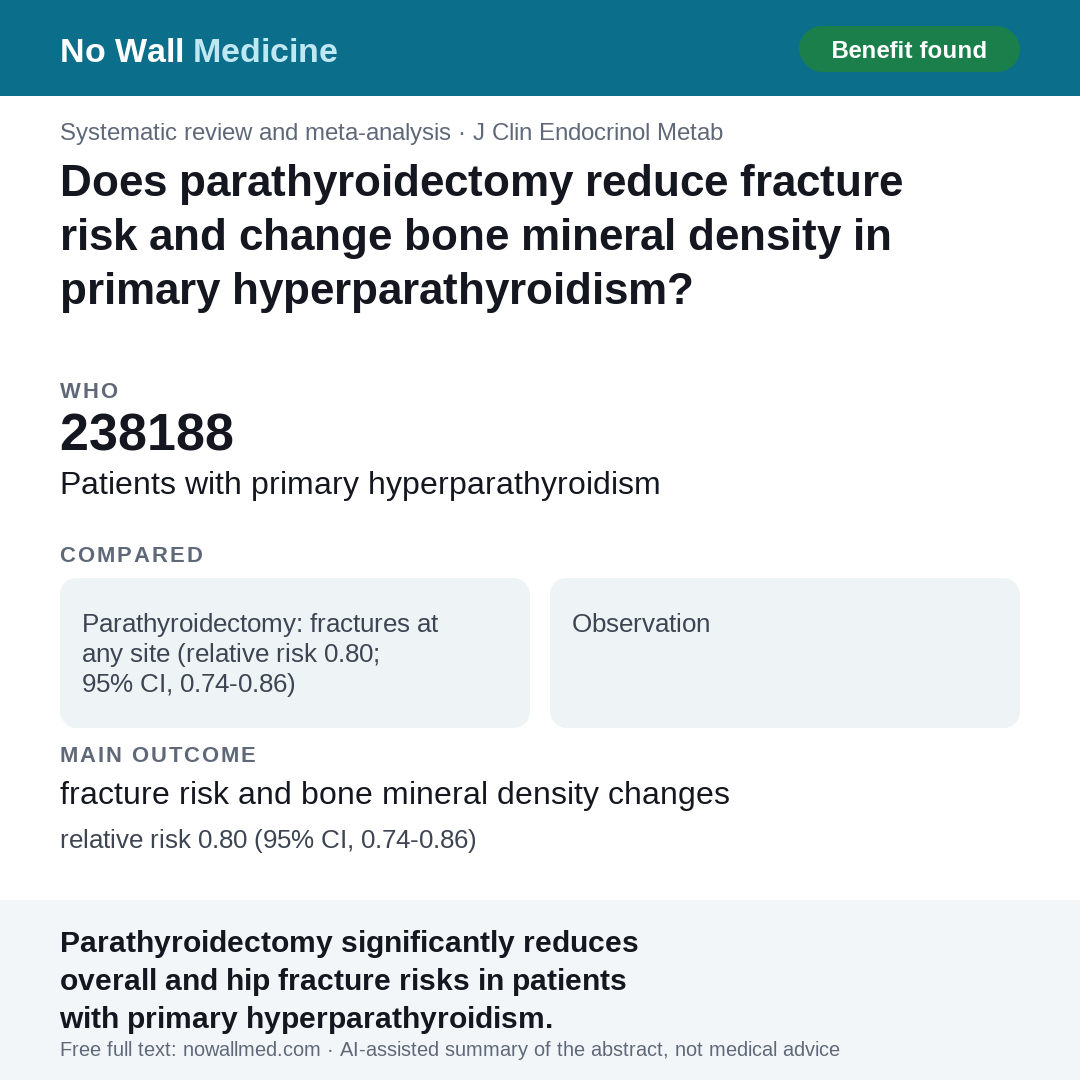
Skeletal Effect of Parathyroidectomy on Patients With Primary Hyperparathyroidism: A Systematic Review and Meta-Analysis
Systematic review and meta-analysisBenefit found
Does parathyroidectomy reduce fracture risk and change bone mineral density in primary hyperparathyroidism?
Who
238188
Patients with primary hyperparathyroidism
Compared
Parathyroidectomy: fractures at any site (relative risk 0.80; 95% CI, 0.74-0.86)
Observation
Main outcome
fracture risk and bone mineral density changes
Result: relative risk 0.80 (95% CI, 0.74-0.86)
Bottom line: Parathyroidectomy significantly reduces overall and hip fracture risks in patients with primary hyperparathyroidism.
J Clin Endocrinol Metab · 2024-05-13Download image
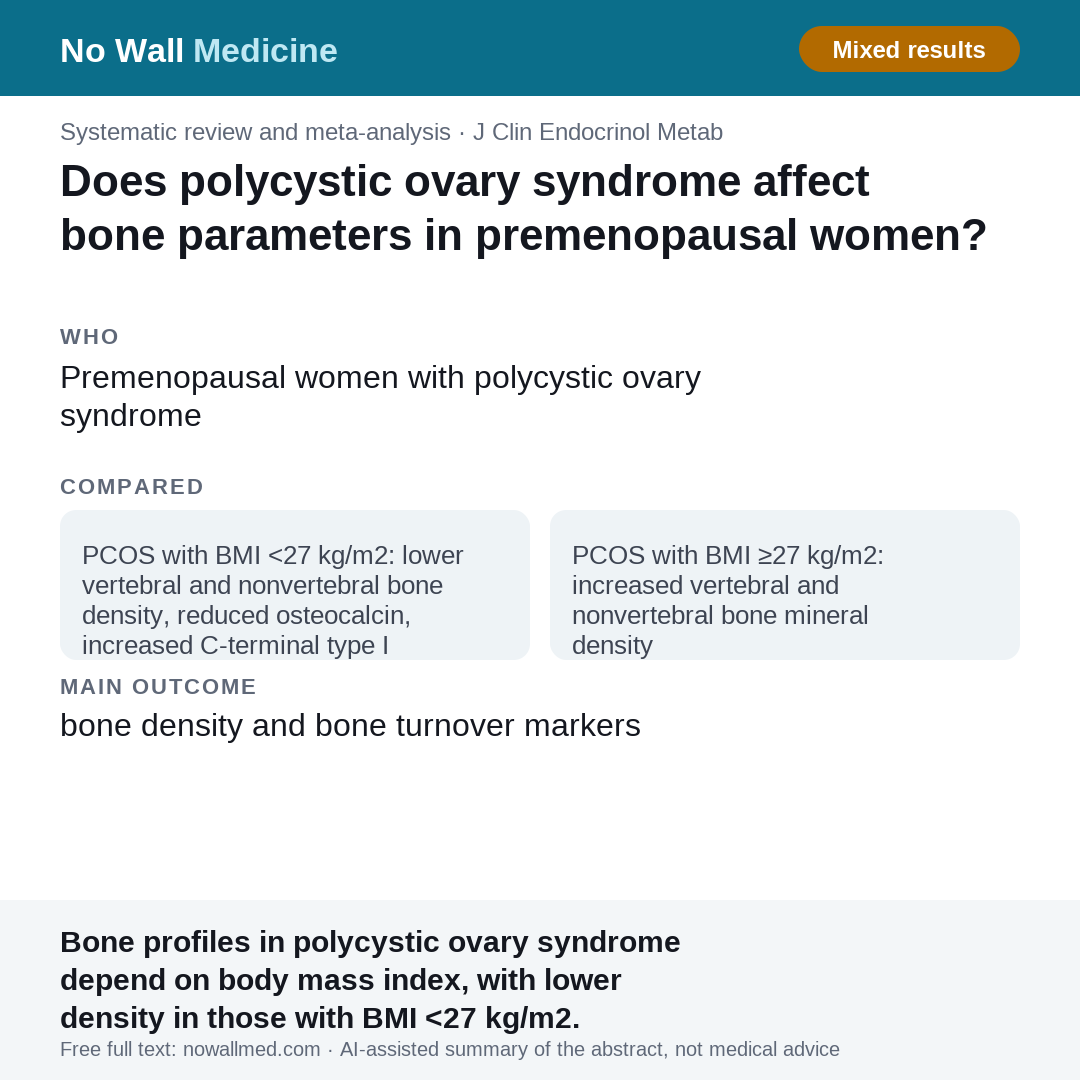
Contrasting Bone Profiles in PCOS Are Related to BMI: A Systematic Review and Meta-analysis
Systematic review and meta-analysisMixed results
Does polycystic ovary syndrome affect bone parameters in premenopausal women?
Who
Premenopausal women with polycystic ovary syndrome
Compared
PCOS with BMI <27 kg/m2: lower vertebral and nonvertebral bone density, reduced osteocalcin, increased C-terminal type I collagen
PCOS with BMI ≥27 kg/m2: increased vertebral and nonvertebral bone mineral density
Main outcome
bone density and bone turnover markers
Bottom line: Bone profiles in polycystic ovary syndrome depend on body mass index, with lower density in those with BMI <27 kg/m2.
J Clin Endocrinol Metab · 2024-05-13Download image
Influential Factors Impacting Treatment Decision-making and Decision Regret in Patients with Localized or Locally Advanced Prostate Cancer: A Systematic Literature Review
Systematic literature reviewMixed results
What factors impact treatment decision-making and decision regret in prostate cancer patients?
Who
Patients with localized or locally advanced prostate cancer
Compared
Active surveillance decision regret: 7-43%
Radical prostatectomy decision regret: 12-57%
Radiotherapy decision regret: 1-49%
Androgen-deprivation therapy decision regret: 28-49%
Main outcome
Factors associated with treatment decision-making and decision regret
Bottom line: Physician recommendation and treatment toxicity are key factors influencing decision-making and decision regret in prostate cancer patients.
Eur Urol Oncol · 2024-05-13Download image

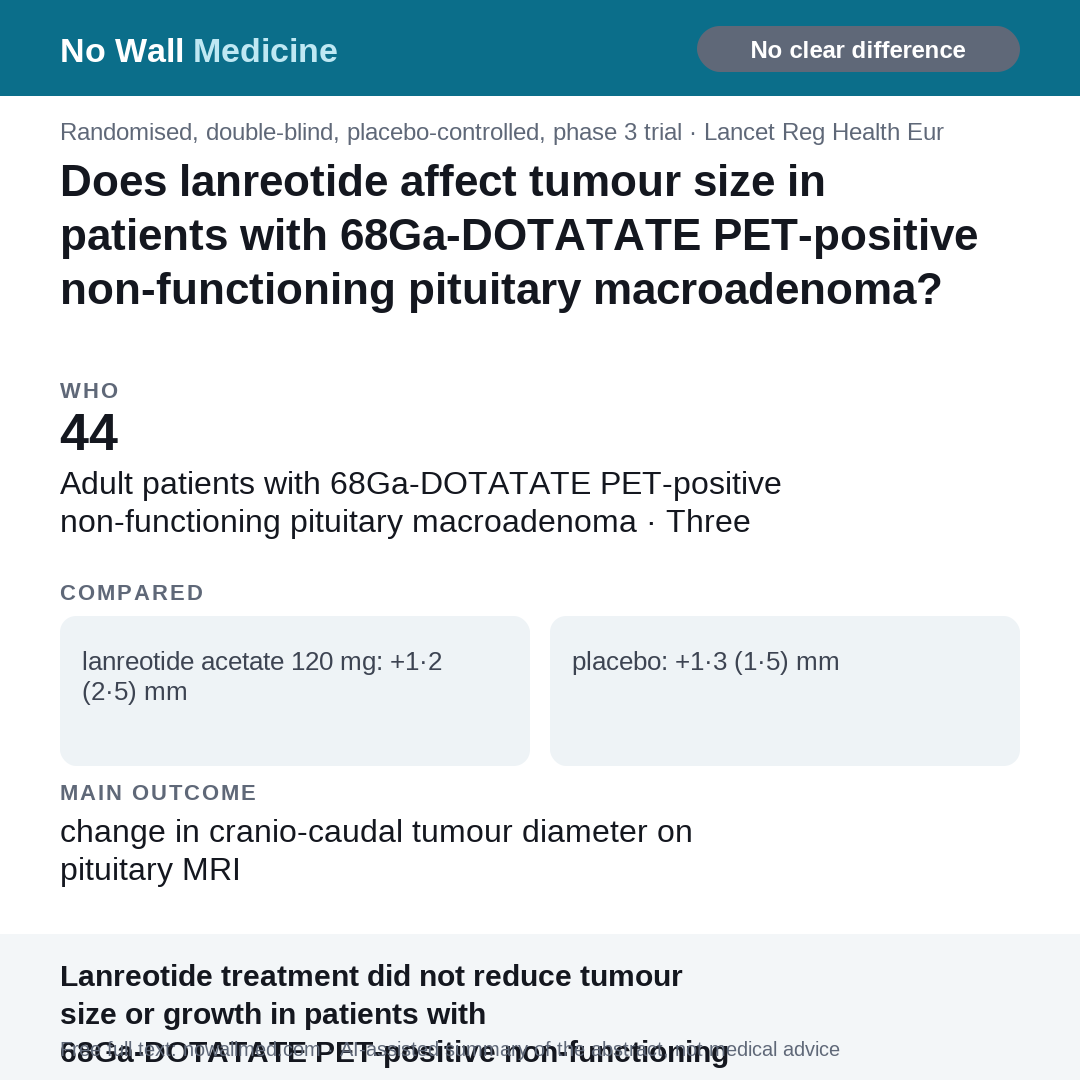
Lanreotide versus placebo for tumour reduction in patients with a 68Ga-DOTATATE PET-positive, clinically non-functioning pituitary macroadenoma (GALANT study): a randomised, multicentre, phase 3 trial with blinded outcome assessment
Randomised, double-blind, placebo-controlled, phase 3 trialNo clear difference
Does lanreotide affect tumour size in patients with 68Ga-DOTATATE PET-positive non-functioning pituitary macroadenoma?
Who
44
Adult patients with 68Ga-DOTATATE PET-positive non-functioning pituitary macroadenoma · Three academic hospitals in the Netherlands
Compared
lanreotide acetate 120 mg: +1·2 (2·5) mm
placebo: +1·3 (1·5) mm
Main outcome
change in cranio-caudal tumour diameter on pituitary MRI
Result: adjusted mean difference -0·1 mm (95% CI -1·3 to 1·2)
Bottom line: Lanreotide treatment did not reduce tumour size or growth in patients with 68Ga-DOTATATE PET-positive non-functioning pituitary macroadenoma.
Funded by: Ipsen Farmaceutica BV
Lancet Reg Health Eur · 2024-05-13Download image
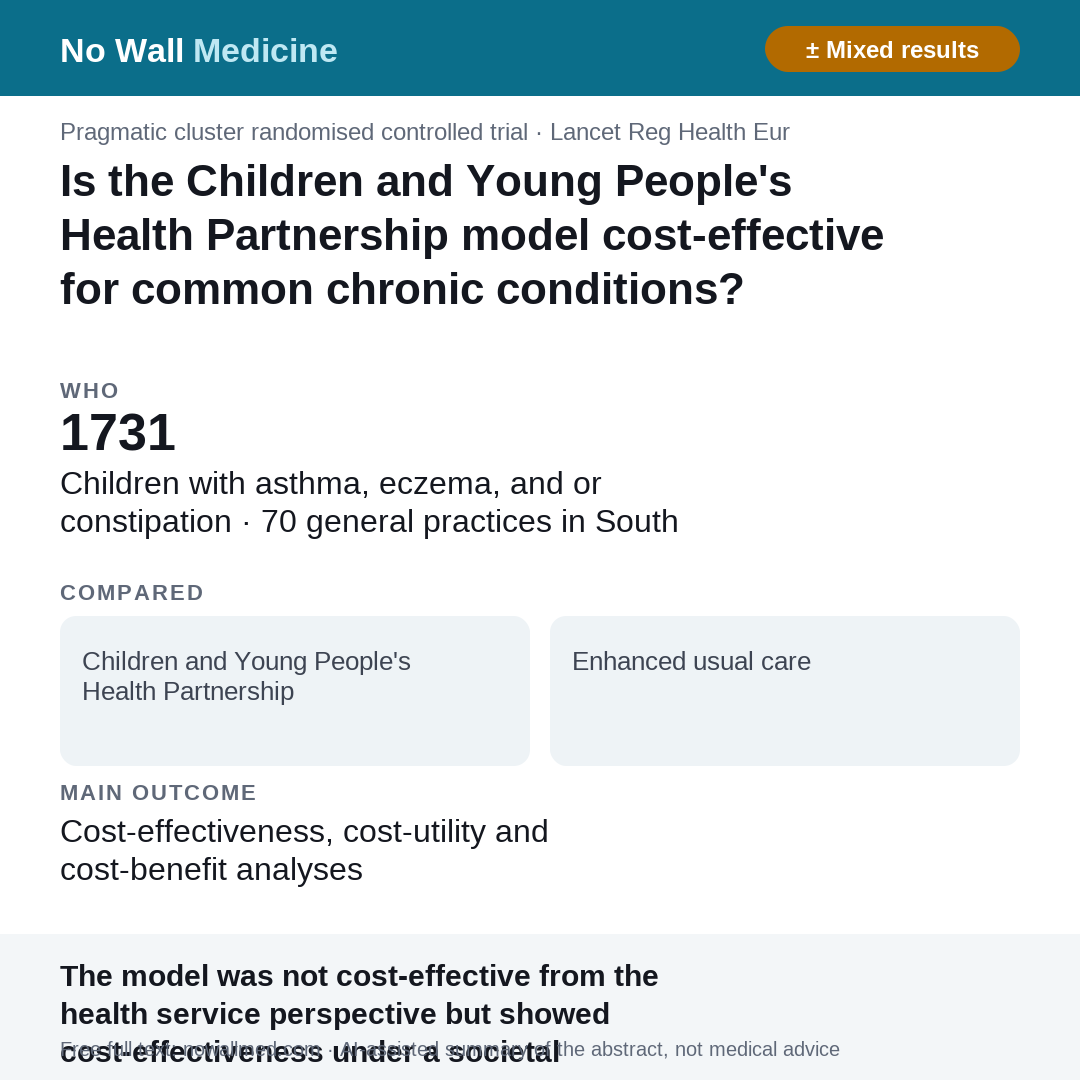
Cost-effectiveness of the children and young People's health partnership (CYPHP) model of integrated care versus enhanced usual care: analysis of a pragmatic cluster randomised controlled trial in South London
Pragmatic cluster randomised controlled trialMixed results
Is the Children and Young People's Health Partnership model cost-effective for common chronic conditions?
Who
1731
Children with asthma, eczema, and or constipation · 70 general practices in South London
Compared
Children and Young People's Health Partnership
Enhanced usual care
Main outcome
Cost-effectiveness, cost-utility and cost-benefit analyses
Bottom line: The model was not cost-effective from the health service perspective but showed cost-effectiveness under a societal perspective.
Limitation: Further research beyond 12 months is needed as the model becomes embedded.
Funded by: Guy's and St Thomas' Charity, Lambeth and Southwark Clinical Commissioning Groups
Lancet Reg Health Eur · 2024-05-13Download image
Antimicrobial resistance among common bacterial pathogens in Indonesia: a systematic review
Systematic reviewMixed results
What are the antimicrobial resistance patterns among common bacterial pathogens in Indonesia?
Who
19517
19,517 bacterial isolates from hospitals and communities · Indonesia
Compared
Hospital isolates: 70.7% Acinetobacter baumannii carbapenem-resistant
Community isolates: 28.3% Klebsiella pneumoniae carbapenem-resistant
Main outcome
Antimicrobial resistance prevalence estimates
Bottom line: Antimicrobial resistance prevalence estimates were high for critical gram-negative bacteria, but data were insufficient for robust conclusions.
Limitation: Data were insufficient to draw robust conclusions about the full contemporary antimicrobial resistance situation.
Funded by: Wellcome Africa Asia Programme Vietnam
Lancet Reg Health Southeast Asia · 2024-05-13Download image

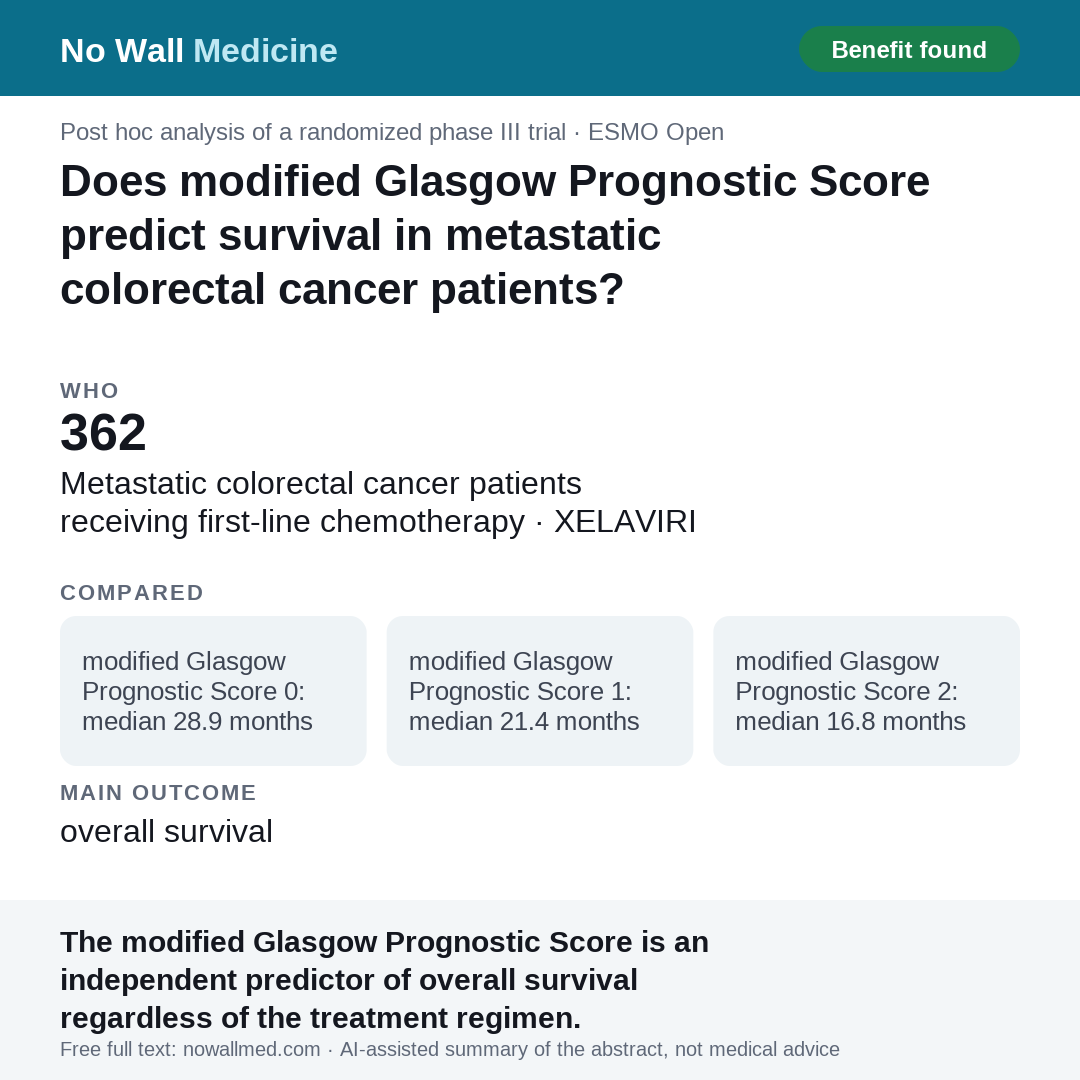
Evaluation of the inflammation-based modified Glasgow Prognostic Score (mGPS) as a prognostic and predictive biomarker in patients with metastatic colorectal cancer receiving first-line chemotherapy: a post hoc analysis of the randomized phase III XELAVIRI trial (AIO KRK0110)
Post hoc analysis of a randomized phase III trialBenefit found
Does modified Glasgow Prognostic Score predict survival in metastatic colorectal cancer patients?
Who
362
Metastatic colorectal cancer patients receiving first-line chemotherapy · XELAVIRI trial
Compared
modified Glasgow Prognostic Score 0: median 28.9 months
modified Glasgow Prognostic Score 1: median 21.4 months
modified Glasgow Prognostic Score 2: median 16.8 months
Main outcome
overall survival
Bottom line: The modified Glasgow Prognostic Score is an independent predictor of overall survival regardless of the treatment regimen.
ESMO Open · 2024-05-13Download image