Visual abstracts
New randomized trials and meta-analyses from leading journals at a glance: who was studied, what was compared, and what was found. Every paper is free to read in full.
All specialtiesCardiology 4832Oncology 4114Gastroenterology & Hepatology 1934Infectious Disease 3824Neurology 1899Psychiatry & Mental Health 2256Pulmonology 2082Critical Care 1345Endocrinology & Diabetes 2572Pediatrics 2940Surgery 2525Orthopedics & Sports Medicine 926Neurosurgery 534Cardiothoracic & Vascular Surgery 671Plastic & Reconstructive Surgery 591Nephrology 1124Rheumatology 823Hematology 1104Dermatology 620Ophthalmology 543Obstetrics & Gynecology 1684Public & Global Health 1056Radiology & Imaging 641Anesthesiology 962Urology 754ENT (Otolaryngology) 503Emergency Medicine 489Allergy & Immunology 313Geriatrics 981Family Medicine & Primary Care 541Medical Genetics & Genomics 675Pathology & Laboratory Medicine 157Physical Medicine & Rehabilitation 751Palliative Care 424Nutrition 1580Digital Health & AI 2195General Medicine 321
Predictive and protective factors for failing first pass intubation in prehospital rapid sequence intubation: an aetiology and risk systematic review with meta-analysis
Systematic review and meta-analysisMixed results
What factors are associated with success or failure at first attempt laryngoscopy in prehospital rapid sequence intubation?
Who
Prehospital live patients undergoing rapid sequence intubation · Prehospital settings
Compared
Predictive factors for failure
Protective factors for success
Main outcome
First pass success rates for rapid sequence intubation
Bottom line: Factors like airway blood, patient positioning, videolaryngoscopes, bougies, and training influence first pass intubation success.
Br J Anaesth · 2024-03-19Download image

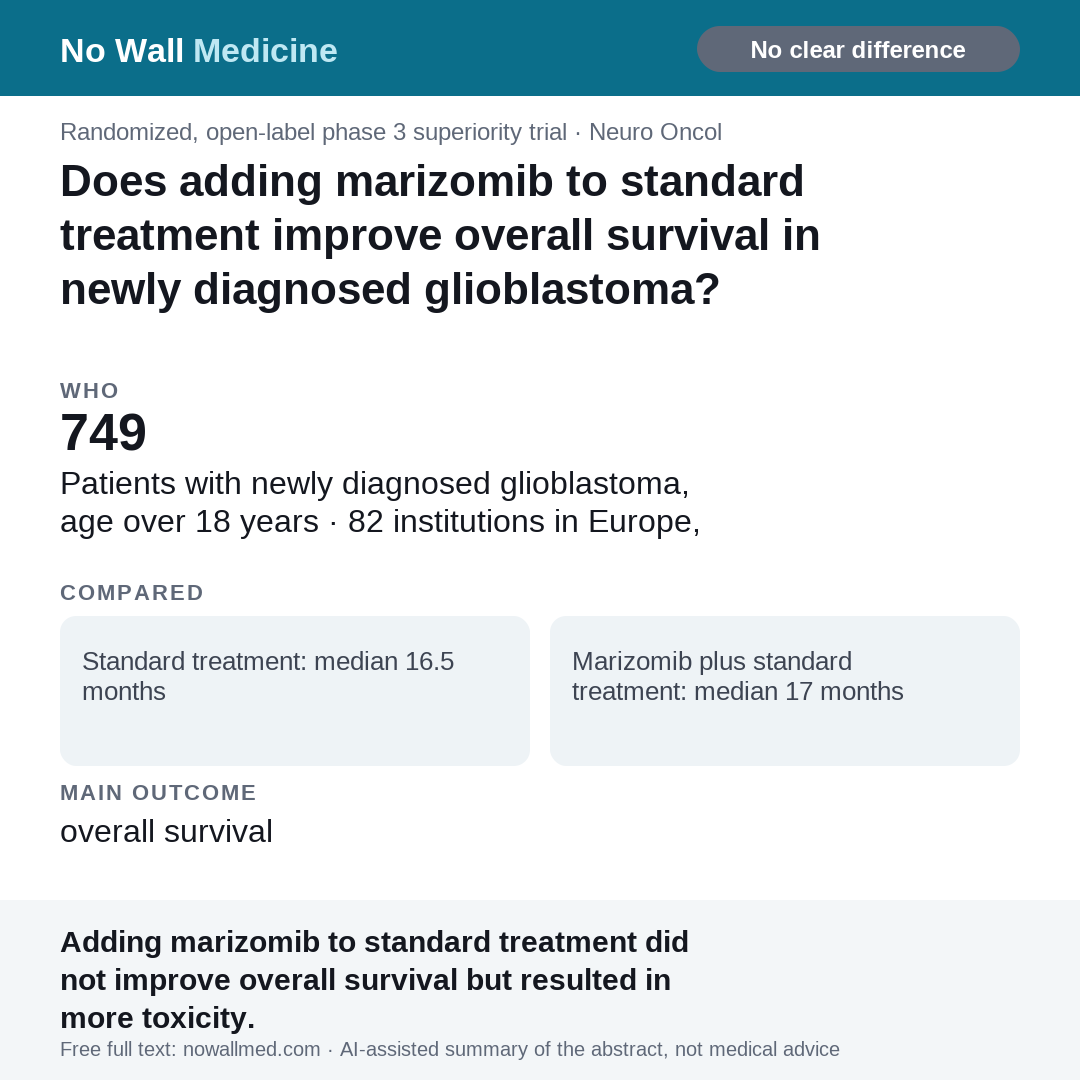
Marizomib for patients with newly diagnosed glioblastoma: A randomized phase 3 trial
Randomized, open-label phase 3 superiority trialNo clear difference
Does adding marizomib to standard treatment improve overall survival in newly diagnosed glioblastoma?
Who
749
Patients with newly diagnosed glioblastoma, age over 18 years · 82 institutions in Europe, Canada, and the U.S.
Compared
Standard treatment: median 16.5 months
Marizomib plus standard treatment: median 17 months
Main outcome
overall survival
Result: hazard ratio 1.04
Bottom line: Adding marizomib to standard treatment did not improve overall survival but resulted in more toxicity.
Neuro Oncol · 2024-03-19Download image
Effect of a parenting and nutrition education programme on development and growth of children using a social safety-net platform in urban Bangladesh: a cluster randomized controlled trial
Cluster randomized controlled trialBenefit found
Does parenting and nutrition education improve child development in urban Bangladesh?
Who
599
Mothers of children aged 6-16 months · 20 clusters in Rangpur city, Bangladesh
Compared
Intervention group: higher cognitive, language and motor development
Comparison group
Main outcome
Cognitive, language and motor development
Result: cognitive 0.42 SD (95% CI: 0.58-0.25), language 0.38 SD (95% CI: 0.55-0.22), motor 0.17 SD (95% CI: 0.01-0.34)
Bottom line: The programme improves child cognitive, language, and motor development but does not improve children's growth.
Funded by: Grand Challenges Canada, Saving Brains Programme
Lancet Reg Health Southeast Asia · 2024-03-19Download image

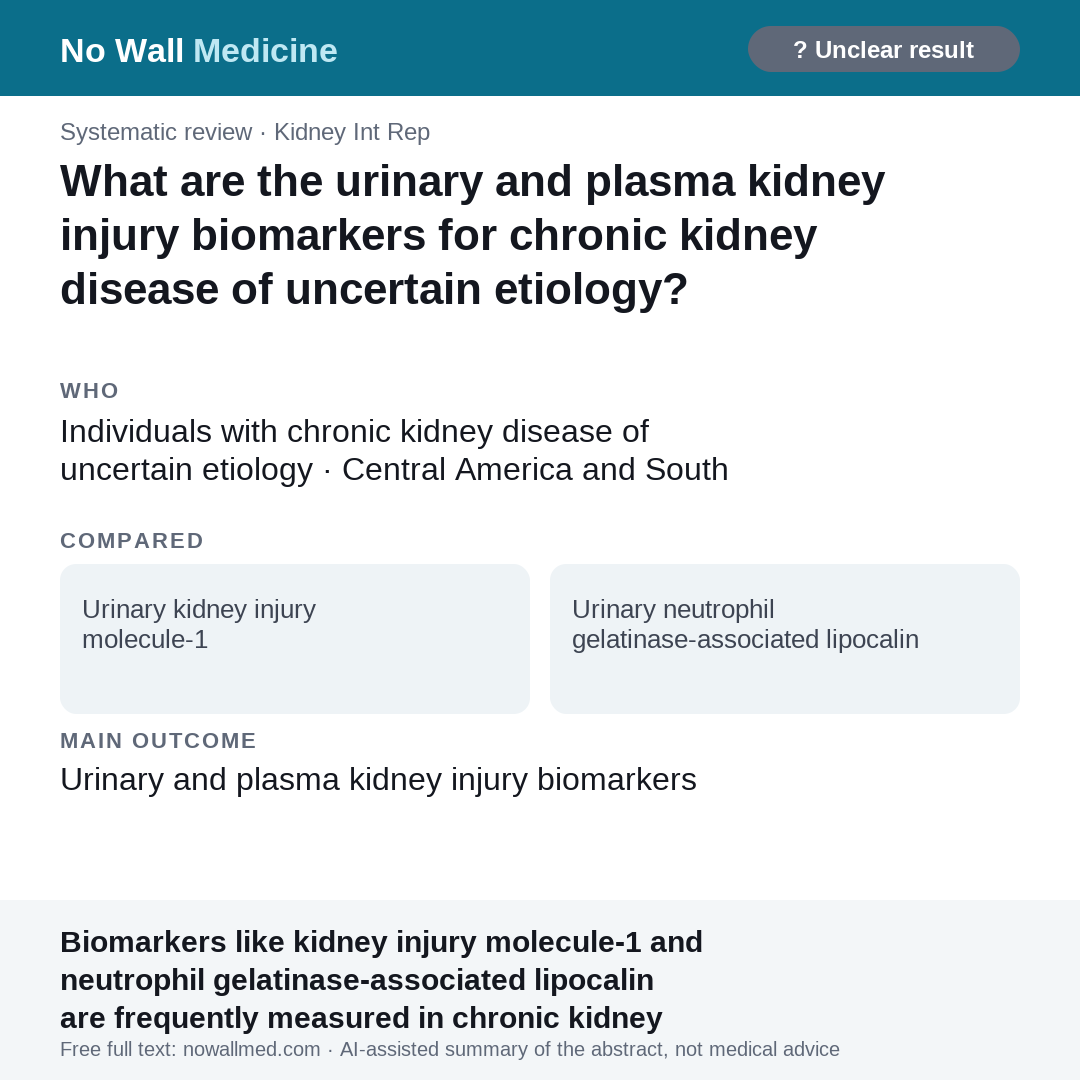
Systematic Review of Kidney Injury Biomarkers for the Evaluation of CKD of Uncertain Etiology
Systematic reviewUnclear result
What are the urinary and plasma kidney injury biomarkers for chronic kidney disease of uncertain etiology?
Who
Individuals with chronic kidney disease of uncertain etiology · Central America and South Asia
Compared
Urinary kidney injury molecule-1
Urinary neutrophil gelatinase-associated lipocalin
Main outcome
Urinary and plasma kidney injury biomarkers
Bottom line: Biomarkers like kidney injury molecule-1 and neutrophil gelatinase-associated lipocalin are frequently measured in chronic kidney disease of uncertain etiology.
Limitation: Small sample sizes and methodological limitations in the included literature.
Kidney Int Rep · 2024-03-19Download image
Policy strategies for capacity building and scale up of the workforce for comprehensive cancer care: a systematic review
Systematic reviewMixed results
What are the policy strategies for capacity building and scale up of the cancer workforce?
Who
Cancer workforce in low- and middle-income countries · African and American Regions and high-income countries
Compared
Quantitative strategies
Quality, organizational, and managerial solutions
Main outcome
Availability, accessibility, acceptability, and quality of the workforce
Bottom line: Capacity building requires both increasing provider numbers and implementing quality-oriented, organizational, and managerial human resource solutions.
Limitation: Literature on retaining the workforce and reducing brain drain was commonly limited.
ESMO Open · 2024-03-19Download image

Long-Term Effectiveness of a Multi-Strategy Choice Architecture Intervention in Increasing Healthy Food Choices of High-School Students From Online Canteens (Click & Crunch High Schools): Cluster Randomized Controlled Trial
Cluster randomized controlled trialBenefit found
Does a multi-strategy choice architecture intervention increase healthy food choices long-term?
Who
1331
High school students · 9 high schools in New South Wales, Australia
Compared
Intervention group: +11.5% everyday items
Control group
Main outcome
Average proportion of everyday, occasional, and should not be sold items
Result: everyday items +11.5% (95% CI 7.3% to 15.6%)
Bottom line: Choice architecture in online canteens long-term increases everyday food purchases among high school students.
J Med Internet Res · 2024-03-19Download image

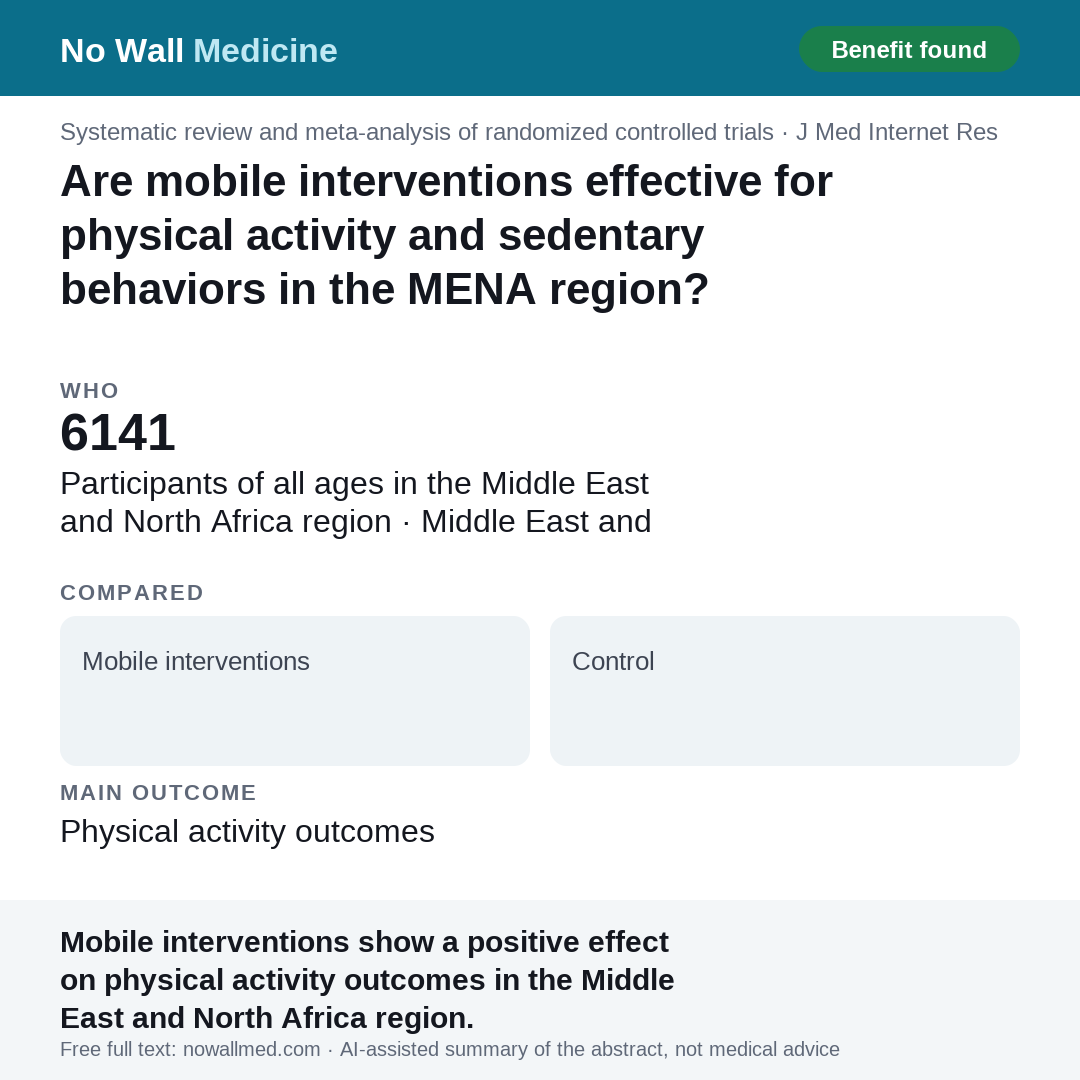
The Use of Mobile Technologies to Promote Physical Activity and Reduce Sedentary Behaviors in the Middle East and North Africa Region: Systematic Review and Meta-Analysis
Systematic review and meta-analysis of randomized controlled trialsBenefit found
Are mobile interventions effective for physical activity and sedentary behaviors in the MENA region?
Who
6141
Participants of all ages in the Middle East and North Africa region · Middle East and North Africa region
Compared
Mobile interventions
Control
Main outcome
Physical activity outcomes
Result: standardized mean difference 0.45 (95% CI 0.17 to 0.73)
Bottom line: Mobile interventions show a positive effect on physical activity outcomes in the Middle East and North Africa region.
Limitation: Possible publication bias and poor reporting of engagement and cultural fit.
J Med Internet Res · 2024-03-19Download image
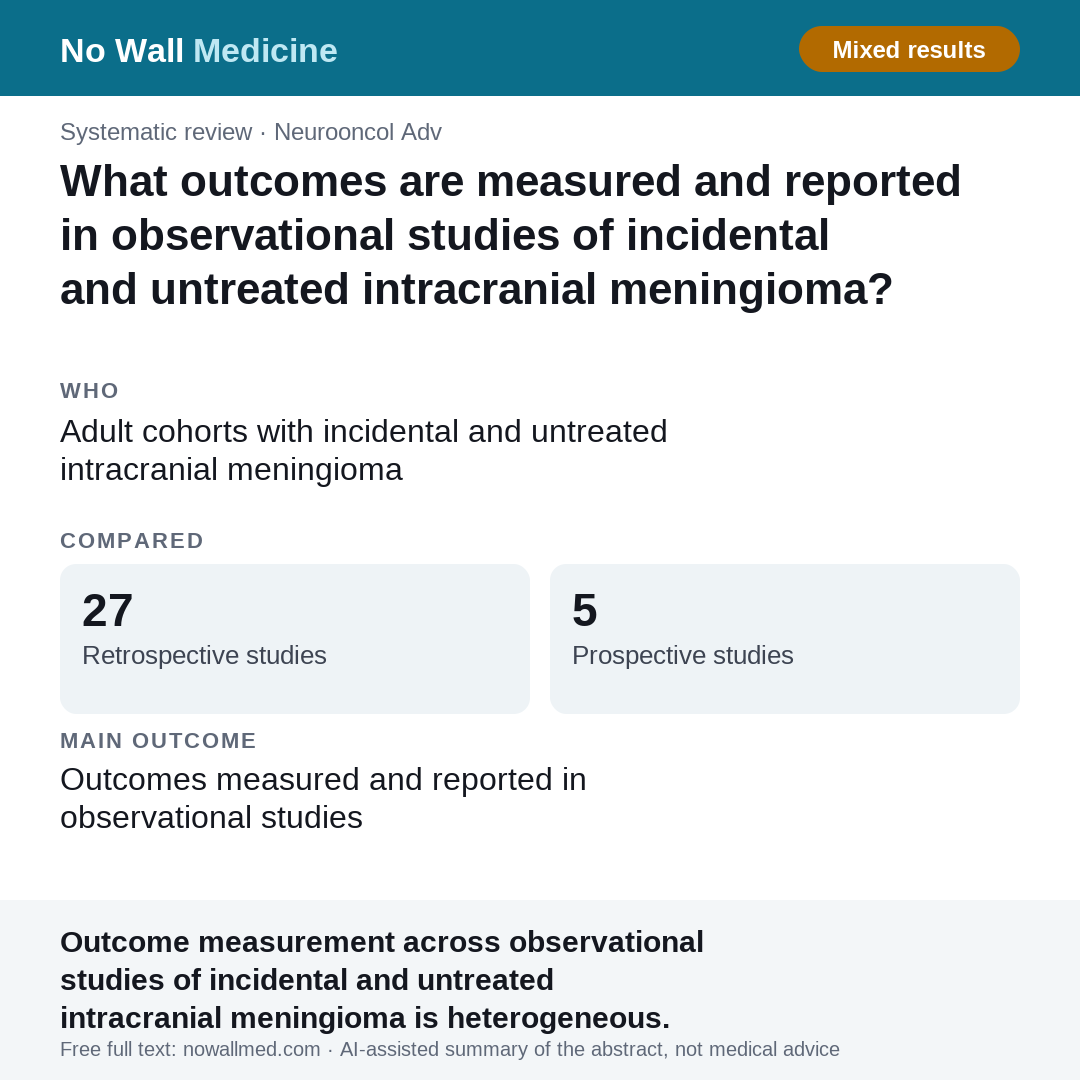
The outcomes measured and reported in observational studies of incidental and untreated intracranial meningioma: A systematic review
Systematic reviewMixed results
What outcomes are measured and reported in observational studies of incidental and untreated intracranial meningioma?
Who
Adult cohorts with incidental and untreated intracranial meningioma
Compared
27Retrospective studies
5Prospective studies
Main outcome
Outcomes measured and reported in observational studies
Bottom line: Outcome measurement across observational studies of incidental and untreated intracranial meningioma is heterogeneous.
Neurooncol Adv · 2024-03-19Download image
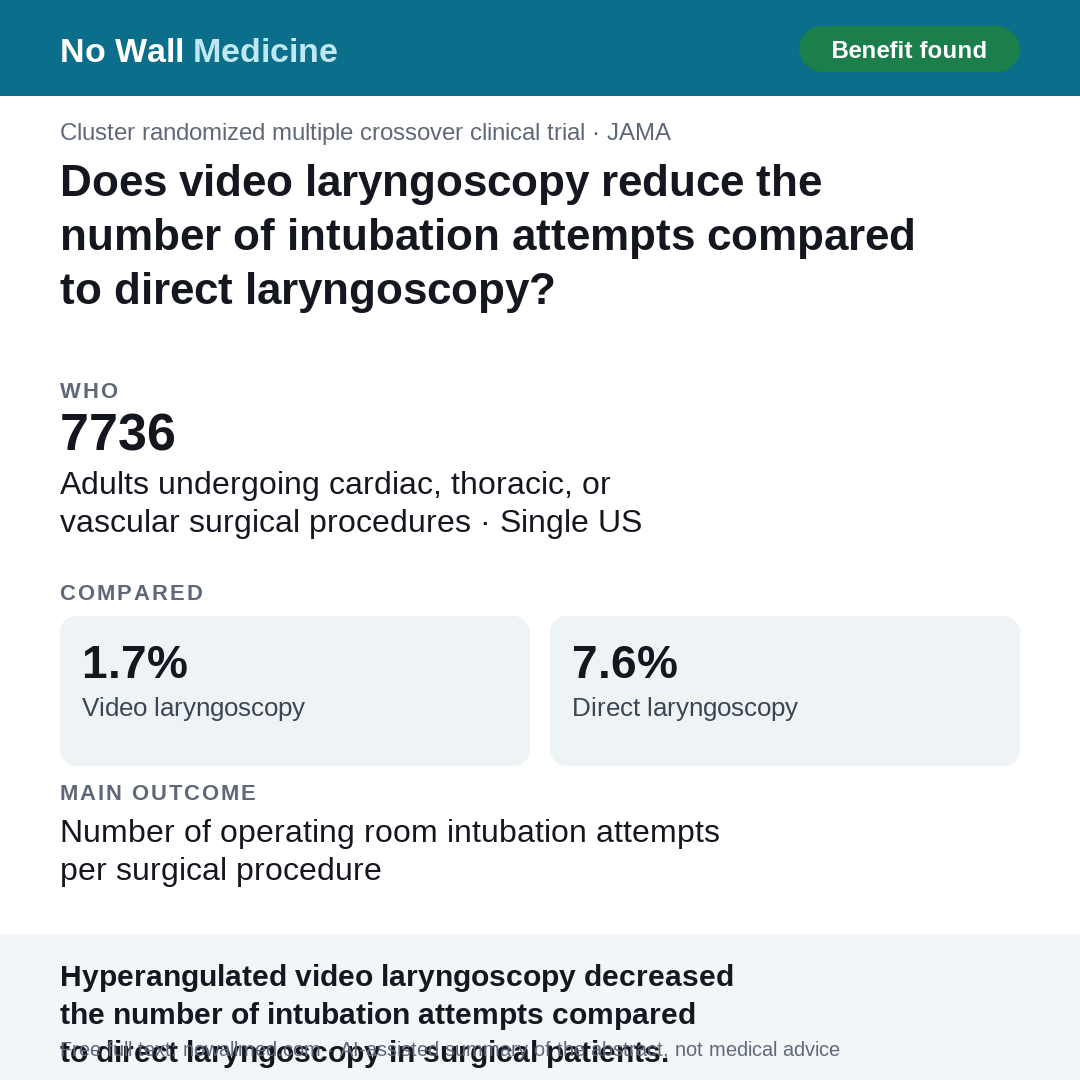
Video Laryngoscopy vs Direct Laryngoscopy for Endotracheal Intubation in the Operating Room: A Cluster Randomized Clinical Trial
Cluster randomized multiple crossover clinical trialBenefit found
Does video laryngoscopy reduce the number of intubation attempts compared to direct laryngoscopy?
Who
7736
Adults undergoing cardiac, thoracic, or vascular surgical procedures · Single US academic hospital
Compared
1.7%Video laryngoscopy
7.6%Direct laryngoscopy
Main outcome
Number of operating room intubation attempts per surgical procedure
Result: proportional odds ratio 0.20 (95% CI, 0.14-0.28)
Bottom line: Hyperangulated video laryngoscopy decreased the number of intubation attempts compared to direct laryngoscopy in surgical patients.
JAMA · 2024-03-18Download image
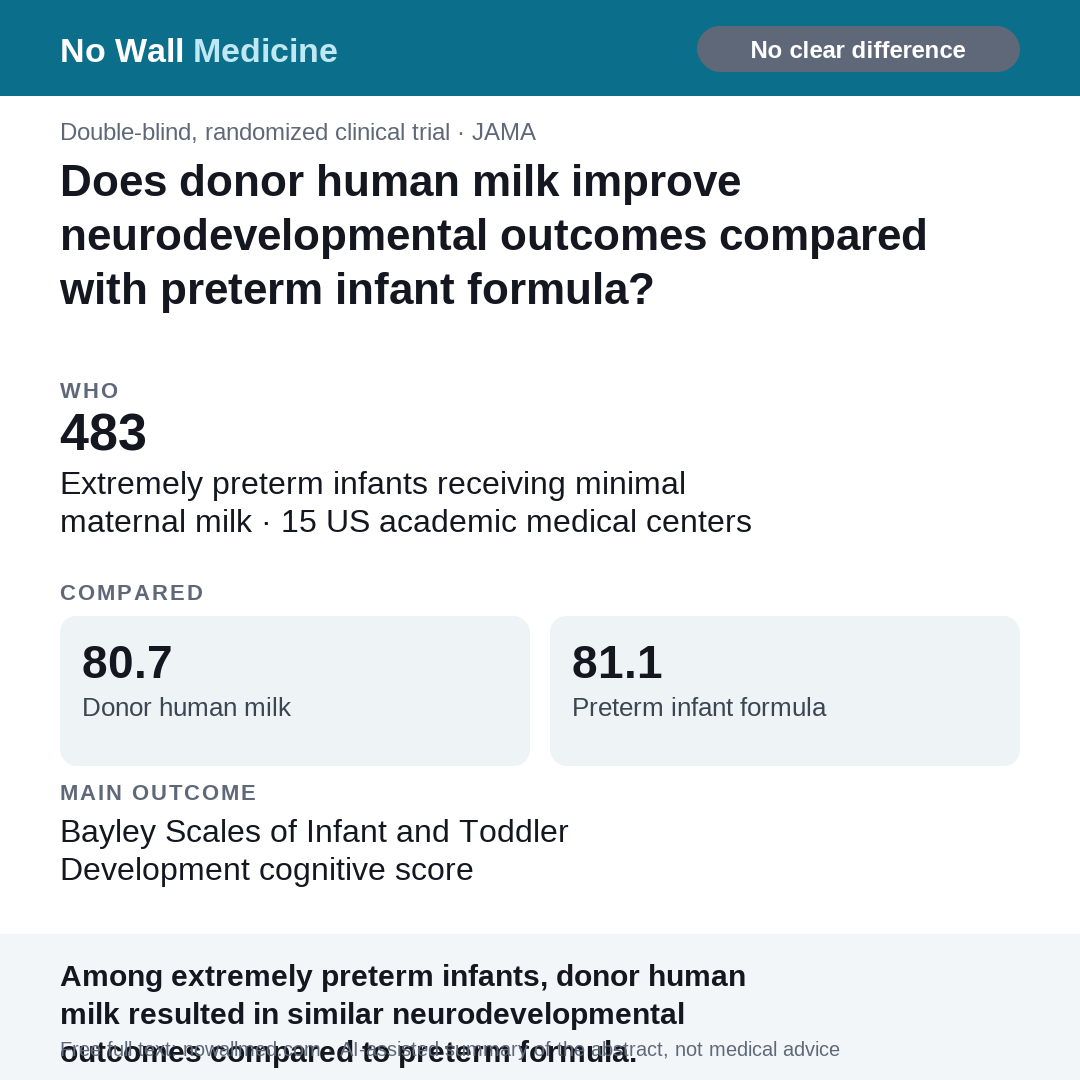
Neurodevelopmental Outcomes of Extremely Preterm Infants Fed Donor Milk or Preterm Infant Formula: A Randomized Clinical Trial
Double-blind, randomized clinical trialNo clear difference
Does donor human milk improve neurodevelopmental outcomes compared with preterm infant formula?
Who
483
Extremely preterm infants receiving minimal maternal milk · 15 US academic medical centers
Compared
80.7Donor human milk (SD, 17.4)
81.1Preterm infant formula (SD, 16.7)
Main outcome
Bayley Scales of Infant and Toddler Development cognitive score
Result: adjusted mean difference, -0.77 (95% CI, -3.93 to 2.39)
Bottom line: Among extremely preterm infants, donor human milk resulted in similar neurodevelopmental outcomes compared to preterm formula.
JAMA · 2024-03-18Download image
Health data sharing attitudes towards primary and secondary use of data: a systematic review
Systematic review and qualitative synthesisMixed results
What are people's attitudes towards primary and secondary health data sharing?
Who
228501
228,501 participants across 116 studies
Compared
Primary purpose sharing: high
Secondary purpose sharing: variable
Main outcome
Attitudes towards sharing health data
Bottom line: Sharing intentions for primary purposes are high, while secondary purpose intentions vary significantly based on data type and recipient.
Limitation: Most findings were derived from single studies and warrant confirmation from additional studies.
eClinicalMedicine · 2024-03-18Download image

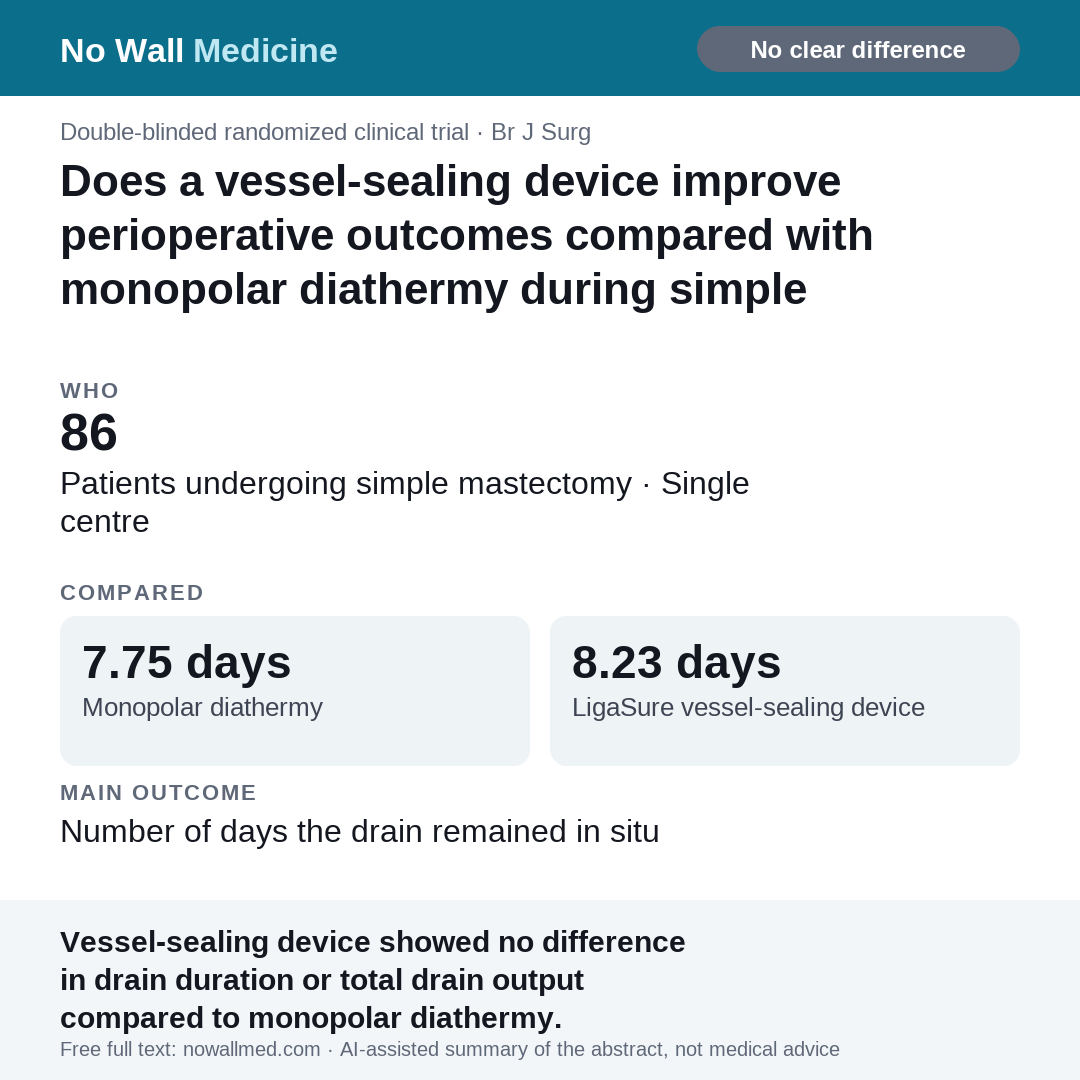
Monopolar diathermy versus a vessel-sealing device for reducing postoperative drain output after simple mastectomy: randomized clinical trial
Double-blinded randomized clinical trialNo clear difference
Does a vessel-sealing device improve perioperative outcomes compared with monopolar diathermy during simple mastectomy?
Who
86
Patients undergoing simple mastectomy · Single centre
Compared
7.75 daysMonopolar diathermy
8.23 daysLigaSure vessel-sealing device
Main outcome
Number of days the drain remained in situ
Bottom line: Vessel-sealing device showed no difference in drain duration or total drain output compared to monopolar diathermy.
Br J Surg · 2024-03-18Download image
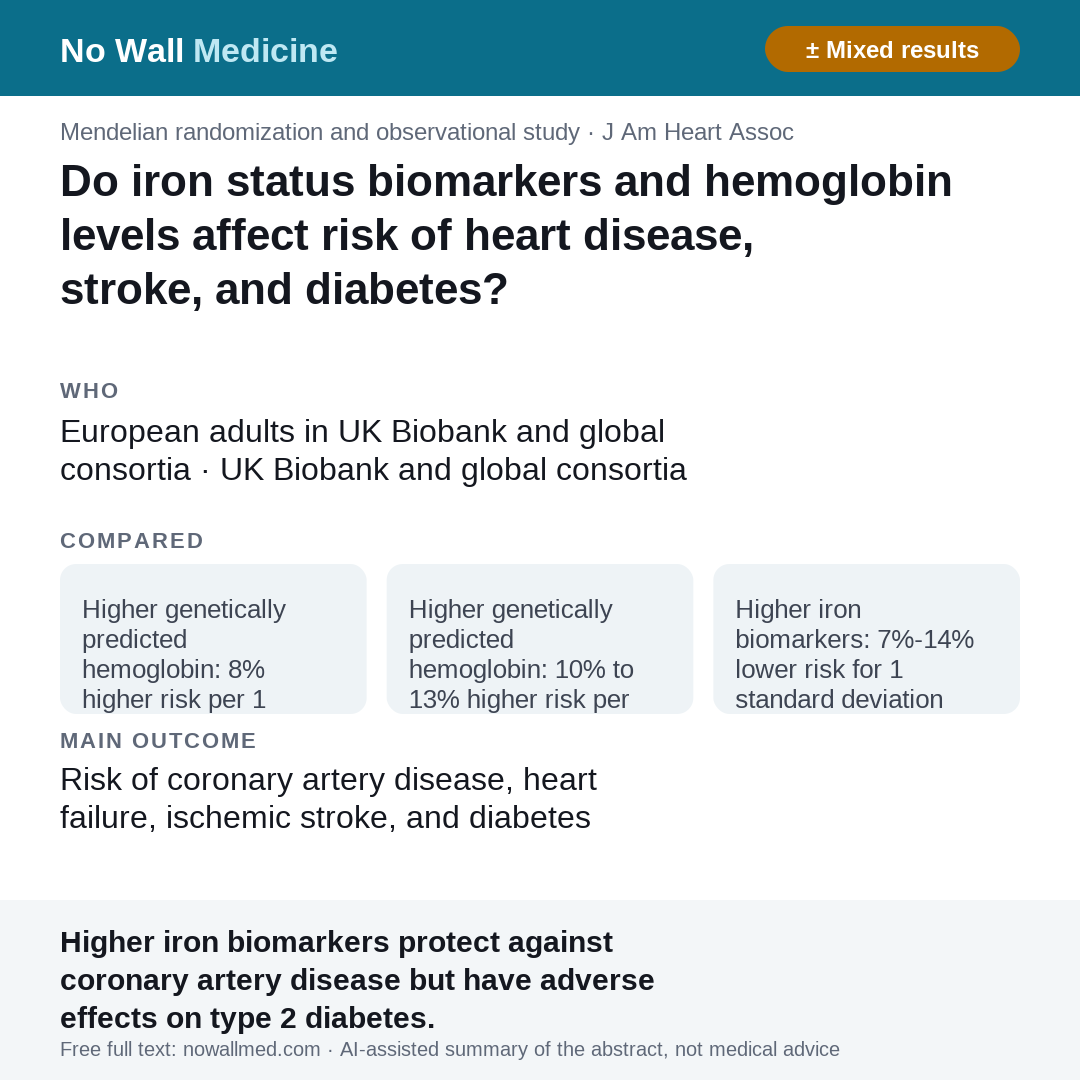
Iron Status and Risk of Heart Disease, Stroke, and Diabetes: A Mendelian Randomization Study in European Adults
Mendelian randomization and observational studyMixed results
Do iron status biomarkers and hemoglobin levels affect risk of heart disease, stroke, and diabetes?
Who
European adults in UK Biobank and global consortia · UK Biobank and global consortia
Compared
Higher genetically predicted hemoglobin: 8% higher risk per 1 standard deviation for coronary artery disease
Higher genetically predicted hemoglobin: 10% to 13% higher risk per 1 standard deviation for diabetes
Higher iron biomarkers: 7%-14% lower risk for 1 standard deviation higher levels for coronary artery disease
Main outcome
Risk of coronary artery disease, heart failure, ischemic stroke, and diabetes
Bottom line: Higher iron biomarkers protect against coronary artery disease but have adverse effects on type 2 diabetes.
J Am Heart Assoc · 2024-03-18Download image
Impact of Secondary Amenorrhea on Cardiovascular Disease Risk in Physically Active Women: A Systematic Review and Meta-Analysis
Systematic review and meta-analysisMixed results
Does secondary amenorrhea affect cardiovascular disease risk in physically active women?
Who
Physically active women aged 18 to 35 years · 3 countries
Compared
Physically active women with secondary amenorrhea: lower estradiol, flow-mediated dilation, resting heart rate, systolic blood pressure, and diastolic blood pressure; higher total cholesterol, triglycerides, high-density lipoprotein, and low-density lipoprotein cholesterol
Physically active women with eumenorrhea
Main outcome
Cardiovascular disease evidence, physiology alterations, or risk factors
Bottom line: Secondary amenorrhea in active women may impact cardiovascular physiology and certain cardiovascular disease risk factors.
Limitation: The research in this area is observational; therefore, findings should be interpreted cautiously.
J Am Heart Assoc · 2024-03-18Download image

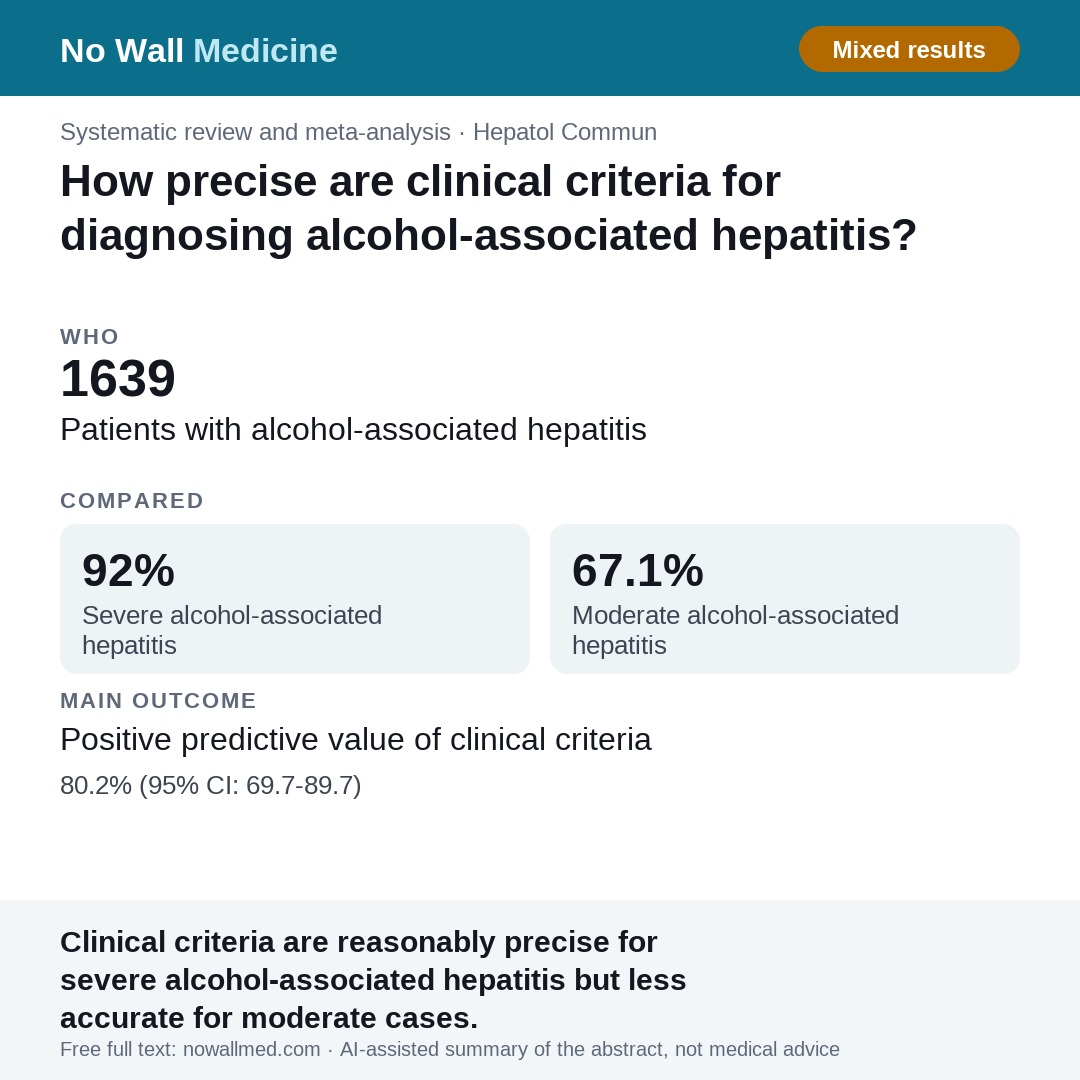
Clinical criteria accurately diagnose severe but not moderate alcohol-associated hepatitis: A systematic review and meta-analysis
Systematic review and meta-analysisMixed results
How precise are clinical criteria for diagnosing alcohol-associated hepatitis?
Who
1639
Patients with alcohol-associated hepatitis
Compared
92%Severe alcohol-associated hepatitis
67.1%Moderate alcohol-associated hepatitis
Main outcome
Positive predictive value of clinical criteria
Result: 80.2% (95% CI: 69.7-89.7)
Bottom line: Clinical criteria are reasonably precise for severe alcohol-associated hepatitis but less accurate for moderate cases.
Limitation: The net inter-pathologist agreement for histologic findings of alcohol-associated hepatitis was variable.
Hepatol Commun · 2024-03-18Download image
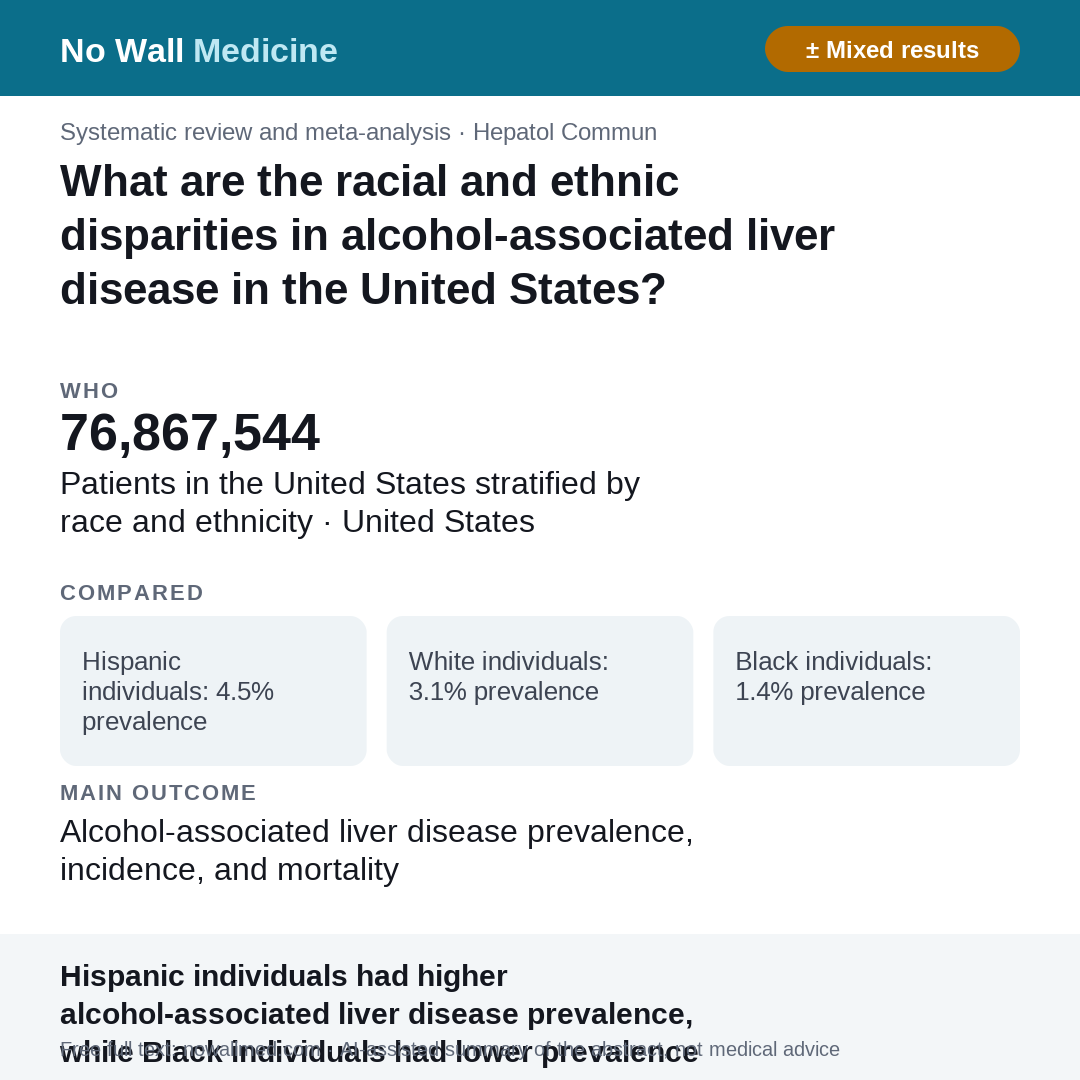
Racial and ethnic disparities in alcohol-associated liver disease in the United States: A systematic review and meta-analysis
Systematic review and meta-analysisMixed results
What are the racial and ethnic disparities in alcohol-associated liver disease in the United States?
Who
76,867,544
Patients in the United States stratified by race and ethnicity · United States
Compared
Hispanic individuals: 4.5% prevalence
White individuals: 3.1% prevalence
Black individuals: 1.4% prevalence
Main outcome
Alcohol-associated liver disease prevalence, incidence, and mortality
Result: risk ratios of ALD prevalence were 1.64 (95% CI: 1.12-2.39) for Hispanic and 0.59 (95% CI: 0.35-0.87) for Black
Bottom line: Hispanic individuals had higher alcohol-associated liver disease prevalence, while Black individuals had lower prevalence compared to White individuals.
Limitation: Most data were cross-sectional and assessed to be of poor or fair quality.
Hepatol Commun · 2024-03-18Download image
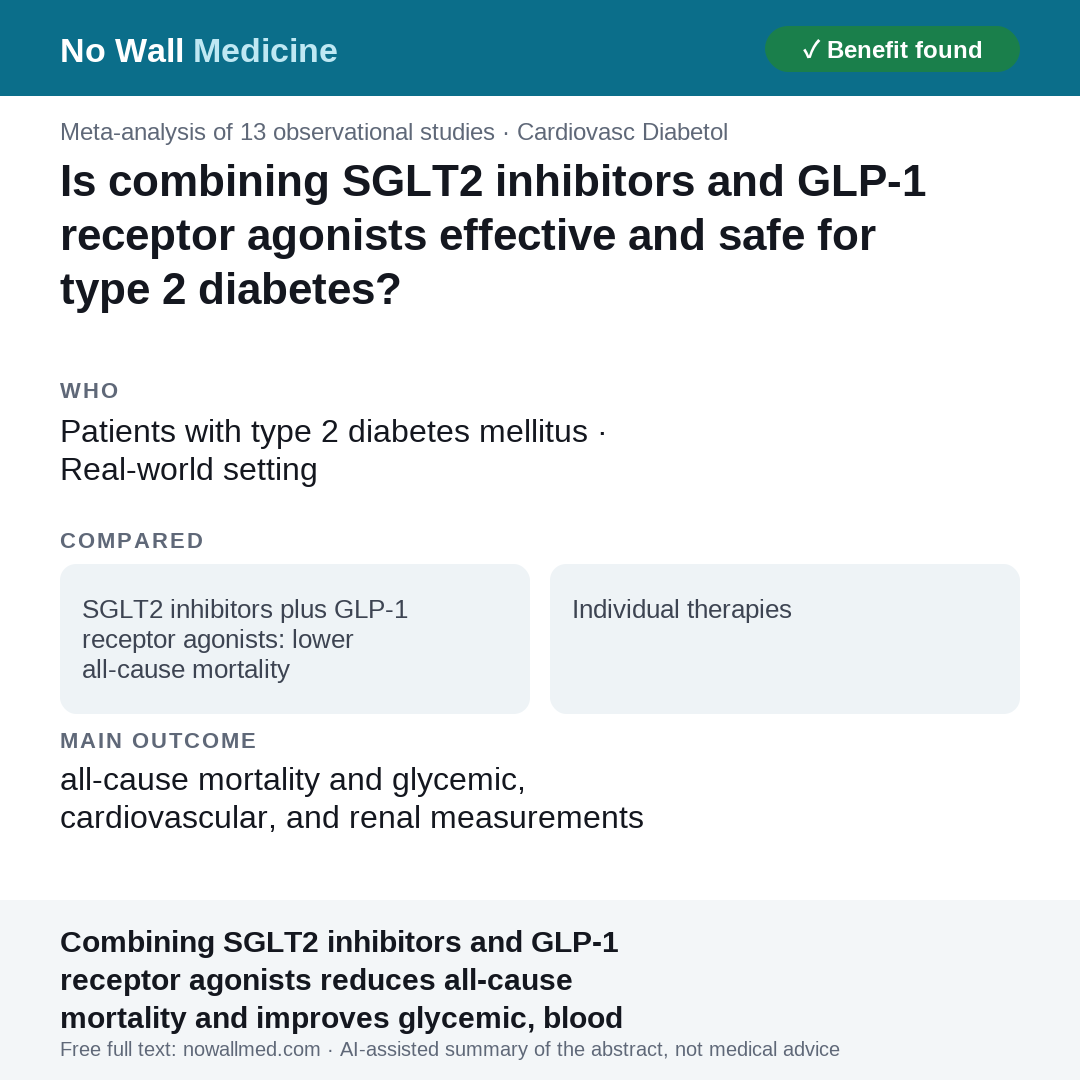
Effectiveness and safety of the combination of sodium-glucose transport protein 2 inhibitors and glucagon-like peptide-1 receptor agonists in patients with type 2 diabetes mellitus: a systematic review and meta-analysis of observational studies
Meta-analysis of 13 observational studiesBenefit found
Is combining SGLT2 inhibitors and GLP-1 receptor agonists effective and safe for type 2 diabetes?
Who
Patients with type 2 diabetes mellitus · Real-world setting
Compared
SGLT2 inhibitors plus GLP-1 receptor agonists: lower all-cause mortality
Individual therapies
Main outcome
all-cause mortality and glycemic, cardiovascular, and renal measurements
Result: odds ratio 0.49 (95% CI 0.49 [0.41, 0.60])
Bottom line: Combining SGLT2 inhibitors and GLP-1 receptor agonists reduces all-cause mortality and improves glycemic, blood pressure, and body mass index.
Limitation: The study is a meta-analysis of observational studies
Cardiovasc Diabetol · 2024-03-18Download image
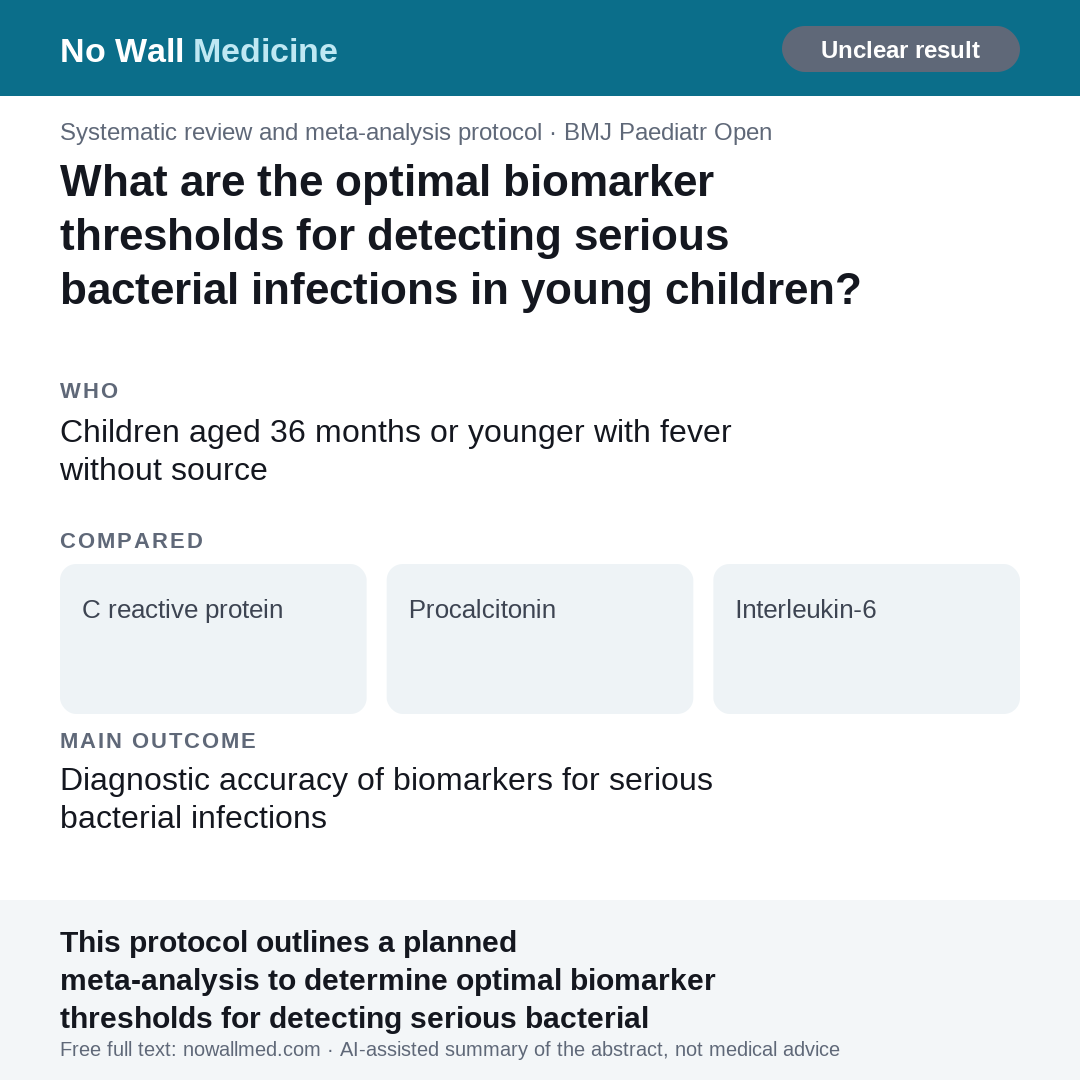
Protocol for the diagnostic performance of C reactive protein, procalcitonin and interleukin-6 for serious bacterial infections among children ≤36 months old presenting with fever without source: a systematic review and meta-analysis
Systematic review and meta-analysis protocolUnclear result
What are the optimal biomarker thresholds for detecting serious bacterial infections in young children?
Who
Children aged 36 months or younger with fever without source
Compared
C reactive protein
Procalcitonin
Interleukin-6
Main outcome
Diagnostic accuracy of biomarkers for serious bacterial infections
Bottom line: This protocol outlines a planned meta-analysis to determine optimal biomarker thresholds for detecting serious bacterial infections.
BMJ Paediatr Open · 2024-03-18Download image
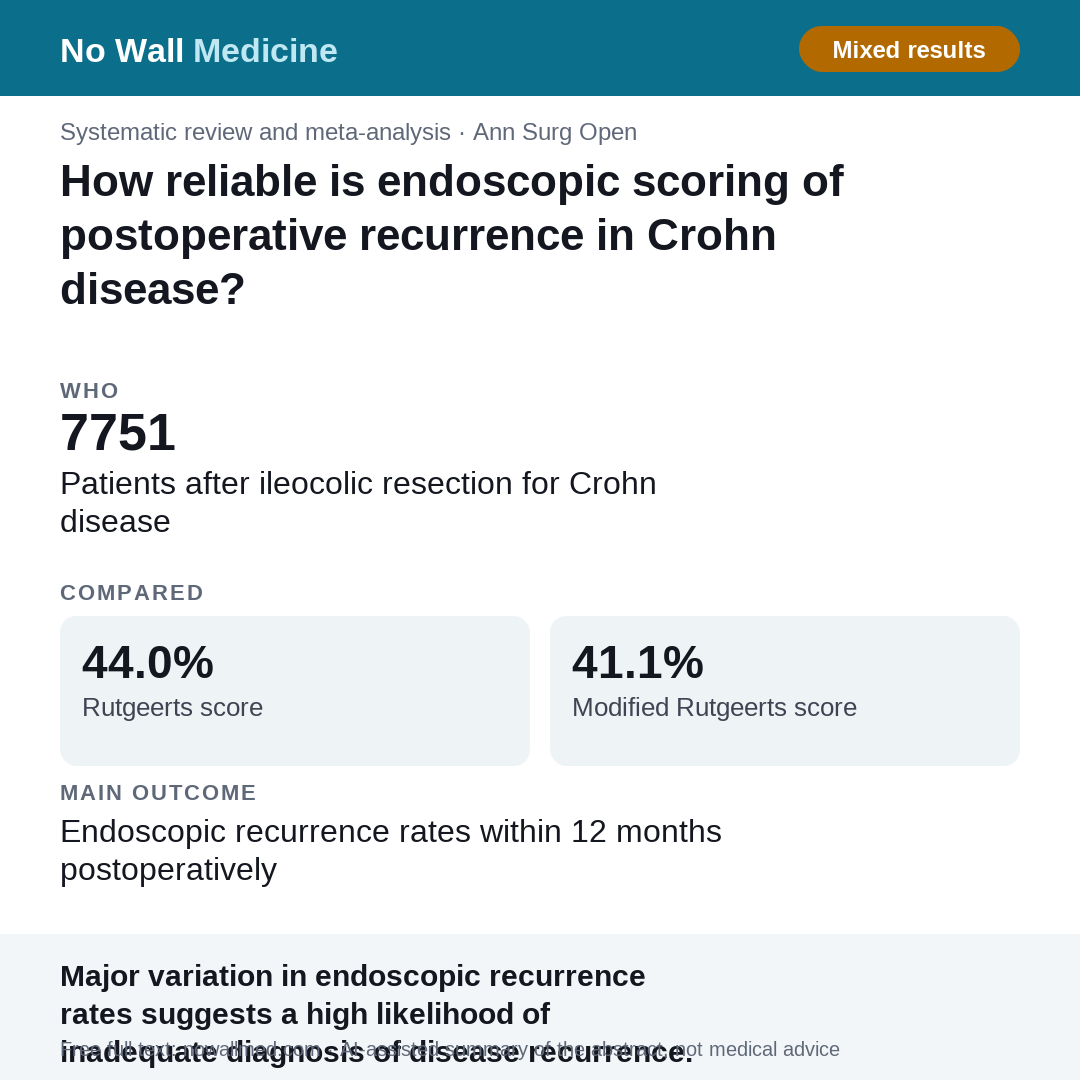
How Reliable Is Endoscopic Scoring of Postoperative Recurrence in Crohn Disease?: A Systematic Review and Meta-Analysis
Systematic review and meta-analysisMixed results
How reliable is endoscopic scoring of postoperative recurrence in Crohn disease?
Who
7751
Patients after ileocolic resection for Crohn disease
Compared
44.0%Rutgeerts score
41.1%Modified Rutgeerts score
Main outcome
Endoscopic recurrence rates within 12 months postoperatively
Result: 44.0% (95% confidence interval, 43.56-44.43)
Bottom line: Major variation in endoscopic recurrence rates suggests a high likelihood of inadequate diagnosis of disease recurrence.
Ann Surg Open · 2024-03-18Download image
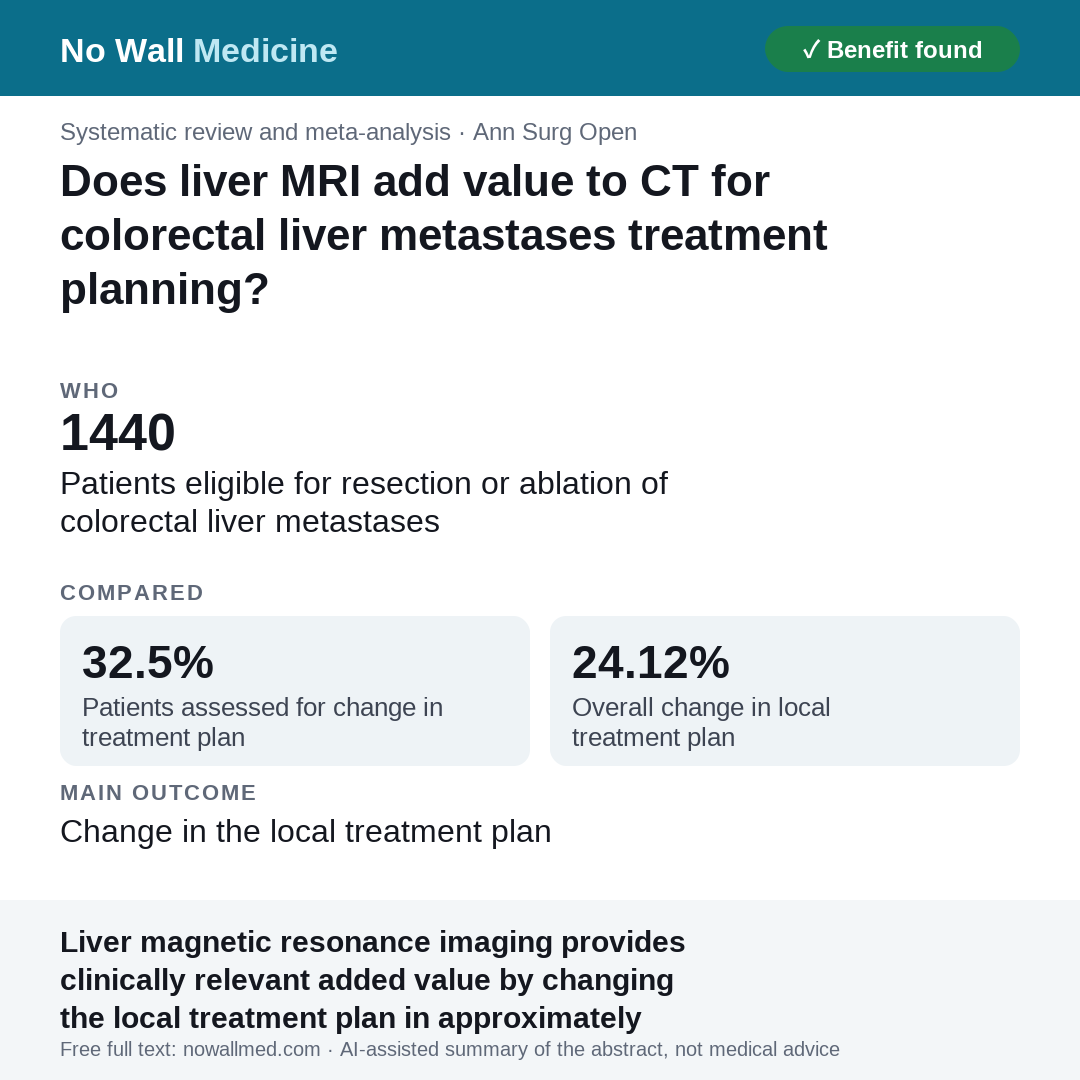
Added Value of Liver MRI in Patients Eligible for Surgical Resection or Ablation of Colorectal Liver Metastases Based on CT: A Systematic Review and Meta-Analysis
Systematic review and meta-analysisBenefit found
Does liver MRI add value to CT for colorectal liver metastases treatment planning?
Who
1440
Patients eligible for resection or ablation of colorectal liver metastases
Compared
32.5%Patients assessed for change in treatment plan (468/1440)
24.12%Overall change in local treatment plan
Main outcome
Change in the local treatment plan
Result: 24.12% (95% confidence interval, 15.58%-32.65%)
Bottom line: Liver magnetic resonance imaging provides clinically relevant added value by changing the local treatment plan in approximately one-fifth of patients.
Limitation: Findings should be confirmed by large prospective studies.
Ann Surg Open · 2024-03-18Download image