Visual abstracts
New randomized trials and meta-analyses from leading journals at a glance: who was studied, what was compared, and what was found. Every paper is free to read in full.
All specialtiesCardiology 4832Oncology 4114Gastroenterology & Hepatology 1934Infectious Disease 3824Neurology 1899Psychiatry & Mental Health 2256Pulmonology 2082Critical Care 1345Endocrinology & Diabetes 2572Pediatrics 2940Surgery 2525Orthopedics & Sports Medicine 926Neurosurgery 534Cardiothoracic & Vascular Surgery 671Plastic & Reconstructive Surgery 591Nephrology 1124Rheumatology 823Hematology 1104Dermatology 620Ophthalmology 543Obstetrics & Gynecology 1684Public & Global Health 1056Radiology & Imaging 641Anesthesiology 962Urology 754ENT (Otolaryngology) 503Emergency Medicine 489Allergy & Immunology 313Geriatrics 981Family Medicine & Primary Care 541Medical Genetics & Genomics 675Pathology & Laboratory Medicine 157Physical Medicine & Rehabilitation 751Palliative Care 424Nutrition 1580Digital Health & AI 2195General Medicine 321
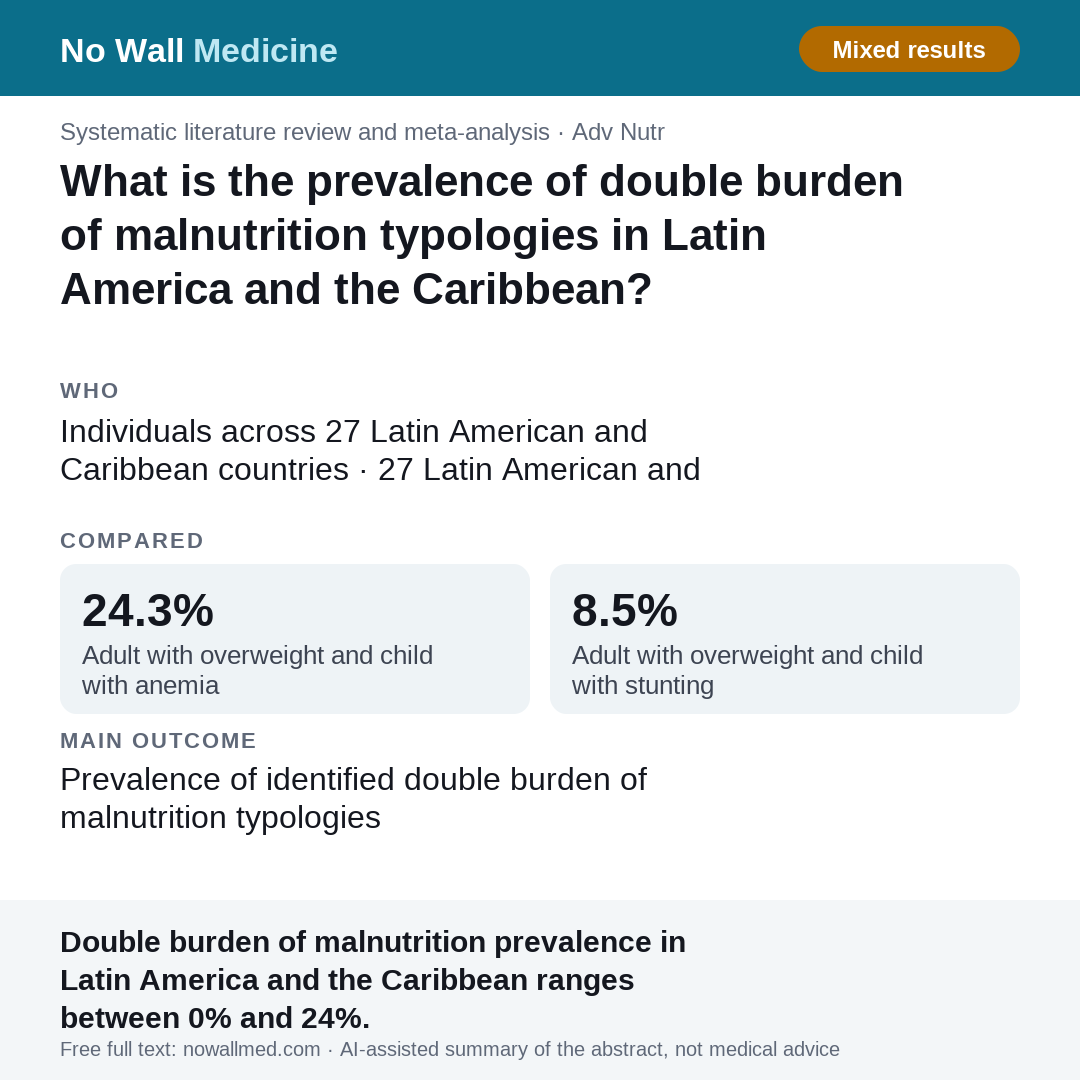
Quantifying Overlapping Forms of Malnutrition Across Latin America: A Systematic Literature Review and Meta-Analysis of Prevalence Estimates
Systematic literature review and meta-analysisMixed results
What is the prevalence of double burden of malnutrition typologies in Latin America and the Caribbean?
Who
Individuals across 27 Latin American and Caribbean countries · 27 Latin American and Caribbean countries
Compared
24.3%Adult with overweight and child with anemia (95% CI: 18.8%, 30.2%)
8.5%Adult with overweight and child with stunting (95% CI: 7.7, 9.3)
Main outcome
Prevalence of identified double burden of malnutrition typologies
Bottom line: Double burden of malnutrition prevalence in Latin America and the Caribbean ranges between 0% and 24%.
Limitation: All prevalences carried large heterogeneity (I2>90%) and life course estimates were insufficient.
Adv Nutr · 2024-03-15Download image
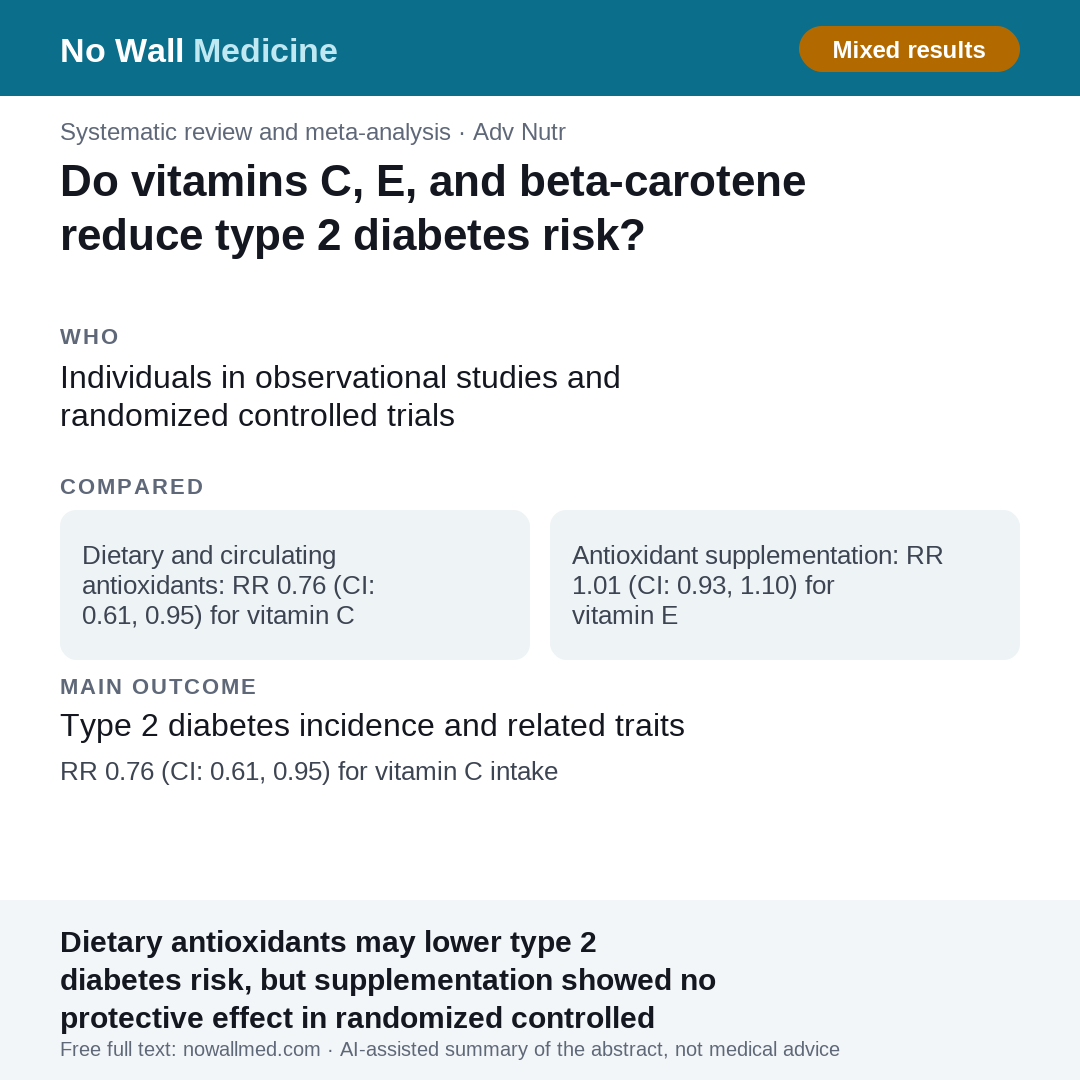
Vitamins C, E, and β-Carotene and Risk of Type 2 Diabetes: A Systematic Review and Meta-Analysis
Systematic review and meta-analysisMixed results
Do vitamins C, E, and beta-carotene reduce type 2 diabetes risk?
Who
Individuals in observational studies and randomized controlled trials
Compared
Dietary and circulating antioxidants: RR 0.76 (CI: 0.61, 0.95) for vitamin C
Antioxidant supplementation: RR 1.01 (CI: 0.93, 1.10) for vitamin E
Main outcome
Type 2 diabetes incidence and related traits
Result: RR 0.76 (CI: 0.61, 0.95) for vitamin C intake
Bottom line: Dietary antioxidants may lower type 2 diabetes risk, but supplementation showed no protective effect in randomized controlled trials.
Limitation: Certainty of evidence was low to moderate for several associations.
Adv Nutr · 2024-03-15Download image
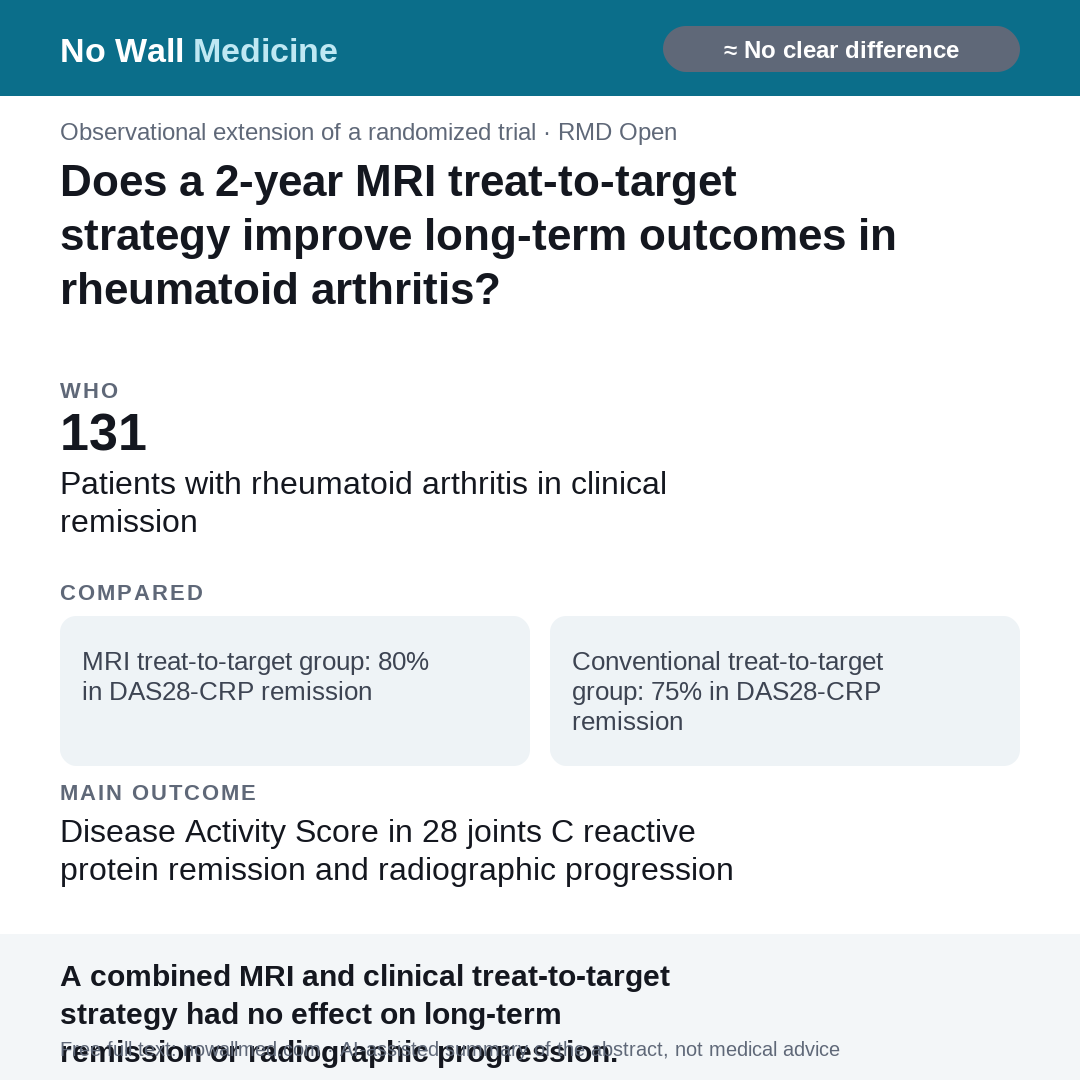
Long-term efficacy of a 2-year MRI treat-to-target strategy on disease activity and radiographic progression in patients with rheumatoid arthritis in clinical remission: 5-year follow-up of the IMAGINE-RA randomised trial
Observational extension of a randomized trialNo clear difference
Does a 2-year MRI treat-to-target strategy improve long-term outcomes in rheumatoid arthritis?
Who
131
Patients with rheumatoid arthritis in clinical remission
Compared
MRI treat-to-target group: 80% in DAS28-CRP remission
Conventional treat-to-target group: 75% in DAS28-CRP remission
Main outcome
Disease Activity Score in 28 joints C reactive protein remission and radiographic progression
Result: OR 2.00 (95% CI 0.76 to 5.28); OR 0.70 (95% CI 0.28 to 1.71)
Bottom line: A combined MRI and clinical treat-to-target strategy had no effect on long-term remission or radiographic progression.
RMD Open · 2024-03-15Download image
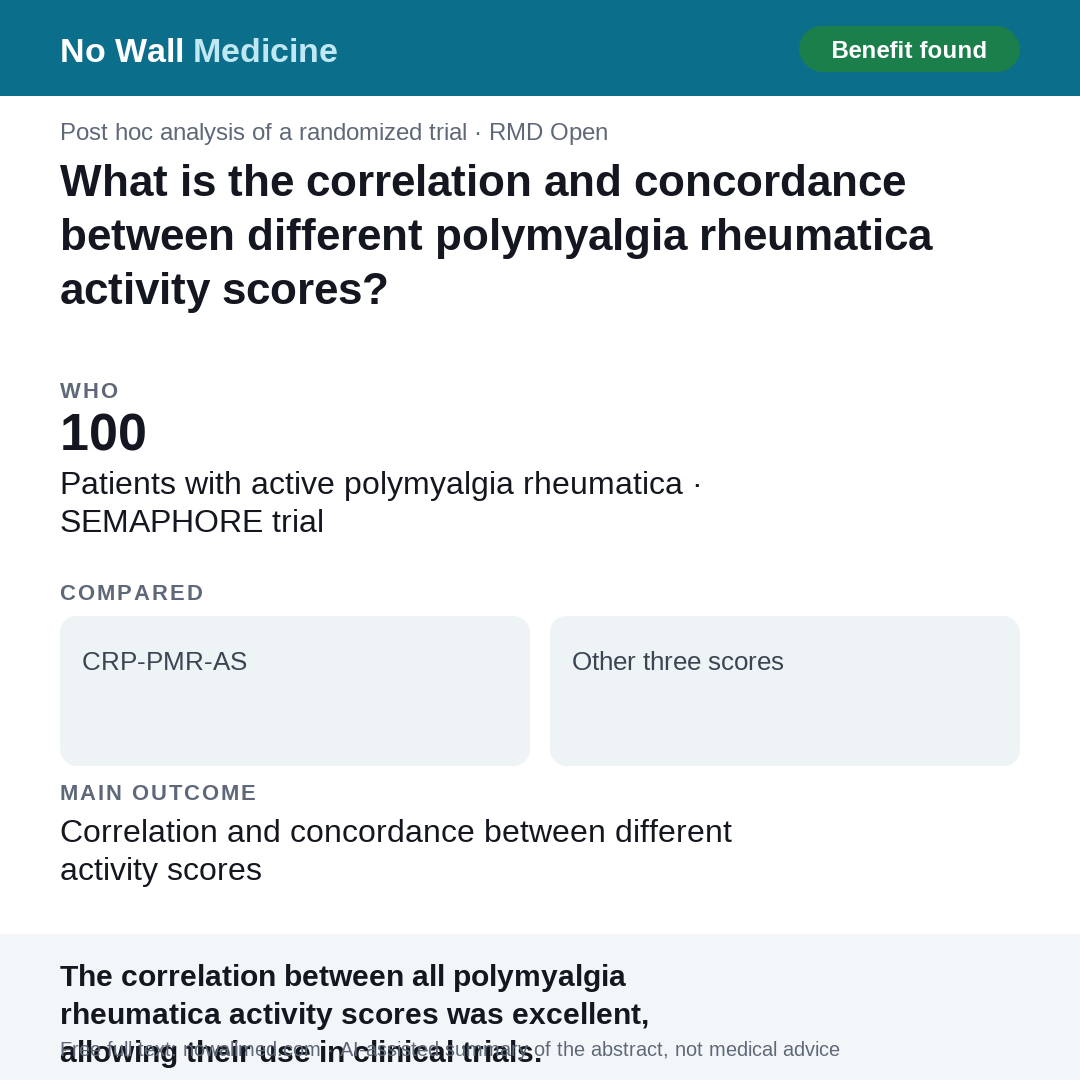
Concordance and agreement between different activity scores in polymyalgia rheumatica
Post hoc analysis of a randomized trialBenefit found
What is the correlation and concordance between different polymyalgia rheumatica activity scores?
Who
100
Patients with active polymyalgia rheumatica · SEMAPHORE trial
Compared
CRP-PMR-AS
Other three scores
Main outcome
Correlation and concordance between different activity scores
Result: ICC and kappa >0.85
Bottom line: The correlation between all polymyalgia rheumatica activity scores was excellent, allowing their use in clinical trials.
RMD Open · 2024-03-15Download image
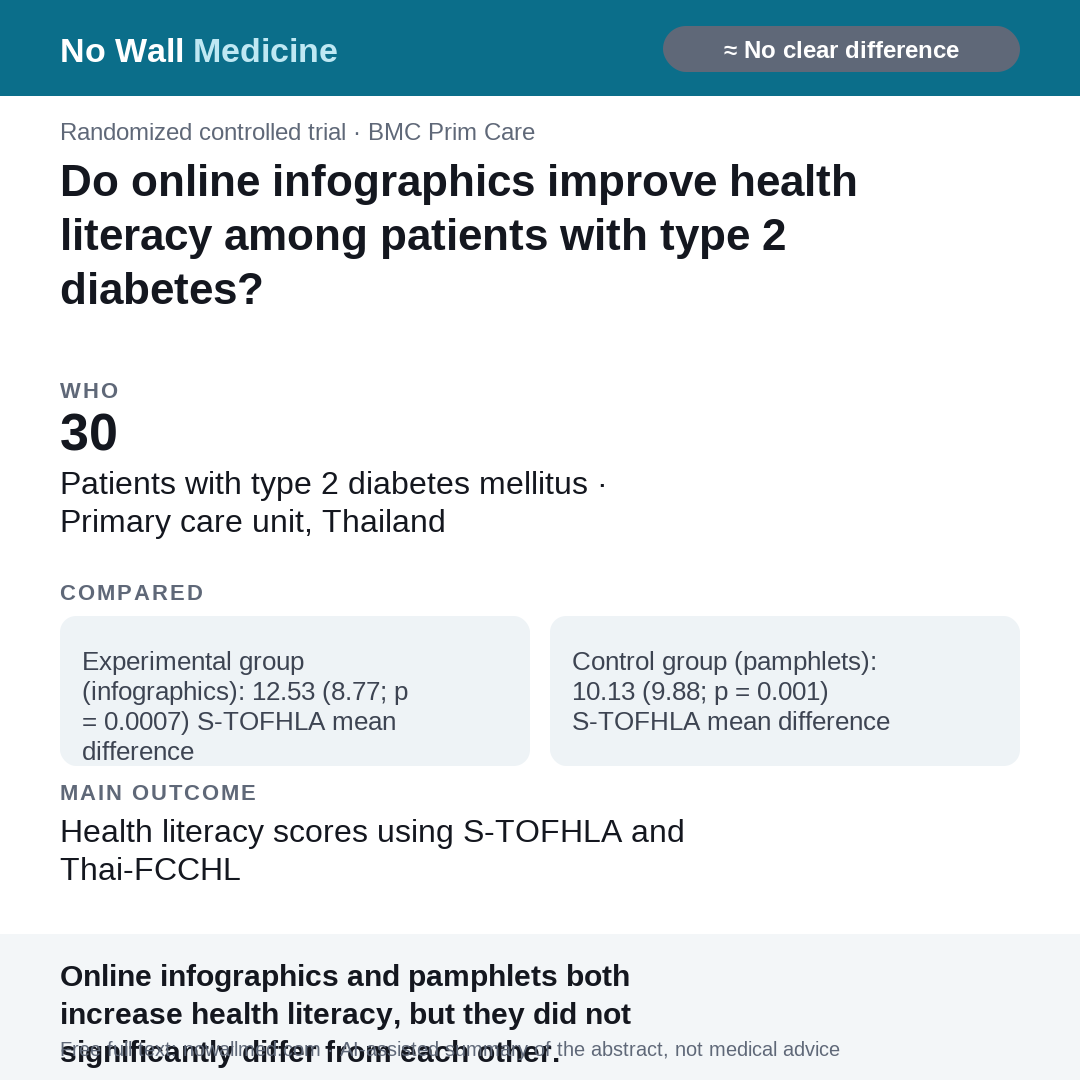
Effect of online infographics for enhancing health literacy among patients with type 2 diabetes in primary care unit during the COVID-19 pandemic: a randomized controlled trial
Randomized controlled trialNo clear difference
Do online infographics improve health literacy among patients with type 2 diabetes?
Who
30
Patients with type 2 diabetes mellitus · Primary care unit, Thailand
Compared
Experimental group (infographics): 12.53 (8.77; p = 0.0007) S-TOFHLA mean difference
Control group (pamphlets): 10.13 (9.88; p = 0.001) S-TOFHLA mean difference
Main outcome
Health literacy scores using S-TOFHLA and Thai-FCCHL
Bottom line: Online infographics and pamphlets both increase health literacy, but they did not significantly differ from each other.
Limitation: Further larger-scale studies should be performed to examine the impact of other educational media.
BMC Prim Care · 2024-03-15Download image
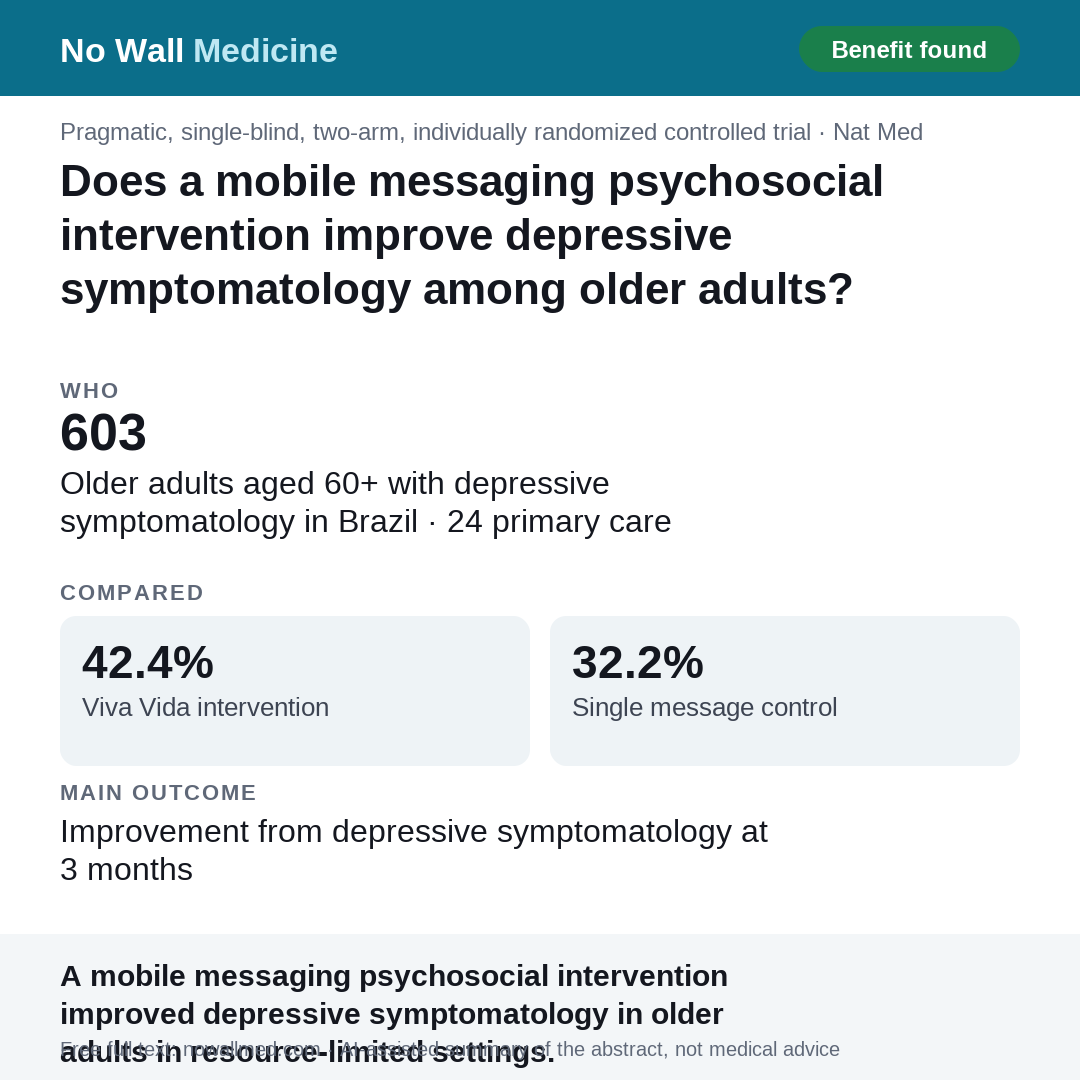
Self-help mobile messaging intervention for depression among older adults in resource-limited settings: a randomized controlled trial
Pragmatic, single-blind, two-arm, individually randomized controlled trialBenefit found
Does a mobile messaging psychosocial intervention improve depressive symptomatology among older adults?
Who
603
Older adults aged 60+ with depressive symptomatology in Brazil · 24 primary care clinics in Guarulhos, Brazil
Compared
42.4%Viva Vida intervention (109/257)
32.2%Single message control (87/270)
Main outcome
Improvement from depressive symptomatology at 3 months
Result: adjusted odds ratio 1.57 (95% confidence interval 1.07-2.29)
Bottom line: A mobile messaging psychosocial intervention improved depressive symptomatology in older adults in resource-limited settings.
Nat Med · 2024-03-14Download image
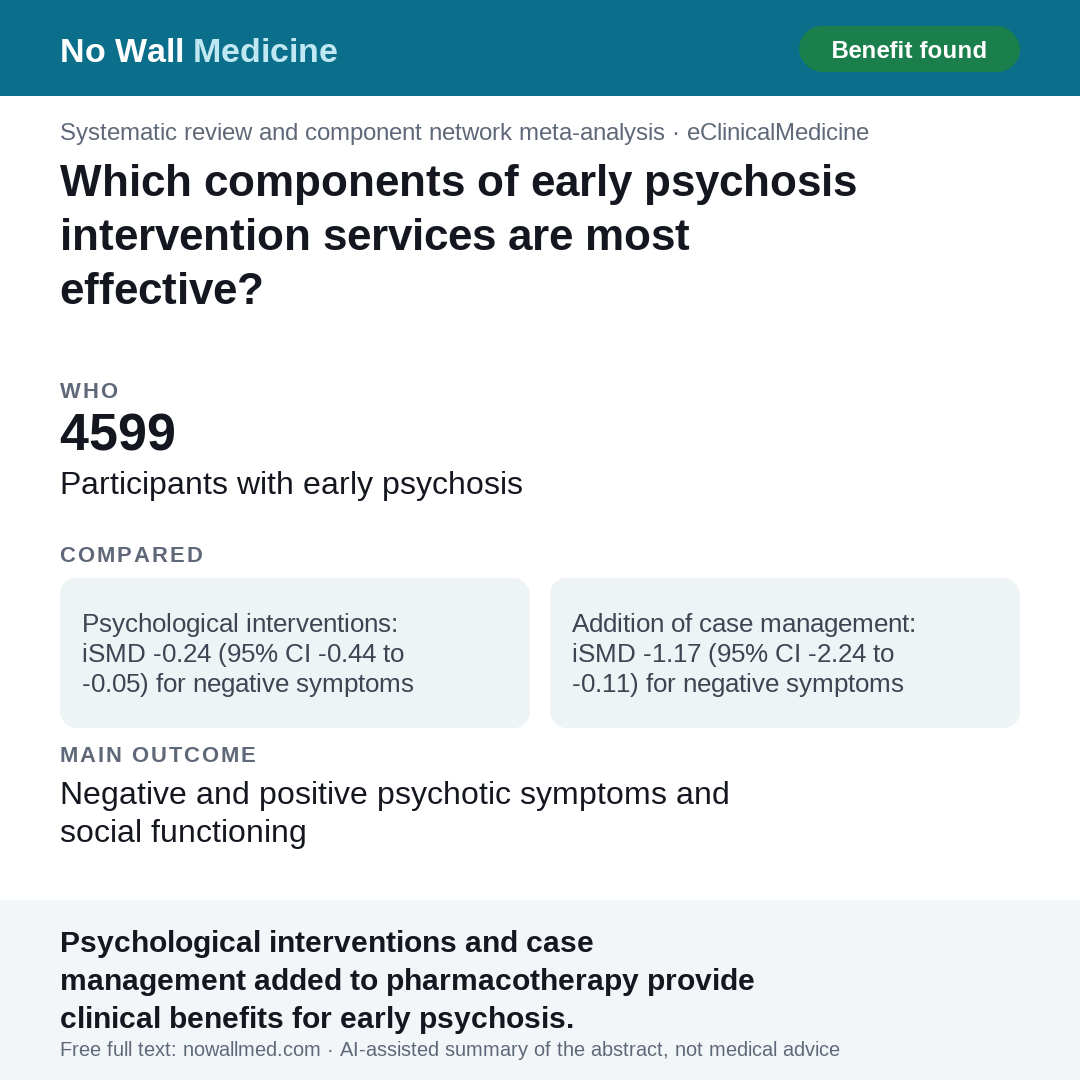
Comparing interventions for early psychosis: a systematic review and component network meta-analysis
Systematic review and component network meta-analysisBenefit found
Which components of early psychosis intervention services are most effective?
Who
4599
Participants with early psychosis
Compared
Psychological interventions: iSMD -0.24 (95% CI -0.44 to -0.05) for negative symptoms
Addition of case management: iSMD -1.17 (95% CI -2.24 to -0.11) for negative symptoms
Main outcome
Negative and positive psychotic symptoms and social functioning
Bottom line: Psychological interventions and case management added to pharmacotherapy provide clinical benefits for early psychosis.
Limitation: Small number of studies and sparsely connected networks.
Funded by: National Institute for Health and Care Research
eClinicalMedicine · 2024-03-14Download image
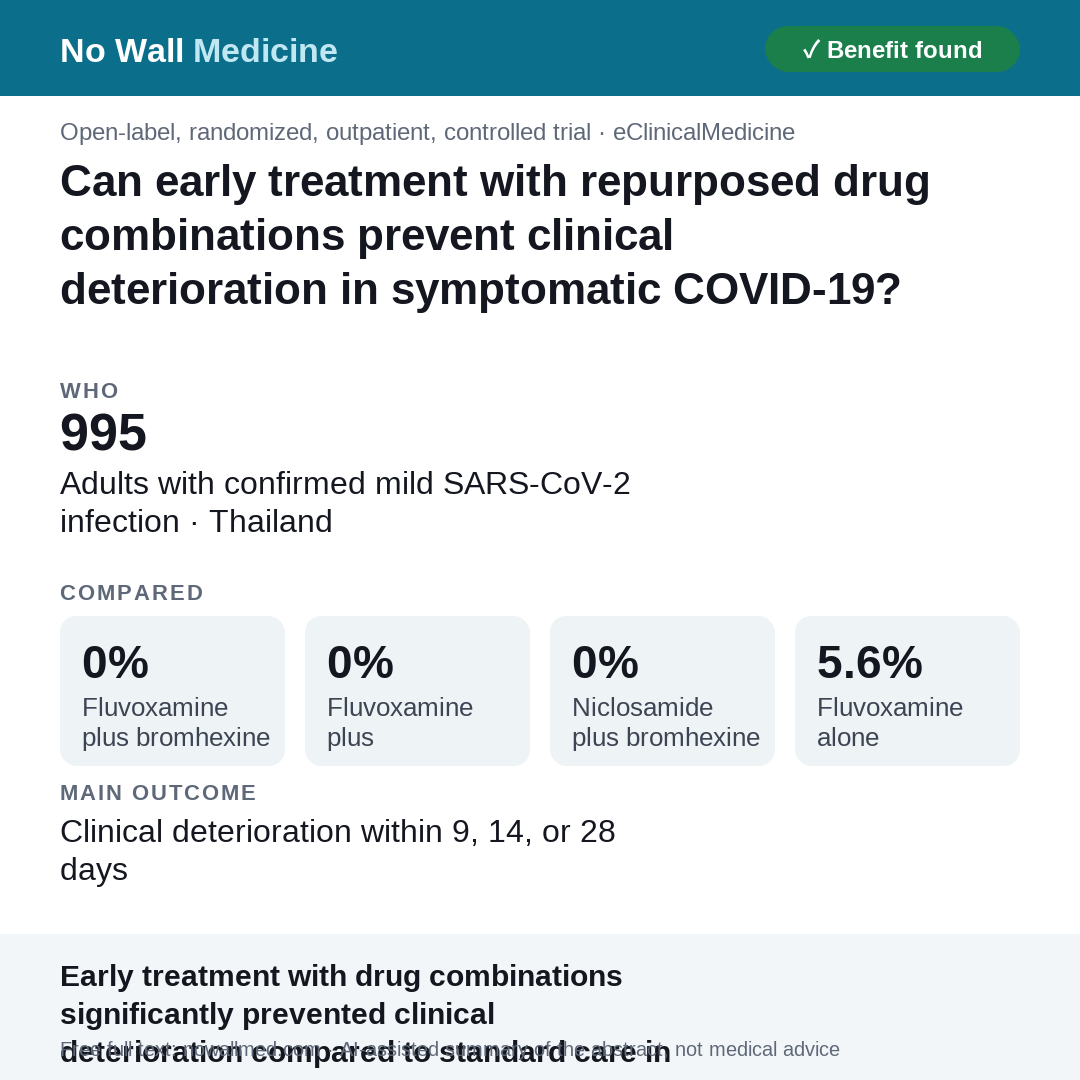
Early treatment with fluvoxamine, bromhexine, cyproheptadine, and niclosamide to prevent clinical deterioration in patients with symptomatic COVID-19: a randomized clinical trial
Open-label, randomized, outpatient, controlled trialBenefit found
Can early treatment with repurposed drug combinations prevent clinical deterioration in symptomatic COVID-19?
Who
995
Adults with confirmed mild SARS-CoV-2 infection · Thailand
Compared
0%Fluvoxamine plus bromhexine
0%Fluvoxamine plus cyproheptadine
0%Niclosamide plus bromhexine
5.6%Fluvoxamine alone
Main outcome
Clinical deterioration within 9, 14, or 28 days
Bottom line: Early treatment with drug combinations significantly prevented clinical deterioration compared to standard care in mild COVID-19 patients.
Funded by: Ped Thai Su Phai (Thai Ducks Fighting Danger) social giver group
eClinicalMedicine · 2024-03-14Download image
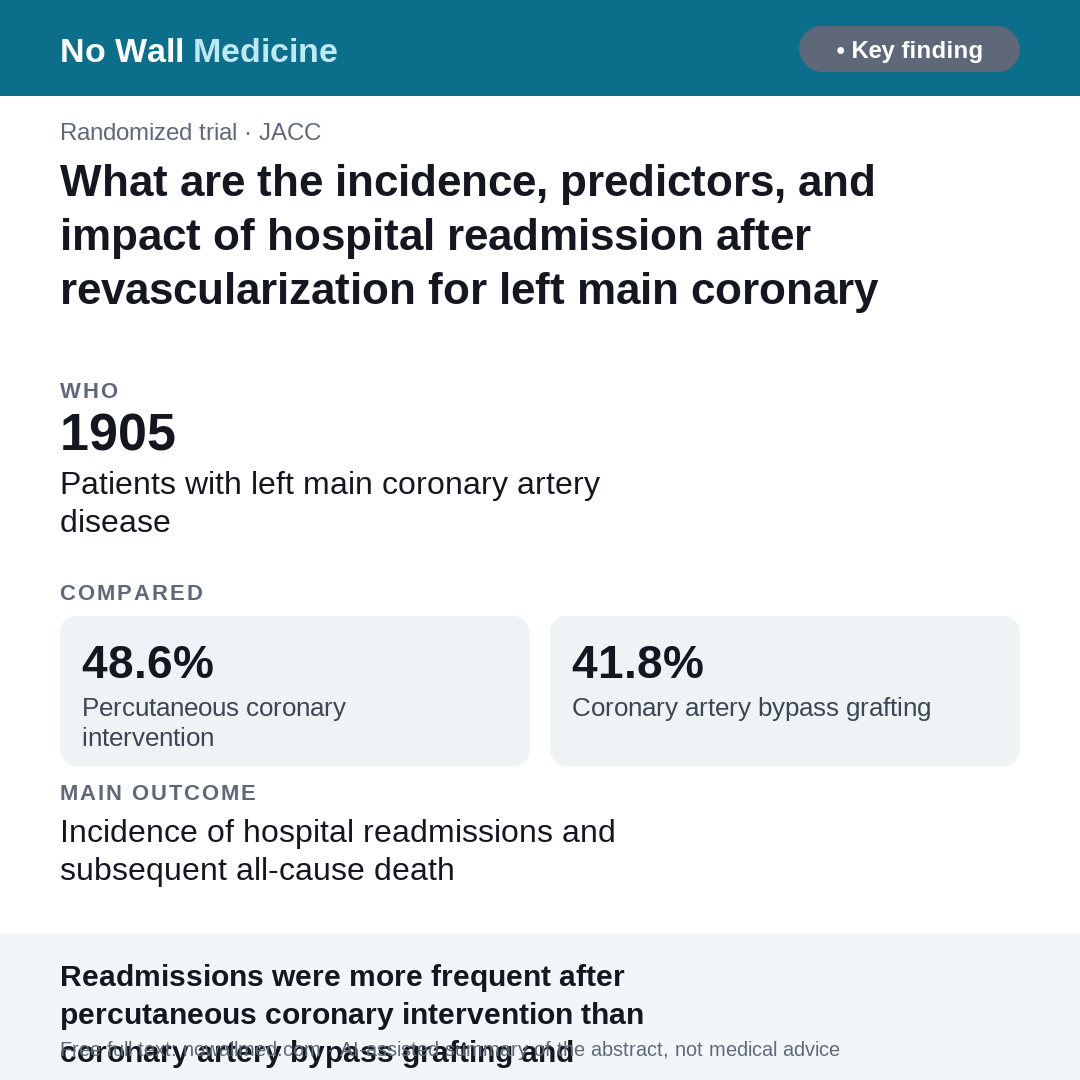
Incidence, Predictors, and Impact of Hospital Readmission After Revascularization for Left Main Coronary Disease
Randomized trialHarm found
What are the incidence, predictors, and impact of hospital readmission after revascularization for left main coronary artery disease?
Who
1905
Patients with left main coronary artery disease
Compared
48.6%Percutaneous coronary intervention (463/942)
41.8%Coronary artery bypass grafting (388/940)
Main outcome
Incidence of hospital readmissions and subsequent all-cause death
Result: adjusted HR 1.22 (95% CI 1.10-1.35)
Bottom line: Readmissions were more frequent after percutaneous coronary intervention than coronary artery bypass grafting and associated with higher mortality risk.
JACC · 2024-03-14Download image
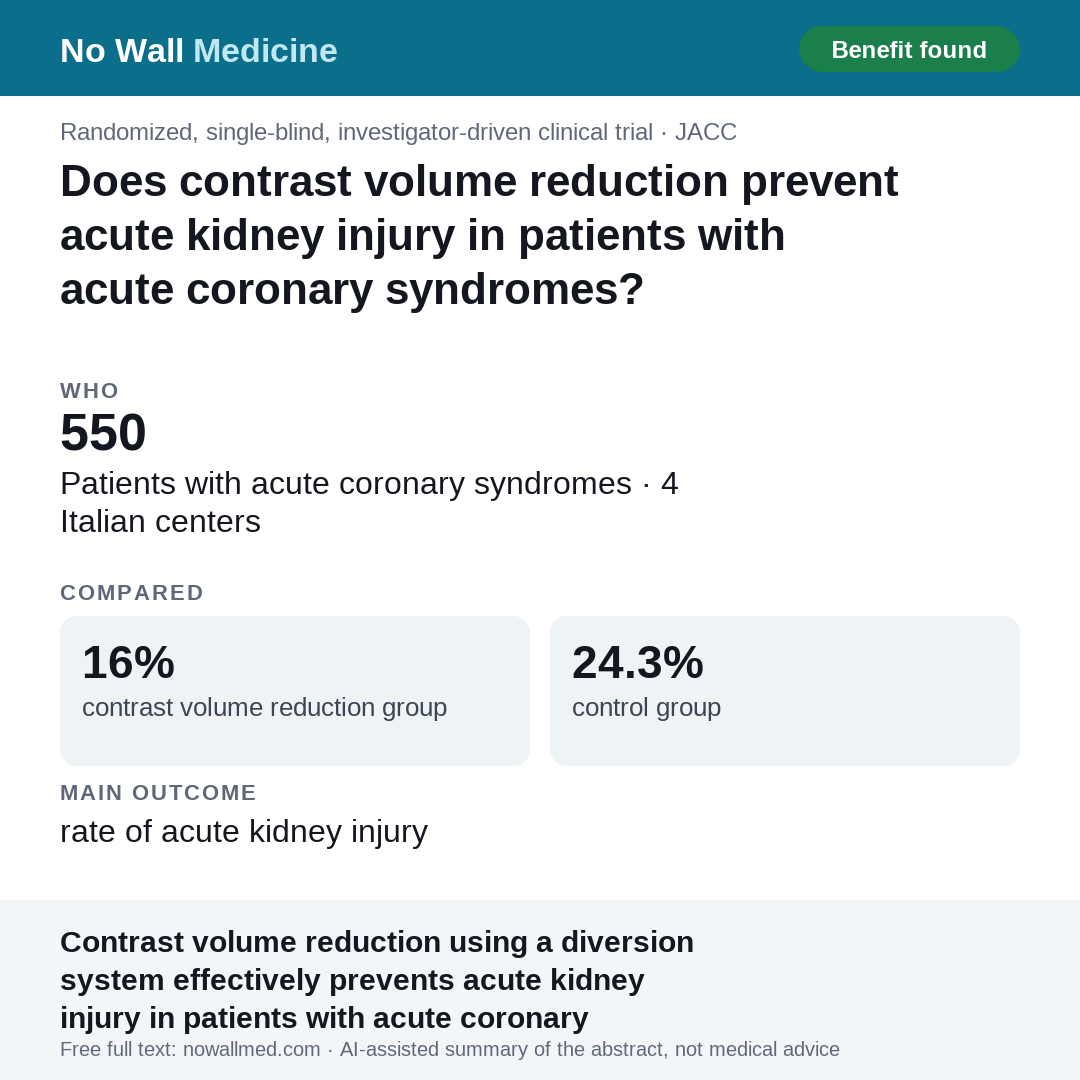
Kidney Injury After Minimal Radiographic Contrast Administration in Patients With Acute Coronary Syndromes
Randomized, single-blind, investigator-driven clinical trialBenefit found
Does contrast volume reduction prevent acute kidney injury in patients with acute coronary syndromes?
Who
550
Patients with acute coronary syndromes · 4 Italian centers
Compared
16%contrast volume reduction group (44 of 275)
24.3%control group (65 of 268)
Main outcome
rate of acute kidney injury
Result: relative risk 0.66 (95% CI 0.47-0.93)
Bottom line: Contrast volume reduction using a diversion system effectively prevents acute kidney injury in patients with acute coronary syndromes.
JACC · 2024-03-14Download image
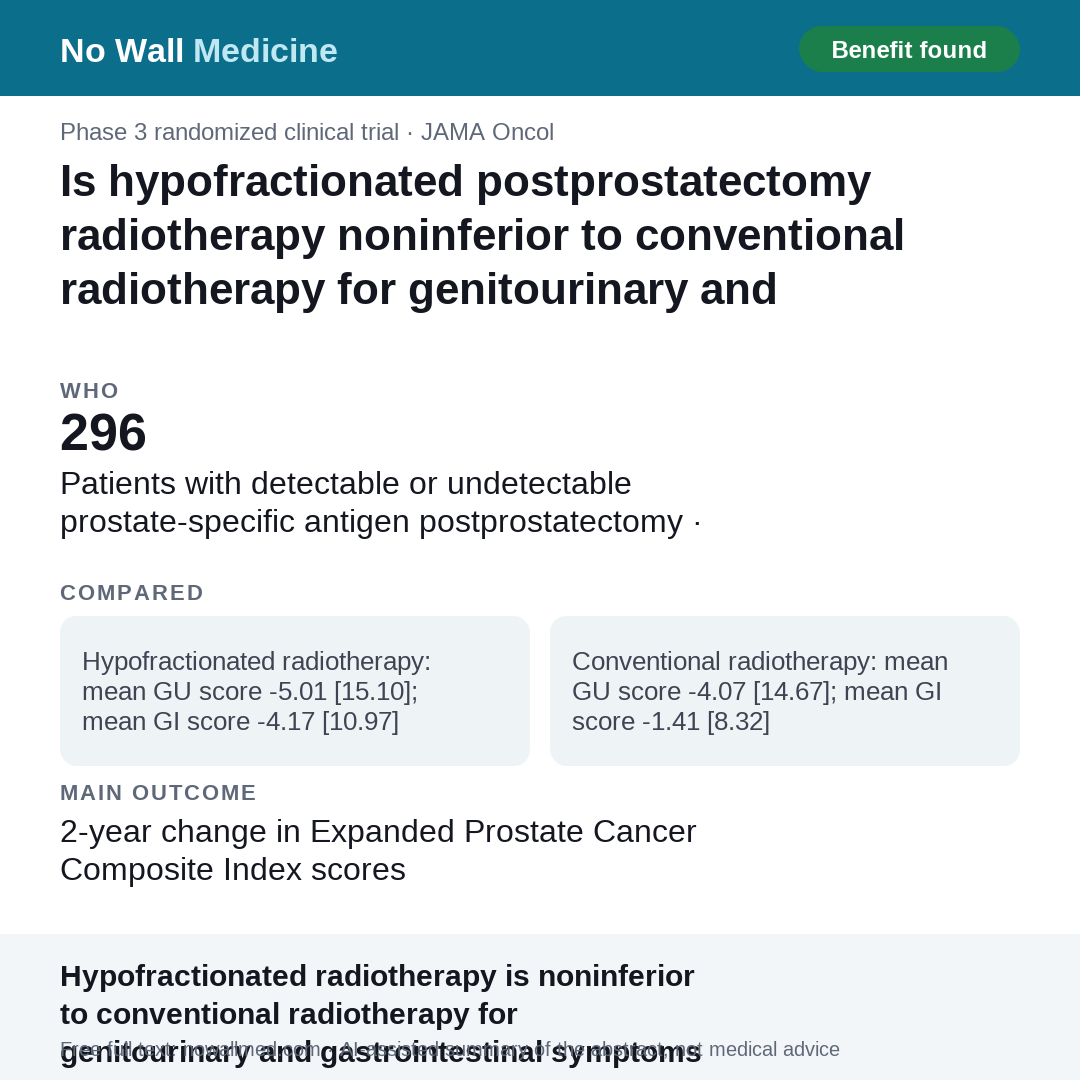
Noninferiority of Hypofractionated vs Conventional Postprostatectomy Radiotherapy for Genitourinary and Gastrointestinal Symptoms: The NRG-GU003 Phase 3 Randomized Clinical Trial
Phase 3 randomized clinical trialBenefit found
Is hypofractionated postprostatectomy radiotherapy noninferior to conventional radiotherapy for genitourinary and gastrointestinal symptoms?
Who
296
Patients with detectable or undetectable prostate-specific antigen postprostatectomy · 93 sites in the US and Canada
Compared
Hypofractionated radiotherapy: mean GU score -5.01 [15.10]; mean GI score -4.17 [10.97]
Conventional radiotherapy: mean GU score -4.07 [14.67]; mean GI score -1.41 [8.32]
Main outcome
2-year change in Expanded Prostate Cancer Composite Index scores
Result: noninferior to COPORT using noninferiority margins of -5 and -6
Bottom line: Hypofractionated radiotherapy is noninferior to conventional radiotherapy for genitourinary and gastrointestinal symptoms at 2 years.
JAMA Oncol · 2024-03-14Download image
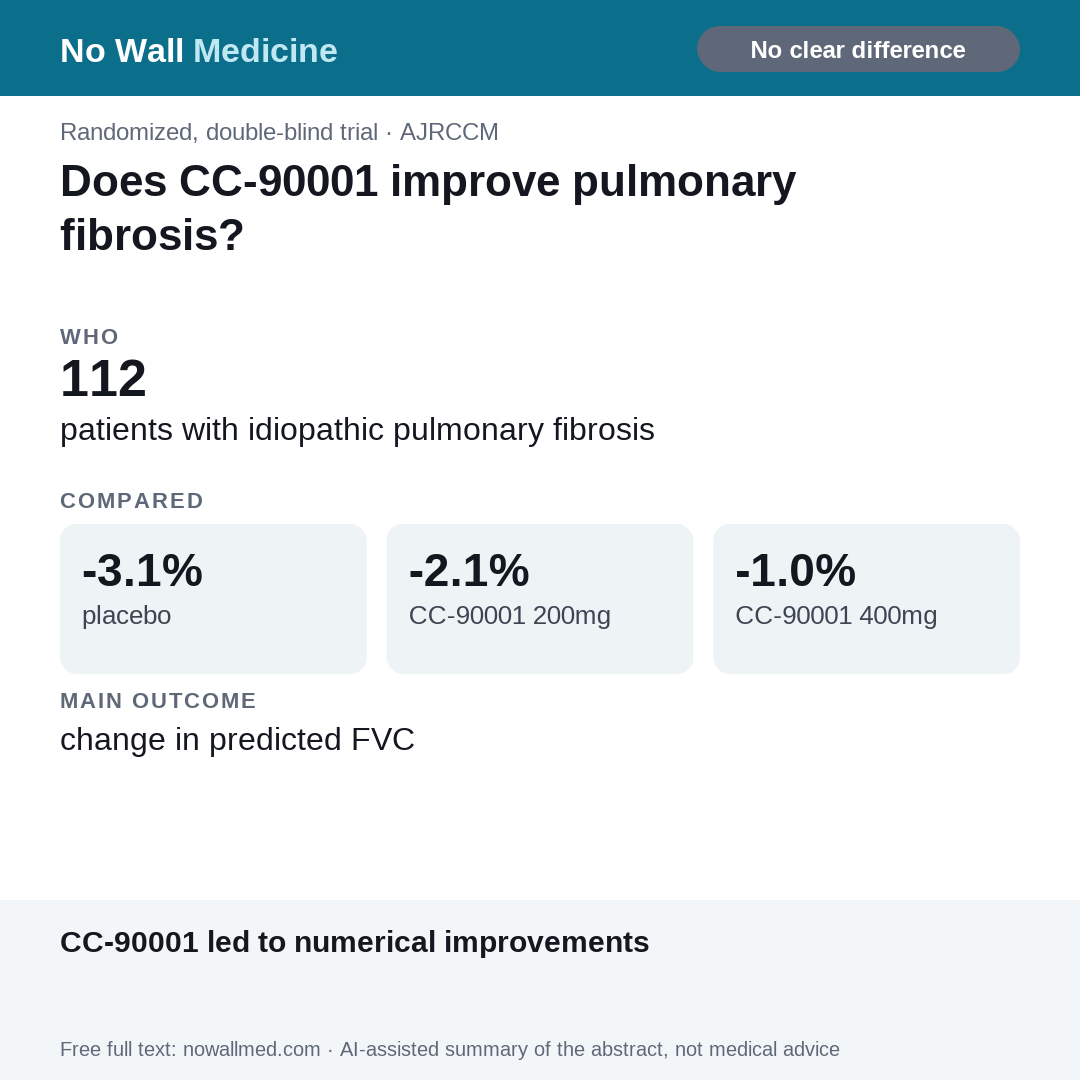
Phase 2, Double-Blind, Placebo-controlled Trial of a c-Jun N-Terminal Kinase Inhibitor in Idiopathic Pulmonary Fibrosis
Randomized, double-blind trialNo clear difference
Does CC-90001 improve pulmonary fibrosis?
Who
112
patients with idiopathic pulmonary fibrosis
Compared
-3.1%placebo
-2.1%CC-90001 200mg
-1.0%CC-90001 400mg
Main outcome
change in predicted FVC
Bottom line: CC-90001 led to numerical improvements
Limitation: study terminated early
AJRCCM · 2024-03-14Download image
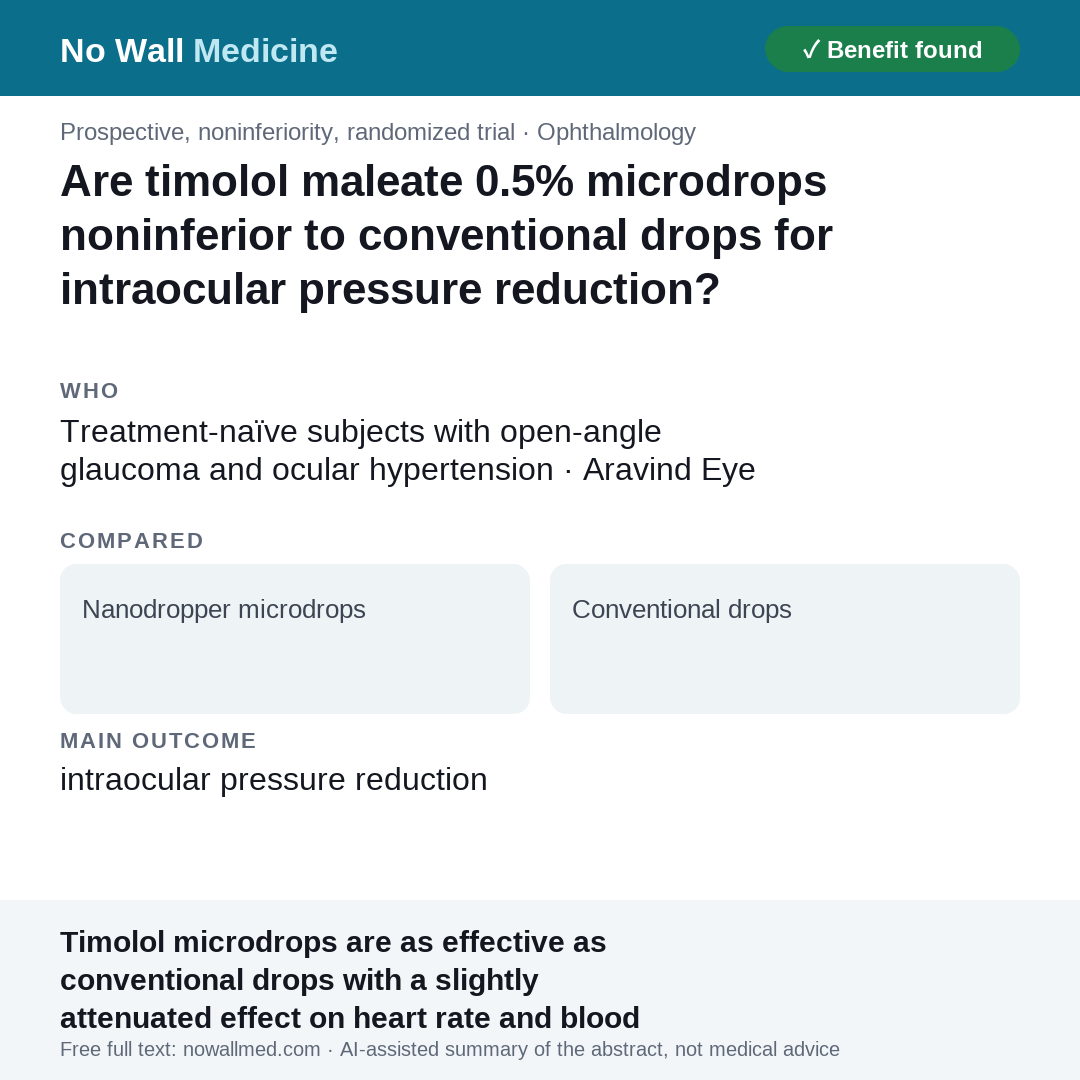
An Evaluation of the Efficacy and Safety of Timolol Maleate 0.5% Microdrops Administered with the Nanodropper
Prospective, noninferiority, randomized trialBenefit found
Are timolol maleate 0.5% microdrops noninferior to conventional drops for intraocular pressure reduction?
Who
Treatment-naïve subjects with open-angle glaucoma and ocular hypertension · Aravind Eye Care System
Compared
Nanodropper microdrops
Conventional drops
Main outcome
intraocular pressure reduction
Bottom line: Timolol microdrops are as effective as conventional drops with a slightly attenuated effect on heart rate and blood pressure.
Ophthalmology · 2024-03-14Download image
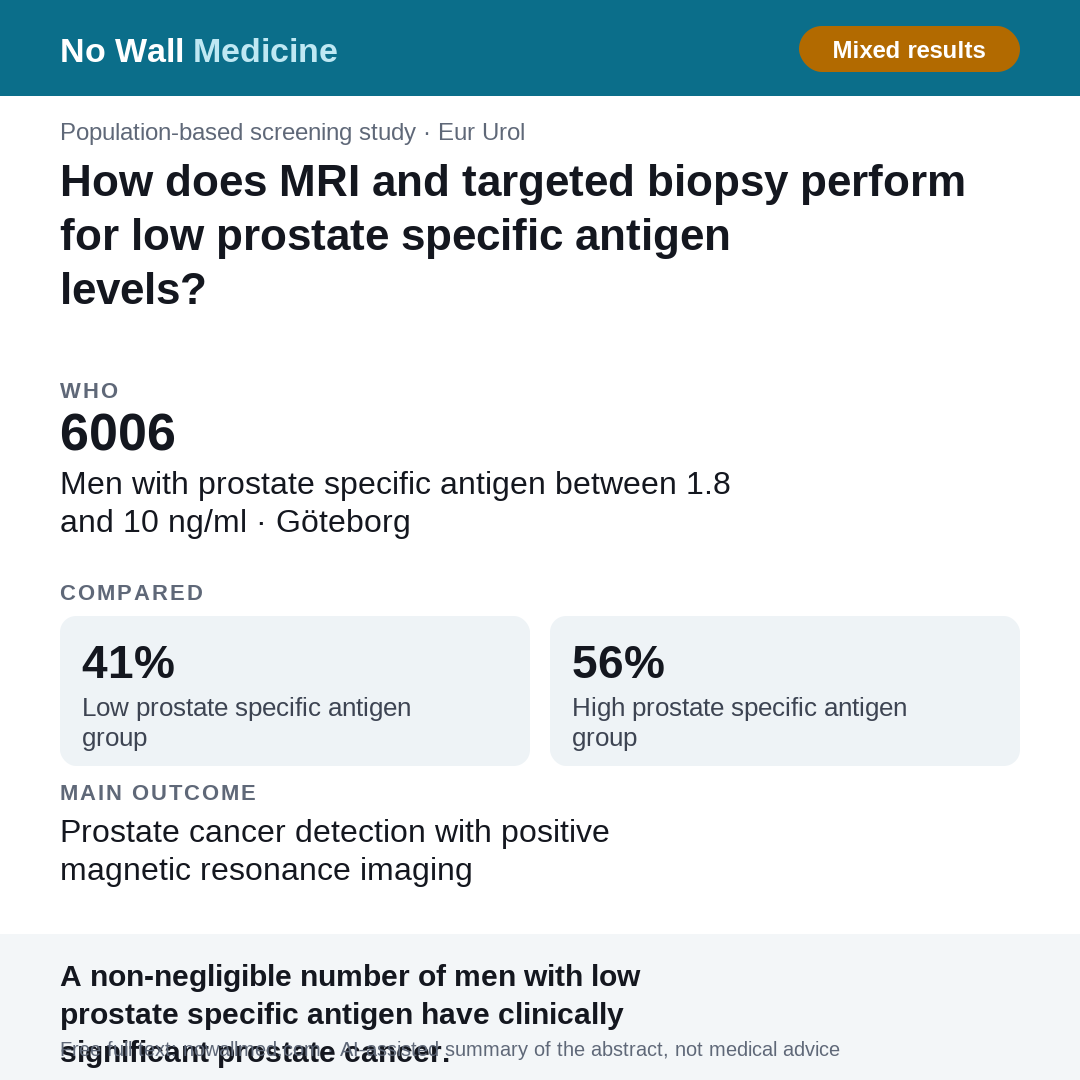
Prostate Cancers in the Prostate-specific Antigen Interval of 1.8-3 ng/ml: Results from the Göteborg-2 Prostate Cancer Screening Trial
Population-based screening studyMixed results
How does MRI and targeted biopsy perform for low prostate specific antigen levels?
Who
6006
Men with prostate specific antigen between 1.8 and 10 ng/ml · Göteborg
Compared
41%Low prostate specific antigen group (95% CI 0.33-0.49)
56%High prostate specific antigen group (95% CI 0.46-0.66)
Main outcome
Prostate cancer detection with positive magnetic resonance imaging
Bottom line: A non-negligible number of men with low prostate specific antigen have clinically significant prostate cancer.
Limitation: Results from only a single screening round.
Eur Urol · 2024-03-14Download image
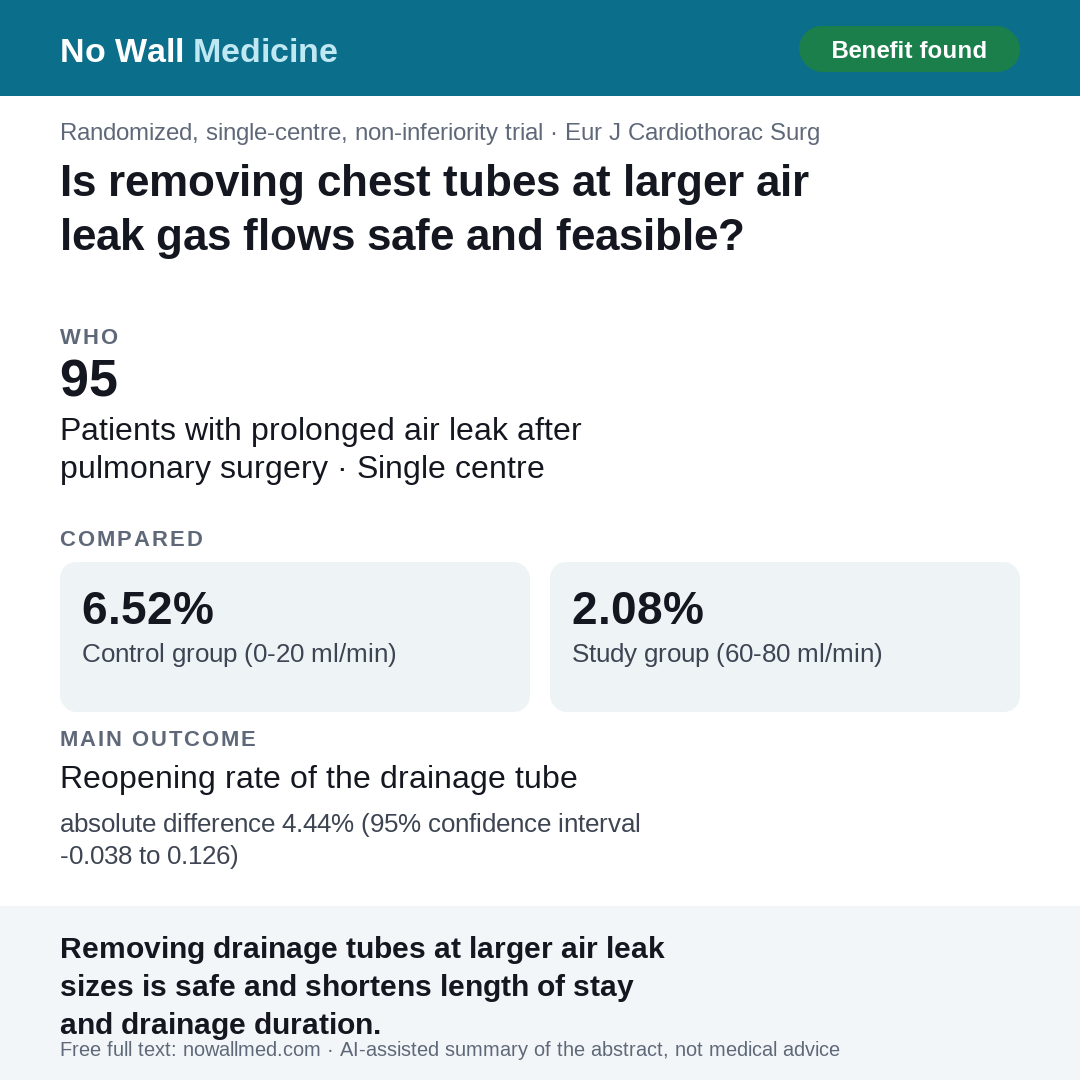
Chest tube removal at different gas flows in prolonged air leak: a randomized non-inferiority trial
Randomized, single-centre, non-inferiority trialBenefit found
Is removing chest tubes at larger air leak gas flows safe and feasible?
Who
95
Patients with prolonged air leak after pulmonary surgery · Single centre
Compared
6.52%Control group (0-20 ml/min)
2.08%Study group (60-80 ml/min)
Main outcome
Reopening rate of the drainage tube
Result: absolute difference 4.44% (95% confidence interval -0.038 to 0.126)
Bottom line: Removing drainage tubes at larger air leak sizes is safe and shortens length of stay and drainage duration.
Eur J Cardiothorac Surg · 2024-03-14Download image
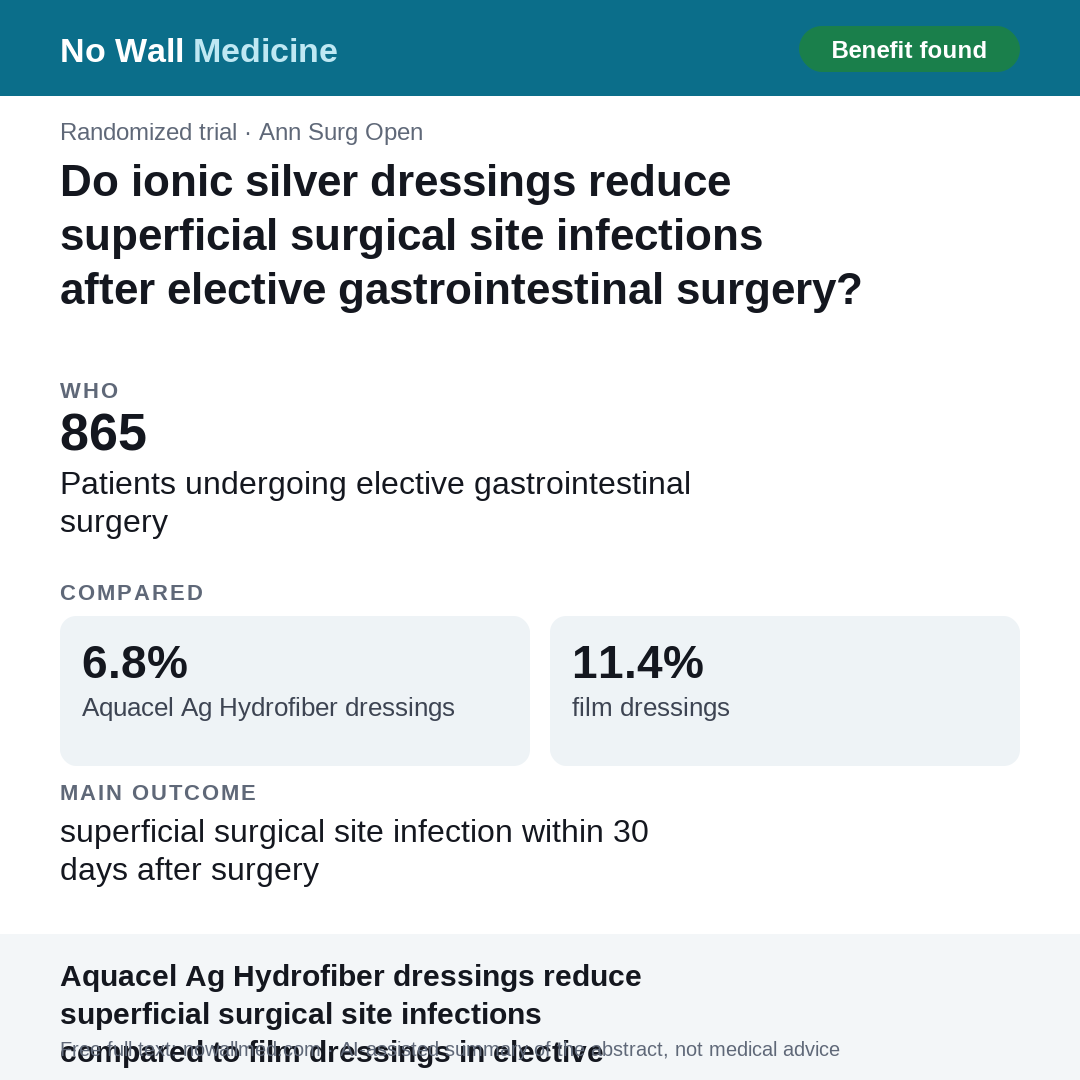
A Randomized Trial of Ionic Silver Dressing to Reduce Surgical Site Infection After Gastrointestinal Surgery
Randomized trialBenefit found
Do ionic silver dressings reduce superficial surgical site infections after elective gastrointestinal surgery?
Who
865
Patients undergoing elective gastrointestinal surgery
Compared
6.8%Aquacel Ag Hydrofiber dressings
11.4%film dressings
Main outcome
superficial surgical site infection within 30 days after surgery
Result: odds ratio, 0.602; 95% confidence interval, 0.367-0.986
Bottom line: Aquacel Ag Hydrofiber dressings reduce superficial surgical site infections compared to film dressings in elective gastrointestinal surgery.
Ann Surg Open · 2024-03-14Download image
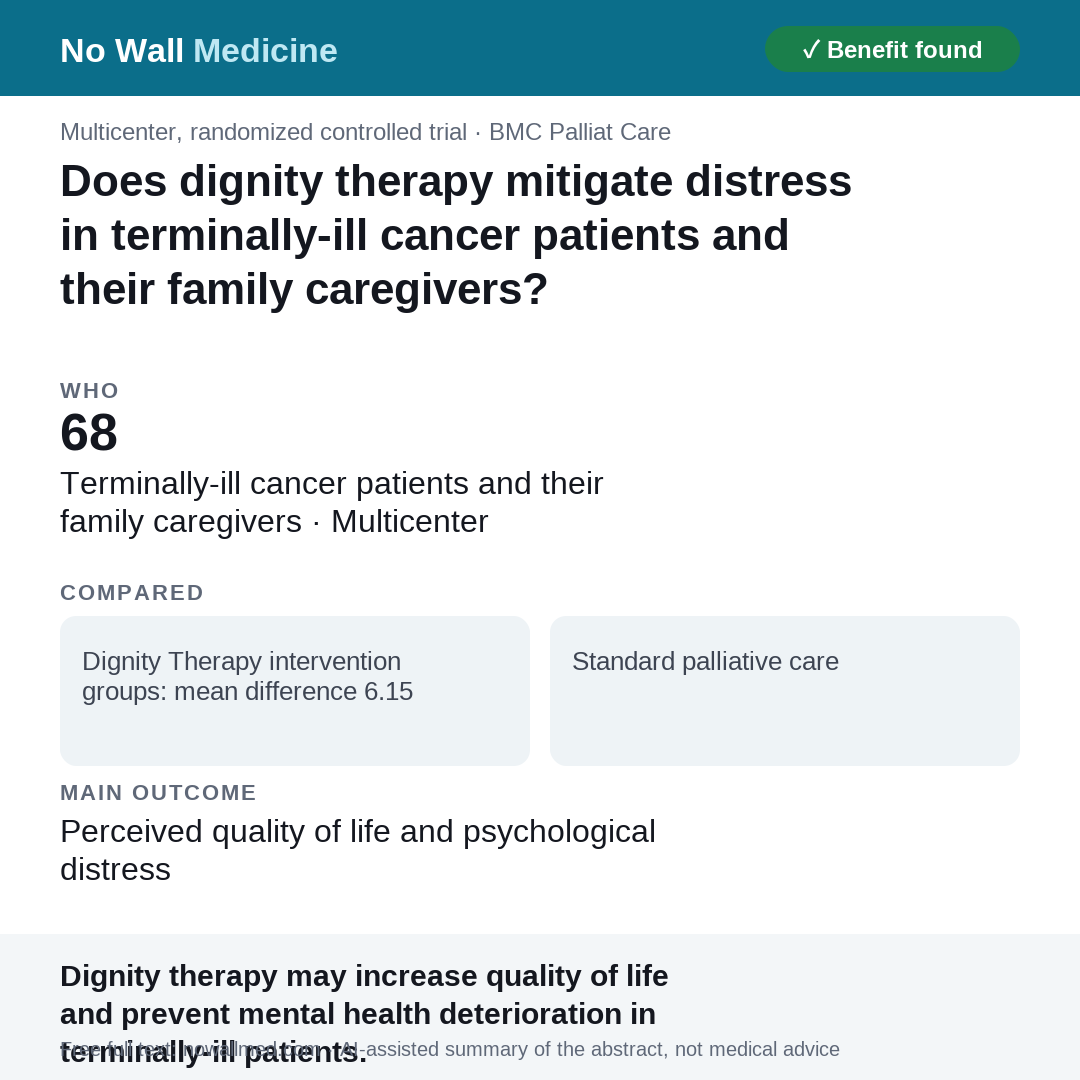
Effects of dignity therapy on psychological distress and wellbeing of palliative care patients and family caregivers - a randomized controlled study
Multicenter, randomized controlled trialBenefit found
Does dignity therapy mitigate distress in terminally-ill cancer patients and their family caregivers?
Who
68
Terminally-ill cancer patients and their family caregivers · Multicenter
Compared
Dignity Therapy intervention groups: mean difference 6.15
Standard palliative care
Main outcome
Perceived quality of life and psychological distress
Bottom line: Dignity therapy may increase quality of life and prevent mental health deterioration in terminally-ill patients.
Limitation: Implementation within a randomized controlled trial in palliative care poses significant challenges.
BMC Palliat Care · 2024-03-14Download image
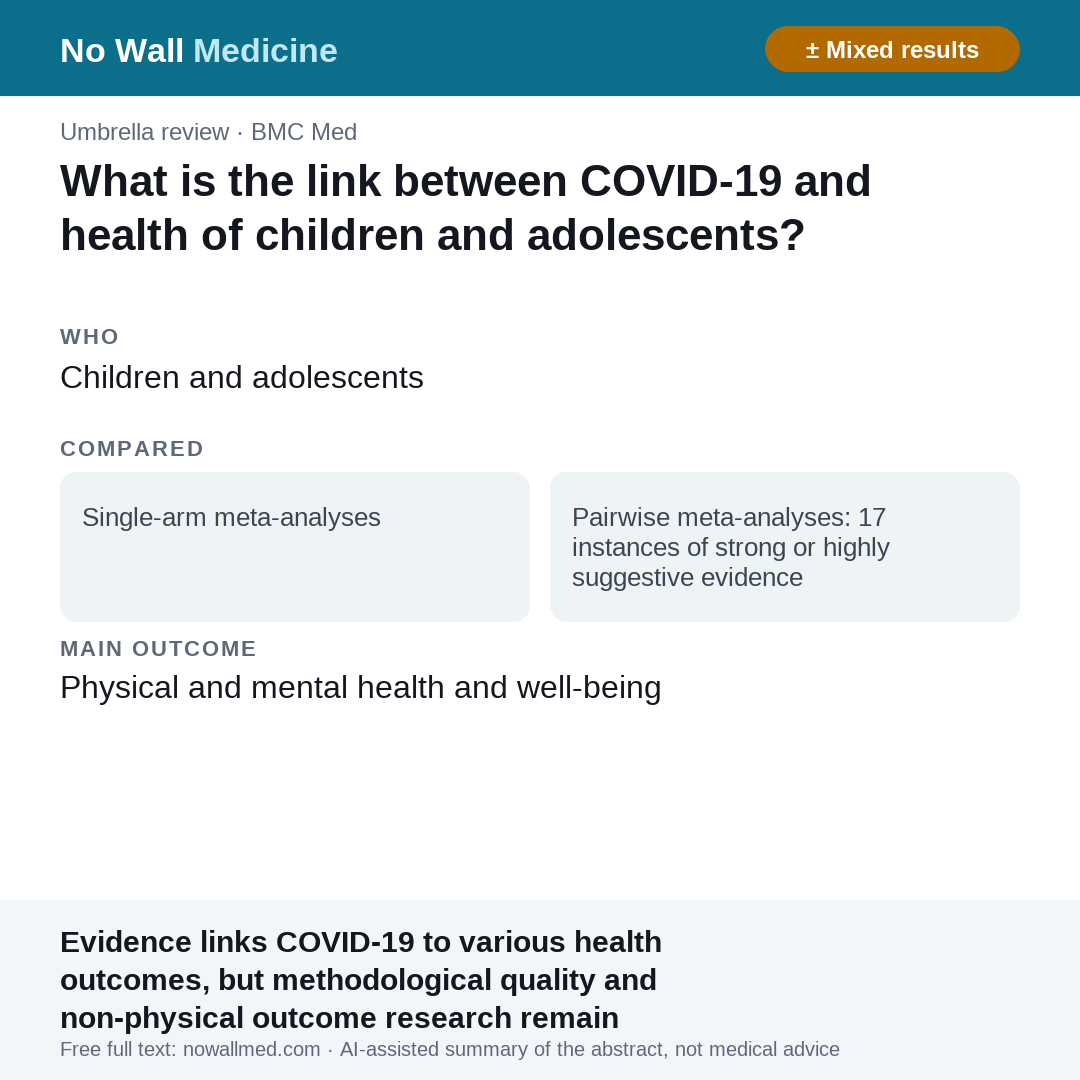
Evidence linking COVID-19 and the health/well-being of children and adolescents: an umbrella review
Umbrella reviewMixed results
What is the link between COVID-19 and health of children and adolescents?
Who
Children and adolescents
Compared
Single-arm meta-analyses
Pairwise meta-analyses: 17 instances of strong or highly suggestive evidence
Main outcome
Physical and mental health and well-being
Bottom line: Evidence links COVID-19 to various health outcomes, but methodological quality and non-physical outcome research remain suboptimal.
Limitation: The quality of evidence and methodological rigor were suboptimal.
BMC Med · 2024-03-13Download image
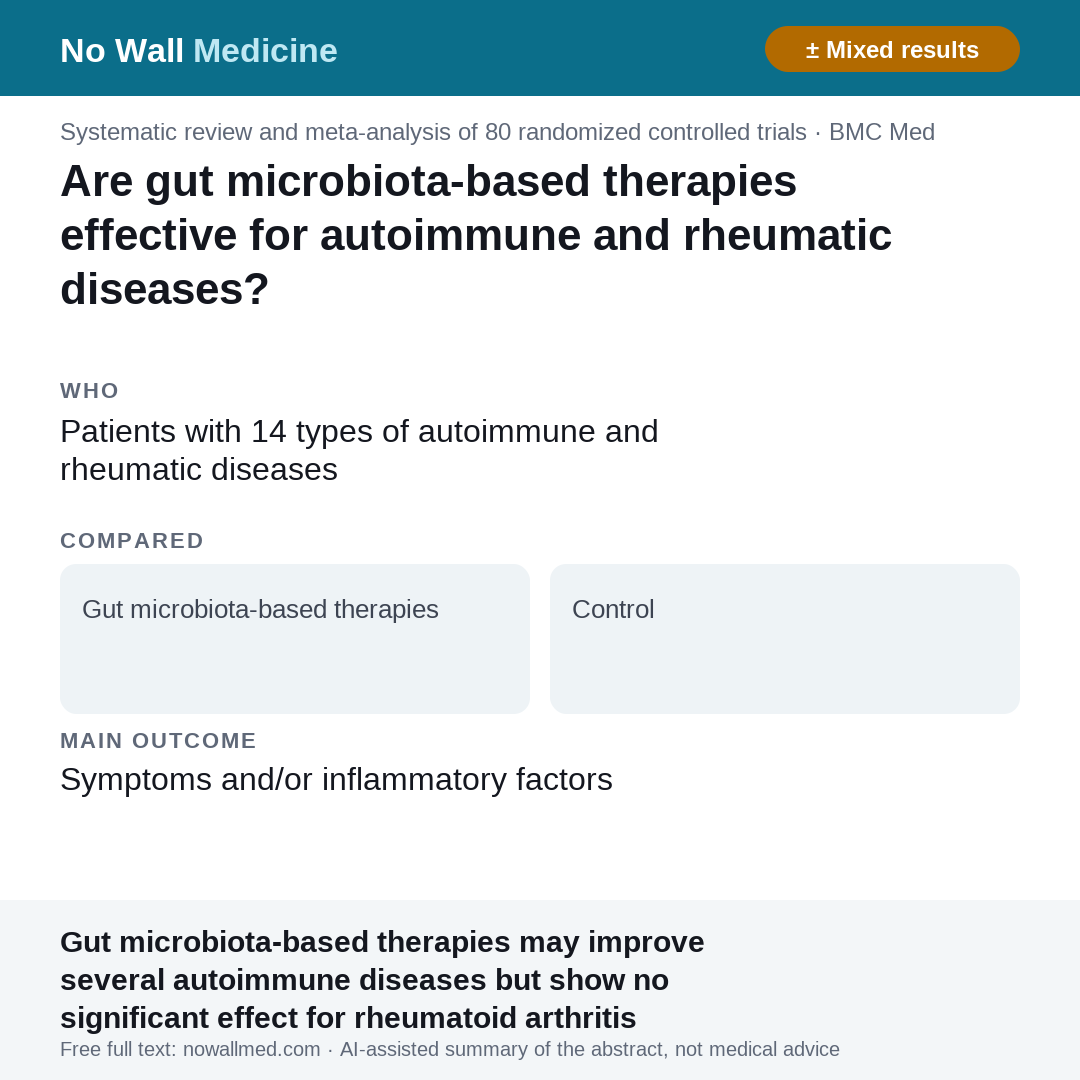
Efficacy and safety of gut microbiota-based therapies in autoimmune and rheumatic diseases: a systematic review and meta-analysis of 80 randomized controlled trials
Systematic review and meta-analysis of 80 randomized controlled trialsMixed results
Are gut microbiota-based therapies effective for autoimmune and rheumatic diseases?
Who
80
Patients with 14 types of autoimmune and rheumatic diseases
Compared
Gut microbiota-based therapies
Control
Main outcome
Symptoms and/or inflammatory factors
Bottom line: Gut microbiota-based therapies may improve several autoimmune diseases but show no significant effect for rheumatoid arthritis and spondyloarthritis.
BMC Med · 2024-03-13Download image
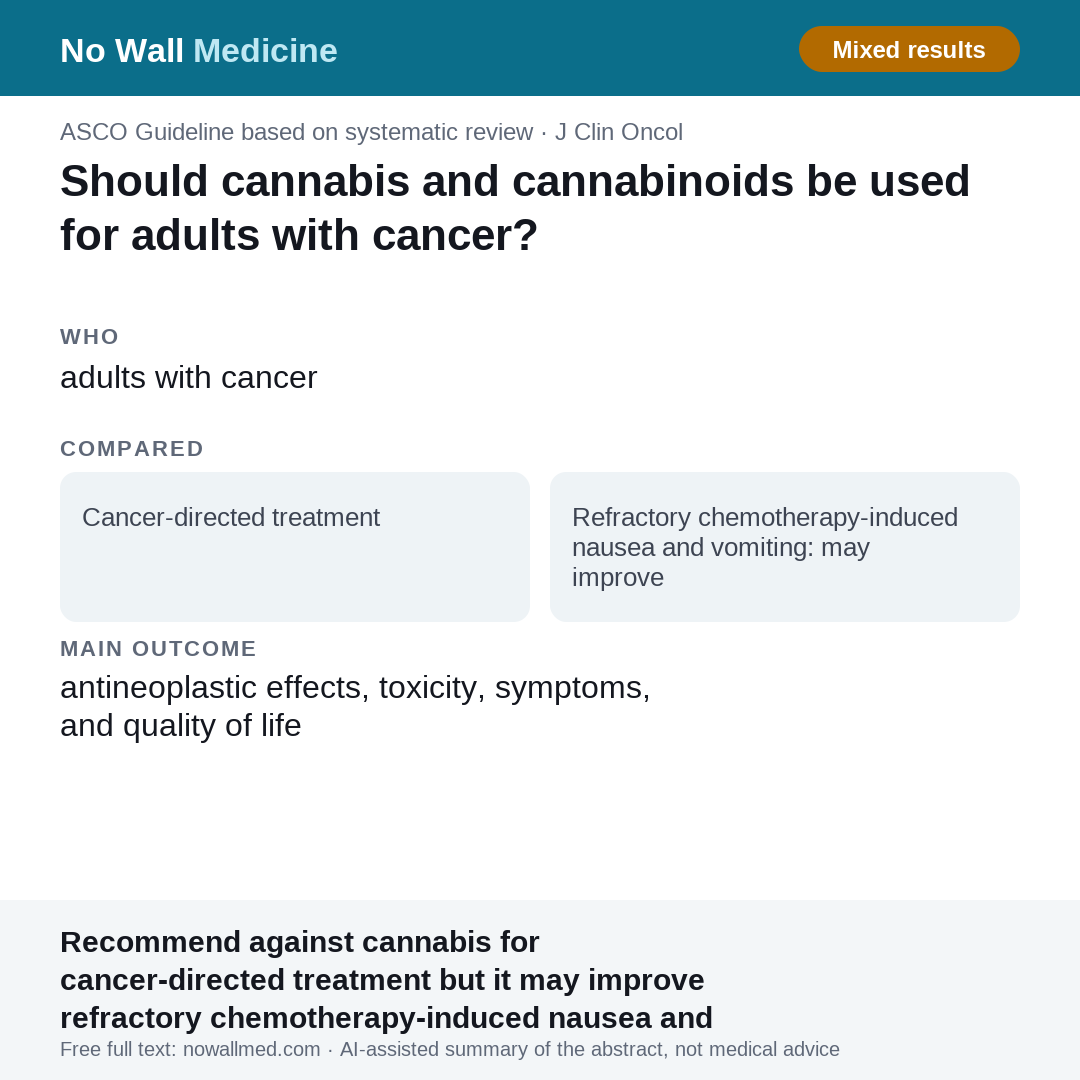
Cannabis and Cannabinoids in Adults With Cancer: ASCO Guideline
ASCO Guideline based on systematic reviewMixed results
Should cannabis and cannabinoids be used for adults with cancer?
Who
adults with cancer
Compared
Cancer-directed treatment
Refractory chemotherapy-induced nausea and vomiting: may improve
Main outcome
antineoplastic effects, toxicity, symptoms, and quality of life
Bottom line: Recommend against cannabis for cancer-directed treatment but it may improve refractory chemotherapy-induced nausea and vomiting.
J Clin Oncol · 2024-03-13Download image