Visual abstracts
New randomized trials and meta-analyses from leading journals at a glance: who was studied, what was compared, and what was found. Every paper is free to read in full.
All specialtiesCardiology 2776Oncology 2343Gastroenterology & Hepatology 1065Infectious Disease 1765Neurology 1116Psychiatry & Mental Health 1277Pulmonology 1161Critical Care 765Endocrinology & Diabetes 1429Pediatrics 1632Surgery 1428Orthopedics & Sports Medicine 507Neurosurgery 340Cardiothoracic & Vascular Surgery 308Plastic & Reconstructive Surgery 407Nephrology 579Rheumatology 421Hematology 602Dermatology 325Ophthalmology 319Obstetrics & Gynecology 914Public & Global Health 510Radiology & Imaging 385Anesthesiology 556Urology 459ENT (Otolaryngology) 323Emergency Medicine 307Allergy & Immunology 175Geriatrics 589Family Medicine & Primary Care 318Medical Genetics & Genomics 318Pathology & Laboratory Medicine 90Physical Medicine & Rehabilitation 446Palliative Care 241Nutrition 751Digital Health & AI 1326General Medicine 200
Effects of volenrelaxin in worsening heart failure with preserved ejection fraction: a phase 2 randomized trial
Double-blind, international, multicenter randomized trialHarm found
Does volenrelaxin improve left atrial function, congestion, and kidney function in HFpEF patients?
Who
332
Patients with New York Heart Association class II-IV heart failure with preserved ejection fraction · International, multicenter
Compared
25-mg volenrelaxin: +3.9% (95% CI: 1.1-6.6)
50-mg volenrelaxin: +1.3% (95% CI: -1.3 to 3.9)
100-mg volenrelaxin: +0.9% (95% CI: -1.8 to 3.6)
Placebo
Main outcome
Change in left atrial reservoir strain at 26 weeks
Result: hazard ratio 2.64 (95% CI 0.93-7.56)
Bottom line: Volenrelaxin was associated with worsening congestion in patients with recently decompensated heart failure with preserved ejection fraction.
Nat Med · 2025-08-31Download image

Sex Differences in Effectiveness of Semaglutide in Patients With Peripheral Artery Disease: The STRIDE Trial
Post hoc analysis of a randomized trialNo clear difference
Does semaglutide effectiveness in peripheral artery disease differ between females and males?
Who
792
People with early symptomatic peripheral artery disease and type 2 diabetes
Compared
Females: consistent improvement in maximum walking distance
Males: consistent improvement in maximum walking distance
Main outcome
ratio to baseline in maximum walking distance at week 52
Result: P-interaction value = 0.65
Bottom line: Semaglutide 1.0 mg provided consistent functional improvements in patients regardless of sex.
JACC · 2025-08-31Download image

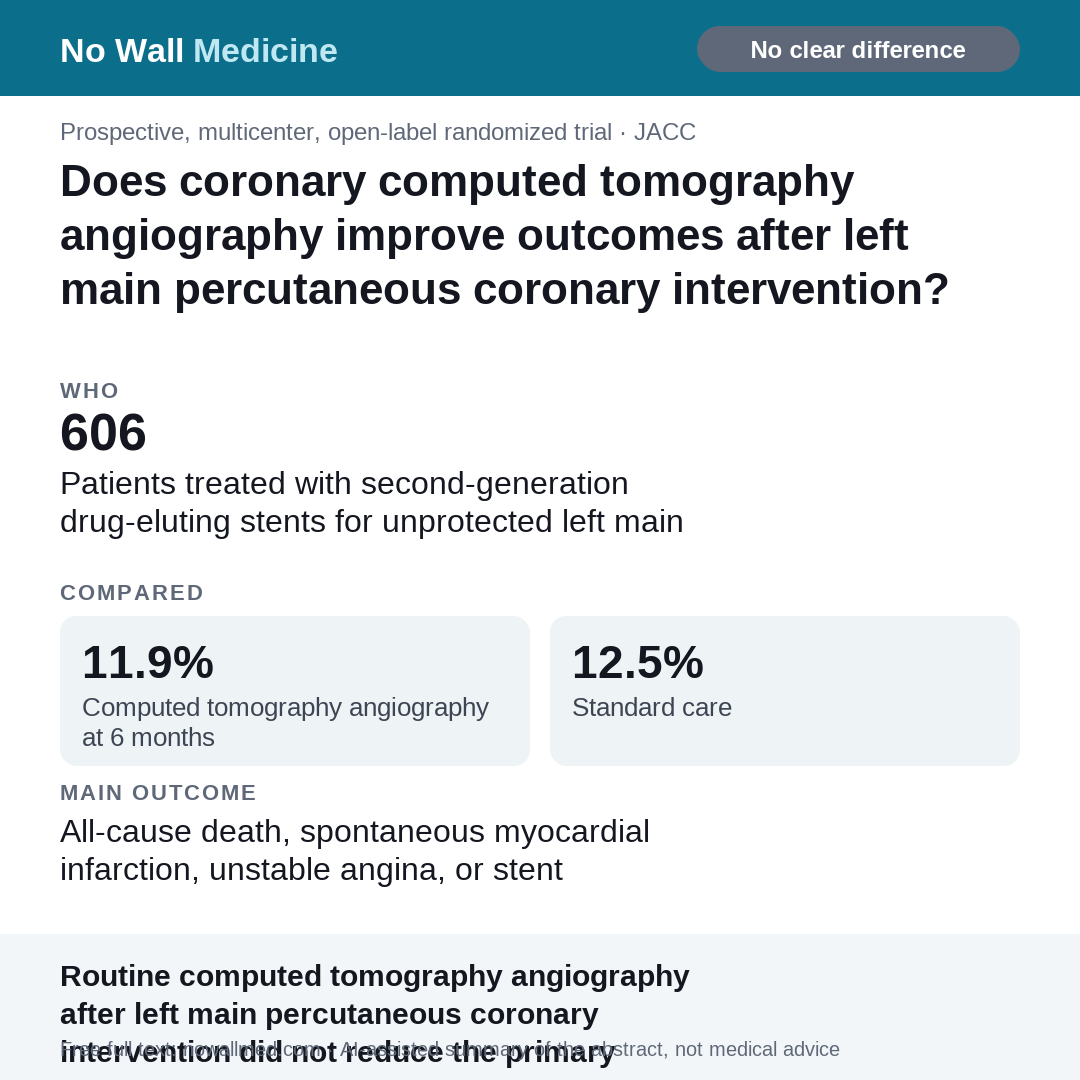
Computed Tomography Angiography or Standard Care After Left Main PCI?
Prospective, multicenter, open-label randomized trialNo clear difference
Does coronary computed tomography angiography improve outcomes after left main percutaneous coronary intervention?
Who
606
Patients treated with second-generation drug-eluting stents for unprotected left main disease · Multicenter
Compared
11.9%Computed tomography angiography at 6 months
12.5%Standard care
Main outcome
All-cause death, spontaneous myocardial infarction, unstable angina, or stent thrombosis
Result: hazard ratio 0.97 (95% CI 0.76-1.23)
Bottom line: Routine computed tomography angiography after left main percutaneous coronary intervention did not reduce the primary composite clinical endpoint.
JACC · 2025-08-31Download image
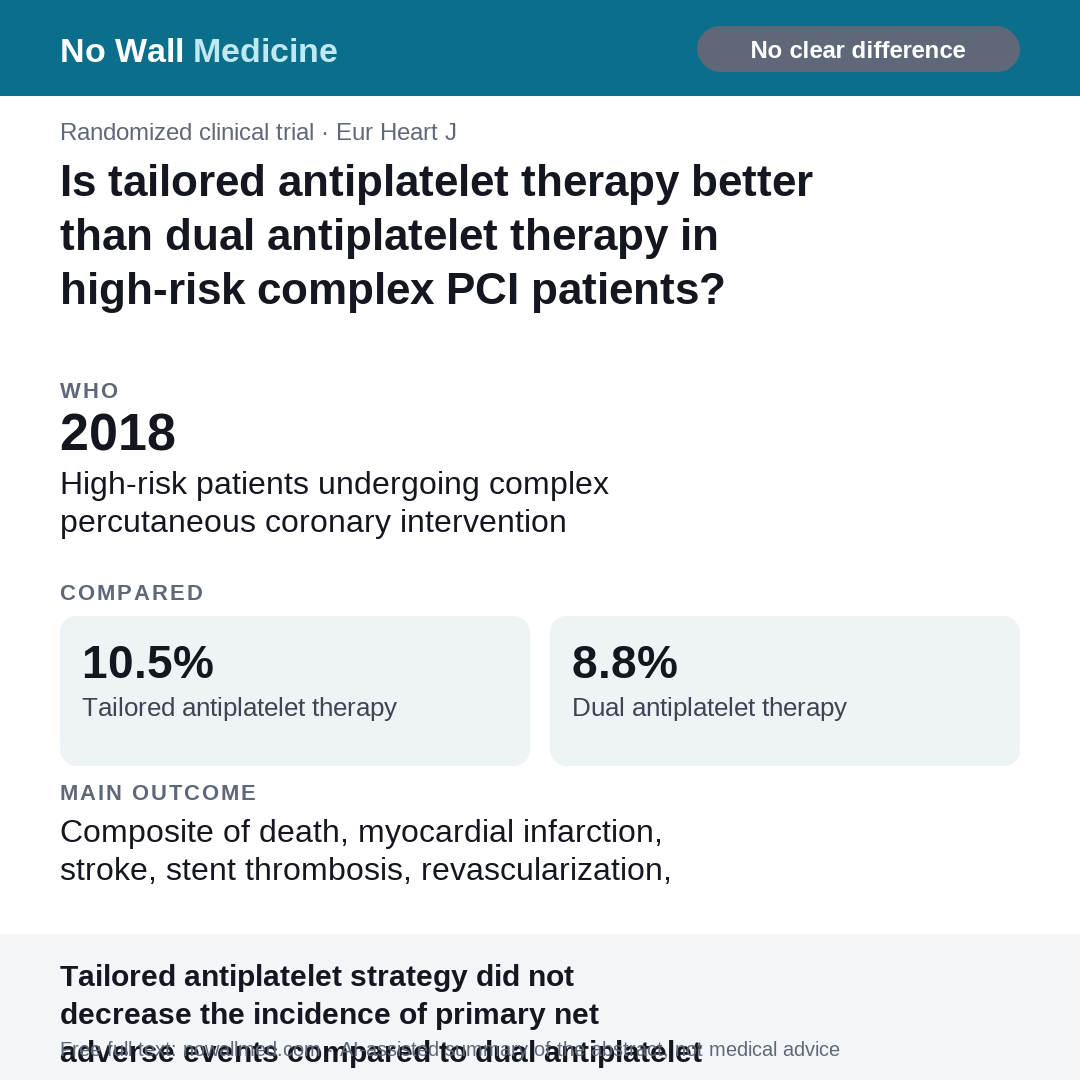
Temporal modulation of antiplatelet therapy in high-risk patients undergoing complex percutaneous coronary intervention: the TAILORED-CHIP randomized clinical trial
Randomized clinical trialNo clear difference
Is tailored antiplatelet therapy better than dual antiplatelet therapy in high-risk complex PCI patients?
Who
2018
High-risk patients undergoing complex percutaneous coronary intervention
Compared
10.5%Tailored antiplatelet therapy
8.8%Dual antiplatelet therapy
Main outcome
Composite of death, myocardial infarction, stroke, stent thrombosis, revascularization, and bleeding
Result: hazard ratio 1.19 (95% CI 0.90-1.58)
Bottom line: Tailored antiplatelet strategy did not decrease the incidence of primary net adverse events compared to dual antiplatelet therapy.
Eur Heart J · 2025-08-31Download image
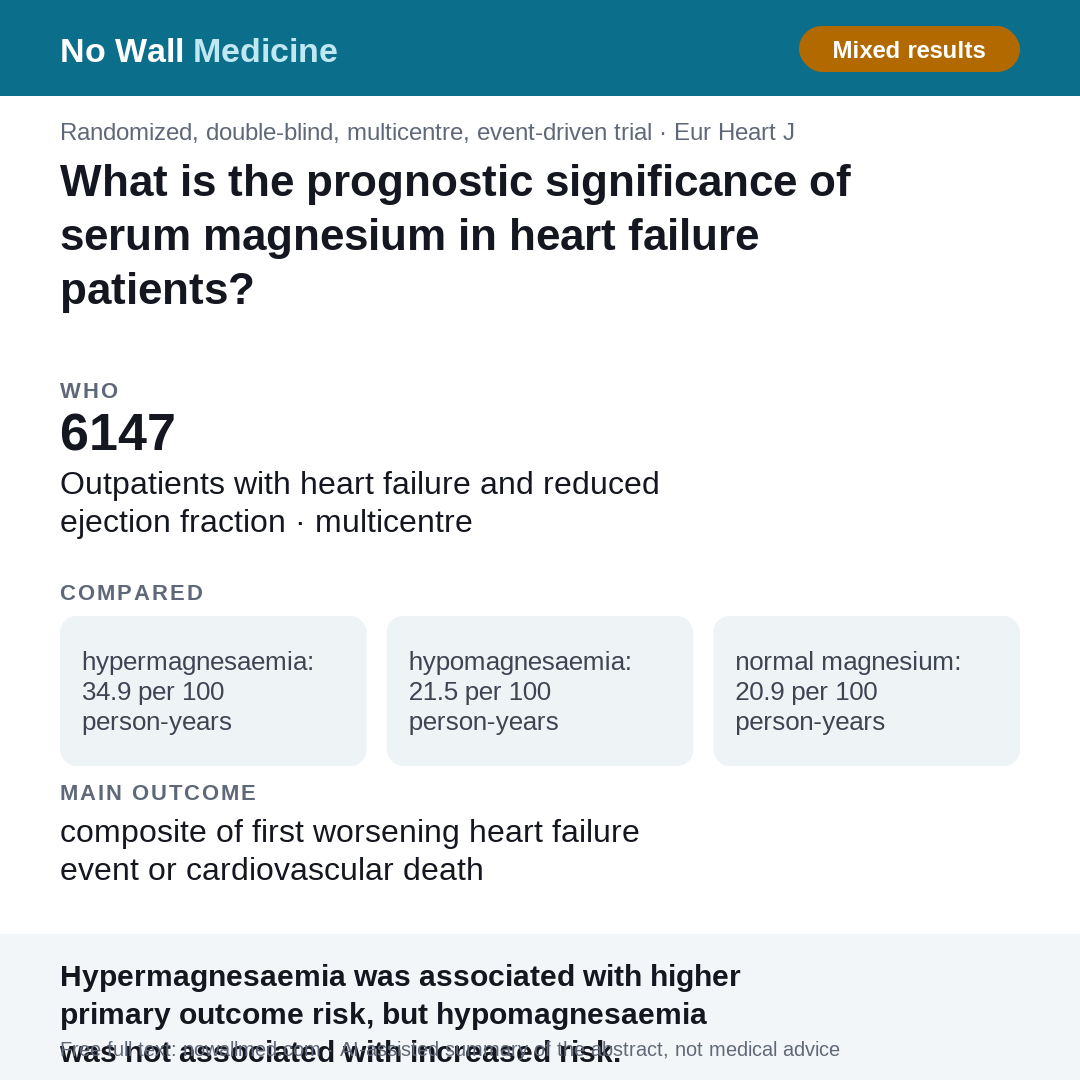
Serum magnesium and outcomes in heart failure with reduced ejection fraction: the GALACTIC-HF trial
Randomized, double-blind, multicentre, event-driven trialMixed results
What is the prognostic significance of serum magnesium in heart failure patients?
Who
6147
Outpatients with heart failure and reduced ejection fraction · multicentre
Compared
hypermagnesaemia: 34.9 per 100 person-years
hypomagnesaemia: 21.5 per 100 person-years
normal magnesium: 20.9 per 100 person-years
Main outcome
composite of first worsening heart failure event or cardiovascular death
Bottom line: Hypermagnesaemia was associated with higher primary outcome risk, but hypomagnesaemia was not associated with increased risk.
Eur Heart J · 2025-08-31Download image
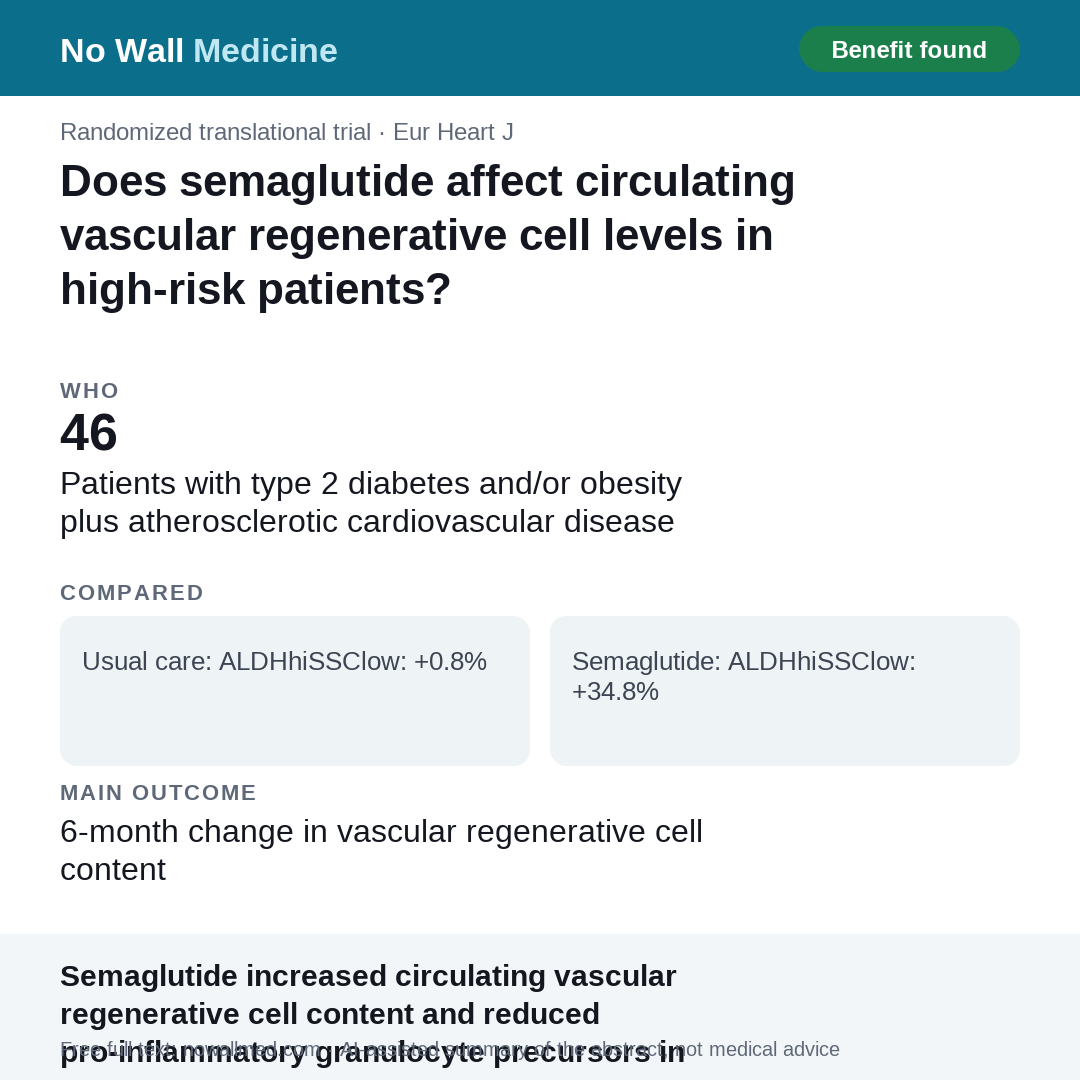
Semaglutide promotes bone marrow-derived progenitor cell flux towards an anti-inflammatory and pro-regenerative profile in high-risk patients: the SEMA-VR CardioLink-15 trial
Randomized translational trialBenefit found
Does semaglutide affect circulating vascular regenerative cell levels in high-risk patients?
Who
46
Patients with type 2 diabetes and/or obesity plus atherosclerotic cardiovascular disease
Compared
Usual care: ALDHhiSSClow: +0.8%
Semaglutide: ALDHhiSSClow: +34.8%
Main outcome
6-month change in vascular regenerative cell content
Bottom line: Semaglutide increased circulating vascular regenerative cell content and reduced pro-inflammatory granulocyte precursors in high-risk patients.
Eur Heart J · 2025-08-31Download image
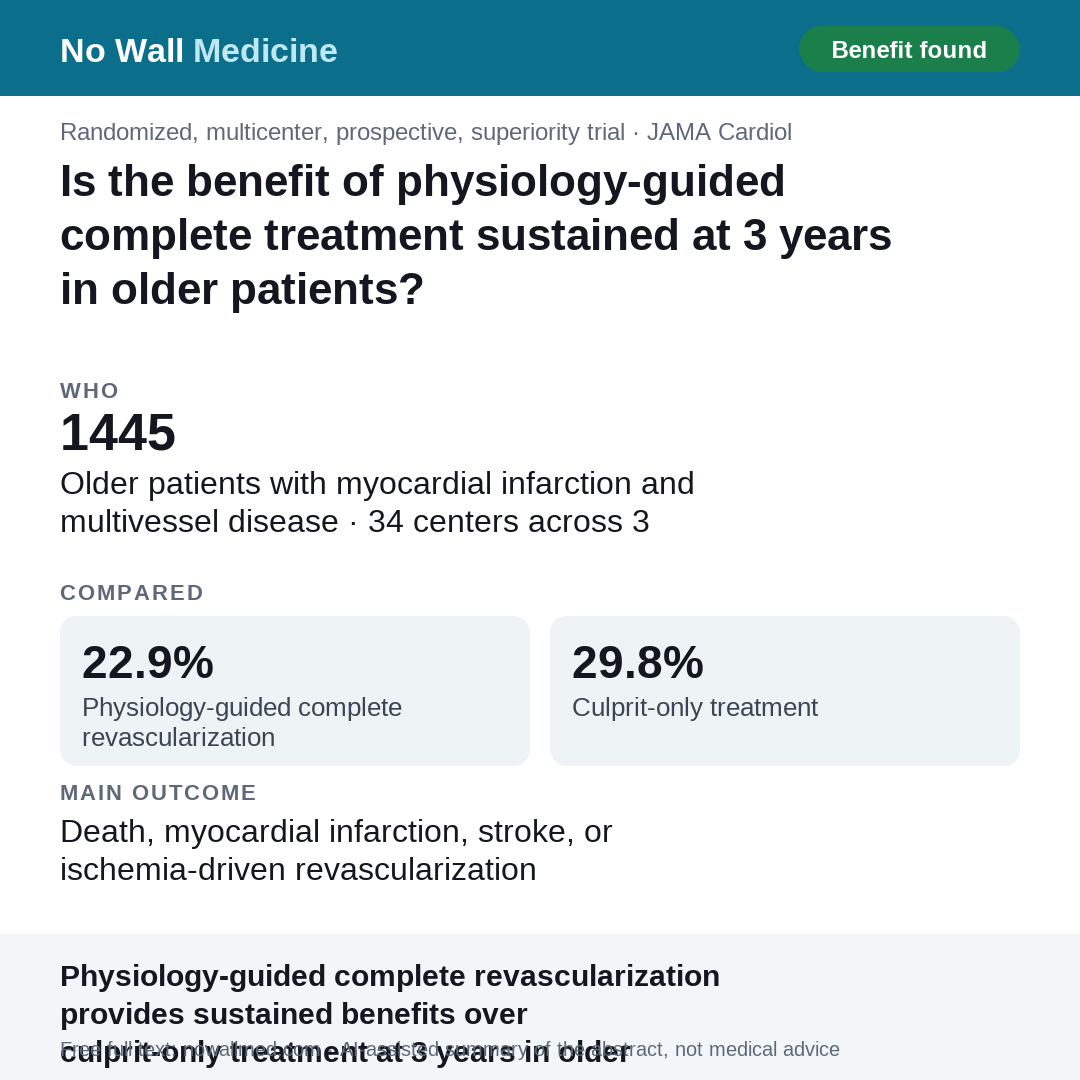
Physiology-Guided Complete Revascularization in Older Patients With Myocardial Infarction: Three-Year Outcomes of a Randomized Clinical Trial
Randomized, multicenter, prospective, superiority trialBenefit found
Is the benefit of physiology-guided complete treatment sustained at 3 years in older patients?
Who
1445
Older patients with myocardial infarction and multivessel disease · 34 centers across 3 countries
Compared
22.9%Physiology-guided complete revascularization
29.8%Culprit-only treatment
Main outcome
Death, myocardial infarction, stroke, or ischemia-driven revascularization
Result: hazard ratio 0.72 (95% CI 0.58-0.88)
Bottom line: Physiology-guided complete revascularization provides sustained benefits over culprit-only treatment at 3 years in older patients.
JAMA Cardiol · 2025-08-31Download image
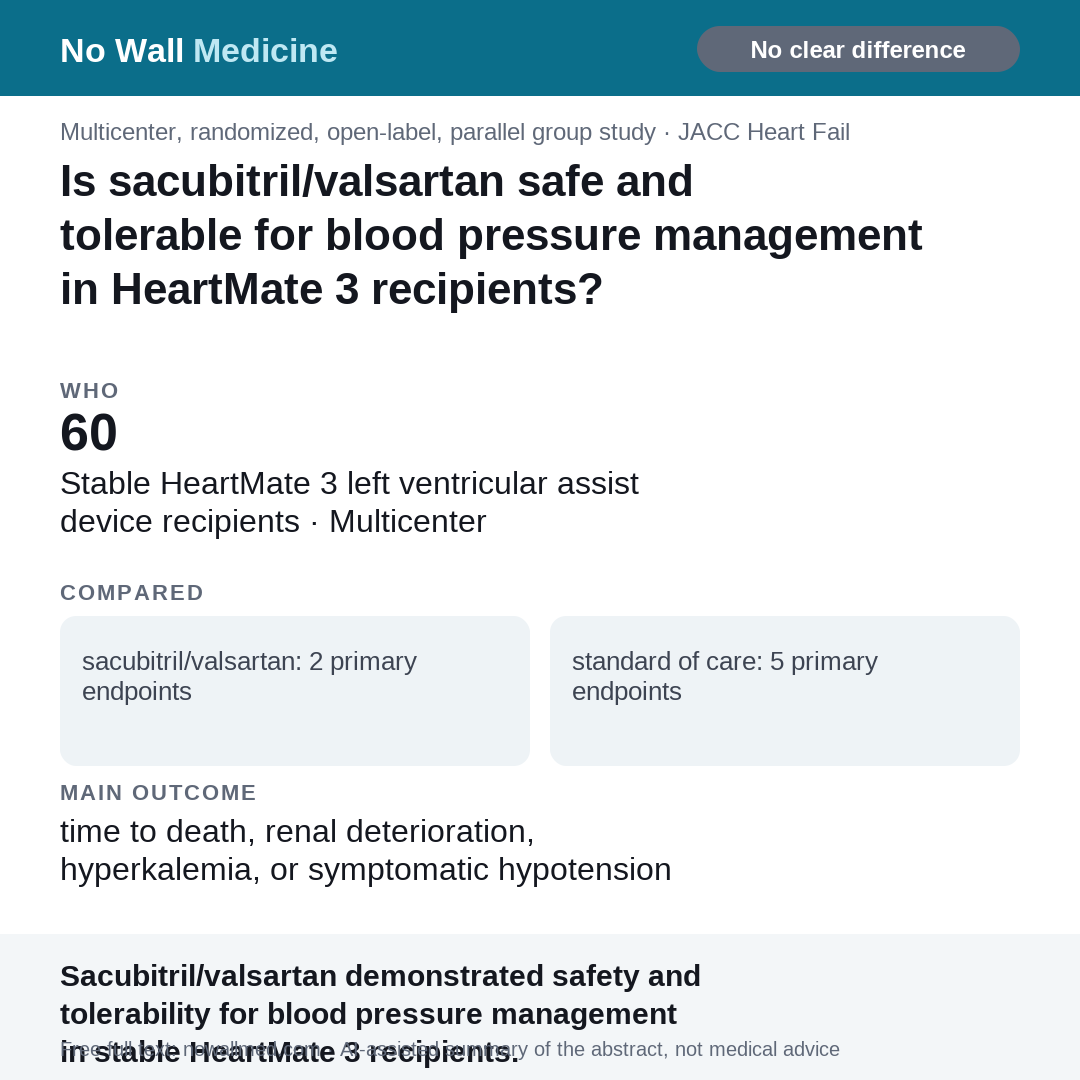
Angiotensin-Neprilysin Inhibition and Left Ventricular Assist Device Therapy: Primary Results of the ENVAD-HF Trial
Multicenter, randomized, open-label, parallel group studyNo clear difference
Is sacubitril/valsartan safe and tolerable for blood pressure management in HeartMate 3 recipients?
Who
60
Stable HeartMate 3 left ventricular assist device recipients · Multicenter
Compared
sacubitril/valsartan: 2 primary endpoints
standard of care: 5 primary endpoints
Main outcome
time to death, renal deterioration, hyperkalemia, or symptomatic hypotension
Result: hazard ratio 0.42 (95% CI: 0.08-2.18)
Bottom line: Sacubitril/valsartan demonstrated safety and tolerability for blood pressure management in stable HeartMate 3 recipients.
JACC Heart Fail · 2025-08-31Download image
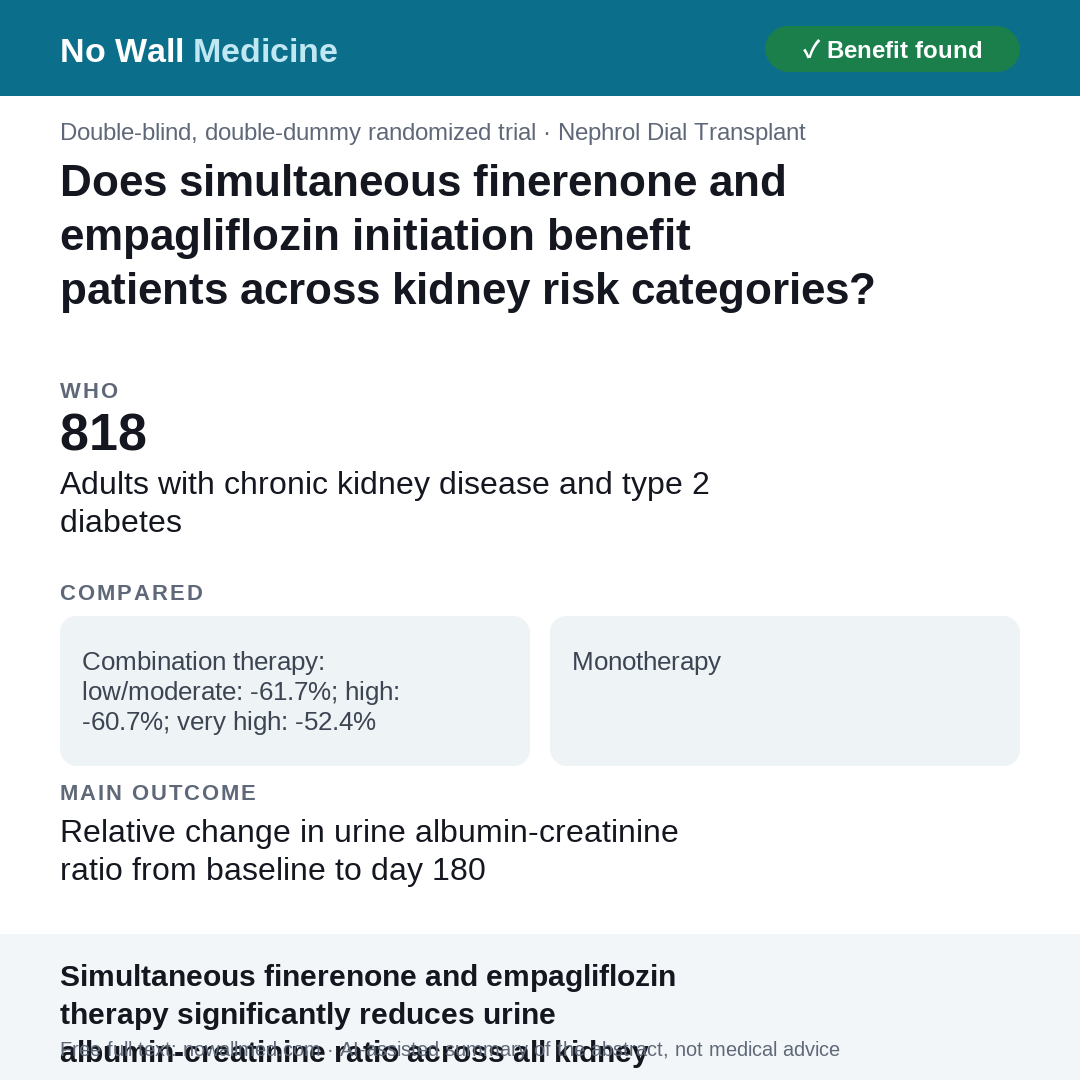
Simultaneous initiation of finerenone and empagliflozin across the spectrum of kidney risk in the CONFIDENCE trial
Double-blind, double-dummy randomized trialBenefit found
Does simultaneous finerenone and empagliflozin initiation benefit patients across kidney risk categories?
Who
818
Adults with chronic kidney disease and type 2 diabetes
Compared
Combination therapy: low/moderate: -61.7%; high: -60.7%; very high: -52.4%
Monotherapy
Main outcome
Relative change in urine albumin-creatinine ratio from baseline to day 180
Bottom line: Simultaneous finerenone and empagliflozin therapy significantly reduces urine albumin-creatinine ratio across all kidney disease risk categories.
Nephrol Dial Transplant · 2025-08-31Download image
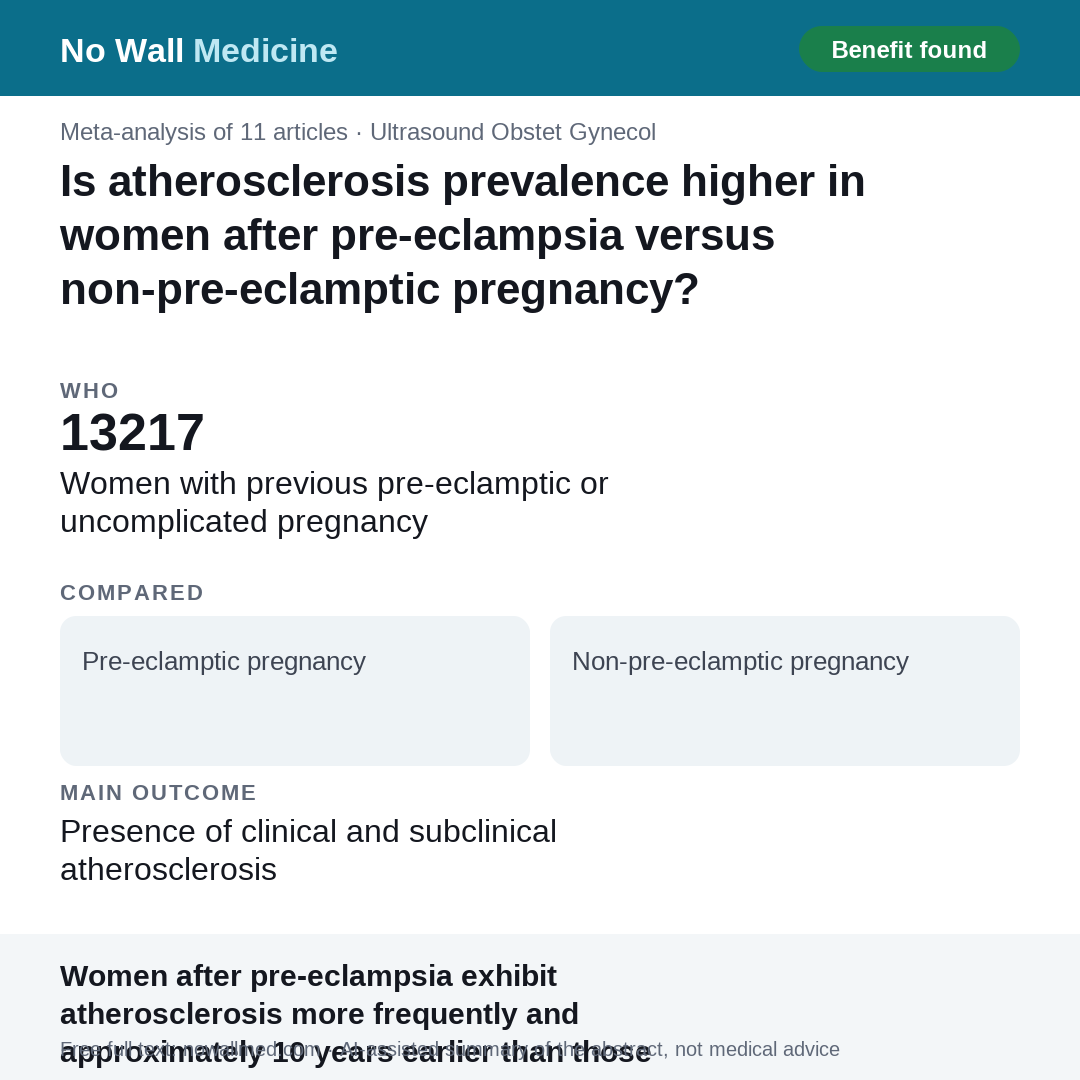
Atherosclerosis after pre-eclampsia: systematic review and meta-analysis
Meta-analysis of 11 articlesBenefit found
Is atherosclerosis prevalence higher in women after pre-eclampsia versus non-pre-eclamptic pregnancy?
Who
13217
Women with previous pre-eclamptic or uncomplicated pregnancy
Compared
Pre-eclamptic pregnancy
Non-pre-eclamptic pregnancy
Main outcome
Presence of clinical and subclinical atherosclerosis
Result: odds ratio 1.57 (95% CI 1.39-1.78)
Bottom line: Women after pre-eclampsia exhibit atherosclerosis more frequently and approximately 10 years earlier than those with uncomplicated pregnancies.
Ultrasound Obstet Gynecol · 2025-08-31Download image
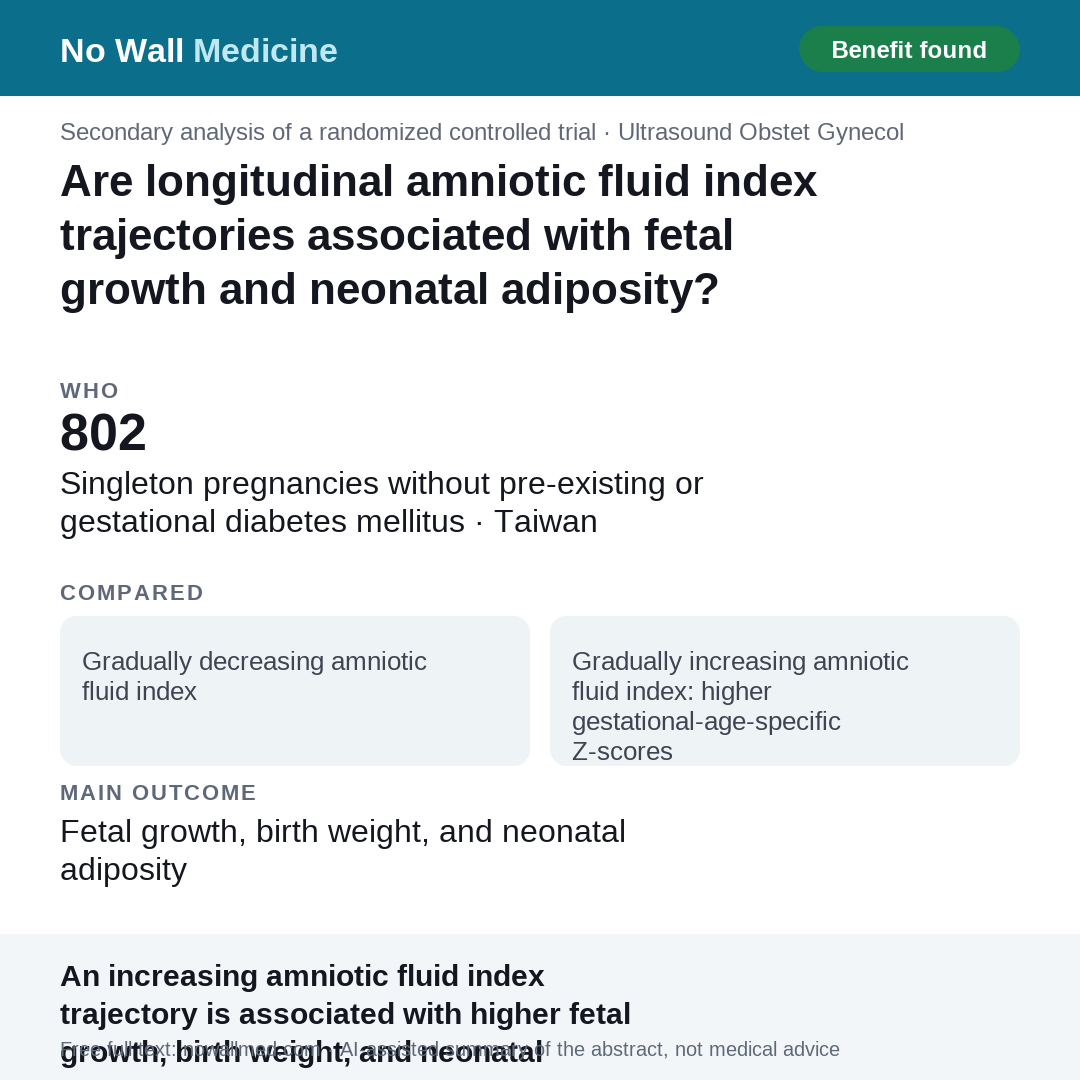
Trajectory of serial amniotic fluid index measurements is associated with fetal growth, birth weight and neonatal adiposity
Secondary analysis of a randomized controlled trialBenefit found
Are longitudinal amniotic fluid index trajectories associated with fetal growth and neonatal adiposity?
Who
802
Singleton pregnancies without pre-existing or gestational diabetes mellitus · Taiwan
Compared
Gradually decreasing amniotic fluid index
Gradually increasing amniotic fluid index: higher gestational-age-specific Z-scores
Main outcome
Fetal growth, birth weight, and neonatal adiposity
Result: odds ratio 2.47 (95% CI 1.21-5.11)
Bottom line: An increasing amniotic fluid index trajectory is associated with higher fetal growth, birth weight, and neonatal adiposity.
Ultrasound Obstet Gynecol · 2025-08-31Download image
Impact of Prognostic Notifications on Inpatient Advance Care Planning: A Cluster Randomized Trial
Pragmatic cluster randomized trialBenefit found
Does notifying physicians of high mortality risk increase advance care planning documentation?
Who
314
Patients at high risk of 30-day and 6-month death · One academic medical center
Compared
19.6%Control group
34.7%Intervention group
Main outcome
Documentation of an advance care planning conversation by the randomized physician
Result: odds ratio 2.04 (95% CI 1.16-3.59)
Bottom line: Machine learning mortality notifications increase the likelihood of physicians documenting advance care planning conversations during hospitalization.
J Pain Symptom Manage · 2025-08-31Download image

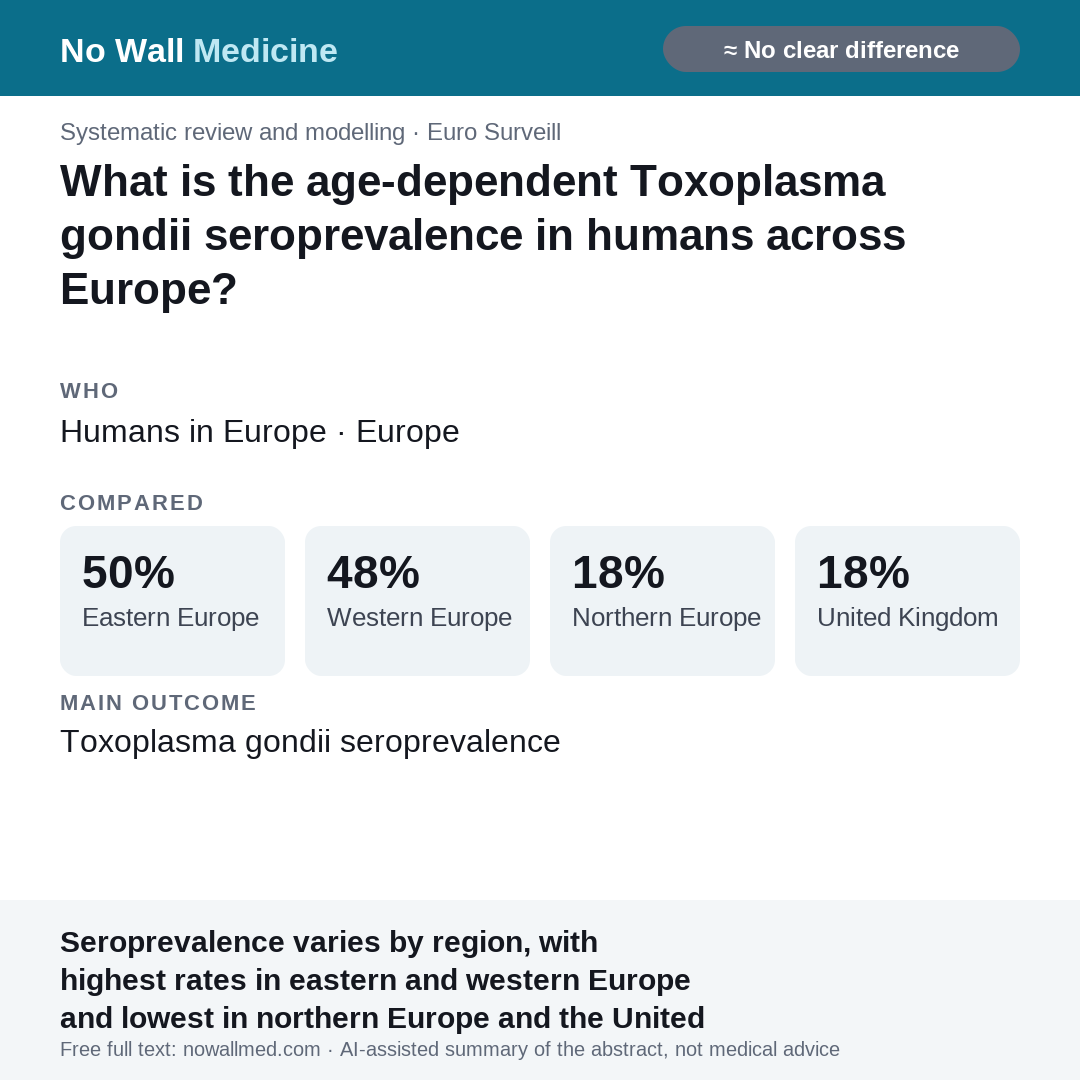
Systematic review and modelling of Toxoplasma gondii seroprevalence in humans, Europe, 2000 to 2021
Systematic review and modellingNo clear difference
What is the age-dependent Toxoplasma gondii seroprevalence in humans across Europe?
Who
Humans in Europe · Europe
Compared
50%Eastern Europe
48%Western Europe
18%Northern Europe
18%United Kingdom
Main outcome
Toxoplasma gondii seroprevalence
Bottom line: Seroprevalence varies by region, with highest rates in eastern and western Europe and lowest in northern Europe and the United Kingdom.
Euro Surveill · 2025-08-31Download image
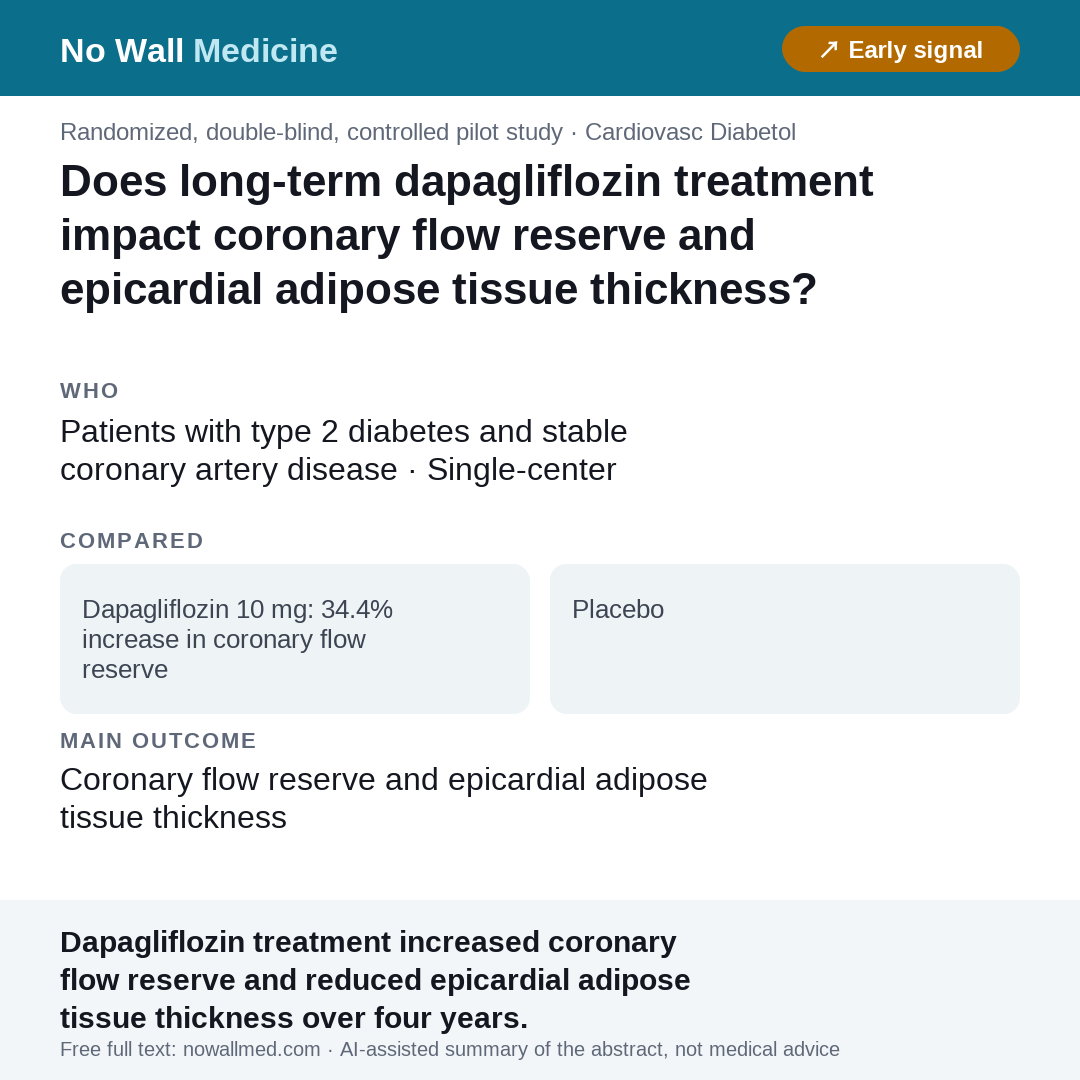
Coronary flow reserve increase after 4-year dapagliflozin treatment in patients with type 2 diabetes: the DAPAHEART follow-up study
Randomized, double-blind, controlled pilot studyBenefit found
Does long-term dapagliflozin treatment impact coronary flow reserve and epicardial adipose tissue thickness?
Who
Patients with type 2 diabetes and stable coronary artery disease · Single-center
Compared
Dapagliflozin 10 mg: 34.4% increase in coronary flow reserve
Placebo
Main outcome
Coronary flow reserve and epicardial adipose tissue thickness
Bottom line: Dapagliflozin treatment increased coronary flow reserve and reduced epicardial adipose tissue thickness over four years.
Limitation: This was a pilot study.
Cardiovasc Diabetol · 2025-08-31Download image
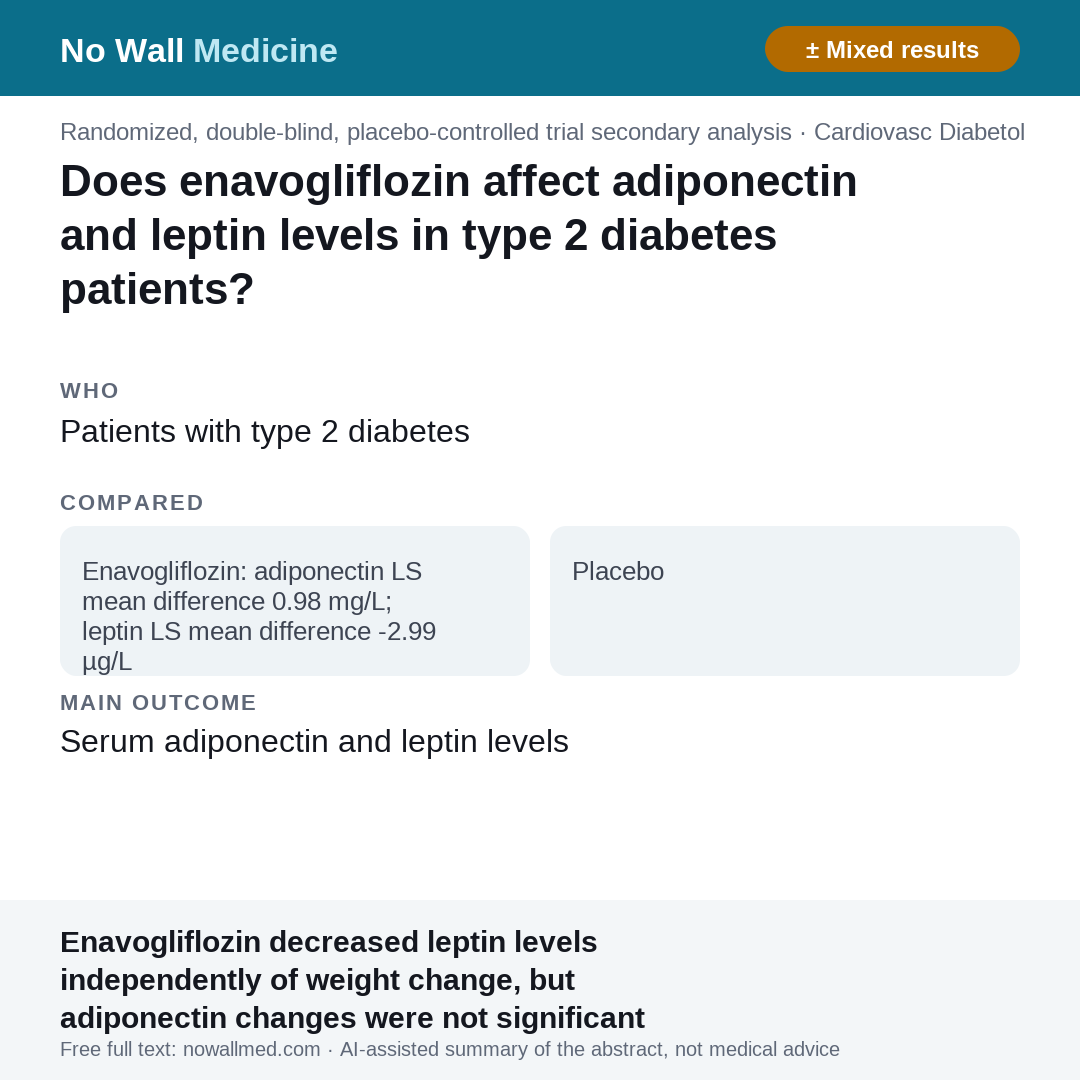
Weight-independent amelioration of adipokine profile by enavogliflozin, a selective SGLT2 inhibitor, in patients with type 2 diabetes
Randomized, double-blind, placebo-controlled trial secondary analysisMixed results
Does enavogliflozin affect adiponectin and leptin levels in type 2 diabetes patients?
Who
Patients with type 2 diabetes
Compared
Enavogliflozin: adiponectin LS mean difference 0.98 mg/L; leptin LS mean difference -2.99 µg/L
Placebo
Main outcome
Serum adiponectin and leptin levels
Bottom line: Enavogliflozin decreased leptin levels independently of weight change, but adiponectin changes were not significant after adjusting for weight.
Limitation: This was a secondary analysis of a phase III trial.
Cardiovasc Diabetol · 2025-08-31Download image
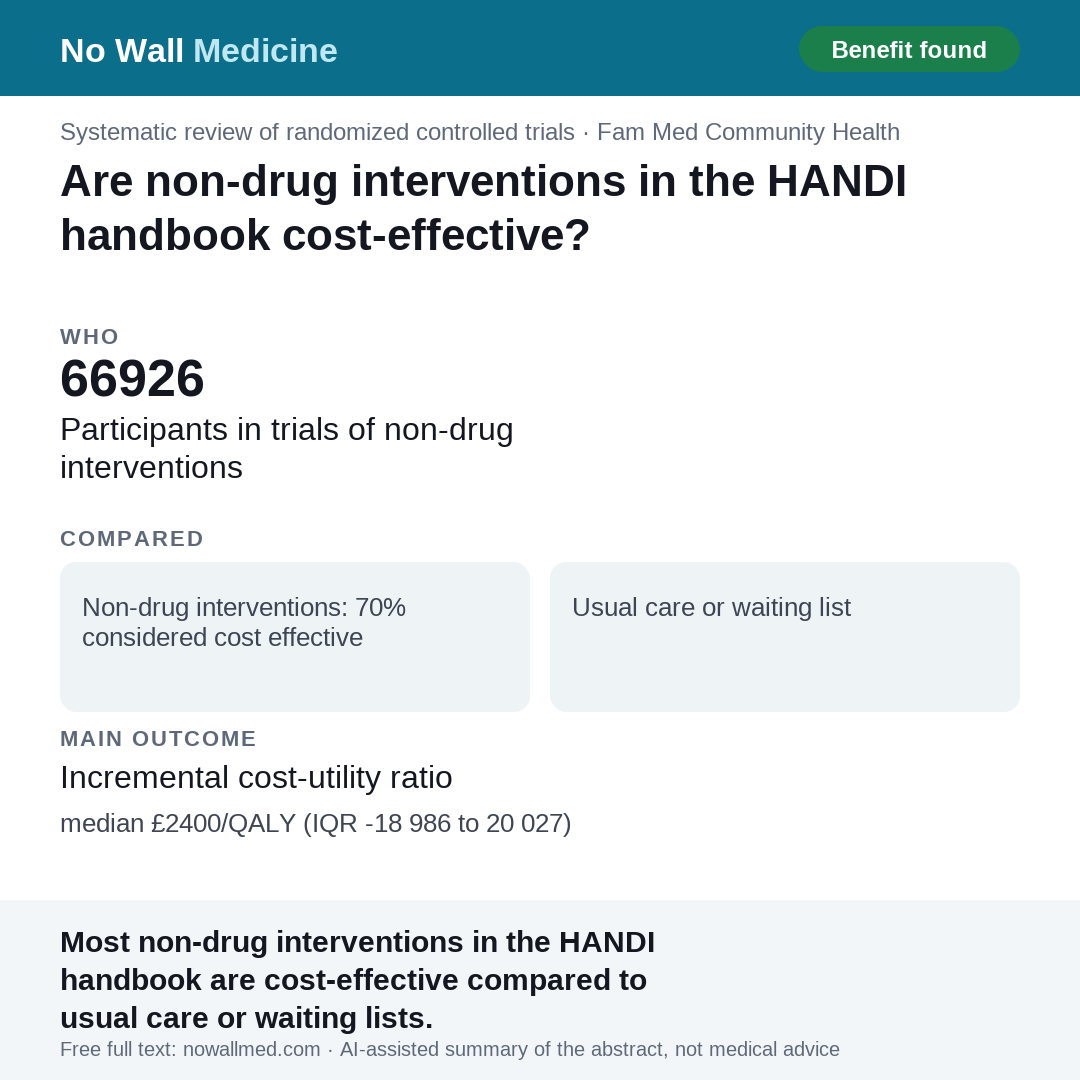
Trial-based economic evaluations of non-drug interventions in the Royal Australian College of General Practitioners (RACGP) Handbook of Non-Drug Interventions in primary care: a systemic review
Systematic review of randomized controlled trialsBenefit found
Are non-drug interventions in the HANDI handbook cost-effective?
Who
66926
Participants in trials of non-drug interventions
Compared
Non-drug interventions: 70% considered cost effective
Usual care or waiting list
Main outcome
Incremental cost-utility ratio
Result: median £2400/QALY (IQR -18 986 to 20 027)
Bottom line: Most non-drug interventions in the HANDI handbook are cost-effective compared to usual care or waiting lists.
Fam Med Community Health · 2025-08-31Download image
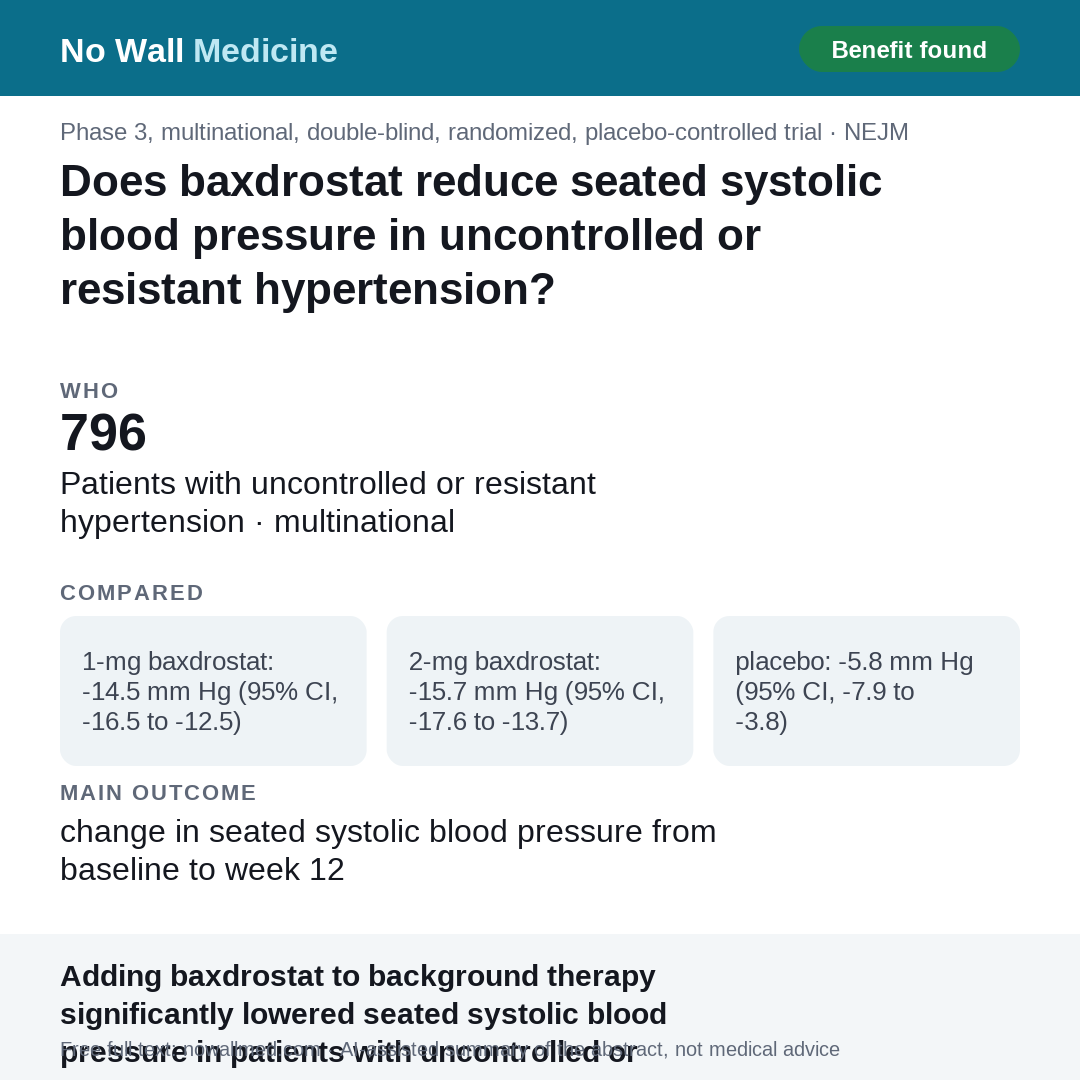
Efficacy and Safety of Baxdrostat in Uncontrolled and Resistant Hypertension
Phase 3, multinational, double-blind, randomized, placebo-controlled trialBenefit found
Does baxdrostat reduce seated systolic blood pressure in uncontrolled or resistant hypertension?
Who
796
Patients with uncontrolled or resistant hypertension · multinational
Compared
1-mg baxdrostat: -14.5 mm Hg (95% CI, -16.5 to -12.5)
2-mg baxdrostat: -15.7 mm Hg (95% CI, -17.6 to -13.7)
placebo: -5.8 mm Hg (95% CI, -7.9 to -3.8)
Main outcome
change in seated systolic blood pressure from baseline to week 12
Result: -8.7 mm Hg (95% CI, -11.5 to -5.8) with 1-mg and -9.8 mm Hg (95% CI, -12.6 to -7.0) with 2-mg
Bottom line: Adding baxdrostat to background therapy significantly lowered seated systolic blood pressure in patients with uncontrolled or resistant hypertension.
Funded by: AstraZeneca and others
NEJM · 2025-08-30Download image
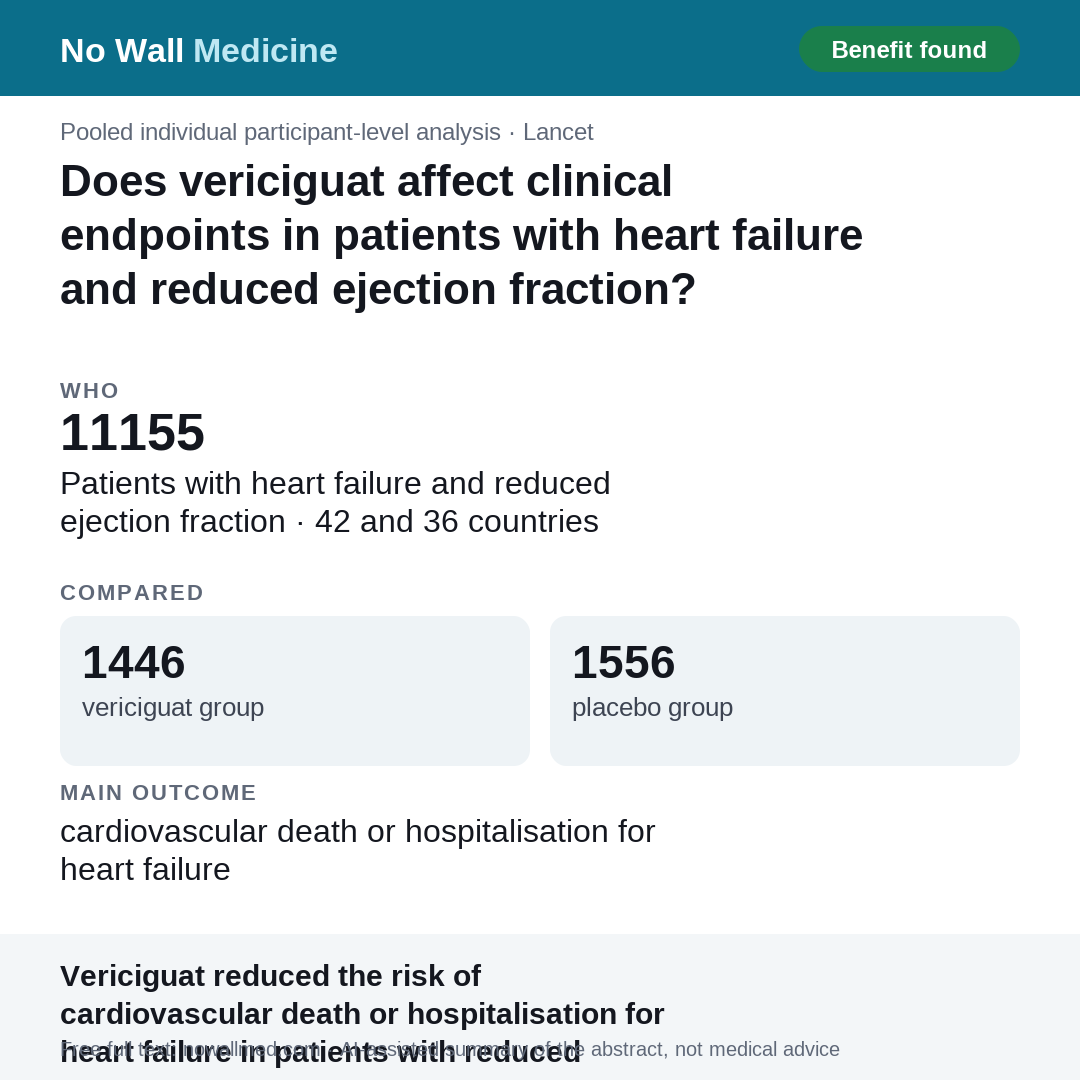
Vericiguat for patients with heart failure and reduced ejection fraction across the risk spectrum: an individual participant data analysis of the VICTORIA and VICTOR trials
Pooled individual participant-level analysisBenefit found
Does vericiguat affect clinical endpoints in patients with heart failure and reduced ejection fraction?
Who
11155
Patients with heart failure and reduced ejection fraction · 42 and 36 countries
Compared
1446vericiguat group (25·9%)
1556placebo group (27·9%)
Main outcome
cardiovascular death or hospitalisation for heart failure
Result: hazard ratio 0·91 (95% CI 0·85-0·98)
Bottom line: Vericiguat reduced the risk of cardiovascular death or hospitalisation for heart failure in patients with reduced ejection fraction.
Funded by: Merck Sharp & Dohme and Bayer
Lancet · 2025-08-30Download image
Provision of gender-affirming hormones for trans and gender-diverse adults: a systematic review of health and quality of life outcomes, values and preferences, and costs
Systematic reviewBenefit found
What are the health, quality of life, values, preferences, and cost outcomes of gender-affirming hormones?
Who
Transgender and gender-diverse adults
Compared
Received gender-affirming hormones
Did not receive gender-affirming hormones
Main outcome
Health, quality of life, values, preferences, and costs
Bottom line: Gender-affirming hormones may improve mental health and quality of life with no evidence of substantive harms.
Limitation: Uncontrolled longitudinal studies had serious to critical risk of bias.
Funded by: World Health Organization, Elton John AIDS Foundation, Bill and Melinda Gates Foundation
eClinicalMedicine · 2025-08-30Download image

The prevalence and role of human metapneumovirus in respiratory tract infections: a systematic review and meta-analysis of global data
Systematic review and meta-analysisBenefit found
What is the global prevalence and role of human metapneumovirus in respiratory tract infections?
Who
2,236,820
Patients with respiratory tract infections · Global
Compared
Human metapneumovirus positive: odds ratio 4.6 (95% CI 3.7-5.6)
Human metapneumovirus negative
Main outcome
Human metapneumovirus prevalence among patients with respiratory tract infections
Result: odds ratio 4.6 (95% CI 3.7-5.6)
Bottom line: Human metapneumovirus has a 5.3% global prevalence and is significantly associated with respiratory tract infections.
Funded by: Iran University of Medical Sciences
eClinicalMedicine · 2025-08-30Download image