Visual abstracts
New randomized trials and meta-analyses from leading journals at a glance: who was studied, what was compared, and what was found. Every paper is free to read in full.
All specialtiesCardiology 3839Oncology 3295Gastroenterology & Hepatology 1523Infectious Disease 2784Neurology 1525Psychiatry & Mental Health 1810Pulmonology 1646Critical Care 1086Endocrinology & Diabetes 1972Pediatrics 2314Surgery 2039Orthopedics & Sports Medicine 719Neurosurgery 446Cardiothoracic & Vascular Surgery 471Plastic & Reconstructive Surgery 519Nephrology 842Rheumatology 624Hematology 865Dermatology 482Ophthalmology 420Obstetrics & Gynecology 1333Public & Global Health 752Radiology & Imaging 520Anesthesiology 785Urology 627ENT (Otolaryngology) 418Emergency Medicine 411Allergy & Immunology 239Geriatrics 799Family Medicine & Primary Care 455Medical Genetics & Genomics 517Pathology & Laboratory Medicine 131Physical Medicine & Rehabilitation 592Palliative Care 348Nutrition 1168Digital Health & AI 1777General Medicine 271
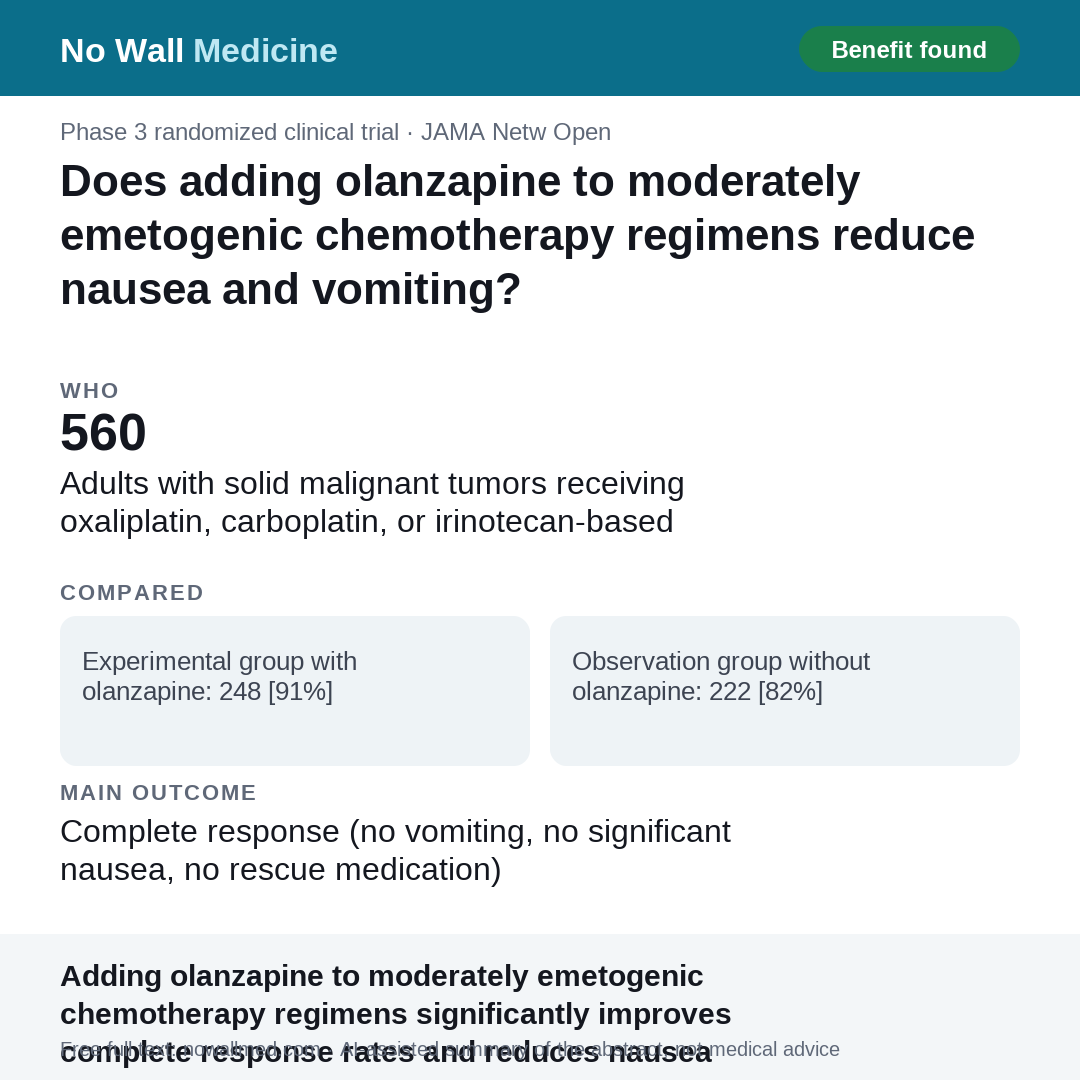
Olanzapine as Antiemetic Prophylaxis in Moderately Emetogenic Chemotherapy: A Phase 3 Randomized Clinical Trial
Phase 3 randomized clinical trialBenefit found
Does adding olanzapine to moderately emetogenic chemotherapy regimens reduce nausea and vomiting?
Who
560
Adults with solid malignant tumors receiving oxaliplatin, carboplatin, or irinotecan-based chemotherapy · 3 institutes in India
Compared
Experimental group with olanzapine: 248 [91%]
Observation group without olanzapine: 222 [82%]
Main outcome
Complete response (no vomiting, no significant nausea, no rescue medication)
Bottom line: Adding olanzapine to moderately emetogenic chemotherapy regimens significantly improves complete response rates and reduces nausea and vomiting.
JAMA Netw Open · 2024-08-01Download image
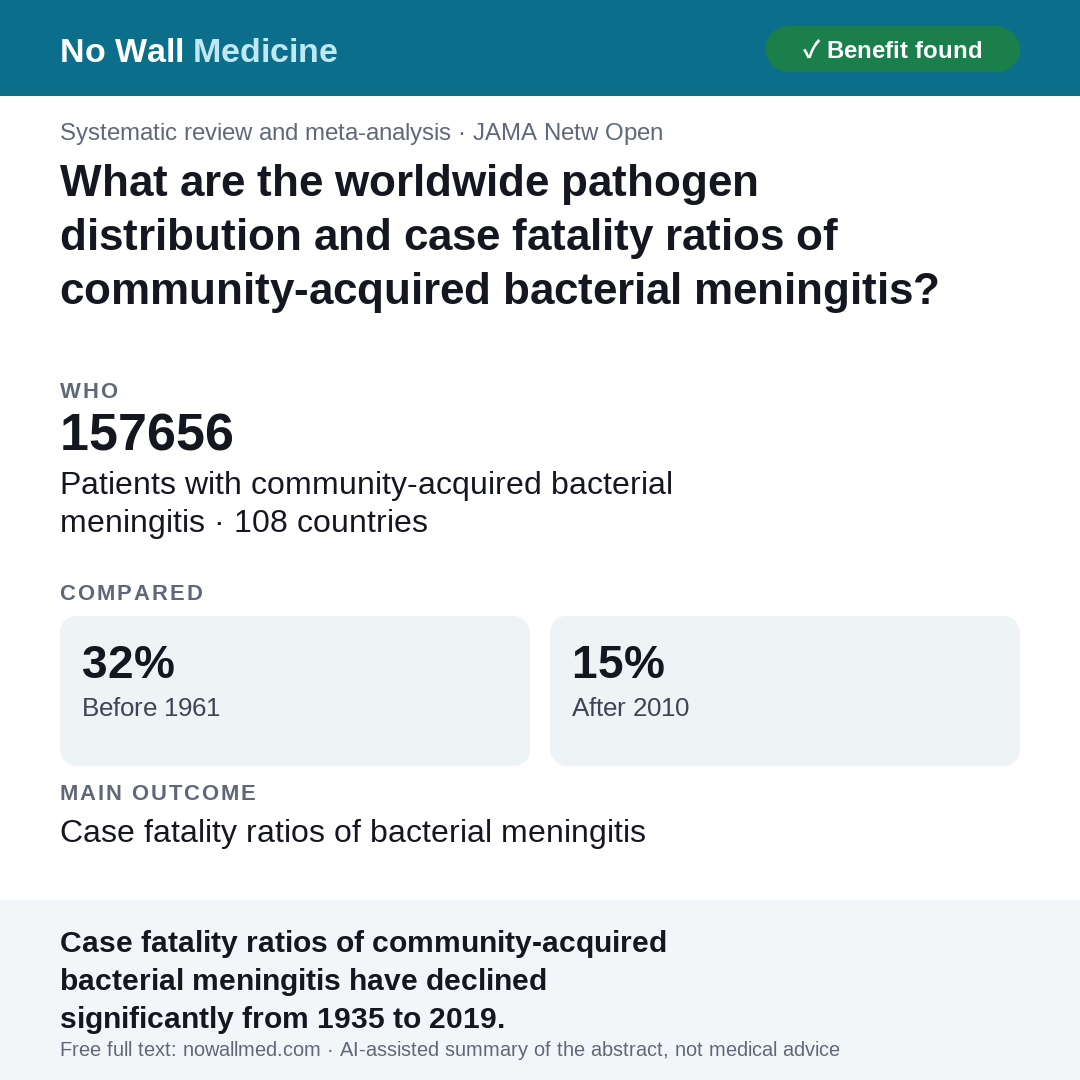
Global Case Fatality of Bacterial Meningitis During an 80-Year Period: A Systematic Review and Meta-Analysis
Systematic review and meta-analysisBenefit found
What are the worldwide pathogen distribution and case fatality ratios of community-acquired bacterial meningitis?
Who
157656
Patients with community-acquired bacterial meningitis · 108 countries
Compared
32%Before 1961 (95% CI, 24%-40%)
15%After 2010 (95% CI, 12%-19%)
Main outcome
Case fatality ratios of bacterial meningitis
Result: 18% (95% CI, 16%-19%)
Bottom line: Case fatality ratios of community-acquired bacterial meningitis have declined significantly from 1935 to 2019.
JAMA Netw Open · 2024-08-01Download image
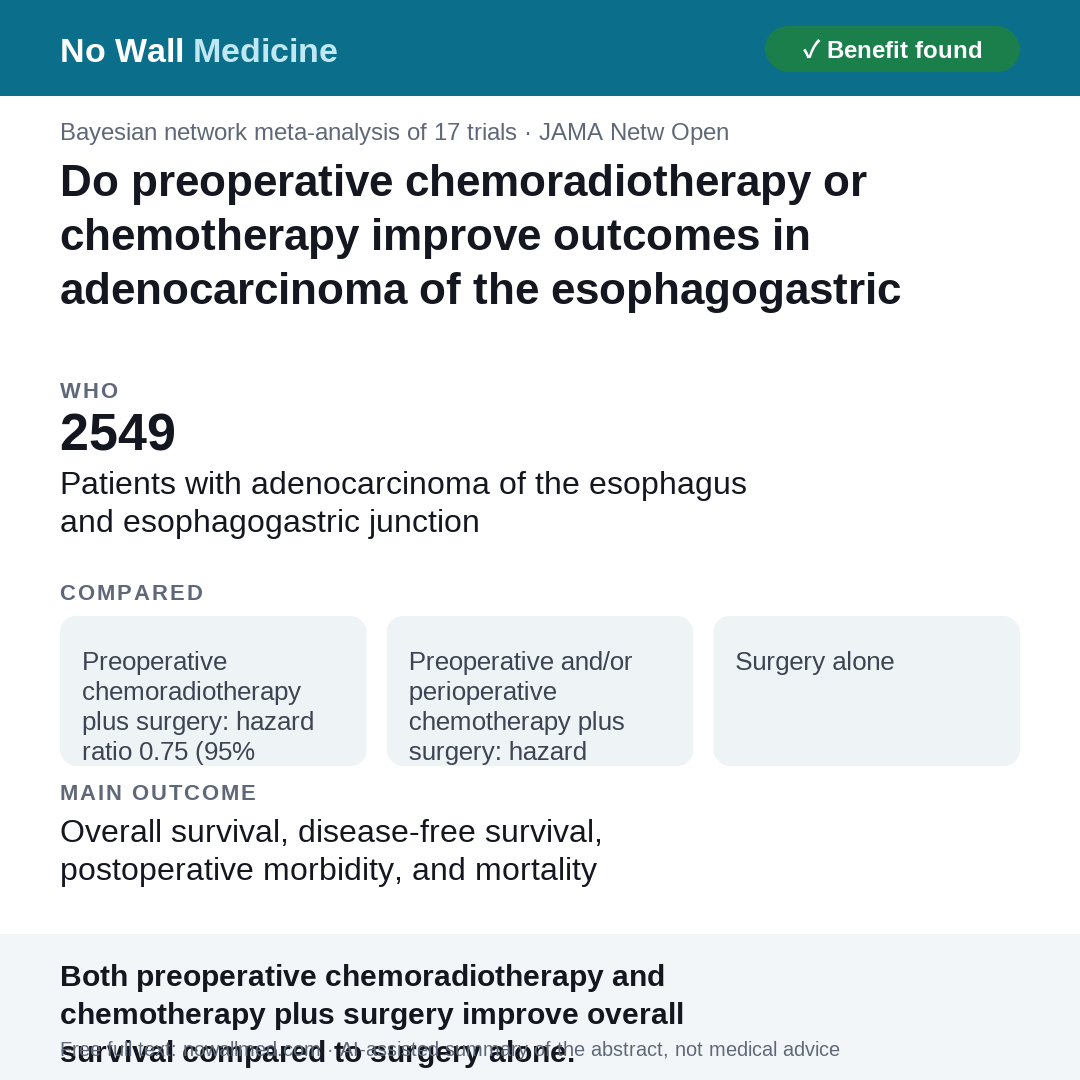
Preoperative Chemoradiotherapy vs Chemotherapy for Adenocarcinoma of the Esophagogastric Junction: A Network Meta-Analysis
Bayesian network meta-analysis of 17 trialsBenefit found
Do preoperative chemoradiotherapy or chemotherapy improve outcomes in adenocarcinoma of the esophagogastric junction?
Who
2549
Patients with adenocarcinoma of the esophagus and esophagogastric junction
Compared
Preoperative chemoradiotherapy plus surgery: hazard ratio 0.75 (95% credible interval 0.62-0.90)
Preoperative and/or perioperative chemotherapy plus surgery: hazard ratio 0.78 (95% credible interval 0.64-0.91)
Surgery alone
Main outcome
Overall survival, disease-free survival, postoperative morbidity, and mortality
Result: hazard ratio 1.04 (95% credible interval 0.83-1.28)
Bottom line: Both preoperative chemoradiotherapy and chemotherapy plus surgery improve overall survival compared to surgery alone.
JAMA Netw Open · 2024-08-01Download image
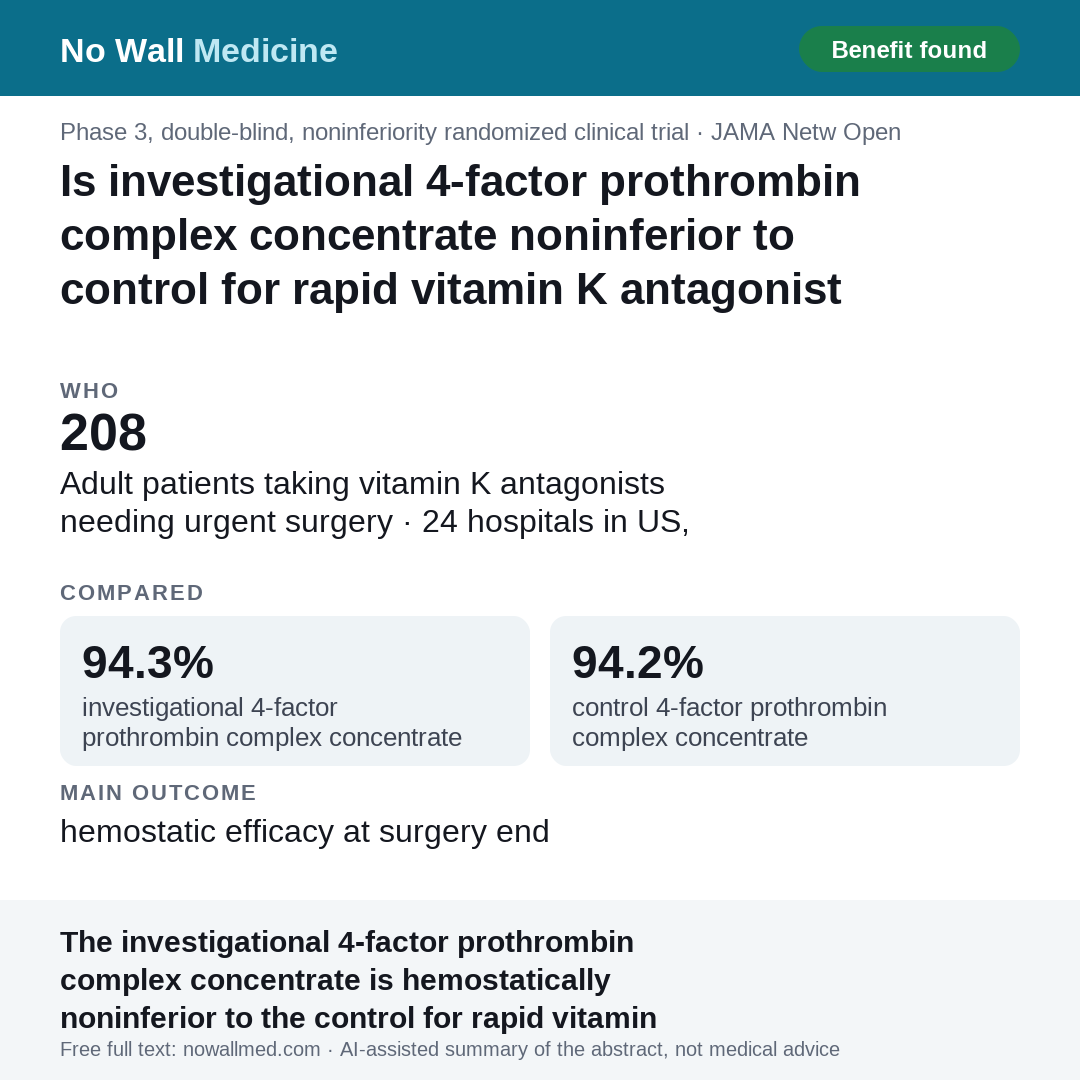
Vitamin K Antagonist Reversal for Urgent Surgery Using 4-Factor Prothrombin Complex Concentrates: A Randomized Clinical Trial
Phase 3, double-blind, noninferiority randomized clinical trialBenefit found
Is investigational 4-factor prothrombin complex concentrate noninferior to control for rapid vitamin K antagonist reversal?
Who
208
Adult patients taking vitamin K antagonists needing urgent surgery · 24 hospitals in US, Russia, Georgia, Belarus, Ukraine, and Romania
Compared
94.3%investigational 4-factor prothrombin complex concentrate
94.2%control 4-factor prothrombin complex concentrate
Main outcome
hemostatic efficacy at surgery end
Result: proportion difference, 0.001; 95% CI, -0.080 to 0.082
Bottom line: The investigational 4-factor prothrombin complex concentrate is hemostatically noninferior to the control for rapid vitamin K antagonist reversal.
JAMA Netw Open · 2024-08-01Download image
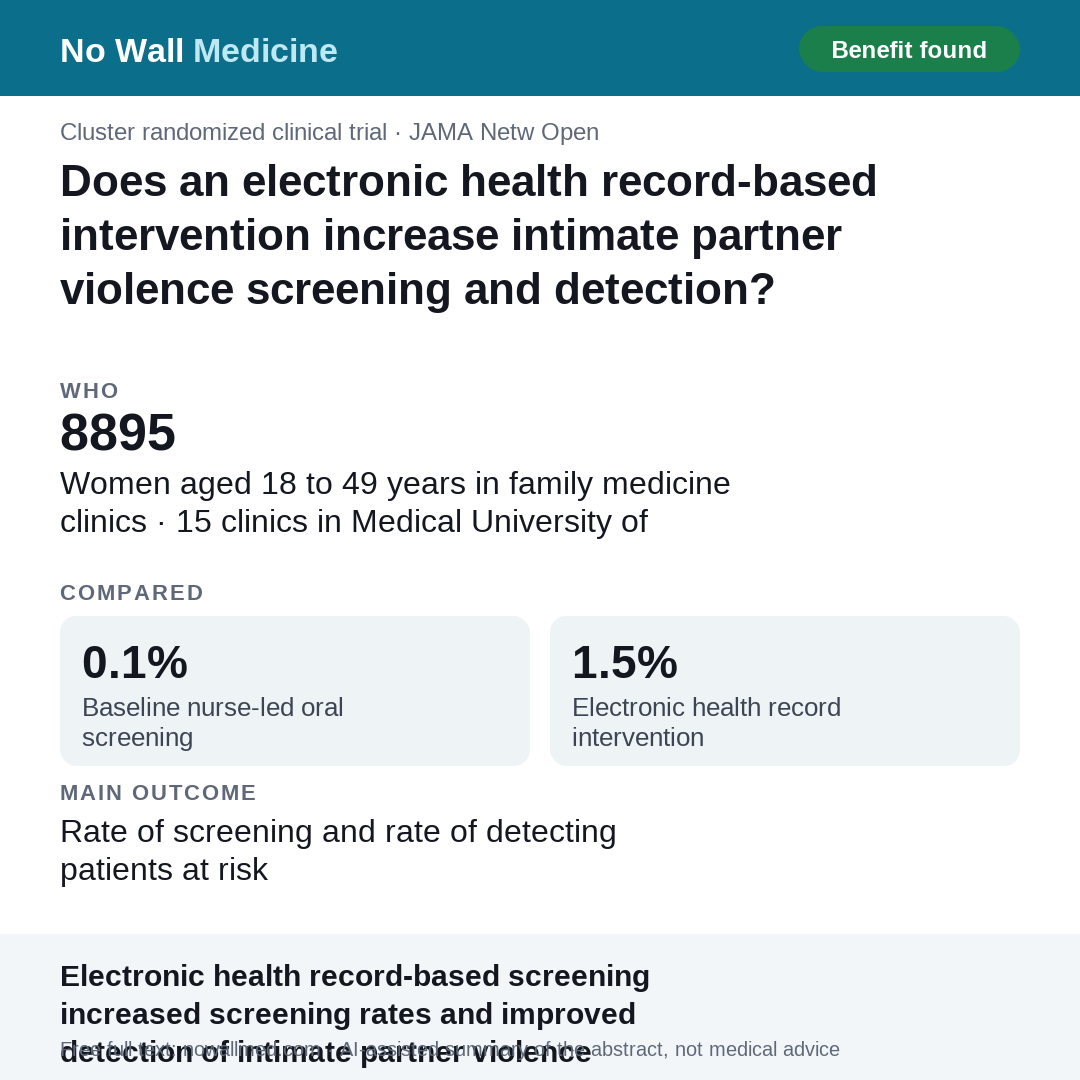
Electronic Health Record-Based Screening for Intimate Partner Violence: A Cluster Randomized Clinical Trial
Cluster randomized clinical trialBenefit found
Does an electronic health record-based intervention increase intimate partner violence screening and detection?
Who
8895
Women aged 18 to 49 years in family medicine clinics · 15 clinics in Medical University of South Carolina Health System
Compared
0.1%Baseline nurse-led oral screening
1.5%Electronic health record intervention
Main outcome
Rate of screening and rate of detecting patients at risk
Result: relative risk 1.46 (95% CI 1.44-1.49)
Bottom line: Electronic health record-based screening increased screening rates and improved detection of intimate partner violence compared to nurse-led oral screening.
JAMA Netw Open · 2024-08-01Download image
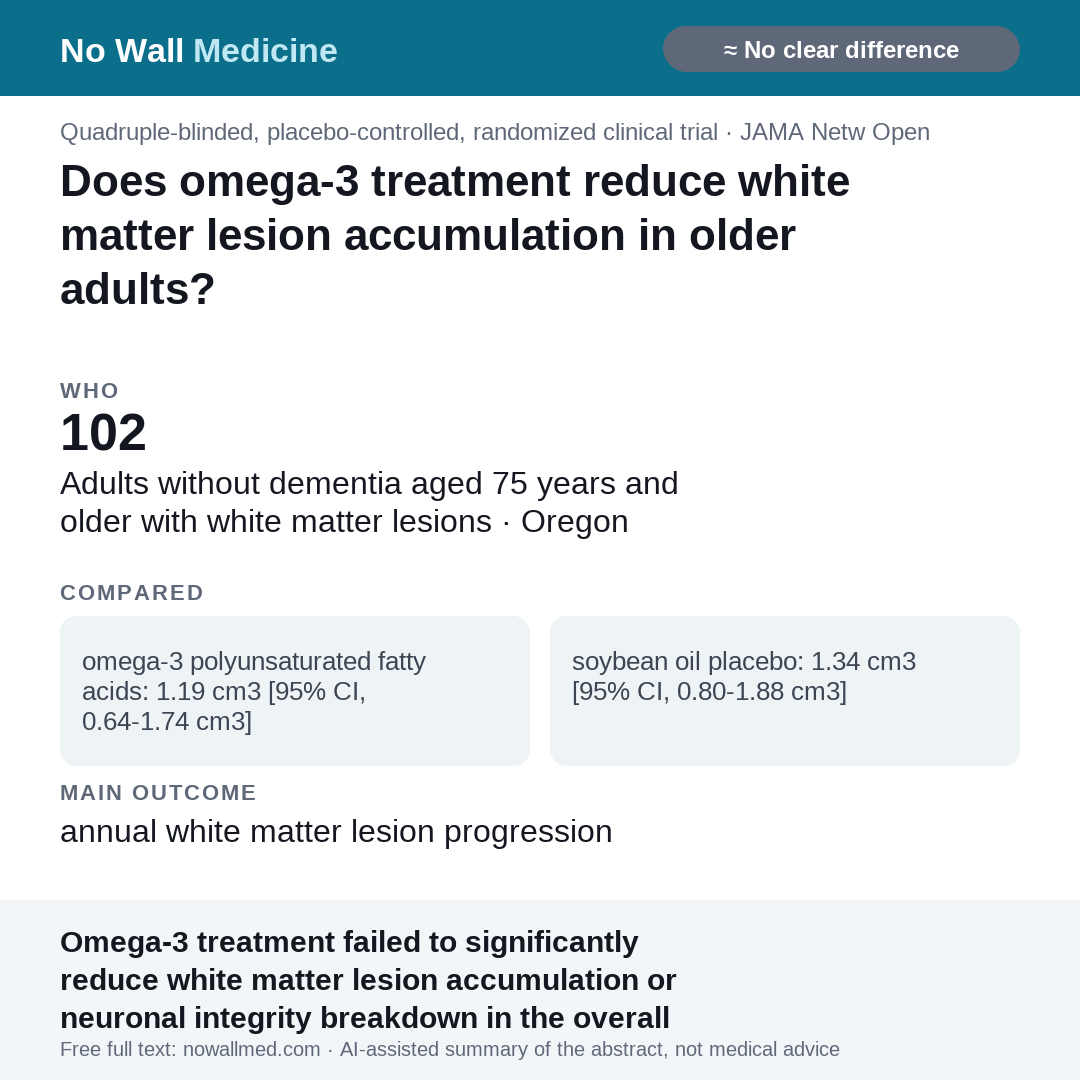
ω-3 PUFA for Secondary Prevention of White Matter Lesions and Neuronal Integrity Breakdown in Older Adults: A Randomized Clinical Trial
Quadruple-blinded, placebo-controlled, randomized clinical trialNo clear difference
Does omega-3 treatment reduce white matter lesion accumulation in older adults?
Who
102
Adults without dementia aged 75 years and older with white matter lesions · Oregon Health & Science University
Compared
omega-3 polyunsaturated fatty acids: 1.19 cm3 [95% CI, 0.64-1.74 cm3]
soybean oil placebo: 1.34 cm3 [95% CI, 0.80-1.88 cm3]
Main outcome
annual white matter lesion progression
Result: 1.19 cm3 [95% CI, 0.64-1.74 cm3] vs 1.34 cm3 [95% CI, 0.80-1.88 cm3]
Bottom line: Omega-3 treatment failed to significantly reduce white matter lesion accumulation or neuronal integrity breakdown in the overall participant group.
Limitation: may be attributable to sample size limitations
JAMA Netw Open · 2024-08-01Download image
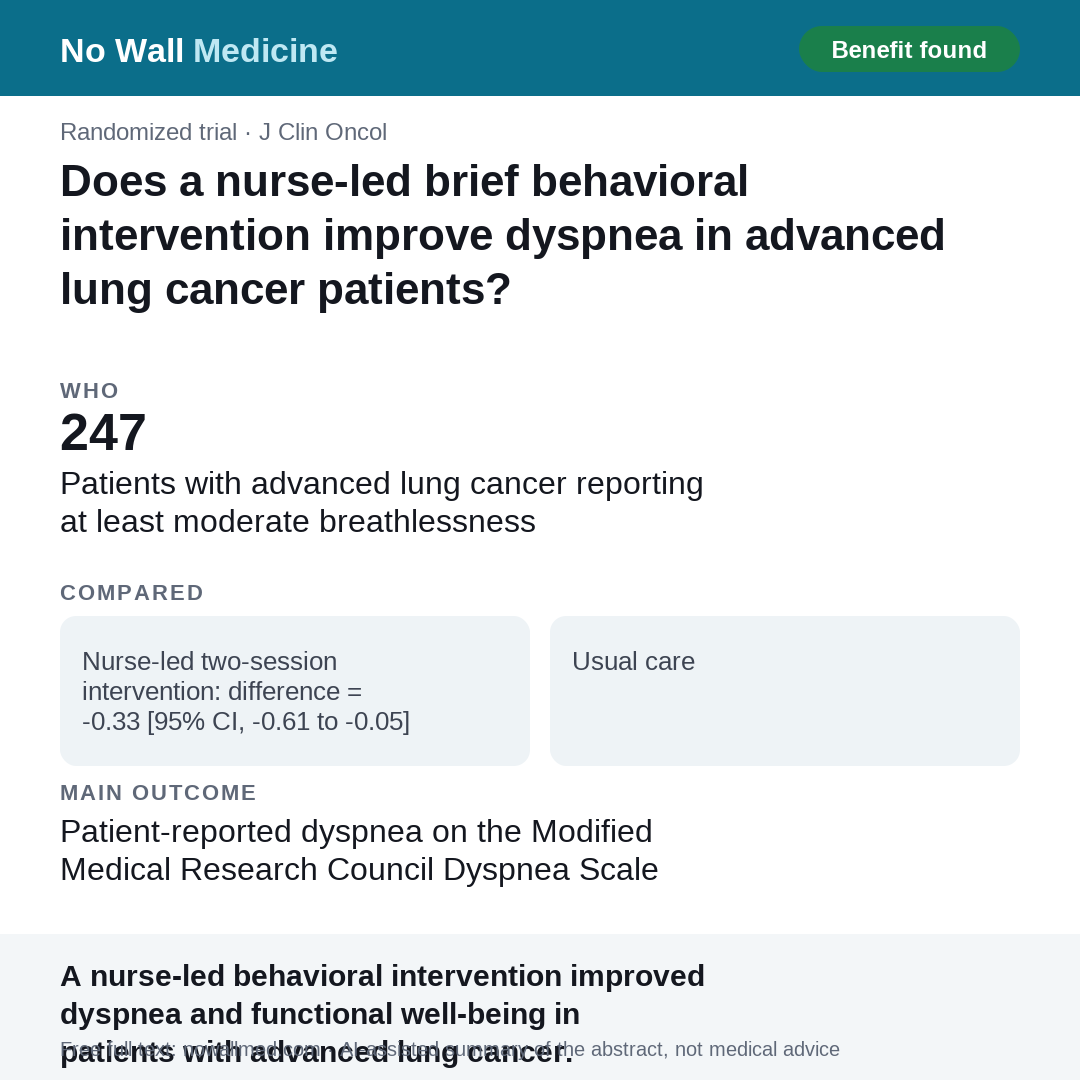
Randomized Controlled Trial of a Nurse-Led Brief Behavioral Intervention for Dyspnea in Patients With Advanced Lung Cancer
Randomized trialBenefit found
Does a nurse-led brief behavioral intervention improve dyspnea in advanced lung cancer patients?
Who
247
Patients with advanced lung cancer reporting at least moderate breathlessness
Compared
Nurse-led two-session intervention: difference = -0.33 [95% CI, -0.61 to -0.05]
Usual care
Main outcome
Patient-reported dyspnea on the Modified Medical Research Council Dyspnea Scale
Result: difference = -0.33 (95% CI, -0.61 to -0.05)
Bottom line: A nurse-led behavioral intervention improved dyspnea and functional well-being in patients with advanced lung cancer.
J Clin Oncol · 2024-08-01Download image
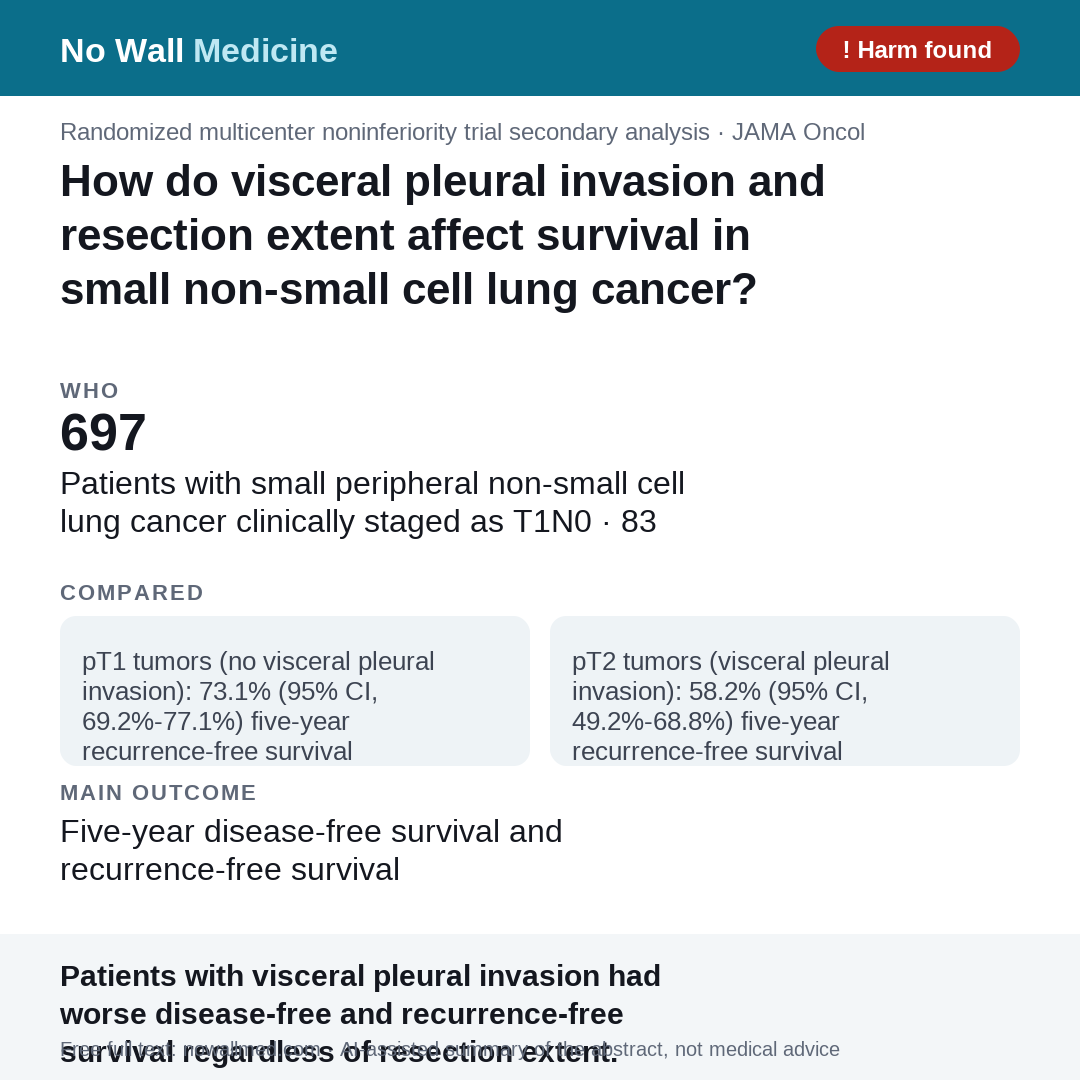
Recurrence of Non-Small Cell Lung Cancer With Visceral Pleural Invasion: A Secondary Analysis of a Randomized Clinical Trial
Randomized multicenter noninferiority trial secondary analysisHarm found
How do visceral pleural invasion and resection extent affect survival in small non-small cell lung cancer?
Who
697
Patients with small peripheral non-small cell lung cancer clinically staged as T1N0 · 83 participating institutions
Compared
pT1 tumors (no visceral pleural invasion): 73.1% (95% CI, 69.2%-77.1%) five-year recurrence-free survival
pT2 tumors (visceral pleural invasion): 58.2% (95% CI, 49.2%-68.8%) five-year recurrence-free survival
Main outcome
Five-year disease-free survival and recurrence-free survival
Bottom line: Patients with visceral pleural invasion had worse disease-free and recurrence-free survival regardless of resection extent.
JAMA Oncol · 2024-08-01Download image
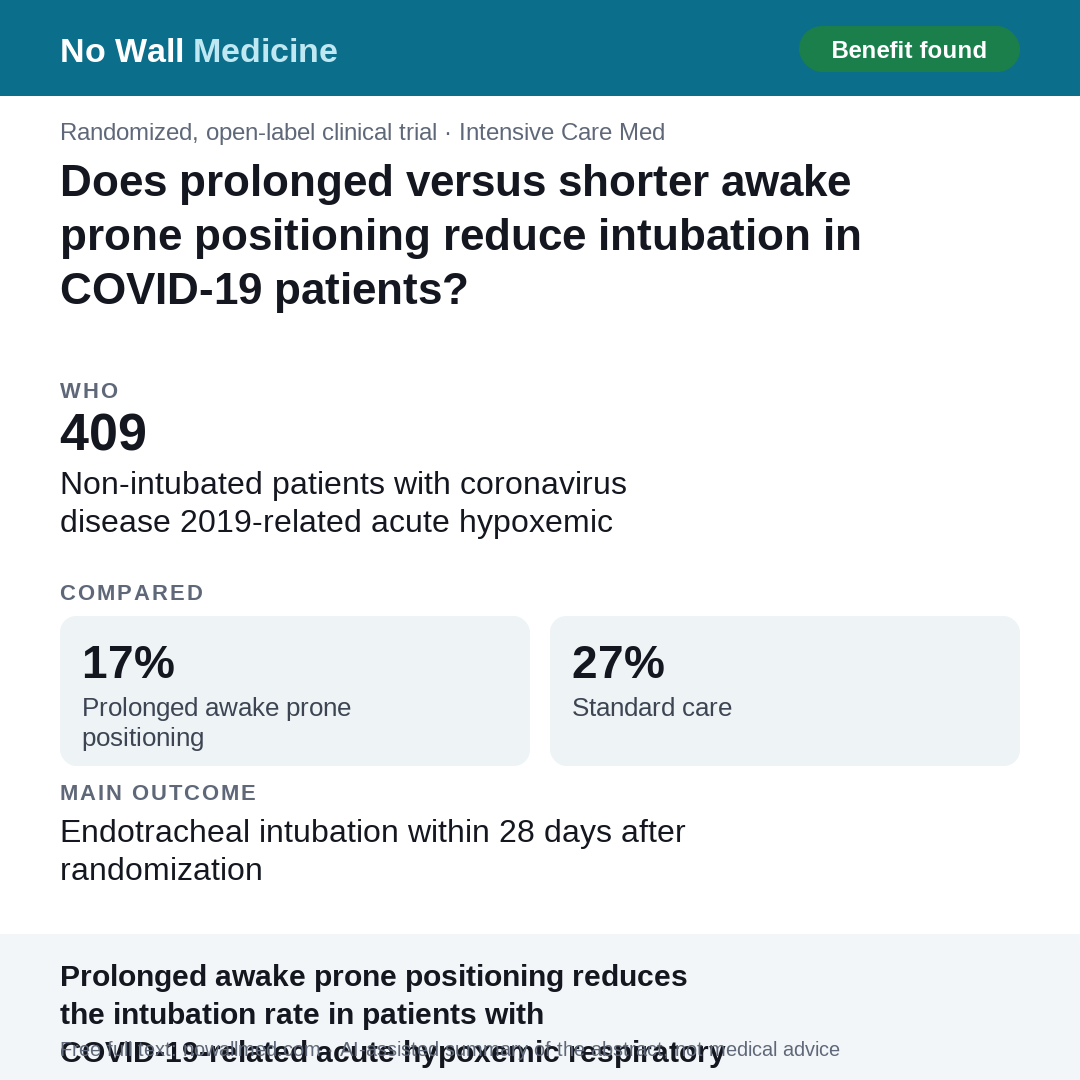
Prolonged vs shorter awake prone positioning for COVID-19 patients with acute respiratory failure: a multicenter, randomised controlled trial
Randomized, open-label clinical trialBenefit found
Does prolonged versus shorter awake prone positioning reduce intubation in COVID-19 patients?
Who
409
Non-intubated patients with coronavirus disease 2019-related acute hypoxemic respiratory failure · 12 hospitals in China
Compared
17%Prolonged awake prone positioning (35/205)
27%Standard care (56/204)
Main outcome
Endotracheal intubation within 28 days after randomization
Result: relative risk 0.62 (95% confidence interval 0.42-0.9)
Bottom line: Prolonged awake prone positioning reduces the intubation rate in patients with COVID-19-related acute hypoxemic respiratory failure.
Intensive Care Med · 2024-08-01Download image
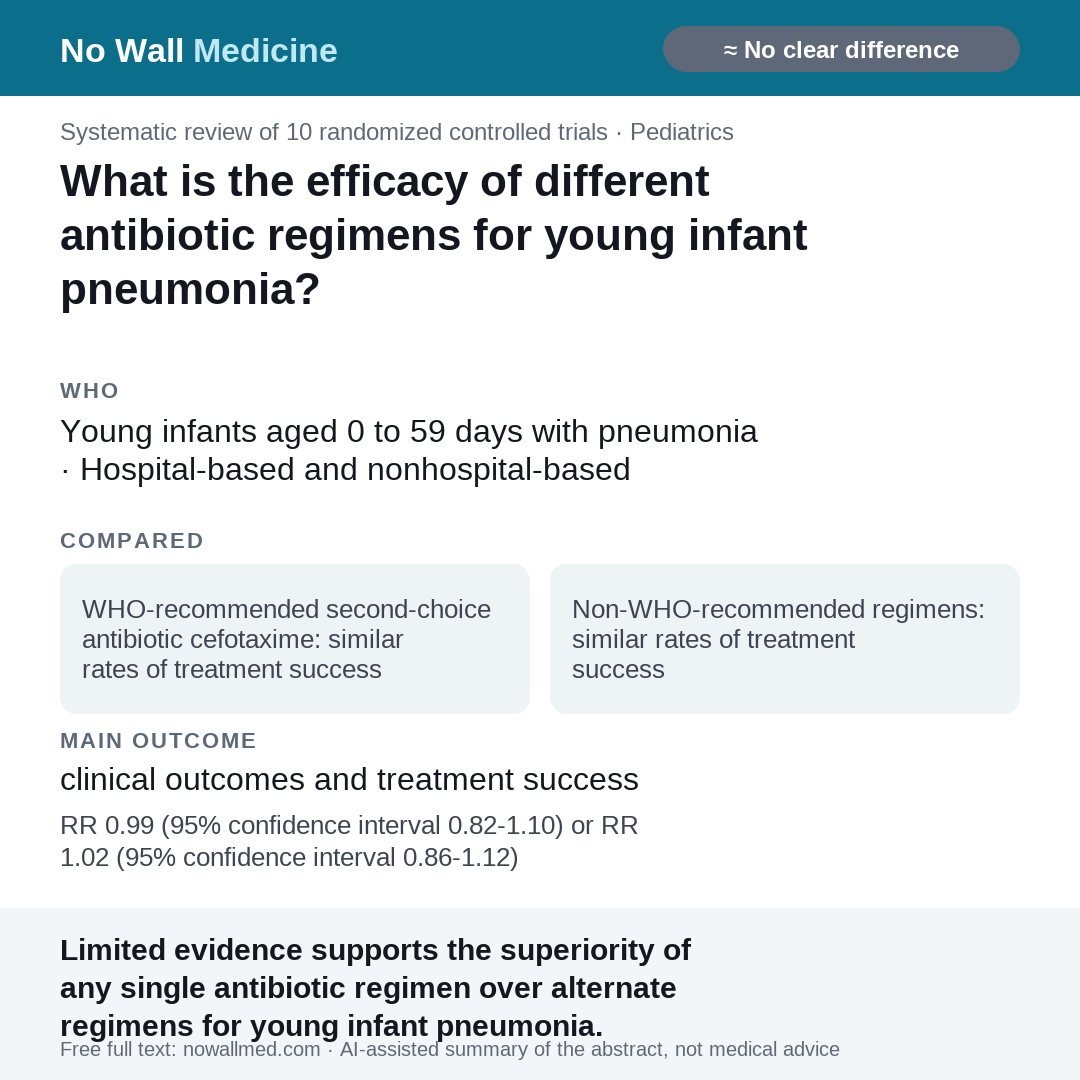
Efficacy of Antibiotic Regimens for Pneumonia in Young Infants Aged 0-59 Days: A Systematic Review
Systematic review of 10 randomized controlled trialsNo clear difference
What is the efficacy of different antibiotic regimens for young infant pneumonia?
Who
Young infants aged 0 to 59 days with pneumonia · Hospital-based and nonhospital-based settings
Compared
WHO-recommended second-choice antibiotic cefotaxime: similar rates of treatment success
Non-WHO-recommended regimens: similar rates of treatment success
Main outcome
clinical outcomes and treatment success
Result: RR 0.99 (95% confidence interval 0.82-1.10) or RR 1.02 (95% confidence interval 0.86-1.12)
Bottom line: Limited evidence supports the superiority of any single antibiotic regimen over alternate regimens for young infant pneumonia.
Limitation: Trials were heterogeneous, which precluded data pooling and certainty of evidence was low or very low.
Pediatrics · 2024-08-01Download image
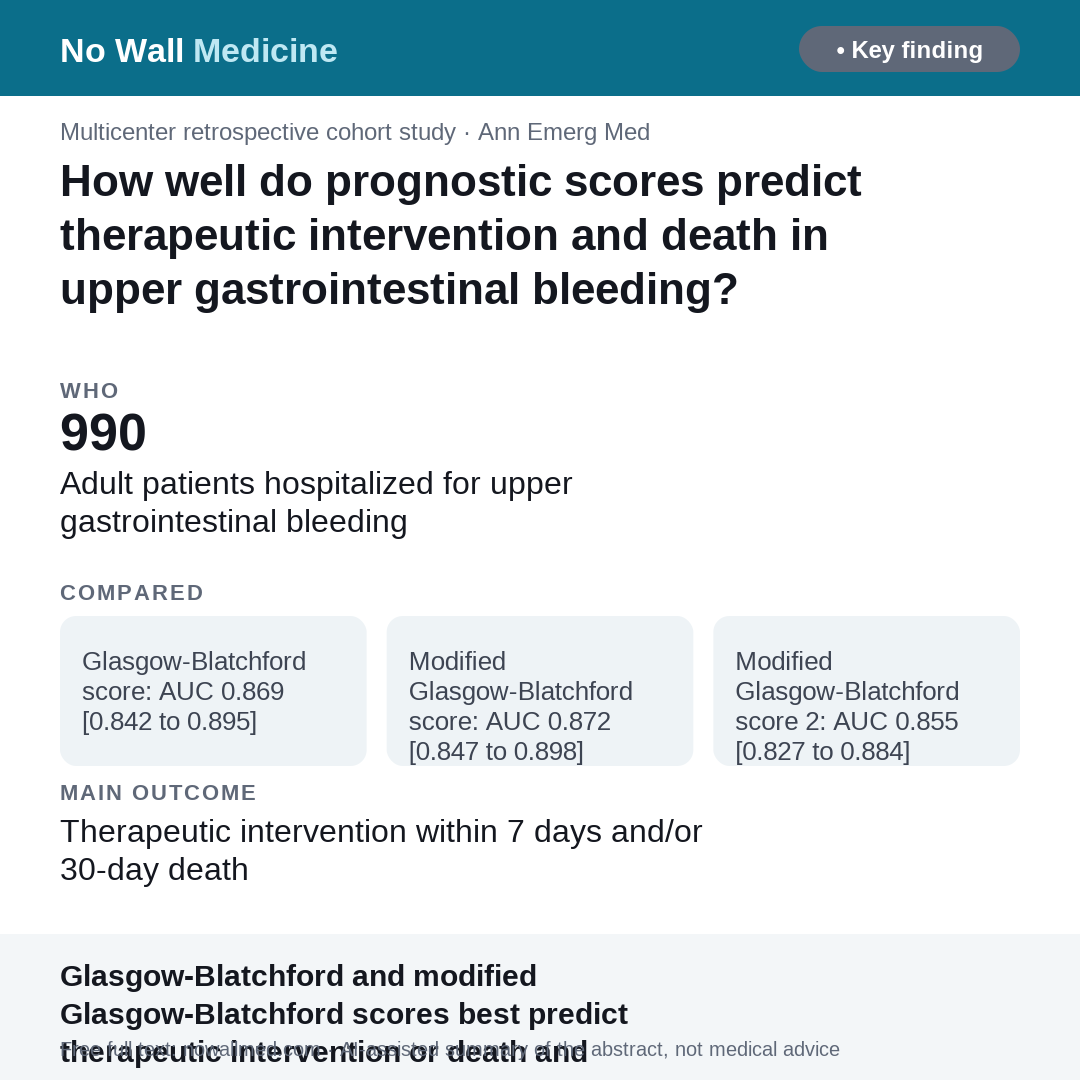
Assessment of Prognostic Scores for Emergency Department Patients With Upper Gastrointestinal Bleeding
Multicenter retrospective cohort studyBenefit found
How well do prognostic scores predict therapeutic intervention and death in upper gastrointestinal bleeding?
Who
990
Adult patients hospitalized for upper gastrointestinal bleeding
Compared
Glasgow-Blatchford score: AUC 0.869 [0.842 to 0.895]
Modified Glasgow-Blatchford score: AUC 0.872 [0.847 to 0.898]
Modified Glasgow-Blatchford score 2: AUC 0.855 [0.827 to 0.884]
Main outcome
Therapeutic intervention within 7 days and/or 30-day death
Bottom line: Glasgow-Blatchford and modified Glasgow-Blatchford scores best predict therapeutic intervention or death and identify low-risk patients.
Ann Emerg Med · 2024-08-01Download image
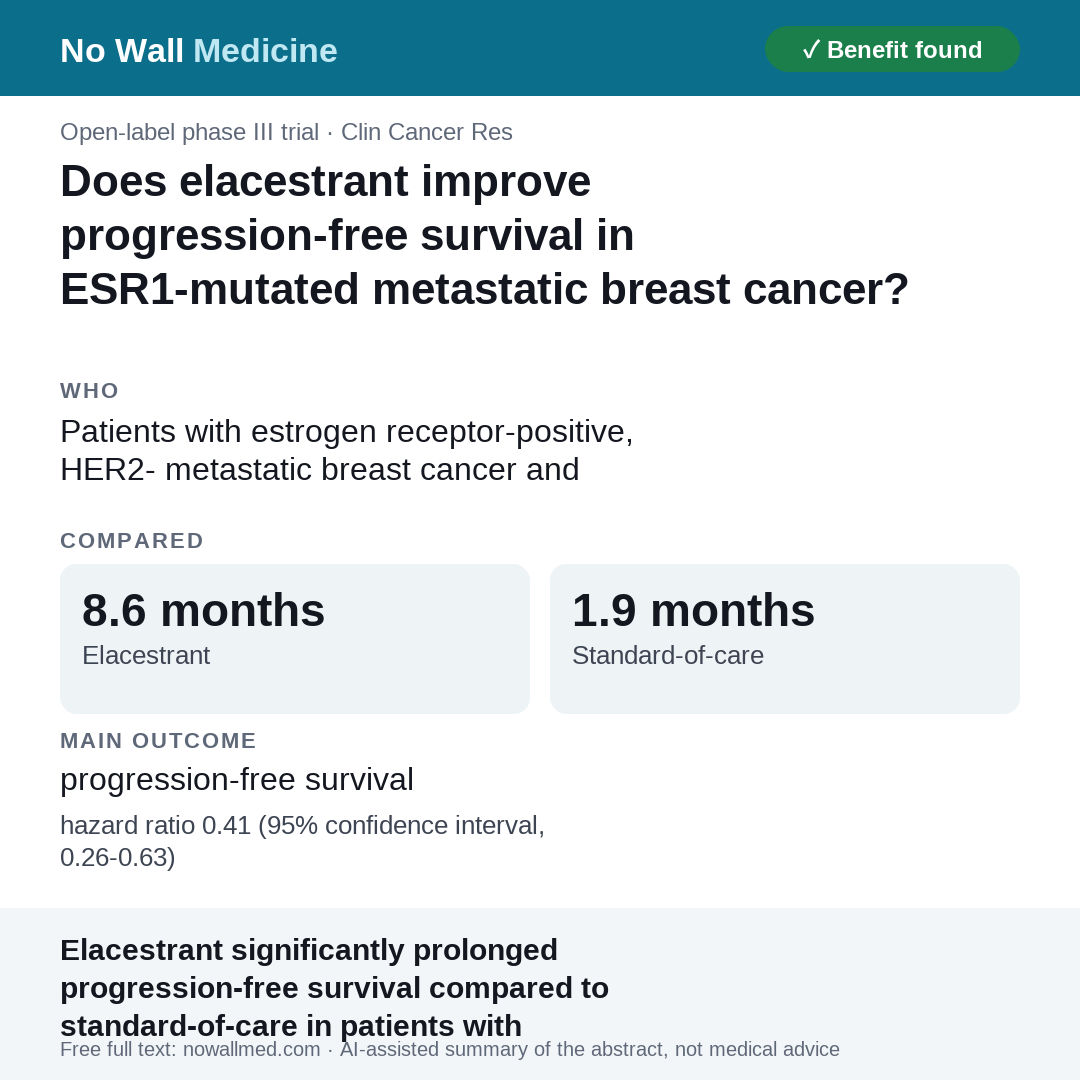
Elacestrant in ER+, HER2- Metastatic Breast Cancer with ESR1-Mutated Tumors: Subgroup Analyses from the Phase III EMERALD Trial by Prior Duration of Endocrine Therapy plus CDK4/6 Inhibitor and in Clinical Subgroups
Open-label phase III trialBenefit found
Does elacestrant improve progression-free survival in ESR1-mutated metastatic breast cancer?
Who
Patients with estrogen receptor-positive, HER2- metastatic breast cancer and ESR1-mutated tumors
Compared
8.6 monthsElacestrant
1.9 monthsStandard-of-care
Main outcome
progression-free survival
Result: hazard ratio 0.41 (95% confidence interval, 0.26-0.63)
Bottom line: Elacestrant significantly prolonged progression-free survival compared to standard-of-care in patients with ESR1-mutated tumors and prior endocrine therapy plus CDK4/6 inhibitor.
Clin Cancer Res · 2024-08-01Download image
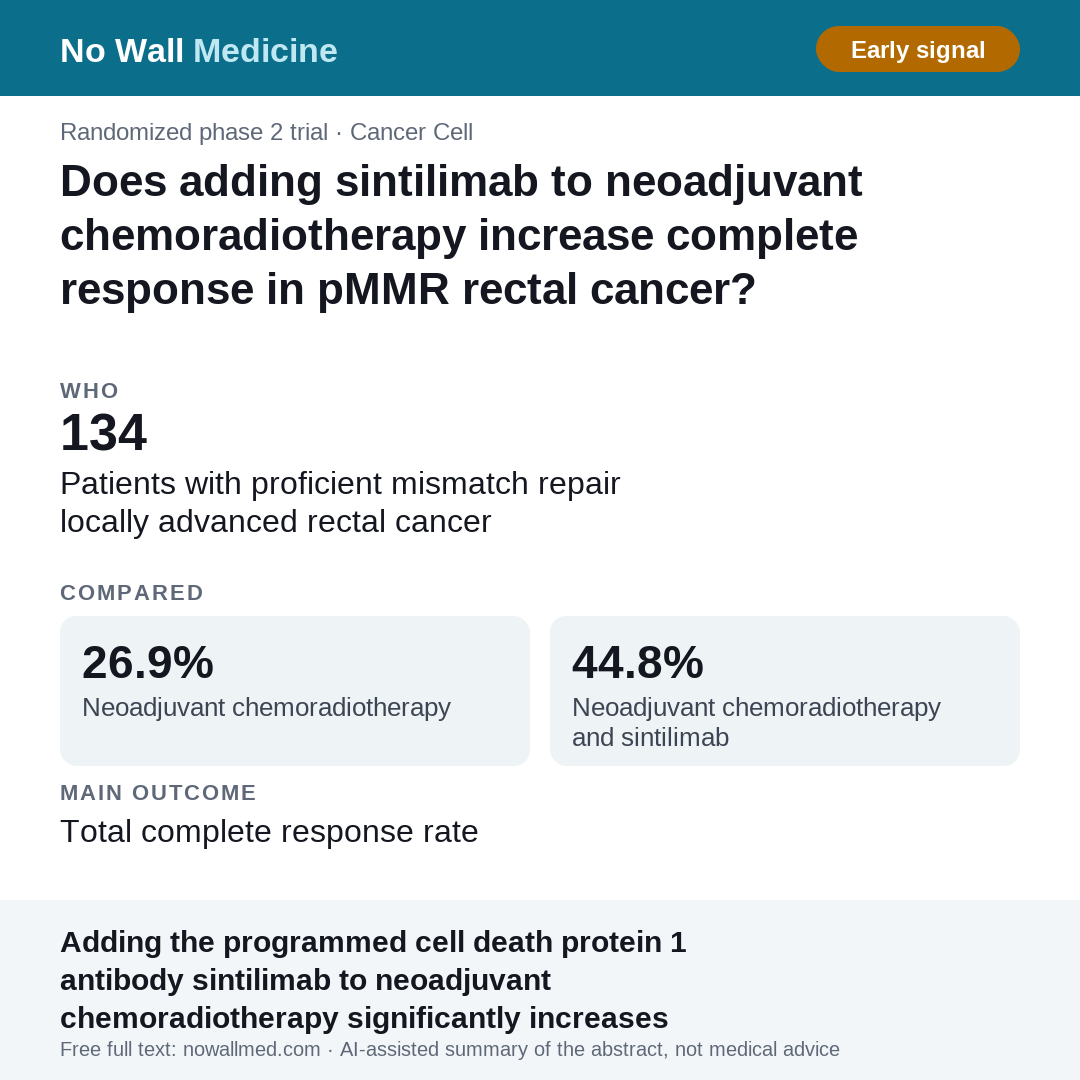
Effect of neoadjuvant chemoradiotherapy with or without PD-1 antibody sintilimab in pMMR locally advanced rectal cancer: A randomized clinical trial
Randomized phase 2 trialBenefit found
Does adding sintilimab to neoadjuvant chemoradiotherapy increase complete response in pMMR rectal cancer?
Who
134
Patients with proficient mismatch repair locally advanced rectal cancer
Compared
26.9%Neoadjuvant chemoradiotherapy (18/67, 95% confidence interval 16.0%-37.8%)
44.8%Neoadjuvant chemoradiotherapy and sintilimab (30/67, 95% CI 32.6%-57.0%)
Main outcome
Total complete response rate
Result: response ratio 1.667 (95% CI 1.035-2.683)
Bottom line: Adding the programmed cell death protein 1 antibody sintilimab to neoadjuvant chemoradiotherapy significantly increases the complete response rate.
Cancer Cell · 2024-08-01Download image
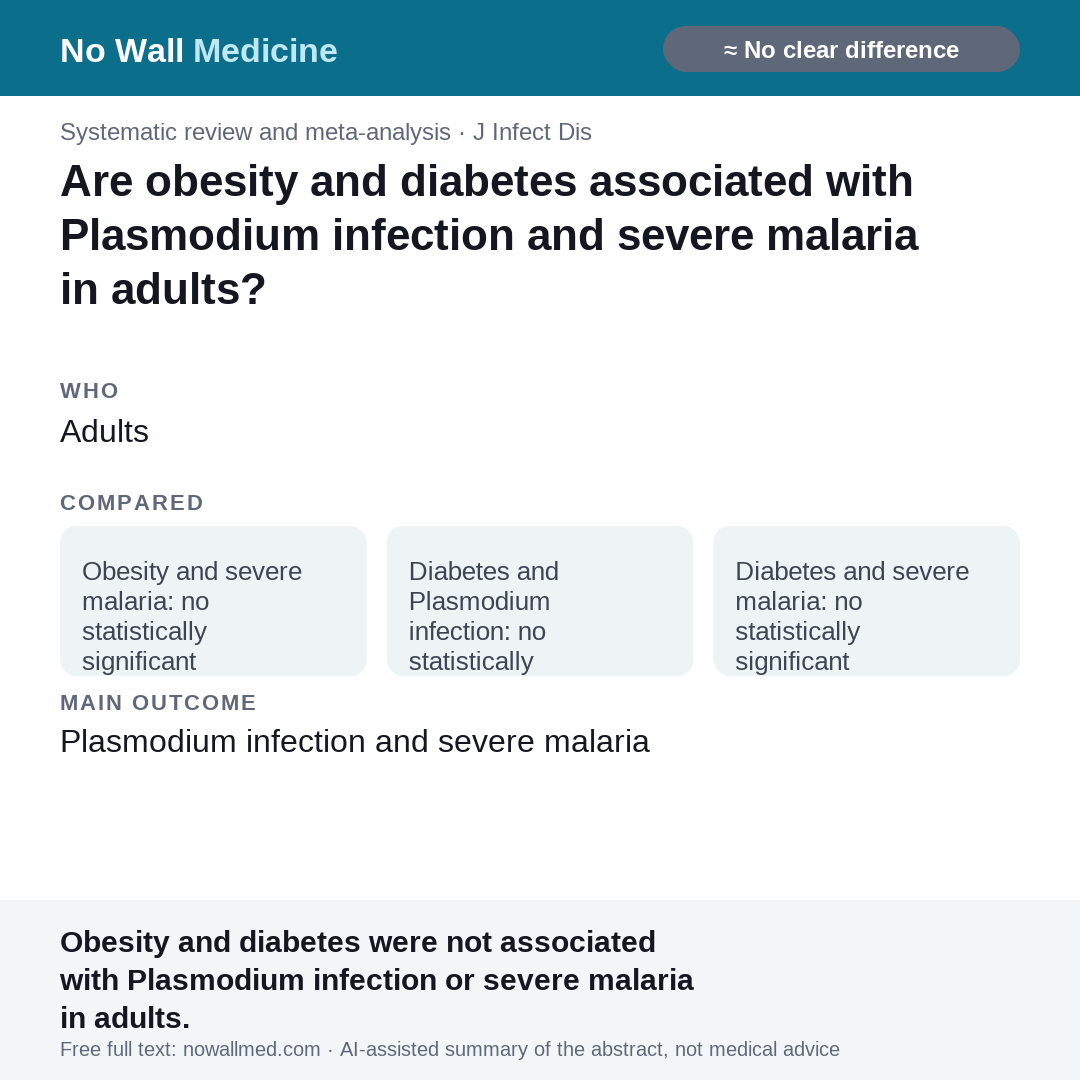
Obesity, Diabetes, Plasmodium Infection, and Severe Malaria in Adults: A Systematic Review and Meta-analysis
Systematic review and meta-analysisNo clear difference
Are obesity and diabetes associated with Plasmodium infection and severe malaria in adults?
Who
Adults
Compared
Obesity and severe malaria: no statistically significant relationship
Diabetes and Plasmodium infection: no statistically significant relationship
Diabetes and severe malaria: no statistically significant relationship
Main outcome
Plasmodium infection and severe malaria
Bottom line: Obesity and diabetes were not associated with Plasmodium infection or severe malaria in adults.
J Infect Dis · 2024-08-01Download image
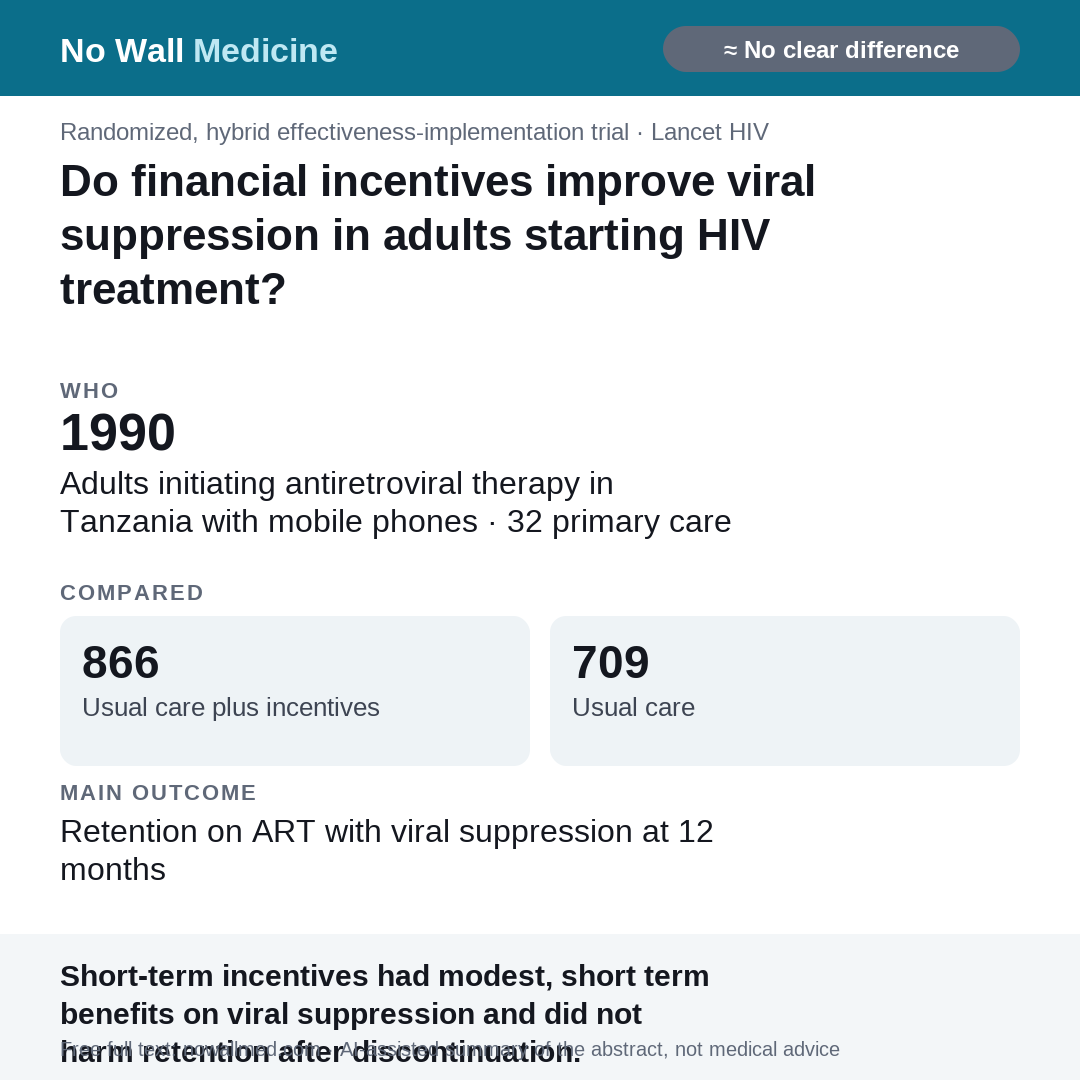
Impact of financial incentives on viral suppression among adults initiating HIV treatment in Tanzania: a hybrid effectiveness-implementation trial
Type 1 hybrid effectiveness-implementation randomized trialNo clear difference
Do financial incentives for visit attendance improve viral suppression among adults initiating HIV treatment?
Who
1990
Adults initiating antiretroviral therapy in Tanzania · 32 primary care HIV clinics in four Tanzanian regions
Compared
Intervention (usual care plus incentives): 85% (866/1059) at 12 months
Control (usual care): 81% (709/931) at 12 months
Main outcome
Retention on antiretroviral therapy with viral suppression at 12 months
Result: adjusted risk difference 4·4 percentage points, 95% CI -1·4 to 10·1
Bottom line: Short-term financial incentives for visit attendance provided modest benefits on viral suppression but did not significantly improve outcomes at 12 months.
Funded by: National Institute of Mental Health
Lancet HIV · 2024-08-01Download image
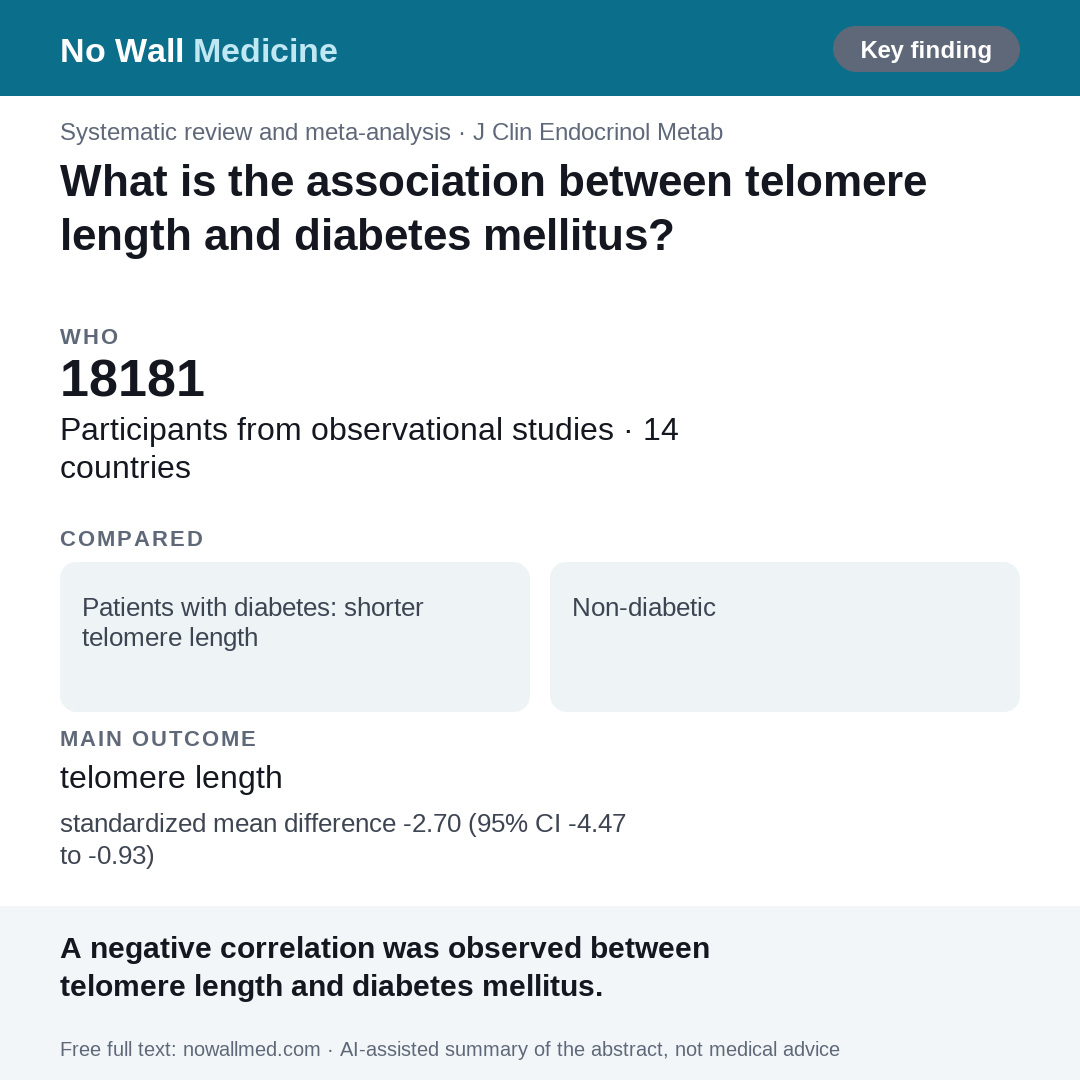
The Association Between Telomere Length and Diabetes Mellitus: Accumulated Evidence From Observational Studies
Systematic review and meta-analysisHarm found
What is the association between telomere length and diabetes mellitus?
Who
18181
Participants from observational studies · 14 countries
Compared
Patients with diabetes: shorter telomere length
Non-diabetic
Main outcome
telomere length
Result: standardized mean difference -2.70 (95% CI -4.47 to -0.93)
Bottom line: A negative correlation was observed between telomere length and diabetes mellitus.
J Clin Endocrinol Metab · 2024-08-01Download image
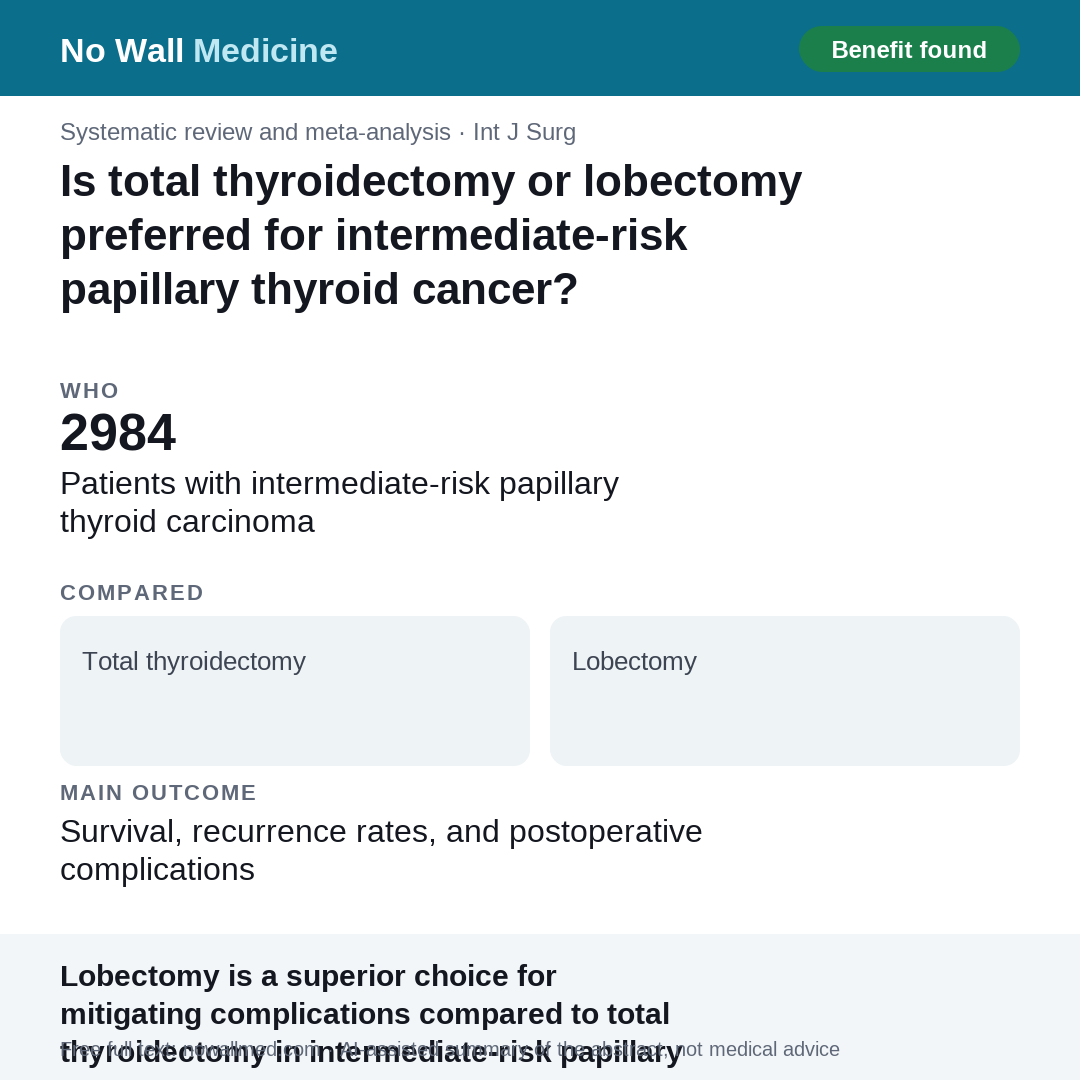
The preferred surgical choice for intermediate-risk papillary thyroid cancer: total thyroidectomy or lobectomy? A systematic review and meta-analysis
Systematic review and meta-analysisBenefit found
Is total thyroidectomy or lobectomy preferred for intermediate-risk papillary thyroid cancer?
Who
2984
Patients with intermediate-risk papillary thyroid carcinoma
Compared
Total thyroidectomy
Lobectomy
Main outcome
Survival, recurrence rates, and postoperative complications
Result: risk ratio 0.32 (95% CI 0.24-0.44)
Bottom line: Lobectomy is a superior choice for mitigating complications compared to total thyroidectomy in intermediate-risk papillary thyroid cancer.
Int J Surg · 2024-08-01Download image
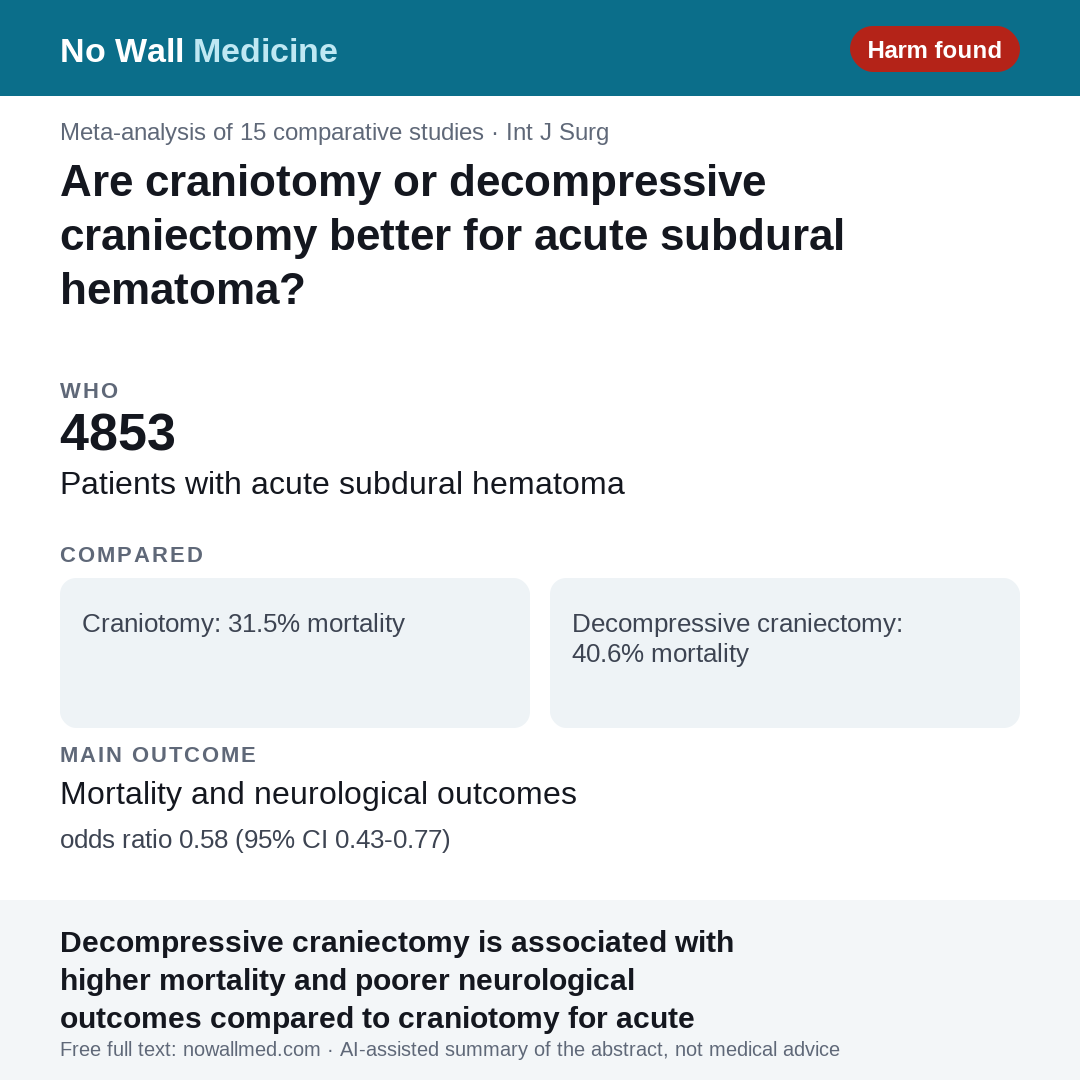
Comparison of craniotomy and decompressive craniectomy for acute subdural hematoma: a meta-analysis of comparative study
Meta-analysis of 15 comparative studiesHarm found
Are craniotomy or decompressive craniectomy better for acute subdural hematoma?
Who
4853
Patients with acute subdural hematoma
Compared
Craniotomy: 31.5% mortality
Decompressive craniectomy: 40.6% mortality
Main outcome
Mortality and neurological outcomes
Result: odds ratio 0.58 (95% CI 0.43-0.77)
Bottom line: Decompressive craniectomy is associated with higher mortality and poorer neurological outcomes compared to craniotomy for acute subdural hematoma.
Int J Surg · 2024-08-01Download image
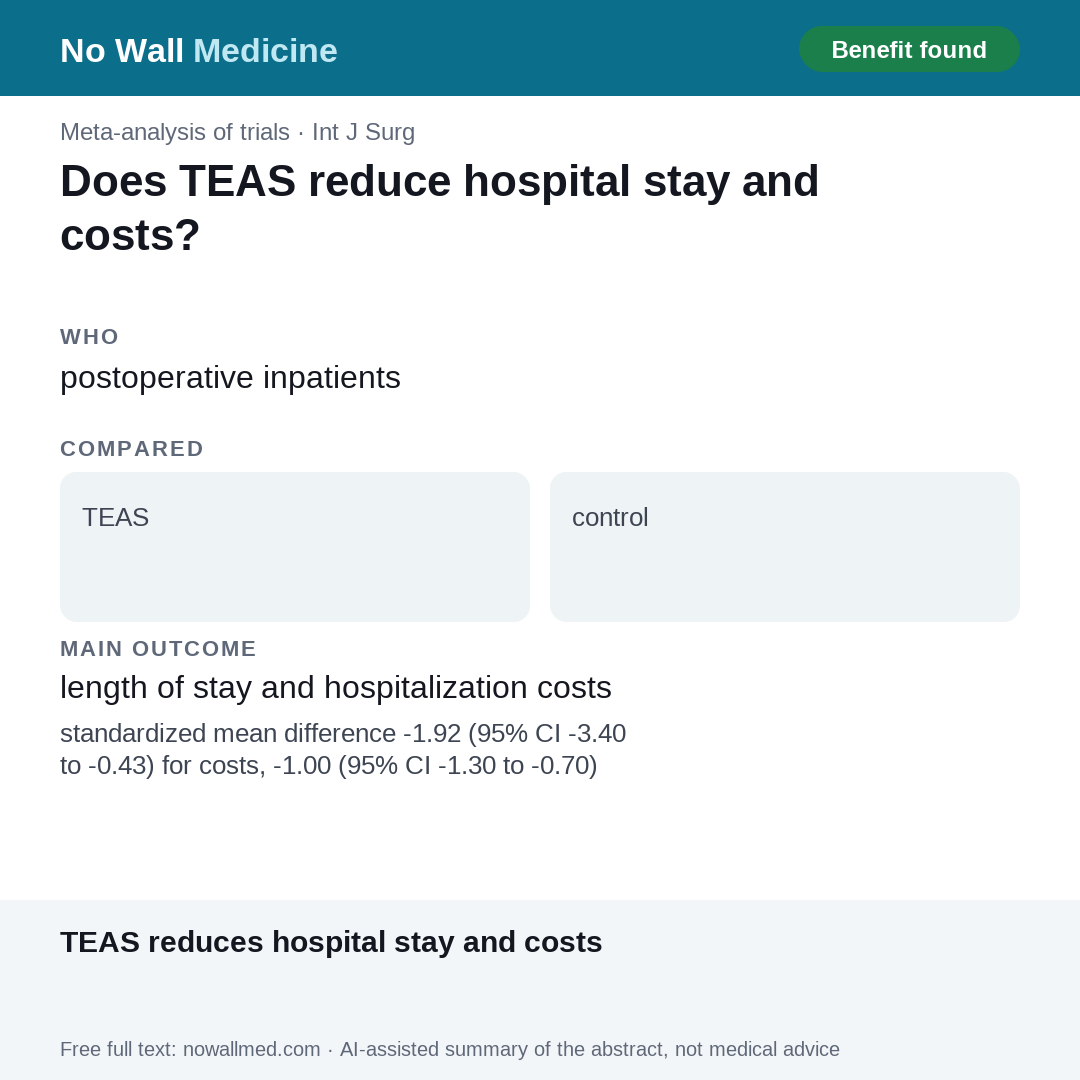
Transcutaneous electrical acupoint stimulation reduces postoperative patients' length of stay and hospitalization costs: a systematic review and meta-analysis
Meta-analysis of trialsBenefit found
Does TEAS reduce hospital stay and costs?
Who
postoperative inpatients
Compared
TEAS
control
Main outcome
length of stay and hospitalization costs
Result: standardized mean difference -1.92 (95% CI -3.40 to -0.43) for costs, -1.00 (95% CI -1.30 to -0.70) for LOS, -0.70 (95% CI -0.91 to -0.49) for postoperative LOS
Bottom line: TEAS reduces hospital stay and costs
Limitation: bias and heterogeneity
Int J Surg · 2024-08-01Download image
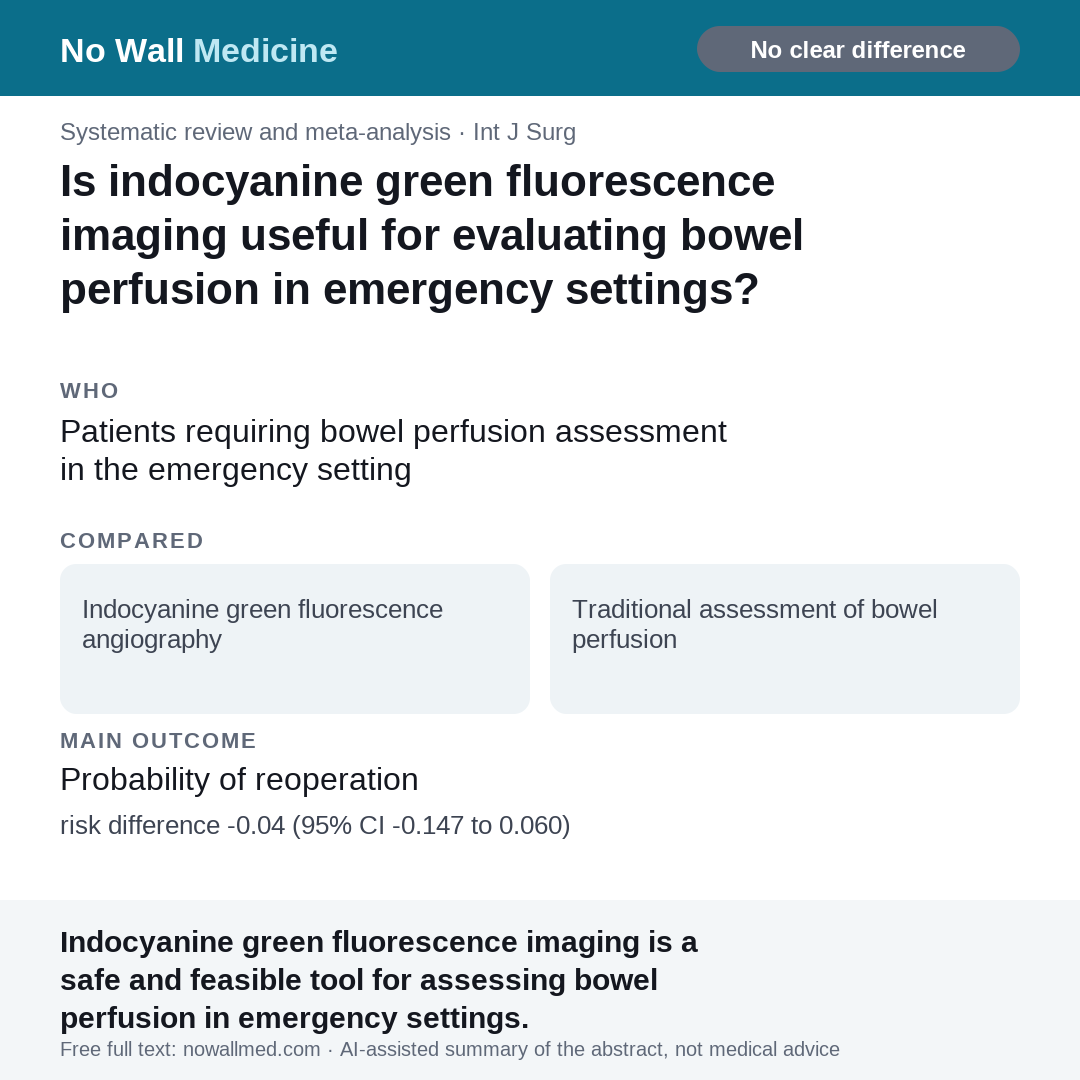
Usefulness of fluorescence imaging with indocyanine green for evaluation of bowel perfusion in the urgency setting: a systematic review and meta-analysis
Systematic review and meta-analysisNo clear difference
Is indocyanine green fluorescence imaging useful for evaluating bowel perfusion in emergency settings?
Who
Patients requiring bowel perfusion assessment in the emergency setting
Compared
Indocyanine green fluorescence angiography
Traditional assessment of bowel perfusion
Main outcome
Probability of reoperation
Result: risk difference -0.04 (95% CI -0.147 to 0.060)
Bottom line: Indocyanine green fluorescence imaging is a safe and feasible tool for assessing bowel perfusion in emergency settings.
Limitation: Heterogeneity was not negligible with a 59.9% of the I2 index.
Int J Surg · 2024-08-01Download image