Visual abstracts
New randomized trials and meta-analyses from leading journals at a glance: who was studied, what was compared, and what was found. Every paper is free to read in full.
All specialtiesCardiology 4877Oncology 4138Gastroenterology & Hepatology 1942Infectious Disease 3837Neurology 1905Psychiatry & Mental Health 2273Pulmonology 2143Critical Care 1365Endocrinology & Diabetes 2580Pediatrics 2980Surgery 2559Orthopedics & Sports Medicine 931Neurosurgery 537Cardiothoracic & Vascular Surgery 674Plastic & Reconstructive Surgery 591Nephrology 1133Rheumatology 823Hematology 1109Dermatology 621Ophthalmology 543Obstetrics & Gynecology 1686Public & Global Health 1058Radiology & Imaging 648Anesthesiology 986Urology 764ENT (Otolaryngology) 503Emergency Medicine 511Allergy & Immunology 313Geriatrics 981Family Medicine & Primary Care 562Medical Genetics & Genomics 676Pathology & Laboratory Medicine 159Physical Medicine & Rehabilitation 757Palliative Care 444Nutrition 1588Digital Health & AI 2201General Medicine 321
A microbiota-directed complementary food intervention in 12-18-month-old Bangladeshi children improves linear growth
Randomized controlled trial follow-upBenefit found
Does microbiota-directed complementary food improve linear growth in malnourished Bangladeshi children?
Who
124
124 Bangladeshi children with moderate acute malnutrition aged 12-18 months · Bangladesh
Compared
Microbiota-directed complementary food: significantly less stunted during follow-up
Standard ready-to-use supplementary food
Main outcome
linear growth (stunting)
Result: βtreatment group x study week (95% CI) = 0.002 (0.001, 0.003)
Bottom line: Microbiota-directed complementary food reduced stunting in malnourished Bangladeshi children during a two-year follow-up period.
Funded by: BMGF
eBioMedicine · 2024-06-03Download image

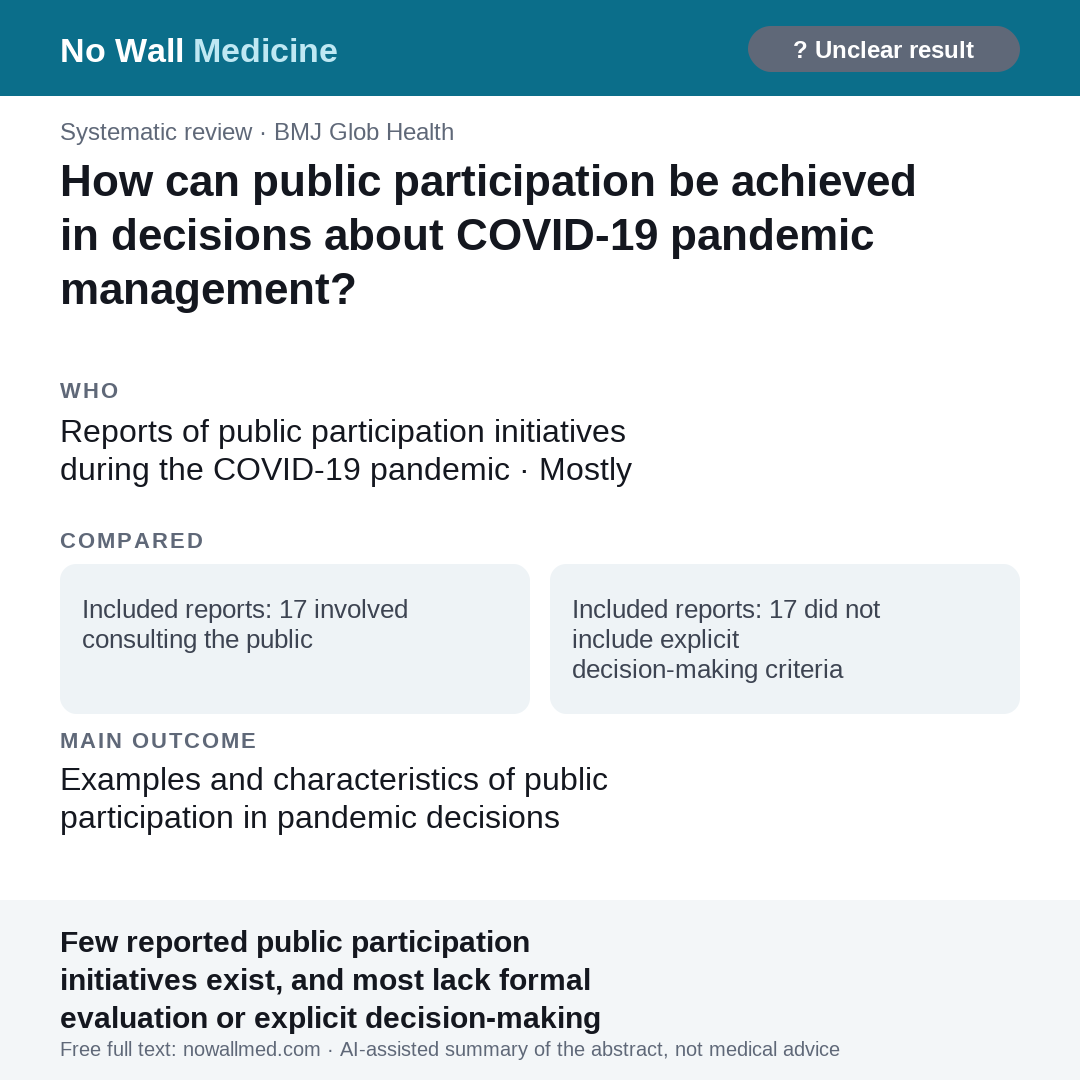
Public participation in decisions about measures to manage the COVID-19 pandemic: a systematic review
Systematic reviewUnclear result
How can public participation be achieved in decisions about COVID-19 pandemic management?
Who
24
Reports of public participation initiatives during the COVID-19 pandemic · Mostly high-income countries
Compared
Included reports: 17 involved consulting the public
Included reports: 17 did not include explicit decision-making criteria
Main outcome
Examples and characteristics of public participation in pandemic decisions
Bottom line: Few reported public participation initiatives exist, and most lack formal evaluation or explicit decision-making criteria.
BMJ Glob Health · 2024-06-03Download image
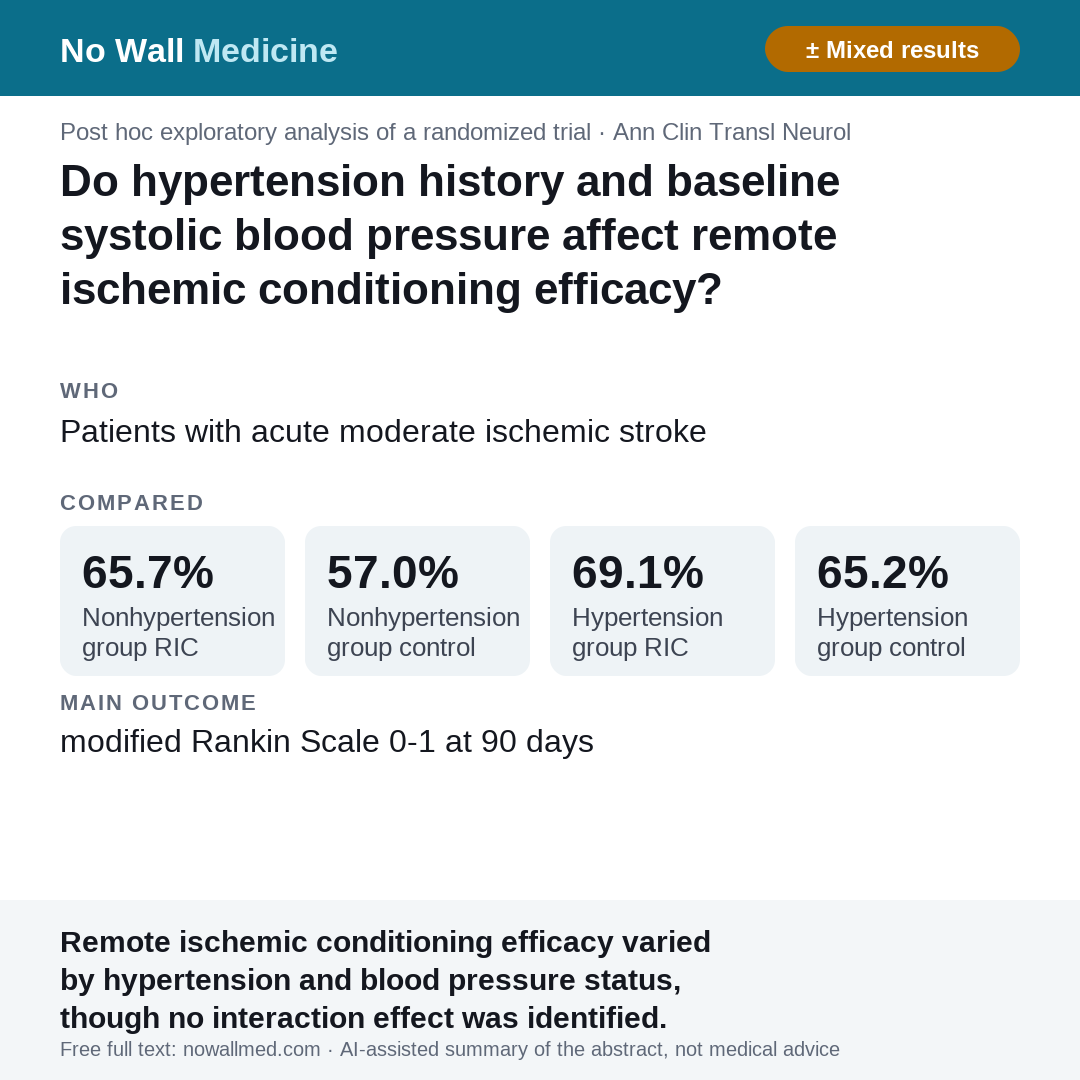
Baseline systolic blood pressure, hypertension history, and efficacy of remote ischemic conditioning
Post hoc exploratory analysis of a randomized trialMixed results
Do hypertension history and baseline systolic blood pressure affect remote ischemic conditioning efficacy?
Who
Patients with acute moderate ischemic stroke
Compared
65.7%Nonhypertension group RIC
57.0%Nonhypertension group control
69.1%Hypertension group RIC
65.2%Hypertension group control
Main outcome
modified Rankin Scale 0-1 at 90 days
Bottom line: Remote ischemic conditioning efficacy varied by hypertension and blood pressure status, though no interaction effect was identified.
Ann Clin Transl Neurol · 2024-06-03Download image
Cost-utility analysis of Social Stories™ for children with autism spectrum disorder in mainstream primary schools: results from a randomised controlled trial
Cluster-randomised controlled trialBenefit found
Is Social Stories cost-effective for children with autism in mainstream primary schools?
Who
249
Children with autism aged 4-11 years · Multi-site
Compared
Social Stories
Usual care
Main outcome
Incremental cost-effectiveness ratio
Result: -£191 per child (95% CI -767.7 to 337.7)
Bottom line: Social Stories likely result in small cost savings and maintain similar quality-adjusted life-years improvements compared with usual care.
BJPsych Open · 2024-06-03Download image

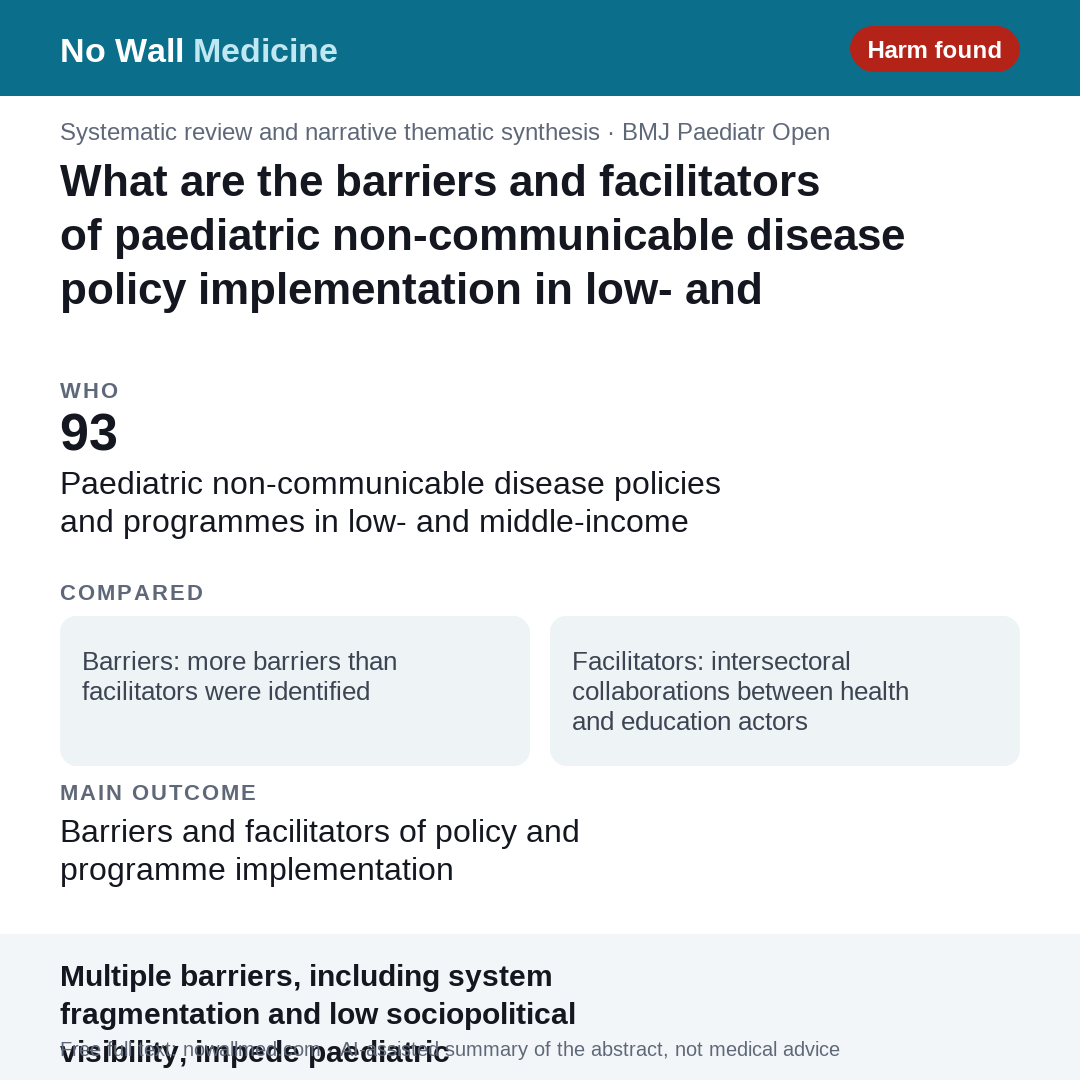
Implementation factors of non-communicable disease policies and programmes for children and youth in low-income and middle-income countries: a systematic review
Systematic review and narrative thematic synthesisHarm found
What are the barriers and facilitators of paediatric non-communicable disease policy implementation in low- and middle-income countries?
Who
93
Paediatric non-communicable disease policies and programmes in low- and middle-income countries · 86 low-income and middle-income countries
Compared
Barriers: more barriers than facilitators were identified
Facilitators: intersectoral collaborations between health and education actors
Main outcome
Barriers and facilitators of policy and programme implementation
Bottom line: Multiple barriers, including system fragmentation and low sociopolitical visibility, impede paediatric non-communicable disease policy implementation in low- and middle-income countries.
BMJ Paediatr Open · 2024-06-03Download image
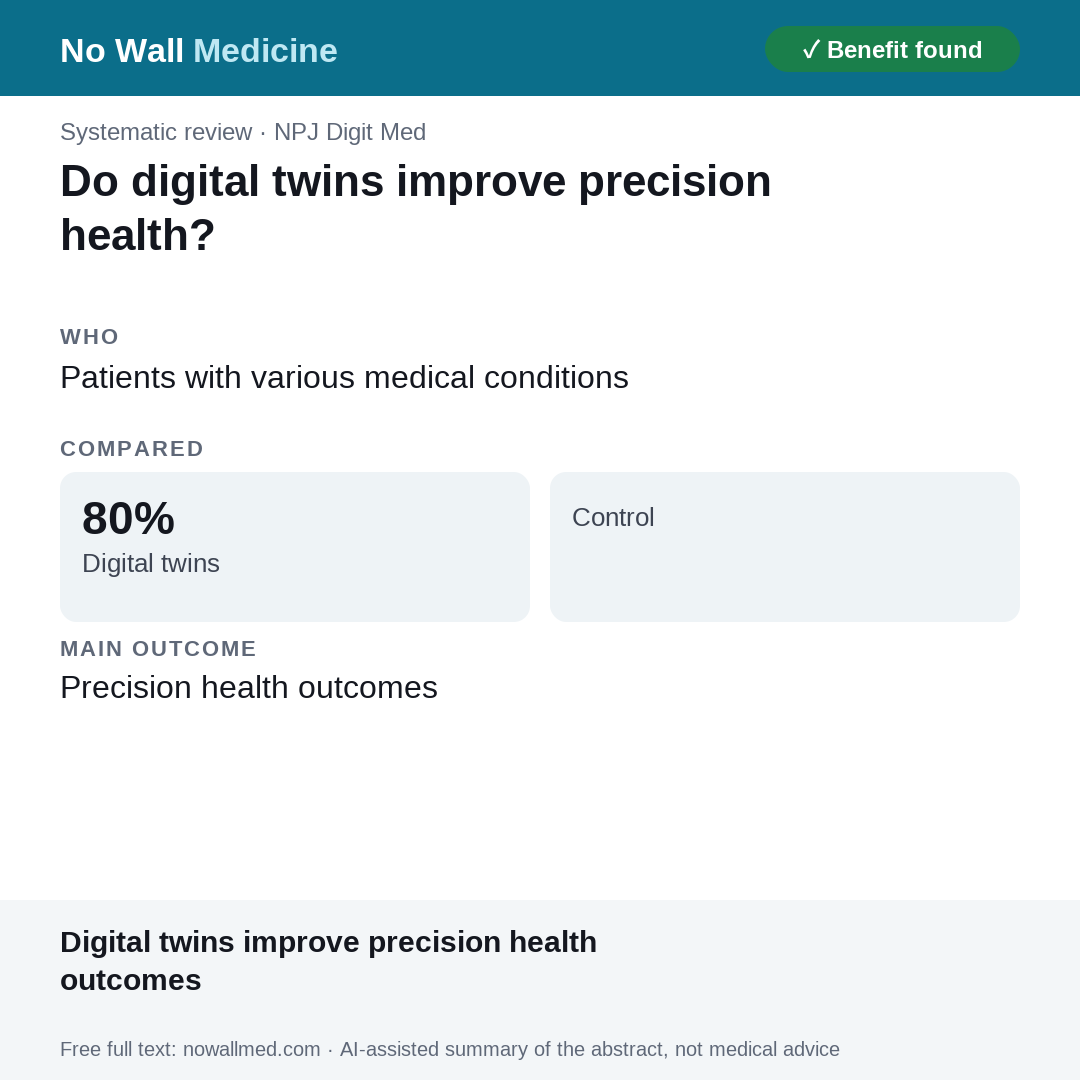
The effectiveness of digital twins in promoting precision health across the entire population: a systematic review
Systematic reviewBenefit found
Do digital twins improve precision health?
Who
Patients with various medical conditions
Compared
80%Digital twins (36 out of 45)
Control
Main outcome
Precision health outcomes
Bottom line: Digital twins improve precision health outcomes
NPJ Digit Med · 2024-06-03Download image
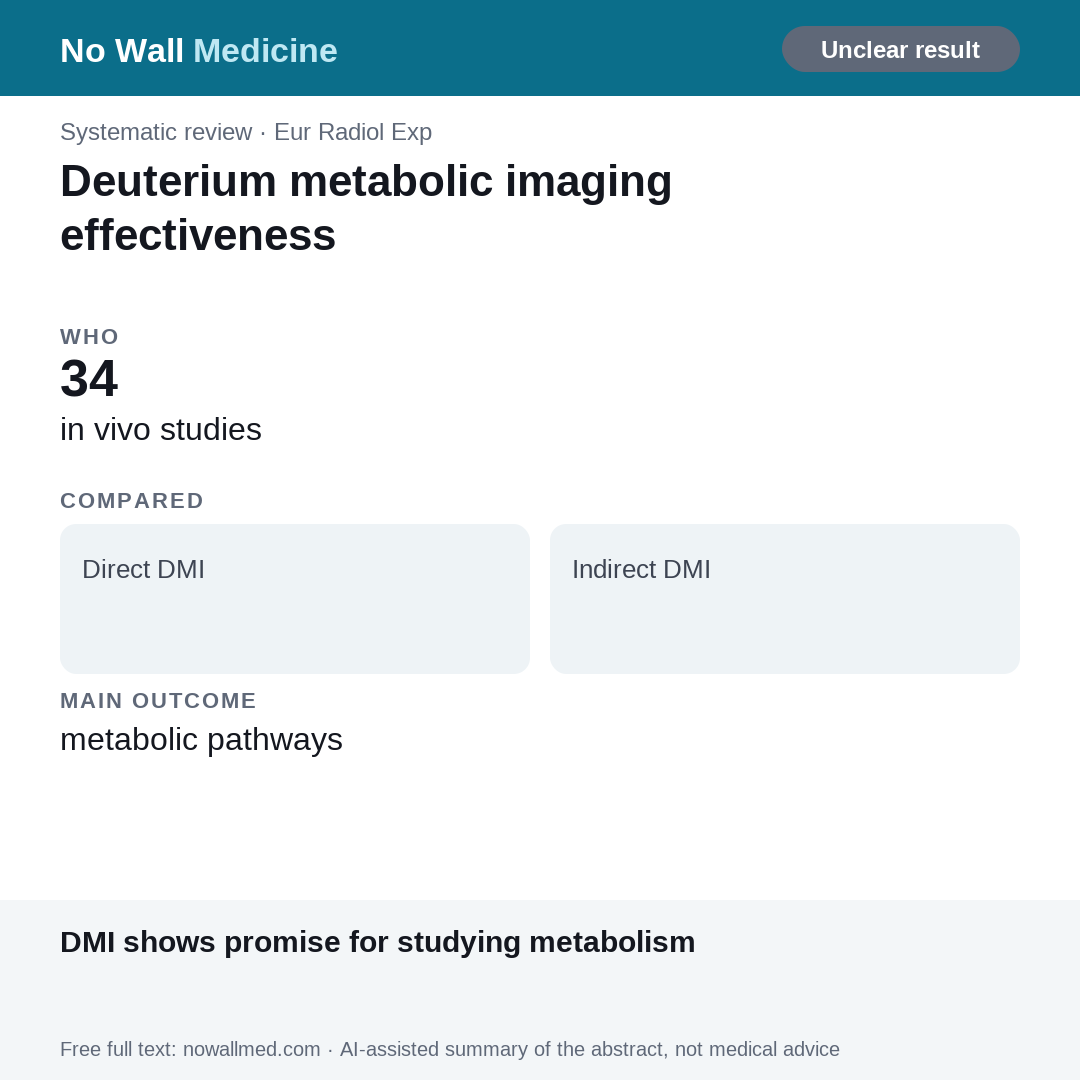
Advances and prospects in deuterium metabolic imaging (DMI): a systematic review of in vivo studies
Systematic reviewUnclear result
Deuterium metabolic imaging effectiveness
Who
34
in vivo studies
Compared
Direct DMI
Indirect DMI
Main outcome
metabolic pathways
Bottom line: DMI shows promise for studying metabolism
Limitation: insufficient spatial resolution
Eur Radiol Exp · 2024-06-03Download image
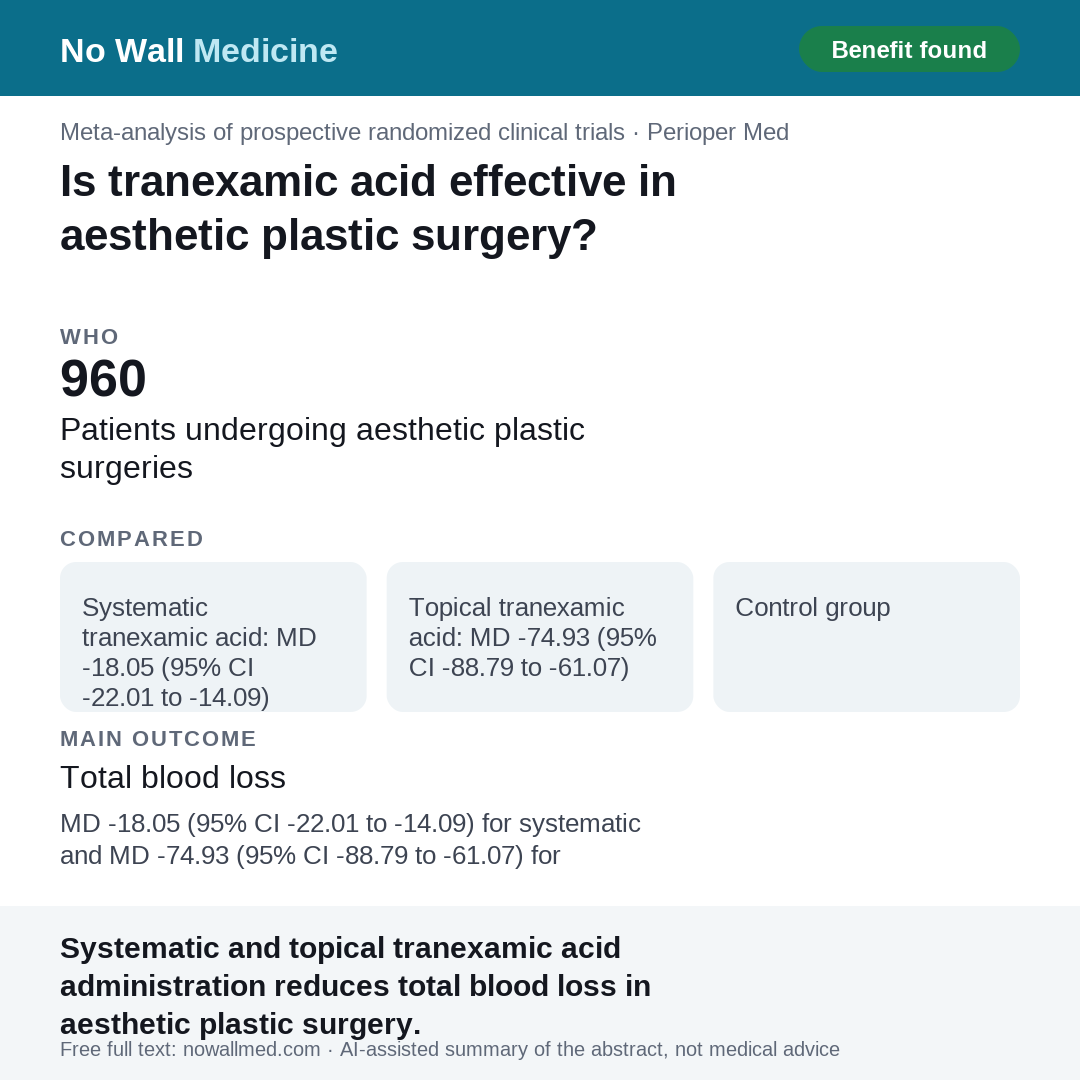
A systematic review and meta-analysis of systematic and topical tranexamic acid administration in aesthetic plastic surgery
Meta-analysis of prospective randomized clinical trialsBenefit found
Is tranexamic acid effective in aesthetic plastic surgery?
Who
960
Patients undergoing aesthetic plastic surgeries
Compared
Systematic tranexamic acid: MD -18.05 (95% CI -22.01 to -14.09)
Topical tranexamic acid: MD -74.93 (95% CI -88.79 to -61.07)
Control group
Main outcome
Total blood loss
Result: MD -18.05 (95% CI -22.01 to -14.09) for systematic and MD -74.93 (95% CI -88.79 to -61.07) for topical
Bottom line: Systematic and topical tranexamic acid administration reduces total blood loss in aesthetic plastic surgery.
Limitation: More strictly defined randomized clinical trials using high-quality methodology are needed.
Perioper Med · 2024-06-03Download image
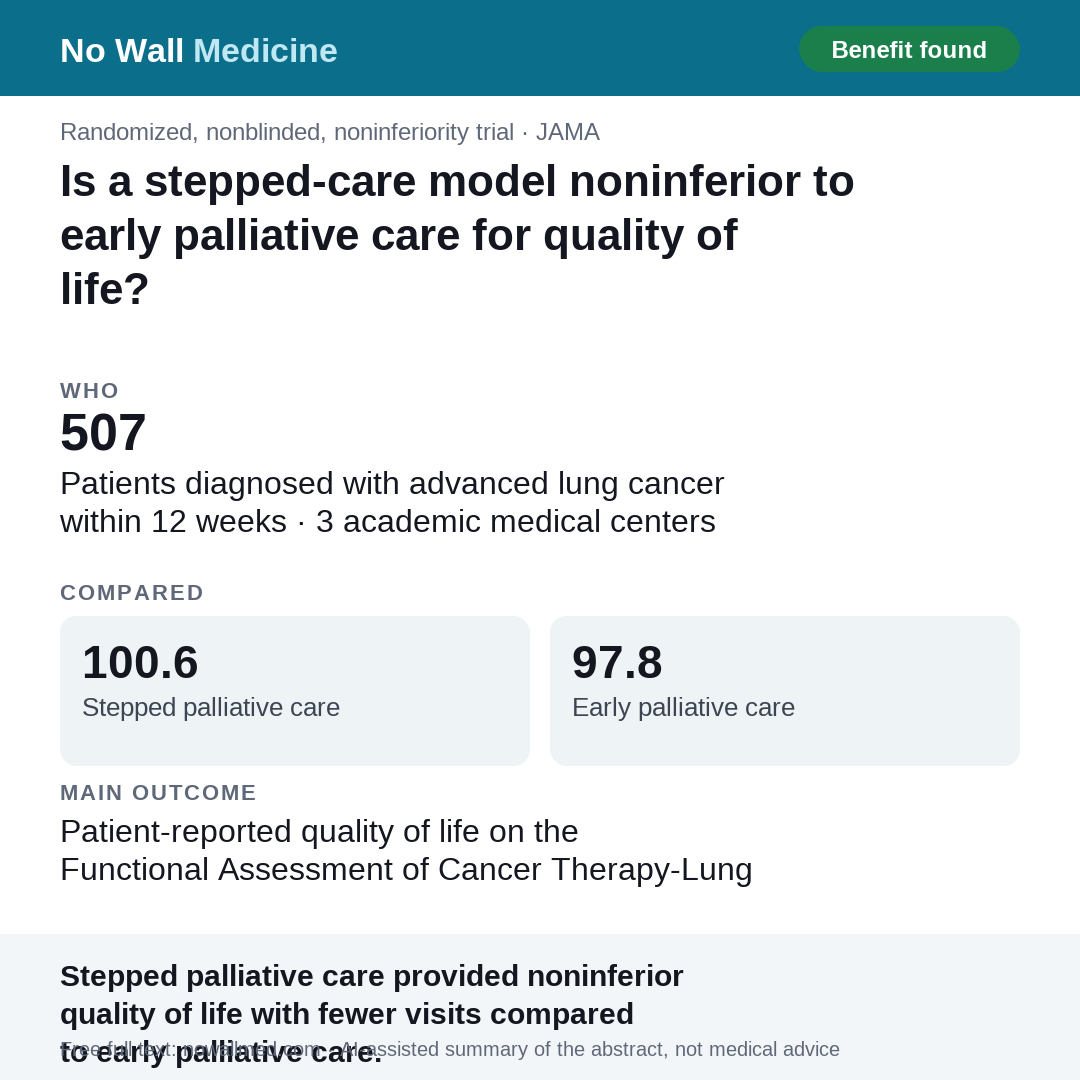
Stepped Palliative Care for Patients With Advanced Lung Cancer: A Randomized Clinical Trial
Randomized, nonblinded, noninferiority trialBenefit found
Is a stepped-care model noninferior to early palliative care for quality of life?
Who
507
Patients diagnosed with advanced lung cancer within 12 weeks · 3 academic medical centers in Massachusetts, Pennsylvania, and North Carolina
Compared
100.6Stepped palliative care
97.8Early palliative care
Main outcome
Patient-reported quality of life on the Functional Assessment of Cancer Therapy-Lung
Result: difference 2.9; lower 1-sided 95% confidence limit, -0.1
Bottom line: Stepped palliative care provided noninferior quality of life with fewer visits compared to early palliative care.
Limitation: Noninferiority was not demonstrated for days in hospice.
JAMA · 2024-06-02Download image
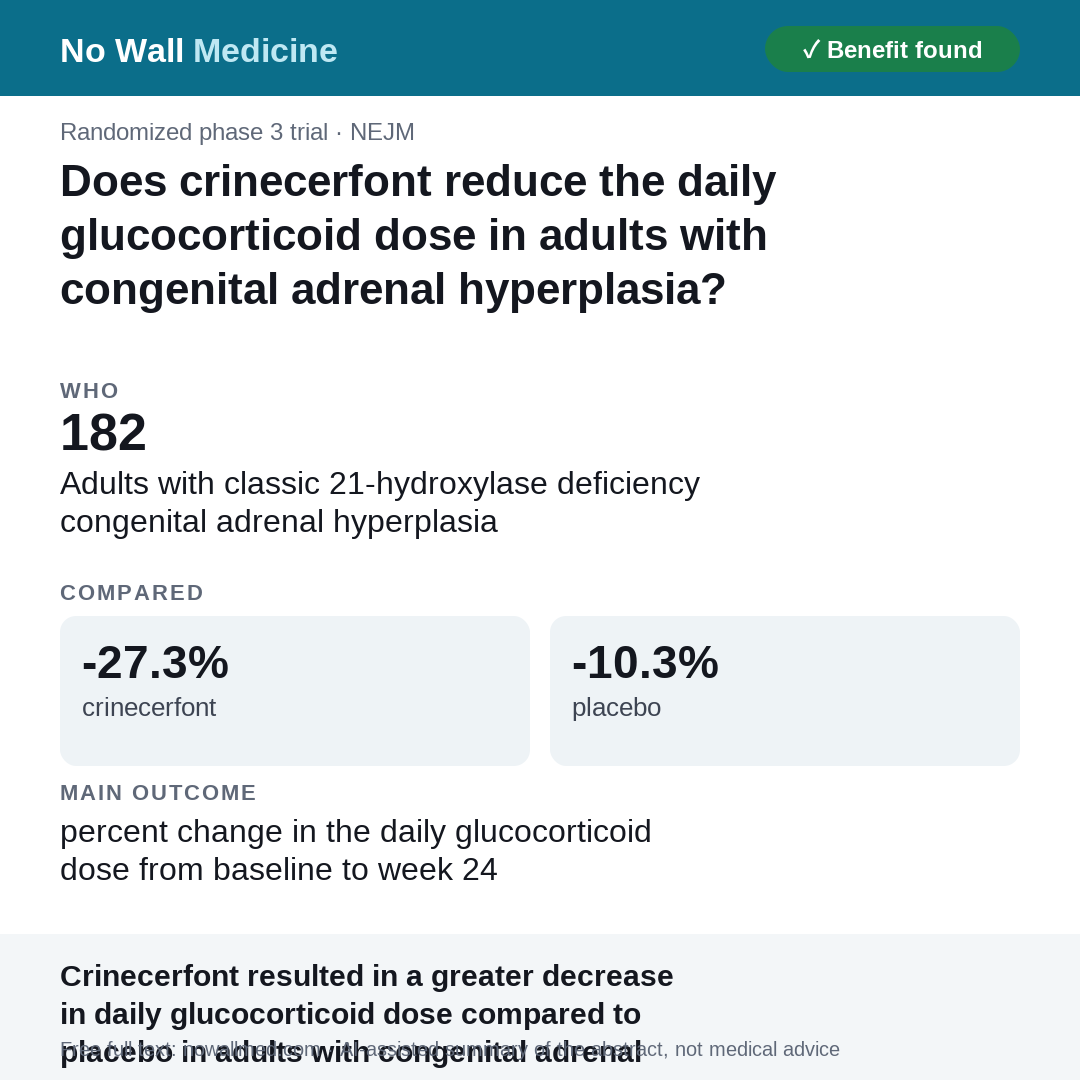
Phase 3 Trial of Crinecerfont in Adult Congenital Adrenal Hyperplasia
Randomized phase 3 trialBenefit found
Does crinecerfont reduce the daily glucocorticoid dose in adults with congenital adrenal hyperplasia?
Who
182
Adults with classic 21-hydroxylase deficiency congenital adrenal hyperplasia
Compared
-27.3%crinecerfont
-10.3%placebo
Main outcome
percent change in the daily glucocorticoid dose from baseline to week 24
Result: least-squares mean difference, -17.0 percentage points
Bottom line: Crinecerfont resulted in a greater decrease in daily glucocorticoid dose compared to placebo in adults with congenital adrenal hyperplasia.
Funded by: Neurocrine Biosciences
NEJM · 2024-06-01Download image
Feasibility and acceptability of autism adapted safety plans: an external pilot randomised controlled trial
Randomised, two-arm, controlled pilot trialBenefit found
Is autism adapted safety planning feasible and acceptable for autistic adults?
Who
53
Autistic adults · United Kingdom
Compared
Autism adapted safety plans with usual care: 68% satisfied and 41% rated as useable
Usual care
Main outcome
Feasibility and acceptability
Bottom line: Autism adapted safety plans are feasible and acceptable for a future definitive clinical trial.
Funded by: NIHR Public Health Research Programme
eClinicalMedicine · 2024-06-01Download image

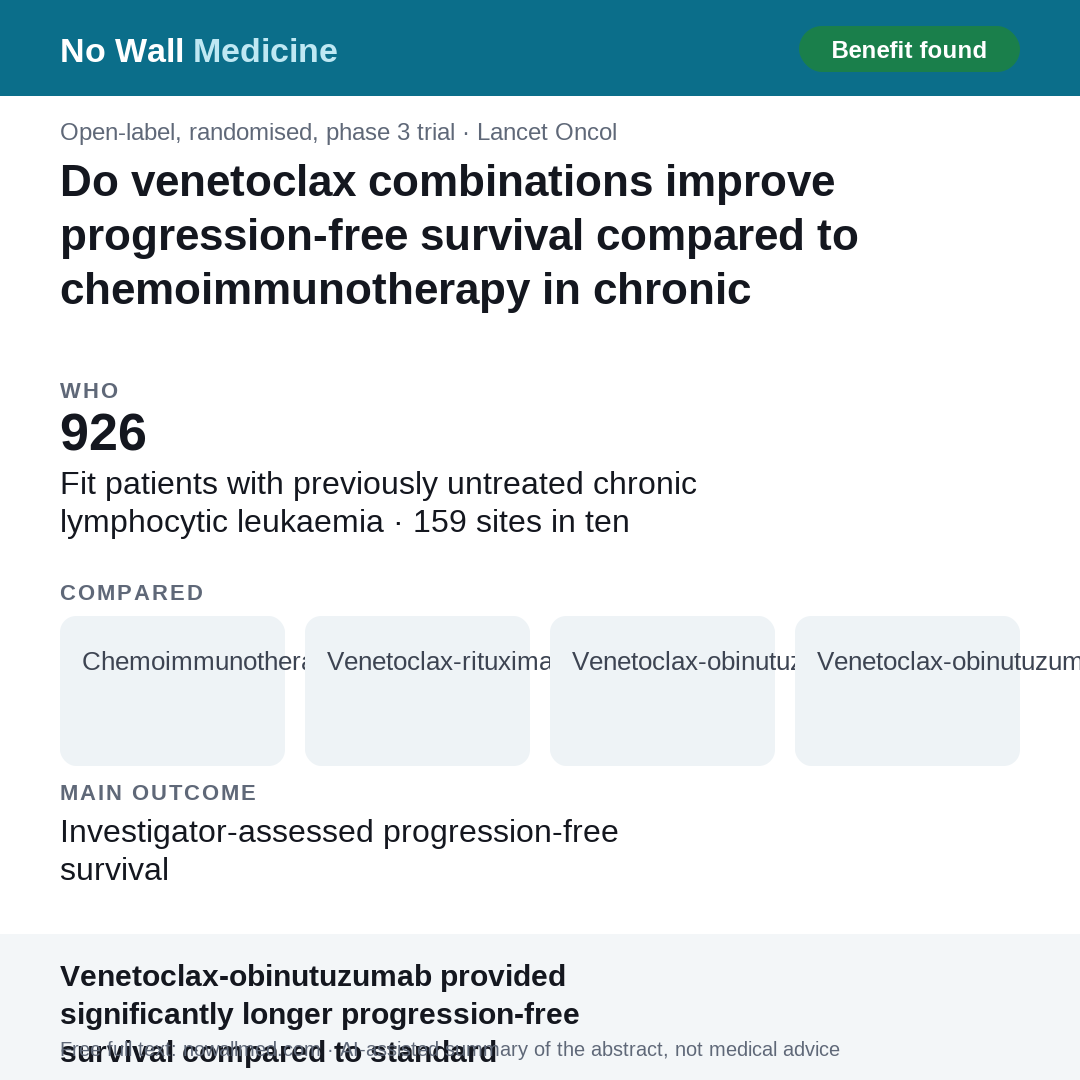
First-line venetoclax combinations versus chemoimmunotherapy in fit patients with chronic lymphocytic leukaemia (GAIA/CLL13): 4-year follow-up from a multicentre, open-label, randomised, phase 3 trial
Open-label, randomised, phase 3 trialBenefit found
Do venetoclax combinations improve progression-free survival compared to chemoimmunotherapy in chronic lymphocytic leukaemia?
Who
926
Fit patients with previously untreated chronic lymphocytic leukaemia · 159 sites in ten countries in Europe and Middle East
Compared
Chemoimmunotherapy
Venetoclax-rituximab
Venetoclax-obinutuzumab
Venetoclax-obinutuzumab-ibrutinib
Main outcome
Investigator-assessed progression-free survival
Bottom line: Venetoclax-obinutuzumab provided significantly longer progression-free survival compared to standard chemoimmunotherapy in fit patients.
Limitation: This was a post-hoc exploratory analysis of updated progression-free survival results.
Lancet Oncol · 2024-06-01Download image
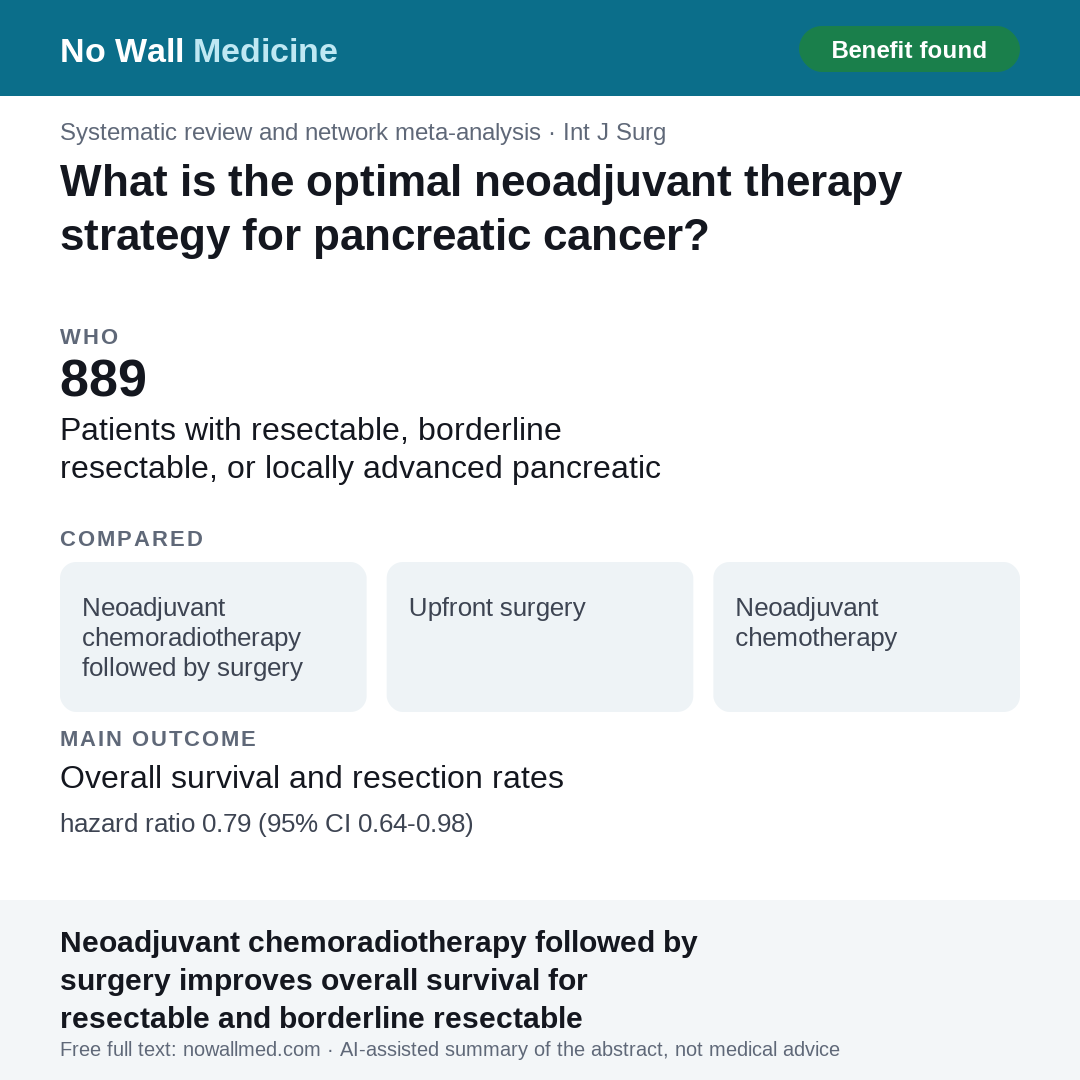
Comparing upfront surgery with neoadjuvant treatments in patients with resectable, borderline resectable or locally advanced pancreatic cancer: a systematic review and network meta-analysis of randomized clinical trials
Systematic review and network meta-analysisBenefit found
What is the optimal neoadjuvant therapy strategy for pancreatic cancer?
Who
889
Patients with resectable, borderline resectable, or locally advanced pancreatic cancer
Compared
Neoadjuvant chemoradiotherapy followed by surgery
Upfront surgery
Neoadjuvant chemotherapy
Main outcome
Overall survival and resection rates
Result: hazard ratio 0.79 (95% CI 0.64-0.98)
Bottom line: Neoadjuvant chemoradiotherapy followed by surgery improves overall survival for resectable and borderline resectable pancreatic cancer.
Limitation: Neoadjuvant chemoradiotherapy increased the risk of grade 3 or higher treatment-related adverse events.
Int J Surg · 2024-06-01Download image
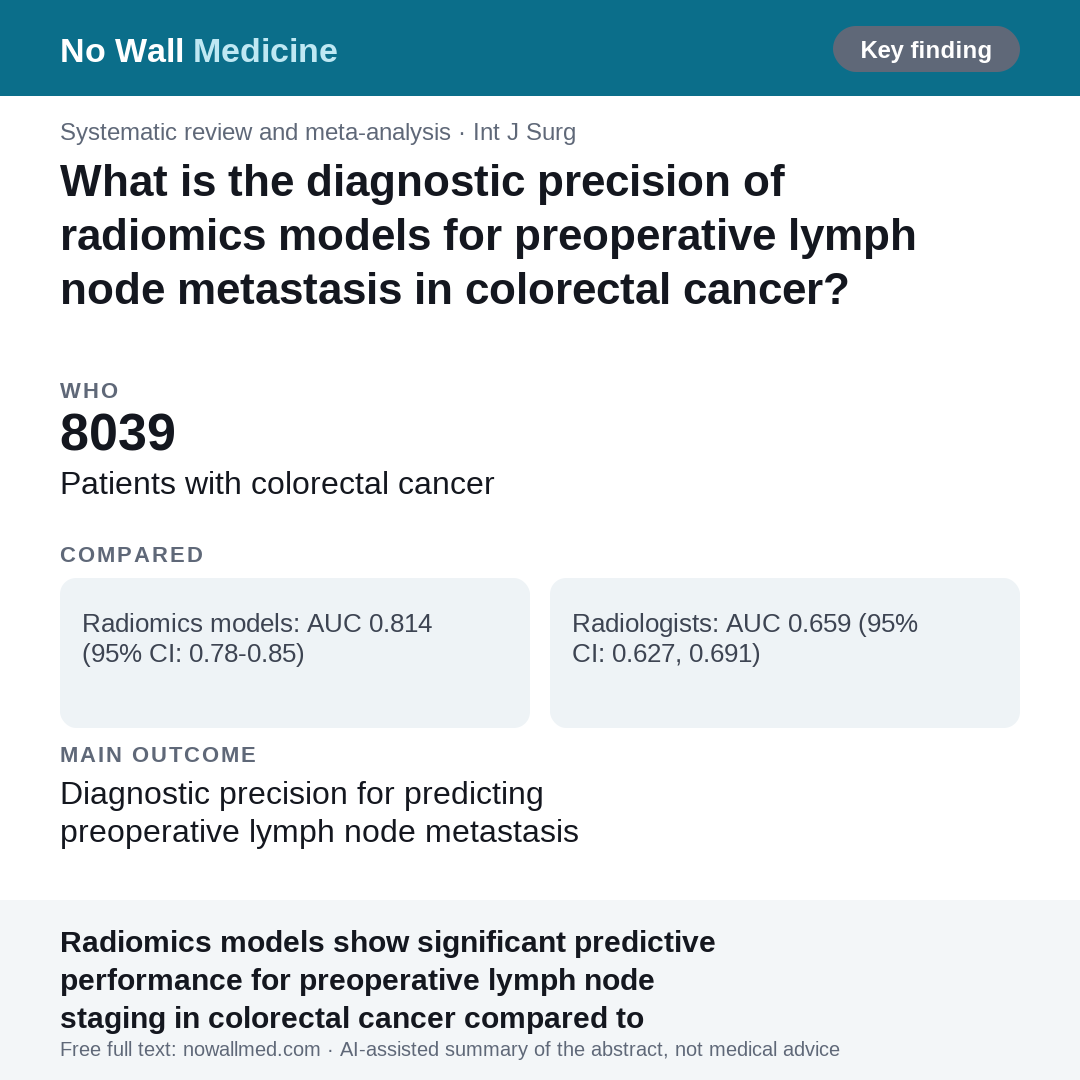
Application of radiomics for preoperative prediction of lymph node metastasis in colorectal cancer: a systematic review and meta-analysis
Systematic review and meta-analysisBenefit found
What is the diagnostic precision of radiomics models for preoperative lymph node metastasis in colorectal cancer?
Who
8039
Patients with colorectal cancer
Compared
Radiomics models: AUC 0.814 (95% CI: 0.78-0.85)
Radiologists: AUC 0.659 (95% CI: 0.627, 0.691)
Main outcome
Diagnostic precision for predicting preoperative lymph node metastasis
Result: AUC 0.814 (95% CI: 0.78-0.85)
Bottom line: Radiomics models show significant predictive performance for preoperative lymph node staging in colorectal cancer compared to radiologists.
Int J Surg · 2024-06-01Download image
The value of cholinesterase inhibitors for improving neuropsychiatric and functional assessment scores in patients with Alzheimer disease: a systematic review and meta-analysis of on placebo-controlled RCTs
Meta-analysis of 12 randomized, double-blind, placebo-controlled trialsBenefit found
Do cholinesterase inhibitors improve neuropsychiatric and functional assessment scores in Alzheimer disease patients?
Who
6908
Patients with Alzheimer disease
Compared
Cholinesterase inhibitors
Placebo
Main outcome
Neuropsychiatric and functional assessment scores
Result: SMD -1.57 (95% CI: -2.64 to -0.51) for ADAS
Bottom line: Cholinesterase inhibitors generally improve neuropsychiatric and functional assessment scores in Alzheimer disease patients with an acceptable safety profile.
Limitation: Opposite result was observed in Wechsler Memory Scale.
Int J Surg · 2024-06-01Download image

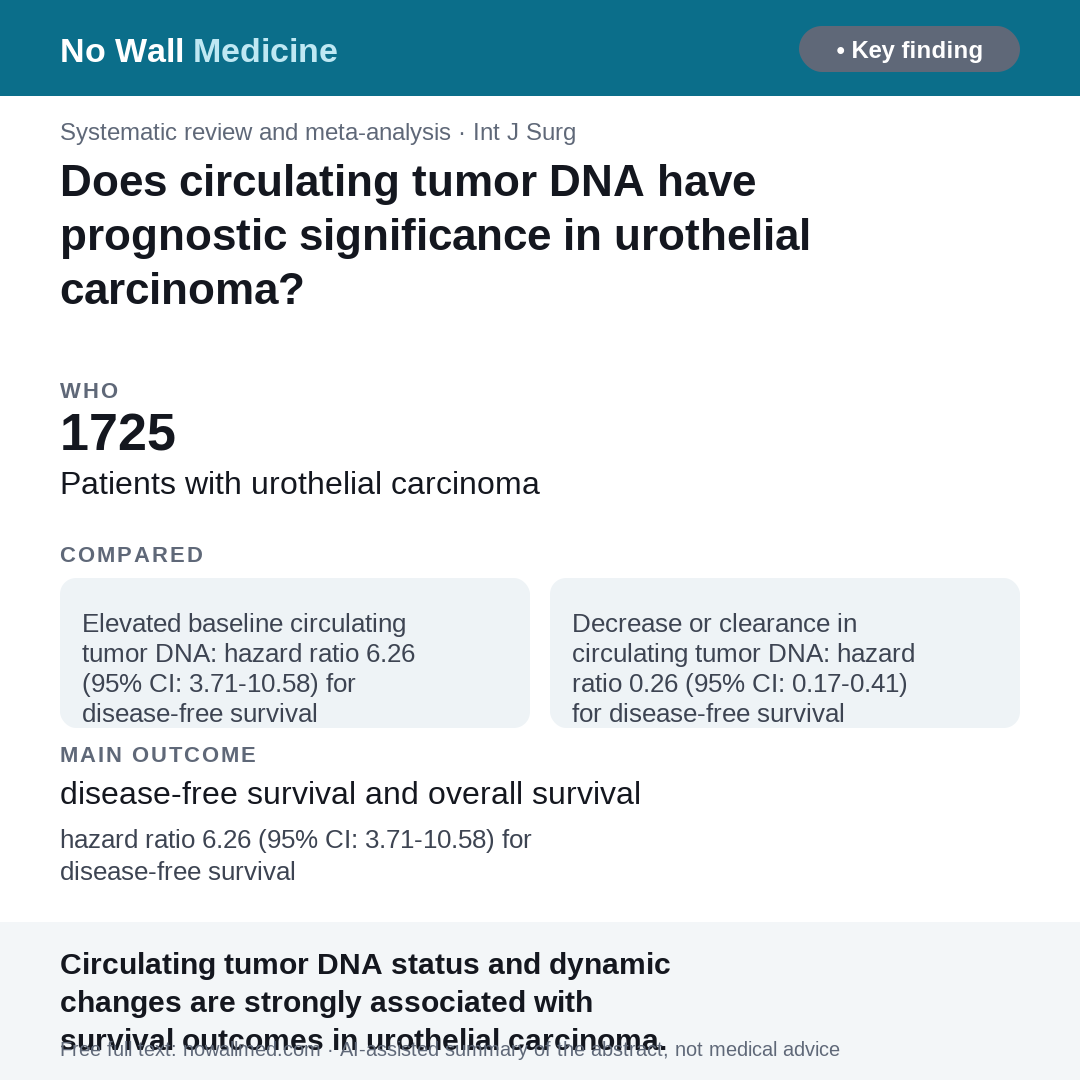
Prognostic significance of circulating tumor DNA in urothelial carcinoma: a systematic review and meta-analysis
Systematic review and meta-analysisBenefit found
Does circulating tumor DNA have prognostic significance in urothelial carcinoma?
Who
1725
Patients with urothelial carcinoma
Compared
Elevated baseline circulating tumor DNA: hazard ratio 6.26 (95% CI: 3.71-10.58) for disease-free survival
Decrease or clearance in circulating tumor DNA: hazard ratio 0.26 (95% CI: 0.17-0.41) for disease-free survival
Main outcome
disease-free survival and overall survival
Result: hazard ratio 6.26 (95% CI: 3.71-10.58) for disease-free survival
Bottom line: Circulating tumor DNA status and dynamic changes are strongly associated with survival outcomes in urothelial carcinoma.
Int J Surg · 2024-06-01Download image
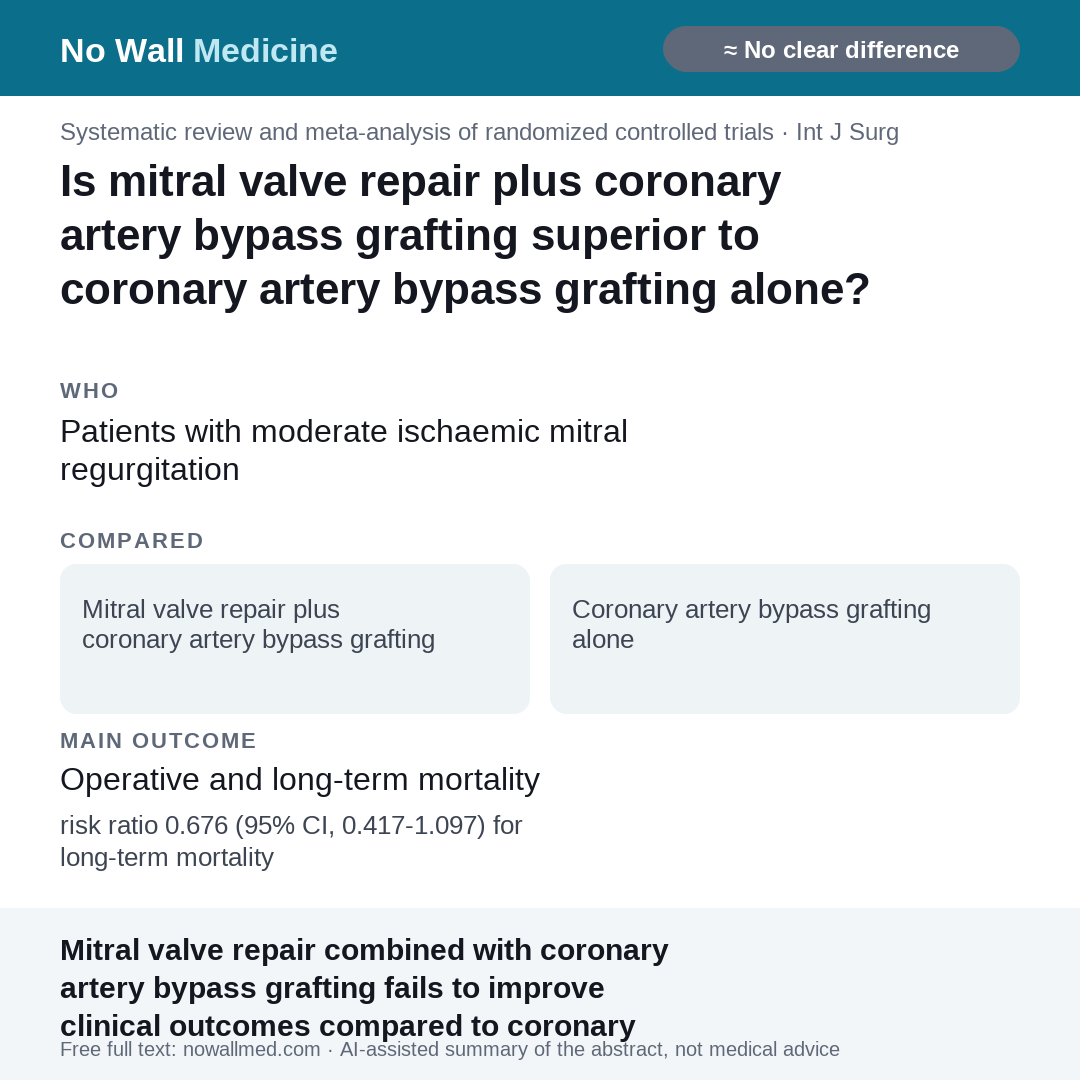
Efficacy of mitral valve repair in combination with coronary revascularization for moderate ischaemic mitral regurgitation: a systematic review and meta-analysis of randomized controlled trials
Systematic review and meta-analysis of randomized controlled trialsNo clear difference
Is mitral valve repair plus coronary artery bypass grafting superior to coronary artery bypass grafting alone?
Who
Patients with moderate ischaemic mitral regurgitation
Compared
Mitral valve repair plus coronary artery bypass grafting
Coronary artery bypass grafting alone
Main outcome
Operative and long-term mortality
Result: risk ratio 0.676 (95% CI, 0.417-1.097) for long-term mortality
Bottom line: Mitral valve repair combined with coronary artery bypass grafting fails to improve clinical outcomes compared to coronary artery bypass grafting alone.
Int J Surg · 2024-06-01Download image
Current perspectives and trend of computer-aided drug design: a review and bibliometric analysis
Meta-analysis of publicationsUnclear result
trends in computer-aided drug design
Who
2031
researchers and institutions · 99 countries or regions
Compared
U.S.
China
Main outcome
publications and collaborations
Bottom line: CADD improves drug discovery efficiency
Int J Surg · 2024-06-01Download image
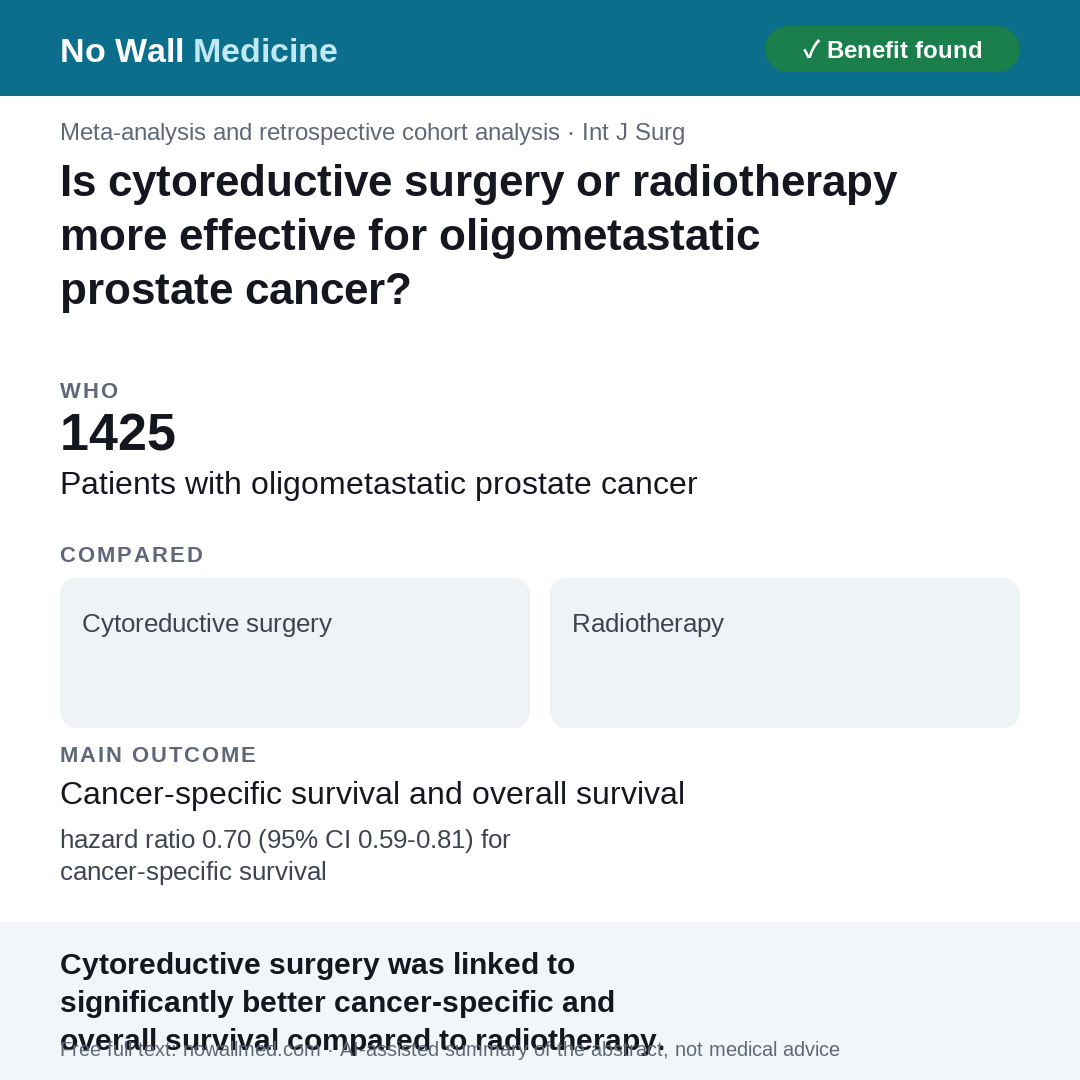
Assessment of treatment outcomes: cytoreductive surgery compared to radiotherapy in oligometastatic prostate cancer - an in-depth quantitative evaluation and retrospective cohort analysis
Meta-analysis and retrospective cohort analysisBenefit found
Is cytoreductive surgery or radiotherapy more effective for oligometastatic prostate cancer?
Who
1425
Patients with oligometastatic prostate cancer
Compared
Cytoreductive surgery
Radiotherapy
Main outcome
Cancer-specific survival and overall survival
Result: hazard ratio 0.70 (95% CI 0.59-0.81) for cancer-specific survival
Bottom line: Cytoreductive surgery was linked to significantly better cancer-specific and overall survival compared to radiotherapy.
Limitation: Further prospective studies and randomized controlled trials are essential to corroborate these results.
Int J Surg · 2024-06-01Download image
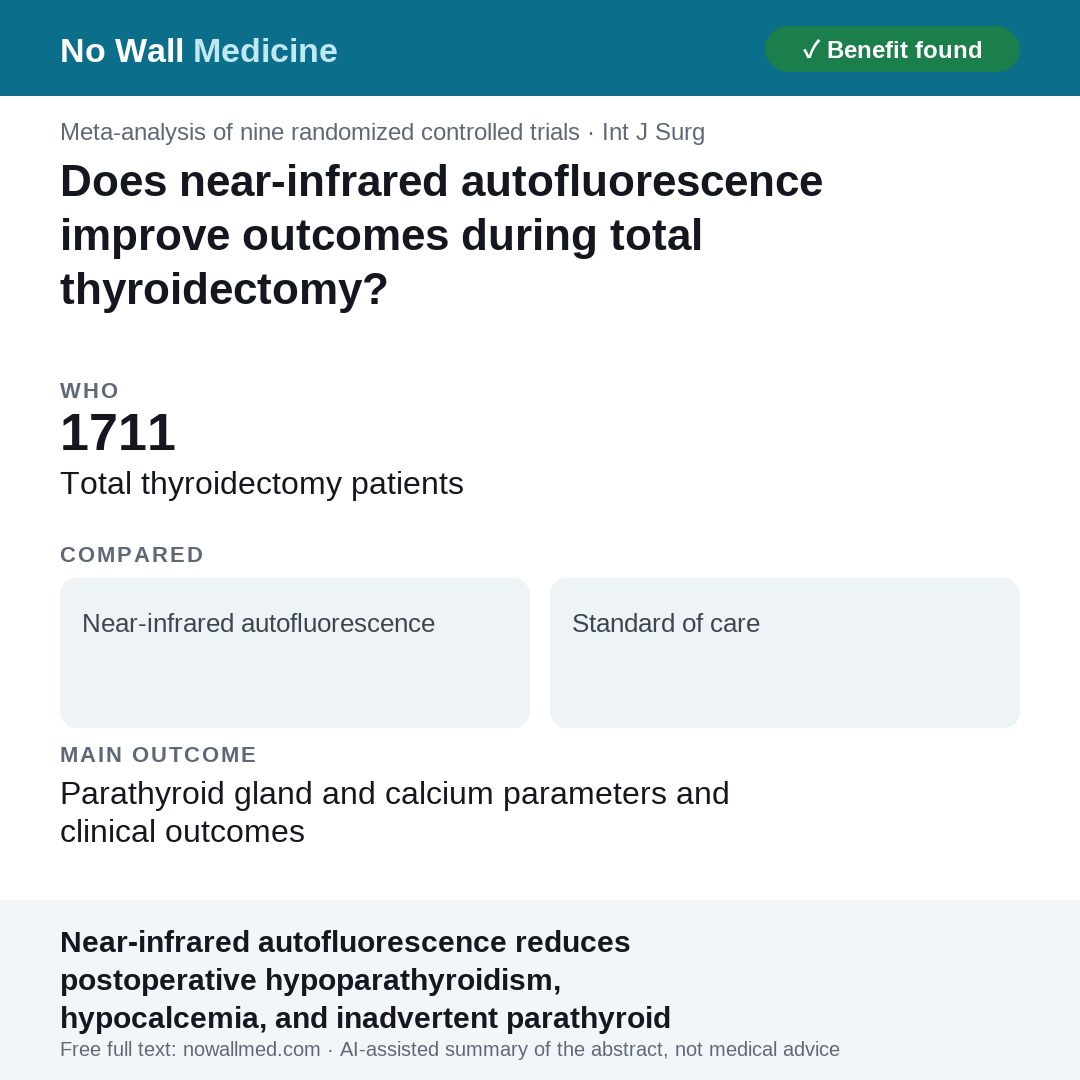
The impact of using near-infrared autofluorescence on parathyroid gland parameters and clinical outcomes during total thyroidectomy: a meta-analytic study of randomized controlled trials
Meta-analysis of nine randomized controlled trialsBenefit found
Does near-infrared autofluorescence improve outcomes during total thyroidectomy?
Who
1711
Total thyroidectomy patients
Compared
Near-infrared autofluorescence
Standard of care
Main outcome
Parathyroid gland and calcium parameters and clinical outcomes
Result: logOR -0.31 (95% CI -0.57 to -0.05) for postoperative hypoparathyroidism
Bottom line: Near-infrared autofluorescence reduces postoperative hypoparathyroidism, hypocalcemia, and inadvertent parathyroid gland removal during total thyroidectomy.
Limitation: Two trials had some concerns regarding methodological quality.
Int J Surg · 2024-06-01Download image